
From José Mourinho to Nuno Espírito Santo, from Ange Postecoglou to Thomas Frank, Tottenham Hotspur have turned the head coach role into a revolving door.
One hire wants control and dominance of the ball; the next leans into directness and pragmatism; then the pendulum swings back again.
Each reset asks the squad to learn a new way to play, which means different profiles and a different tolerance for risk.
The outcome is a team that seems to be in a constant cycle of change.
Expectations of UEFA Champions League football through the Premier League have thinned; there are only 15 games left, and Tottenham are 16th, five points off the relegation places.
In that context, supporters are crying out for performances that keep them engaged, for a side that dictates the feel of matches.
Thomas Frank was the latest to be axed after less than eight months, with Igor Tudor being named the new interim Spurs manager.
Frank arrived from Brentford with a reputation as a promising coach and an organiser, leaving them in the top half.
Spurs had an early flash that suggested it might work: a strong performance against PSG in the Super Cup, then wins away from home against Burnley and Manchester City.
After that, the football flattened.
The wins did not come often enough to justify the trade-offs.
And at a club like Spurs, trade-offs are only tolerated if they are buying you something.
Meanwhile, Brentford, now under their former set-piece coach, Keith Andrews, have continued to rise and are pushing for Europe.
That contrast does not necessarily condemn Frank as a coach, but it shows that the Spurs job is different and that the expectation is to be dominant.
What Went Wrong For Thomas Frank At Tottenham Hotspur?
What worked at Brentford did not transfer well to Tottenham for Thomas Frank.
Frank built a very effective model around low possession, direct play, set pieces, and quick access to the box.
The idea was to get the ball forward early, attack second balls, and create high-leverage moments through rehearsed dead-ball routines and low crosses.
Tottenham is not the right environment for that game.
At Spurs, the expectation is to impose yourself for long periods.
But under Frank, it felt passive.
He was comfortable without the ball, and that can work, but only if there are wins and devastation in attack.
Under Thomas Frank, Spurs are operating with less of the ball than in the early Postecoglou period.
Tottenham Hotspur Possession % By Season 2023/2024-2025/2026

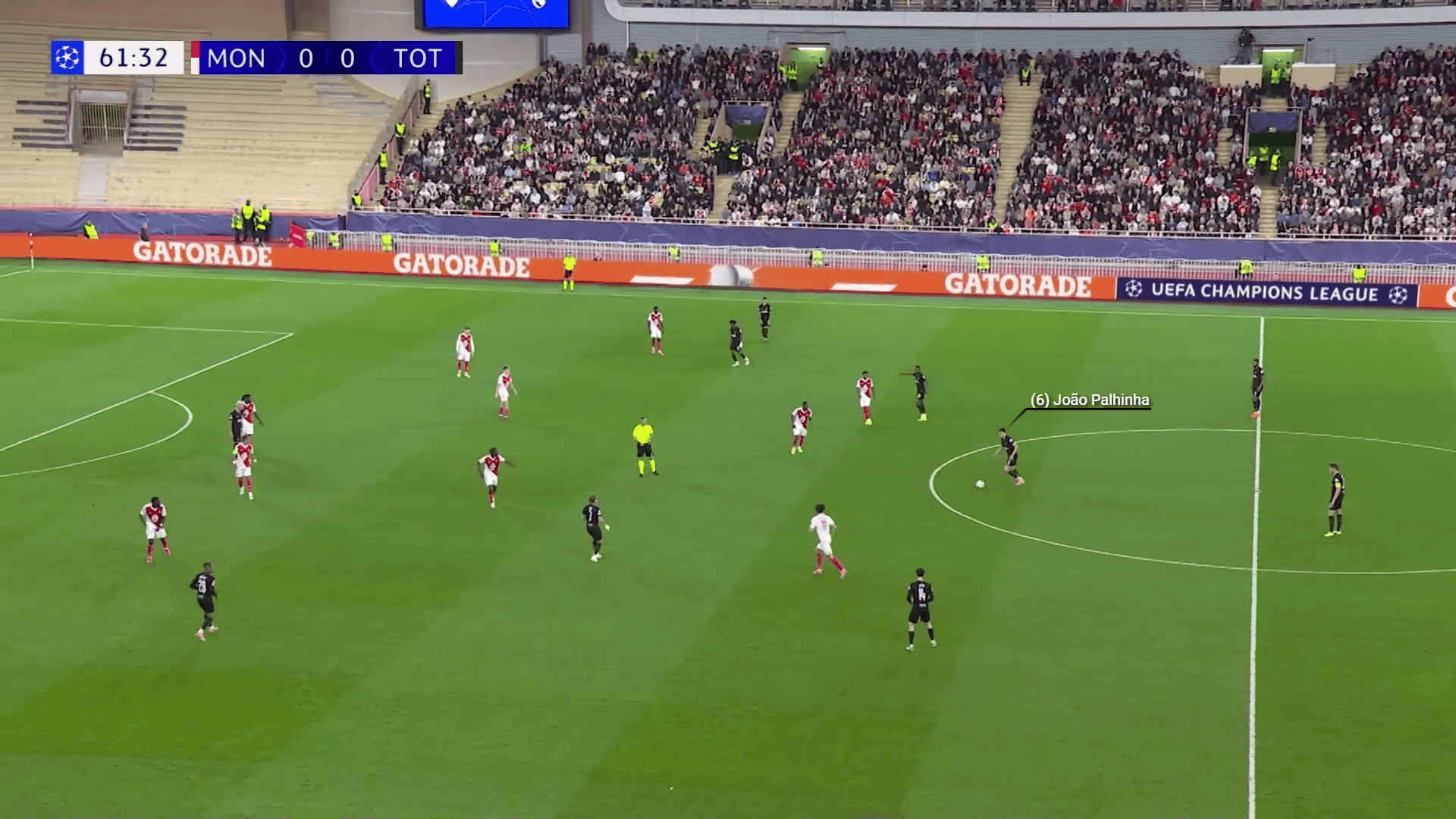
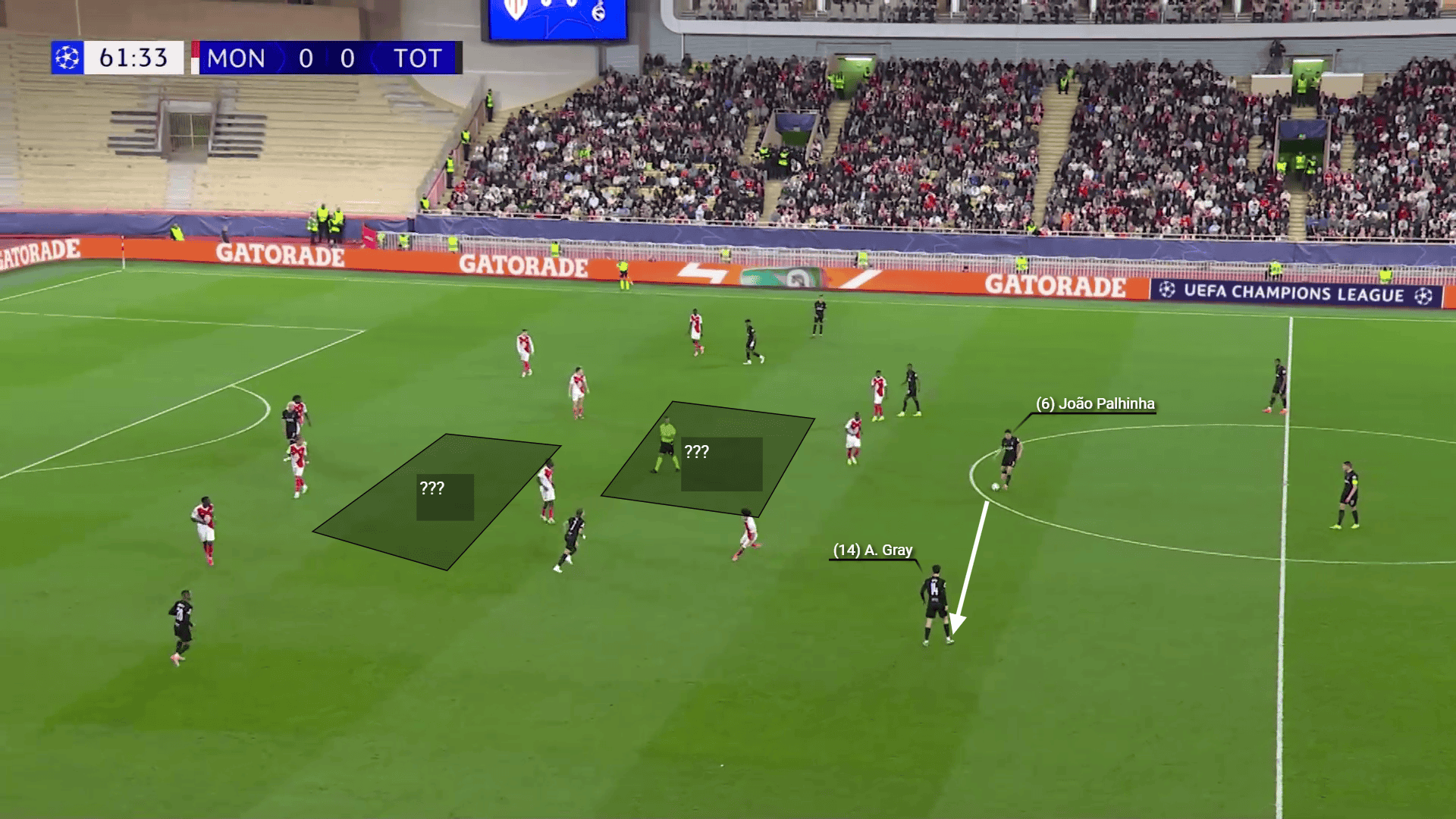
The double pivot consistently received on the same horizontal line, with both midfielders dropping toward the centre-backs simultaneously to provide safety.
It produced a stable first pass but also affected Tottenham’s vertical spacing.
The pivots were both underneath the ball; there were rarely receivers between the opponent’s midfield and defensive lines.
That meant the next pass was forced wide early because it was the only accessible route.
Against AS Monaco, João Palhinha circulates with a square pass into Archie Gray.
There is no receiver available between Monaco’s midfield and backline, and Gray’s only option is to release wide to Wilson Odobert.
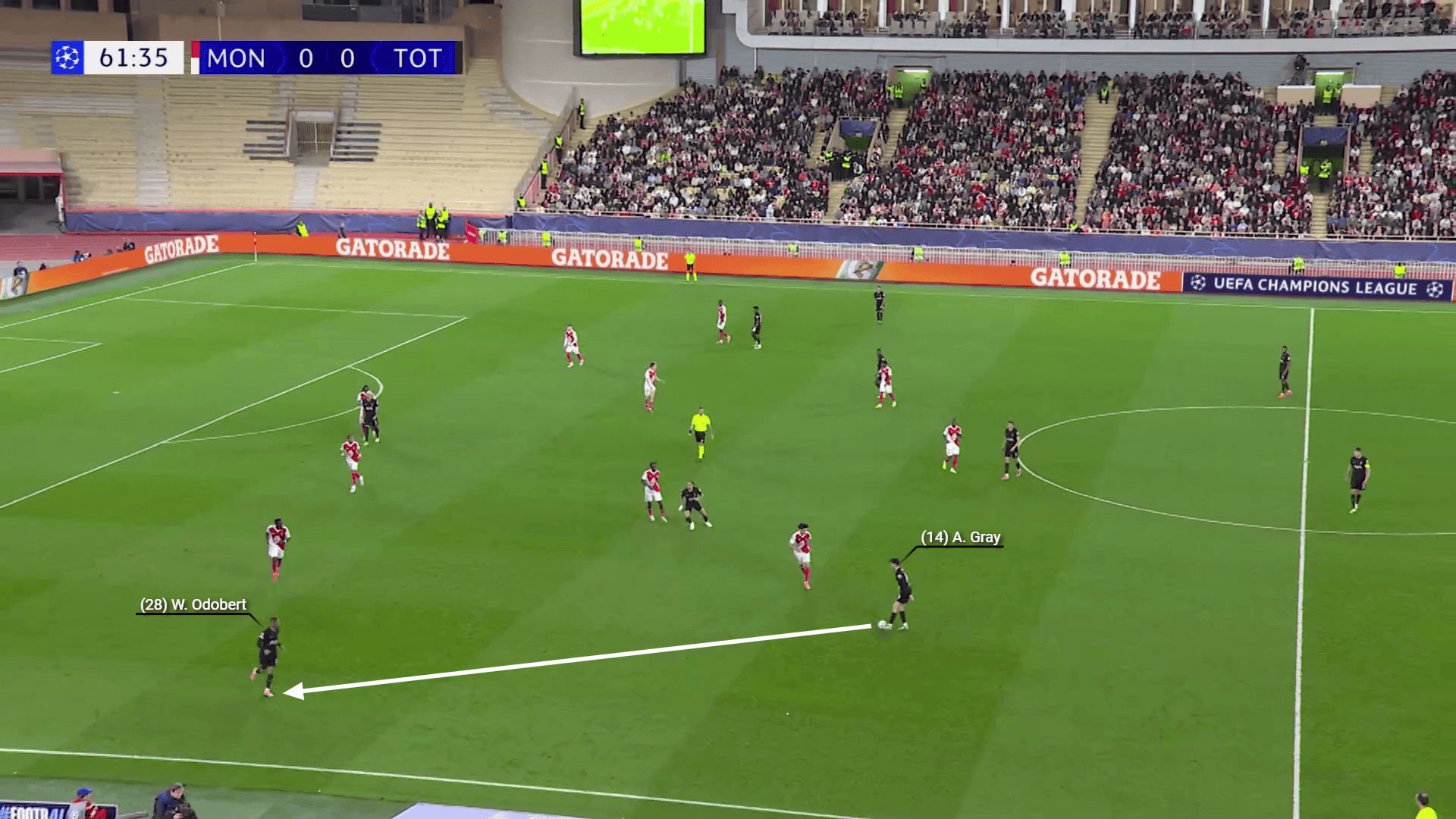
Once the ball went wide, Spurs became easy to read.
The wide player received with limited interior support, because the nearest midfielder was still behind the ball rather than arriving into the half-space.
The opposition could then defend with touchline pressure and a covering midfielder screening the inside, inviting crosses or backwards passes.
Out of possession, Spurs often protected the penalty box so heavily that they conceded the zone just outside it.
That space is where shots and cutbacks get set up, and Tottenham constantly allowed opposition to settle there.
The North London Derby became the clearest example.
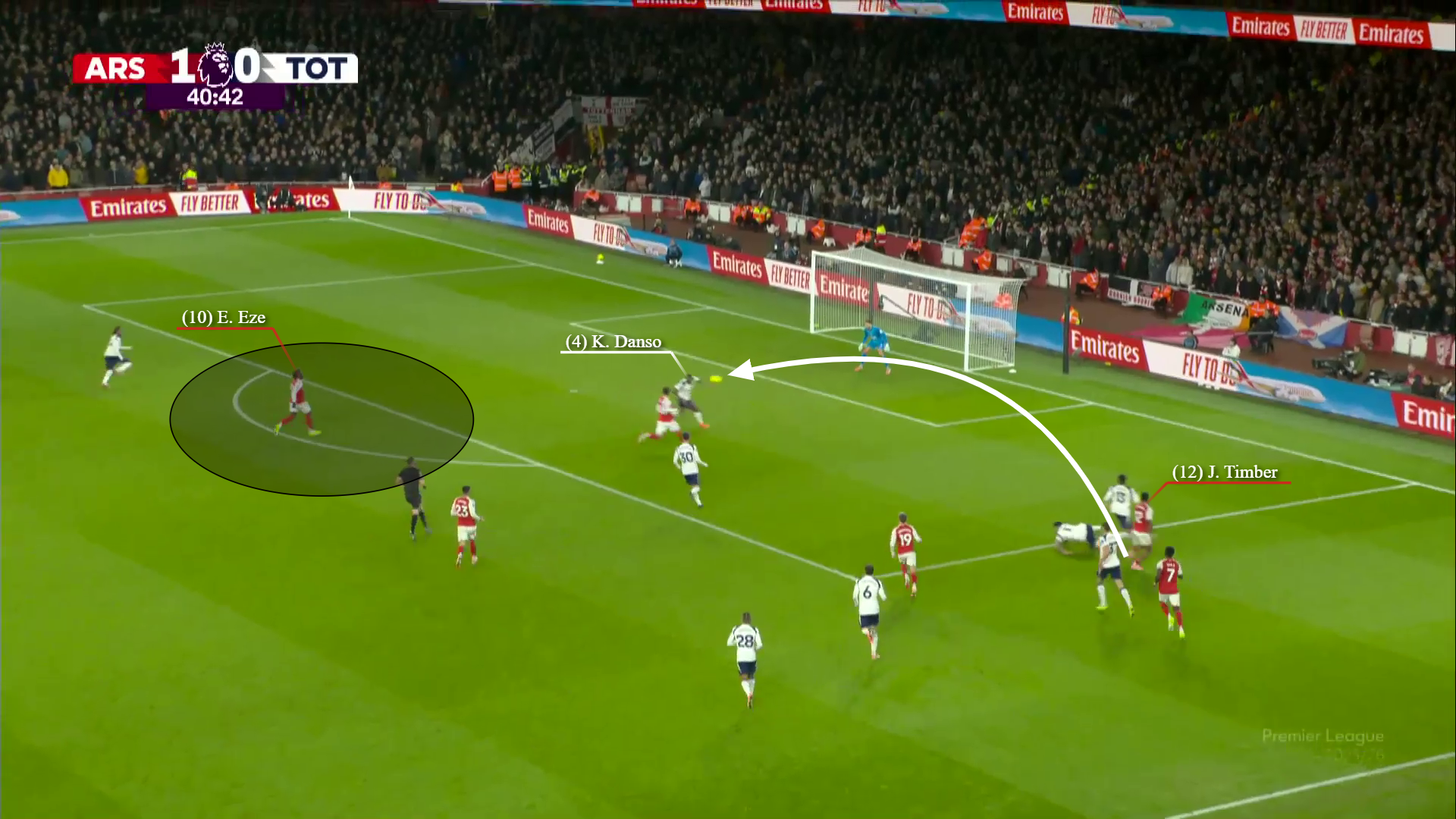
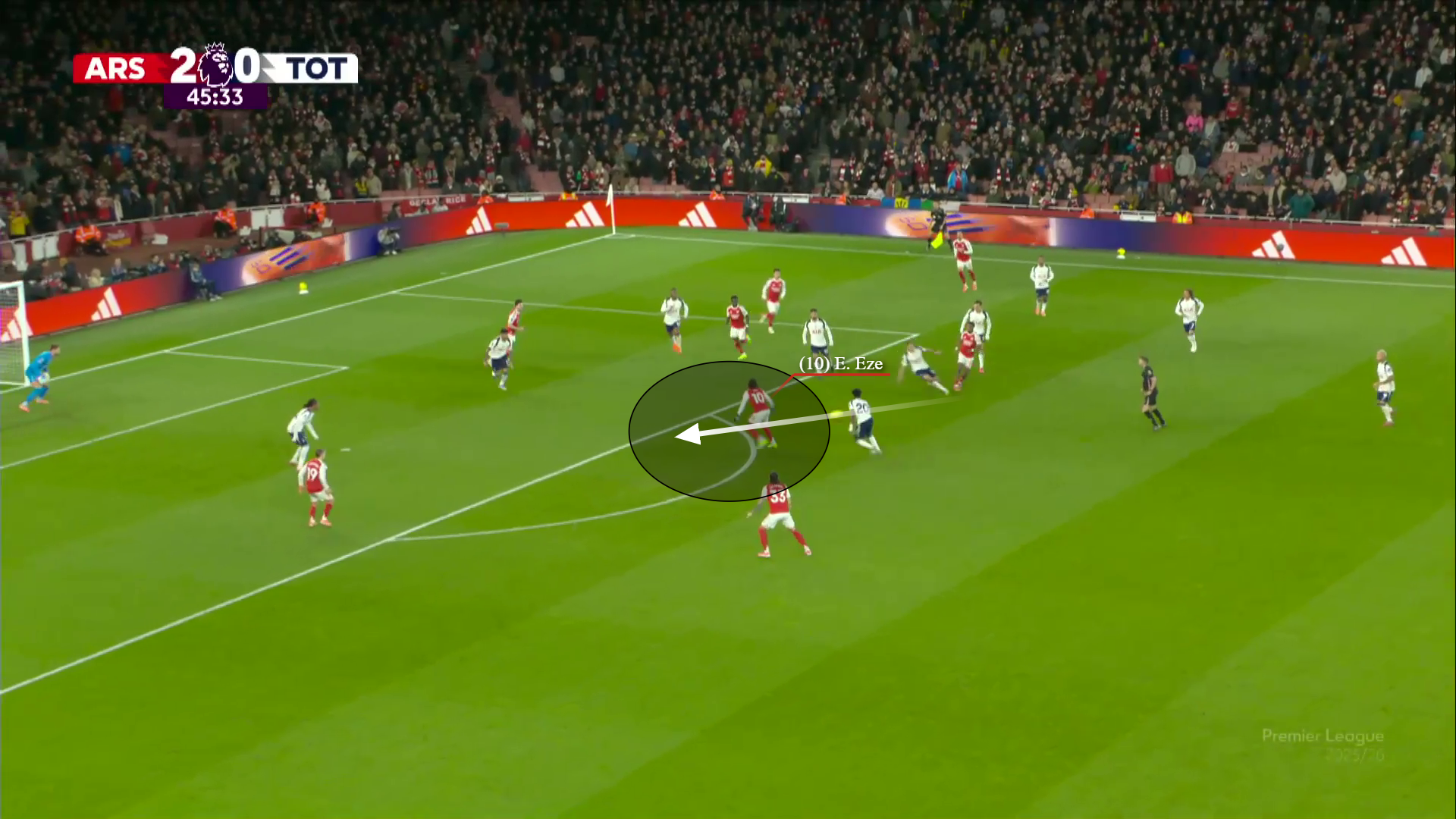
Eberechi Eze scored a hat trick from the same area, where each time facing a defence that prioritised the six-yard box.
These images capture Eze’s first goal.
Kevin Danso’s headed clearance drops into the second-ball zone, is recovered and immediately set back into Eze.
He is then able to receive with no immediate pressure.
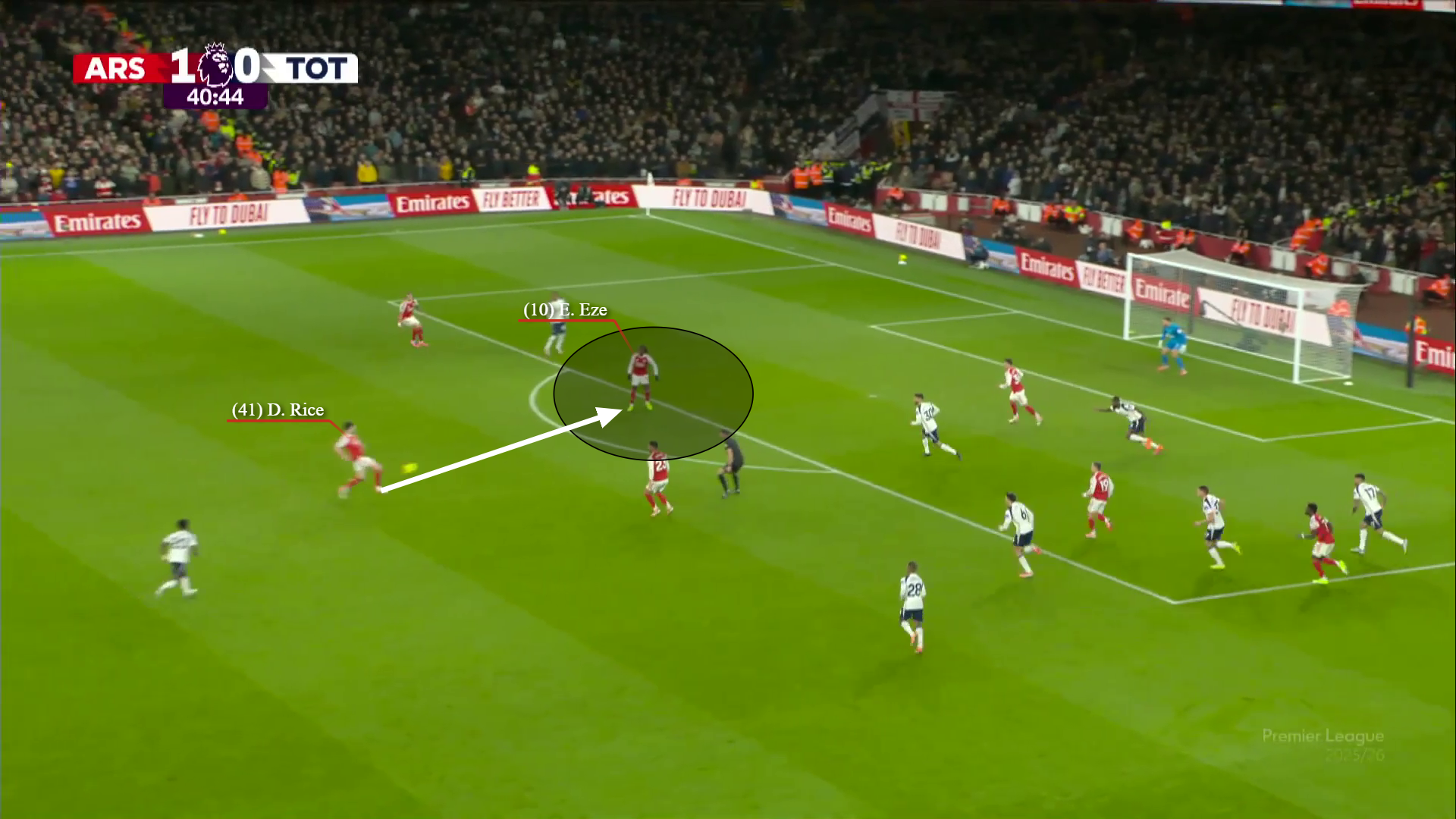
Eze’s second goal highlights the recurring issue.
Tottenham prioritise protecting the box and dropping into the last line, but they do not step out to defend the central area at the edge of the penalty area.
This is exactly the zone a high-level shooter like Eze looks to exploit.
The third goal follows a similar theme of ignoring central spaces near the edge of the goal.
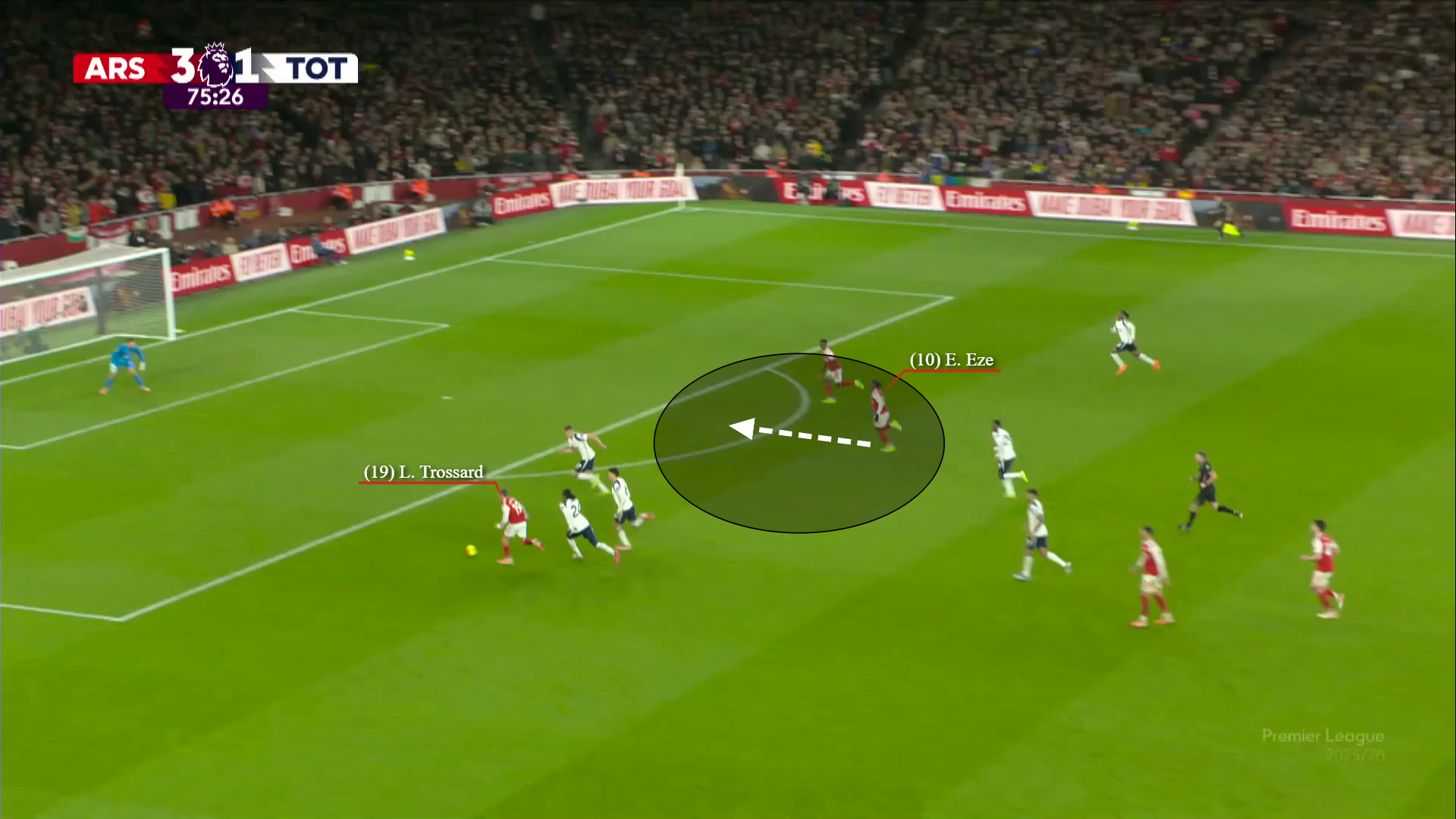
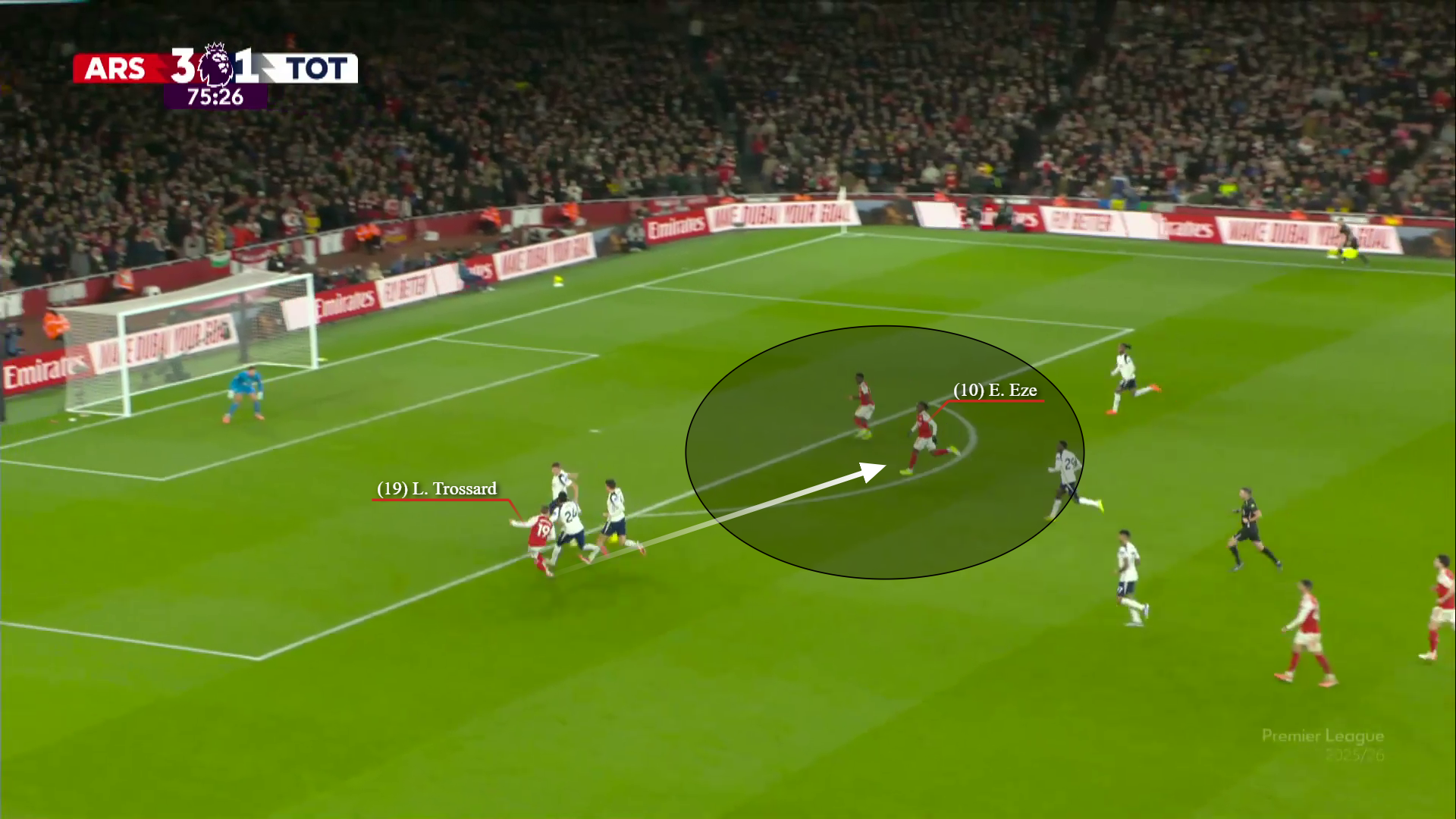
Frank’s Tottenham were not always disorganised, but were organised in a way that dulled their own attack and still conceded high-quality moments.
What Kind Of Manager Do Tottenham Hotspur Need?
The next appointment should be a correction of the club’s strategic wobble.
Tottenham need a coach who plays front-foot football and wants possession.
It must be possession with purpose, aimed at creating reliable entries into the box and controlling where the opponent is allowed to play.
There should be tweaks for opponents, but it cannot make pragmatism the default identity.
They also need a coach who develops young players through repeatable patterns and clear roles.
Spurs have too many promising profiles for a manager who relies on improvisation alone.
Xavi Simons, Lucas Bergvall, Pape Matar Sarr, and Mathys Tel are exactly the types of talents who flourish when they know the reference points around them.
Kieran McKenna Tactics
Kieran McKenna is not an outsider to Tottenham.
He came through the club’s youth setup as a player, then worked inside the academy as Head of Academy Performance Analysis and later held roles across the development pathway.
Since then, he has been inside an elite environment at Manchester United and, more importantly, he has built a modern side at Ipswich Town.
He has taken them from EFL League One to the Premier League with back-to-back promotions, and now they are around the top end of the EFL Championship.
What makes McKenna an excellent choice is that the principles of play are visible.
McKenna’s teams are built with a structure that is designed to create a free player.
The centre-backs split wide (with the goalkeeper) to stretch the first line.
There is also a defined pivot for security and circulation, with higher midfield and number 10 lines that push the opponent vertically.
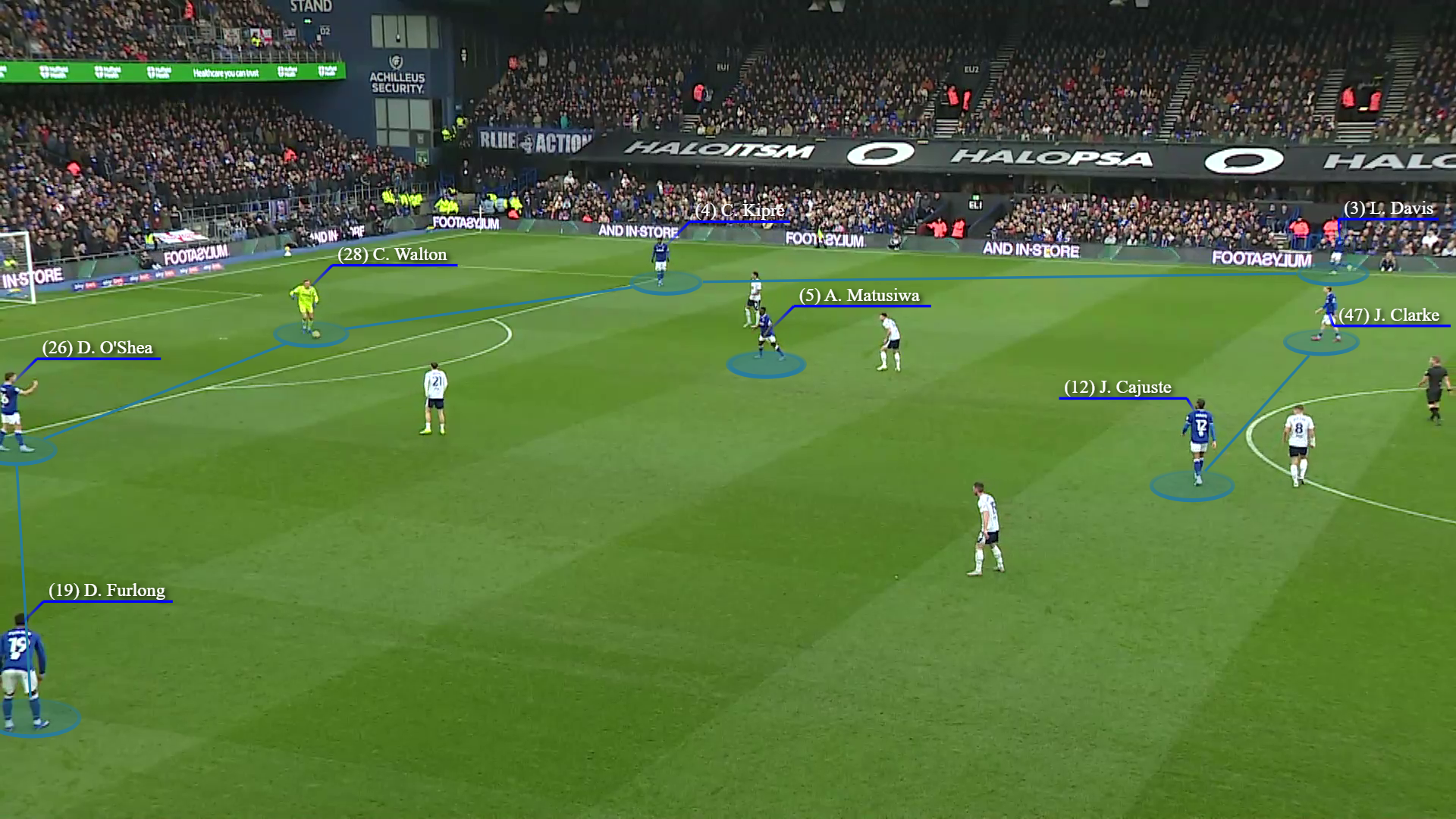
Ipswich are building in a 3–1 that deliberately includes Christian Walton, Dara O’Shea, and Cédric Kipre on the first line, with Azor Matusiwa set as the single pivot ahead of them.
The value of using Walton as the extra player is that it creates an immediate +1 in the first phase, which provides circulation under pressure and allows Ipswich to switch the point of attack quickly if the opposition try to lock on to one centre-back.
That platform is strengthened by the full-backs holding extreme width and height, with Darnell Furlong on the left touchline and Leif Davis high on the right, stretching the opponent horizontally.
This pins their wide players and ensures the easiest exit pass is always available if the press jumps.
Jens Cajuste and Jack Clarke are pushing up to operate higher in the midfield and to mark opposing midfielders.
As a result, this opens the interior lanes for Matusiwa to find a forward receiver and creates the conditions for third-man progression.
This is a different instance where they set up in a 3–2 build, with one of the pivots eventually pushing higher up the pitch to connect with the final third players.
The objective is to create the free man through third-man combinations and bounce passes.
At Spurs, the in-possession base could settle into a 3 and 2 platform with the ball.
Cristiano Romero and Mickey van de Ven can split, with one full-back tucking to form the third defender while the other remains higher.
If Pedro Porro is the high creator (like Leif Davis at Ipswich), Destiny Udogie can be the one to step inside and create the extra central lane next to the pivot (or Archie Gray via an inverted play).
A key detail is the midfield positioning.
One midfielder plays a supporting role, recycling possession and protecting against counterattacks.
Another positioned to receive on the half turn (in the half-spaces) where one touch can take you away from pressure and face the opponent’s backline.
This is the antidote to Tottenham’s recent habit of playing around or over the block, rather than through it.
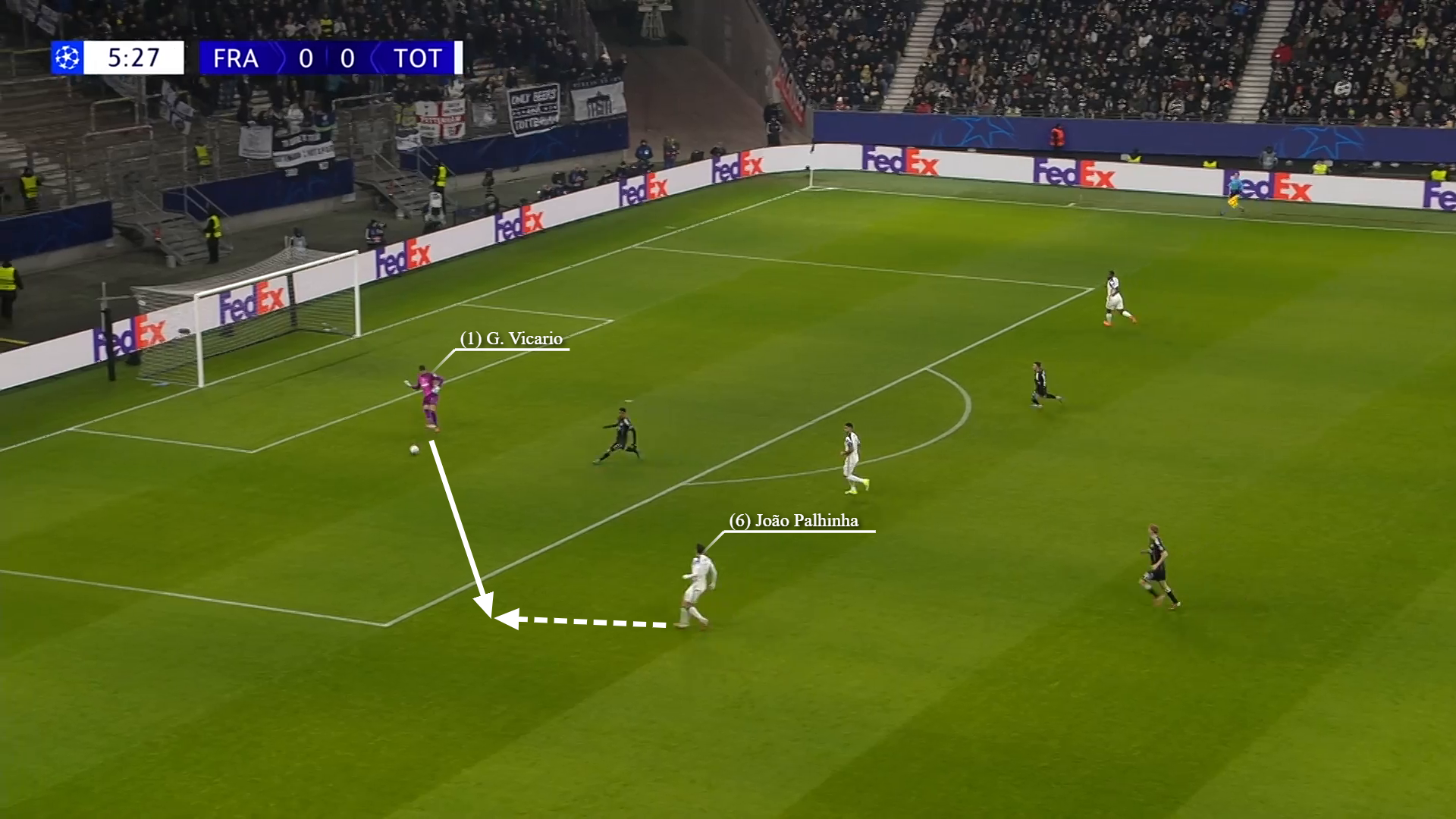
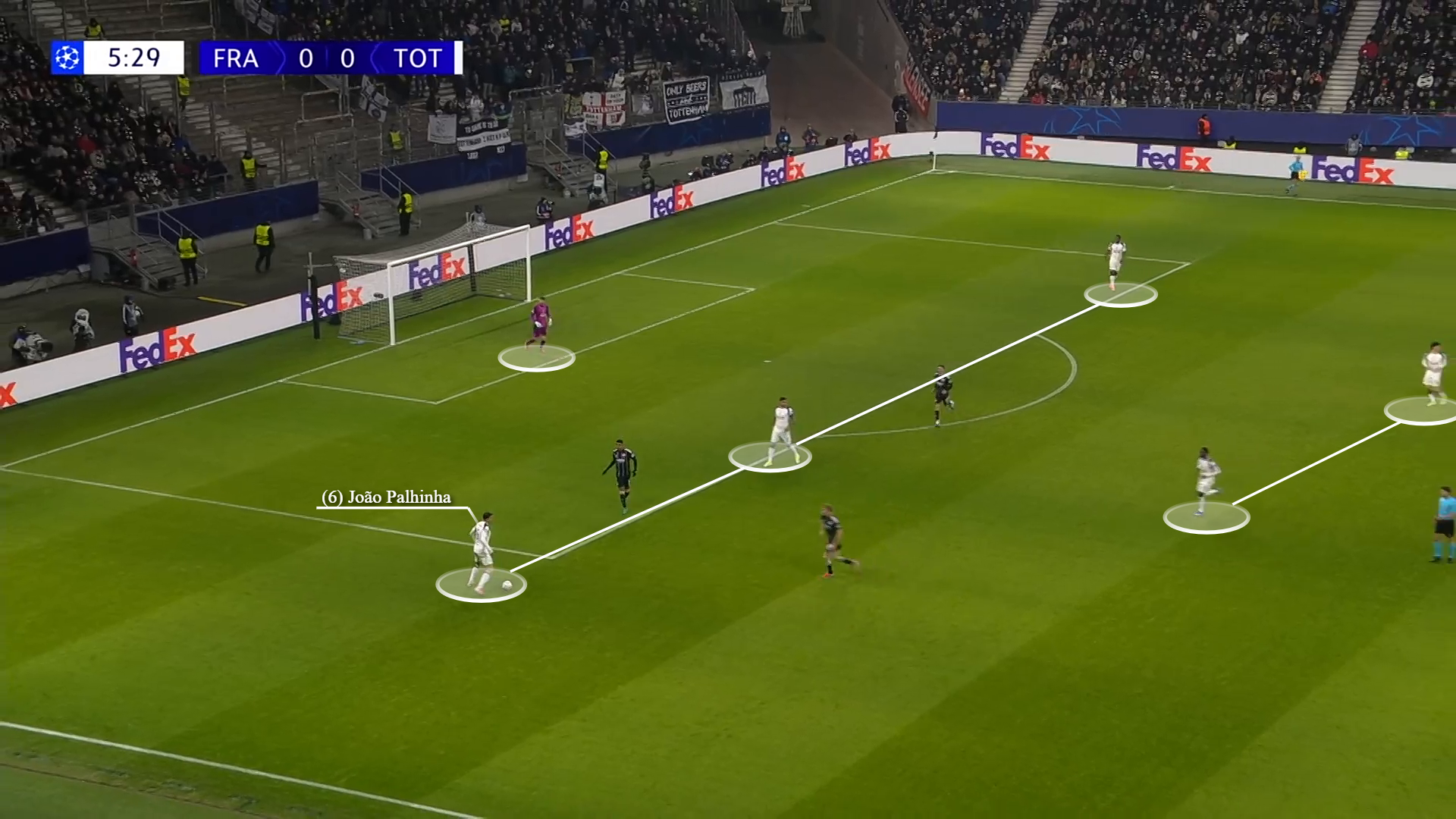
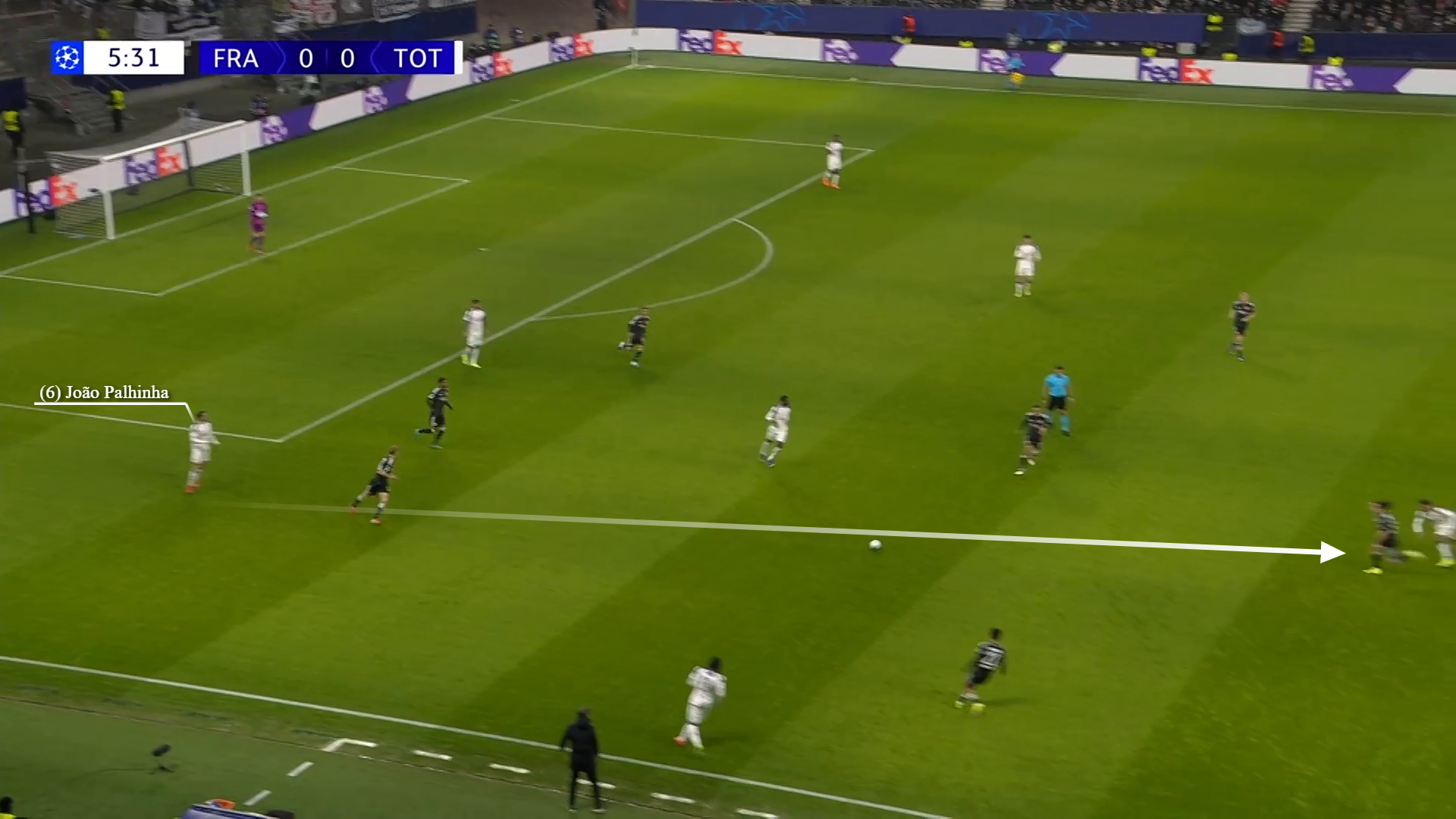
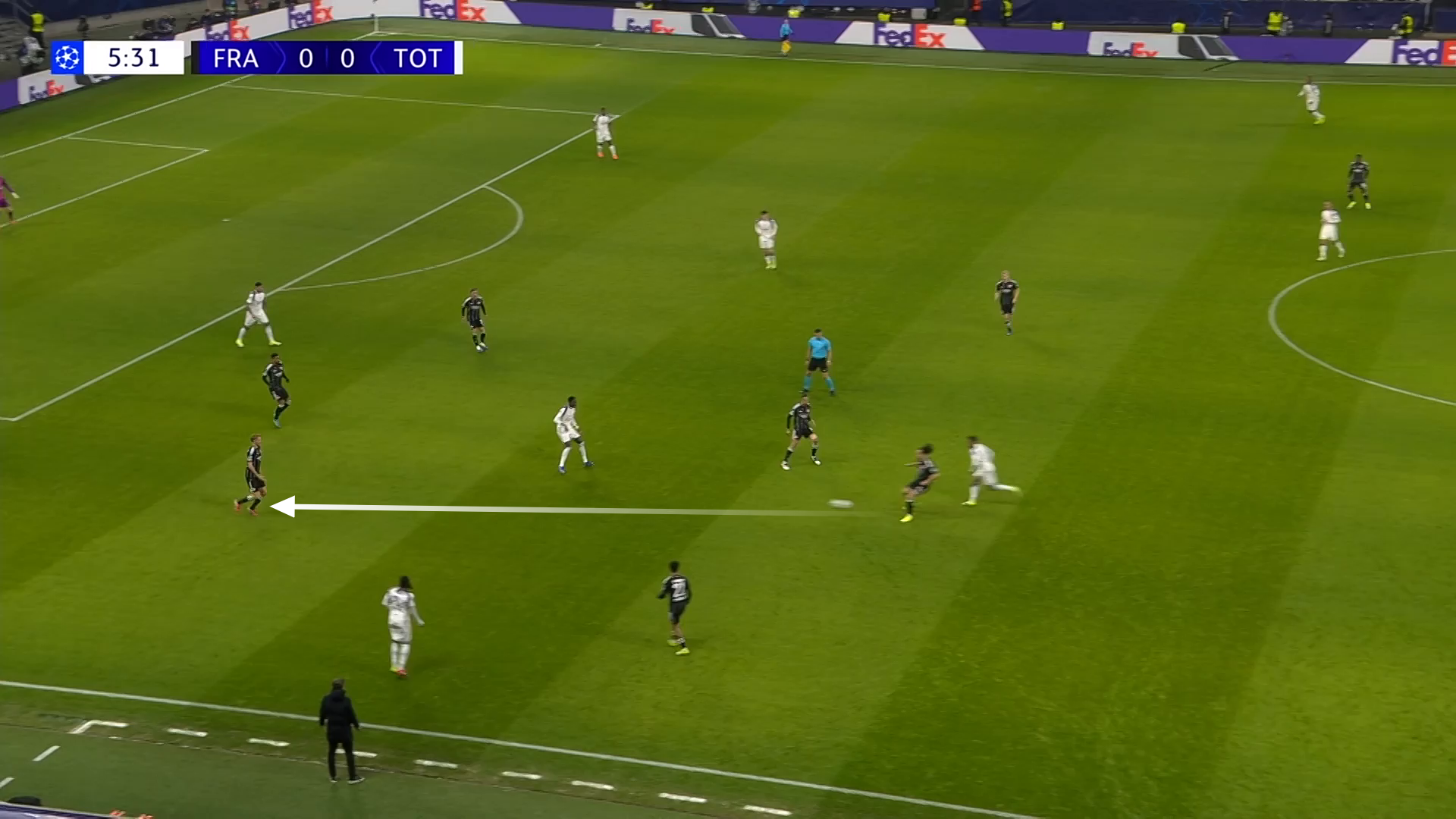
As shown in the Champions League, Tottenham have a flat three in the first line, with Guglielmo Vicario not involved.
This makes passing options difficult.
Eintracht Frankfurt’s press is not being stretched whatsoever, so it is easy for them to win the ball when Palhinha tries to play centrally.
McKenna uses the circulation to move the block, and then acknowledges the need to accelerate play when a lane opens.
The acceleration can come from an eight, a wall pass to a runner, or a diagonal switch to the far side when the opponent has been pulled across or committed to its press.
As shown against Watford, playing into Azor Matusiwa and using his first-time pass out to Darnell Furlong bypasses Watford’s man-for-man press and takes four or five players out of the game.
In the final third, the nine pins the centre-backs, while the far winger, and one midfielder arrive late for the cutback zone around the penalty spot.
McKenna’s Ipswich press is cue-based.
Backward passes, poor body shape, and passes into the full-back with limited support trigger coordinated jumps designed to win the ball in zones that immediately open up the goal.
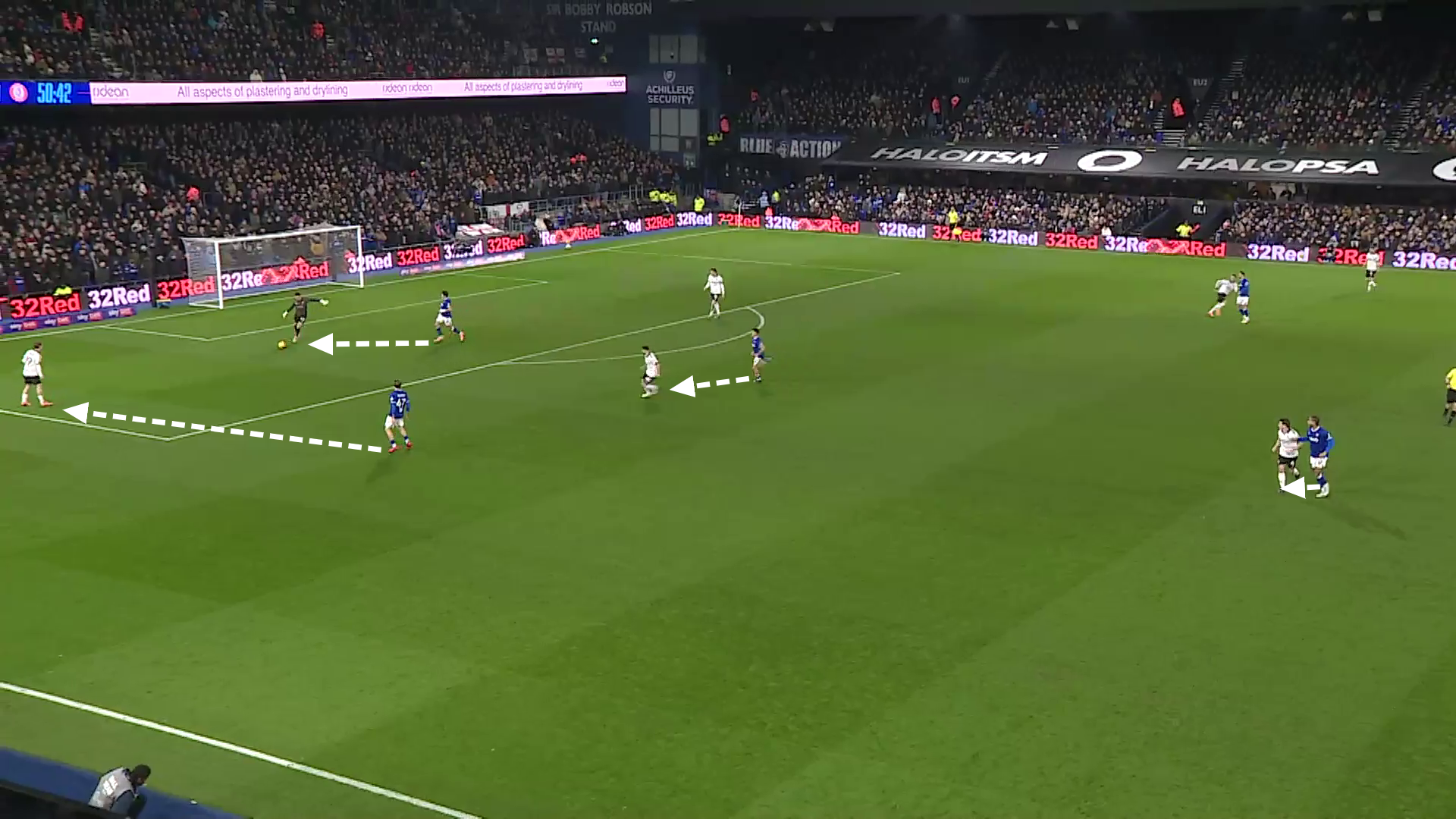
The counterpress is strong.
After losing possession, the nearest players swarm to delay and regain to keep the opponent pinned so Tottenham can attack again without resetting from deep.
McKenna offers proactive football with order.
Tottenham fans respond to front-foot teams, and McKenna’s game model provides that.
Despite Spurs lacking midfielders who can progress from deep (besides James Maddison), they have engines who can counterpress and arrive late in Conor Gallagher and Sarr.
They also have between-the-lines creators, Simons, Maddison, and Dejan Kulusevski (the latter two injured), who would benefit from a structure that produces regular half-space receptions.
Most importantly, he is a development coach.
Spurs are building a young core, and McKenna’s football is repeatable and teachable, which tends to be the best development plan for young talent.
Francesco Farioli Tactics
Francesco Farioli is often compared to Robert De Zerbi, and there is a reason for it.
He worked under De Zerbi’s setup at Benevento and Sassuolo as a goalkeeper coach.
He then moved into assistant roles before taking head-coach jobs at OGC Nice, Ajax, and now Porto, where he is leading the Portuguese league at the time of writing.
From a game model perspective, he is a positional play coach with a strong emphasis on build-up detail, quick attacking phases, and controlling games by occupying zones.
Farioli wants his team to occupy the five lanes.
This is to ensure multiple angles inside, outside, and behind the ball, forcing the opponent to defend the full width and depth of the pitch.
His build-up is designed to create superiority and manipulate the press, and his team builds up in a 4-2/4-1 or 3-2 shape (depending on the opponent or team selection).
This build up is very deep with 5-6 players near the penalty box, which attracts the opposition and creates space behind to exploit.
This leads to artificial transitions and situations that resemble counterattacks.
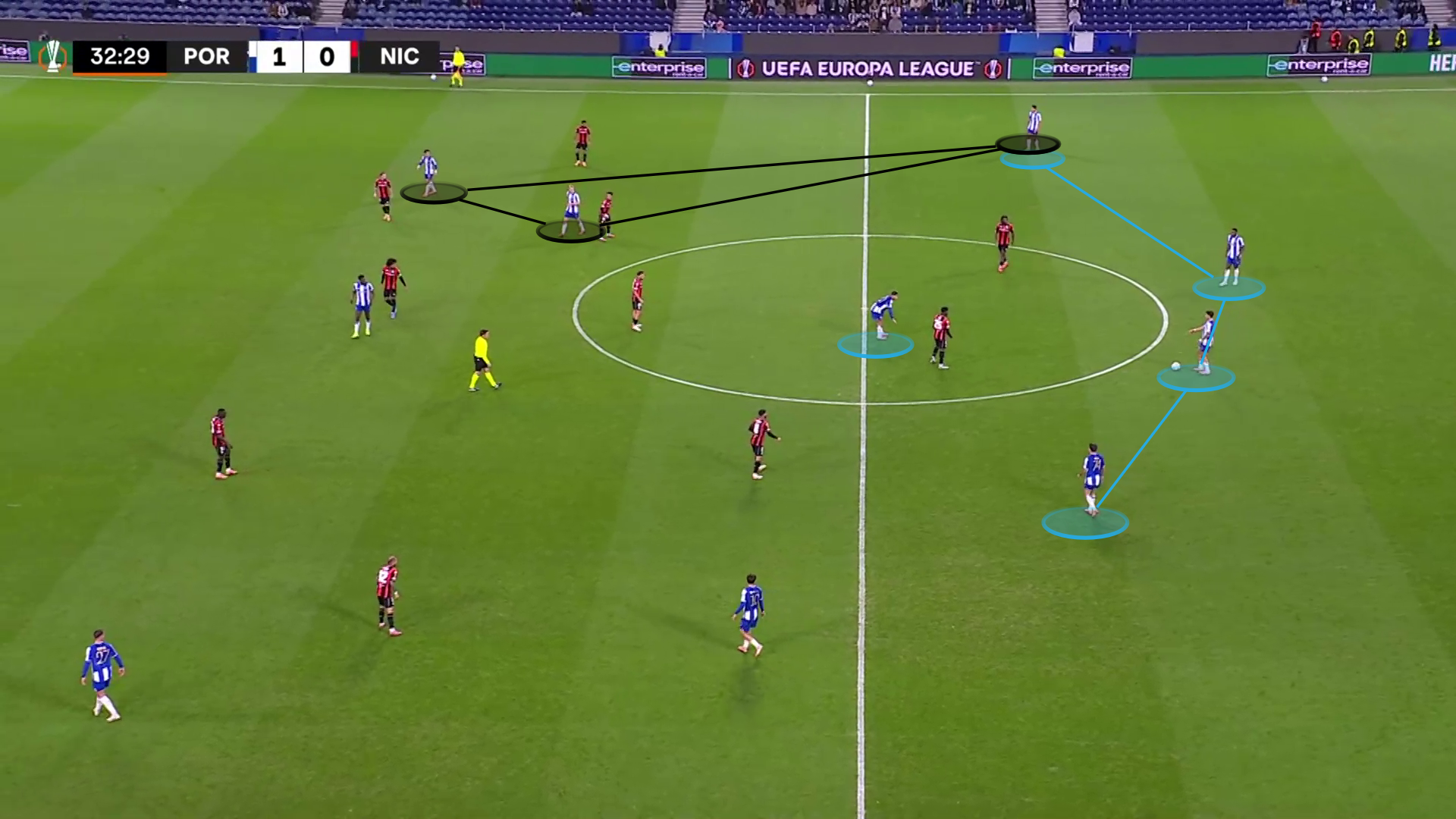
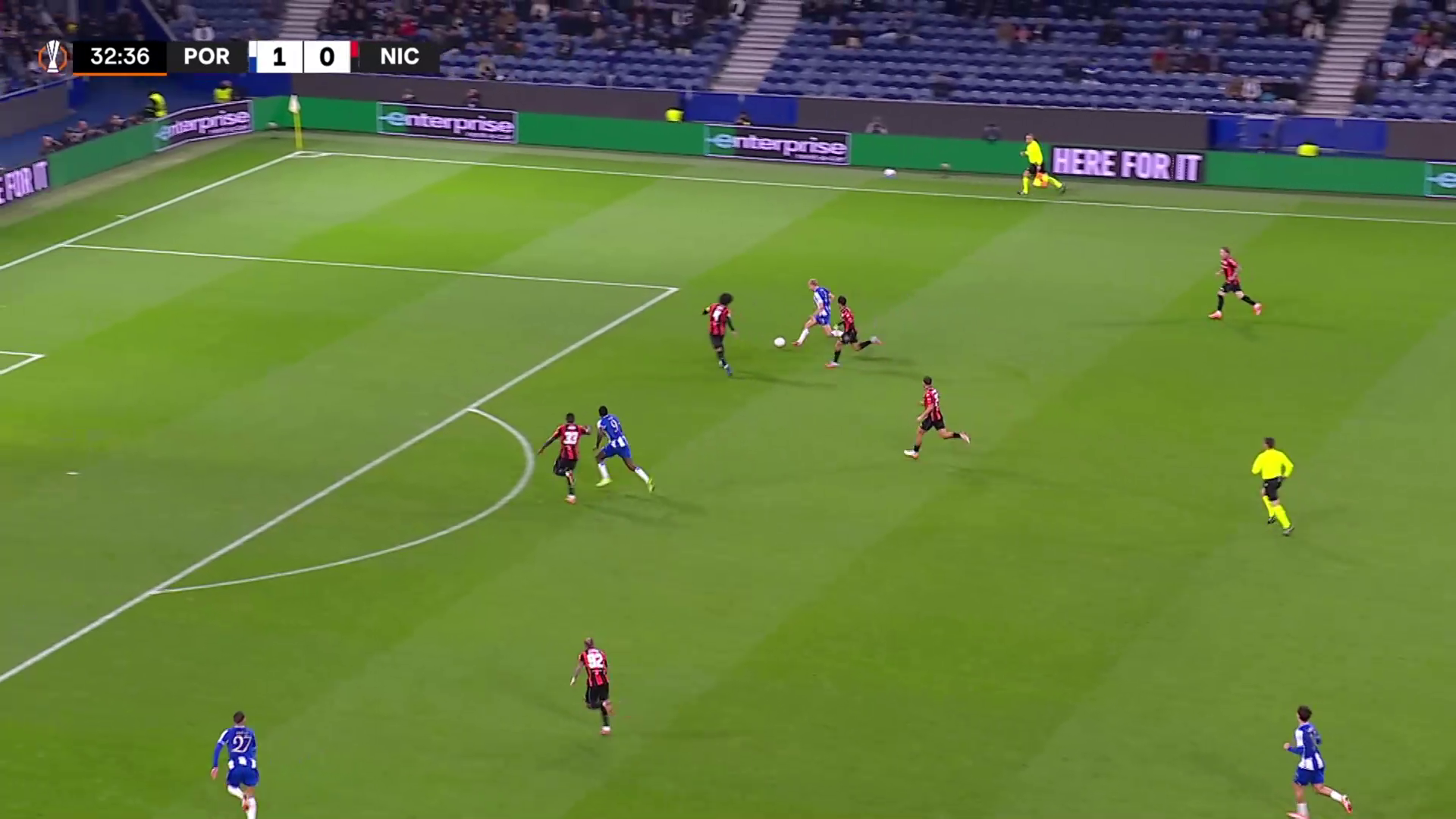
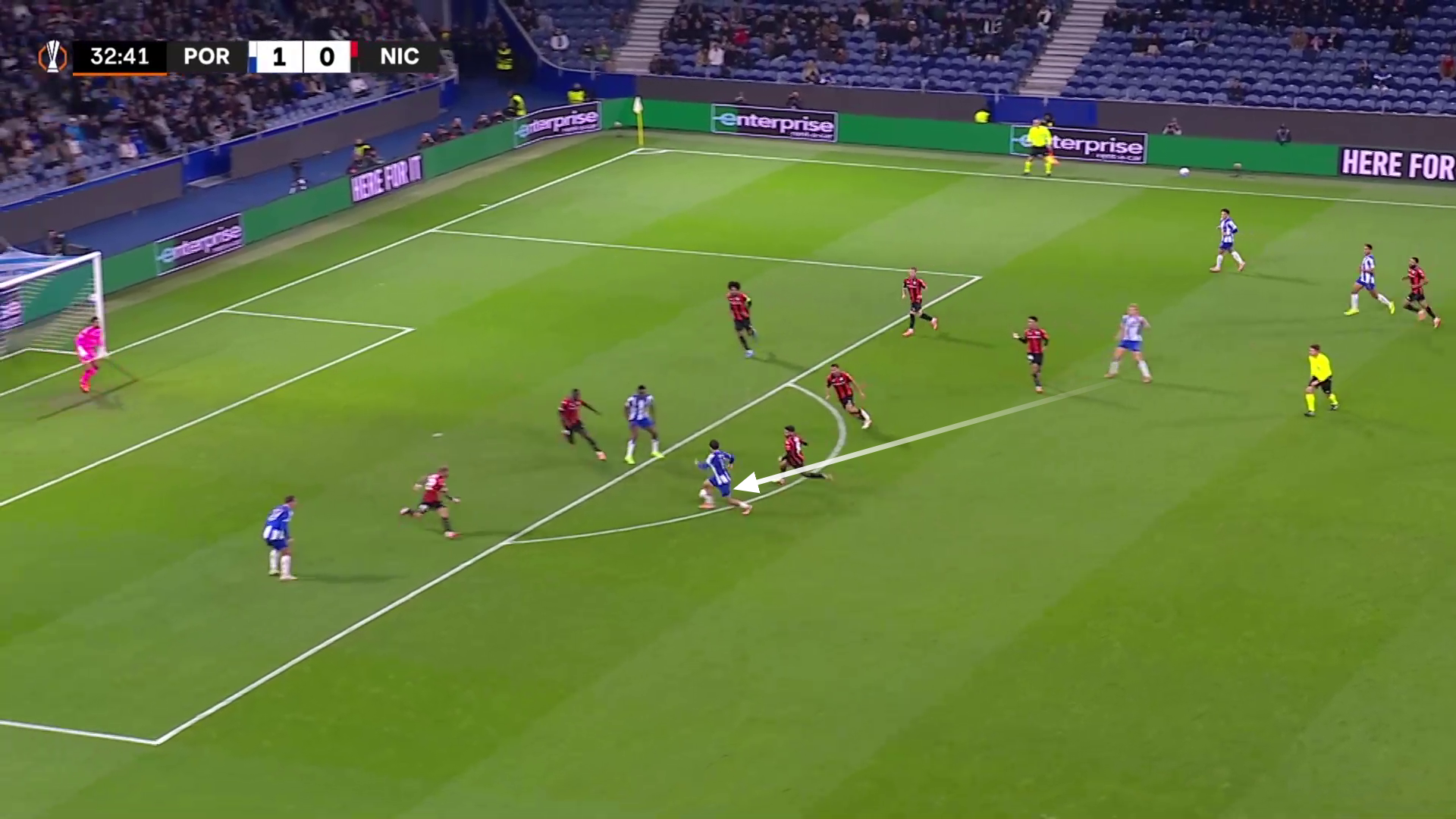
In the images below, Porto build in a 4-1, with relatively short distances in the first phase to move the ball and provide quick combinations.
On the right side, a clear triangle forms, and it is here that Farioli accepts positional roaming while still maintaining structure.
When one player drops to connect, another can push on to keep depth and progression.
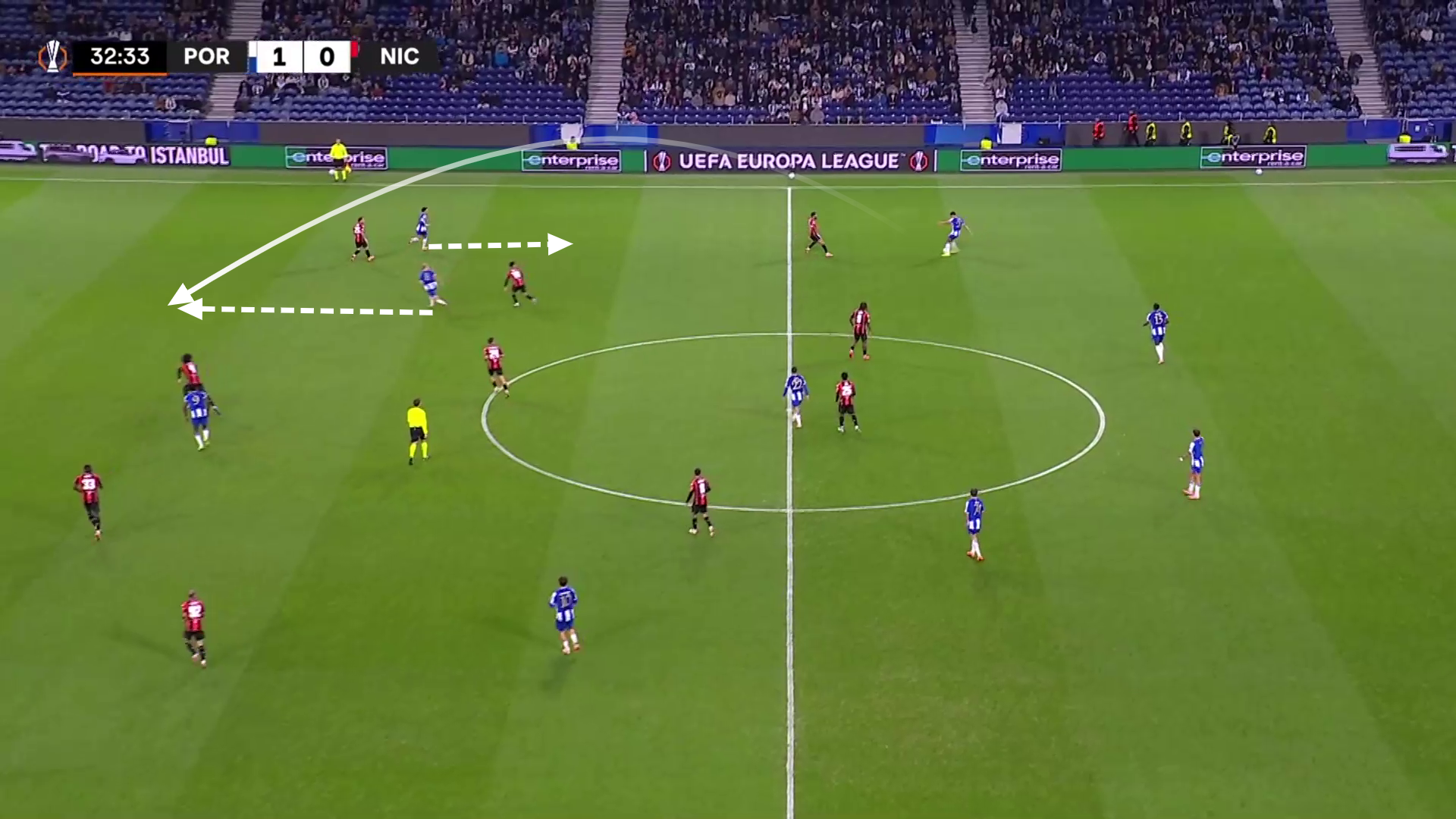
The build-up is therefore patient, but once the ball reaches the final third, there is a strong emphasis on verticality.
As soon as the first opening appears and a vertical pass is played, the tempo increases.
It resembles a counterattack in how quickly Porto attack the space.
Spurs could form a 3-2 base with Farioli and mirror this pattern.
For example, Udogie can invert next to the pivot to create a stable double in the first midfield line, while Porro stays high and wide on the right to pin the winger and create a direct outlet.
That gives Spurs a definite right-side pattern.
Romero finds the pivot, the pivot finds Simons between lines, Simons bounces to Porro, and the underlap arrives inside for the cutback.
This deep build-up and artificial transition were also part of Antalyaspor, where the build-up includes six to seven players, and the tempo quickens when space opens up.
Chance creation is deliberately of high value.
Regardless of the five lanes, the attacking players roam into the spaces behind the opposition press and look to attack quickly, while their sides chase cutbacks and central shots.
This was also shown during his time.
Wide progression is used to open inside access but can also be used for low crosses and cutbacks.
Players like Tel and Randal Kolo Muani, with their high technical base and ability to be elusive in attacking situations, are well-suited for this.
Farioli likes his team to press aggressively and compactly.
This can be a combination of zonal and man marking.
Below is an aggressive, man-oriented initial shape that presses high and can counterpress immediately to disrupt the opposition’s build-up.
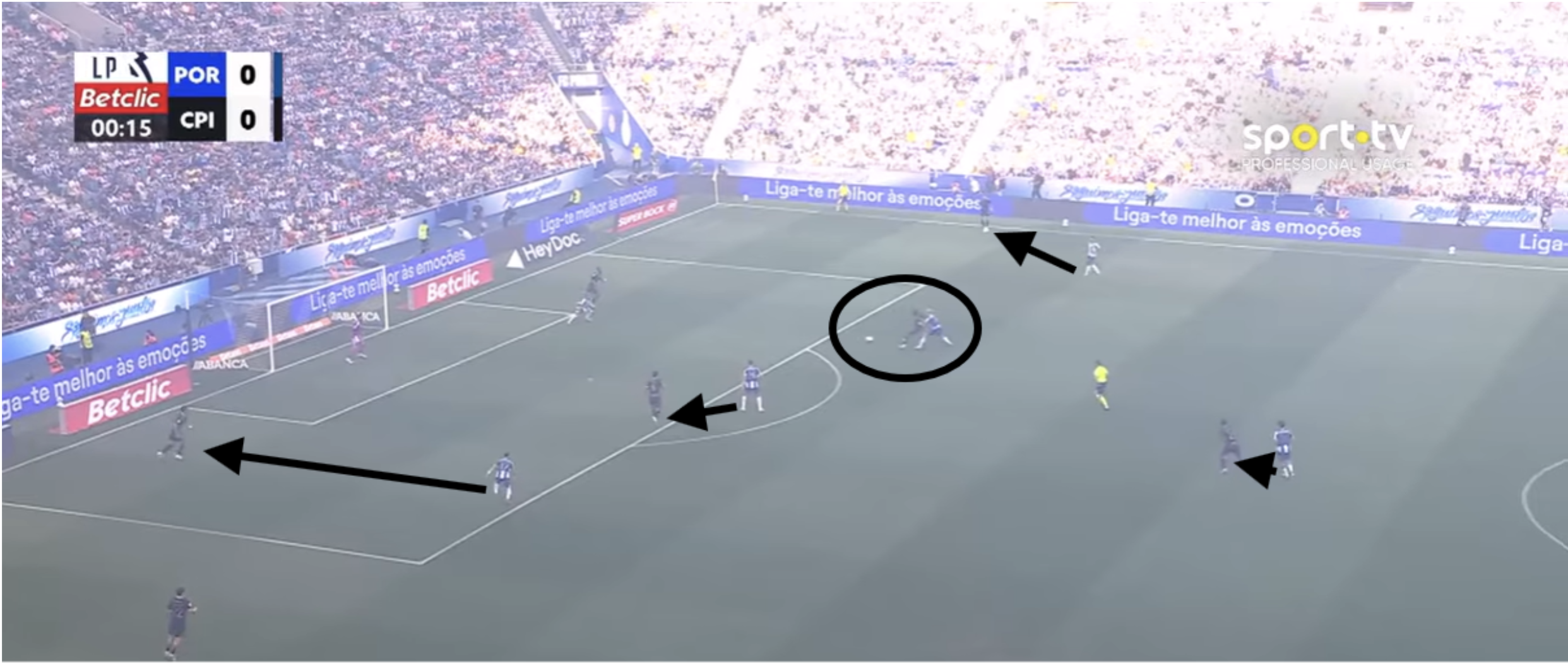
He wants short distances between lines so that the press is supported and the counterpress is always close enough for a collective effort to retrieve the ball.
A common Premier League problem for Spurs has been being played through by a third-man wall pass, especially when the press jumps without coverage behind it.
Farioli’s answer would be distance control.
The near winger presses, the near half-space midfielder blocks the lane into the pivot, and the far side winger tucks enough to protect the switch while still being ready to jump if the ball travels.
It is about denying the opponent’s preferred next pass.
Farioli could maximise Tottenham’s technical talent.
Spurs have those who can receive between lines and combine quickly.
A positional play framework (with the verticality edge) that systematically creates those situations would elevate the whole team.
He also addresses the most damaging pattern in recent Spurs attacks, the drift into predictable wide possession without interior access.
His model is designed to provide central progression quickly and constant movement within a structure.
Like McKenna, he has a methodology that can suit youth development.
Clear principles and roles are often what young footballers need.
And at a club that wants to behave like a modern big side, his control-based approach fits with the ambition to dominate matches with the ball and without it.
Conclusion
Even though Igor Tudor has been appointed interim manager, McKenna and Farioli are seen as two of the best long-term options because they offer long-term coaching value.
Both are young (39 and 36), ambitious, and operating with possession-based football that can scale to a club with Tottenham’s resources.
Both would bring high-energy pressing and the kind of coherent dominance that keeps supporters on side.
They share key ideas.
They both want Spurs to live in the opponent’s half, with spacing that creates passing lanes and a counterpress that continues the attack.
Farioli is more committed to zone occupation and deep build-up, with patient early phases that aim to pull the opponent out before attacking.
McKenna is more opponent sensitive and willing to vary the path to the same destination by mixing controlled build-up with earlier verticality when needed.
Honourable mention should go to Raffaele Palladino, who would have been a close call, but these two look like the most logical next steps if Tottenham want to embody “To Dare Is to Do”.
