
On Monday evening in the Premier League, Sunderland hosted a Burnley side struggling for any kind of form right now, with no wins on their record since a home victory against Leeds United back in October.
The hosts, meanwhile, entered Monday’s match having won only once in their previous seven games.
Sunderland are strong at the Stadium of Light.
They are the only side yet to be beaten on home soil in the English top flight, and one of only eight teams across the top five divisions in Europe to hold this record.
The game developed into a contrast between the teams’ applications of approaches that, at their core, were very similar.
Both sides rely heavily on direct play into the forwards, ranking 18th (Burnley) and 19th (Sunderland) overall in total passes completed this season.
What developed was a demonstration by Régis Le Bris of how to effectively gain an advantage from this approach, rarely fazed by Burnley in defensive terms throughout, while still creating clear chances for themselves in attack.
Scott Parker will still be looking at the run of games coming for Burnley and wondering where the next win will come from.
Lineups & Formations
Le Bris set up his side in a 4-2-3-1 formation that had some flexibility when defending deep to allow Nordi Mukiele to tuck in from the right-back position, with cover from Trai Hume, to create a five across the backline.
In front of Robin Roefs in the net, Mukiele was accompanied by Dan Ballard, Omar Alderete, and Reinildo Mandava.
The long-time absentee and record signing Habib Diarra returned in midfield next to Noah Sadiki.
Trai Hume, Enzo Le Fée, and Chemsdine Talbi played the supporting roles to Brian Brobbey, as the lone Striker.
Scott Parker, meanwhile, opted for a 3-4-3 formation.
Martin Dubravka was in goal behind Bashir Humphreys, Maxim Esteve, and Alex Tuanzebe.
Lucas Pires and Kyle Walker operated down the flanks, the latter in a slightly more conservative role than his left-sided counterpart.
Florentino Luis and Lesley Ugochukwu occupied the double pivot, behind a forward trio of Marcus Edwards, Jaidon Anthony, and Lyle Foster.
Space Vacated By Burnley, Easily Exploited By Sunderland
The clear difference between the two teams, which ultimately led to the one-sided result, was their approach when becoming compact in defence.
For sides to succeed with a direct approach to attacking play, there must be a willingness and capacity to win duels and regain possession.
Sunderland were able to exploit the space left by Burnley due to some fundamental defensive issues for the Clarets.
Often, throughout the match, Burnley’s back five would drop very deep into their own area when Sunderland had the ball in the attacking third.
A lot of the time, this happened because the midfield failed to follow, leaving them isolated in defending large patches of space between 10 and 20 yards from the byline.
The first example of this comes from the goal to make the score 1-0.

Initially, Burnley have a good shape to defend while Sunderland have settled possession, the wide players moving centrally to limit space.

Sunderland shifts the ball across the backline, with Diarra pushed higher past the double pivot.
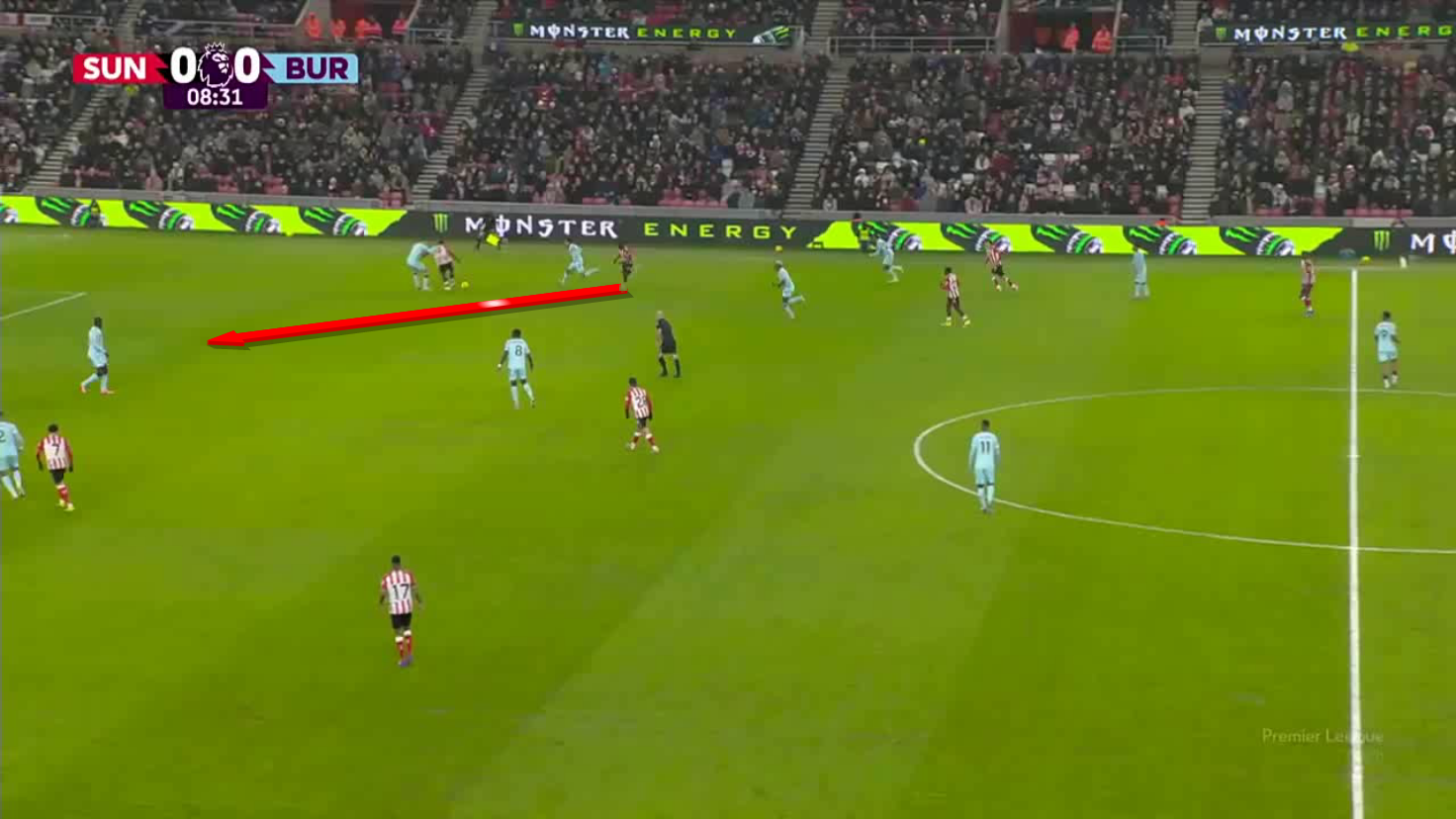
After a quick interchange down the right side, Brobbey holds up the ball, with Diarra then able to run into the space created centrally, separated from the Burnley midfield.
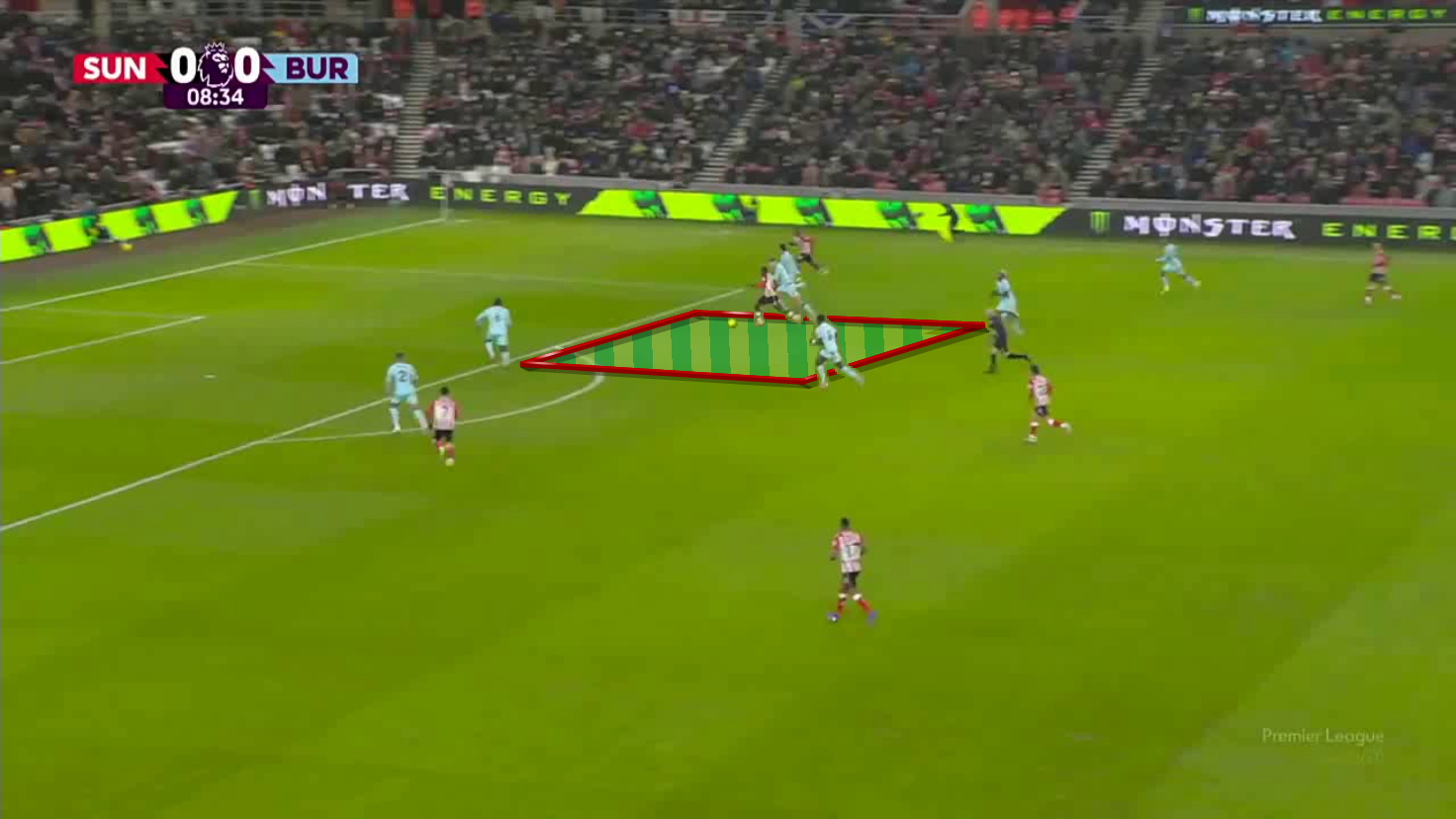
Diarra can break into the box centrally and take the shot, which ultimately results in a Tuanzebe own goal; the Burnley midfield is unable to influence the outcome.
Similar patterns continued throughout the game.
Only eight minutes later, a similar space opened up after a move down the right side of Sunderland’s attack.
After Mukiele makes the run down the right, Talbi cuts inside from the opposite wing.
With the backline occupied by Brobbey, there is again space for him to run into.
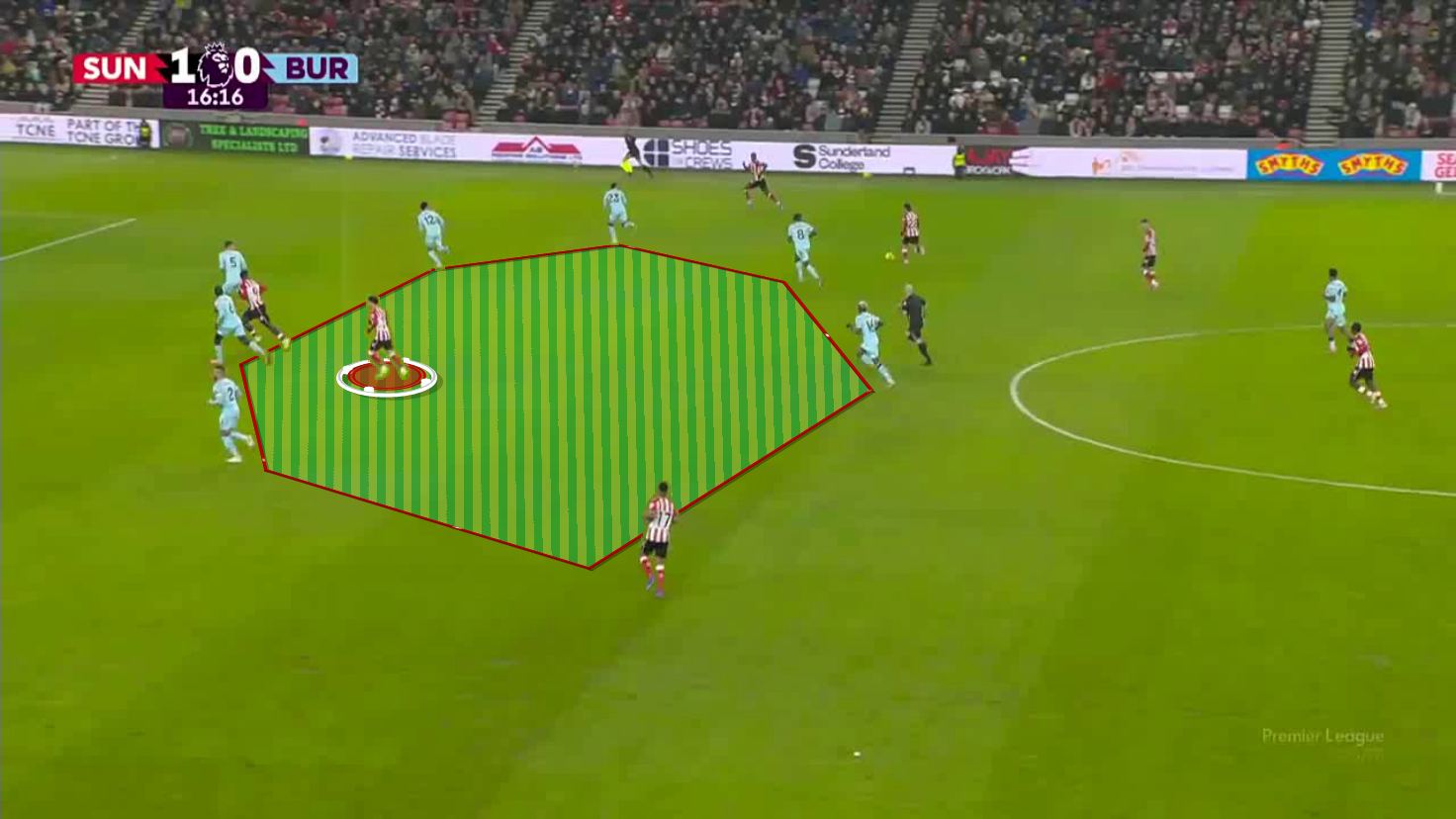
Talbi’s starting position begins in the space between the Burnley defence and midfield.
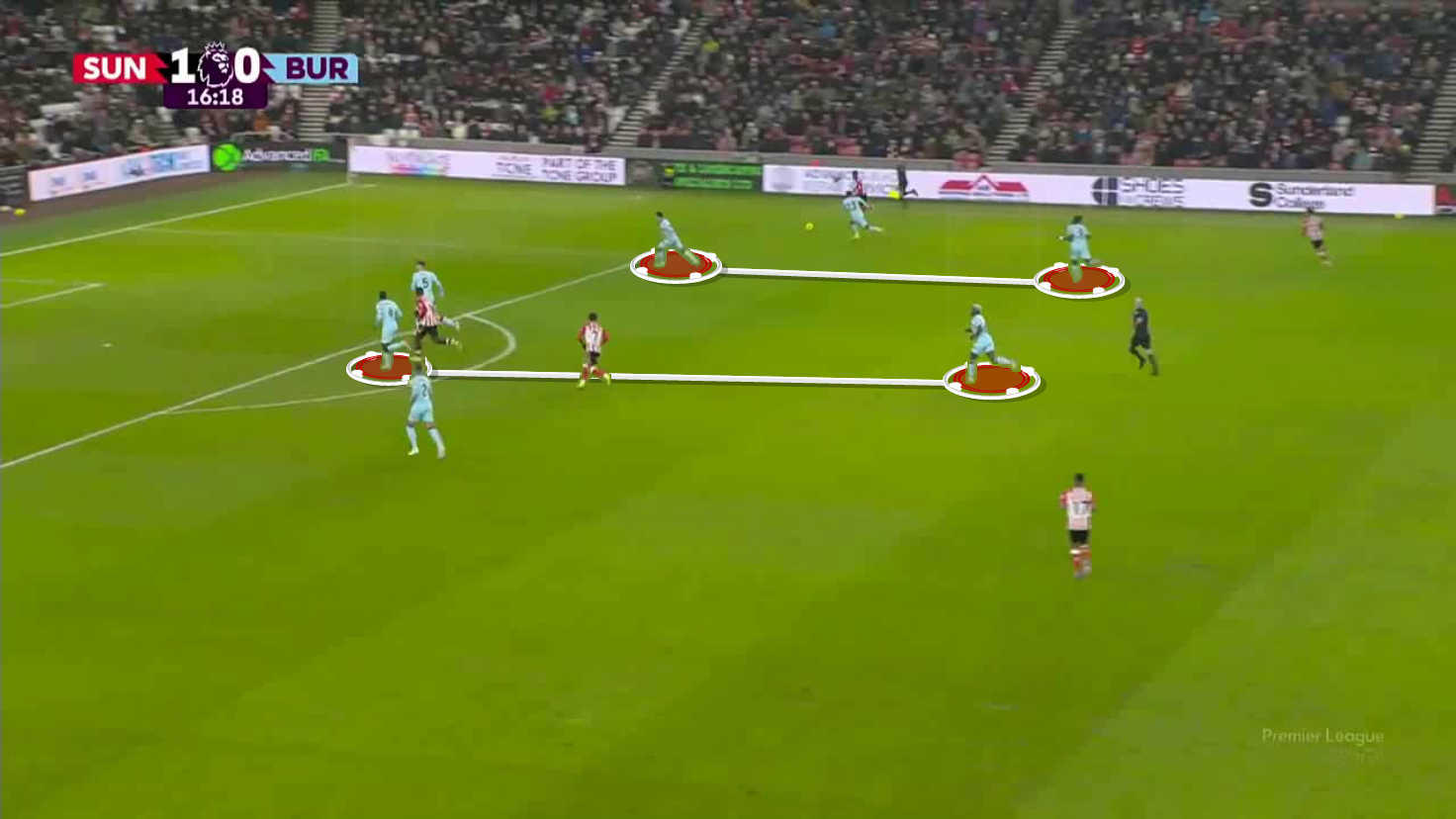
Even after the move progresses, Talbi is still left with a lot of space as the ball is played wide, positioning himself between Luis and Tuanzebe.
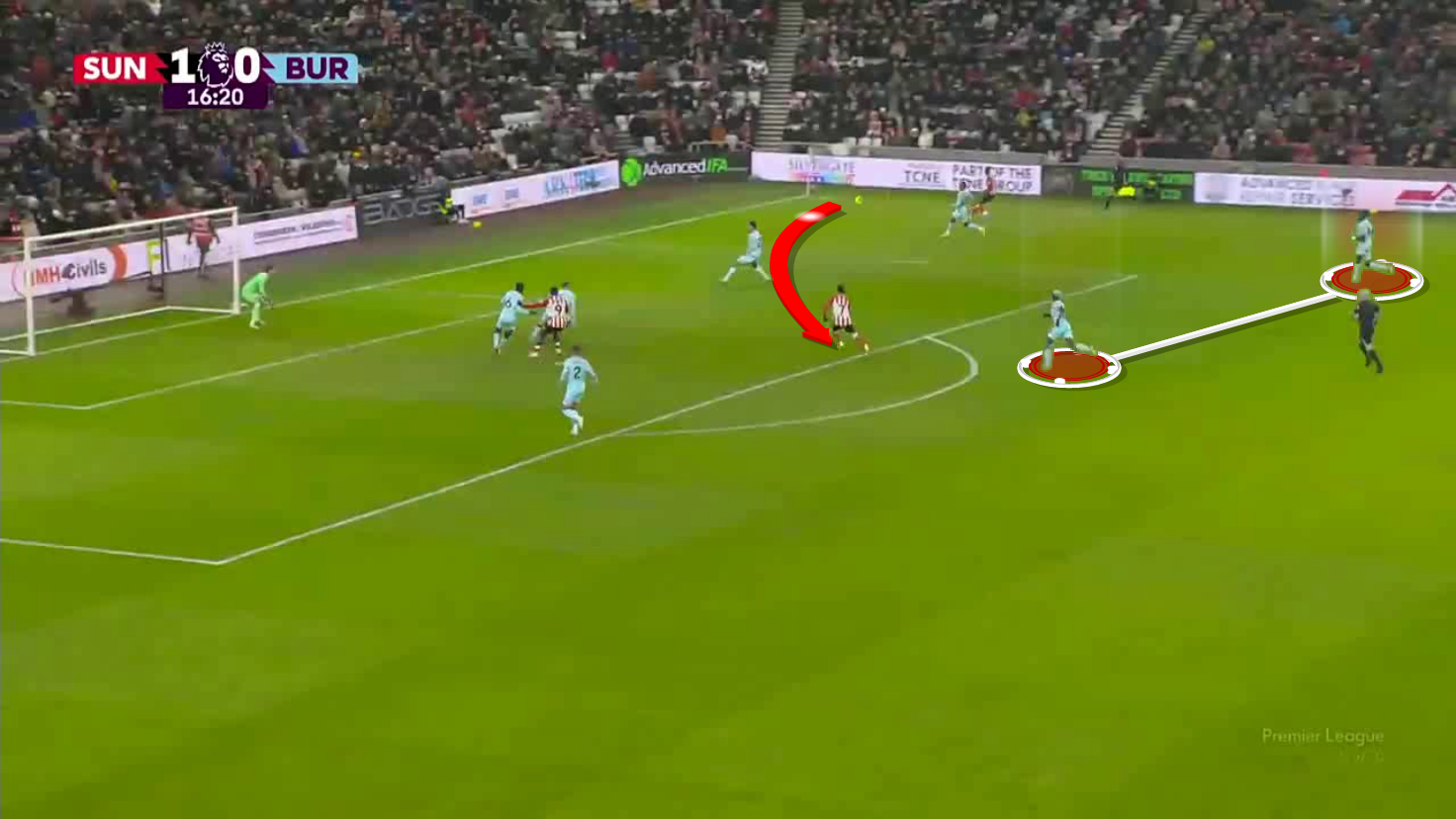
When the ball is played back, Talbi has the space to shoot; both Ugochukwu and Luis are disconnected from the play.
Burnley were unable to adapt to these scenarios, eventually impacting both the second and third goals conceded.
For the second, the initial play began with a fast break from Sunderland’s half.
Again, a positive run from Mukiele allows Sunderland to attack the space in behind the Burnley defence after the initial switch of play from Le Fée.
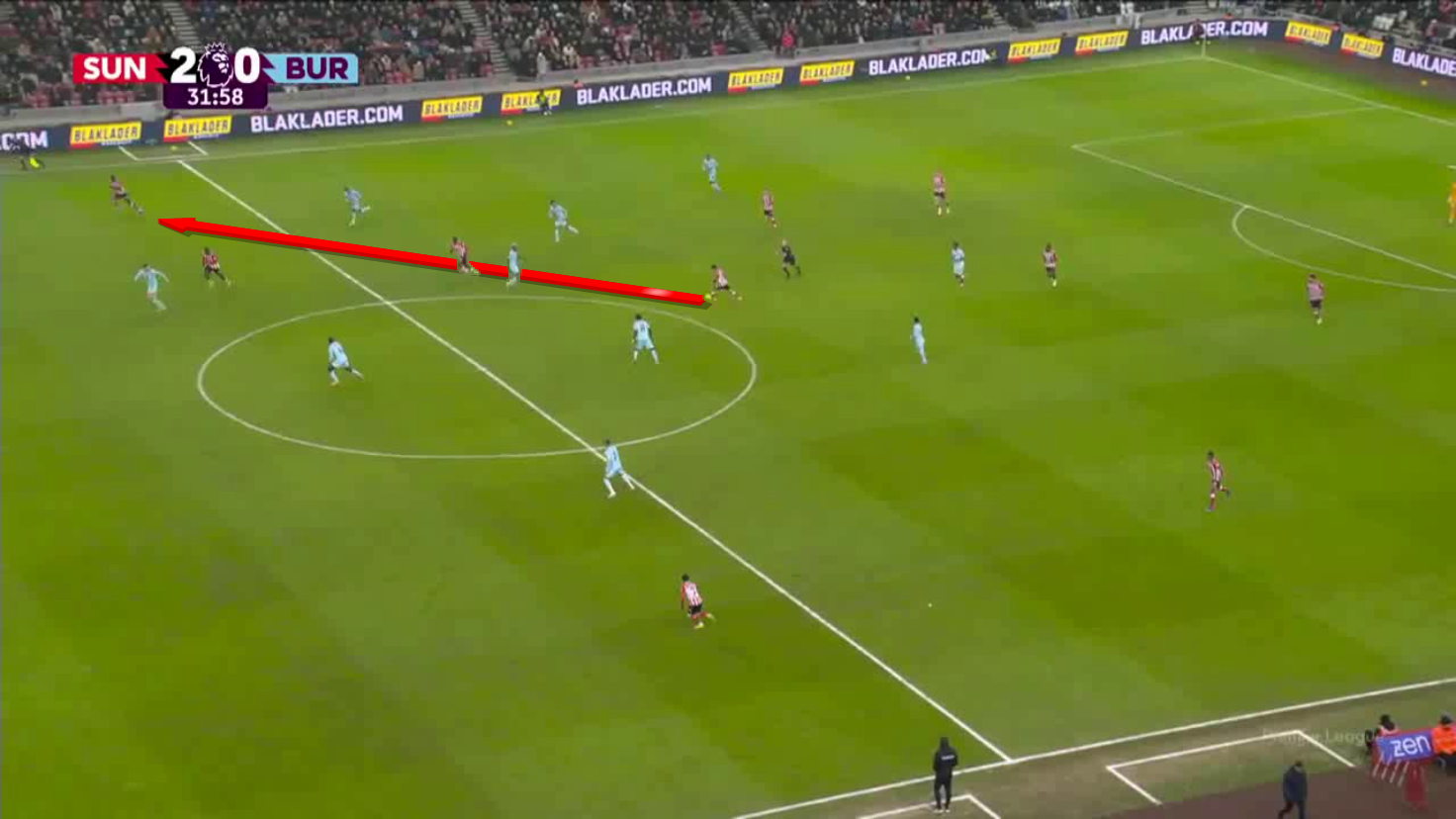
Le Fée plays the direct pass into the space behind Burnley’s left side.
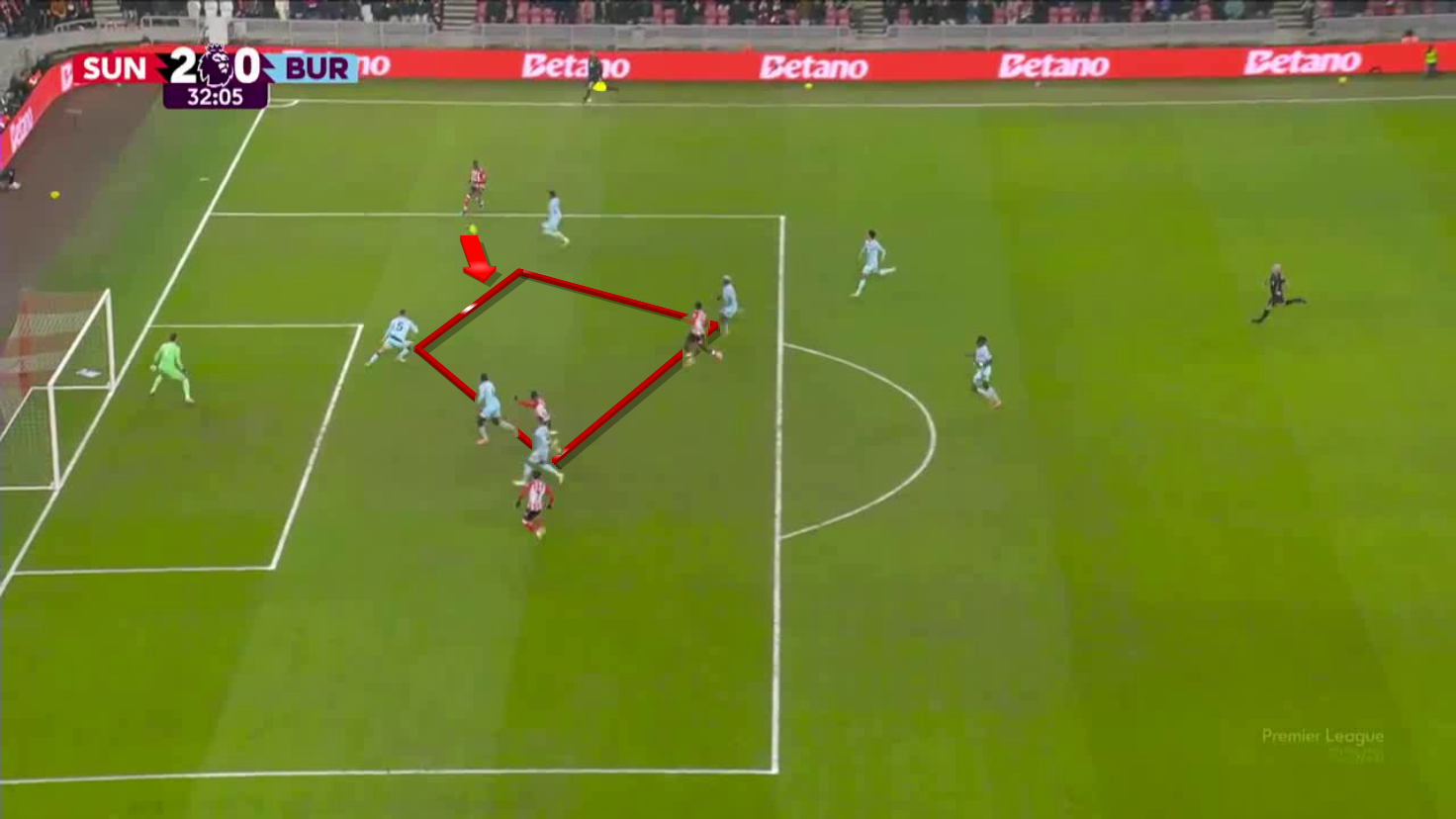
Mukiele can find the pass back to Diarra, who again has space between the backline of Burnley and their midfielders.
This space was exploited for the third goal, though it was a wonderful finish.
Talbi was able to cut in from the left wing without being contested before producing the strike that sealed the result.
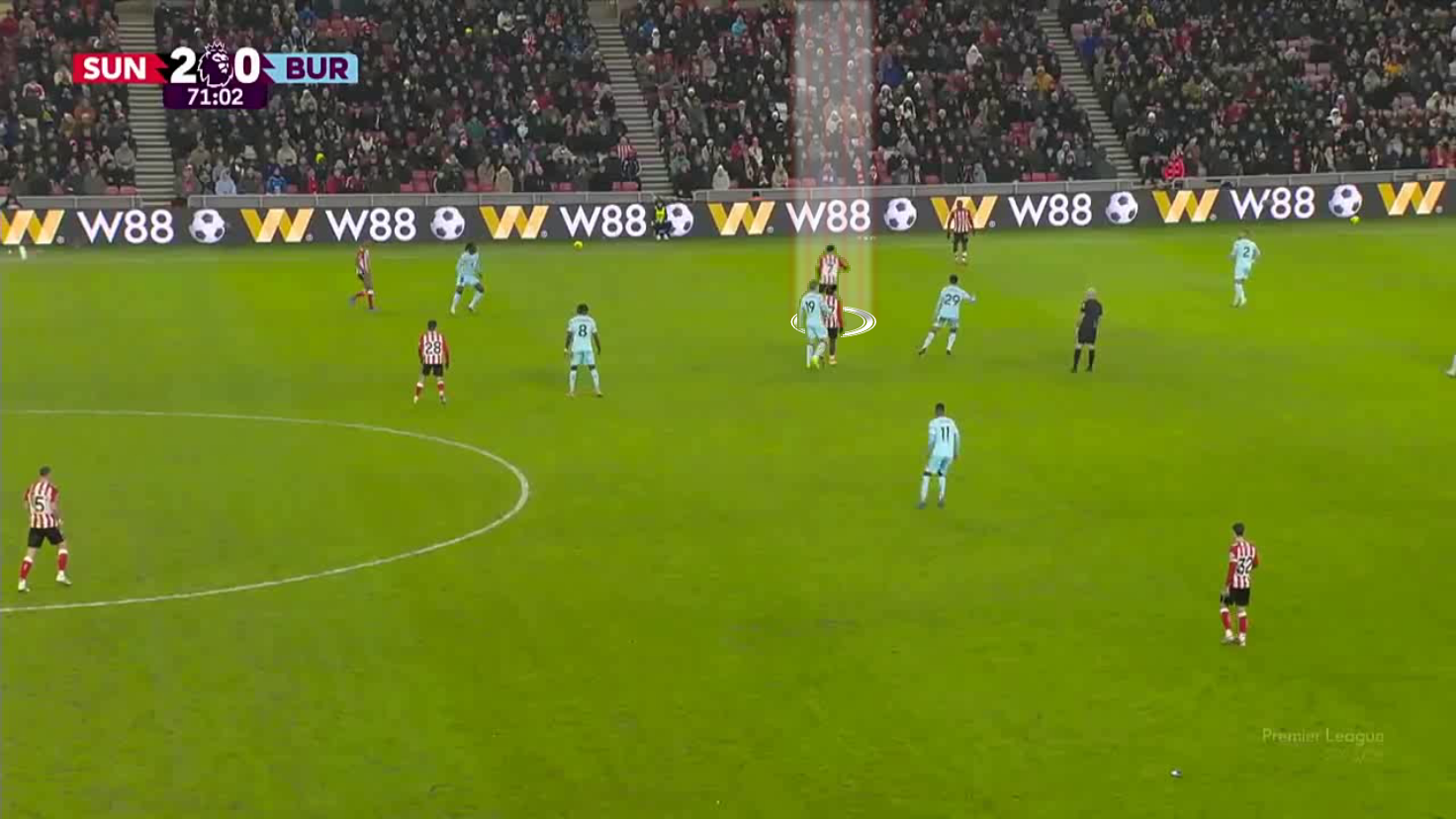
Talbi picks up the ball on the Sunderland left and turns to drive forward.
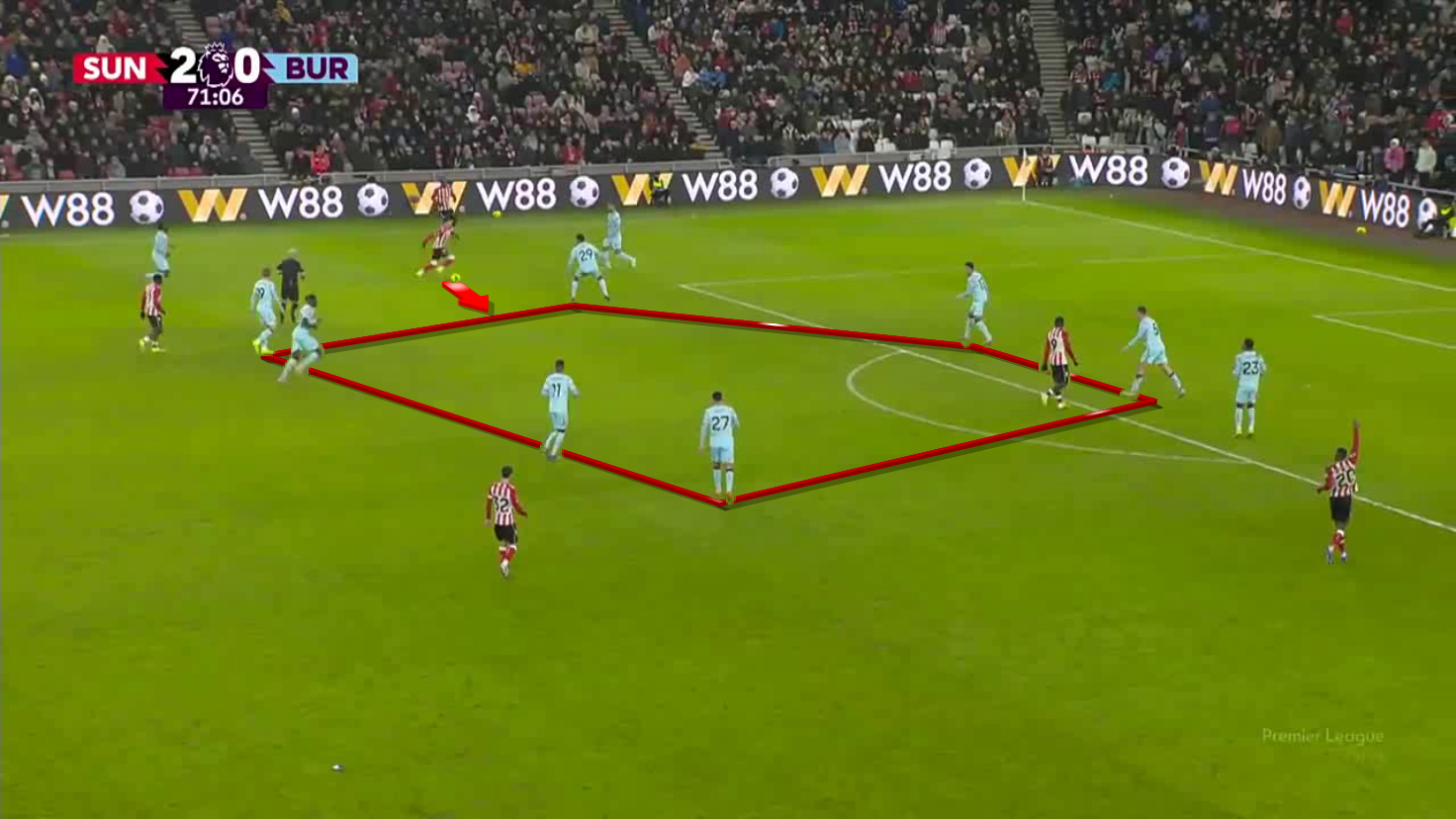
After advancing, Talbi drives with the ball into the infield, space still free in the centre.
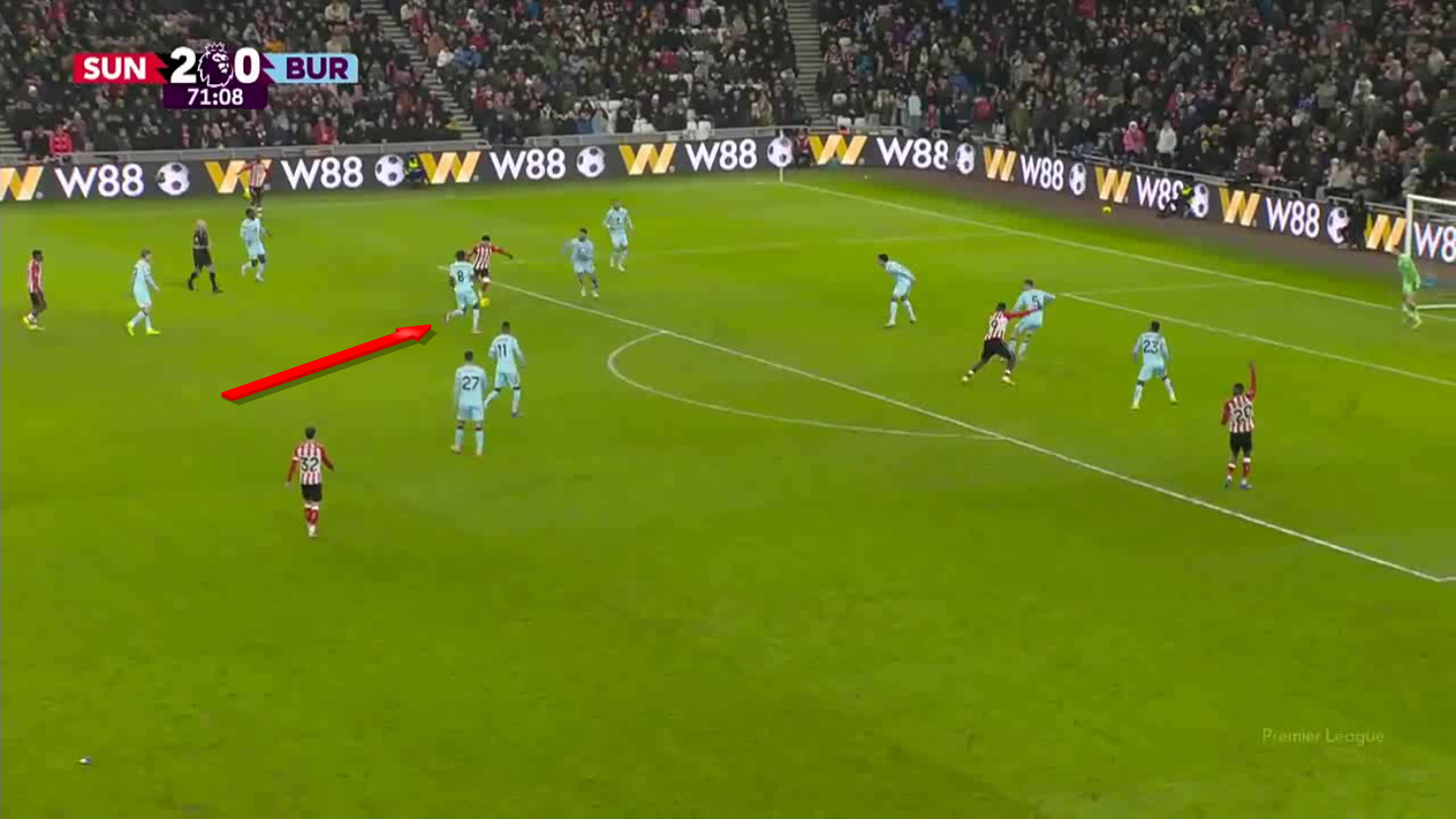
Able to get the shot away uncontested, the Burnley players are too late to react to be able to influence the outcome.
The Opposite Story When Burnley Went Forward
As a direct comparison to the above observation, a similar scenario occurred for Burnley at the end of the first half as for Sunderland’s third goal.
Here, in Talbi’s case, there was space to drive into and subsequently produce the shot; Sunderland has closed the distance and restricted the options available to the Burnley attackers.
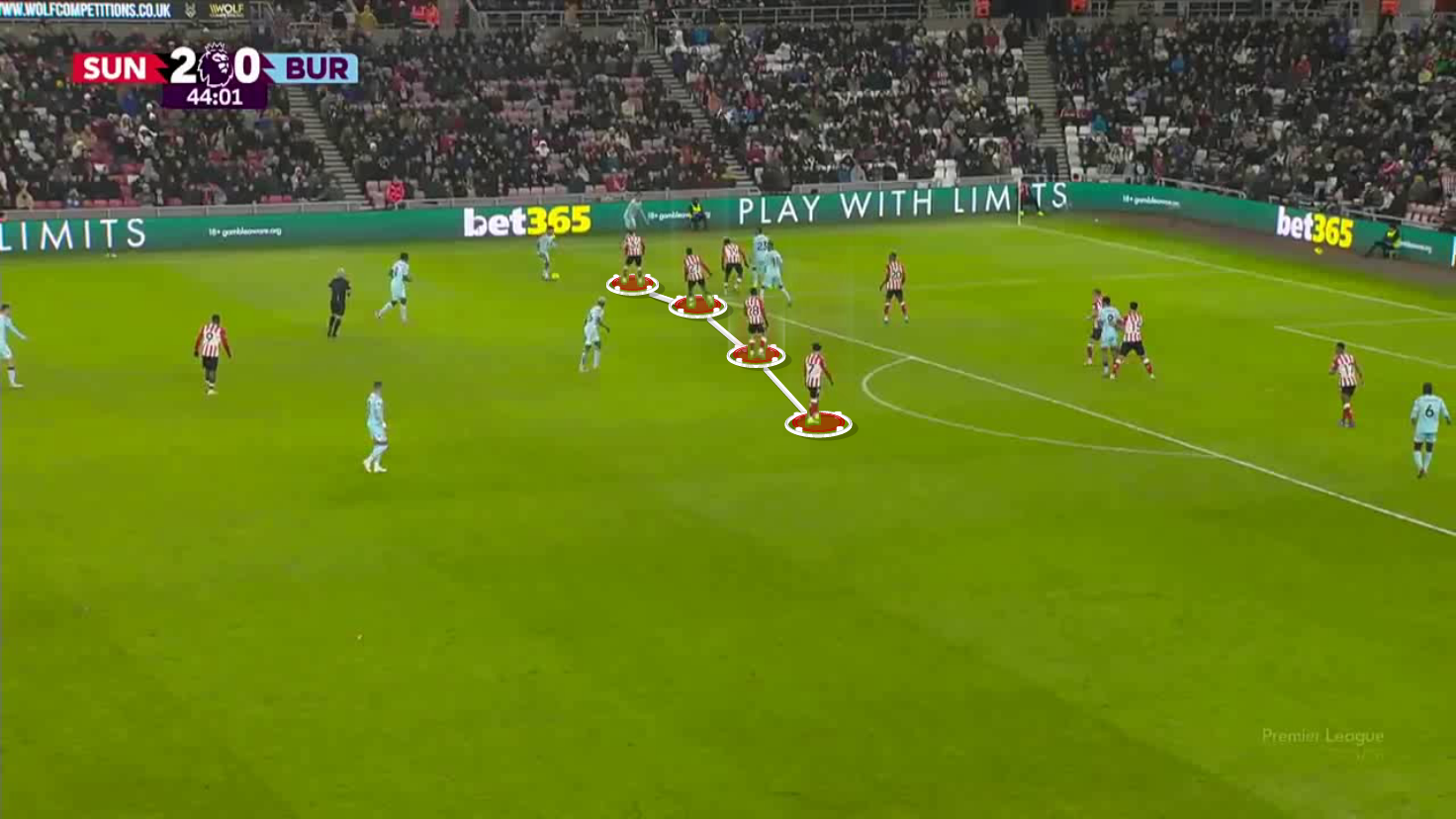
Sunderland’s midfield occupies the space just outside of the penalty area, limiting Burnley’s capacity to be direct with the ball.
This was a consistent theme when Burnley looked to play through Sunderland.
Below, Burnley have settled possession on the halfway line, and the 4-1-4-1 shape that Sunderland dropped into when defending in the second phase restricted Burnley to only two wide options.
This worked to Sunderland’s favour when the ball was progressed, as Burnley were then limited to crosses, Ballard holding an aerial advantage over the likes of Edwards and Foster.
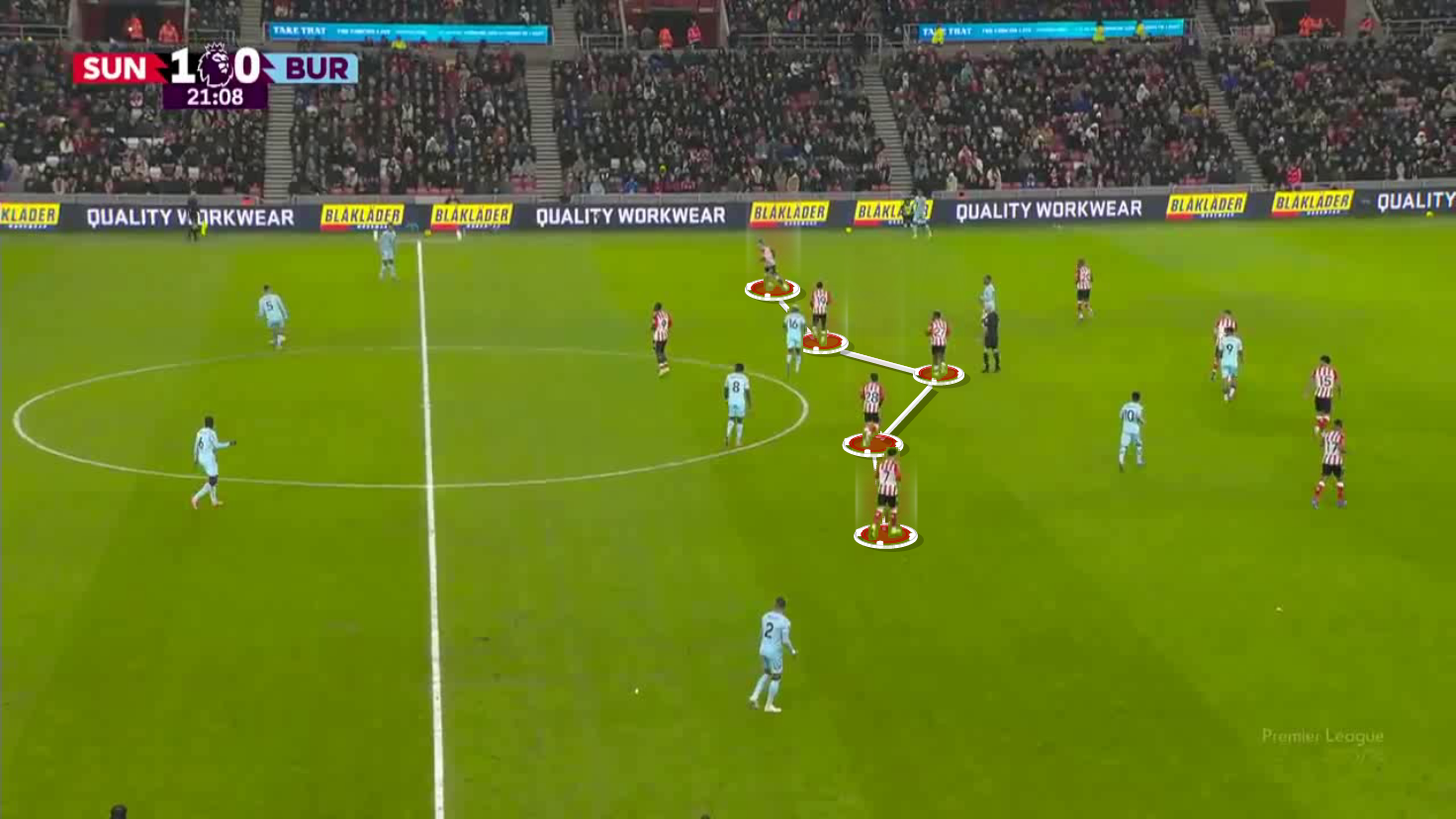
The condensed midfield prevents Burnley from making vertical passes.
Sunderland’s effort to maintain a restricted distance also benefited the Black Cats when Burnley were able to play higher up the pitch.
When Burnley took more risks, Sunderland were generally able to recover the ball and transition quickly.
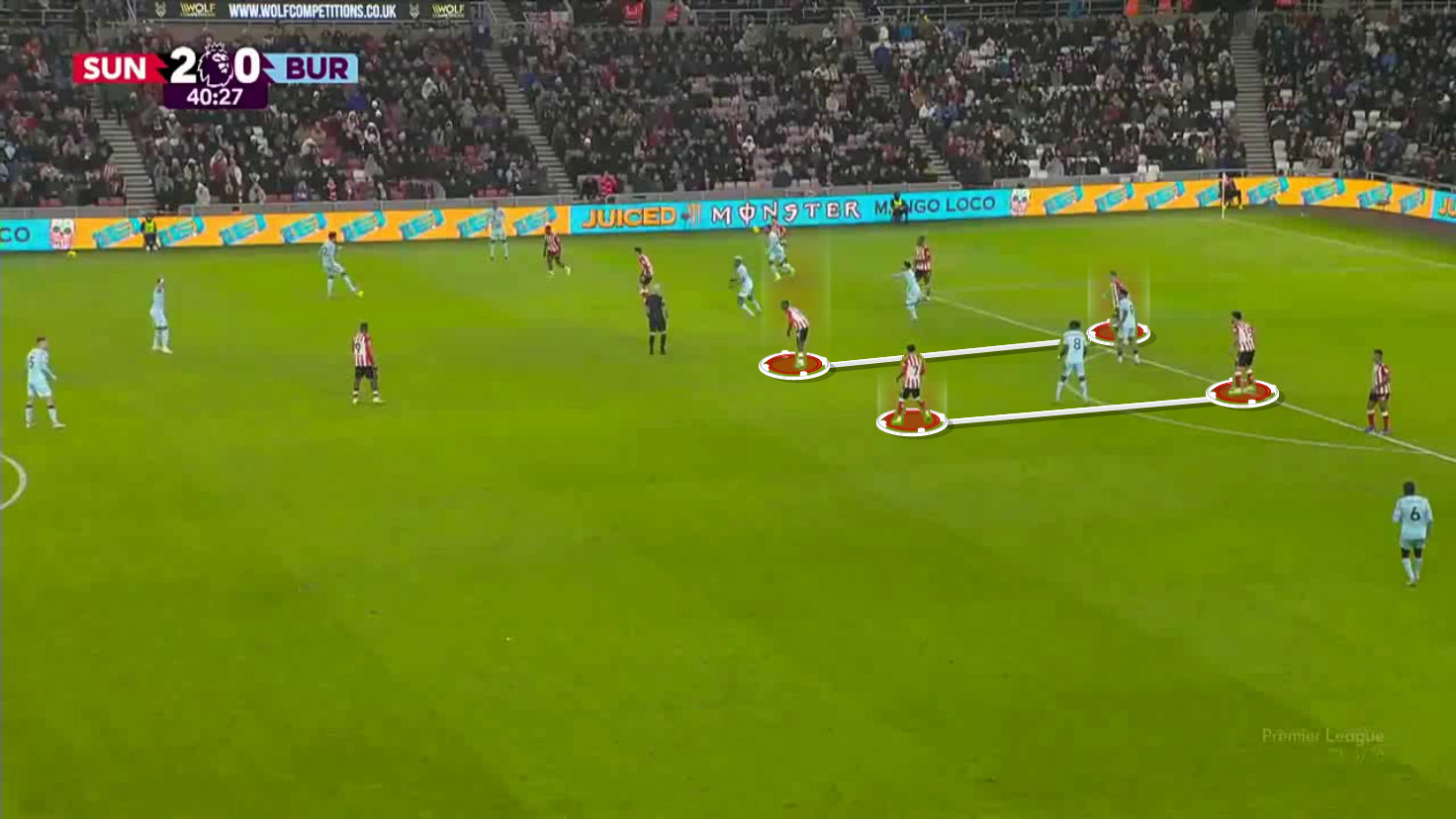
Burnley have settled possession in Sunderland’s half, with the distances between midfield and backline remaining close.
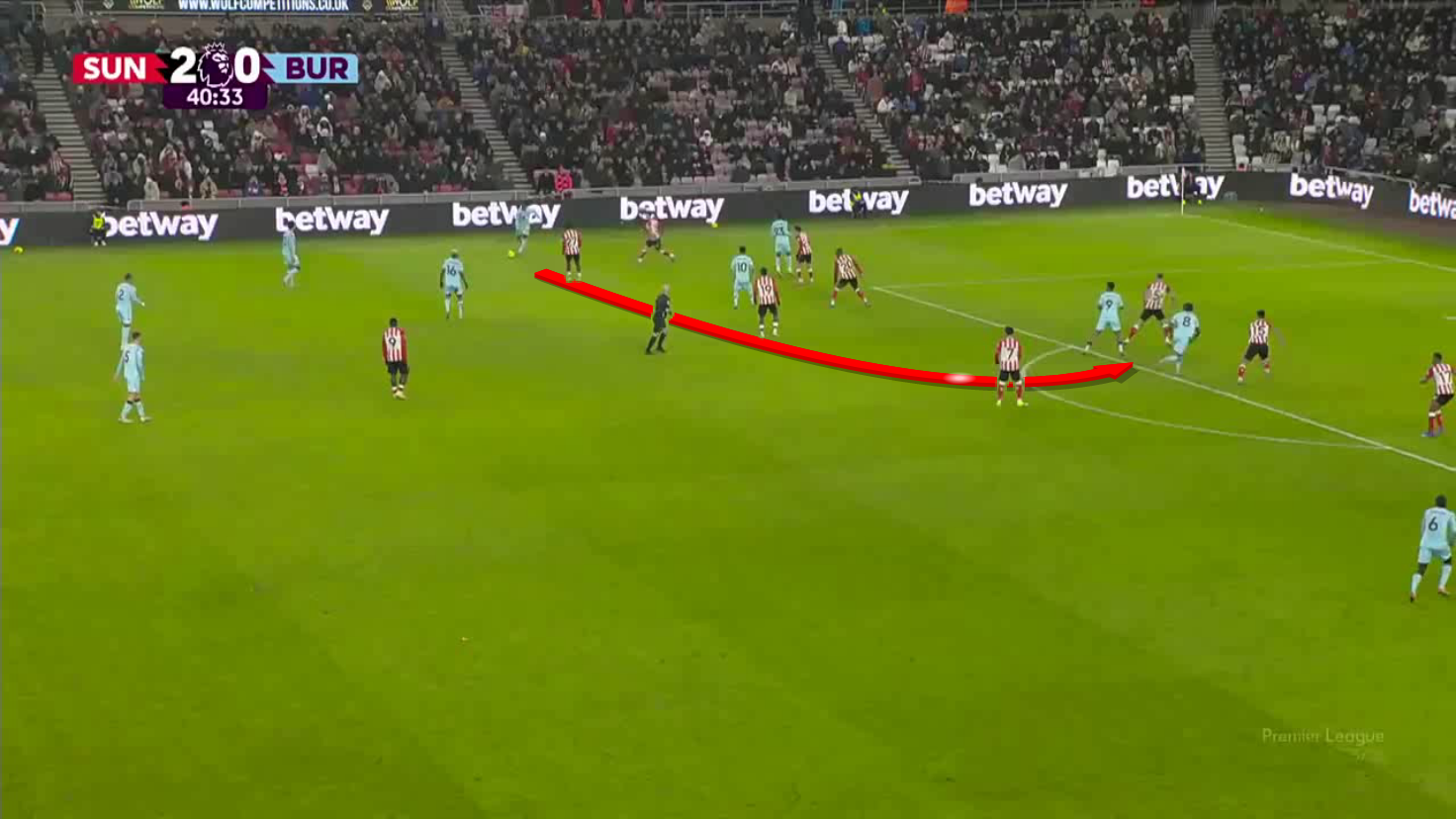
After some interplay, unable to break in behind, Burnley attempts a deep cross.
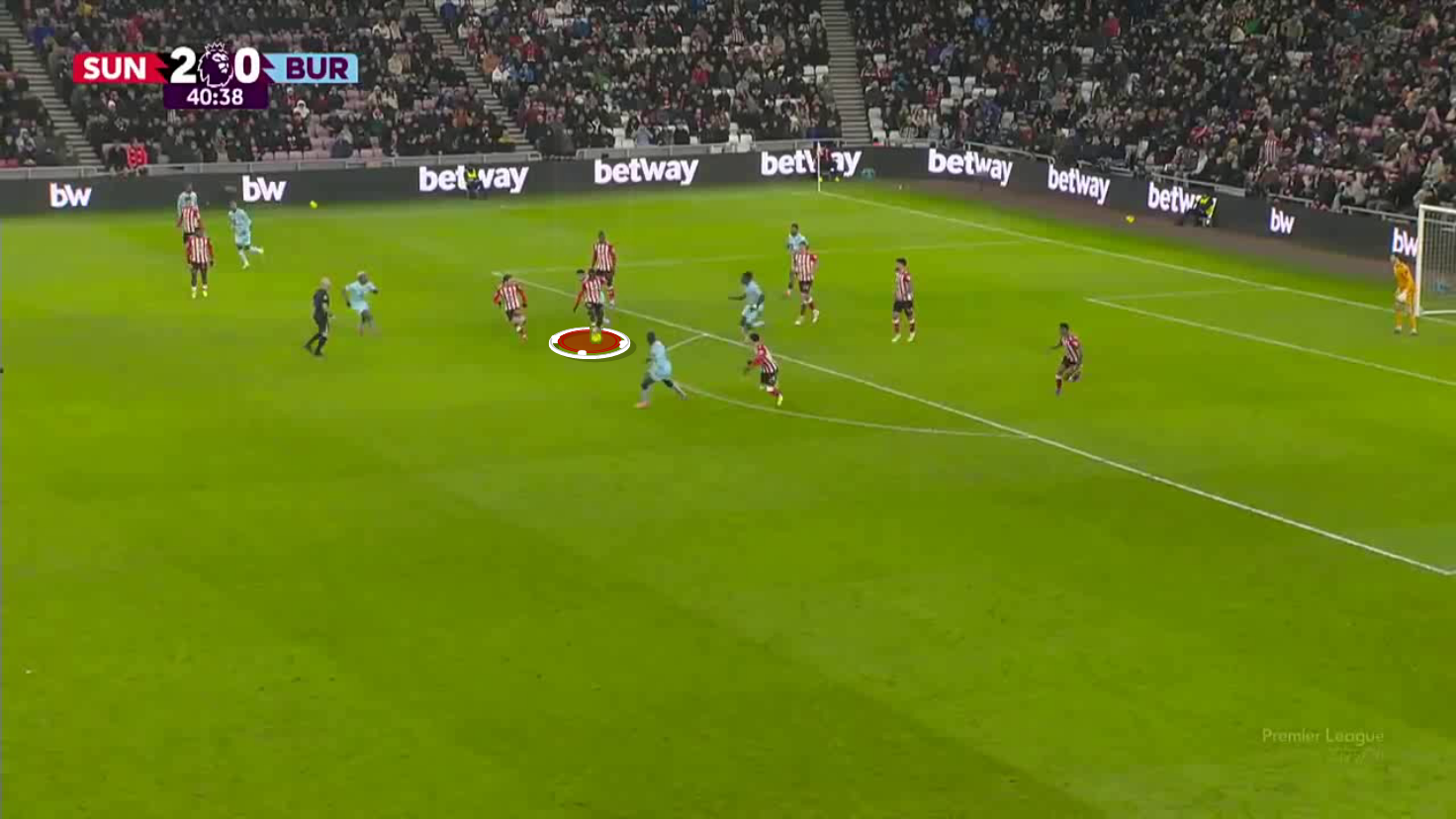
Sunderland’s midfield recovers the ball on the edge of the area and sustains possession.
Conclusion
Although the approaches of Parker and Le Bris were fundamentally similar, the discipline and willingness of the Sunderland players were the key difference in the result.
Burnley needed one of two major changes.
Firstly, the Clarets would’ve benefitted massively from having a backline confident enough to go and influence the play themselves in possession and pushing higher.
Alternatively, Burnley could have done with a midfield capable of doing the work back to cover the space left by the low line of the defence.
Scott Parker will need to correct these issues quickly if Burnley are to have any hope of clawing their way out of the relegation zone, while fellow newly-promoted side Sunderland will be hoping Monday’s win can help to push them into a European qualification spot come the end of the season.
