
Sunderland could not have dreamed of a better start to their Premier League season.
The Black Cats currently sit fourth in the table after their 2-1 stoppage time win over Chelsea, making it three wins in their last four matches.
It’s an incredible rise considering in October of 2020, they were sitting seventh in EFL League One with current Wrexham manager Phil Parkinson at the helm.
At that time, their squad value, as per Transfermarkt, was £10.1m.
In five years, they have risen 47 places in the English Football pyramid and have a squad valued at £299m.
Régis Le Bris has done an incredible job over the past two seasons restoring the six-time English champions to their former glory.
With the six most recent newly promoted teams prior to this season all getting relegated in their first campaign up, why have Sunderland been able to buck the trend so far?
In this Régis Le Bris tactical analysis article, we will examine why Sunderland’s defensive structure is so effective, their in-possession tactics, and their effectiveness on set-pieces.
Régis Le Bris Defensive Tactics
The main thing Sunderland have done well this season is defend in a low defensive block, but that is not all they do.
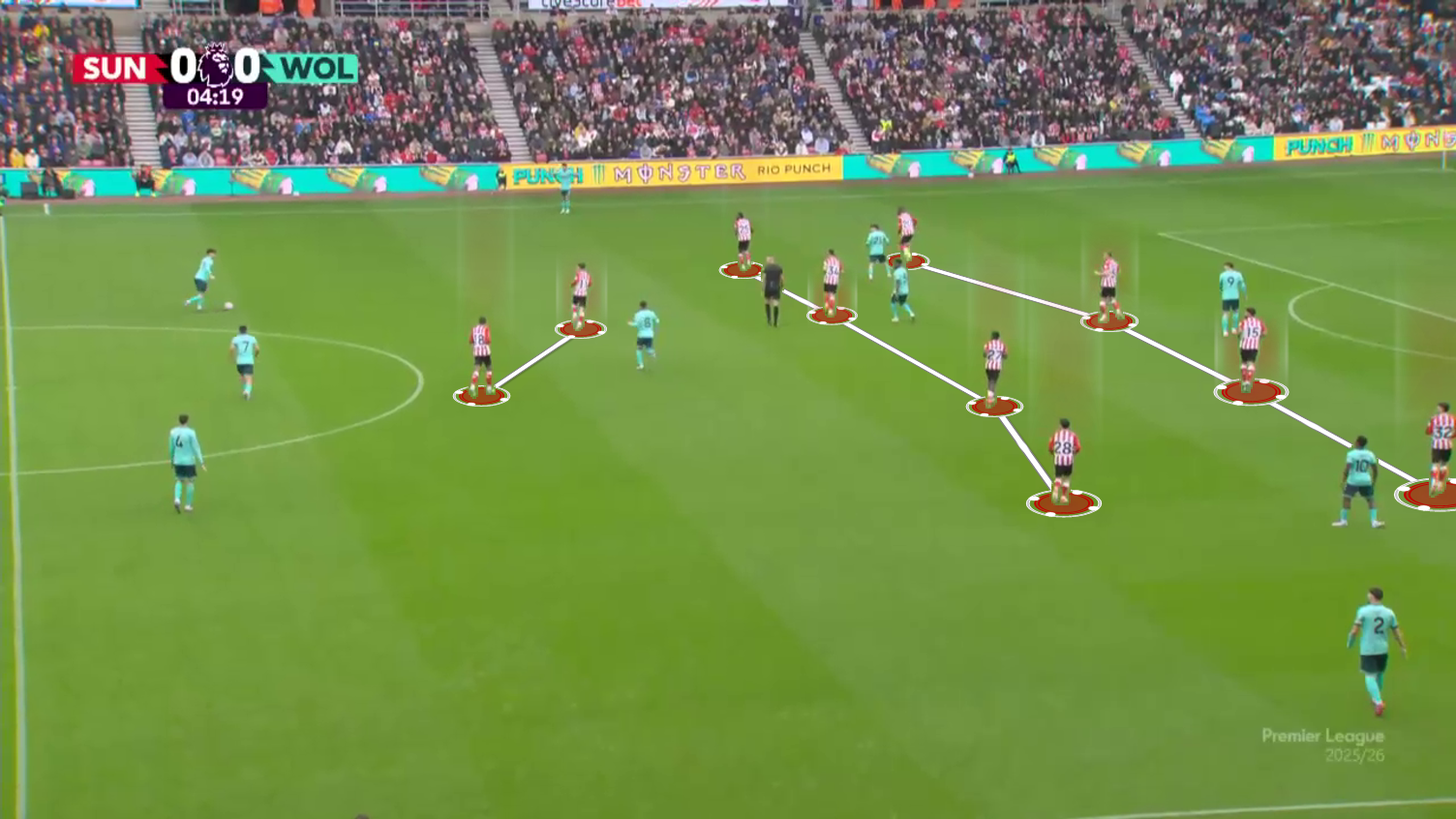
From goal kicks, Le Bris will push players up to go man to man, but it’s not an all-out press.
They are trying to squeeze the opposition to one side of the pitch to either win the ball or force them to play it long.
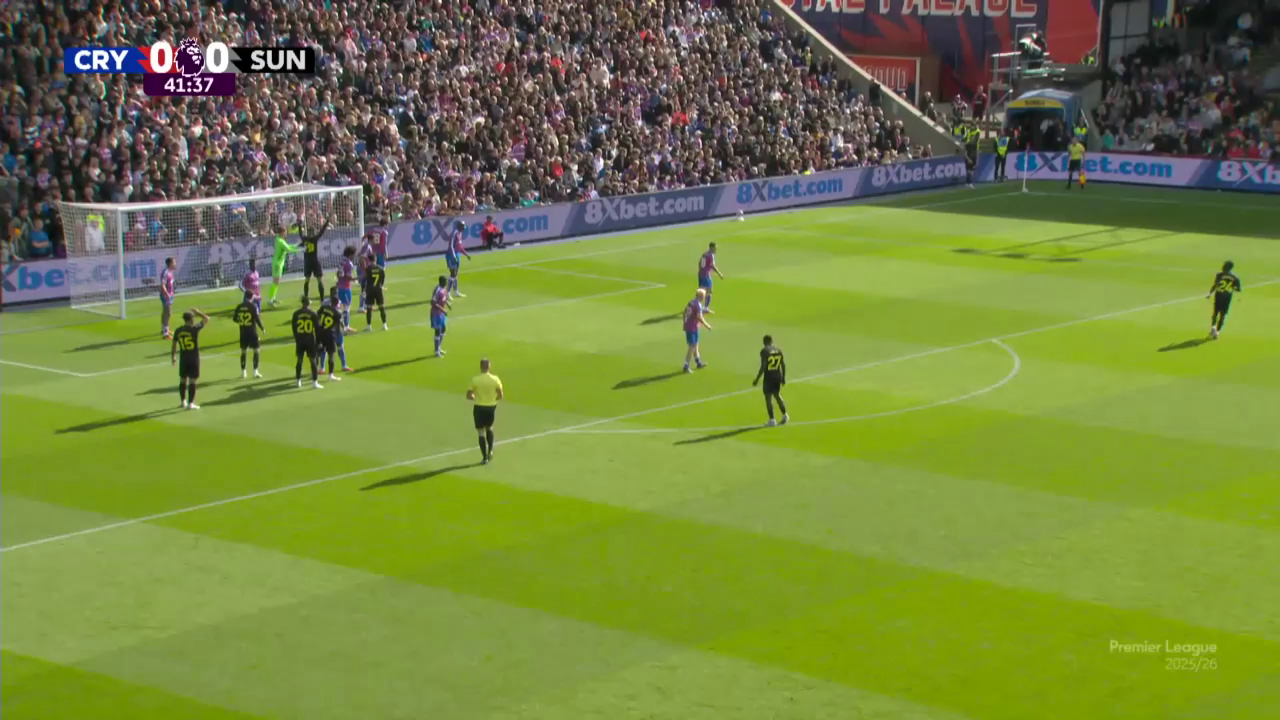
You can see here that against Wolves, they commit four players up to the press, but it only takes a couple of passes to rotate the ball, and Wolves are able to easily progress the ball up the pitch.


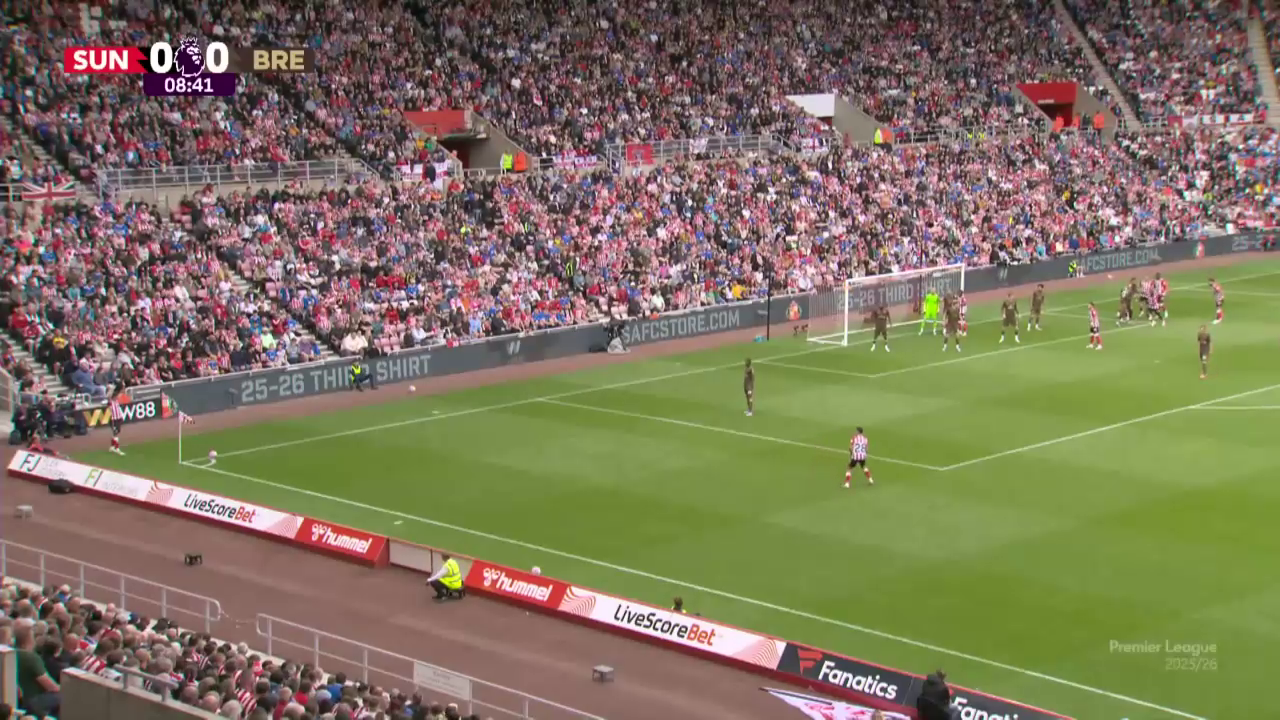
Here, against Nottingham Forest, they commit to a full man-to-man press once the ball goes wide, trying to pin them.
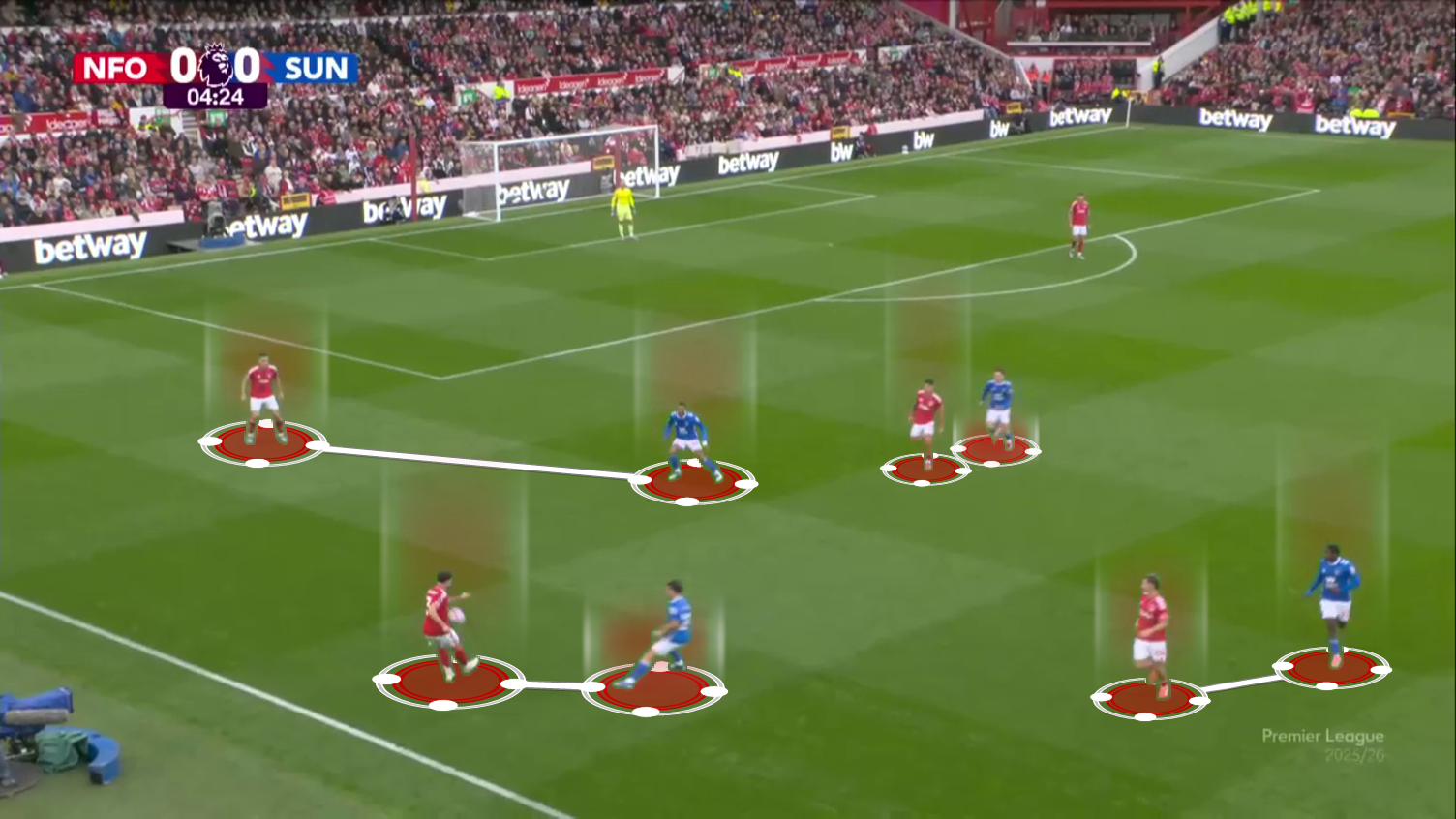
Because they haven’t gone with a full commitment to the man-to-man press in fear of teams opening them up, Sunderland has the second-worst PPDA and the fifth-fewest high turnovers.
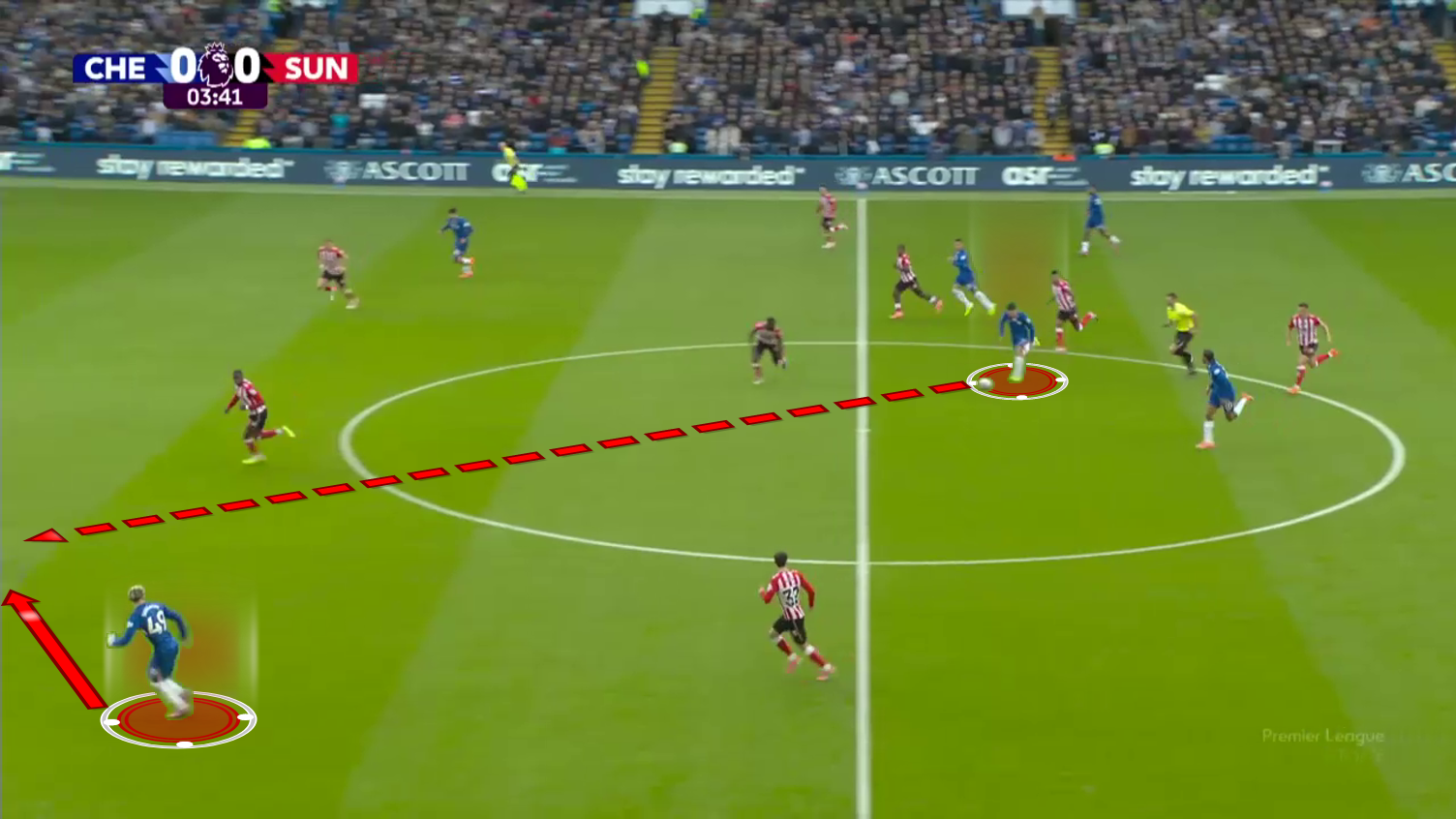
The first goal they conceded over the weekend against Chelsea is the fear of what can happen when Sunderland press high.
Granit Xhaka forced Robert Sánchez to play the ball long.
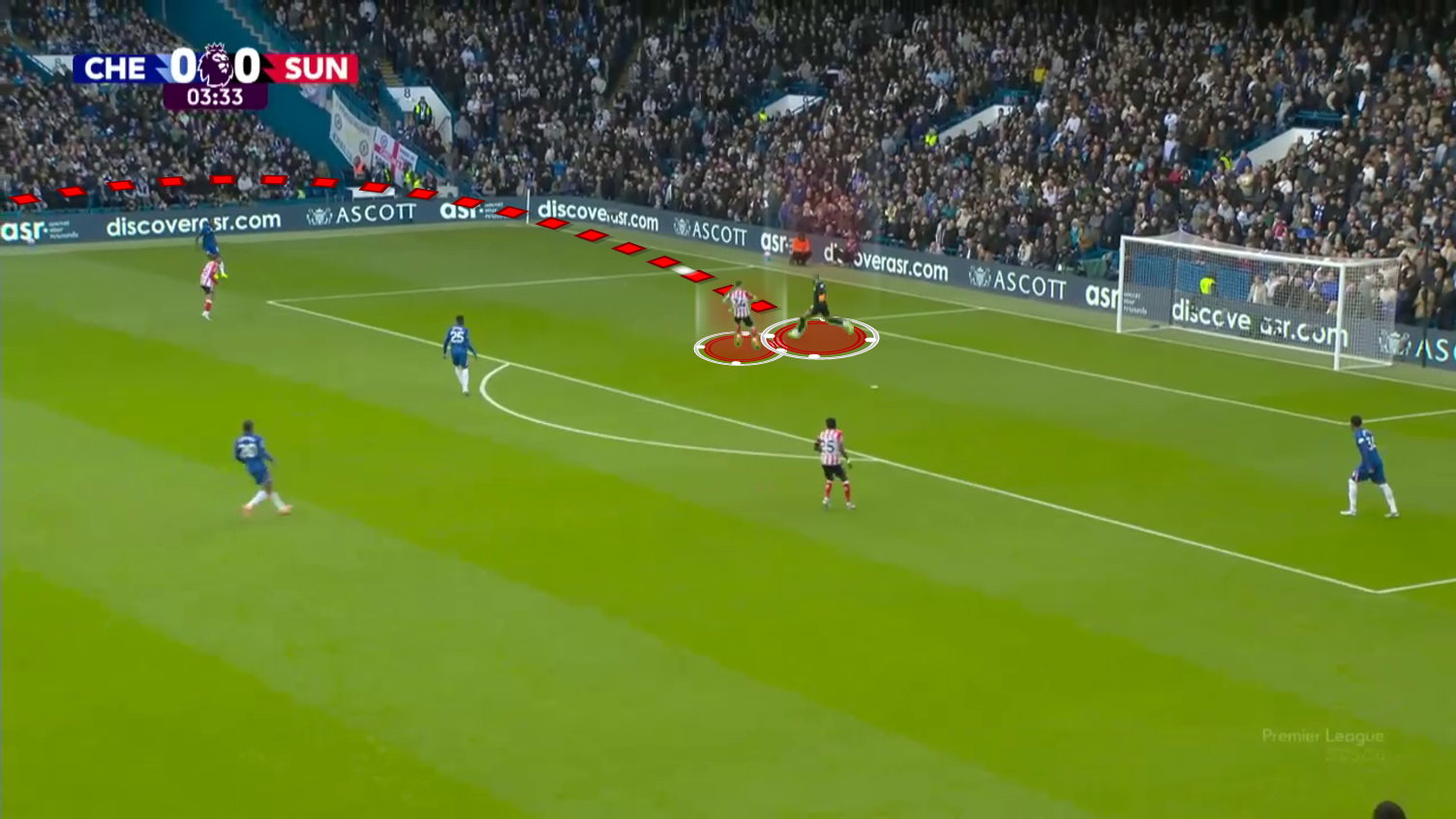
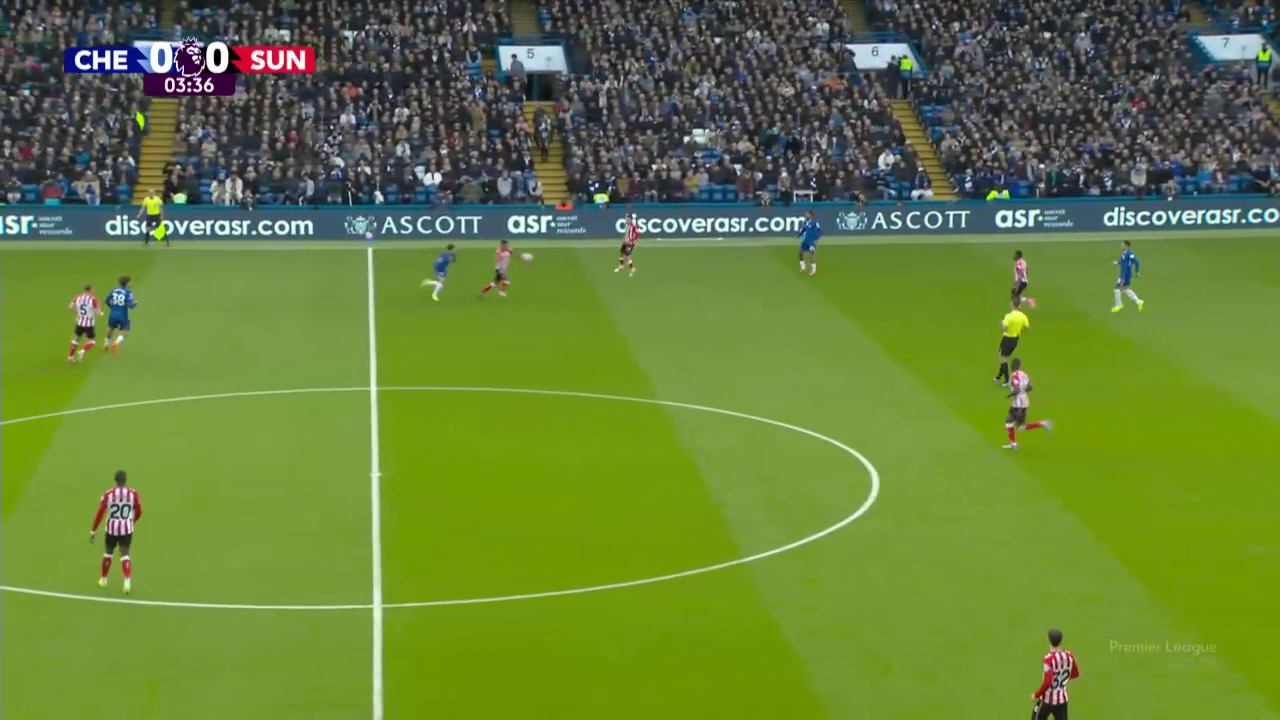
Sunderland initially win the ball, but immediately lose it in the middle of the pitch.
One quick pass to Alejandro Garnacho played him in behind for a goal.
Where Sunderland are at their best is defending in a low 4-4-2 defensive block.
Outside of the match against Chelsea this weekend, Sunderland have defended in a back four every match, getting everyone behind the ball and making life incredibly difficult for teams to play through the middle.
Their match against Chelsea last Saturday, despite conceding the early goal, was a good example of how well they are at denying space through the middle.
This is Chelsea’s pass map from that match.
As you can see, there are almost no consistent passes being played through the middle of the final third, and everything has to go out wide.
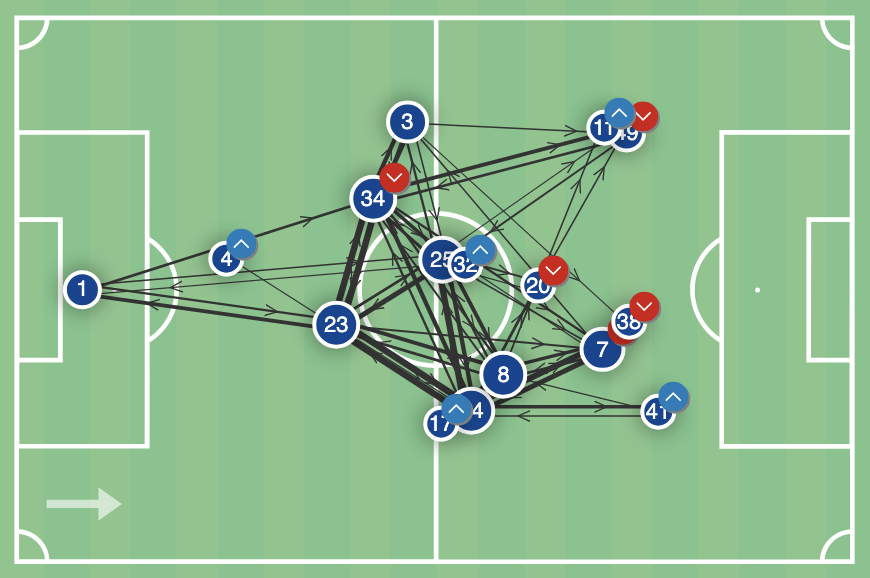
Because Sunderland have done such a great job at denying teams through the middle, they’ve been able to limit the quality of the opposition’s chances.
Sunderland have only conceded 10.4 expected goals in nine matches, despite allowing the third most shots.
Their average xG per shot allowed is only 0.08 (second best to Arsenal), and they allow the highest average shot distance, at 17.7 yards.
Because of all of this, Sunderland have only conceded seven goals all season, with only Arsenal conceding fewer goals.
Sunderland In Possession Tactics
Sunderland are mostly a direct team when they are playing against better opposition.
Their goalkeeper, Robin Roefs, launches the ball long on 59.8% of his goal kicks and averages 67.1 yards on those kicks.
Only Senne Lammens has a higher average goal kick length than Roefs.
That means Sunderland has put a big emphasis on winning duals and second balls.
Through nine matches, Sunderland is leading the Premier League in ground dual win rate at 54.1%, but is only winning 45% of their second balls.
The signing of Granit Xhaka was crucial this summer, as it enabled Sunderland to utilize him as a single pivot in the build-up.
Sunderland almost always build out in a 4-1-2-3 formation, with their other two midfielders pushing up higher to operate in the half-spaces.
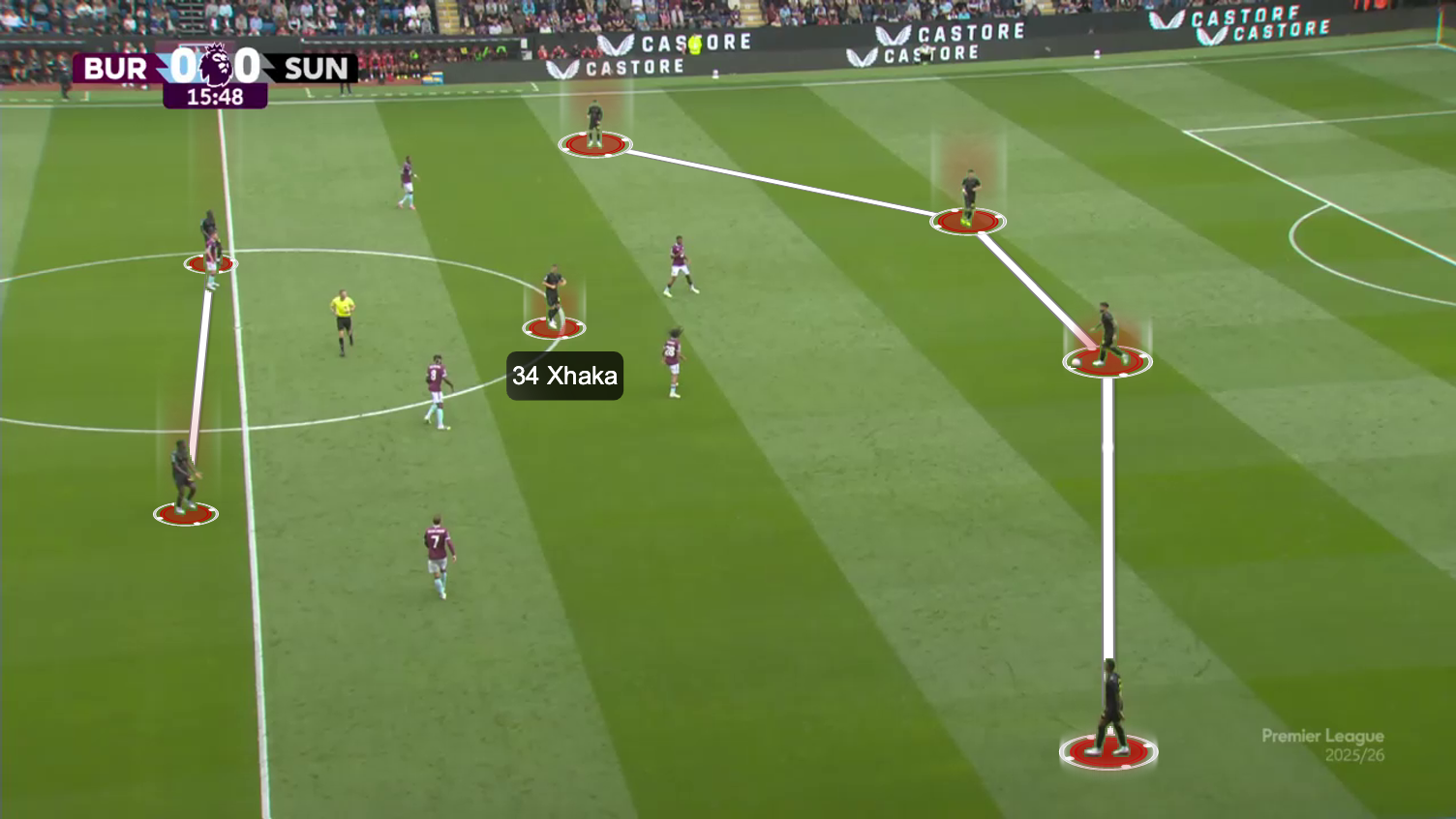
When they want to play direct, those two can push up the last line of the opponent’s defence to help Sunderland win 1-v-1, or by dropping deep, they can pull a defender with them to create space in behind for a ball over the top to one of the forwards.
Sunderland, though, have been very fortunate because their underlying offensive numbers are well below average.
The Black Cats have only created 8.6 expected goals in their nine Premier League matches.
They are only averaging 15.3 touches in the penalty area per 90 minutes, which is second-worst behind only Burnley.
In addition, only 20.95% of their entries into the final third have been converted into entries into the penalty area.
That is the worst mark in the Premier League.
As you’ll see below, Sunderland is fairly reliant on set-pieces to create most of their chances.
Sunderland Set-Piece Tactics
More and more teams are putting a big emphasis on set pieces this season.
Of the 232 goals scored in the Premier League, 19% of them have come directly from set pieces.
Sunderland has had 37 set-piece opportunities, scoring three times and creating 3.78 expected goals.
That means that 43.9% of their expected goals have come directly from set pieces.
Many of their corner routines mirror those of some of the best teams in the world, except they almost always target the back post.
They will either pile everyone into the six-yard box like this and have Trai Hume or Granit Xhaka send it to the back post.
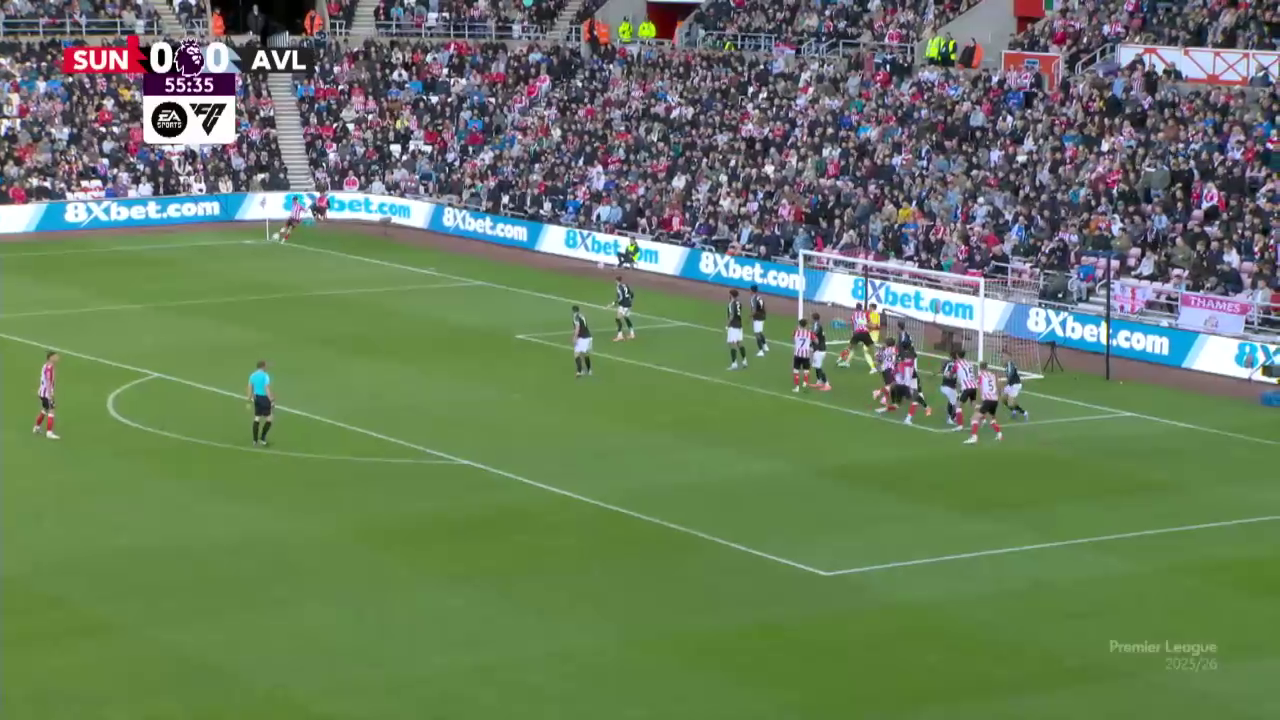
Or they will have their guys outside the six-yard box to get a little bit of a running start.
Of the 25 corners they’ve taken this season, all of them have been inswingers, which mirrors what Arsenal does with Bakayo Saka and Declan Rice.
Aside from the obvious benefit of getting a header as close to the goal as possible, this also makes it very difficult for the opposition to counterattack from a corner kick.
Because teams have to commit so many players inside the six-yard box, once they head it away, they have nobody to quickly play the ball forward to start a counterattack.
In reality, some of Sunderland’s best chances have come from long throws into the box.
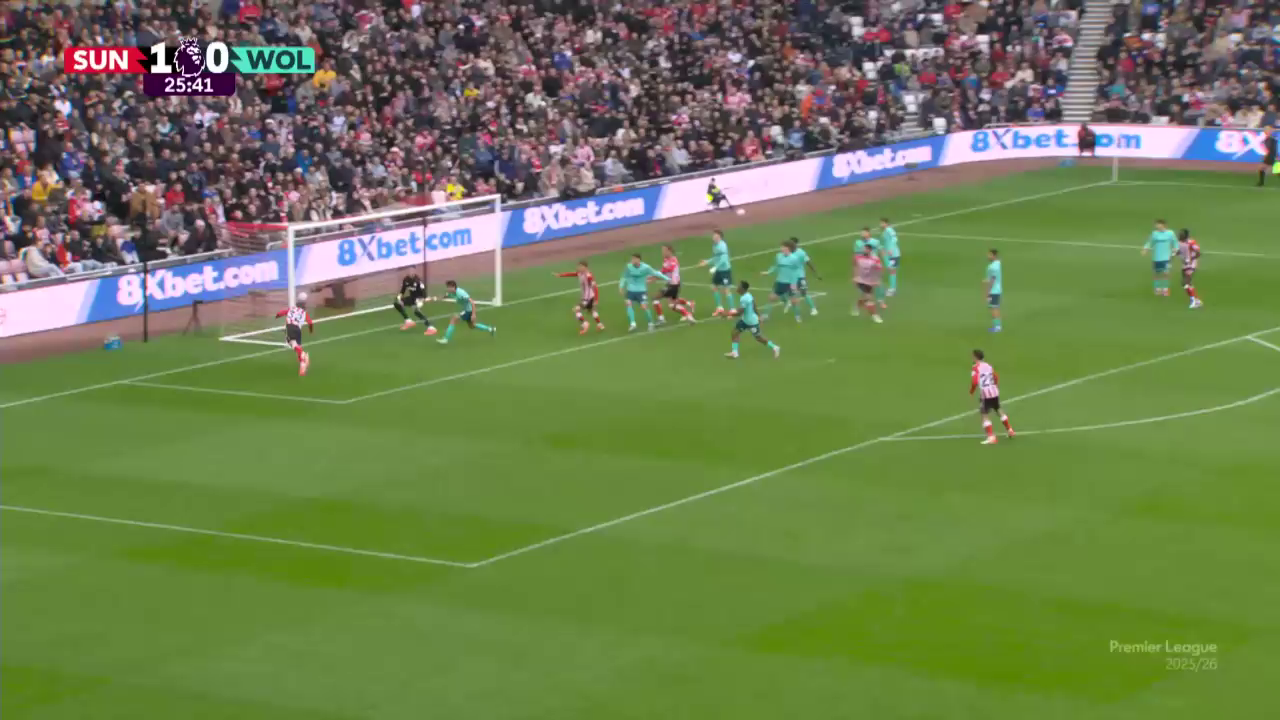
They scored off of one against Chelsea, but one of their best chances against Wolves is a better example of what their normal routine is.
Nordi Mukiele is their main long thrower and almost always puts it right in front of the six-yard box.
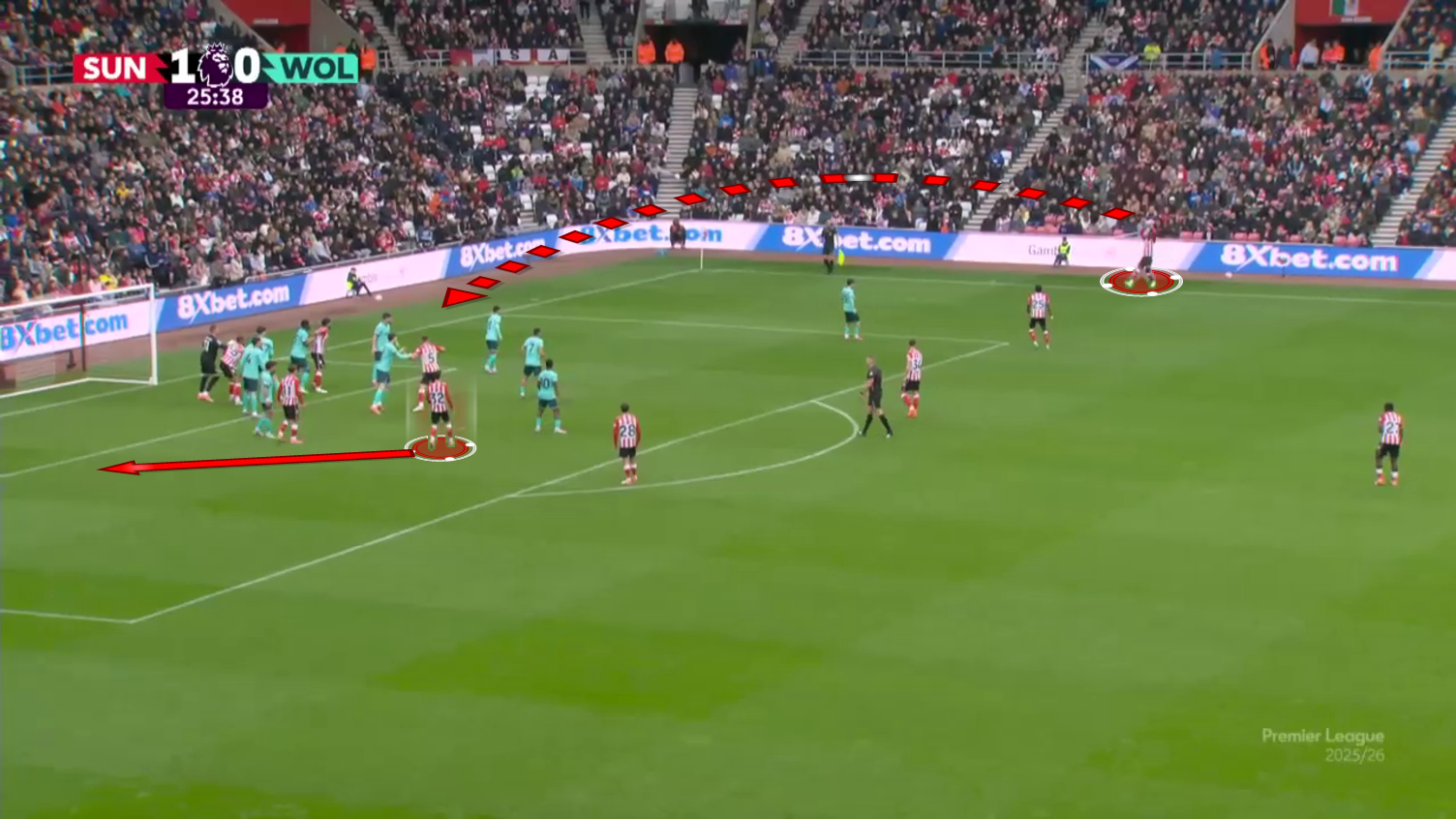
From there, Sunderland try to flick a header towards the back post, where at least one player is making a run.
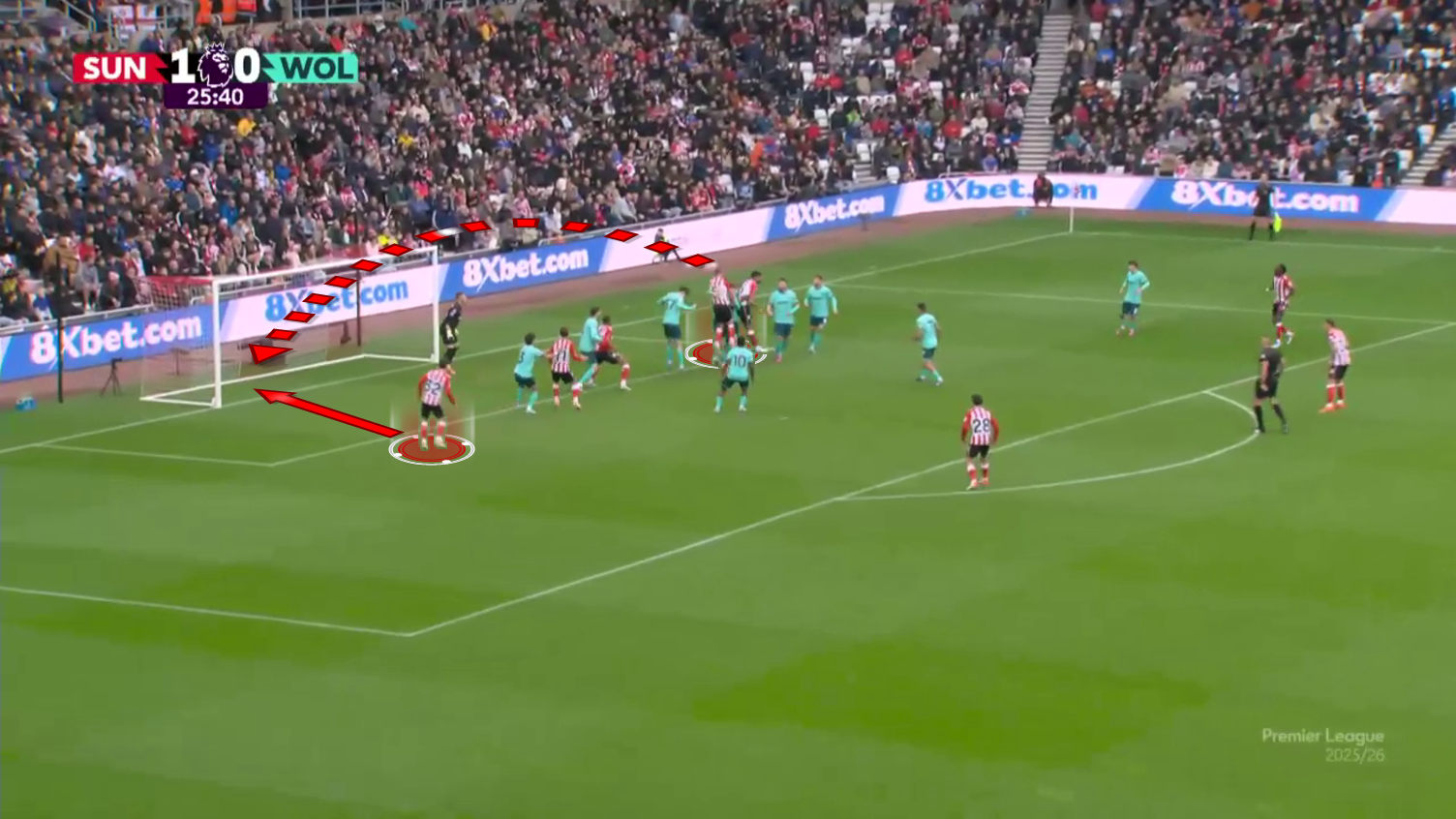
In this scenario, Trai Hume slips towards the back post for a free header, but hits the post.
Conclusion
Sunderland’s ability to defend in a low defensive block and limit the opposition’s quality of chances is the reason they are fourth in the table right now.
They also have had the benefit of playing one of the easier schedules to begin the Premier League season.
The Black Cats have avoided playing Arsenal, Liverpool, Bournemouth, Manchester City, and Tottenham through their first nine matches.
The offensive numbers and overreliance on set pieces are a big concern going forward.
Along with an easy schedule, they’ve drastically overperformed their underlying numbers.
Sunderland have accumulated 17 points from only 11.8 expected points, which is the highest overperformance in the Premier League to date.
Régis Le Bris’ tactics are what is necessary for a newly promoted team.
He knew that they were not going to walk into the best league in the world and be able to consistently play out of back or press teams high up the pitch.
Sunderland also recognised in the summer that they needed to make a significant investment in the squad, which is why they spent £165.3m on 14 different players.
Playing direct and relying on set pieces has worked so far, but it won’t last forever.
If there was ever an example of this style of play and overperforming underlying numbers not being sustainable, it’s Nottingham Forest’s fall out of the top four at the end of last season.
With all of that being said, Sunderland’s realistic goal coming into the season was to simply survive relegation.
They already have more points than Southampton did all of last season and are only five points away from matching Ipswich Town’s 22 points.
Sunderland have Arsenal, Man City, Liverpool, Bournemouth, and a Tyne-Wear derby with Newcastle United as five of their next seven matches.
While Sunderland have had a great start to the season, there is likely to be some negative regression over the next couple of months.
