
We have all observed how Declan Rice scored two goals from direct free kicks to facilitate Arsenal‘s victory over Real Madrid in the first leg of the UEFA Champions League quarter-finals.
It is widely recognised that direct free kicks can be decisive in football, particularly when a team possesses skilled takers.
Who could forget the legendary contributions of David Beckham, Roberto Carlos, Juninho Pernambucano, and Andrea Pirlo, followed by more recent masters such as Lionel Messi and Cristiano Ronaldo, among many others?
With the advancement of goalkeeper training and the availability of video footage, data analysis and set-piece analysis, goalkeepers can now access extensive information on free-kick takers—including their preferred angles and shooting techniques.
As a result, it has become increasingly difficult for takers to surprise their opponents.
In fact, there is also considerable debate about the current scarcity of skilled free-kick specialists in modern football.
Consequently, free-kick takers are constantly seeking innovative techniques and strategies.
Analysts—and subsequently coaches—attempt to assist takers as analytical methods advance by providing targeted insights and recommendations.
In this analysis, we examined several tactical approaches designed to disrupt the goalkeepers’ focus and delay their visual tracking of the ball.
The most notable tactic was the offensive wall, as exemplified by Arsenal’s deployment to impede Thibaut Courtois’s sightline during the second goal.
This tactical analysis will examine recent innovations and tactical developments in direct free-kick strategies.
It should be noted that while many of these approaches are not entirely novel, they are being reintroduced and executed in more surprising and systematic ways.
Disclaimer: We do not claim that all the strategies we present are systematically designed or intentionally planned.
Some emerge from players’ spontaneous creativity or even improvised moments.
However, analysts, coaches, and even players actively seek these approaches because they prove tactically beneficial, enabling the selection of the most suitable technique for each player’s capabilities.
This proves particularly valuable when a team lacks a specialist player who can, for instance, lift the ball over the defensive wall.
Playing It Beside The Wall
The first idea we will discuss is simple but sometimes surprising: Trying to play the ball beside the wall and swerving it into the goal.
As shown below, Rice used this idea to score the first goal against Madrid, exploiting the fact that the defending wall didn’t protect the near post well.

The result was an important goal.
This idea is usually effective against goalkeepers who try to close the goalmouth as much as possible.
— Footie Clips (@FootieClips) April 16, 2025
By making the wall shift a little towards their angle, they can help themselves more, leaving the near post appropriately uncovered.
— Footie Clips (@FootieClips) April 16, 2025
As shown below, Ivan Toney scores a goal in his usual way, but in this case, Brentford add small steps to manipulate the goalkeeper, making him think that he targets the far post.
The normal attacking wall (green) blocks the goalkeeper’s sight to delay his reaction normally, but there is another wall!
The offside wall starts in a weird position to distract the goalkeeper and then moves, pretending that they want to displace the opponent player (blue arrow) to play the ball at this angle.
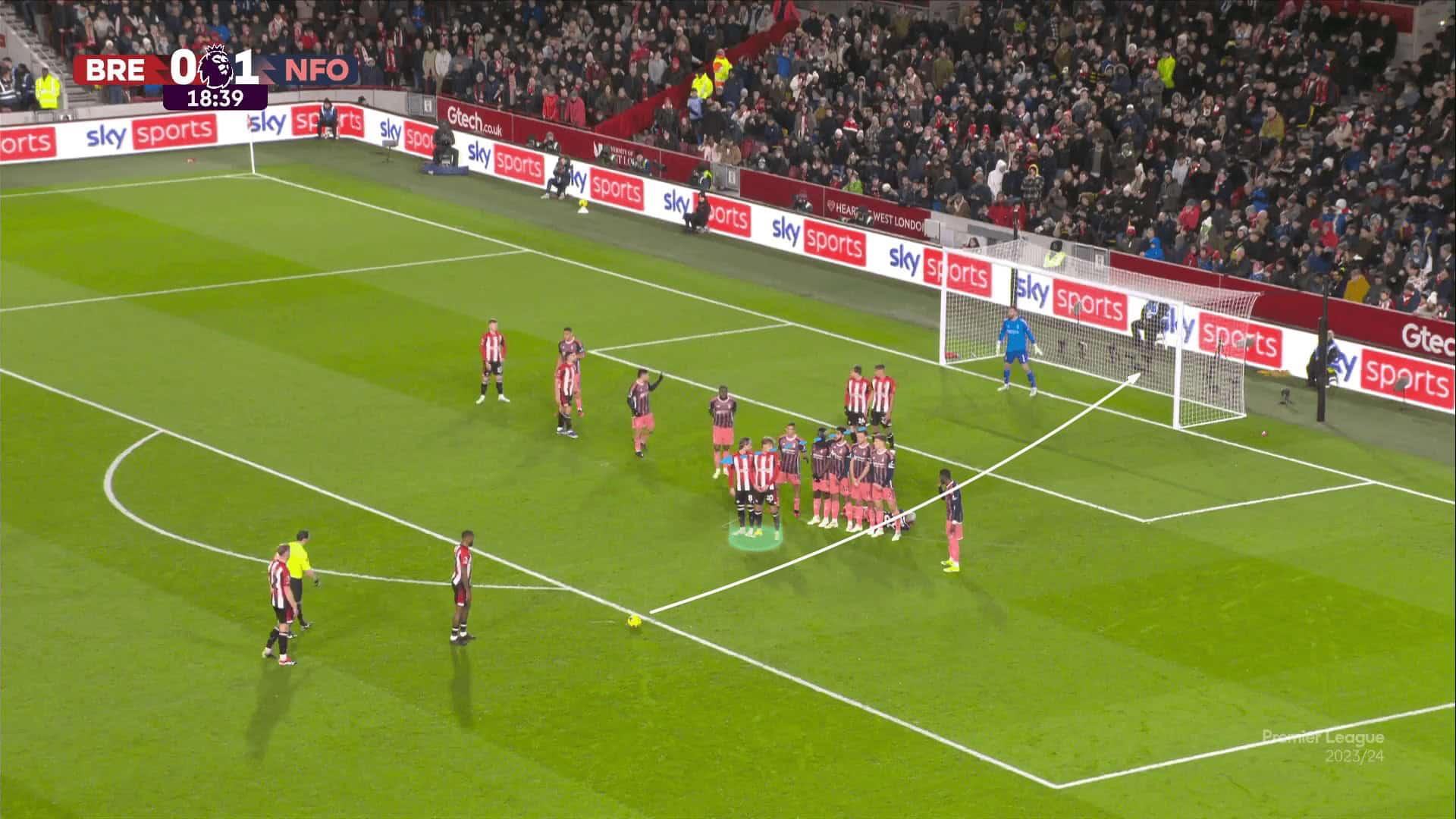
As shown below, the first wall gets lower, pretending that Toney will shoot here, while the other one displaces the opponent’s player in this path.
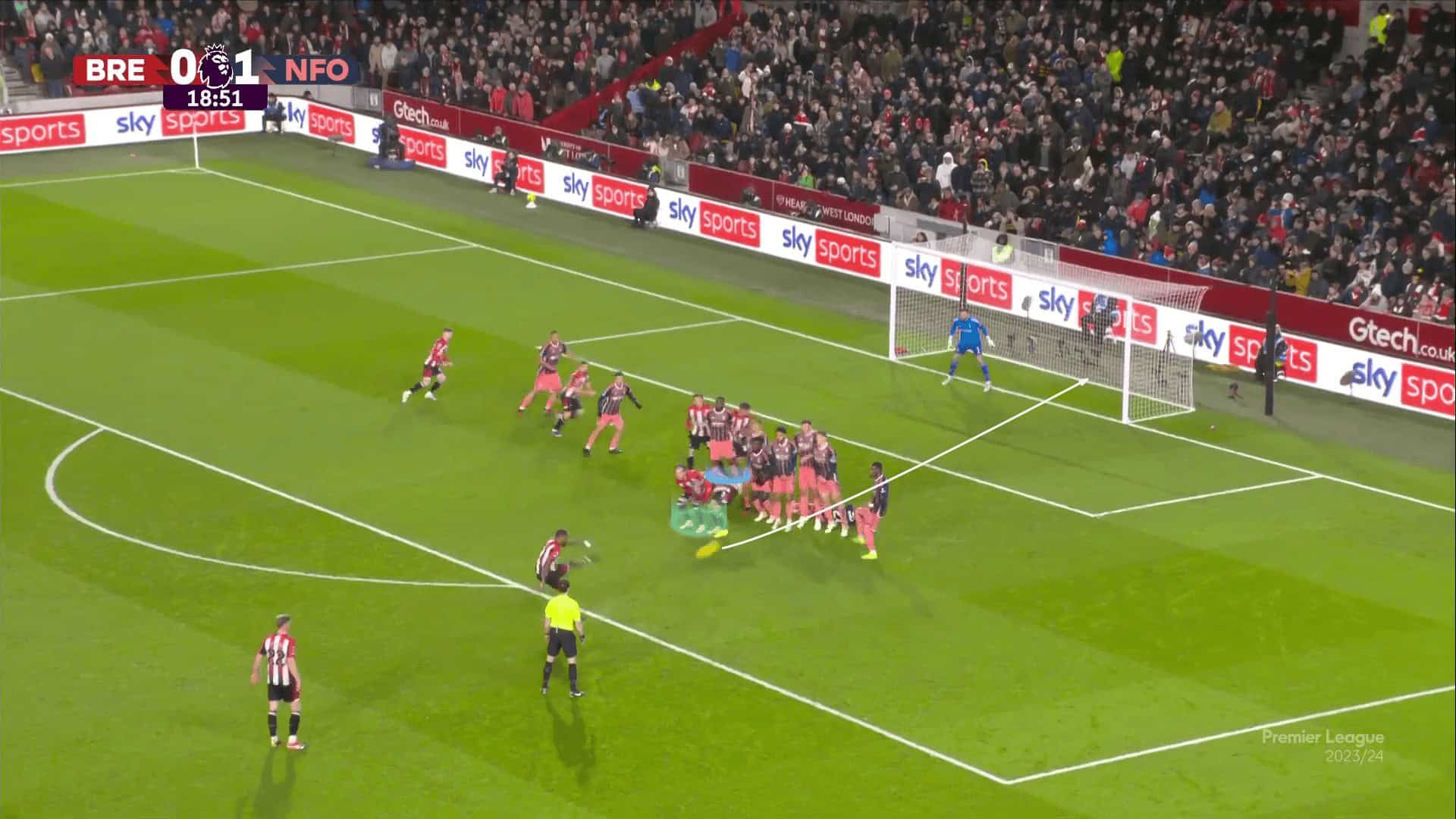
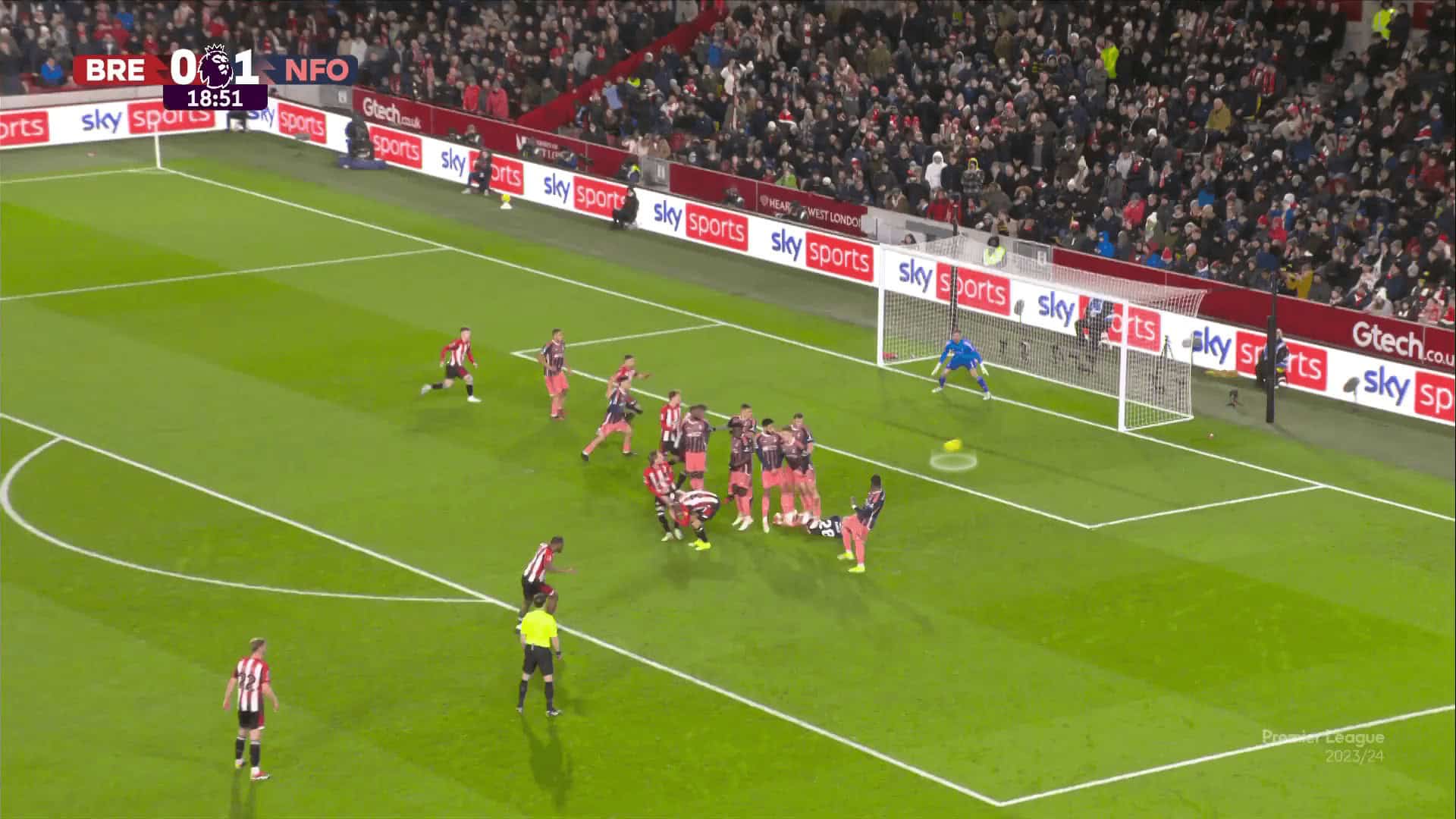
In the end, the ball is played beside the wall, and the goalkeeper starts to see it late.
At the same time, some of Brentford’s players run for the rebound.
What if it is difficult for the taker to swerve the ball like this, or the wall has better coverage?
— Footie Clips (@FootieClips) April 16, 2025
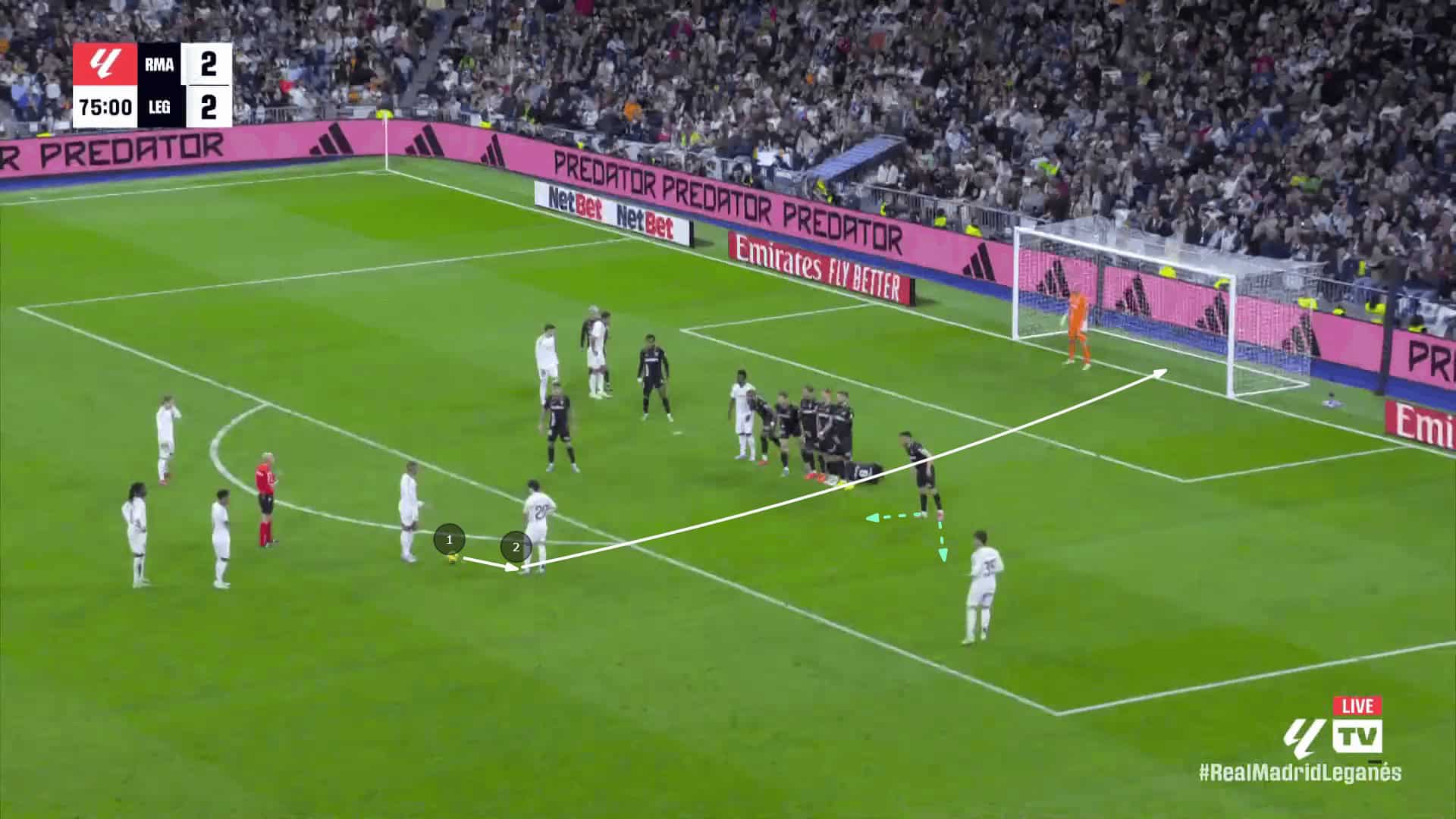
The solution is simple, as shown below: make the shooting point (2) instead of (1).
After the pass, Kylian Mbappé had a better angle at which to play the ball besides the wall easily.
To reduce the number of players who can run to him after the pass, his teammate stretches the width on the right to draw the opponent’s attention (green).
The result is an important goal for Real Madrid: To use a simple shooting technique so you can use it with your team.
He practises the mentioned technique in training.
Kylian Mbappé has been practicing free kicks in today’s training. pic.twitter.com/gUbCo3UdIX
— 𝙇𝘽𝙕 (@losblancoszone) April 15, 2025
A Moving Attacking Wall
If the wall has a good coverage of the near post, then there is another manipulation could be implemented, which is having a moving attacking wall.
— Footie Clips (@FootieClips) April 16, 2025
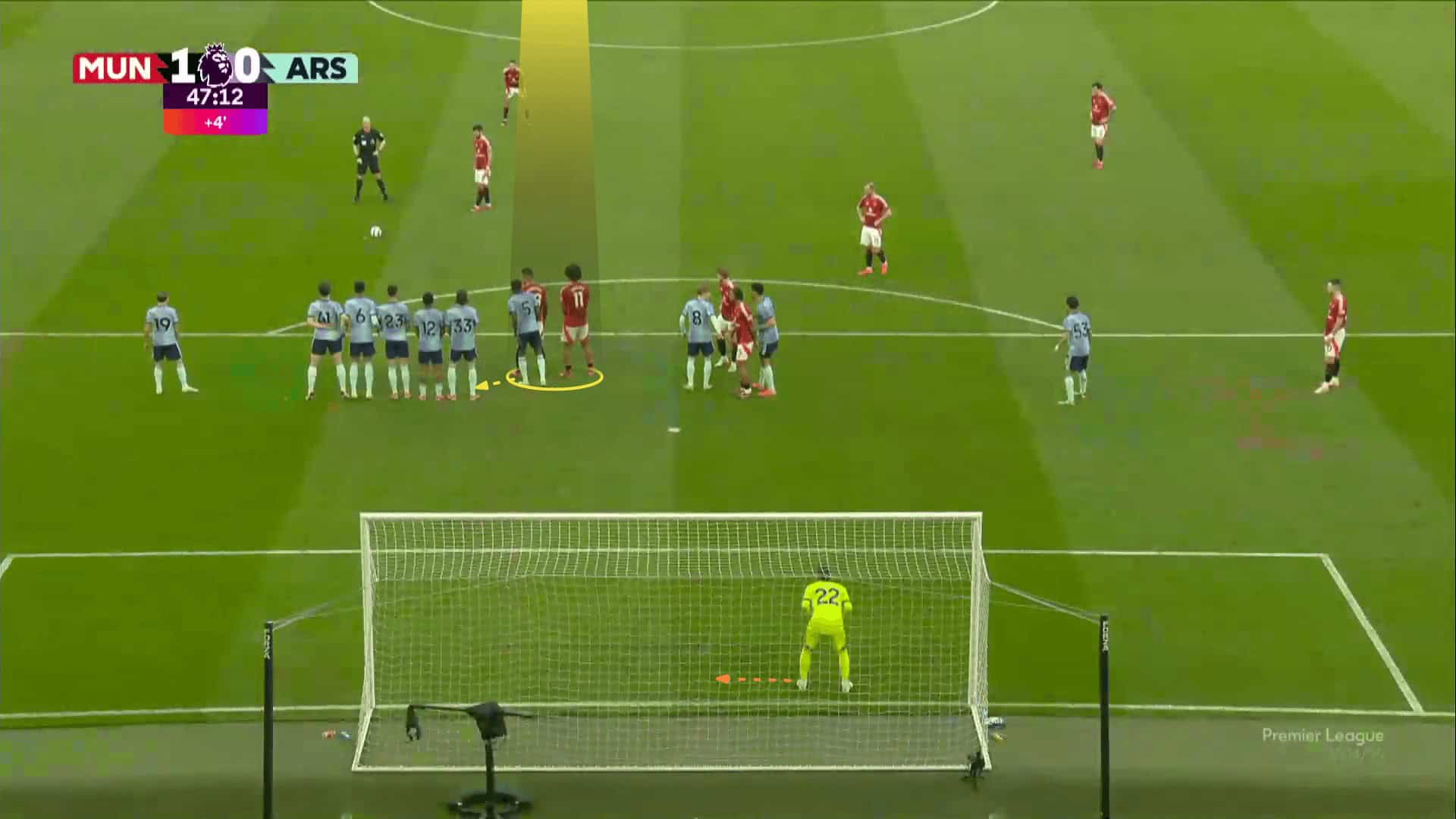
As in the photo below, David Raya secures the near-post angle well by having the first man of the wall (Rice) almost after the near post, making it more difficult for the taker to implement his previous teammate’s idea.
Because he closes that angle well, he can shift more toward the far post in the beginning, but why does he do that?
He usually uses this technique, starting a little far from what is supposed.
He may have his own reasons, but we think that it provides him with a better angle to see the ball, avoiding the attacking wall, which tries to block his sight.
As the taker moves, he takes steps to the left to stand normally after ensuring that he sees the ball well.
The surprise is that when the taker moves, Raya moves, and they also move to close his sight line suddenly.
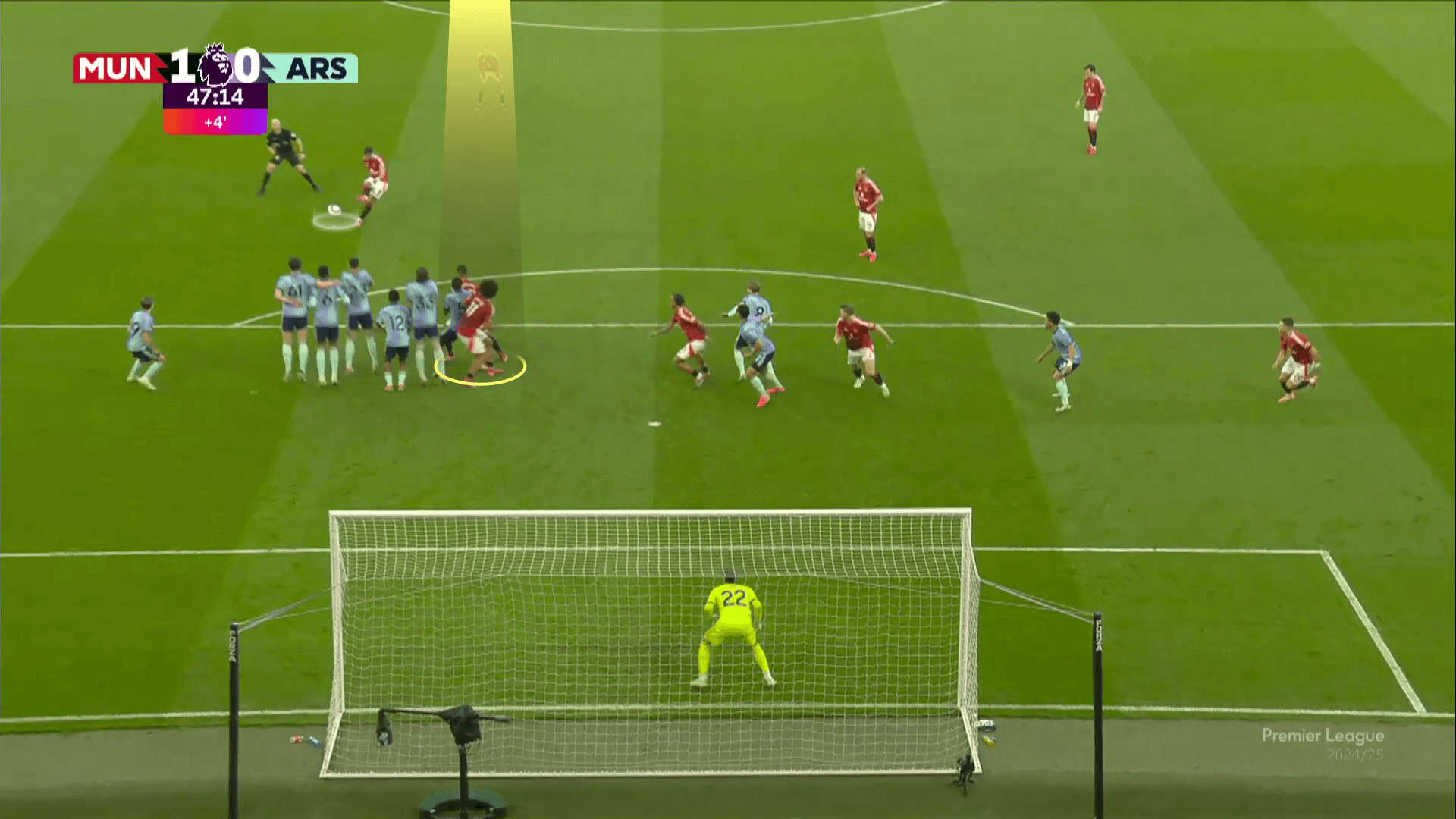
In the decisive moment, he stands normally (and that wasn’t mentioned on social media), but the wall also moves, blocking his side suddenly, as shown below.
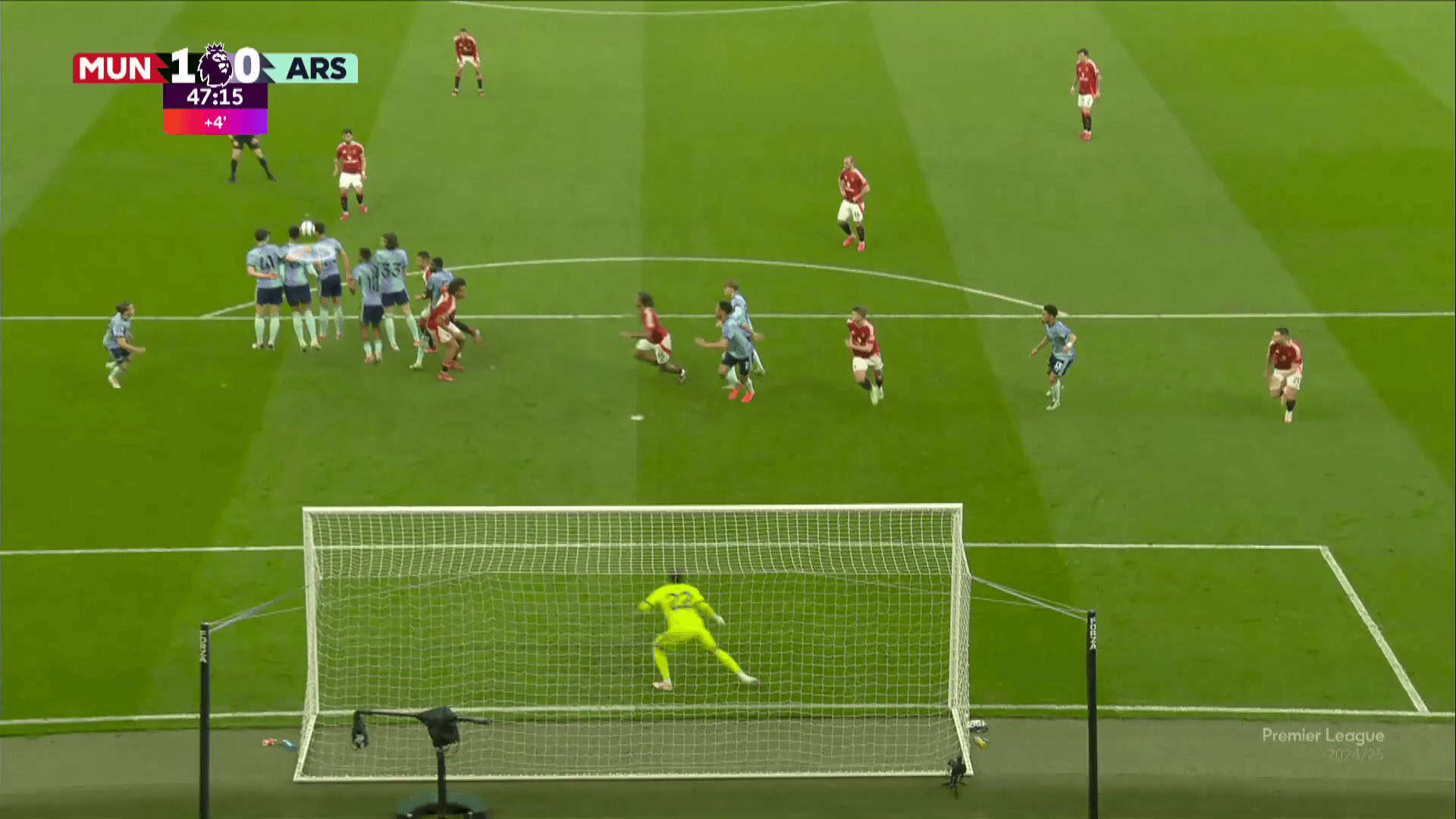
As shown below, the ball almost passed the wall, but Raya started to see the ball.
Avoiding The Wall
The third idea is to pass have many takers, one passes it to the other one outside the path of the wall.
— Footie Clips (@FootieClips) April 16, 2025
As shown below, the four attackers in the box manipulate the goalkeeper.
As we will see, the two green players run for the rebound while the one on the left drags a player with him to evacuate the ball path.
The attacking wall blocks the goalkeeper’s sight and separates to the right and the left.
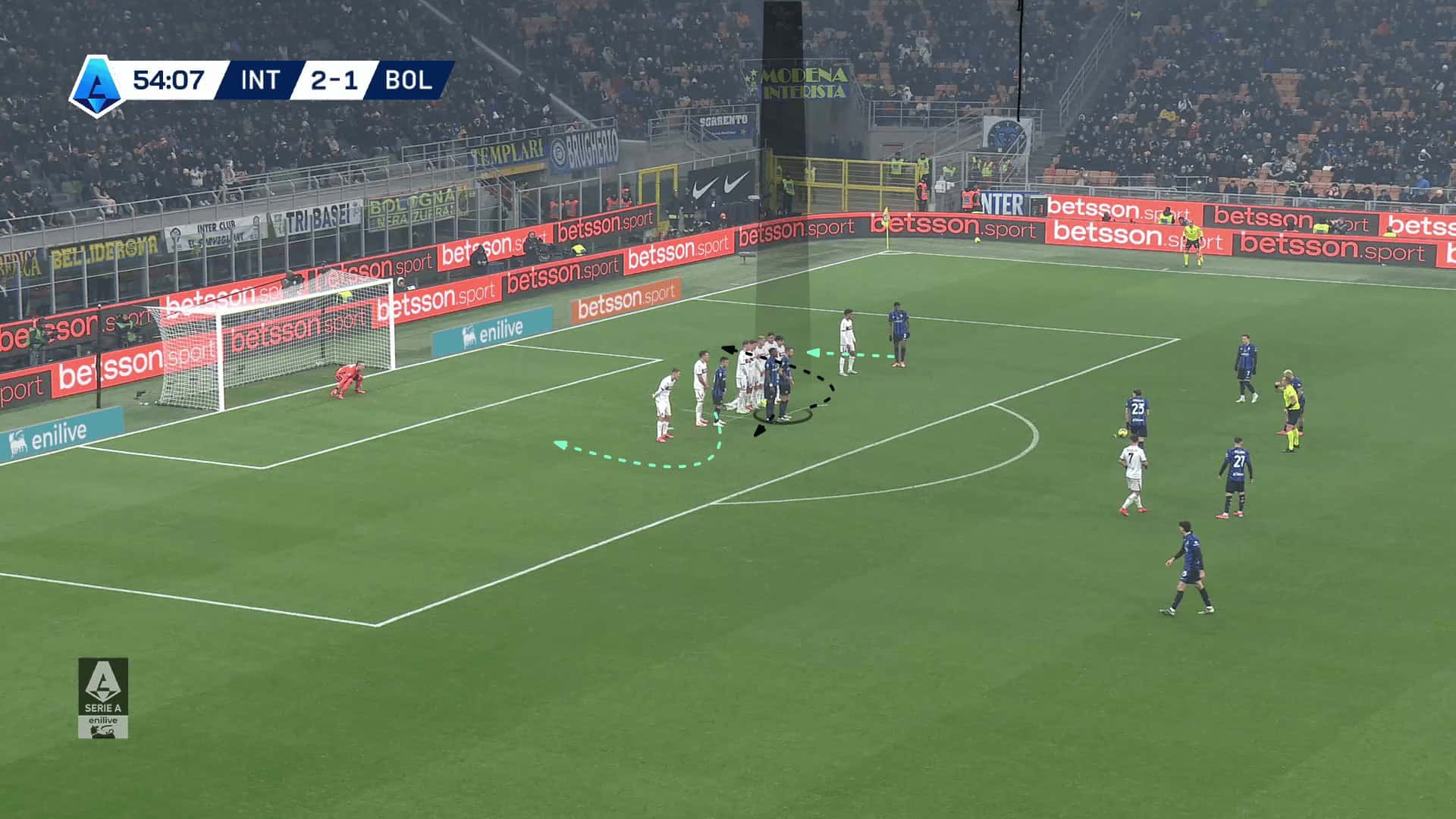
At the same time, one taker runs over the ball and passes a heel pass to the other one to make the ball outside the defending wall’s frame.
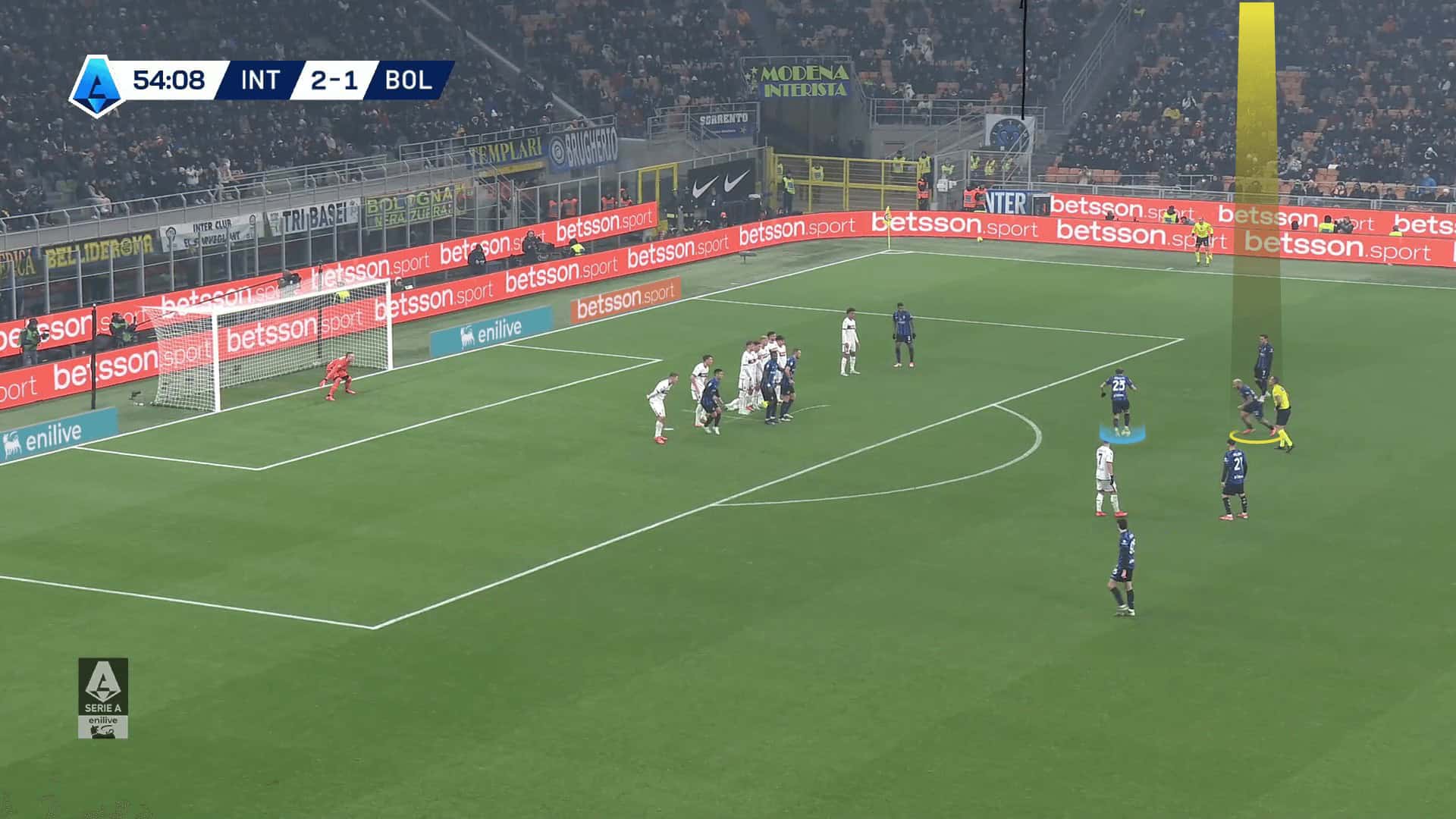
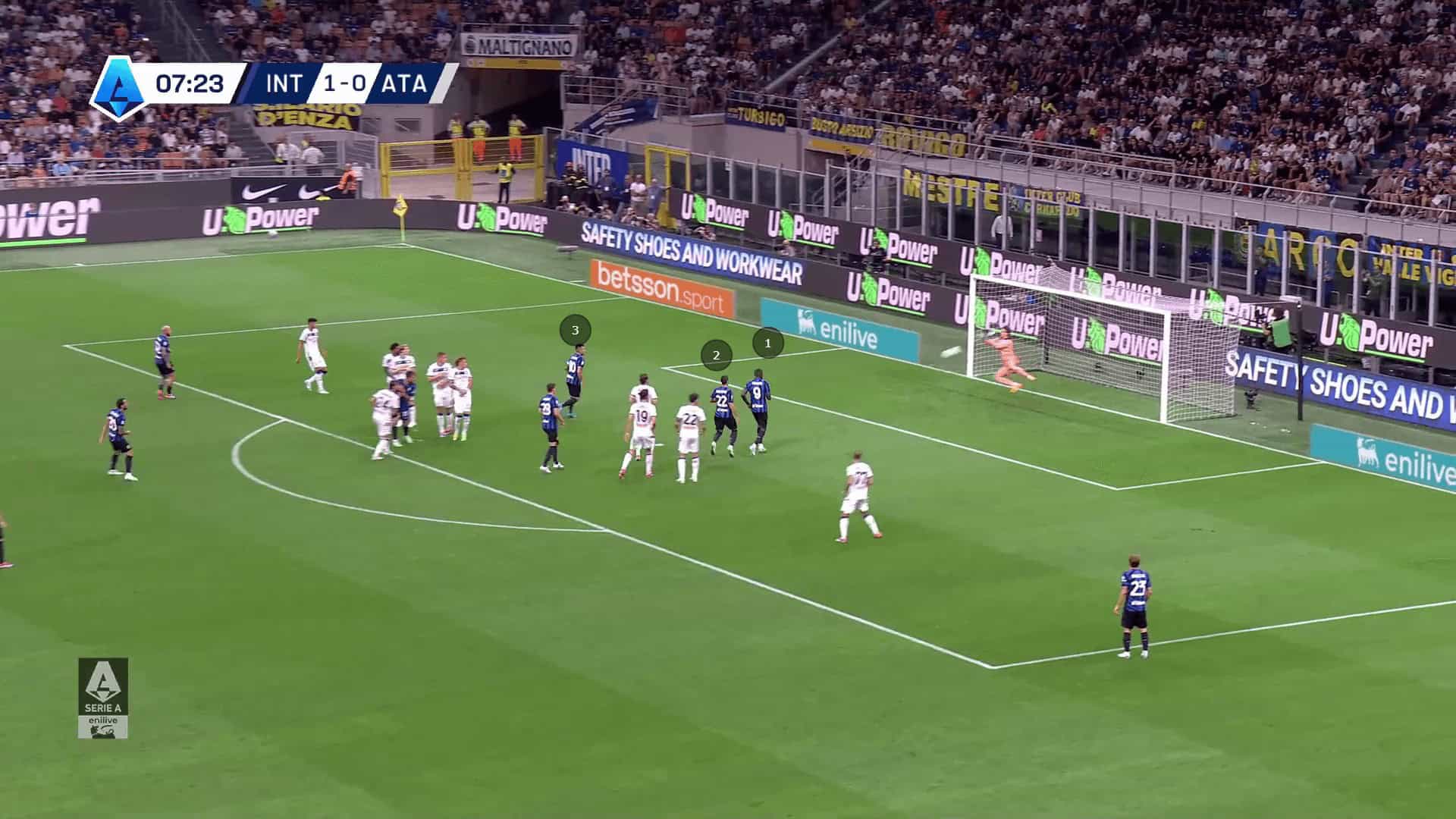
As shown below, Federico Dimarco has the ball in a better position far from the wall, and it leads to a dangerous chance for Inter Milan.
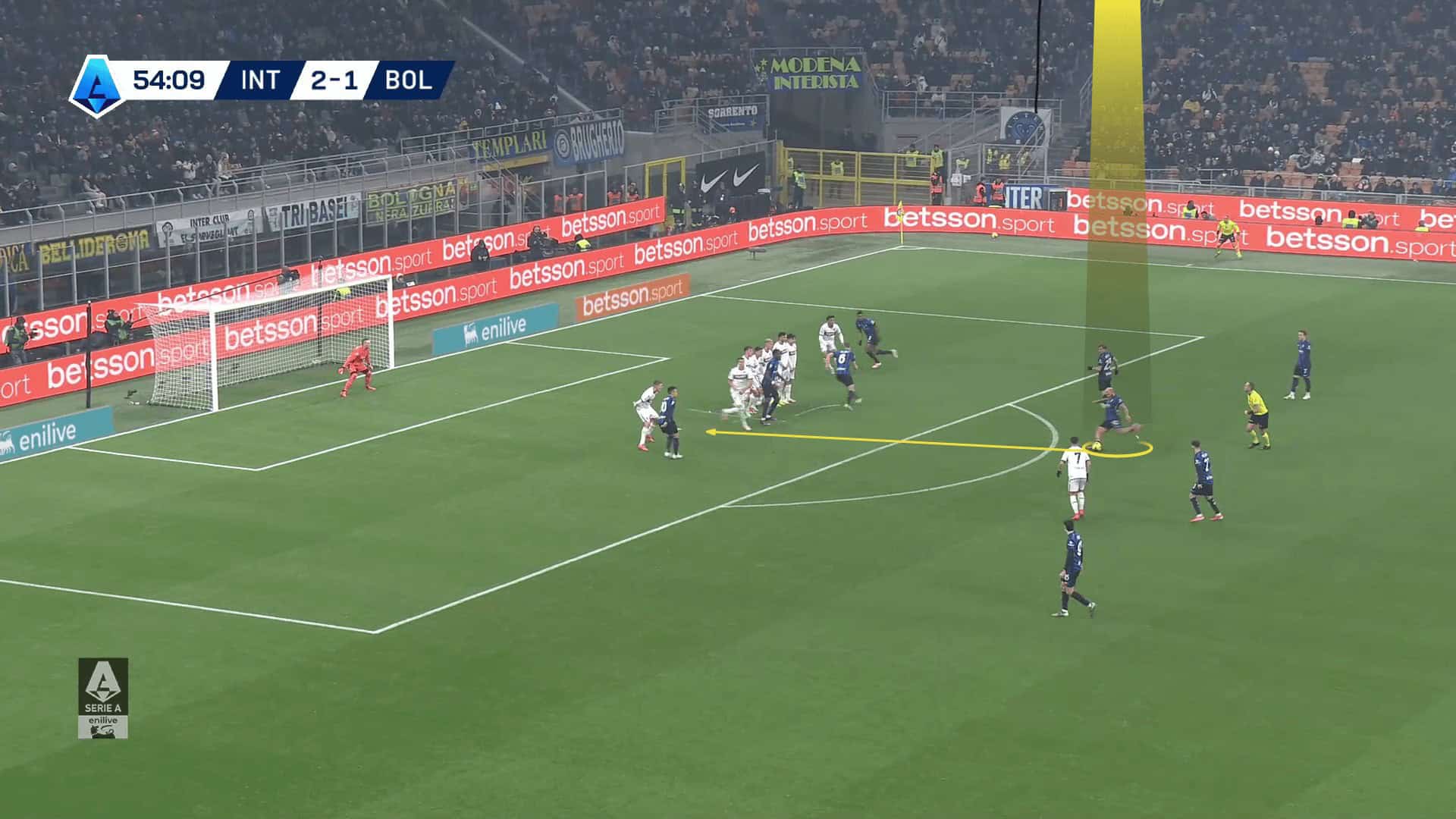
It is not just used to play the ball to the goalkeeper’s angle; it can also be shot to the other angle because the ball is out of the defending wall’s frame, and the taker has the path to the goalmouth empty now.
— Footie Clips (@FootieClips) April 16, 2025
As shown below, the same technique is followed to make Hakan Çalhanoğlu‘s shot fire away from the wall.
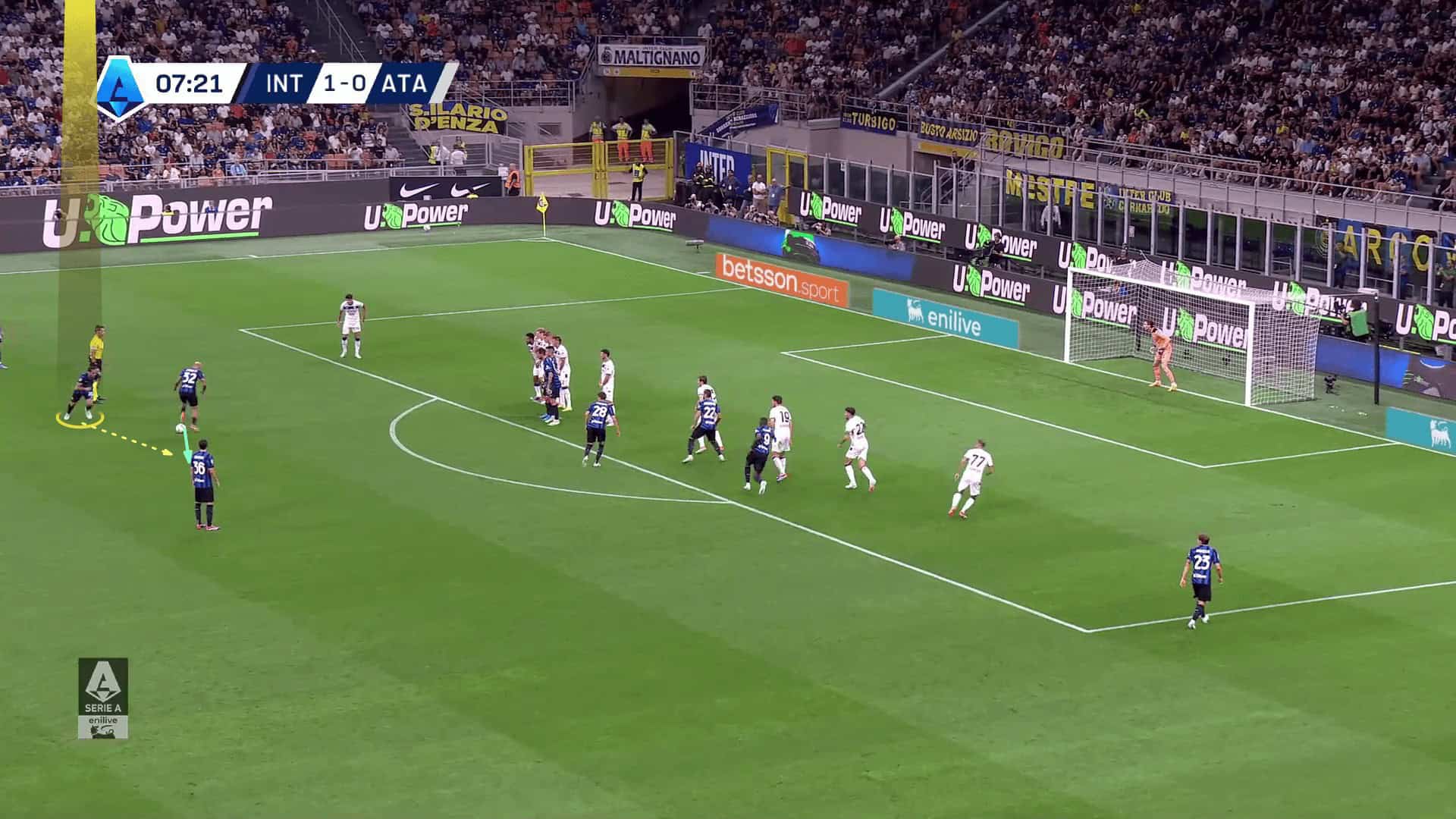
He puts him in the other angle strongly while three players are following the rebound, as shown below.
In this idea, the taker is not cared with raising the ball above the wall, so he can put all of his power into the shot, which makes it hard for the goalkeeper to catch the ball.
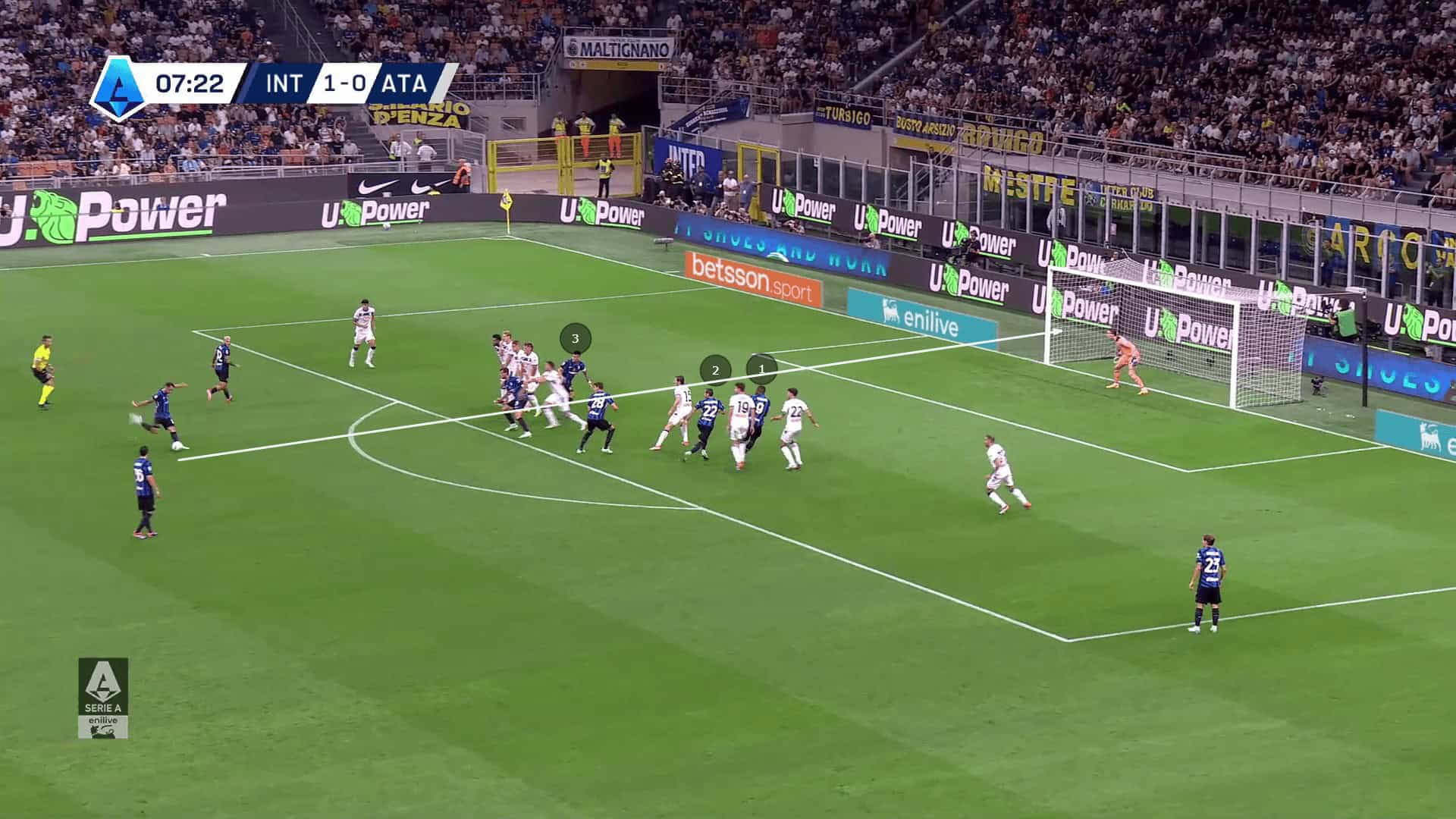
The rebounded ball is dangerous and could be a goal, as shown below.
Hence, it is preferable to use this idea if you have a taker whose shot is very strong, regardless of whether he can raise the ball above the wall.
— Footie Clips (@FootieClips) April 16, 2025
As shown below, Federico Valverde will shoot from point 2, not 1, which may be not far from the wall, but it gives another advantage.
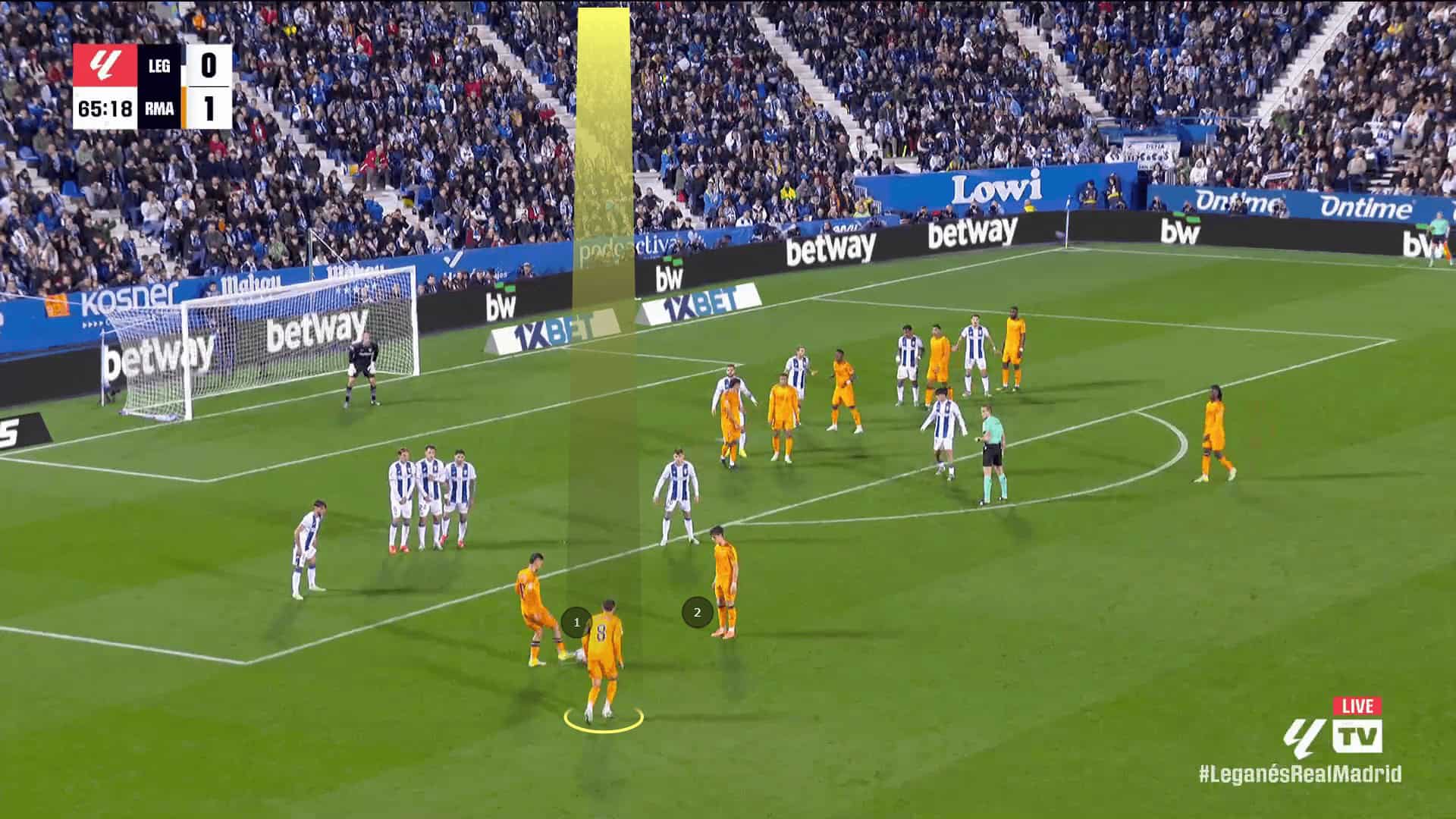
As shown below, when the ball is passed from point 1 to point 2, the wall will move, trying to press, which opens gaps within the wall against Federico Valverde’s amazing shot.
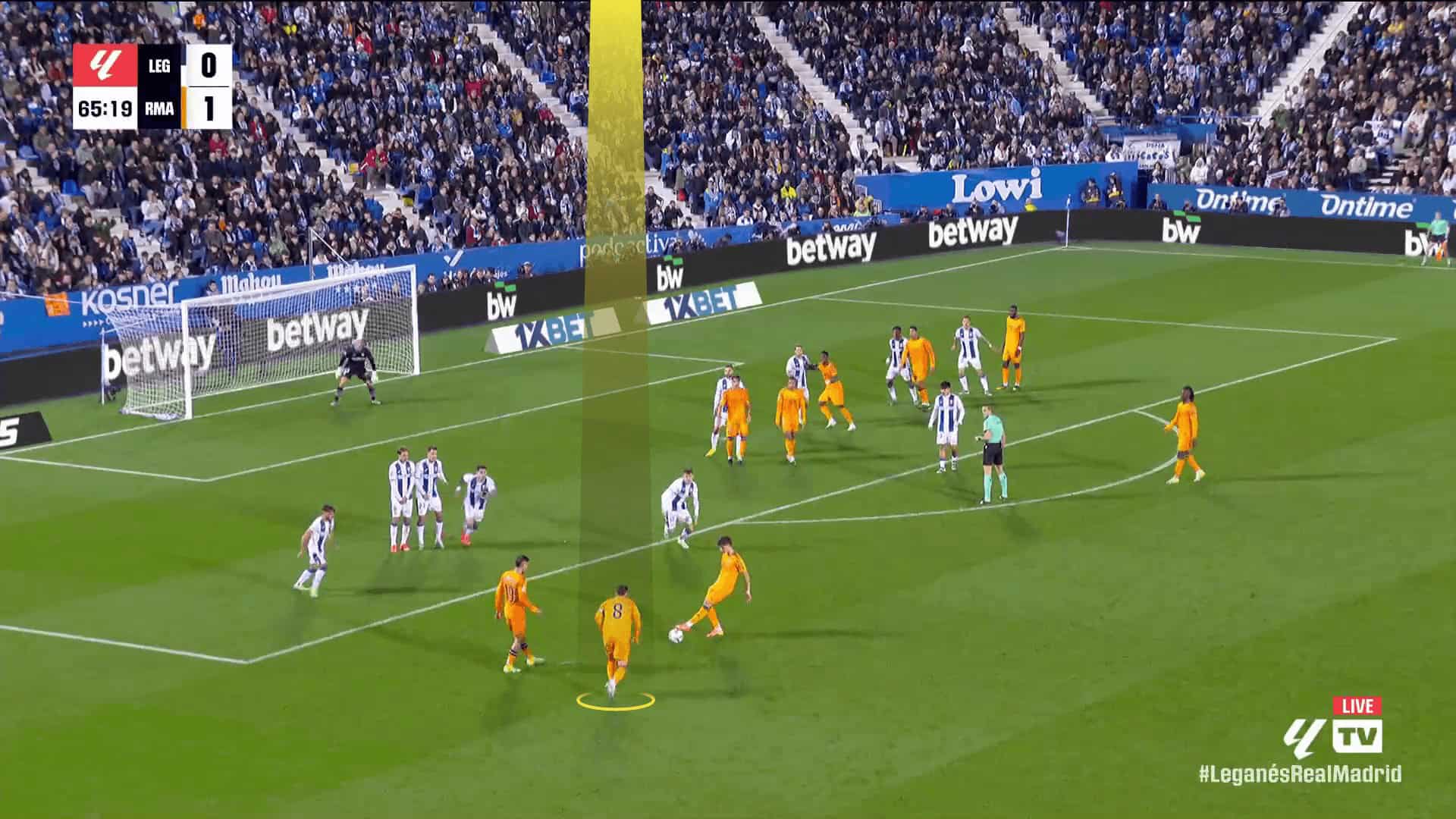
The ball is shot through the wall, exploiting that there is no one lying down on the ground behind the wall, as shown below.
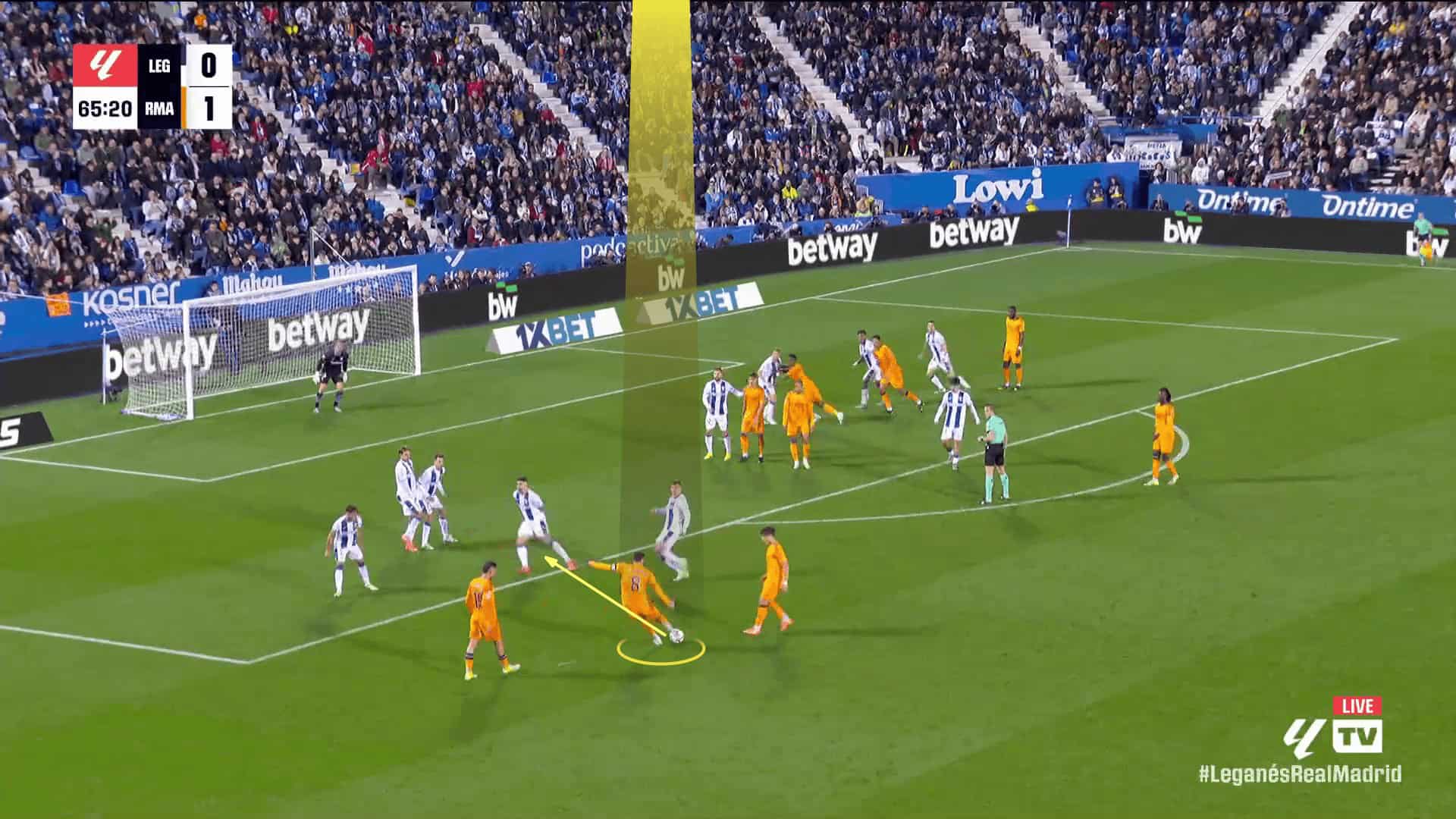
The same methodology can be used to shoot high-level shots by a powerful shooter.
— Footie Clips (@FootieClips) April 16, 2025
As shown below, the wall has many gaps after the pass, allowing the ball to pass through it while the goalkeeper can’t see it well.
The result is a goal.
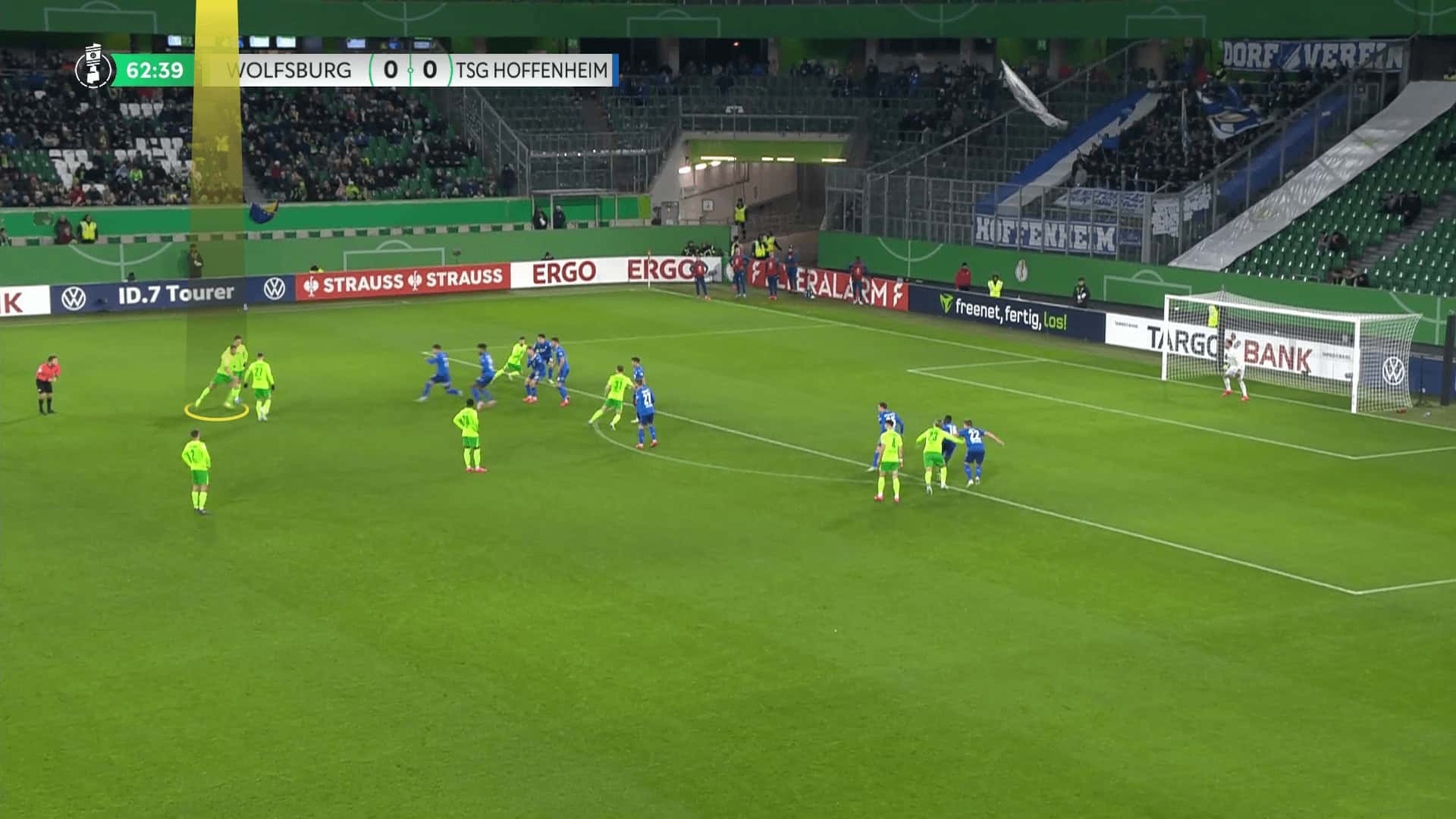
Passing To The Attacking Wall
The fourth idea is to pass the ball to one of the attacking wall’s players.
— Footie Clips (@FootieClips) April 16, 2025
As shown below, the ball is passed to Jean-Philippe Mateta in the middle, which is unpredictable.
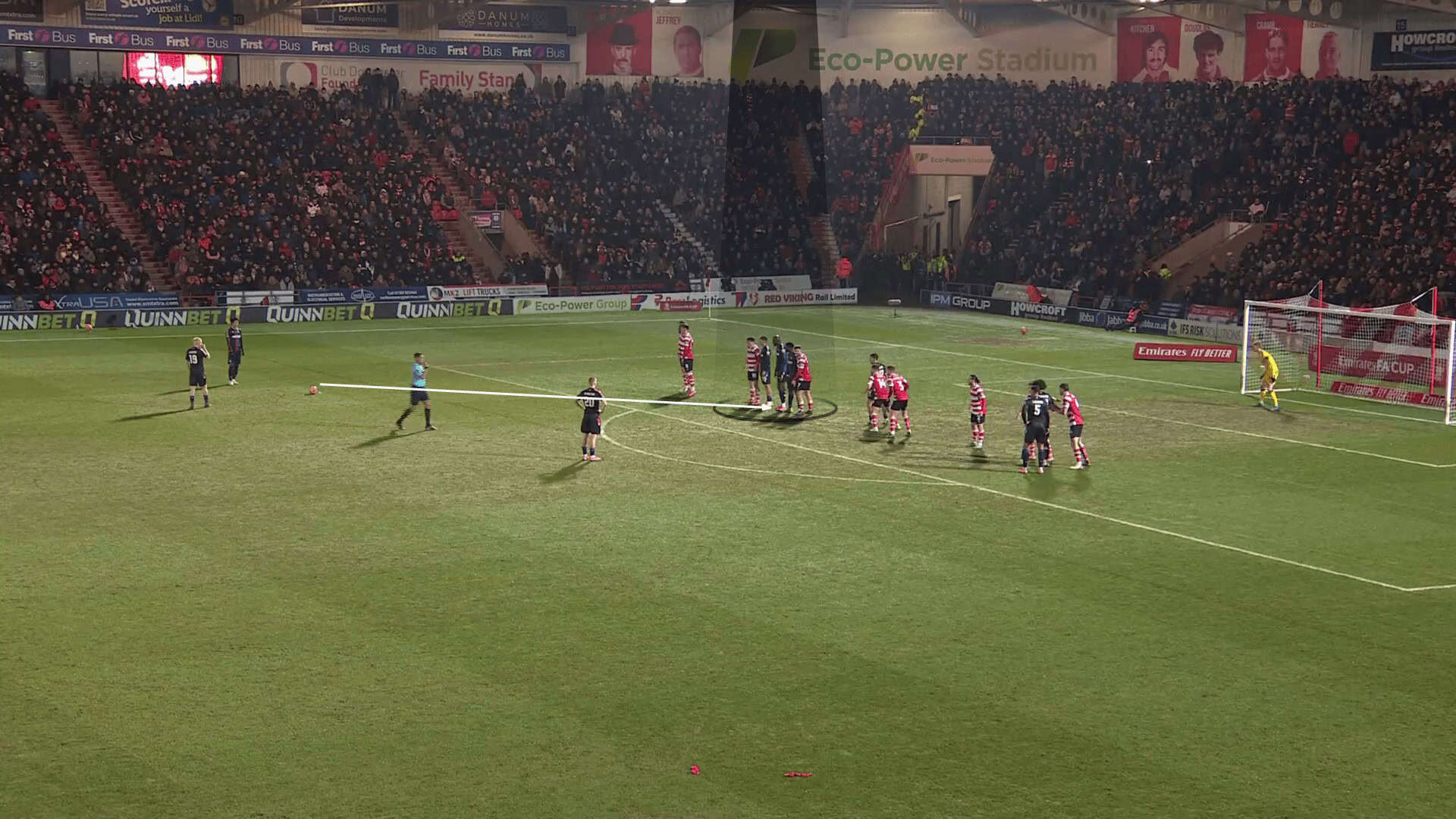
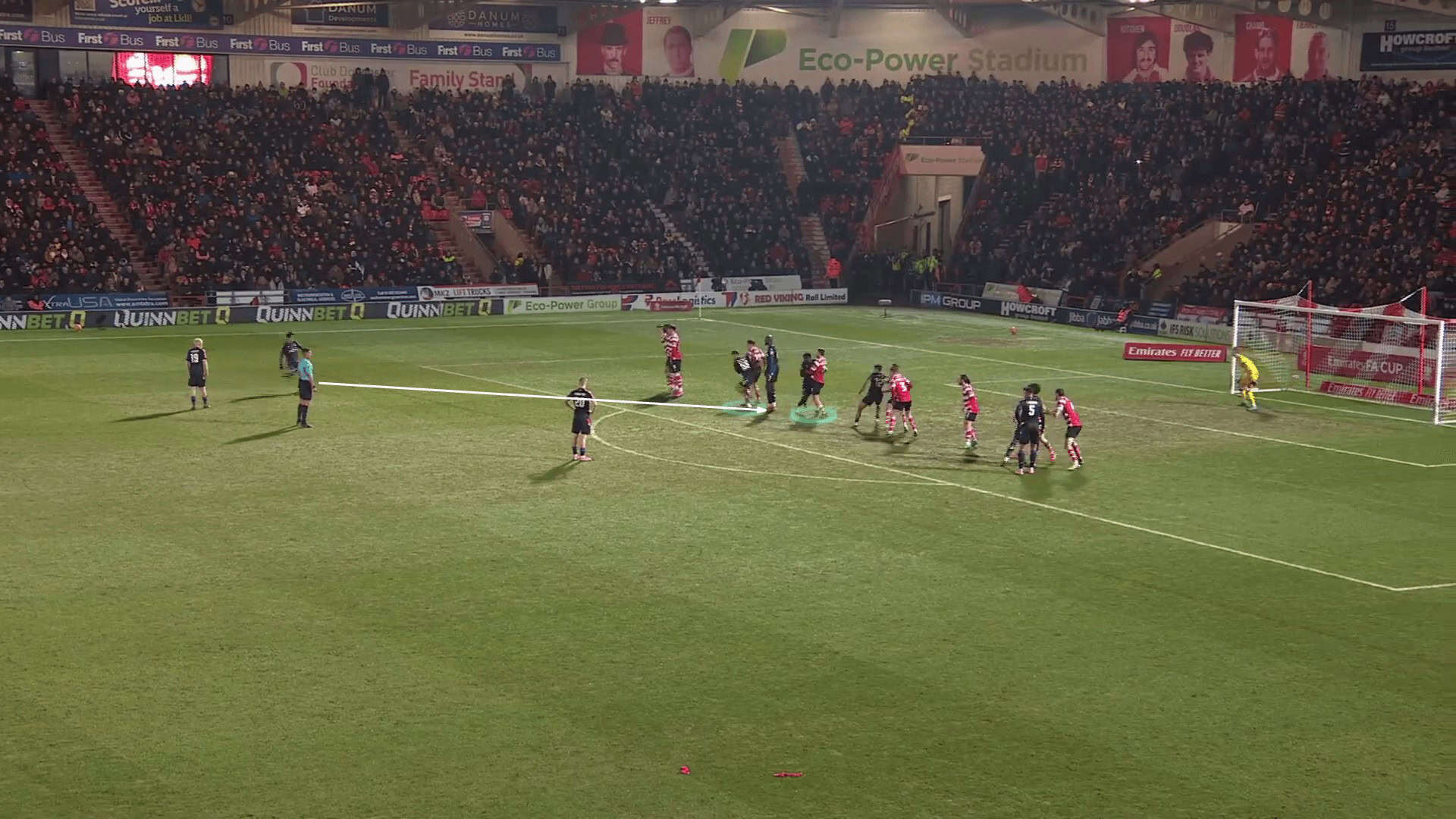
As shown below, the two wall players on the sides block the players around them to evacuate the space to Jean-Philippe Mateta, who twists, turns and shoots the ball.
The result was a goal for Crystal Palace.
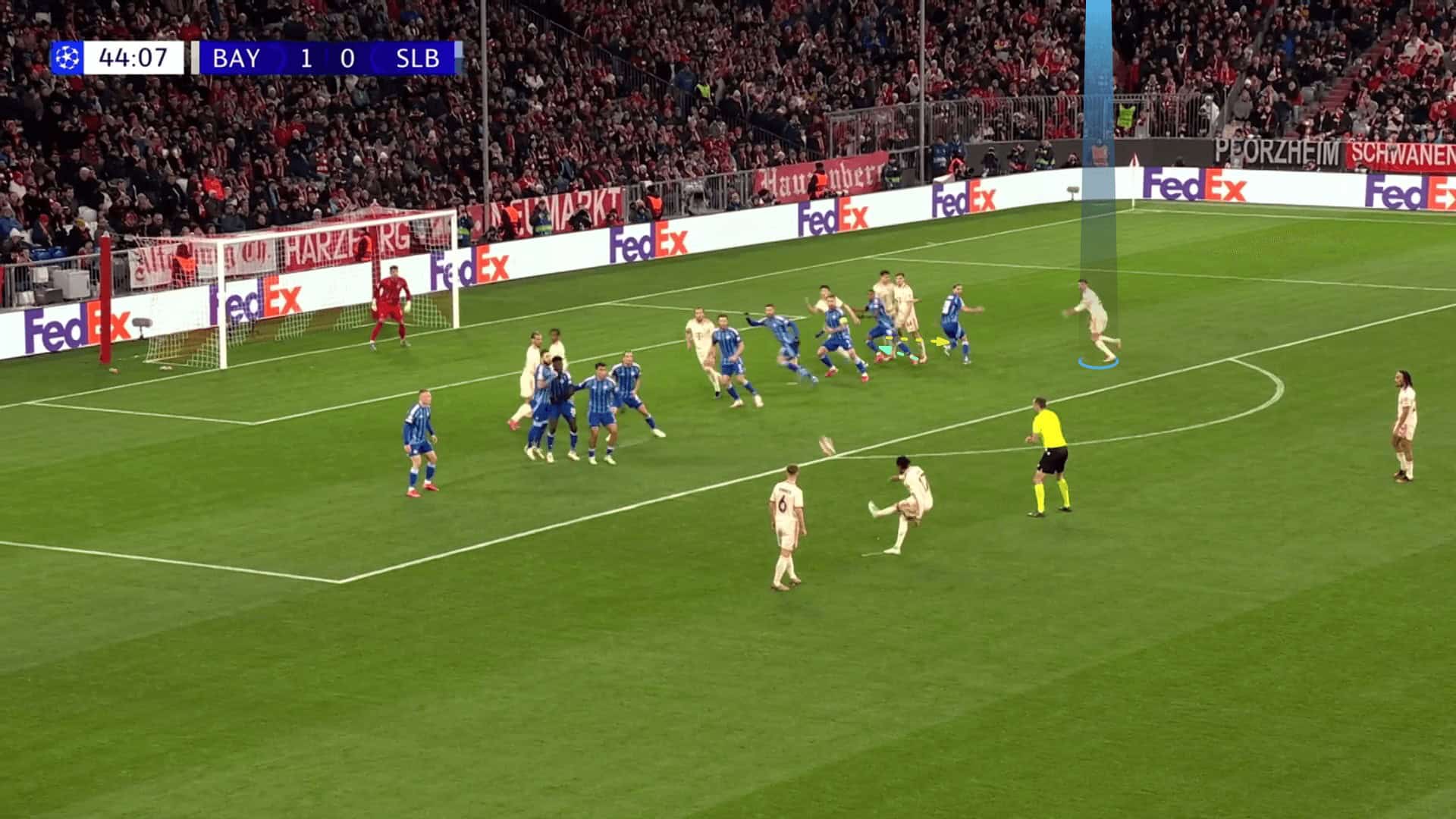
Playing It As An Indirect Free-Kick Surprisingly
When a team has a near free-kick, the opponent should have many players on the wall, which reduces the number of defenders in the box.
Hence, surprisingly, the attacking team can send a cross.
— Footie Clips (@FootieClips) April 16, 2025
In the photo below, it seems that it is a near free kick to the box and will mostly be shot, especially since they didn’t stretch the width.
The targeted player (blue) stands on the edge of the box as a rebound player and then runs in a curved way to the far post.
A defender is standing in front of him and may get back with him, so they ask the offside player (yellow) to block him to free the targeted player while the green last attacker takes the attention of the last defender.
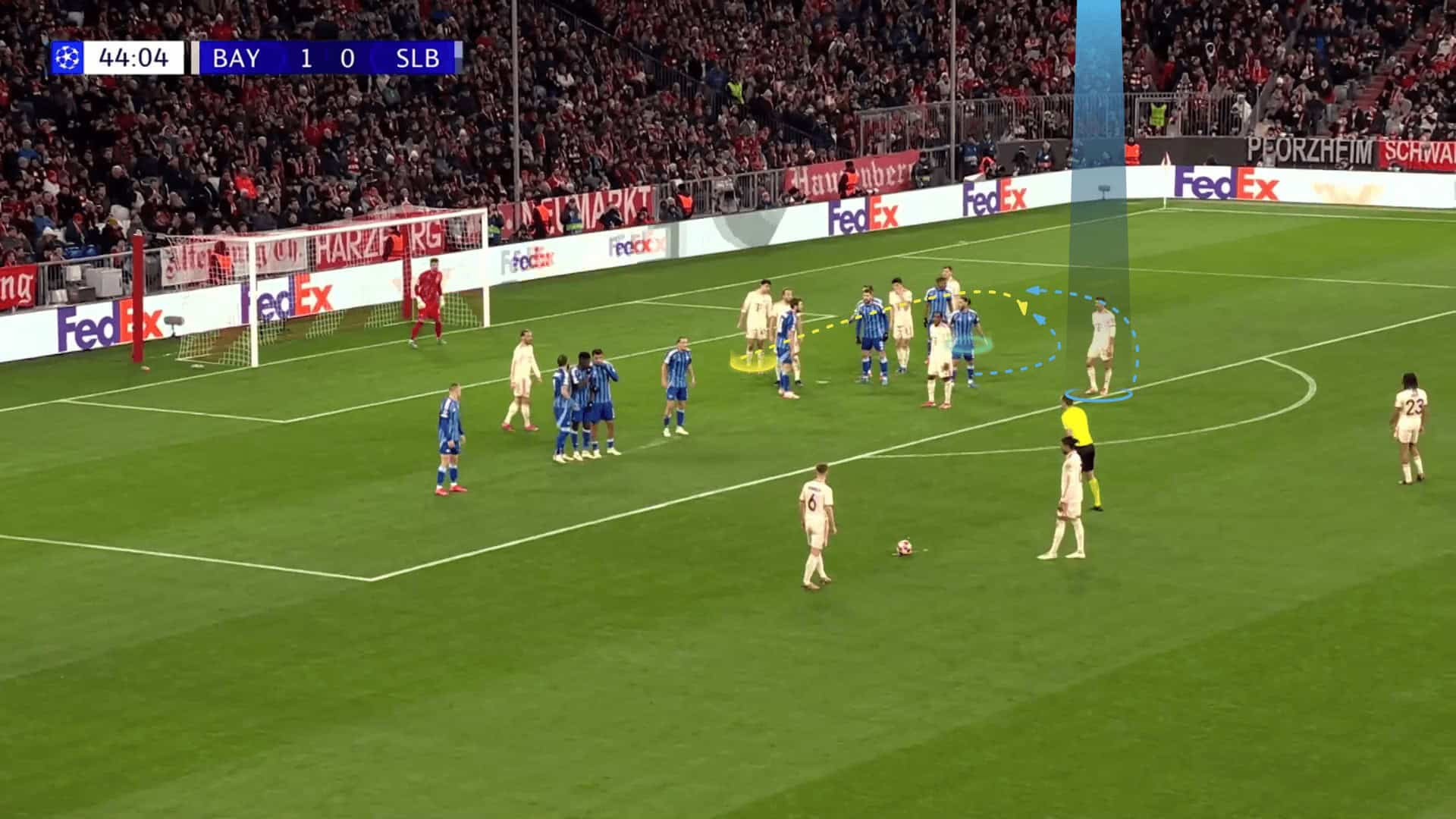
As shown below, the plan is clear.
However, the block wasn’t optimum, so the plan wasn’t completed.
Conclusion
This analysis examined the most recent tactical innovations in direct free-kick strategies.
These Trendy approaches may prove valuable for analysts, coaches, and players alike by potentially simplifying execution challenges for free-kick takers.
In this set-piece analysis, we have examined several tactical approaches, including:
- Playing It Besides The Wall
- A Moving Attacking Wall
- Avoiding The Wall
- Passing To The Attacking Wall
- Playing It As An Indirect Free-Kick Surprisingly
