
Recently, set-pieces have become a crucial aspect of the game at any level of football, so many innovative tricks have been implemented.
One of the most crucial steps in new-style corners is blocking goalkeepers to prevent them from claiming the ball, especially when the targeted area is inside the six-yard box.
Hence, every analyst, coach, or even football fanatic has been researching the details of the methods of efficiently blocking goalkeepers.
In that analysis, we have explained the different tactics of blocking to make blocking goalkeepers (and zonal defenders) efficient without committing fouls.
However, not much interest was put on the reverse, which is how defending teams can protect goalkeepers from blocks.
Definitely, the individual abilities of the goalkeeper matter a lot in this case.
Still, various techniques can also help the goalkeeper, as can tactics related to the defensive scheme itself, which we will show in this set-piece analysis.
In this tactical analysis, we will examine the various blocking techniques and tactics that can help goalkeepers avoid being blocked, claim the ball, or win a foul against the blocker.
Proactive Goakeepers Without Using A Man To Help
Let’s begin with the techniques that goalkeepers themselves do (or are asked to do) without the need for a man marker to mark or push the attacker near the goalkeeper (the blocker) to protect him from disturbing the goalkeeper while trying to claim the ball.
This method has many advantages, like not losing a man marker (or a defender in the second line) and making the block more straightforward for the referee if the attacker exaggerates and commits a foul.
If there is a man marker, it will appear as an equal fight between him and the blocker beside the goalkeeper.
This method is difficult because it requires a proactive, brave, and excellent goalkeeper who is skilled at not only claiming the ball but also pushing the blocker away to create the space he needs to jump.
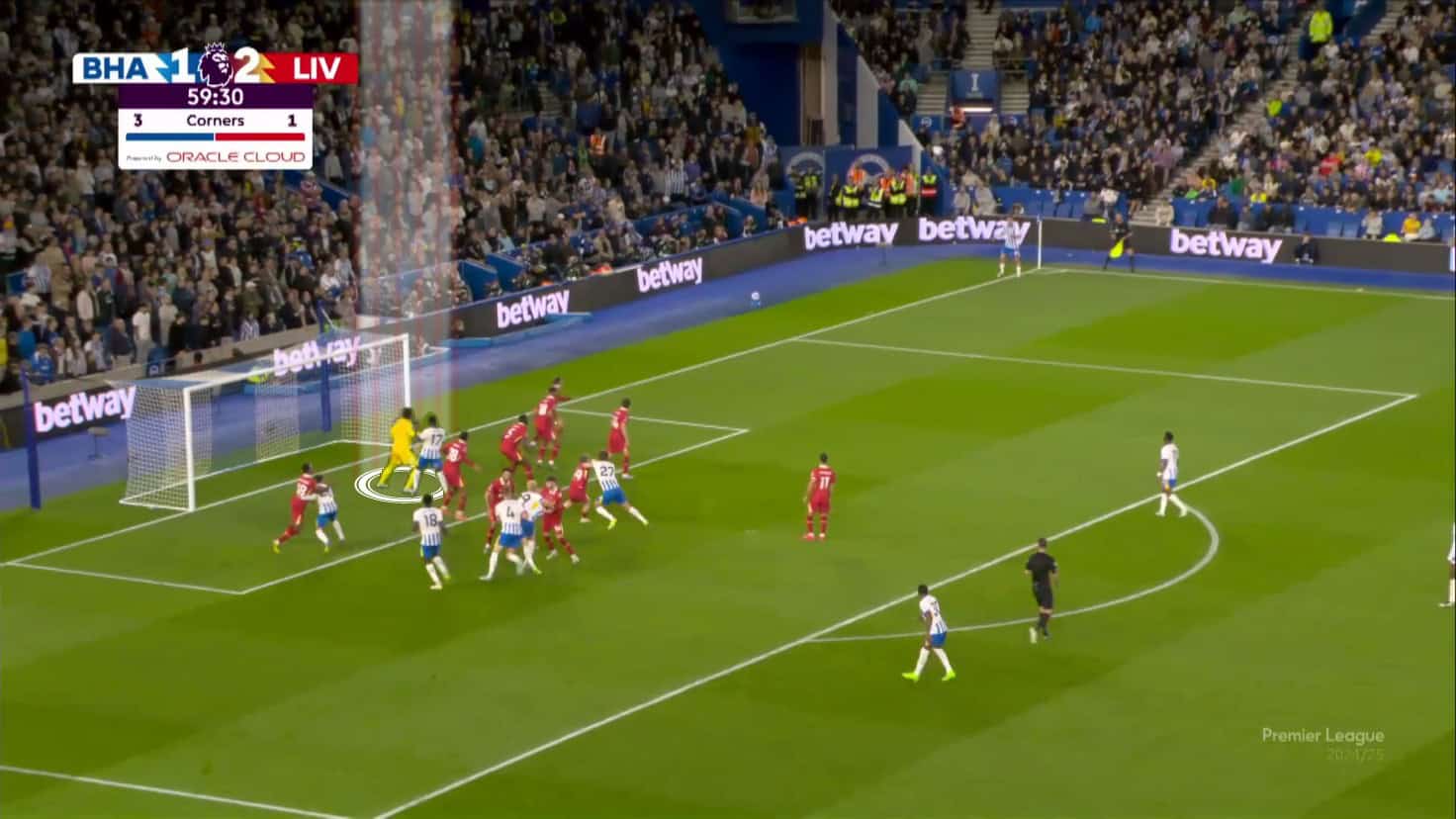
As shown below, Liverpool‘s defending scheme leaves Alisson Becker to deal with the blocker without asking a man marker to come to help.
He tries to keep his body separated from the blocker, using his arm to prevent the player from being close to him, which annoyingly bothers him while he tries to jump.

The second important tip appears in the next frame.
When the taker starts to move, he doesn’t depend just on this separation but proactively looks for the expected coming blocker to push him with his arm and then starts to jump, as shown below.
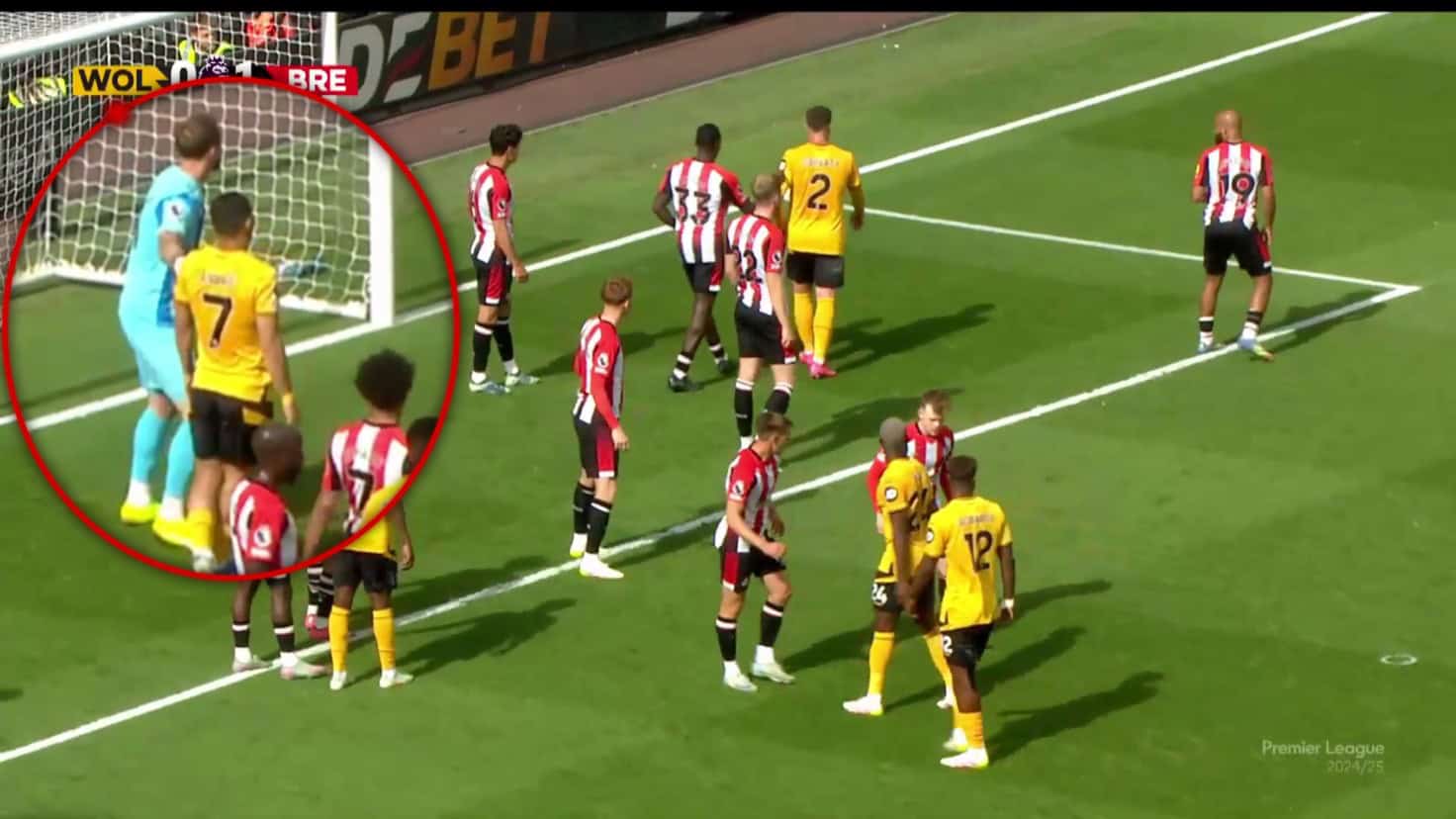
Brentford used the same method with their goalkeeper (Mark Flekken) last season.
As shown below, this technique is also useful to have an arm protection distance around the goalkeeper’s body, especially when the blocker starts on his blind side while the goalkeeper needs to track the ball, so it is useful to feel the position of the blocker.
Many proactive goalkeepers in top clubs employ this tactic, but let’s discuss how opponents can counter it.
Arsenal‘s goalkeeper (David Raya) uses the same method, but Tottenham implemented a common idea to overcome this against their rivals.
As shown below, the blocker starts in the pack with the attackers on the far post, which puts him on the blind side of the goalkeeper.
This distance from any physical contact with the goalkeeper before playing the corner allows him to suddenly come with his dynamic advantage.
In contrast, the goalkeeper tracks the ball in the air.
Additionally, it serves as a disguise, especially in the first corner, when the opponent may think that he is a normal runner or target.
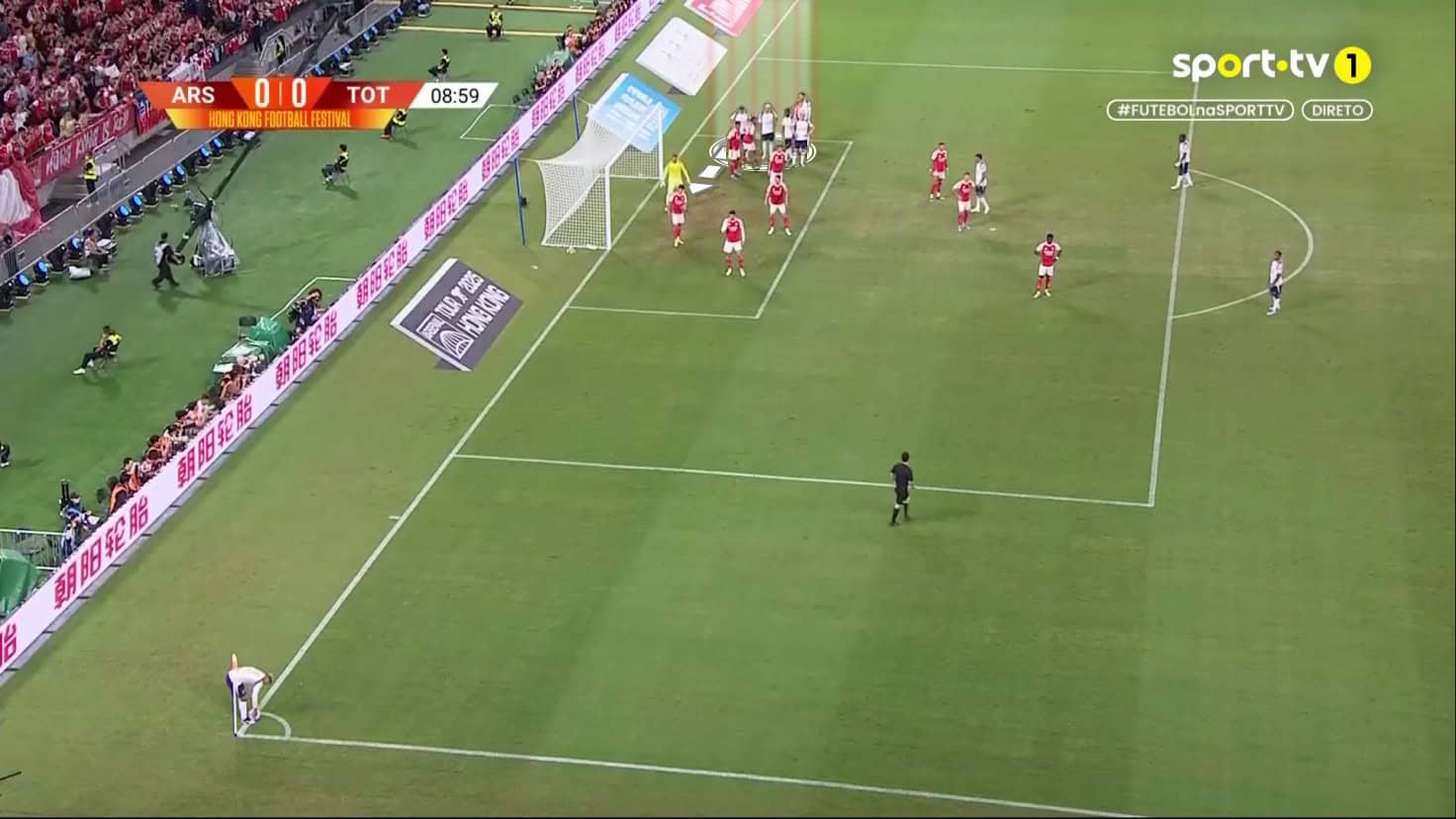
As shown below, Raya attempts to check his shoulders and scan to see the approaching blocker, but he is in a difficult situation because the blocker is coming from a distance while he needs to track the ball in the air.
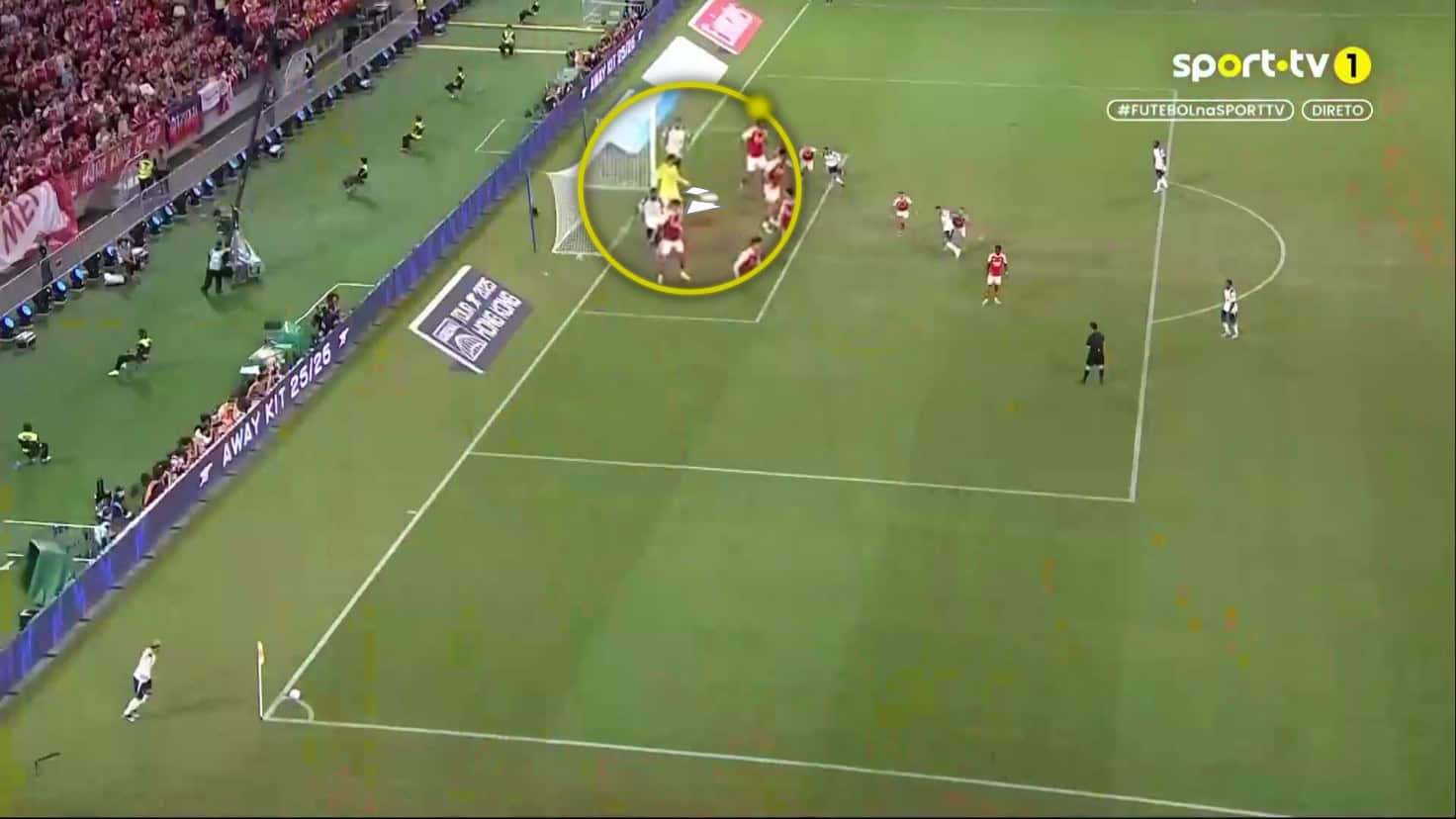
As shown below, Raya tries to implement the same technique despite the difficult situation.
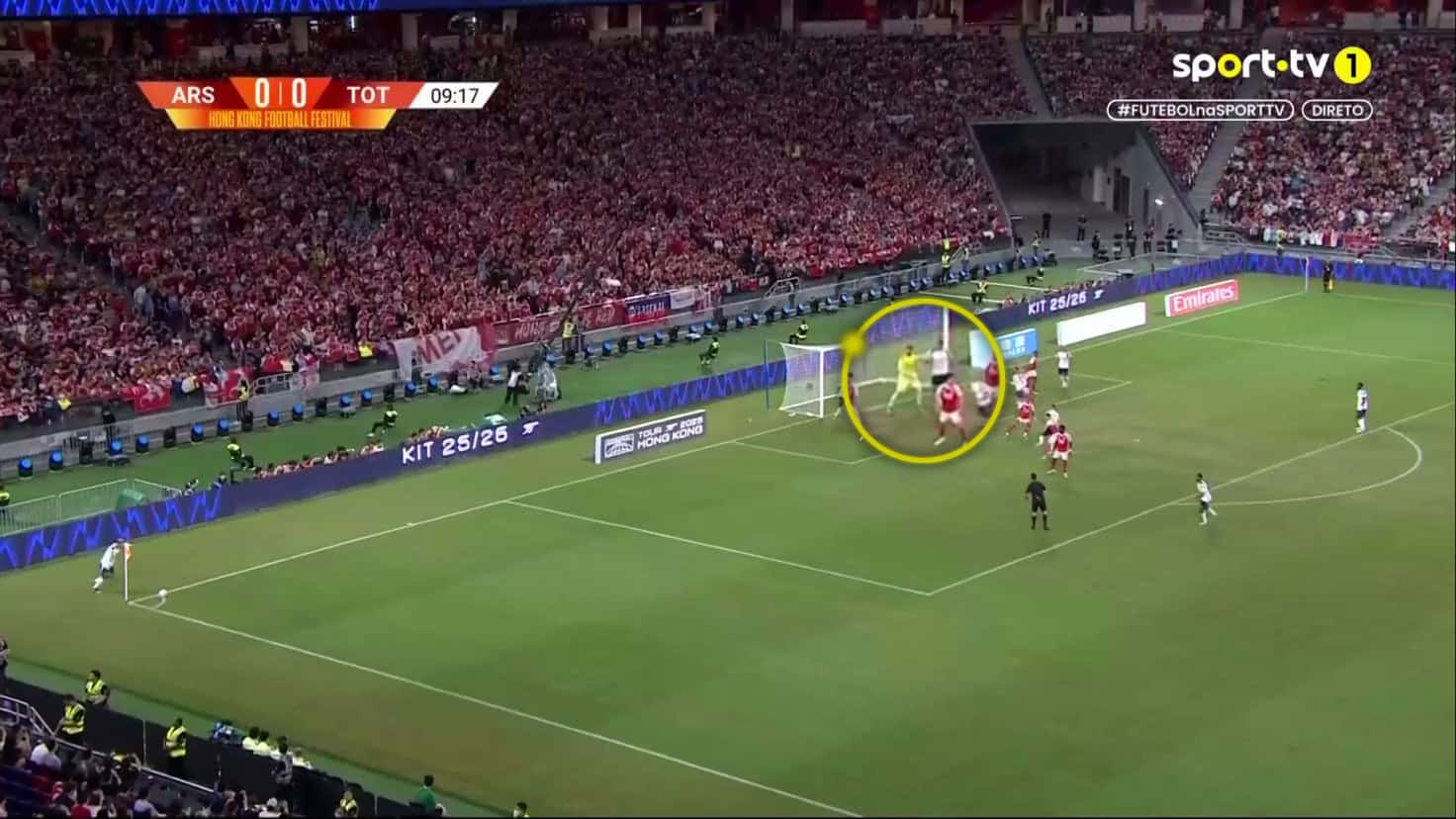
However, it is difficult while the ball is in the air, especially when the goalkeeper faces a strong attacker who can measure the ball from the beginning because of his distant position, unlike the goalkeeper, who tries to track the ball and the coming blocker at the same time, as shown below.
In the end, it leads to a dangerous chance for Spurs.
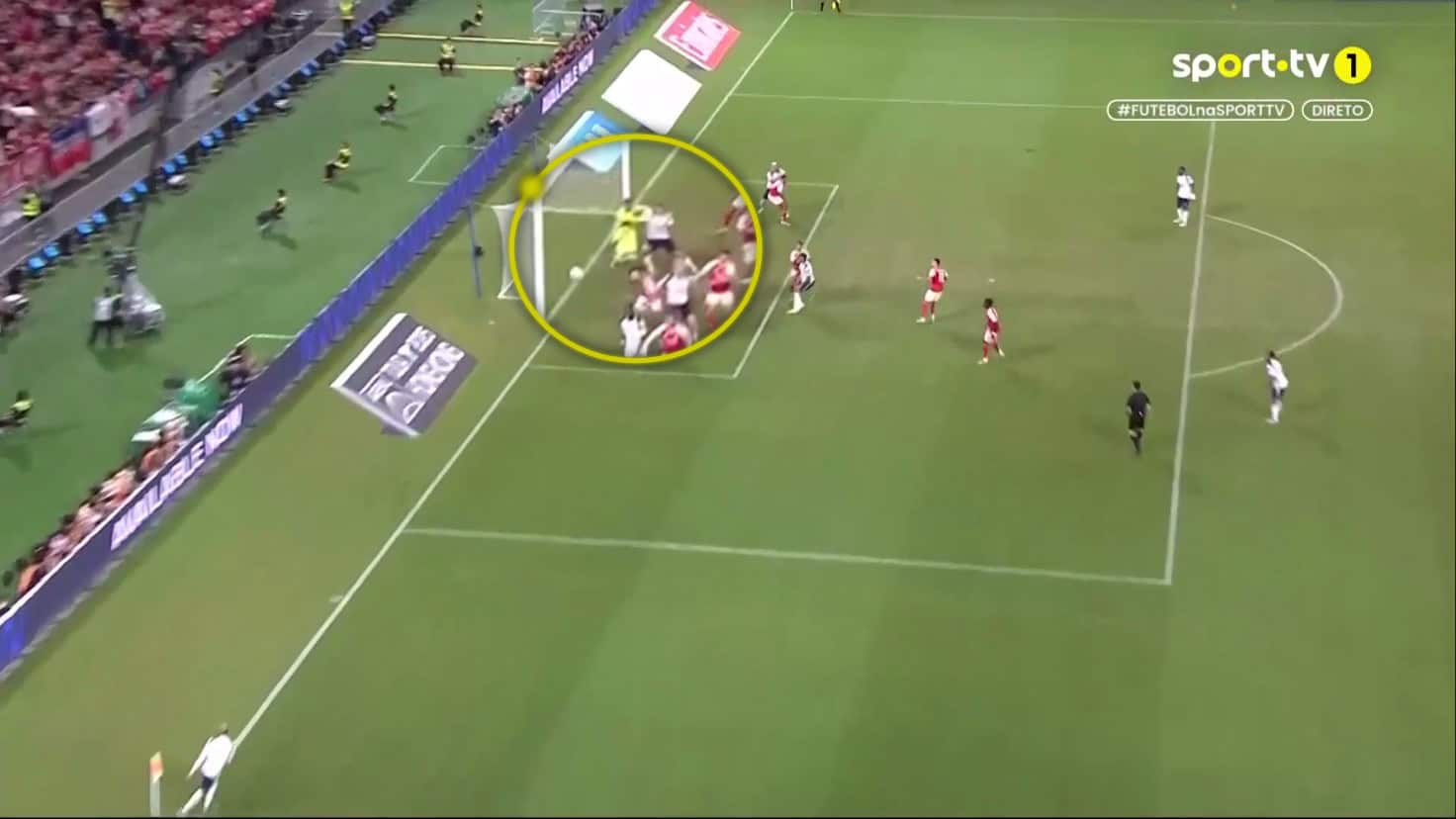
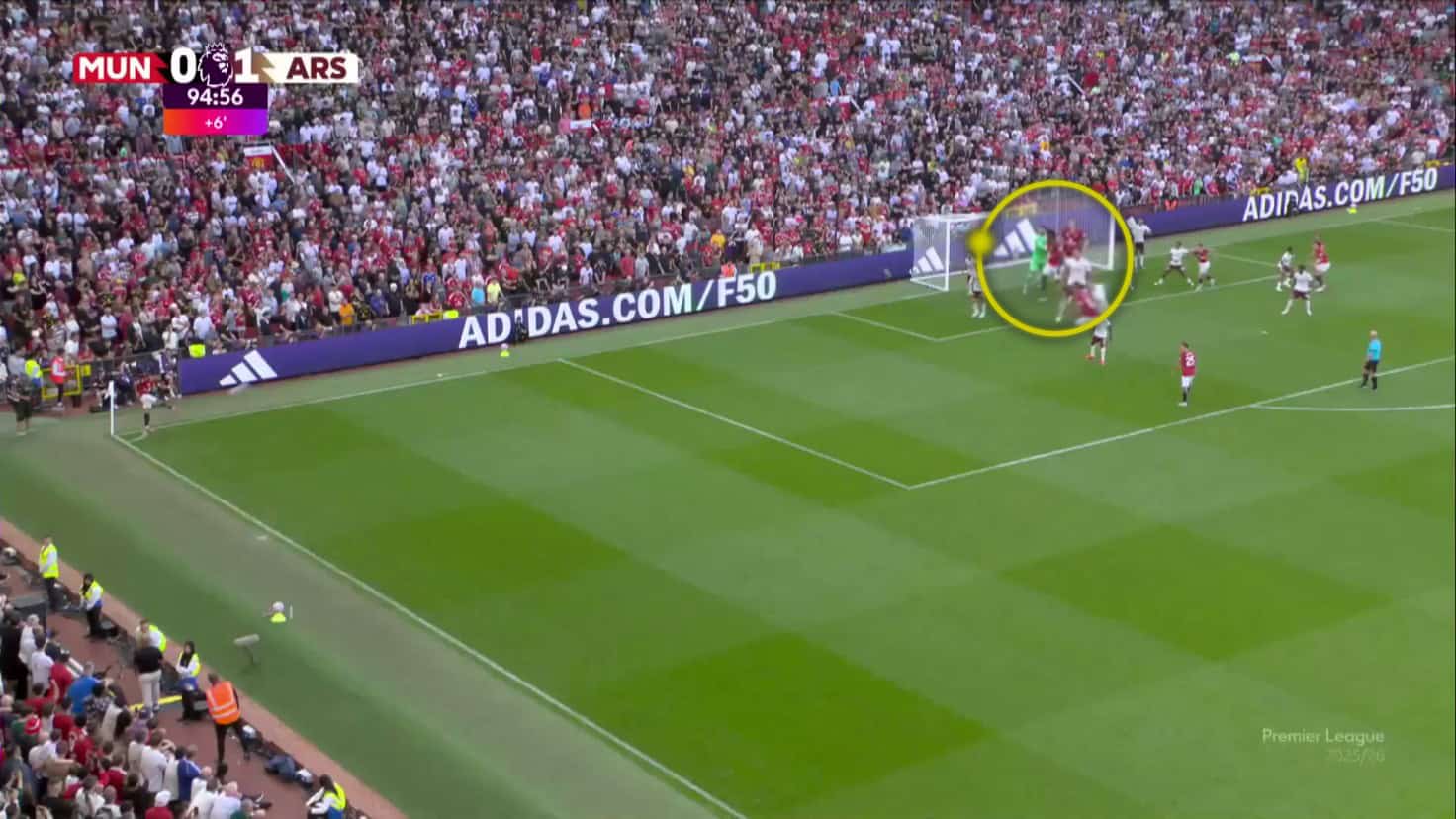
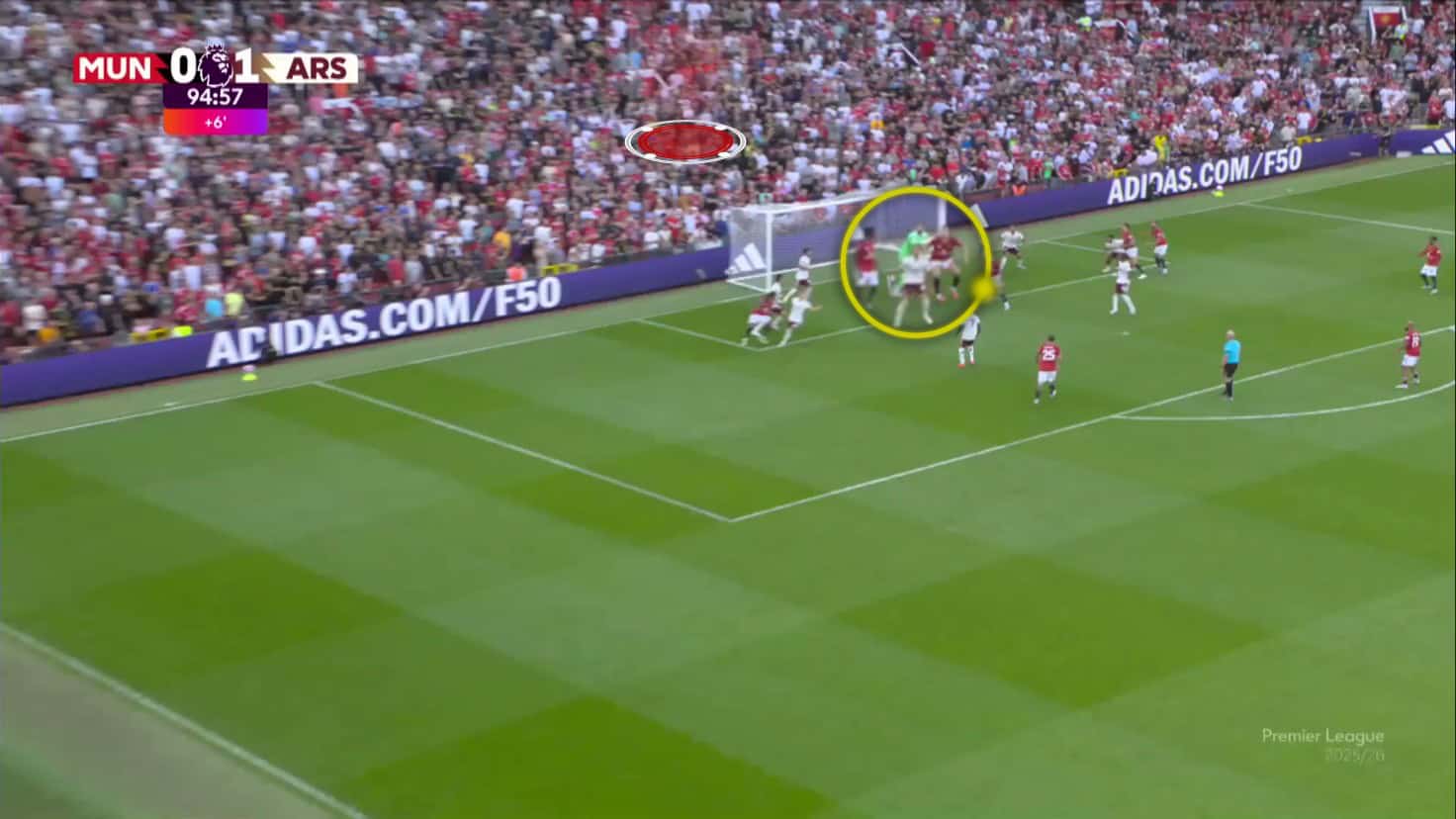
This trick can be implemented in a more challenging way by using two players to create traffic around the goalkeeper, rather than just one blocker, as shown below.
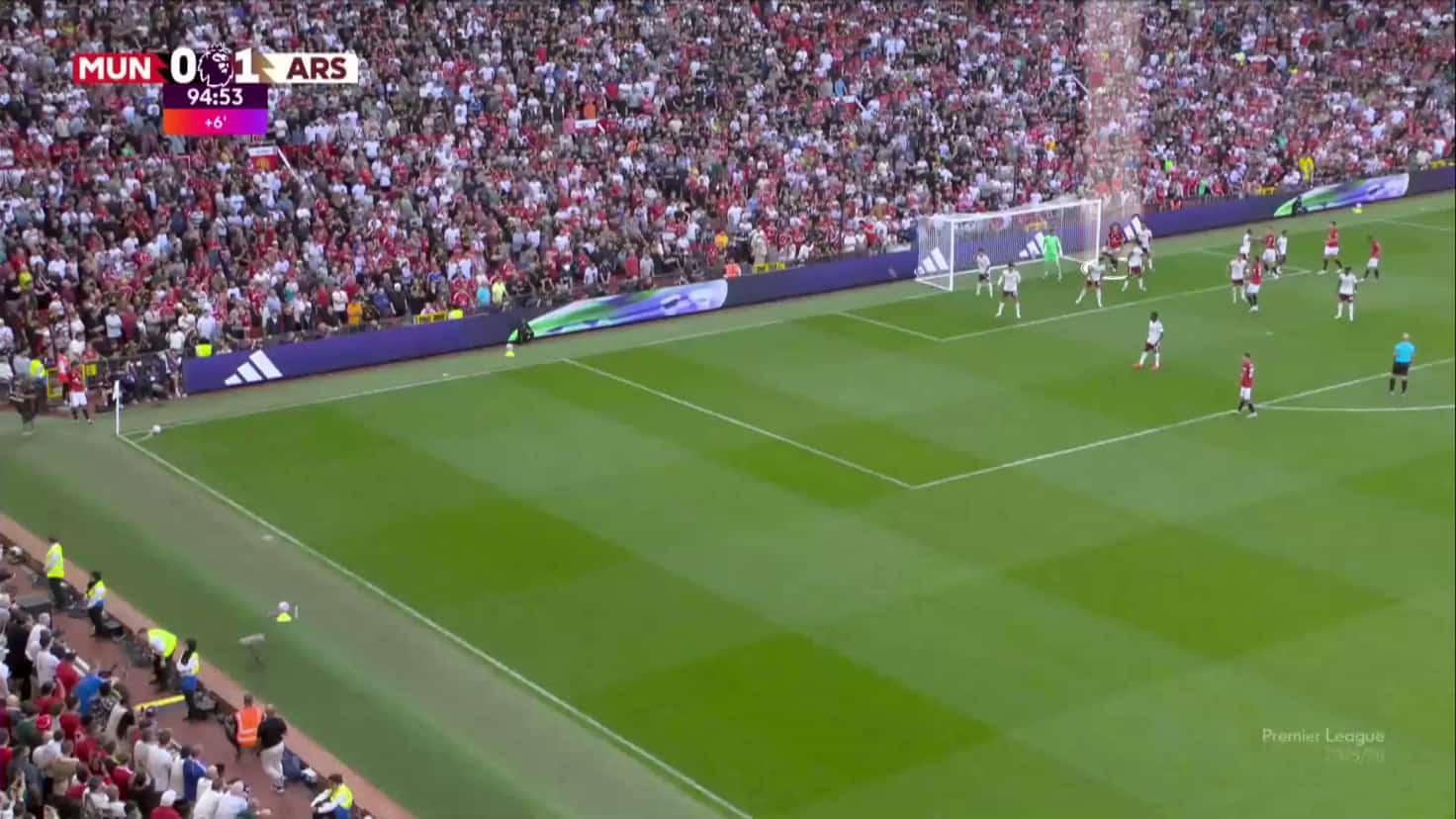
As shown below, Raya tries to raise his two arms to feel the two players coming from the two sides, which distracts him more.
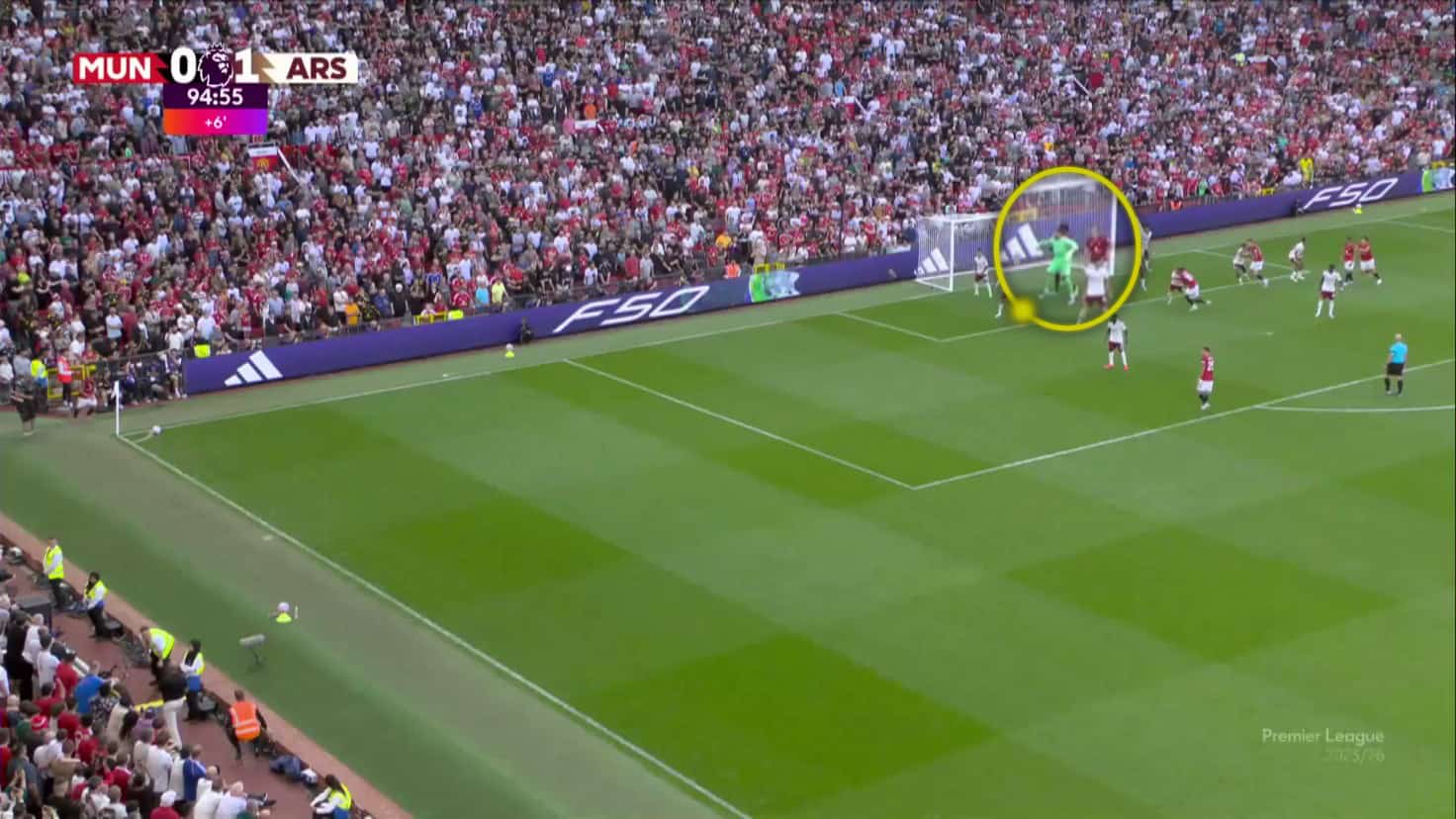
He starts to push one of them, but this attacker runs forward, leaving the real blocking job to the next one.
This distracts Raya a lot, especially when it happens while the ball is in the air, as shown in the two following photos.
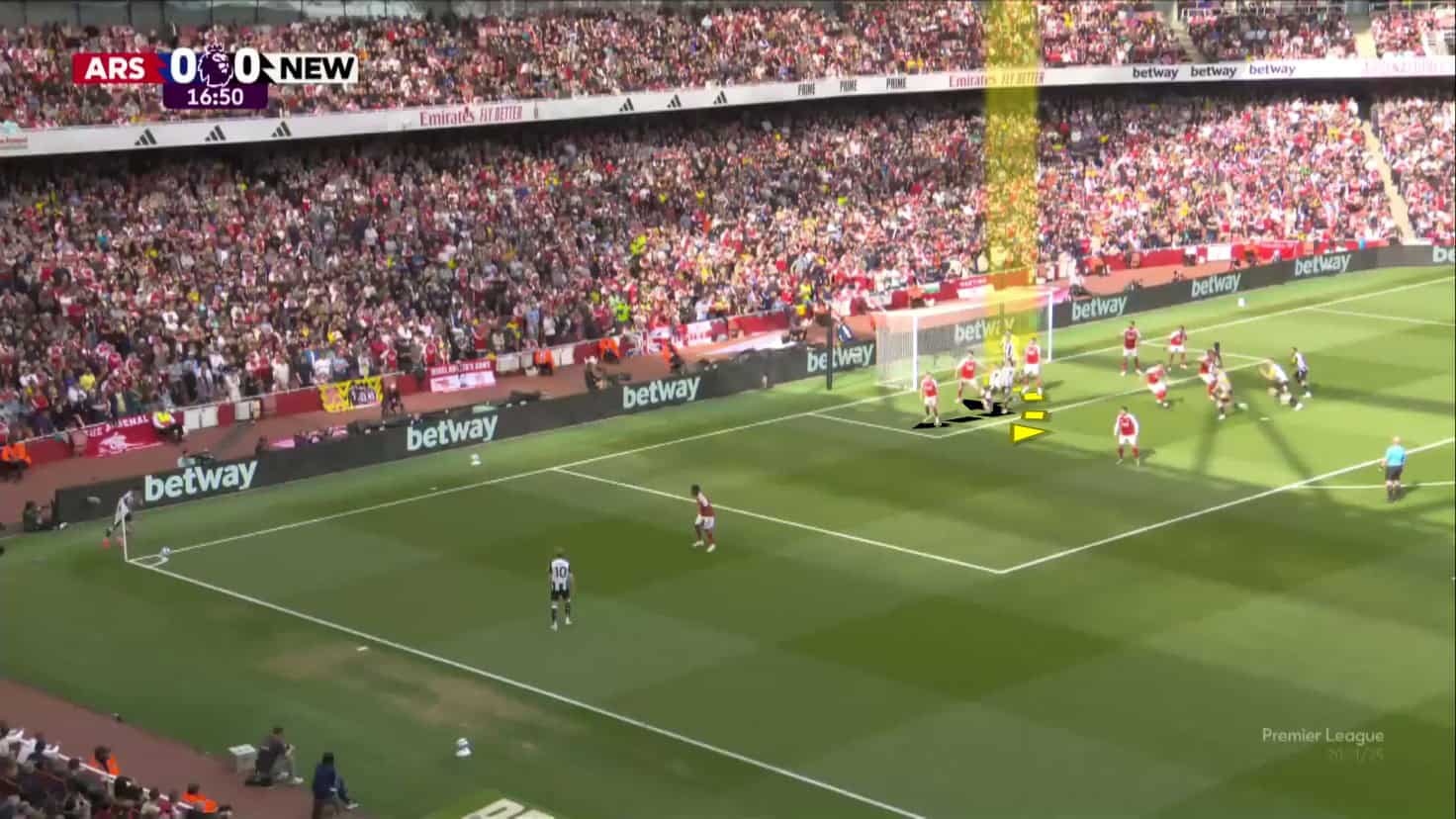
The third trick that is implemented against this tactic is asking a player to start near the goalkeeper and suddenly move to the targeted area, as the target player, because he knows that he will be unmarked.
As shown below, Dan Burn (yellow) acts like he will block the goalkeeper and then goes to the targeted area suddenly from the blind side of the zonal defenders while two other attackers (black) take the attention of the first two zonal defenders.
As shown below, the plan is implemented perfectly, leading to a chance.
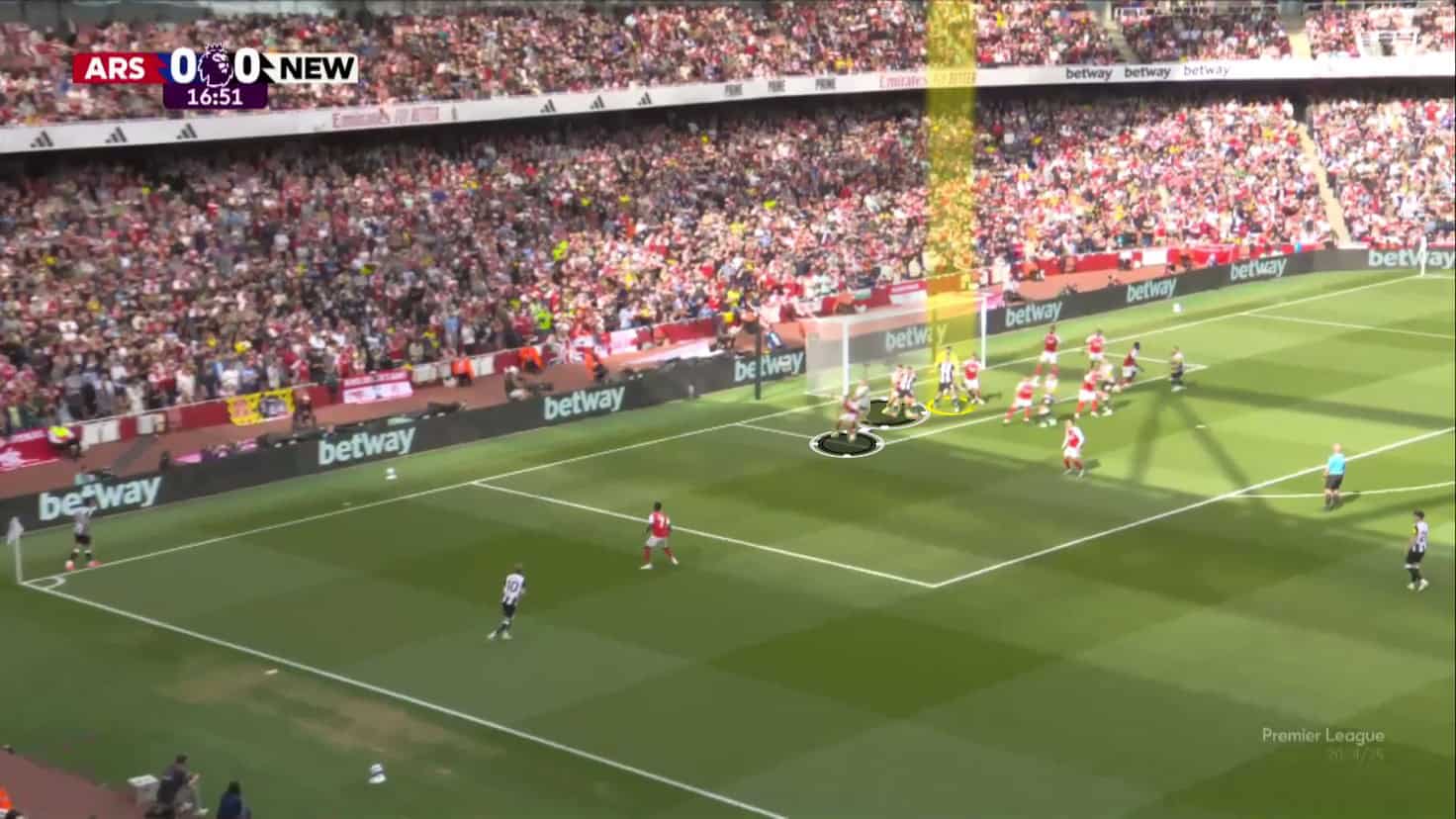
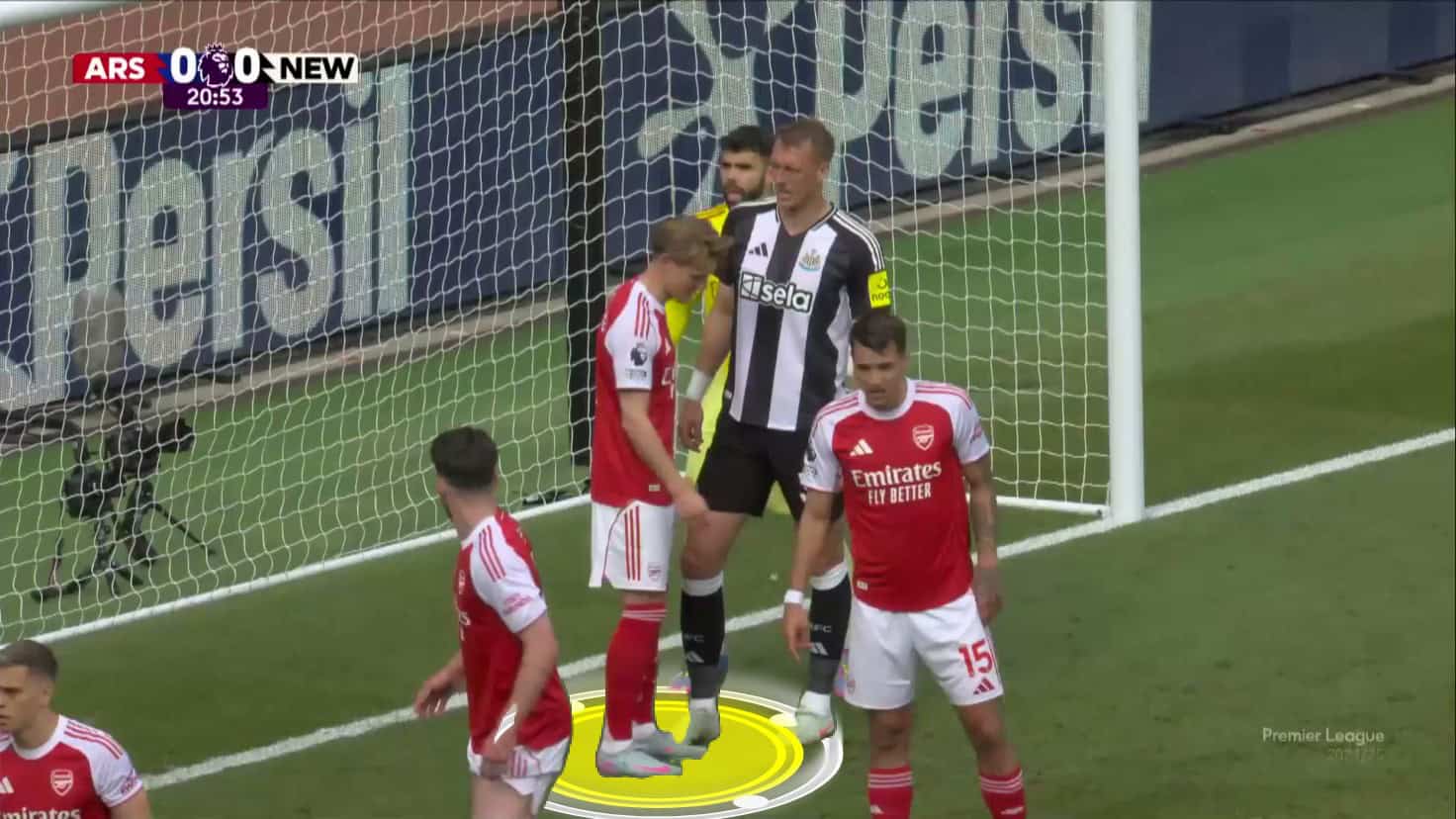
This led the Gunners to adopt a rule that sometimes we wouldn’t mark the player near the goalkeeper, but we would mark him if he was a dangerous player and considered a target who should be marked.
In that match, Martin Ødegaard marks him differently, giving his back to the ball, but he makes sure that Dan Burn won’t go to the near post, as shown below.
Using A Man Marker To Help
This method helps the goalkeepers who are less able to deal with the blockers by pushing them and then jumping.
It theoretically makes them jump more easily because there is a marker whose job is to protect his goalkeepers from being blocked.
In the photo below, you can see a marker whose job is to prevent Ben White from blocking the goalkeeper.
However, it has many disadvantages, such as losing a man marker (or a second-line defender), which makes the block less likely to be called a foul because the referee views it as a fight between two players, rather than a direct confrontation between a blocker and the goalkeeper.
Moreover, this fight around the goalkeeper can be enough to distract the goalkeeper and create a traffic of two players around him (the blocker and the marker), not just the marker, which can make the area he needs to jump smaller.
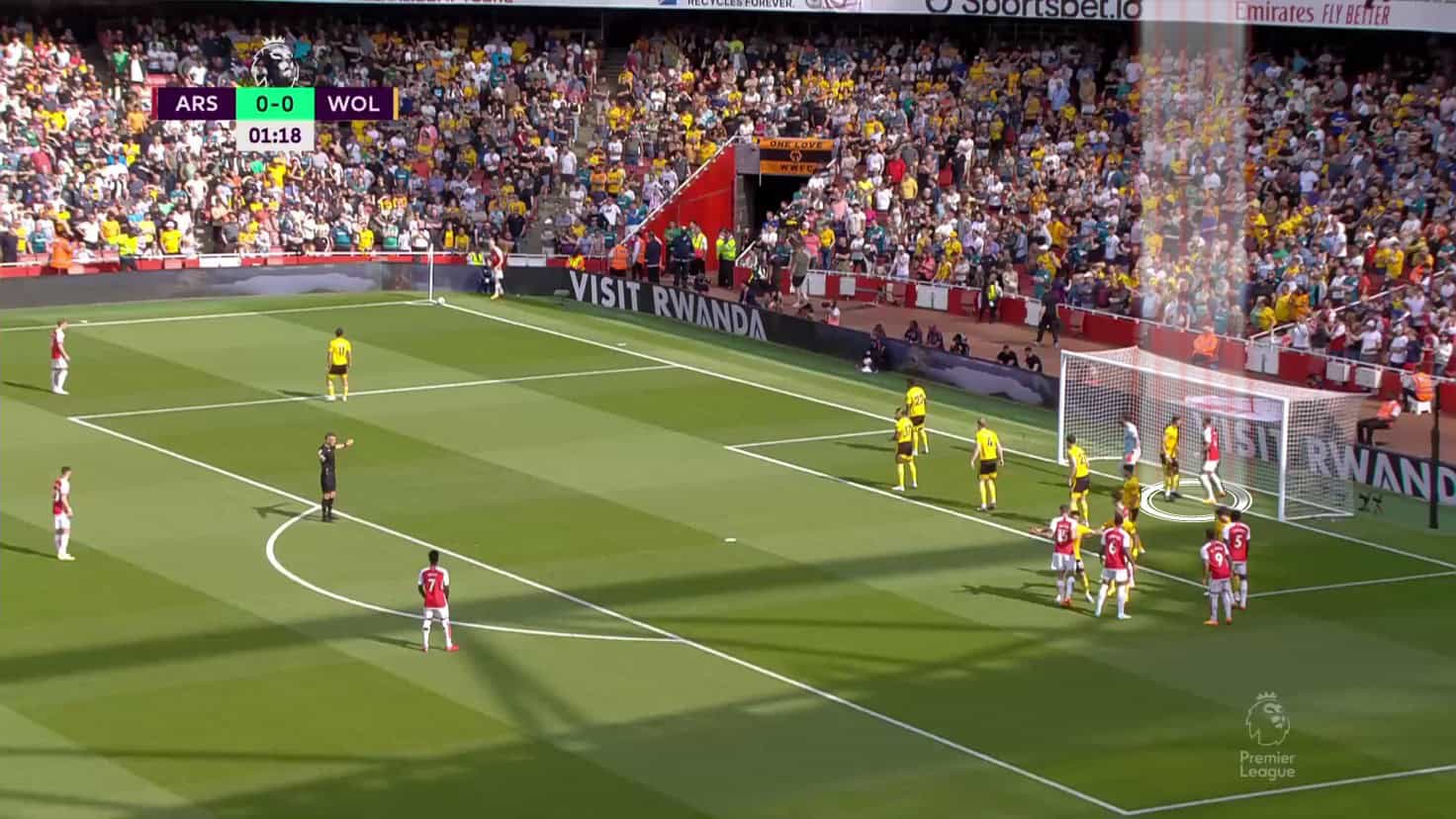
As shown below, the same counter trick is applied, asking the blocker to start with the pack far away from the goalkeeper on his blind side.
This causes the same tracking problem, but this time, the blocker is marked.
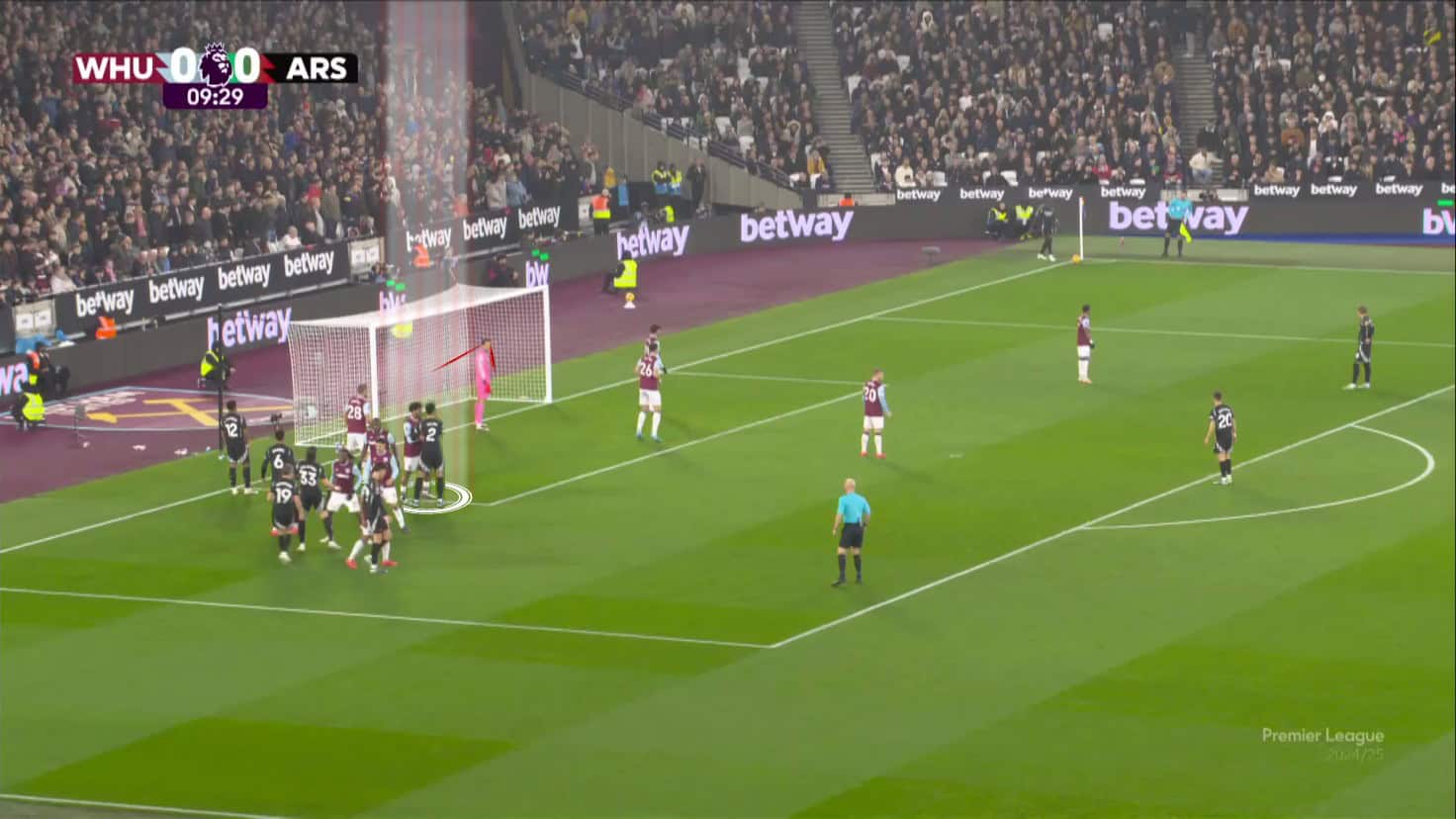
As shown below, William Saliba doesn’t need to touch the goalkeeper.
Instead, he just uses his marker as the real blocker of the goalkeeper, and the referee can’t whistle as a foul here because the fact is that the goalkeeper can’t jump because of his teammate.
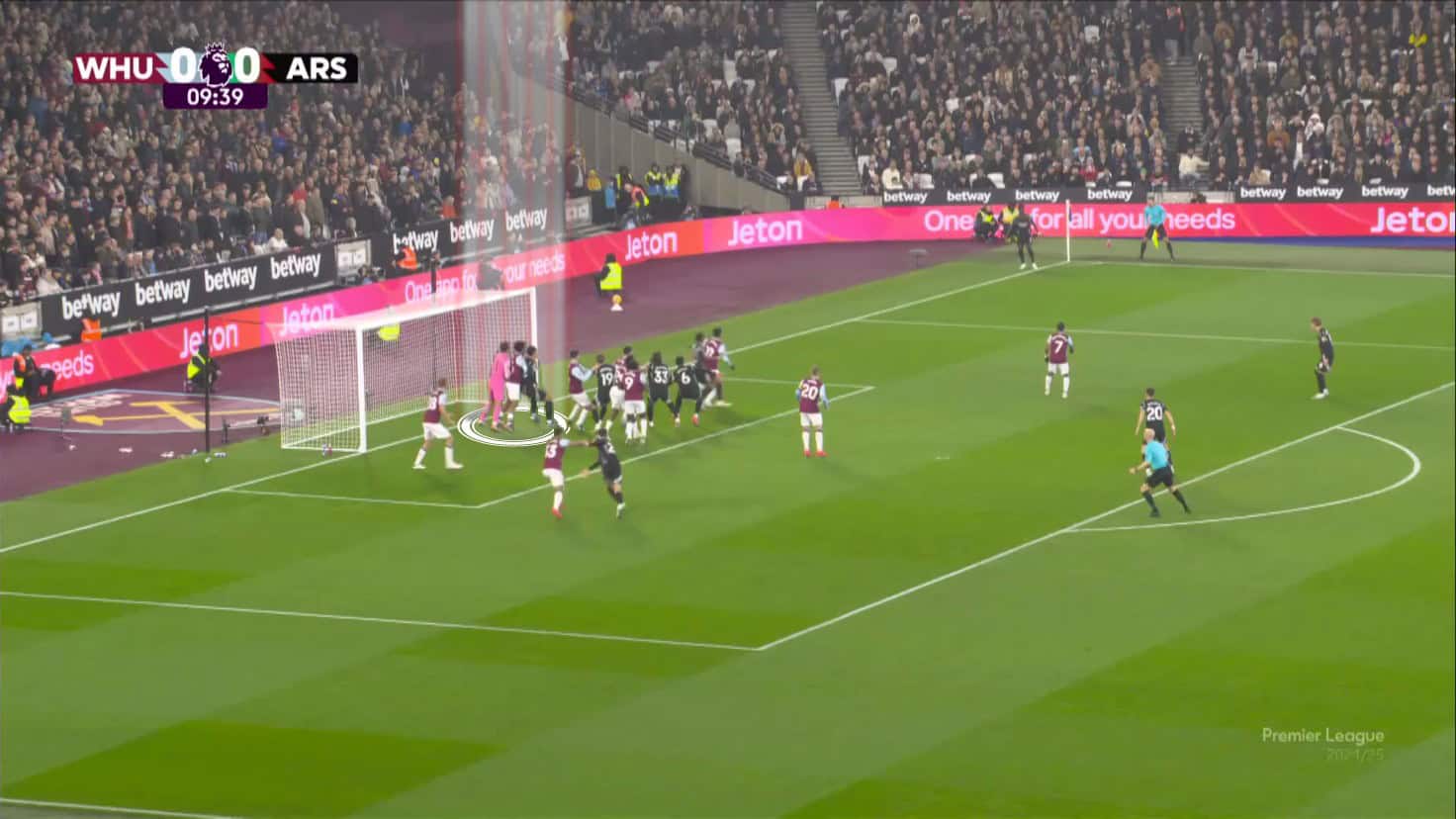
The second counter idea (using traffic) can also be applied here in a more difficult way for the goalkeeper who tries to jump between four players (two blockers and two man markers), as shown below.
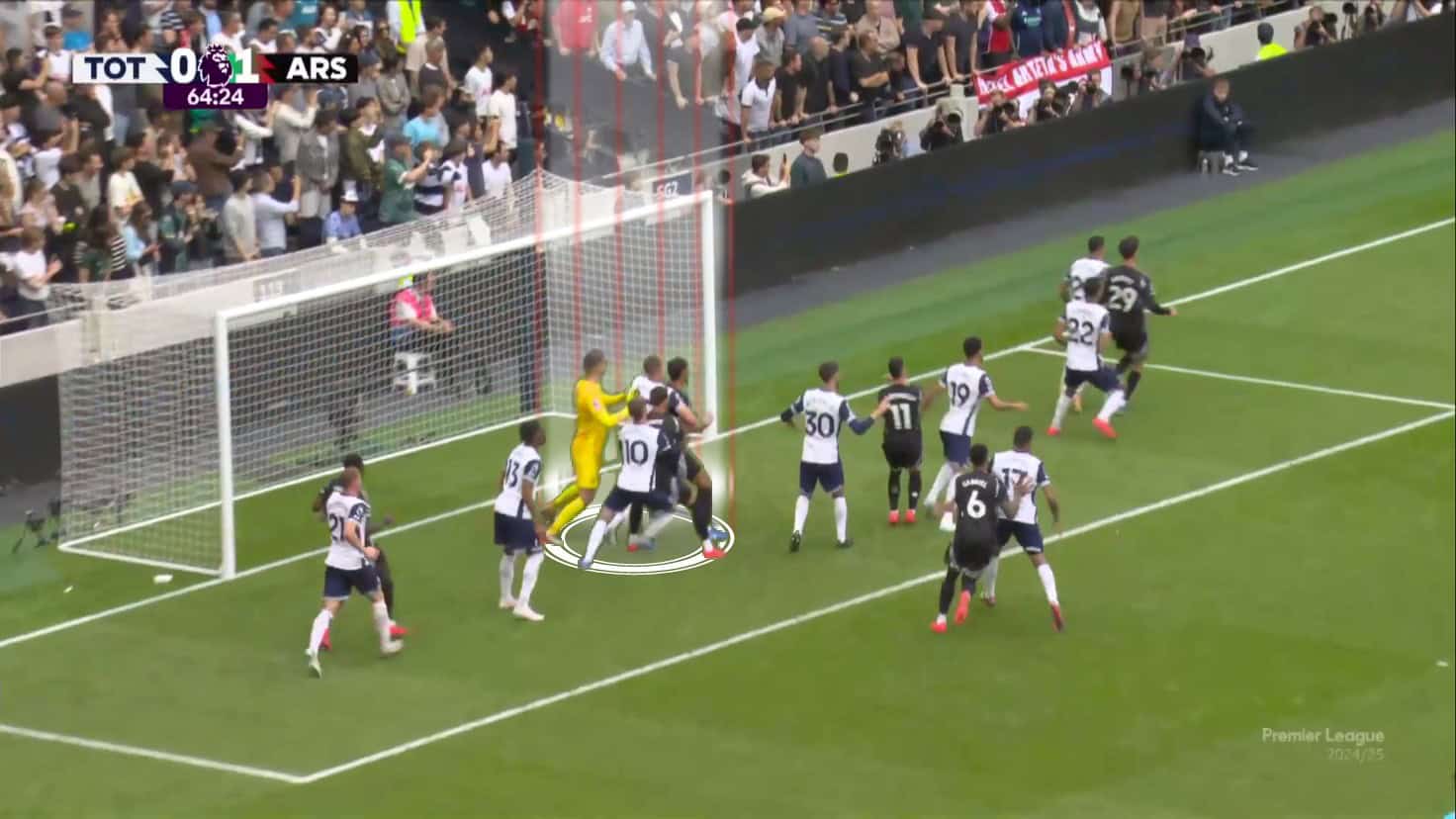
However, some intelligent man-markers have tricks for protecting the goalkeeper, or, to put it another way, helping him without standing directly in front of him.
They wait in the path of the runner who comes to block the goalkeeper, trying to block him from reaching the goalkeeper, as shown below.
Because of his body position, you can think that Ben White is a zonal defender here, but he was actually a man marker awaiting the coming attacker.
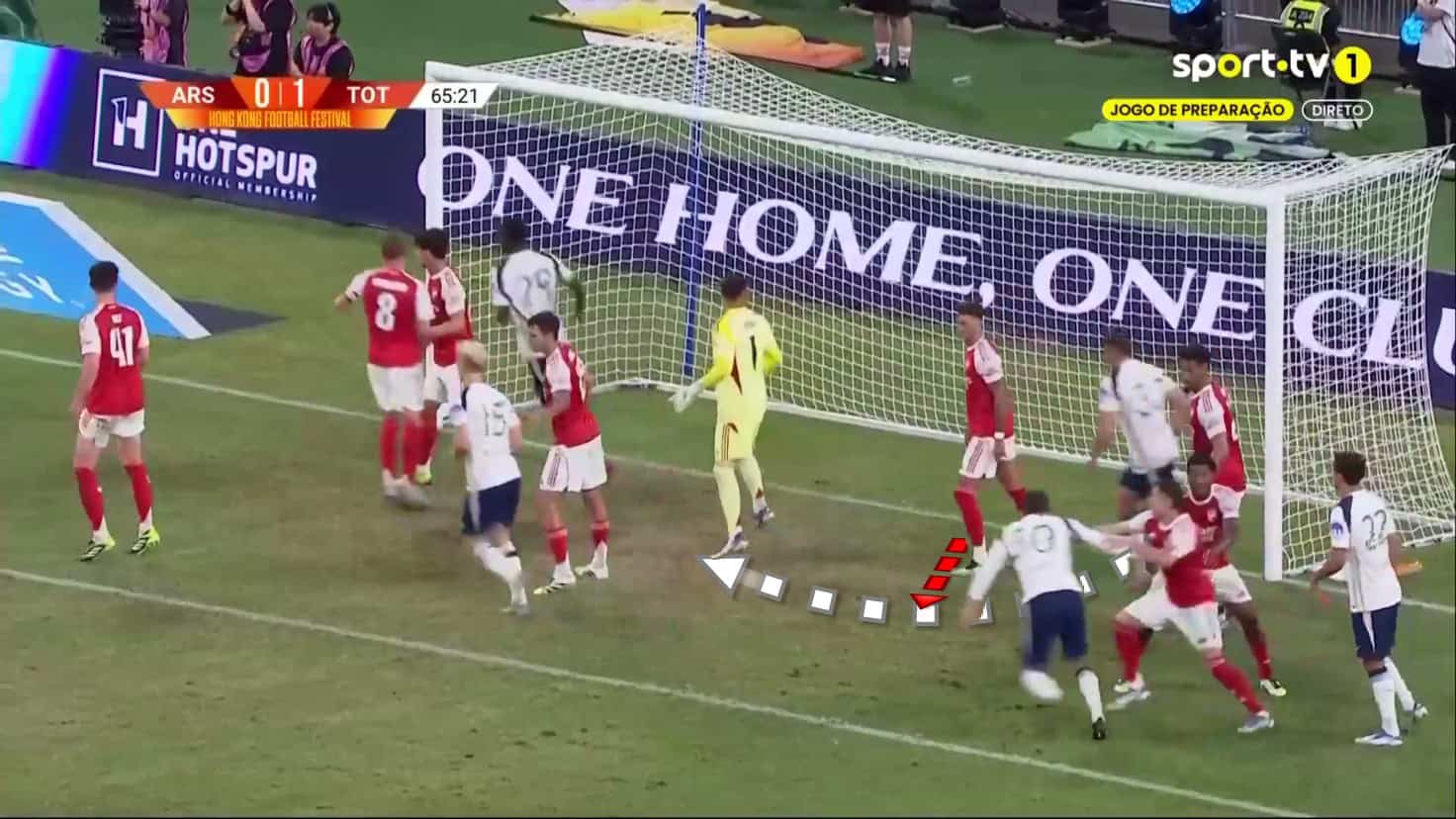
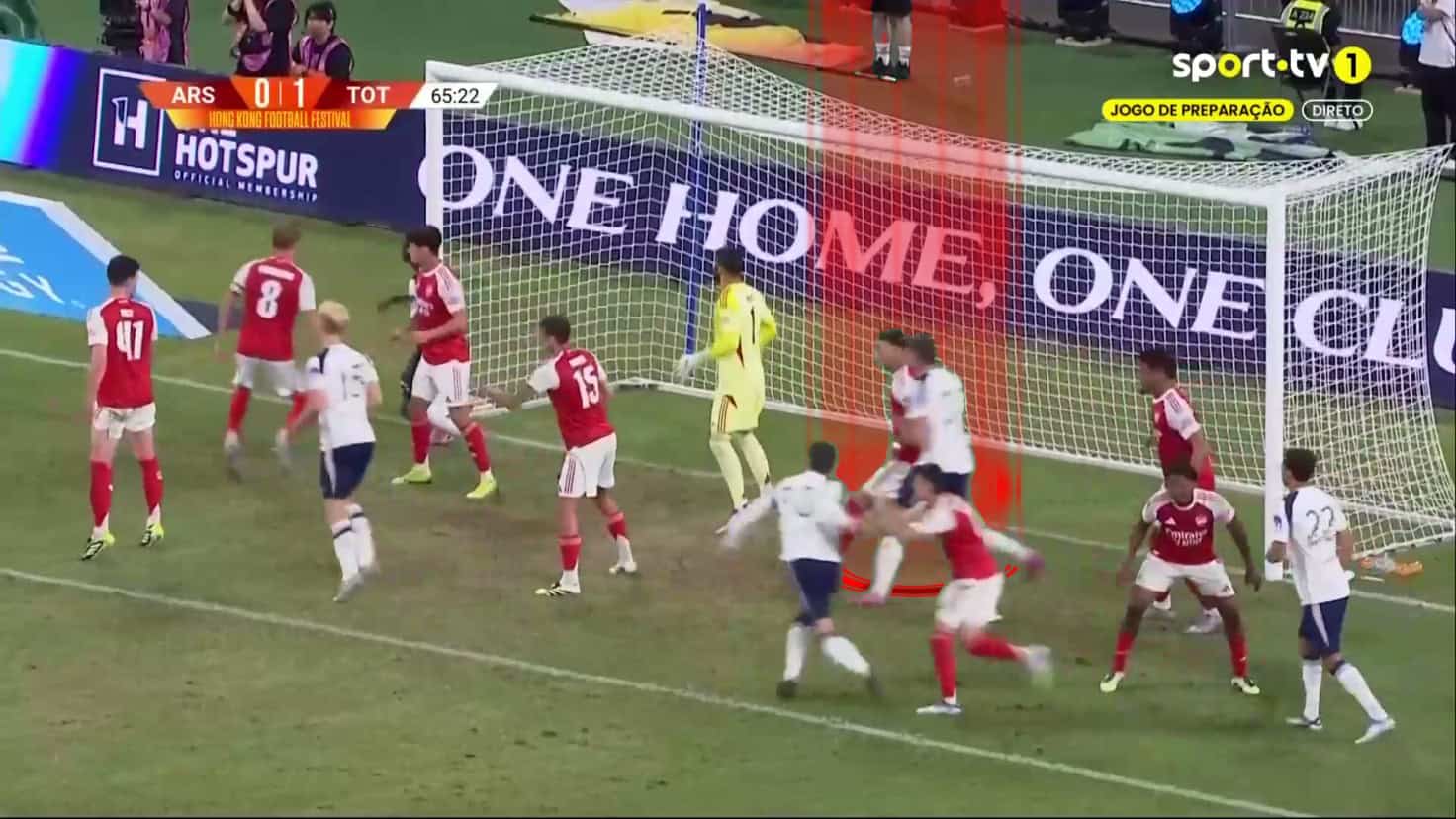
As shown below, he efficiently protects his goalkeeper without creating congestion around him.
However, we didn’t see that trick many times from Arsenal, and perhaps it was just a moment of intelligence after they conceded many corners in the same match. Let’s wait and see whether this idea will be used regularly or not.
The Depth Of The Zonal Line
The depth of the zonal line plays a crucial role in this blocking game because, if you have a good goalkeeper who deals with blockers and claims the cross, such as Alisson Becker, you can instruct your zonal line to push forward to help if the cross comes outside the six-yard box.
As shown below, you can see the second-to-last zonal defender (who is in the middle of the six-yard) touches the six-yard and is ready to go to clear any ball out of the box, depending on Alisson Becker, who has a large area behind this defender in his responsibility.
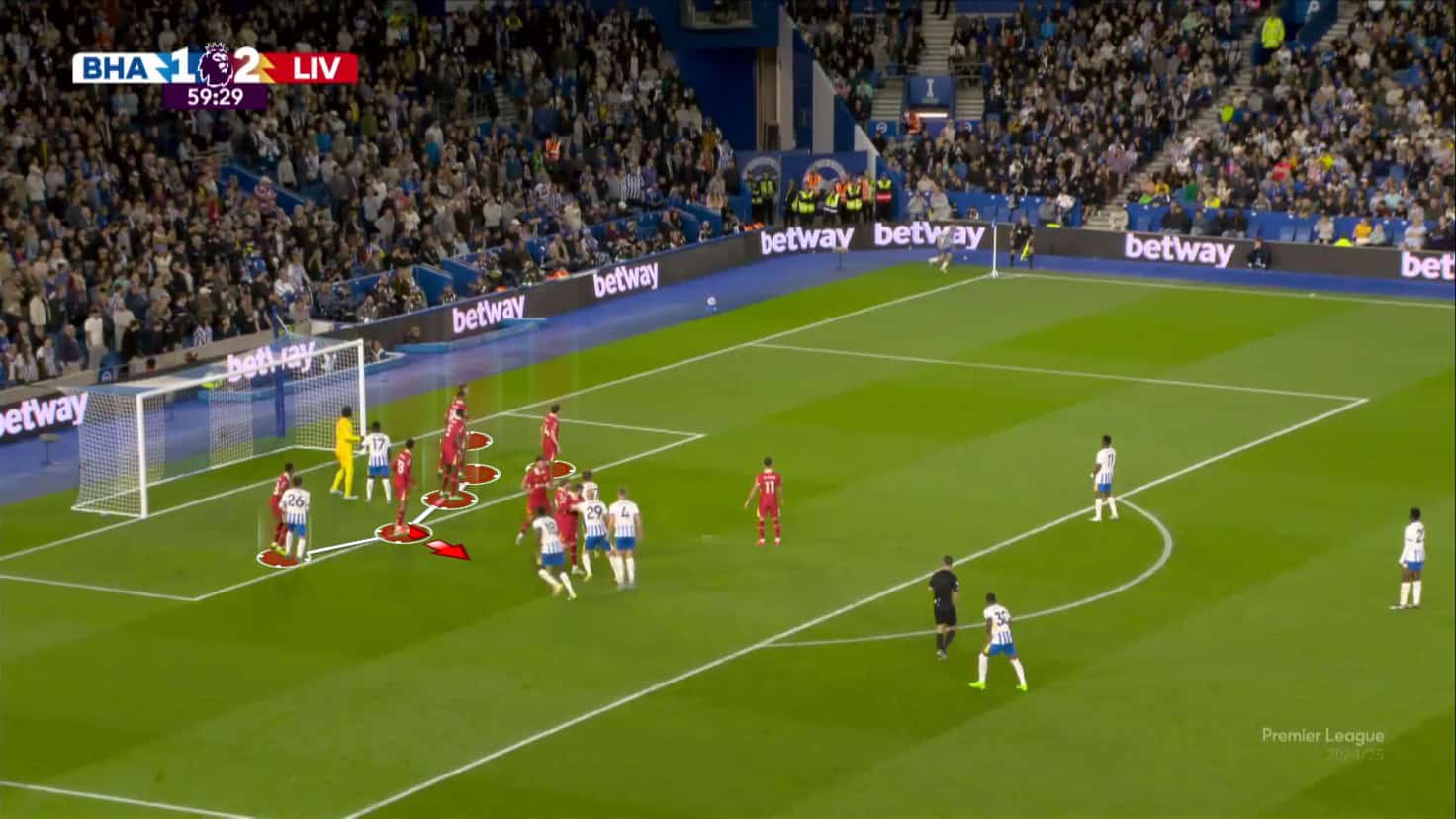
If many dangerous attackers stand in the six-yard area, the depth of the zonal line should decrease to help the goalkeeper in this difficult situation.
As shown below, Liverpool defends with six zonal defenders (red), three man-markers (green), and a player who cuts off the flat passing lane to the penalty spot and is ready to defend the rebound (yellow).
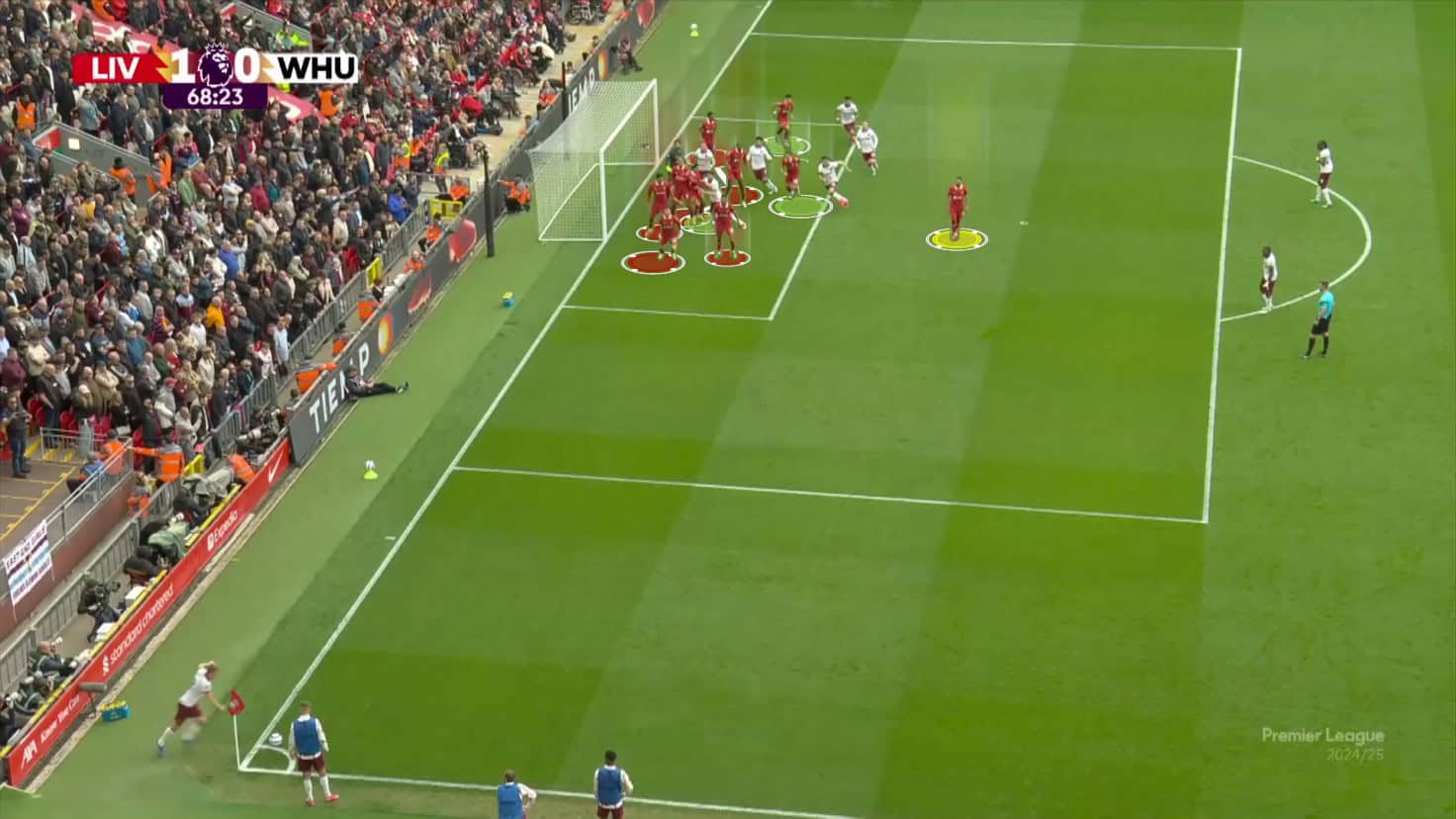
You can say that I can’t feel the difference in the positions of each Liverpool zonal defender, as shown in the photo below.
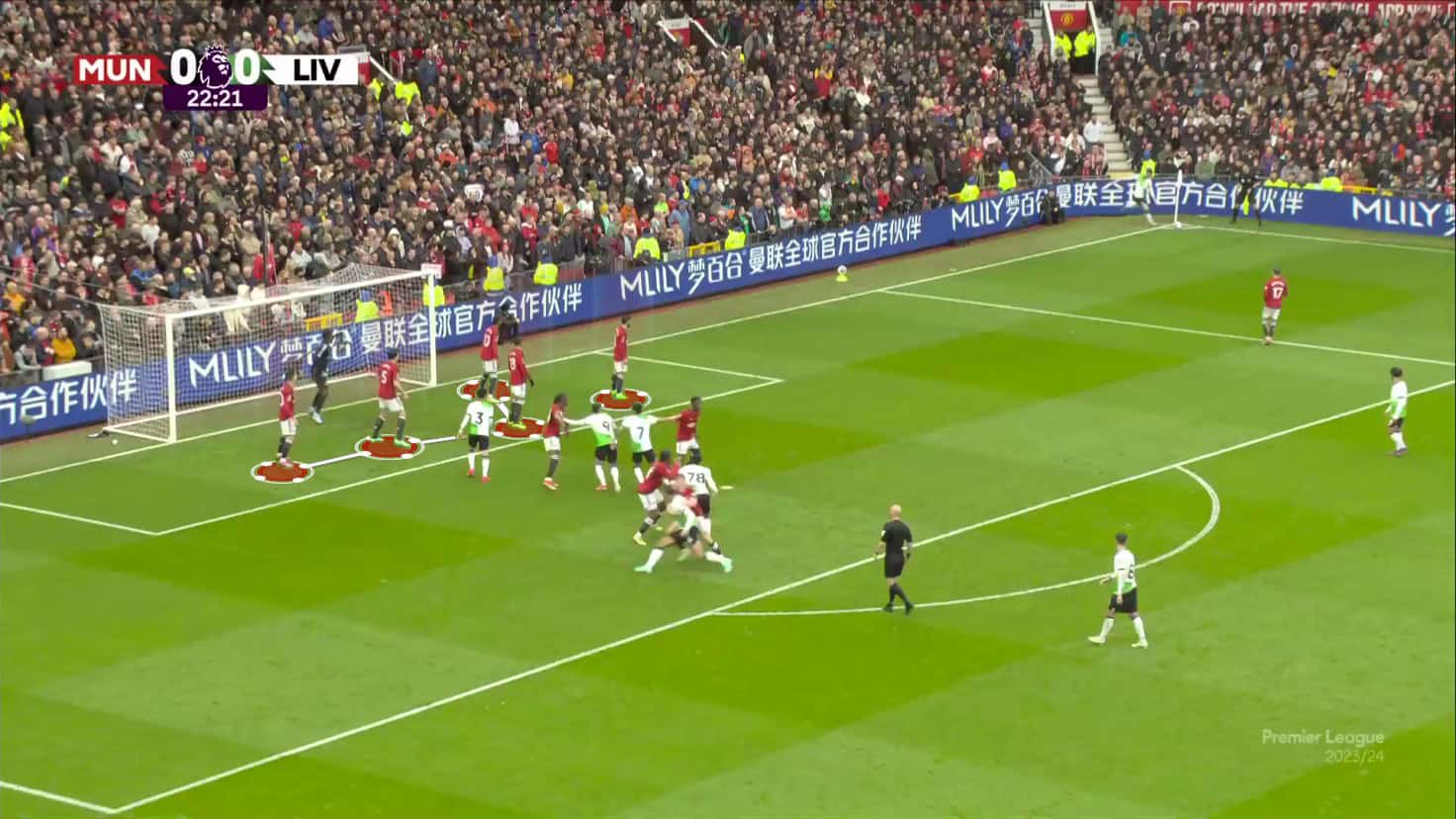
As shown below, Manchester United‘s zonal line last season is inclined to the inside despite not having any attacker inside the six-yard, and you can compare the second-to-last zonal defender’s position between this case and Liverpool’s first case to see how the area that is the responsibility of the goalkeeper decreases now (against the sme in-swing cross)
Disclaimer: We don’t say that it is the only factor that affects the depth of the zonal line, so Manchester United could do that for a different reason, like their preferences for the areas they want to protect, putting the individual abilities into consideration, but we just say it is one of the factors showing you how the depth of the zonal lines isn’t always the same.
Conclusion
In the end, we emphasise that there isn’t any guaranteed method to protect goalkeepers from blocks, but there are several ways coaches have been trying to implement, depending on the abilities of the goalkeepers they have.
In this analysis, we have also discussed that many other factors affect the way you will implement these methods.
The most important other factor is the preferences of the set-piece coach regarding his defending scheme and whether he is comfortable with losing a man marker (or a defender in the second line) or not.
The depth of the first zonal line can also play a role in helping if the zonal defenders step some steps back, deciding to reduce the responsibility of the goalkeeper, especially when the opponent targets a close area (the six-yard box).
