
Recently, set-piece analysis has evolved rapidly as teams have begun to recognise the importance of capitalising on every detail during the game.
However, there is room to develop as a field in football analysis.
One of the most interesting aspects is how teams have begun to manipulate the opponent by finding new uses for the edge-of-the-box players, or ‘rebound players’, in attacking corners.
The first traditional use of the rebound players is to secure against counterattacks when the ball is cleared away.
They may also need to be ready to shoot if the ball is cleared near the edge of the box, especially when the attacking team have a good shooter.
Depending on the opponent’s defensive scheme, they may also be involved in short-corner routines, where they are asked to participate in short-corner rotations with specific instructions.
The last common use of rebound players is to retrieve the ball, rotate it, and implement the second-wave plan to keep attacking or crossing again.
However, many new and different tactics have emerged, such as running quickly to the cross as the targeted players, while some of the box players retreat to become the new rebound players.
This tactical analysis will discuss the various trendy uses for edge-of-the-box players in corners.
Tactics Of Targeting Edge-Of-The-Box Players Directly
The first use we will discuss is asking the targeted players to pretend they are the edge-of-the-box players waiting for the rebound.
As the routine begins, they will run as targeted players, free and unmarked, while other players run back to become the real rebound players.
In the photo below, Bournemouth scored against Arsenal from this idea.
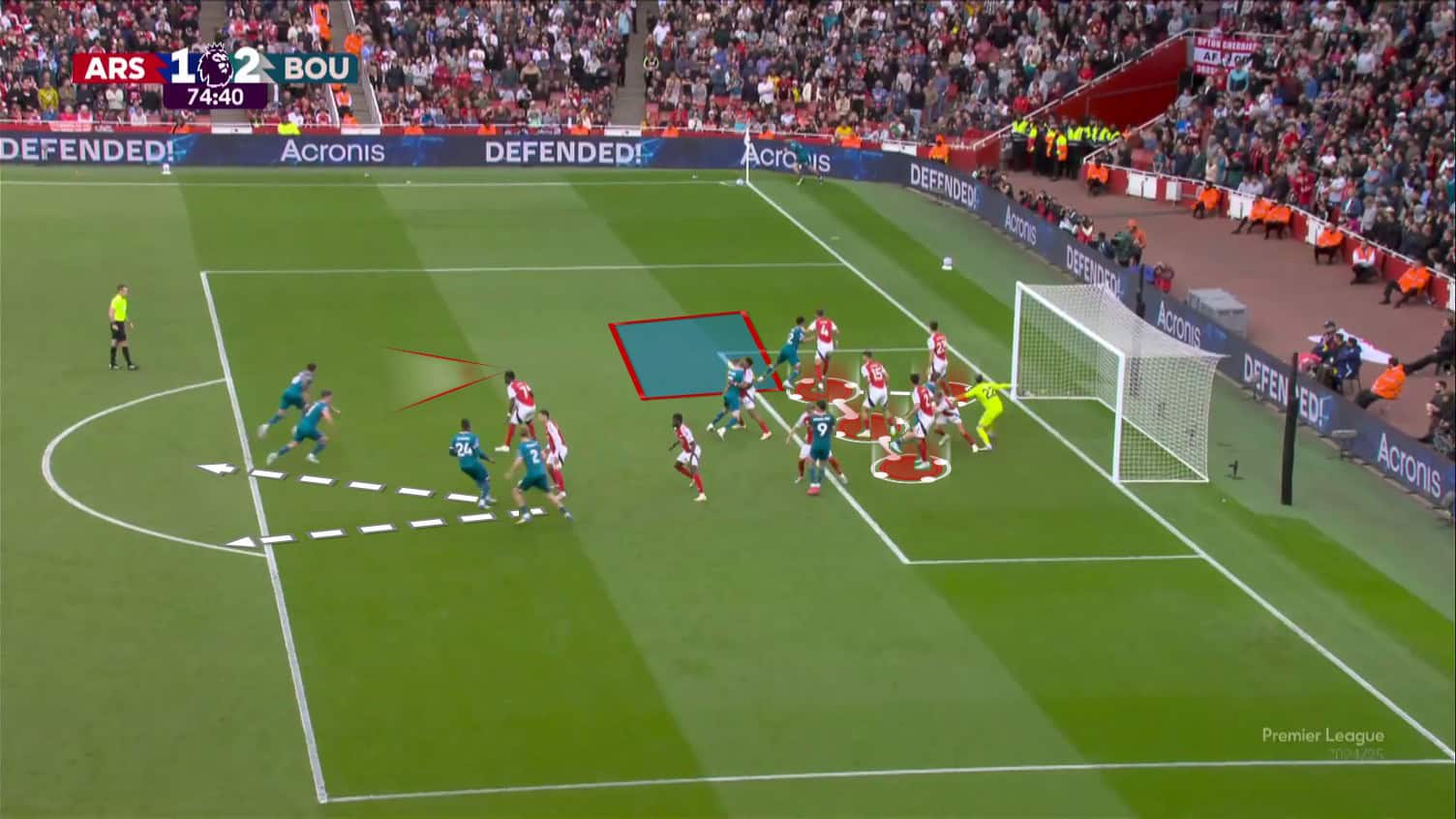
Arsenal defend with four zonal defenders (red), five man markers and a rebound player (green).
Andoni Iraola put six Cherries players inside the box, two on the edge of the box and a counterattack player (out of the shot) in addition to the taker.
As the taker moves, the two rebound players run quickly, surprising Bukayo Saka.
He also has an issue: which player should he follow, the real targeted player (blue) or the other rebound player, who moves to distract him?

In the photo below, two players run back instead of them in an amazing, simple idea that has many benefits:
- Freeing the real runners
- The two real rebound players should be instructed to draw the attention of two-man markers and then return to their designated role rather than simply standing and waiting for the rebound from the start.
We can also see that the free runner (because of the 6v5 situation over the man markers) blocks the first zonal defender, Ben White, to prevent him from entering the targeted area.
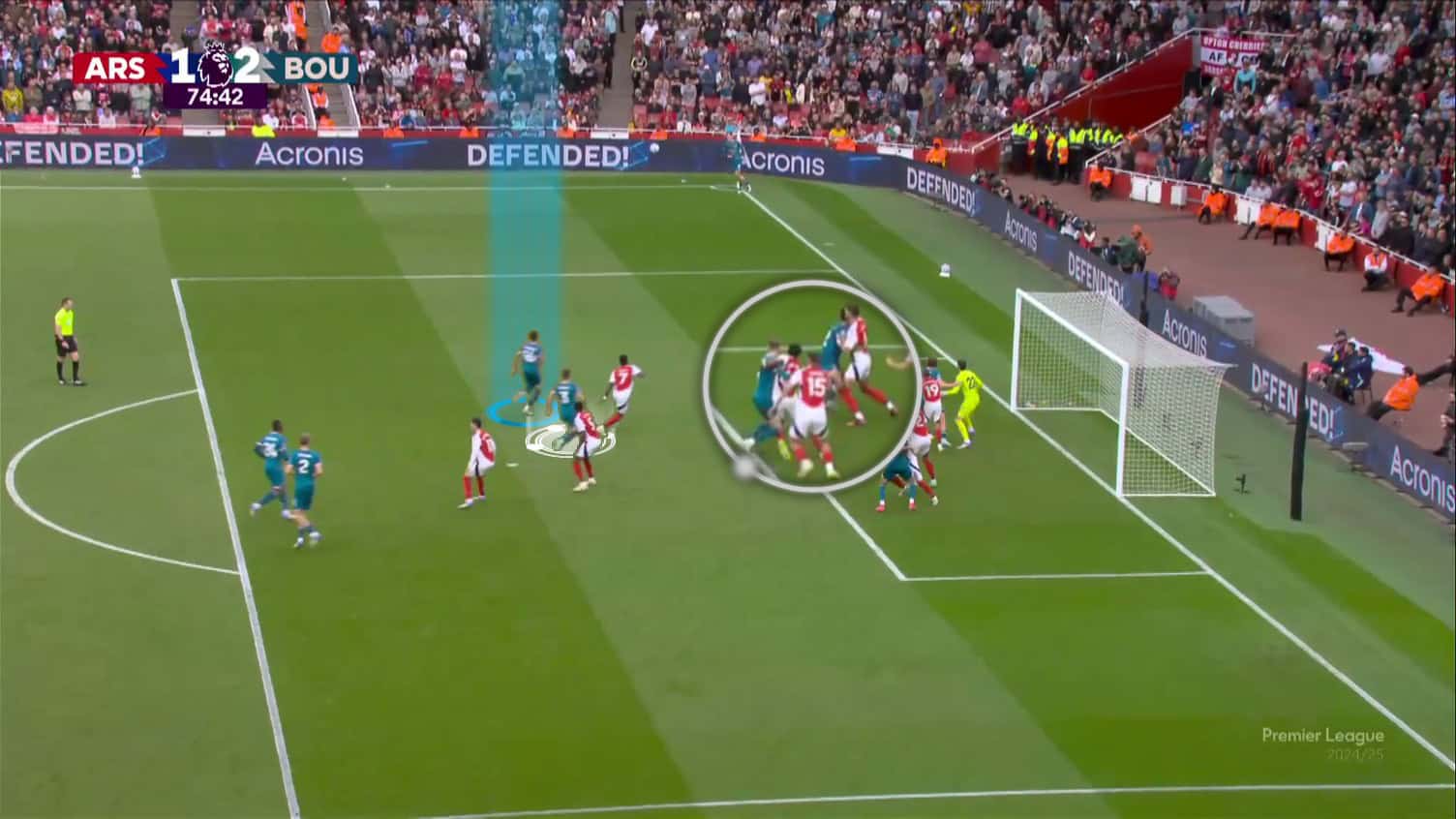
As shown below, the targeted player (blue) easily reaches the targeted area because Saka, who did a good job despite not being a man marker, is distracted between him and the other runner.
The block we mentioned is clear beside the other block from the closest attacker to his man markers.
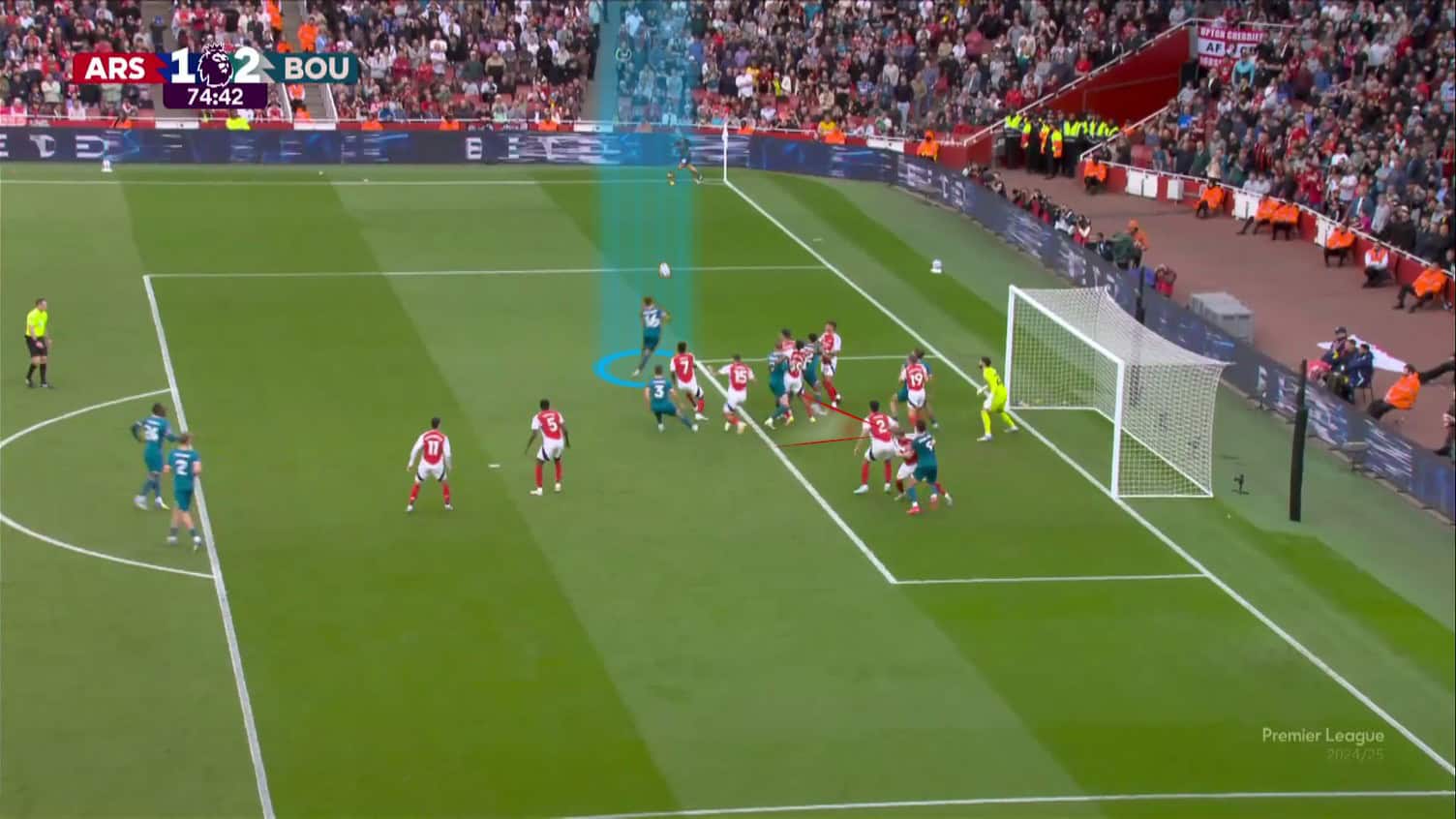
As shown below, the plan is successful, so the targeted player gets the ball.
They were ready with a player positioned at the far post in case the targeted player couldn’t get the ball directly to them (which happened).
We also see how this flick (headed touch) is difficult for the man marker (Martin Ødegaard), who focused on his man and gave his back to the ball.
He is forced to take a look at the first touch, and we see how difficult it is for him to keep tracking the ball and the attacker at the same time.
So, this attacker touches the ball, putting it into the Gunners‘ net.
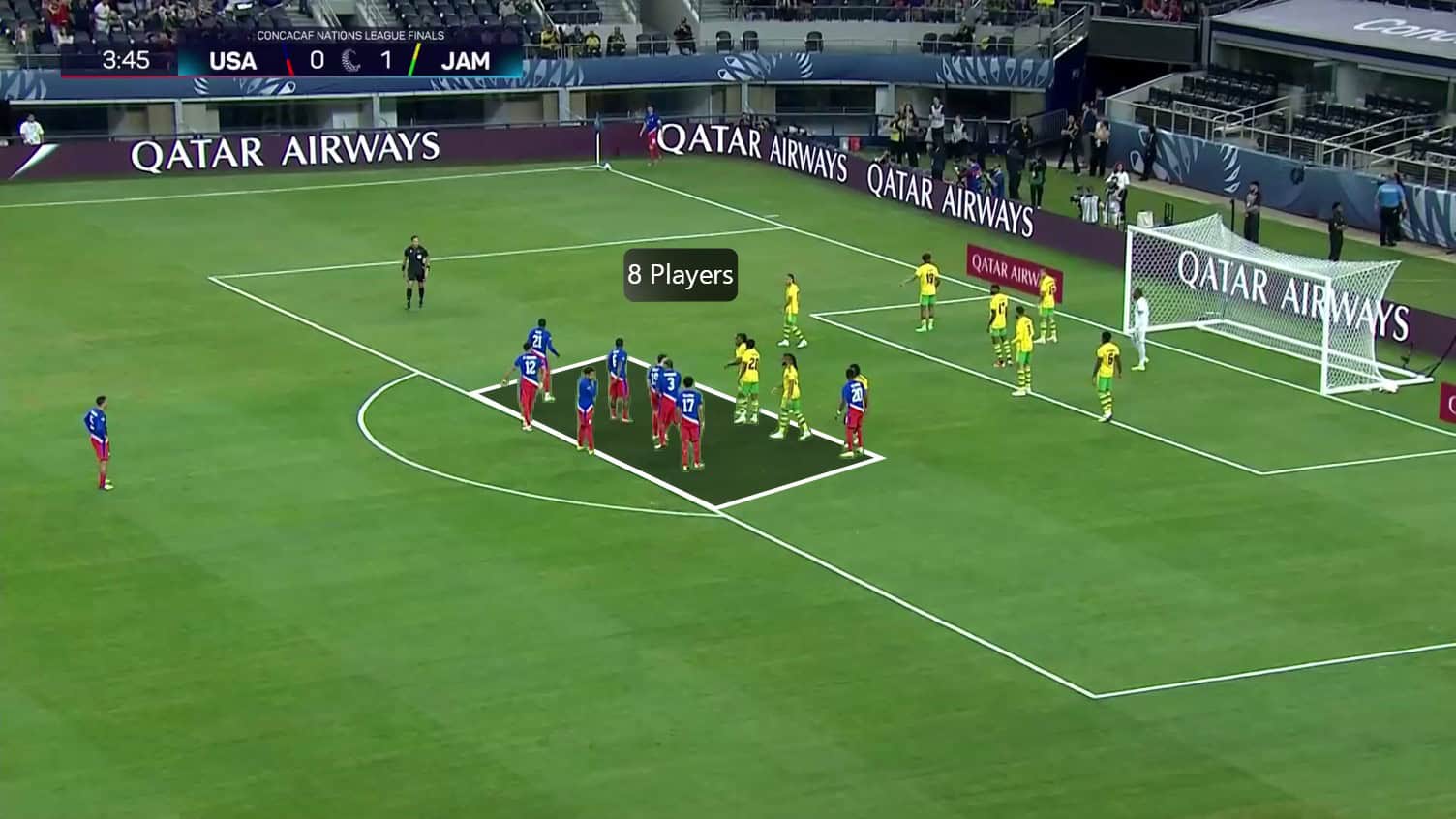
Here, we see a more dynamic idea from the expert, Gianni Vio, with the United States Men’s National Team.
In the photo below, eight players are inside the box, including the real box attacker and the rebound players.
I want you to try guessing who the real rebound players are.
In the photo below, the three rebound players are shown.
They try to make manipulative movements deep inside the box, drawing the attention of some marker players before returning to the edge of the box to free the real target player.
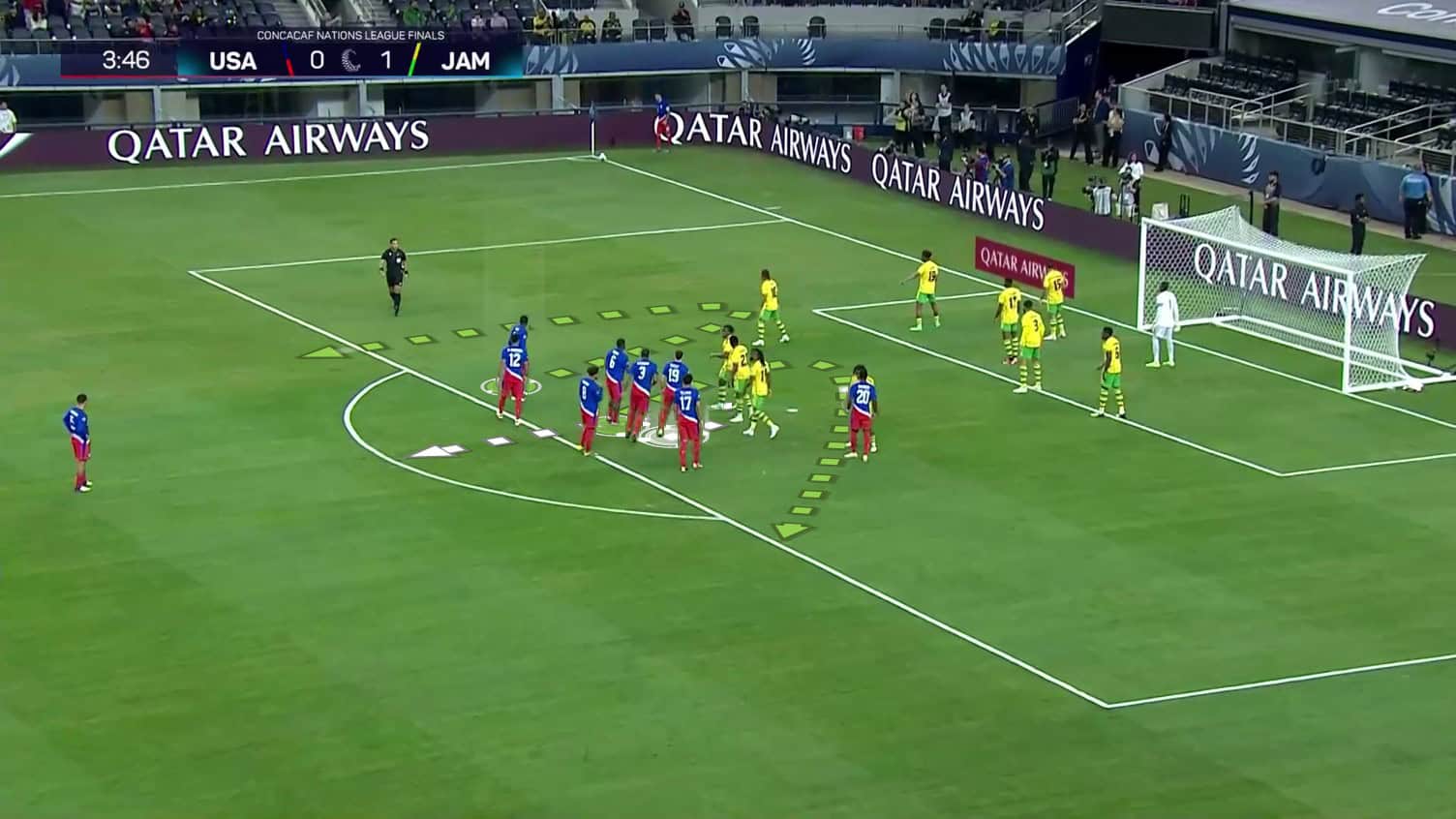
In the photo below, the three real rebound players (green) are stepping back in a confusing scene for the man markers.
In addition, three runners (with white arrows) try to drag the remaining man markers with them to free the real targeted player (blue), who starts to run late.
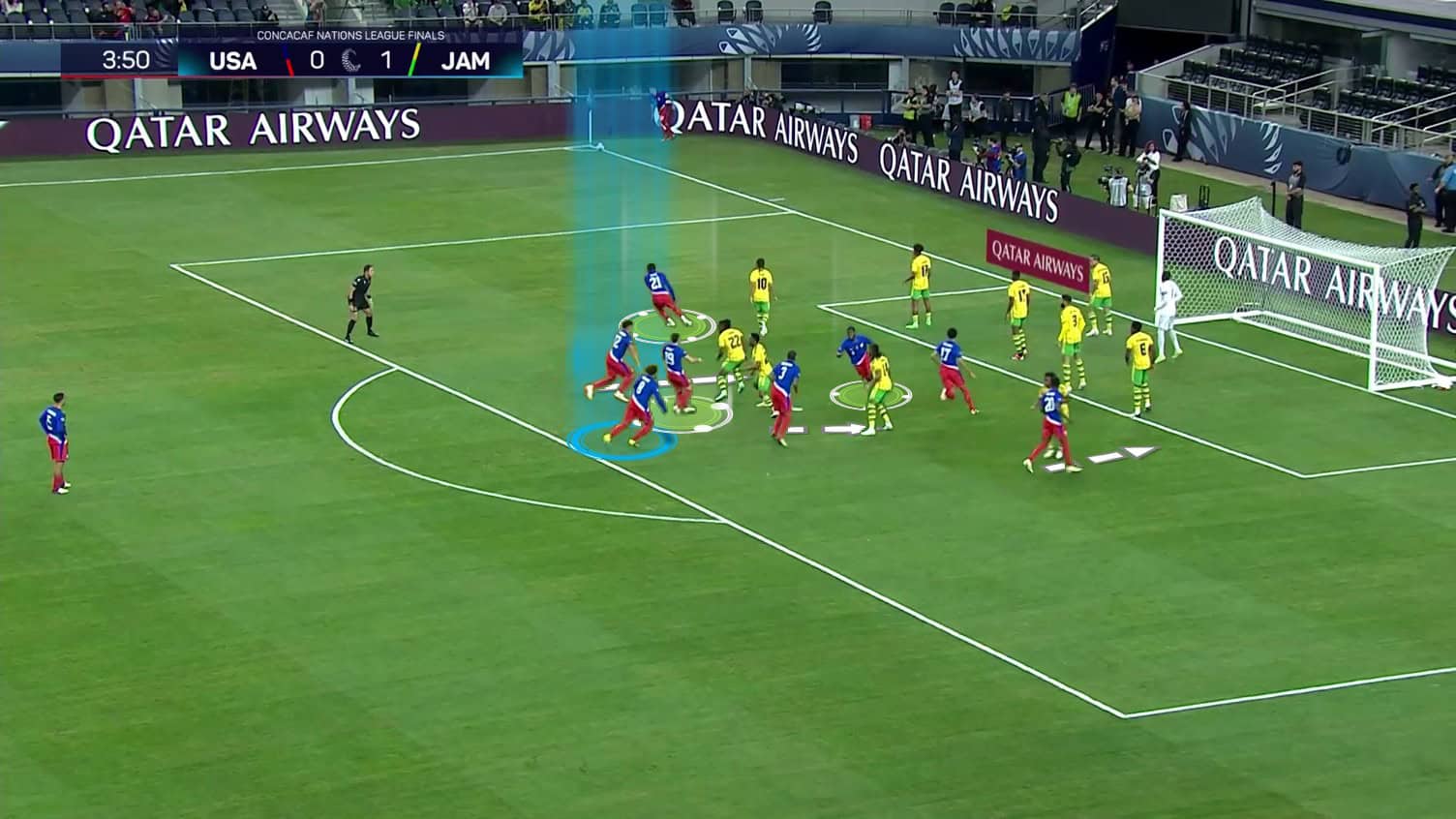
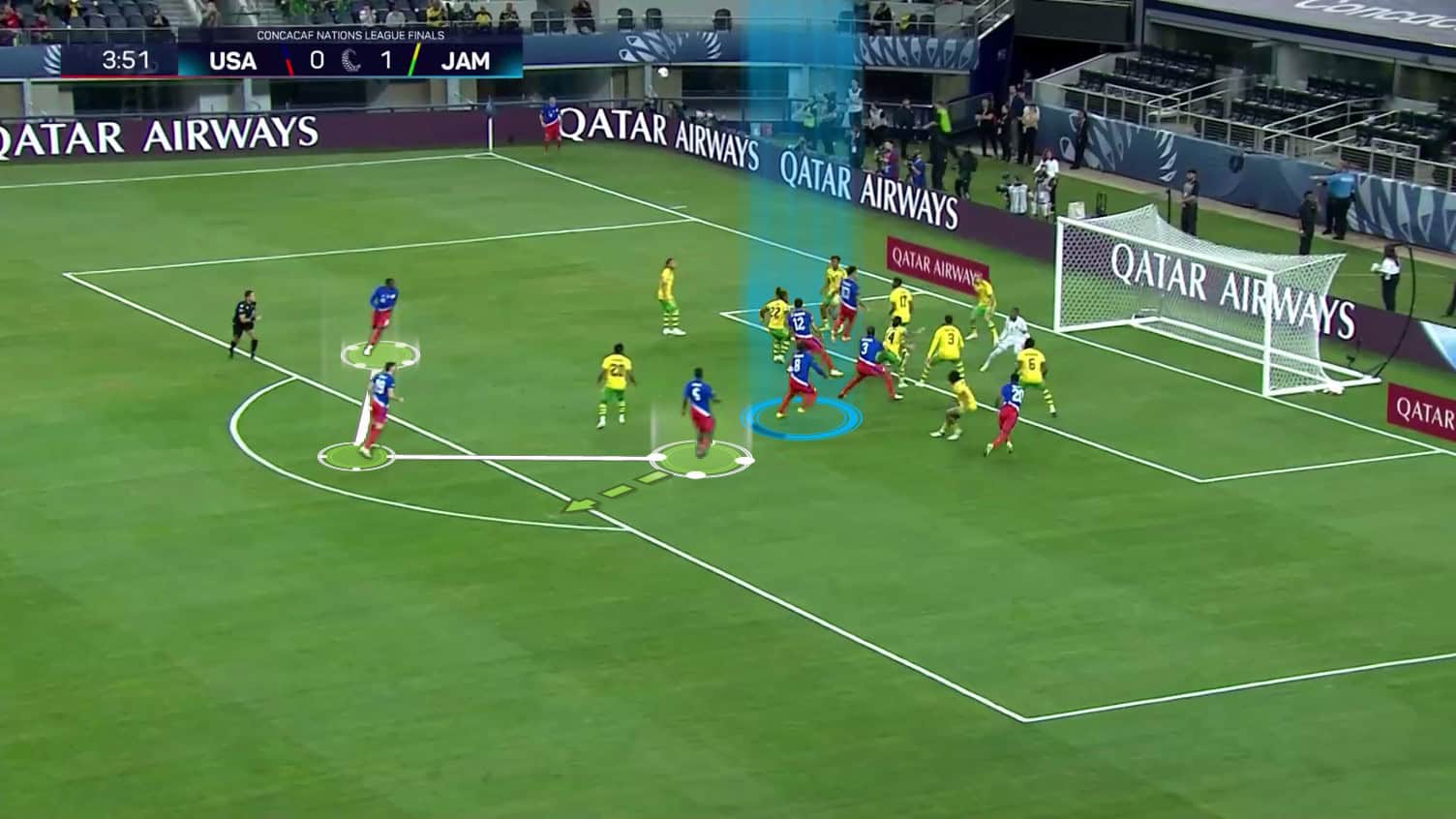
The plan is successful, as shown in the photo below.
The targeted player (blue) is free, while three rebound players (green) are ready for the second ball.
Penetrating Run Tactics In Short Corners
The second use is to utilise them as targeted players after short corners in a different, engaging way.
Starting with the simplest known one, they can be involved in so many short-corner ideas and rotations.
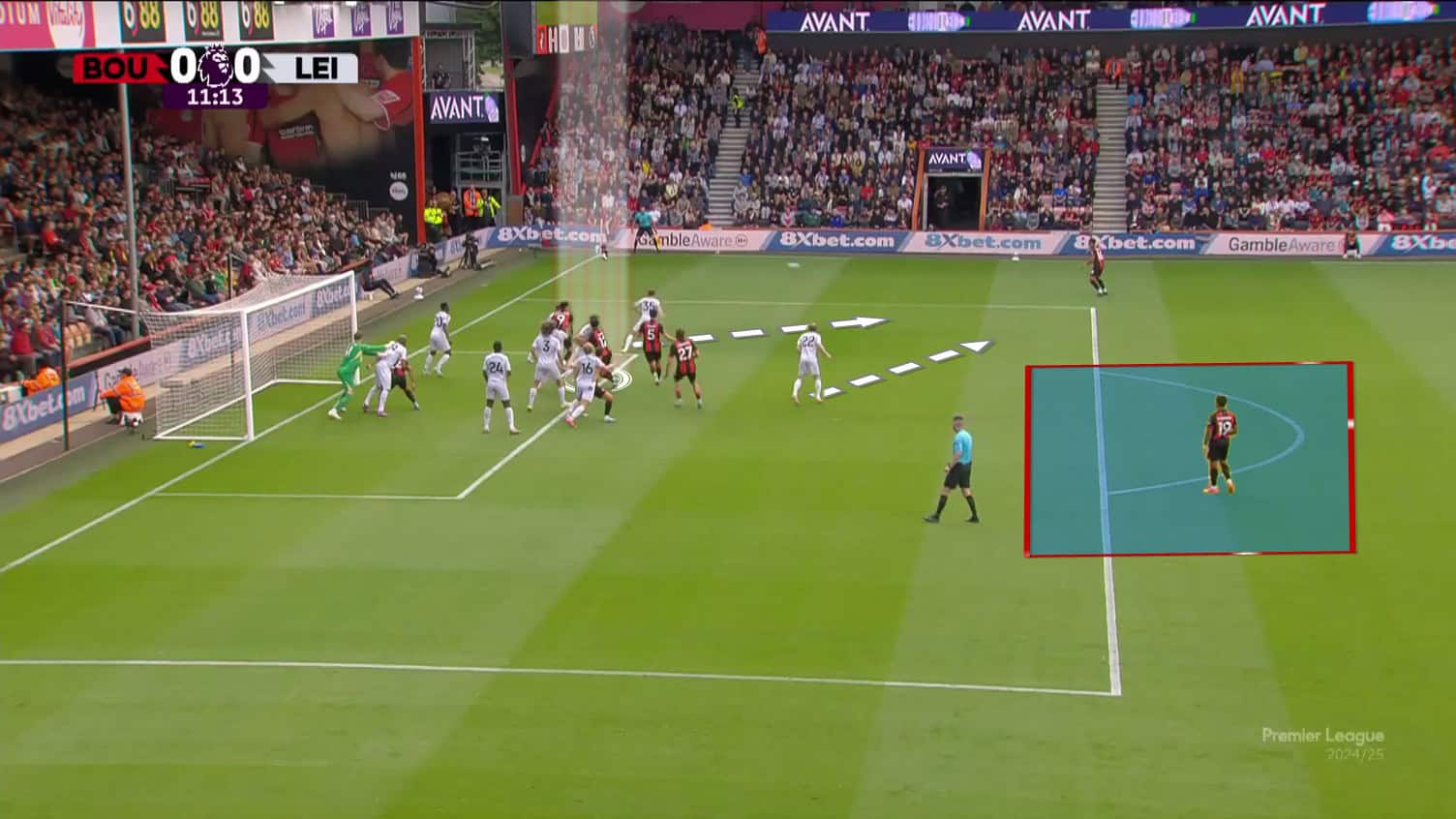
In the example below, Bournemouth want to drag the edge of the box defender to defend the short corner, leaving the edge of the box empty.
But how will they do that?
Leicester City defend with four zonal defenders (red), four man markers, a short-option defender and a rebound defender.
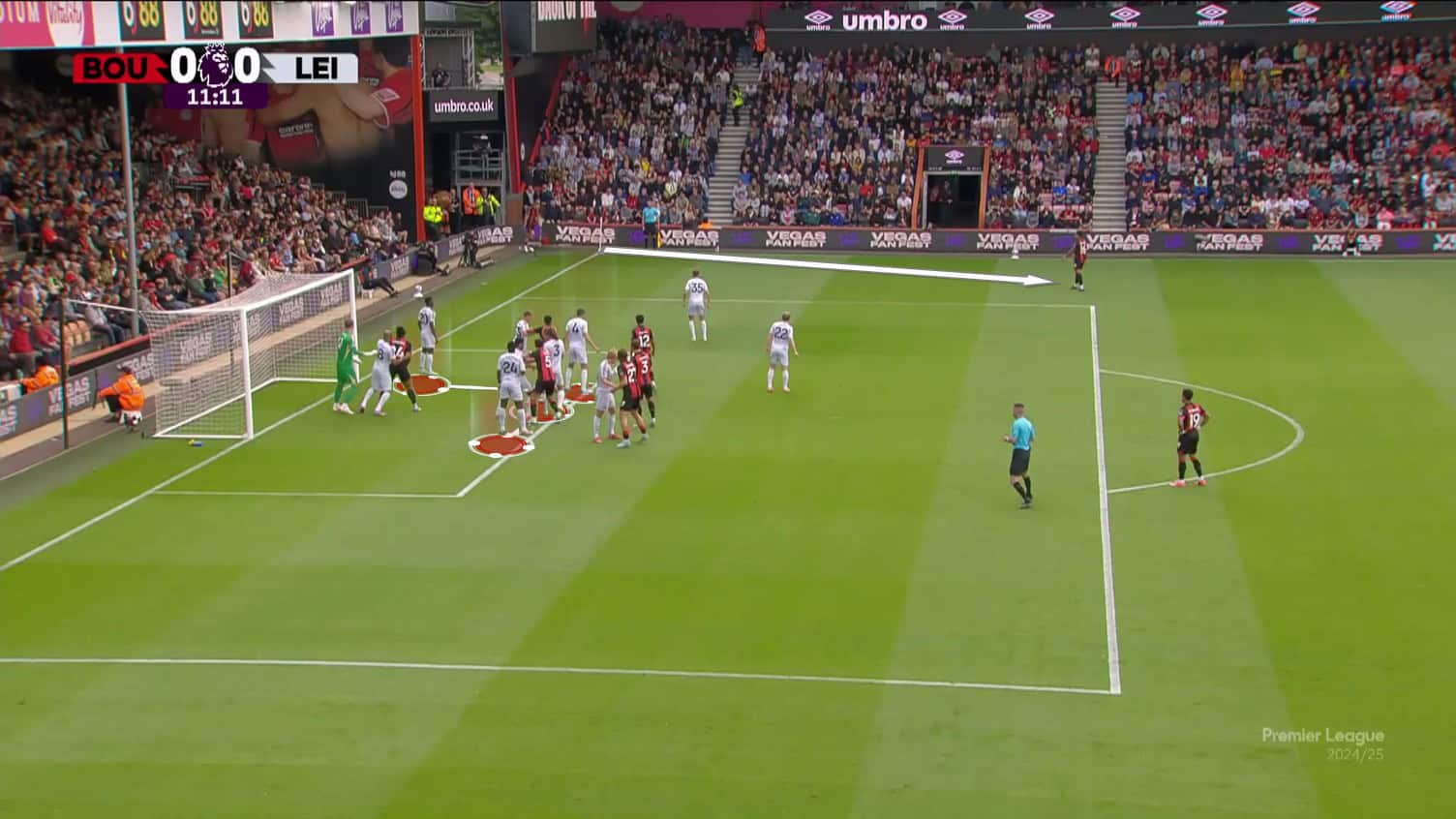
The Foxes‘ plan to defend the short corners involves asking the first zonal defender to help the short-option defender in a 2v2 situation.
As highlighted below, one of the free attackers blocks this zonal defender, preventing him from helping in short corners.
This helps drag the edge-of-the-box defender to help rather than leaving the edge of the box empty.
The plan is successful, as shown below.
The short-option attacker passes the ball to the free edge-of-the-box player, who can cross it to the free taker or shoot it directly, as he already did.
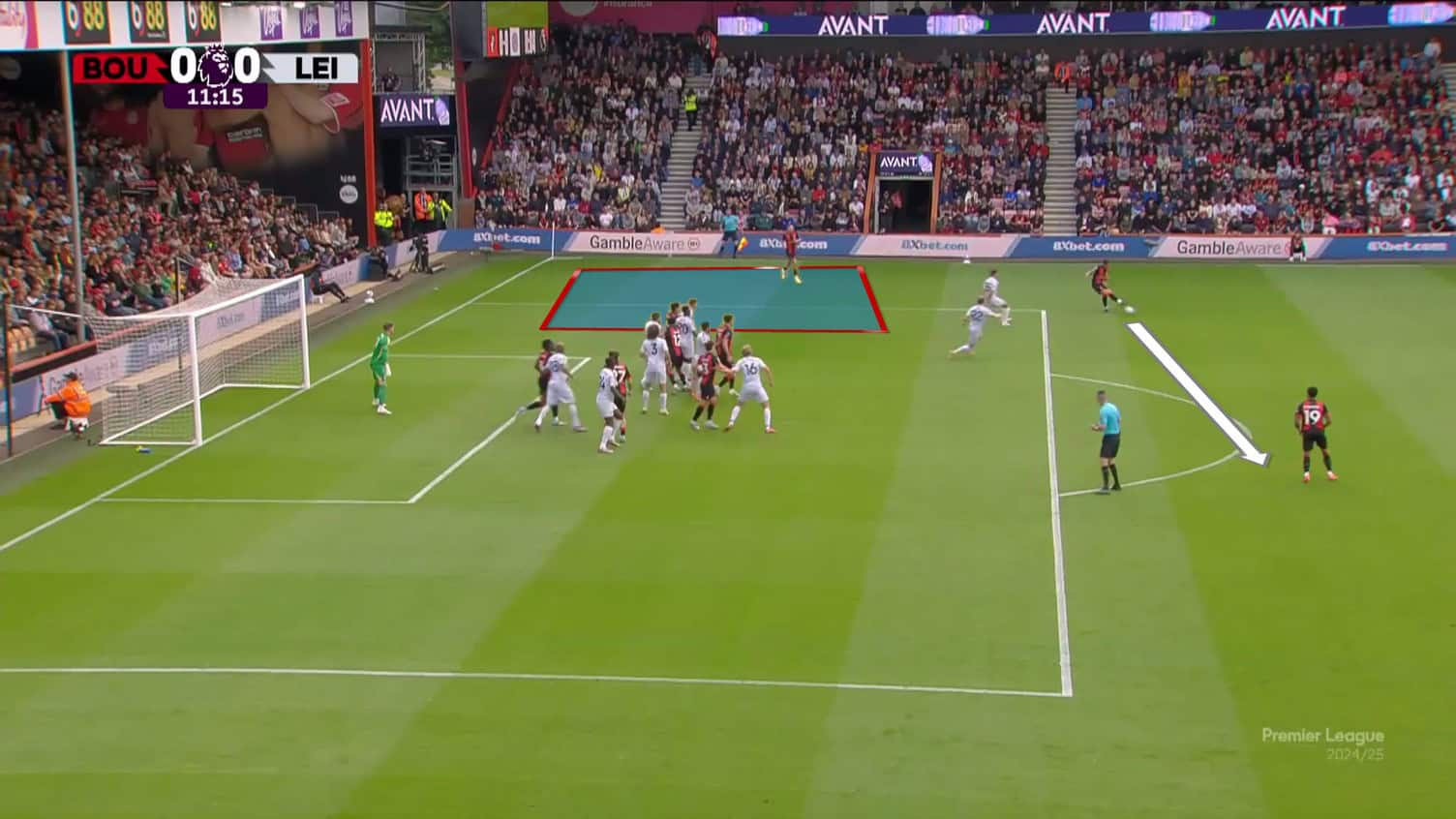
Moreover, edge-of-the-box players can be targeted with a cross after short corners, as illustrated in our following example from Bayern Munich’s match against Inter Milan in the UEFA Champions League.
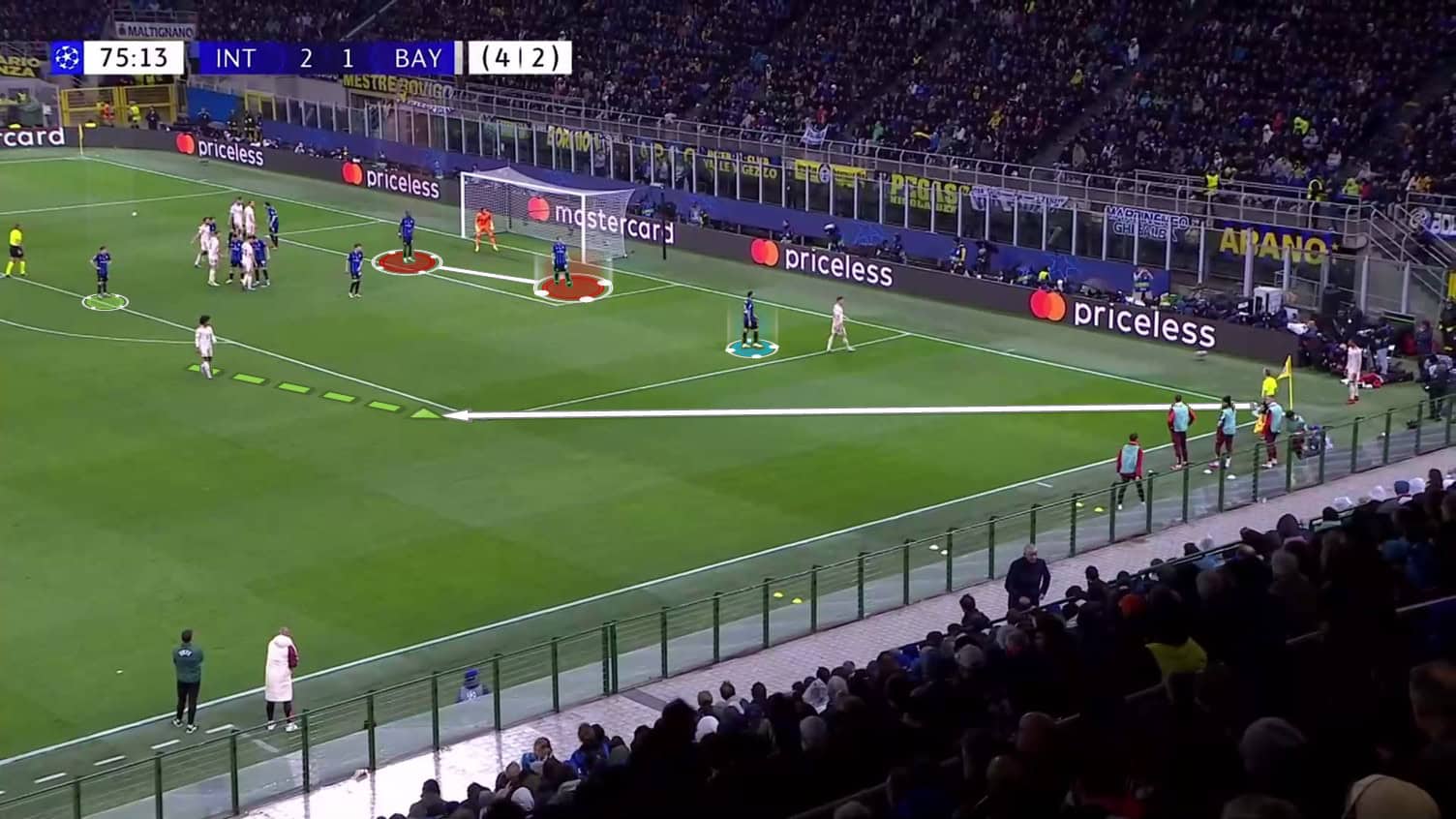
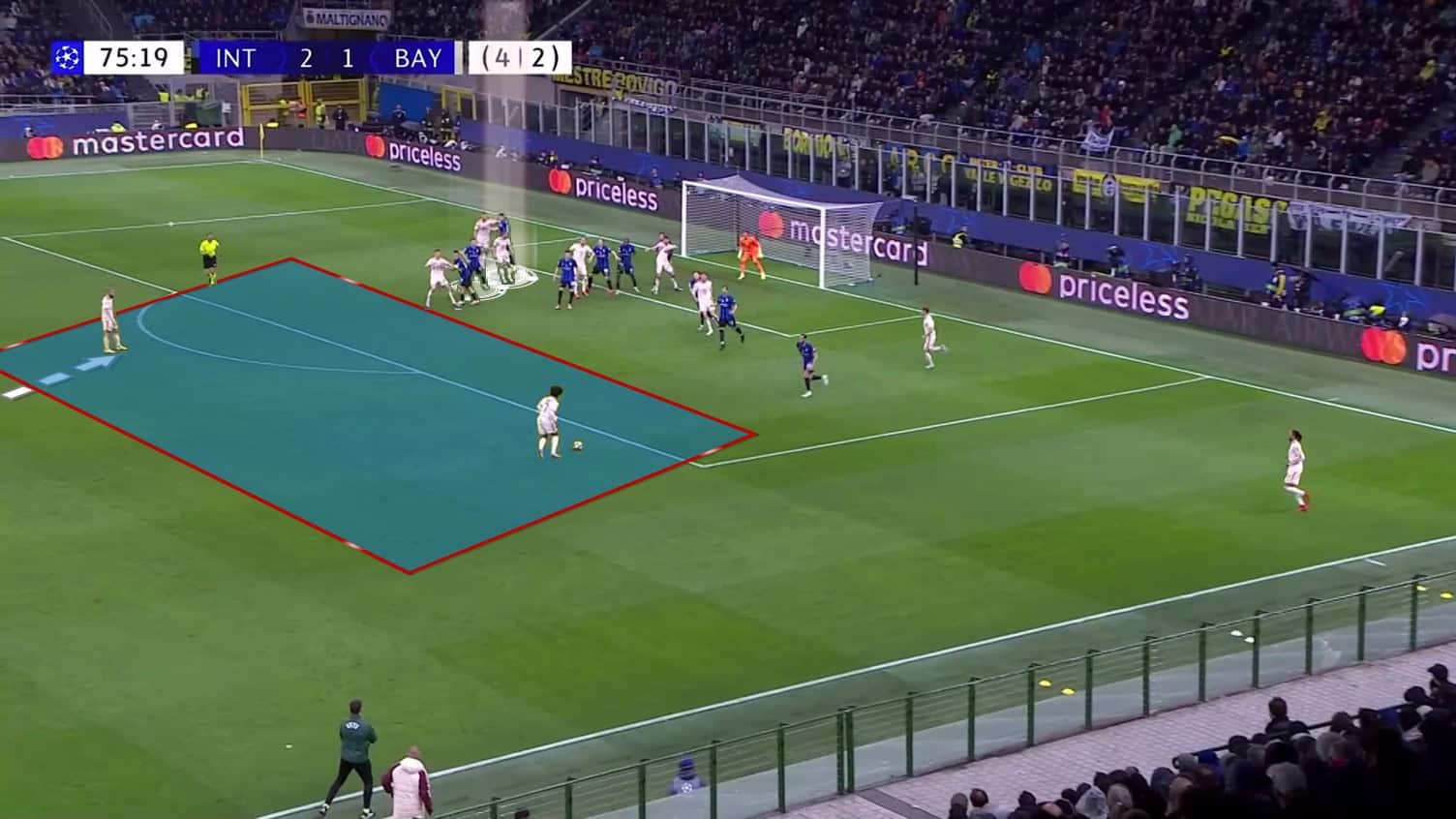
In the photo below, Inter Milan defend with two zonal defenders (red), six man markers, a short-option defender (blue) and a rebound defender (green).
Vincent Kompany‘s short-option attacker stands near the line, dragging the short-option defender away from the edge of the box.
After that, the near rebound player (green) receives a direct pass on the corner of the box while the rebound defender hesitates to follow him, leaving the other rebound attacker (out of the shot).
The other rebound player will penetrate the box to receive the cross from the first rebound player, who is ready to receive the pass from the taker, as shown below.
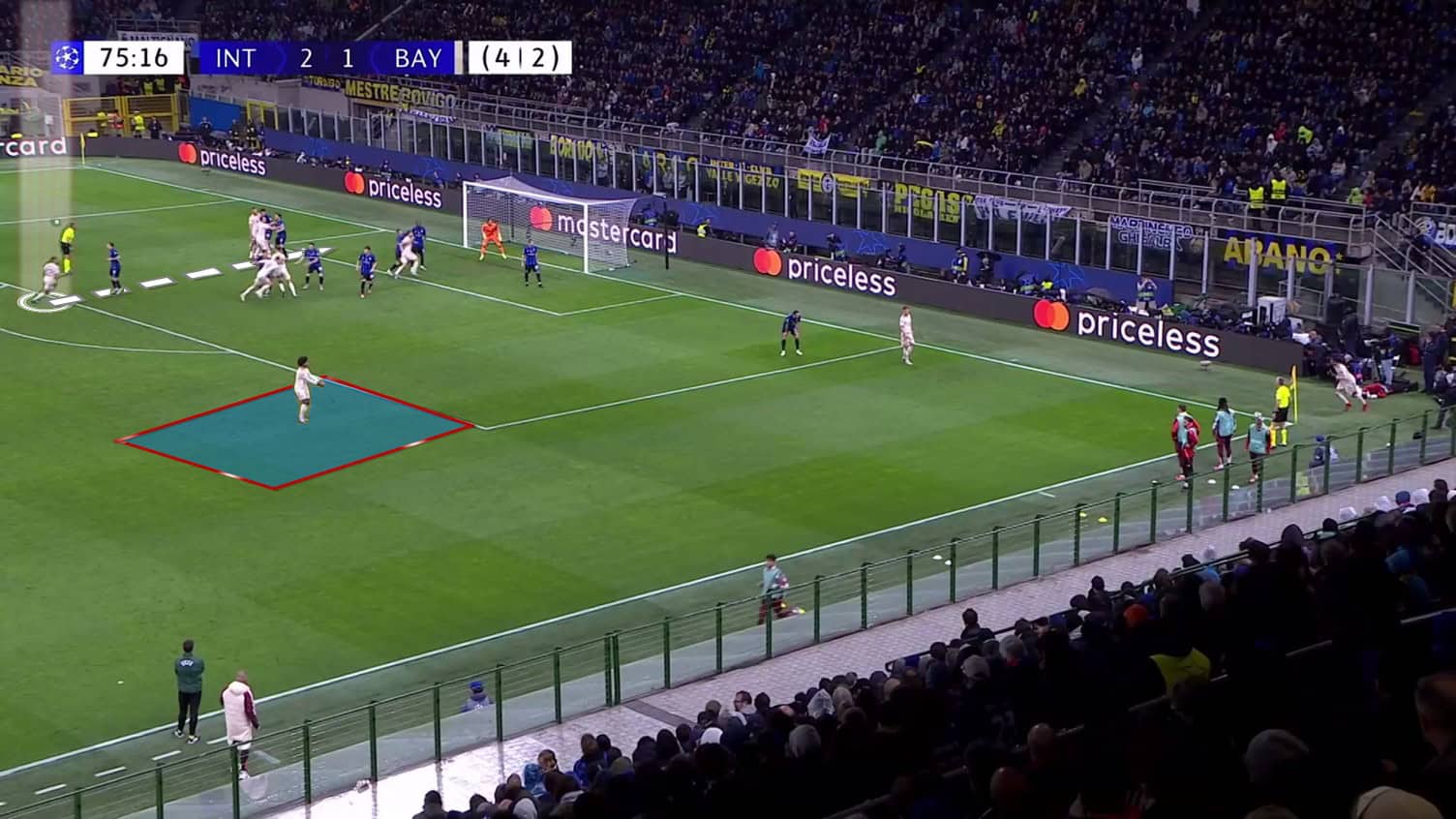
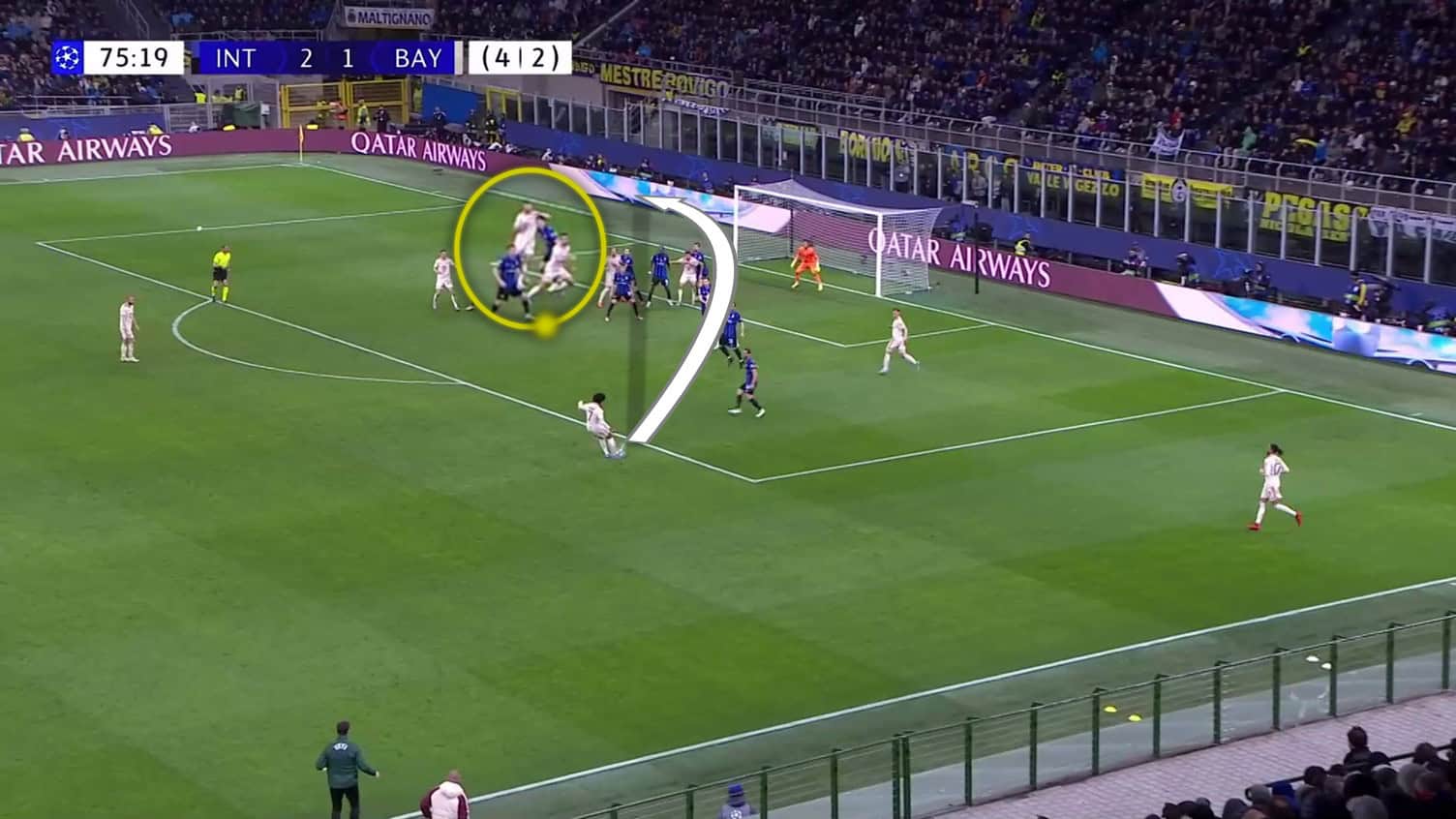
The rebounding defender isn’t usually a good player in aerial duels (Nicolò Barella in this case), so you can see he (white) is not good at tracking back stick to his marker, which is already a complex process to keep stepping back trying to track the ball and the running attacker at the same time, as shown below.
As shown below, Barella consistently keeps his focus on the ball, leaving the penetrating behind him, which leaves Inter’s man marker behind him in a 2v1 situation.
Ultimately, Eric Dier (the attacker assigned to this man marker) gets the ball and scores a goal.
Aston Villa tried to target the rebound player in a different way.
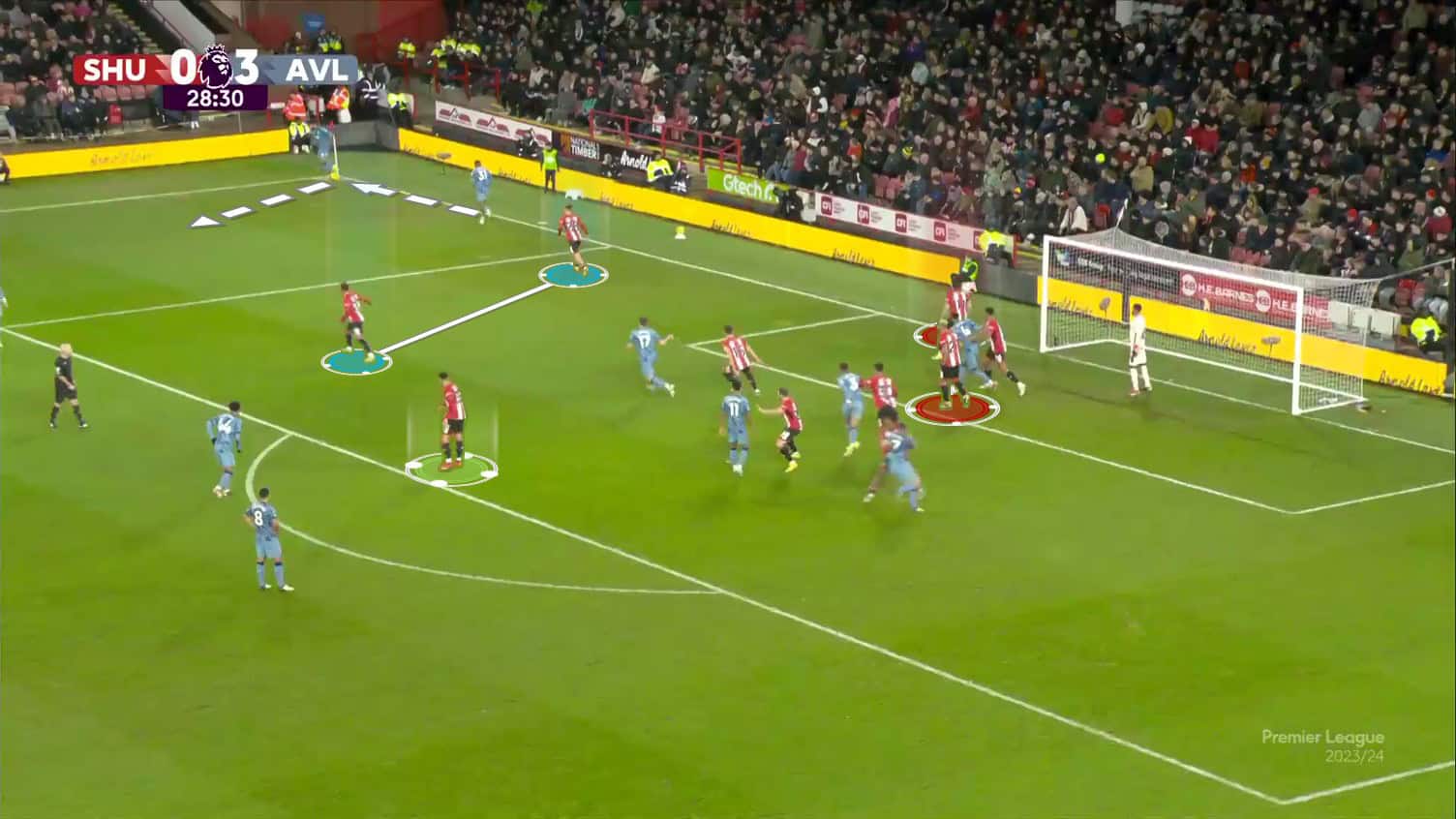
In the photo below, the opponent defends with two zonal defenders (red), five-man markers, two short-option defenders (blue) and a rebound player (green).
Austin MacPhee asks a player to come from the box and be the new taker, which makes the taker another short-option attacker.
With this trick, they have a 3v2 situation over the two short-option defenders, so the old taker will receive the ball and send the cross without a heavy press, as the two defenders are hesitant.
Ultimately, they aim to target one of the rebound players (blue) on the far post.
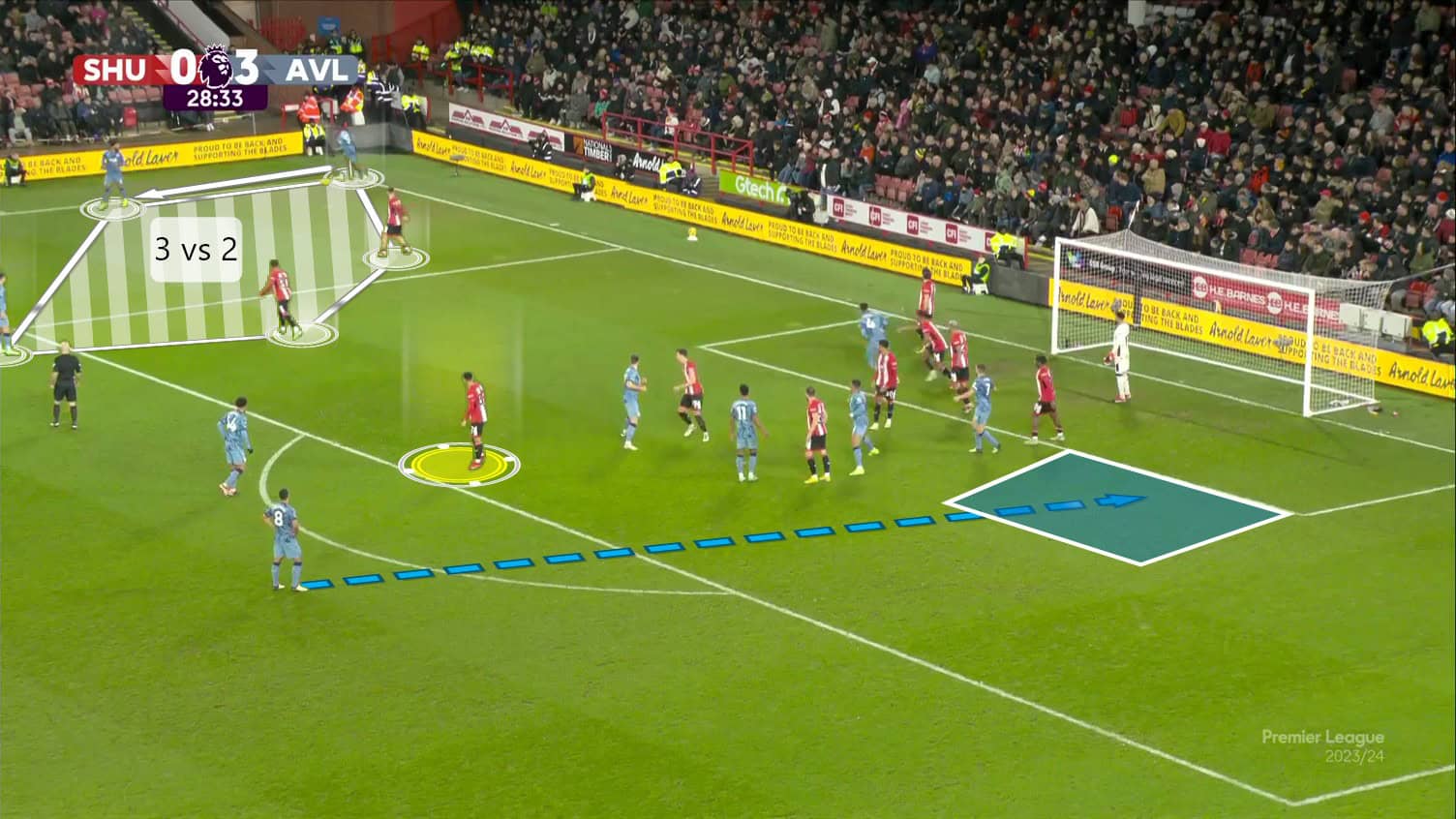
To make this easier, one of them (green) executes a decoy run to divert the attention of the rebound defender and free the real target player (blue), as shown below.
We should also mention the decoy run on the near post (white) to take the attention of the zonal defenders and prevent them from going forward to help against the short corner from the beginning.
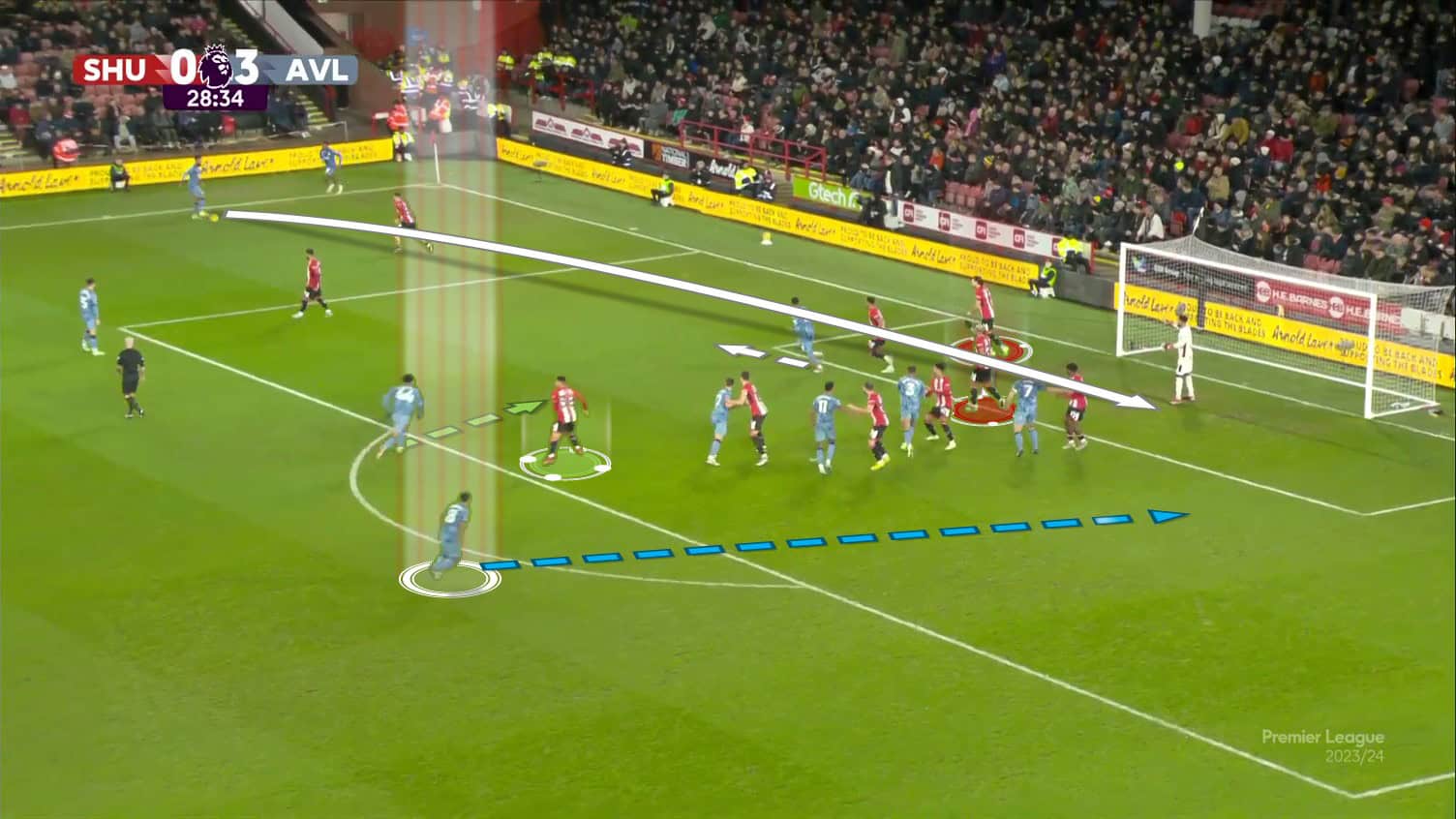
In the end, the plan works, but the defender clears the ball at the last moment.
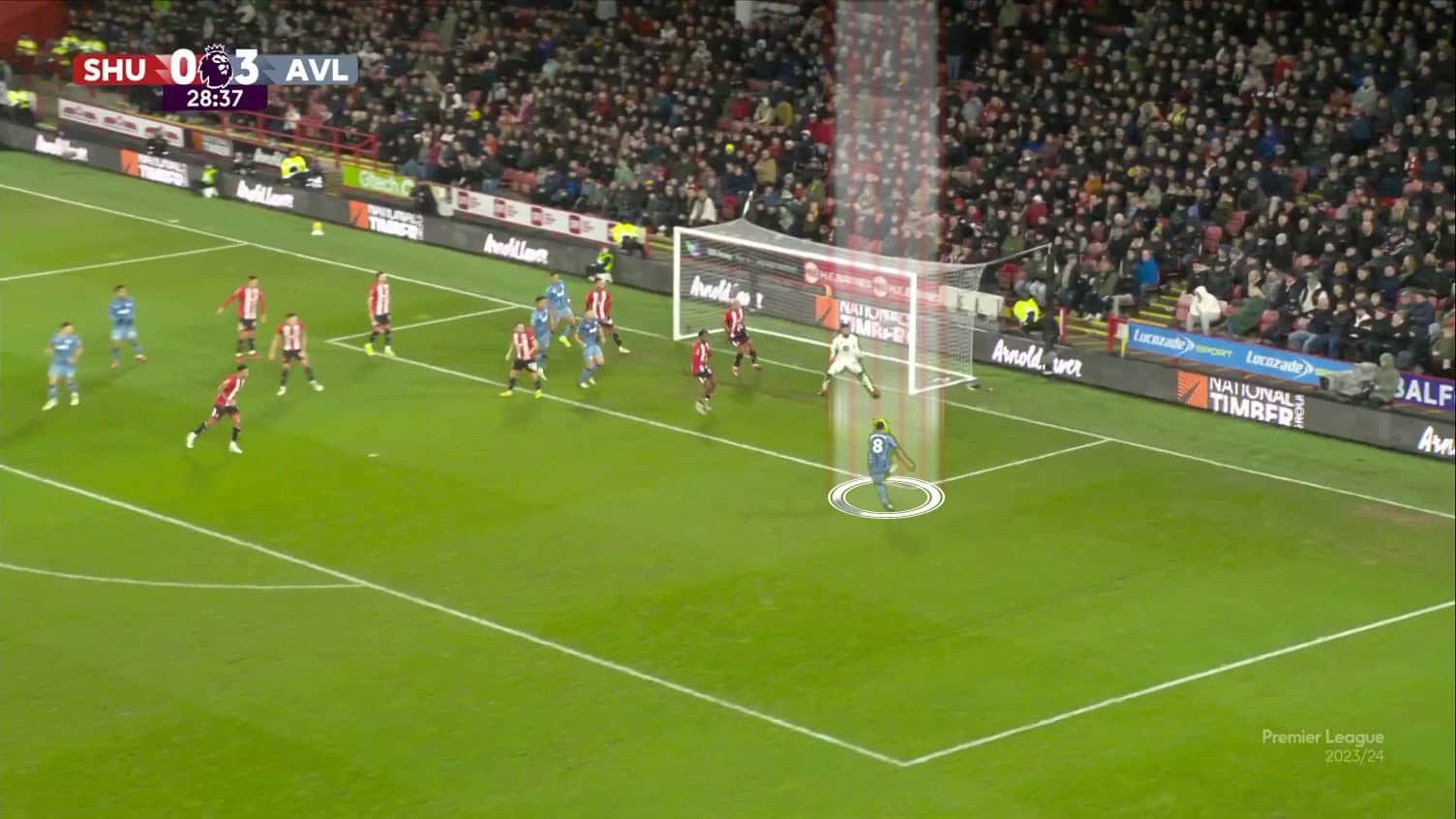
Second Wave Tactics
The last thing we have is including them in the second-wave plans as the targeted players who penetrate the box.
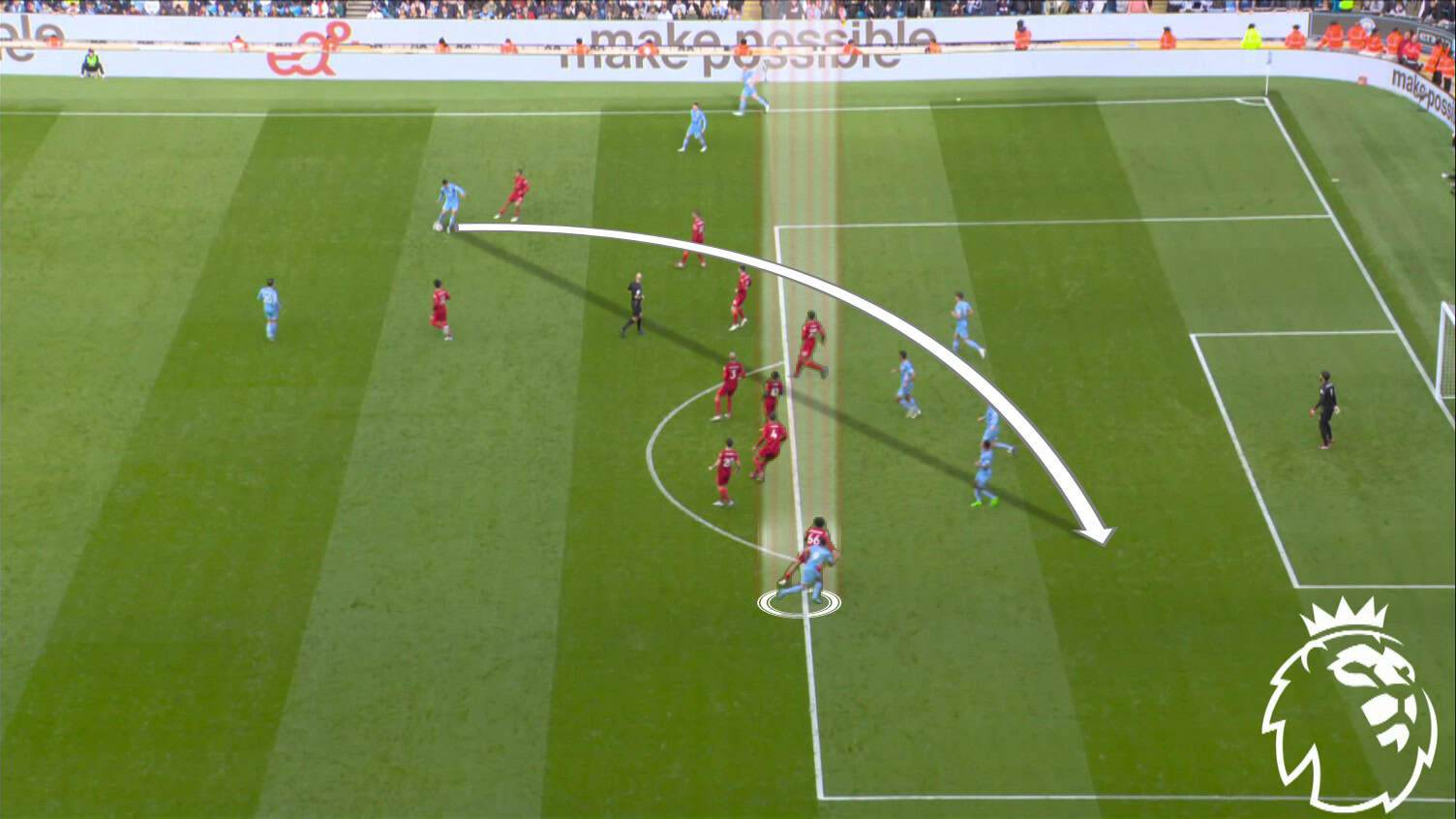
As shown below, Manchester City use three rebound players (green), a short-option player (blue), four players in the box and a counterattack player (out of the shot).
They care more about the second ball than the attacking plan itself due to the fear of Mohamed Salah in counterattacks.
The ball is cleared after the cross, but let’s focus on the second wave.
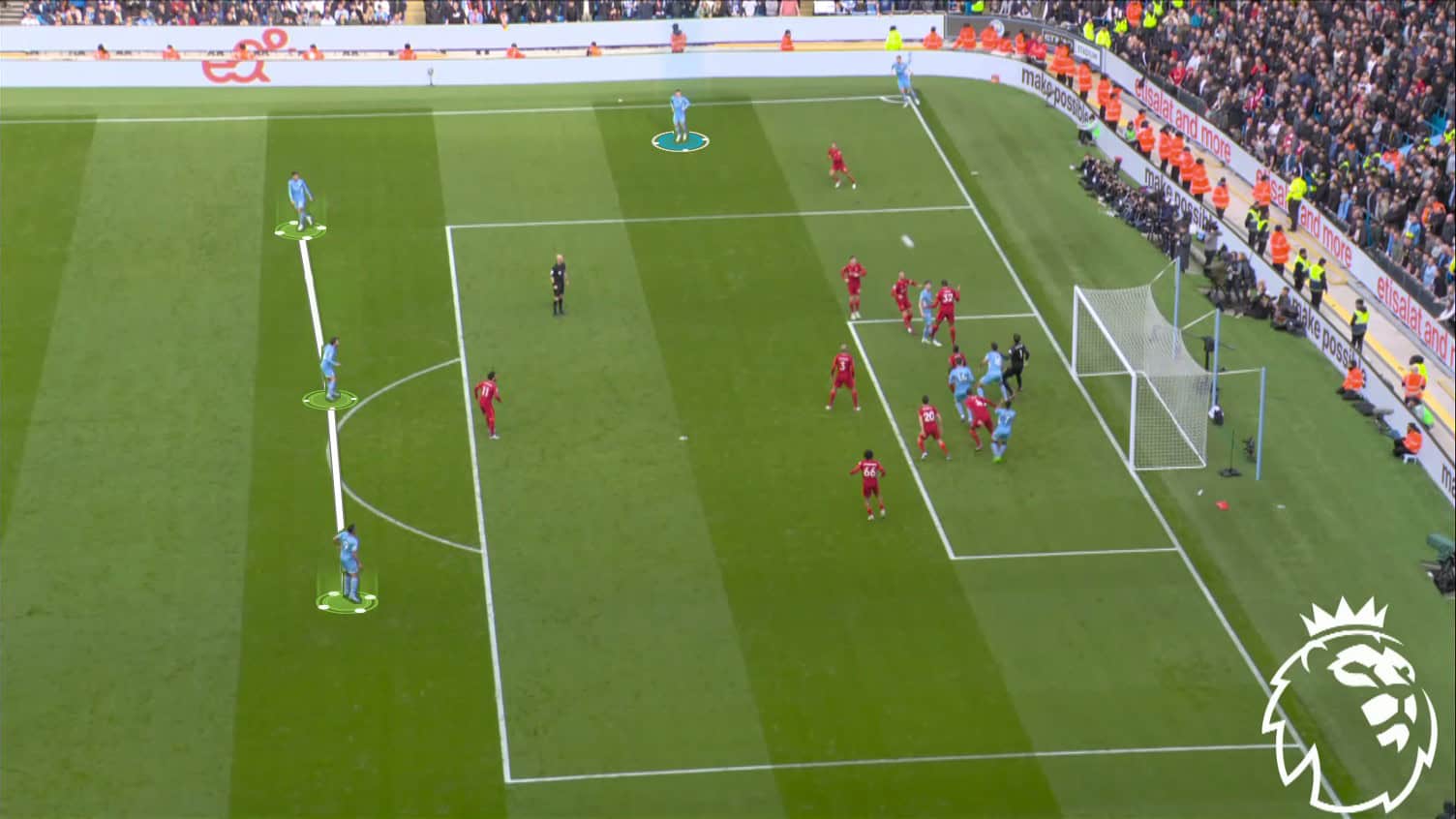
As shown below, the left rebound player receives the ball, while the right one is ready to receive the cross inside the box.
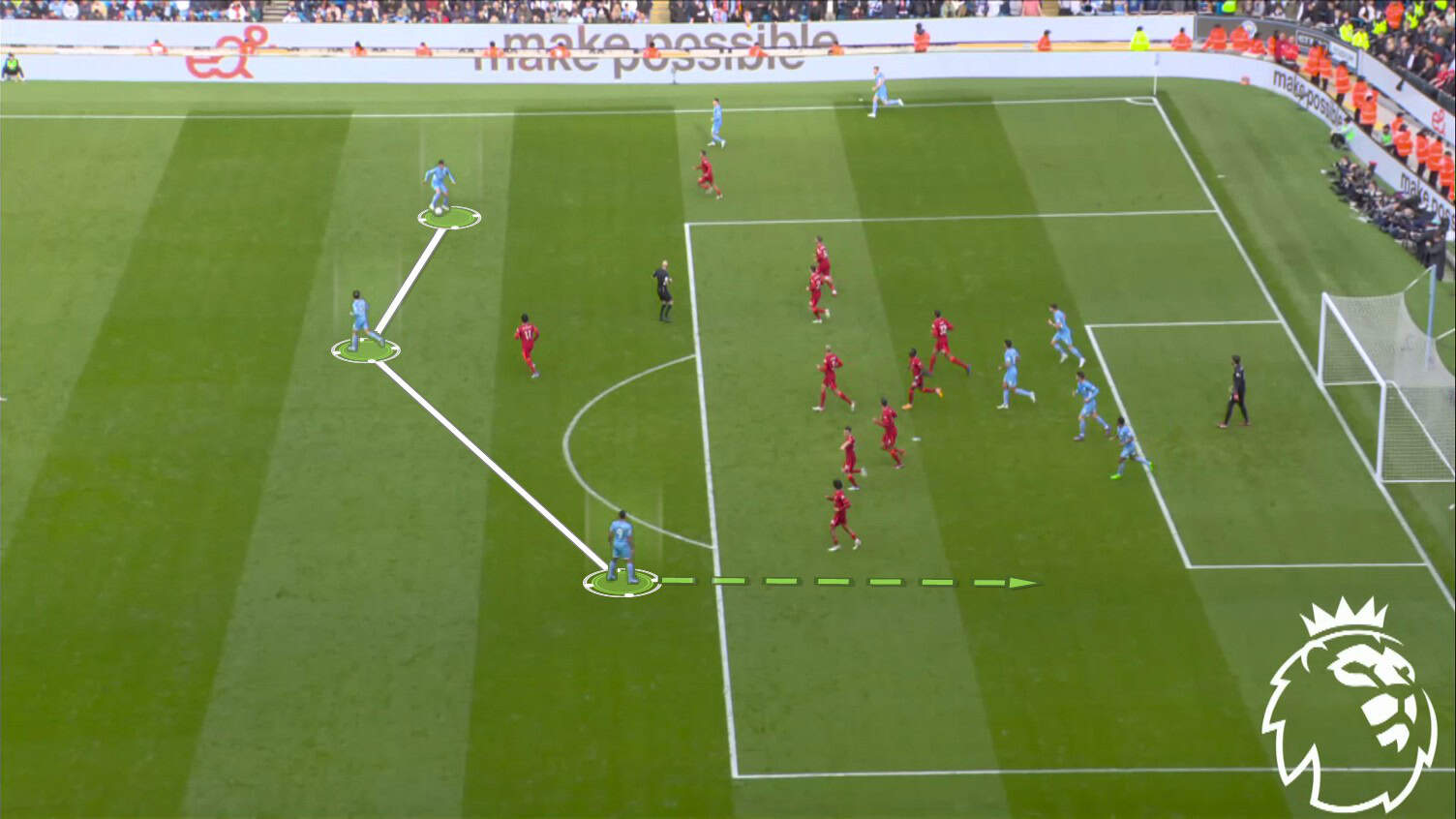
In the end, the plan works, resulting in the goal because of the running rebound player moving in the opposite direction of the defenders, who pushes forward.
Conclusion
This analysis highlights some of the innovative ideas for utilising edge-of-the-box players in attacking corners.
This set-piece analysis has presented some of the new uses for rebound players, showcasing examples from teams such as Bournemouth, the United States men’s national soccer team, Bayern Munich, Aston Villa, and Manchester City.
