
The world’s attention is now fixed on the UEFA Champions League quarter-finals as we draw ever closer to a series of thrilling and captivating matches.
The UEFA Champions League quarter-finals high-profile clashes: Bayern Munich take on Inter Milan, Arsenal host Real Madrid, Barcelona face Borussia Dortmund, and Paris Saint-Germain meet Aston Villa.
Our analytical focus centres on the Bayern Munich vs Inter Milan fixture, the first leg of which ended in a 2-1 win for Inter away from home.
If Bayern is to turn things around in the second leg of this tactically demanding contest, set-piece proficiency could prove decisive in a closely fought encounter.
Bayern Munich have recently demonstrated particularly effective execution of attacking free-kicks, converting them into goals and dangerous opportunities – most recently evidenced by their decisive goal against Augsburg last Friday in the Bundesliga.
This tactical study will first assess Vincent Kompany and Aaron Danks‘ set-piece tactics, exploring their diverse tactical repertoire and innovative implementations.
The analysis will then evaluate potential counterstrategies available for Simone Inzaghi and Ferruccio Cerasaro‘s Inter Milan.
Jamal Musiala’s Decoy Run
First of all, we will discuss Bayern Munich’s usual trick of asking Jamal Musiala to run in front of the first zonal defender to make him drop earlier than his mates.
This trick keeps Bayern Munich’s targets onside despite starting in offside positions.
This trick is usually performed in wide free-kicks in the outer flank or half-spaces.
As shown below, the opponent defends with seven players in the zonal line: a player for the rebound (green), a player (yellow) to defend short passes and a player on the ball (pink).
This is motivated by the first attacker (black arrow), who pretends to block the zonal defender to convince him that he wants to free Musiala, making him drop earlier than the line.

It ends with an earlier drop for the first zonal defender of the line, which breaks the offside trap.
As shown below, the first zonal defender (black) moves earlier, which confirms that the attackers behind him are onside.
— Footie Clips (@FootieClips) April 8, 2025
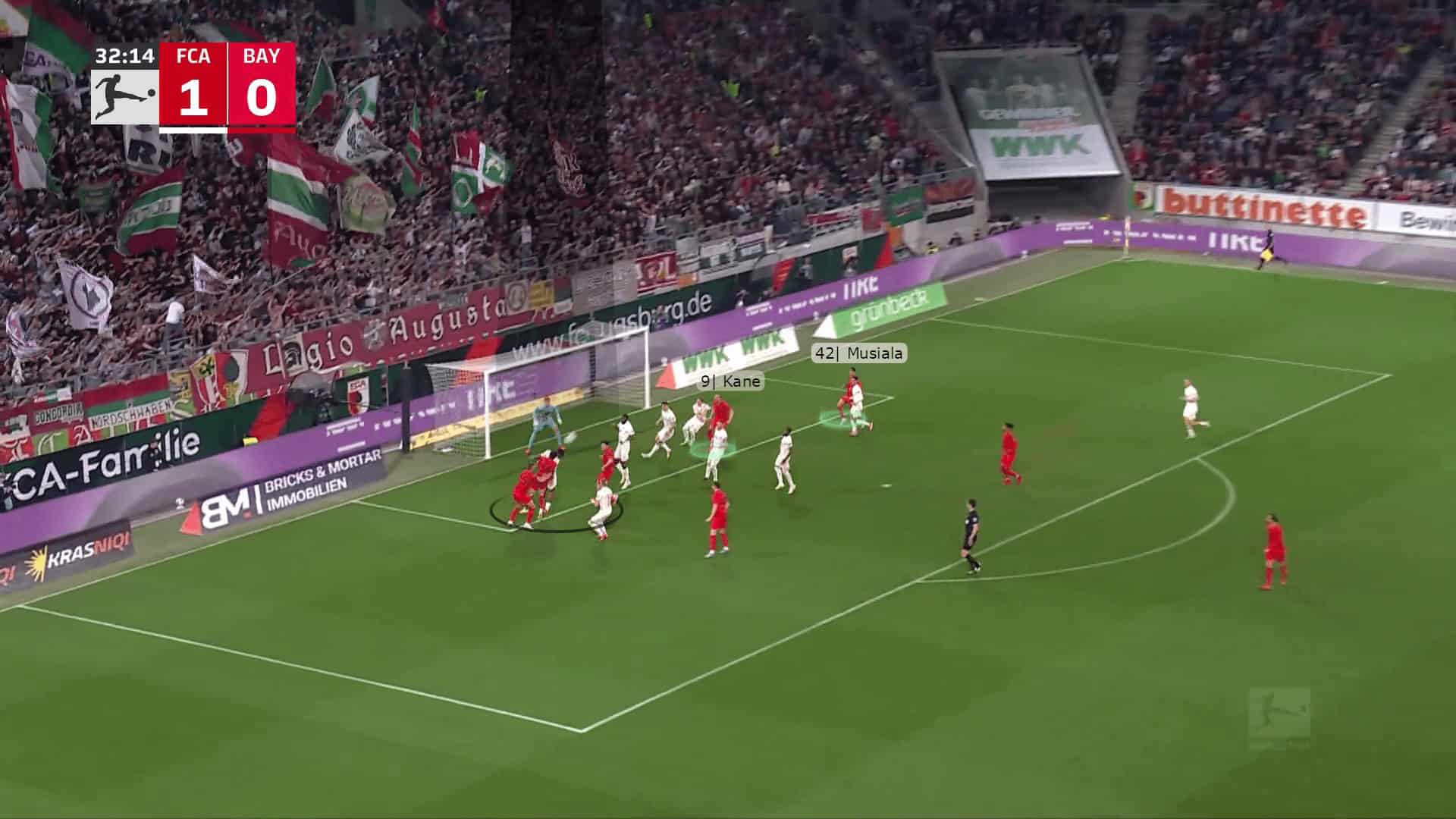
In this case, they target the far post, with three green players, while having a player (blue) block the last zonal defender and Harry Kane to frame the goal and be ready for any headed pass to the near post or a rebound ball from the goalkeeper.
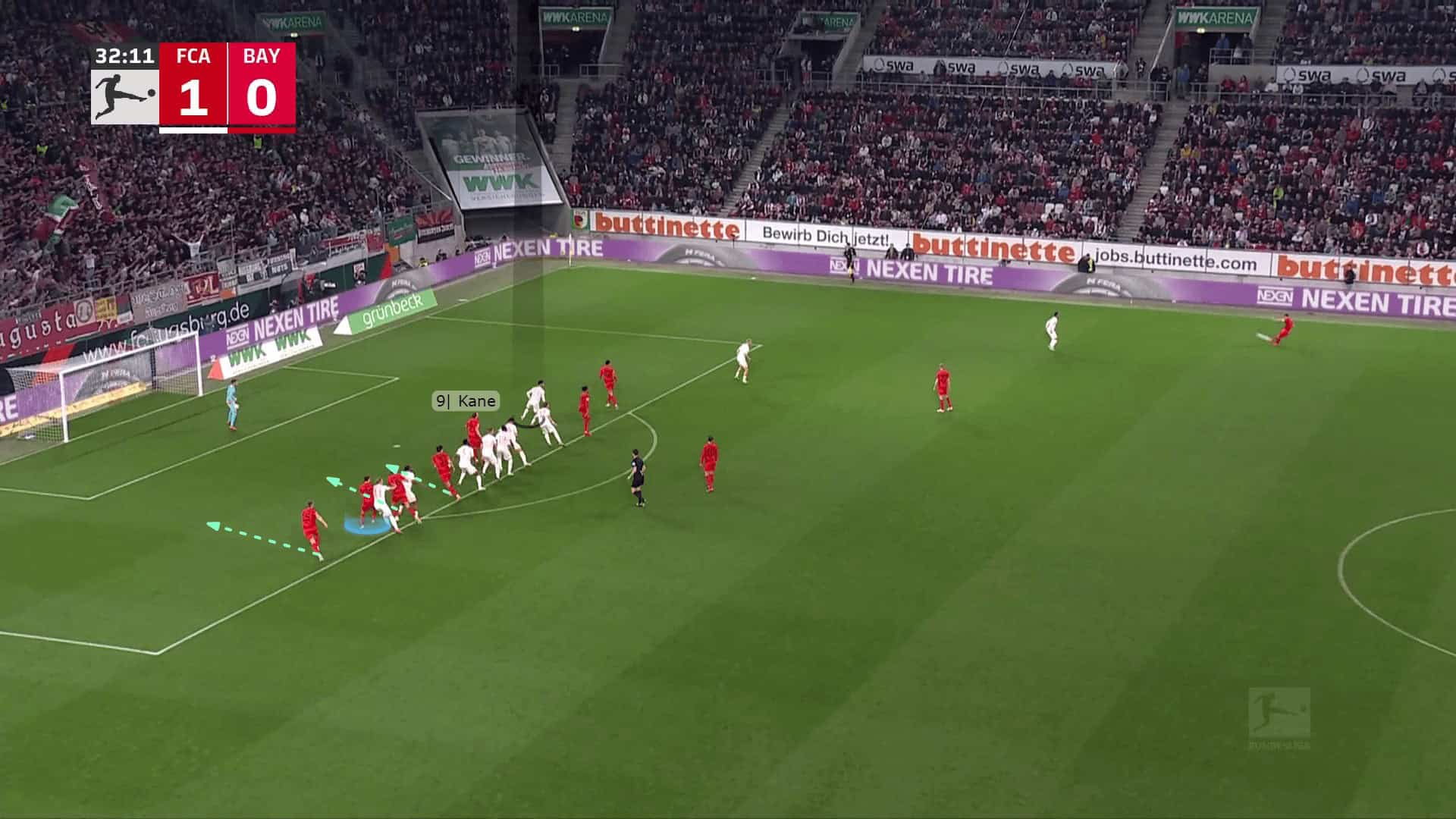
As shown below, the plan involves three players around the ball, Kane and Musiala framing it and two behind them for the rebound.
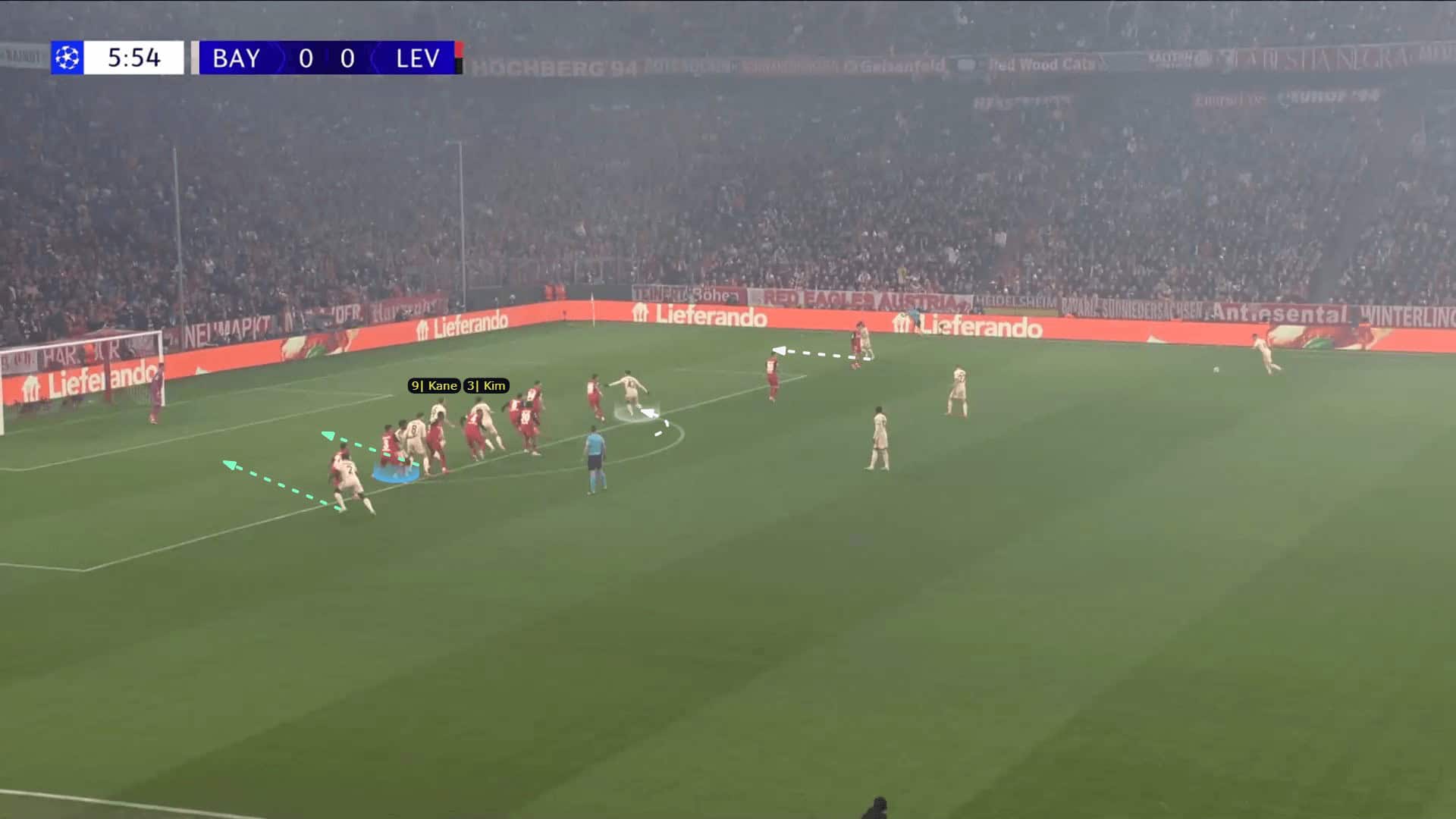
It is not a coincidence that they followed the same principles against Bayer 04 Leverkusen.
— Footie Clips (@FootieClips) April 8, 2025
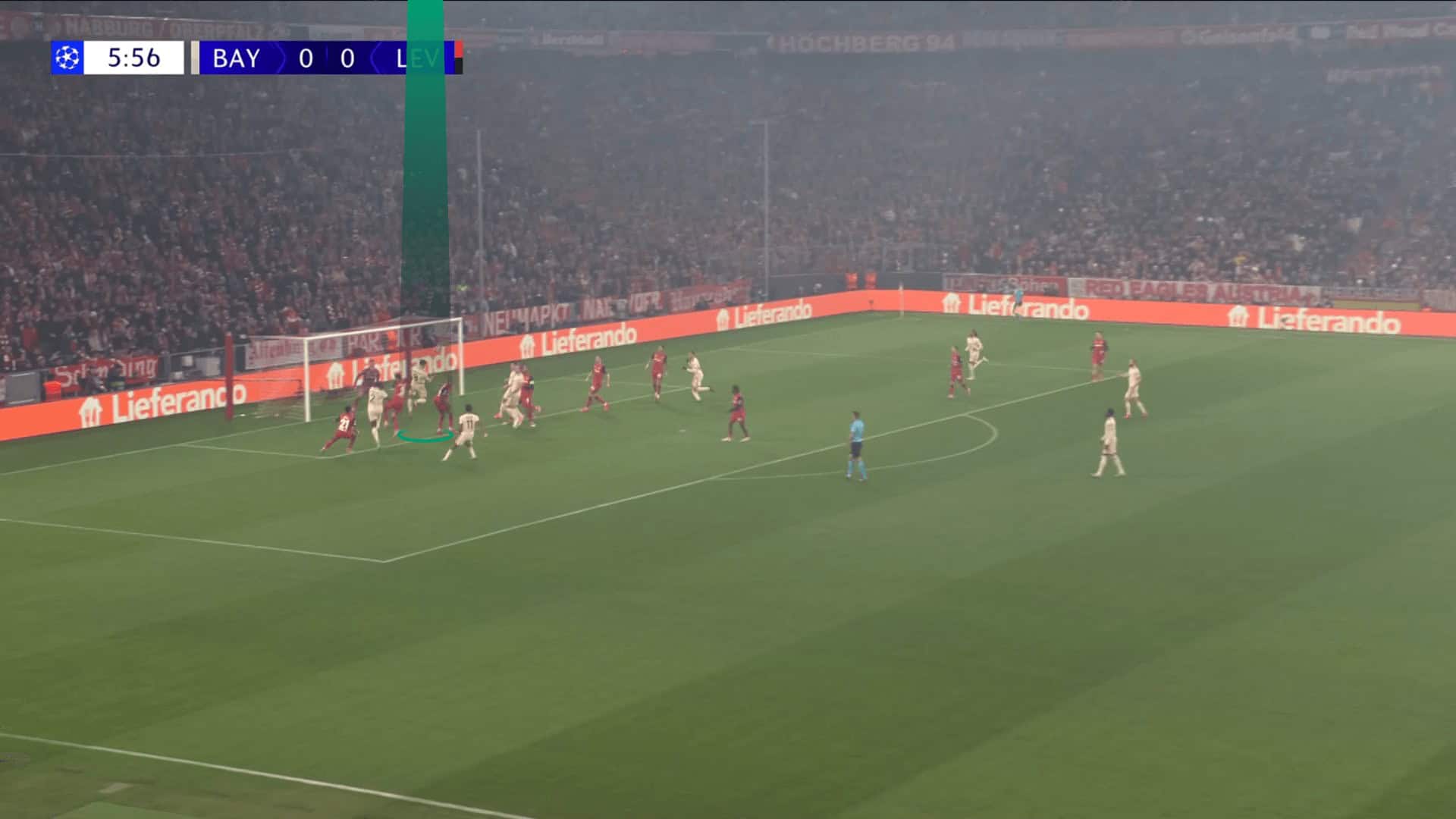
As shown below, Musiala’s decoy run affects the line drop, making the first two defenders drop earlier than their mate, who can’t drop quickly because Kane and Kim Min-jae start from their back, giving them a positional superiority over them and allowing them to push and annoy them from their backs.
On the far post, the same thing happens in the previous case: asking two runners (green) to run while the blue blocker (Kingsley Coman) blocks the one-to-last defender, freeing Leon Goretzka.
In the photo below, the ball reaches Leon Goretzka, who can shoot or pass it, as in the previous case.
You can say that asking the first zonal defender not to be dragged and to be careful because he is the guide of the line to drop is the solution.
However, it is not as easy as you imagine, especially when Bayern Munich use a two-taker manipulation.
— Footie Clips (@FootieClips) April 8, 2025
As in the photo below, Bayern Munich follows the same principles, this time having an additional taker while the first zonal defender raises his hand as a guide to dropping.
They have four offside players and a far normal runner (green arrow).
They ask the fourth offside player (Coman) to block the last zonal defender to free him.
He isn’t the targeted player but has a role in framing the out-swing cross to increase the possibility of scoring goals.
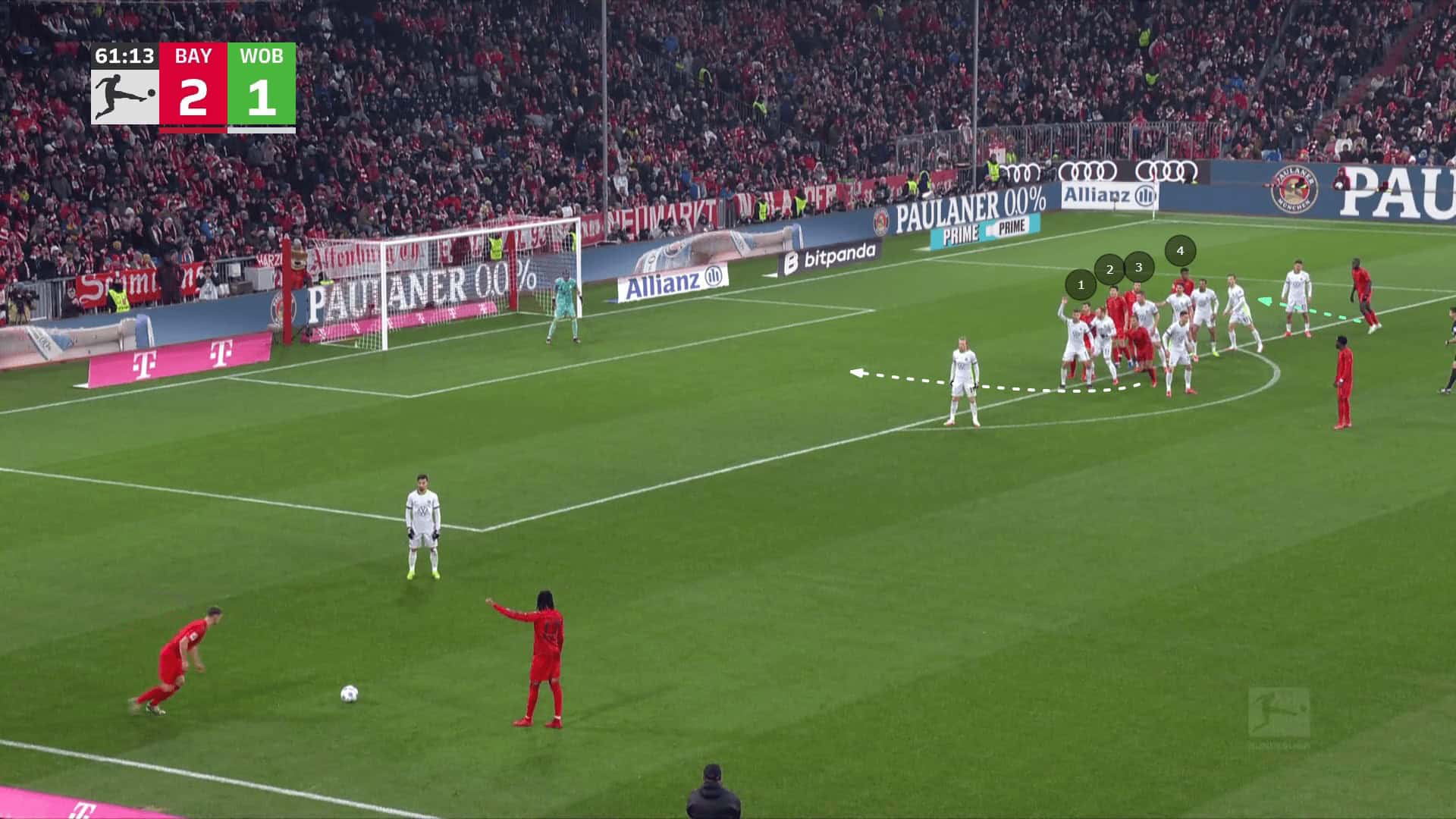
In the photo below, it seems that the first defender didn’t drop to put all the attackers in offside positions.
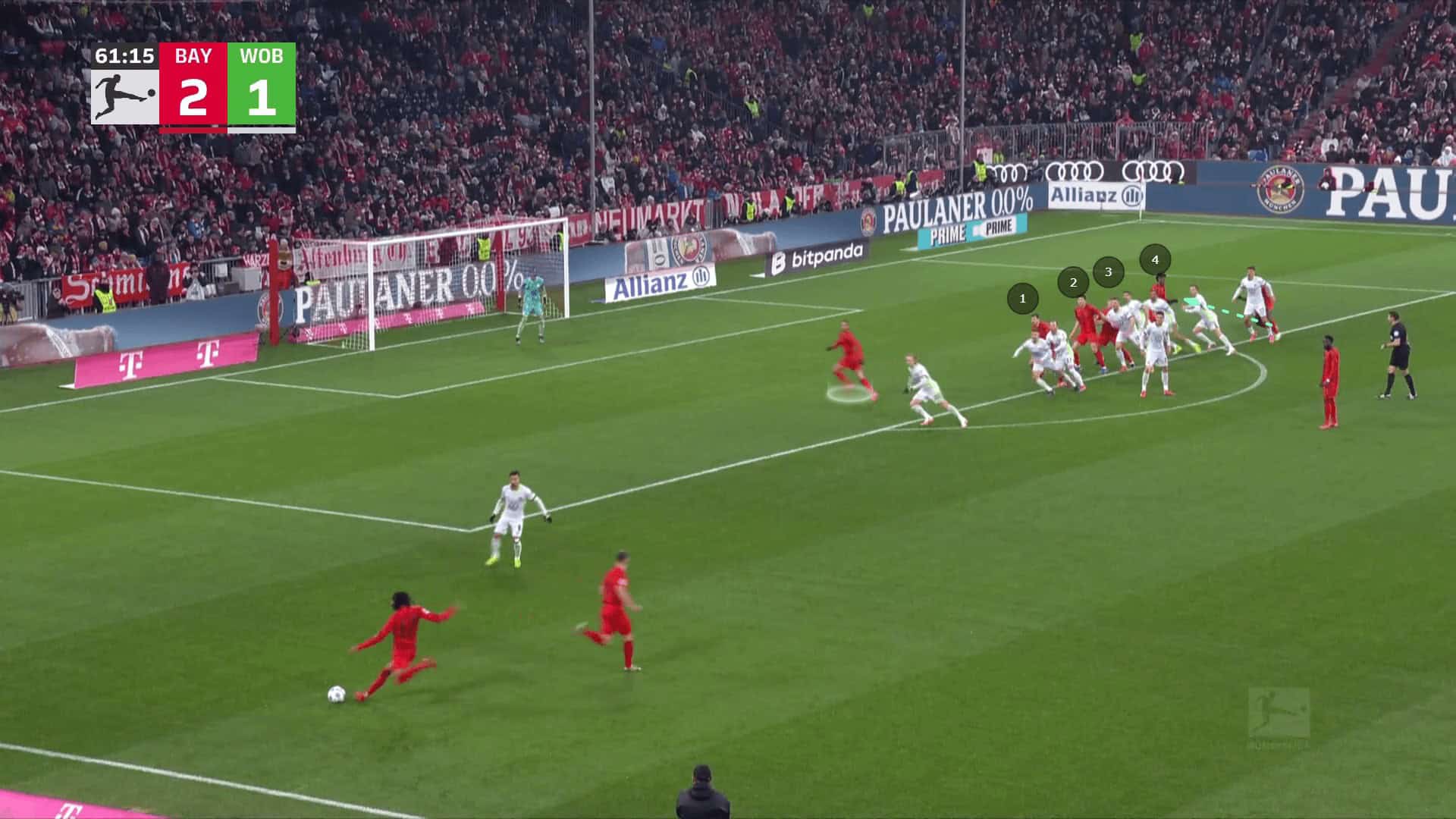
However, it is difficult for the defenders to commit to the line, especially while the first taker passes over the wall.
Then, the defender’s nature wins, asking him to drop early to precede the attacker, as shown below in yellow.
This puts the first two attackers onside, resulting in a goal.
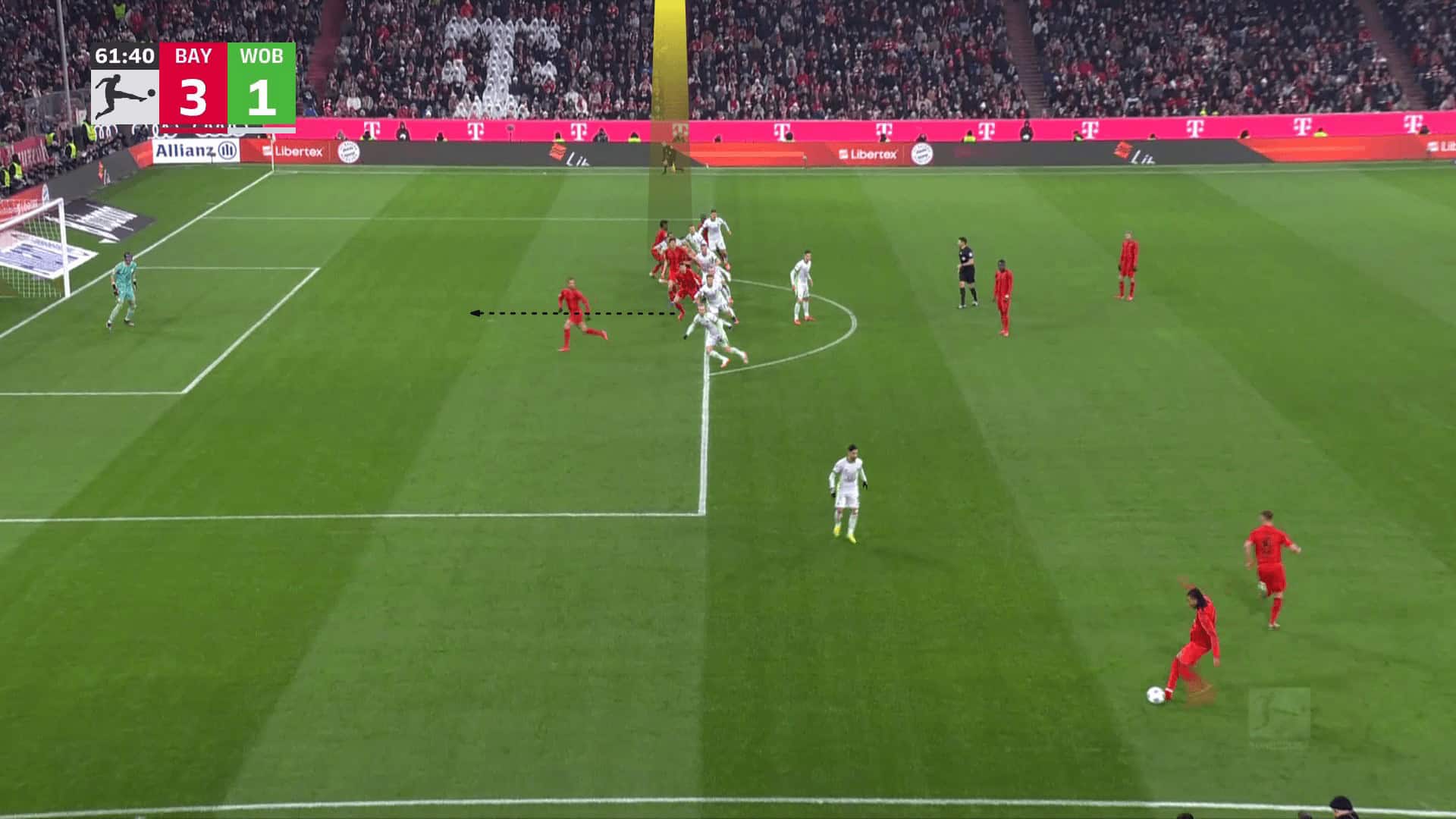
Hence, having a well-organised defensive line in dropping is a good solution, but they should be trained on how to deal with many situations, like two-takers’ manipulation.
Some teams follow a different defensive plan by asking the line to drop so early to allow the defenders to precede the attackers, especially the second zonal defender in this case.
— Footie Clips (@FootieClips) April 8, 2025
As shown below, the Bavarians follow a similar plan with asking two players to switch their positions, which confuses the defenders who are worried about who will come from their backs.
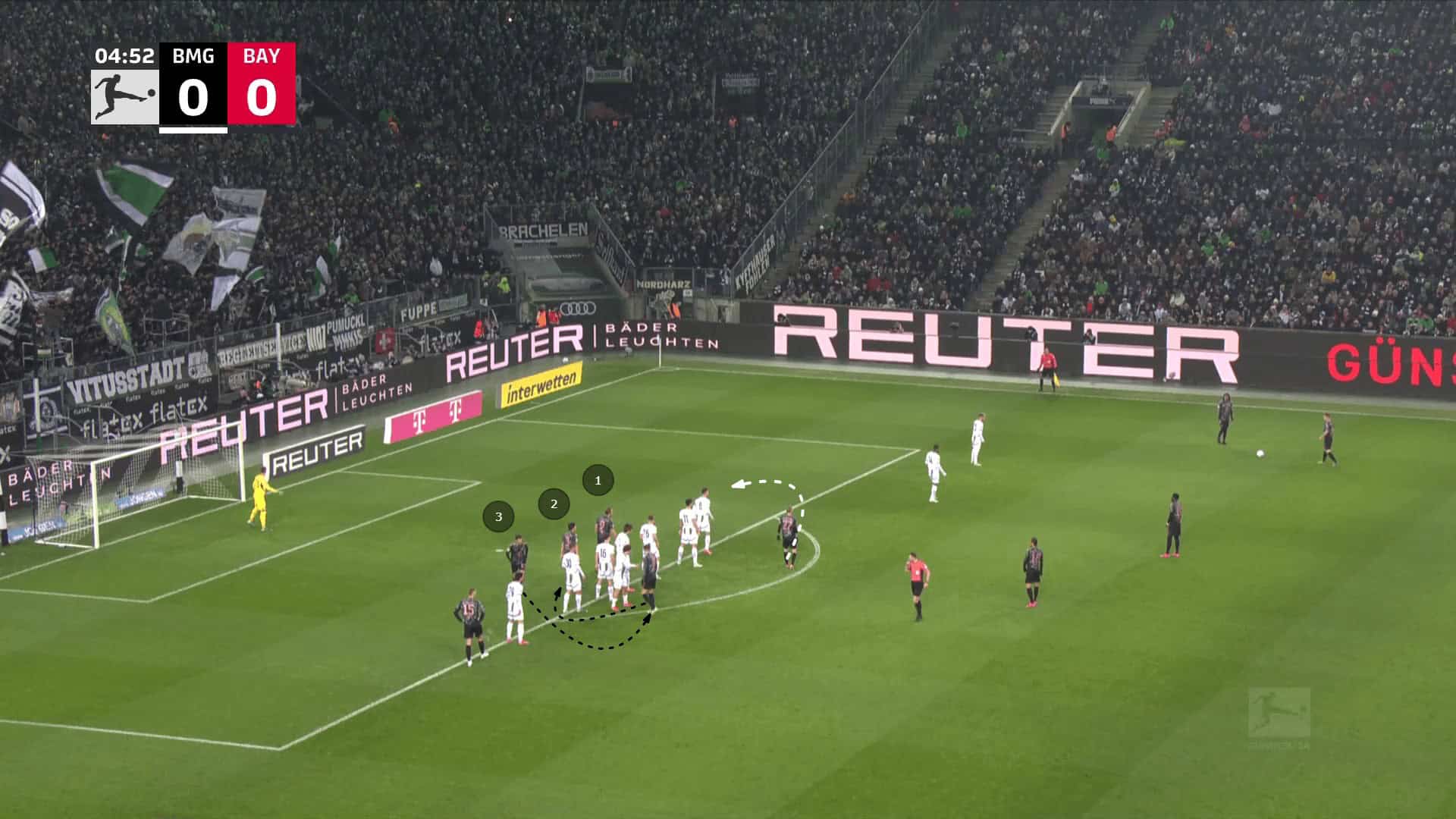
On the other hand, the opponent decides to drop so early as Joshua Kimmich moves, especially the first two defenders, who are free to step back because they don’t have annoying attackers on their backs, as shown below.
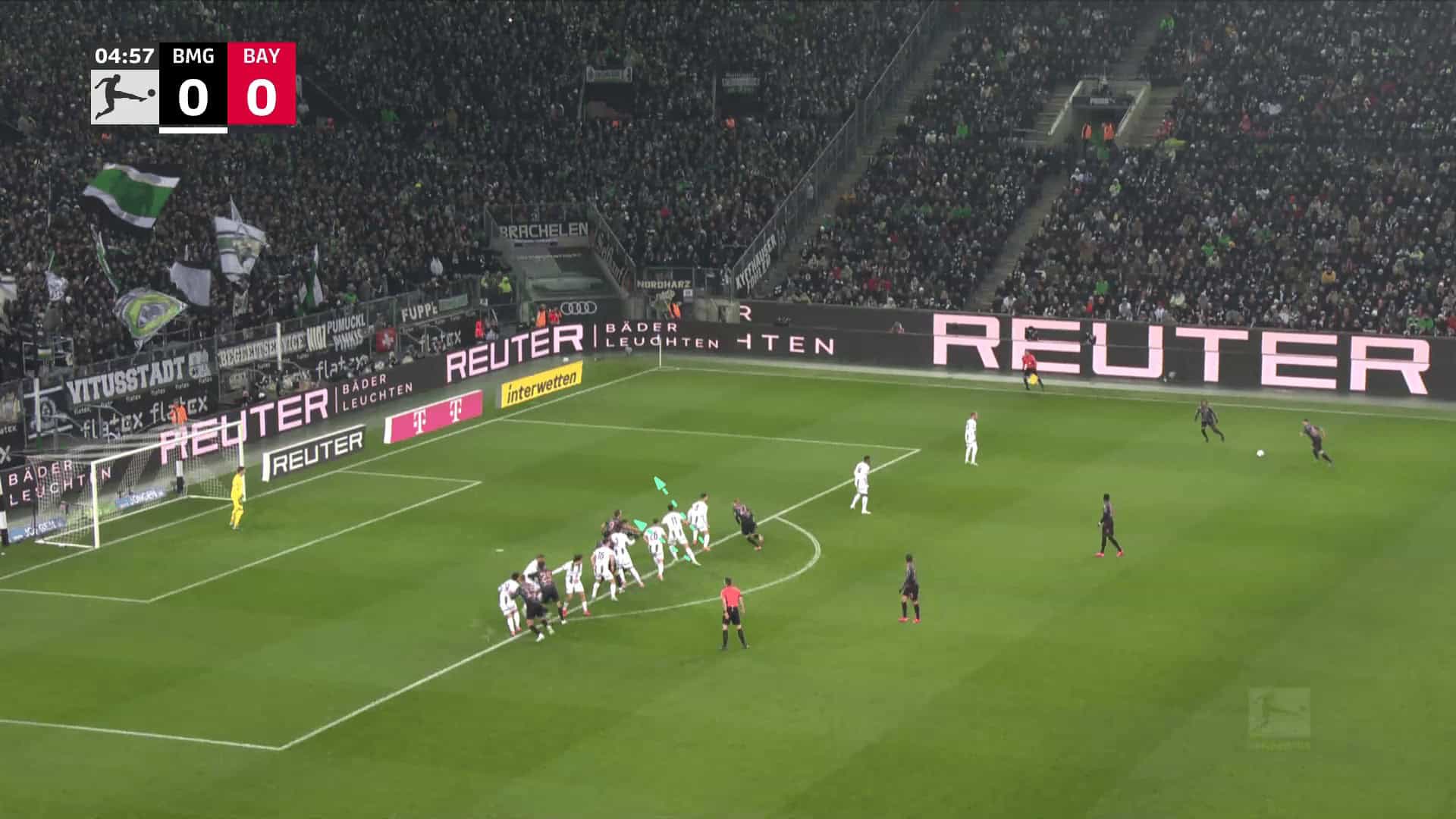
This enables the second zonal defender to get to the ball early while the first one follows this usual run, as shown below.
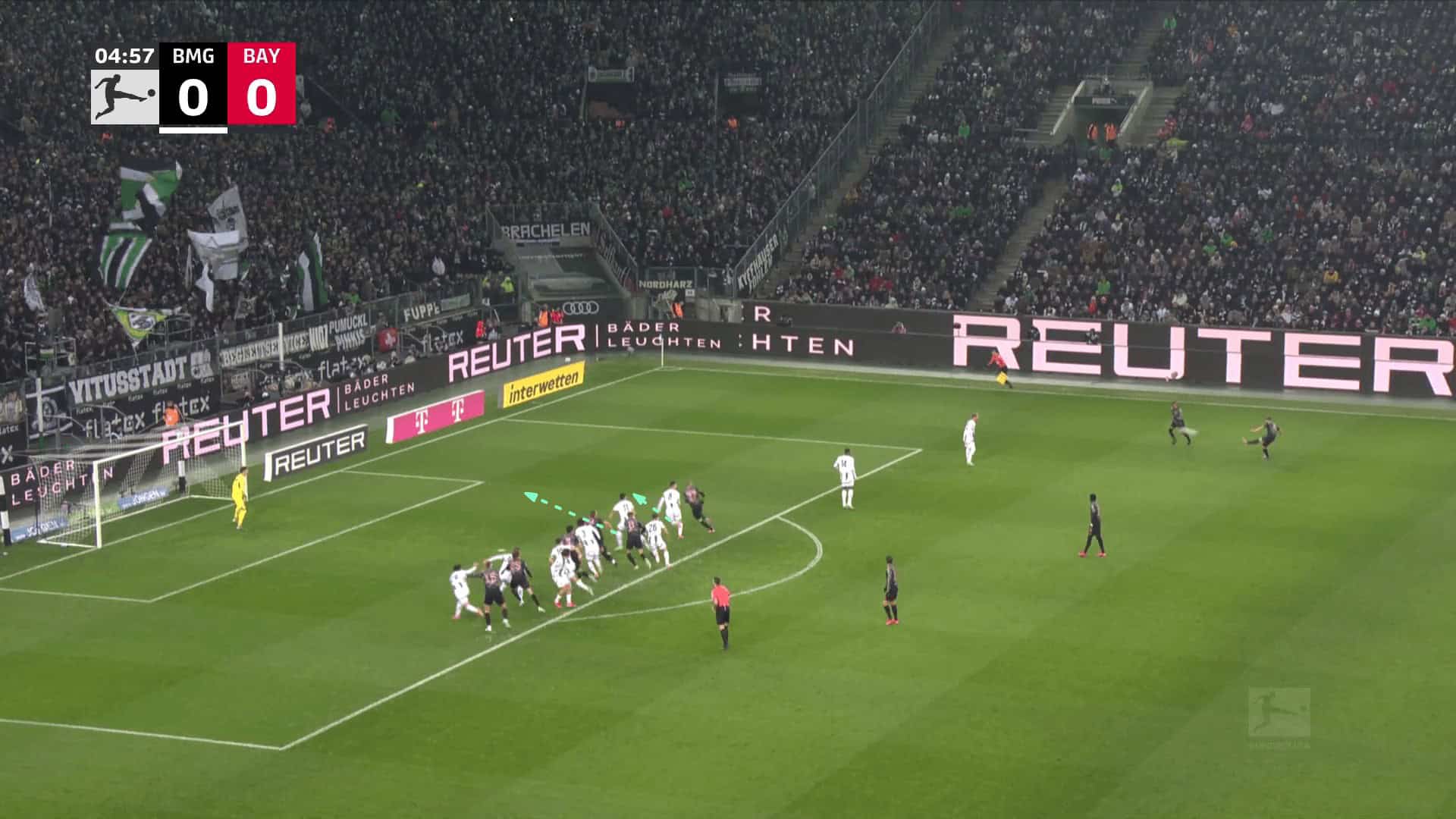
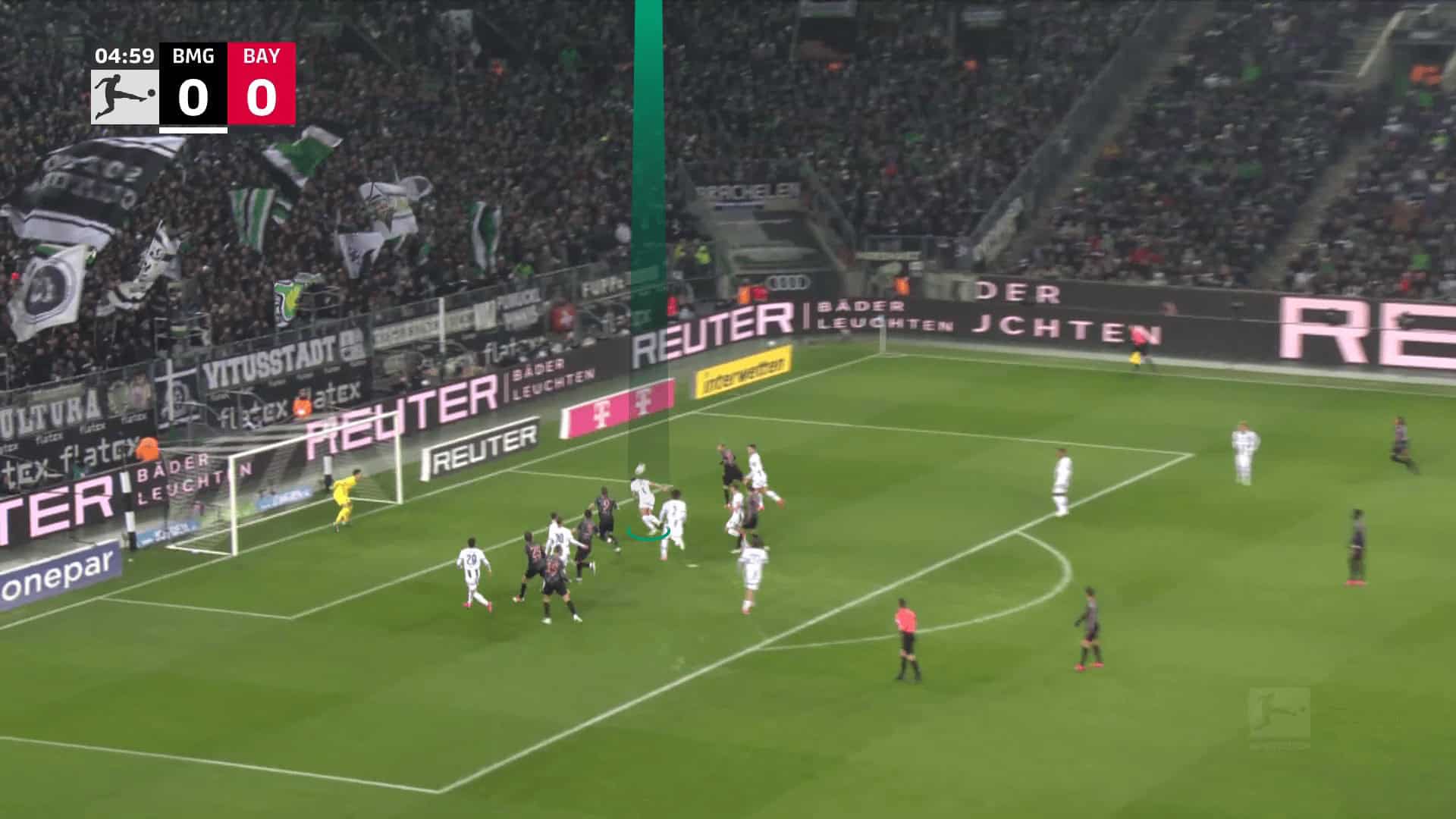
In the end, he succeeds in clearing the ball, as shown below.
However, it is a risky solution because if he couldn’t get the ball, all the attackers behind him would be onside.
It could also be used as a decoy run to send the ball to an offside player in another position (the far post, for example) who will be onside because of his early movement.
Bayern Munich’s Central Free-Kicks
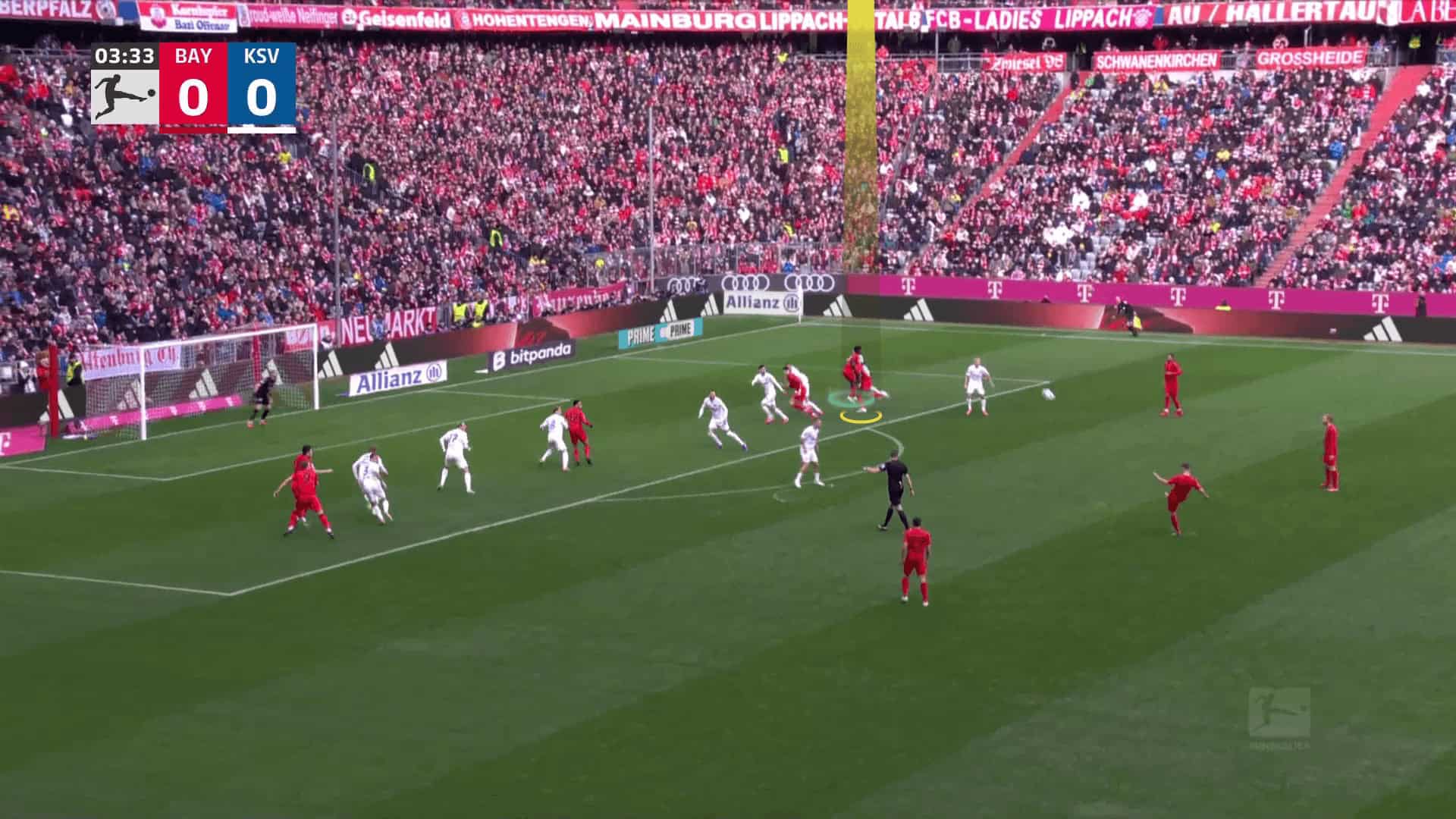
In central free-kicks, they have a good idea to stretch the width of the box from the two sides to widen the gaps between the defenders.
— Footie Clips (@FootieClips) April 8, 2025
As shown below, they target Dayot Upamecano (yellow) while asking Coman (green) to block the last zonal defender.
You can see that it is a usually repeated idea, but it is effective because it is difficult for the defender to focus on who will block him from the back while dropping simultaneously.
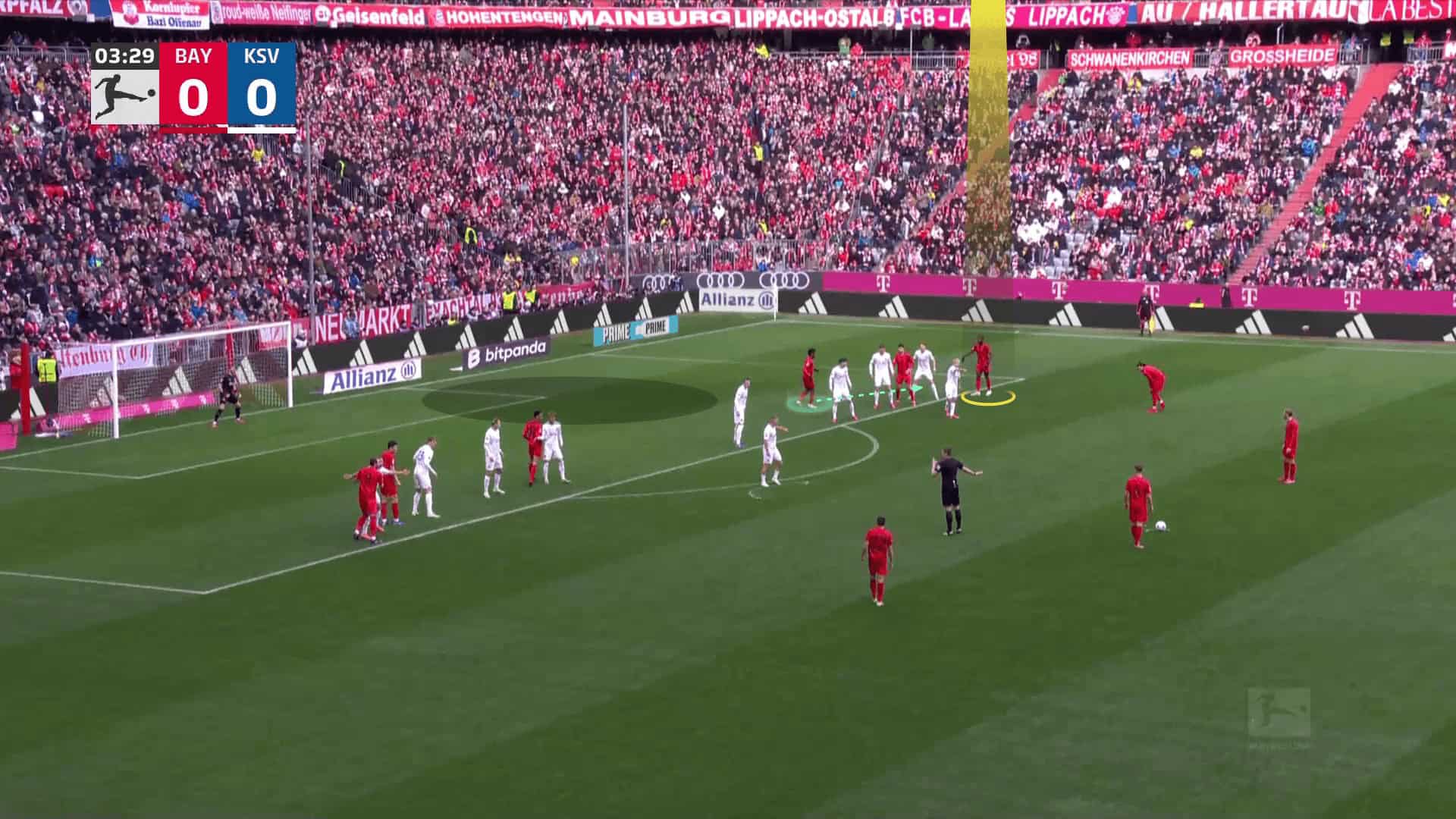
In the photo below, the block is clear while the other players frame the goal in the box.
It should be mentioned that they distribute their powerful players on the two sides to separate the best defenders into the two sides.
Bayern Munich’s Deceptive Ideas
We should also mention small, tricky details that Bayern Munich usually execute.
— Footie Clips (@FootieClips) April 8, 2025
In the photo below, Kimmich pretends to step back to play the free-kick, but he sends it directly for the running Musiala, scoring a goal.
This trick doesn’t allow the defending line to drop because the ball is suddenly played while they are also organising themselves.
On the other hand, Musiala knows the plan, so he runs before the lie, so he isn’t offside and has good momentum.
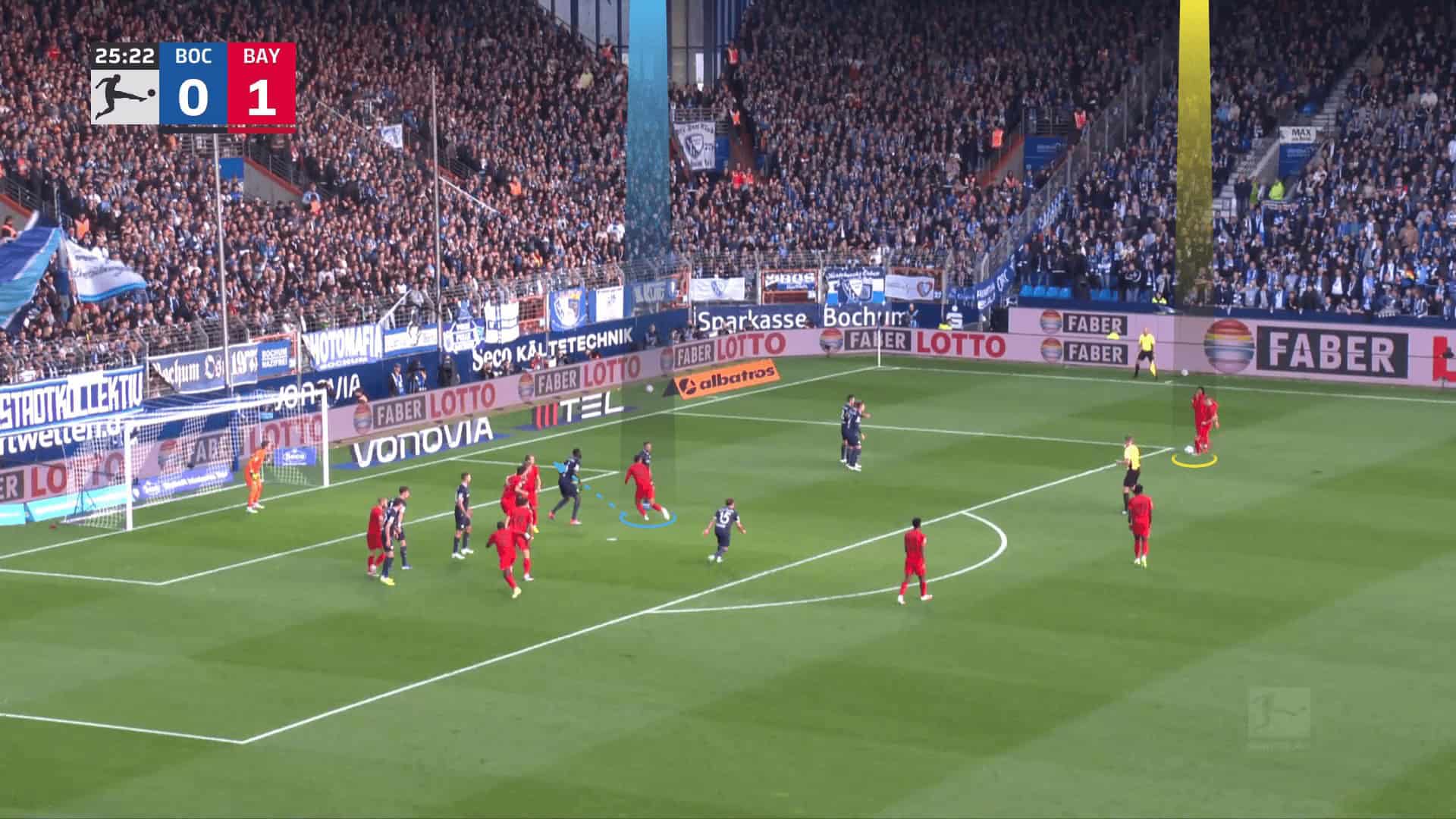
You can say that Kimmich and Musiala communicate instantly, but they do that trick so many times and play free kicks quickly if they have a chance.
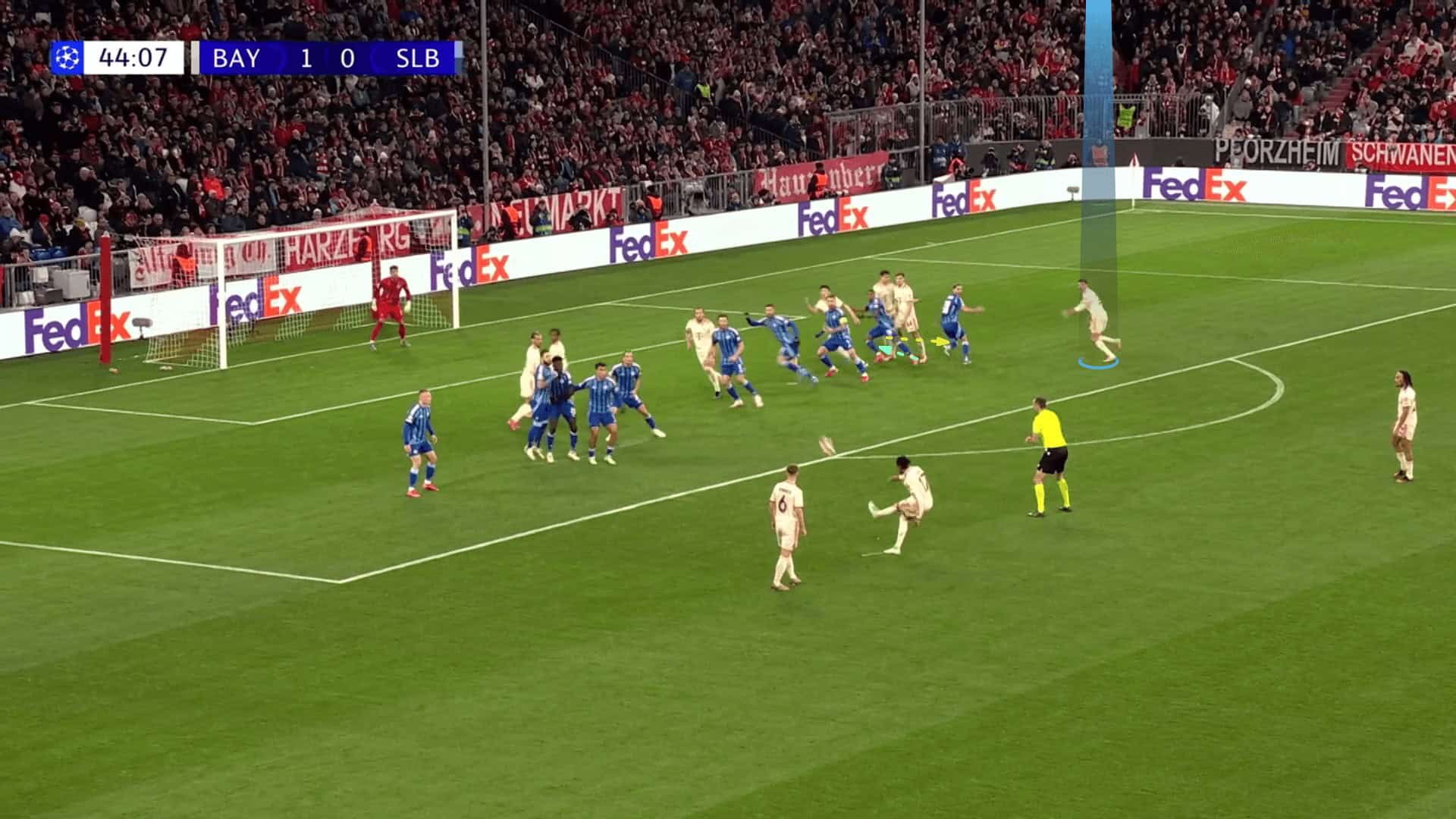
The other trick is acting like they will shoot a direct free-kick but send a cross.
— Footie Clips (@FootieClips) April 8, 2025
In the photo below, it seems that it is a near free kick to the box and will mostly be shot, especially since they didn’t stretch the width.
The targeted player (blue) stands on the edge of the box as a rebound player and then runs in a curved way to the far post.
A defender is standing in front of him and may get back with him, so they ask the offside player (yellow) to block him to free the targeted player while the green last attacker takes the attention of the last defender.
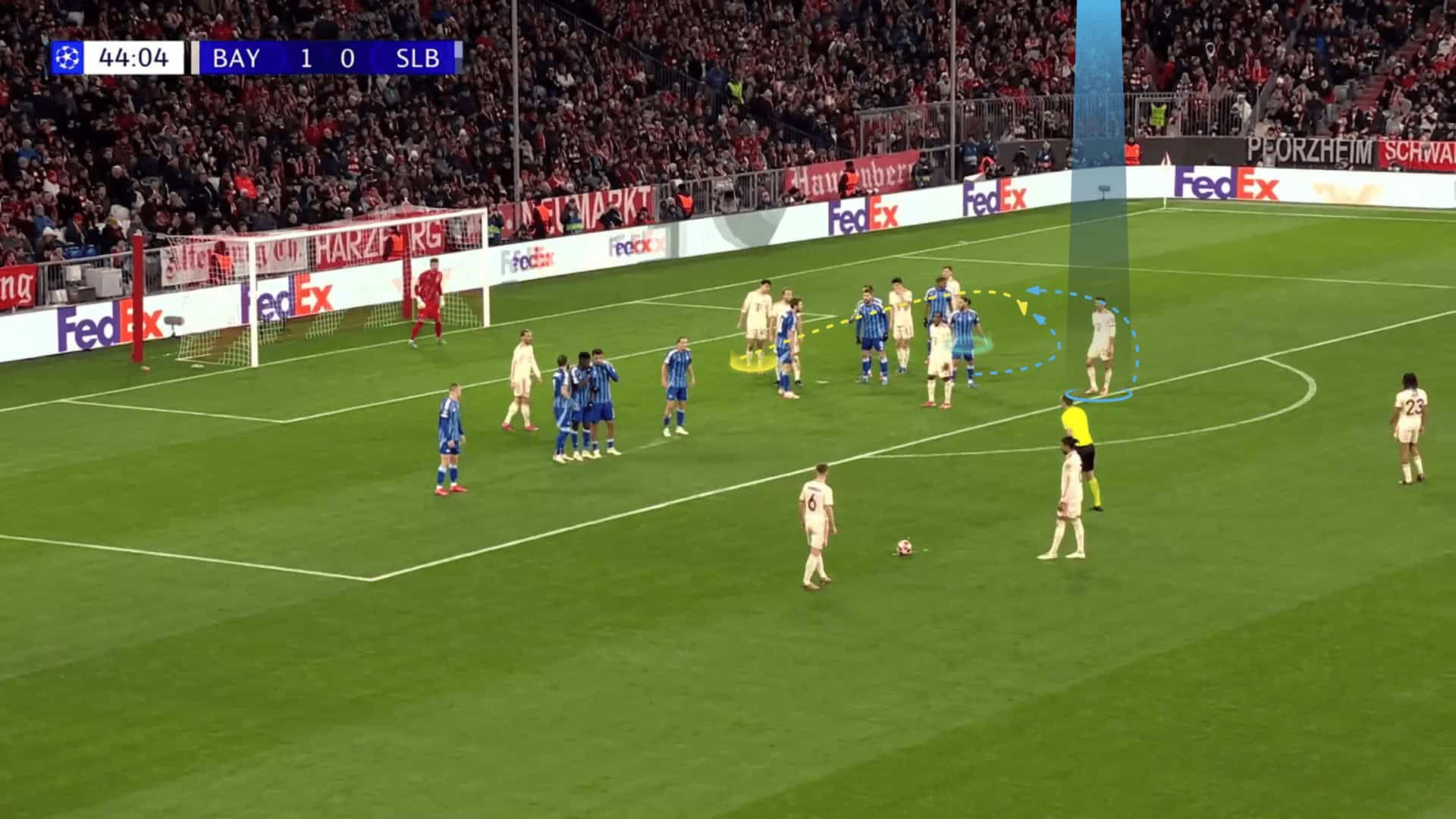
As shown below, the plan is clear.
However, the block wasn’t optimum, so the plan wasn’t completed.
Counter Ideas
Ultimately, you can ask how Inter can stop these threats!
First of all, the defenders should be aware if the ball is played quickly, even if it seems like a direct free-kick.
Secondly, the whole line should have one reference to drop and stick to it, as in this case.
— Footie Clips (@FootieClips) April 8, 2025
As shown below, the line drops together with the first zonal defender not dropping earlier and the rest of the defenders not worried and rushing to drop.
The result is that all the attackers are offside.
We can also suggest that the defenders push the attackers, forcing them to be offside (in case they decide not to drop early)
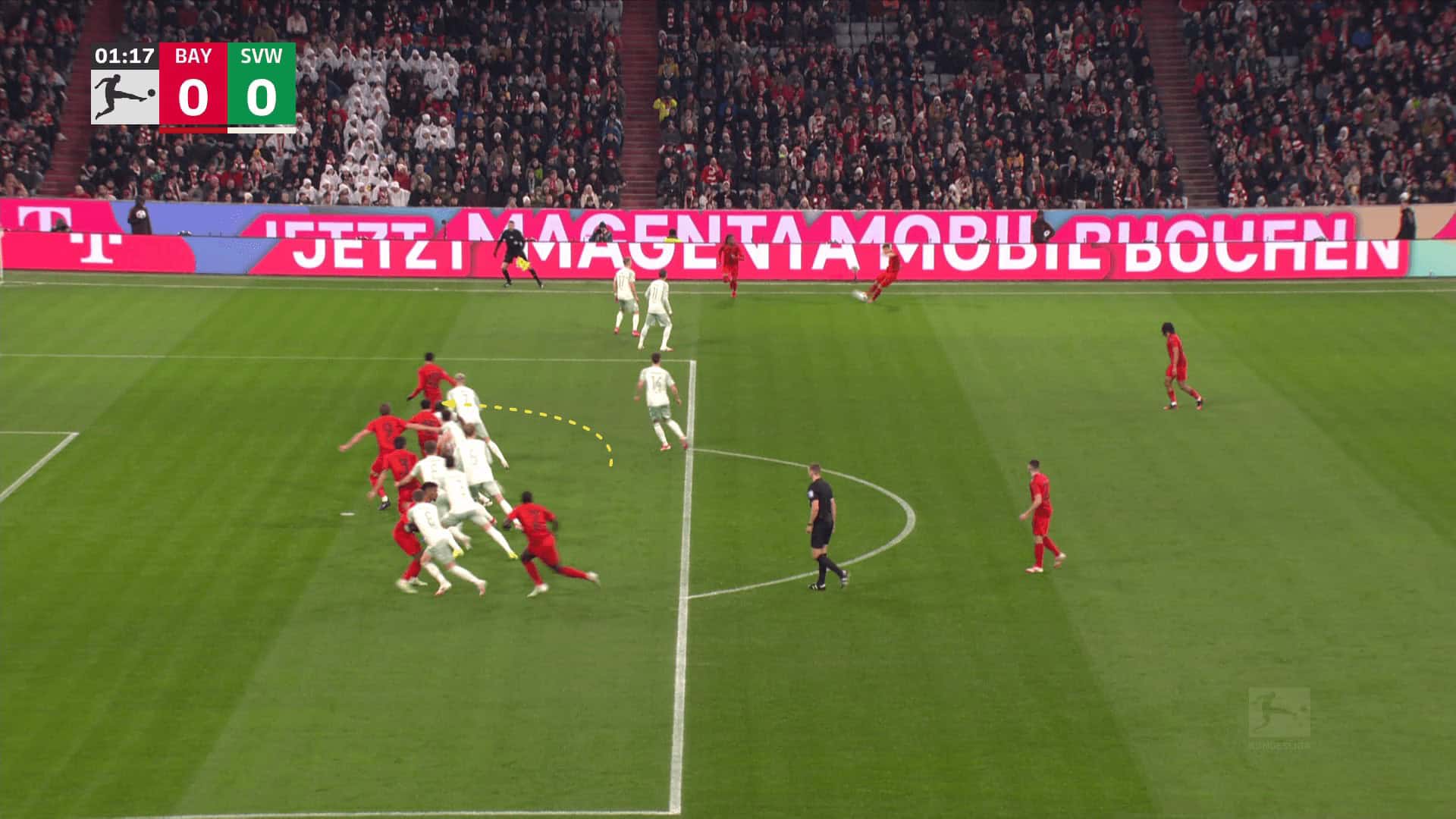
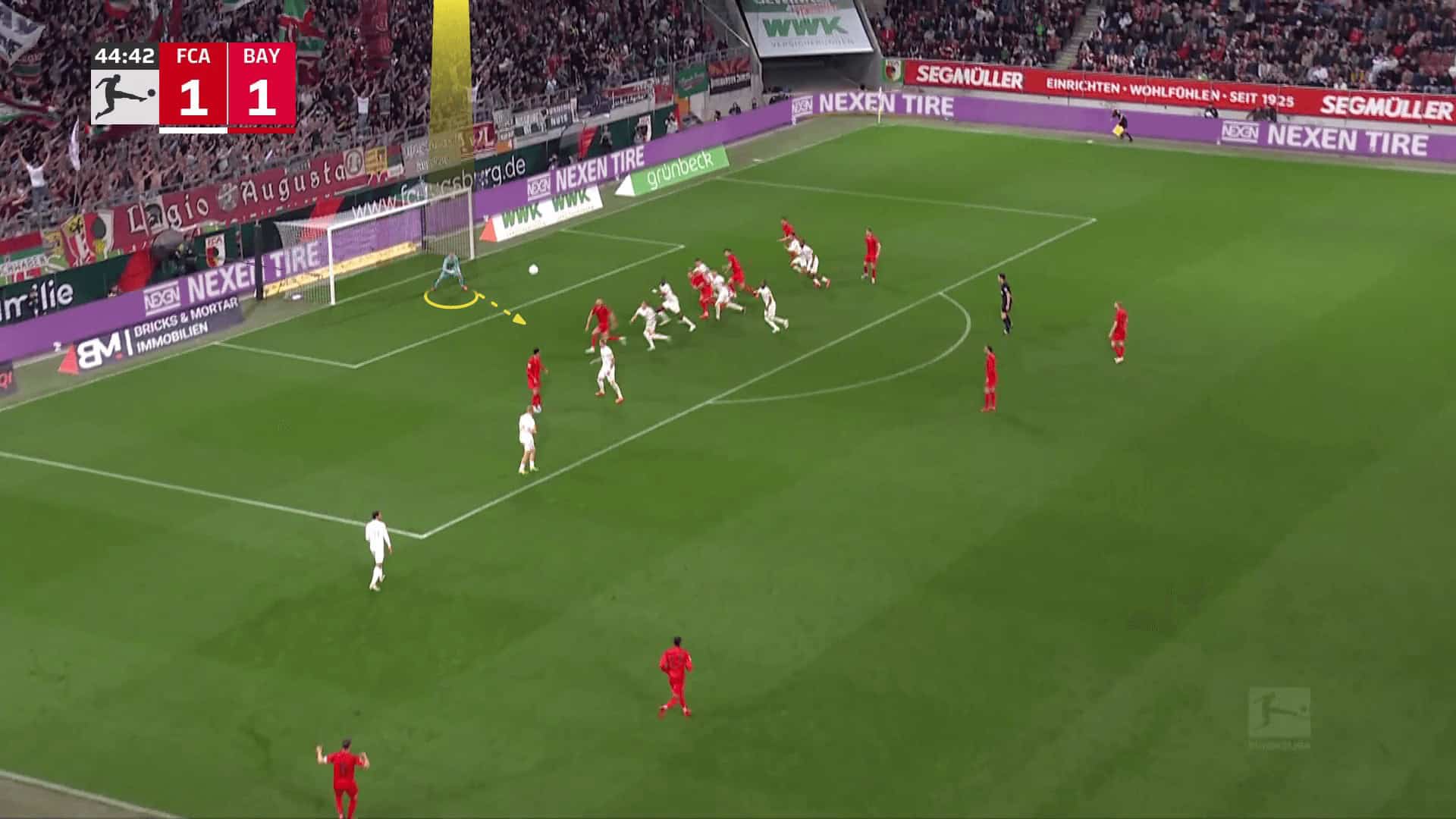
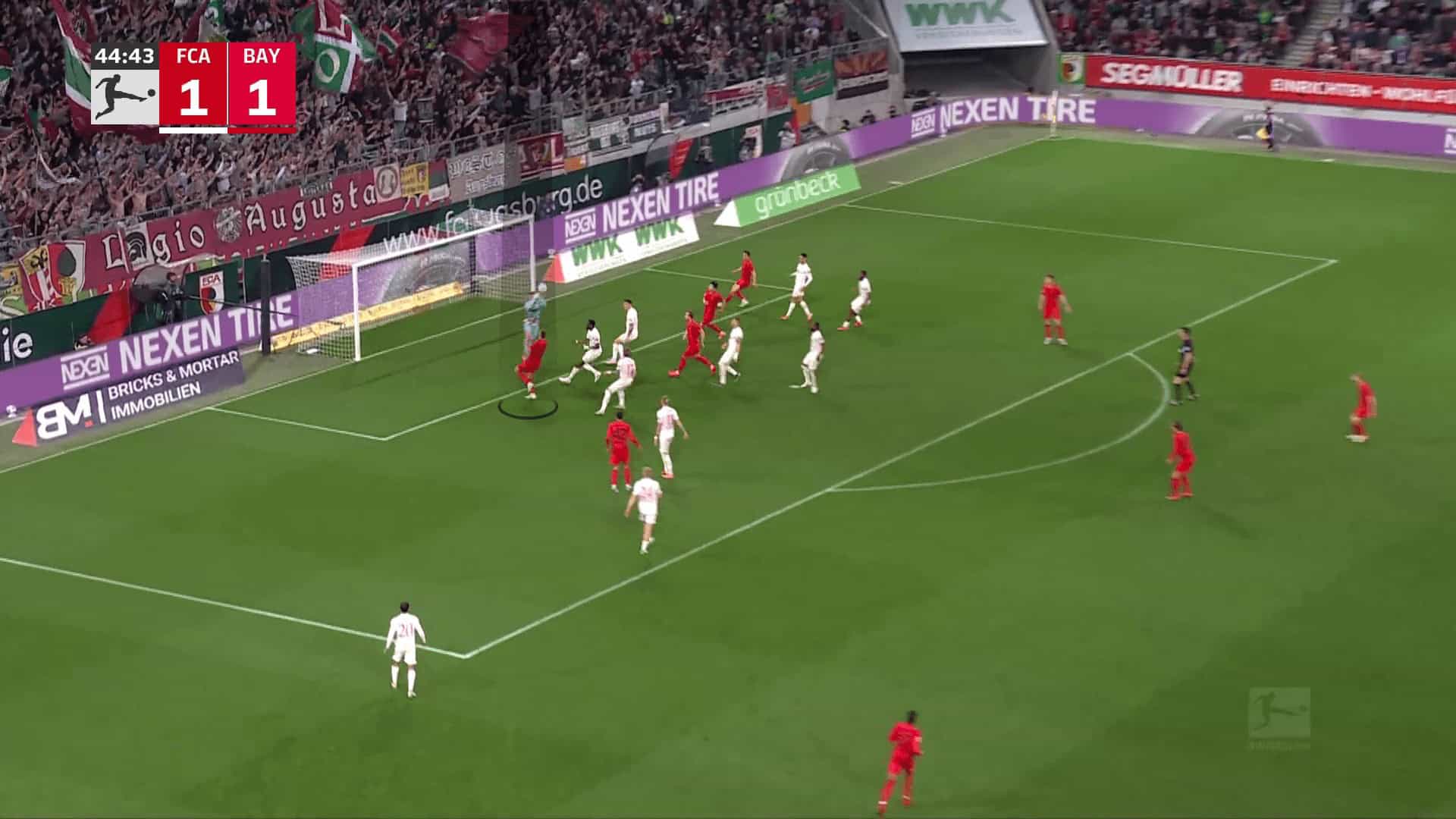
Thirdly, the goalkeeper should be brave enough to clear any possible cross.
— Footie Clips (@FootieClips) April 8, 2025
As in the two photos below, the goalkeeper solves the problem from the beginning, allowing his team to ignore the VAR offside check.
As a note, he could also take one or two steps forward from the beginning.
Conclusion
In this analysis, we have shown how Bayern Munich have been excellent at executing attacking free-kicks recently by using simple but practical ideas.
In this set-piece analysis, we have discussed their diverse tactical ideas, innovative implementations and possible defensive counter ideas.
