
Last Tuesday, Barcelona and Atlético Madrid played an exciting match in the first leg of the Copa del Rey semi-finals.
Both teams delivered an exciting match that resulted in eight goals.
The game ended in a four-four draw, taking scores level heading into the second leg.
It was very clear in this match that both teams focused heavily on set-pieces, which resulted in three goals from corners—two for Barcelona and one for Atlético Madrid.
In this tactical analysis, we will explain how both teams exploited set-piece tactics to score goals and how the tactical competition between coaches Hansi Flick and Diego Simeone played out in this aspect.
Atlético Madrid Corner Analysis
Let’s start with the visitors, Atlético Madrid.
Despite the media focus on Barcelona’s two goals, Diego Simeone’s side was good.
They scored their first goal with a brilliant short corner in the game’s first minute.
— Footie Clips (@FootieClips) February 28, 2025
As shown in the photo below, Barcelona defend with a man-marking defending system with only two zonal defenders (green), a short-option defender (yellow) and a rebound defender on the edge of the box (orange).
On the other hand, Atlético Madrid starts with six players in the box, two players on the edge of the box, a counterattack defender in the back, and the taker.
Atlético Madrid’s first player on the edge of the box runs quickly toward the taker to receive the ball and play it back to the taker, who will send the cross from a nearer position.
This exploits the quick 2v1 situation against the yellow short-option defender because the first zonal defender should take a long path to help.

In the photo below, we focus on the second part of the plan inside the box so that we will focus on the six attackers inside the box.
The first is Julián Alvarez (blue), who will score the goal.
He will move to the empty far post while the second player (pink) returns to stand on the edge of the box for the rebound, evacuating the targeted area by this trick and dragging a marker with him from the beginning.
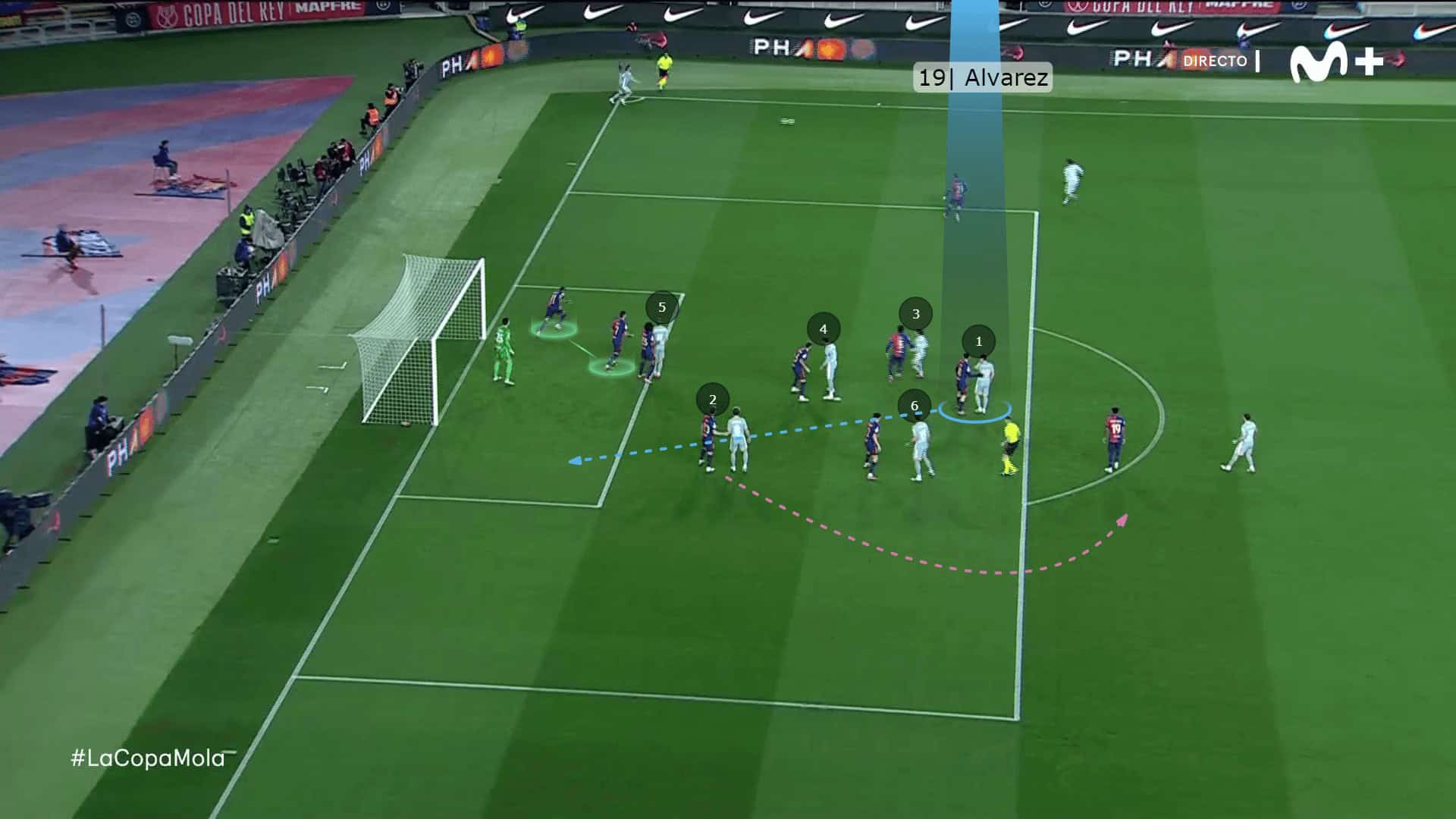
It’s clear below that the second player’s man marker (pink) is dragged a little forward and doesn’t know what to do.
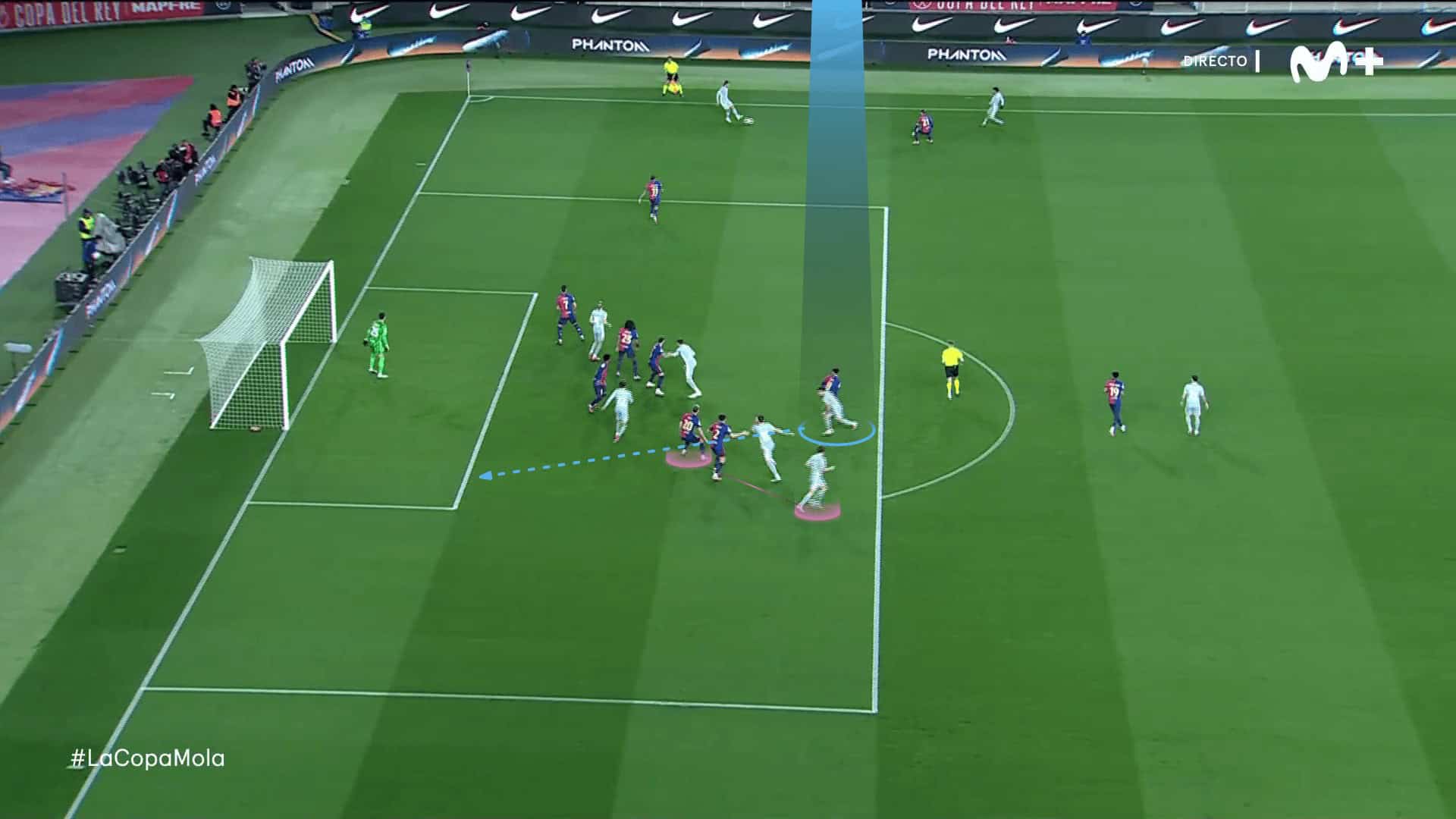
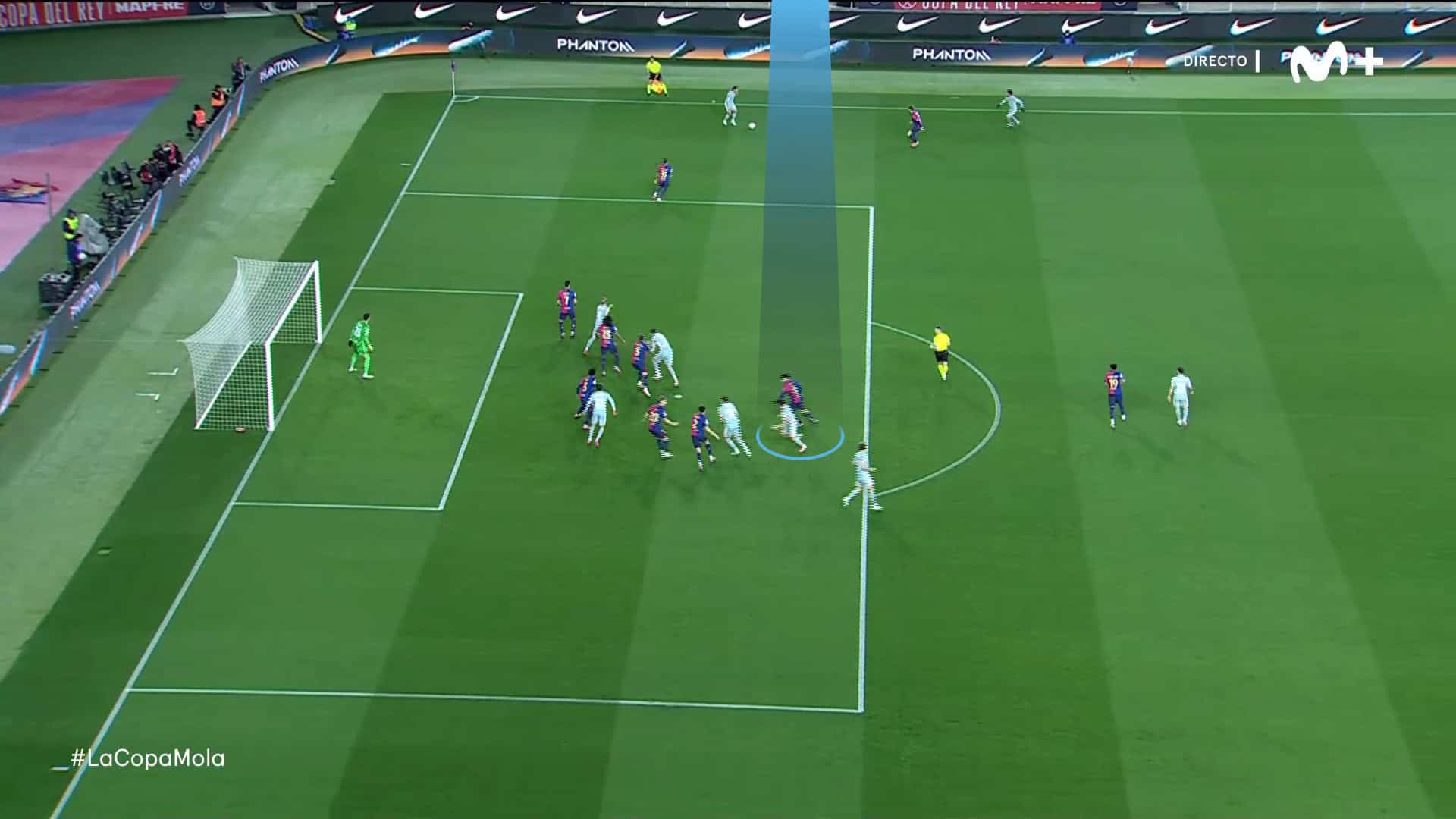
As shown below, Julián Alvarez’s late starting position and his movement from the middle to the far post while the ball is moving make it difficult for Pedri to track him and the ball simultaneously.
Therefore, Alvarez can escape from his blind side while tracking the ball’s movement and run to his targeted area, which he knows well, while Pedri is forced to turn around and keep running behind him, trying to catch him, as shown in the two photos below.
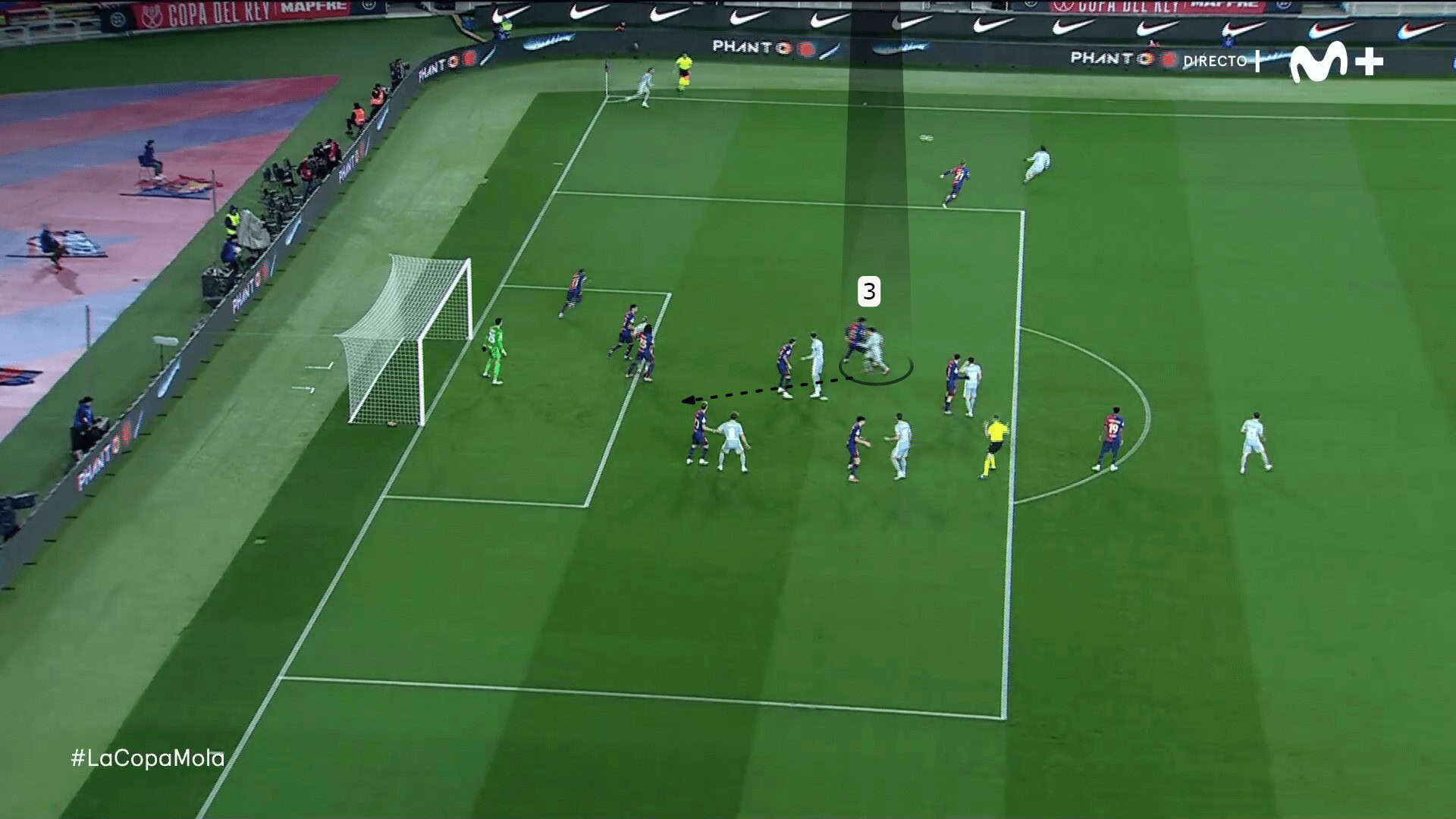
As shown below, the third player will also go to the area ahead of the far post in case the ball is underhit.
To ensure that the second zonal defender is out of the game, the fourth and fifth attackers make these runs: one runs ahead of him to drag him forward, while the second runs to his back to ensure that he won’t step back, as shown below.
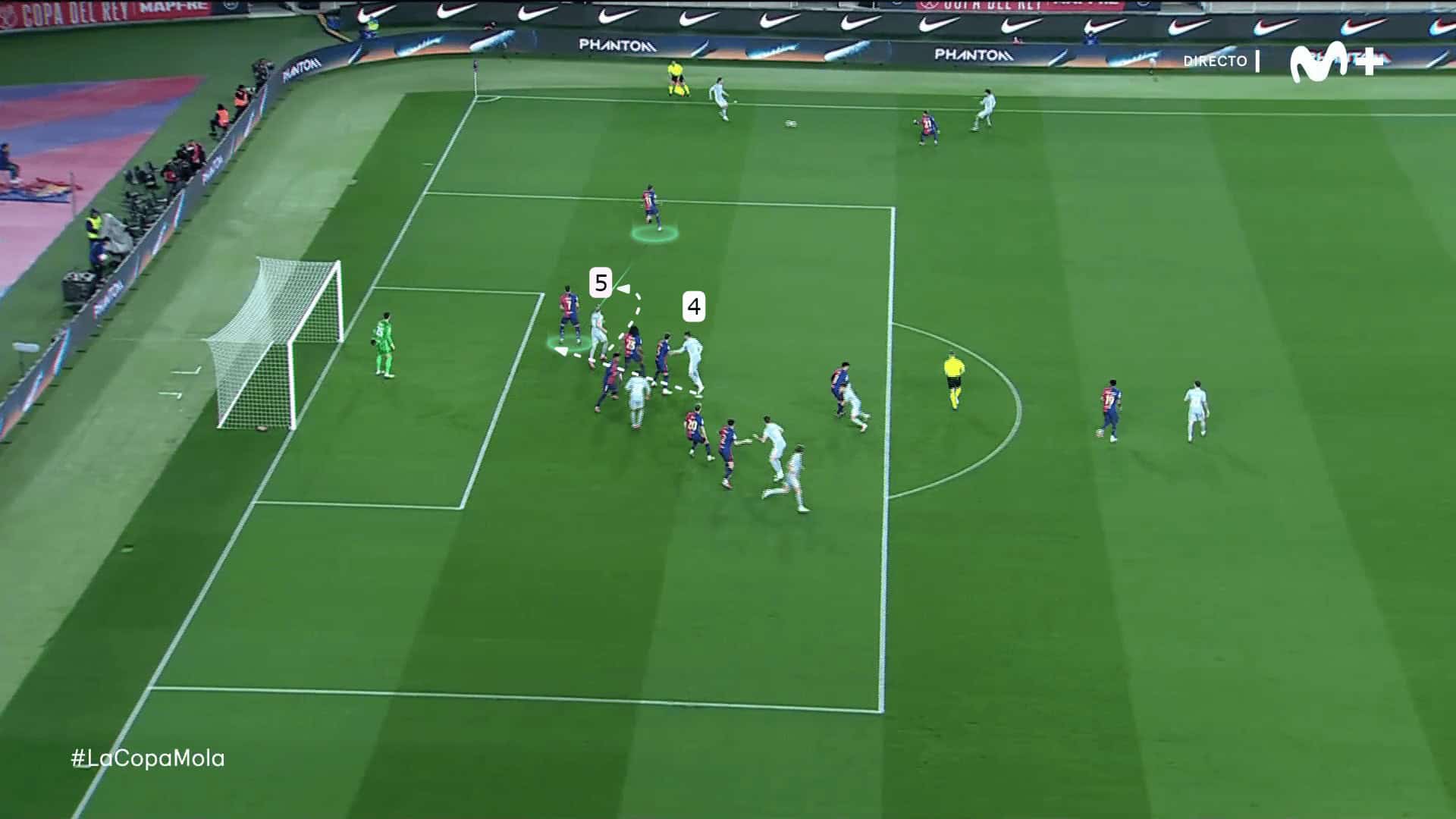
The sixth player runs to the area behind them, having a greater sight angle than his marker and a long path to run before his jump to flick the ball to the far post.
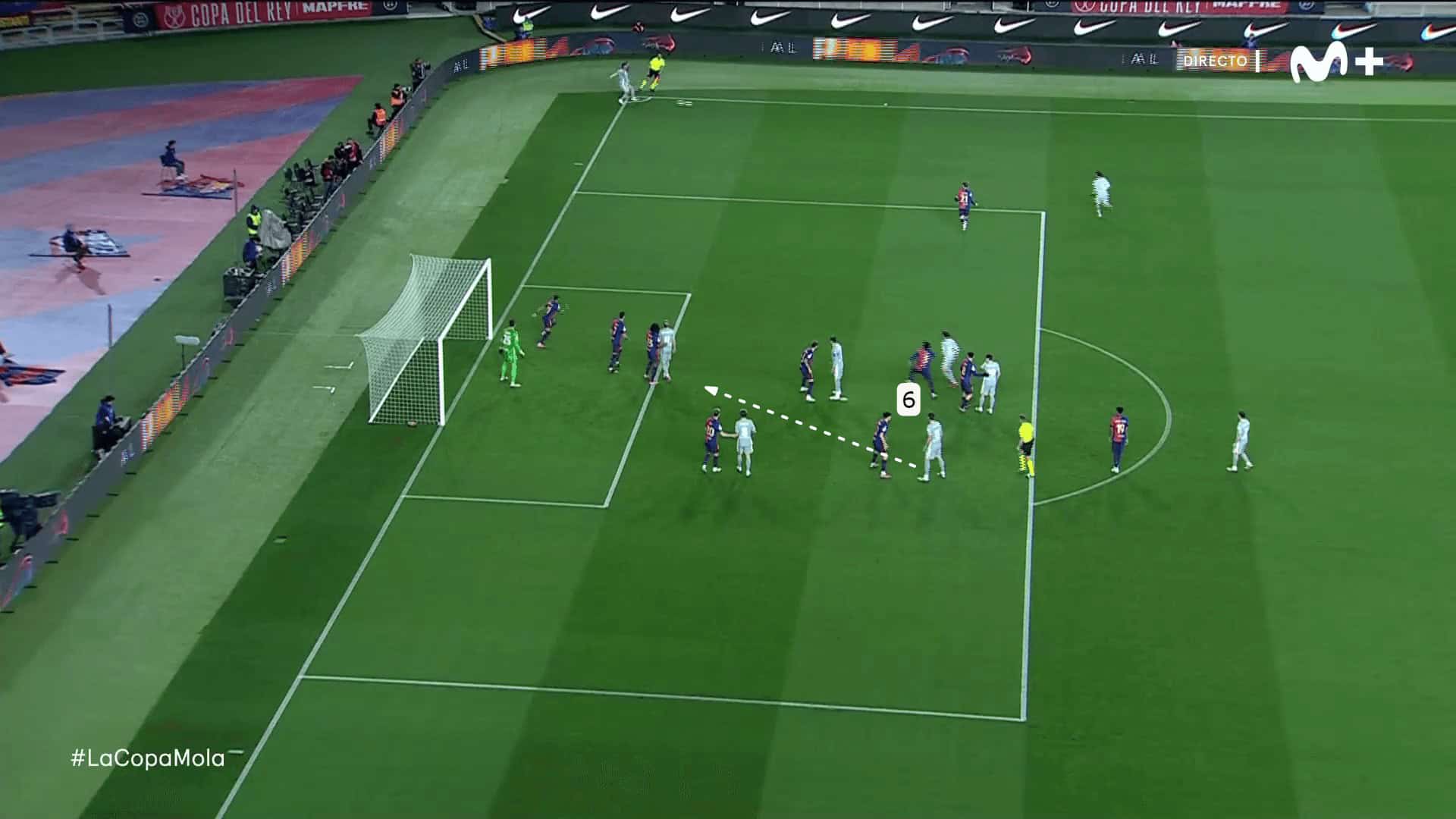
As shown below, the plan is completed.
Maybe they didn’t target this player at first and wanted to target Alvarez directly.
However, the purpose of these movements is to frame the ball’s path so that you will see all the attackers in the ball’s path be ready regardless of the cross accuracy.
Finally, we should also say that such a cross is too difficult for the goalkeeper to claim the ball because it comes from a far point different from the normal in-swing cross from the beginning.
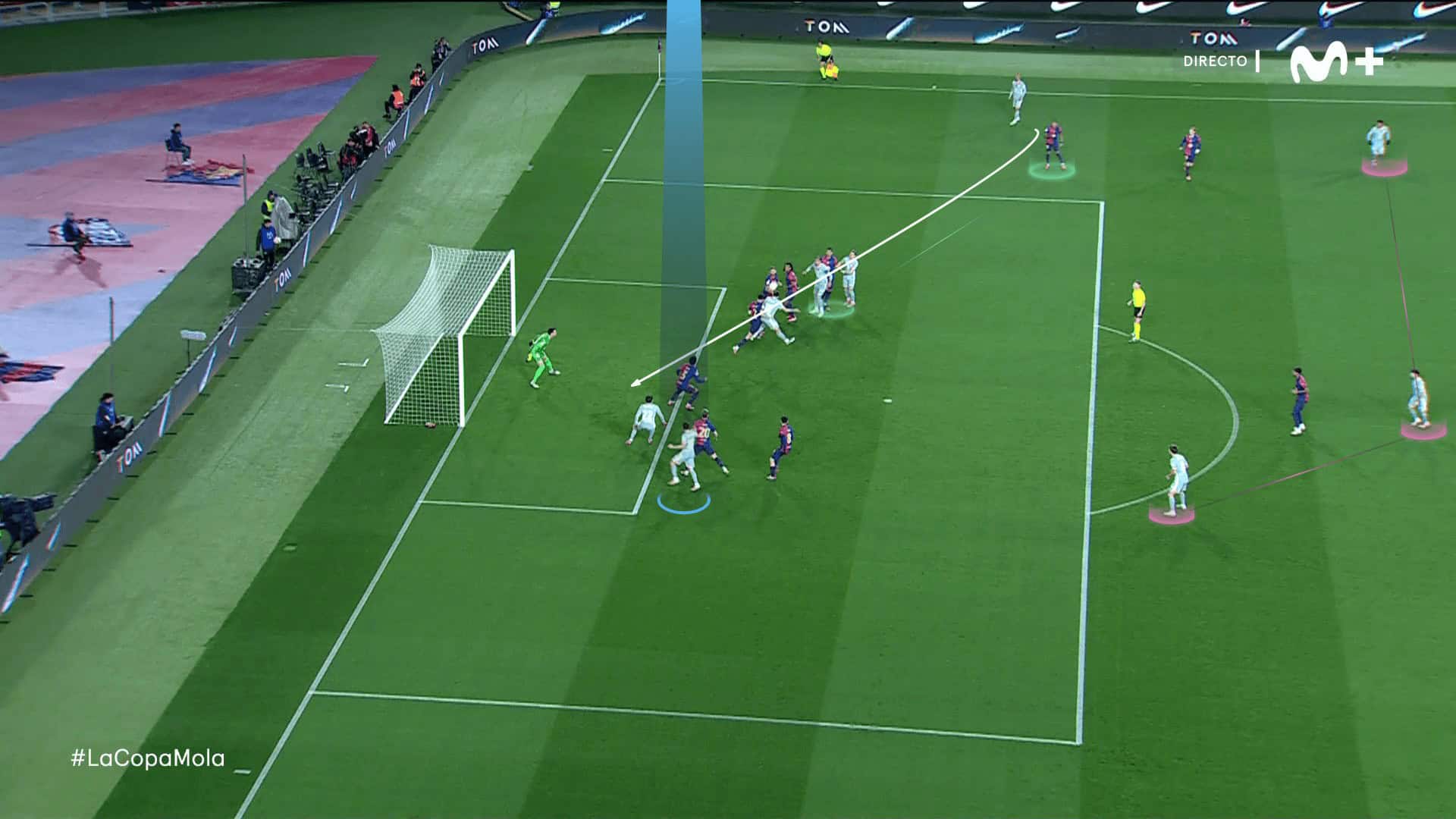
It wasn’t the first time Atlético Madrid implemented this idea; they did so many times and even scored, as shown in this analysis.
— Footie Clips (@FootieClips) February 28, 2025
However, Barcelona preferred to prioritise defending the box, in contrast to Atlético Madrid, who prioritised defending Barcelona’s short corners.
Let’s see how!
Barcelona Corner Analysis
As shown in the corner below, Atlético Madrid defended with three zonal defenders in their last match against Valencia.
Still, they defend with just one zonal defender, so we should first know what caused them to eliminate two zonal defenders.
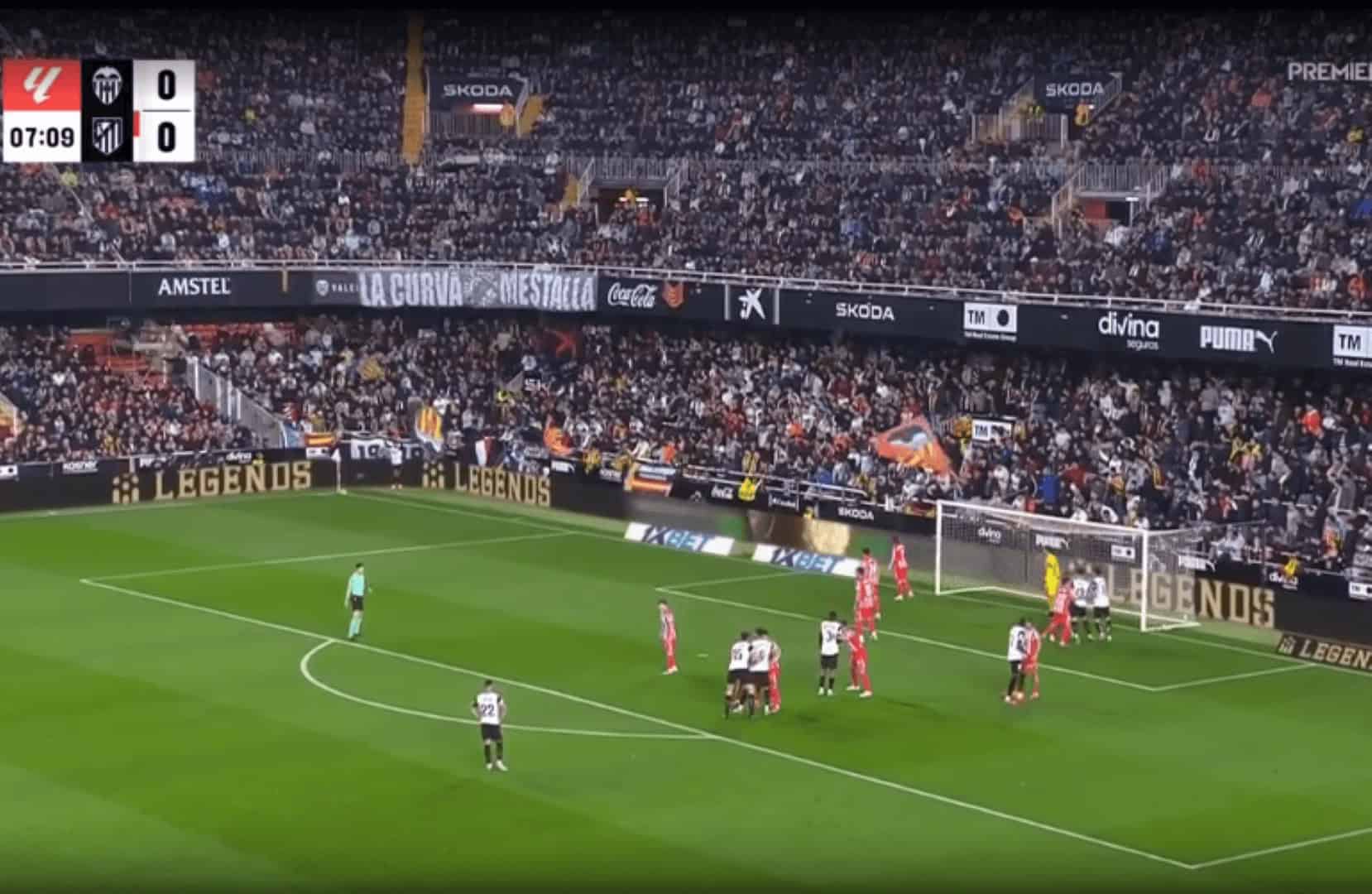
The reason is that Barcelona often exploits short corners, having many skilful players like Lamine Yamal, Raphinha, Pedri, and sometimes Frenkie de Jong around the ball.
So Atlético Madrid decided to kill their short corners initially, as we will see.
Indeed, Barcelona gave them a taster by using short corners at the beginning of the game.
— Footie Clips (@FootieClips) February 28, 2025
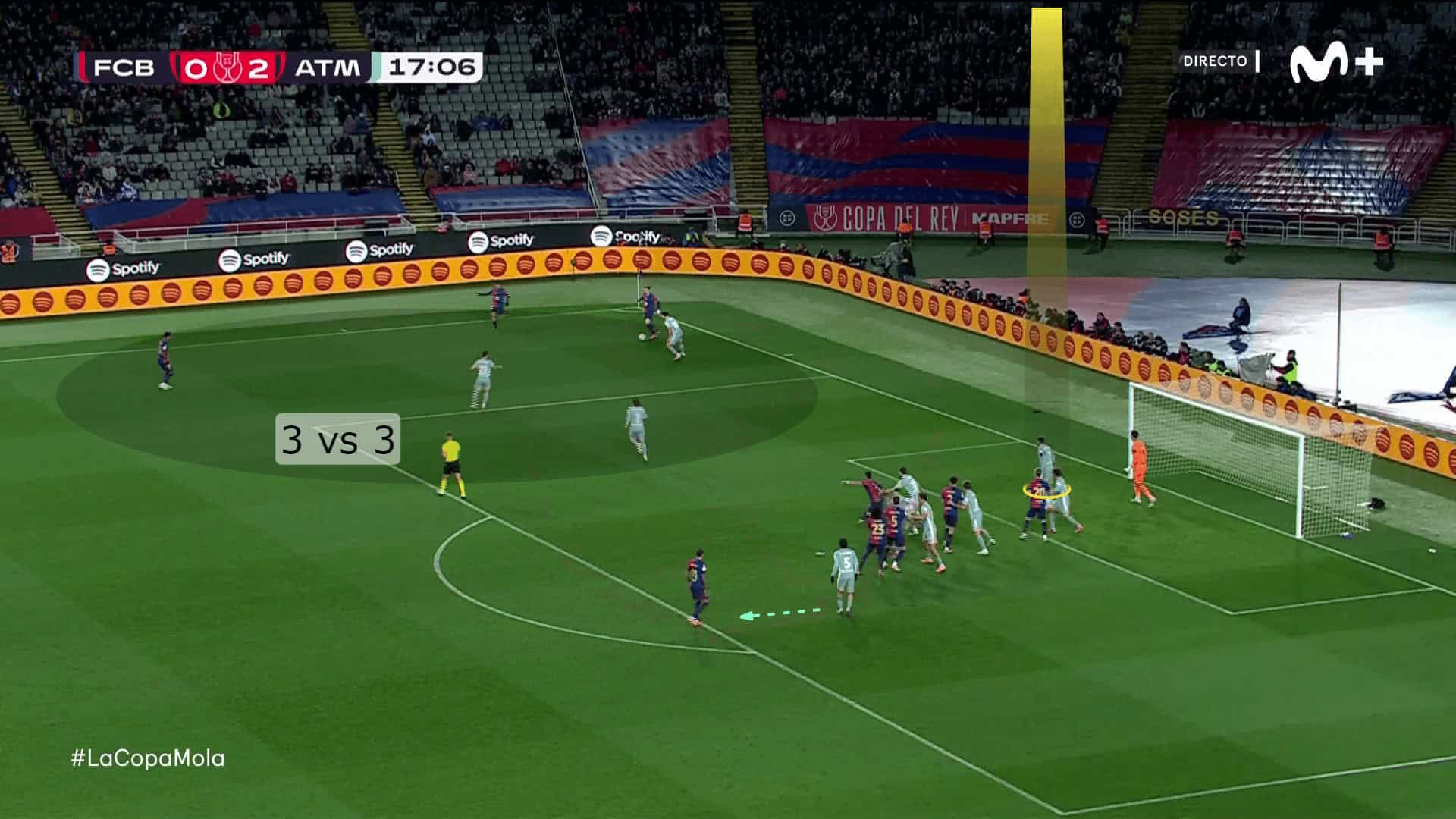
As shown below, Atlético ensures that they have three players to defend the short corner against Barcelona’s three short-option players, in addition to having a player (green) near Raphinha on the edge of the box.
This means that Diego Simeone’s team had just one zonal defender (yellow) and five man-markers inside the box throughout the game.
When you look at the first goal Barcelona scored from corners, you will find that Barcelona used four players to surround the short and rebound area, taking the attention of four players from Atlético Madrid.
— Footie Clips (@FootieClips) February 28, 2025
As shown below, it also ended with five man markers and just one zonal defender standing on the near post, which totally evacuated the middle and far post that Barcelona targeted.
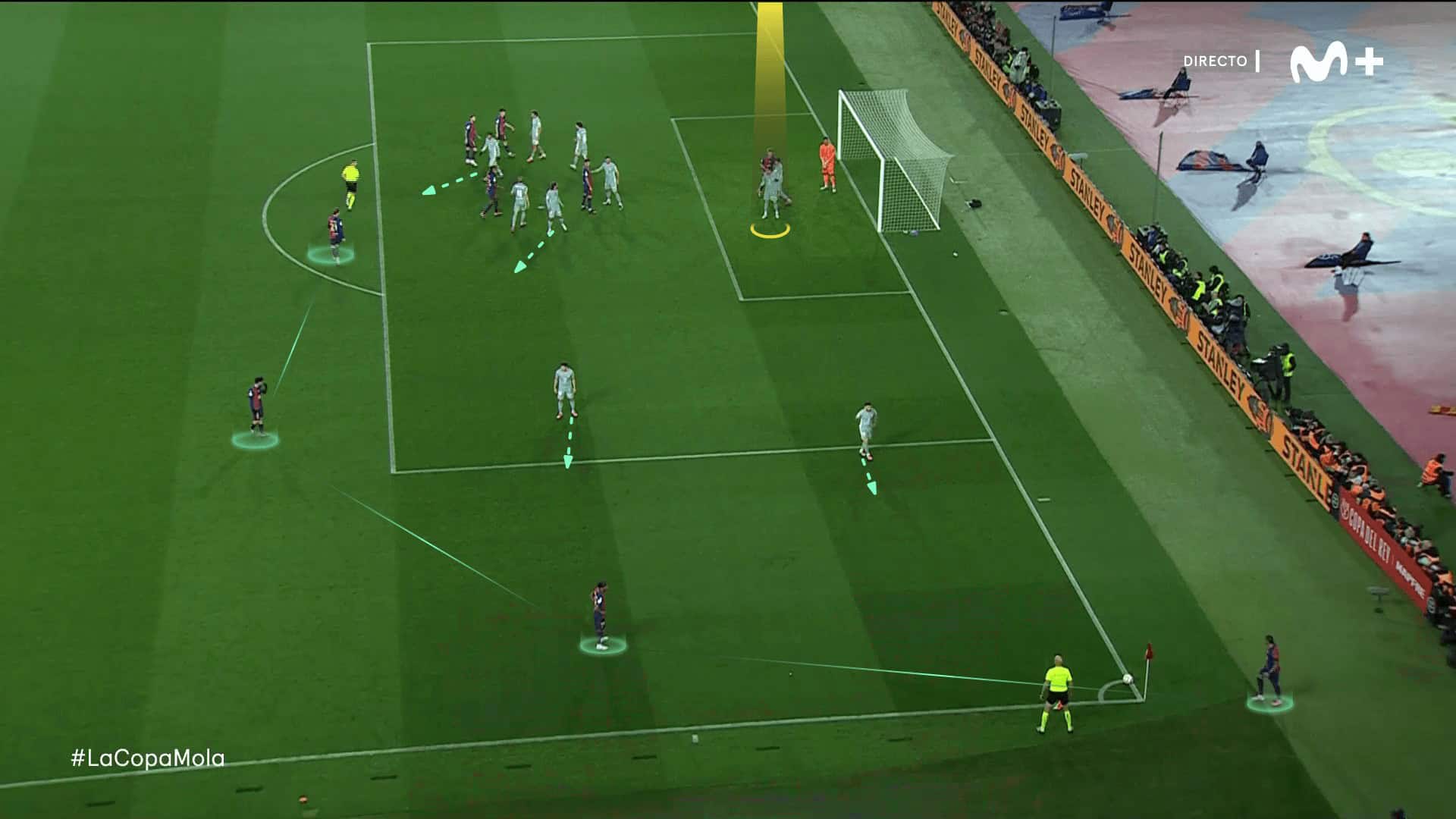
Another player does this decoy run to ensure they take the attention of the first zonal defenders dragging their man marker, too.
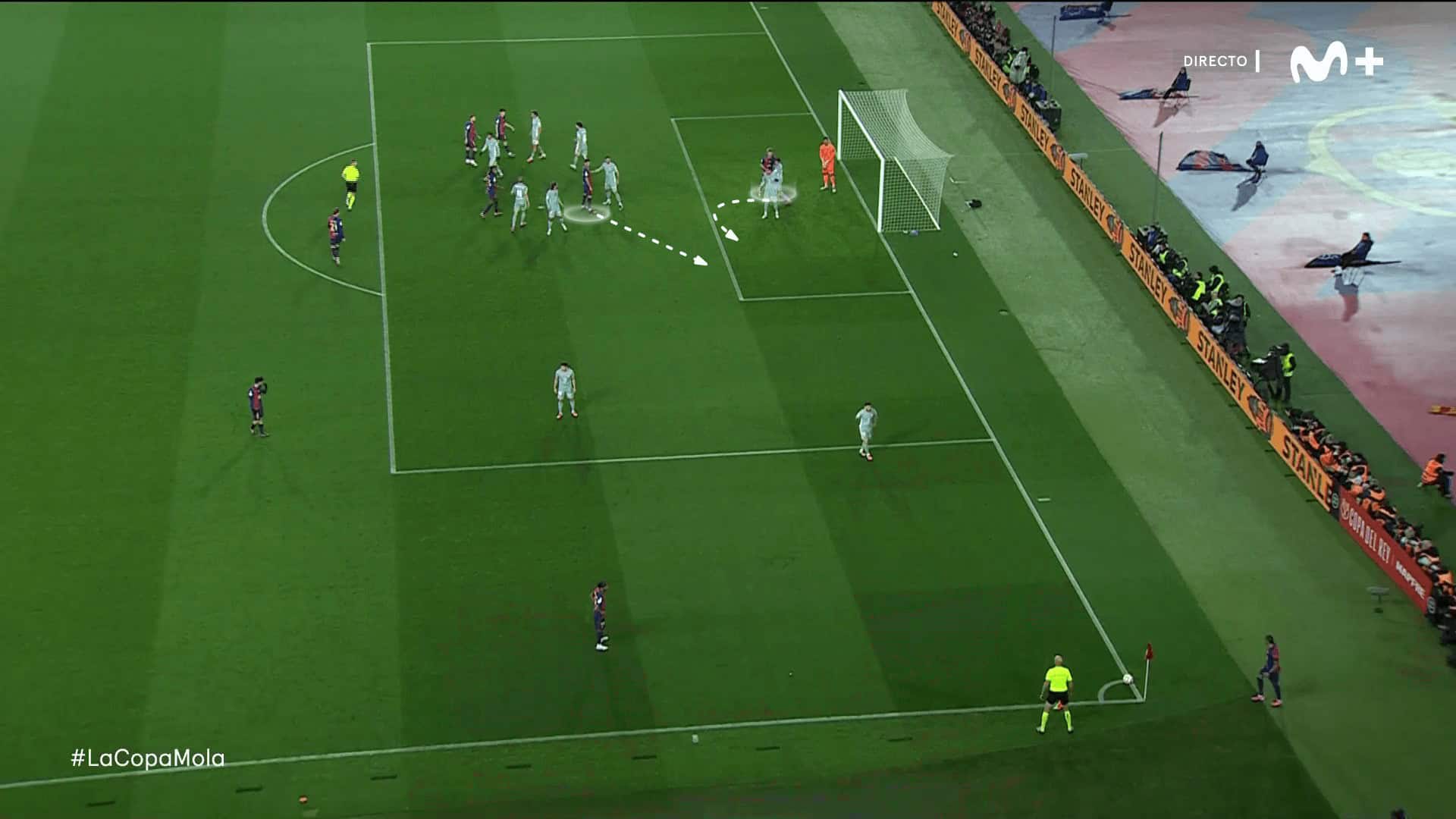
After that, two attackers use the principle of underloading, leaving the targeted area and dragging their two-man markers with them, leaving the targeted player alone on the far post, as shown below.
However, how did the targeted player (Pau Cubarsí) overcome his man marker?
As shown below, starting from a far position and then going to the far post against the ball’s direction during its movement means the man marker can’t track the attacker and the ball simultaneously.
Hence, the man marker tries to run by his back while the targeted player can take off to his assigned targeted area.
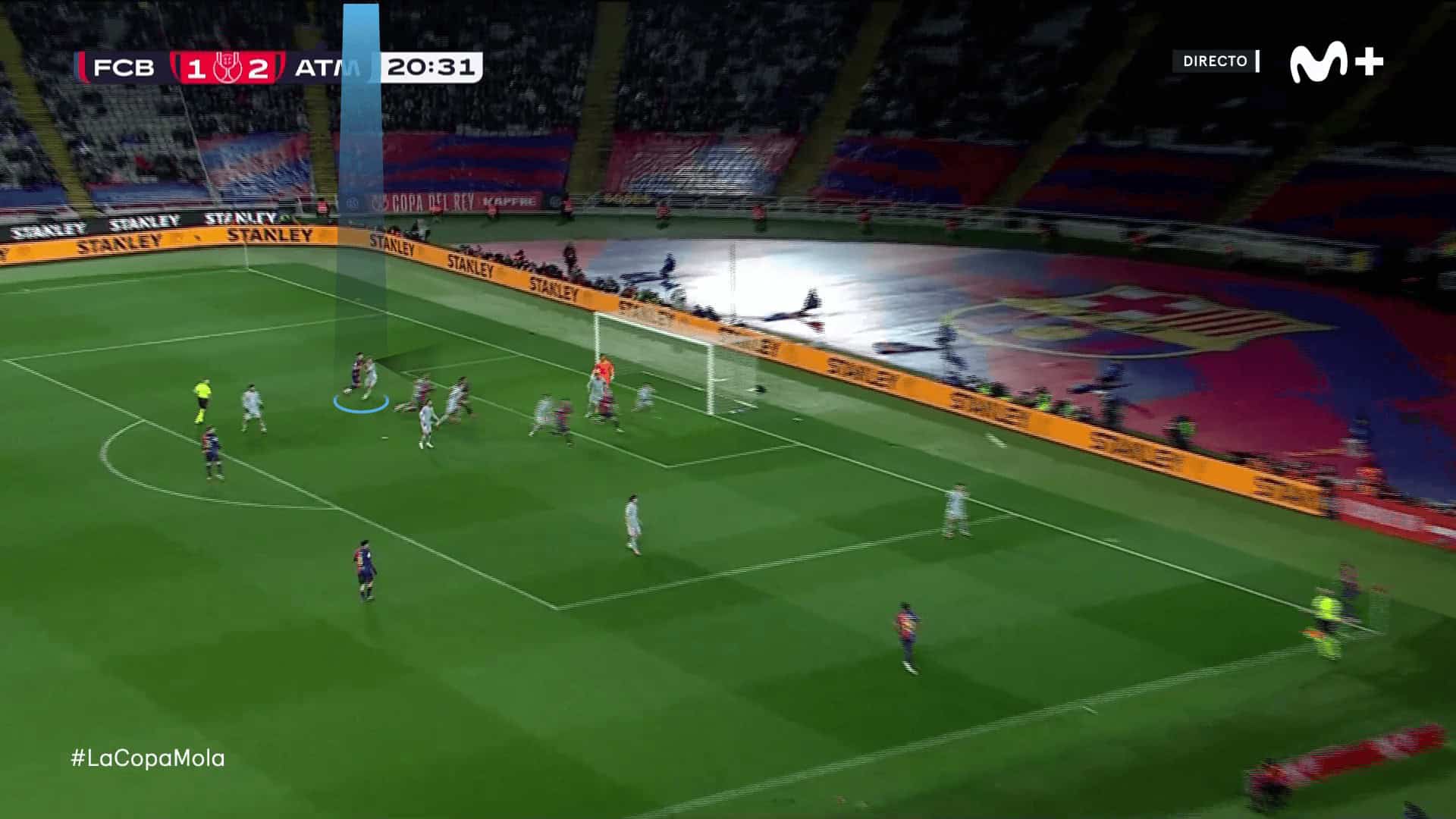
In the end, the attacker is the decisive one in this case.
He sees the whole scene in front of him and can measure the ball jumping from the defender’s back, as shown below.
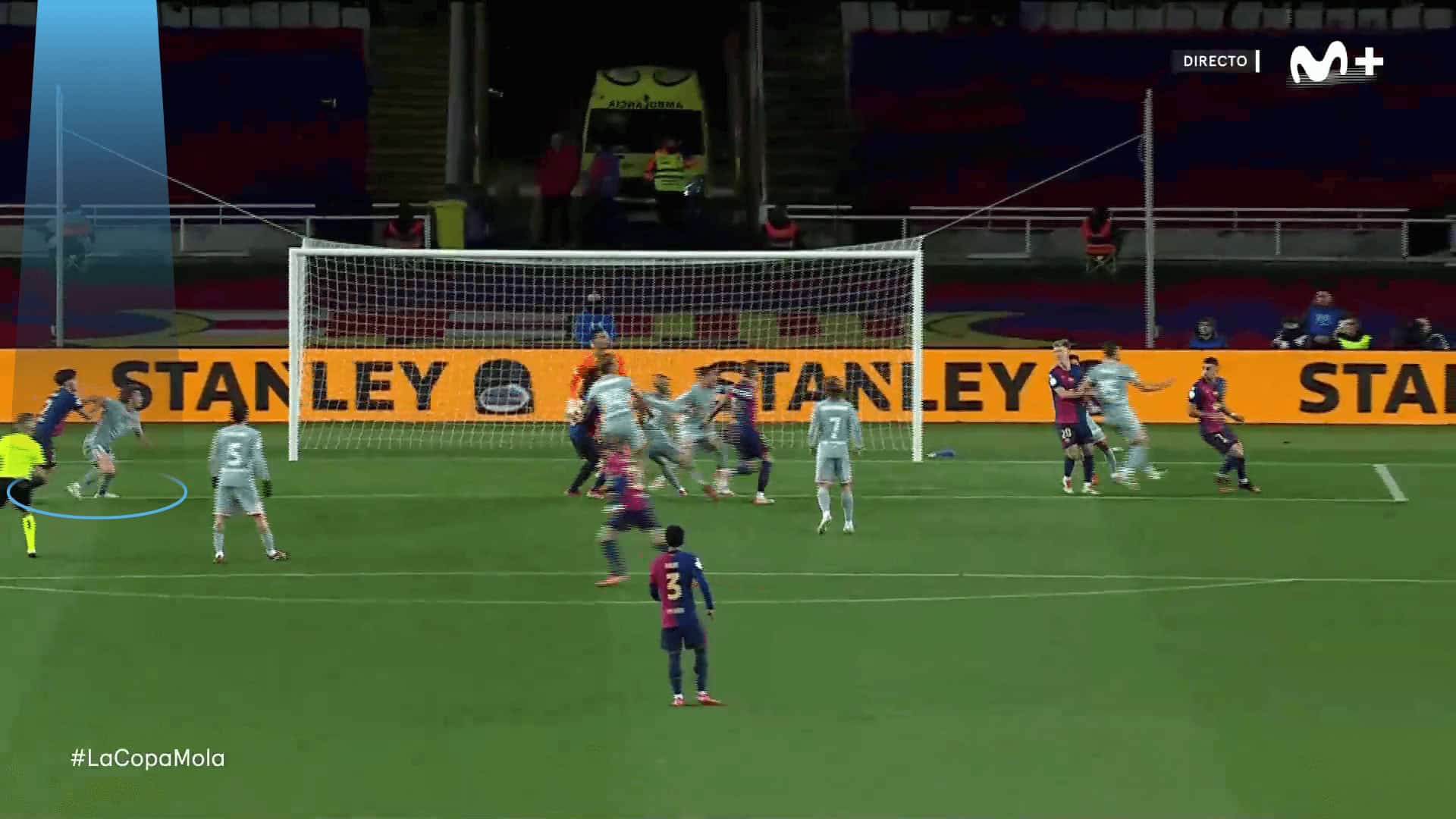
The second goal from corners that Barcelona scored is also the same idea with some small variations.
— Footie Clips (@FootieClips) February 28, 2025
It wasn’t only targeting Iñigo Martínez instead of Pau Cubarsí and some other small variations.
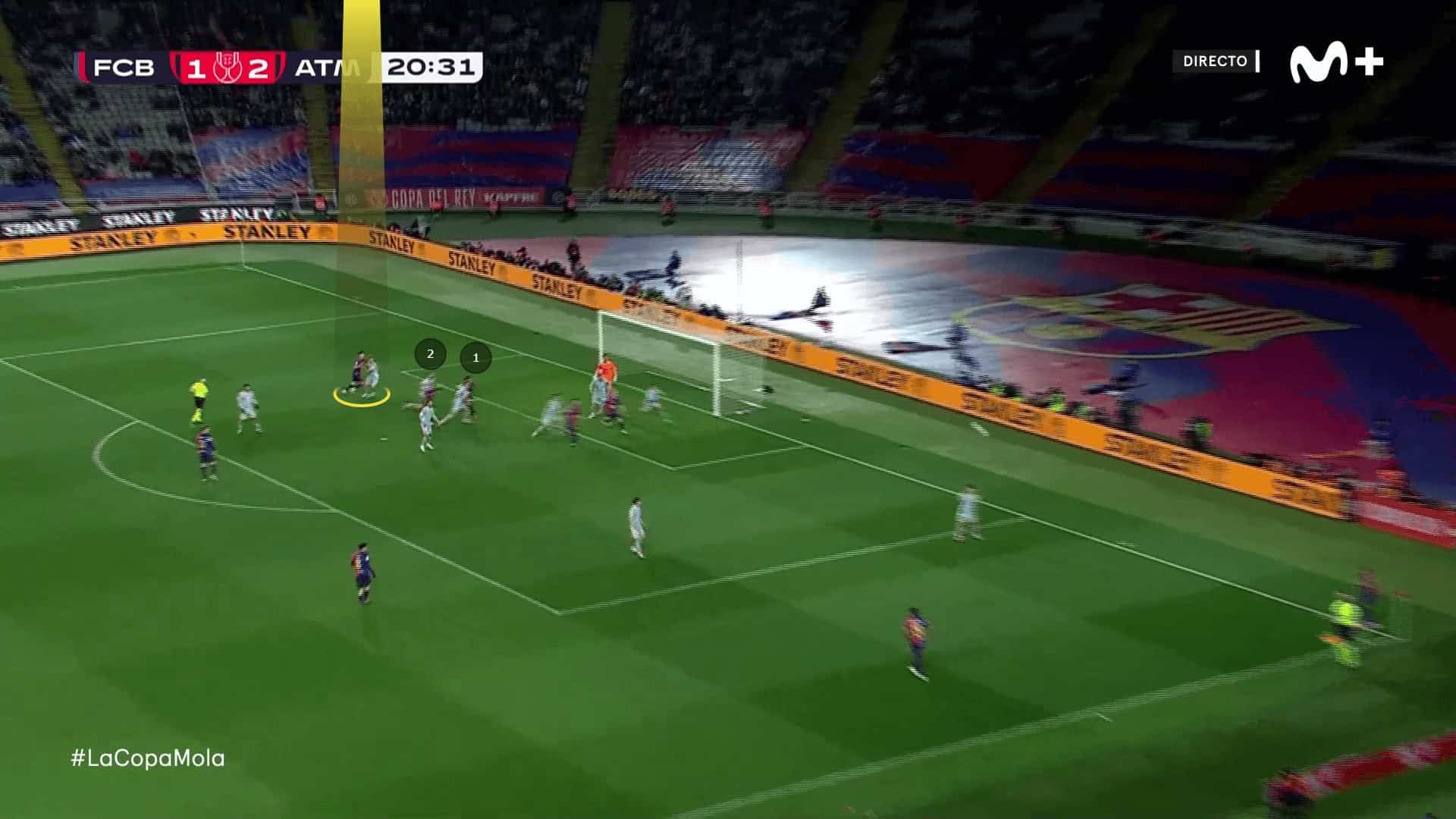
As shown in the photo below, the same four Barcelona players around the box are still here, but the player next to the goalkeeper will still stand to take the goalkeeper’s attention and ensure that he is out o the goalkeeper’s way in case he decides to claim the ball this time.
He will also block his marker, preventing him from going to the targeted area after realising the idea and the cross path.
This leaves the first zonal defender to the two numbered attackers, who fake runs toward the near post to take the zonal defender’s attention.
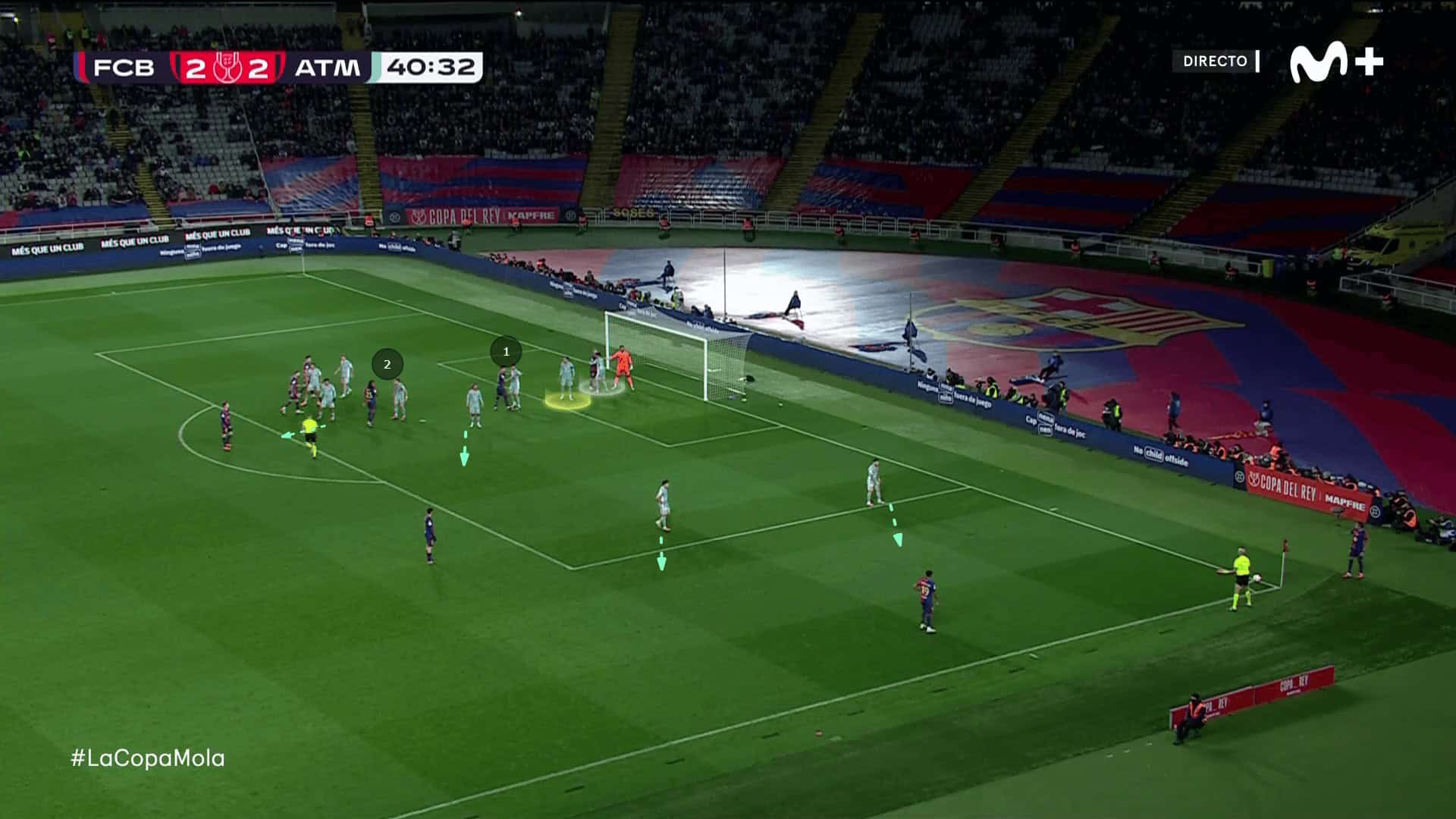
Now, we come to the most important part of the plan: Pau Cubarsí’s screen to free Iñigo Martínez, the targeted player.
Note: In basketball, a screen blocks your mate’s man marker to free him because he is usually the targeted player.
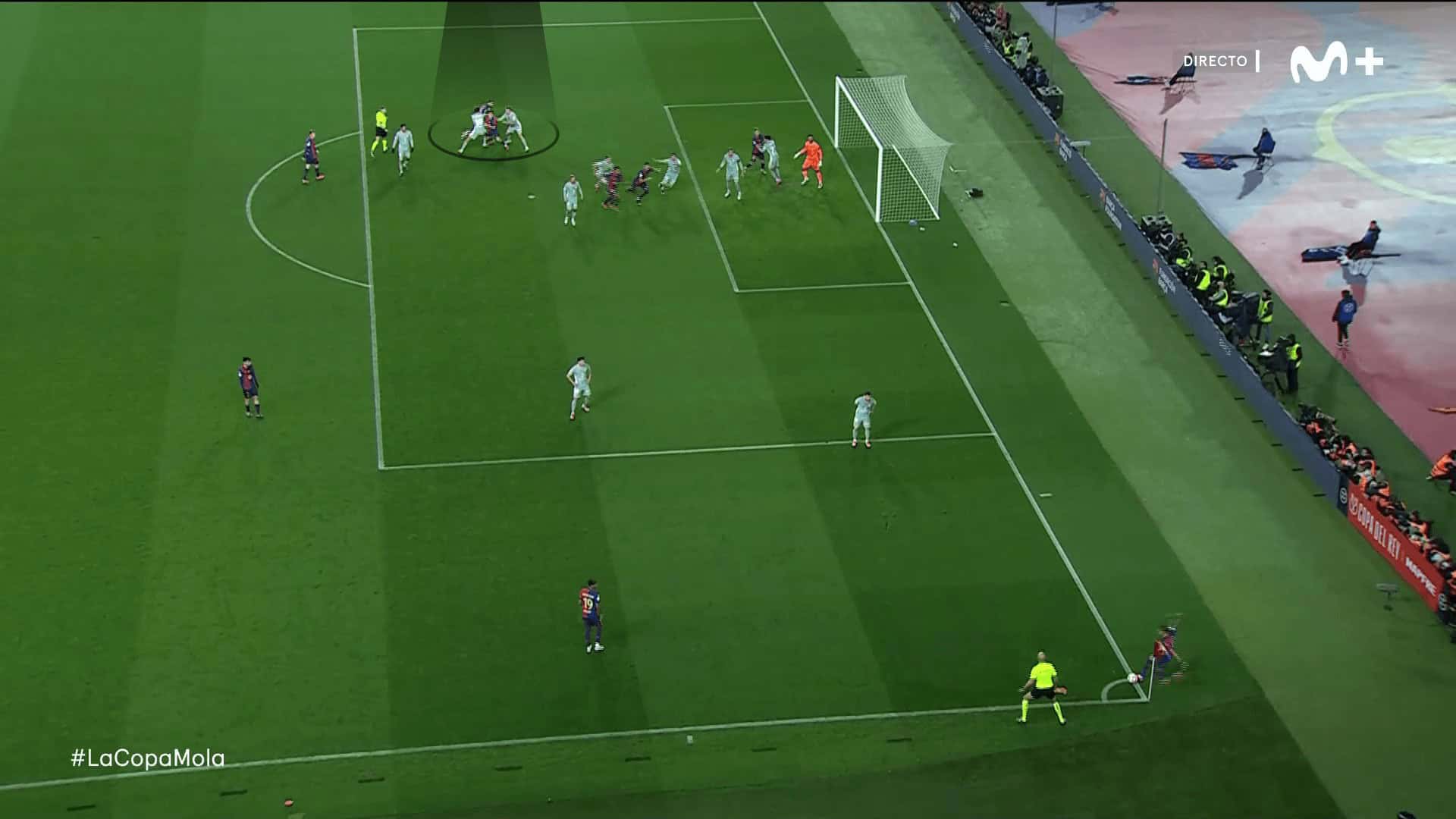
As shown below, the two players start near each other and close vertically, so when Martínez do this curved run to the outside, his marker will turn around and find Cubarsí in his path.
This accidentally makes the screen sound in the beginning, showing that the marker is the one who goes toward Cubarsí, not the opposite.
Of course, Cubarsí needs to hold him, but he needs to do that just for a second as the marker turns around, trying to avoid the foul as much as possible.
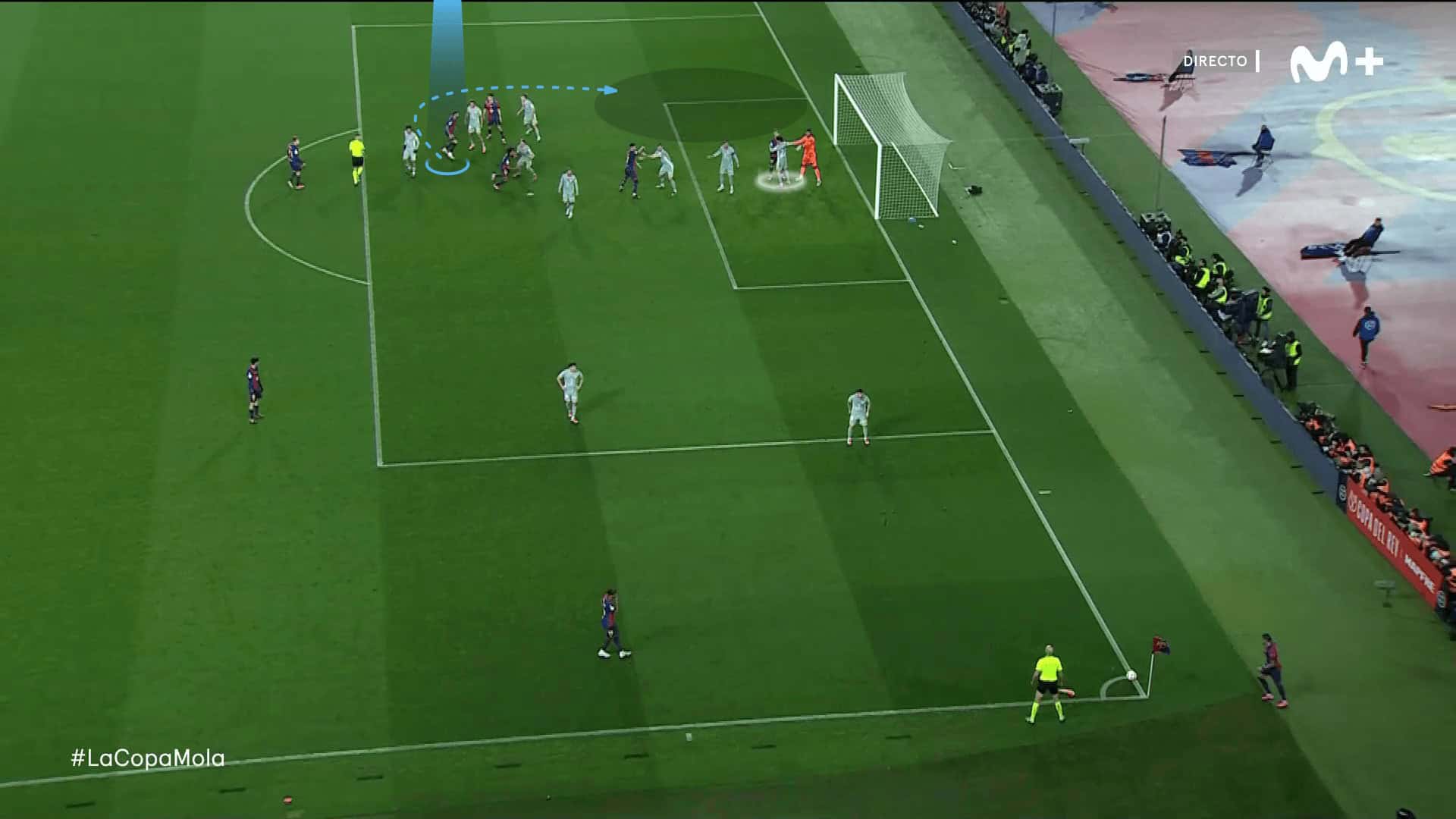
As shown below, Cubarsí keeps his block (screen) for a second to ensure the marker doesn’t go with the targeted player.
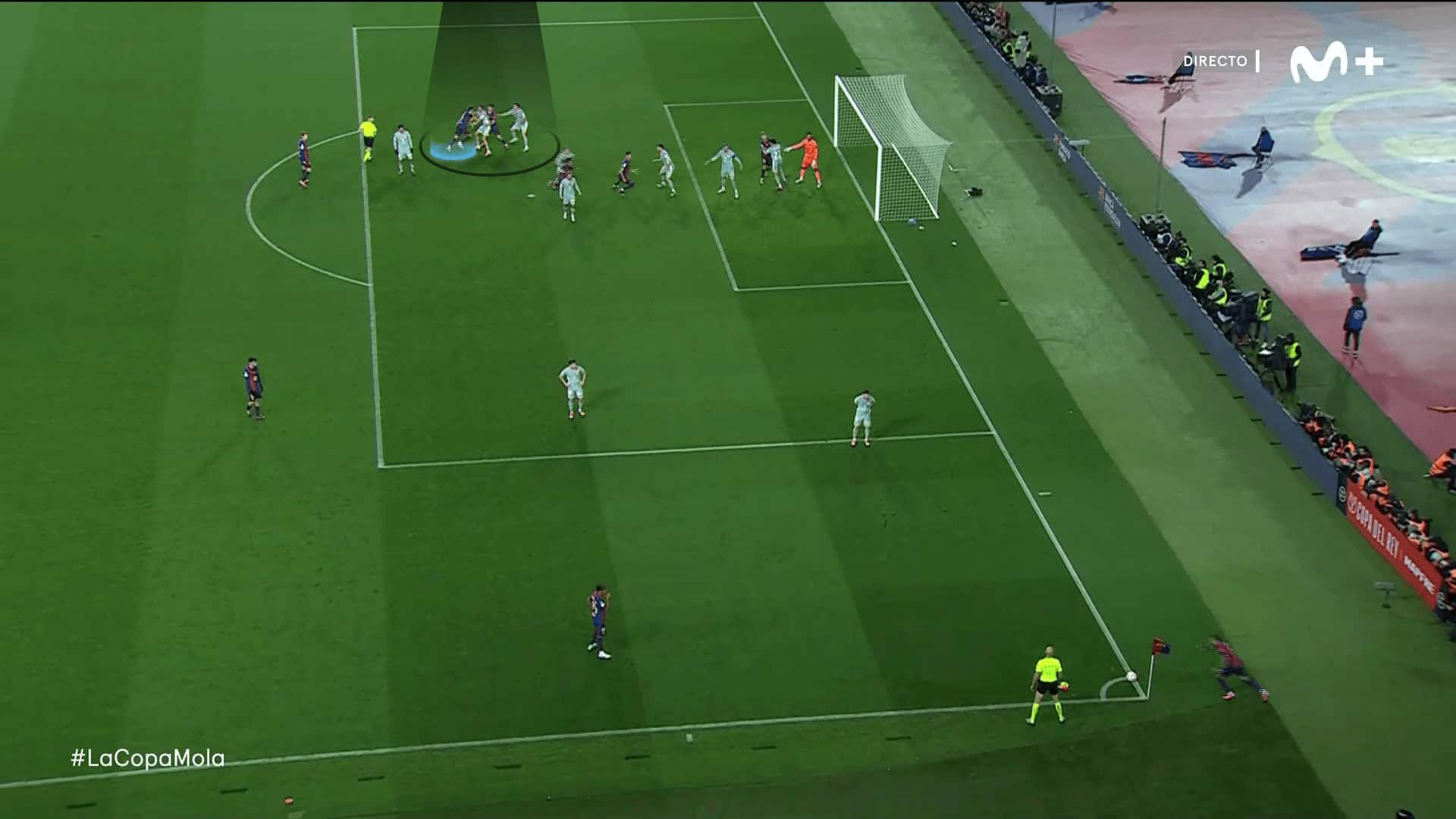
The second thing we want to mention is that this type of movement from inside to outside forces the marker to turn around, which causes him to lose contact with the ball, as shown below.
The result is that the targeted player is free at the back, going to score an important goal.
Conclusion
In this Copa del Ray tactical analysis, we highlighted how Barcelona and Atlético Madrid utilised set pieces to score in such an important match.
In this set-piece analysis, we have explained how each coach built his strategy around set pieces to exploit the opposing team’s defensive weaknesses, resulting in an exciting spectacle on all fronts, including set pieces.
