
US Catanzaro are one of the most interesting teams making an effort to utilise set-pieces in Italian football this season.
The movements they make inside the penalty area are exciting to experience, with a large variety of routines used that make the ‘Aquile del Sud’ an enormous threat in their return to the Serie B for the first time since 2006.
They showed their strength last season with a dominant campaign in Serie C, where they had a better goal difference than the likes of PSG and Manchester City.
Following a strong start to this season, they are only 6 points off an automatic promotion spot to Serie A.
Following an extensive analysis of Catanzaro‘s 92 corner kicks this season so far, some interesting statistics lay out the foundations for this article.
Of the 75 corner kicks crossed into the penalty area:
- 48% lead to aerial duels
- 25% cleared by the first defender
- 13% claimed by the goalkeeper
- 13% exit the penalty area, having missed every player from both teams
The data shows that most of these corners have been cleared before they even manage to reach the target player/area, meaning that much of their exciting work is irrelevant.
When the ball does reach the intended destination, Catanzaro make the first contact 56% of the time, due to the excellent work they’ve been doing among the attacking unit.
This data also doesn’t include one of their most successful routines, which consists of a direct pass towards the edge of the box for a player arriving to strike the ball, almost as if they are receiving a cutback.
In this tactical analysis, we will examine the tactics behind US Catanzaro’s offensive set-pieces under Vincenzo Vivarini, with an in-depth analysis of the key details behind their use of decoy runs.
This set-piece analysis will also examine the problems with some of their set-piece routines and explore solutions that can be utilised to increase output in the future and potentially help them secure the few valuable points needed to enter promotion spots.
Arriving in Space Originally Occupied
A key theme of Catanzaro’s attacking corners is to arrive in space.
However, while some teams aim to attack the space already available inside the penalty area, Catanzaro occupy the space they intend to attack, before making decoy runs away from that space.
This method is most effective against man-markers, where it is possible to dictate where each man-marker moves by having an attacker drag their marker with them anywhere they like.
Those same decoy runs are less effective against zonal defenders, whose decisions are less likely to be affected by the movement of an attacker than by the movement of the ball.
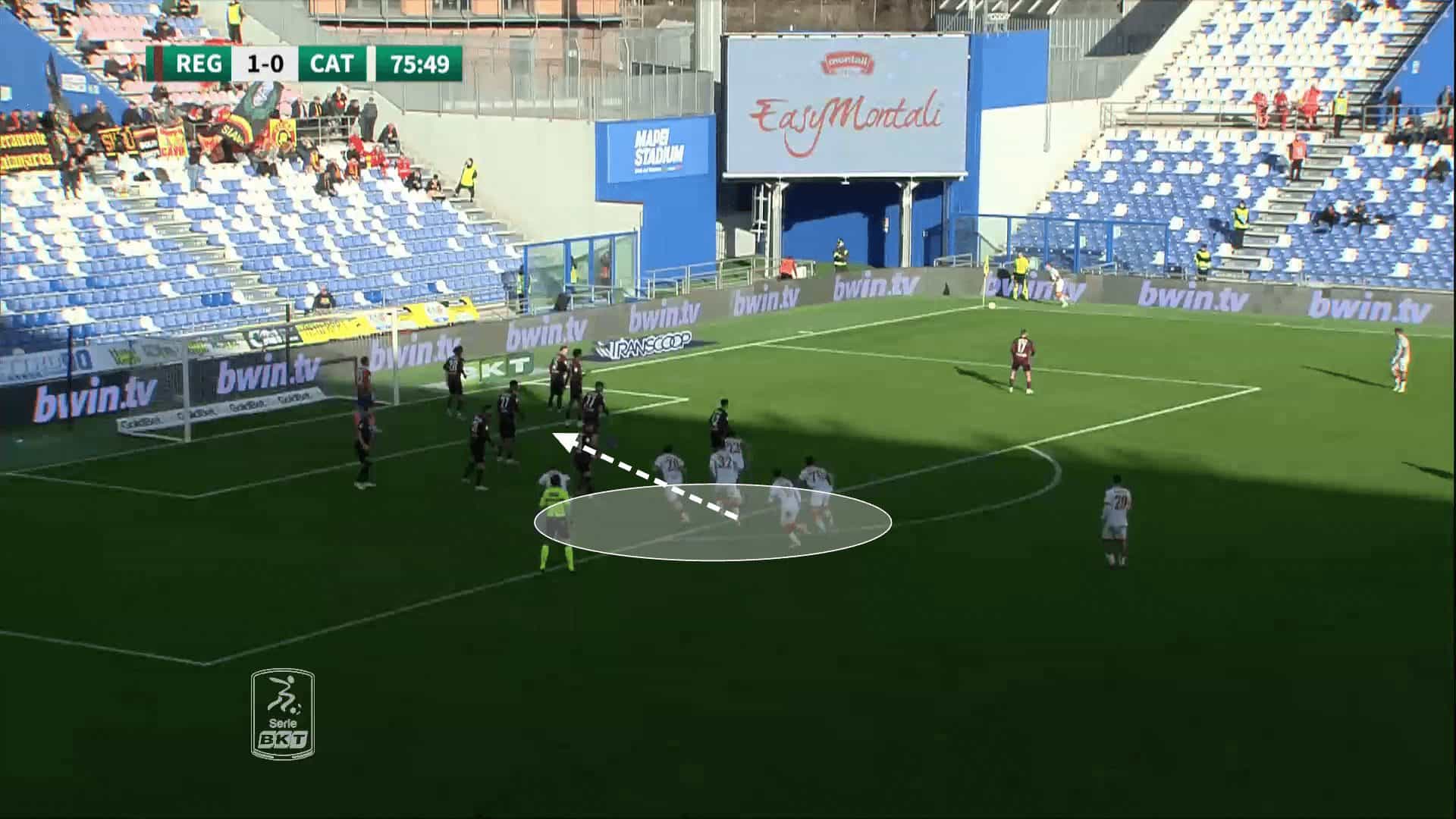
During this routine, the attacking unit selects the area it wants to attack and sets up its positions within that area, as shown in the example below.
The intended target hangs slightly away from the target area, which he can run into to attack the ball with pace.
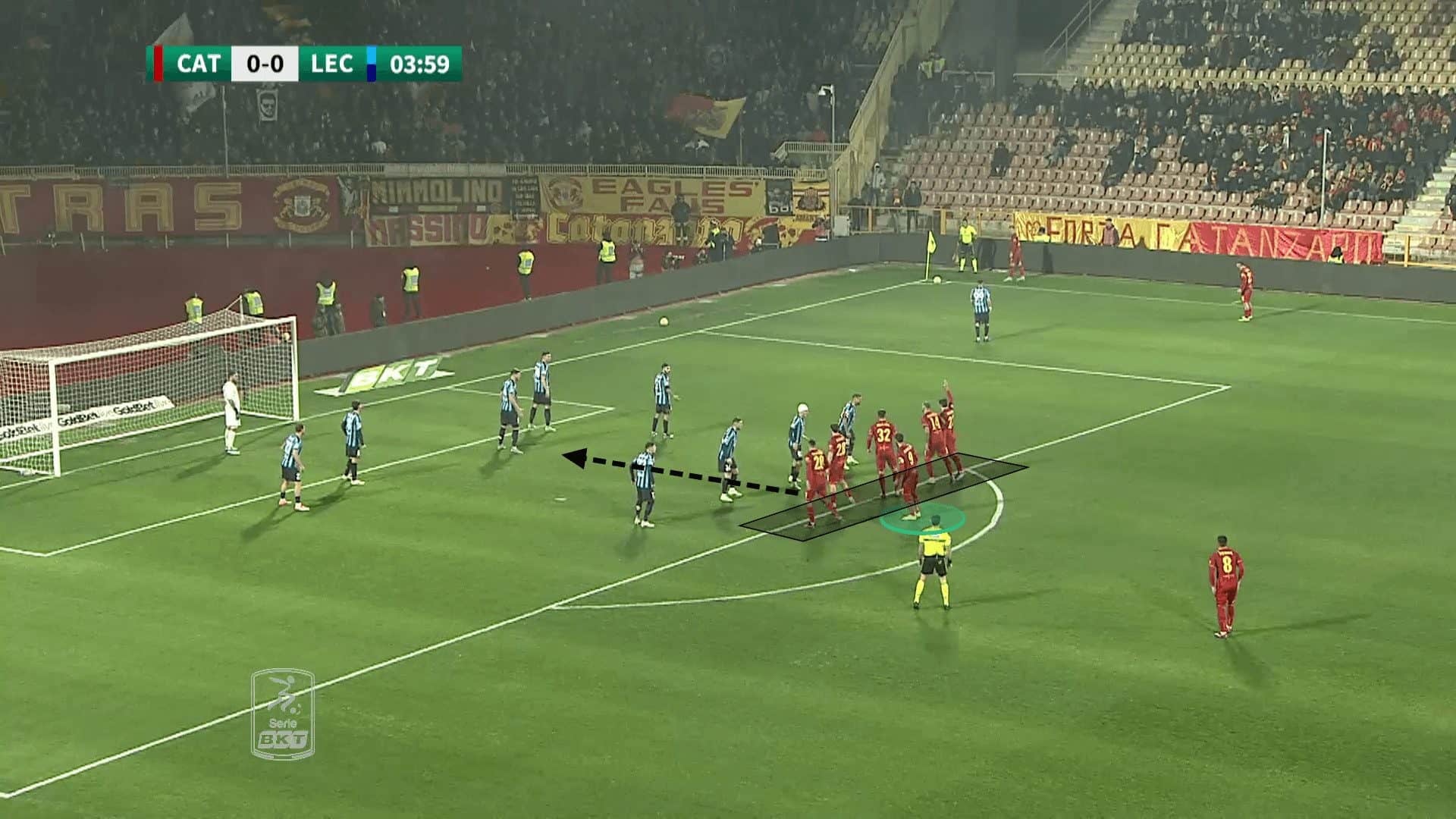
As seen in the image below, the area occupied by the attacking unit is vacated and turns into the area with the most space inside the penalty area.
The attacking players who make runs forward are then focused on forcing their markers as far away from the target area as possible by continuing their runs and preventing their markers from closing down the ball.
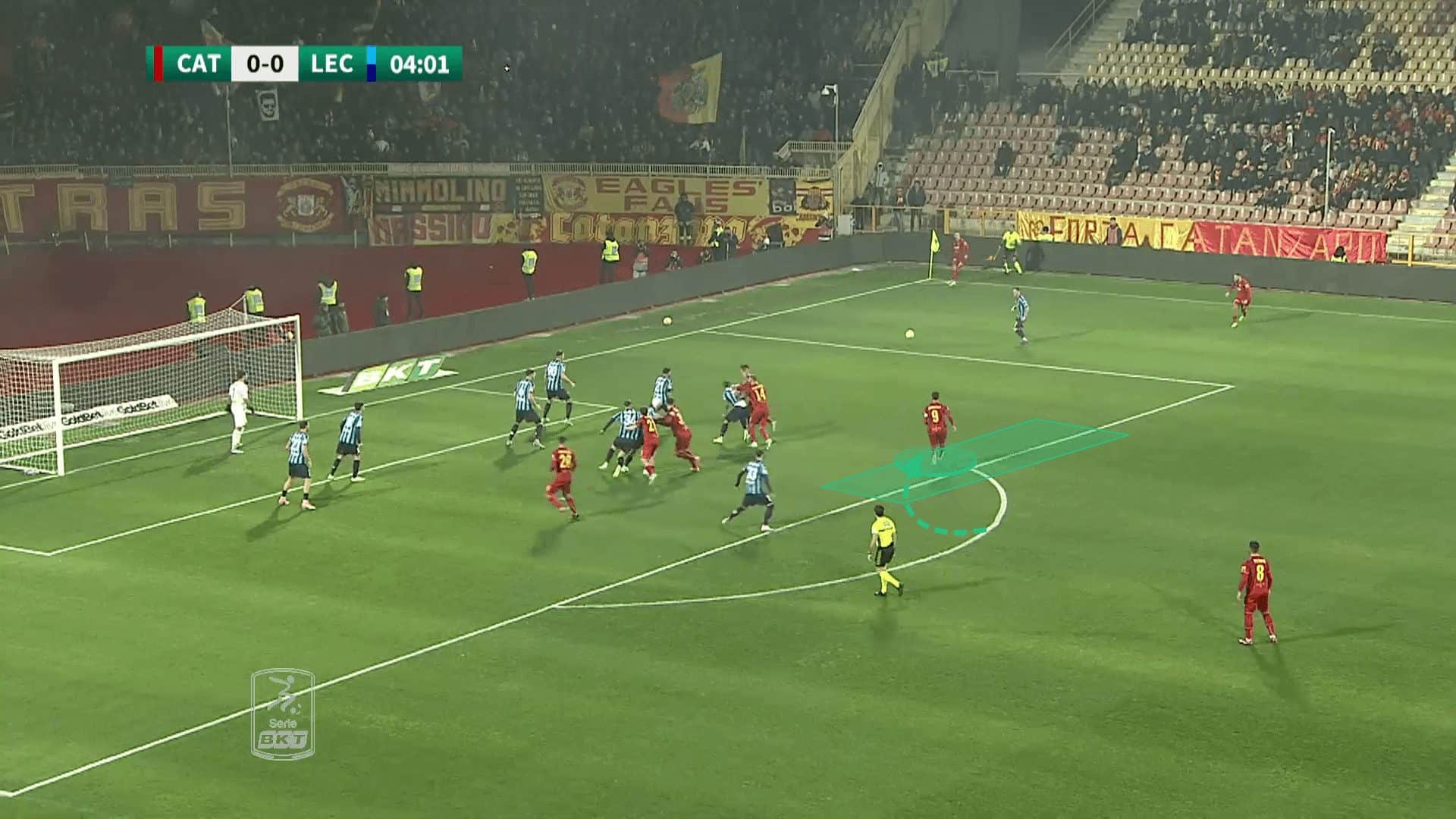
There is one slight difference between the images above and below, which has a significant impact on the end result of the similar set plays.
In the image above, the run is made parallel to the goal, where the player’s momentum is taking him away from the goal.
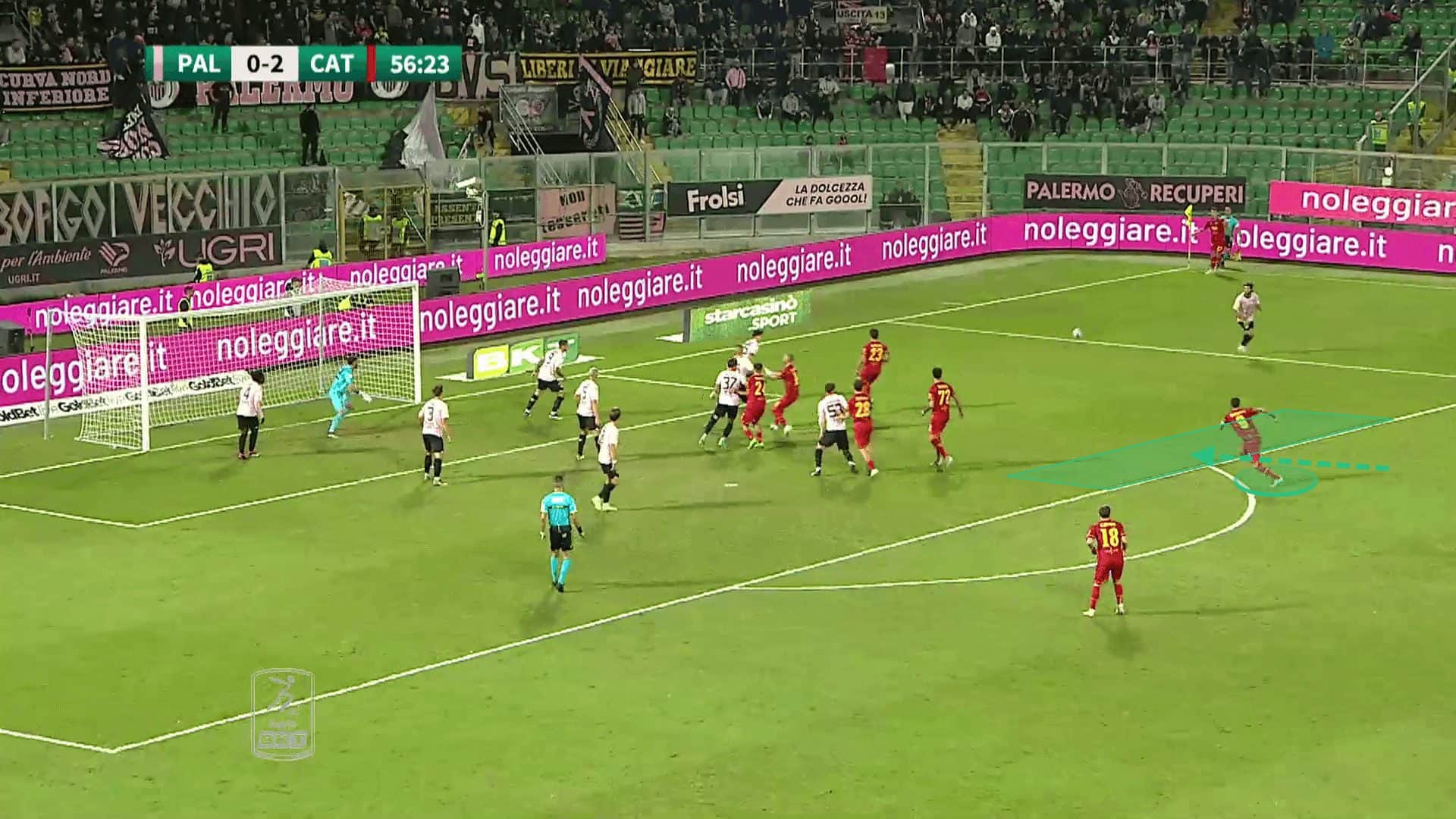
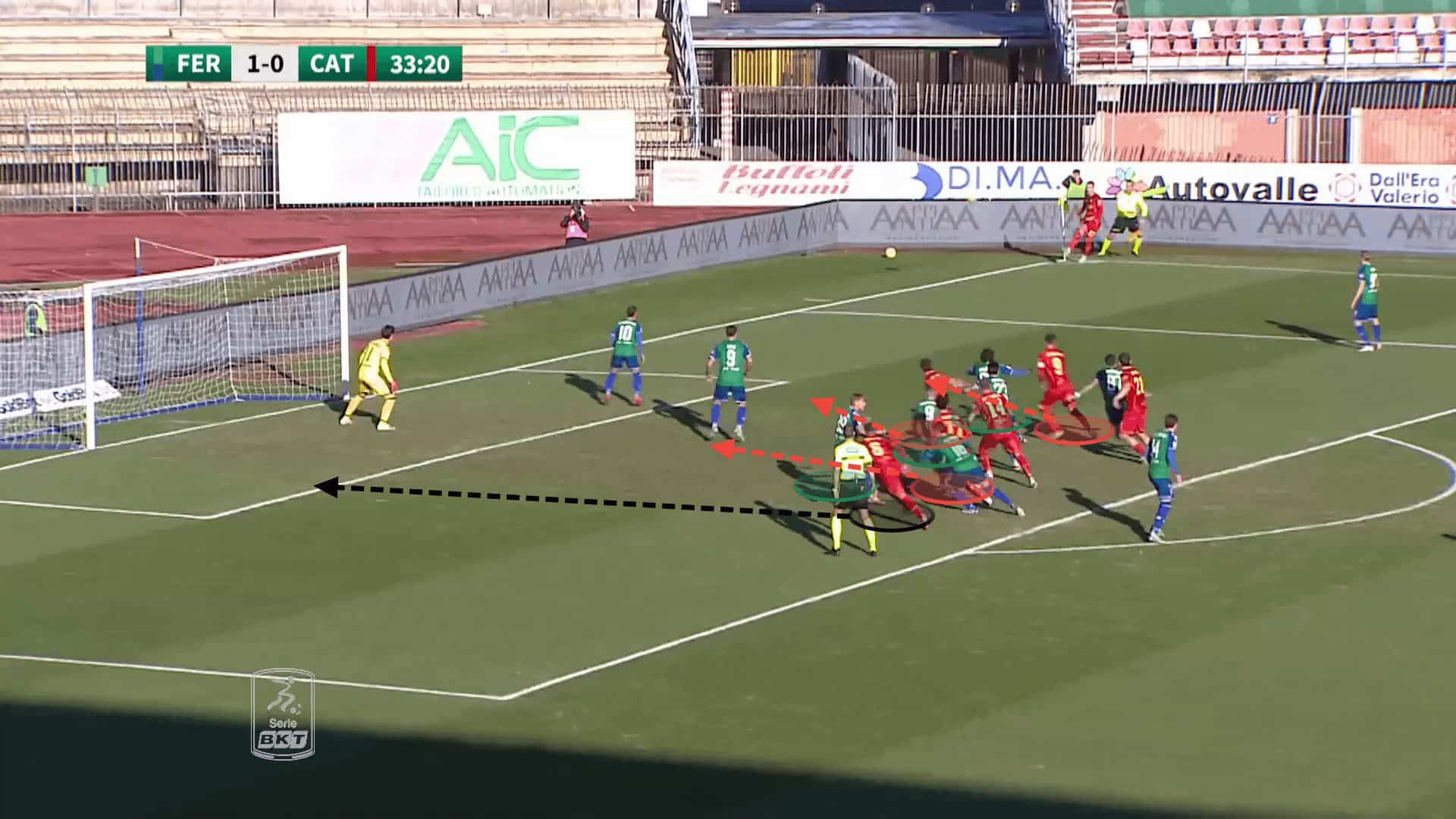
In contrast, the run in the image below is made directly towards the goal, with the player’s momentum carrying him towards the goal.
The difference in the direction of the run towards the target area is the key to the difference between a successful corner kick and a much less fluid routine.
When the momentum takes a player away from the goal, especially with such a considerable distance between the ball and the goal, it is much harder for the attacker to put enough power on the strike to beat the goalkeeper.
The awkward angle, with the goal out of the attacker’s view, means that a miskick is more likely to occur, and rather than arriving onto the ball and striking it first time, the attacker must take a touch, giving opponents enough time to close down the ball and block the shot.
In the image below, the attacker can hit the ball first time whilst arriving onto the end of the ball.
It is much more likely to result in a shot on goal, although the chance can’t be labelled as a must-score due to the number of players who have the chance to block the shot.
The exciting aspect of Catanzaro’s routine is that it can be translated to any other area inside the penalty area, as long as there is no zonal defensive presence already there.
In the variation seen below, Catanzaro attempts to exploit the lack of defensive presence at the far side of the six-yard box.
Key to this system is the numerical overload of attackers in the ‘decoy’ unit, where there are enough bodies to ensure that every defender is drawn away while still having one spare attacker to hang back and attack the same space without any defenders nearby.
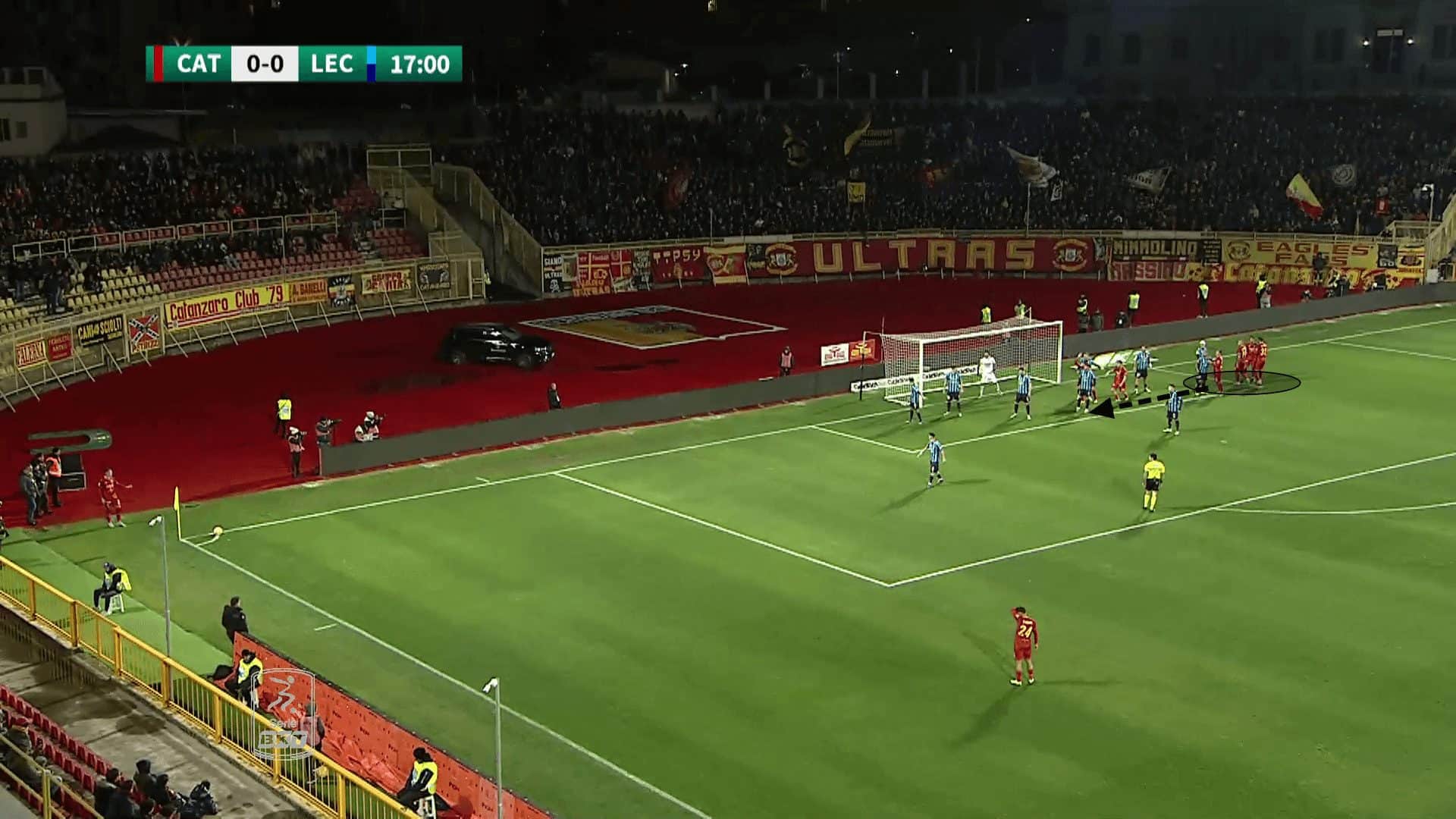
Once the attacking unit makes their movements away from the far side of the six-yard box, we can see in the image below that the area becomes apparent, where an attacker is free to attempt a shot on goal from inside the six-yard box.
The thought process is the same in both corner routines, with the only difference being the positioning in relation to the defensive unit.
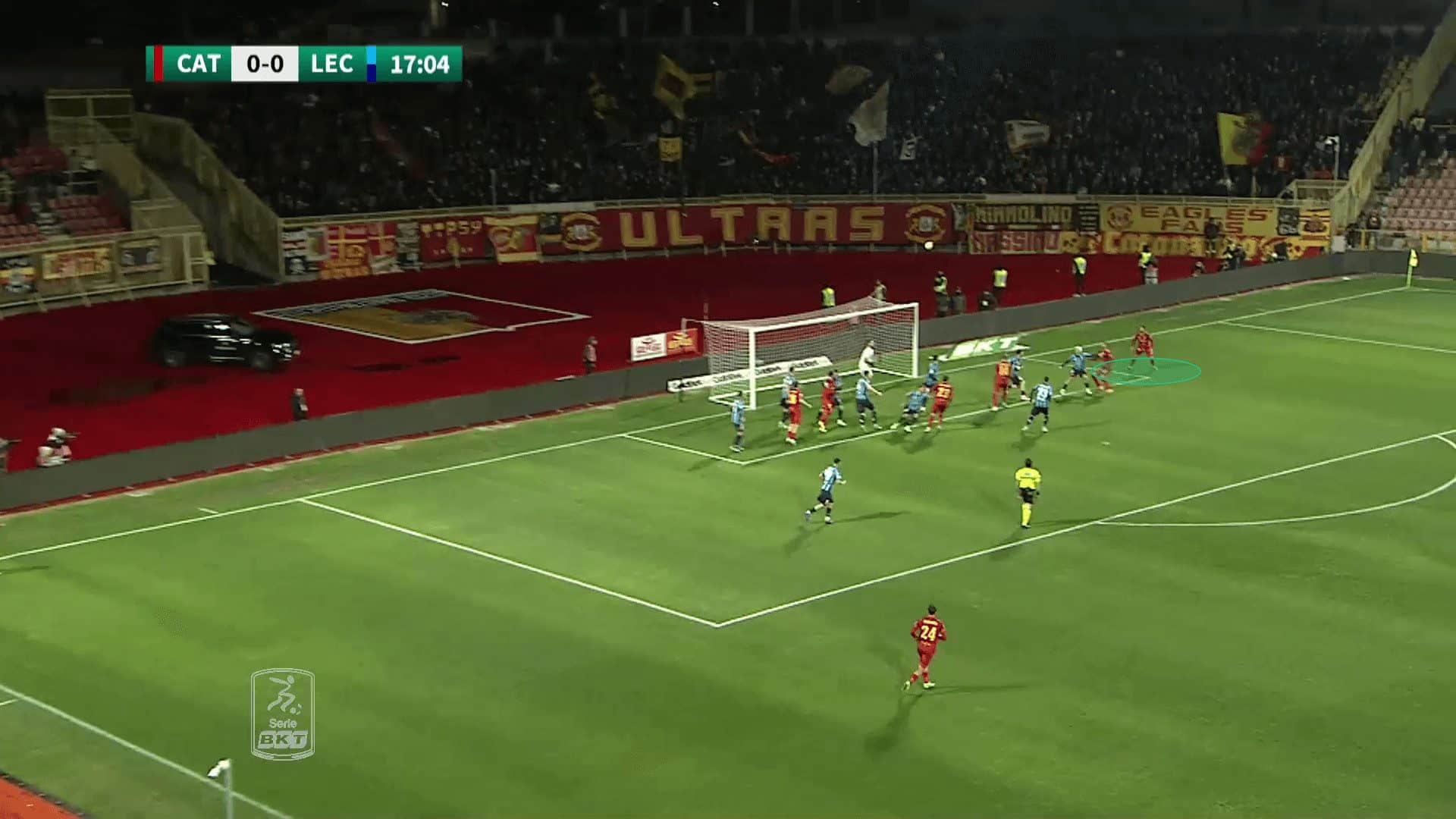
One slight adjustment that Catanzaro have had to make in recent times has been due to the position of the defender positioned in front of the corner taker, who makes the direct pass to the edge of the box much tougher to execute.
To combat this, the league newcomers have used short corners to make an extra couple of passes to avoid the direct pass being intercepted.
The idea and process remain largely similar, with the attacking unit starting in a position and vacating it as the corner is taken.
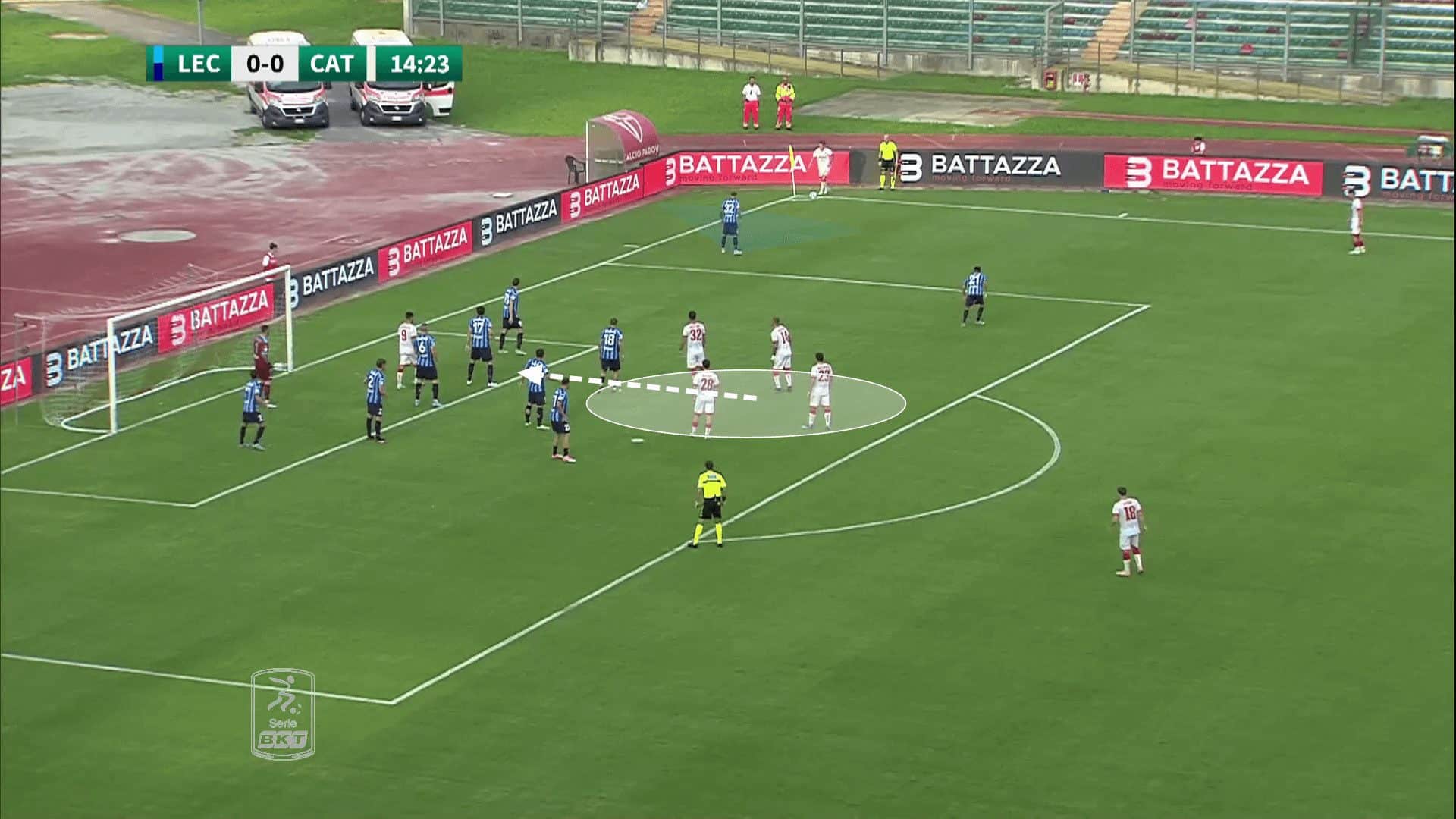
However, with the direct pass unavailable, Catanzaro must find a different path into the edge of the box while still ensuring the pass moves towards the target attacker at the same angle to make for an easier shooting opportunity.
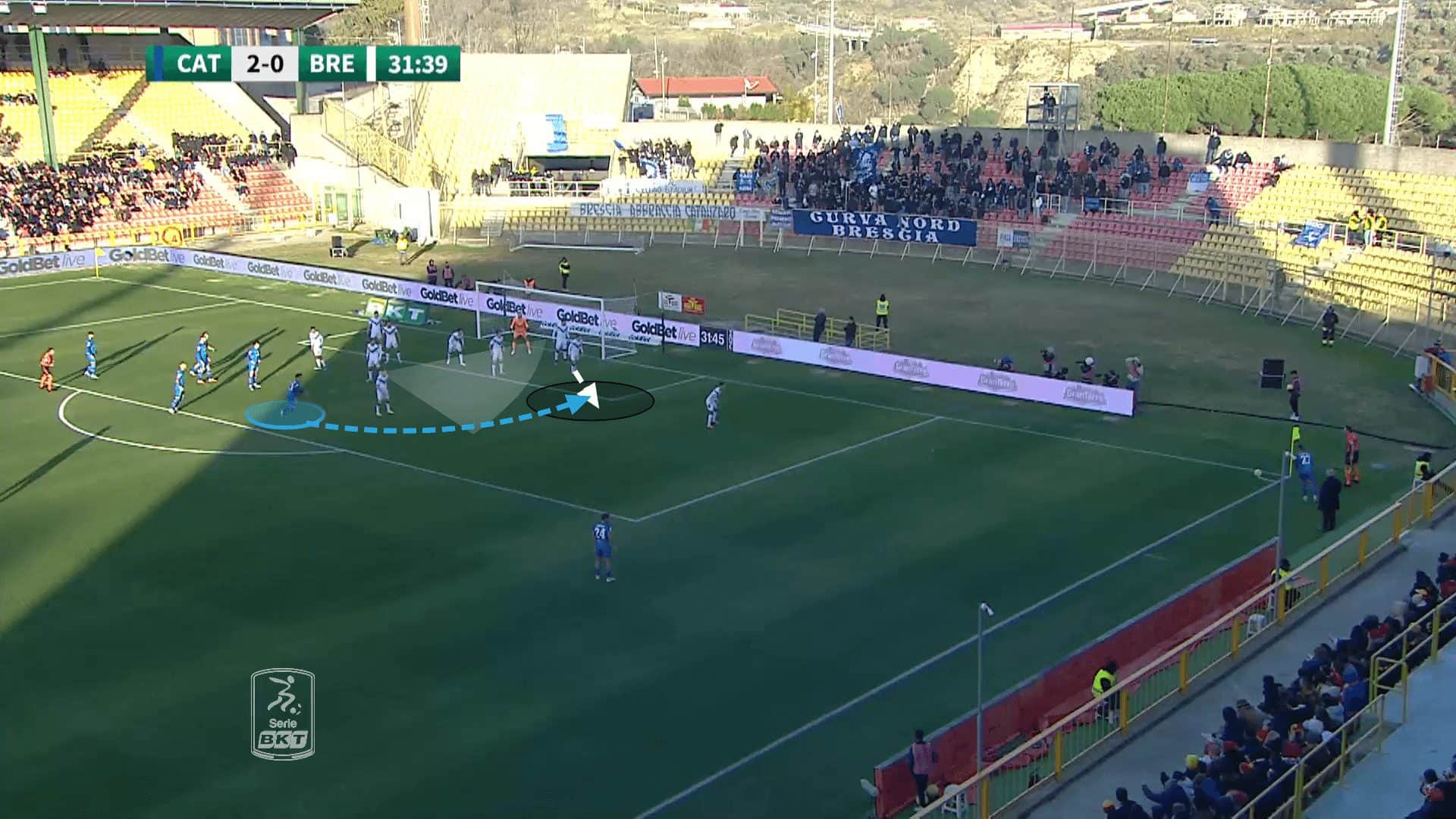
In order for the angle of the setup to be the same, the aim is to make the pass from the black area highlighted below.
The only difference between this setup and the first one mentioned in this article is the attacker’s position, highlighted in black in the image below.
Rather than starting alongside the ‘decoy’ unit, he positions himself amongst the zonal defenders as he wants to avoid being tracked by a man marker.
As soon as the corner is taken, that attacker makes his movement, with no defender responsible for monitoring the run, allowing him to arrive in the black area unmarked.
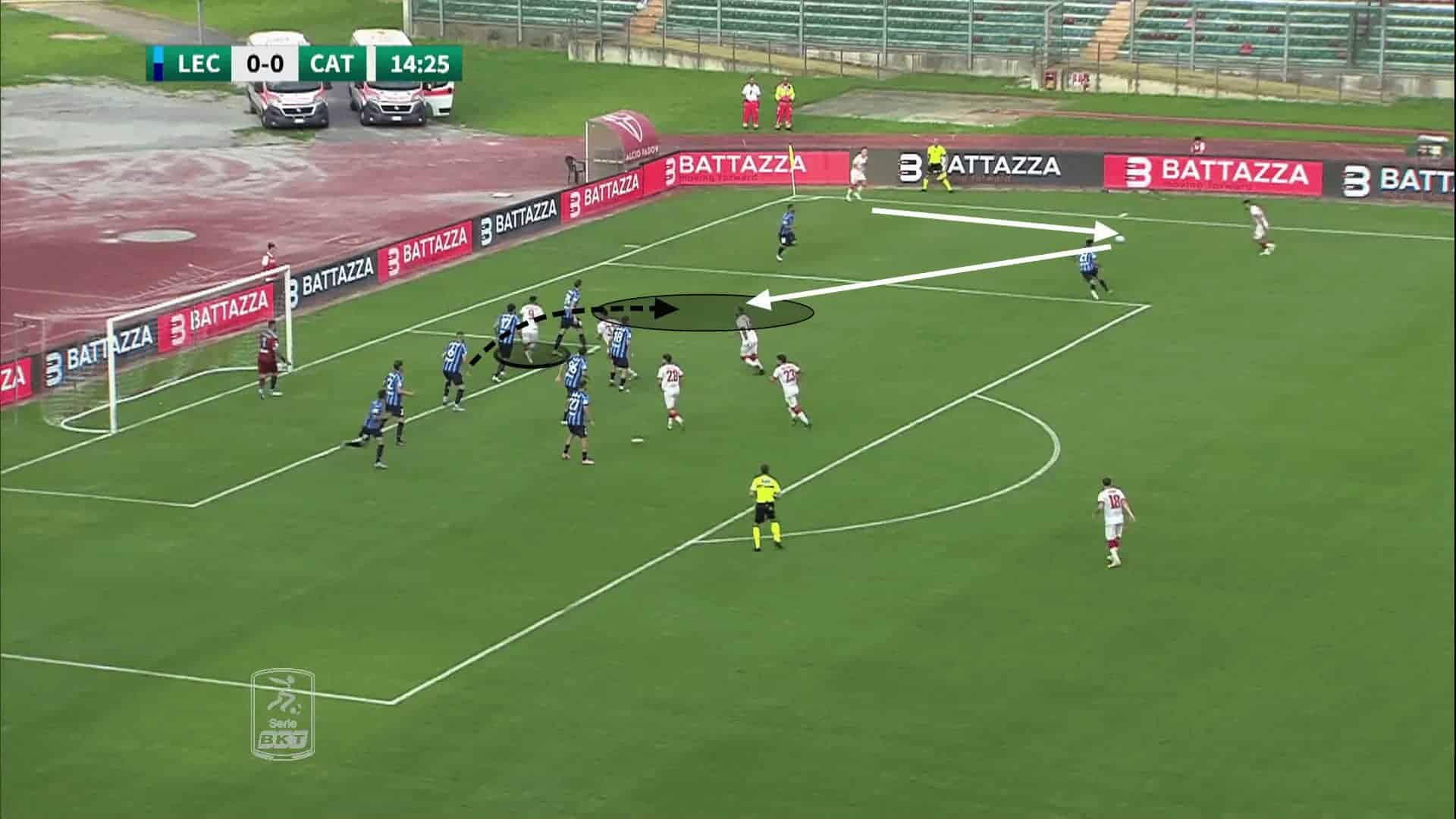
From here, the attacker can set the ball into the area that the attacking unit vacated for a teammate to attack from deep.
Like in the examples before, the role of every decoy attacker turns into a screen setter.
The concept of players having two roles during attacking set-pieces is one that is extremely interesting and has massive potential.
However, it can take a lot of work to give players two roles that they can realistically execute during such a short space of time.
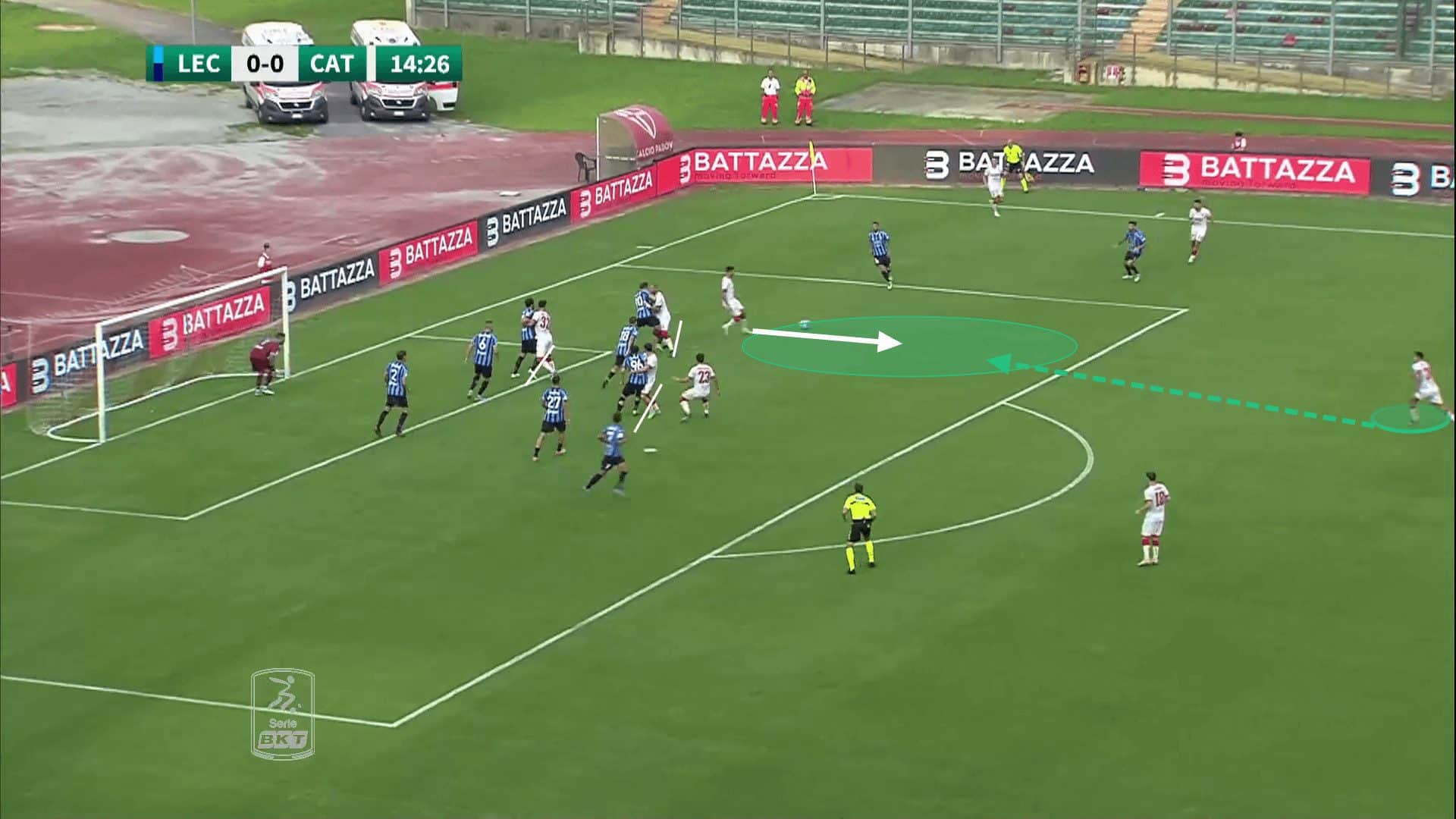
While the deep starting positions sometimes have the intention of allowing a shot from the edge of the box, these positions also provide Catanzaro with overwhelming advantages around the six-yard box, should the ball be directly crossed in.
With the positions shown in the example below, each attacker has the opportunity to make a darting run towards the six-yard box, where they can use their running momentum to beat most zonal defenders who are static before the aerial duel, thereby limiting the height they can reach when attempting to attack the ball.
Other Uses of Decoys
Catanzaro’s ability as a team, in general, to have such a high percentage of first contacts made from attacking corners is down to several different routines they have created so far.
One routine that is original to football is the separation of six attackers, split into two lines of three players each.
Highlighted in the image below, we can see the players in red, whose role is to attack the six-yard box.
Meanwhile, the players highlighted in black are responsible for setting screens to enable the other attackers to arrive in the six-yard box without disruption.

One issue of players making runs away from the box, no matter what they do, is that their original markers have no urgency to track their movements closely.
When each of the three attackers runs away from the goal, their markers start to follow them.
Still, when it becomes apparent that the ball will be delivered into the penalty area, those markers allow them to move away from the goal and pick up other, more dangerous players making runs towards the goal.
As a result, those screens that were made on the markers of the attackers in red in the image above become slightly irrelevant as the markers of the screen setters track those players in red.
If a defender is switched on, a screen made by someone moving away from the goal can be neutralised by picking up that free player.
However, the introduction of dual roles for attackers brings this routine great potential.
The following actions all happen within a couple of seconds, and with the close positioning of each attacker, it is impossible to capture with images:
In the bottom row of the three attacking pairs, there are two attackers and their two markers.
The attacker who set the screen, highlighted in black, instantly turns to attack the six-yard box.
He sets the screen on his teammate’s marker, freeing him from his marker.
As mentioned above, the screen setter’s original marker is able to track the player who has just been freed. However, the two remaining players are the screen setter in black and the player whom he just set the screen on.
In this 1v1 situation, the screen setter is goalside of his opponent, so if he can instantly manoeuver from setting a screen to attacking the six-yard box, he can have a clear path towards the goal, with his marker being on the wrong side.
This generates a 2v1 in the bottom row of the attacking unit, eliminating one defender from the attack.
Suppose Catanzaro are able to replicate this movement in each of the three rows.
In that case, they have the potential to create a 6v3 advantage within the attacking unit, allowing three players to attack different parts of the six-yard box at full speed, unopposed.
Following similar principles that have been used throughout the season, Catanzaro yet again use the method of starting in one area, before vacating that space for a deep runner to attack.
In the example below, the attacking decoy unit starts around the penalty spot before they all disperse in the last moment, clearing a path for the attacker highlighted in green to arrive in.
The issue, as mentioned in another routine earlier, is that the run being made away from the box has much less threat, so the defender has no need to track it urgently.
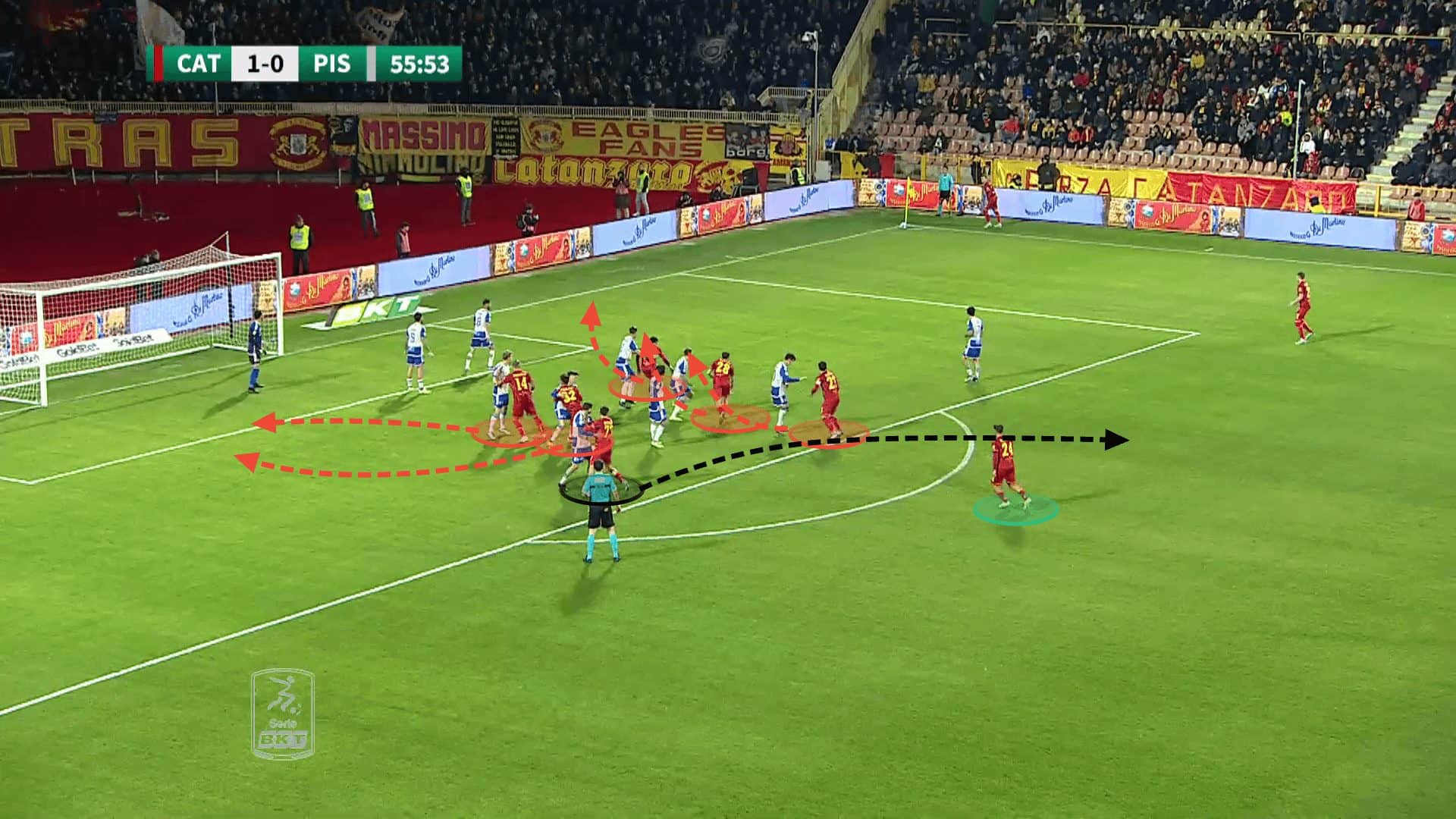
As a result, the player who is highlighted in black is able to give his defender, also in black, the opportunity to remain inside the penalty area.
As seen in the example below, this then leaves the intended attacker with traffic, blocking his route to the intended target area.
Another flaw of this particular setup is the lack of a numerical overload, meaning that a spare defender remained around the penalty spot with no runner to pick up.
The multiple mistakes meant that the attacker had two defenders to contend with in the aerial duel.
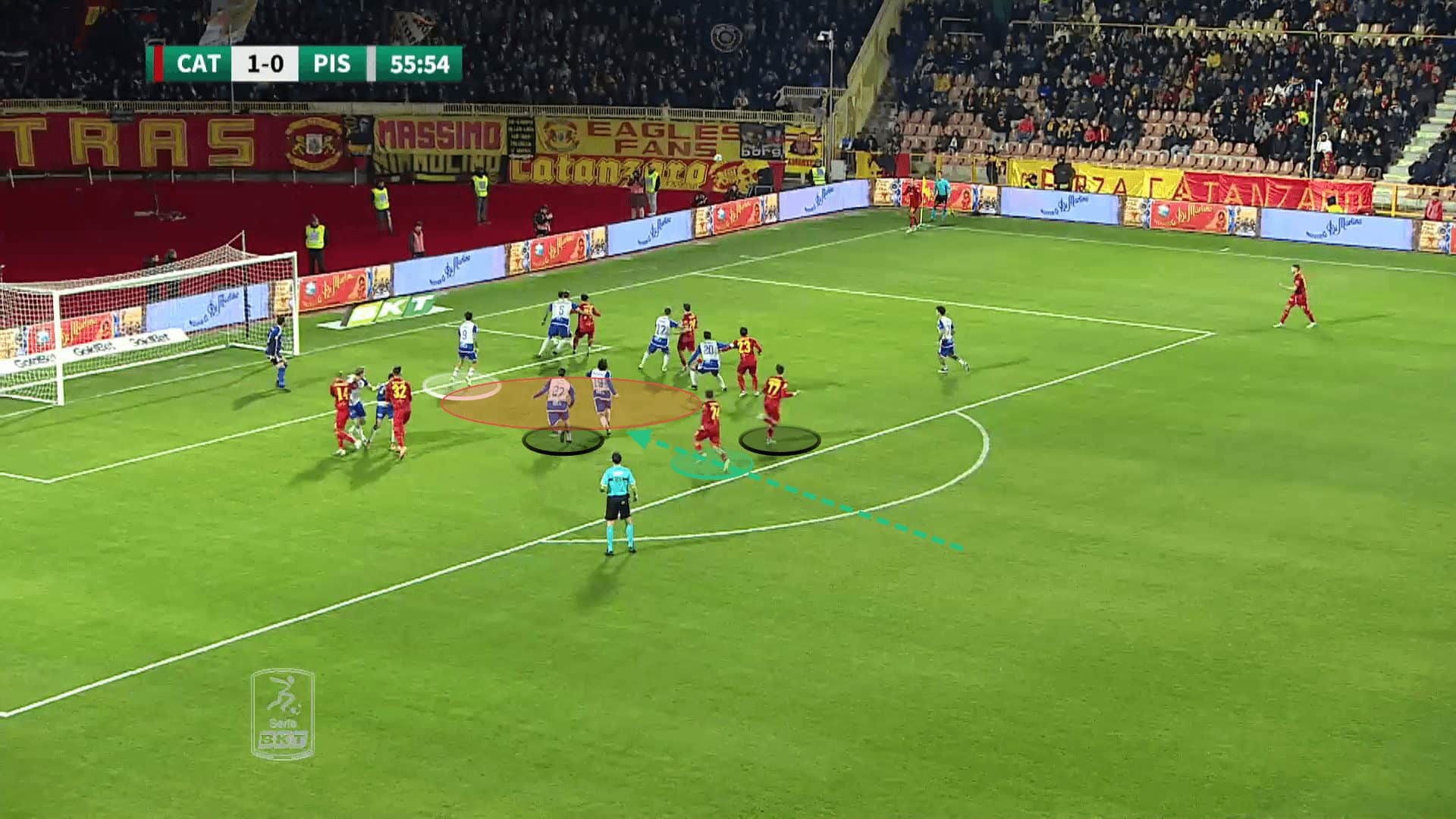
One issue that was also apparent in both the examples above and below is the distance the attacker has to travel before reaching the target areas.
When arriving from deep, one benefit is that usually, you can arrive unopposed, with no opposing player thinking of you as a dangerous option until it’s too late.
However, the issue with arriving from deep is that the perfect timing is more complex to execute.
This often gives the opposing team’s zonal defenders the ability to move toward the path of the ball if it slightly goes off course.
The zonal defender has a shorter distance to cover to reach the ball than an attacker who might be starting outside the box.
If a deep run is to be made towards the six-yard box, either a zonal defender must be blocked off through a screen, or the cross must be timed well enough that both players have equal time to react to the path of the ball.
Sustaining Pressure
The sustainment of pressure is one area in which Catanzaro have struggled the most.
As mentioned at the start of the article, over 50% of Catanzaro’s corners don’t even have the possibility of being duelled by the attacking unit due to several flaws.
Firstly, 1 in 4 corners are cleared by the nearest zonal defender, suggesting the crosses are often underhit or an attacker at the near post has mistimed their run.
One way to combat this is through the use of screens for players on the near side of the six-yard box.
Immobilising those defenders who have the first chance of clearing the danger can lead to many goal-scoring opportunities around the six-yard box during the second phase following loose balls or rebounds.
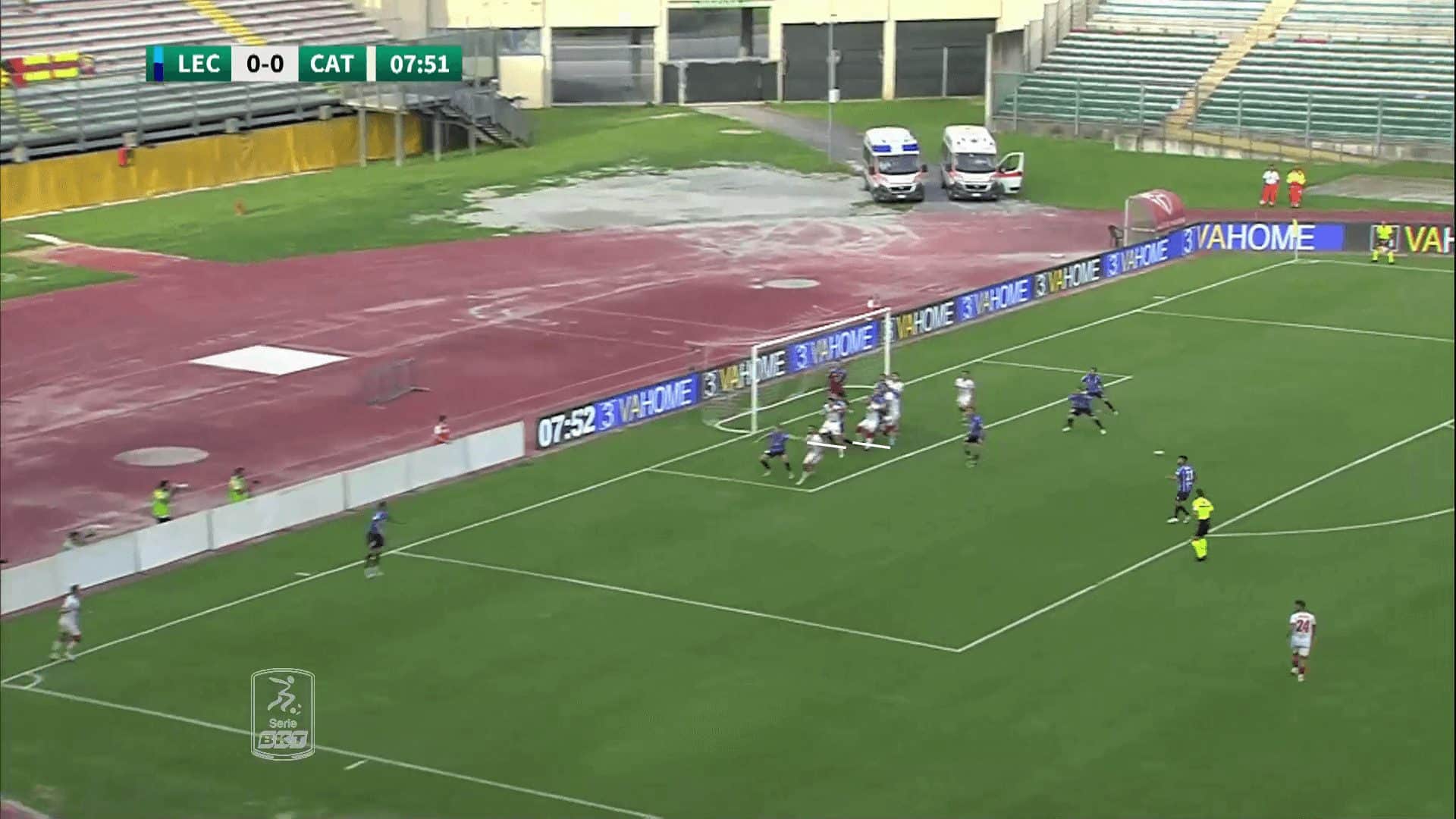
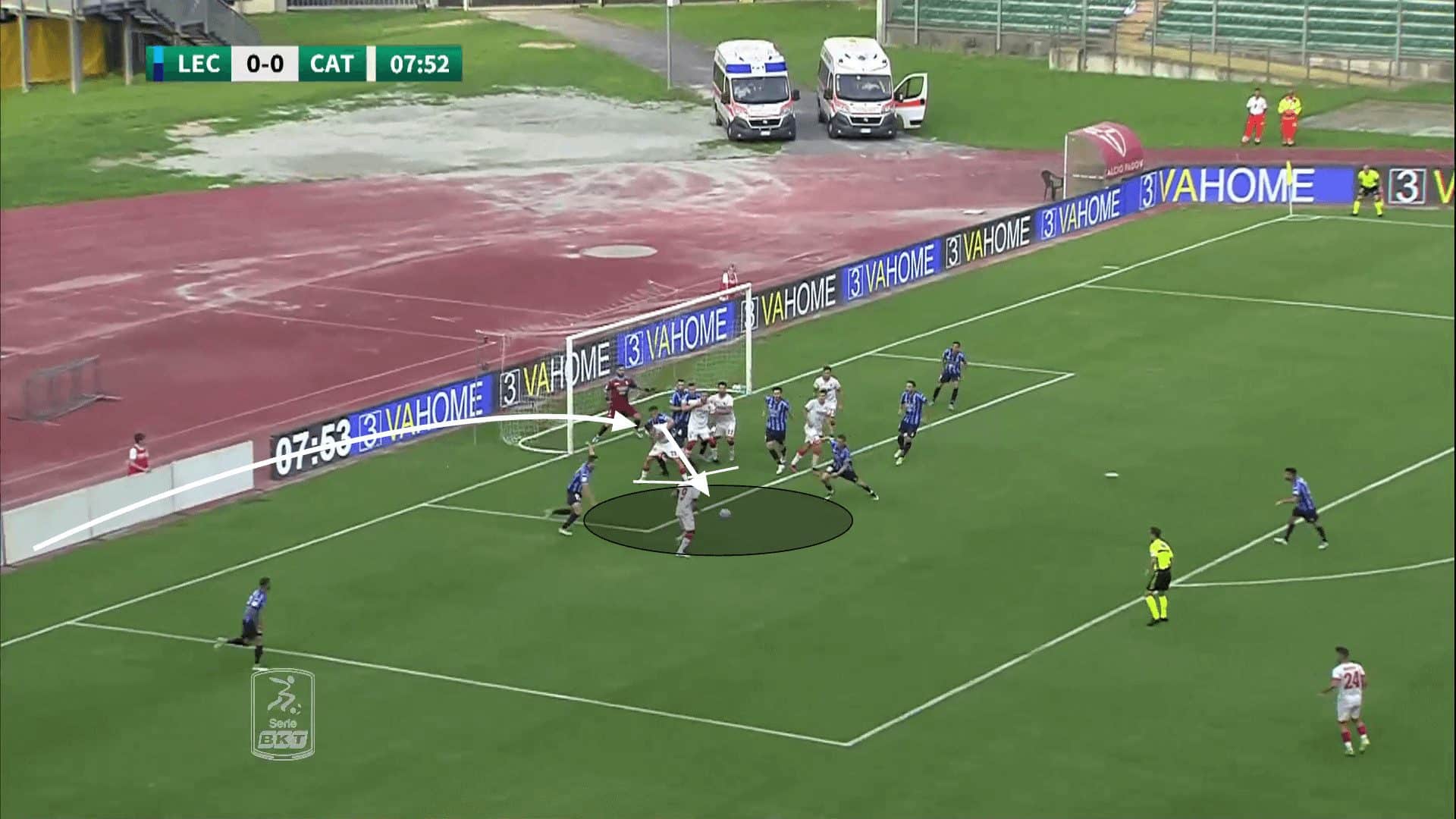
Below is an example of Catanzaro successfully accomplishing this method.
Two of the zonal defenders are blocked off when the corner is about to reach them; the Catanzaro attackers act as a backboard, similar to the one seen in basketball, rebounding the ball down into the six-yard box, allowing their teammates to react to the loose ball and attempt a shot on goal.
When the nearest zonal defenders are immobile, even if a corner delivery is poor, the ball is unlikely to exit the penalty area.
By simply setting screens on the nearest zonal defenders, Catanzaro will be able to create potential opportunities an extra 25% of the time rather than waste the chance.
It only requires one attacker to leave the attacking unit.
Then, teams can ensure that those remaining five attackers have more opportunities, whether that is through attacking the ball or attempting to pick up loose second balls.
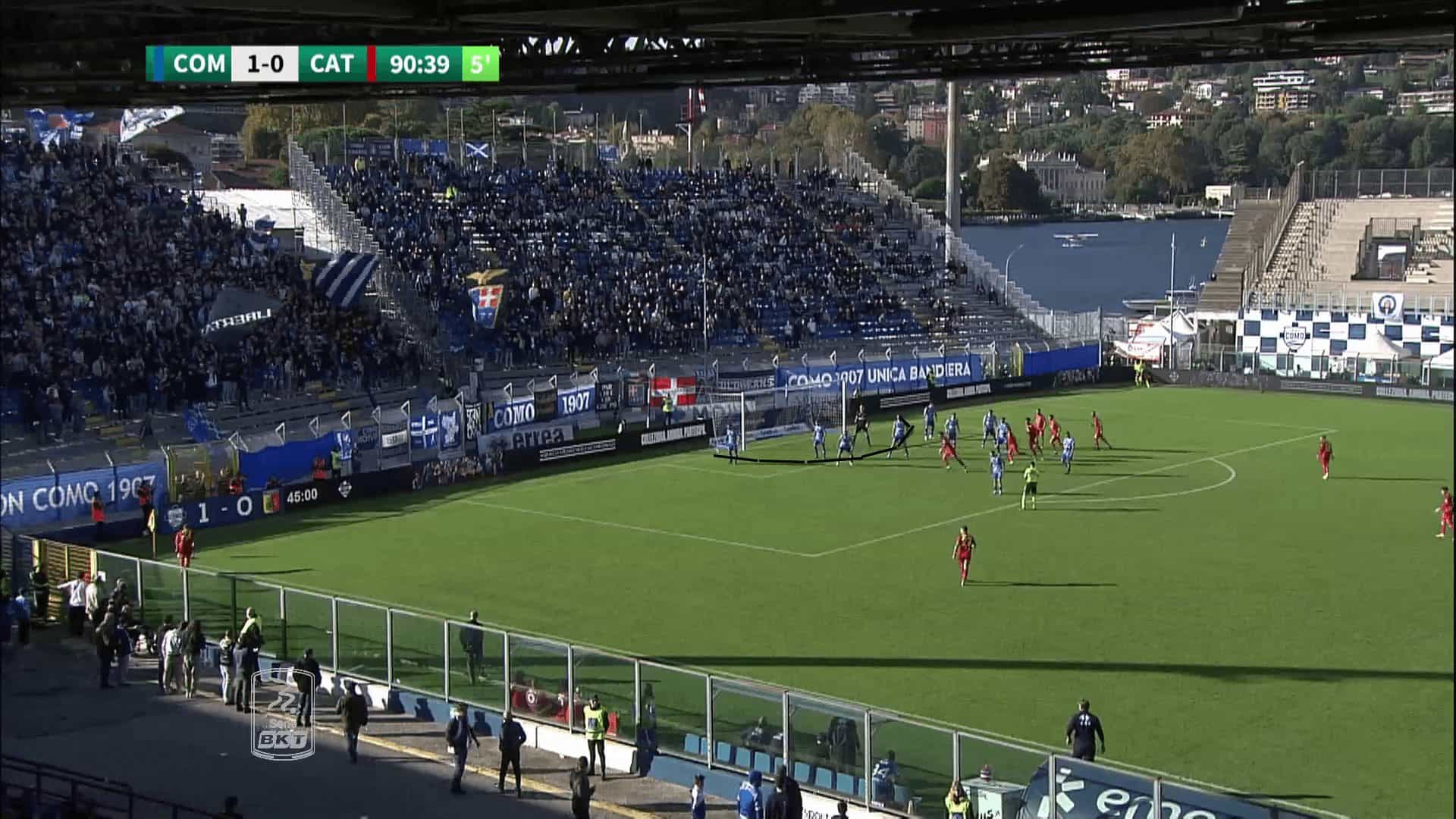
Furthermore, an additional 13% of corner kicks are claimed by goalkeepers, who have the freedom of the six-yard box to step out and claim any ball that passes through.
Similarly to the point above, by blocking the keeper from coming off their line, teams can generate more second-phase opportunities, even if that is just by preventing the goalkeeper from claiming the ball and punching it instead.
Forcing the goalkeeper to remain on his line also allows Catanzaro to deliver the ball into more dangerous areas, inside the six-yard box, with no danger of the goalkeeper instantly claiming it.
In the few instances where a goalkeeper attempted to claim the ball but was met with pressure and could only push the ball towards the edge of the box, Catanzaro has been able to generate opportunities, whether that is from a shot or a cross from the edge of the penalty area.
Summary
This set-piece analysis has described the methods Catanzaro have used this season during attacking corner kicks.
Their use of numerous decoy runners has allowed them to become a dead-ball threat for the following reasons:
- The ability to create space in desired areas through decoy runs
- Clearly know which areas to attack
- Principles allow for continuity in ideas with the possibility of variations
- Deep runs generating dominance in the six-yard box
- Use of dual roles for attackers (decoy+screen / screen+attack six-yard box)
However, some areas could be improved:
- Many shots were generated from less favourable areas (outside the box)
- Decoys moving away from the box are ineffective unless they have dual roles
- Many corners are either claimed, cleared by the first man, or overhit
Under Vincenzo Vivarini style of play, Catanzaro has demonstrated just how strong they are inside the penalty area, but the limited number of opportunities the attacking unit has compared to the potential number they could have dramatically limits their effectiveness from set pieces.
