
When we talk about Álvaro Rodríguez, we’re not talking about a young striker brought in to fill a temporary void, but rather a player who is employed at Elche as a clearly defined tactical solution.
He is coming from Real Madrid, where strikers are valued for their ability to adapt to complex roles.
Rodríguez moved to Elche to find himself in a different context: a team that needs a striker who brings meaning to the game, not just finishes it.
This season, Álvaro Rodríguez has played 18 La Liga matches, contributing both goals and assists, but his true value lies in how and why he is deployed in attack, not just in his statistical output.
In this Álvaro Rodríguez scout report, we will examine Álvaro Rodríguez’s style of play and his impact on his team’s tactics.
Álvaro Rodríguez Tactical Role & Physical Impact
Álvaro Rodríguez has a strong physique and height that give him a clear advantage in duels, but what distinguishes him is not just his size but also his awareness of how to use his body to serve the game.
He doesn’t engage in physical battles simply to assert dominance; rather, he uses his body to protect the ball and give the team time to regroup.
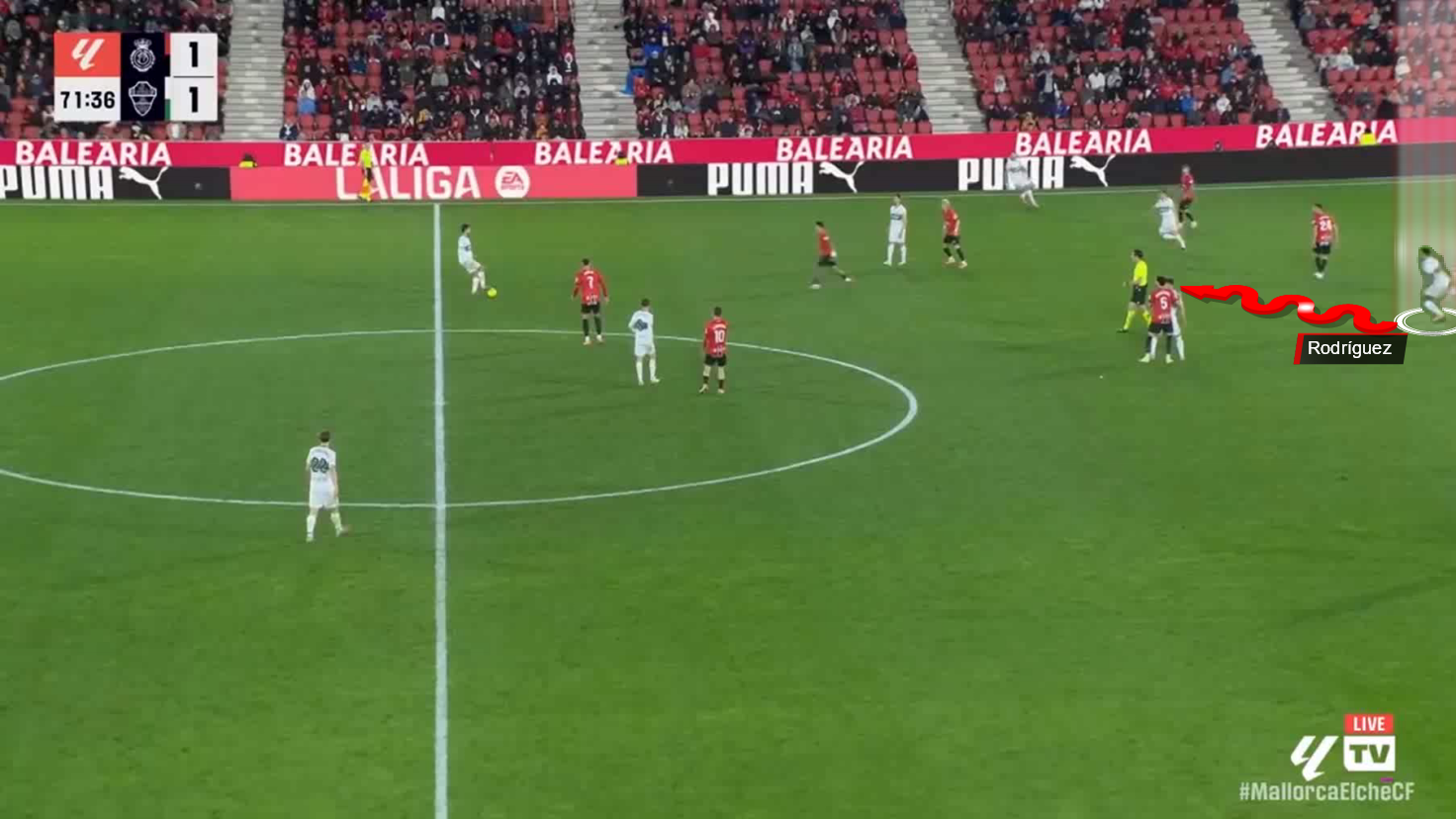

 This idea is clearly demonstrated in that game against Real Mallorca.
Álvaro Rodríguez receives the ball with his back to the goal under direct pressure, then drops back to link up, but he is still under pressure.
The central defender pulls back, doesn’t try to turn quickly or take risks, but waits for support from the midfielders or wingers.
This behaviour reflects a clear understanding of his role as a point of balance, not as an attacker seeking a solitary solution.
Despite being a pure striker, Álvaro Rodríguez doesn’t remain static between the two centre-backs.
On the contrary, he frequently drops between the lines to act as a link between midfield and attack.
This movement reduces midfielders’ isolation and provides the team with an additional option in build-up play.
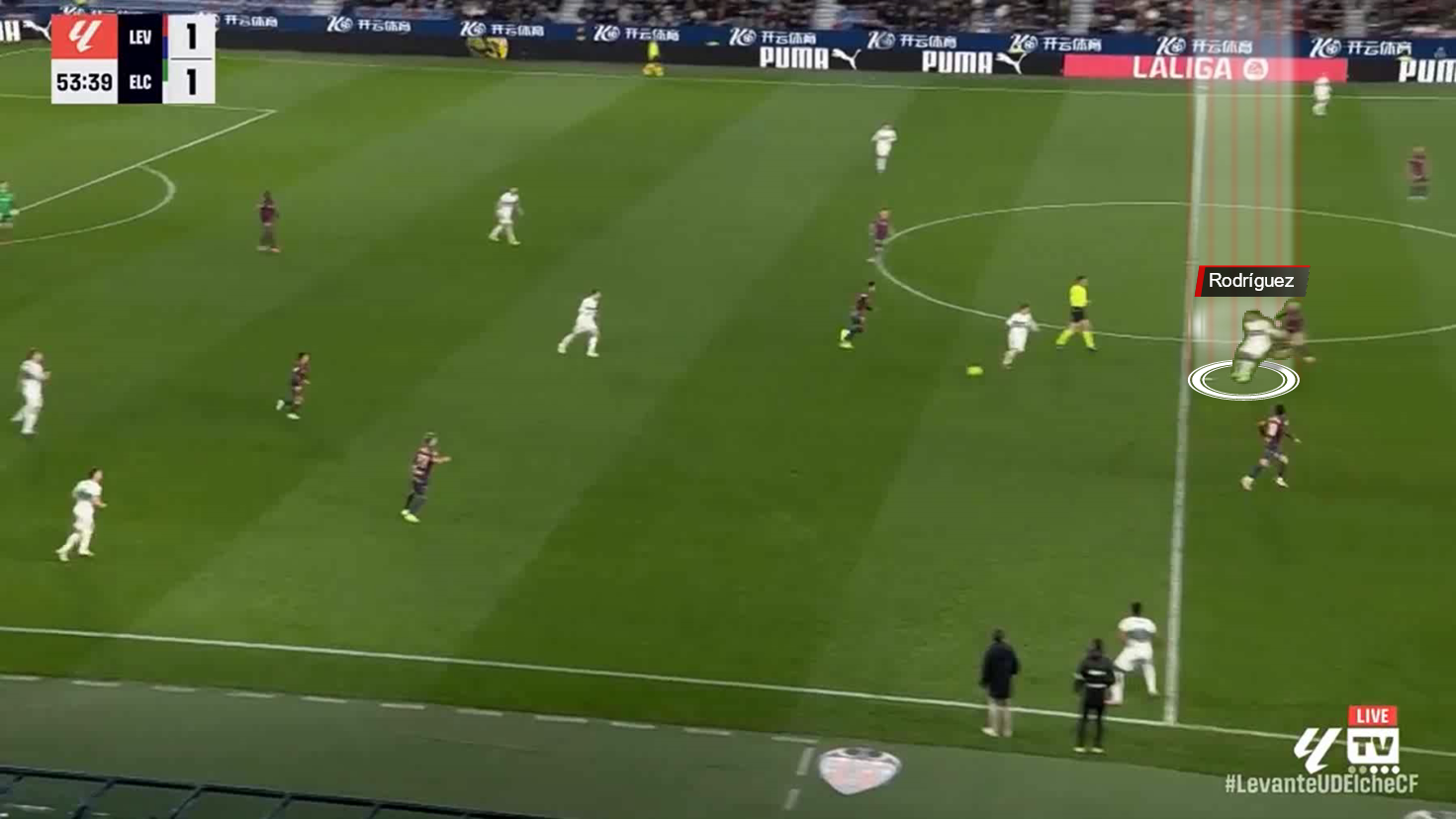
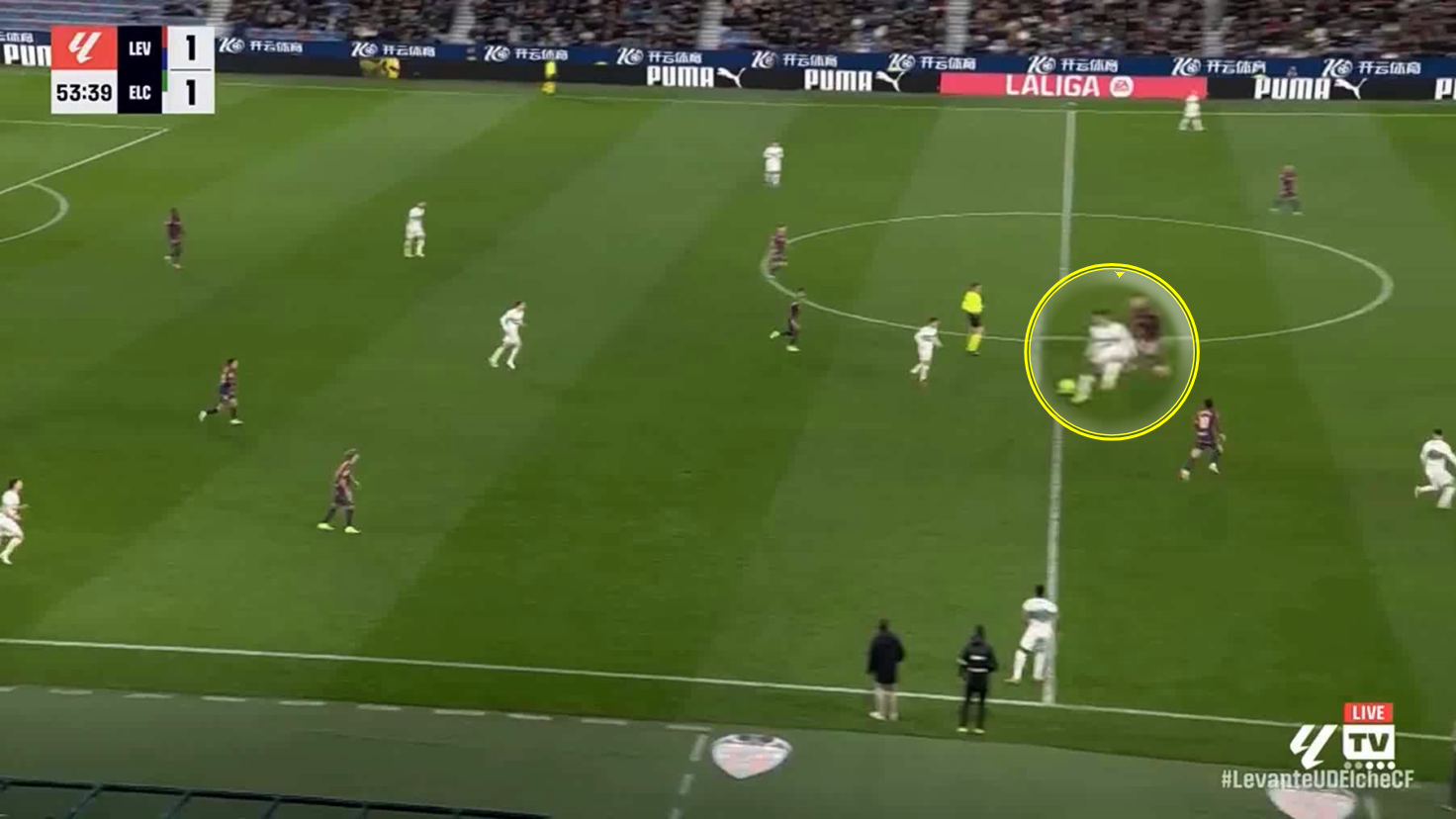
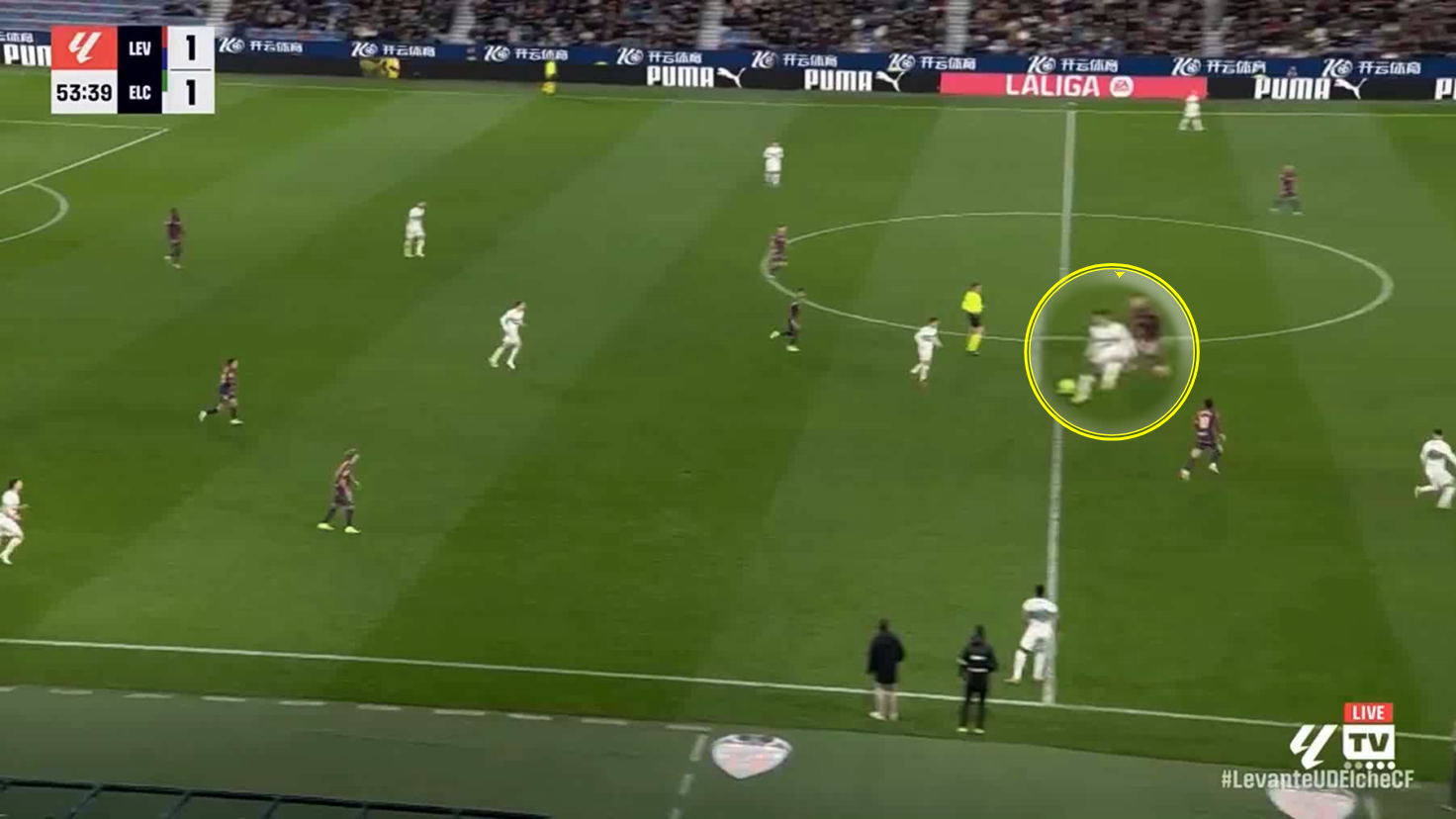
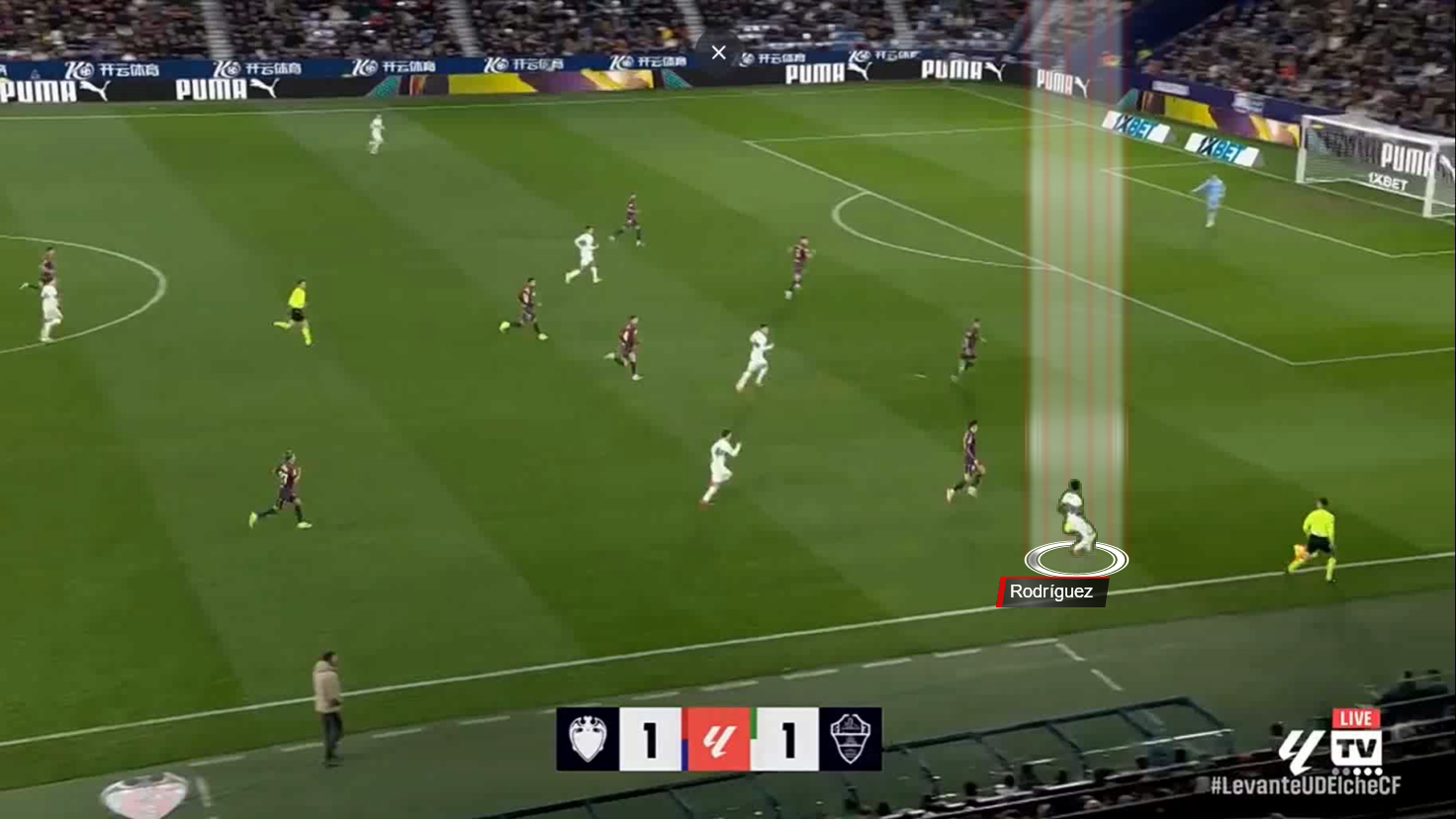
Here, versus Levante, Álvaro Rodríguez drops in front of the defence line, receives the ball under pressure, passes directly towards the centre, then moves again to draw the defender.
He is not looking to shoot or penetrate, but rather to redistribute roles in the attack, reflecting an advanced collective understanding of the striker’s role within the system.
A Focal Point To Direct Play
Elche resorts to direct play to escape the opponent’s pressure, and this is where Álvaro Rodríguez becomes a key element of the plan.
His presence gives the team a clear option to bypass the first line of pressure without losing control of the ball.
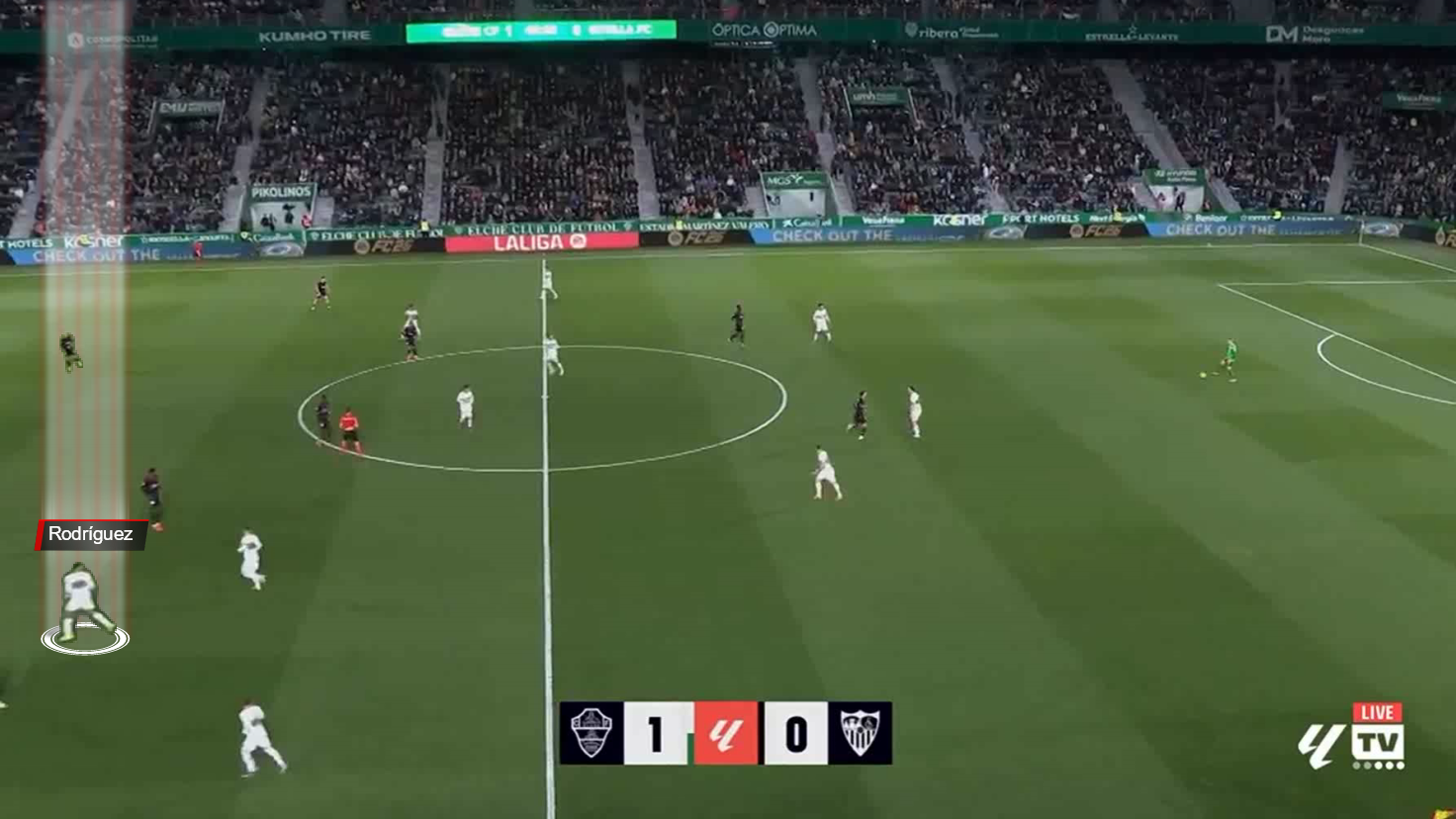
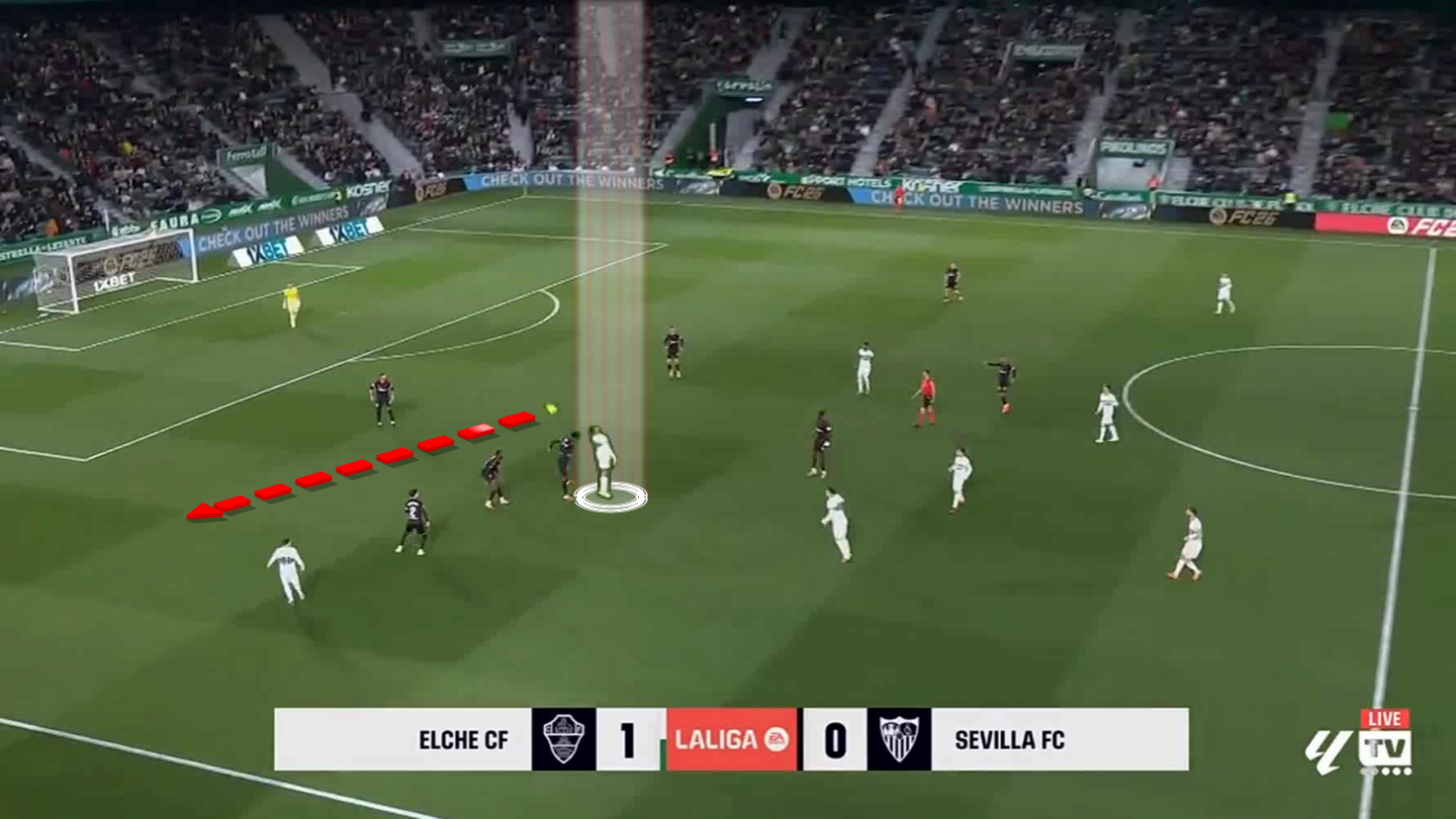
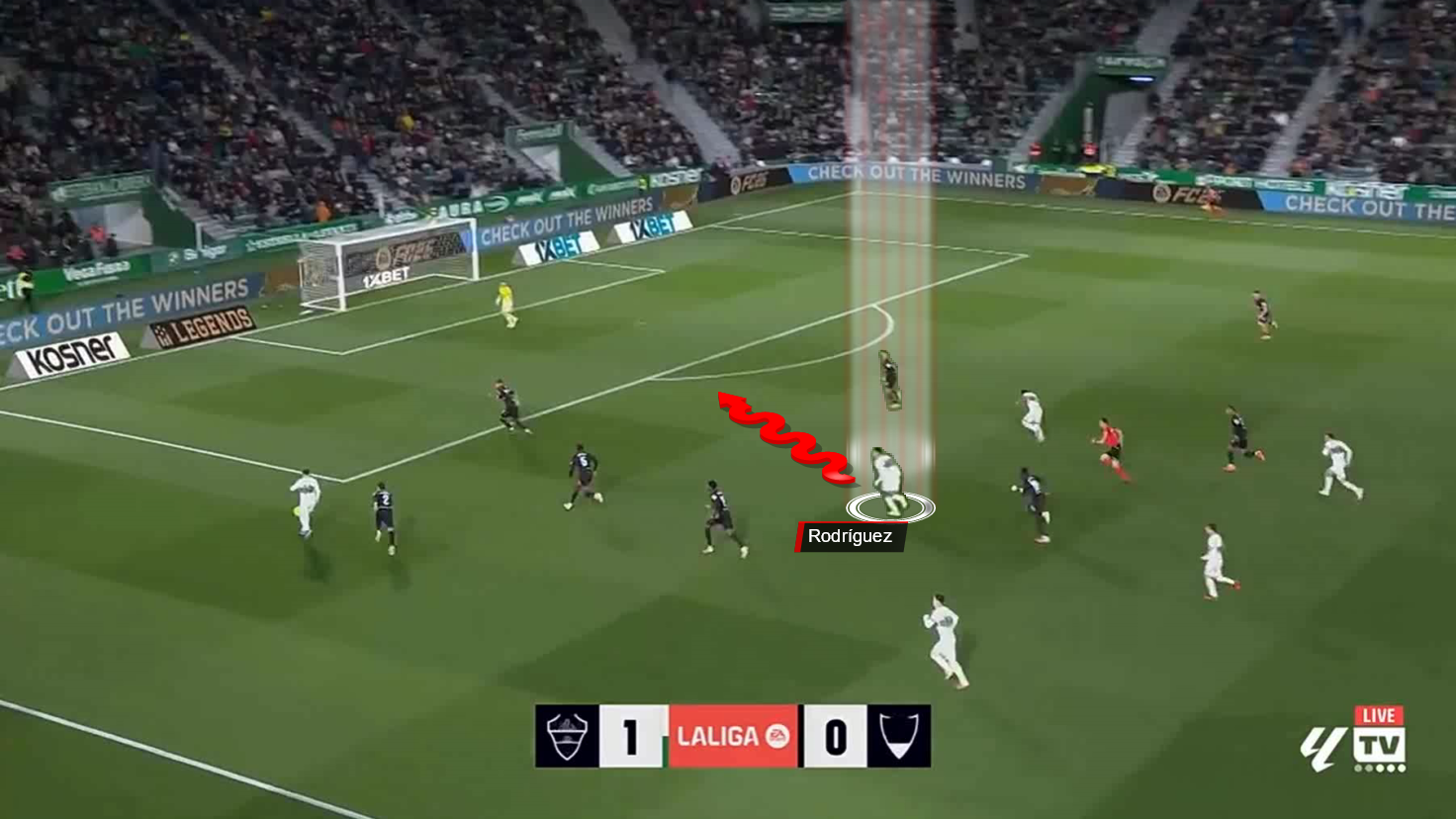 Long balls are played directly towards him.
In both cases, the aim isn’t to create an immediate chance, but rather to disrupt the opponent’s pressing rhythm as we see here against Sevilla.
Álvaro Rodríguez wins the ball or at least forces a disorganised tackle from the defender, allowing the team to advance with the second line and enter a more structured attacking phase.
This role often goes unnoticed, but it’s fundamental to controlling the tempo of the game.
Álvaro Rodríguez’s aerial play isn’t used as a personal solution, but rather as a means of organising the attack.
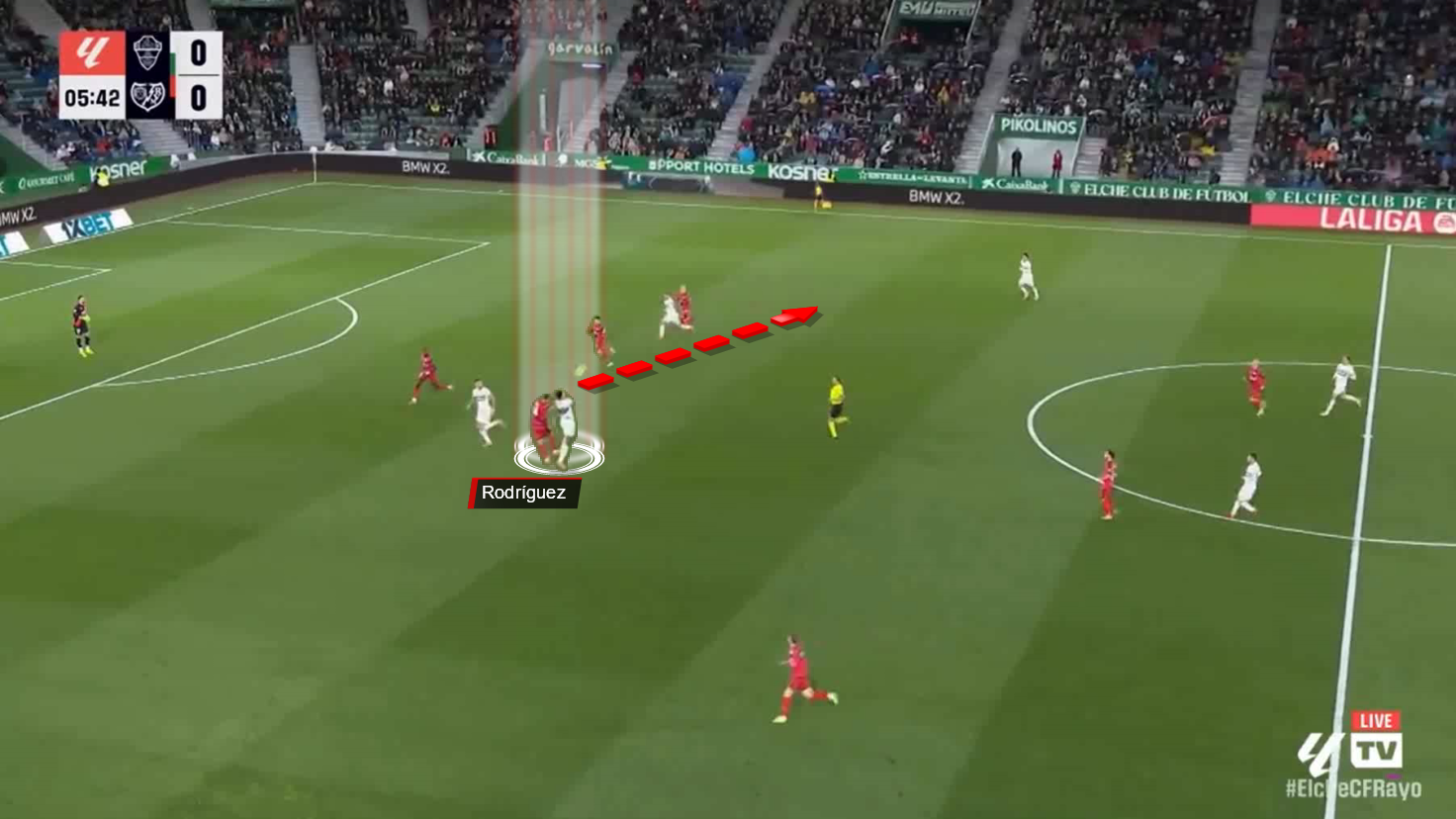
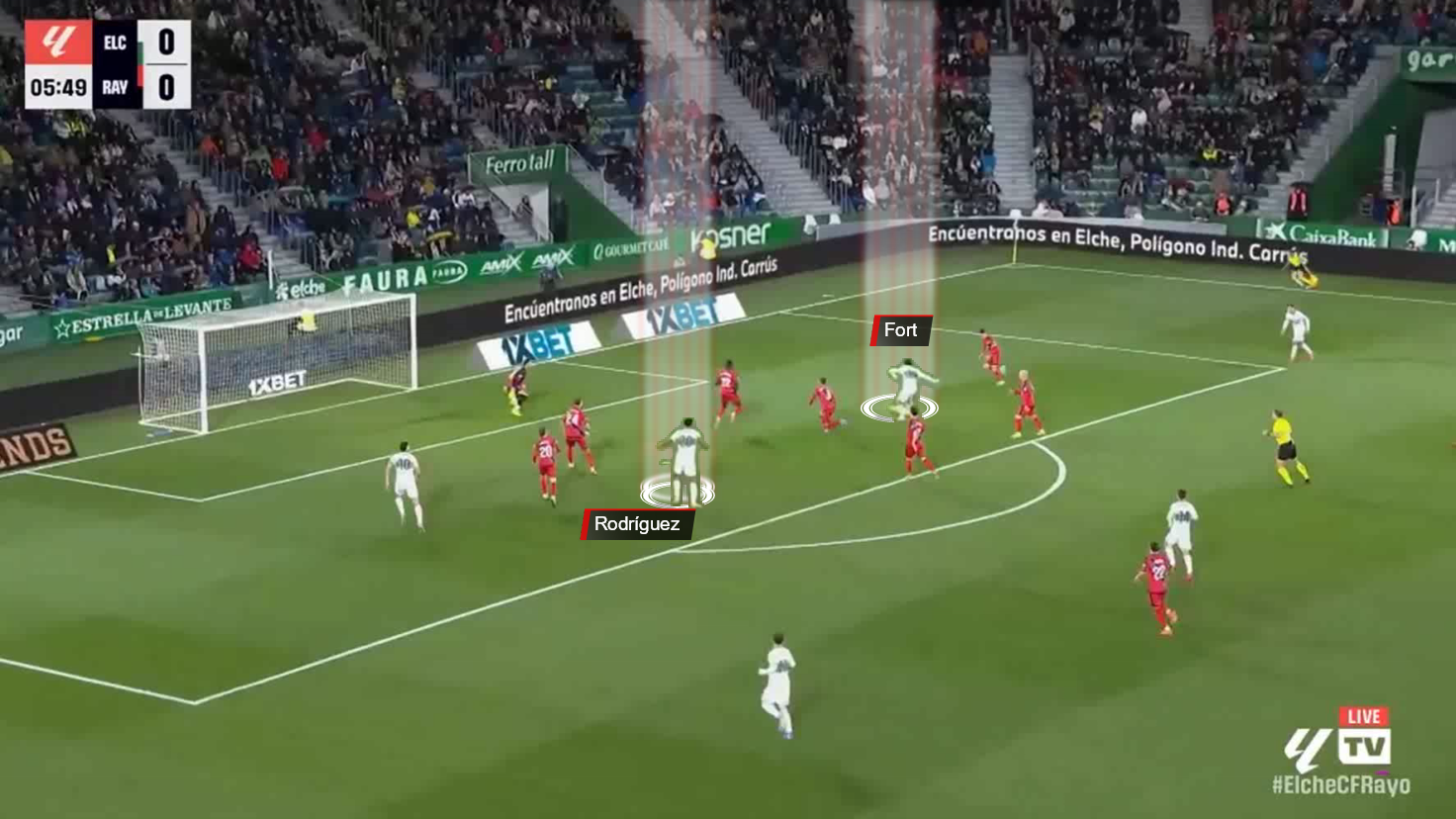
Here is Álvaro Rodríguez’s style in direct play, and his ability to adjust his header and pass to Héctor Fort, who utilised it to score against Rayo Vallecano.
This clever use of its length transforms aerial play into a collective tool and not just an attempt to score with the head.
Álvaro Rodríguez Scoring & Assisting
In terms of finishing, Álvaro Rodríguez is characterised by simplicity and efficiency.
He rarely dribbles inside the penalty area, preferring the quickest, least risky option.
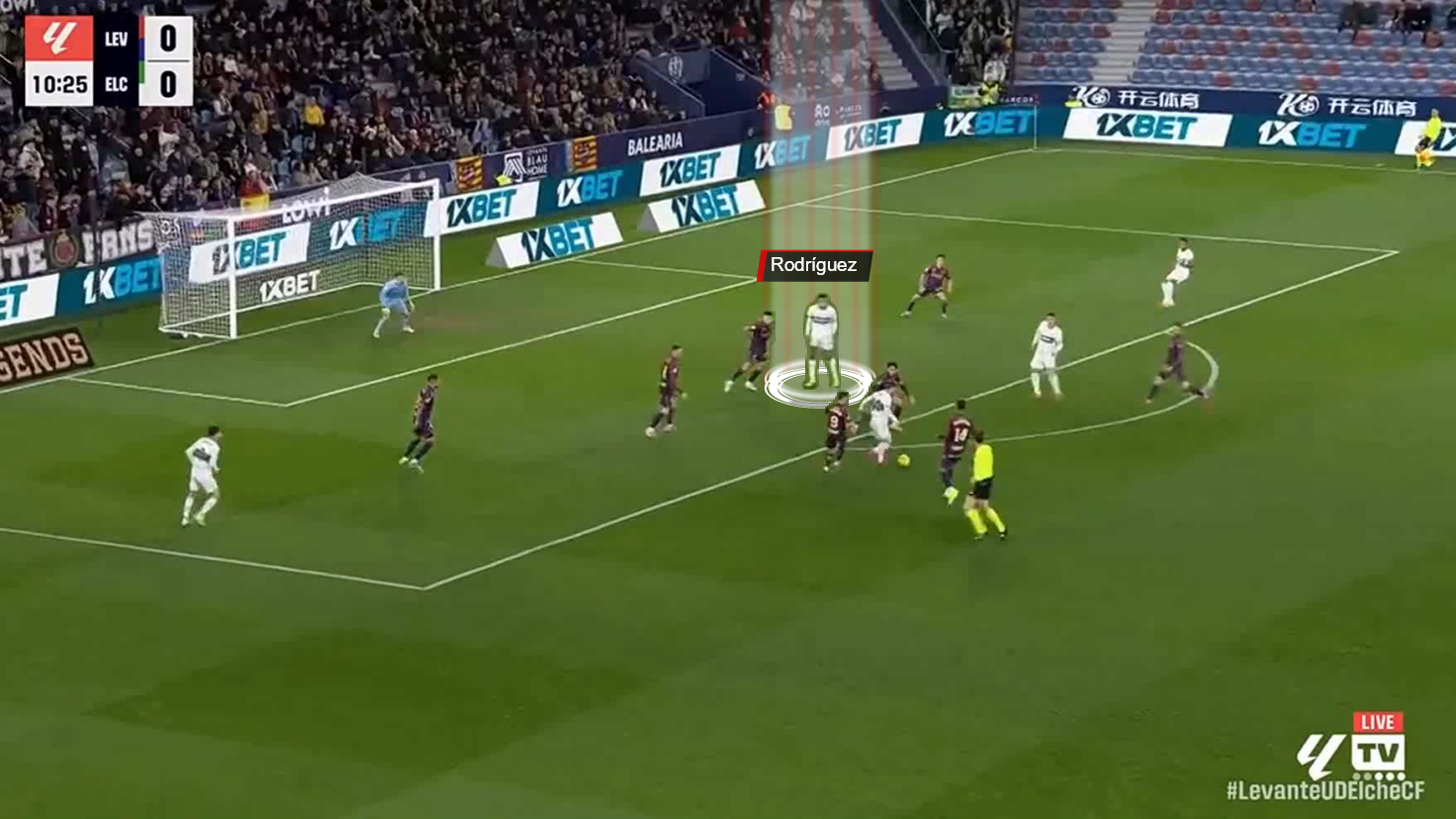
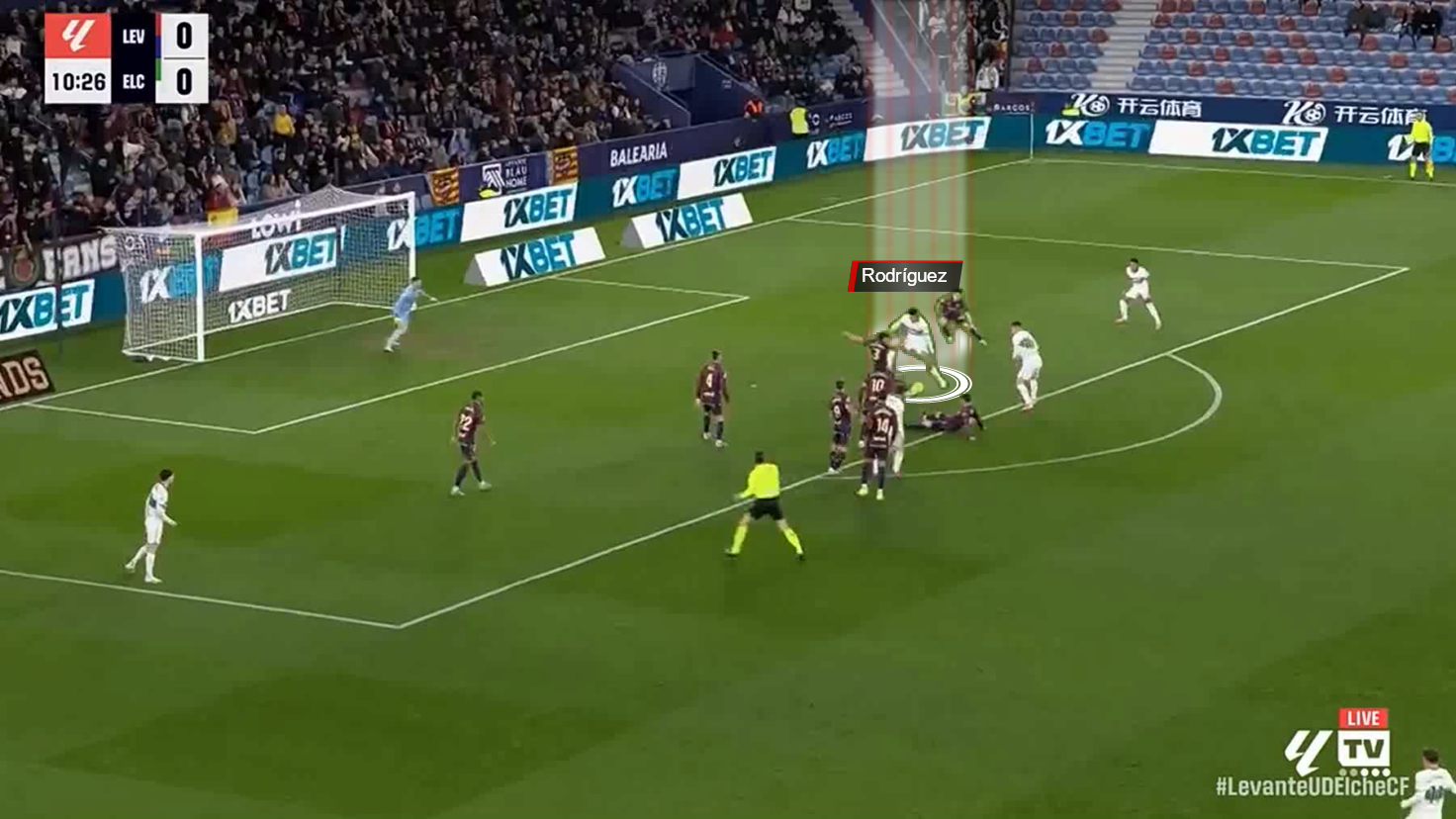
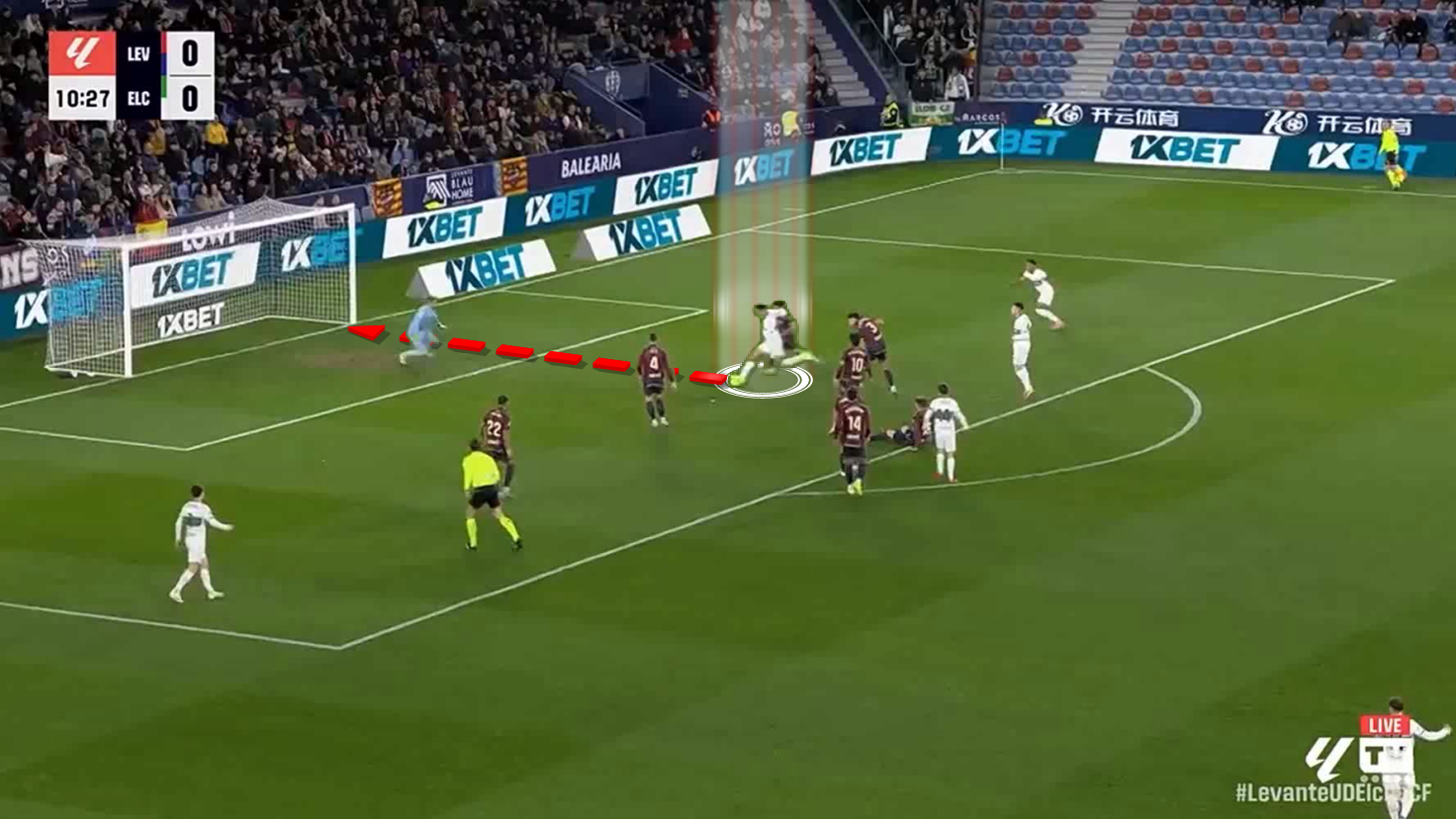 Here, where Levante stay behind with eight players, Álvaro Rodríguez modifies his body shape step by step and takes two steps back.
While the defender tries to cut off the ball, Álvaro Rodríguez collects it and makes a clinical finish.
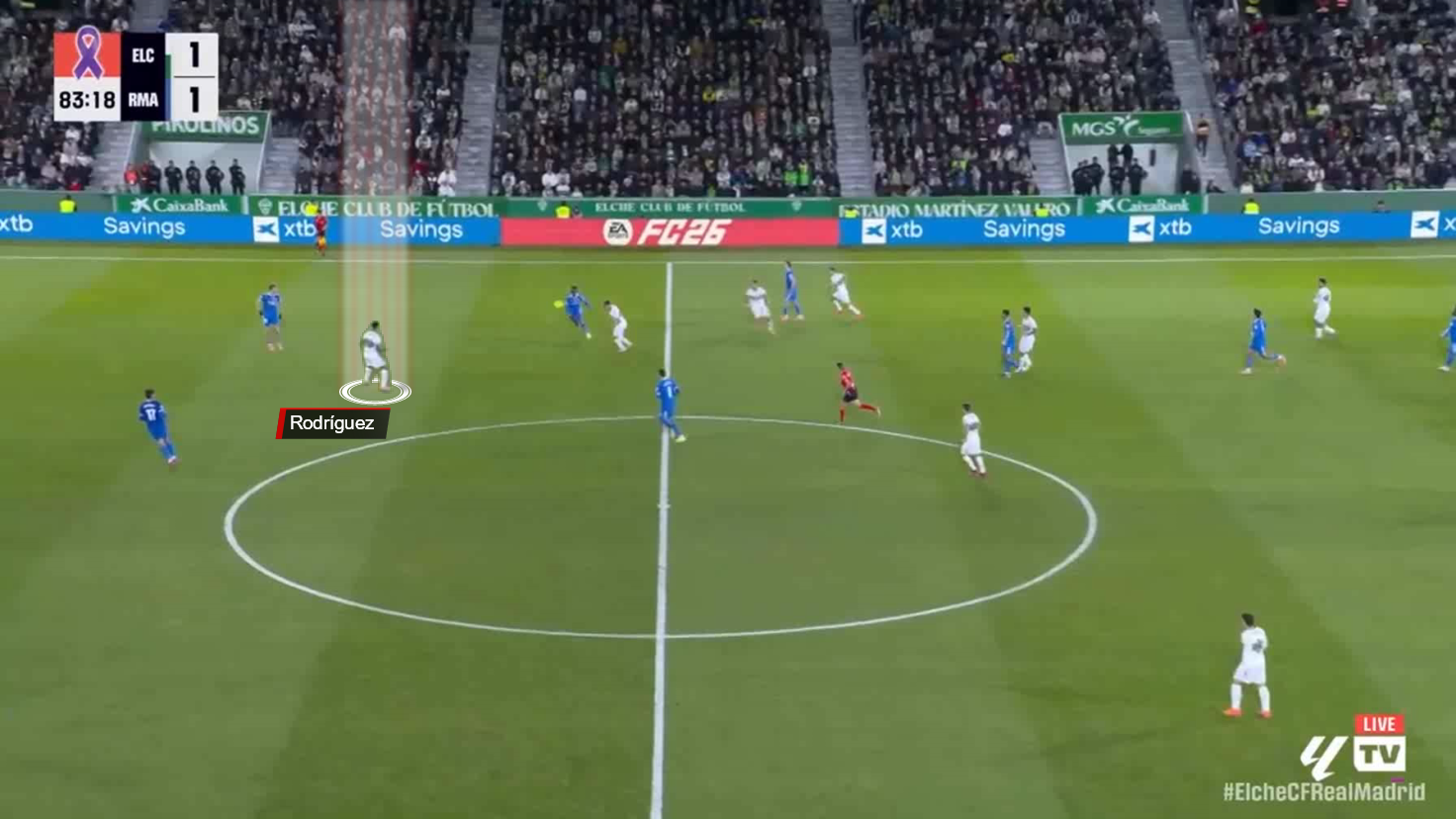
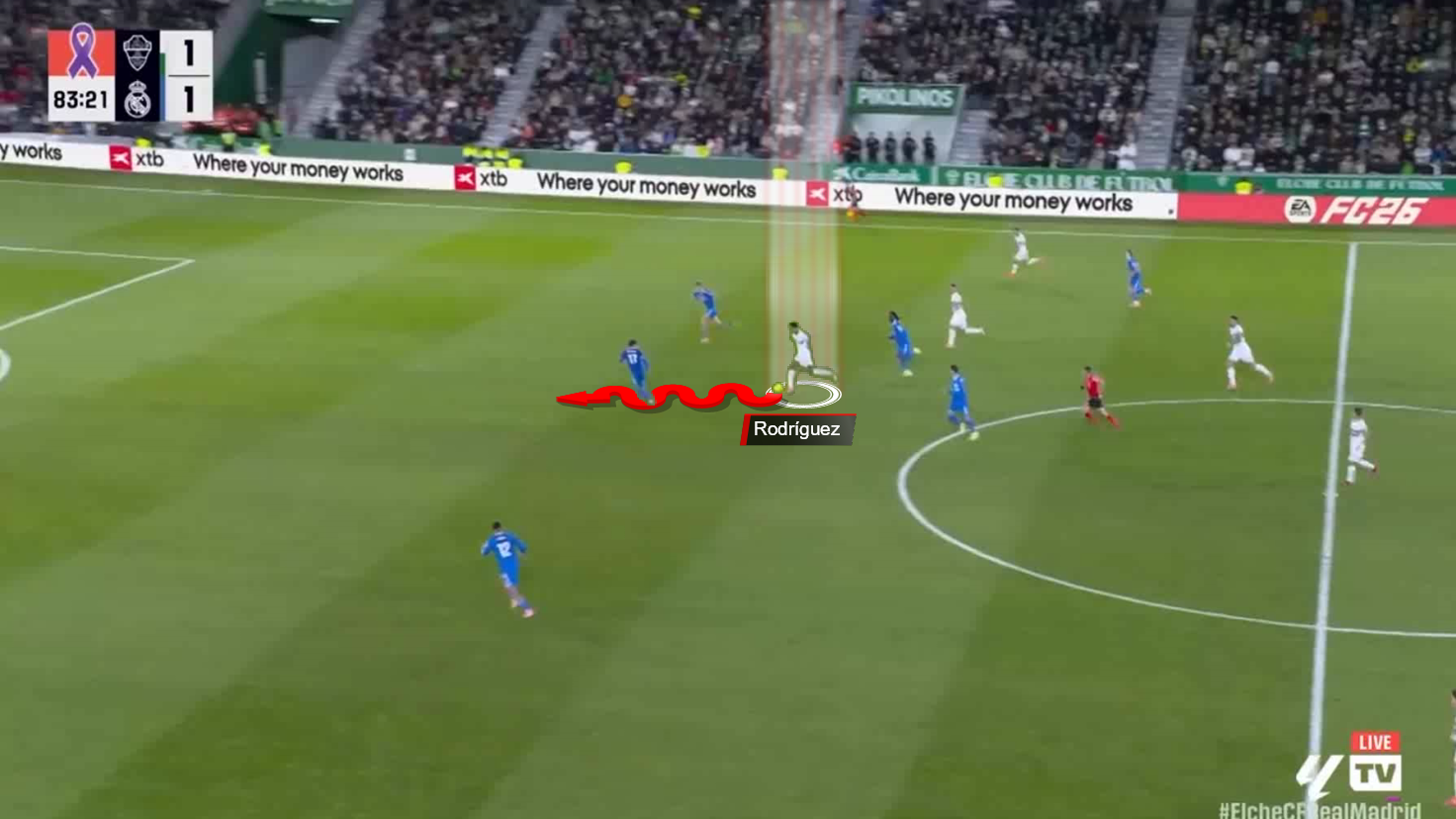
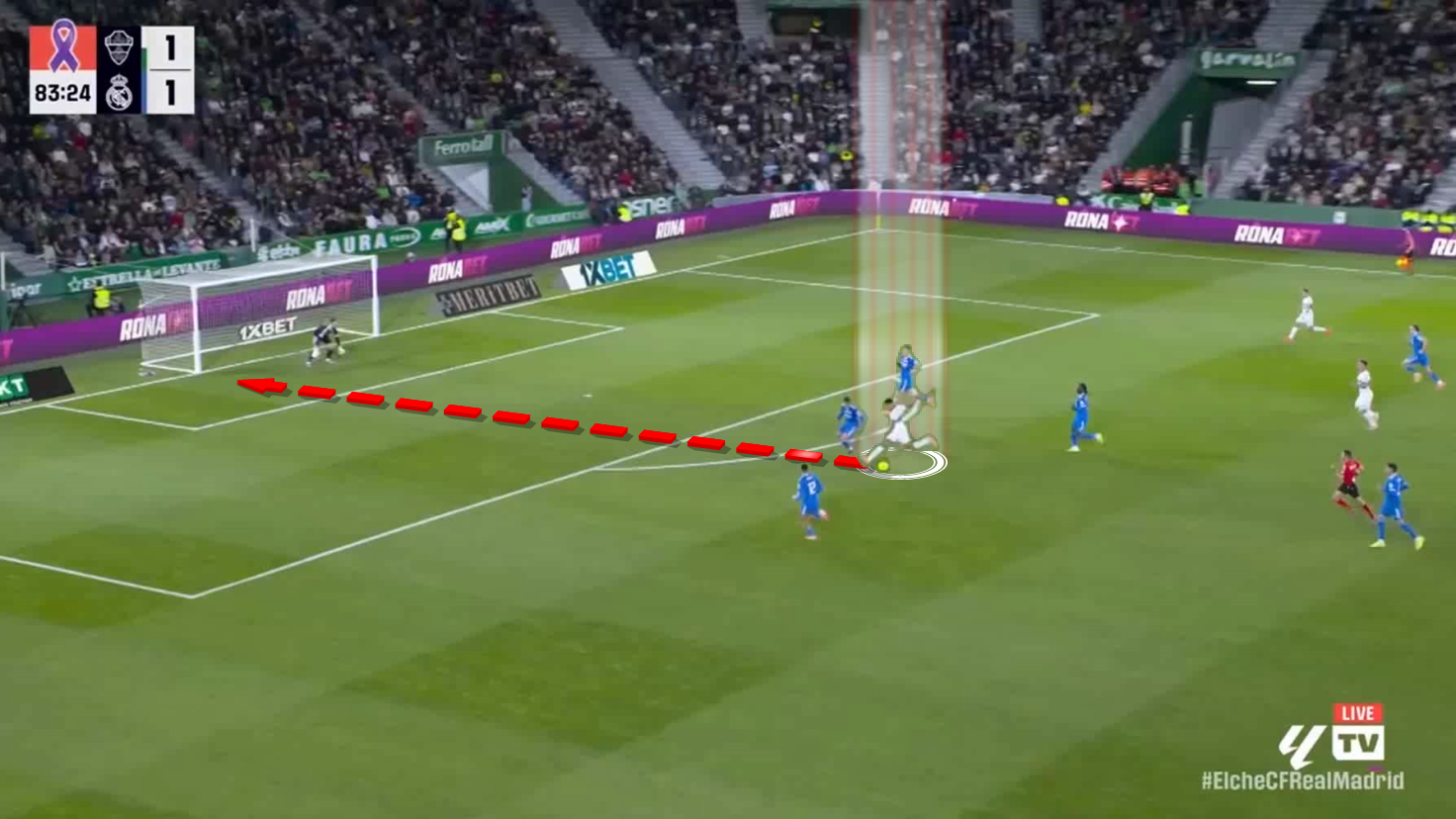 His development lies in reading his teammates.
Álvaro Rodríguez is no longer a striker who simply passes the ball back, but has become more aware of the timing and best place for passing.
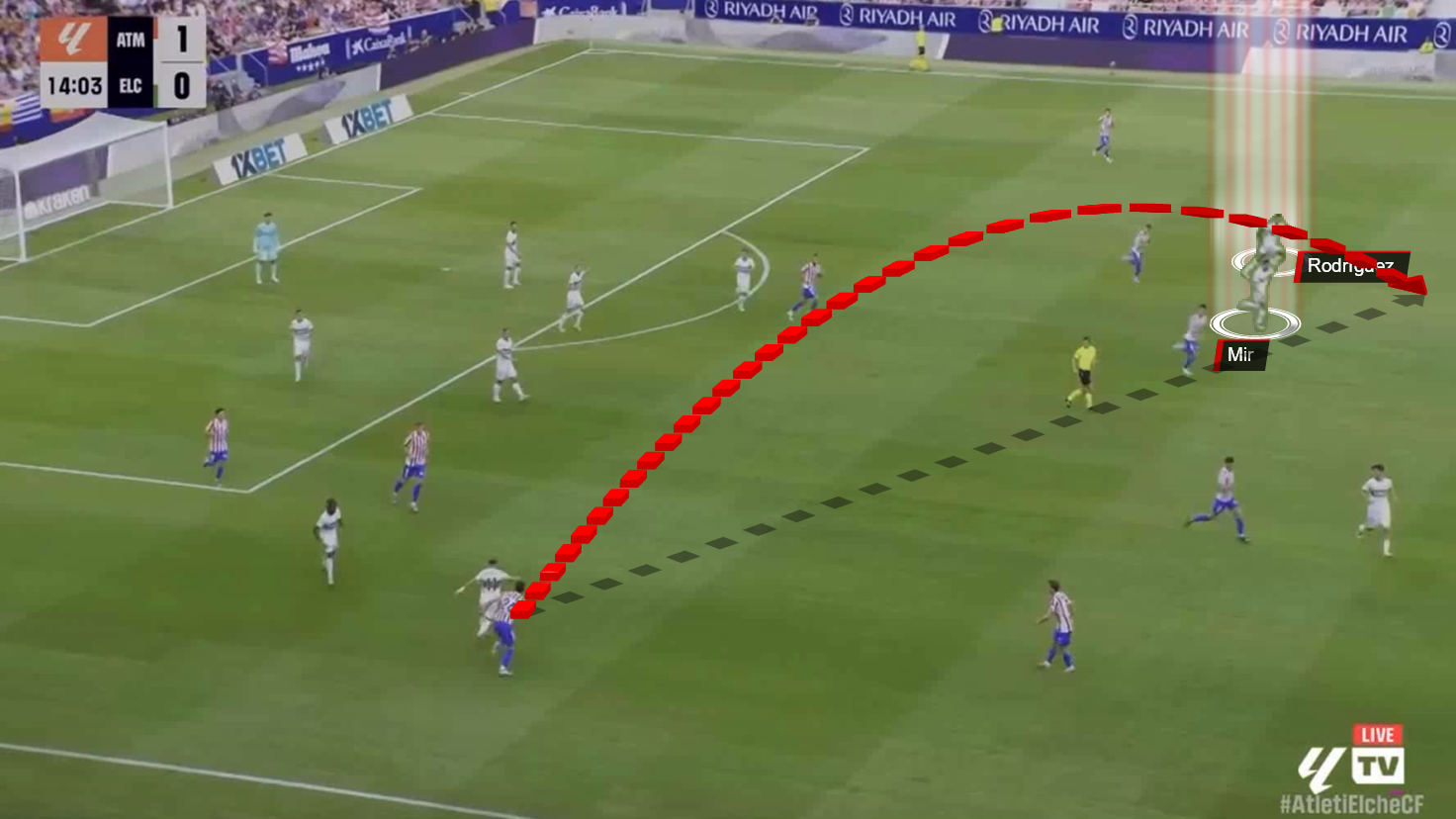
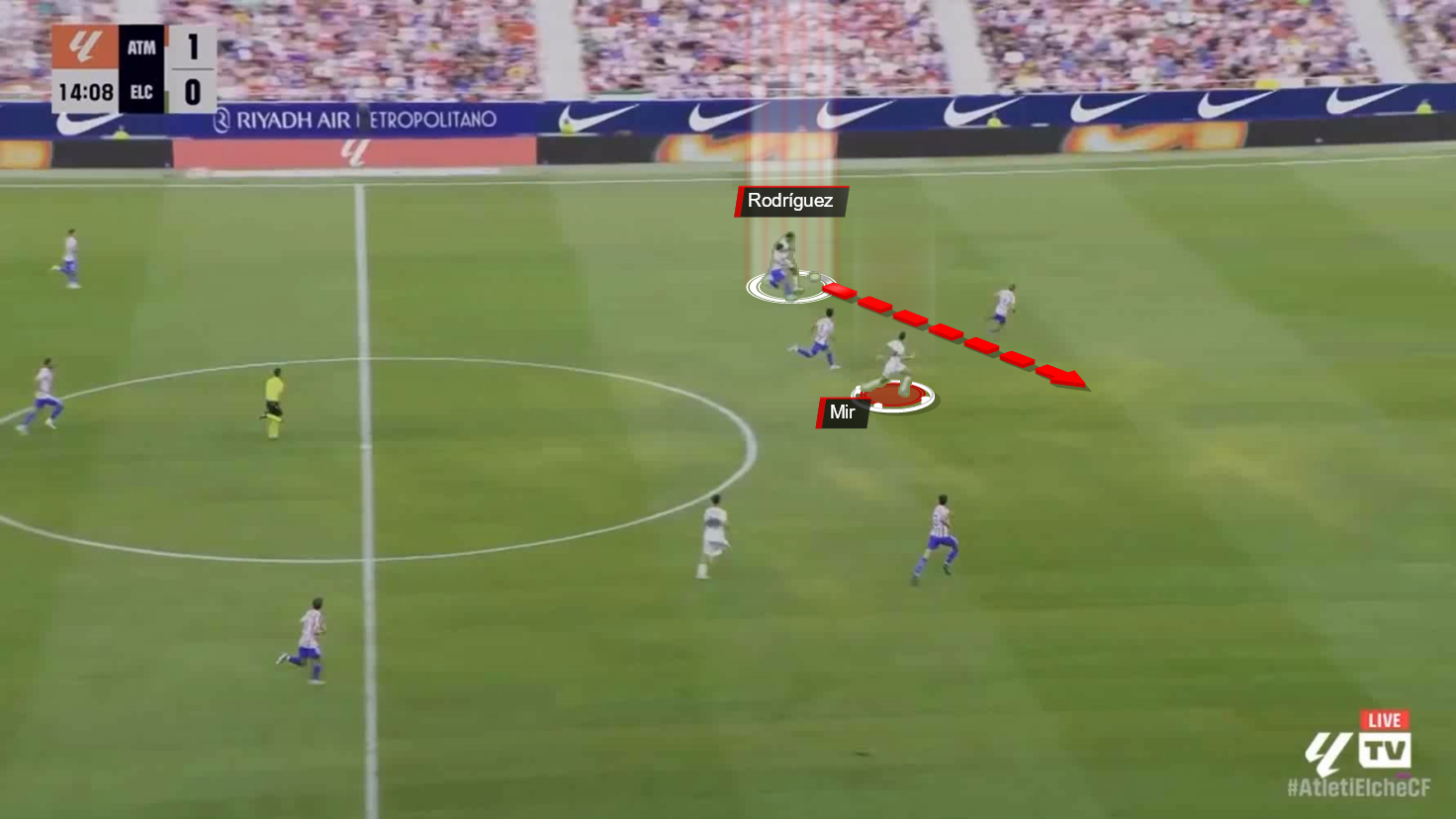
Here, in a quick transition against Atlético Madrid, we can see his vision for the ball carrier, and his run down the opposite flank.
Then, he connects with Rafa Mir and passes to him laterally, demonstrating a high level of tactical awareness in both his attacking and receiving runs.
Álvaro Rodríguez is developing his tactical awareness, where he could be a team player.
His goal tally is much better than last season, when he was on loan at Getafe from Real Madrid.
Rodriguez is trying to improve both offensively and defensively.
Álvaro Rodríguez Defensive Role & Pressing
Defensively, Álvaro Rodríguez is used as part of the pressing system, not as a free-roaming attacker.
His primary role is to close down passing lanes and direct the opposition’s build-up play towards the flanks.
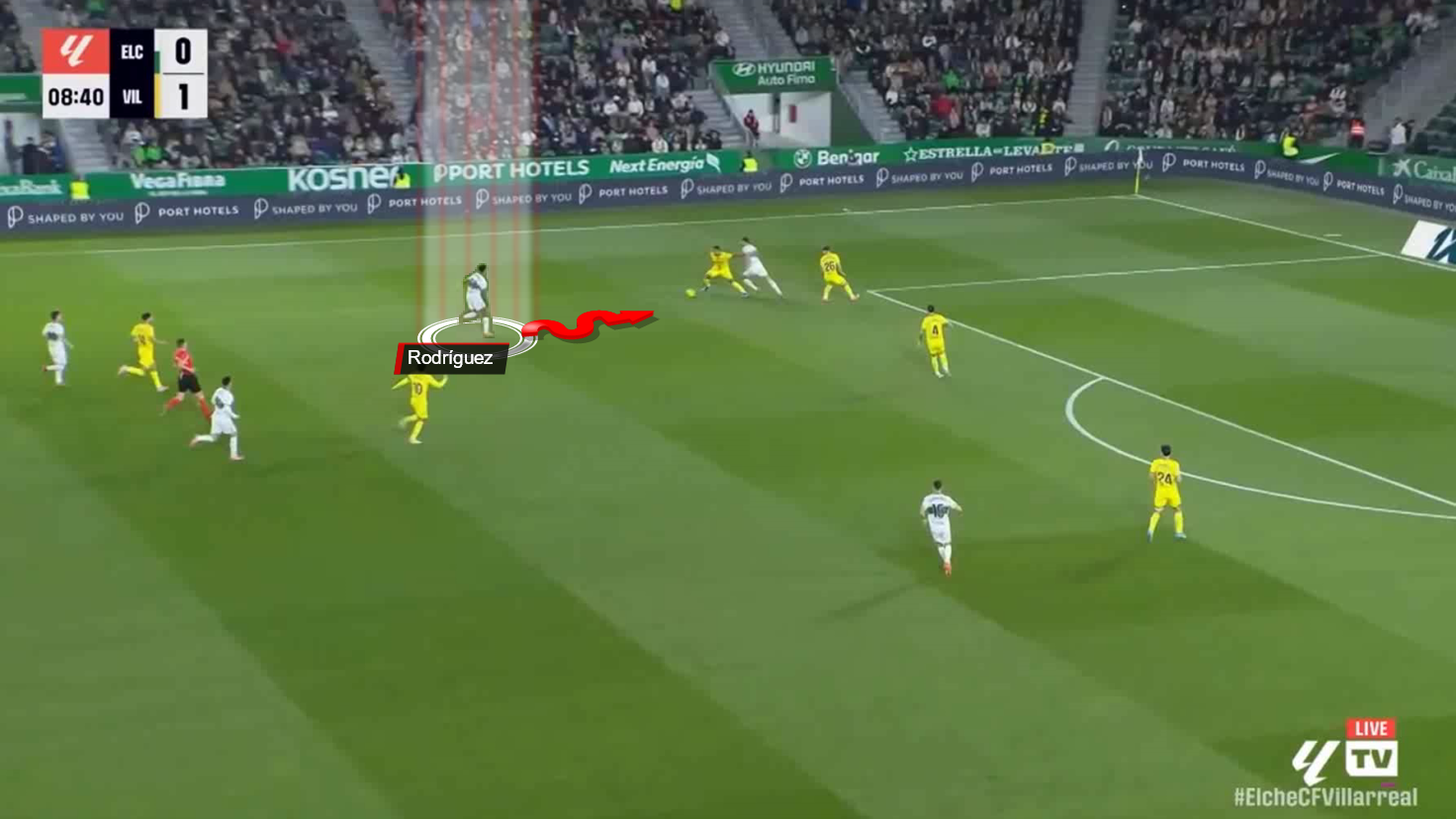
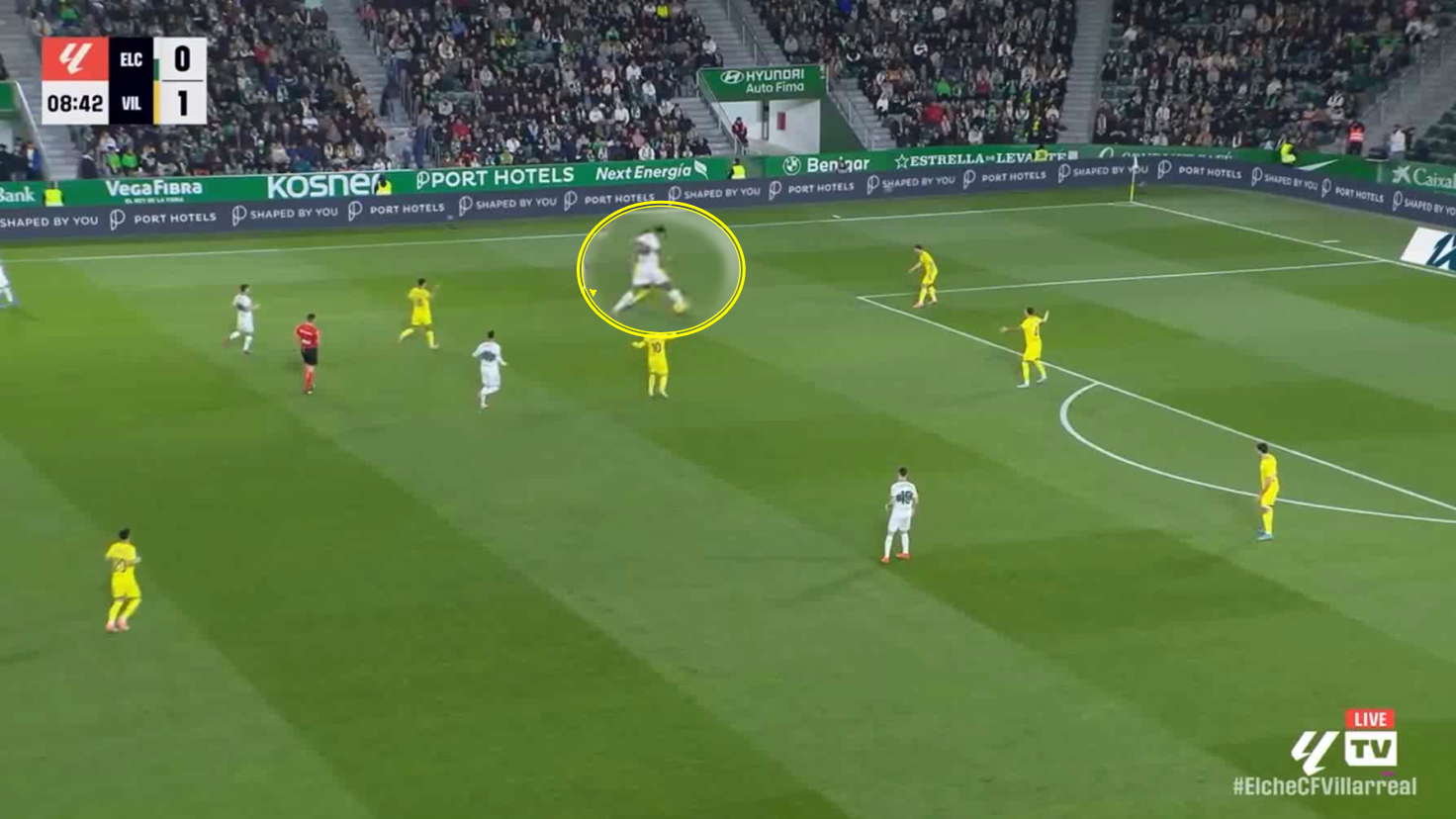
Here, a clear characteristic is winning the ball back from the opponent’s defender in a high area, which is one of the traits that distinguish Álvaro Rodríguez.
This supports the team’s defensive organisation and reduces risk.
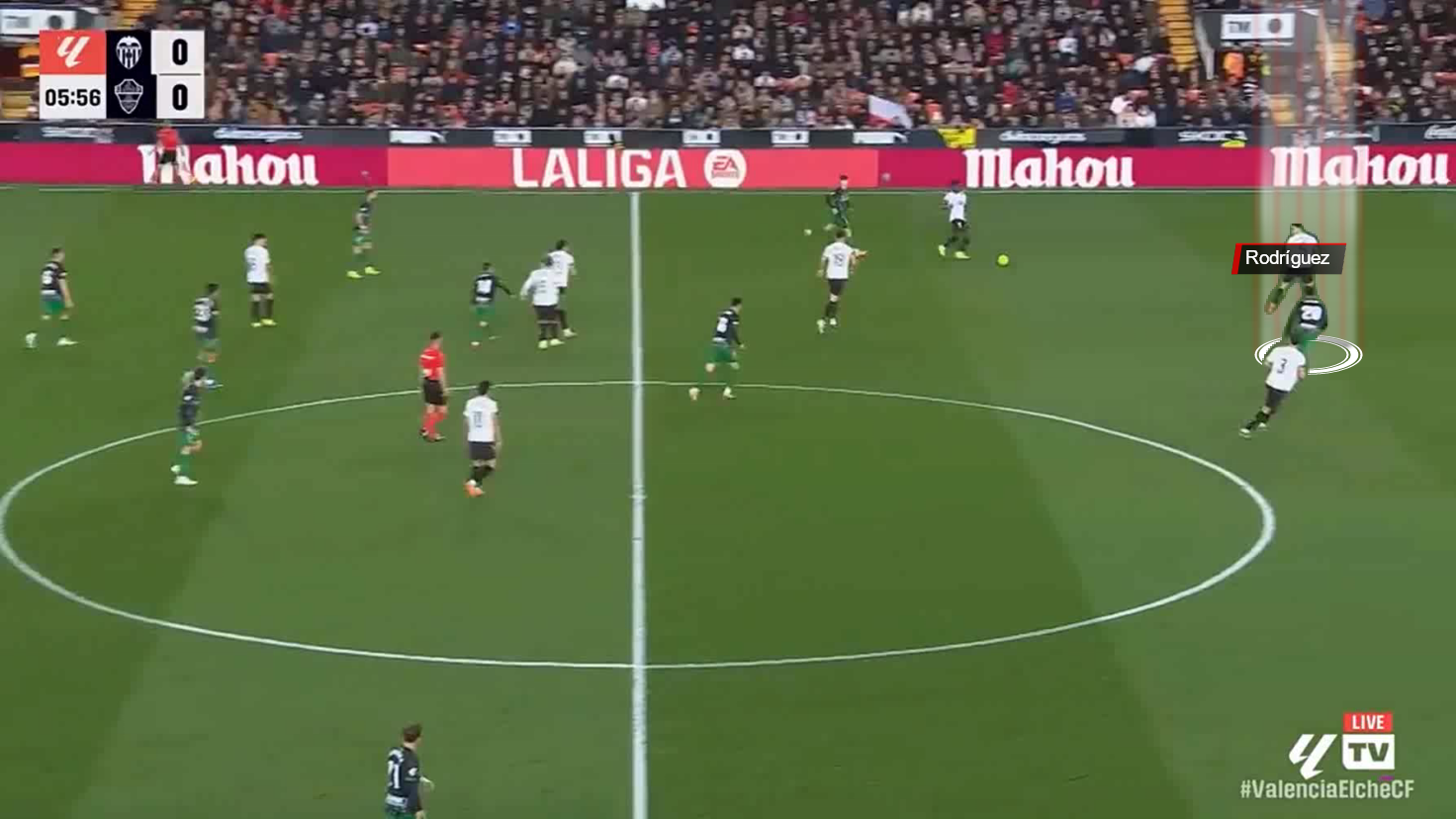
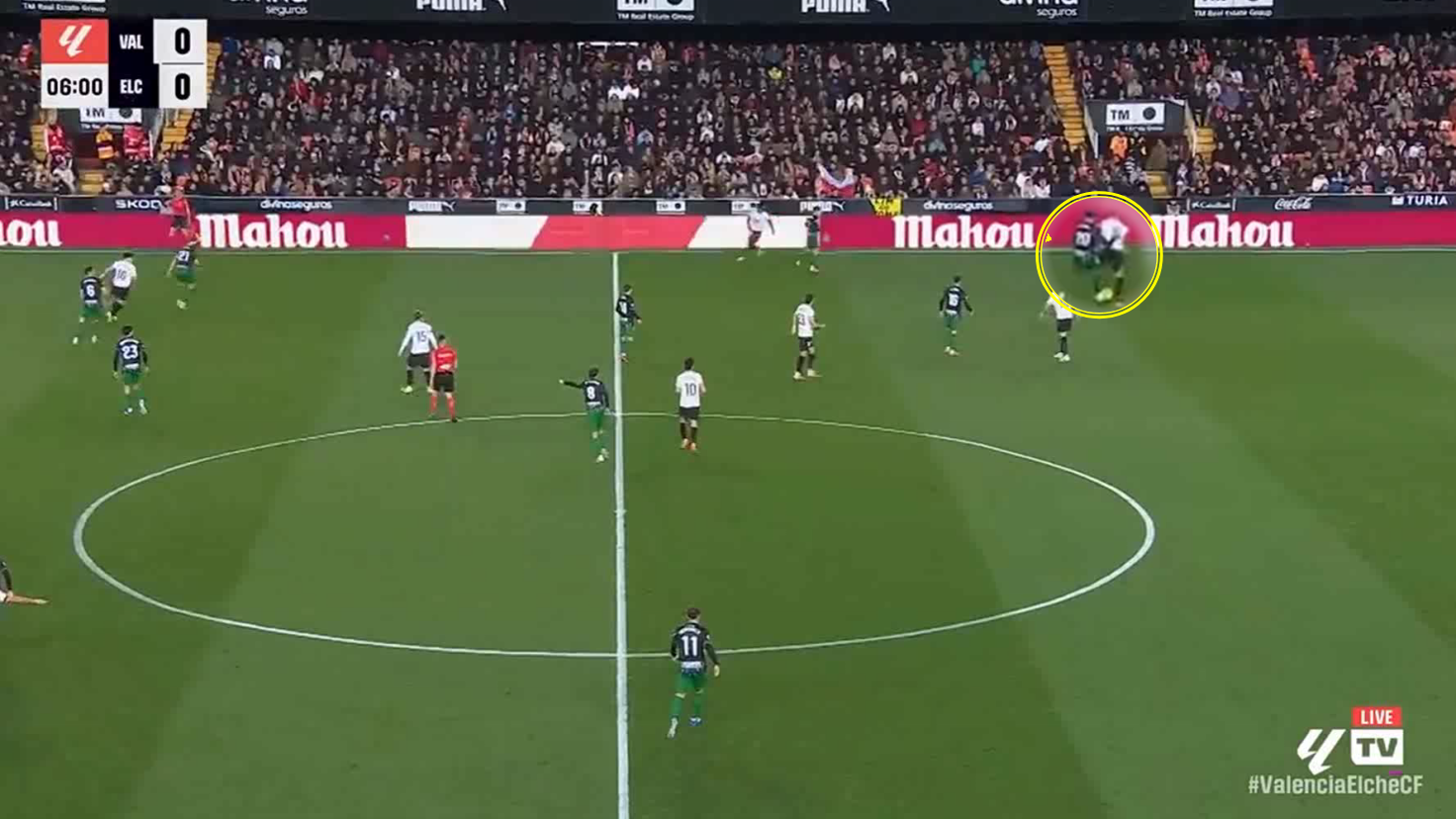
Here, versus Valencia, Álvaro Rodríguez is positioned between the two centre-backs and waits for the right moment to press the right centre-back and cut off the pass to the left one.
Rodríguez possesses tremendous physical abilities, and with further development, we can expect he will become a target for teams seeking a striker of this calibre.
Álvaro Rodríguez Areas For Development
Álvaro Rodríguez’s weaker foot still has limited impact.
In some situations, he’s forced to adjust his body angle rather than shoot directly, giving the defence a chance to recover.
Improving this aspect will increase his decision-making speed inside the penalty area.
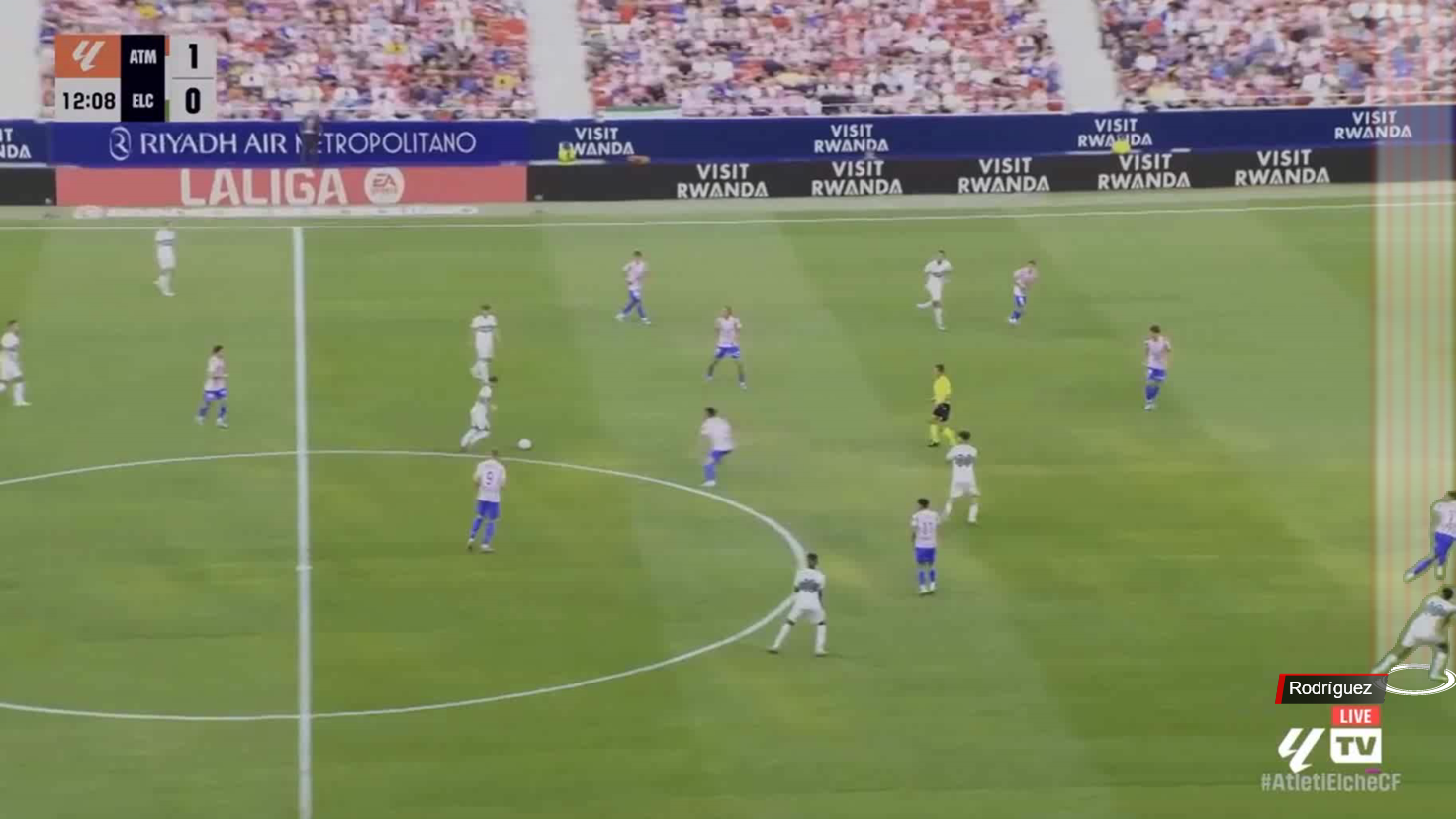
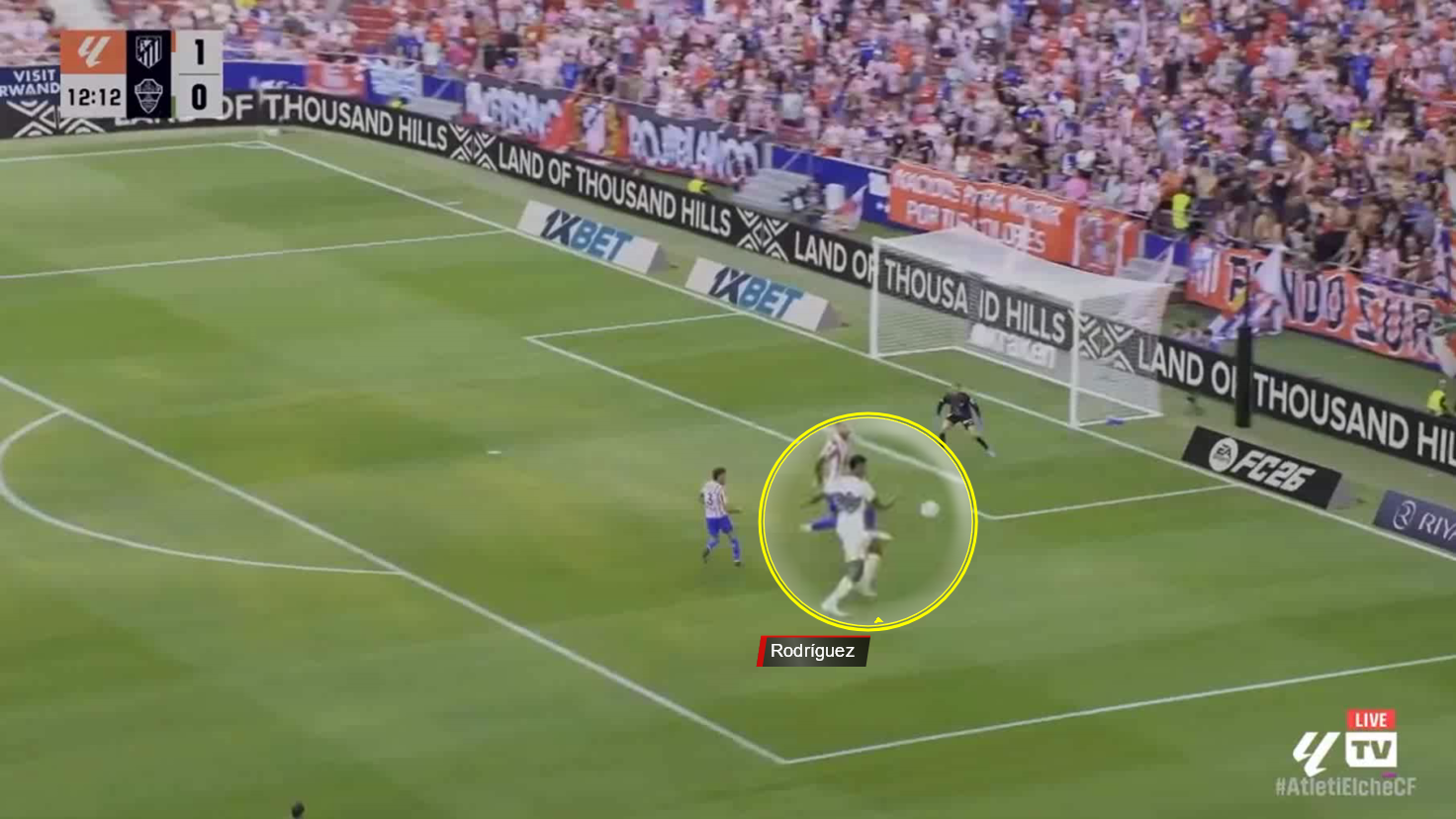 Here, against Atlético Madrid, Álvaro Rodríguez made a brilliant run and received the ball in the space behind the defender.
However, due to his limited ability to use his right foot and his attempt to adjust his body, he gave the defender time to reposition himself.
Also, in many cases, he succeeds in positioning himself correctly but lacks the crucial acceleration that would allow him to turn a half-chance into a fully-fledged opportunity.
Developing the first two steps will be a critical factor in increasing his chances inside the box.
Maintaining mental focus for the full 90 minutes is a challenge.
There are periods when his influence wanes, not due to poor positioning, but due to decreased engagement in the game.
Maintaining the same level of concentration throughout the match will make him more consistent in the long run.
We can talk about the possibility of continued development in those areas to return to the level of competitive teams.
Conclusion
Álvaro Rodríguez is a striker who serves the team before himself.
His true value lies not only in the number of goals he scores, but also in his ability to link up play, manage space, and provide tactical solutions that give his team attacking stability.
In the context of Elche, Álvaro Rodríguez represents a model of a modern, exemplary striker who understands that the role is fundamental and that individual development only comes from within the collective framework.
By working on these aspects of development, he can transform from an important functional player into a more decisive and influential striker at the highest level.
