
Sir Alex Ferguson once said, ‘Attack wins games, defence wins titles’.
However, for coaches like Alexander Blessin and José Bordalás, who are not in the ideal position to win titles with their current teams, the legendary quote can be changed to ‘attack wins you games, defence keeps you in the league’.
Well, playing defence may be the normal way for a bottom-half team to stay in the league.
That was true of St. Pauli and Getafe, the clubs of Blessin and Bordalás.
But context matters.
Take this simple data, for example, St. Pauli have the second-best goal conceded record in the Bundesliga with 41, behind only Bayern Münich at 32.
Meanwhile, Getafe are third in La Liga for goals conceded with 37, having a better defensive record than Real Madrid at 38 or Barcelona at 39.
They do it not only by playing defensive football but also by being a clever defensive team.
They know they don’t have the resources or interest to play an attacking brand of football, so they choose to be a defence-first team.
Interestingly, they also have different approaches to defending.
This tactical analysis will explain how Kiezkicker and Geta Azulones are staving off relegation this season by playing a defensive game.
Alexander Blessin Tactics: Defend Deep & Close Down The Opponent’s Shooting Area
Before he joined St. Pauli, Alexander Blessin style of play was famous for playing a type of football that involved high-pressing.
He played that kind of football at his previous clubs, Genoa and Royale Union St. Gilloise.
He tried to use the same style for the newly promoted St. Pauli, at least for the first three league games.
During that time, St. Pauli’s passes allowed per defensive action (PPDA), which measures pressing intensity, was third in the league, but they were the team with the fewest points.
St. Pauli lost their first three games, and this made Blessin change his team‘s approach.
He realised that his players did not fit into the system he had tried to build and that the high pressure was too risky for the team.
During those three games, the opponent’s transition attack exposed St. Pauli’s weaknesses.
Their lack of defenders who can keep pace under control and enough time to build the right structure to adapt to that style only made it worse.
So, Blessin changed his approach.
First, he brought back the 3-4-3 formation that the previous coach, Fabian Hürzeler, had used.
Second, he made St. Pauli play more deep defensively.
Blessin changed his mind.
He no longer tried to make his team win the ball as soon and as high as possible.
Instead, he tried to let the other team have the ball as much as possible, but only in the areas where his team usually wins.
Yes, that’s the key.
Make the opponent attack in areas they don’t know well or in areas that St. Pauli think are less dangerous.
Most of the time, St. Pauli will try to break down their opponents’ build-up on the wing.
Jackson Irvine and co will do this by forming a narrow first block of five players.
This group of players will block their opponents’ passing options to the centre area.

By forcing the opposition to the wings, St. Pauli benefited in several ways: The opponent’s route to the penalty area is longer, it is easier to overload the wide area rather than the centre, and it is also easier to keep the structure compact and organised.

Also, when the centre of the pitch is blocked, the opponent usually looks to play a long ball.
This also favours St. Pauli, as their compact structure makes winning the second ball easier.
If the opponent plays the ball out wide, the wing-back will usually try to jump and press the opponent.
The midfielder and winger on that side will follow, creating a situation in which St. Pauli are not outnumbered.
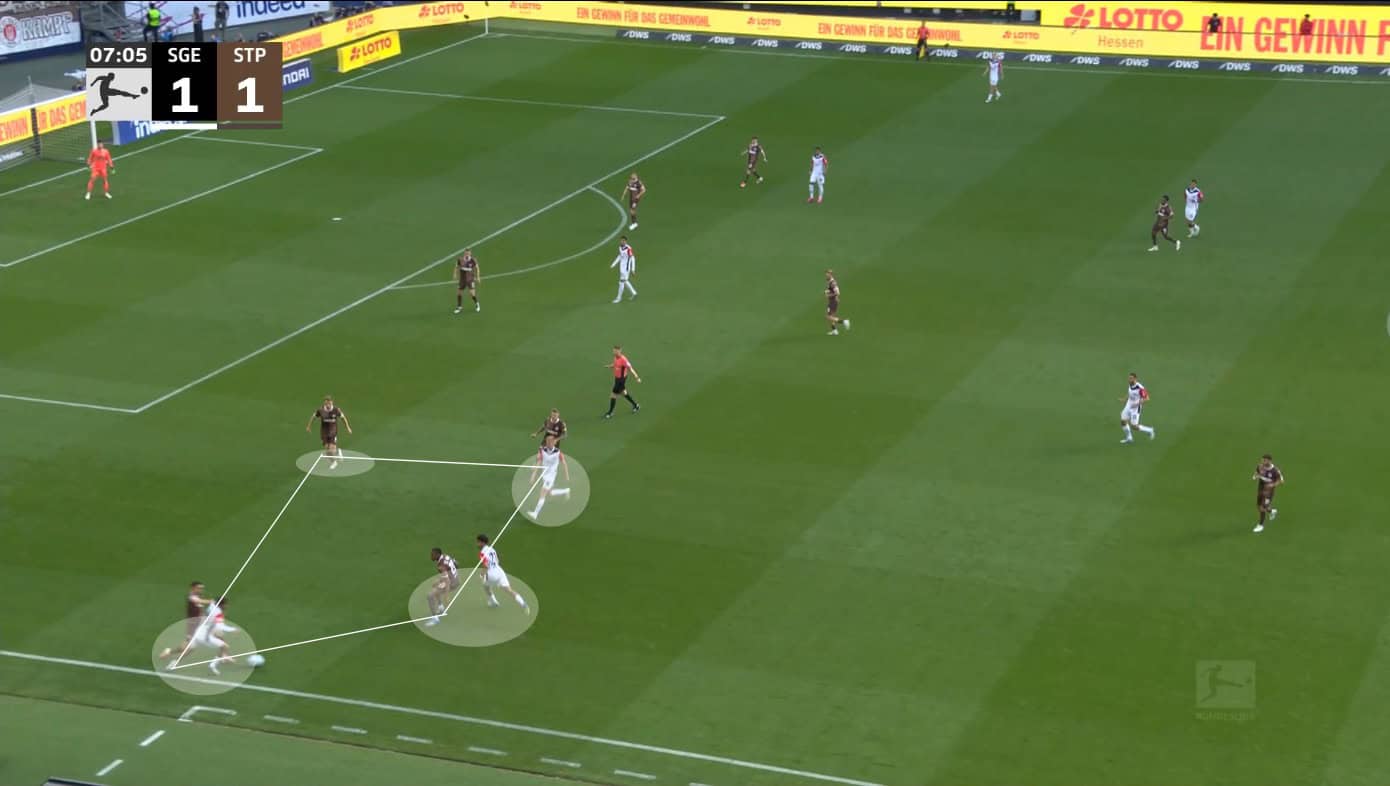
St. Pauli are also really good at calculating their defensive duels.
In fact, they are second best in the league in terms of defensive duel success rate, only behind the champions Bayern Munich.
Under Alexander Blessin coaching style, the defenders have the freedom to jump from their defensive line when the moment and the timing is right.
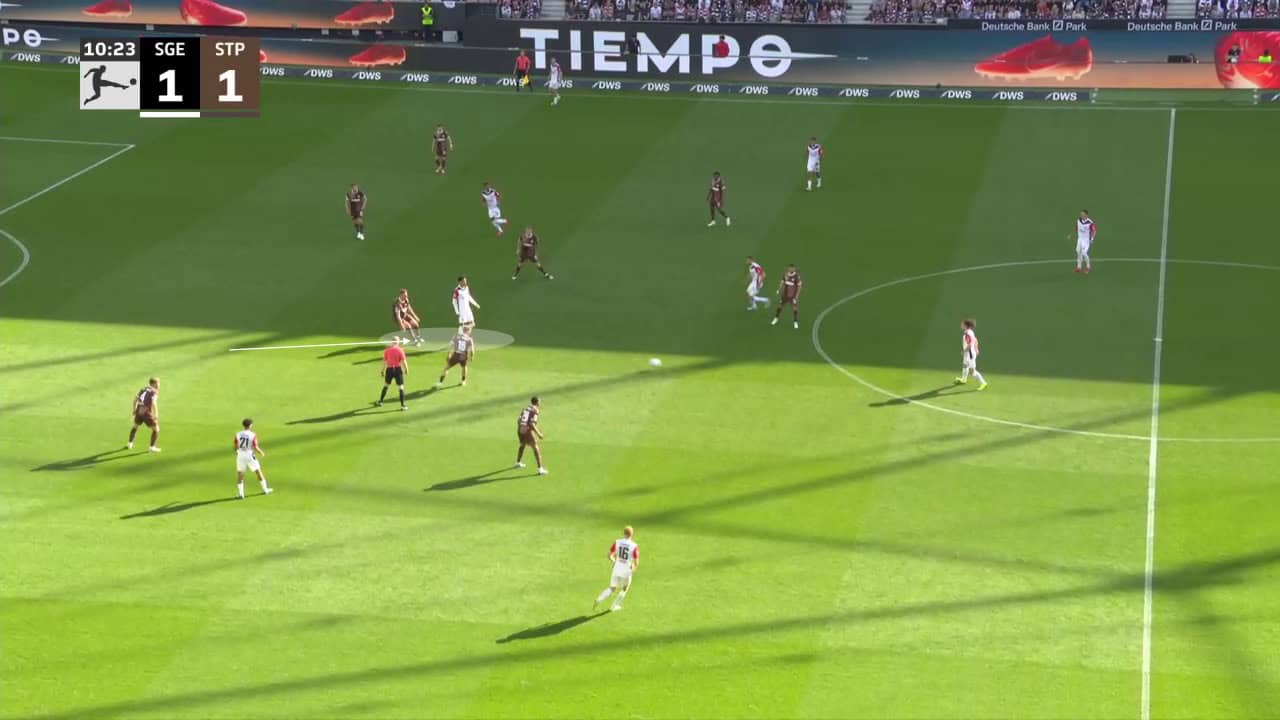
They are defending deep, but when the opponent’s striker wants to drop to receive the ball between the lines, the St. Pauli defender will follow him and try to make defensive duels.
This really helps to disrupt the opponent’s attack as it makes it harder for them to turn back towards the St. Pauli goal and bring the ball forward to pass or shoot.
Duelling the opponent when they are still facing their own goal is a good strategy that St. Pauli use successfully.
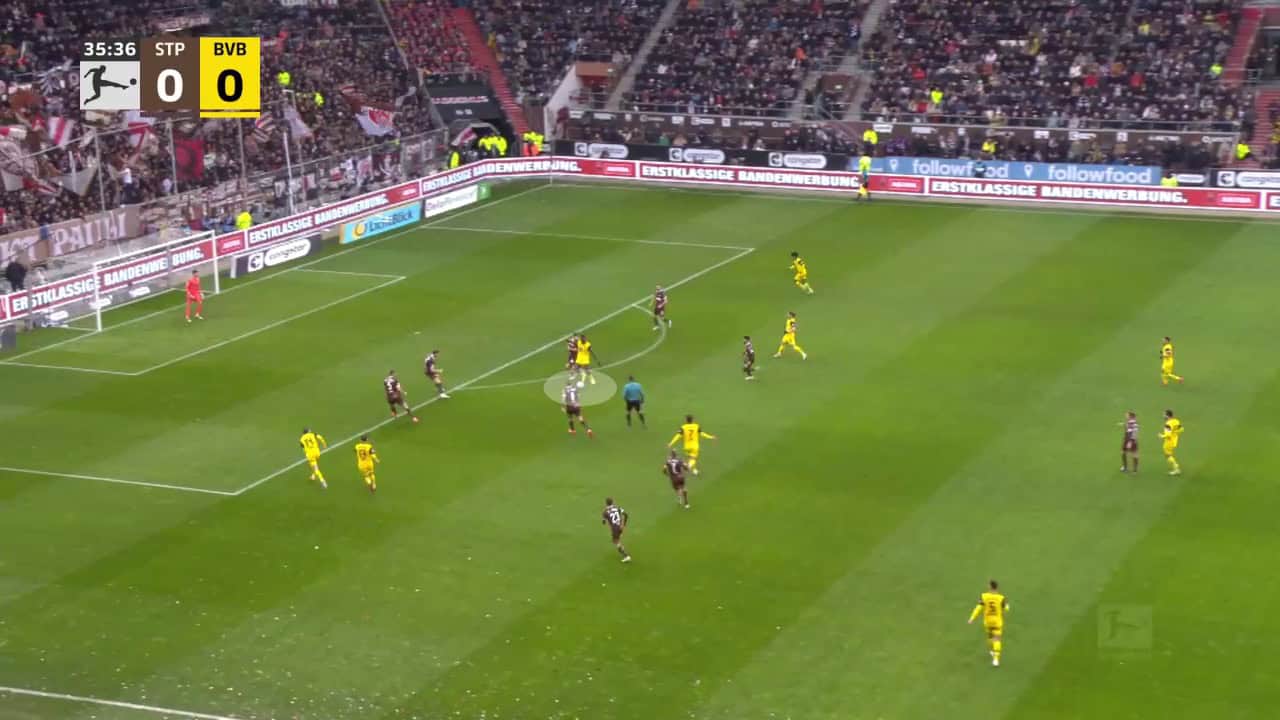
If the opponents manage to get into the final third, St. Pauli’s out-of-possession structure will narrow.
They’ll try to close down the centre area inside and in front of the penalty area to prevent their opponents from getting a good shot off and make blocking easier.
It’s no surprise that St. Pauli have the highest percentage of blocked shots in the Bundesliga this season.
They are really good at finding the timing and space to close down their opponents’ shots or force them to shoot awkwardly or out of position.
Take this sequence against Eintracht Frankfurt, for example.
Hugo Ekitike had the ball in the St. Pauli penalty area, and his body gesture indicated that he was ready to shoot.

However, with three St. Pauli players closing in on him, Ekitike moved the ball and ended up in the line of the box, further away from the previous area and not in a comfortable position, so his shot went wide.

Take this one from Chris Führich.
The VfB Stuttgart winger tried to cut inside, but when he arrived in front of the St. Pauli box, he had no free passing options and decided to shoot from that area, resulting in a good chance.
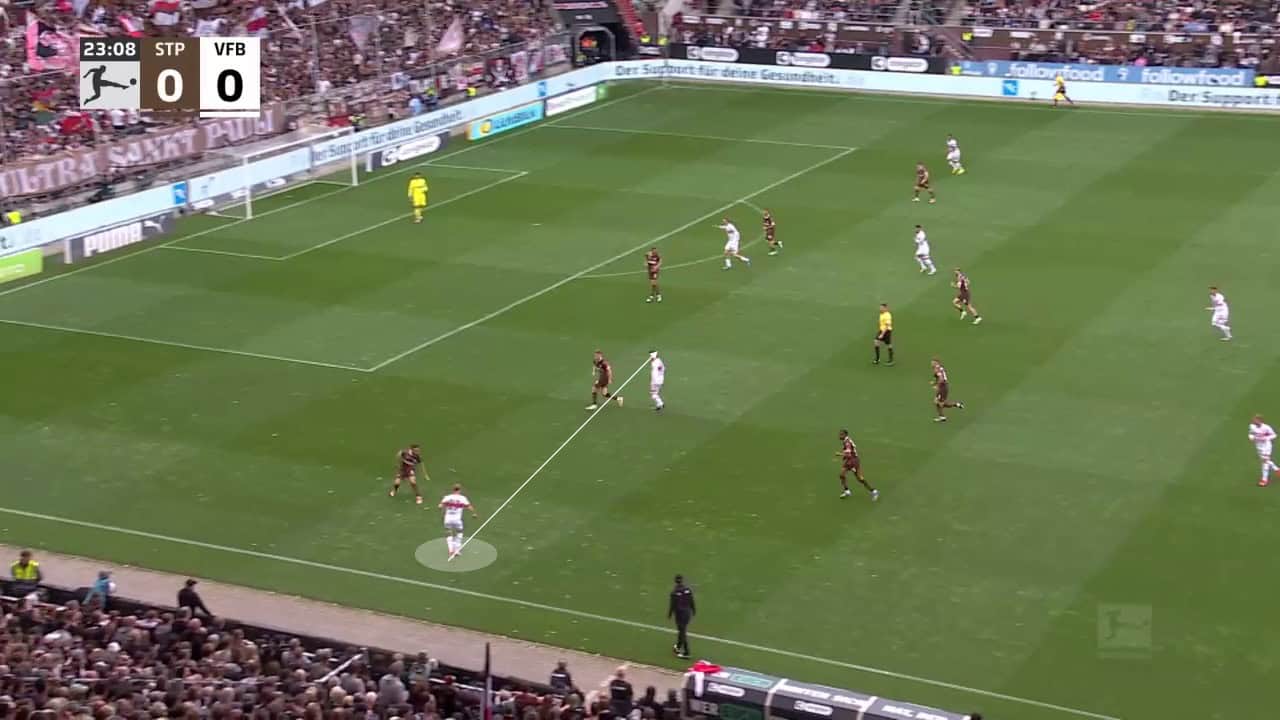
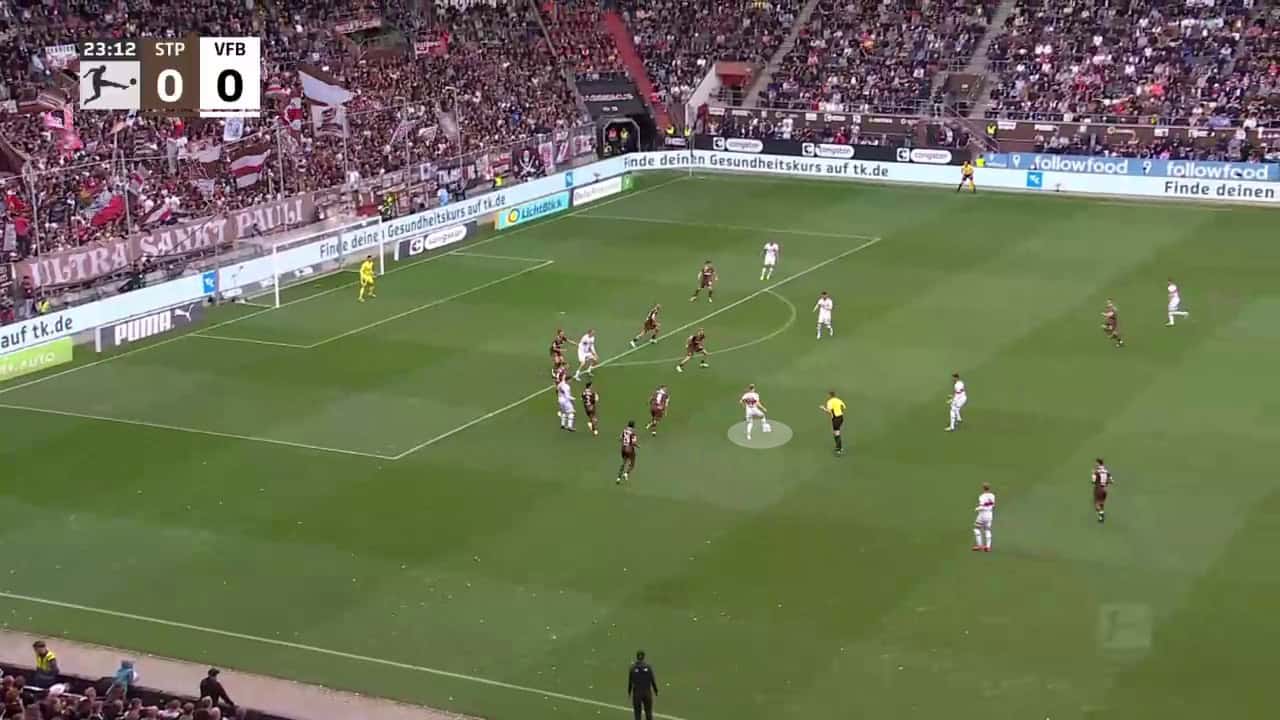 This kind of scenario is widespread when St. Pauli play.
The team they were up against struggled to find the perfect situation to shoot the ball.
Another aspect that has helped St. Pauli to excel defensively this season is their goalkeeper, Nikola Vasilj.
The Bosnian goalkeeper has the best goal-prevention ratio in the league, with +9.4 post-shot expected goals minus goals allowed.
José Bordalás Tactics: Press High At The Right Time To Force Errors
If St. Pauli love to defend in the deep, let their opponent have more possession of the ball and decide to close the space that they think will cause them more problems, Getafe are not built like that.
José Bordalás, their coach, loves to have his team press high on the opponent and play in a high defensive line.
In terms of PPDA number, Getafe is the fifth-most aggressive pressing team in La Liga this season.
On average, they let the opponent pass the ball 9.53 times in the build-up before taking a defensive action.
Getafe have the second-highest defensive line in the league, only after Barcelona, and they are the best at making their opponent make unsuccessful passes, lost dribbles, or bad touches near their (opponent’s) area.
Also, to add more context to their aggressiveness, they are the third-highest team in the league in terms of making tackles in the opponent‘s half.
Only one team made more fouls in the league than them.
Unlike most teams that play with a high press, Getafe don’t always press their opponents man-to-man.
Sometimes, Bordalas has mixed it with a zonal approach.
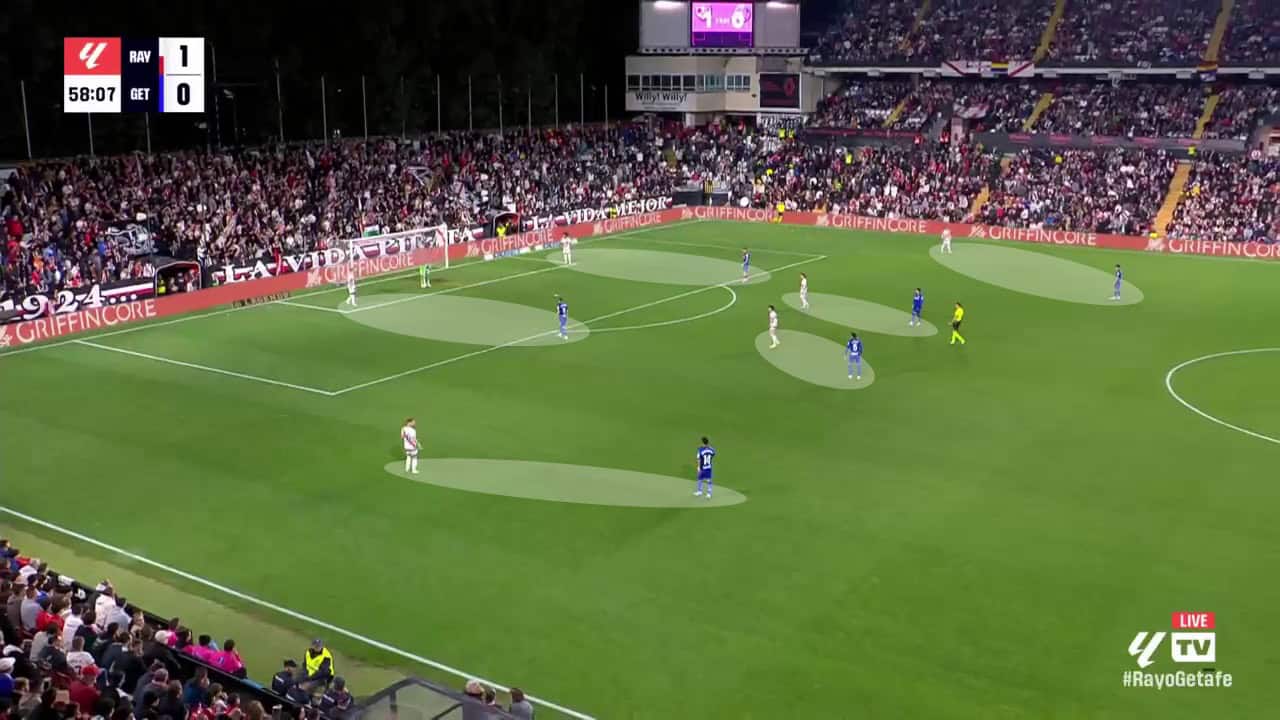
But for Getafe, it’s not about the approach.
It’s about momentum.
For example, if they think their opponents are in a position where they’re not dangerous, the Getafe players won’t jump up to try to press them.
Instead, they will try to set up a structure that tends to close down their opponents’ passing options, either by forcing them to play a long ball or by forcing some players to drop back, forcing their opponents to build up in deeper positions.
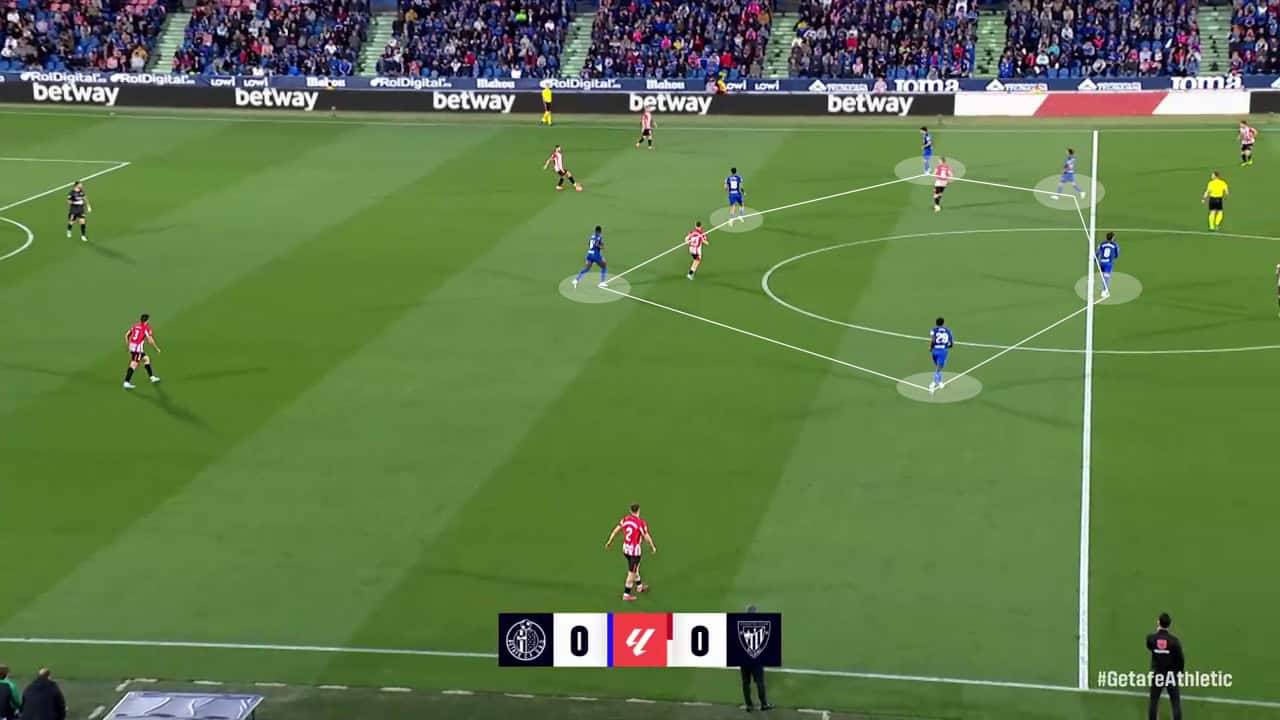
As many of their opponents began to drop, often facing their own goal or not in the best position to receive the ball, Getafe attempted to press them.
Or when the opponents send the ball to the flank or to an area where Getafe can easily overload, they can jump and overload the opponent there.
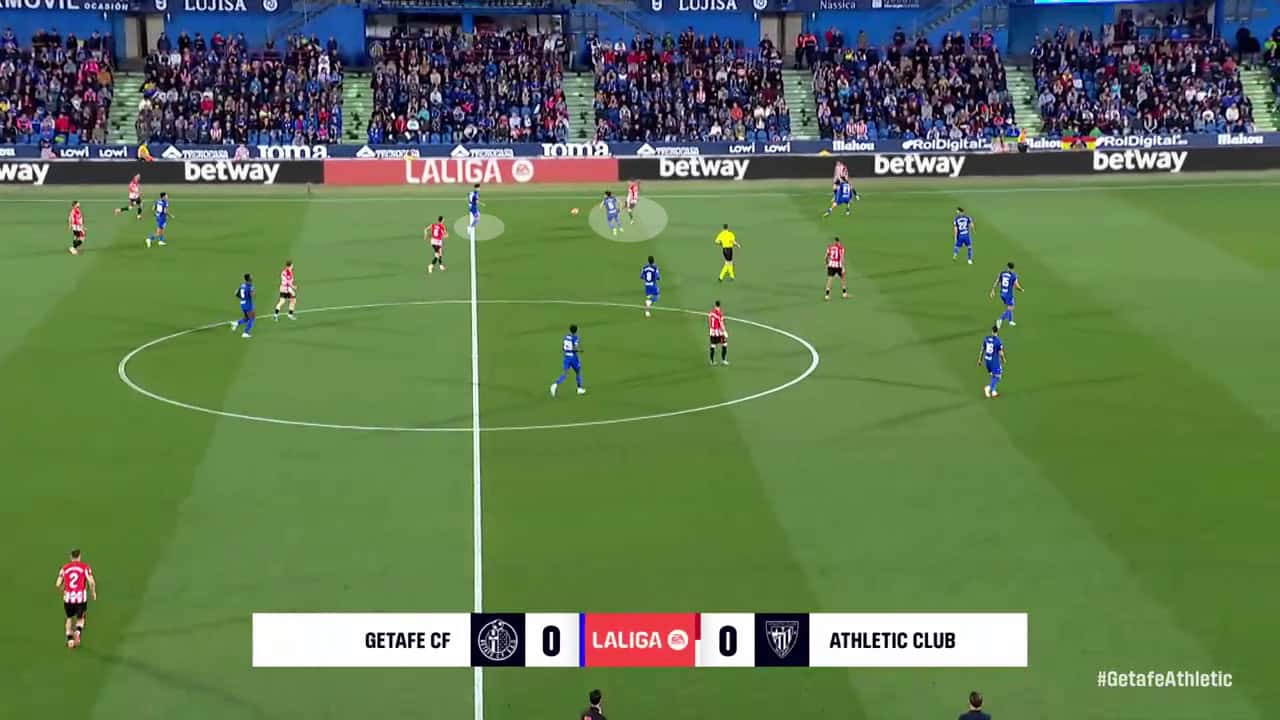
The Getafe players will catch them and force them to throw the ball away, make a bad pass, or lose the ball.
Bordalas and his players must press the opposition when they are not in the best position or condition.
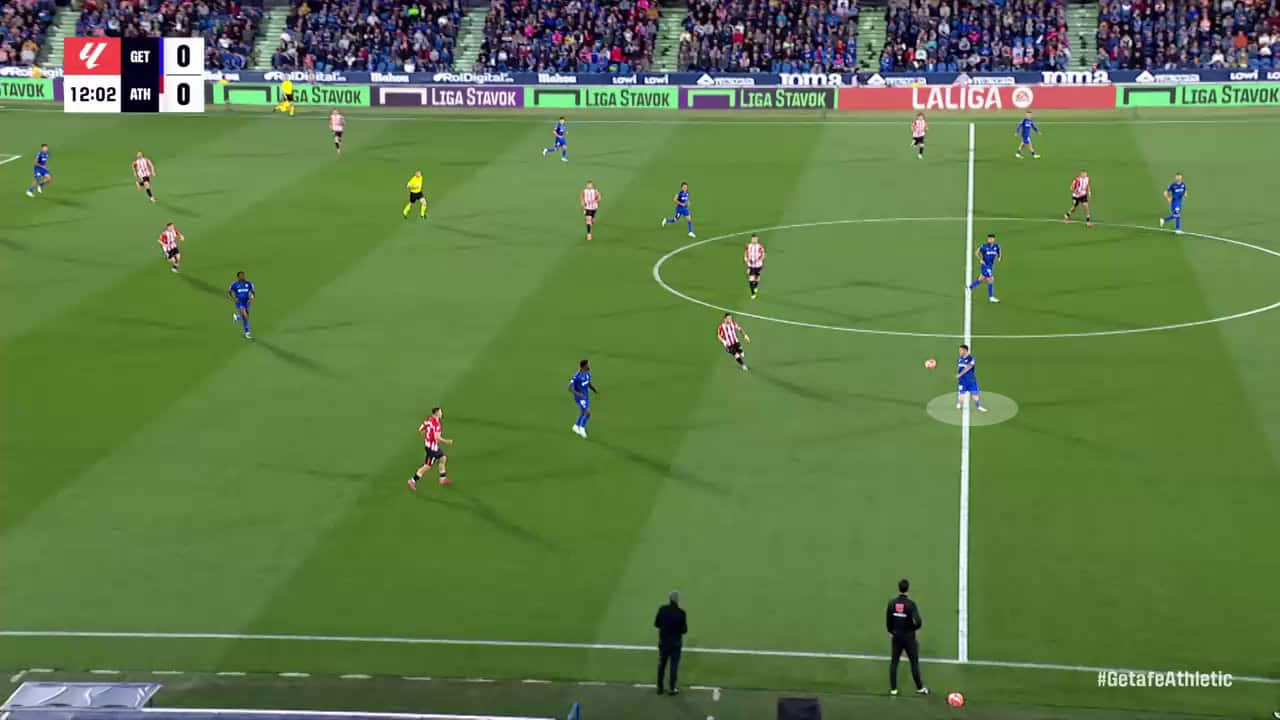
Take this sequence as an example.
Getafe midfielder Mauro Arambarri decided to put pressure on Athletic Club midfielder Mikel Jauregizar in front of his own goal, forcing him to pass the ball to goalkeeper Unai Simon.
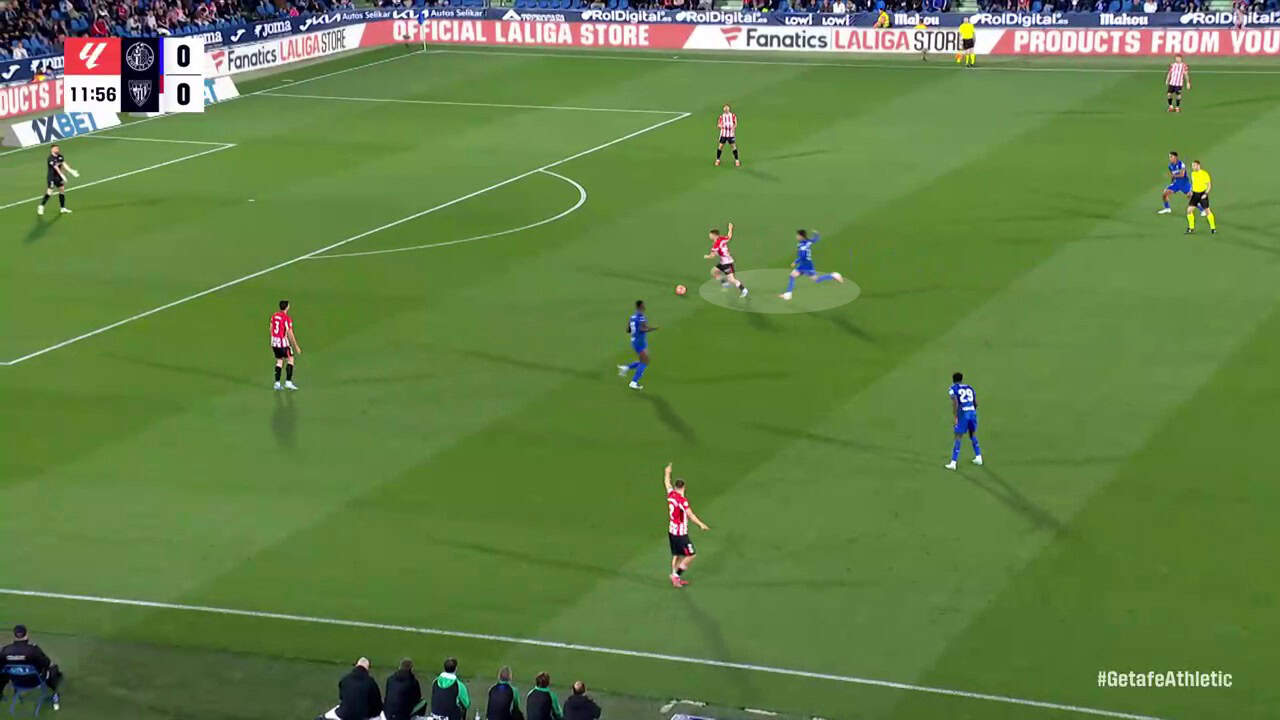
Arambarri then decided to jump into Simon, putting the goalkeeper under pressure.
Simon didn’t have a chance to pass the ball to Yeray Alvarez, who was also under pressure and decided to play a long ball.
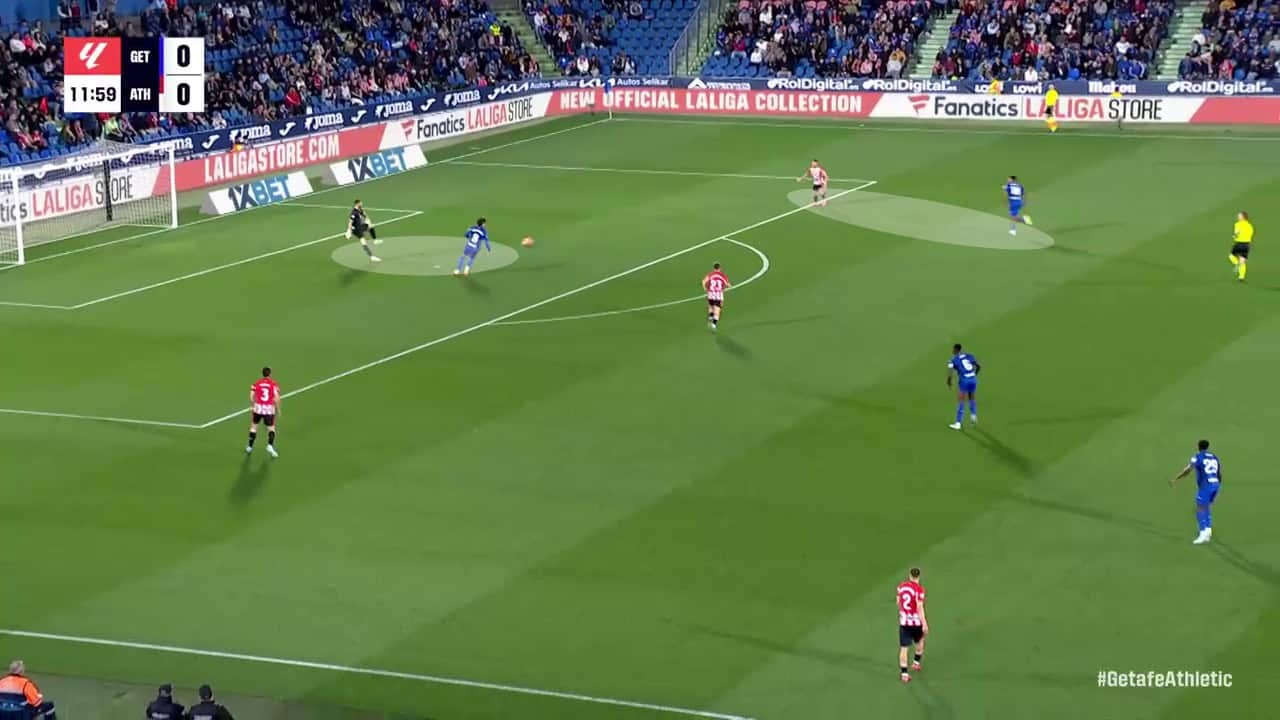
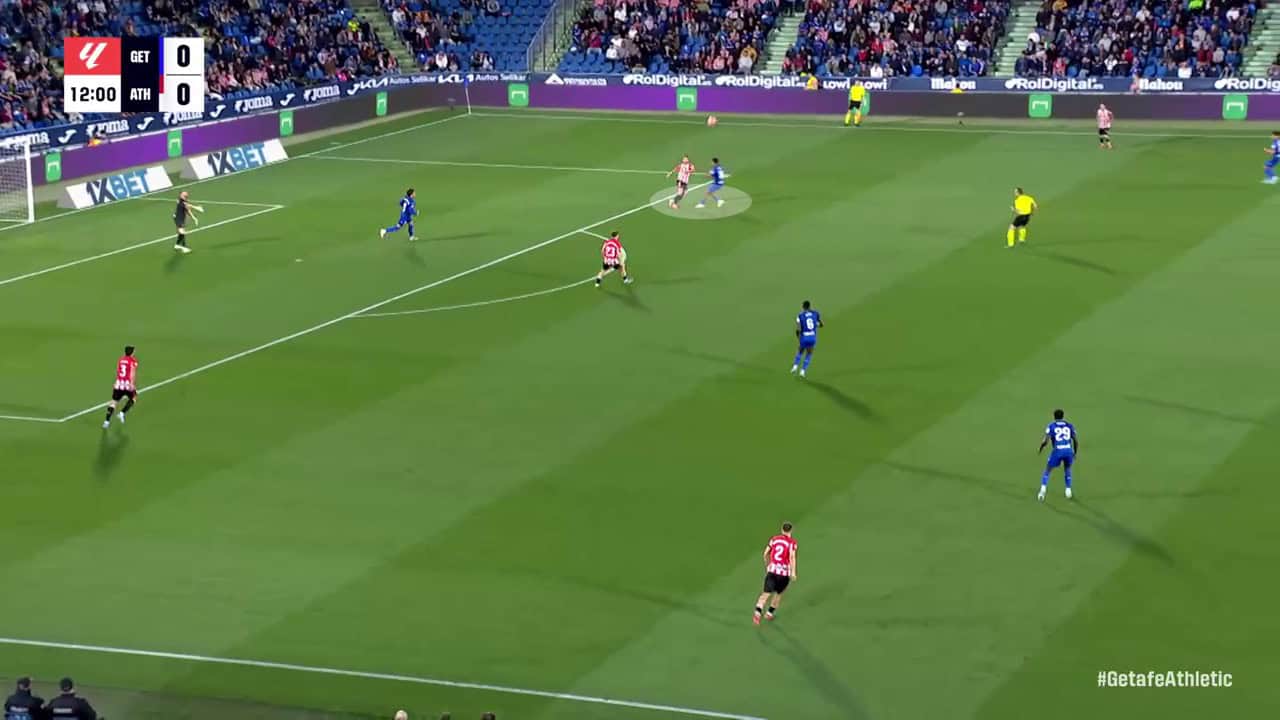 The long ball did not reach any Athletic Bilbao players, and Getafe successfully regained possession by applying pressure.
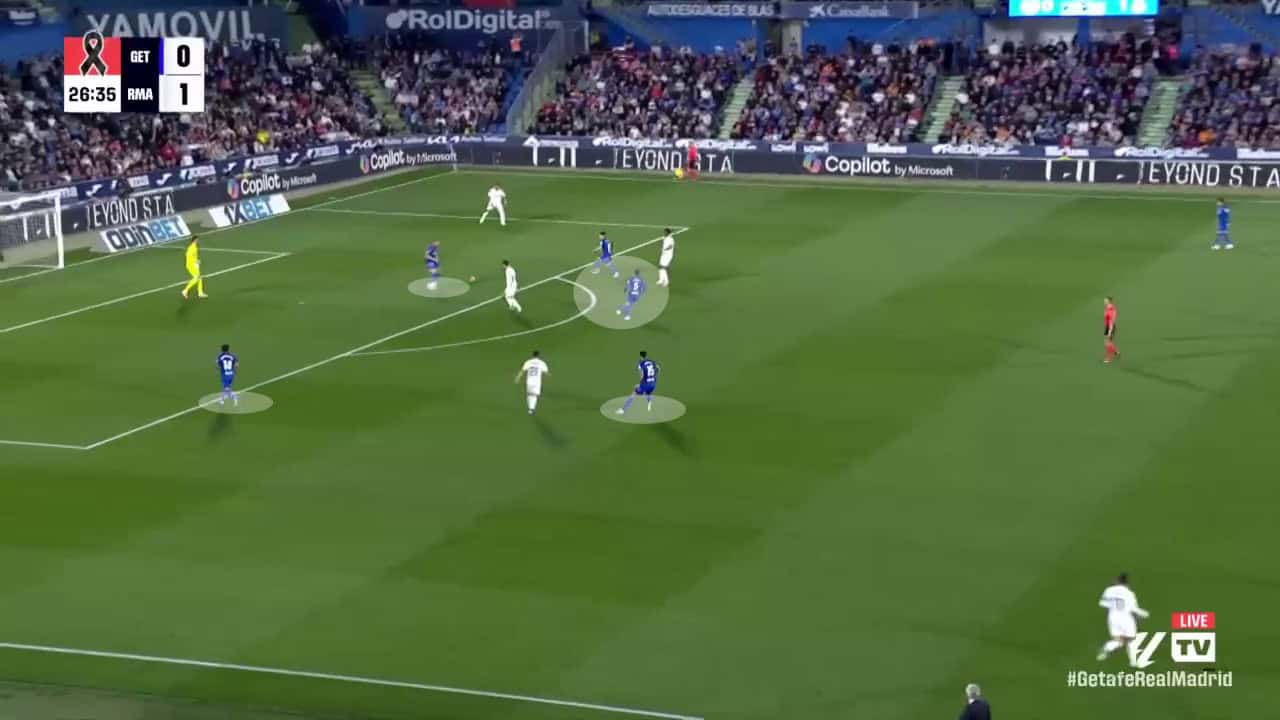
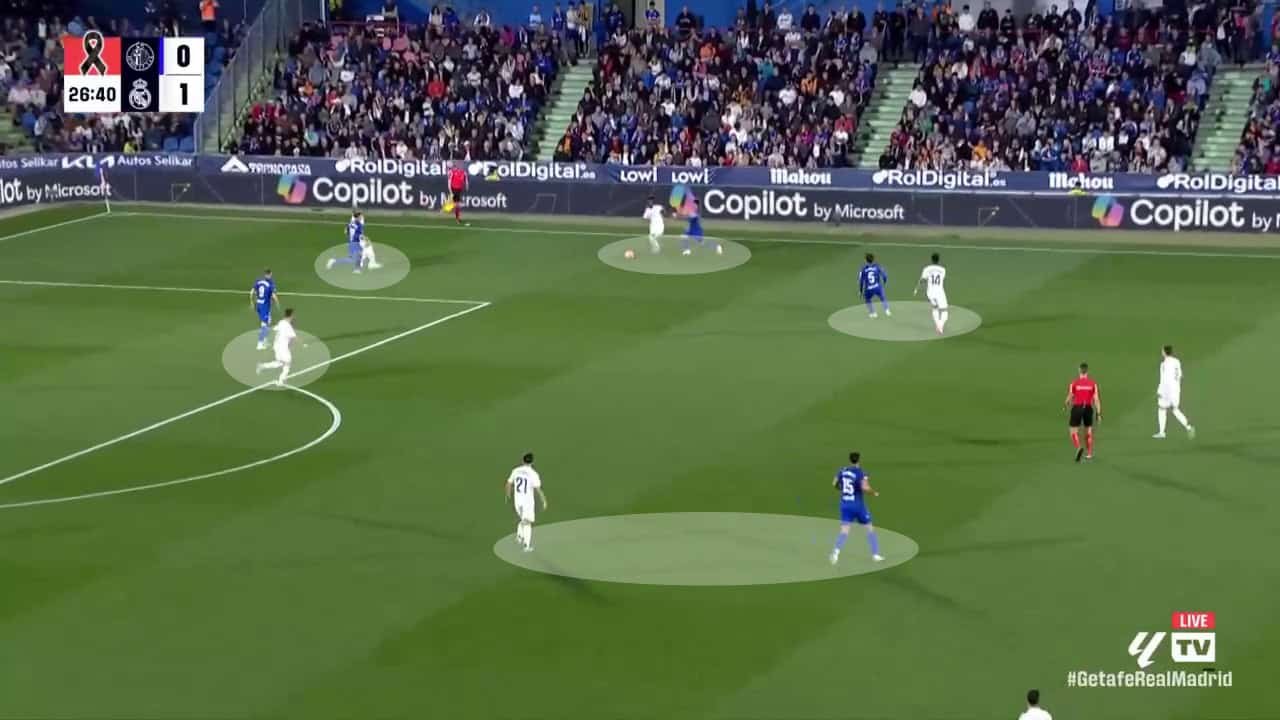
Even against a team like Real Madrid, which has many players who are arguably press-resistance type, Getafe aren’t afraid to jump and press.
This sequence shows Getafe jumping on a Madrid build-up in an overload situation and forcing the build-up to the flank, where Getafe successfully trapped Madrid.
 Another positive aspect of Getafe’s defensive style is their counter-pressing movement.
If they lose the ball and think their opponents are still vulnerable, their player will jump and press the opponent to win the ball back.
Getafe won’t take chances if they think they can force their opponents to lose the ball.
The more the opponent has the ball in an uncomfortable position, the better for Getafe to attack them.
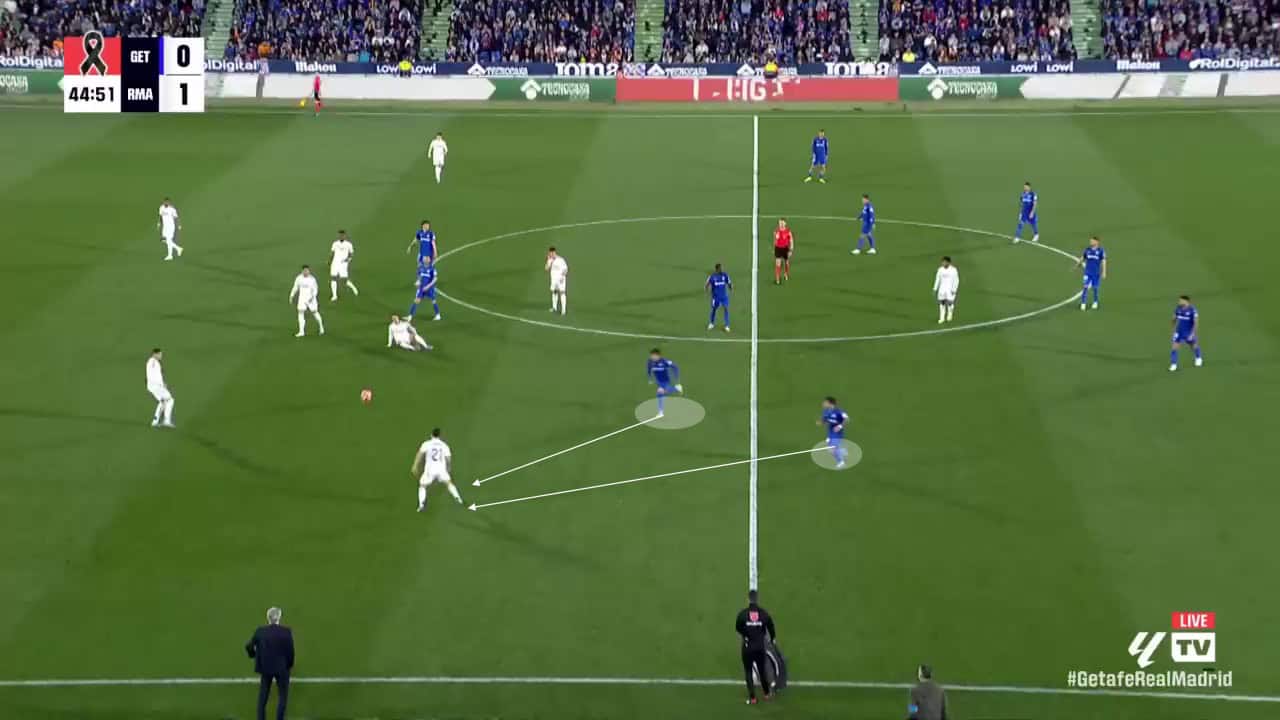
They do this consistently, and it really helps them minimise their opponents’ chances and make them less threatening.
It is no surprise that Getafe is the third-best team in the league in terms of facing shots on target, crosses into the penalty area, key passes, and opponent’s entries into the final third.
Conclusion
Playing defence first is very common in football, but playing defensively but intelligently is another case.
St. Pauli and Getafe are examples of this.
Neither of them plays defensively just because they are lower teams in the league.
They play defensively because they know how to make their defensive approach more effective or efficient.
One prefers to sit deep and prevent their opponents from getting into the danger zone by forming compact structures and having good timing for tackles, thus minimising the chances they are facing.
One prefers to play high up the pitch, pressing and being aggressive to force their opponents to receive the ball in unfavourable situations.
This leads to them losing the ball more often, preventing them from entering the final third.
That’s why they are one of the best defensive teams in the league.
They’ve exceeded expectations this season and are comfortably clear of the relegation zone.
It is not easy to have the second or third-best defensive record when you are the second or fifth-least-valuable club in your league, but St. Pauli and Getafe are doing just that with their clever approach.
