
Real Madrid failed to secure a win against Rayo Vallecano in Gameweek 12 of the 2025/2026 La Liga season.
Rayo Vallecano ended Real Madrid’s four-game winning streak by holding them to a goalless draw at Estadio de Vallecas.
Los Blancos entered the game with a clear objective: to take all three points and strengthen their position at the top of the table.
Despite dropping two points, Real Madrid remain in first place, though Barcelona, sitting second, are now just three points behind.
This game also provided an opportunity for Real Madrid to bounce back after their trip to Anfield, where they had lost to Liverpool in the UEFA Champions League.
“After the Anfield game, which is now behind us, today was one of those games that is a bit difficult to bring us back to the level we want to be at.” – Xabi Alonso after the Rayo Vallecano game.
This tactical analysis examines how Real Madrid failed to achieve the desired result in this game.
Rayo Vallecano Vs Real Madrid Lineups & Formations
Xabi Alonso opened with a 4-2-3-1 formation with Thibaut Courtois starting in goal behind a back four of Raúl Asencio and Dean Huijsen at right and left centre-backs, as well as Federico Valverde and Álvaro Carreras as right and left full-backs.
The three in midfield were Arda Güler, Aurélien Tchouaméni, and Jude Bellingham, while Brahim Díaz played on the right wing with Vinícius Júnior on the left.
Kylian Mbappé occupied the centre-forward position.

Iñigo Pérez set his team up in a 4-2-3-1 too, with Augusto Batalla starting between the sticks.
Rayo Vallecano’s back four was Nobel Mendy and Florian Lejeune at right and left centre-back, with Pep Chavarría and Andrei Rațiu playing as left and right full-backs.
Their three midfielders were Unai López, Pathé Ciss, and Pedro Díaz, while Jorge de Frutos was a right winger with Álvaro García Rivera on the left and Isi Palazón up front.
Build-Up: Reliance On Long Balls & Thibaut Courtois Lack Of Precision In Execution
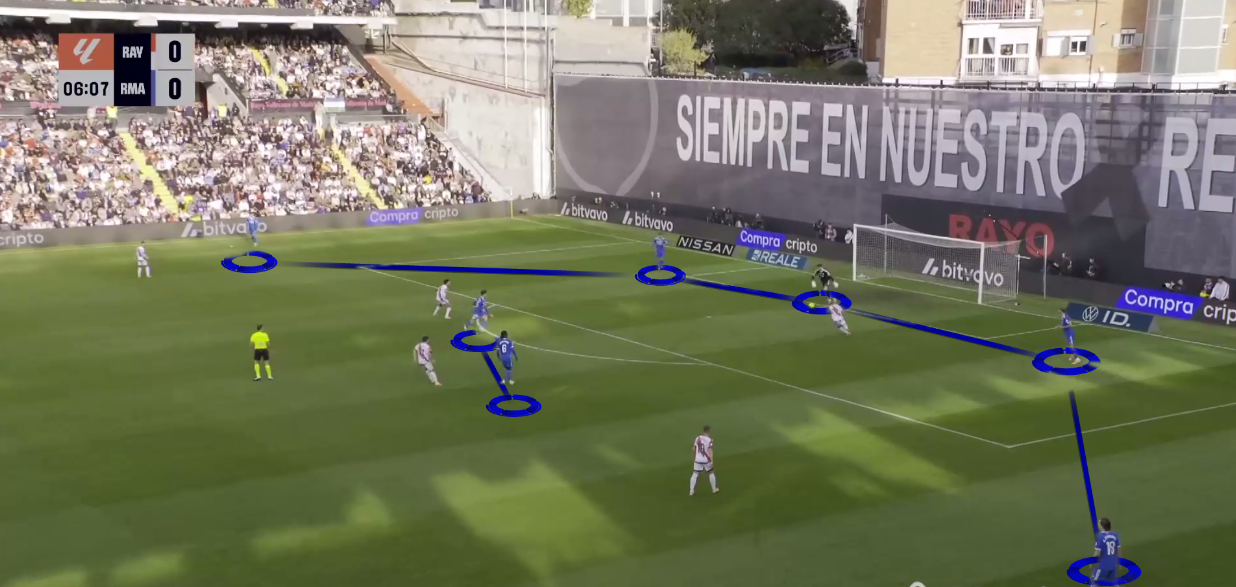 In the buildup from goal kicks, Real Madrid employed a 4-2-3-1 structure, with Courtois acting as the fifth player in the first line, positioned between the two centre-backs.
Asensio and Huijsen, both starting inside the box, were flanked by them.
The full-backs, Valverde and Carreras, were positioned wide and deep.
Ahead of them, Güler and Tchouaméni formed the second line, starting centrally and close to the box.
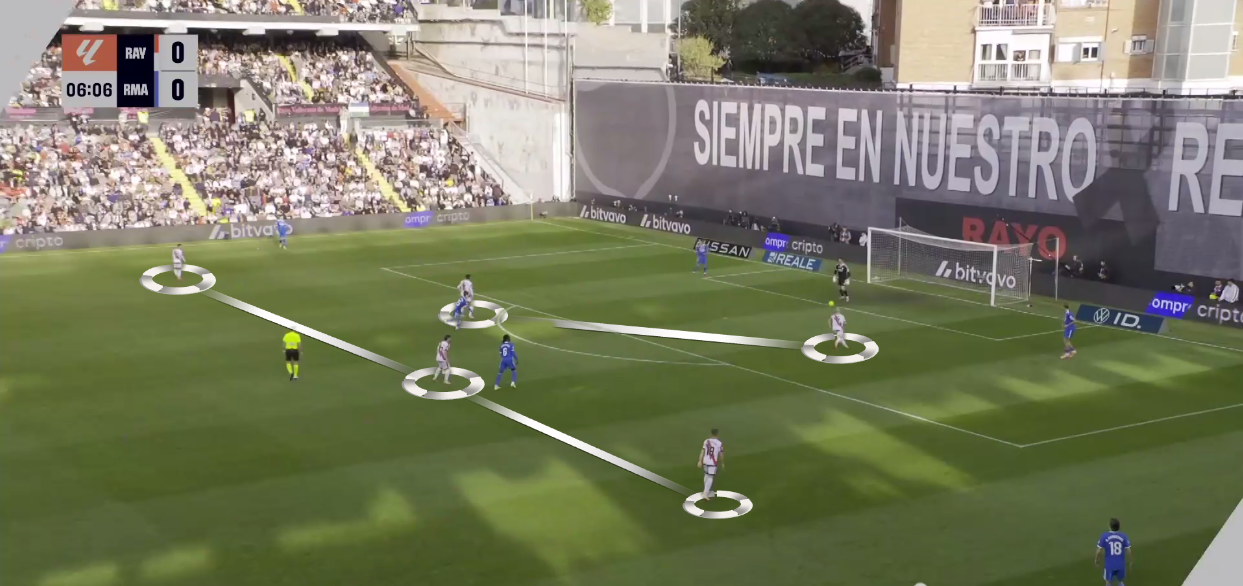 Rayo Vallecano pressed high in a 3-2 shape.
Isi, the centre-forward, pressed Courtois with a curved run to guide play towards Real Madrid’s right side.
Díaz marked Güler, while López tracked Tchouaméni.
Díaz positioned himself slightly ahead of Güler to be ready to press Asencio if Courtois passed to him.
Meanwhile, the wingers, García and De Frutos, started in the half-spaces, prepared to jump on Valverde and Carreras whenever they received the ball.
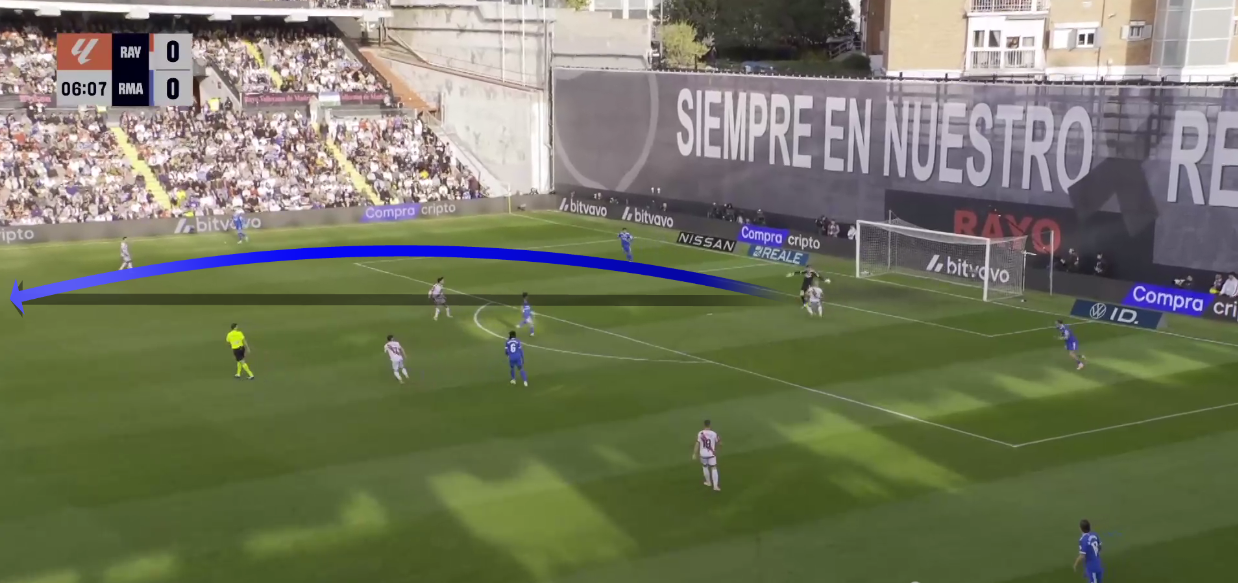 Real Madrid’s approach here was to play long from Courtois.
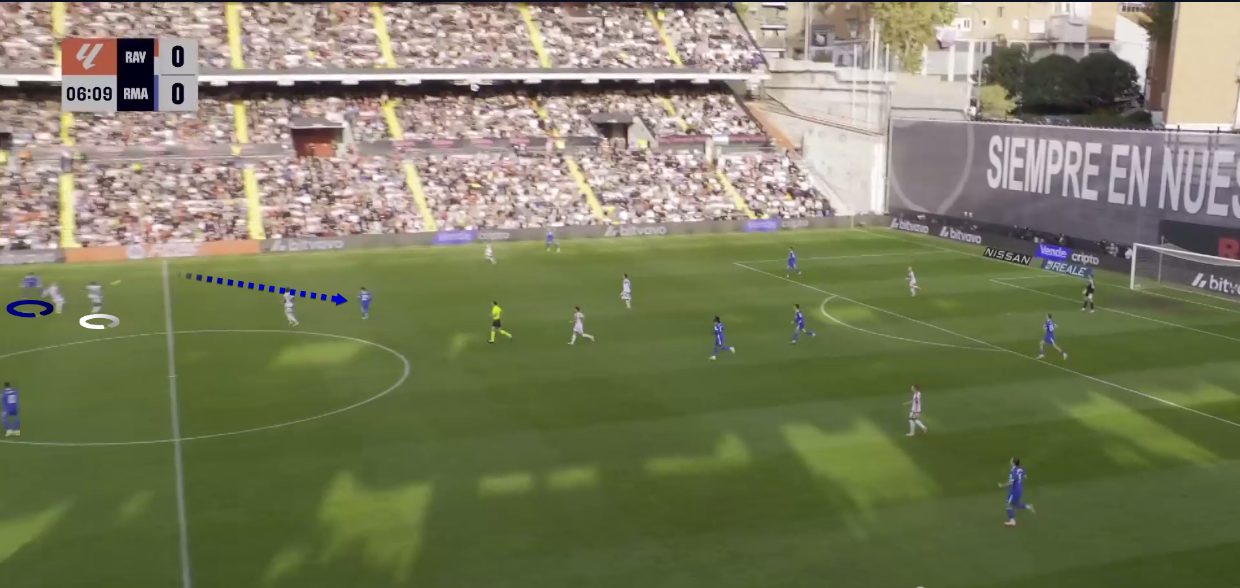 The target for Courtois’ long ball was Bellingham, who occupied the right-wing position and looked to run in behind Rayo Vallecano’s left-back, Chavarría.
Díaz, playing as Real Madrid’s right winger, tucked inside to pull Chavarría with him and engage Ciss, forcing hesitation in tracking Bellingham wide.
However, Courtois’ delivery lacked both power and accuracy, allowing Mendy, the left centre-back, to clear comfortably.
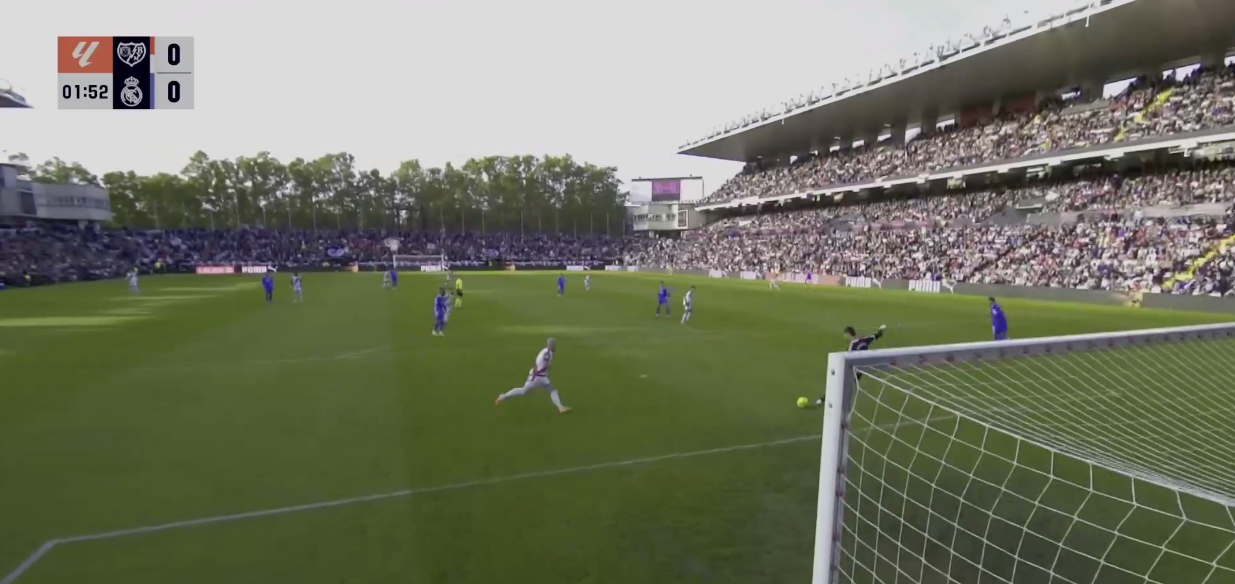 Once again, Real Madrid used Courtois’ long ball as their main build-up option.
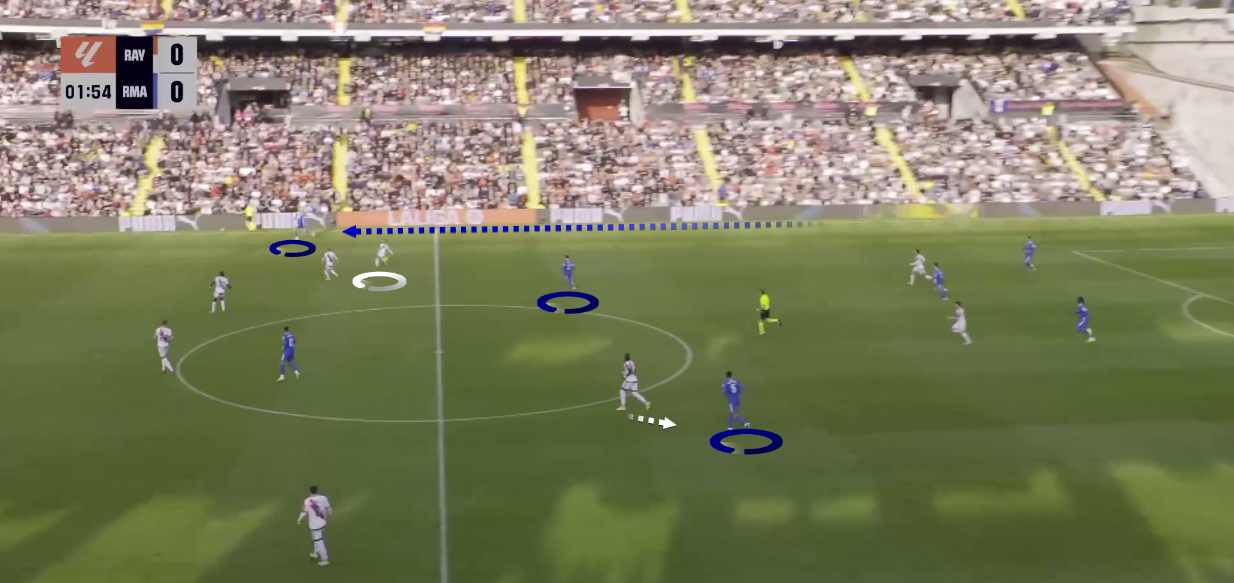 This time, Bellingham dragged Ciss towards the left side, creating more space centrally.
As Díaz tucked inside, Chavarría was forced to follow him, opening a lane for Valverde to make an overlapping run to receive a long ball into the vacant wide space behind the defence.
Despite this adjustment, Courtois’ weak and inaccurate pass once again allowed García, Rayo Vallecano’s left winger, who had tracked back, to intercept.
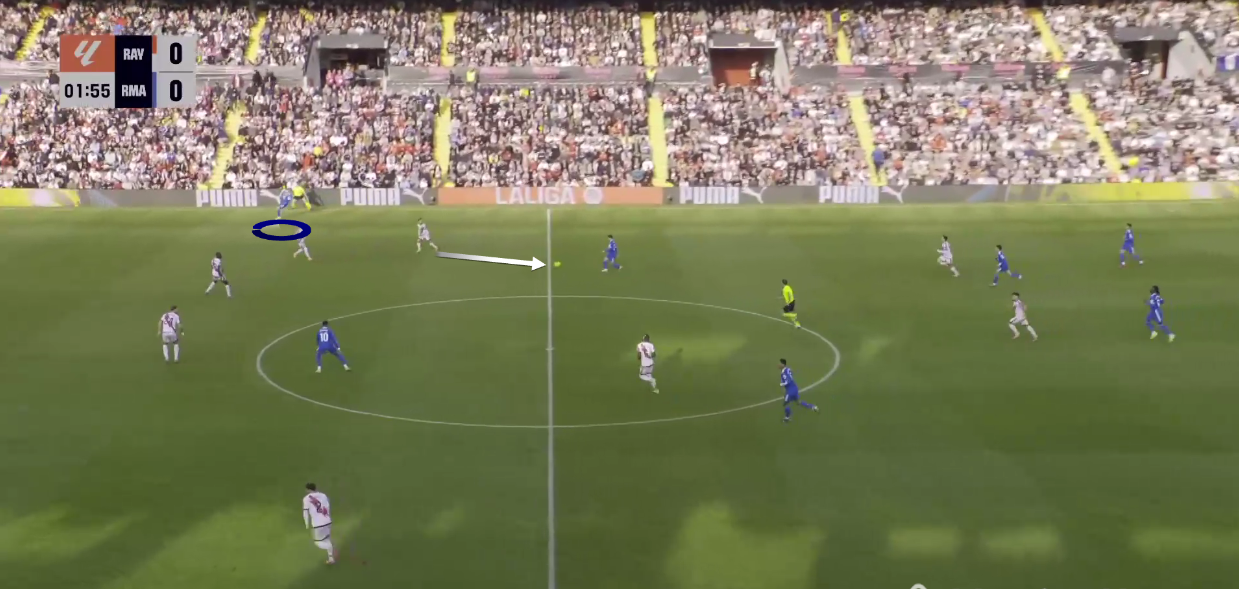 However, García failed to control the interception and gifted possession to Díaz.
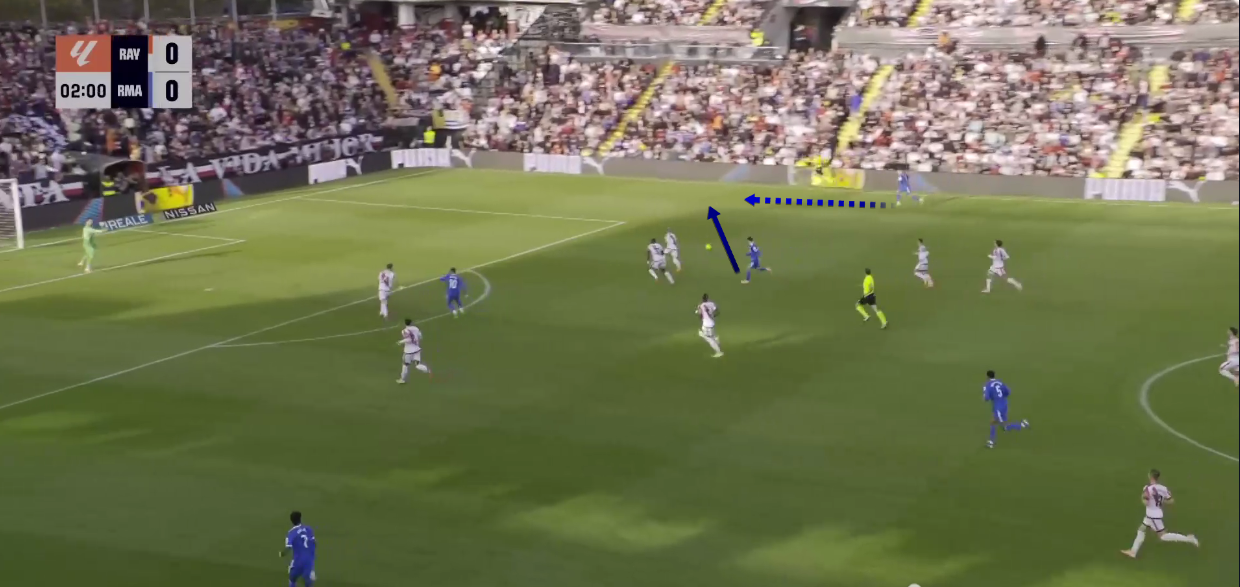 Díaz carried the ball through the central space before releasing a pass to Valverde on the right flank.
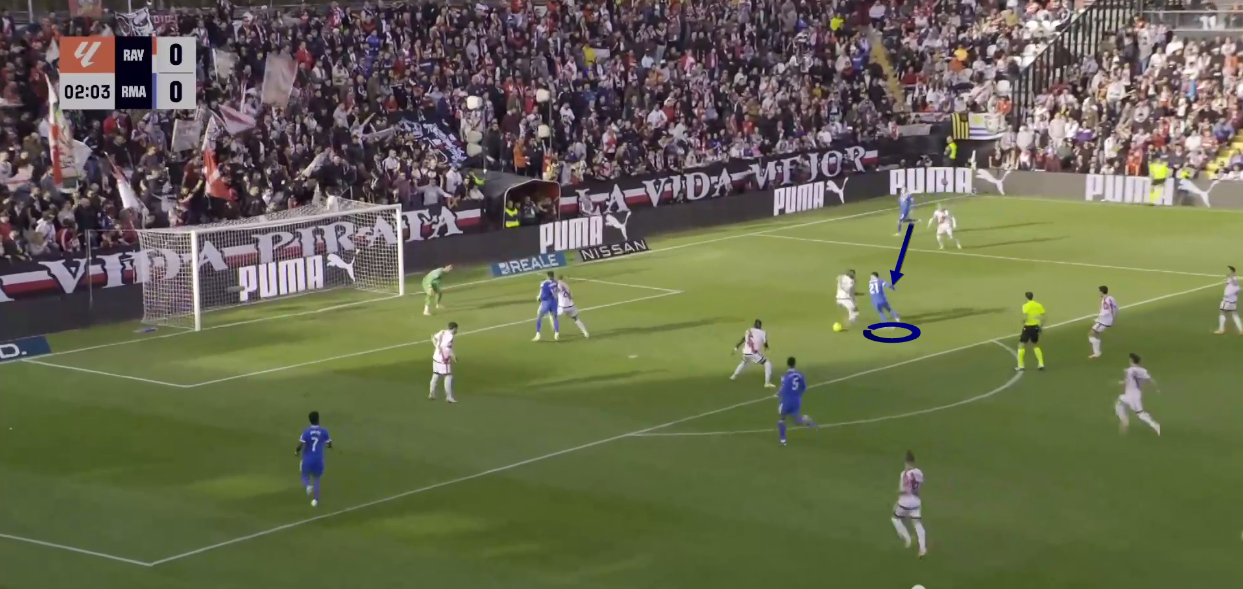 Valverde attempted a cross into the box, but when Díaz regained the ball, he failed to maintain control, and Real Madrid’s attack ended without producing a threat on goal.
A Solution With Short Passes That Couldn’t Be Turned Into A Real Threat
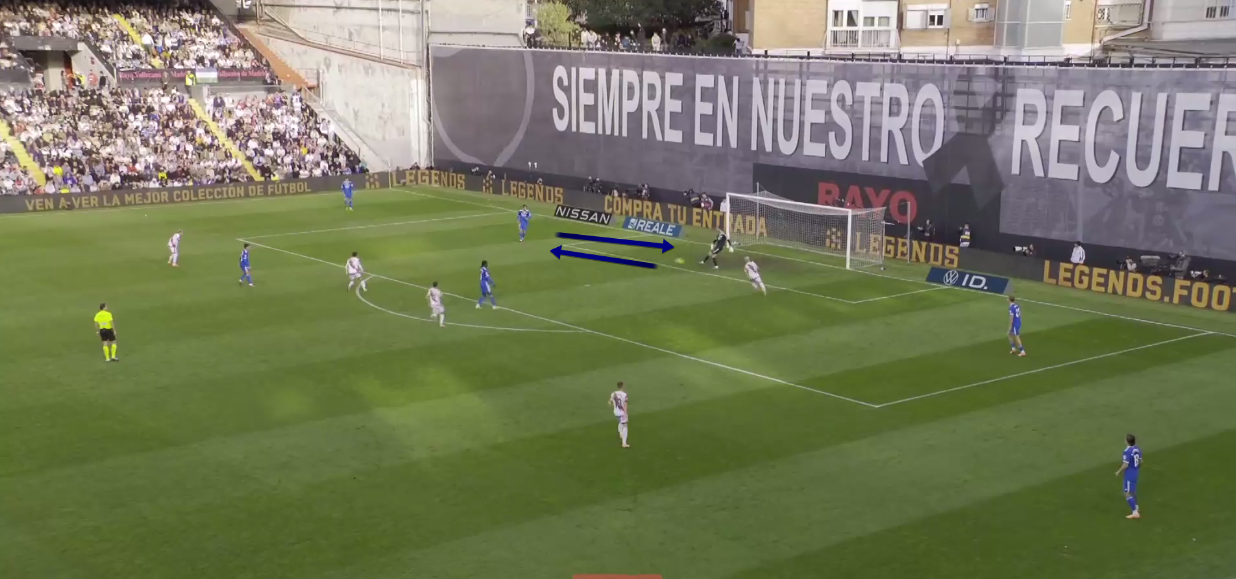 Seeking a more effective way to progress the ball, Real Madrid adjusted their build-up to maintain higher possession against Rayo Vallecano’s press.
This time, Courtois, after receiving from Asencio, played a short return pass to him.
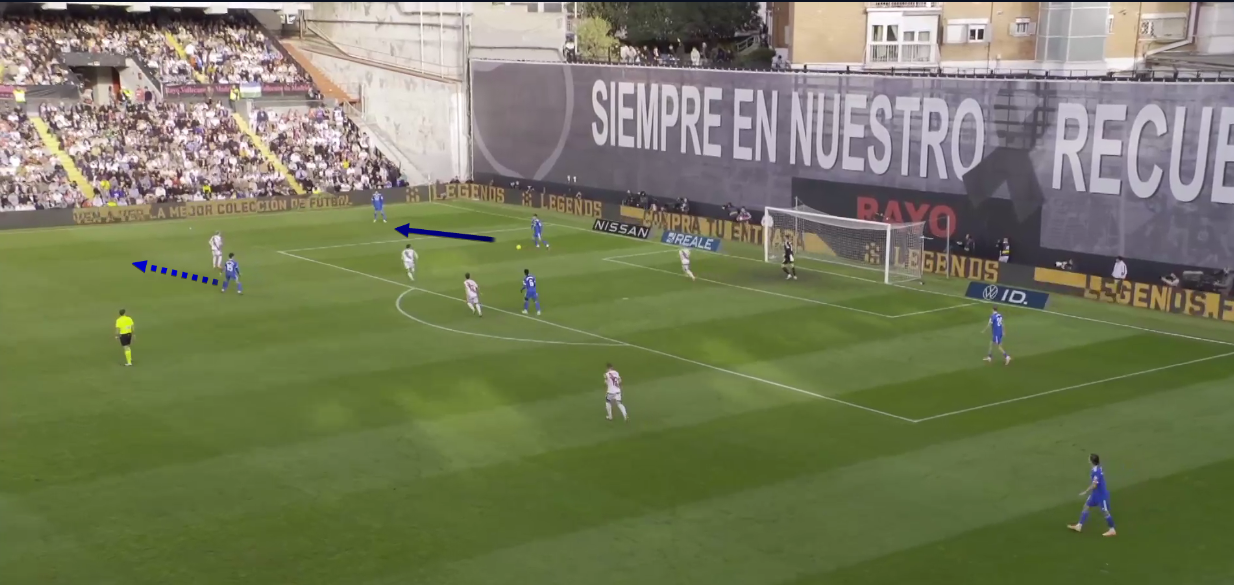 With both full-backs positioned deep, particularly Valverde on the right, Asencio had a clear passing option to him.
At the same time, Güler starts drifting wide to the right flank.
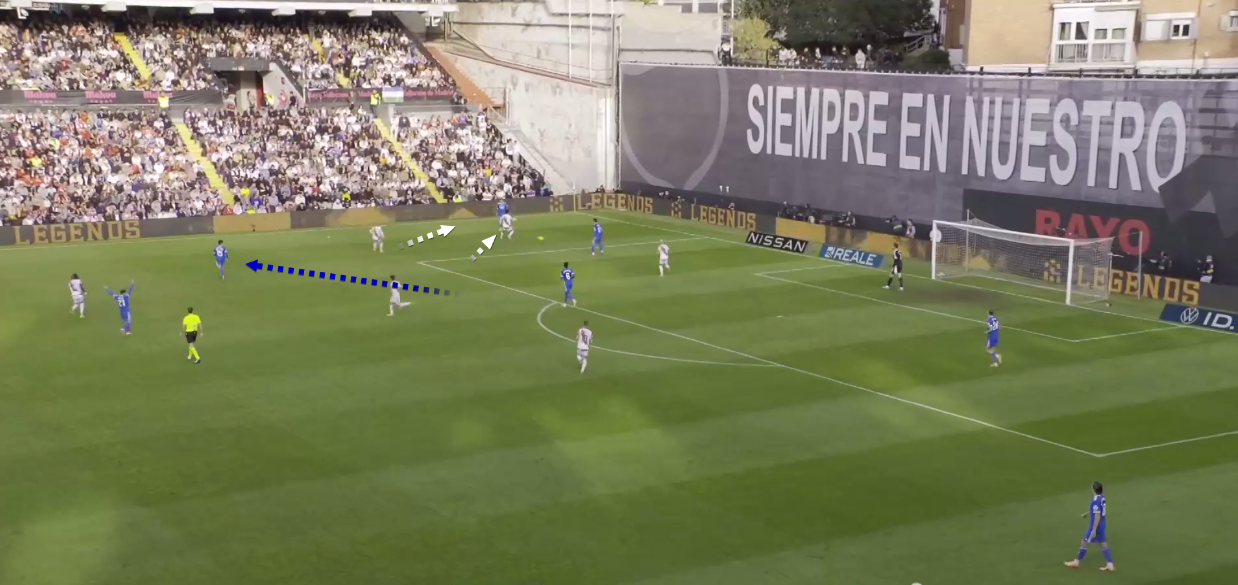 When Asencio has possession, he draws the attention of Rayo Vallecano’s six, Díaz, freeing Güler in the process.
Additionally, Asencio’s pass to Valverde attracted García, the left winger, opening more space on the right side for Güler.
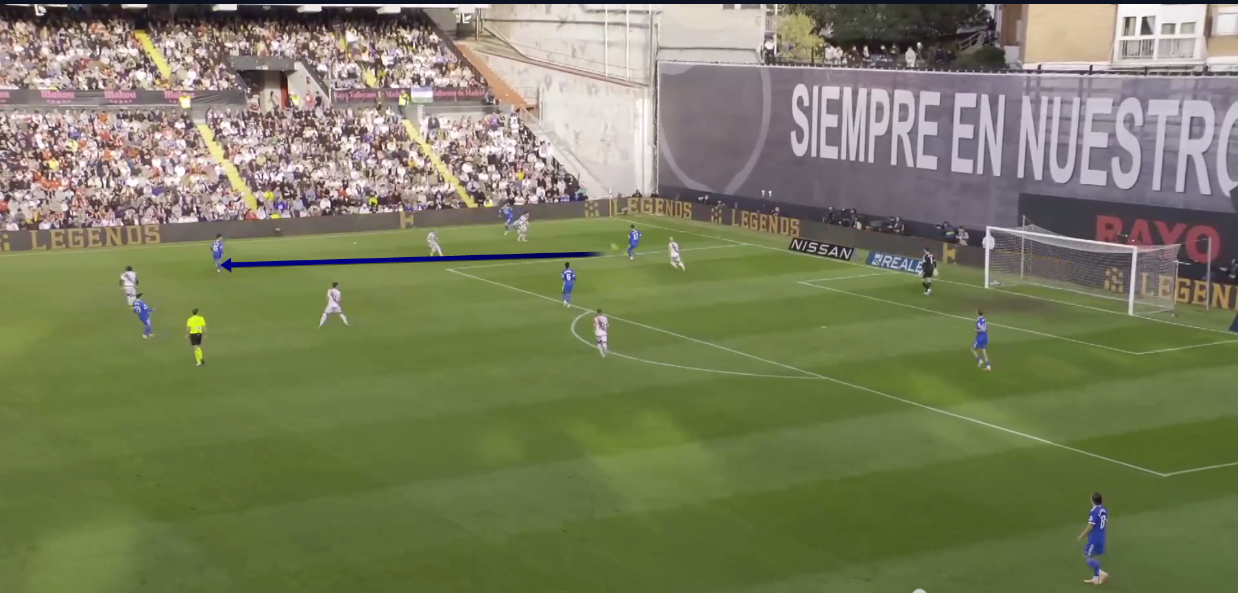 Asencio regains the ball from Valverde and quickly passes it to Güler.
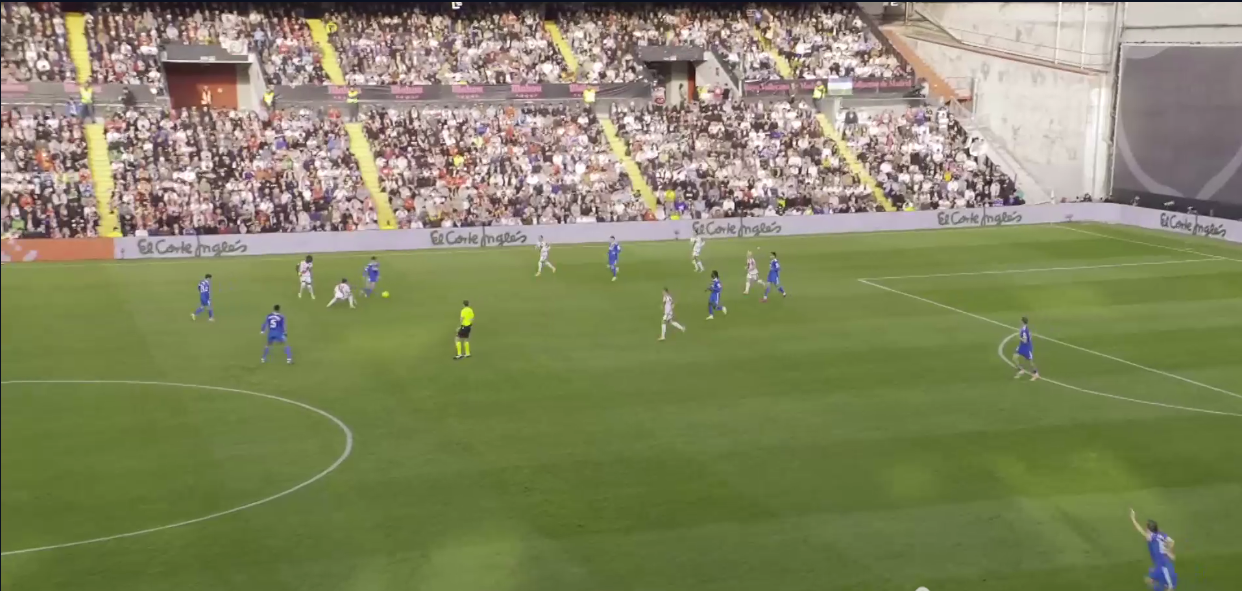 Güler carries the ball forward, advancing Real Madrid up the pitch.
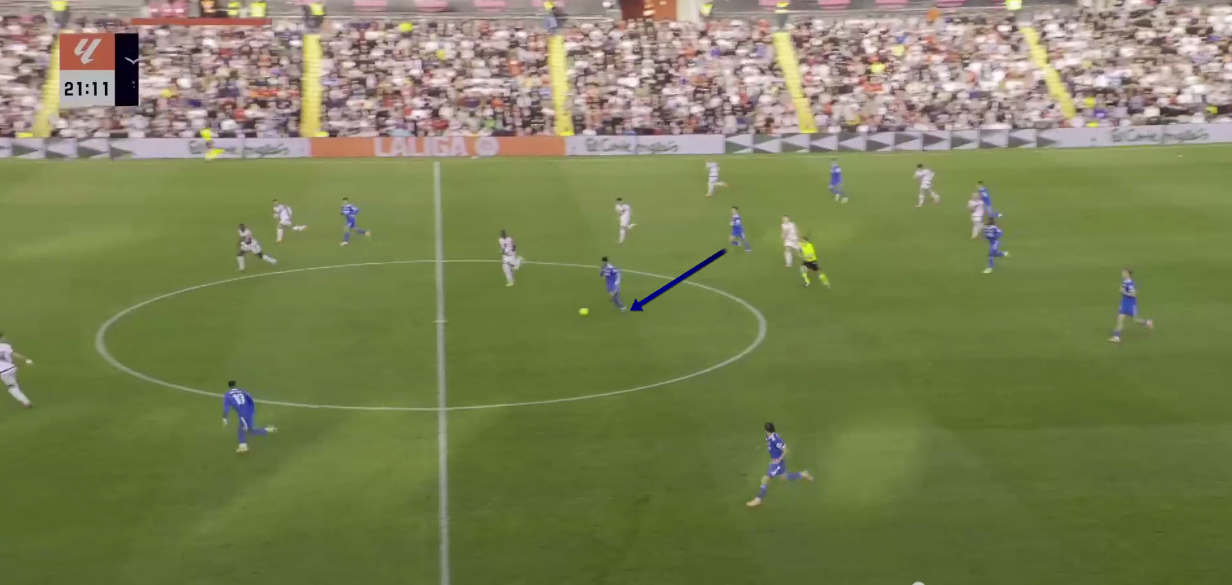 Breaking through Rayo Vallecano’s press, Güler passes to Bellingham.
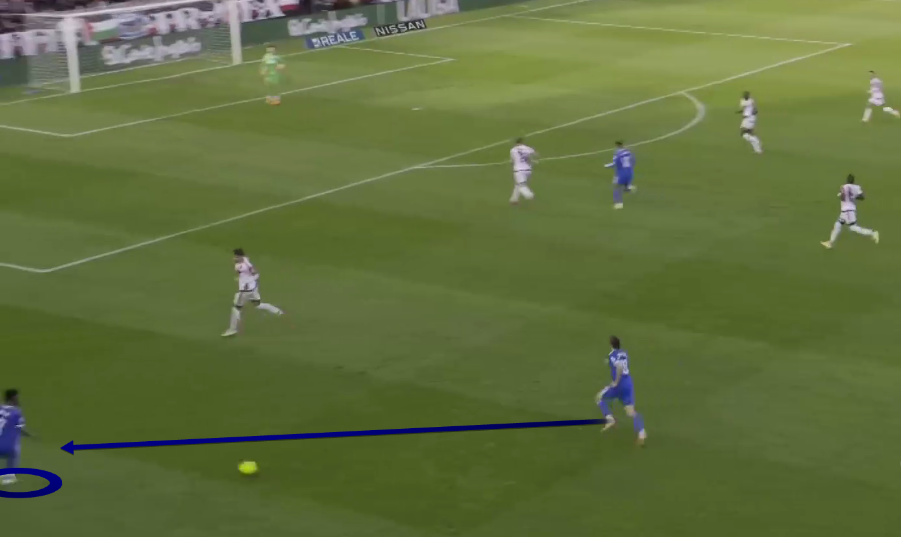 Bellingham then finds Carreras on the left, who moves the ball to Vinícius.
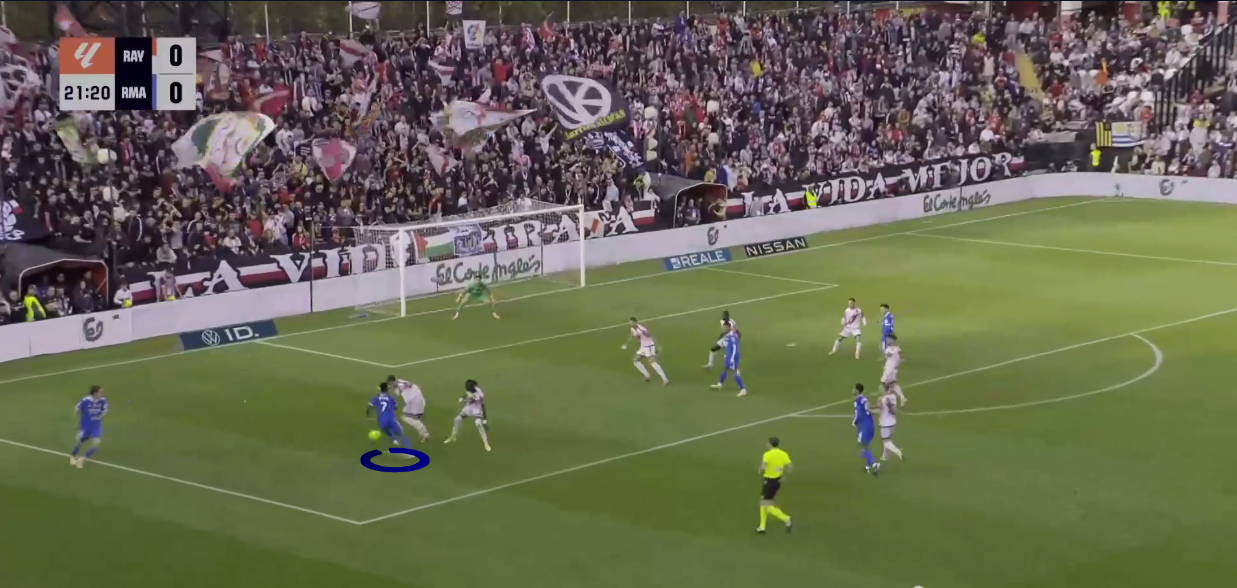 Vinícius attempts to take on two defenders, facing a difficult 1-v-2 situation.
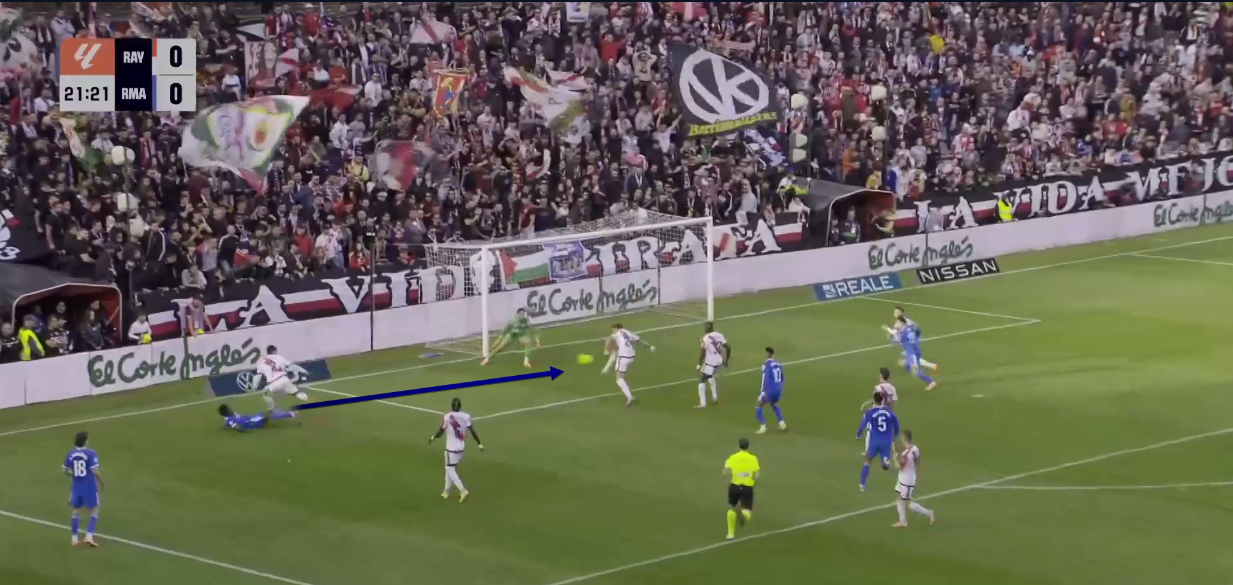 As Vinícius tries to deliver the cross, he loses his balance, resulting in an inaccurate delivery that is cleared by the centre-back.
Despite progressing through the build-up and breaking the press effectively, Real Madrid again failed to turn the sequence into a meaningful threat.
Progression And Final Third: The Series Of Poor Execution & Ineffectiveness
So far, although Real Madrid occasionally managed to break through Rayo Vallecano’s high press, they failed to capitalise on those moments.
The same pattern was evident in the progression and final third phases.
While they sometimes find tactical solutions against Rayo Vallecano’s mid and low blocks, they struggle with both execution and choosing the right option based on the situation.
Additionally, several players demonstrate a lack of precision when executing their decisions.
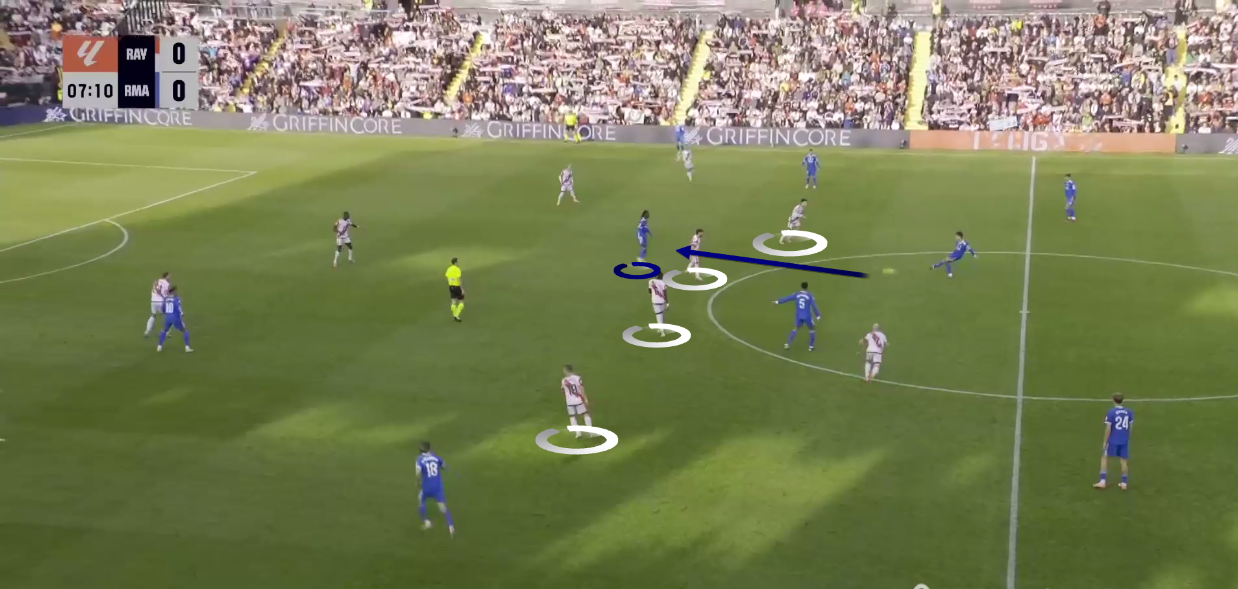 In this example, Güler drops between the wide centre-backs, receives the ball, and plays a line-breaking pass to Tchouaméni, who moves behind Rayo Vallecano’s midfield line.
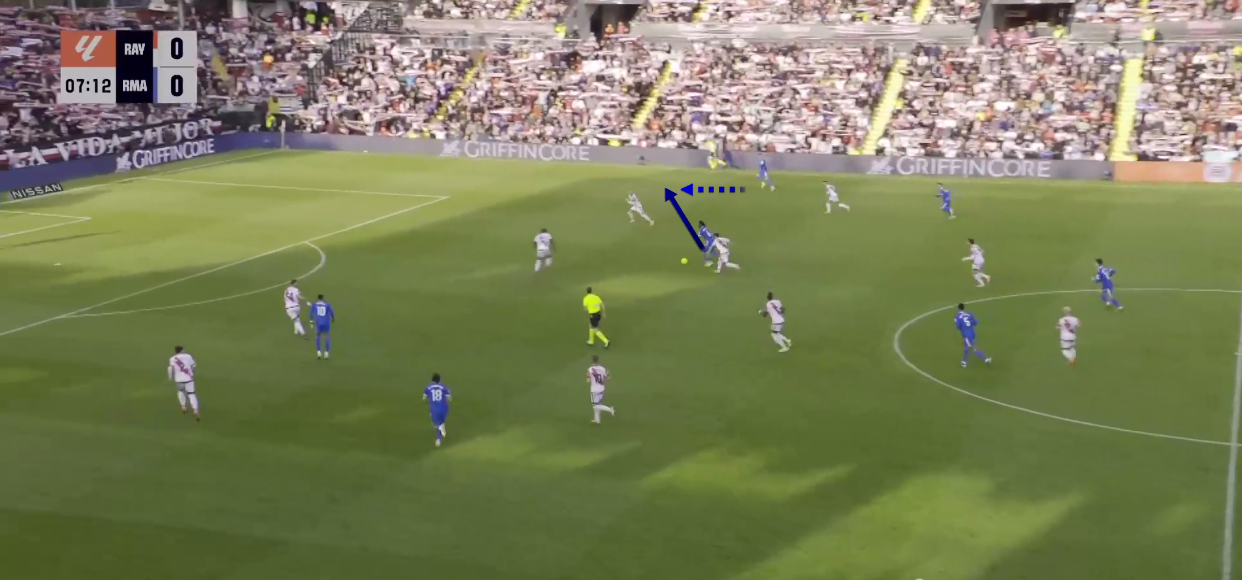 Tchouaméni receives, turns, and carries the ball through the free space between Rayo Vallecano’s lines, progressing Real Madrid higher up the pitch.
Valverde positions himself high and wide on the right, ready for a simple pass.
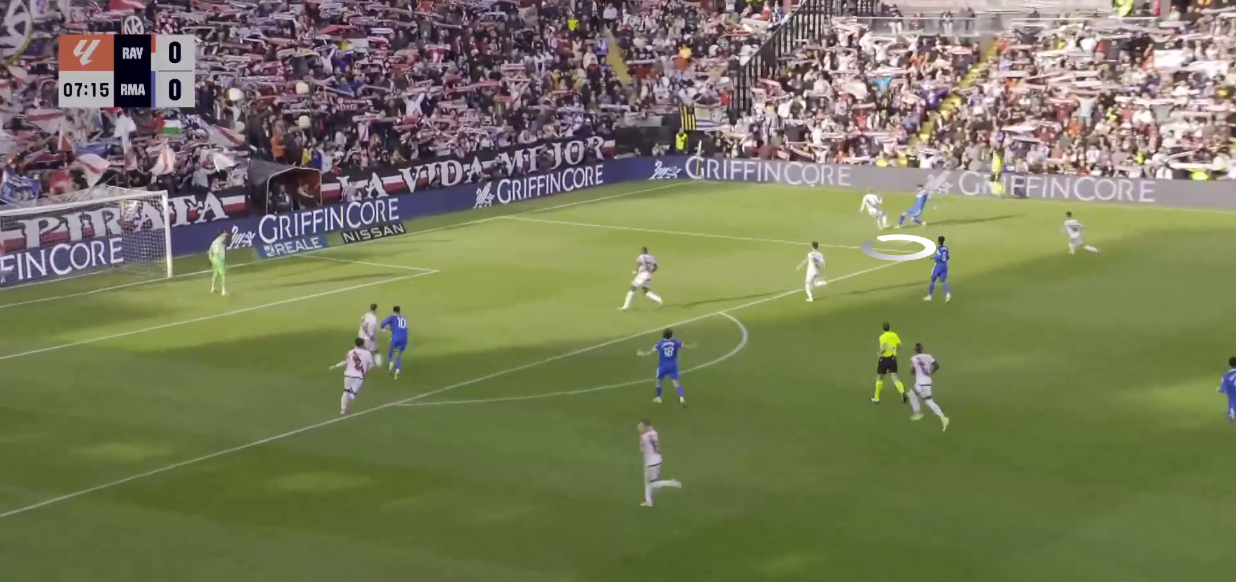 However, Tchouaméni’s misplaced pass prevents Valverde from controlling the ball, and Real Madrid loses another chance to convert a simple situation into a threatening attack.
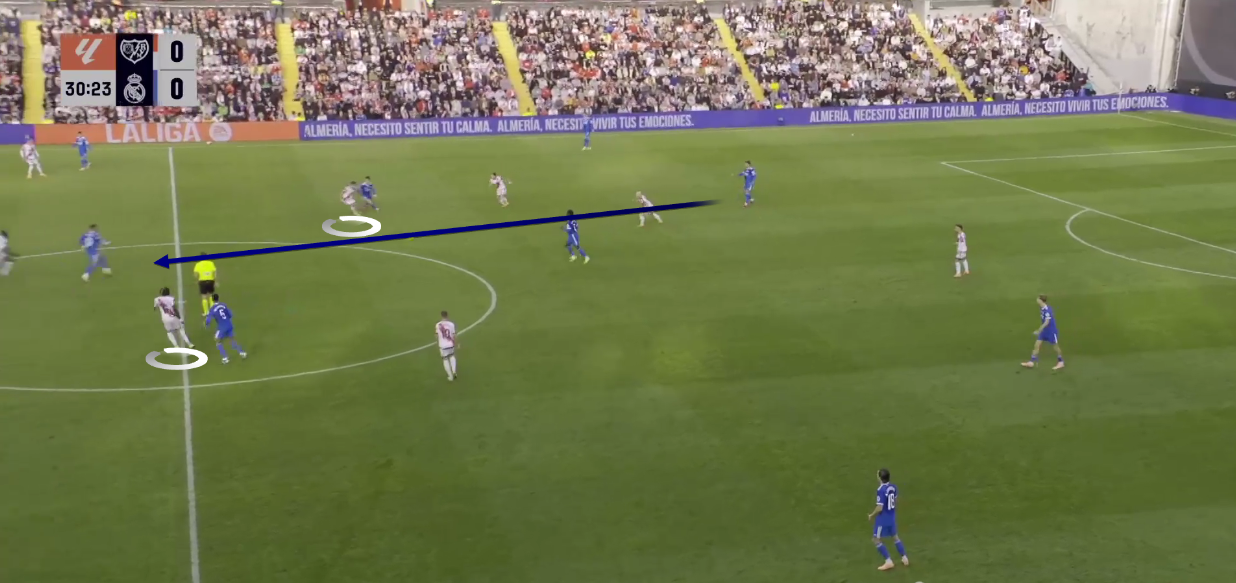 Once again, Real Madrid find a tactical solution.
Here, they attempt a third-man combination to bypass Rayo Vallecano’s pressure and connect with Tchouaméni.
Güler and Bellingham drift wide, dragging López and Ciss out of position to open a passing lane from Asensio to Mbappé, who drops deep.
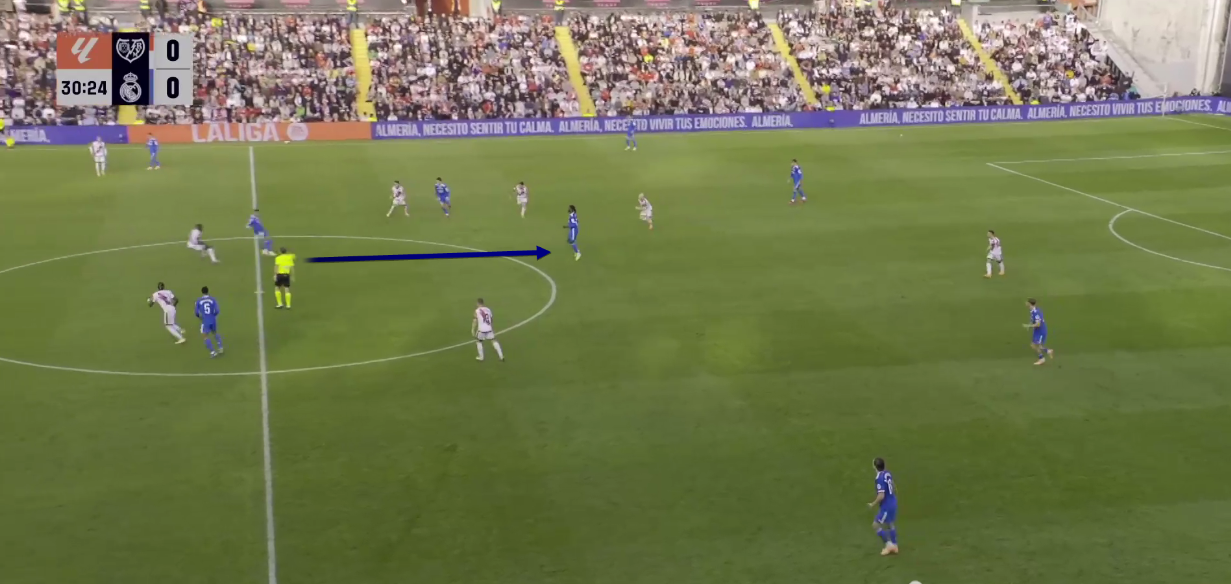 Mbappé lays the ball off to Tchouaméni, who is positioned freely in midfield.
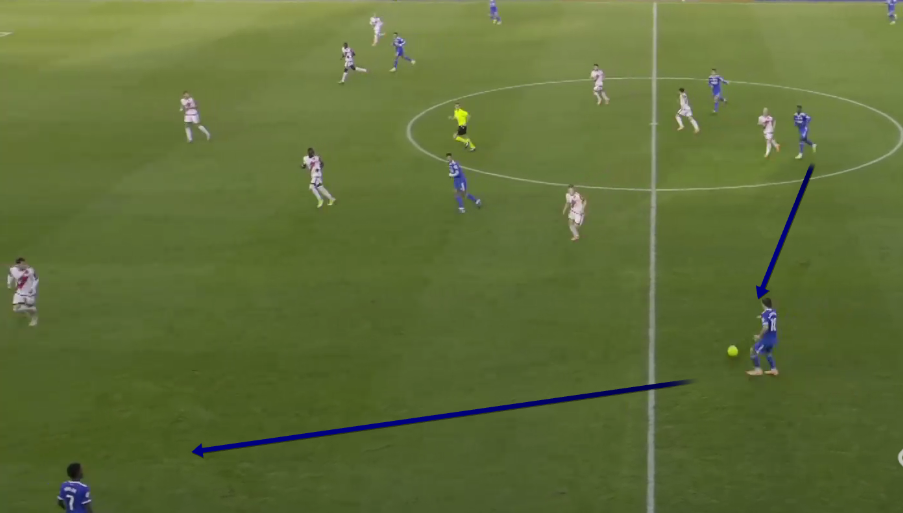 Tchouaméni switches the play to Carreras on the left, who then passes to Vinícius.
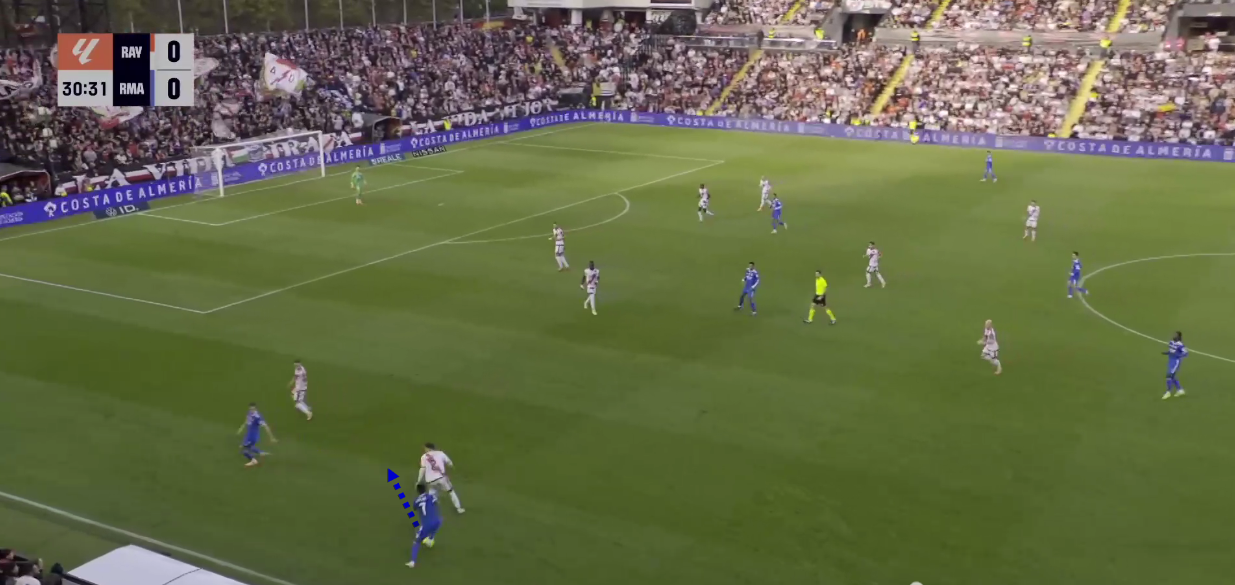 From a deep position, Vinícius takes the ball and attempts one of his trademark dribbles.
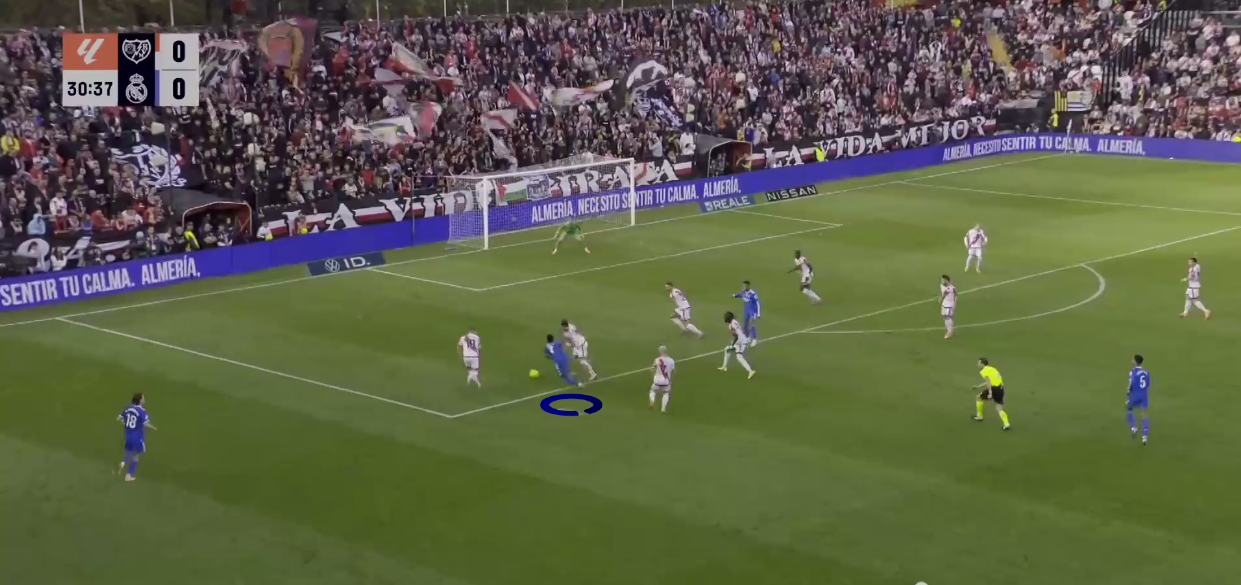 Although he reaches the box, Vinícius finds himself surrounded by at least three opponents in a tight and difficult position.
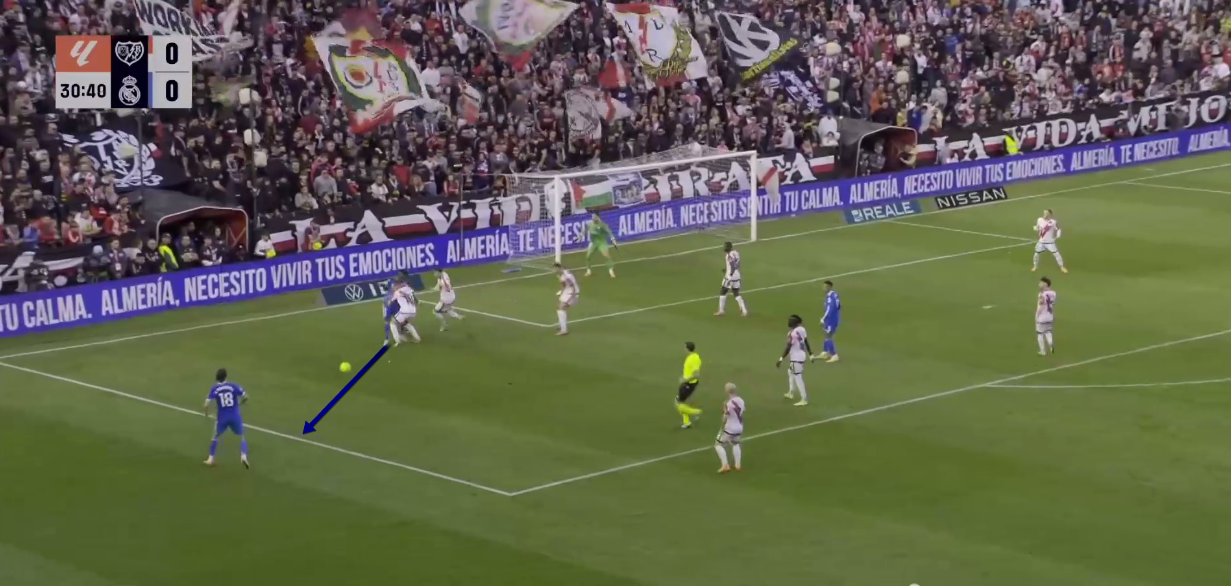 Under pressure, Vinícius manages to find an escape route by passing the ball to Carreras.
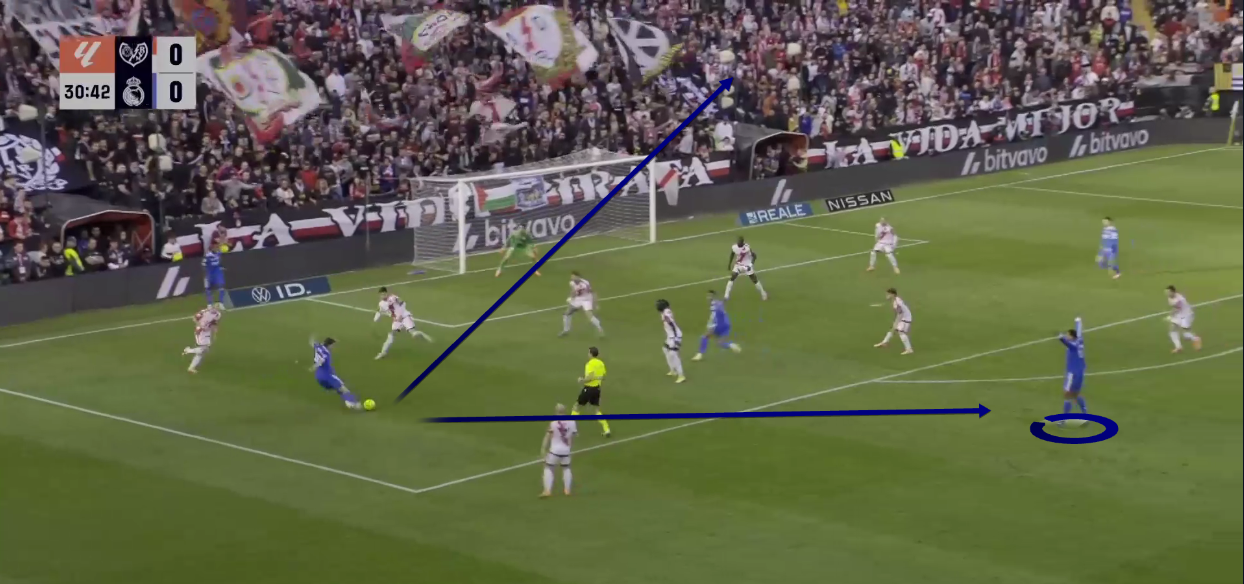 The poor decision-making continues as Carreras ignores Bellingham, who is free, and instead takes an ill-advised shot that flies well off target.
High Press: An Easy Way To Real Madrid’s Goal
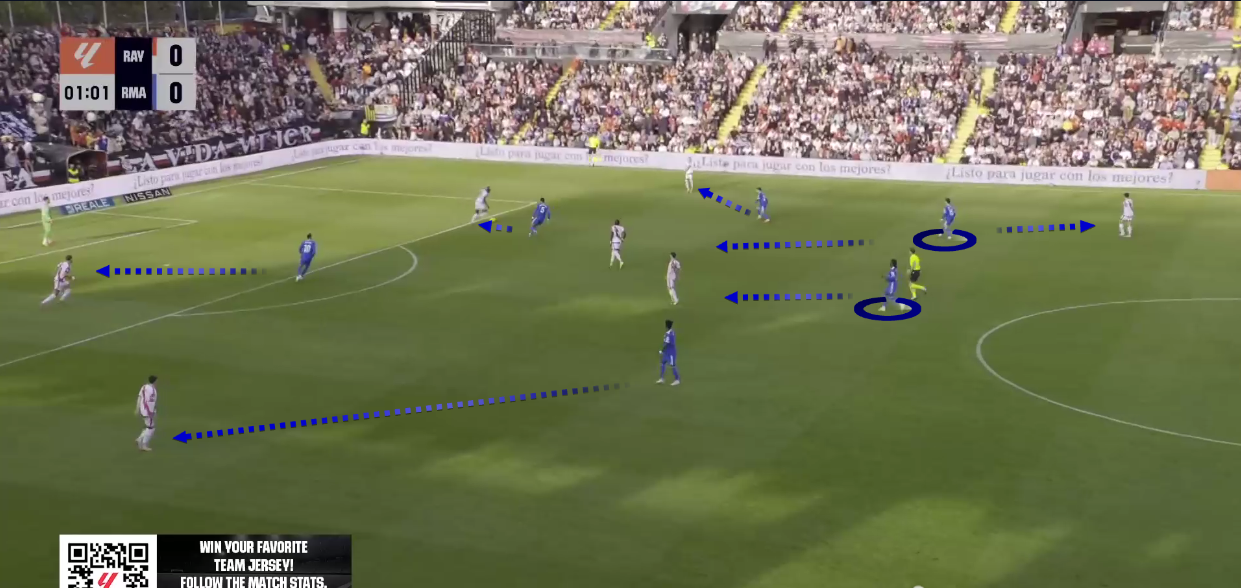 Rayo Vallecano build up in a 4-2-1 structure during open play, with López and Ciss as the double pivots, full-backs positioned deep, and Díaz acting as a high number ten.
Real Madrid respond with a 4-2 pressing shape.
Mbappé and Bellingham press the centre-backs, while the wingers engage the full-backs.
The main issue for Real Madrid lies in Rayo Vallecano’s midfield triangle, which faces only two Real Madrid midfielders.
With Bellingham pressing the left centre-back and no defensive line player stepping up to support, Güler and Tchouaméni are left responsible for marking Ciss, López, and Díaz simultaneously.
Here, Bellingham presses while blocking the passing lane from Mendy to Ciss, forcing the play wide to the left full-back.
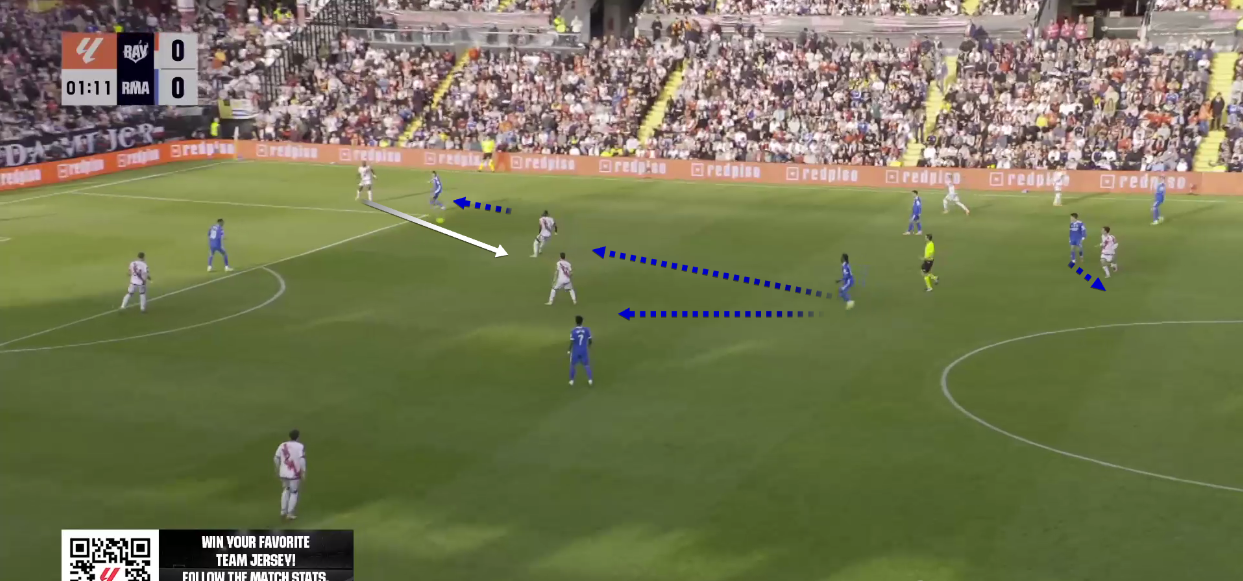 As the ball returns to Mendy, Güler focuses solely on Díaz, leaving Tchouaméni exposed and responsible for covering excessive space and multiple opponents.
This allows Ciss to remain unmarked and free to receive and turn, particularly as Bellingham’s pressing angle on Mendy leaves the passing lane open.
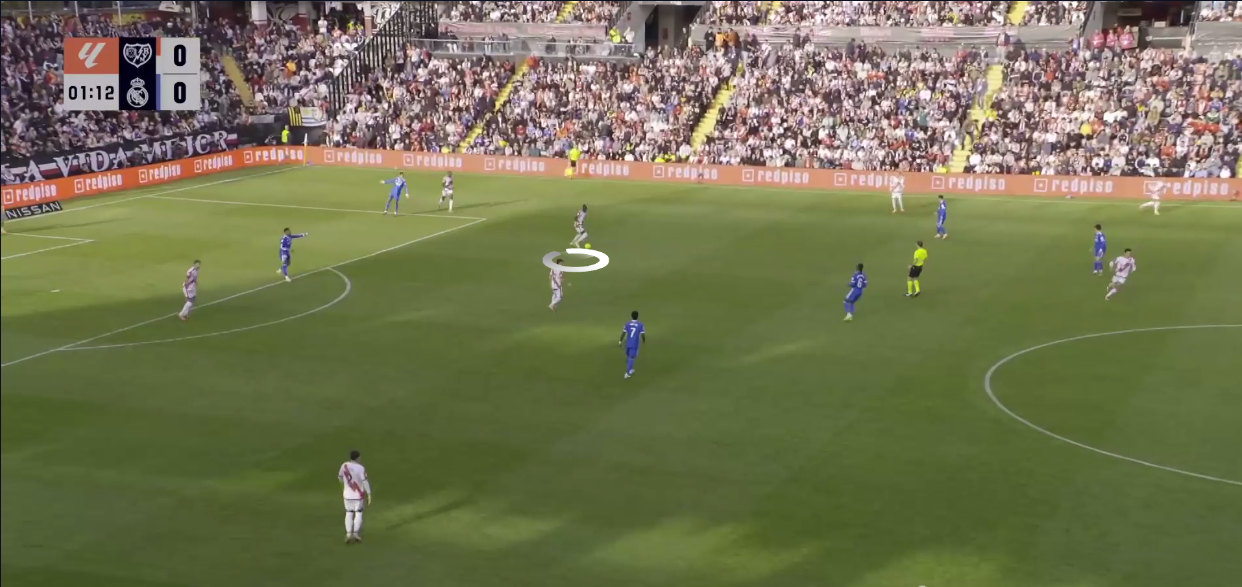 Ciss now carries the ball forward, breaking Real Madrid’s press and pushing his team higher up the pitch.
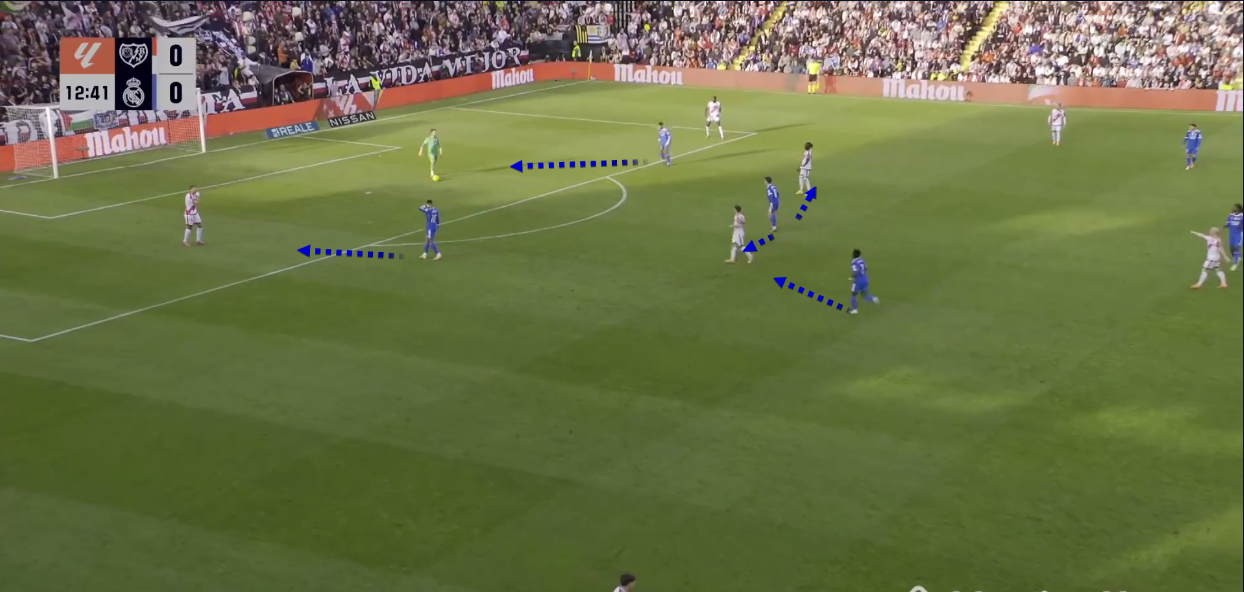 On another occasion, Real Madrid attempt an adjustment with Güler starting higher near Rayo Vallecano’s double pivot, while Vinícius positions himself to move inside and support.
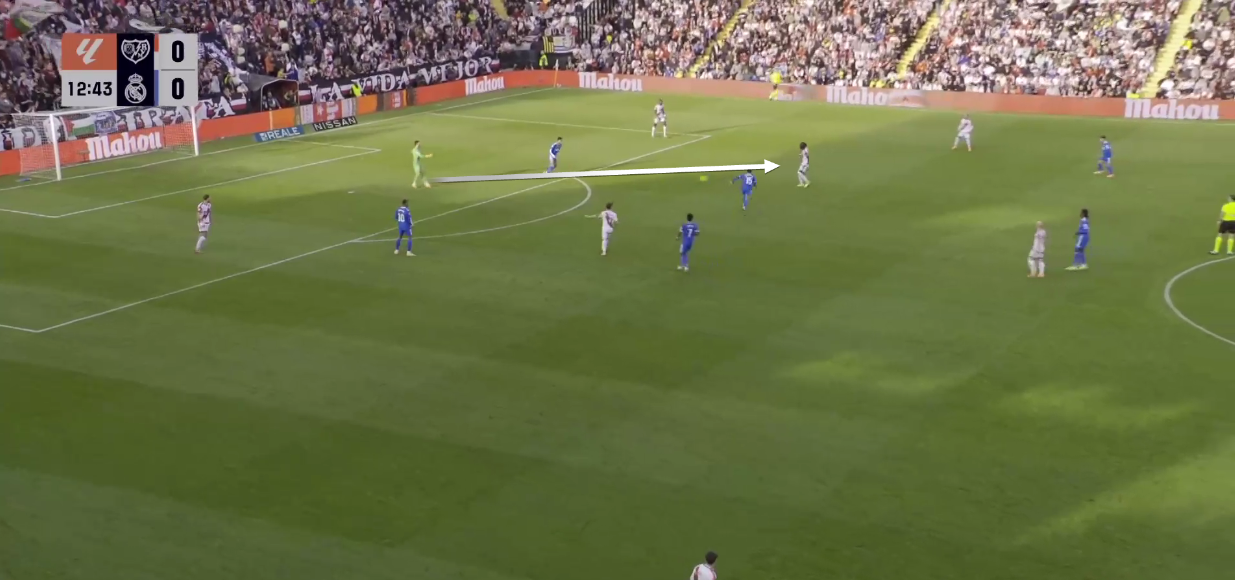 Due to Güler’s positioning between Ciss and López and Bellingham’s pressing direction, Ciss manages to find a passing lane from the goalkeeper.
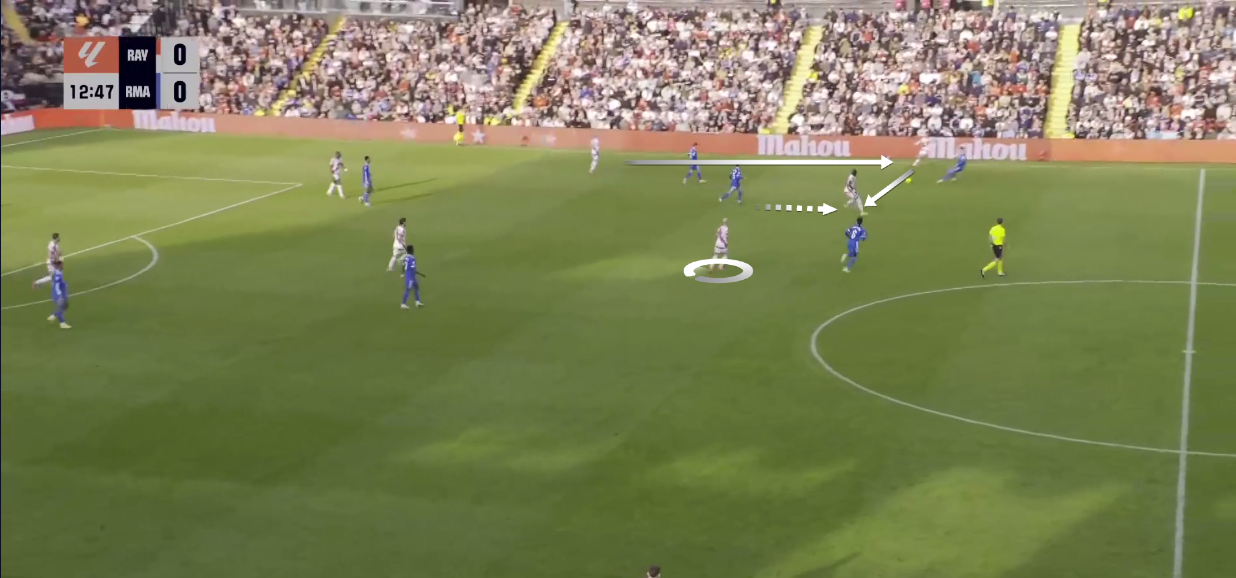 With number ten Isi dragging Tchouaméni away from the ball side, the play shifts from full-back Chavarría to García.
This movement creates space for Ciss to step into, becoming a good passing option with Güler positioned behind him.
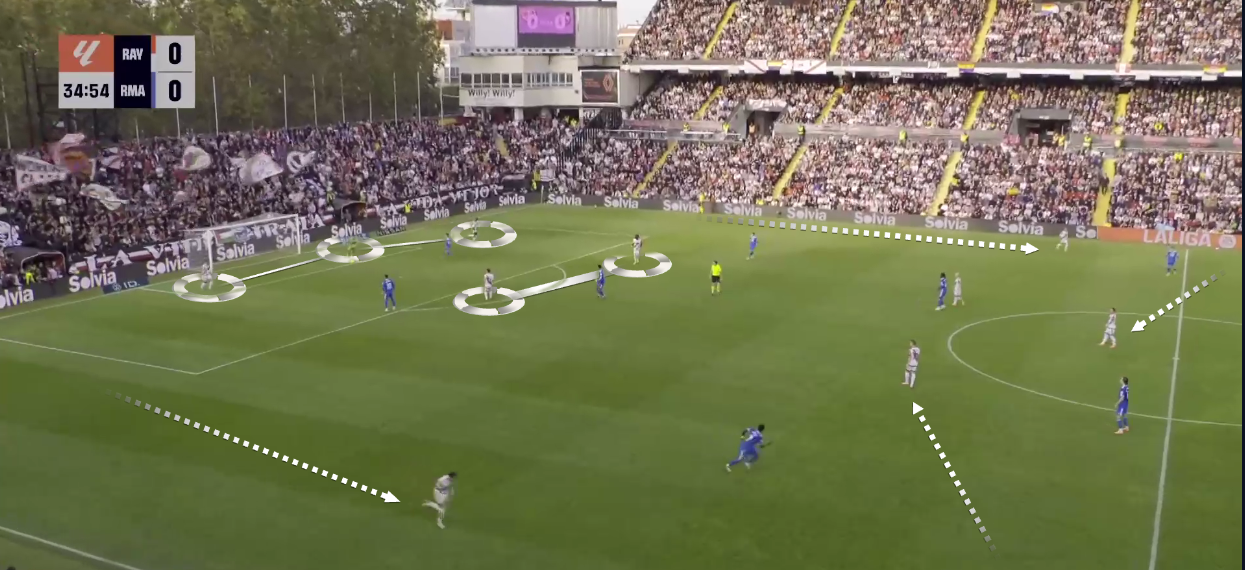 From goal-kicks, Rayo Vallecano maintain their 4-2 structure but move the wingers inside, leaving space for full-backs to advance high up the pitch, while Ciss and López stay in their usual positions.
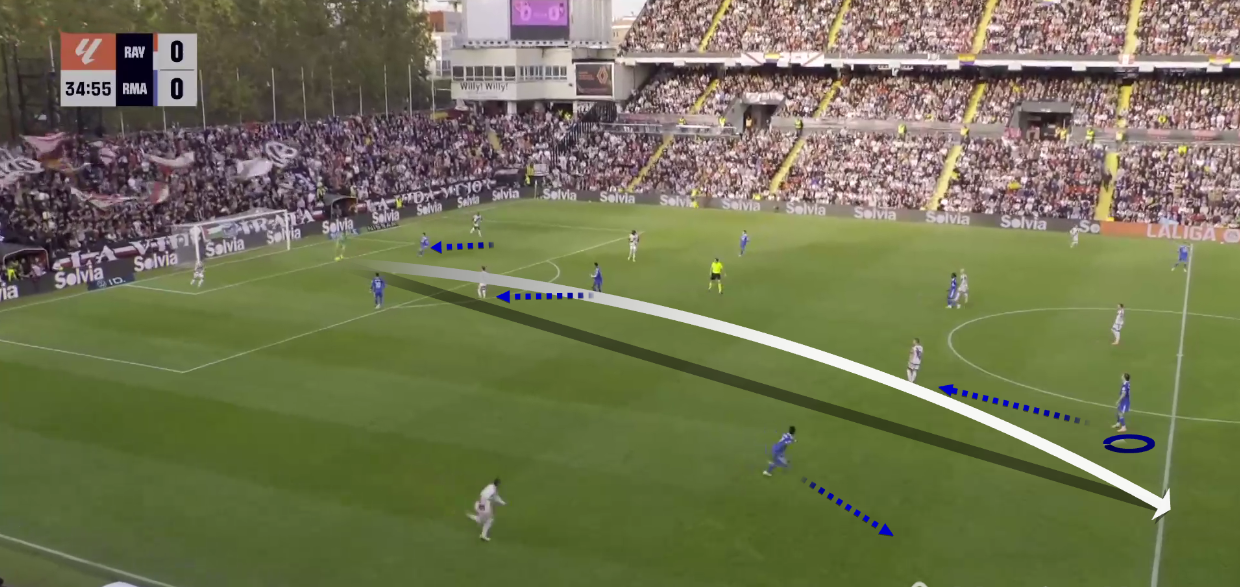 For Real Madrid, Güler initiates the press, Bellingham positions himself between the holding midfielders near the box, Carreras tracks the inside winger, and Vinícius drops to cover the right full-back as the goalkeeper plays long towards the left.
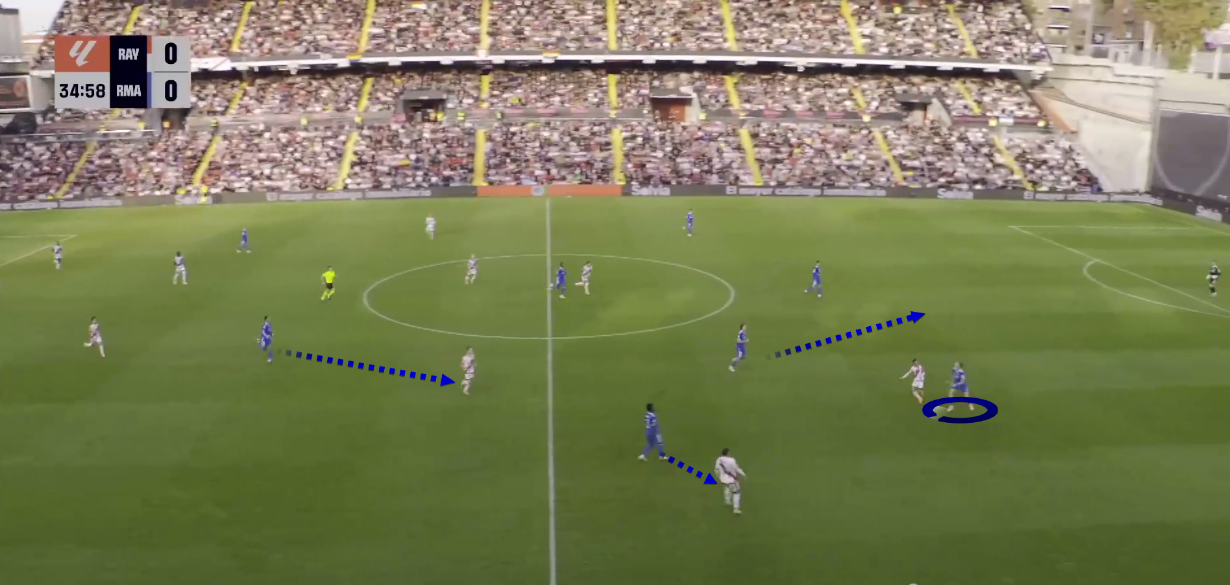 As Huijsen contests the aerial duel, Carreras drops to maintain the defensive line.
Bellingham must recover to cover Carreras’s man, while Vinícius needs to track the right full-back.
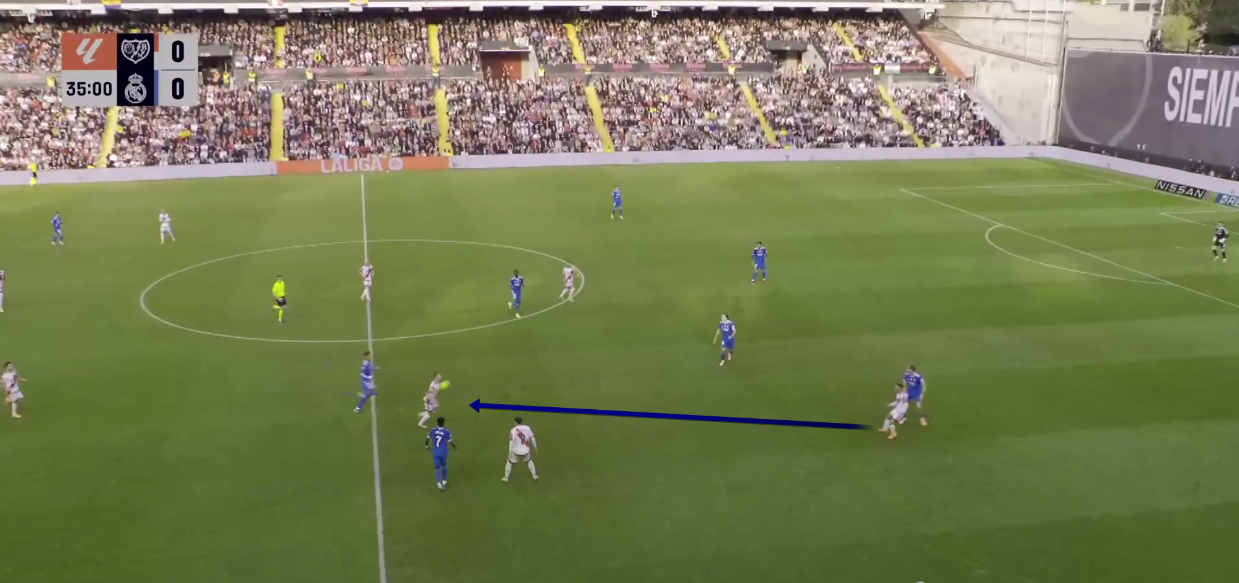 Neither Bellingham nor Vinícius wins the second ball, allowing Rayo Vallecano to regain possession and launch another attack from a more advanced position.
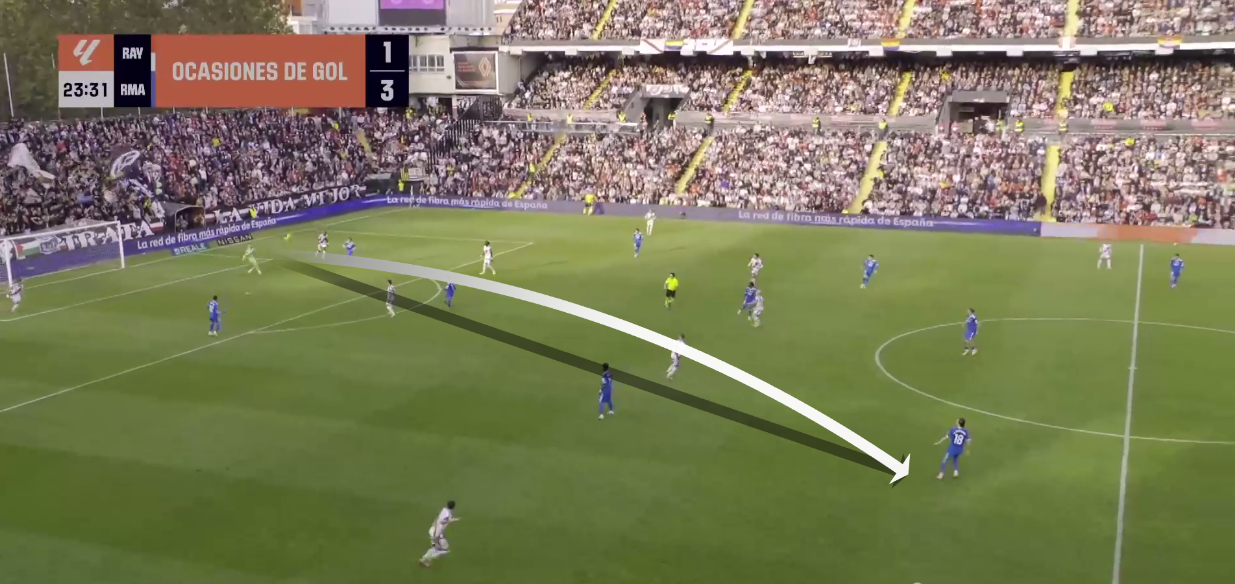 Real Madrid faces the same situation once again.
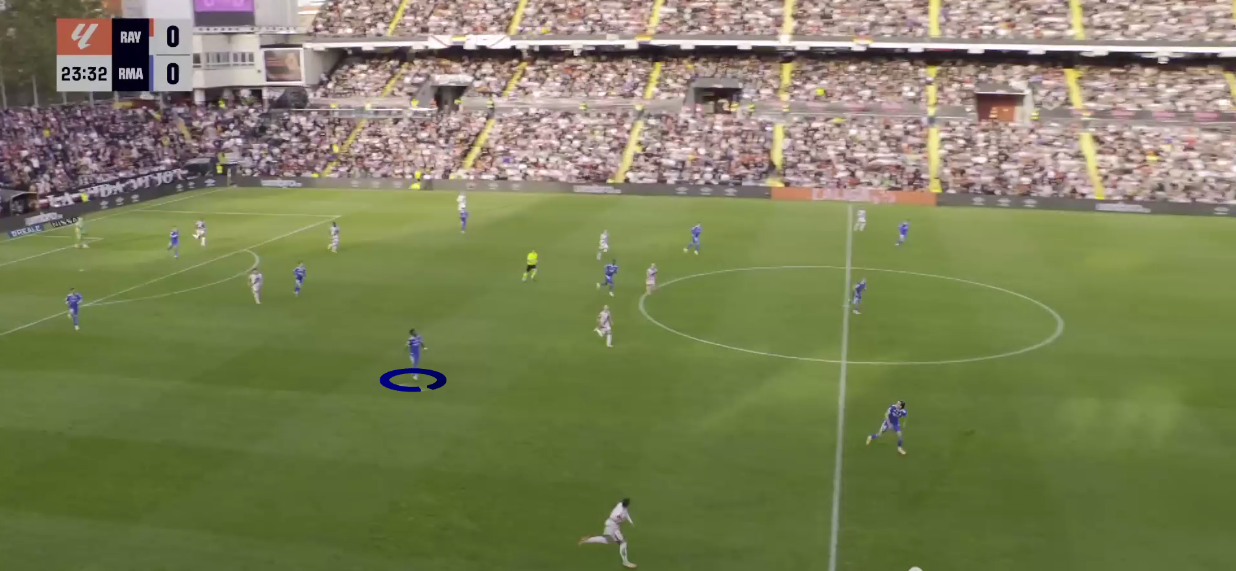 Here, Vinícius fails to track back the right full-back, leaving space on that side.
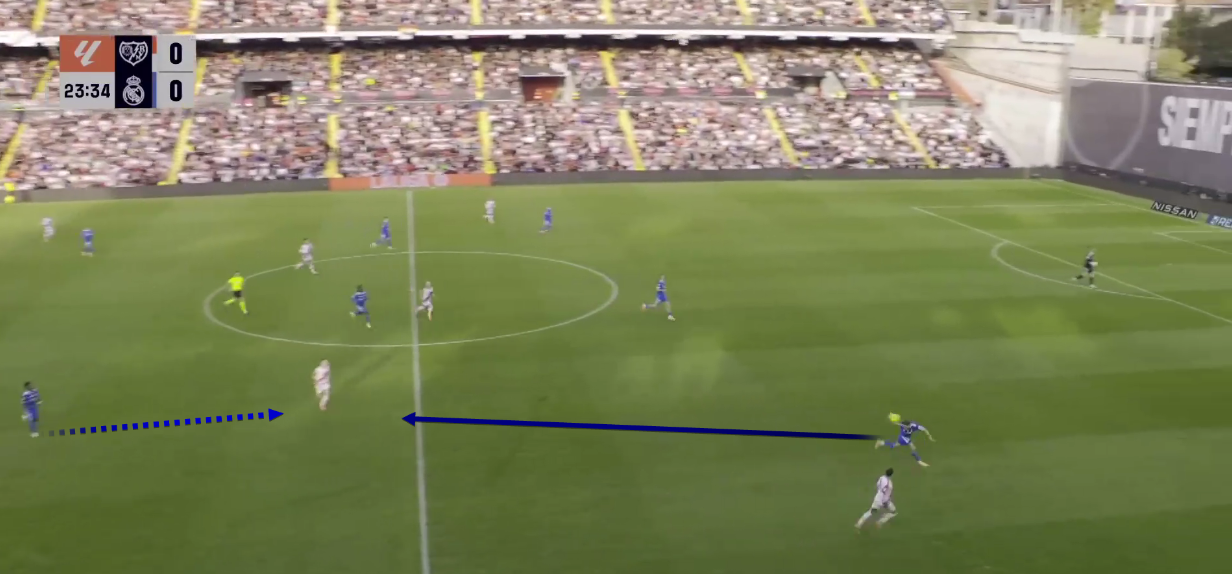 Although Carreras wins the initial long ball, the second ball does not fall to any Real Madrid player.
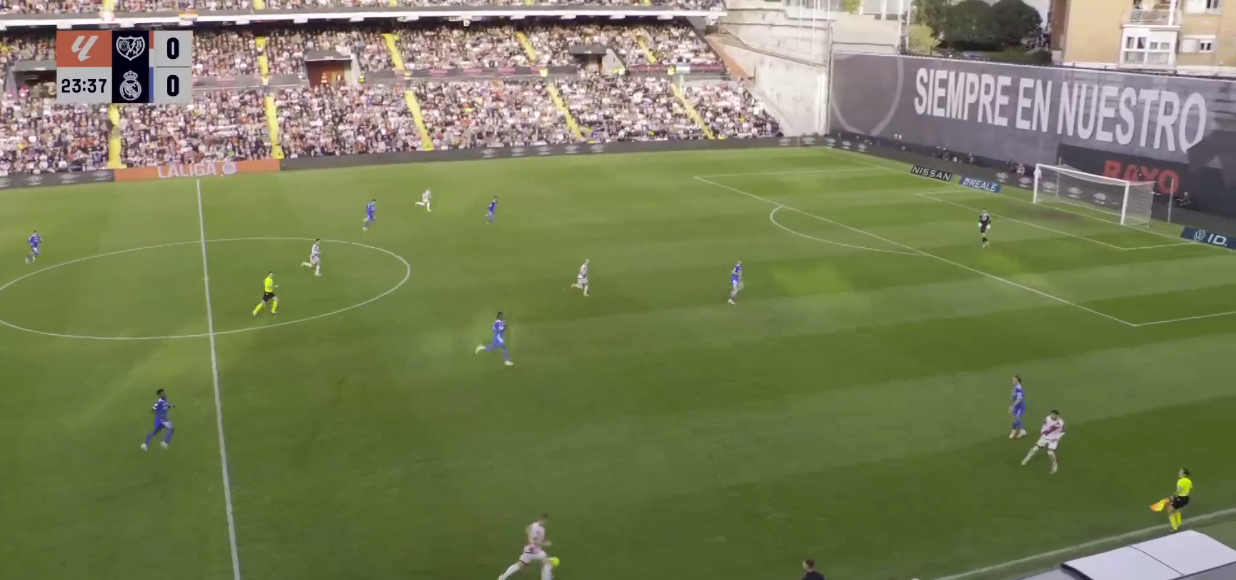 Once again, Rayo Vallecano recovers the second ball and immediately begins another attack from an advanced position.
Conclusion
Although Real Madrid had some tactical problems with their high pressing, the tactical solutions were sometimes insufficient in this game.
As we saw, in possession, they sometimes managed to implement tactical solutions to control the opposition.
For instance, when Courtois’ weak and inaccurate long balls failed, Real Madrid shifted to short passes combined with effective movements from their midfielders.
They also demonstrated the ability to make some line-breaking passes and use them to break the opposition pressure.
Yet, a recurring problem was poor decision-making in critical moments, a lack of precision in execution, limited effort in running and tracking back, and insufficient aggression in contesting second balls.
The key question now is whether Real Madrid can address these issues during the upcoming international break and return in a stronger, more efficient form.
