
The 2024/2025 UEFA Champions League Final is a clash of contrasting philosophies.
On one side, Paris Saint-Germain (PSG), under Luis Enrique, have developed into an exciting, fluid attacking team, blending youthful dynamism with devastation.
On the other hand, Simone Inzaghi’s Inter Milan epitomises defensive resilience, constantly changing shapes, and ruthlessness in transition.
Both teams have earned their place in this UCL final, overcoming unique challenges on their respective paths.
While PSG had to recover from a faltering group-stage campaign, Inter’s consistent defensive solidity saw them qualify comfortably for the knock-out rounds.
This Champions League Final tactical preview examines the contest’s tactical intricacies, focusing on where the game can be won or lost.
Our UCL preview also highlights the technical details that underpin both teams’ approaches.
Inter Milan: A Tactical Masterclass In Pragmatism
Inter Milan’s success this season has been founded on their ability to control games without dominating possession.
Simone Inzaghi has implemented a 3-5-2 system that prioritises compactness, low build-up play, constant rotations and frightening in transition.
Their structure is designed to minimise vulnerabilities while maximising opportunities in key moments.
Inter’s defence is their greatest strength.
Throughout their Champions League campaign, they have spent only 16 minutes in a losing game state, which demonstrates their ability to contain opponents and maintain control.
The back three of Alessandro Bastoni, Francesco Acerbi, and Yann Bisseck functions as a cohesive unit, with each player excelling in specific defensive roles.
Bastoni, in particular, plays a big role due to his contributions to Inter’s build-up play.
His 5.5 progressive passes and 2.05 progressive carries per 90 minutes place him among Europe’s elite ball-playing defenders.
His ability to bypass pressure and distribute into advanced zones opens up opportunities for their wing-backs to attack space, as shown in the semi-final versus Barcelona.
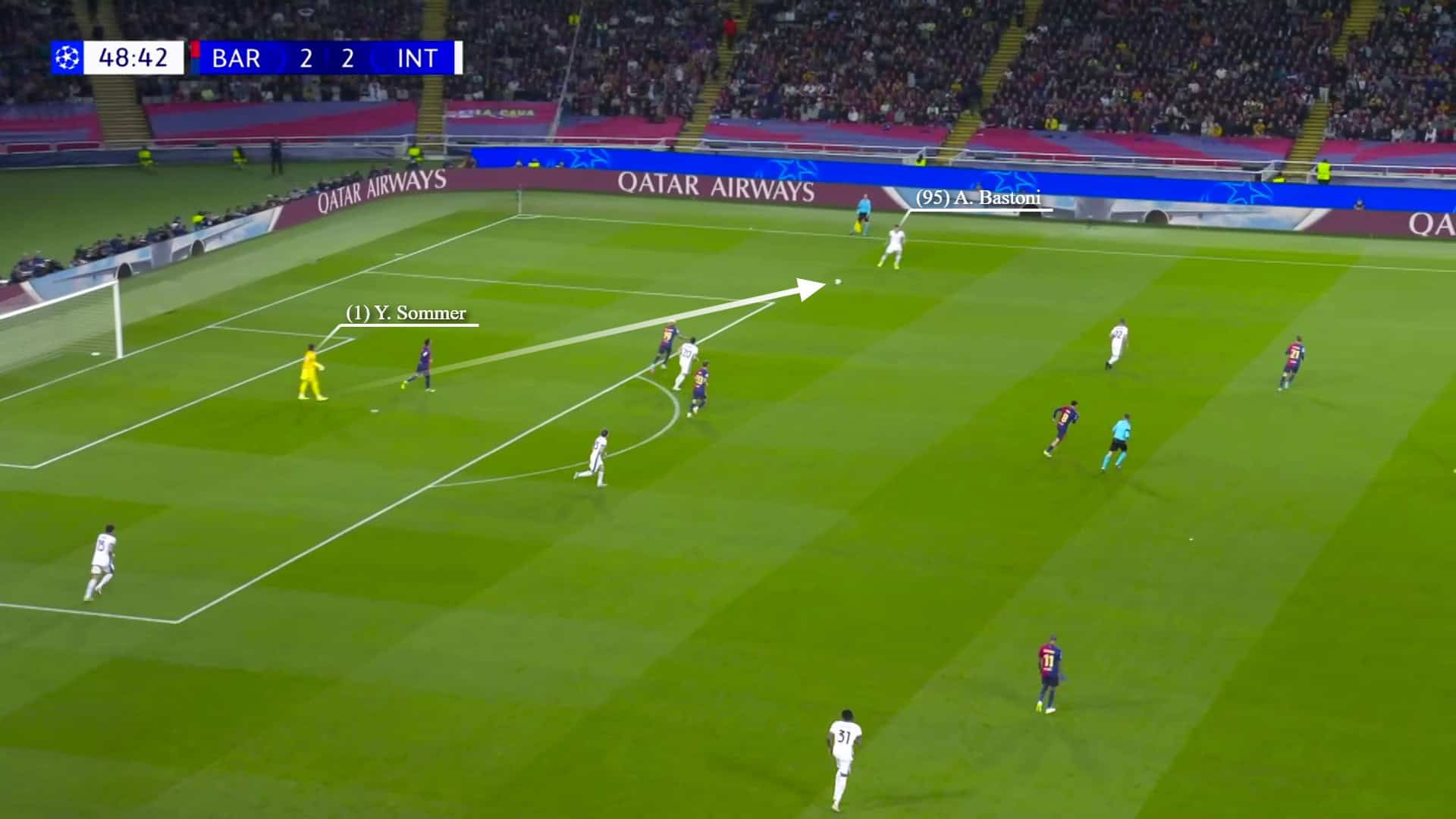
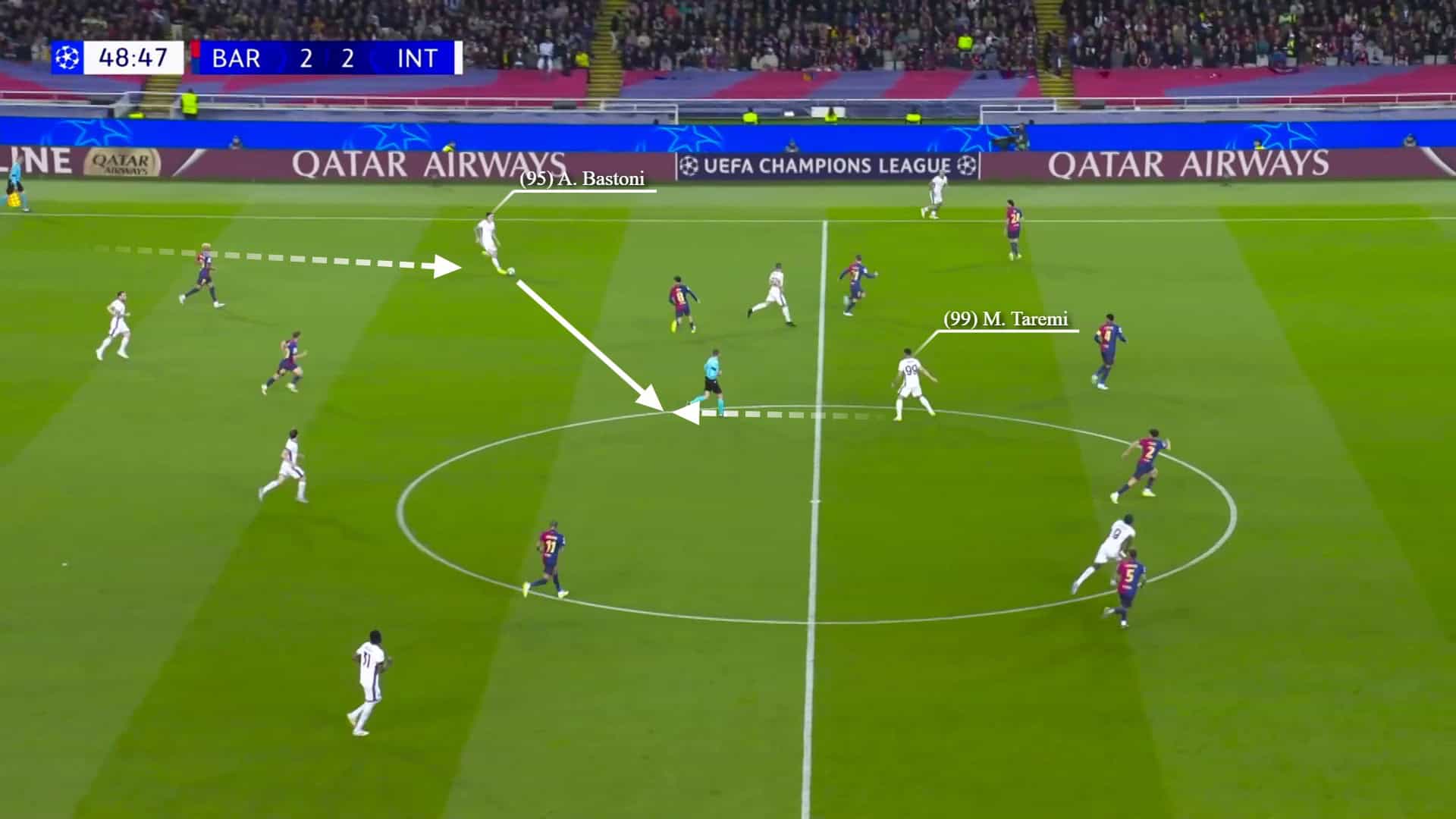
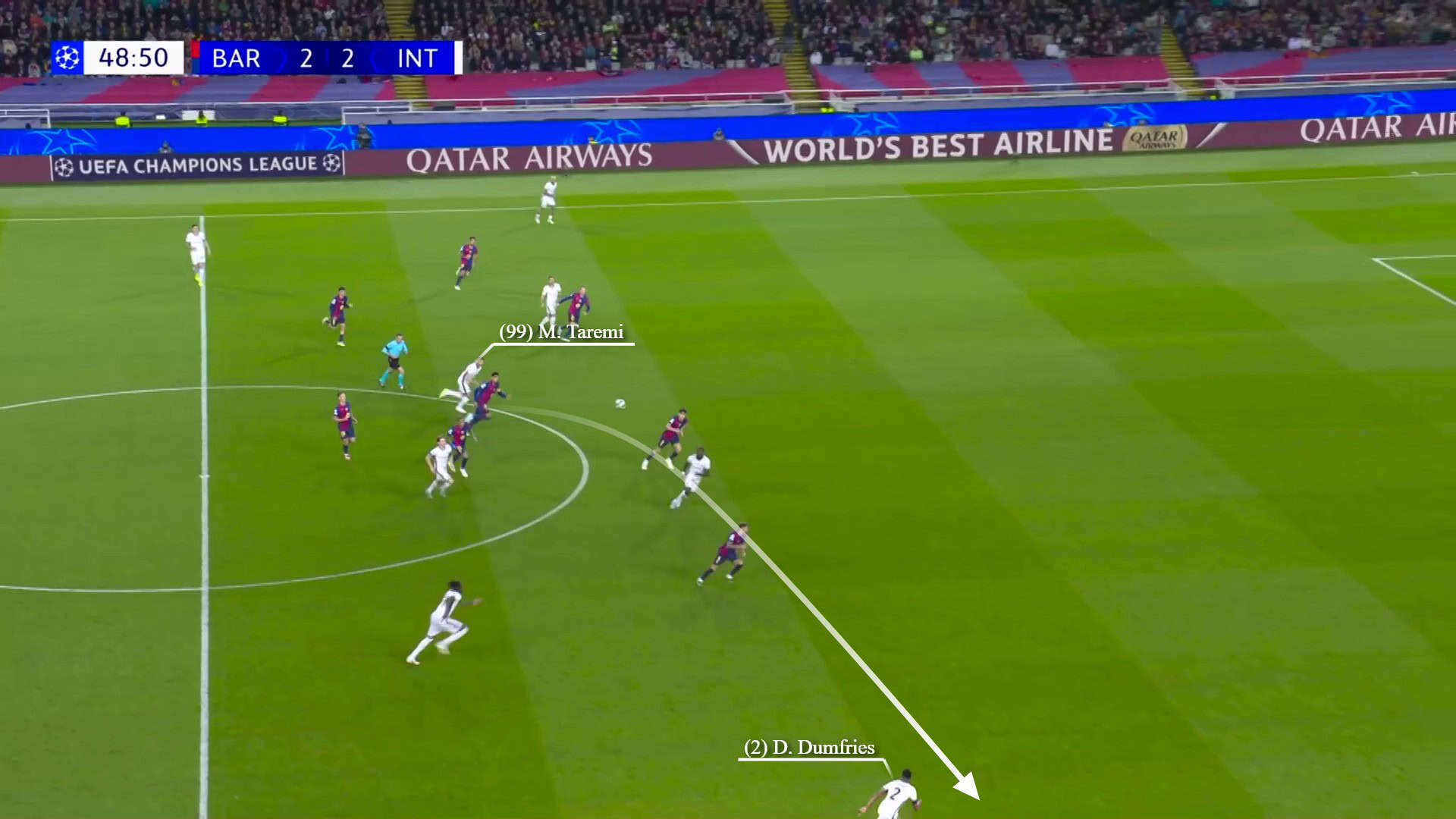 Inter’s wing-backs, Denzel Dumfries and Federico Dimarco, play a dual role in ensuring defensive width and providing an attacking outlet.
Dumfries, with his athleticism and timing of forward runs, is dangerous.
He receives 7.65 progressive passes per 90 minutes, positioning himself to impact the final third.
His late arrivals into the box add another layer to Inter’s attacking dimension, as he often targets the blind side of opposing defenders.
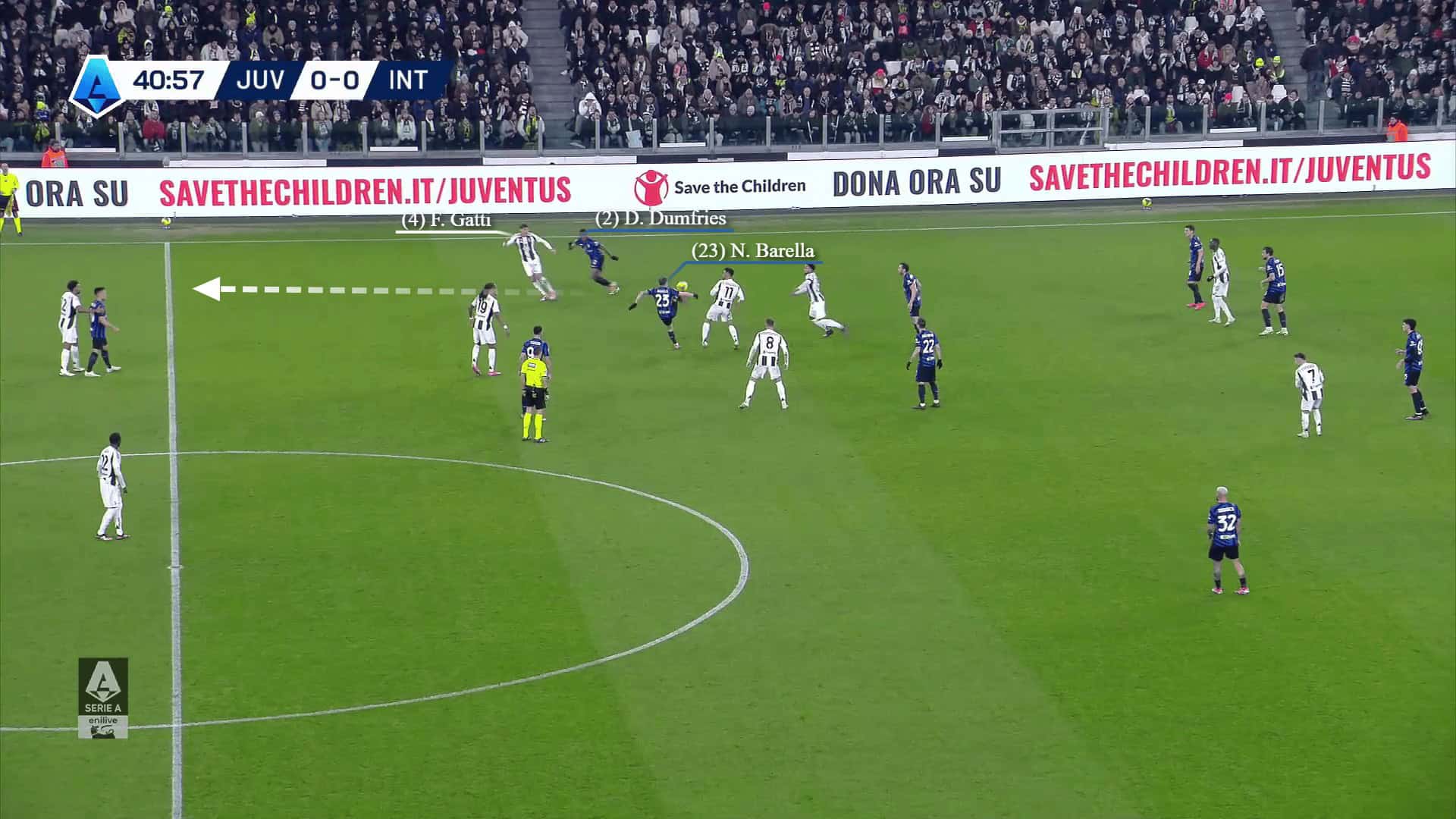
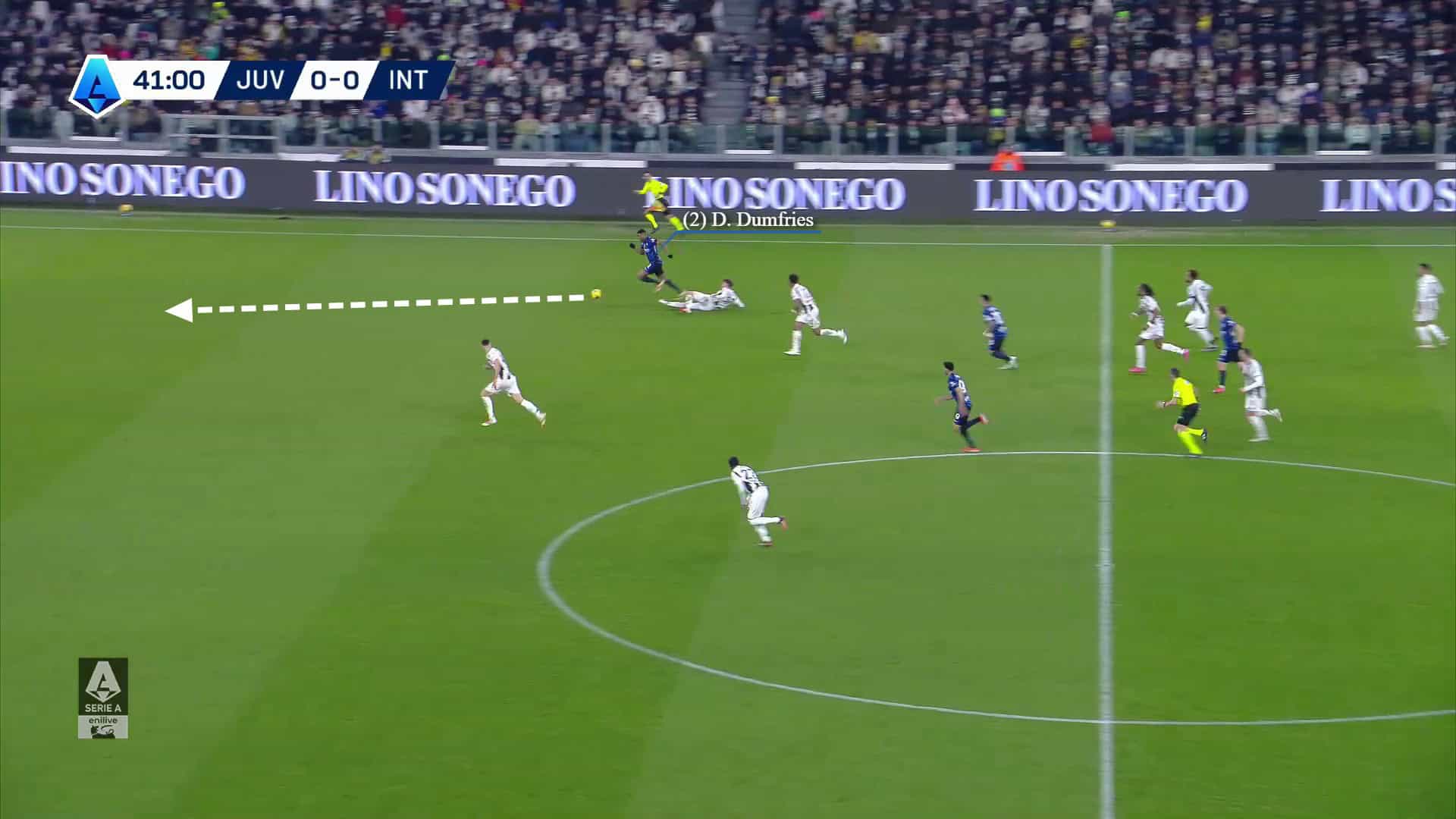
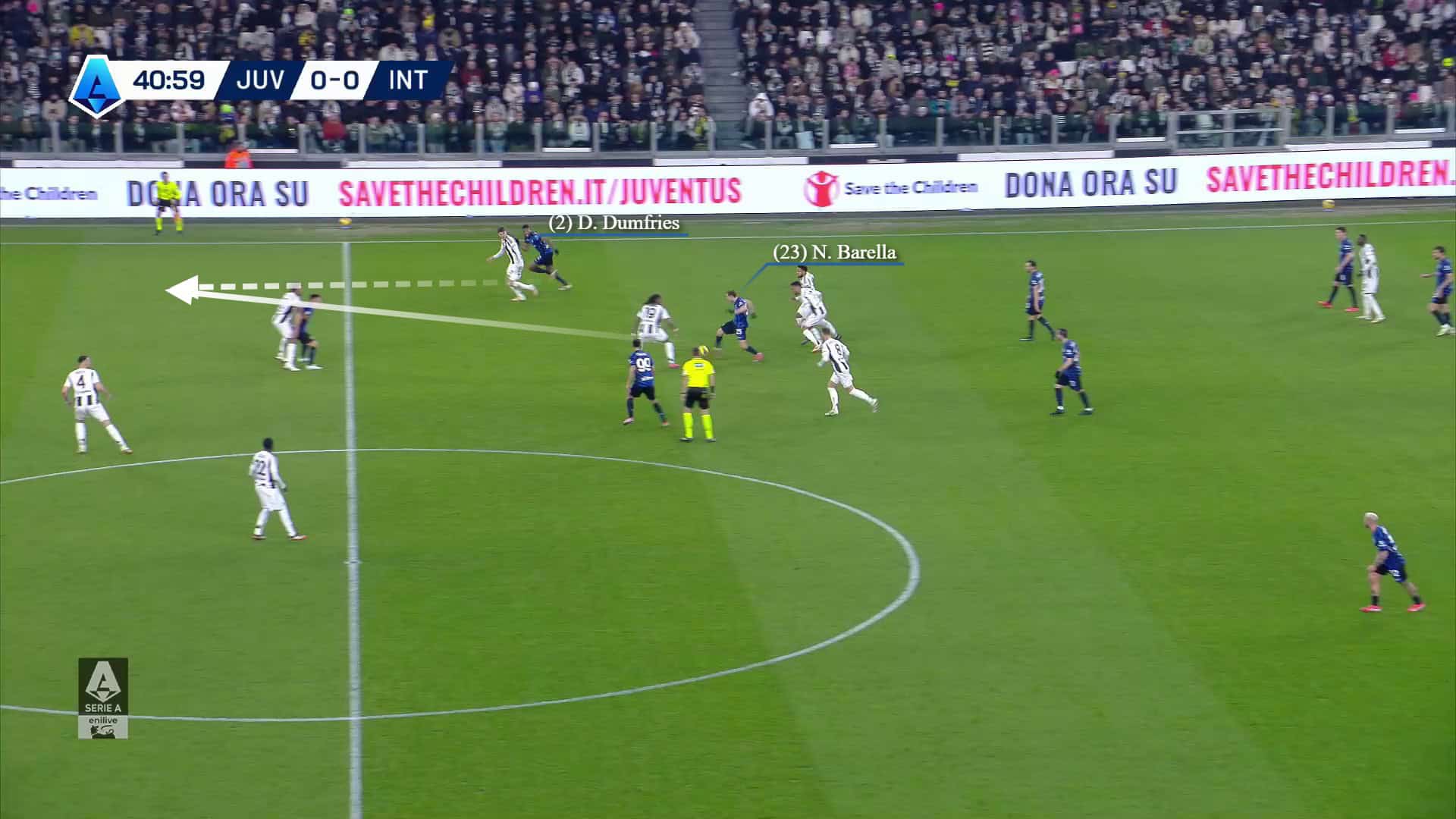
This is shown in a league fixture versus Juventus, where Dumfries has an idea where Barella will play the ball and makes the run to his intended space.
Federico Gatti is caught on the wrong side and cannot keep up with Dumfries’ directness and pace.
 On the left, Dimarco brings a different skill set and excels in his delivery and crossing.
Inzaghi’s system often creates overloads on the left, with Dimarco combining with Bastoni and Lautaro Martínez to create space or deliver dangerous balls into the box.
Inter’s attacking play is built on a foundation of physicality and high-level execution in the final third.
The partnership of Lautaro Martínez and Marcus Thuram provides a mix of movement, creativity, and physicality.
Martínez’s intelligent positioning and ability to occupy defenders create space for Thuram, who thrives in physical duels and knockdowns.
Against PSG’s backline, particularly Marquinhos and William Pacho, Inter’s forwards will look to exploit vulnerabilities in aerial duels and transitional moments.
While Pacho has been solid defensively, his tendency to engage aggressively in duels could be exposed by Thuram’s ability to hold up play and bring others into the attack.
A key aspect of Inter’s tactical approach is their ability to overload central zones and exploit rotations.
Against PSG’s man-to-man structure in midfield, Inter can create numerical superiority by dropping one of their midfielders deeper, or one of their strikers can drop into a central position to receive in front of the back line.
This could force PSG’s defensive line to react, potentially creating gaps for runners to exploit.
Inter’s low build-up approach, as seen in their performance against Barcelona, involves moving the opposition into less favourable zones and playing a direct ball in front of the opposition’s defensive line to set up second-ball opportunities or dribble at them.
This method allows Inter to bypass pressing traps and progress the ball into dangerous areas.
Set pieces are another weapon for Inter.
Finals often hinge on small margins, and Inter’s aerial threat, combined with the quality of Dimarco and Hakan Çalhanoğlu’s delivery, makes them a danger.
Acerbi and Bastoni provide a physical presence in the box, while Lautaro and Thuram add good movement.
This could be a potential opening for Inter against a PSG side that has shown lapses in set-piece defending.
PSG: A Symphony Of Fluidity & Dynamism
Luis Enrique’s PSG represents attacking fluidity, positional rotations, and technical brilliance.
Their 4-3-3 system is designed to exploit spaces through a combination of dynamic movement, intelligent spacing, and positional play, stretching opponents vertically and horizontally.
Against Inter Milan’s compact defensive block, PSG’s ability to manipulate space and create overloads will be critical, particularly in the half-spaces, but also in capitalising on opportunities to shoot from outside the box.
One of PSG’s offensive tools against Inter’s deep and disciplined defensive setup will be their capacity to test Yann Sommer from distance.
Inter’s back five is designed to deny penetration in central areas and force opponents into wide zones or low-percentage areas.
Still, this structure inherently leaves space at the edge of the penalty area.
PSG’s midfield trio of Vitinha, Fabian Ruiz, and João Neves is suited to exploiting this vulnerability.
Ruiz’s clean striking technique and ability to position himself intelligently for second-ball opportunities make him a constant threat (as shown in the Arsenal tie).
His capacity to strike with both feet could determine the final.
Recycling possession quickly and capitalising on chaotic moments, such as after deflected crosses or poorly cleared balls, will be essential in creating these shooting opportunities.
Enrique’s emphasis on positional play ensures that PSG’s attacking structure remains balanced, with players like Vitinha and Ruiz consistently occupying spaces outside the box.
These midfielders can punish Inter if they allow even the smallest lapse in their defensive line.
Shooting from range also stretches Inter’s defensive block vertically.
When defenders are forced to step out to close down midfielders positioned at the edge of the box, gaps are created between Inter’s lines.
PSG can then exploit these spaces by players such as Ousmane Dembélé and his runs into the box or Khvicha Kvaratskhelia‘s ability to cut in from wide areas.
Nuno Mendes and Achraf Hakimi, PSG’s full-backs, are also integral to this approach, as their overlapping runs and cutbacks can deliver the ball into the feet of midfielders that can strike from distance.
The front three of Kvaratskhelia, Dembélé, and Désiré Doué (sometimes Bradley Barcola) provide elite-level dribbling, off-the-ball movement, and finishing ability.
Dembélé, operating as a false nine, has been instrumental in PSG’s resurgence.
His ability to drop into deeper areas disrupts defensive lines, dragging centre-backs out of position and creating space for runners.
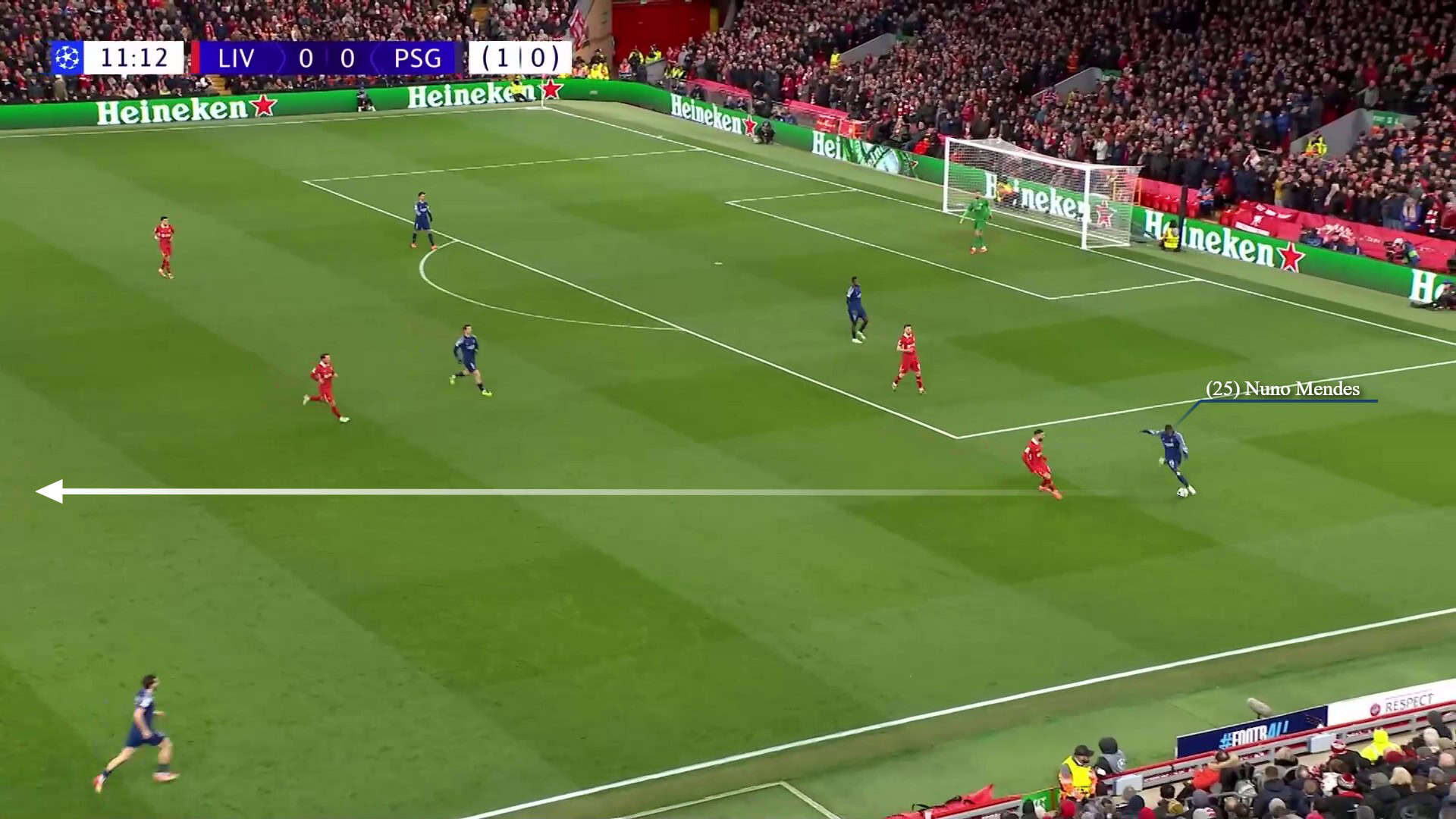
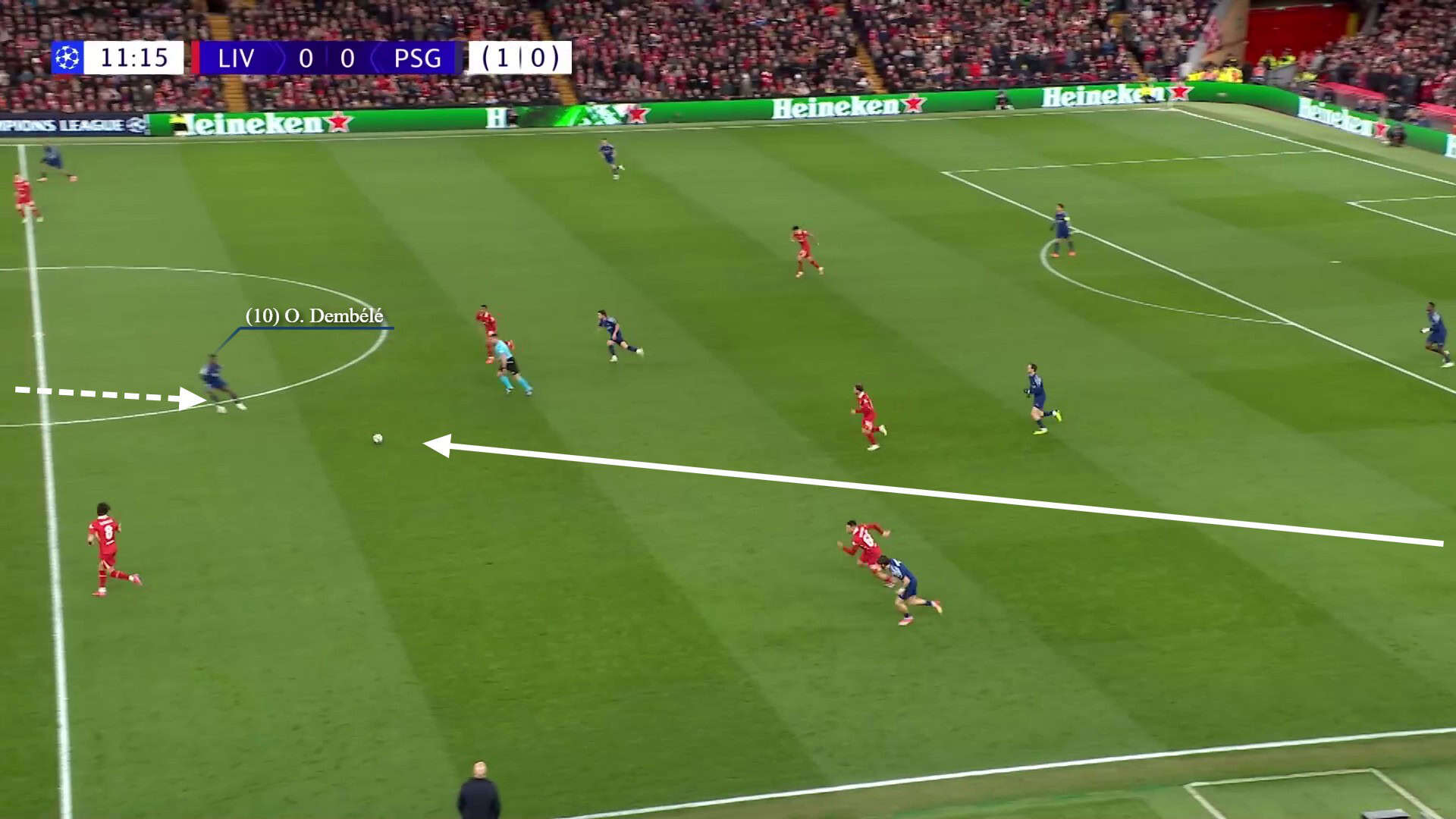
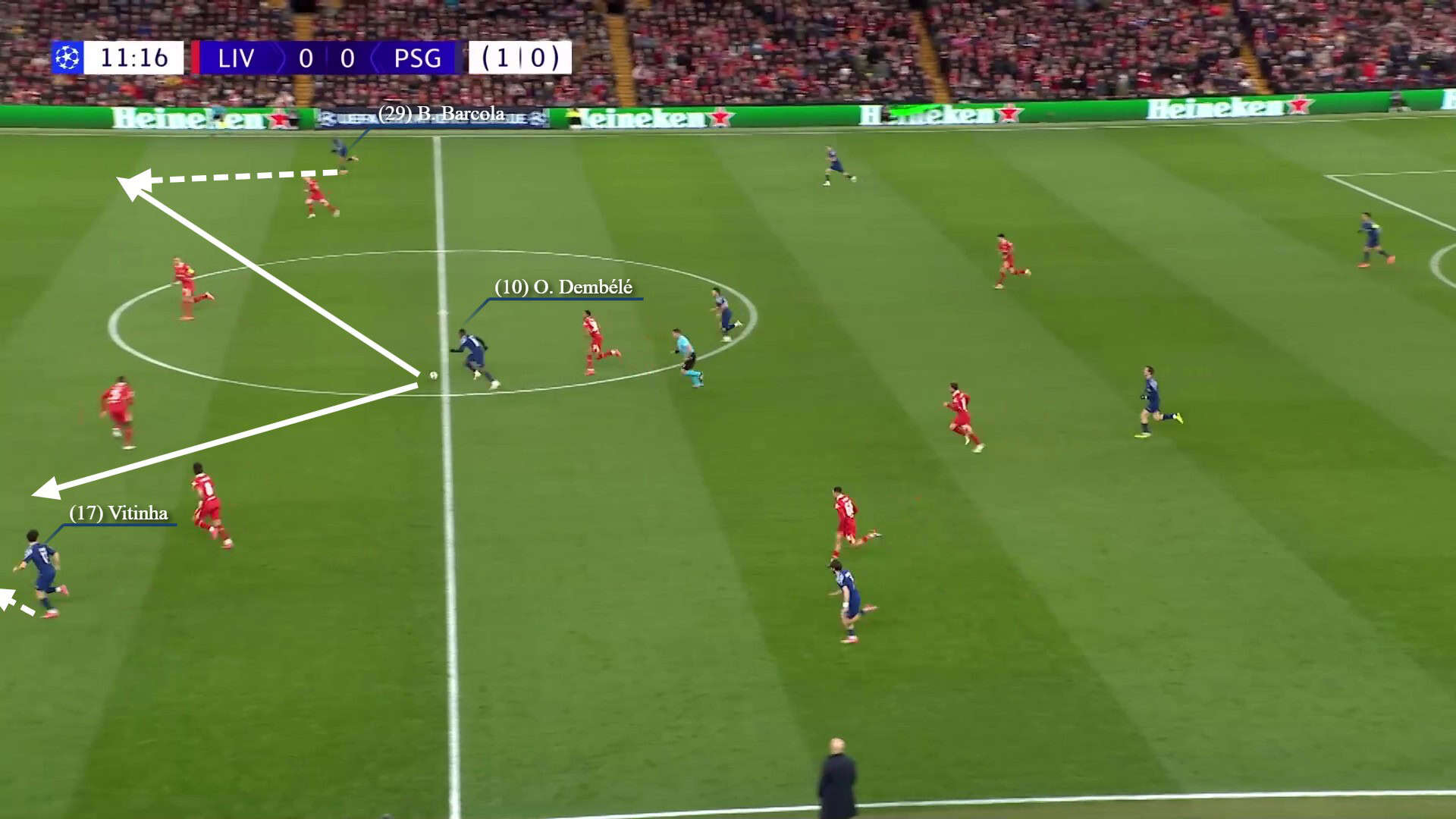
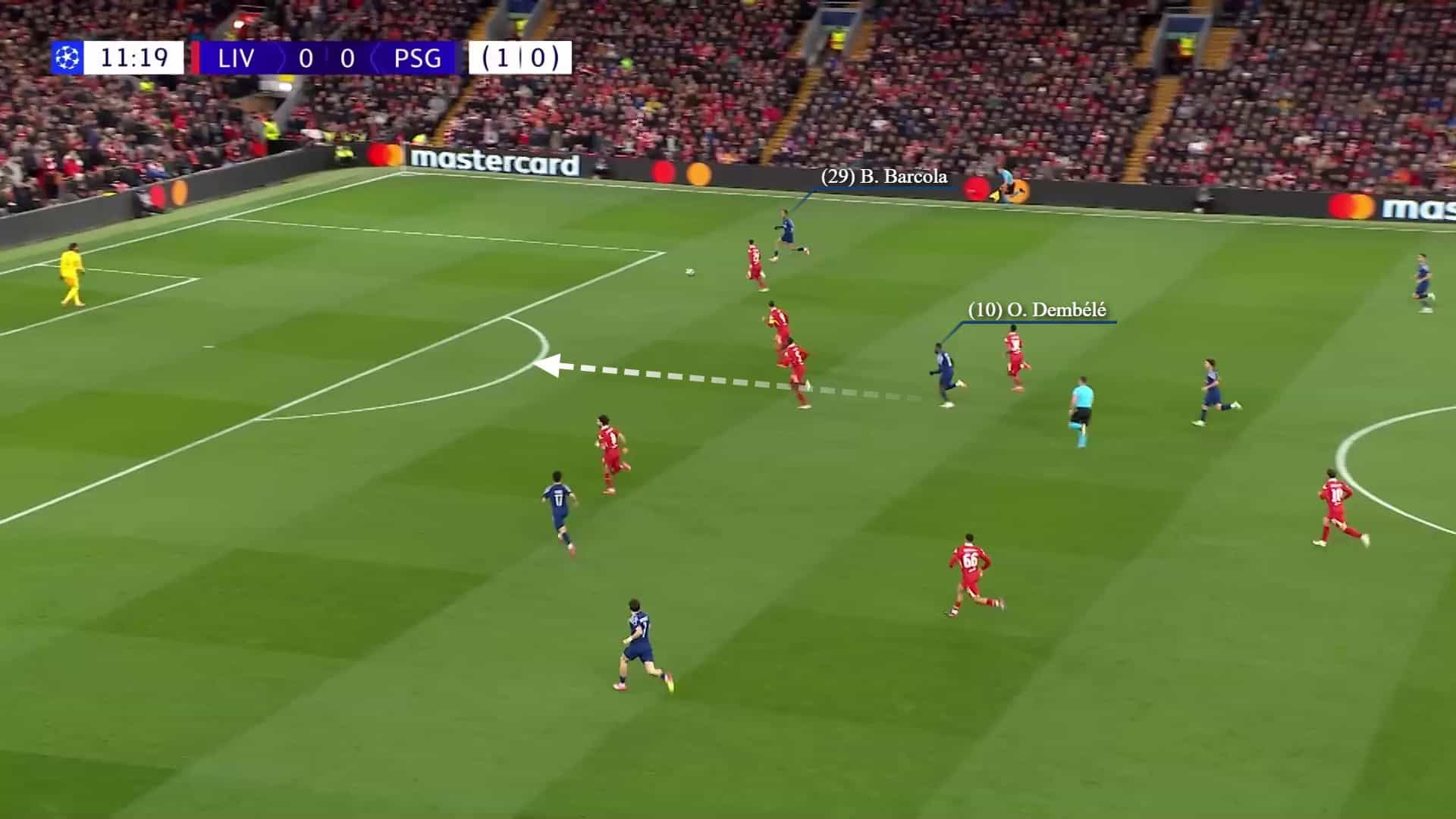
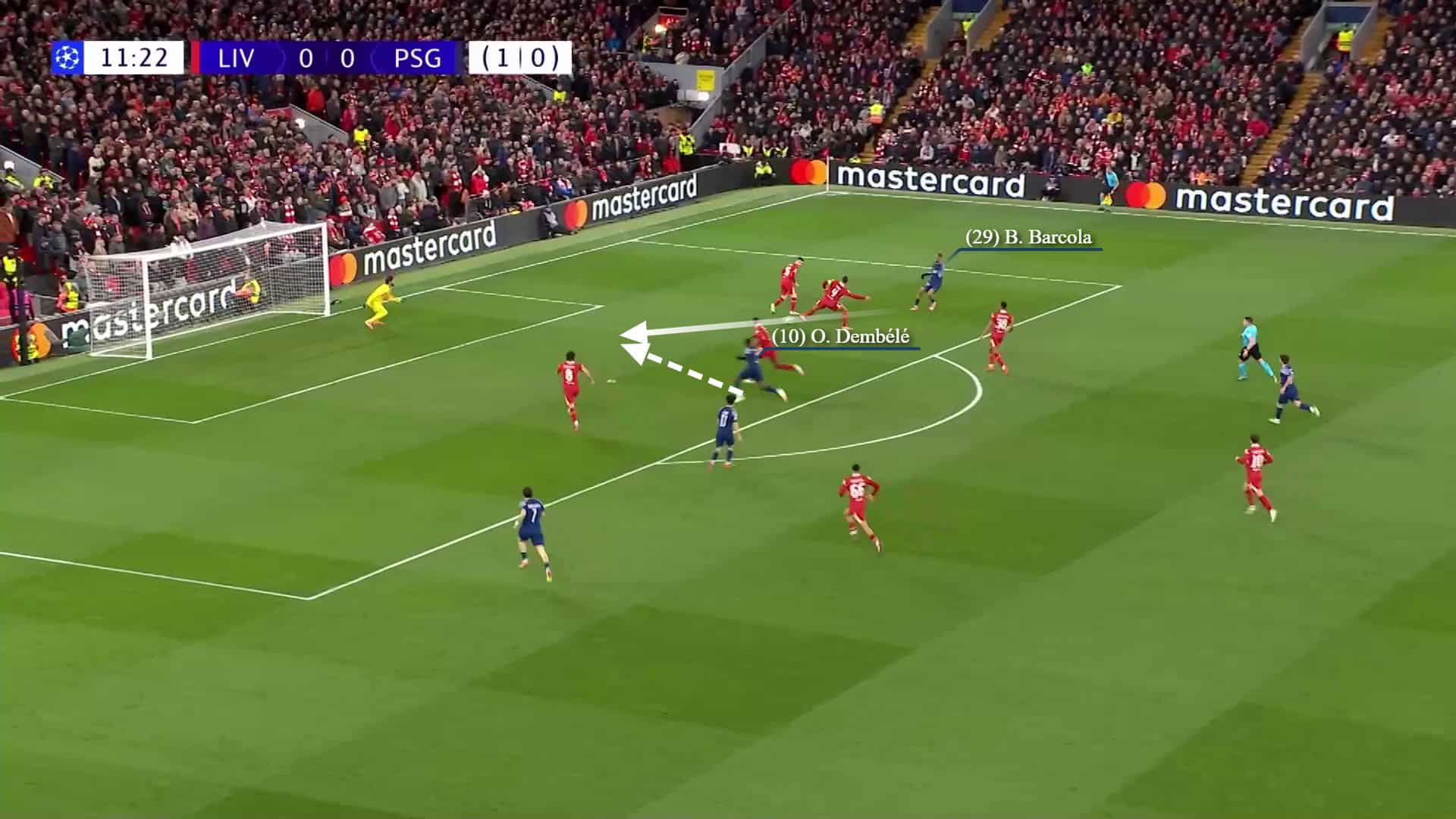
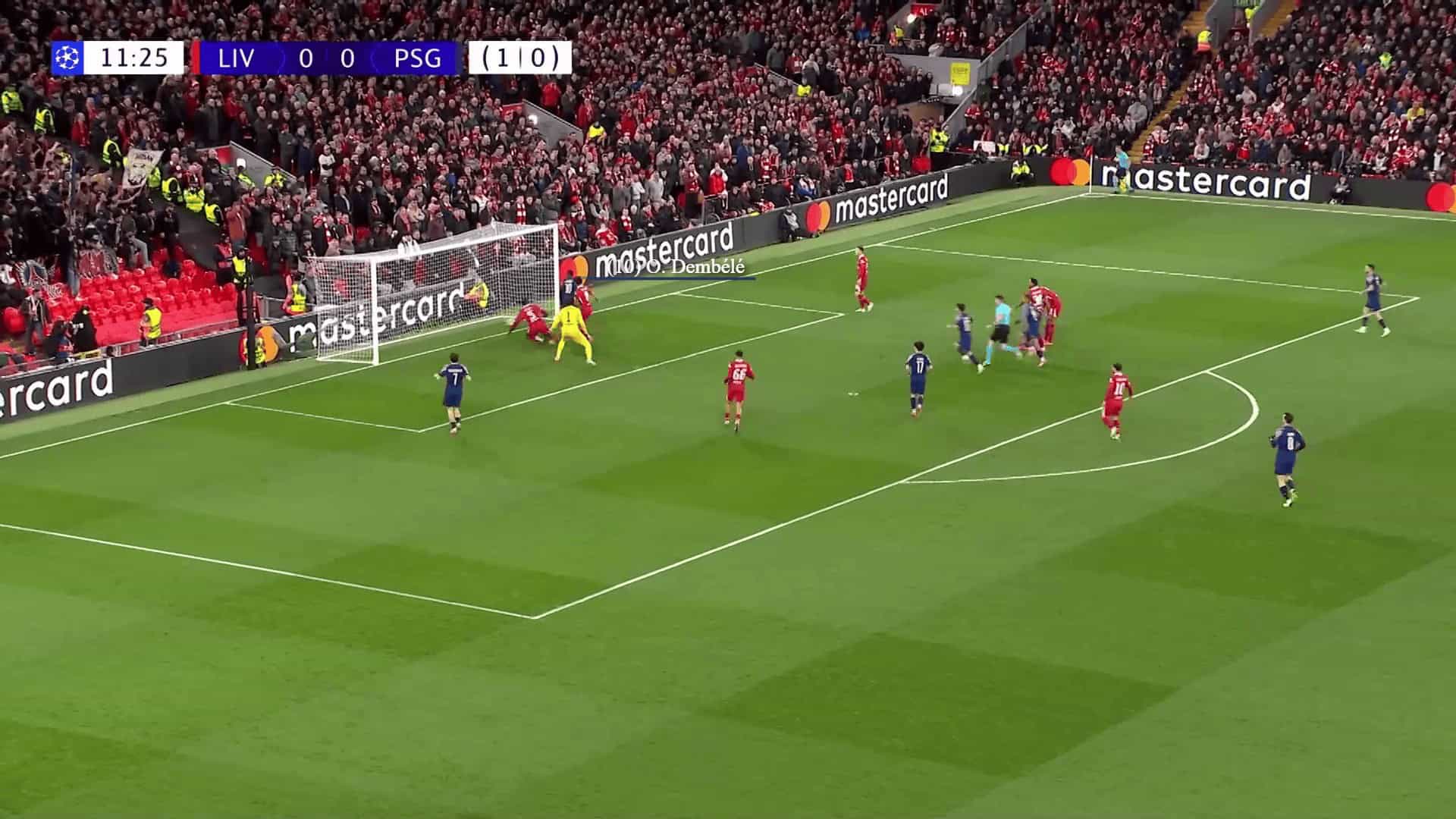
This was shown in the second leg versus Liverpool, where Dembélé dropped deep to receive the ball.
This left him in plenty of space, and neither of the centre-backs for Liverpool chose to follow him.
Dembélé has time and space to execute the right pass to Barcola, which gives him time to arrive into the box and score.
 Kvaratskhelia, one of Europe’s most prolific ball-carriers, excels at driving into the final third, averaging 3.8 carries into this zone per 90 minutes.
His directness and ability to engage defenders one-on-one will be important against Inter’s stubborn block.
PSG’s attacking play could prove to be successful in exploiting the half-spaces between Inter’s wing-backs and outside centre-backs.
The nature of Inter’s back five is that the back three tend to be box-bound.
They focus on occupying and protecting the space within the penalty area, which explains their top-level box defending, but this comes at the expense of leaving gaps in the half-spaces and around the edge of the box.
PSG can exploit this by isolating the wing-backs, through 1v1 dribbling from strong ball carriers like Kvaratskhelia or Hakimi, pushing Inter’s backline deeper.
Defensively, PSG’s transition to a more proactive pressing system under Enrique has been successful.
Their man-to-man pressing approach, led by Dembélé, aims to disrupt opposition build-up play and force turnovers high up the pitch.
This was shown in their quarter-final win over Aston Villa, where they successfully pressed Aston Villa’s midfield pivots and forced multiple errors.
Hakimi, in particular, has been aggressive in jumping onto opposition full-backs, while Mendes provides balance on the left.
However, PSG’s pressing system is not without its risks.
Their man-to-man approach in midfield leaves them vulnerable to rotations and overloads.
Inter’s ability to exploit these gaps, through Bastoni’s ball carrying, Çalhanoğlu’s pass selection, and Nicolo Barella’s movement, could open up PSG.
Gianluigi Donnarumma Vs Yann Sommer
Gianluigi Donnarumma has been a key figure in PSG’s campaign.
His heroics against Liverpool, in which he saved penalties in the shootout and helped keep the tie alive, demonstrated that he can still deliver in high-pressure moments.
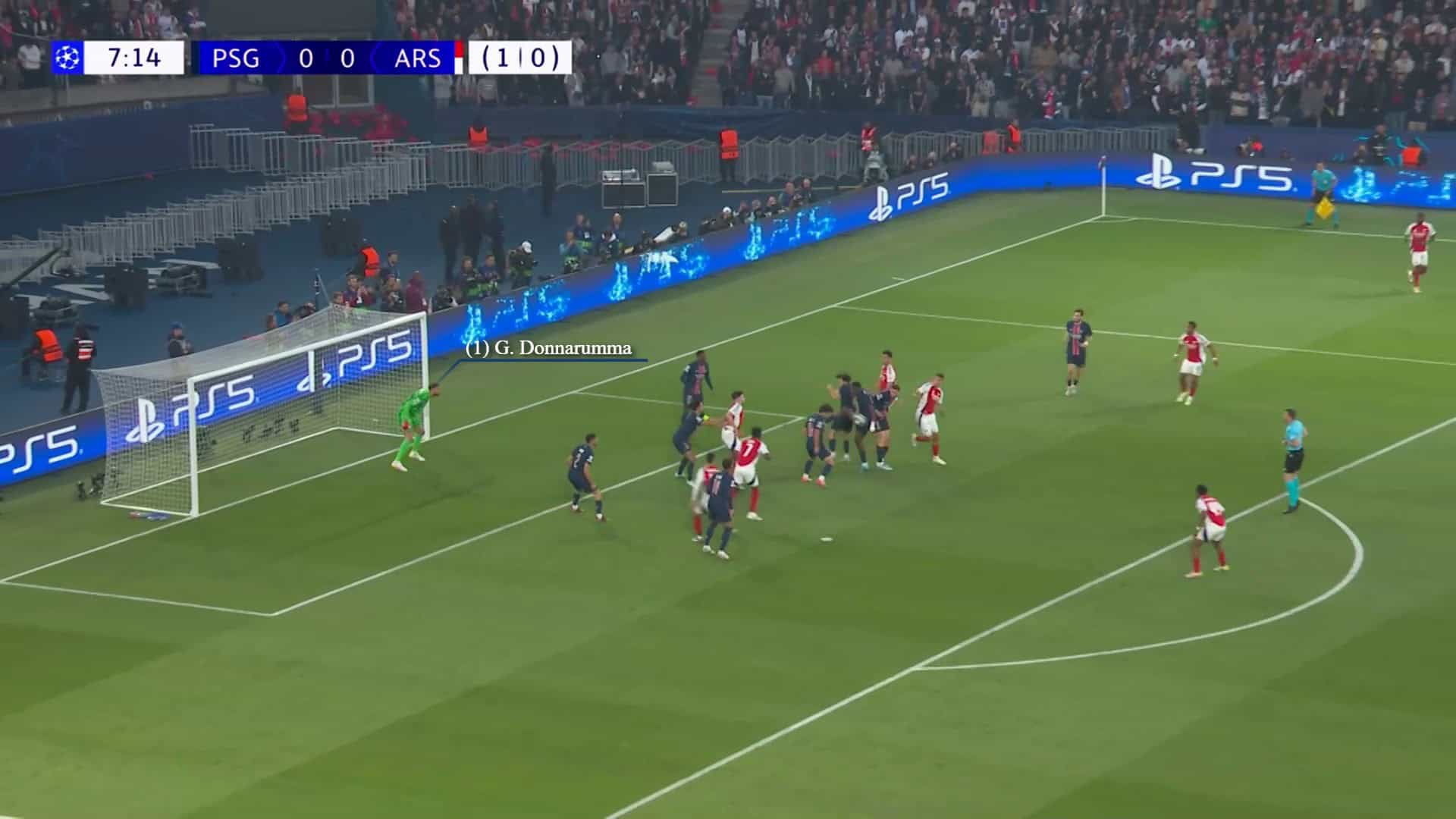
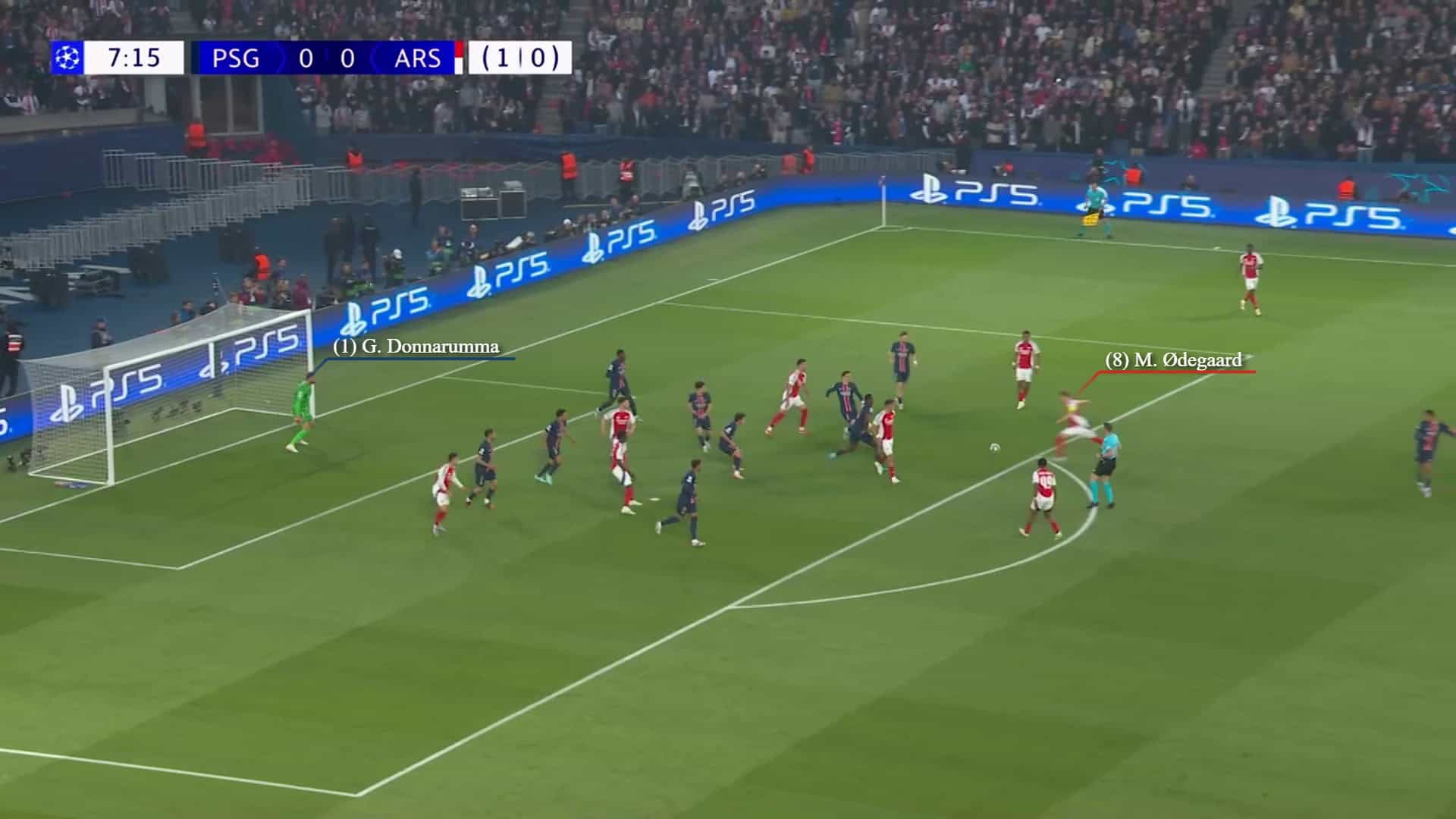
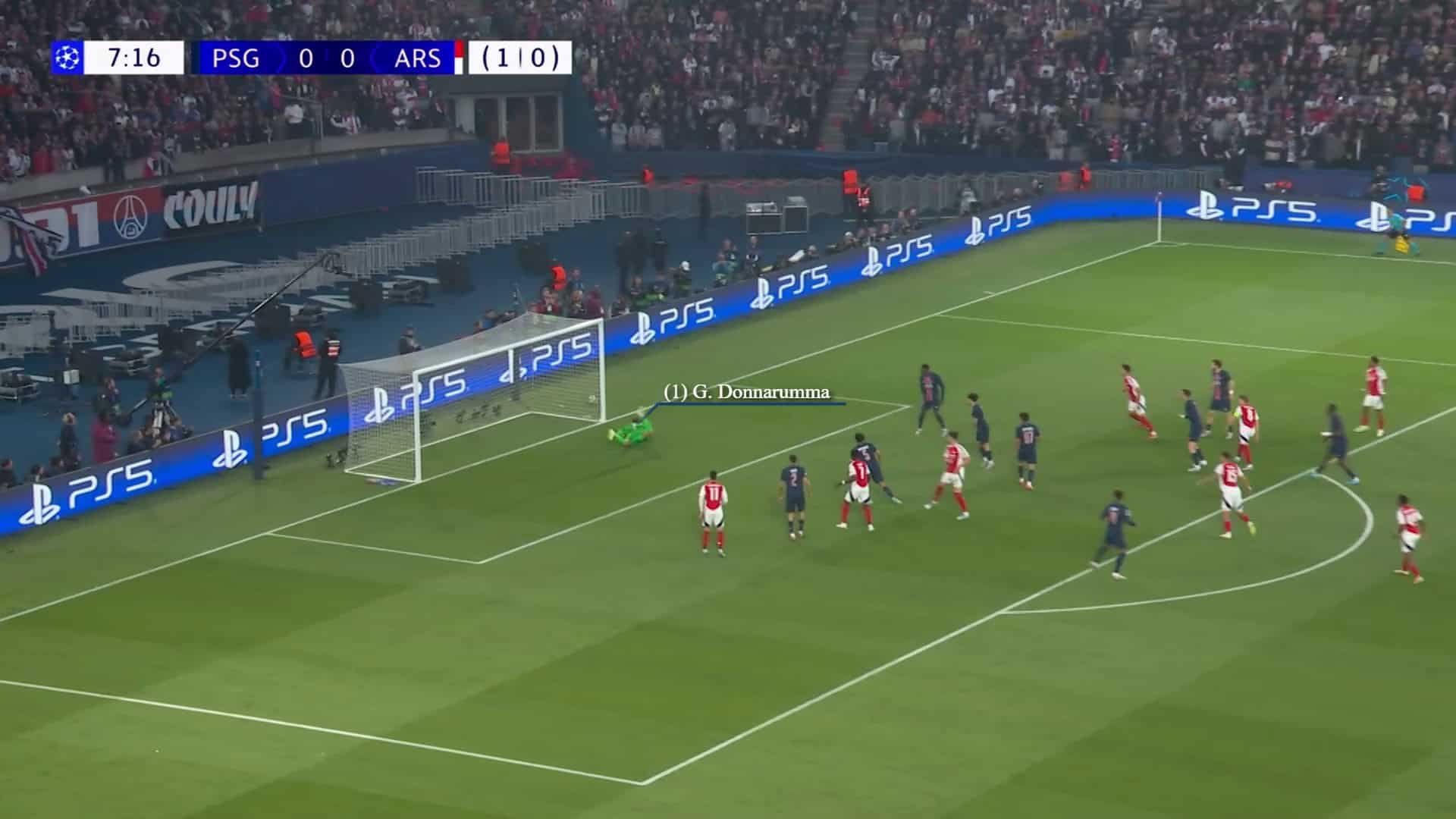
Furthermore, against Arsenal, Donnarumma’s command of the box and shot-stopping ability carried PSG during an unsettled spell of the second leg.
 Yann Sommer’s performance against Barcelona in the semi-finals was a masterclass in composure and shot-stopping, with several saves to deny Barcelona.
