
Chelsea has recently announced their decision to part ways with the Italian head coach, Enzo Maresca, following reported tension between the management and the head coach.
The decision comes at a surprising time and raises many questions about Chelsea’s future, short-term objectives, and results.
Taking such crucial decisions at a delicate time in the season, when the team’s schedule is quite busy, and the challenges are high, cannot be considered a very wise choice from Chelsea’s management, even if the manager’s ideas or results no longer convince them.
At the same time, the fact that Maresca was appointed only one season ago and that he has already succeeded in making the team look more united and have a more obvious identity can only mean that he is doing well with the team and that it would be useful to give him more time.
Furthermore, Maresca has been successful in his first season, having helped the team secure a top-four finish in the Premier League and lifting the UEFA Conference League title after beating Real Betis in the final.
Not only that, Maresca’s first season with the Blues was even more successful, as he capped it with stellar performances in the 2025 FIFA Club World Cup, beating the UEFA Champions League holders, PSG, 3-0 in the final.
But despite these successes, Maresca has had moments of failure as well, especially during the latest period, when his team has won only one of their last seven games.
One of the alleged reasons for the disagreements with management is Maresca’s disagreement with the medical team’s decisions about players’ availability, along with behind-the-scenes issues that complicated the relationship between management and the head coach.
In this Chelsea tactical analysis, we will look at what Maresca has achieved and changed at Chelsea during his spell with the club, and what has led to the recent series of negative results, accelerating his departure.
The analysis will also suggest what needs to be avoided in the near future to prevent the team’s season from becoming a complete failure despite the high potential.
Enzo Maresca Tactics At Chelsea
The arrival of Maresca changed a lot of things for the better, as no one can deny that he improved the performances of several Chelsea players, such as Cole Palmer and Enzo Fernández.
His attacking system, based on playing wide and on finding spaces for key third passes, made the difference for Chelsea and helped them significantly in winning a lot of games last season to achieve the fourth spot.
Chelsea Wing-Play & Reliance On Third-Man Plays
At Chelsea, Maresca relied on wide full-backs and wingers, while keeping the centre-backs and the two central midfielders close to each other to create space between the full-backs and the midfielders.
Those spaces are usually exploited by either the striker or one of the wingers/advanced playmakers to receive passes in key positions.
The objective of such plans is to create a passing possibility for a third player coming from behind or making the forward movement into space following the unlocking of that area.
This tactic helped Maresca’s Chelsea a lot, making their attacking transitions smoother and more dangerous on many occasions.
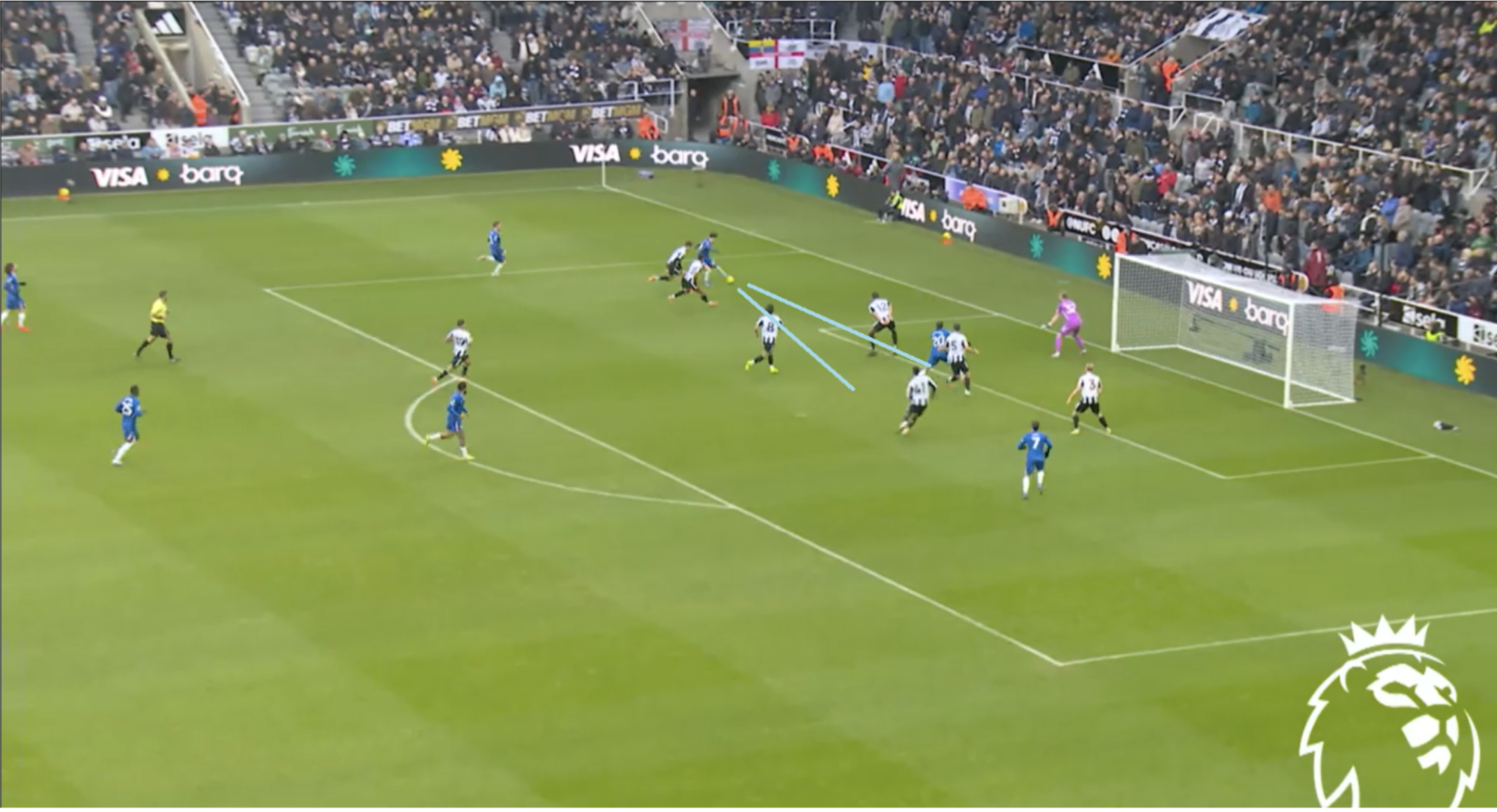
The following picture highlights the movements behind the opponents’ defensive lines and the flexibility in terms of attacking positioning for their players.
The goal action sees Malo Gusto advancing to hold a right advanced playmaker position, knowing that his position in this match was right-back.
The action starts with Reece James advancing with the ball, and Gusto exploits that to position himself in a more central, advanced position to receive the ball while creating numerical superiority inside the final third.
This not only confuses the opponent’s defensive organisation but also creates the possibility for Cole Palmer to escape from marking and attack the space behind the defensive line.
Under the management of Maresca, a lot of goals were scored thanks to such key passes and movements at the back of defensive lines, and that’s something that counts for him.
Furthermore, pushing his team to usually create numerical superiority through various means (notably positional flexibility and changes) was one of Maresca’s most remarkable strengths in the attacking phase.

Chelsea Poor Chemistry Due To Turnover
That said, what impacted the team’s performance, especially this season, was the lack of consistency in the players used, especially in the attacking phase.
And for this, the head coach cannot be the only one to blame since the management had a say in the summer transfers.
They sold Noni Madueke to rivals Arsenal in a deal that impacted Maresca’s system, which relied on players like Palmer and Madueke in attack.
The lack of consistency in the use of players and the high frequency of signings/departures cannot guarantee success and is not a strategy that suits teams looking to build a powerful team that can compete seriously for domestic and continental titles on a regular basis.
In fact, the impact of adding new players such as Estevão Willian, Jamie Gittens, and Alejandro Garnacho was also a problematic dilemma that Maresca had to deal with during his second season with the team.
It is true that these names provided quality replacements for their predecessors.
Yet it also meant Maresca would need to spend more time integrating these players into his system and making the team as dangerous as possible.
This made Maresca lose time, as it affected Chelsea’s initial performances of the season, especially from an attacking perspective.
But at the same time, getting an upgrade for the striker role with the signing of Liam Delap meant that Chelsea should not be facing attacking problems this season, especially with João Pedro being a very useful striker as well.
One of the things that impacted Chelsea’s attacking performances this season and led to failing to win some games was the inaccurate final passing.
Chelsea’s attacking transitions and counter-attacks continued to rely on third-man key passing in space, as explained above, with improved dribbling quality on both wings and a greater ability to cut inside or provide passes, even against very defensive teams.
However, the issue was related to final passing accuracy most of the time, and that led to failing to convert good enough chances into goalscoring possibilities.
The following attacking transition was led by Chelsea’s midfielders, who then reached Garnacho on the left wing.
The latter was explosive enough to quickly get past his opponents and put himself in a very suitable crossing/passing position.
Failing to do so with accuracy instead of passing it exactly to Pedro inside the box made the whole attacking action look useless in the end.
And this was mainly an issue of concentration, and most of all, a lack of chemistry between the players, given the short period Garnacho had spent with his teammates so far.
And even though he has already been active in terms of goal contribution, he is yet to be consistent in this regard, and that’s related to concentration and a lack of chemistry with his teammates.
Chelsea Poor Attacking Decisions
What made Chelsea fail to win some of this season’s games, alongside the defensive weaknesses and mistakes, was the recurrent wrong decisions in attack during key situations.
Chelsea creates many goalscoring opportunities per game and does not suffer at all in terms of playmaking and finding spaces at the back of defences.
This helps them reach the box so often per game, but without the needed efficiency due to the recurrent passing, positioning, and sometimes shooting mistakes by Chelsea’s attacking players.
And that’s what explains the fact that they can score more than two goals in one game and zero goals in another game.
The inconsistency in decision-making inside the box was a recurring issue this season, and Maresca has not been able to fully fix it before his departure.
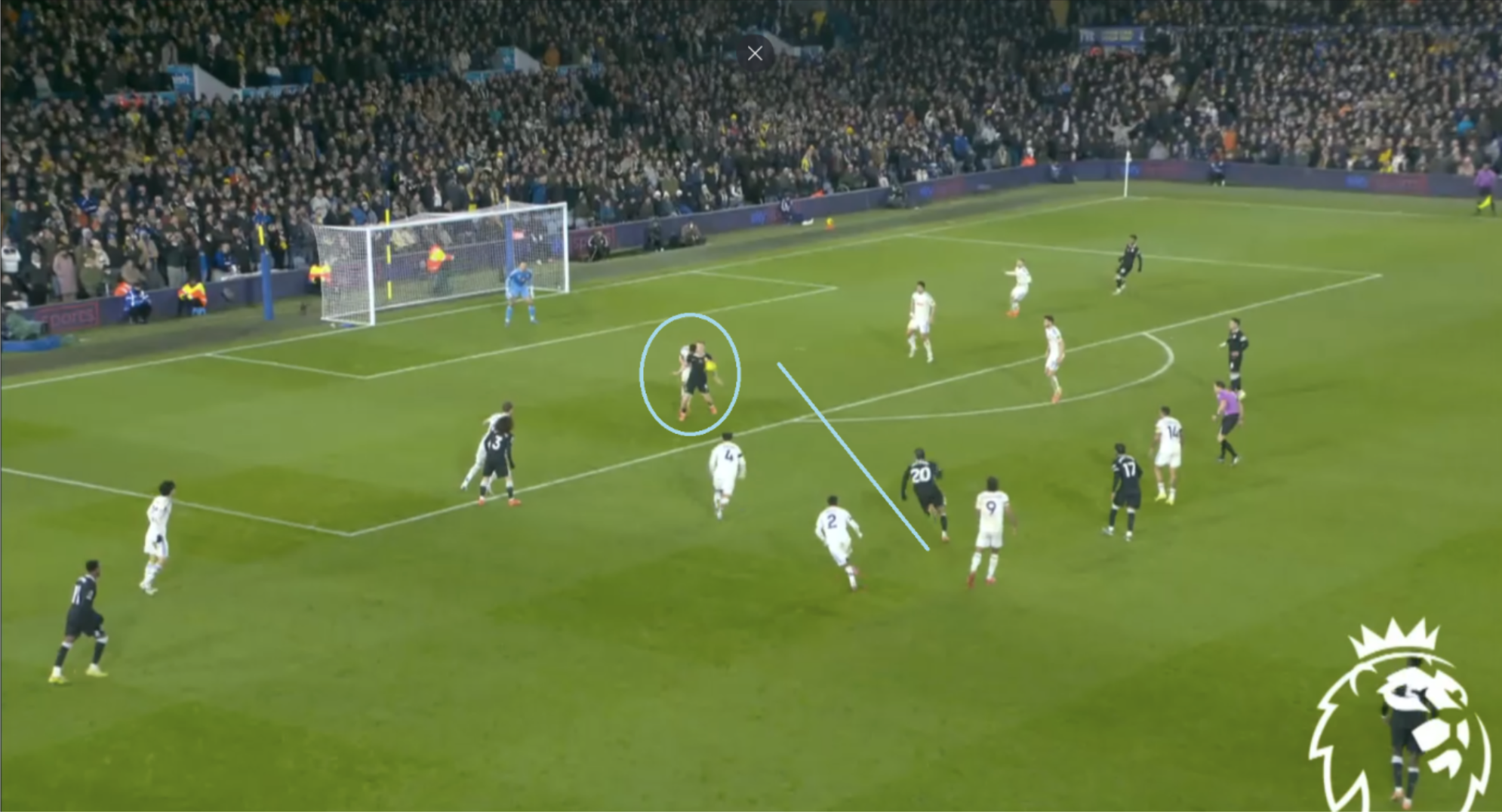
The following example highlights one of the many times Chelsea failed to exploit their attacking momentum due to avoidable mistakes, allowing Chelsea to score.
In this action, Garnacho makes the perfect movement with and without the ball before trying a one-two combination with Delap.
However, Delap fails to provide Garnacho with an accurate pass despite knowing the intention of his teammate and noticing Garnacho’s movement.
Succeeding in completing the one-two combination would have allowed Garnacho to exploit the created space and have high chances to score.
Failing to complete such attacks due to passing errors made Chelsea less powerful in attack, especially during games that Chelsea were losing, like the one against Leeds United.
Focusing on limiting those errors while training to guarantee more chemistry between the attacking players and the midfielders/full-backs coming from behind would guarantee greater efficiency in converting created chances into goals.
Furthermore, avoiding major changes in attacking players will be needed for Chelsea to ensure consistency in performances and avoid unnecessary changes.
Chelsea Defensive Issues
Under Maresca’s management, Chelsea were not convincing defensively, as they often conceded a lot of goals and failed to keep a clean sheet even when they scored first.
This has happened many times this season, and it can only confirm that Maresca was not good enough from a defensive perspective with Chelsea.
It is true that the quality of defenders at his disposal is not the best; however, the existing players are capable of much more than what has been done.
In other words, the defensive line and the defensive midfielders that Maresca has allowed him to lose fewer games and concede fewer goals on average, apart from the fact that Maresca could have upgraded the defenders’ levels as well.
This did not happen, and Chelsea have usually looked fragile at the back, whether during set-pieces or in open-play.
Failing to defend well against corner-kicks and throw-ins was one of the most serious issues in Chelsea’s defence, as it put them in danger even when facing teams that did not attack well from open play.
Chelsea conceded many goals this season due to poor marking on the near post and in the middle of the box during corners, and that can only mean they are not doing well enough to fix their defensive mistakes, especially during set-pieces.
It is also worrying to know that Chelsea has conceded two goals from throw-ins against Bournemouth in the same match, meaning that Chelsea were poor in marking during both throw-ins, in addition to conceding goals from throw-ins against Sunderland and Brentford as well this season.
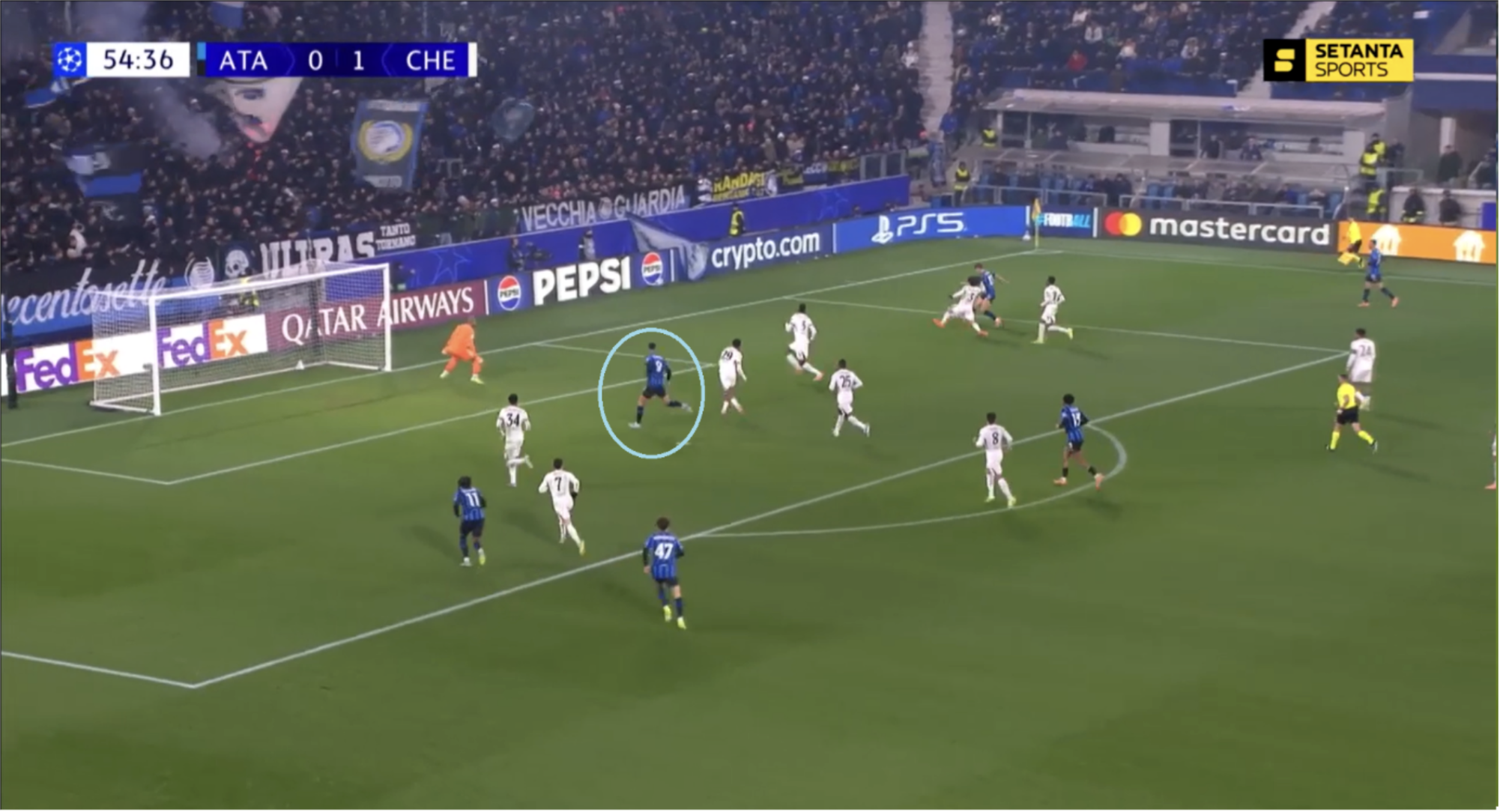
More importantly, Chelsea’s defensive issues are also related to the fact that they were very weak and slow in marking opponents’ strikers this season, resulting in conceding goals from inside the box due to leaving strikers unmarked.
A perfect example can be seen from the match against Atalanta when their striker was easily capable of escaping from marking with a simple anticipatory movement.
That movement without the ball was sufficient for the striker to find himself unmarked and receive the cross without any disturbance.
This highlights and explains the recurrent conceded goals for Chelsea and confirms that Maresca’s job in the defensive phase was far from complete or rewarding.
Conclusion
Chelsea developed a lot under Maresca’s management, especially in playmaking, attacking ideas, and a greater ability to reach the opposing goal more often.
But at the same time, he failed from a defensive perspective, which made the results look worse than expected, especially this season, given that the turnover affected the team’s attacking performances as well.
Overall, Maresca’s spell at Chelsea was very positive during the first season and less positive during the second one, with the defensive issues being the most remarkable aspect in this season.
Following Maresca’s departure, Chelsea will need to quickly find a new manager to avoid losing more points, as the team is in urgent need of stability.
