
Liverpool finally ended their 4 game Premier League losing streak, securing a 2-0 victory over Aston Villa at Anfield in gameweek 10 of the 2025/2026 EPL season.
Both sides were level on 15 points entering the game.
However, their respective form this season has been in stark contrast.
The Reds opened the season with five consecutive wins and sat at the top of the table, but four recent defeats pushed them down to seventh place.
Meanwhile, the Villans began with three draws and two defeats, sitting 18th, before climbing steadily with four straight wins to reach eighth before this fixture.
These contrasting trajectories added intrigue to the contest.
Additionally, the tactical direction of both teams prompted further interest.
In possession, Aston Villa aim to build from deep, while out of possession, Liverpool look to press aggressively to regain the ball and generate turnovers that lead to shooting opportunities.
Their approach is reflected in the numbers:
Liverpool sit joint first with Manchester United for shots created from high pressing actions, with 53 attempts.
LFC are also joint first with Nottingham Forest for shots produced from counterattacks, with 11.
These figures highlight Liverpool’s aggressive intent to convert ball recoveries into clear shooting chances.
This game followed a similar theme.
Facing a side capable of adapting during build-up against different pressing structures, Liverpool worked to find the most effective scheme to execute their high press and force turnovers that could create further shooting chances.
This tactical analysis examines how Arne Slot employed his high-pressing tactics to defeat Unai Emery’s Aston Villa.
Liverpool Vs Aston Villa Lineups & Formations
Let’s start with how Arne Slot and Unai Emery started the game.

Arne Slot opened with a 4-2-3-1 formation, which at times shifted into a 4-3-3 depending on the phase.
Giorgi Mamardashvili started in goal behind a back four of Ibrahima Konaté and Virgil van Dijk at right and left centre-backs, as well as Conor Bradley and Andrew Robertson as right and left full-backs.
The three in midfield were Ryan Gravenberch, Dominik Szoboszlai, and Alexis Mac Allister, while Mohamed Salah played on the right wing with Cody Gakpo on the left.
Hugo Ekitike occupied the centre-forward position.
Then, Unai Emery set his team up in a 4-2-3-1 shape that could flatten into a 4-4-2 when required.
Emiliano Martínez started between the sticks.
Villa’s back four was Pau Torres and Ezri Konsa at right and left centre-back, with Matty Cash and Lucas Digne playing as right and left full-backs.
Their two midfielders were Boubacar Kamara and Amadou Onana, while Morgan Rogers played just ahead as a second striker or a number ten, depending on the phase.
Evann Guessand was Villa’s right winger with John McGinn on the left and Ollie Watkins up front.
Aston Villa Build-Up Vs Liverpool High Press
Let’s first establish the structure of each team and the roles of each team’s players, highlighting the problems Liverpool’s press had to solve versus Aston Villa and how they achieved that.
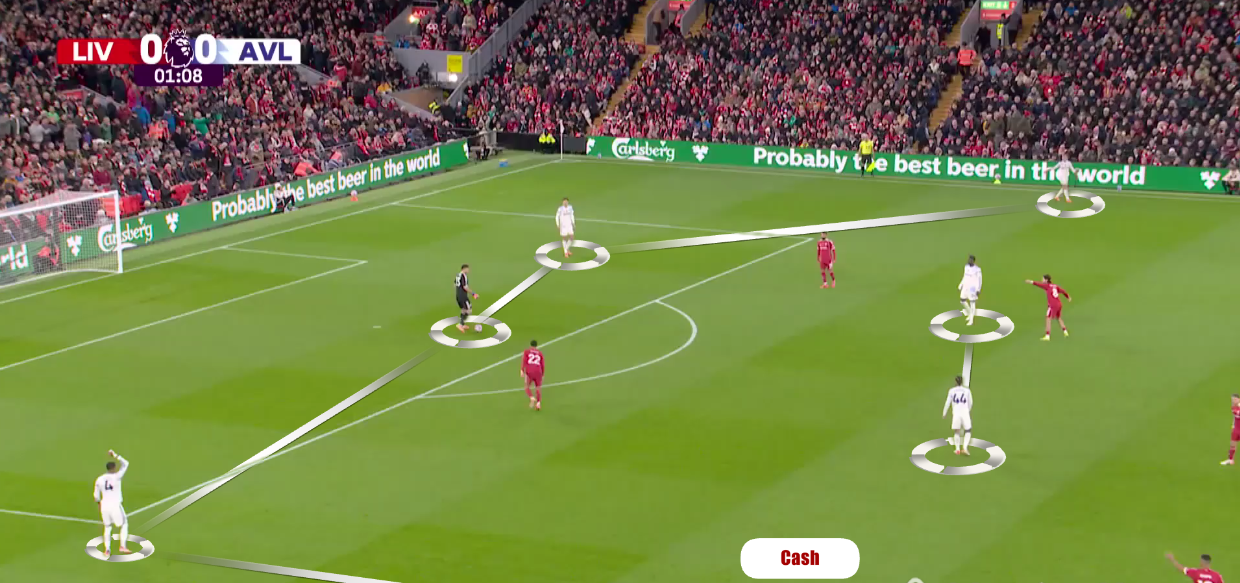 Aston Villa begin their build-up with a 4-2 structure (Cash, the right full-back, out of image), with Emiliano Martínez joining the first line as an extra player during circulation.
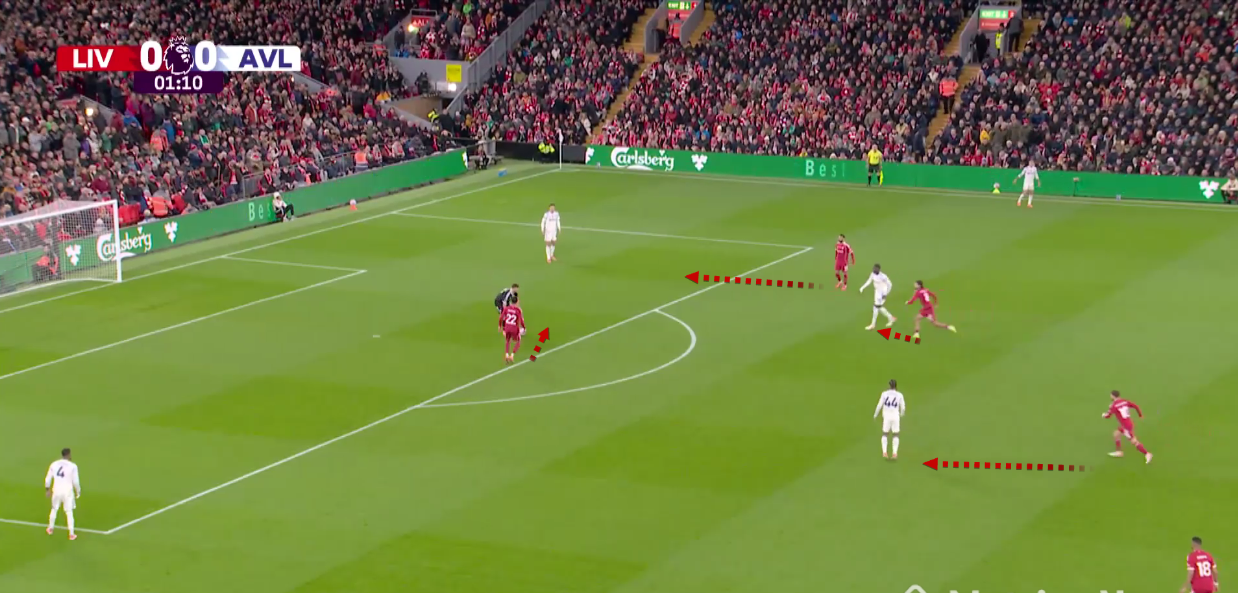 Liverpool press with the centre-forward Ekitike initiating the pressure on the goalkeeper by closing the right centre-back behind him.
Gakpo is positioned high alongside the right full-back, while Salah stays closer to the right centre-back, Torres.
Szoboszlai and Mac Allister operate as the two eights, matching up against Villa’s double pivot.
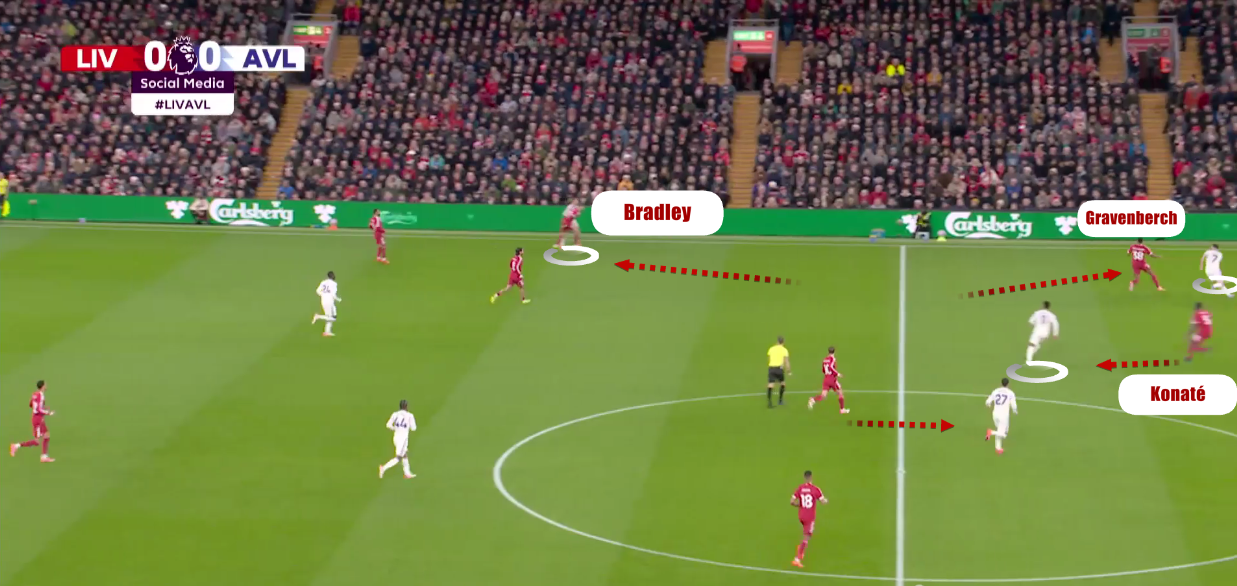 When Martínez plays to Digne, the left full-back, Liverpool’s right full-back Bradley steps forward to press, leaving the winger, McGinn, for Gravenberch, who moves wide from the centre to follow him.
Konaté marks Watkins, and Mac Allister tracks Rogers by dropping back.
Aston Villa Try To Cause Problems For Liverpool High Pressing Scheme
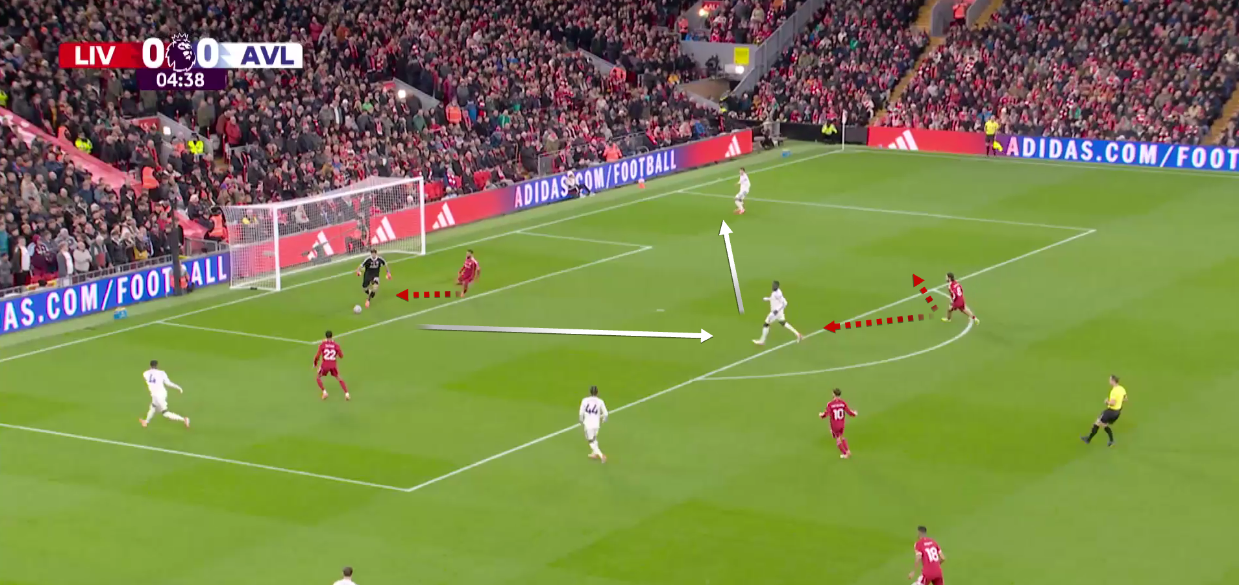 This time, Salah starts closer to Martínez, so he initiates the pressure with a curved angle to block the pass to the left centre-back, Torres.
However, this leaves Torres free, as Salah is now far from him.
This opens the passing lane to Onana, so Szoboszlai tries to anticipate the potential third-man combination (with a pass from Martínez to Onana then to Torres), and positions himself between Onana and Torres.
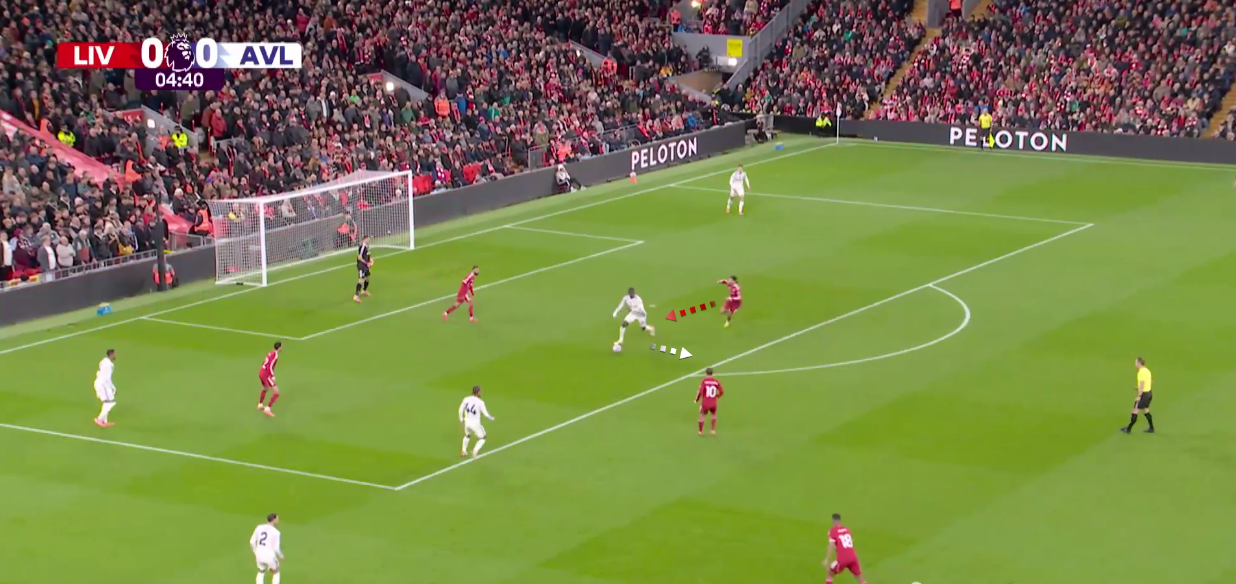 This causes Szoboszlai to move slightly towards Torres, ready to press him if he gets the ball.
This gives Onana more room to receive and turn with his left foot.
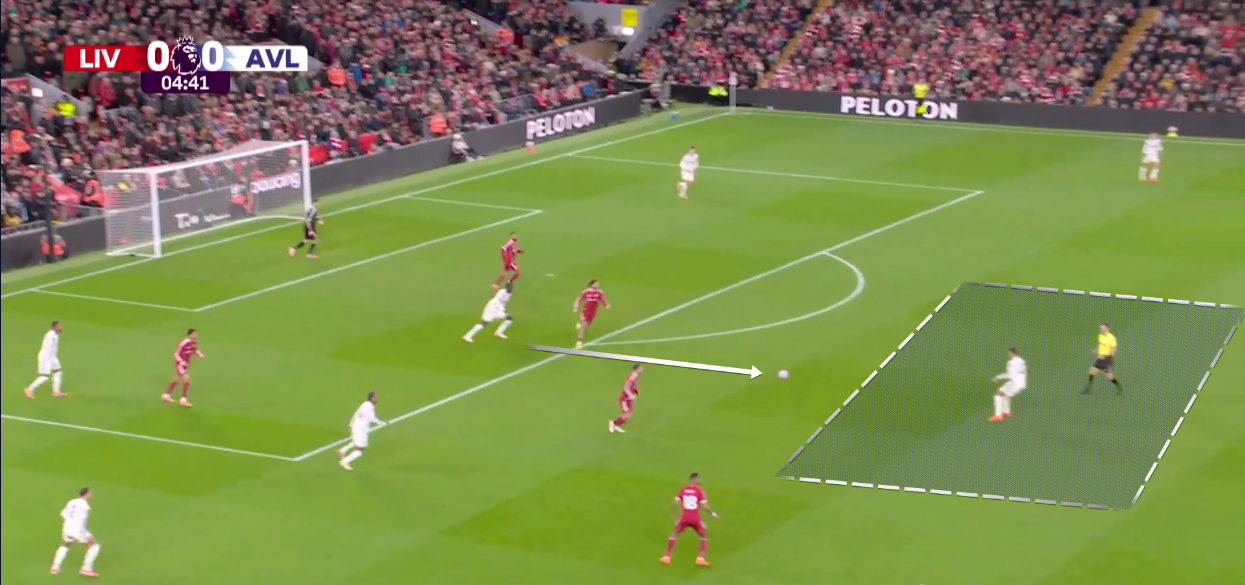 After that, Onana finds Rogers, who drops deep and untracked because Gravenberch is occupied with McGinn, as we saw previously.
Also, Liverpool’s defensive line does not step up.
This gives Rogers space to receive and turn freely.
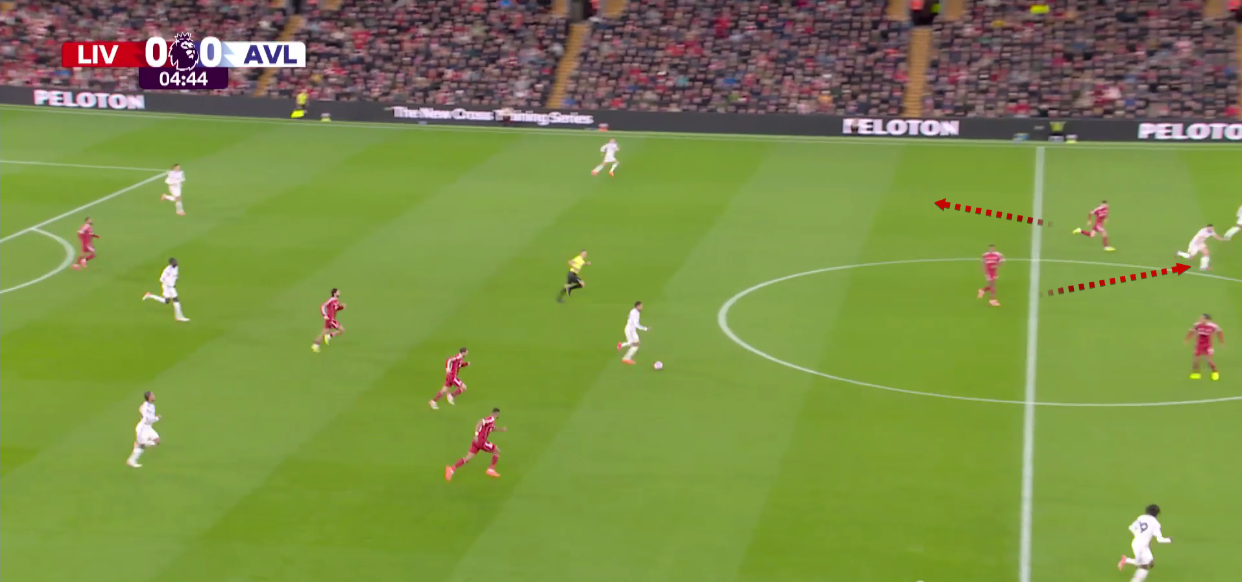 We can see that Gravenberch stays with McGinn, and Bradley recovers from his advanced position to be ready to press Digne once more if the ball shifts wide.
Liverpool Try To Solve This Midfield Problem
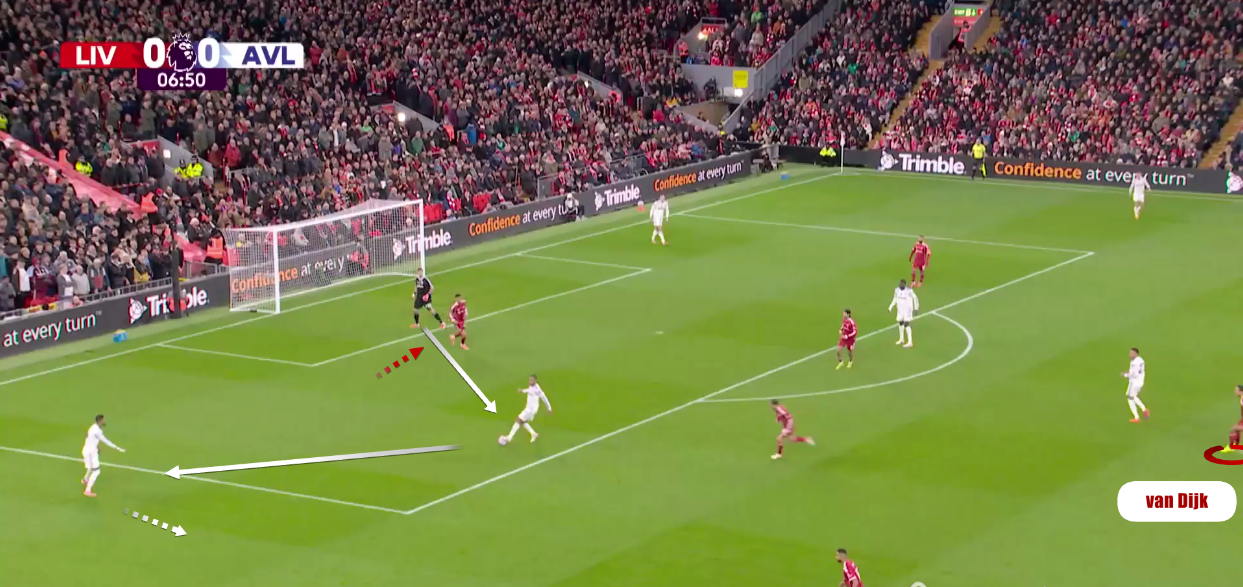 Liverpool try to solve this problem now, with Ekitike again initiating the press by closing Martínez’s pass to Konsa.
Mac Allister prepares only to press Kamara and stop him from turning.
Meanwhile, Van Dijk steps up to react early if Rogers receives.
However, that opens the lane to Kamara from Martínez, and frees Konsa as Ekitike is now away from him.
So, Kamara passes to Konsa, who now has the space to carry the ball forward, especially when Gakpo is as high as Cash, who drags him away to free the space for Konsa.
Denying The Centre-Backs Space To Carry The Ball Forward
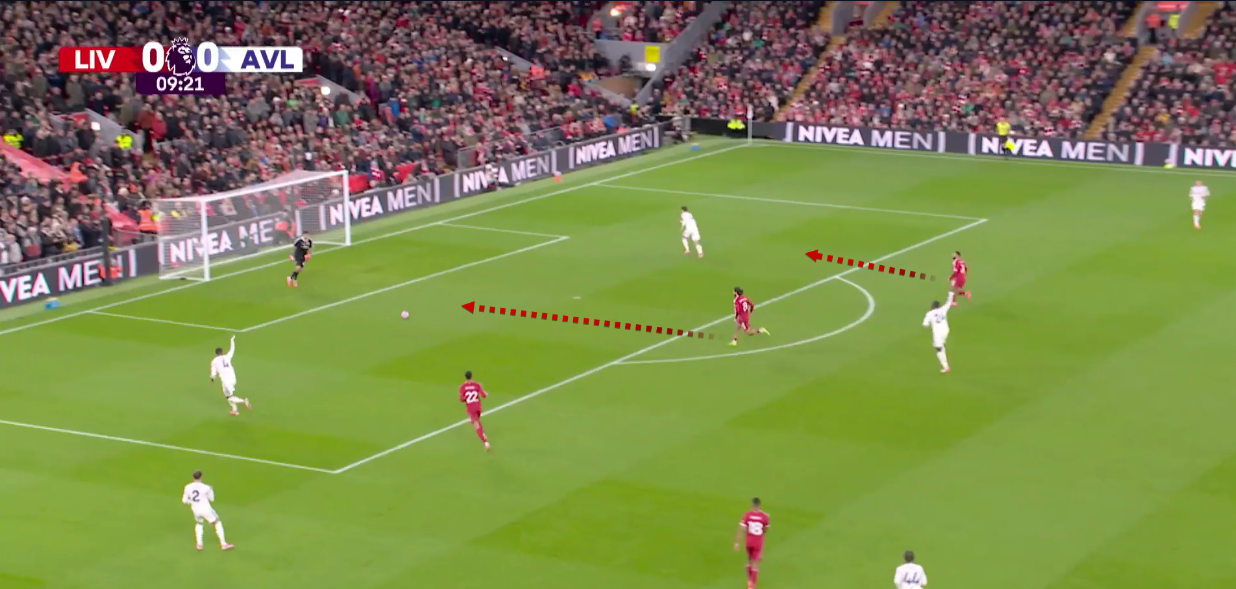 Liverpool switch the one who initiates the pressure on Martínez, with Szoboszlai stepping up and blocking the pass to Onana.
Ekitike and Salah stay with both centre-backs to stop them from carrying the ball forward if they receive it.
However, Salah’s positioning near Torres leaves Digne open for the goalkeeper.
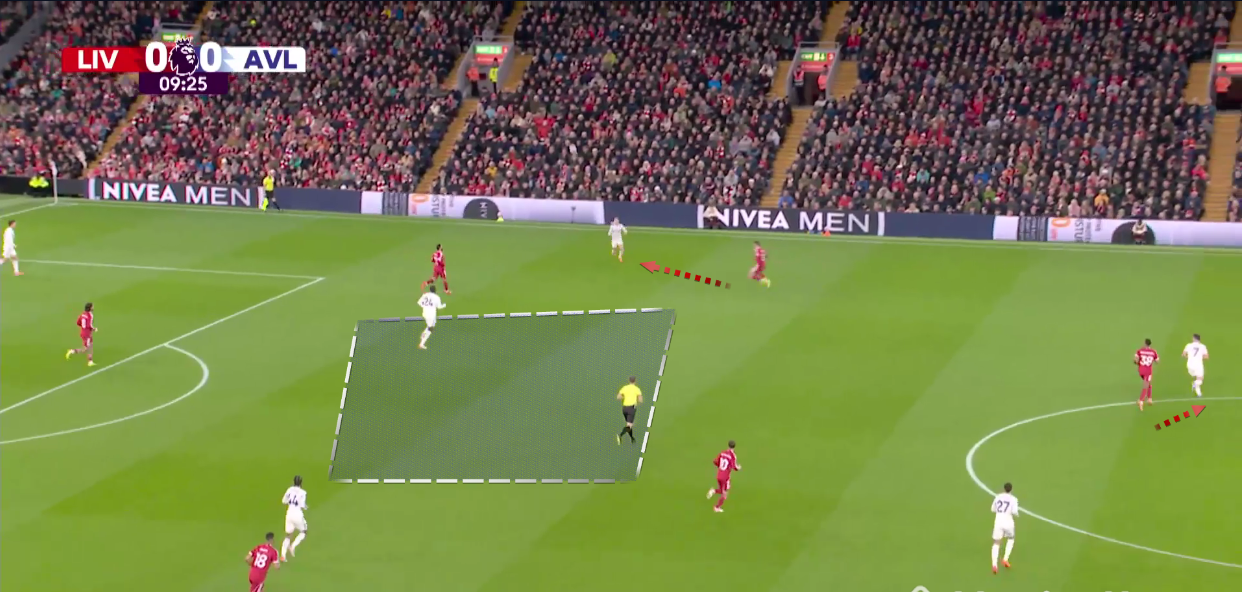 Bradley steps out to press Digne, giving him time to receive and play forward.
Now, Onana is free as Szoboszlai is still going back from pressing Martínez, and (as we know) Gravenberch stays with McGinn.
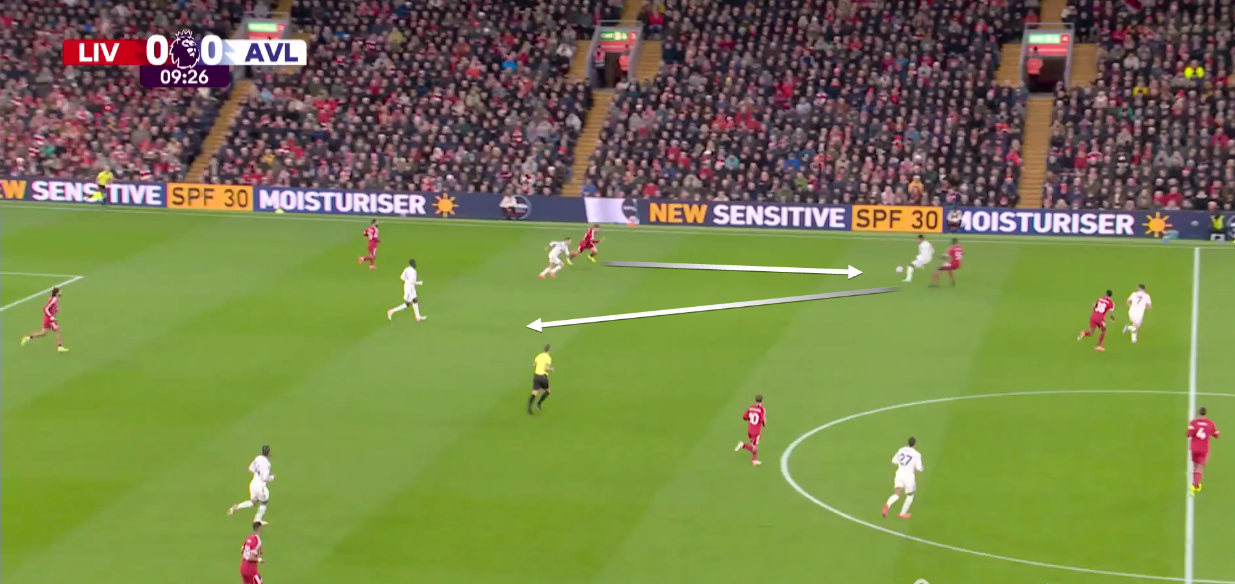 Digne plays to Watkins, and Onana is again free to receive, but the sequence does not progress.
Delaying The Pressure On The Goalkeeper To Close His Options
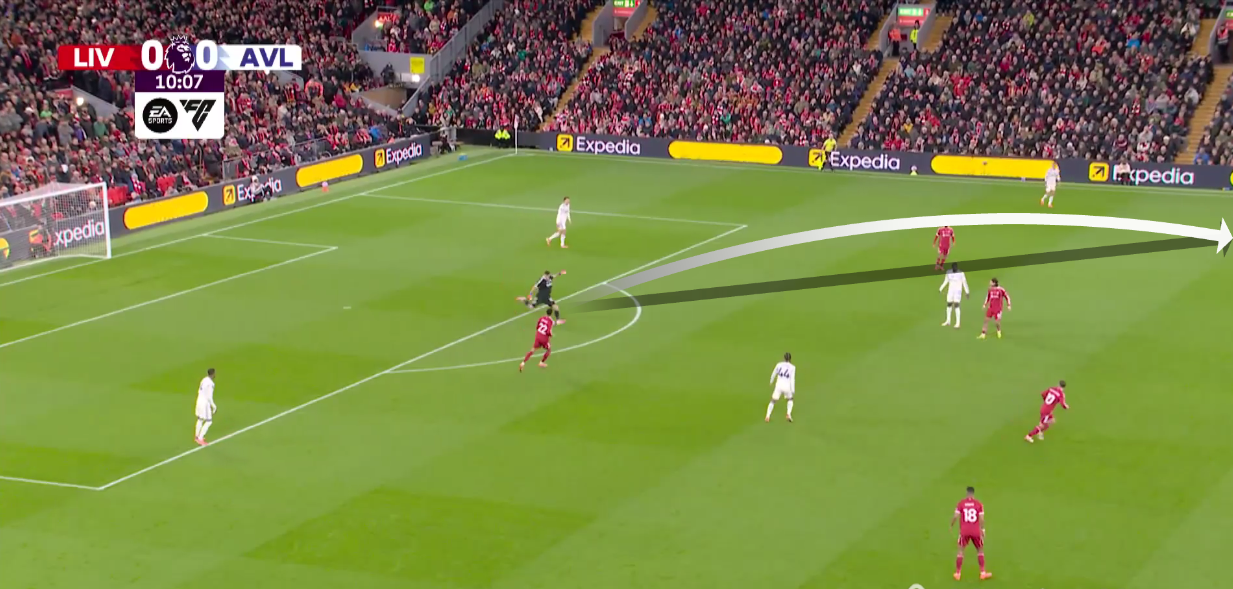 Liverpool delay their pressure on Martínez, letting Ekitike press with restraint to close short options first.
However, this gives Martínez more time on the ball, allowing him to pick a good option for a long pass.
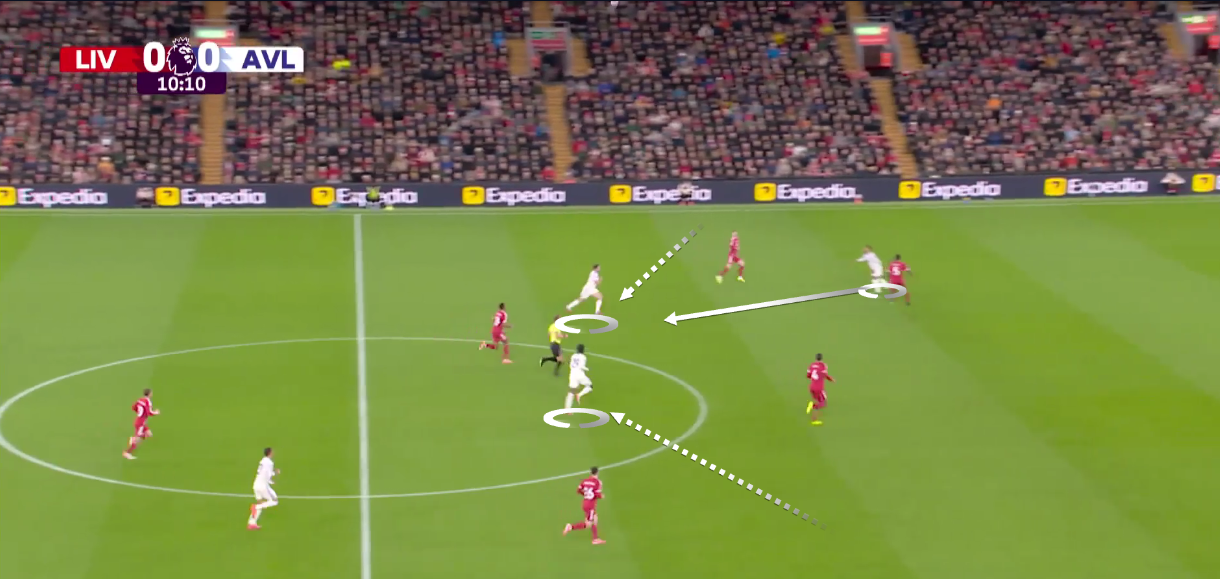 Martínez targets Watkins with a long pass, aiming to use Villa’s centrally positioned wingers to contest second balls.
Especially with two of the three Liverpool midfielders positioned high up the pitch.
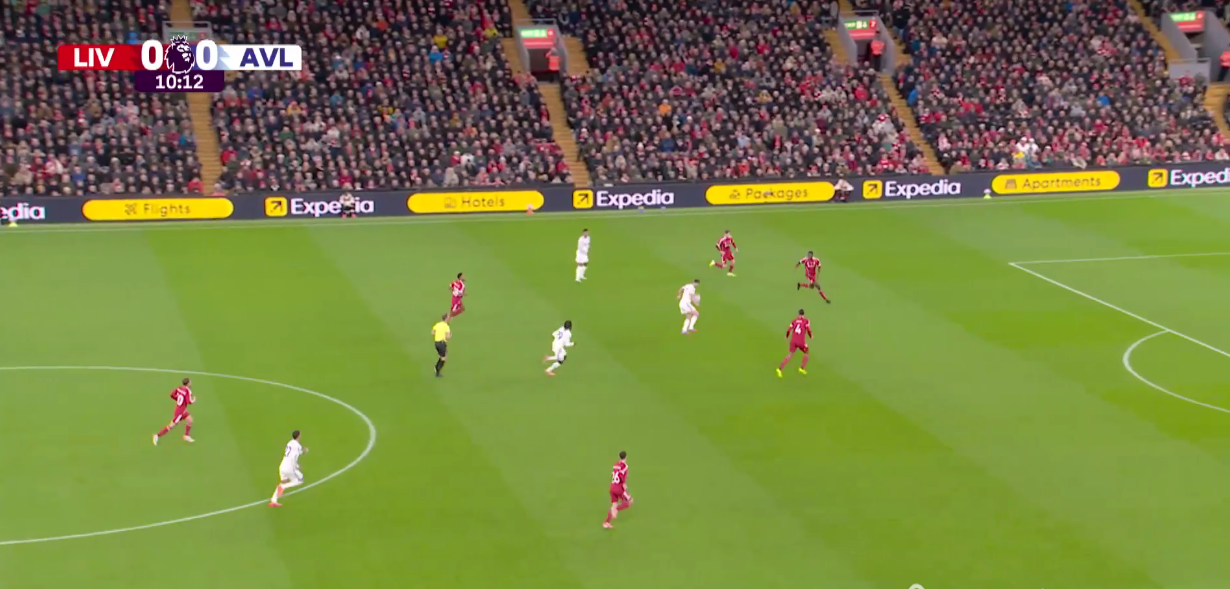 Watkins wins the first contact and lays the ball off to McGinn, allowing Villa to advance from the second-ball situation.
Now, Liverpool have specific issues that require solutions to create a more aggressive high-pressing scheme that allows them to win the ball.
These include:
The sixes who can turn with the ball if left without huge pressure, the centre-backs who can carry the ball forwards if they get the wall pass from the holding midfielders, the left full-back who can be free to pick a pass into the centre, and the holding midfielder (especially Onana), plus Rogers, who can find space in the central areas.
Arne Slot Adjustment Looking For The Perfect Scheme
At this point, Arne Slot decides to adjust Liverpool’s high-pressing structure.
The adjustment aims to make Liverpool more aggressive and increase ball recoveries.
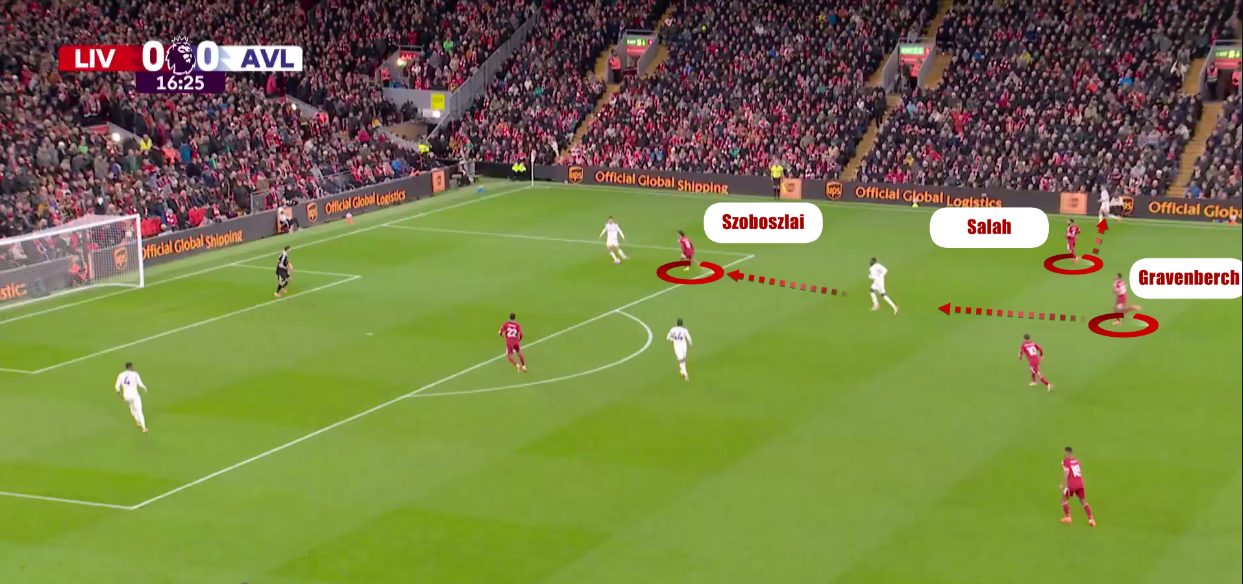 From this moment on, Liverpool’s new pressing scheme is that Szoboszlai initiates the press, closing Torres rather than Onana.
So, we can see him here, leaving Onana and starting by pressing Torres on the ball first, before going to Martínez (as we will see in the following figure).
Salah now stays deeper with Digne, allowing Bradley to remain with McGinn.
With the new roles of Salah and Bradley, Gravenberch can prepare to jump onto Onana if needed.
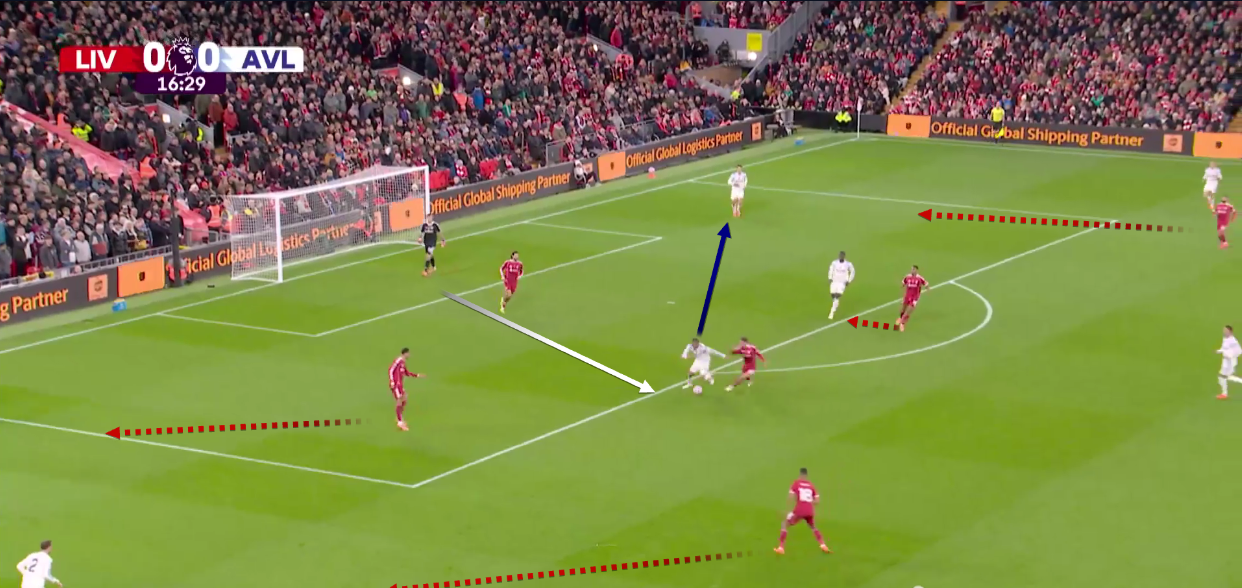 Now, with the pass from Martínez to Kamara, he can’t pass to Konsa because of Ekitike, and he can’t pass to Cash because of Gakpo.
If he decides to make this open pass to Torres, the distance of the pass will encourage Salah to press Torres with closing Digne behind him.
So, Kamara is forced into a difficult situation with Mac Allister behind him.
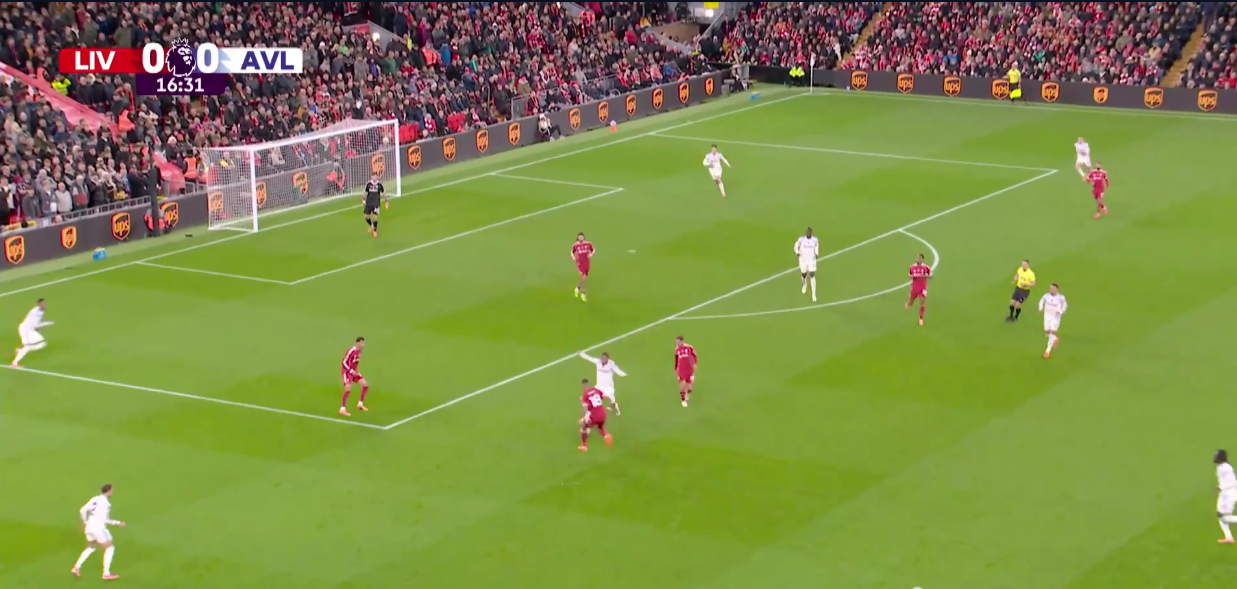 As Kamara turns, Gakpo applies additional pressure, forcing Villa to lose possession and creating a turnover opportunity for Liverpool.
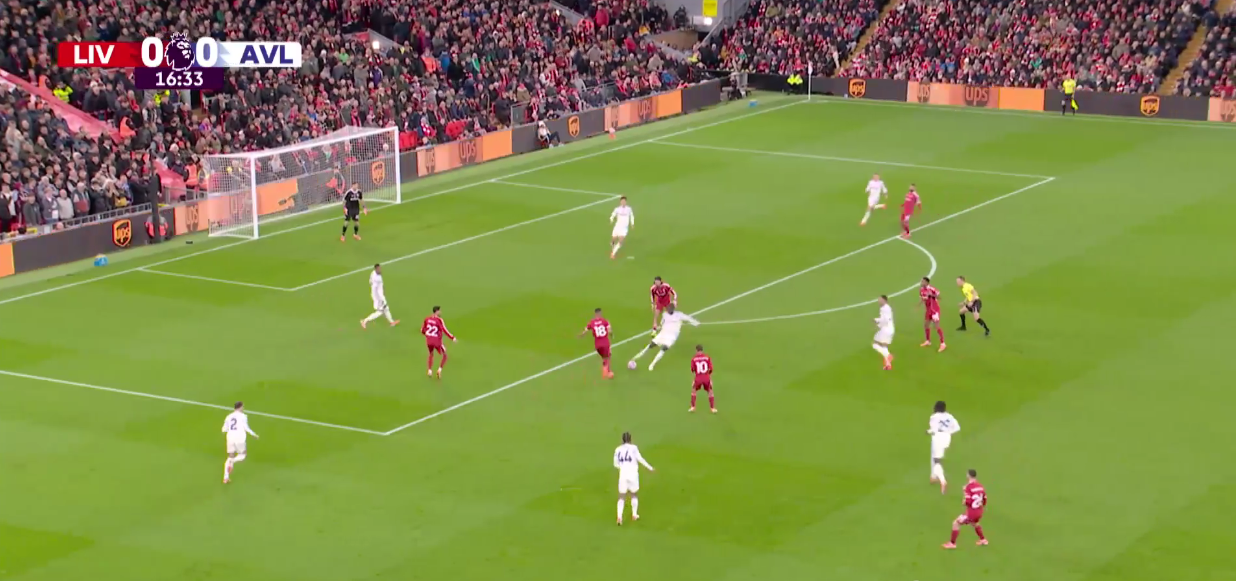 However, Onana arrived to support and prevent the turnover this time.
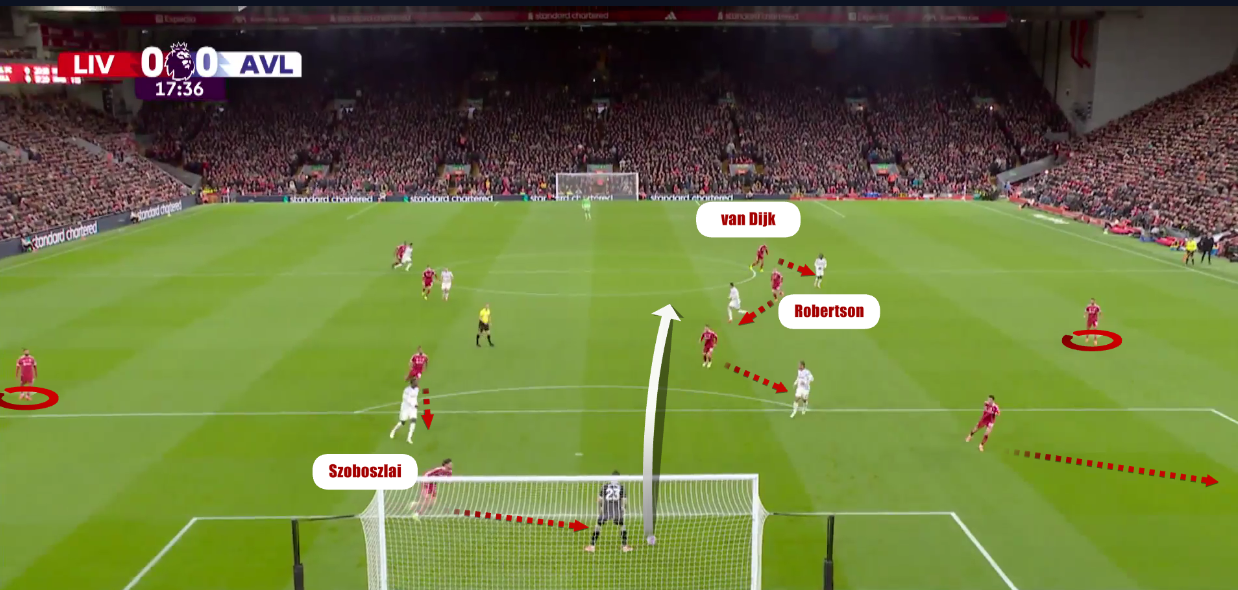 Liverpool repeat the same pressing setup.
However, this time, Liverpool will have to answer an old question with their new pressing scheme: What about Rogers?
The answer for Liverpool is that, with Rogers free, Robertson moves central to track him, while Van Dijk takes responsibility for Guessand.
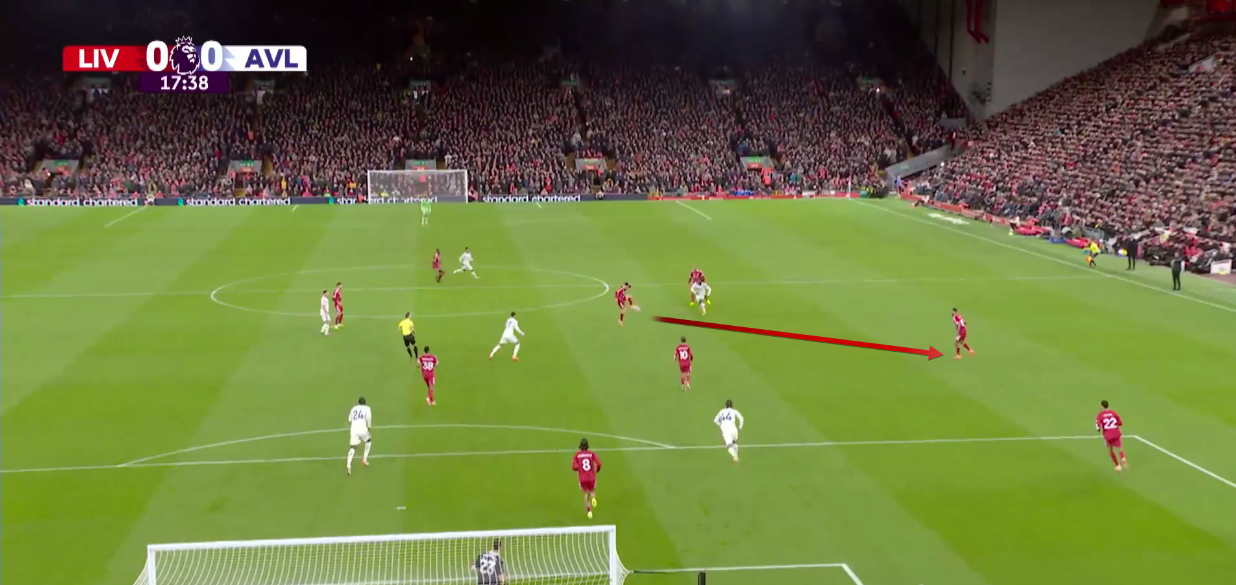 Szoboszlai puts pressure on Martínez, denying him any more time on the ball.
Under heavy pressure, Martínez misplaces a pass towards Rogers, allowing Robertson to intercept and trigger a turnover.
Aston Villa Try To Adapt & Find The Solution
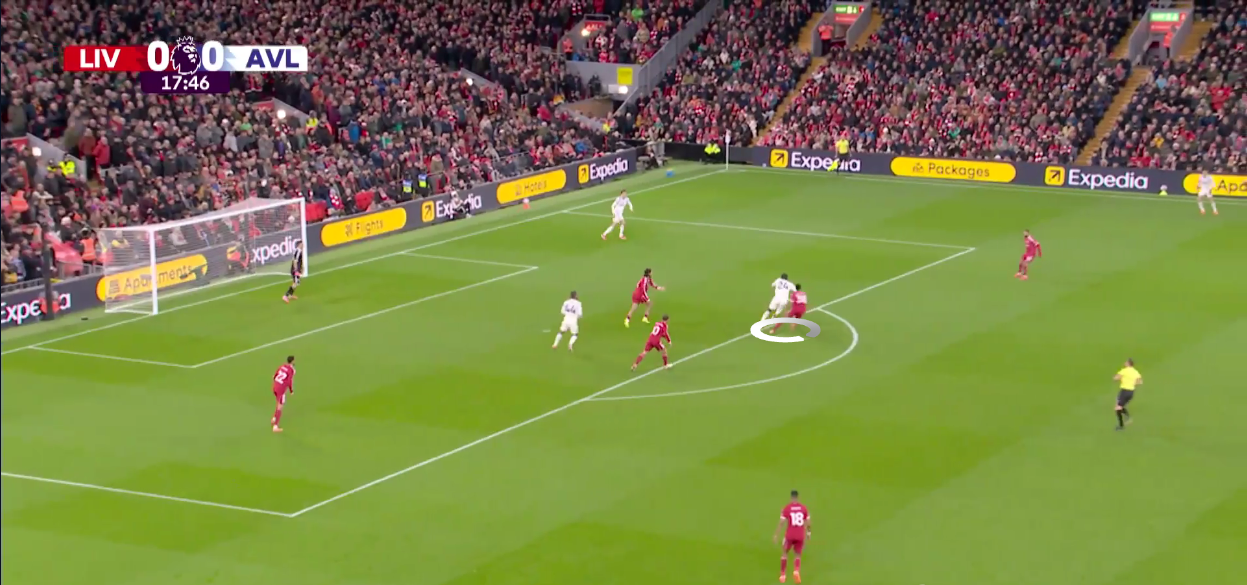 This time, Villa try to escape through Onana, who shields the ball from Gravenberch and turns wide towards the touchline.
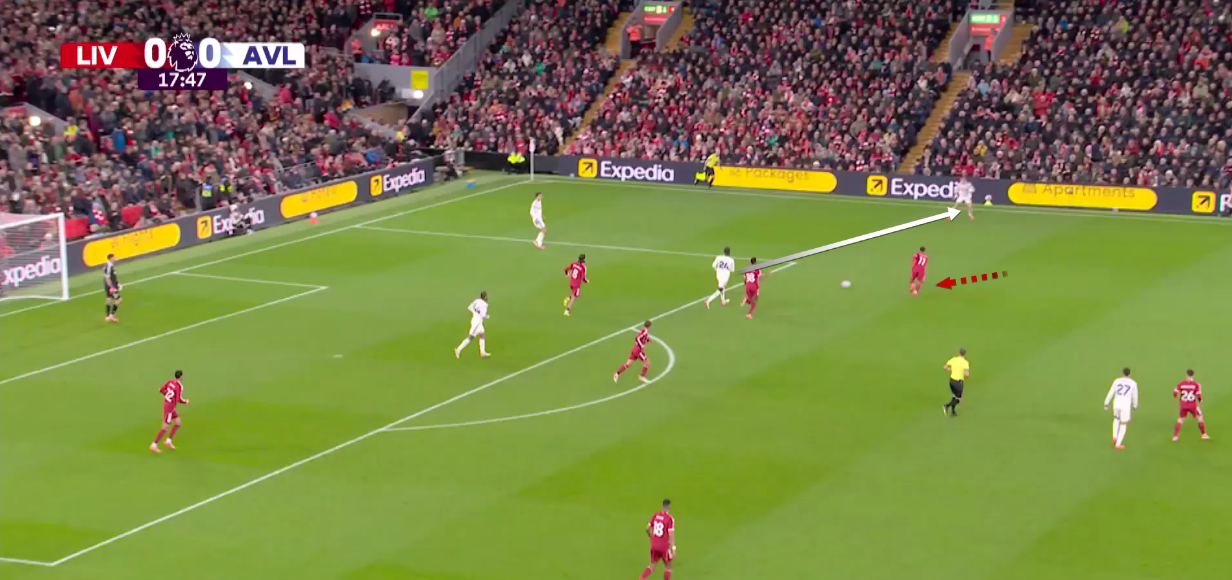 As Onana drives wide, Salah moves inside to block the pass through the channel, allowing the pass to Digne.
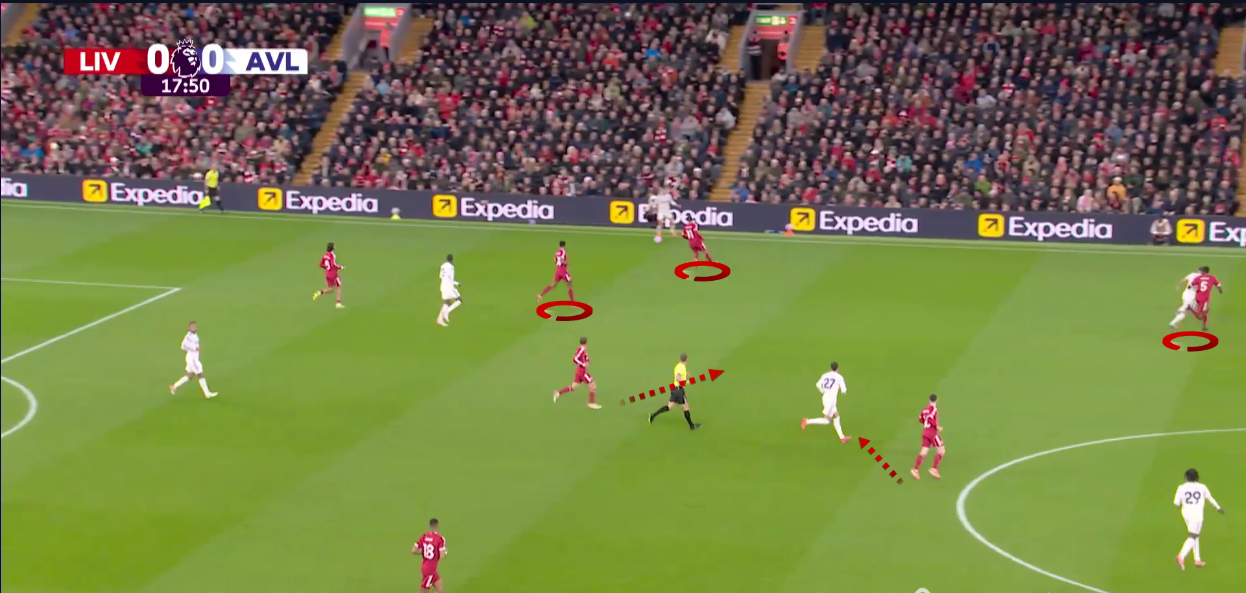 Salah presses Digne, Gravenberch stays tight on Onana, so he is not free as we saw before in a similar situation.
Robertson tracks Rogers, while Mac Allister drops back.
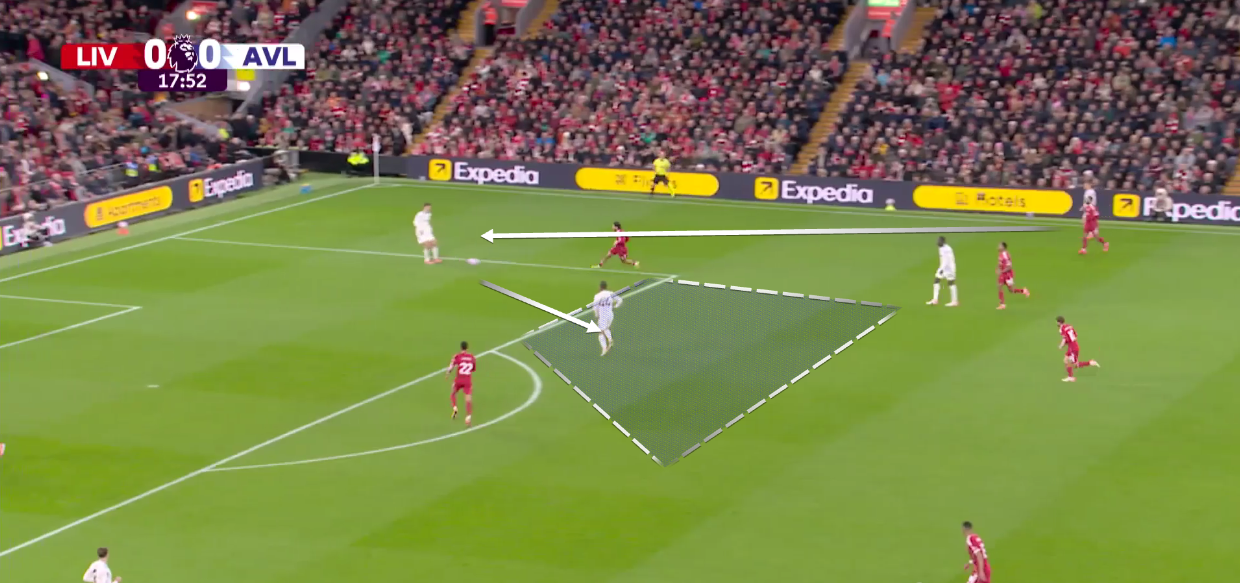 Digne returns the ball to Torres, and Kamara becomes free as Mac Allister is still shifting across again.
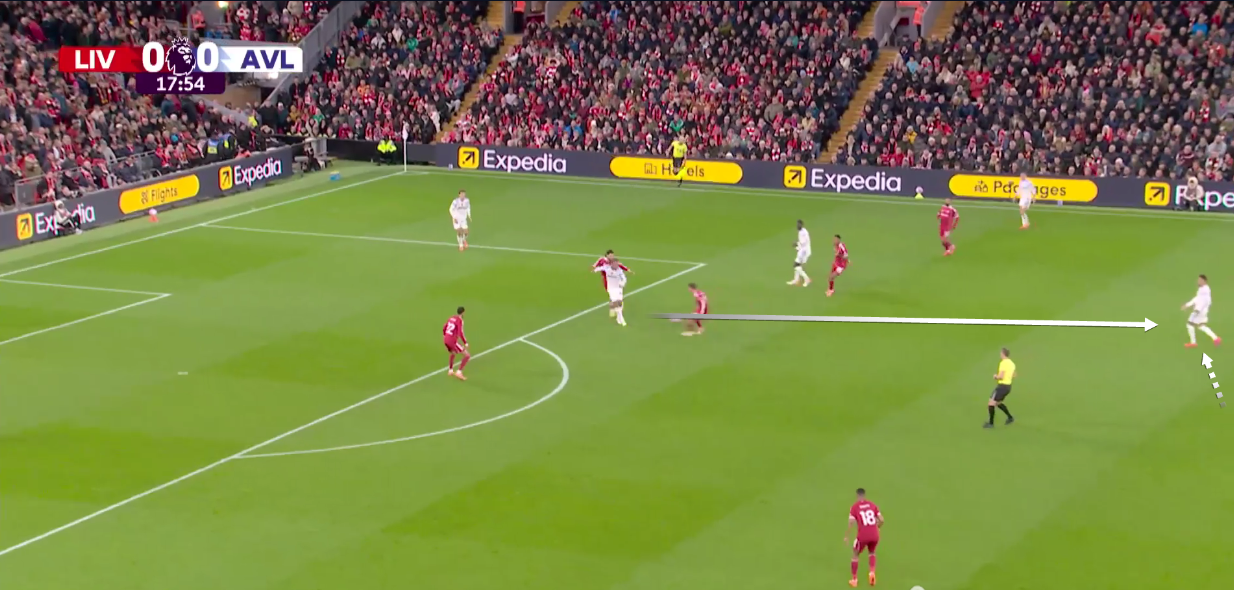 Kamara manages to receive and tries to find Rogers (who is free because he moves more to the right side, which is away from Robertson’s position as a left full-back, which makes Robertson hesitant to follow him) with a pass.
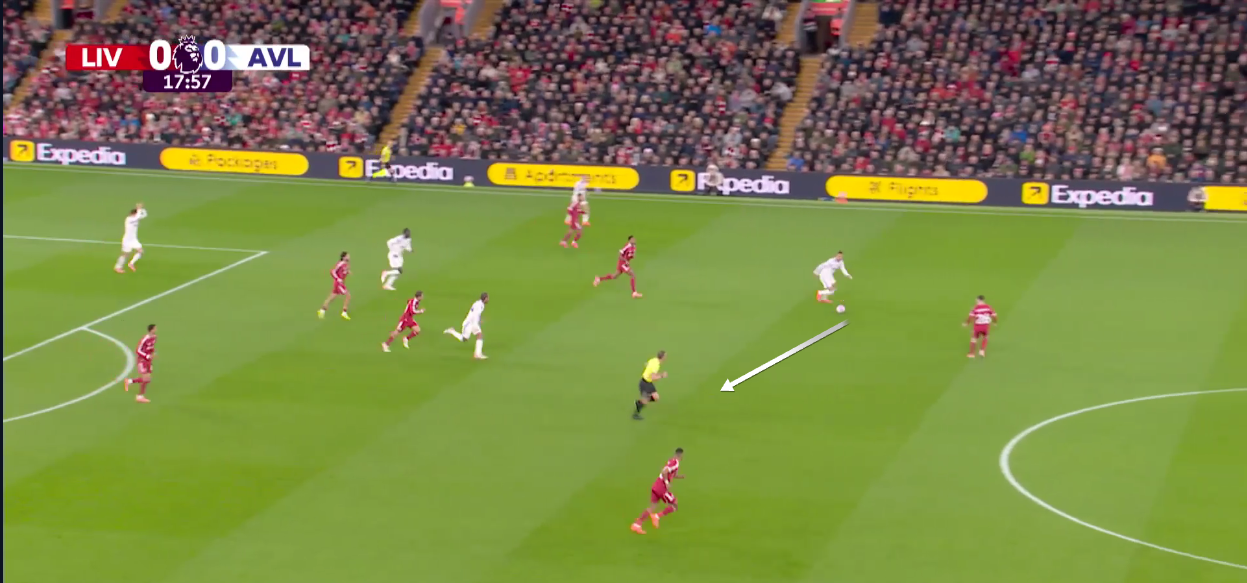 Robertson cannot close quickly, allowing Villa to break the press.
The High Pressing Scheme That Leads To Goals
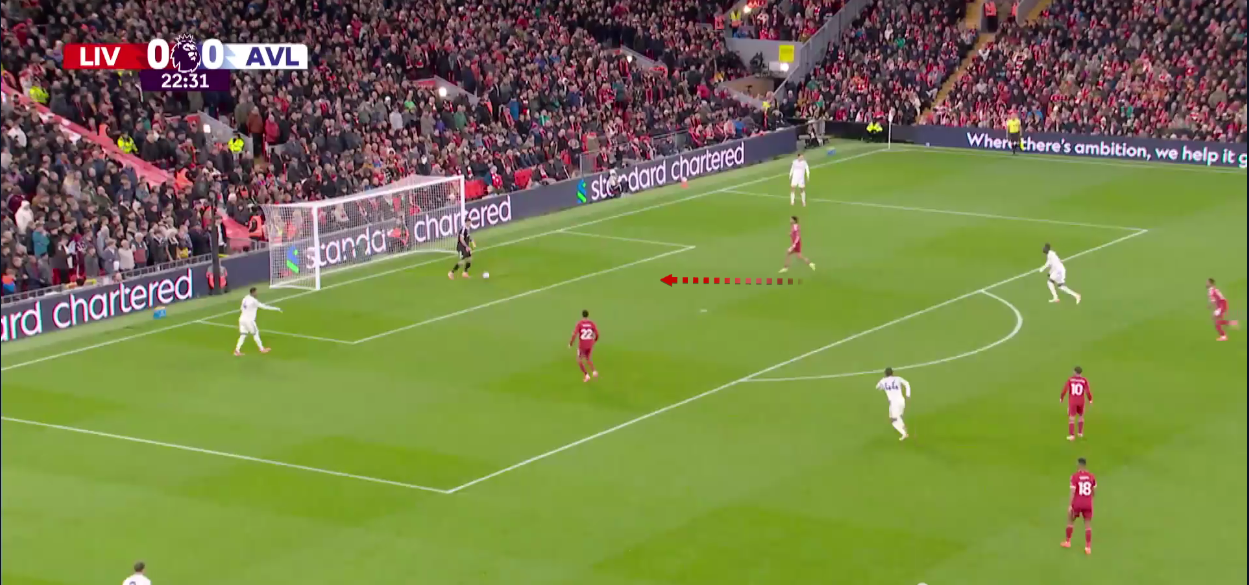 Now, Slot adjusts again, with Szoboszlai pressing Martínez while closing Onana instead of Torres.
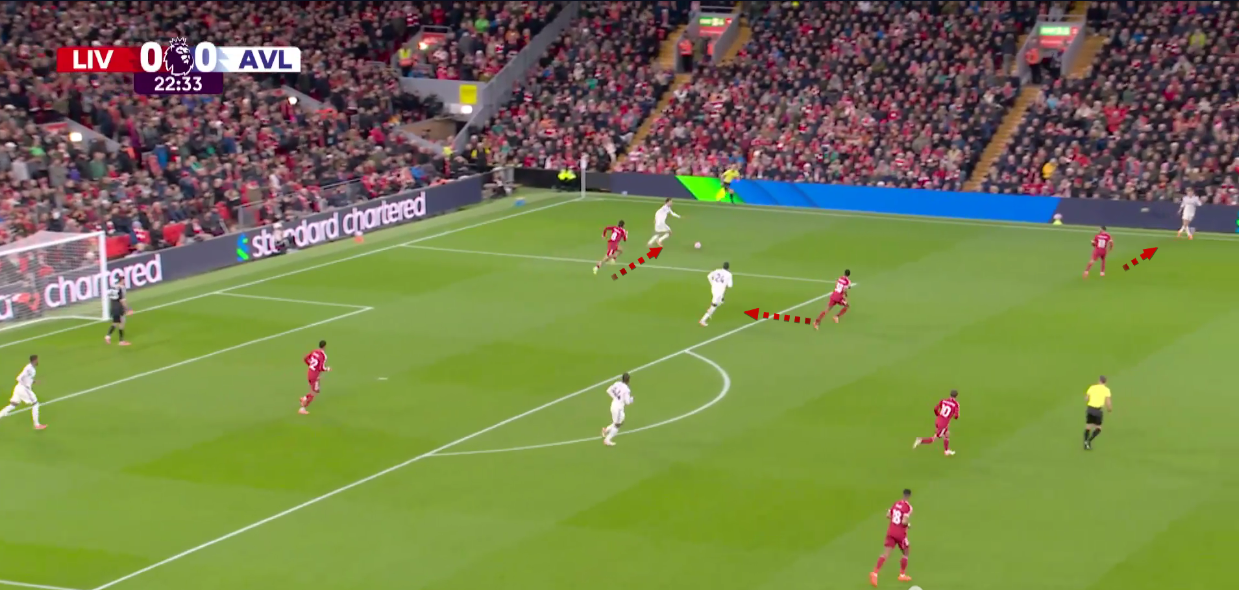 This forces Martínez to look toward Torres, where Liverpool plan to trap by closing his options.
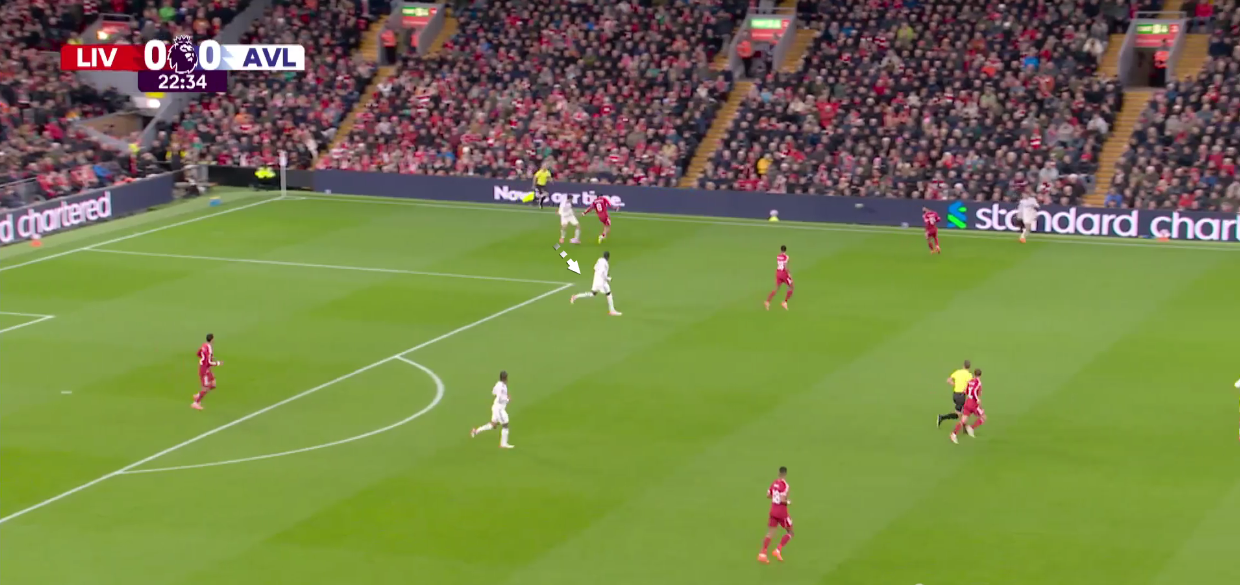 ِSzoboszlai loses the duel in this action.
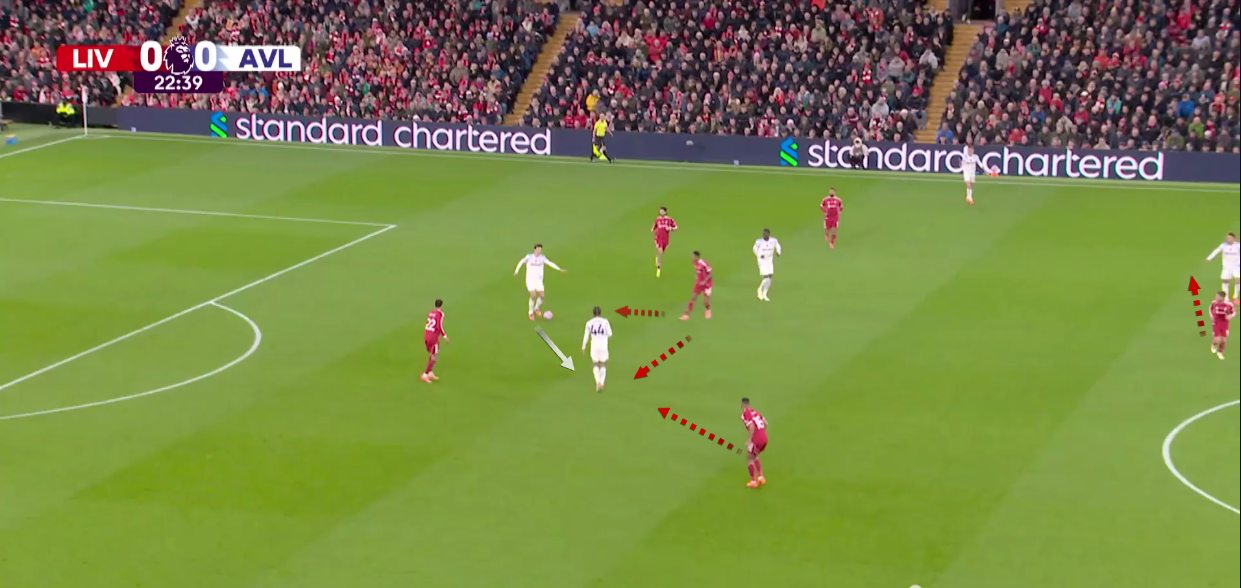 However, Torres can only find Kamara, who is surrounded by Liverpool players positioned to stop his turn.
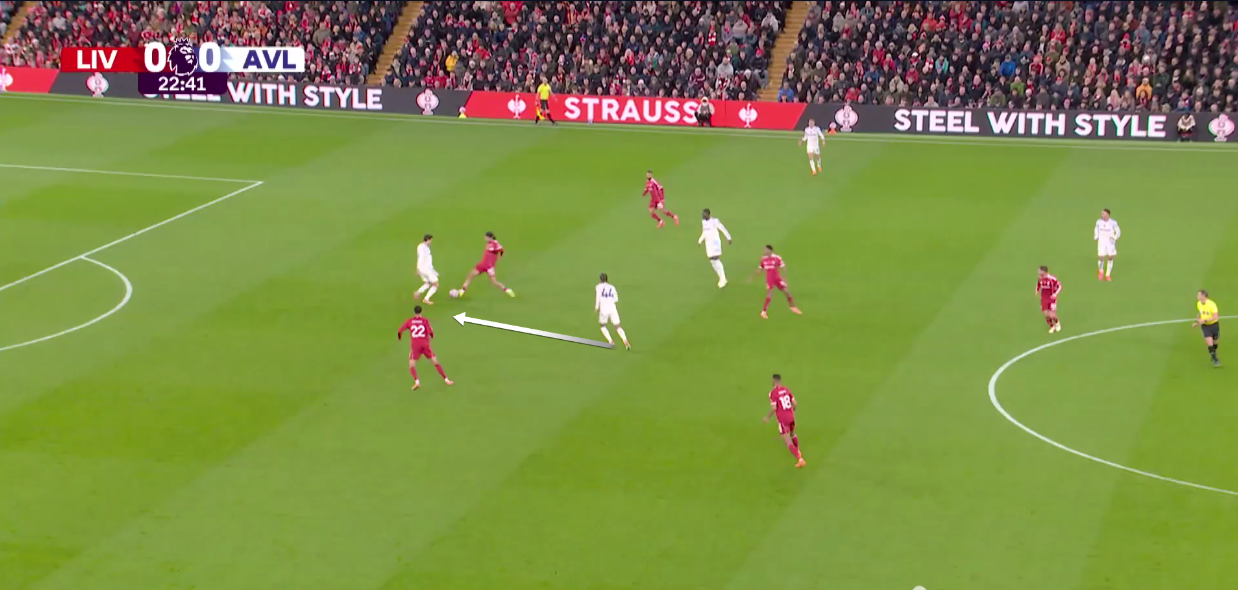 Kamara returns the ball, and Szoboszlai anticipates, steps back, presses Torres, and wins possession.
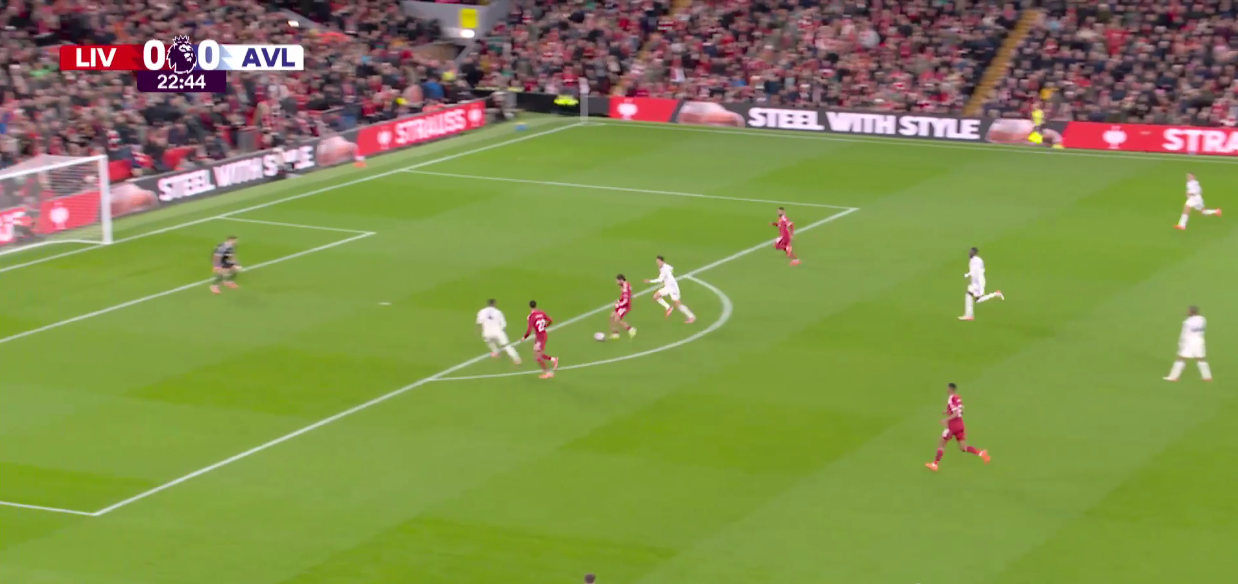 Again, Liverpool launch a turnover from the recovered possession.
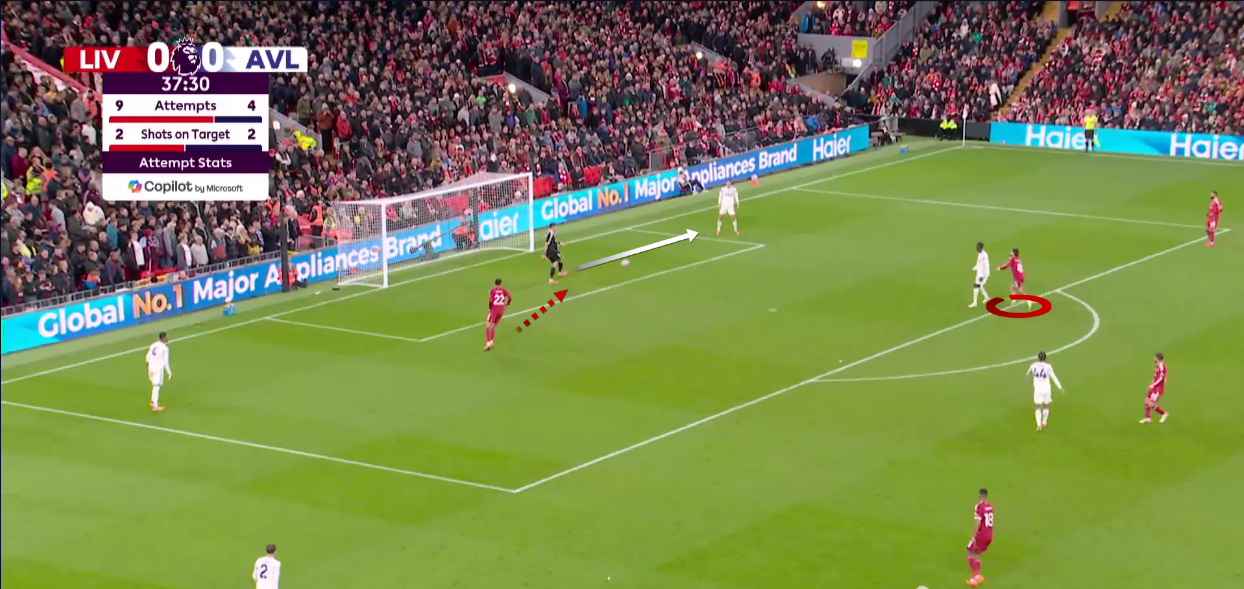 Even when Ekitike presses from the left, opening the pass to Torres, Szoboszlai starts on Onana and prepares to shift to press Torres.
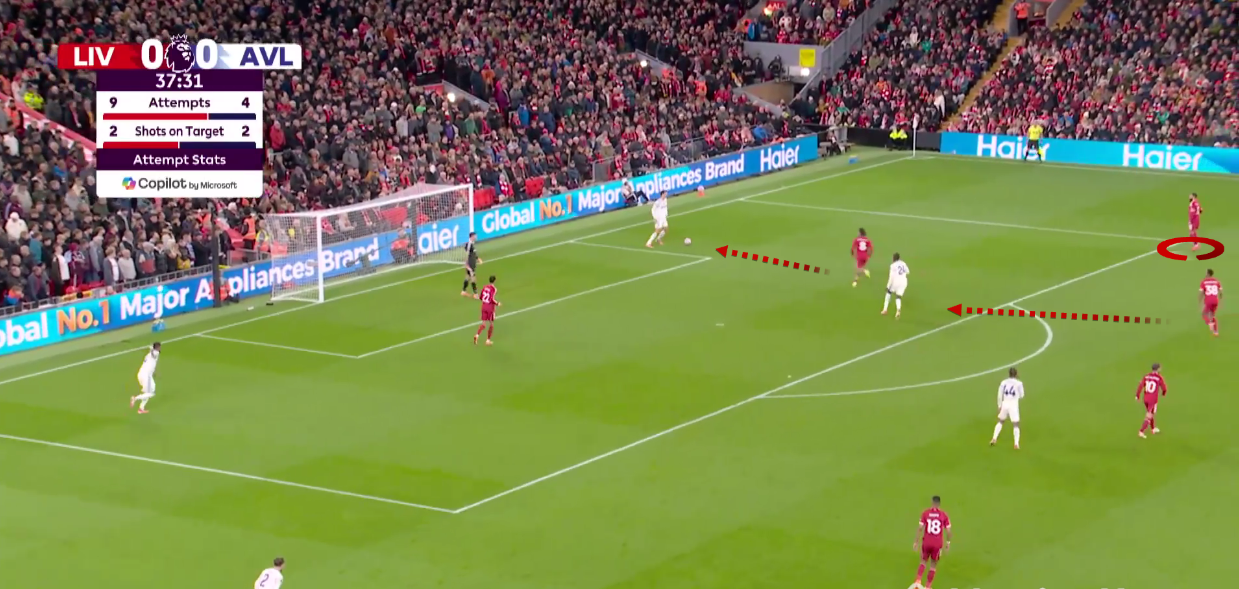 Szoboszlai then presses Torres, and Gravenberch jumps to handle Onana.
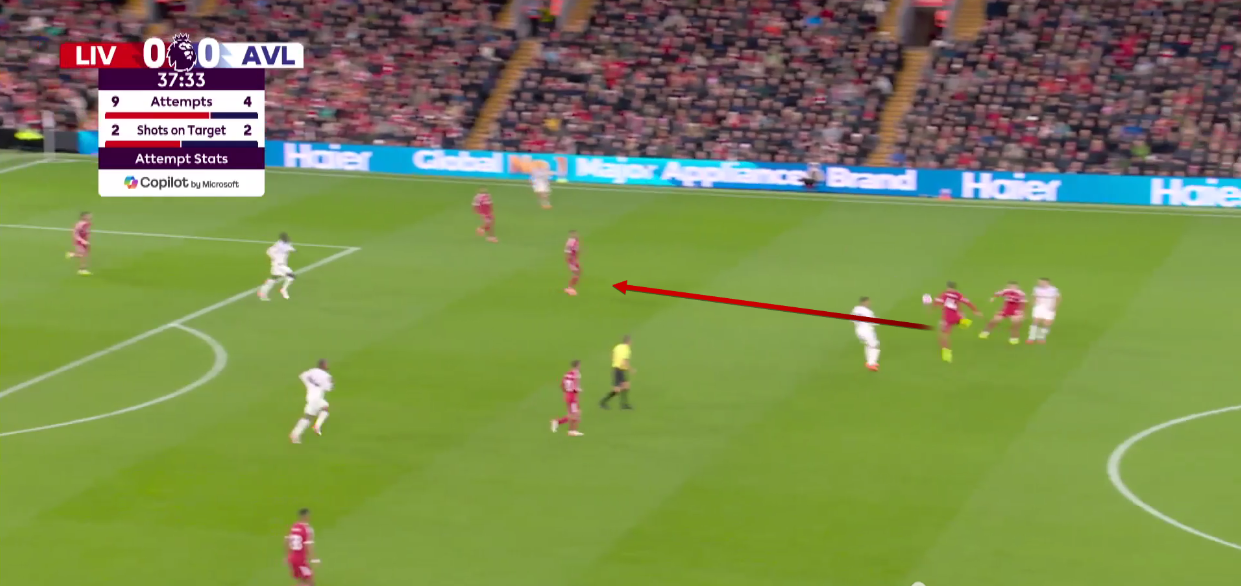 Torres plays long to Rogers, but Van Dijk steps up, wins the duel and triggers another turnover.
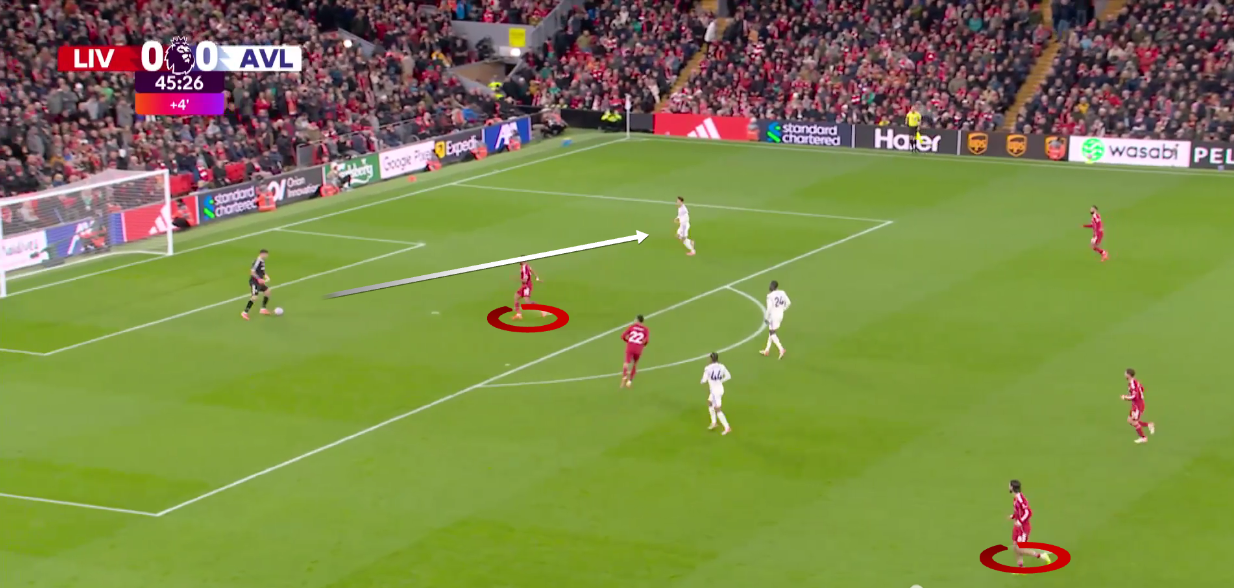 Liverpool maintains the scheme, but here, Gakpo and Szoboszlai are switching roles.
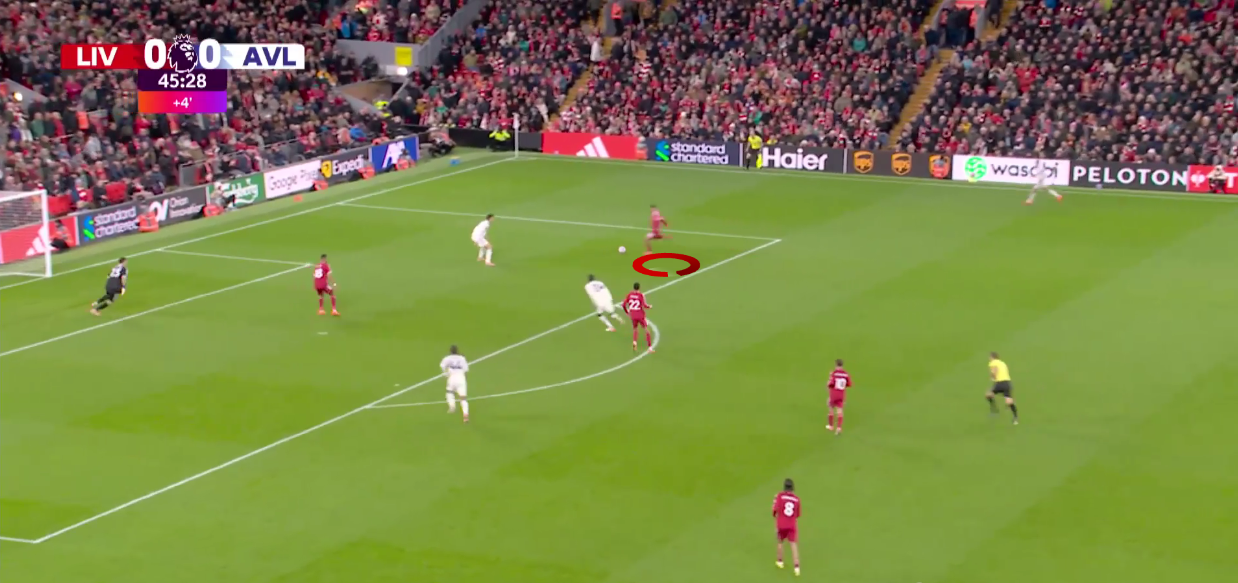 Martínez’s pass intended for Torres goes to Salah, who scores the first goal for Liverpool late in the first half.
Applying The Same High-Pressing Scheme In The Second Half
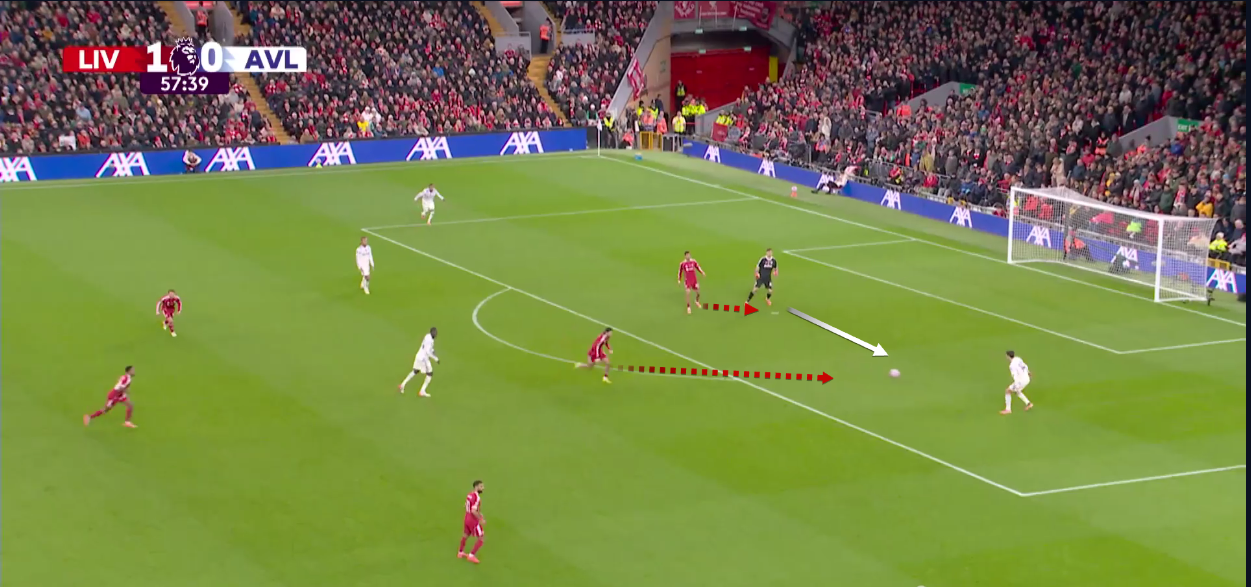 In the second half, Liverpool continue using the same pressing scheme.
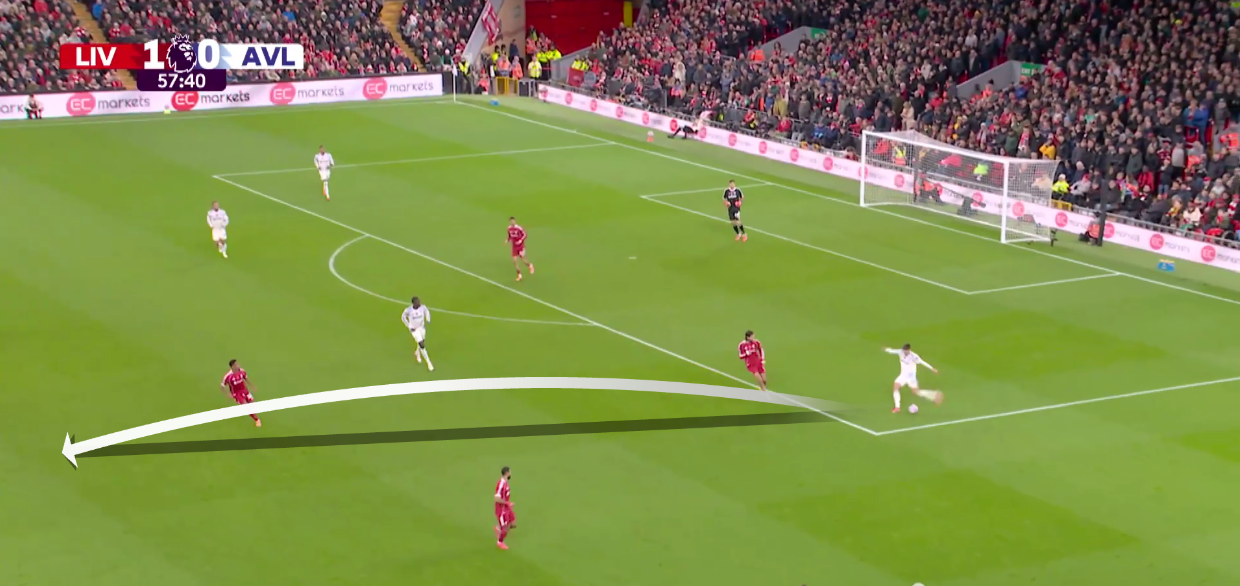 Torres plays long again.
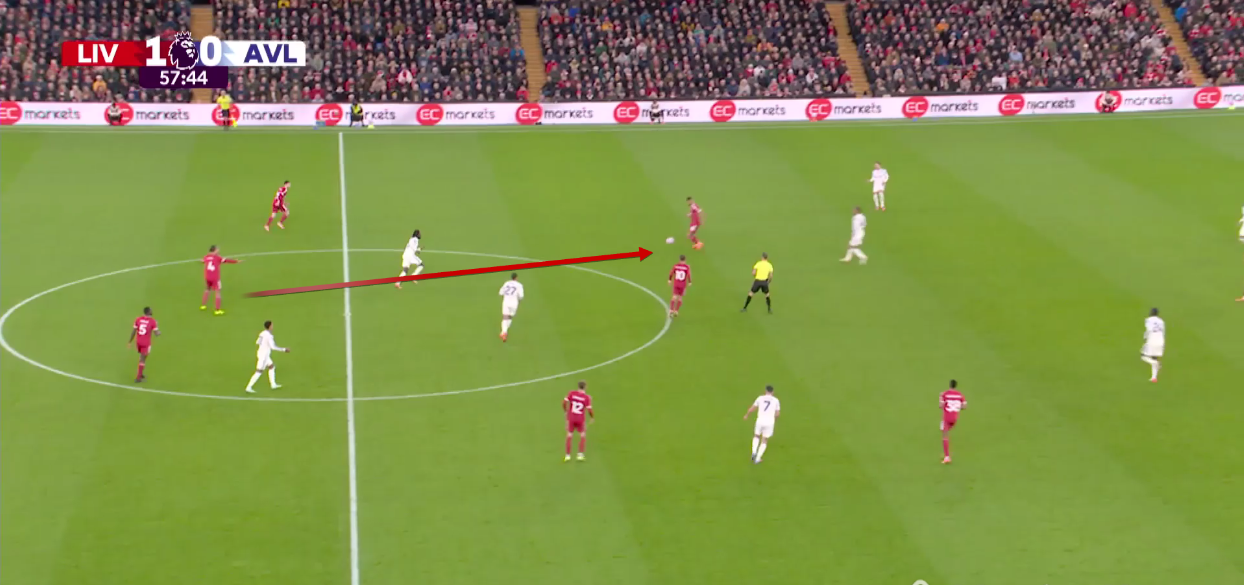 Torres’ pass can’t find anyone but Van Dijk, who wins the ball, heads it to Gakpo, and starts a new turnover for Liverpool.
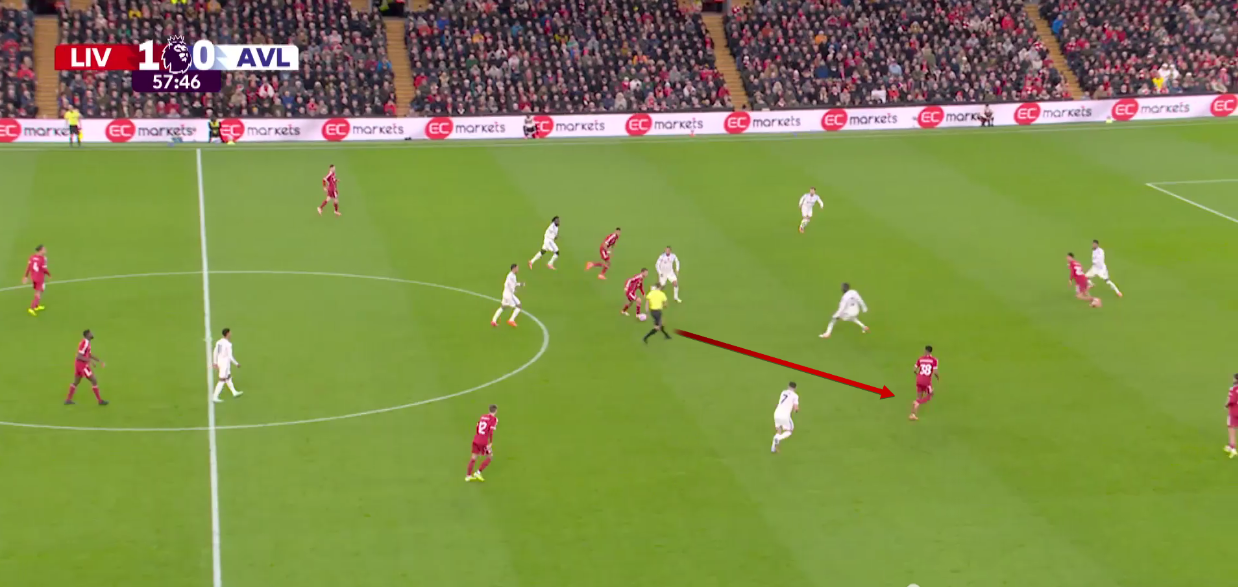 Gakpo combines with Mac Allister, who passes to Gravenberch.
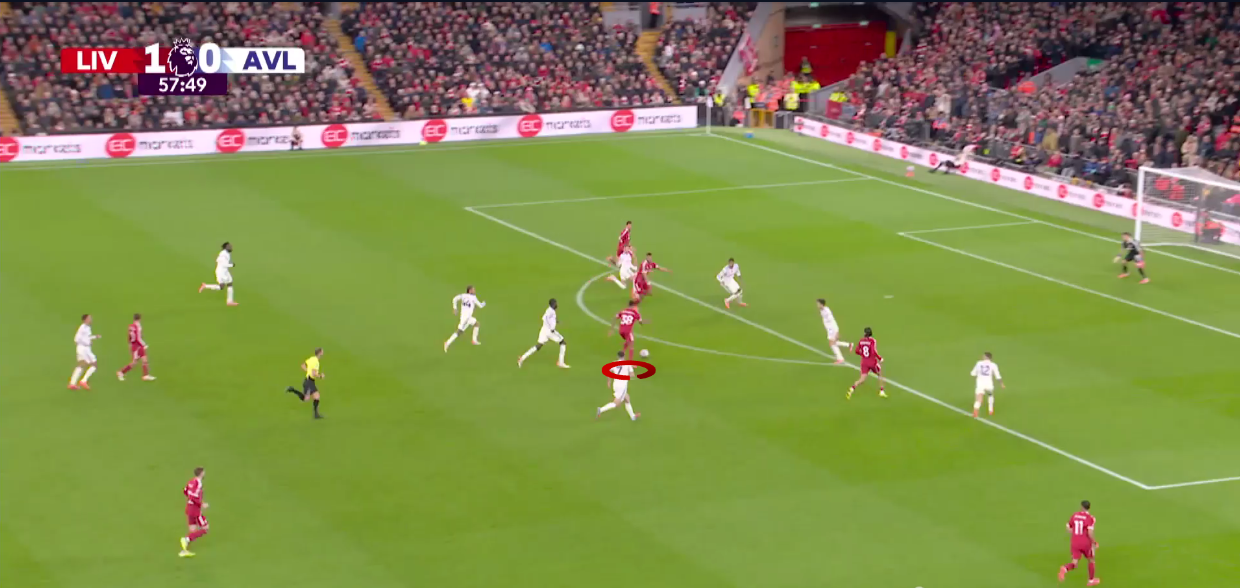 Gravenberch carries the ball to a position where he shoots and finishes to secure the victory for Liverpool.
Conclusion
Aston Villa entered this match aiming to build on the momentum gained from their victory over Manchester City.
They adapt through different build-up structures to find solutions throughout the game.
Yet they faced a Liverpool side determined to avoid extending a run of four consecutive Premier League defeats.
Liverpool is committed to their core identity: searching for the optimal pressing structure, whether through altering the player who initiates the pressure, adjusting the shape, or shifting the pressing direction.
Each adjustment served one purpose: to recover possession in threatening zones and turn those moments into clear chances.
In the end, Liverpool identified the pressing approach that allowed them to regain control, force decisive turnovers, and score twice to secure the victory.
