
Despite very nearly completing a dramatic comeback, Aston Villa’s 2024/2025 UEFA Champions League journey has officially come to an end versus Luis Enrique’s Paris Saint-Germain.
Les Parisiens are increasingly looking like strong contenders for this season’s European Cup but face stiff competition in the next round from an Arsenal side that has just knocked out Real Madrid, thus preventing a semi-final return to Paris for Kylian Mbappé.
Marcus Rashford, who joined Villa on loan from Manchester United in the winter transfer window, played a pivotal role in his team’s exciting performance against PSG in the quarter-final.
The England international added another assist to his Villa record, taking his tally up to nine goal contributions in 15 appearances for Unai Emery’s team since making his winter switch.
Our tactical analysis aims to provide some insight into how Villa’s Spanish tactician utilised Rashford as a key component of his overall team tactics on Tuesday evening.
We’ll outline Rashford’s role and shed light on how the 27-year-old performed that role to a high level, positively influencing the game for the Villans on several important occasions during Tuesday’s Champions League quarter-final second-leg fixture in Birmingham.
Aston Villa Vs PSG Lineups & Formations – UCL 2024/2025
Firstly, we’ll run through both teams’ lineups for this contest.

Aston Villa Lineup & Formation
The hosts of the second leg, Aston Villa, set up in a 4-2-3-1 formation, with Emiliano Martínez starting in goal behind a back four consisting of right-back Matty Cash, right-centre-back Ezri Konsa, left-centre-back Pau Torres, and left-back Lucas Digne.
Former Marseille man Boubacar Kamara started alongside another Ligue 1 alumnus, ex-Lille midfielder Amadou Onana, at the base of midfield with Youri Tielemans, formerly of AS Monaco, playing the ‘10’ role.
John McGinn started on the left wing with Morgan Rogers on the right, while Rashford led the line from the centre-forward position.
Villa made five substitutions during the game.
Firstly, Marco Asensio and Jacob Ramsey replaced McGinn and Onana, respectively, just after the hour mark.
That change was followed shortly by another double substitution, as Ollie Watkins and Ian Maatsen replaced Rashford and Digne before Villa’s final switch, just before the 90-minute mark, saw Ross Barkley introduced for Tielemans.
Paris Saint-Germain Lineup & Formation
As for the visiting side, PSG lined up in a 4-3-3 formation with Gianluigi Donnarumma in goal.
Achraf Hakimi played at right-back, next to Marquinhos (right centre-back), Willian Pacho (left centre-back) and with Nuno Mendes on the opposite flank.
Vitinha played at the base of Les Parisiens’ midfield just behind João Neves on the right and Fabián Ruiz on the left.
At the same time, Luis Enrique’s front three consisted of Khvicha Kvaratskhelia (right wing), Bradley Barcola (left wing) and Ousmane Dembélé (centre-forward).
PSG made just one substitution during the game, with Désiré Doué coming on in place of Barcola in the 58th minute.
Marcus Rashford Stats Vs PSG
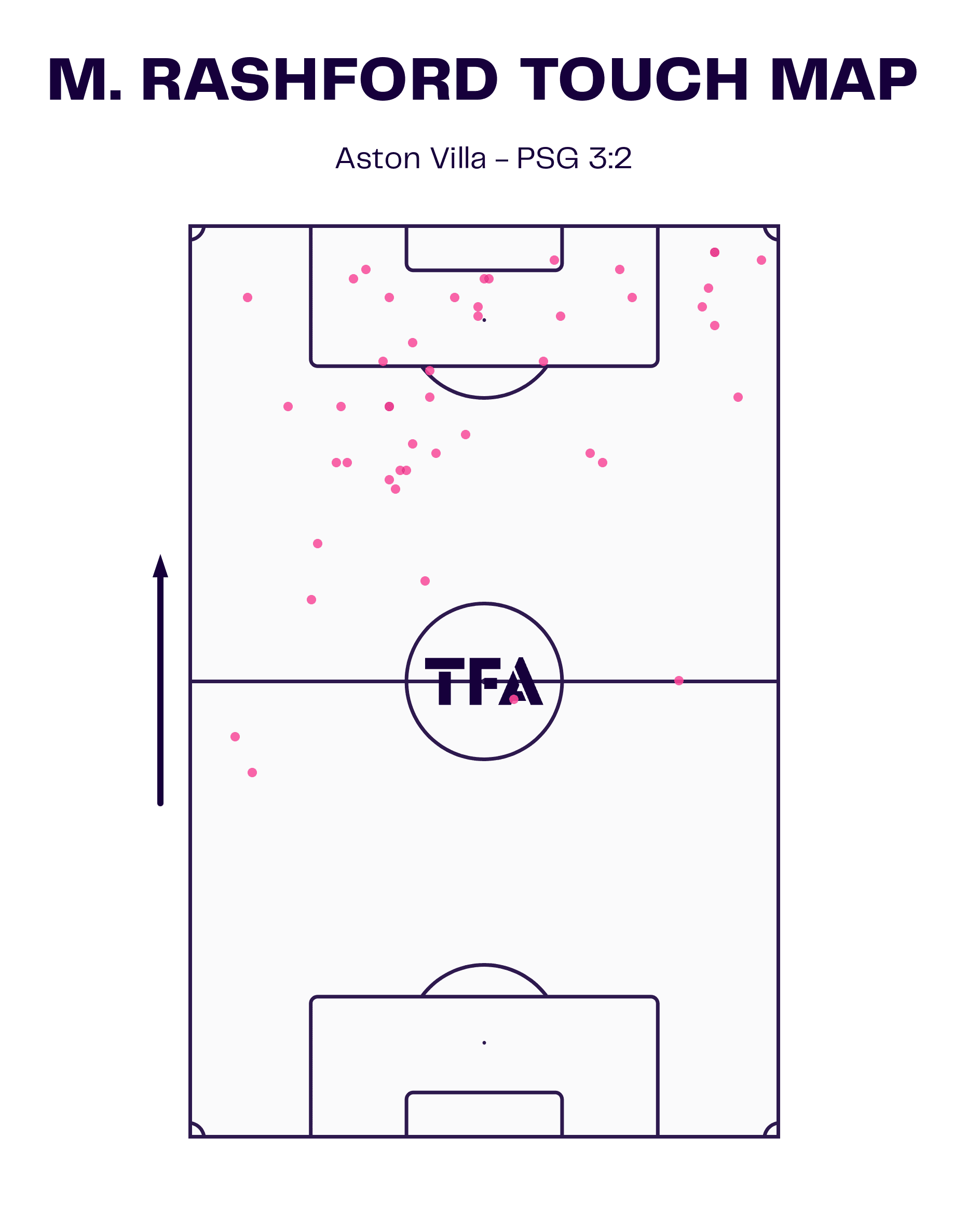
Marcus Rashford’s touch map shows that although he lined up as Villa’s centre-forward on paper, he was heavily involved on the left wing for large portions of the game.
The Manchester United academy product also got involved in the half-spaces/zone 14 fairly often.
His teammates would pick him out in these positions to complete quick passing combinations, aiding the team’s progress towards the goal in the final third.
Furthermore, with Rashford on Villa’s corners, the Englishman sometimes found himself getting involved out on the wings, either when receiving a return pass from a short corner or in the aftermath of the set-piece—this, in particular, explains the activity on the right of the touch map above.
Marcus Rashford Ball Progression Map Vs PSG
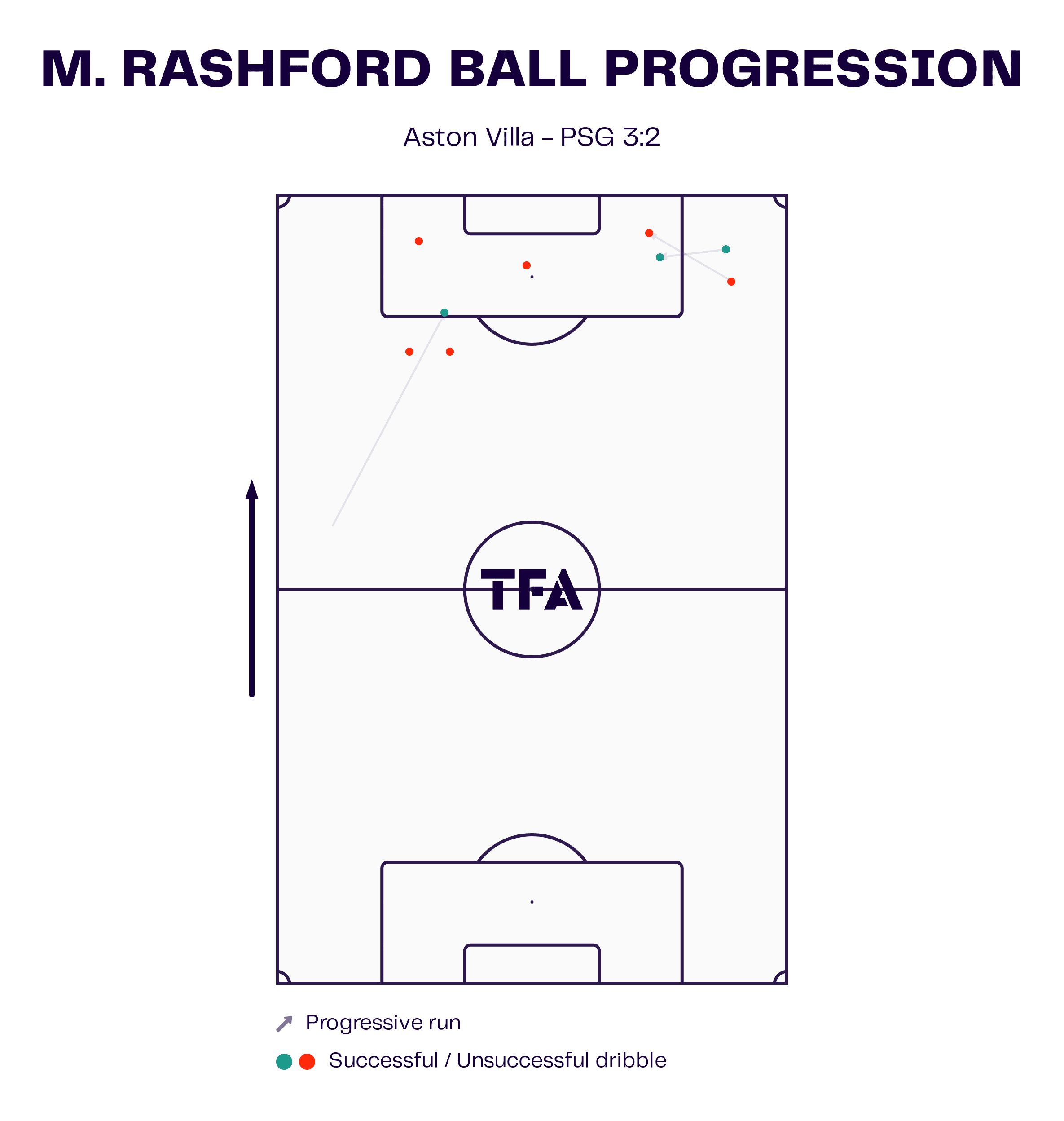
Furthermore, Rashford’s involvement in the aftermath of corner kicks also explains the dribbles on the right wing here in Figure 3, for the most part.
One such involvement from the 27-year-old directly led to his assist for Villa’s third goal on Tuesday evening.
Meanwhile, the dribbles on the left are mostly a result of his drifting out to the left wing in offensive transitions.
Marcus Rashford Role In Transition Vs PSG
Out of possession, the forward didn’t offer much for his side.
He was not tasked with pressing the PSG backline aggressively for the most part, especially as Villa did not set up to press PSG particularly high.
Rashford would press with a bit more tenacity on a backwards pass to a near centre-back but otherwise would essentially just place himself centrally, close to the PSG backline.
He would sometimes screen passes into midfield but really not engage heavily in his side’s out-of-possession play.
The 27-year-old loanee had an important role on the counterattack, however, and saved some energy from his lack out defensive participation for this task.
Rashford didn’t typically track back a lot during this game, but stayed high and focused on finding space for teammates to play the ball to him in transition should they win it back deeper.
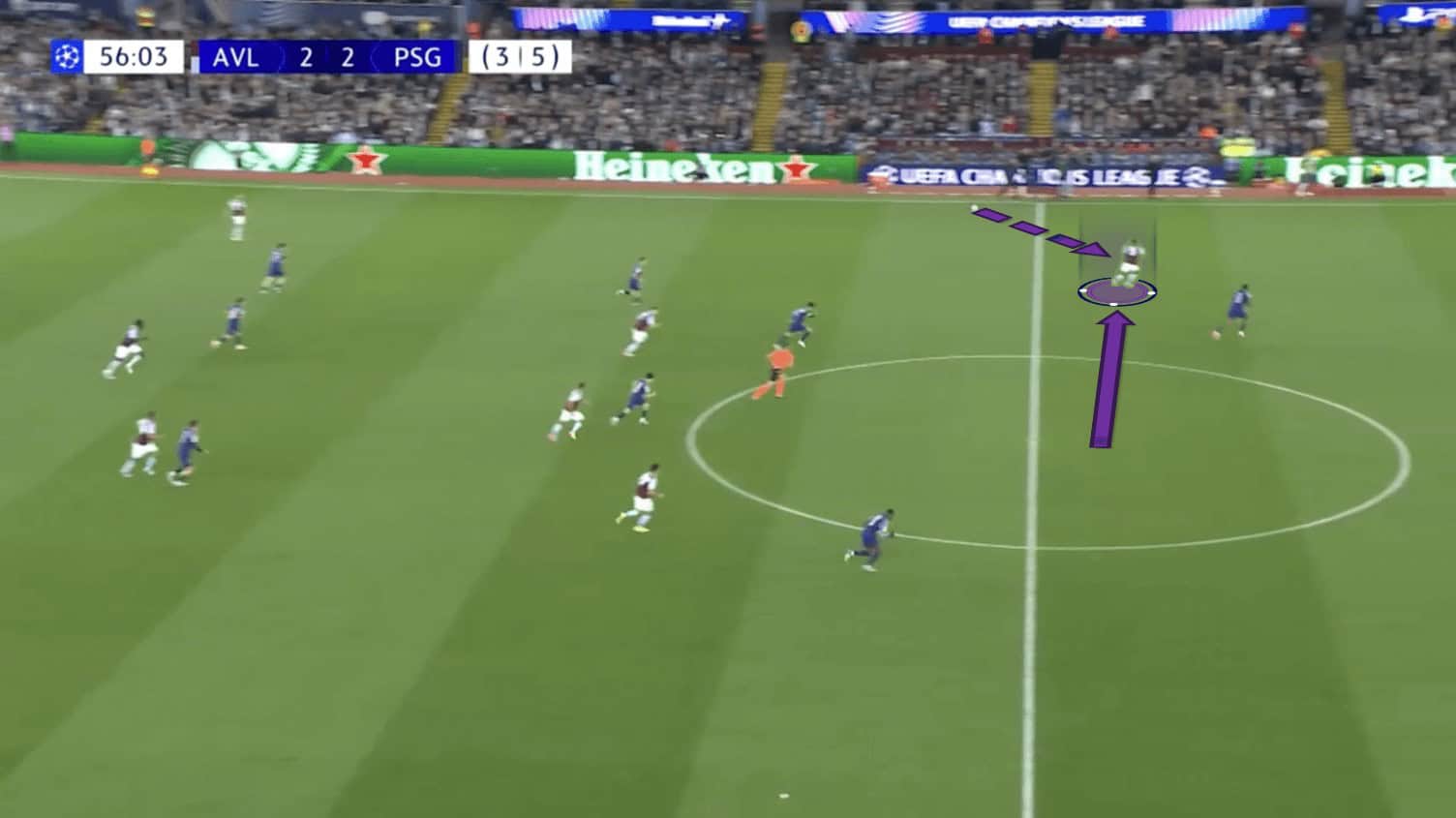
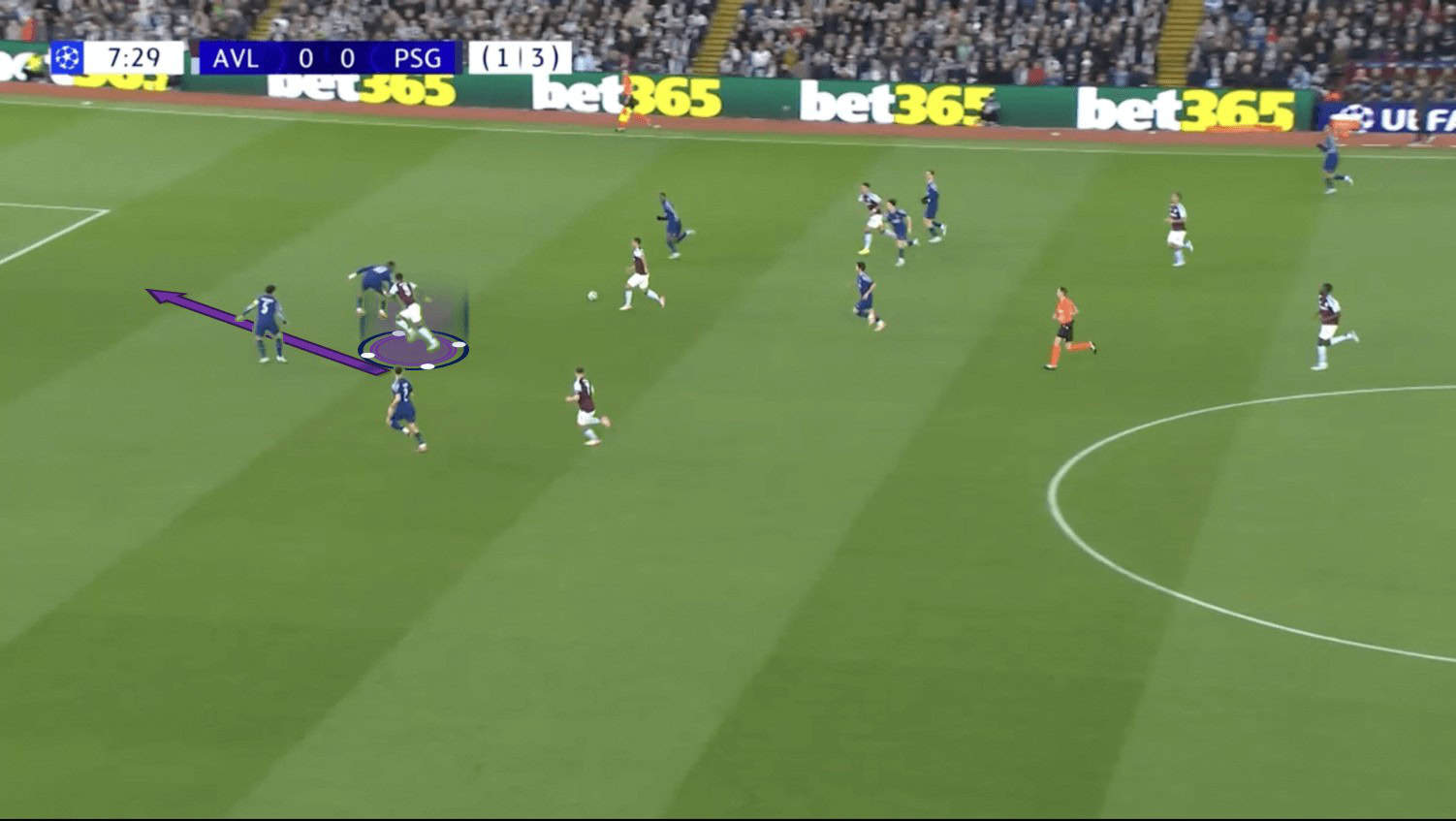
Above, the forward has just pulled away to the left, targeting space on that side of the pitch.
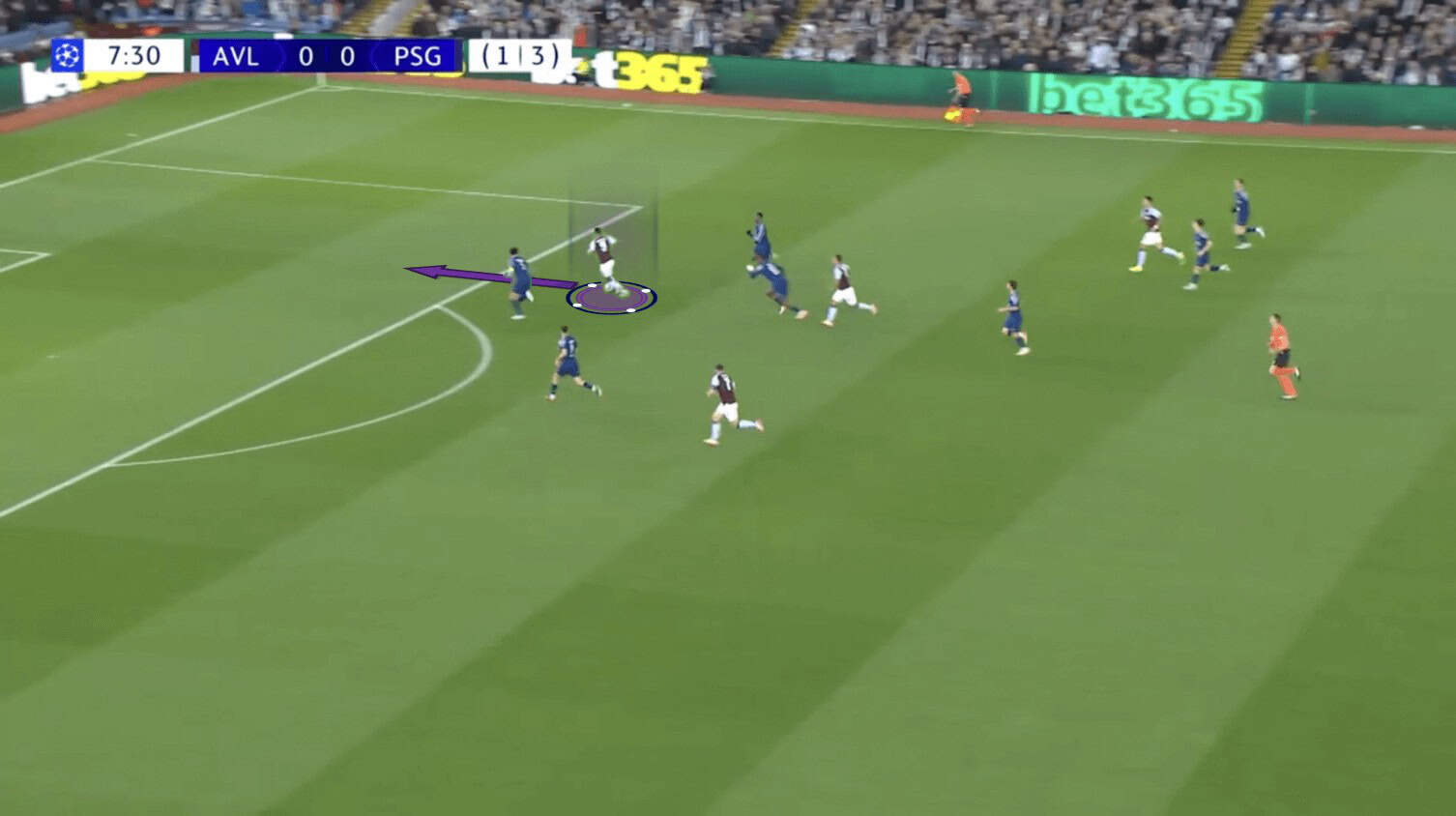
After regaining possession deeper, Villa launch the ball upfield towards Rashford in space on the left, aiming to set him up for a quick run at Les Parisiens’ weakened backline on the counter.
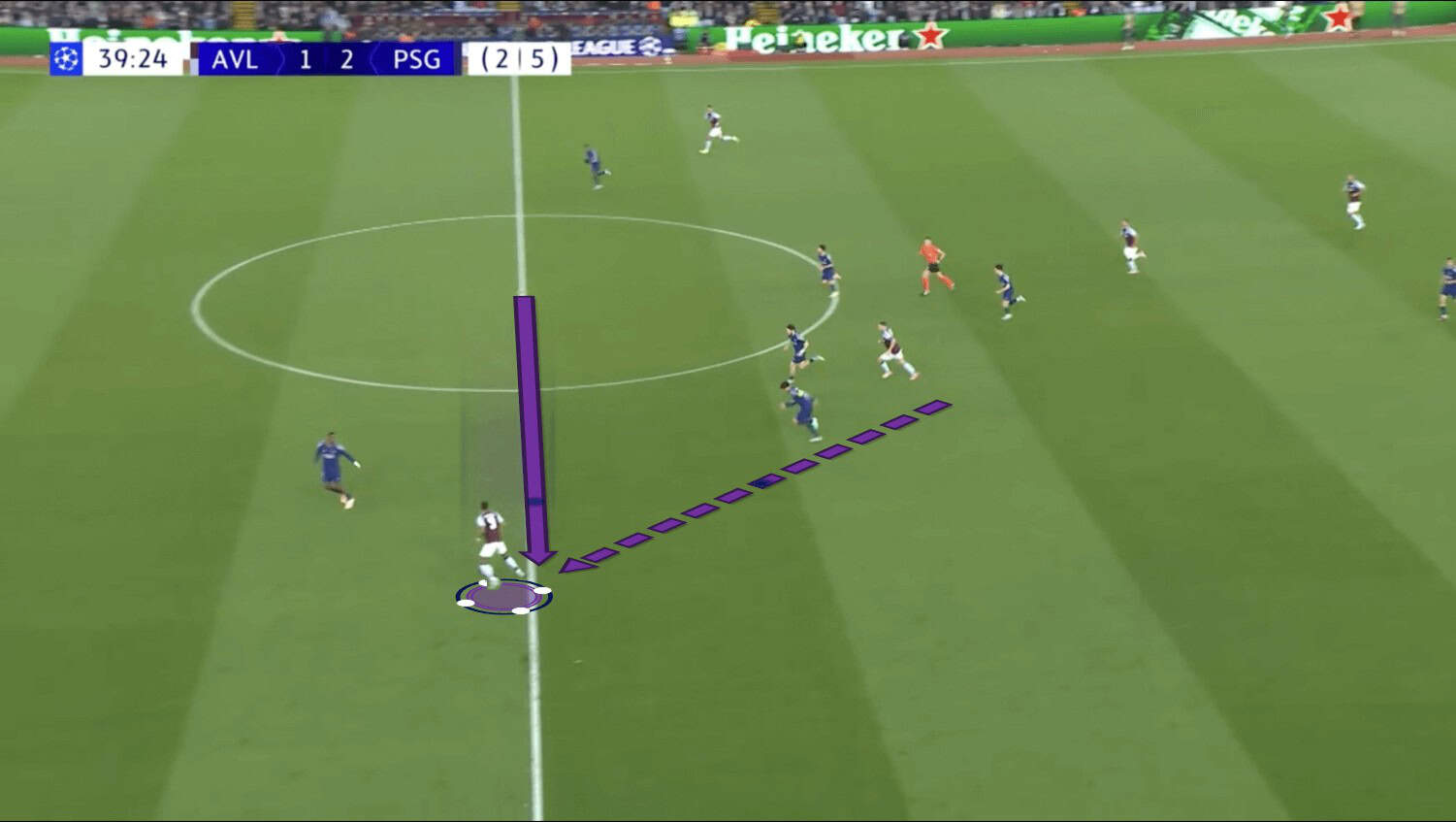
Here, we see the forward out on the left again, in position to receive the ball on the counter in some space before then running at the defender who’s come out to engage with him 1v1 and try to take this transitional attack towards PSG’s goal.
Throughout the game, though Rashford was technically Villa’s centre-forward, he vacated the centre of the pitch in transition in order to exploit space where it was present elsewhere.
His role in transition was to find and target space to give his deeper teammates a good passing option at the top of the pitch to progress quickly on the counter—an important role that set Rashford up to showcase his 1v1 dribbling ability, ball retention skills, and decision-making under pressure.
Rashford’s movement from the left, dragging a PSG centre-back with him, towards the centre—again, making the centre-back follow—created space for Youri Tielemans to move into out on the left for Aston Villa’s first goal of Tuesday’s game.
This helped his side really get their attempted comeback in motion, one instance from the match which highlights the England international’s impact in this role.
Marcus Rashford Off-The-Ball Movement In Attack Vs PSG
Overall, Rashford’s movement in attacking phases was impressive and threatening on Tuesday evening, although his team didn’t always capitalise on that movement in the most optimal way.
In figures 6 and 7, the striker can be seen having just begun to run into some space between PSG’s centre-backs as the ball was played to Tielemans in the ‘10’ position, just behind the forward.
Rashford spotted PSG’s centre-back Pacho moving forward in reaction to the pass to Tielemans and deemed this an ideal opportunity to get into space behind the defender.
As play moves on, we see that Tielemans responded well to Rashford’s run, spotting it in a timely manner before slipping the ball through for the crafty forward in behind PSG’s defence.
This is a positive example of Villa using Rashford’s intelligent movement to progress into a more dangerous position on Tuesday.
However, there were occasions on which Villa also passed up opportunities to do the same.
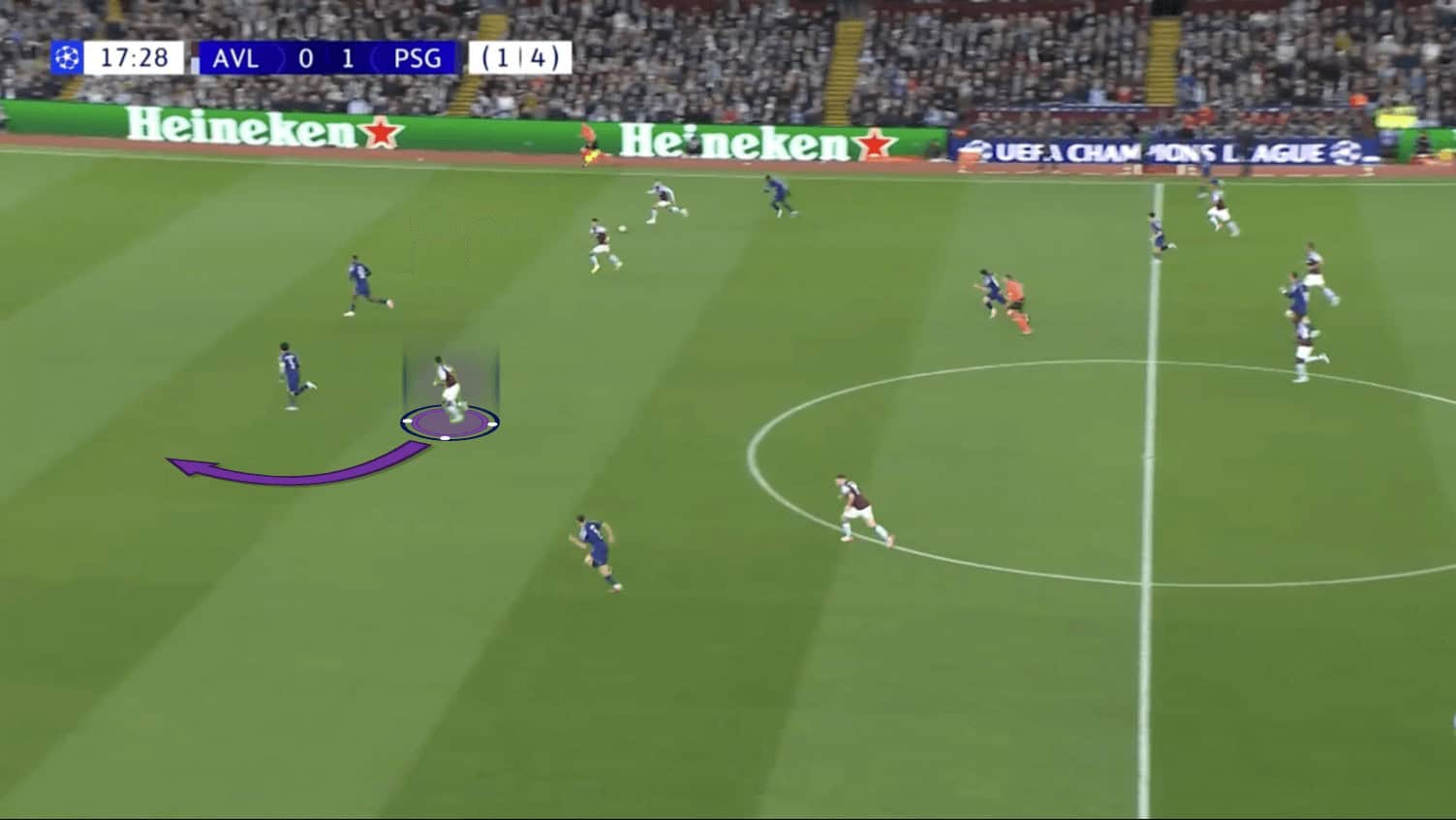
Here, Rashford starts targeting space on Marquinhos’ blind side as his team gets in behind Nuno Mendes and begins progressing towards the box.
The centre-forward intelligently tries to attack the blind side of PSG’s far centre-back from the ball, forcing him to split his attention between the runner and the action on the ball.
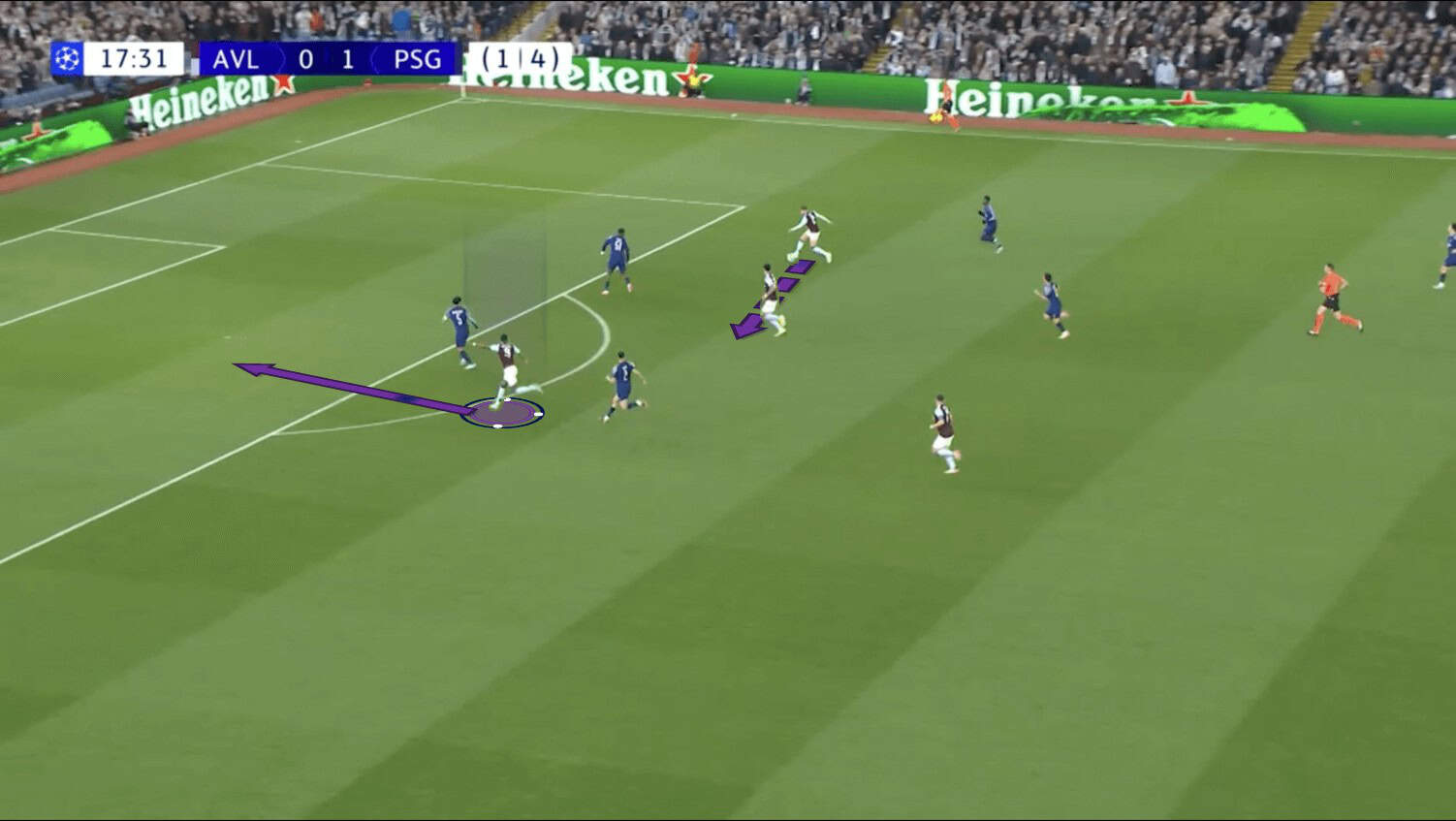
As play moves on, we see Rashford now darting into the box, pointing to where he’d like the ball played.
However, Villa either don’t spot or decide against the option of using Rashford here, instead moving into the centre outside the box.
PSG ended up recovering and clearing the ball, ending the attack, but it does feel like a missed opportunity for Villa not to have tried to get a cross to the back post—low or high—played towards Rashford, who would’ve had space and been in a decent position here.
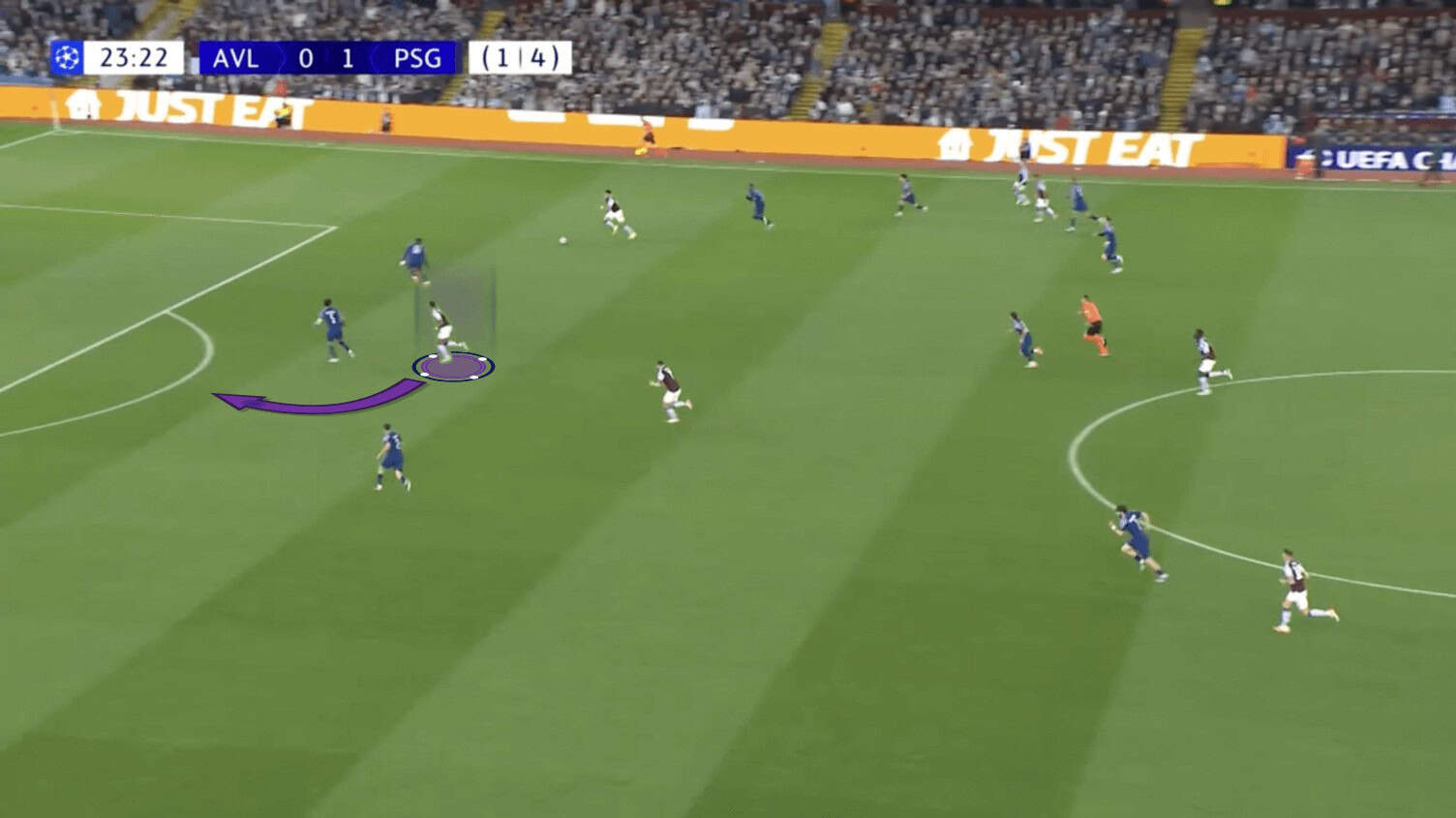
Now, we have a very similar example to the previous one in figures 10-11.
Above, Rashford begins pulling away to Marquinhos’ blind side.
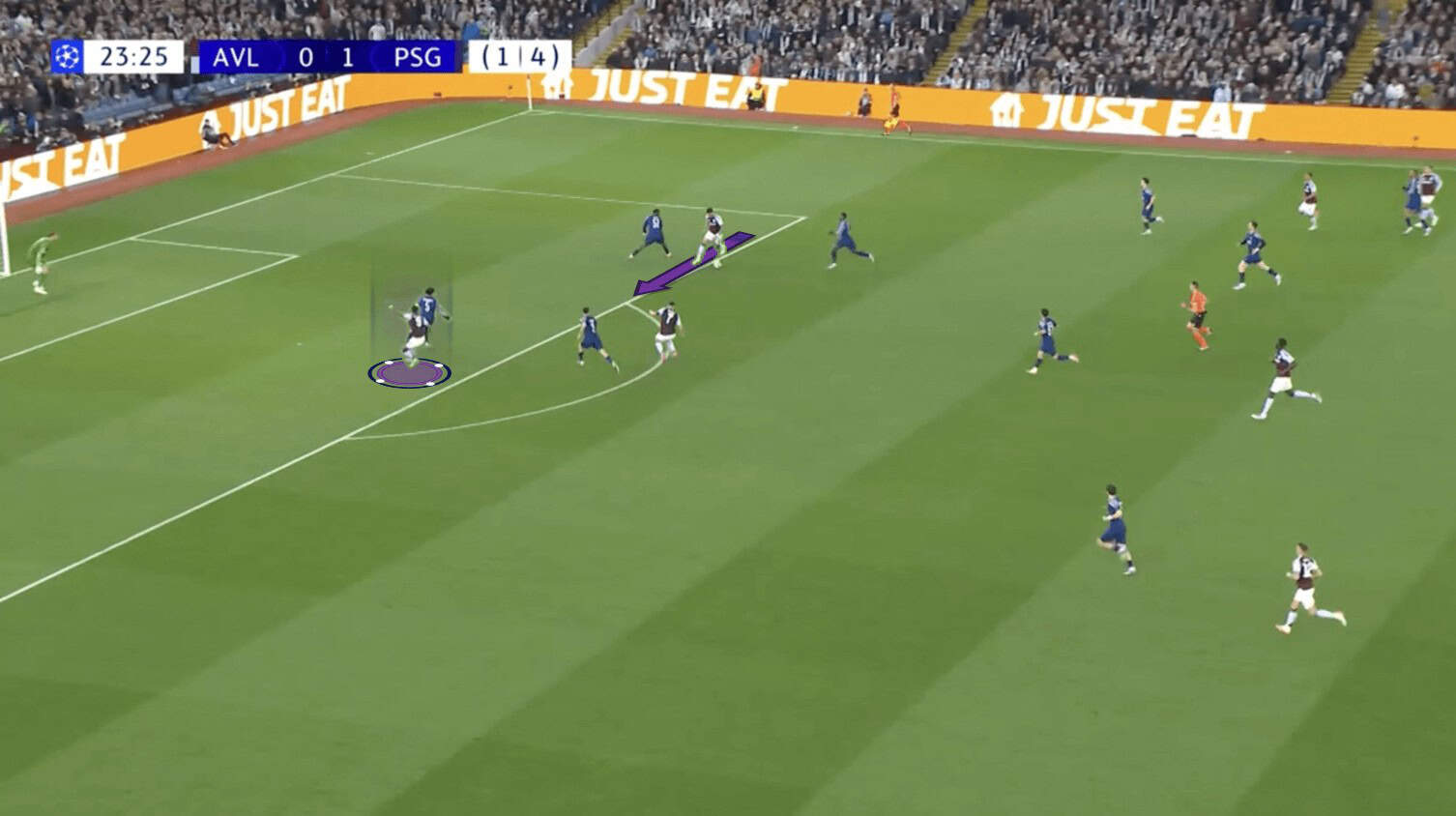
As the attack progresses, Villa come into the centre once more and the dribbler goes alone before shooting from outside the box, putting the ball wide of the post.
Both these attacks feel like missed opportunities to get a cross in to Rashford, who would’ve been positioned in a high-percentage location and tried to create a threat for his team via his off-the-ball movement.
Conclusion
To conclude this football analysis, Rashford’s off-the-ball movement was probably the main attribute his team relied on him for during Tuesday’s game.
The forward was required to drift out wide into space on the counter as well as make intelligent runs in possession phases to give his teammates a solid option.
He performed this role well on Tuesday, but it ultimately wasn’t enough to help Villa overcome their first-leg deficit.
Still, it was a solid performance from the attacker, which demonstrated his clever off-the-ball movement.
It will be interesting to see if he stays at Aston Villa next season, or if Marcus Rahsford transfers to Barcelona or another club.
