
The United States Men’s National Team is gearing up for the first FIFA World Cup on home soil since 1994, with the most talented roster they’ve ever had.
Football in the United States has come a very long way since they last hosted the 1994 World Cup.
No longer is the USMNT relying solely on MLS players to try to compete with the world’s best.
Instead, Team USA now has players playing in all of Europe’s top leagues, including:
- Christian Pulisic at AC Milan
- Yunus Musah at AC Milan
- Antonee Robinson at Fulham
- Weston McKennie at Juventus
- Gio Reyna at Borussia Dortmund
- Chris Richards at Crystal Palace
- Folarin Balogun at AS Monaco
- Tyler Adams at Bournemouth
With a strong talent pool in place, the next step was to hire an elite manager who could take the US to the next level and compete with Germany, England, Argentina, etc.
The man chosen for the job was Mauricio Pochettino.
The Argentine brought Tottenham Hotspur to heights their fans had never even dreamed of, having them on the doorstep of a UEFA Champions League title in 2019.
He then went on to manage both PSG and Chelsea, so he has a wealth of experience and the highest pedigree of any manager to have led the USMNT.
It’s been an interesting start to his tenure, marked by a loss in the semi-final of the CONCACAF Nations League to Panama and a recent defeat in the Gold Cup Final to Mexico.
Even with the talent level at an all-time high, and despite the successes in those two competitions, the United States crashed out of the group stage of the Copa América last summer on home soil.
While U.S. fans are excited, the results haven’t been there, and now the Stars & Stripes won’t be playing a non-friendly match until the World Cup kicks off next summer.
In this article, we’ll examine Mauricio Pochettino tactics with the USMNT so far and the statistical differences between the USMNT under Gregg Berhalter and Pochettino.
USMNT Build-Up Under Mauricio Pochettino
Early on, under Pochettino, he was building up in his usual 3-2-5 formation, using a double pivot in the midfield and allowing the right back to push forward to the last line of defence.

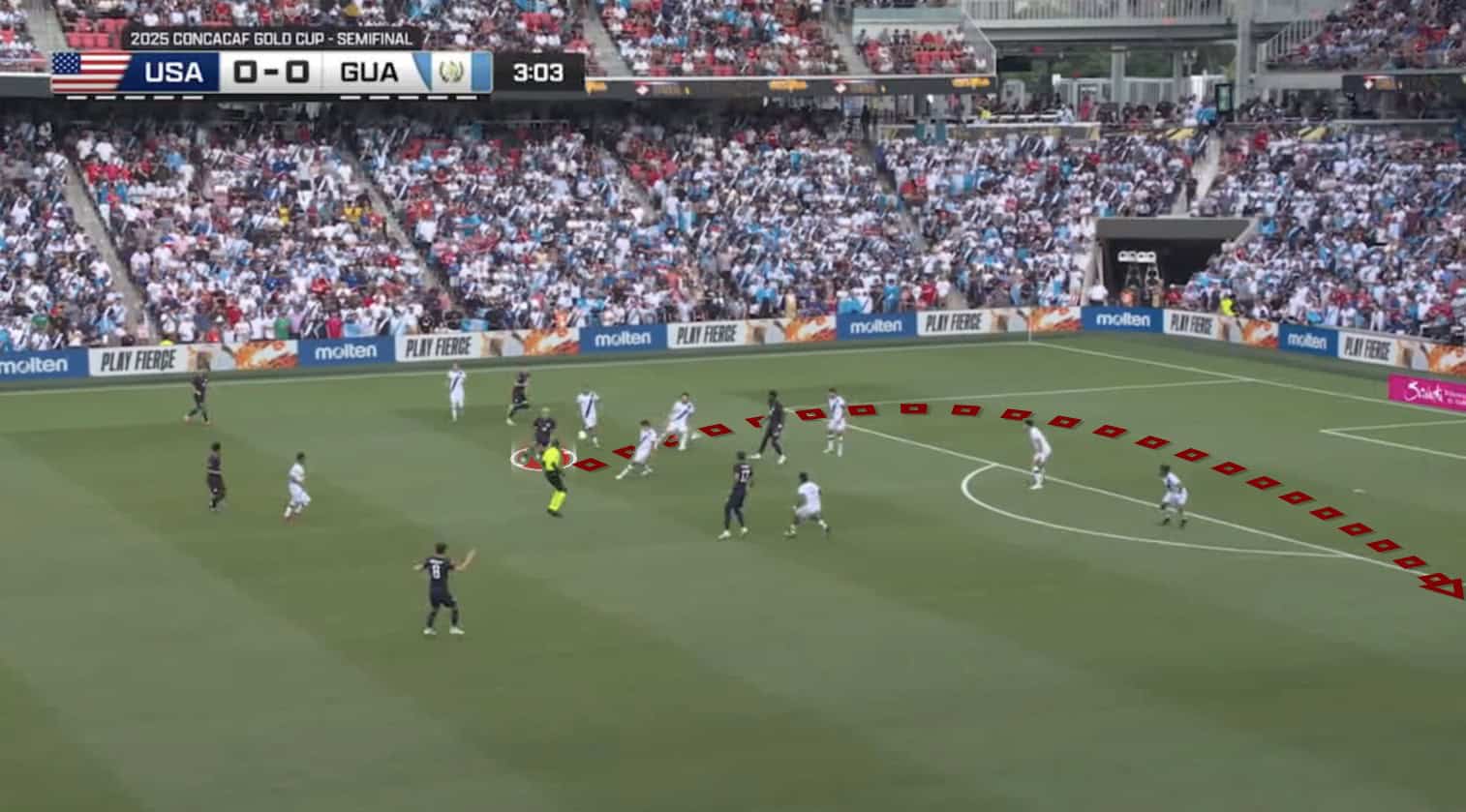
Recently, however, in the Gold Cup, he put more faith in Chris Richards and Tim Ream, switching to a 2-3-5 formation, as shown in the example below against Guatemala, which allows both full-backs to push high and wide to provide width.

Sebastian Berhaltar and Luca de la Torre dropped into the half-space, allowing Diego Luna and Malik Tillman to push up to Guatemala’s last line of defence.
We’ll explore this in the next section, but the switch to a 2-3-5 is crucial for the United States in terms of their playing style, particularly with the personnel they have at full-back, Antonee Robinson and Timothy Weah.
By allowing both full-backs to play high and wide, Pochettino’s men can not only stretch the opposing defences but also allow each to switch balls like this against Panama, where they have acres of space and can create 2v2 or 1v1 situations.
However, what was pretty concerning against Canada in the third-place match of the CONCACAF Nations League was just how much the USMNT struggled to build out of the back.
Jesse Marsch’s side could force 20 high recoveries and had a PPDA of 9.9.
The primary concern is what happens when they play against better high-pressing teams in the World Cup?
Will they be able to play through them effectively?
Are they capable of playing very direct and actually creating high-quality chances?
USMNT Wide Overloads In The Final Third
The reality of the USMNT playing CONCACAF teams primarily under Pochettino tactics is that they don’t face many teams that will press them high.
Most teams will sit in low blocks and try to deny space through the middle, so Pochettino’s solution is to create overloads out wide and try to create chances from crosses and cutbacks.
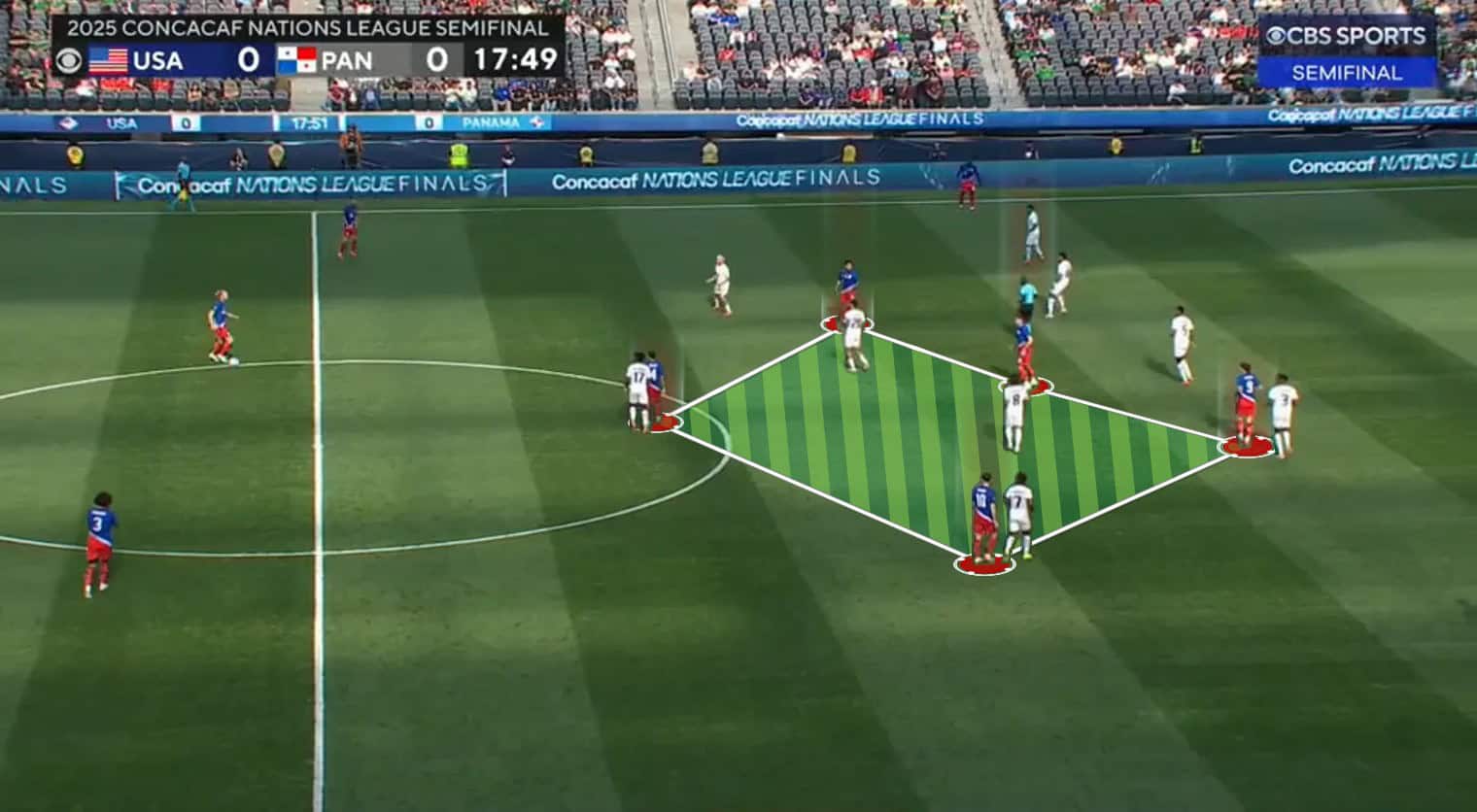
In their match against Panama in the CONCACAF Nations League, you can see that Panama is sitting so compact that even though the United States is trying to get five men centrally, there is no space to play the ball through.
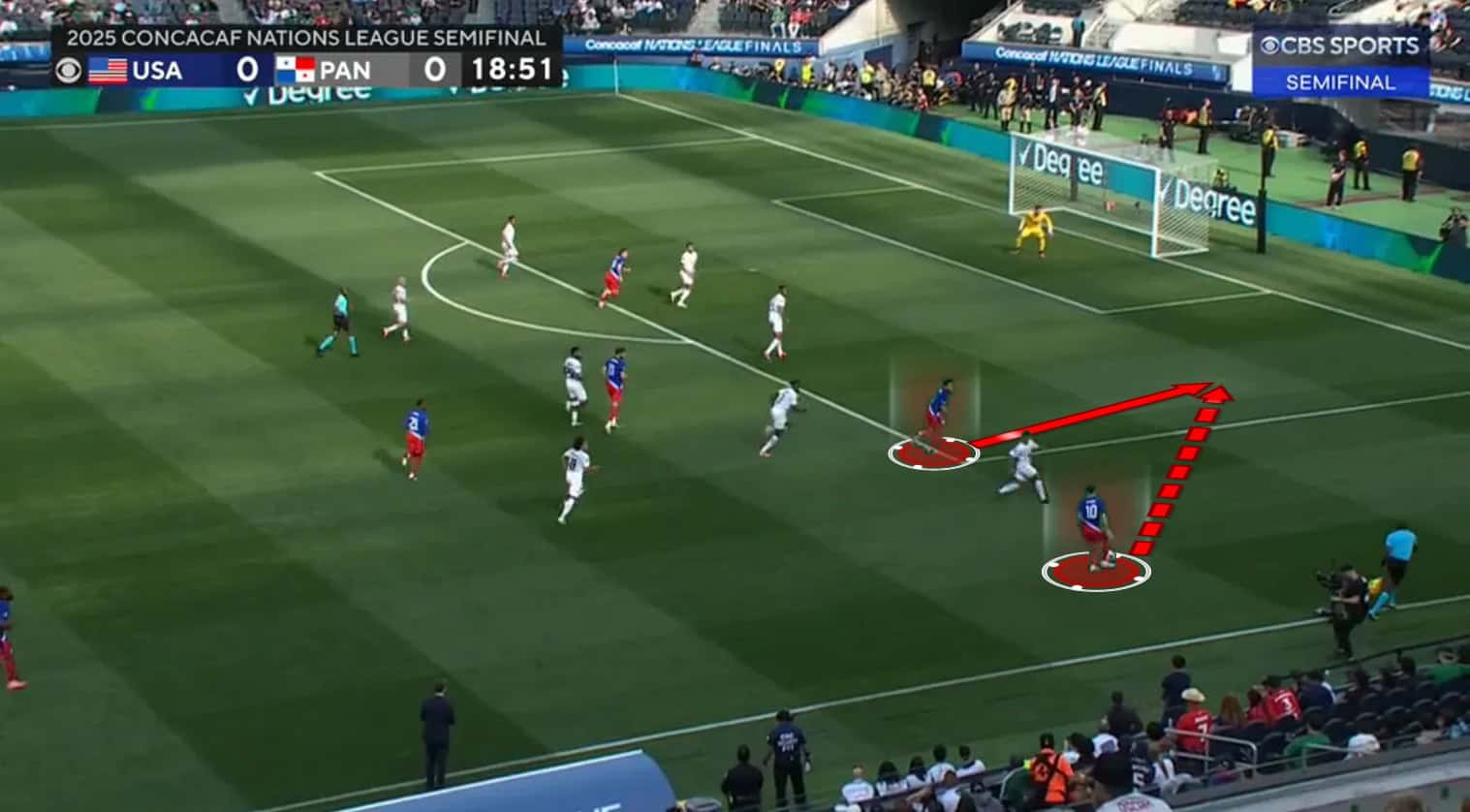
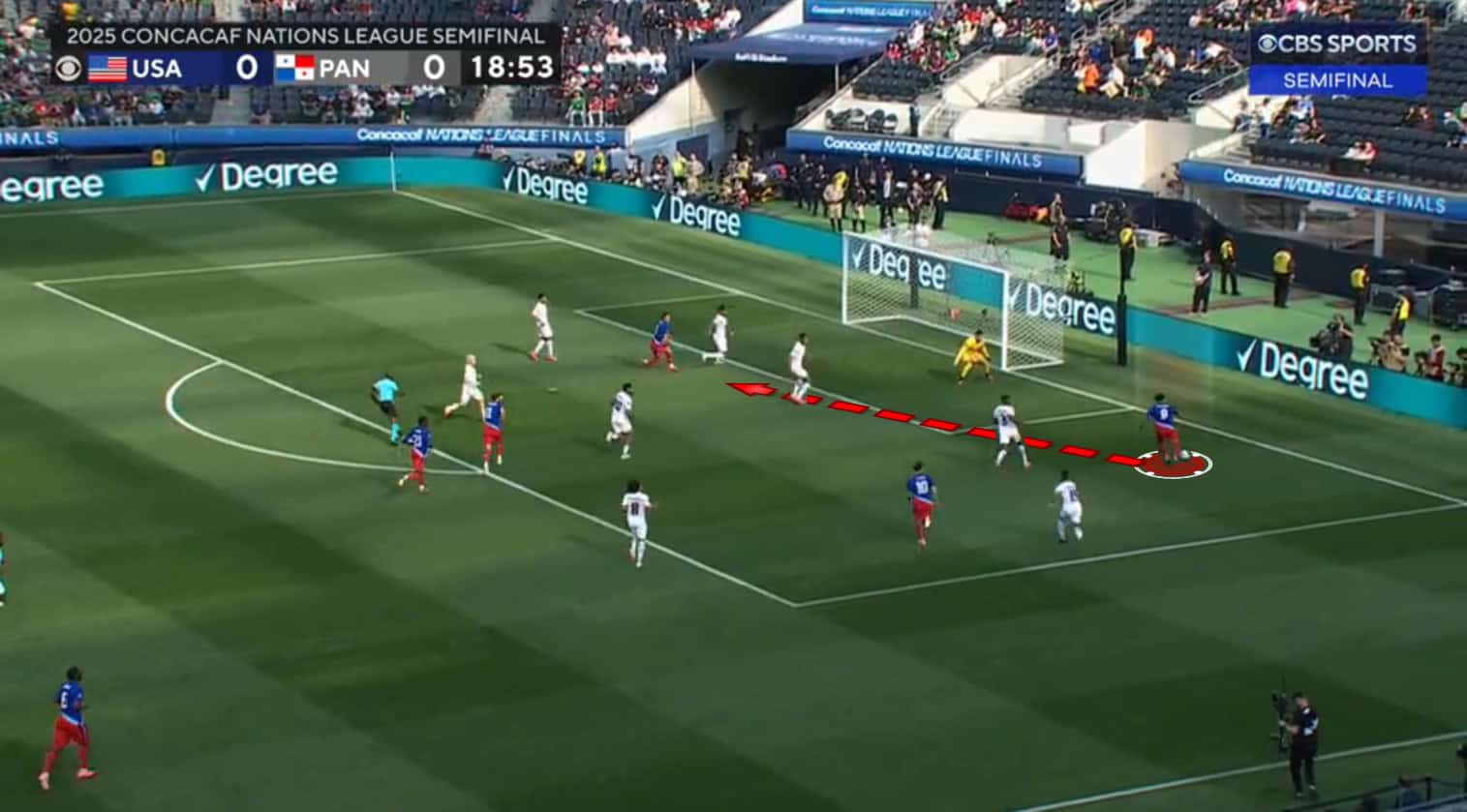
As the match against Panama progressed, he moved Christian Pulisic to a right-wing position to get his best player on the ball more.
This allowed the United States to create numerical advantages, such as the one where Pulisic was able to play Weston McKennie into the half-space to set up a cross into the box.
I mentioned earlier the switch to the 2-3-5 build-up and the key to it: pushing both full-backs high and wide.
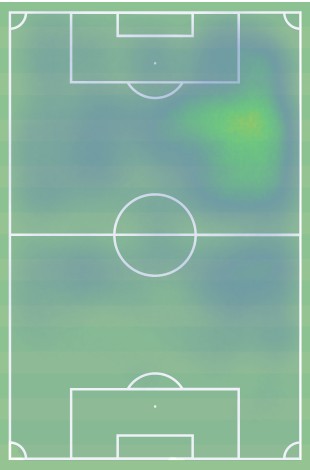
This allows Pulisic to play as more of an inverted winger or right-sided number 10, which is his preferred position at AC Milan.
Christian Pulisic Heat Map
As you can see here against Guatemala, the USMNT are able to get a 4v3 out wide and eventually switch the ball to the other side to create a central cross, which led to Luna’s first goal.
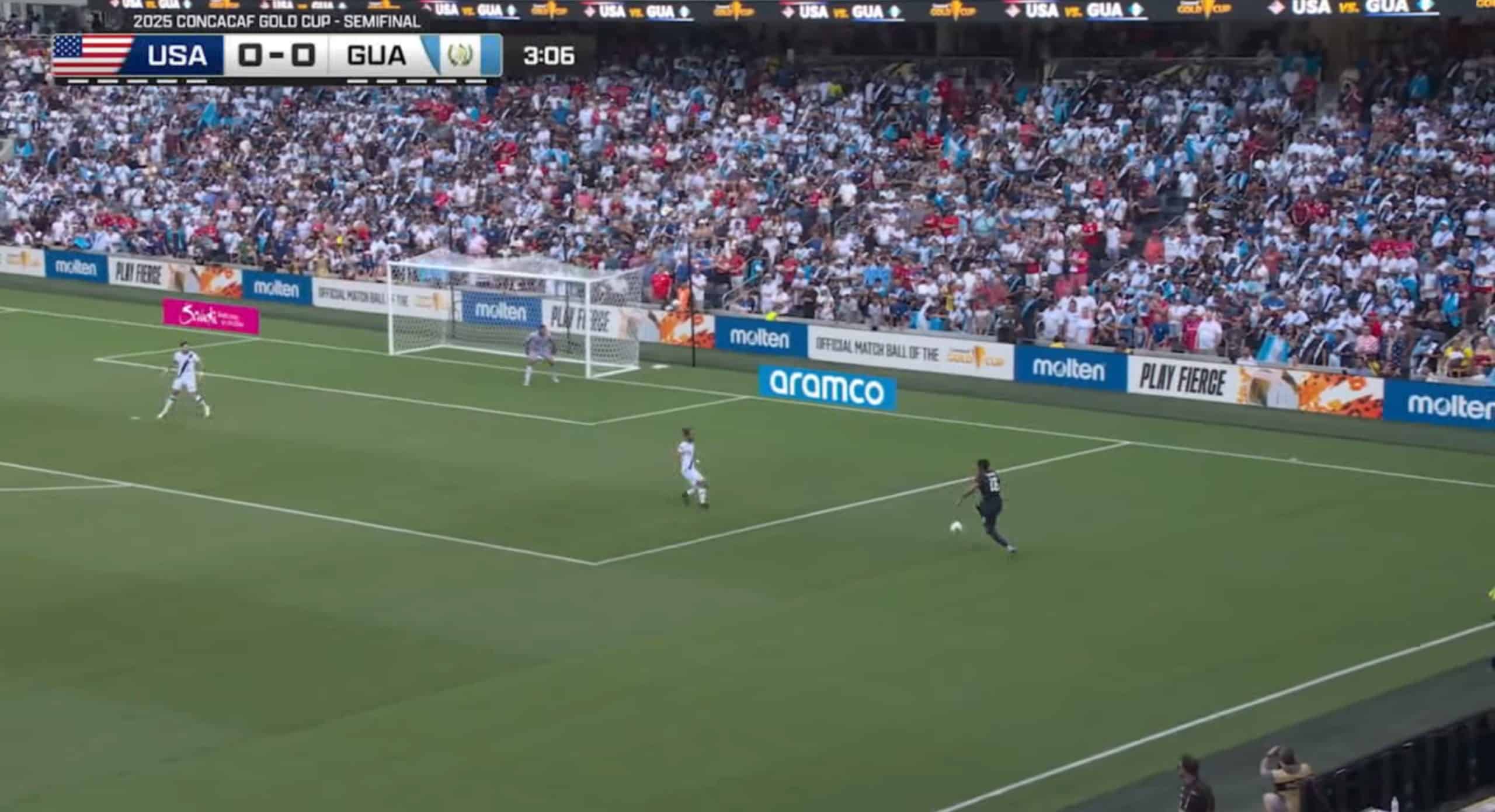
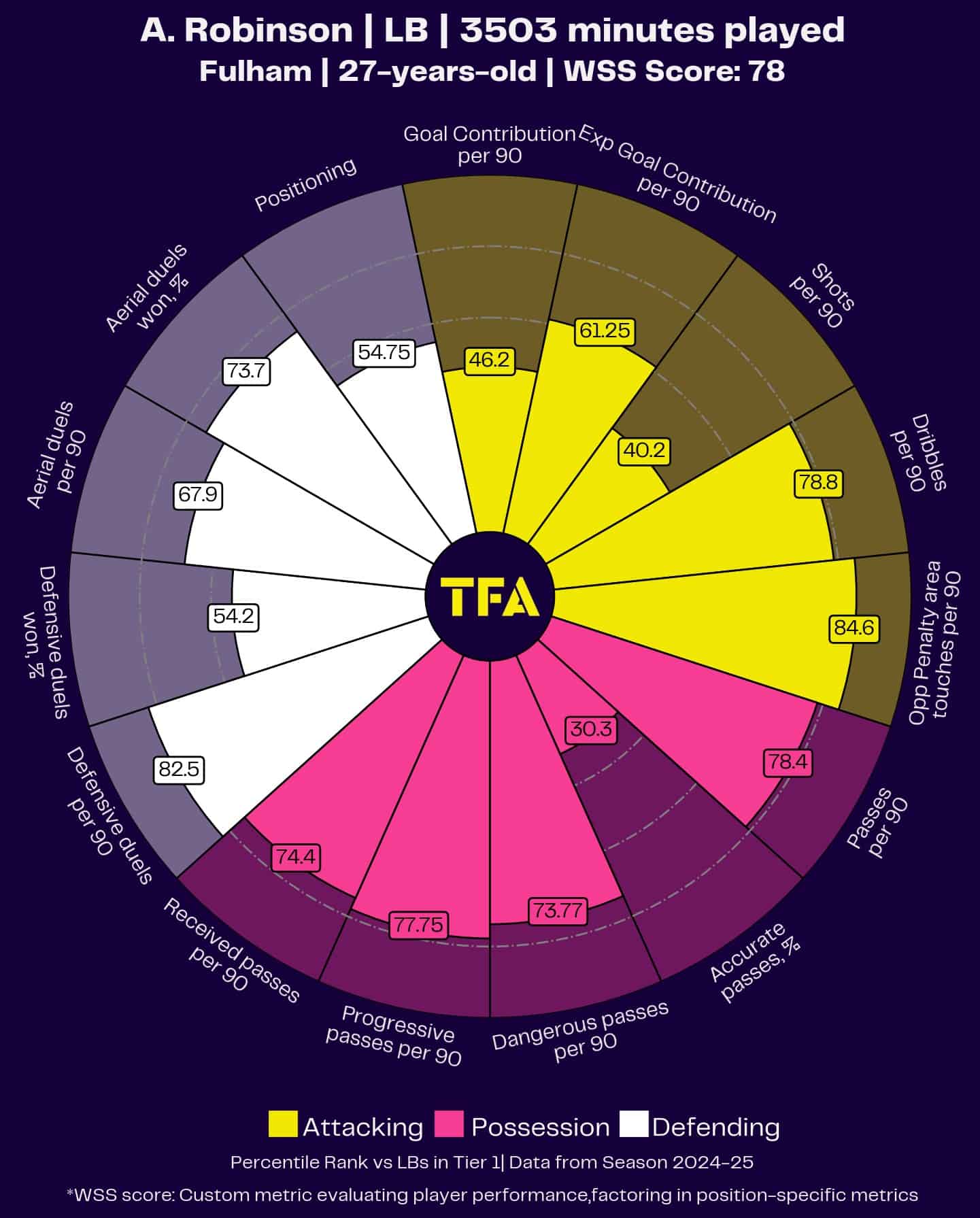
Antonee Robinson was one of the Premier League’s best progressive left-backs this season and led the English top flight with 29 completed crosses into the penalty area.
He’s so good at making overlapping runs with the winger to find space, and Fulham was a team that emphasised wide overloads and crosses big times.
Antonee Robinson Radar Chart
Timothy Weah, on the other side, was outstanding for Juventus this past season at right-back, pushing forward in a progressive role and ranking very highly in terms of receiving progressive passes and creating chances.
Timothy Weah Radar Chart Tactics
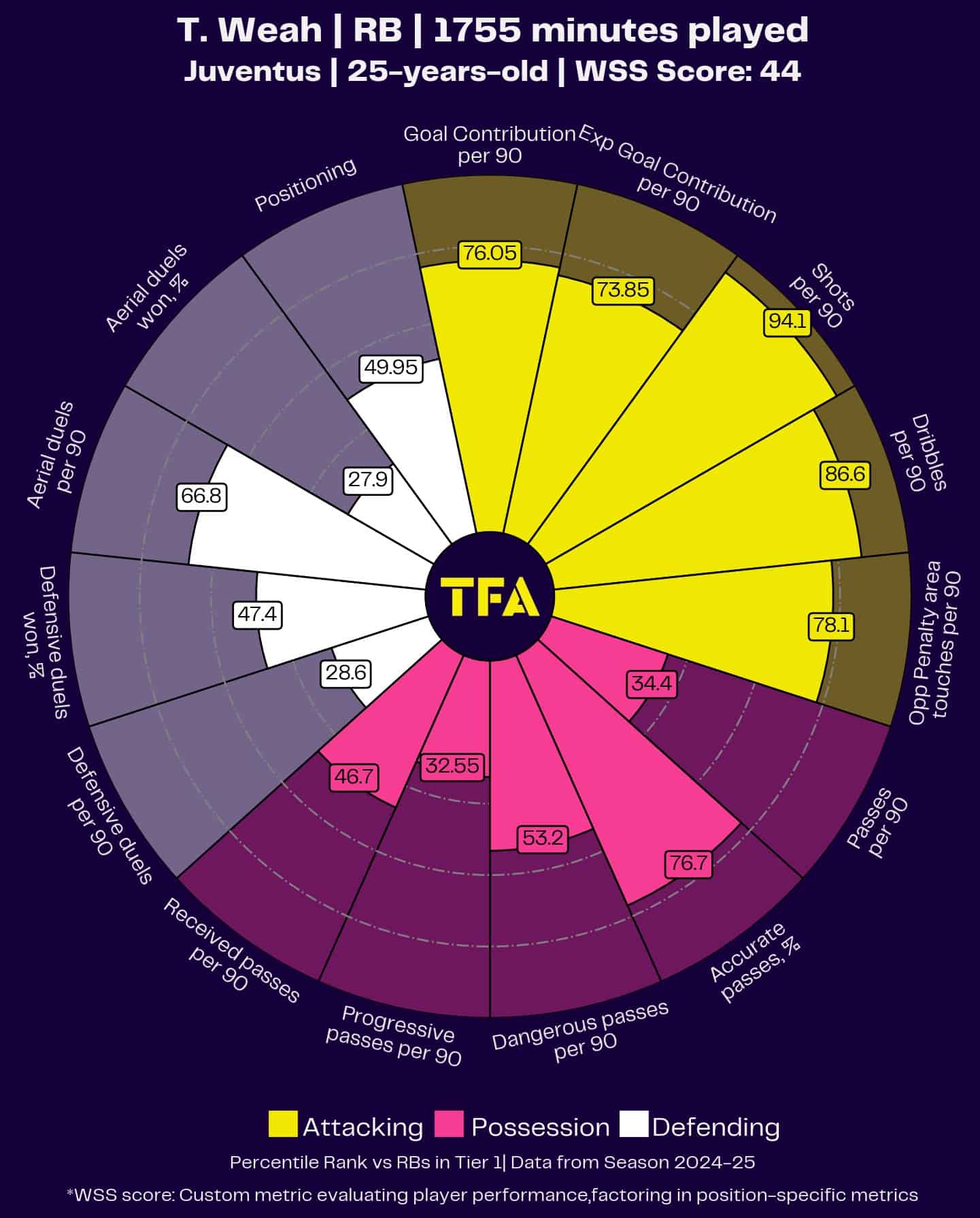
The combination of these two provides width, not only allowing the United States to create chances from out wide, but also opening up space centrally for guys like Pulisic and Tillman.
USMNT Out Of Possession
Nothing significant has changed for the United States from an out-of-possession perspective.
When they press high, it’s still in a man-to-man fashion, and they usually do it out of a 4-4-2.
Under Pochettino, they have adopted a more traditional 4-4-2 mid-block formation, as illustrated by the example below against Panama.
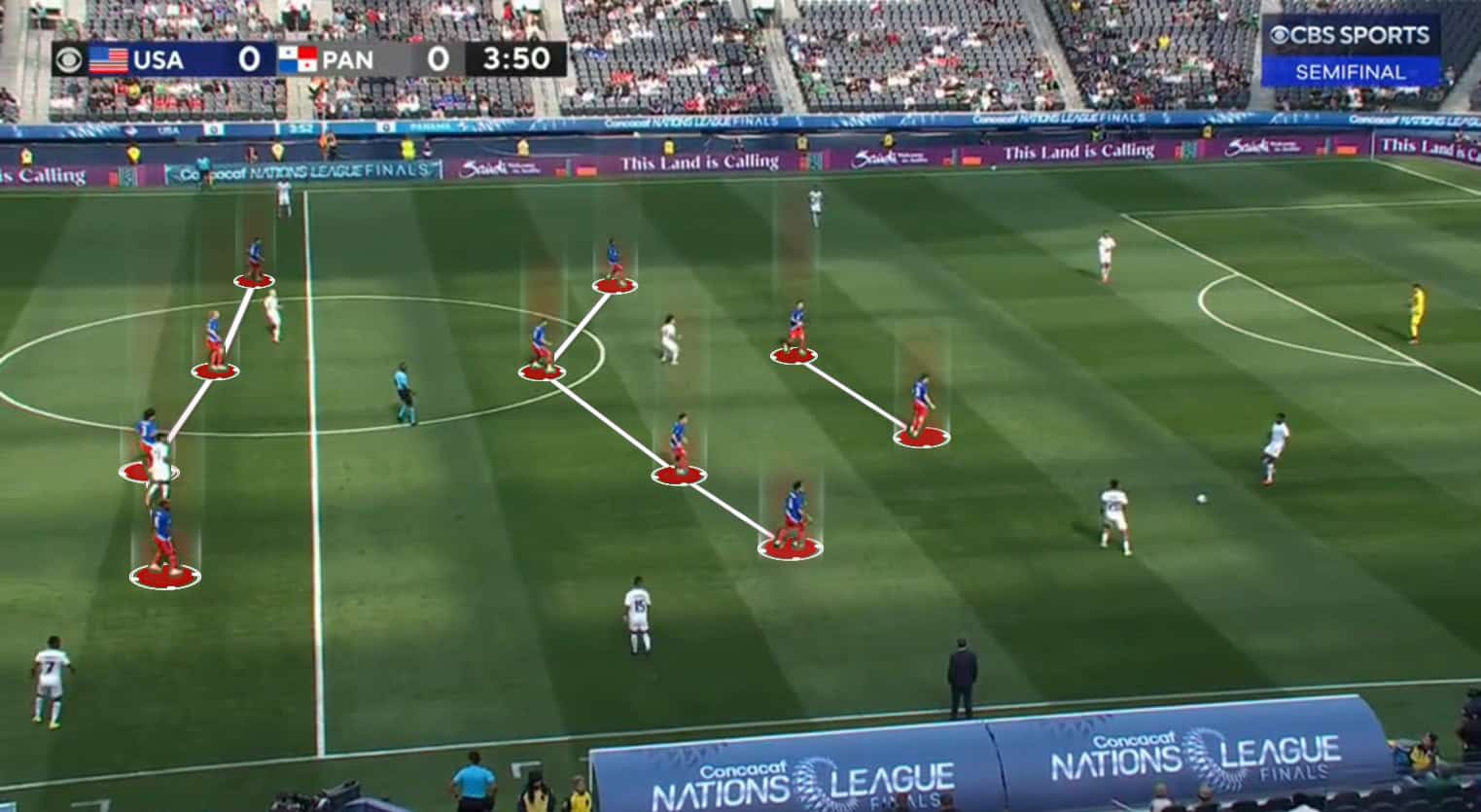
As you will see below, their defensive numbers have gotten worse under Pochettino, with the USMNT allowing a higher number of goals, expected goals, and shots.
The defending deep and pressing have not been as effective as they were under Berhalter, but the United States has also not fielded its best players in all 10 matches.
Mauricio Pochettino Vs Gregg Berhalter Stats
The USMNT have played 10 competitive matches under Mauricio Pochettino, but only a few matches have featured a full-strength starting XI.
That said, they have only played CONCACAF teams in non-friendlies (outside of one match against Saudi Arabia).
Hence, the competition is nothing like what they will see in the World Cup outside of Mexico and Canada.
Take these statistics below with a grain of salt, as there are varying levels of competition.
However, here is a comparison of the data comparing Mauricio Pochettino’s first 10 matches in charge versus Gregg Berhalter’s last 10 matches in charge.
| Category | Pochettino | Berhalter |
| Goals per 90 min | 1.76 | 1.73 |
| Goals Allowed per 90 min | 1.02 | 0.74 |
| xG per 90 min | 1.61 | 1.77 |
| xGA per 90 min | 0.98 | 0.62 |
| Shots per 90 min | 10.63 | 12.38 |
| Shots Allowed per 90 min | 8.13 | 6.11 |
| Average Possession | 59.75% | 55.94% |
| PPDA | 9.69 | 10.12 |
| High Recoveries per 90 min | 10.81 | 13.44 |
As you can see, things haven’t been significantly better under Pochettino as the United States are allowing a higher number of goals, expected goals, and shots.
They have more possession, but as we are learning in modern football, more possession doesn’t necessarily lead to more chances.
Pochettino does have the excuse of only having his full-strength roster available for four of the 10 matches, but the competition has been pretty weak.
Conclusion
The USMNT under Pochettino has not yielded the results they were hoping for.
Losing in the semi-finals of the CONCACAF Nations League to Canada and losing in the final of the Gold Cup to Mexico is a failure.
The tactics and changes he made during the Gold Cup do provide the USMNT with some hope in terms of creating chances from wide areas.
With a full-strength starting XI, things may have turned out differently.
However, the data is somewhat alarming, showing that things are getting progressively worse despite being supposed to improve under Mauricio Pochettino.
Since they are the host nation and do not have to qualify for the World Cup, the United States does not play a non-friendly match until their opening match of the World Cup.
Their next four friendlies are against South Korea, Japan, Ecuador, and Australia, all of which will be in the 2026 World Cup.
Mauricio Pochettino and the USMNT will have to take these matches very seriously to figure out the right tactical system before the World Cup begins next June.
