
This past offseason included plenty of change at DC United. Former Manchester United star Wayne Rooney is departing as the club’s manager, and the capital club is also hiring a new general manager. After a long and drawn-out search, DC United hired Troy Lesesne as their new head coach, with the 40-year-old getting his first permanent role as an MLS head coach.
Lesesne does bring former managerial experience, with the South Carolina native previously managing New Mexico United of the USL Championship for three years. He then moved to MLS, becoming an assistant manager on the New York Red Bulls staff, before being promoted to interim head coach for the majority of last season after the club mutually parted ways with Gerhard Struber.
While Lesesne did well with the Red Bulls, guiding them into the MLS Cup Playoffs, the club opted not to give him the full-time role. Since his arrival in DC, there has been immediate buy-in from the players to Lesesne’s tactics and style of play, with this tactical analysis taking a closer look at how his DC United side have looked to play early in this MLS season.
Looking to press high and cause turnovers in advanced positions
One of the early hallmarks of DC United’s style of play under Troy Lesesne is its high-pressing nature, with DC statistically the best pressing side in MLS currently. A lot of this comes from Lesesne’s time with the Red Bulls, with high-octane pressing and looking to put the opposition under immediate pressure one of the key principles in the Red Bull philosophy.

The data viz graphic above shows the pressing actions of DC United this season in the opponent’s half. As we can see, Lesesne’s side have managed 72 high regains already this season, with 31 dangerous recoveries, meaning DC were able to get a shot off within 20 seconds after regaining possession.
Looking deeper at the statistics from this MLS season, DC United leads all MLS sides in challenge intensity (7.7) and PPDA (5.76). When talking more about the more basic principles of Lesesne’s pressing style and philosophy, DC United tend to press in a 4-1-3-2 shape, with it tending to stay very narrow, as DC look to either force into the central areas where they are able to overload the midfield and put immediate pressure on opposition players, or force a pass wide from the centre-backs to the full-backs, where then the outside midfielder and full-back on that side both tend to engage the full-back as he receives possession.
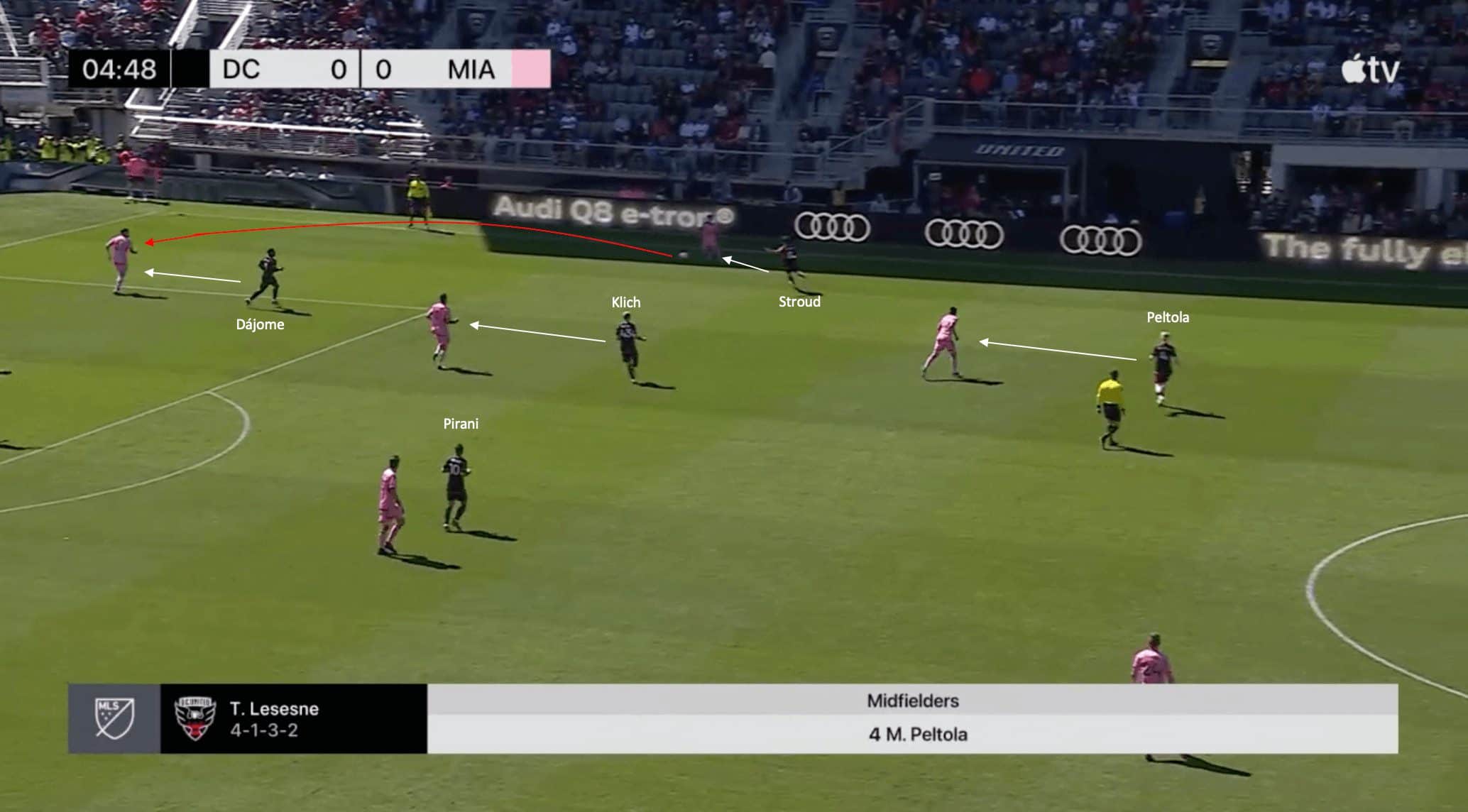
The image above shows an example of this pressing shape and philosophy from DC United under Troy Lesesne. This phase of play comes from their most recent match against Inter Miami, with the South Florida side looking to build out from the back. The ball is played from the centre-back out wide to the full-back, and this cue activates the high pressure from DC.
As the ball reaches the full-back, Jared Stroud has already angled his run to force the full-back backwards, preventing any possibility of a forward pass or a pass down the line. There is also pressure and good movement to prevent passes forward or square centrally from Matti Peltola, Mateusz Klich and Gabriel Pirani. As the full-back plays the ball back to the central defender, he is instantly put under pressure by Cristian Dájome, with the Colombian forward forcing the defender long on two touches.
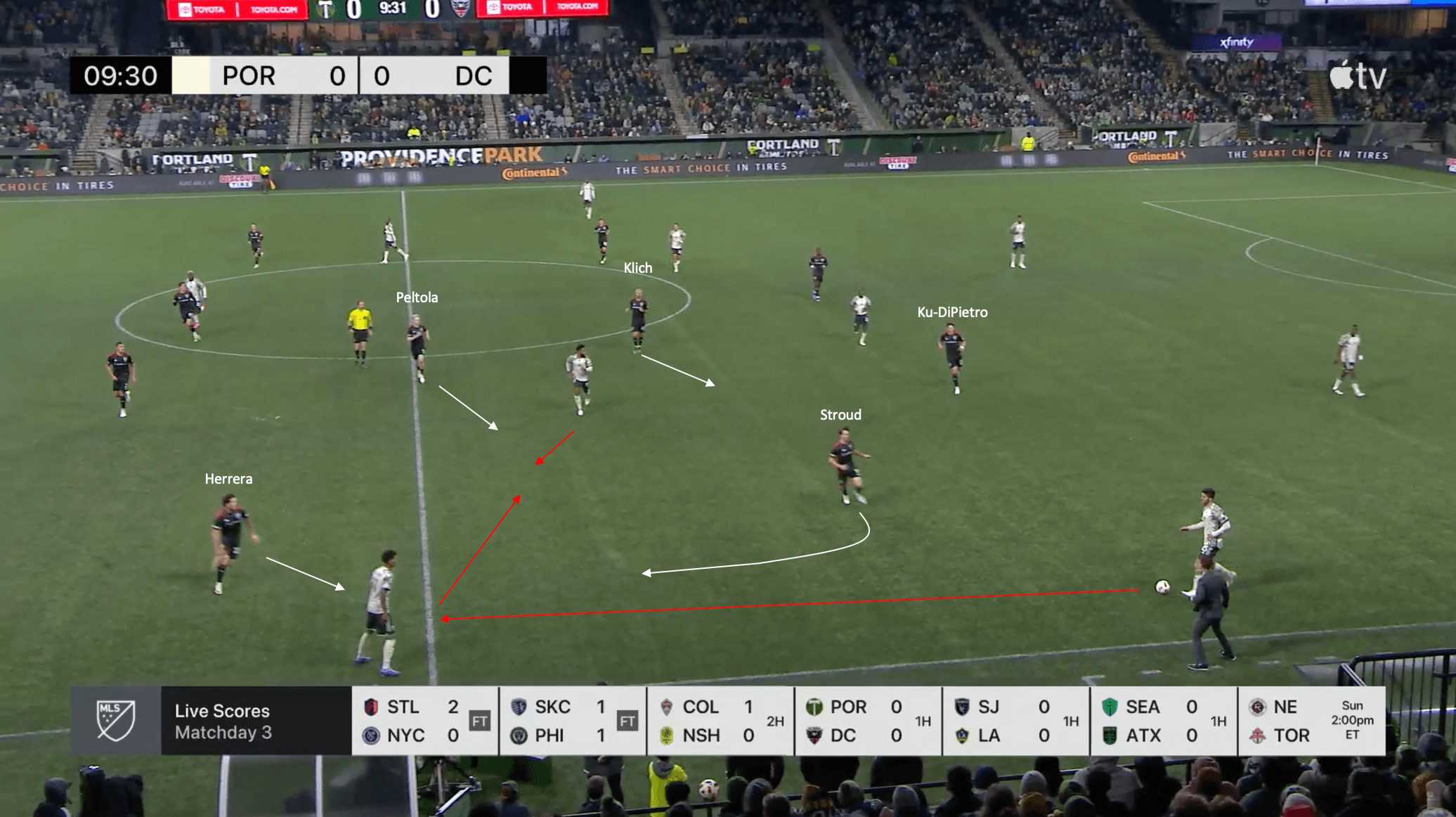
The image above shows another pressing phase from DC United, this time how the pressing shape looks once the ball is switched over to this nearside from the Portland Timbers. As we mentioned earlier in this section, DC have tended to press with a narrow 4-1-3-2 shape, which we can see clearly in the image above. The ball finds its way to the Portland left back, with Stroud and Ted Ku-DiPietro forcing the ball down the line, with their movements and angling of their runs preventing the ball from being switched back to the far side.
As the ball is played forward to the winger on this near touchline, DC look to press with Stroud and full-back Aaron Herrera, with the pressure from these two forcing the pass to be played centrally on one touch, with Peltola able to nip in and win possession as the ball is played towards the Portland midfielder in the central area. Another thing to notice is the numerical advantage Lesesne’s side holds in the central area, with DC creating a 5v3 overload on this near side. This is another advantage the 4-1-3-2 shape offers DC United, with this narrow formation allowing the MLS side to create constant numerical superiority in the central areas during pressing moments.
This section has been able to give a brief look at how, under Troy Lesesne, DC United have become, statistically, the best off-the-ball and pressing side in MLS during the early days of this season. The advantages of Lesesne’s 4-1-3-2 shape out of possession allow DC to have numerical superiority in the central areas when opposition sides are looking to build out from the back. In contrast, the advanced movements of the full-backs and good shifting of the defence allow DC to keep the ball locked to one side, leading to the great success they have experienced so far this season.
Plenty of chance creation in transition, but lack of end product at times
Going almost hand-in-hand with the success DC United have had with their pressing is that they are one of the leading chance creators in MLS this season. Statistically, Troy Lesesne’s side has accumulated 8.65 xG this season, the third-highest total in MLS, while also taking the most shots in the league, with 65 through their first four matches of the season.
However, DC have only managed to score six goals this season on all of the chances they have been able to manufacture, with their 32.3% shots on target percentage also in the lower half of MLS. They also have one of the highest number of shots to occur from outside the penalty area this season, with 27 out of their 65 shots occurring from beyond 18 yards. This is not to take away from their ability in transition, however, with them still being one of the more dangerous sides in MLS in transition this season.
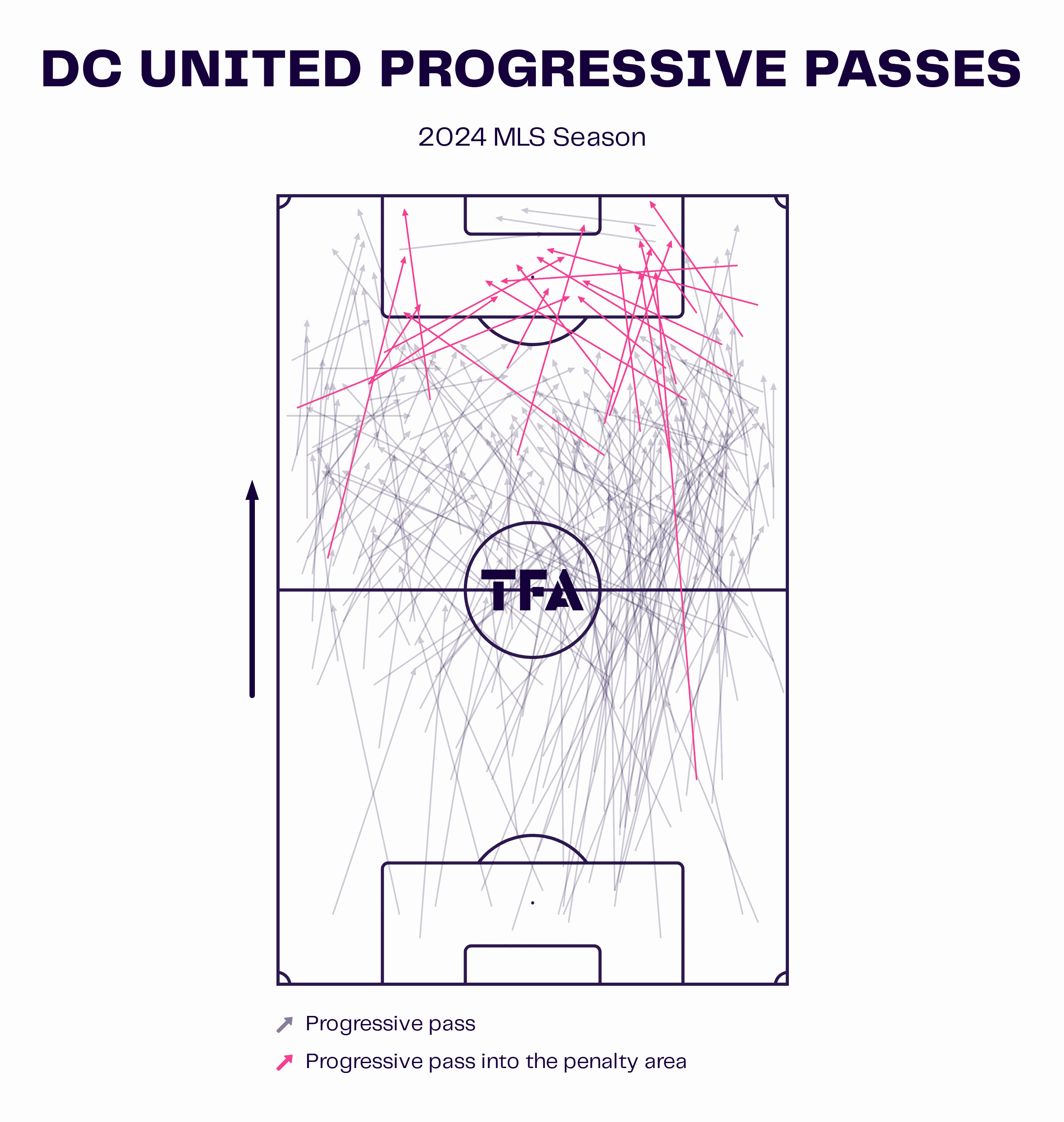
The data viz graphic above shows the ball progression of DC United in their first four MLS matches of the season, with their progressive passes into the penalty area highlighted in pink. As we can gather from the image, most of DC’s progressive passes into the penalty area have occurred either from wide positions or in central areas outside the 18-yard box. A lot of these progressive passes and chances have also come in transitional moments, with them directly resulting from DC United winning the ball back from their press in an advanced area and quickly playing forward and direct towards goal.
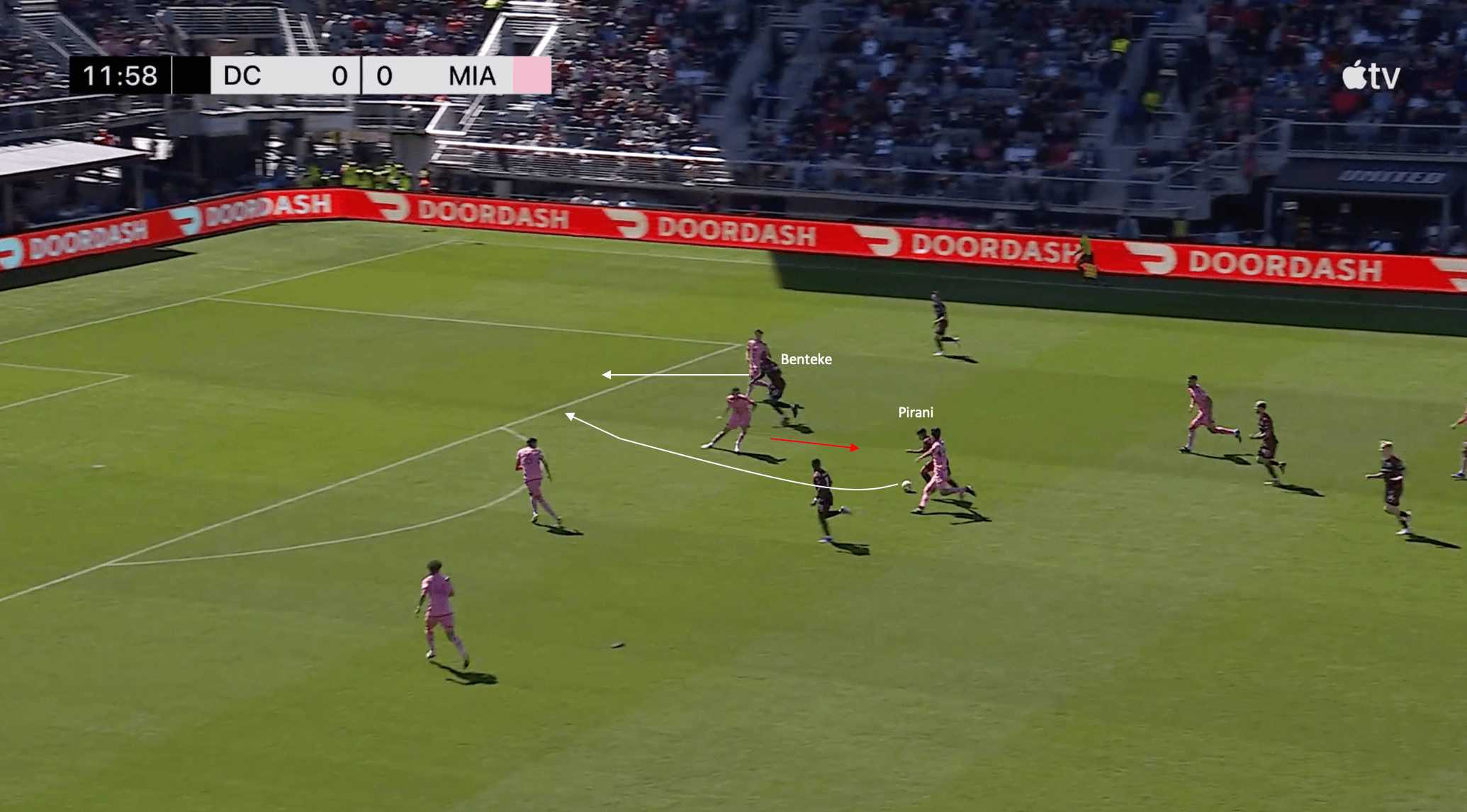
The image above shows a transitional phase of play for DC United that resulted in a very good goalscoring chance for the MLS side after they won possession back in an advanced area after an excellent pressing sequence. After winning possession off the pressing sequence, they quickly looked to play forward and direct, with Klich playing forward to Pirani.
This quick forward ball progression does not allow Inter Miami to get back into their defensive shape, with players out of position trying to track back and former Premier League striker Christian Benteke left unmarked as a result, as the Inter Miami defender is caught ball-watching, with Benteke sneaking past the blind side of the defender. Pirani spots the Belgian and plays a ball through the gaping hole in the centre of the Inter. Miami’s defence, but the Belgian’s shot is not hit, allowing the goalkeeper to get down and save with no problem. While this chance goes begging, it displays the danger DC United show in transitional phases of play.
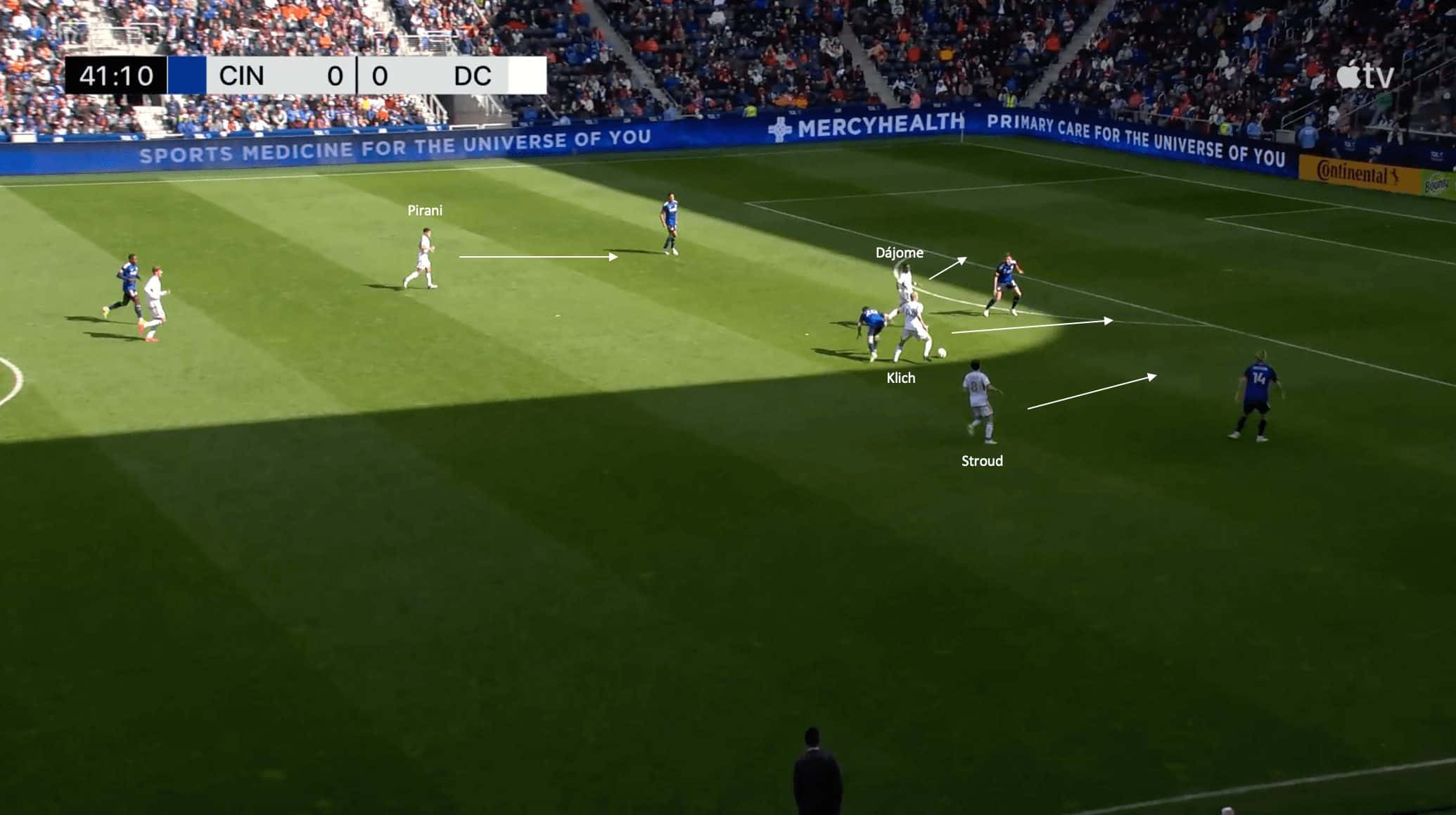
The image above again shows the high press of DC United, leading directly to a chance creation opportunity in transition. In the phase of play above, the ball is in possession of FC Cincinnati, but he gets caught in possession by Mateusz Klich, with the Poland international forcing him to face his own goal and go backwards before winning possession back just above the end of the penalty box.
As we can see, DC kept numbers well forward to try and press Cincinnati as they attempted to build out from the back, with it becoming a 4v3 against the Cincinnati defensive line. Unfortunately, instead of potentially playing Dájome through, Klich attempts a shot himself from the edge of the penalty area, with it going just over the top of the goal. As this section has been able to illustrate, while Troy Lesesne’s side have been able to create plenty of chances in transitional moments, they are yet to be as clinical in converting these chances.
Build-up shape & early in-possession principles
This final section will look at DC United and some of their in-possession tendencies and principles that have begun to develop under Troy Lesesne. While Lesesne comes from a Red Bull style that does not usually involve much need or desire to hold possession and build out from the back often, his DC United side have looked to build out from the back at times, with a few of their goals coming from possession sequences beginning with the goalkeeper.
In fact, statistically, DC United have been more of a possession team than a transition one in the early days under Troy Lesesne. Through the first four matches of this new MLS season, DC are averaging 53.4% possession.
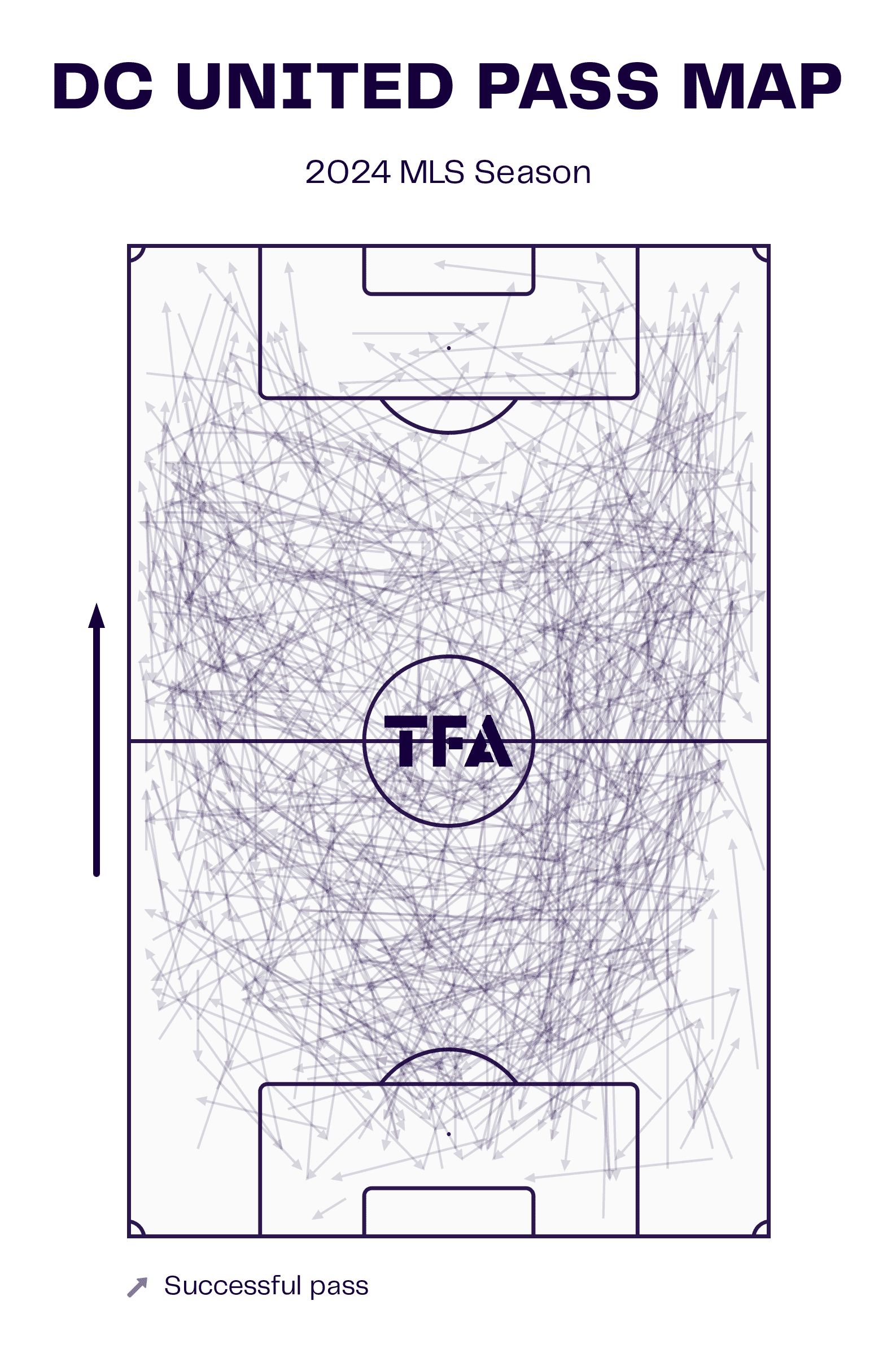
The data viz graphic above shows DC United’s pass map in their first four MLS matches this season. It is easy to see an emphasis on utilising width in the attack and a tendency to favour the right side more in the early season. Out of the six goals they have scored this season, they have been able to implement good combination play to progress the ball into the wide channels either from the central midfield areas or directly there from the centre-backs and full-backs.
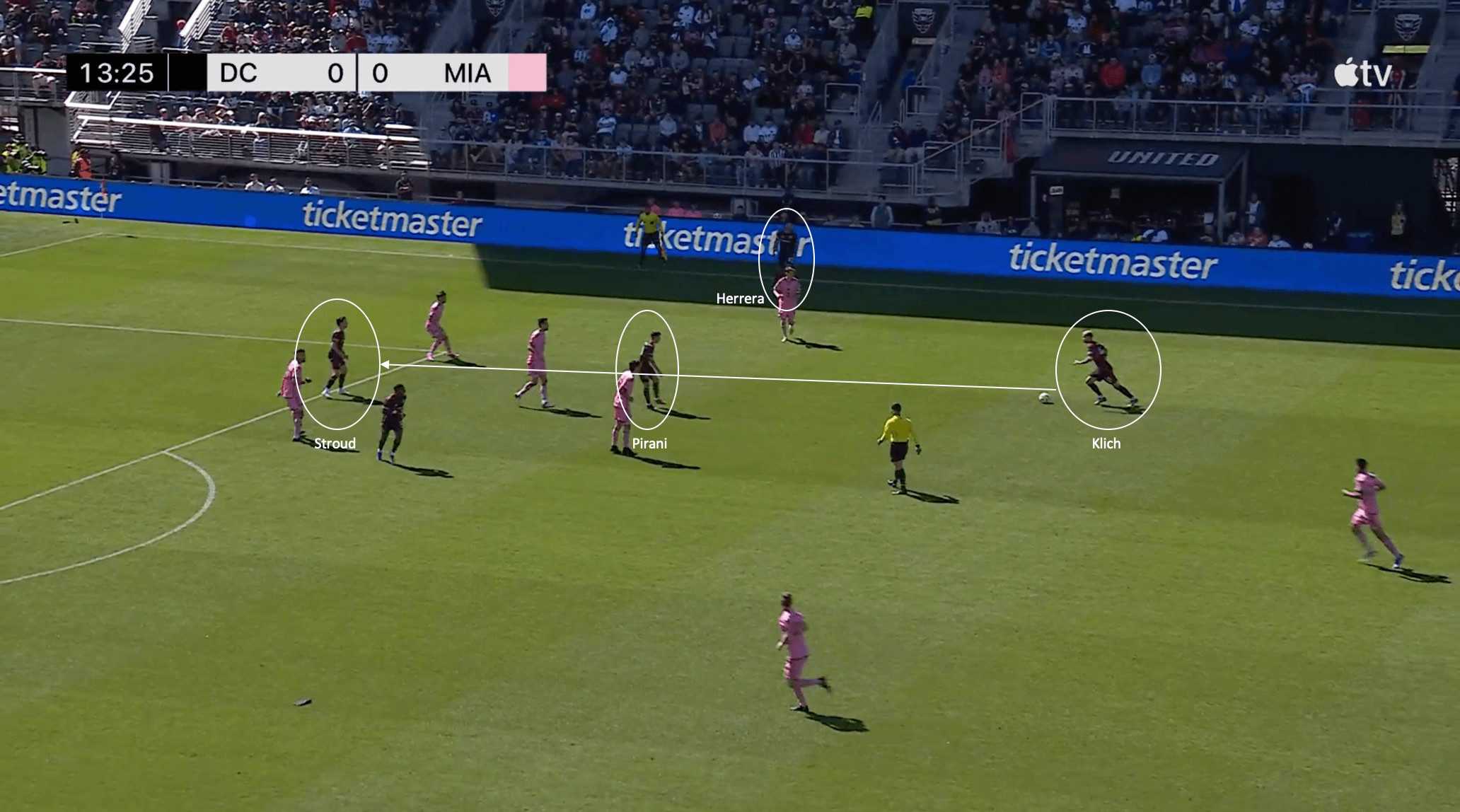
The image above shows an example of this possession and combination play leading to a goal this season for DC United. In the phase of play shown above from their recent match against Inter Miami, the ball is in possession of Klich, with full-back Aaron Herrera pushing high into an advanced position to hold the width on the far touchline. The advanced movement of Herrera also keeps the Miami wide player who has tracked back detached from the Miami defensive shape, with him preventing the passing lane to Herrera.
Meanwhile, both Pirani and Stroud have drifted into pockets of space, with Stroud becoming inverted as Herrera’s advanced movement keeps the width for DC. Klich proceeds to play a pass between the lines to Jared Stroud, who has managed to find a gap in the half-space between the Miami full-back and centre-back. After receiving possession, Stroud is able to turn and fire a shot home to score before the Miami defence is even able to react.

The image above shows another goal scoring attacking move from DC United this season, with it again being an emphasis on verticality and width in the attack. In this phase of play above against the Portland Timbers, the ball finds its way to Jackson Hopkins on a long diagonal switch of play, with the young American attacker driving just inside the penalty area. On the overlap is again Herrera, with this creating an overload against the opposition full-back on this far side.
Also, this example shows the urgency DC have to get numbers forward into the penalty area, with Dájome, Klich and Ku-DiPietro all driving into the penalty spot to be options for a cutback cross, with Kristian Fletcher also showing as an option at the back post. In fact, Lesesne’s side are able to become numbers even with Portland inside and around the penalty box, showing the urgency for DC to get numbers forward into the dangerous areas of the pitch for chance creation. Hopkins ends up finding Herrera on the overlap, with the 26-year-old Guatemalan playing a ball across the face of goal for Fletcher to tap in at the far post.
As this section has illustrated, DC United has actually been more dangerous when they have had possession and been able to progress the ball forward quickly from the defensive half. Lesesne’s side prioritises verticality when in possession and utilises the advancing full-backs to become extra options in the attack.
Conclusion
As this tactical analysis of Troy Lesesne’s tactics at DC United has shown, the MLS side has the potential to be very good under the former interim New York Red Bulls head coach. The early results have been promising, with it looking like the players have bought into the style of play the 40-year-old has brought to the nation’s capital. They have also had a positive start to the season from a record standpoint, with only one loss in their first four matches of the MLS season.
