
Patro Eisden, nicknamed ‘Klein Anderlecht’ or ‘Little Anderlecht’, have faced many hardships this century, with numerous changes in ownership and battles against bankruptcy; they were down in the fourth tier of Belgian football as recently as 2019. It’s difficult to understand the severity of the situation, but what is clear is their recent improvement in results. Since the takeover by the Common Group, who also own Vitesse in the Eredivisie and Leyton Orient in League One, Patro have been able to secure promotion to the second tier of Belgian football in their first full season under new owners. In their second season, they are currently in 5th place in the Challenger Pro League and look set to be a part of promotion play-offs in an attempt to reach the Pro League (1st tier) for the first time since 1961 (according to Transfermarkt)! With four games to go, Patro have a very realistic chance of reaching the playoffs and are even with an outside shot of receiving an automatic promotion spot.
41% of Patro’s 34 league goals this season have come from dead ball situations, whether that is from a throw-in, free kick, or a corner. Interestingly, a large portion of these goals arrive through the second phase or after a rebound or a loose ball, which is ultimately down to their failure to create clear separation during the first contact. Because of their current limitations, Patro have had situational success against man-marking systems but faced more challenges against zonal set-ups.
In this tactical analysis, we will look into the tactics behind Patro Eisden’s offensive set pieces, with an in-depth analysis of the ways in which they have created chances from set plays. This set-piece analysis will also look into the problems with some of their set-piece routines and offer solutions that can be used to increase output and potentially launch them back into the top tier of Belgian football for the first time in 63 years.
Efforts to Create Separation
In order to increase the probability of making the first contact, Patro have changed the starting positions of the attacking unit, to better their chances of arriving in the target area unmarked. They have started to target the spaces at the near and far side of the six-yard box whilst using decoys to drag the defence to the opposite side of the six-yard box.
As we can see in the example below, with the space available at the far side of the six-yard box, Patro place the attacking unit around the near post. From there, the attacker can use the cluster to move around and act as an obstacle, which can give him the separation to arrive at the back post unmarked.

This routine has been used several times, with the player at the back post having the space in front to attack the ball with an advantage over his marker. The problem lies in the consistency of the delivery to the back post and the potential of the goalkeeper to claim the ball.

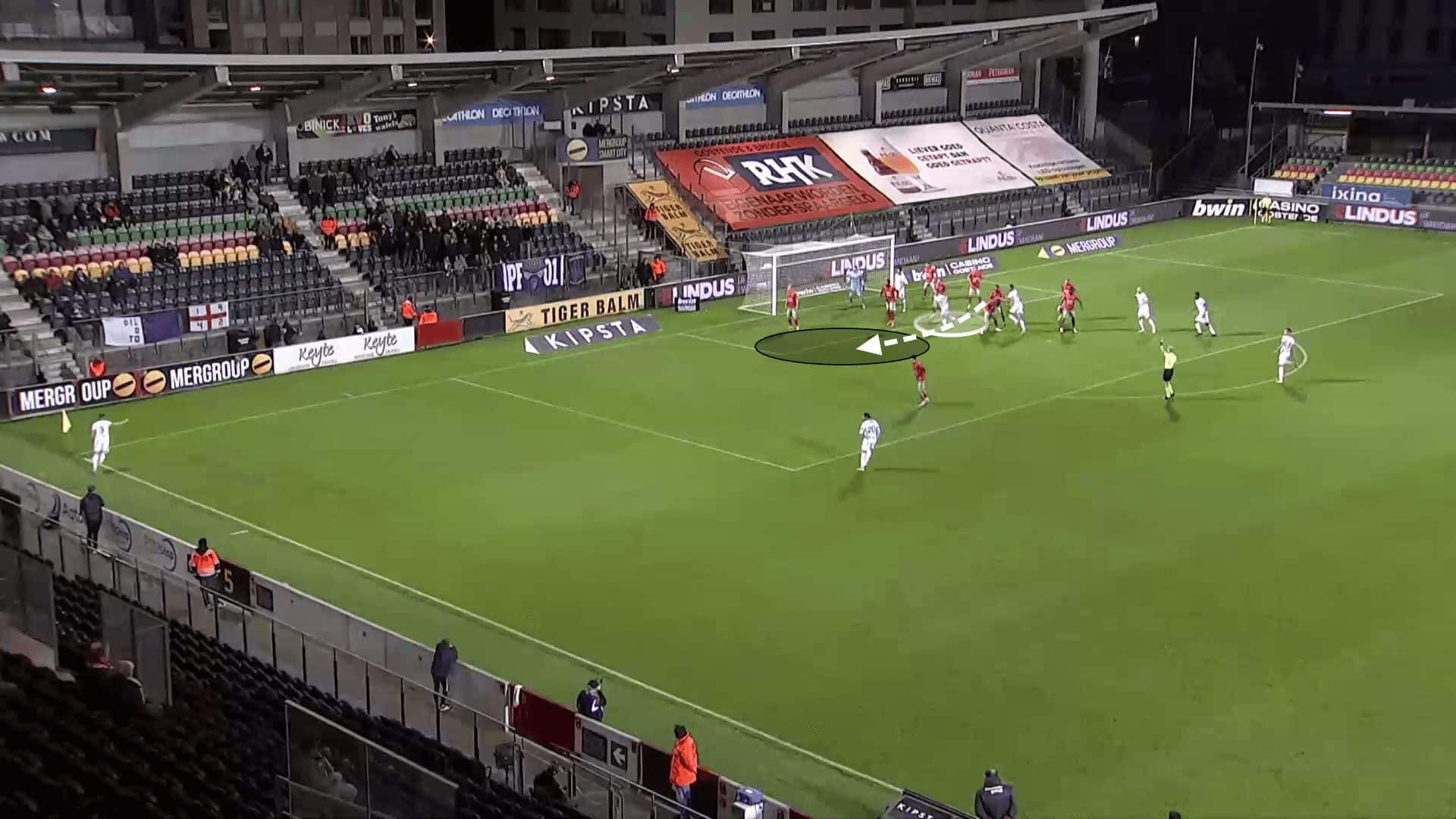
When the space they identify to attack is at the near post, they have used starting positions at the far side of the six-yard box. As seen by the likes of Arsenal, it is possible to create separation through the simple starting position in the opposition’s blindside. At the back post, players can make their first step without their marker’s knowledge and gain the yard of space needed to attack the ball unopposed.
The movements into the near side of the six-yard box allow players to arrive unmarked, and with the timing of the runs, the attackers are able to arrive in those spaces as the ball does and meet it without any disruption.

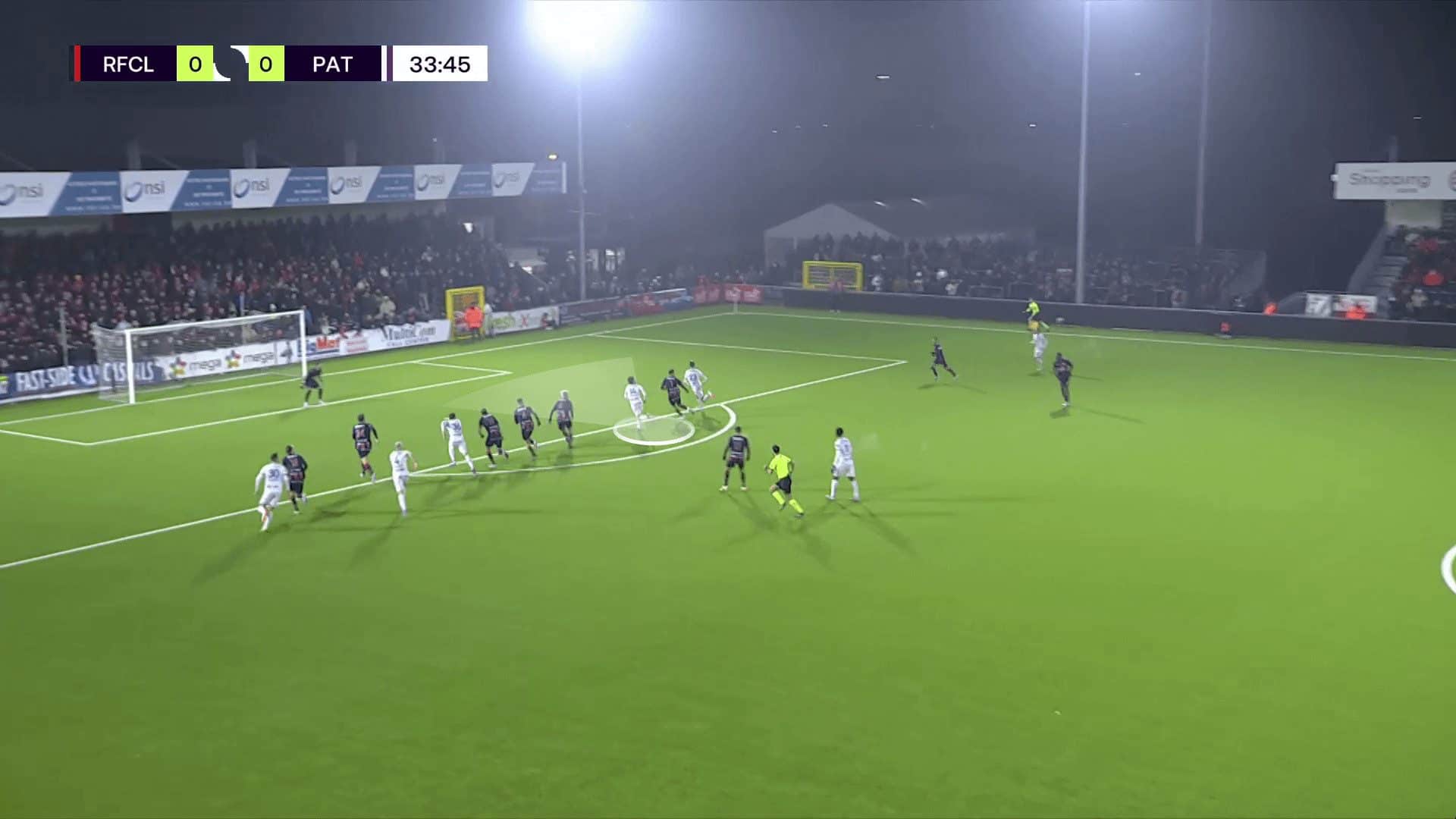
This space on the near edge of the six-yard box is often left vulnerable, which Patro can exploit by moving the attacking unit to the far side of the six-yard box and arriving from the blindside. Below is one of the rarer occasions where they have successfully attacked a zonal defensive system.
Situational Success
As mentioned earlier, Patro have often struggled when facing zonal defensive set-ups. When an attacker cannot gain separation, they engage in a 50/50 battle with their marker. Yes, they may occasionally win that battle, but the headed effort is disrupted and not executed to its full potential. When facing a zonal system that still uses man markers, the attacker’s run is disrupted by their marker, meaning they aren’t able to move towards the ball freely, before then having to also battle the zonal defender. This pretty much leaves the attacker in a 1v2 situation, which is extremely unlikely to result in a shot, let alone a goal.
In order to combat this, teams often use different strategies to allow the attacker to lose their marker, which leaves them with a 1v1 aerial duel against the zonal defender, where the attacker has the advantage because of his mobility, giving him momentum ahead of the aerial duel. There are not too many efforts to create separation for the attacking unit through a vertical run. The horizontal movements they currently make do help with separation and advantages in aerial duels, but these movements are made across the six-yard box, which is much more congested and makes it harder for attackers to have a clear run-up.
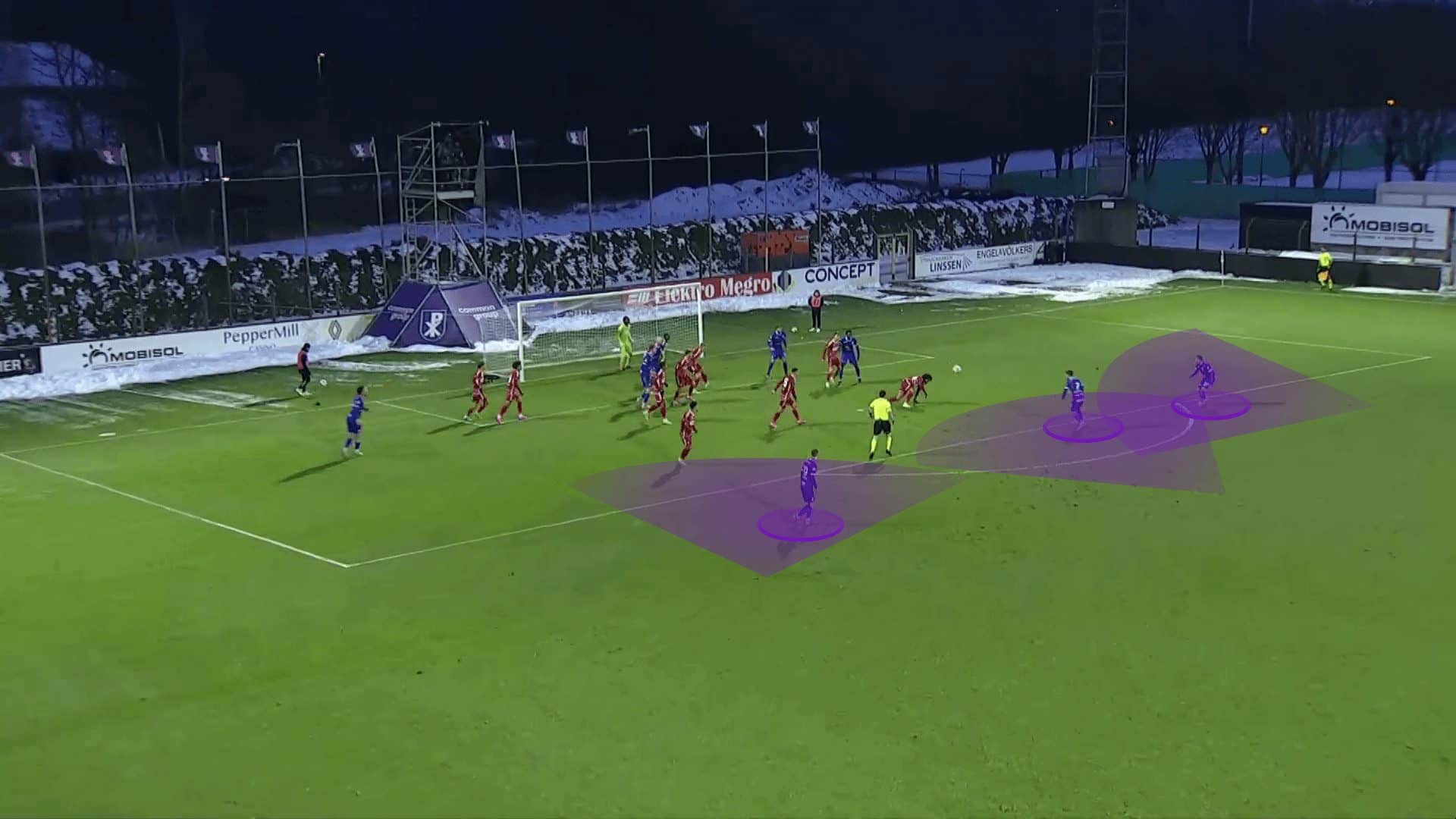
The success Patro have had has primarily come against man-marking set-ups, where Patro have been able to win the first contact because of the lack of zonal defenders before then reacting first to rebounds or loose balls to score the goal. As we can see in the example below, the defensive side uses two zonal markers around the six-yard box, with the rest going man-to-man. Other than the near side of the six-yard box, the remainder of the six-yard box is unmarked, so should any attacker arrive there, they will have at least a 50/50 chance of winning that aerial duel.
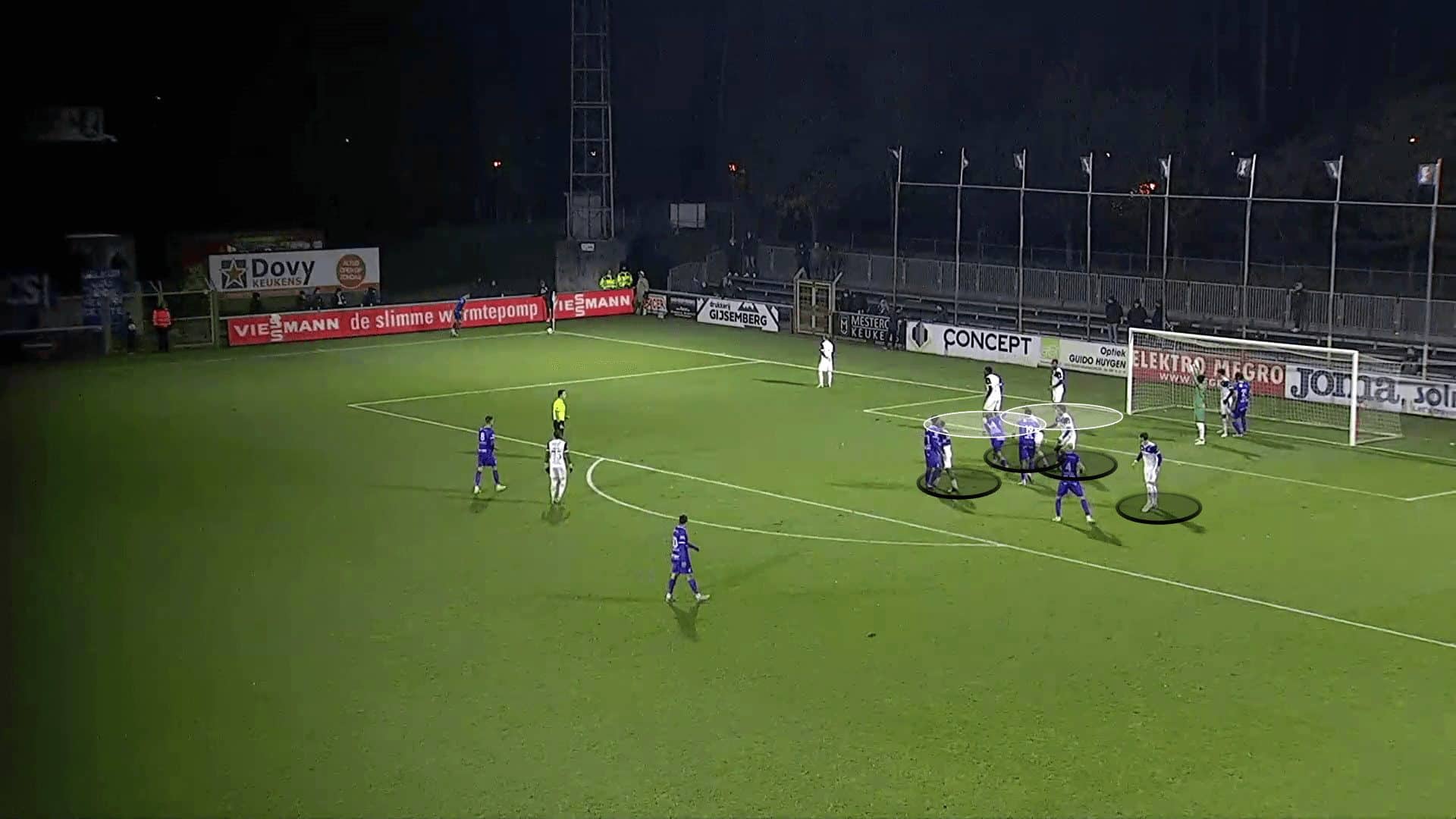
The attackers around the penalty spot all make different runs, aimed toward different areas of the goal, dragging the defenders wide apart. This creates space for each attacker, ensuring they are left in a 1v1 rather than giving other defenders a chance to cover and help in the aerial duel. As we see, the attacker is on the six-yard line, with only his man marker in the close vicinity. This gives him an easier time in the aerial duel, which he is able to win but because of the defensive presence, he cannot generate much power on the effort. The ball drops down and is put in the back of the net by one of the other attackers moving into the six-yard box.
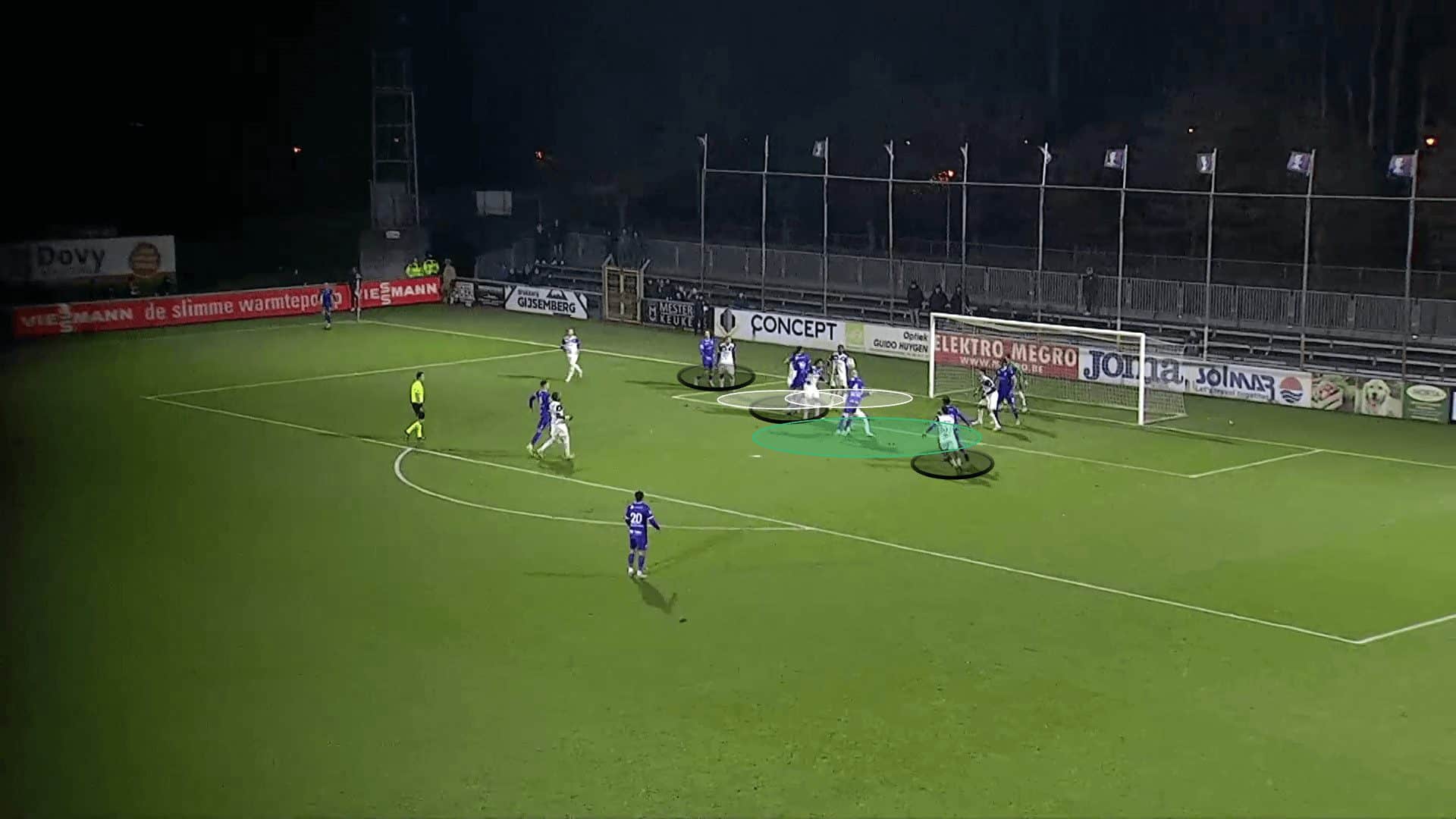
Another key aspect as to why Patro has been able to score many goals during the second phase is due to their positioning of the rest defence. They leave one defender back deep, with three players located on the edge of the penalty area who are able to immediately pounce on any loose balls that arrive following a headed clearance. The aggressive and favourable positioning of these players means that it is difficult for opponents to have time to clear the ball away, as they are able to step up and close down any player who attempts to get rid. This proactivity has allowed Patro to create multiple chances and get lots of shots off from the edge of the area following a headed clearance.
Free Kick Originality
From free kicks, Patro Eisden are quite unique in their perseverance to attack the space behind the nearest zonal defenders. Although this example is more central than most others, it just highlights how intent Patro are on attacking the space nearest the goal through runs from deep.
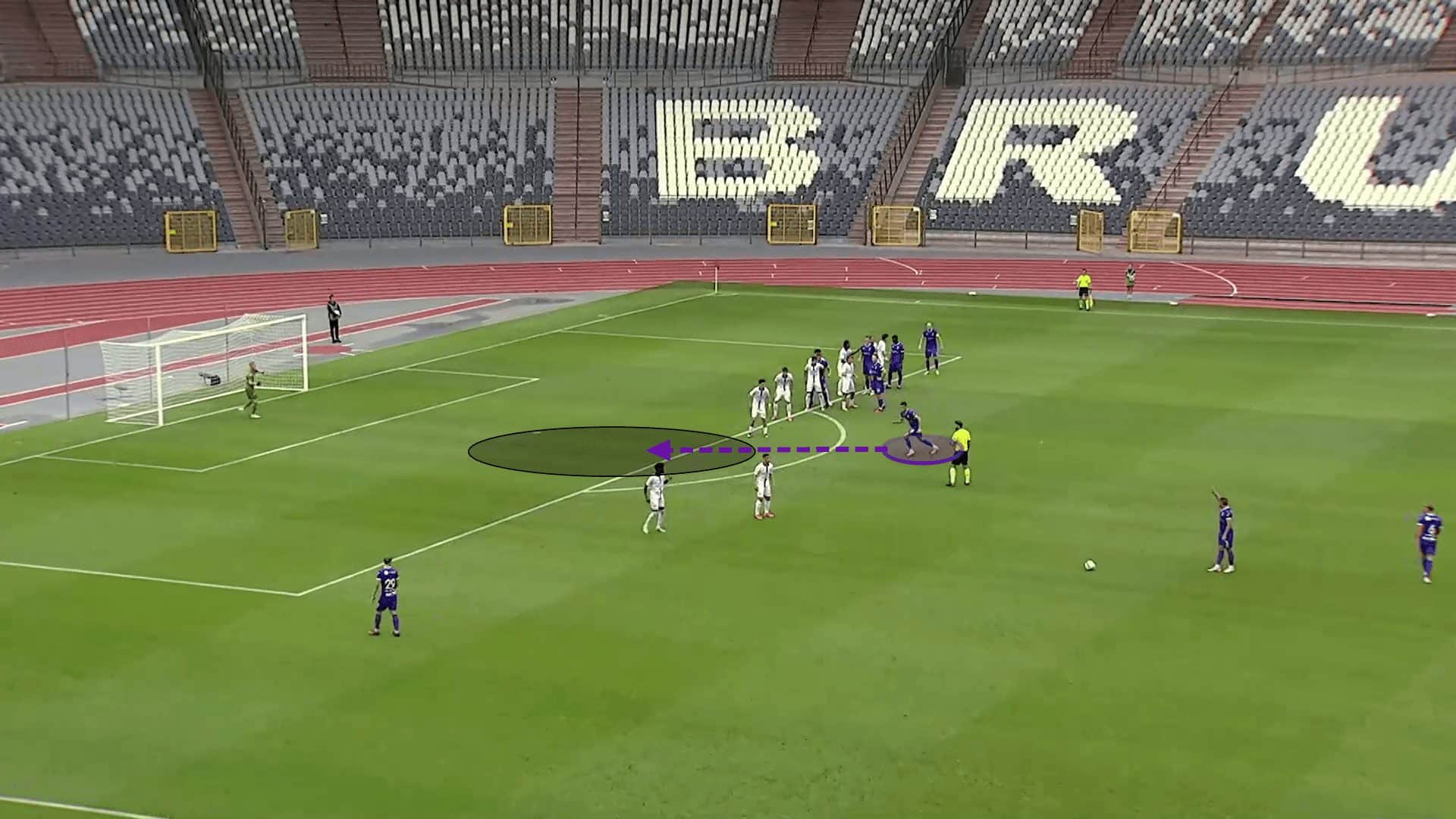
In order to widen the gap between the defensive units, Patro also uses decoy runs, where the attacker runs across the front of the line to drag the nearest defender away from the rest of the defensive line. The run of the target attacker, who drives between the first and second defenders in the line, is made from deep, which gives him the advantage in reaching the space behind first due to the momentum he is able to generate in that deeper area.

This creates a big gap between the first and second defenders, which is the area Patro attempts to exploit, and gives the free-kick taker more space to place the ball in.
Summary
This set-piece analysis has detailed the ways in which Patro Eisden have attempted to exploit the gaps in zonal defences. Their improvement in adapting and creating different angles to better their chances of arriving in space has allowed them to be a force from set plays. However, it is clear that they are much more effective against man-marking sides at the moment due to the number of different runs, which drags the defenders apart from each other.
Introducing different strategies to create separation will help them increase their efficiency against zonal defending systems. At the moment, they seek gaps in structures but are not able to create space for themselves. Set plays allow teams to defend with 11 men inside the box, making it possible for opponents to plug any gaps around the six-yard box. Set plays have been an essential reason why Patro have done so well up to this point, and an evolution of their set-piece tactics to create gaps when none are available could strengthen their chances of making the leap to the first tier in what is a realistic chance at this moment in time.
