
Borussia Dortmund ended up coming through their UEFA Champions League Round of 16 clash with Lille to earn a place in the quarter-final, where they’ll face off with Barcelona.
After the first leg ended 1-1 at the Bundesliga side’s Signal Iduna Park, BVB had to come from behind at the Stade Pierre-Mauroy home of Ligue 1 Lille in order to make it to the quarter-finals after they conceded an early goal courtesy of Canada international Jonathan David.
However, two second-half goals ensured Niko Kovač’s team would not play their final game of the 2024/25 Champions League campaign in Hauts-de-France.
Dortmund’s counterpressing was a key factor in the German side’s victory on Wednesday evening.
Therefore, our post-match tactical analysis is going to provide a deep dive into that particular aspect of Kovač’s tactics versus Lille.
Lille Vs Dortmund Lineups & Formations
Firstly, let’s run through the way in which both sides set themselves up for Wednesday’s game.
Both teams lined up in a base 4-2-3-1 shape for this contest, though Lille’s shape generally looked like more of a 4-4-2 compared to Dortmund’s during out-of-possession phases.
Highly-rated 23-year-old goalkeeper Lucas Chevalier played between the sticks for Lille behind a backline consisting of right-back Thomas Meunier, right centre-back Bafodé Diakité, left centre-back Alexsandro and left-back Ismaily.
Benjamin André and Ayyoub Bouaddi started at the base of midfield for Lille behind right-winger Rémy Cabella, left-winger Hákon Arnar Haraldsson and ‘10’ Ngal’ayel Mukau, who played just off Jonathan David in the centre-forward position.
Lille boss Bruno Génésio made five changes to his starting XI during the game.
The first two of Génésio’s substitutions came just after Dortmund took the lead in the 65th minute when Chuba Akpom and Gabriel Gudmundsson replaced Cabella and Ismaily.
Shortly after that, Ayyoub Bouaddi made way for Matias Fernandez-Pardo before Lille made their final two substitutions in the 83rd minute as Osame Sahraoui and André Gomes came on for Hákon Arnar Haraldsson and Ngal’ayel Mukau, though those changes ultimately failed to turn the result back in Les Dogues’ favour.
As for the visitors, Gregor Kobel was in goal for Dortmund with right-back Waldemar Anton, right centre-back Emre Can, left centre-back Nico Schlotterbeck and left-back Julian Ryerson playing in front of the Swiss stopper.
Marcel Sabitzer and Pascal Groß started at the base of Dortmund’s midfield, with Karim Adeyemi at right wing, Maximilian Beier at left wing, Julian Brandt at ‘10’ and Serhou Guirassy in the centre-forward role.
Like his French counterpart, Kovač also made five substitutions during the game.
Firstly, the 53-year-old introduced Ramy Bensebaini for Waldemar Anton in the 72nd minute before following that up with the introduction of Jamie Gittens in place of Karim Adeyemi seven minutes later.
Dortmund’s final three substitutions occurred in the 86th minute, as Giovanni Reyna, Carney Chukwuemeka and Salih Özcan came on for Maximilian Beier, Julian Brandt and Pascal Groß, respectively, to see out the win for the German giants.
Borussia Dortmund Rest Defence Vs Lille
In order to have consistent, effective counterpressing, a team needs to be well-organised in their possession play with players strategically positioned in such a way that facilitates quick transitions into defensive actions should a turnover occur—this, in other words, is a team’s ‘rest defence’.

We can see Dortmund’s rest-defence shape, which effectively resembled something of a 3-2-5 in figure 1.
In possession, Dortmund’s left-back, Julian Ryerson, pushed up to provide the width for BVB on his wing.
At the same time, right-back Waldemar Anton tucked in as more of an auxiliary centre-back when his team settled into possession.
Meanwhile, Nico Schlotterbeck shifted over even further to the left, while Emre Can moved into a central centre-back position to form Dortmund’s back-three in possession.
The aforementioned double-pivot remained the central two while the front four remained where you might expect to find them based on the lineout described above as well—this can also be seen in figure 1.
In addition to numerous ways in which this positional structure helped Dortmund in terms of chance creation, it also yielded significant benefits in transition.
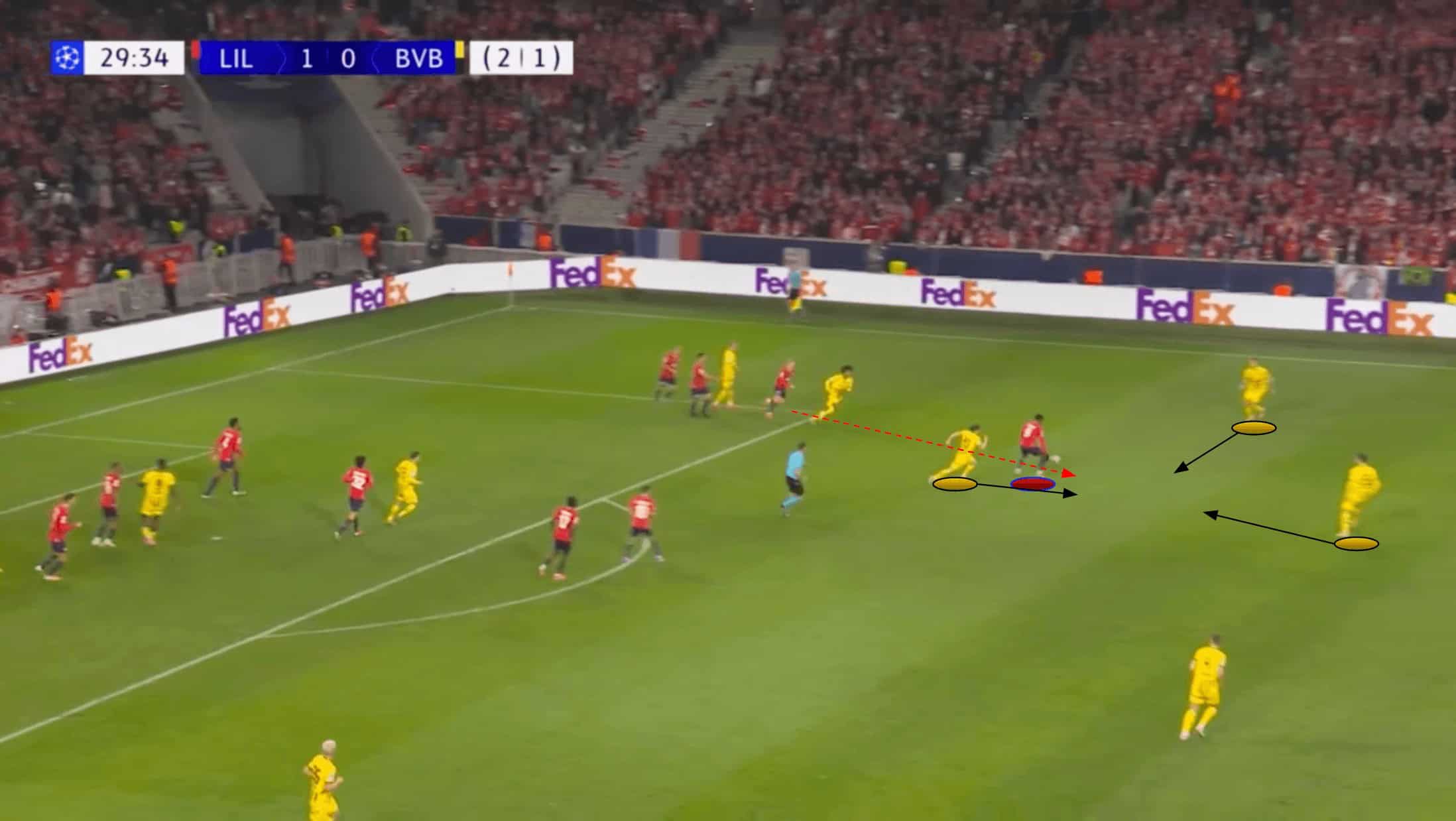
In this example, we see David—a major counterattack threat due to his dribbling ability and pace—receiving the ball on the edge of his box after the defenders behind him had managed to shut down a Dortmund attack on the edge of the area and cleared the ball towards him.
Immediately, the Canadian attacker is swarmed by yellow jerseys, with right central midfielder Sabitzer, right-back Anton, and centre-back Can all closing in around him due to their close proximity to David, where he receives the ball, and each other—empowering them to press aggressively.
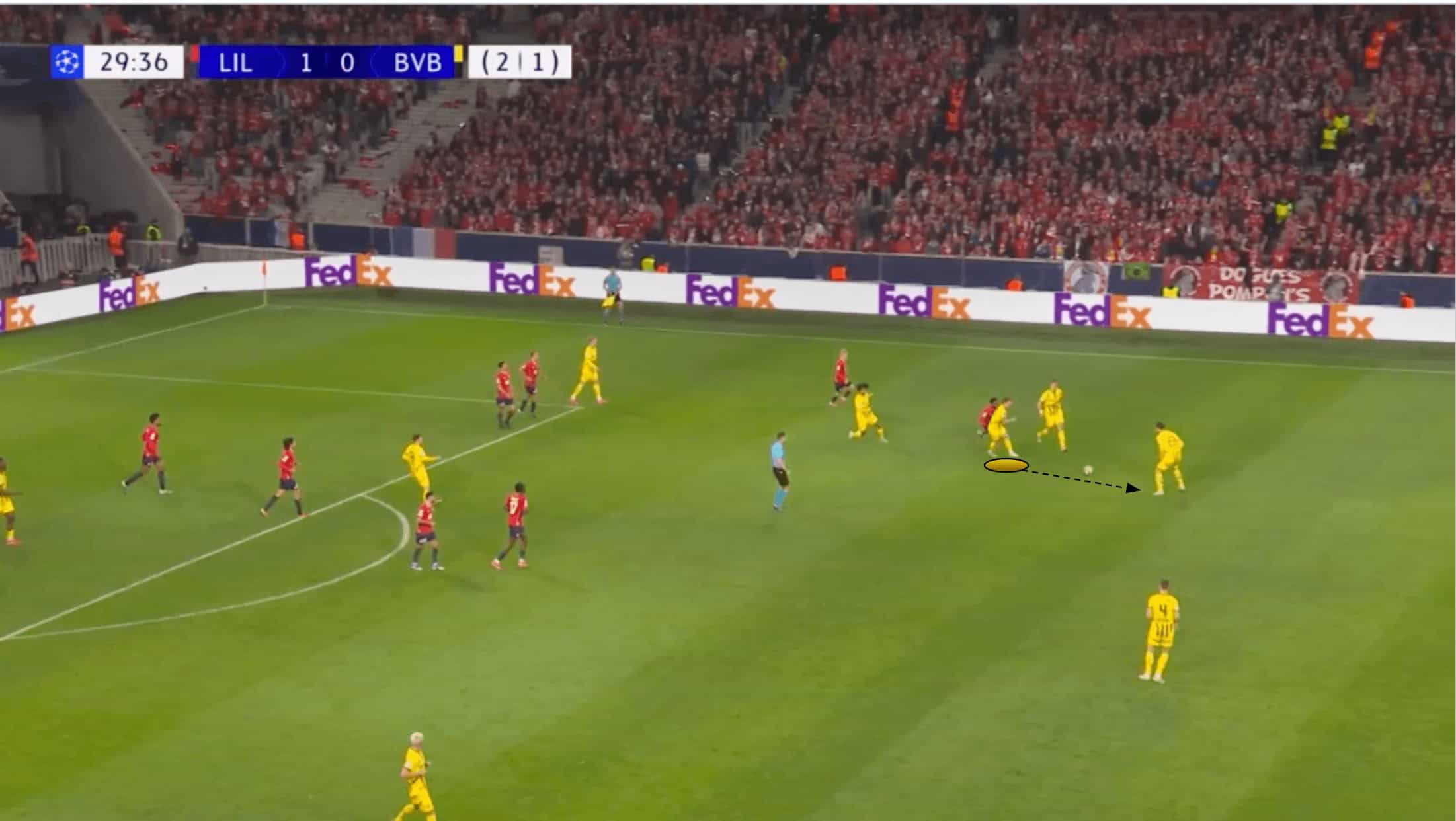
As this passage of play moves on, we see how the Dortmund players closed in around David, denying him space to break away and quickly recovering the ball for BVB.
Dortmund’s Aggressive Counterpressing Style Of Play Vs Lille
Like we see with the positioning and movement of Can and Anton in figures 2-3, Dortmund were not afraid to commit bodies to their aggressive counterpressing tactics on Wednesday—that commitment and belief in this approach was pivotal to its success.
This pinned Lille deep in their own half and denied them opportunities to counterattack on numerous occasions.
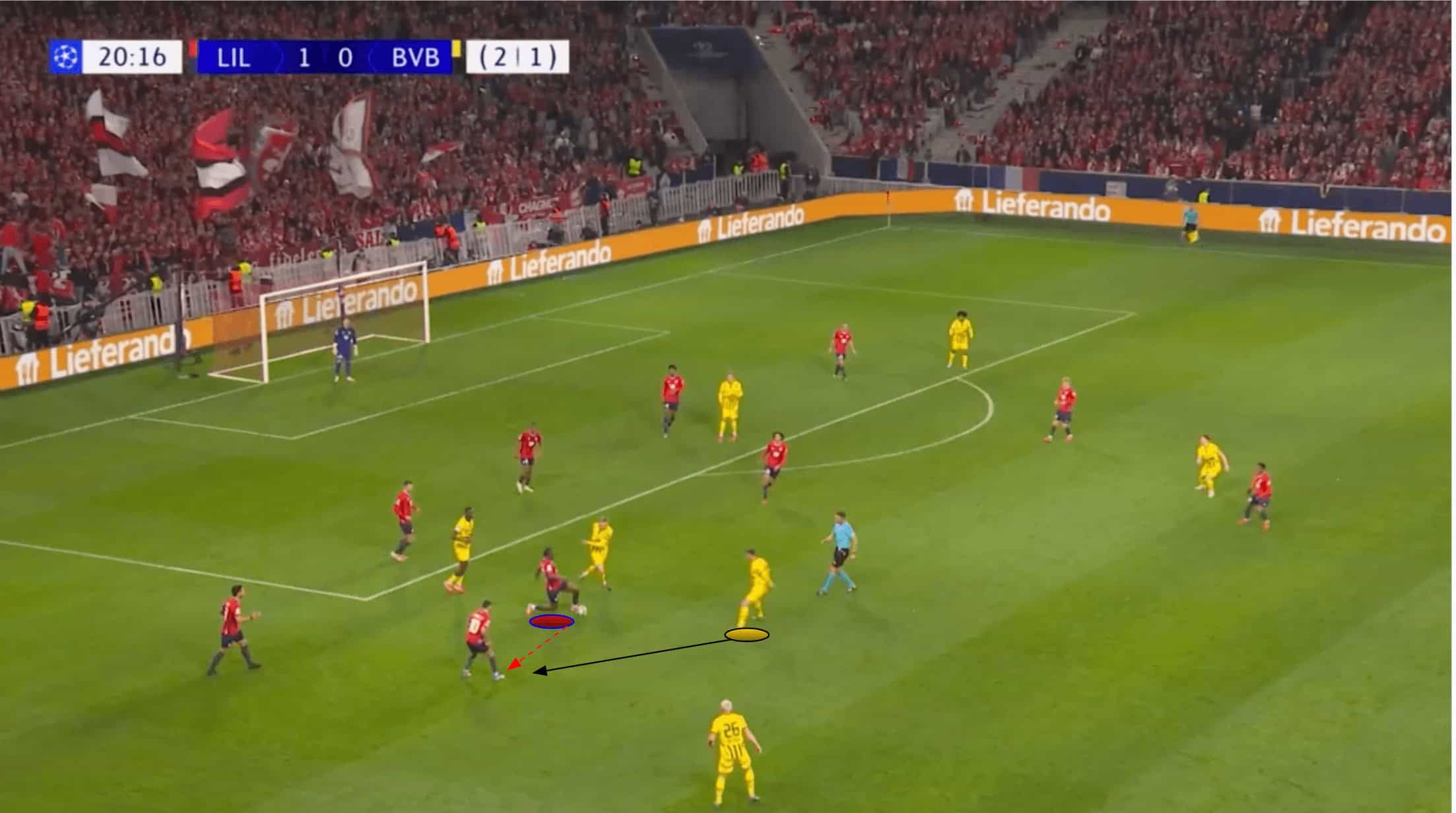
Here, a Dortmund attack has come to an end on the edge of Lille’s box, with the French side regaining possession in a critical position.
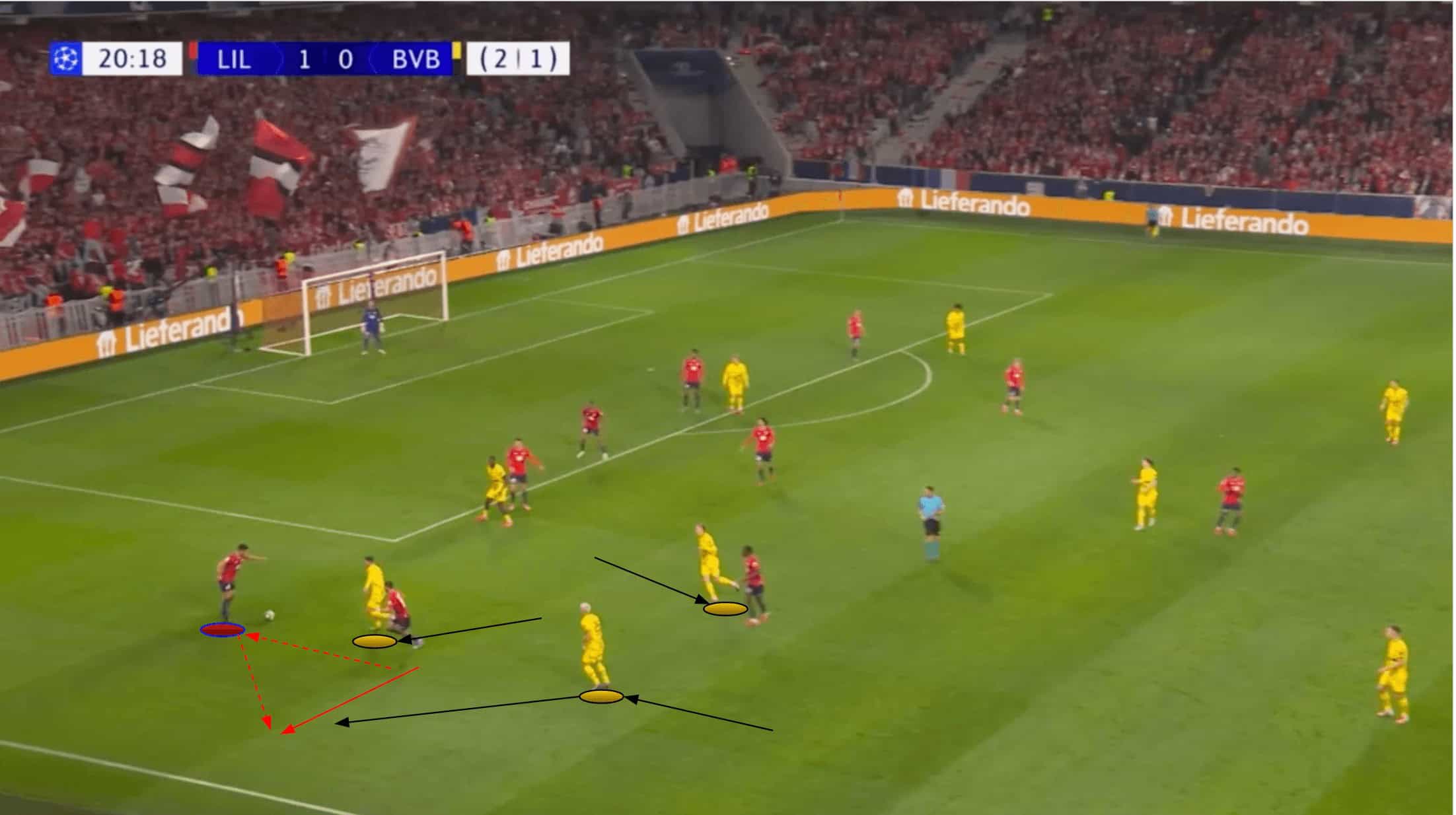
Left central midfielder Groß springs into action, closing down the initial receiver while Beier, Guirassy and Ryerson also position themselves strategically in support, as seen in the image above.
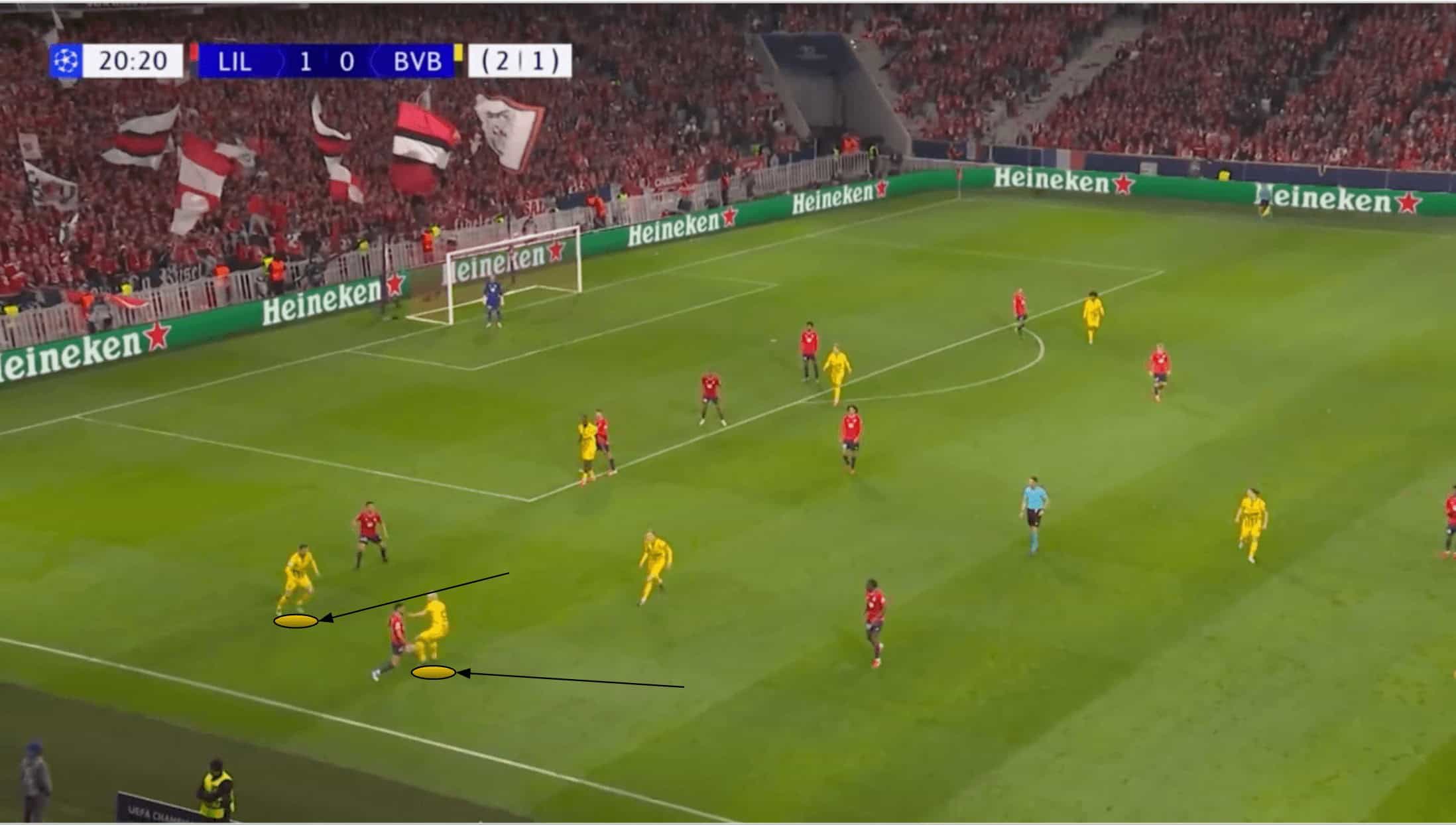
In the end, it’s Dortmund’s left-back who’s committed himself to the high counterpress that ultimately forces the turnover and wins the ball back for BVB—still inside Lille’s third of the pitch.
Guirassy and Beier’s positioning limited the ball carrier’s passing options, while Groß did well to apply pressure directly to the ball carrier, which forced the pass out wide.
Ryerson was well-prepared for this move and pounced on the opportunity to close the next receiver down and win the ball back for Dortmund in a very dangerous position for Kovač’s team to create.
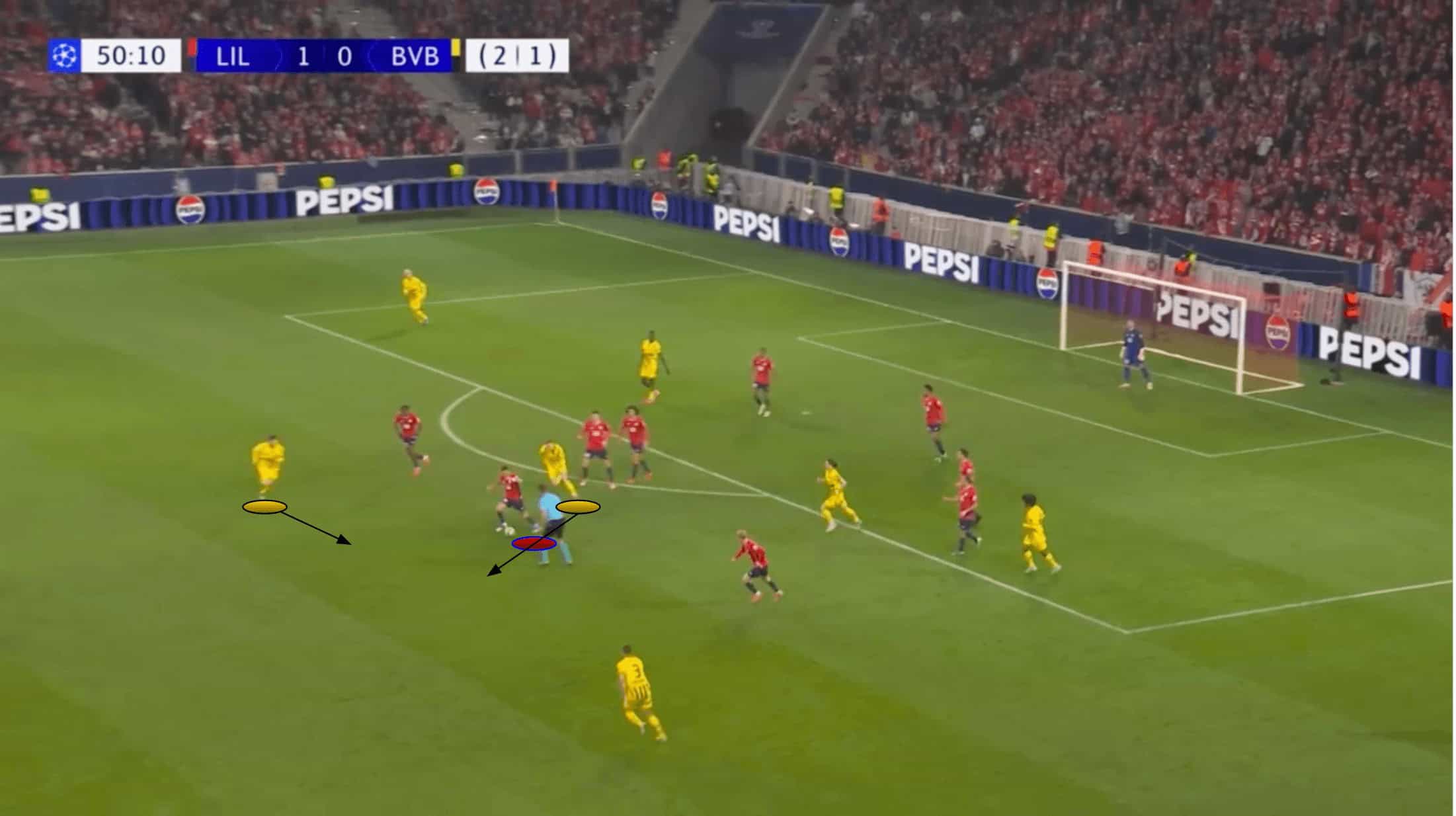
As Lille attempt to counter Dortmund after a turnover here, we see a couple of BVB bodies immediately in hot pursuit of the ball carrier.
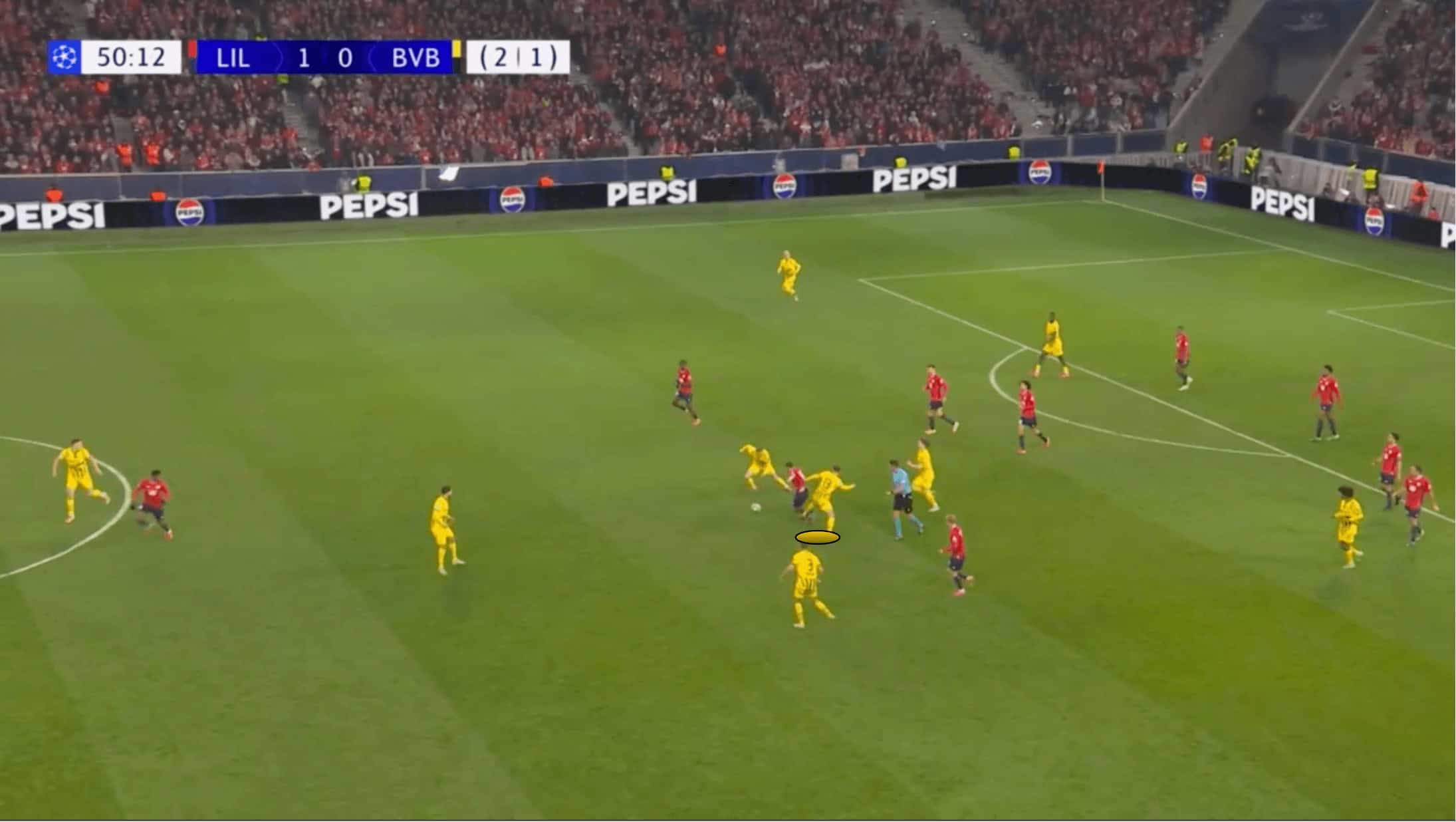
Again, it’s Groß who ends the Lille counterattack, this time with a ‘tactical foul’ to take down the ball carrier.
Whether intentional or by accident, this foul bought Dortmund time to regroup and get bodies back behind the ball.
This is another example of the aggressive nature of Dortmund’s counterpressing both in terms of their willingness to commit fouls and the energy with which players either committed themselves upfield or, conversely, tracked back to ensure Lille did not have any joy in transition.
Players were very quick to swarm the ball carrier and commit a defensive action.
Dortmund’s Counterpressing Tactics Forcing Mistakes Vs Lille
At times, Dortmund’s counterpressing forced not only arguably poor passing choices by Les Dogues but really poorly executed passes, which handed possession right back to BVB.
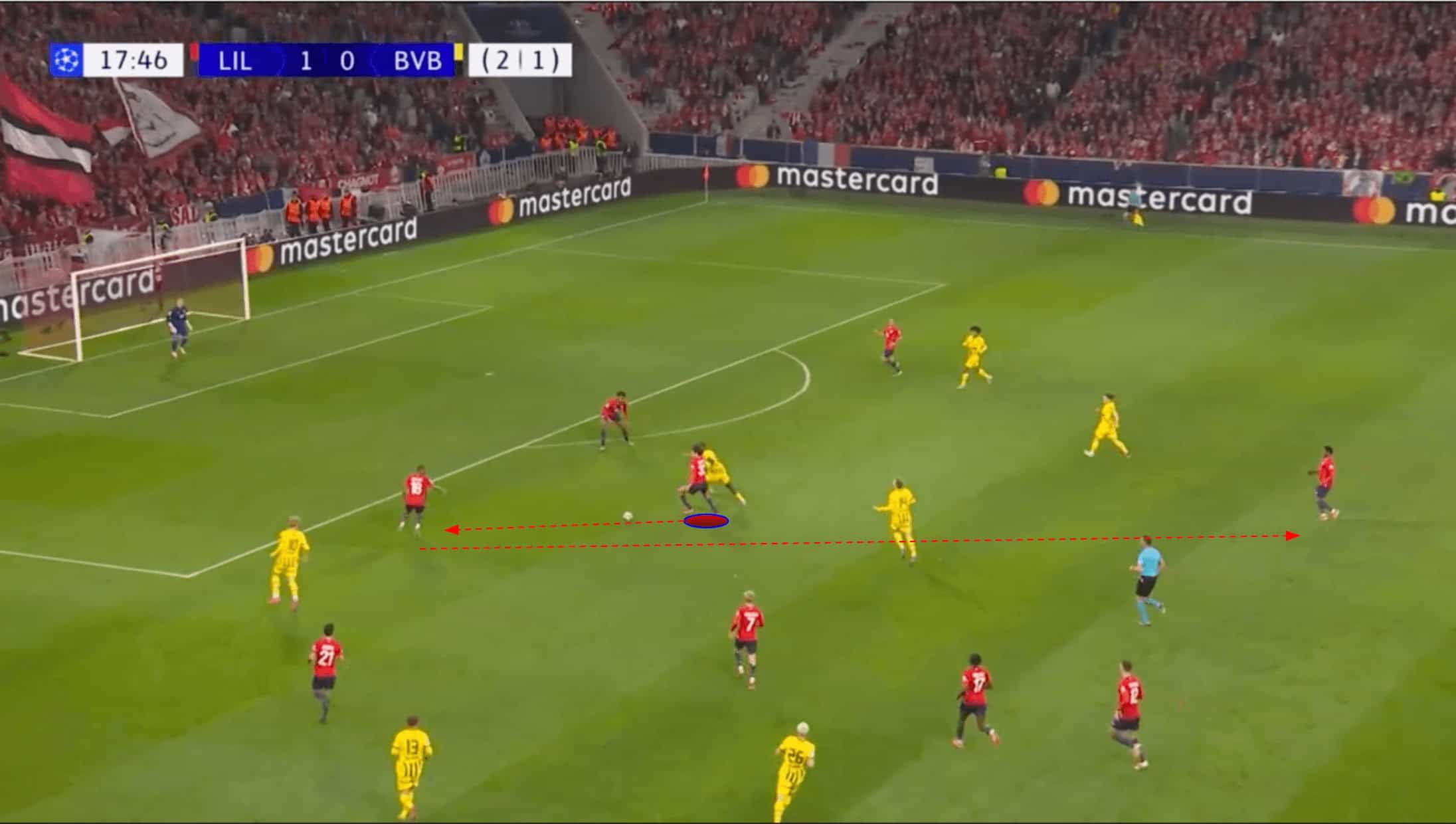
Here, Lille have managed to regain possession and break Dortmund’s initial pressure, reaching the middle of the park in promising fashion.
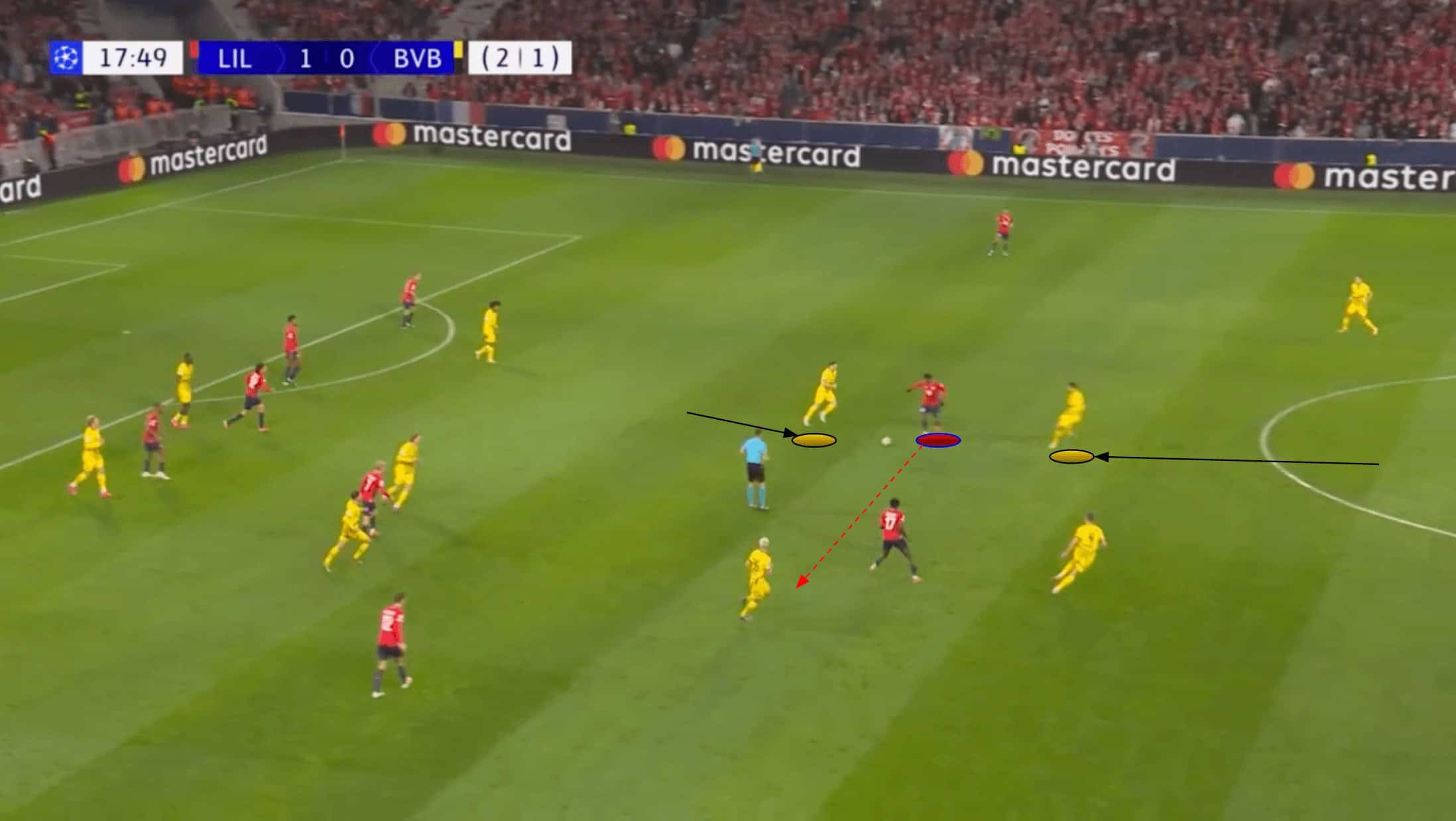
Now, a combination of aggressive movement out of the backline from centre-back Can, along with good tracking back from Sabitzer, places the Lille receiver, David, under intense pressure.
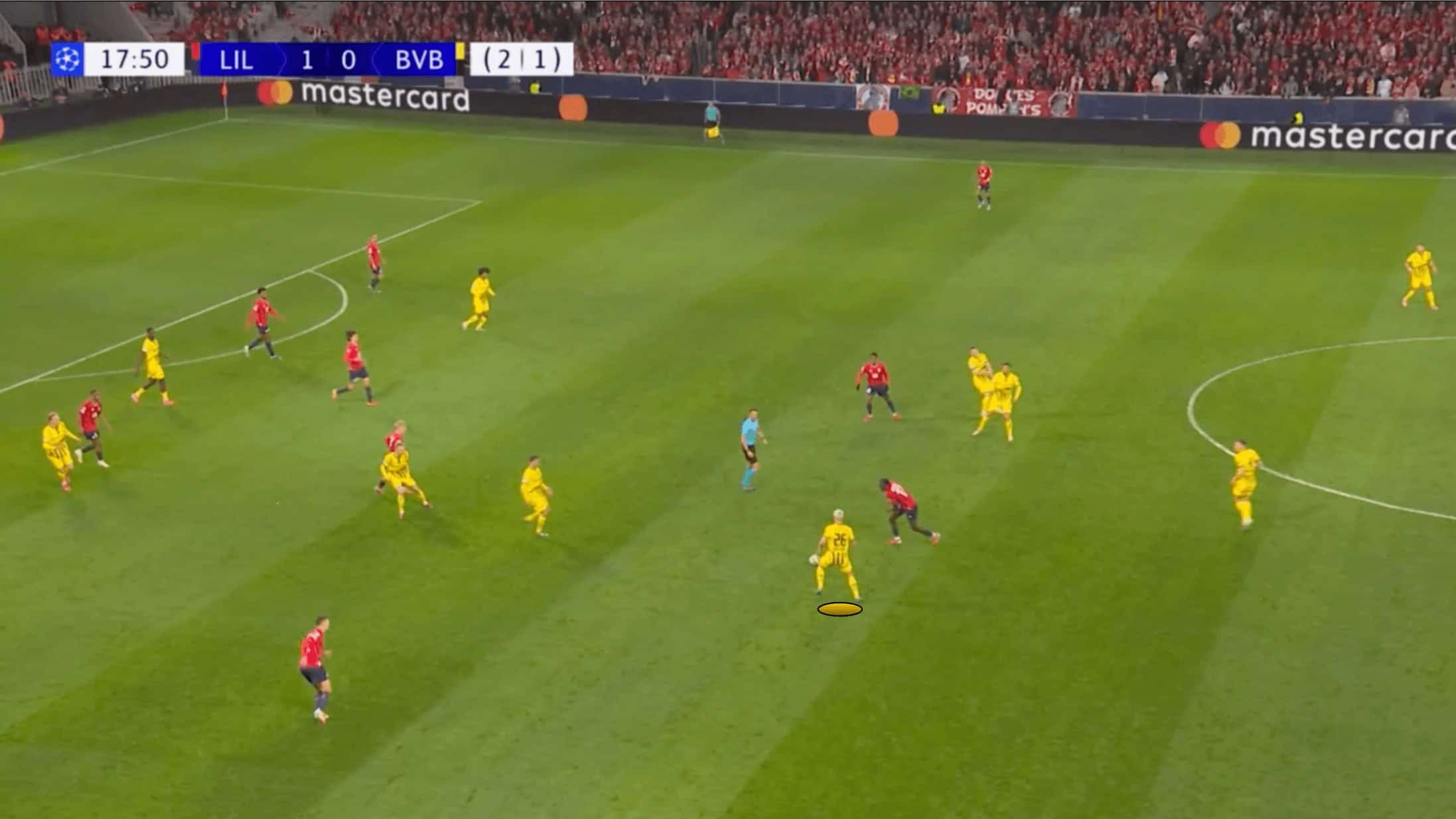
In the end, Dortmund’s pressure successfully forced David into a misplaced pass straight into the feet of left-back Ryerson, who’s able to restart a BVB attack from the edge of the final third.
This passage of play demonstrates how Dortmund’s counterpressing was able to force Lille into errors, further damaging the home side’s prospects of putting this game away and earning themselves opportunities to apply pressure to Les Dogues’ goal.
Conclusion
In conclusion, Dortmund’s counterpressing tactics worked very well to limit Lille’s attacking threat by stifling their transitional attacks before they really got going time and time again on Wednesday evening.
As well as preventing Lille from hitting them on the counter, their counterpressing success consistently enabled Dortmund to restart attacks from advanced positions and keep pressure on Chevalier, playing no small part in BVB’s comeback win.
