
Arne Slot inherited Jürgen Klopp’s Liverpool and despite a quiet first transfer window, Slot immediately focused on fitness, control, and structure.
Last season’s move from relentless gegenpressing towards a 4-2-4 pressing shape brought stability and helped the Reds reclaim the Premier League title on Slot’s first try.
However this season, after a Real Madrid-style summer signing of marquee attackers, Liverpool’s issue hasn’t been firepower; it’s been balance.
Games have too often descended into chaos: high tempo, high transition, and high risk.
With a dismal 4 Premier League losses in a row, after a flawless 6-0 start, Liverpool fans are starting to wonder what has gone wrong and why the team seems so unbalanced.
In this Liverpool tactical analysis, we will focus on the role Curtis Jones has in controlling the game’s tempo and how he can help Arne Slot return balance back to a Liverpool team in crisis.
Why Liverpool’s Balance Has Slipped
Liverpool’s squad is packed with direct, high-tempo players in Florian Wirtz, Alexander Isak, Jeremie Frimpong, Milos Kerkez, Cody Gakpo, Mohamed Salah, Hugo Ékitiké, and Alexis Mac Allister.
They can blow teams away in moments, but they can also lose control just as quickly.
Crystal Palace away, Manchester United at Anfield, and Chelsea late on all exposed that looseness.
Even last year’s PSG tie showed how easily Liverpool could be bypassed if their first press broke.
Slot’s challenge isn’t to make Liverpool more dangerous, it’s to make them more stable.
Curtis Jones Style Of Play
Whenever Curtis Jones appears, the rhythm changes.
He doesn’t slow the game for the sake of it; he dictates when Liverpool accelerate.
When Curtis Jones plays, Liverpool’s possession becomes calmer, their spacing tighter, and their rest defence far less exposed.
He turns chaos into control.
This season, the pattern has been consistent whenever Curtis Jones has come on.
| Match | Jones ON Minute | Liverpool xG (After ON) | Opponent xG (After ON) |
|---|---|---|---|
| vs Bournemouth (4–2 W) | 72′ | 0.94 | 0.12 |
| vs Crystal Palace (1–2 L) | 65′ | 0.77 | 0.59 |
| vs Chelsea (1–2 L) | 56′ | 1.02 | 0.84 |
| vs Manchester United (1–2 L) | 62′ | 1.75 | 0.64 |
| vs Eintracht Frankfurt (5–1 W) | 0′ | 3.21 | 0.33 |
The data and the eye test say the same thing: Liverpool look calmer and more balanced when Curtis Jones is involved.
Curtis Jones Impact On Play
Press Resistance
Curtis Jones offers composure under pressure.
Jones receives on the half-turn and escapes tight areas, giving Liverpool vital breathing space.
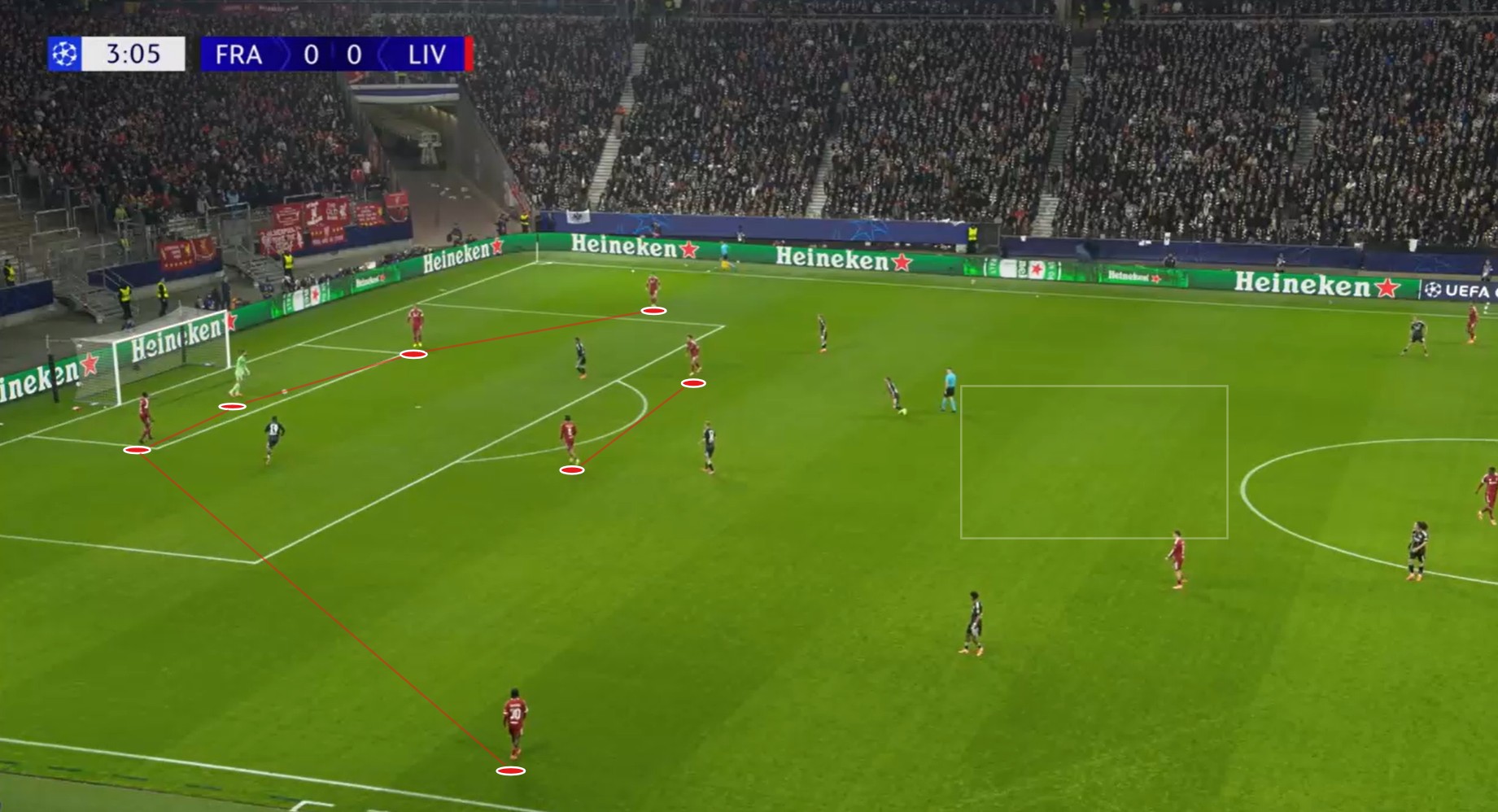
Curtis Jones Pass Retention
Curtis Jones rarely forces the vertical option; instead, he recycles and resets the play to maintain rhythm rather than chaos.


Curtis Jones Intelligence
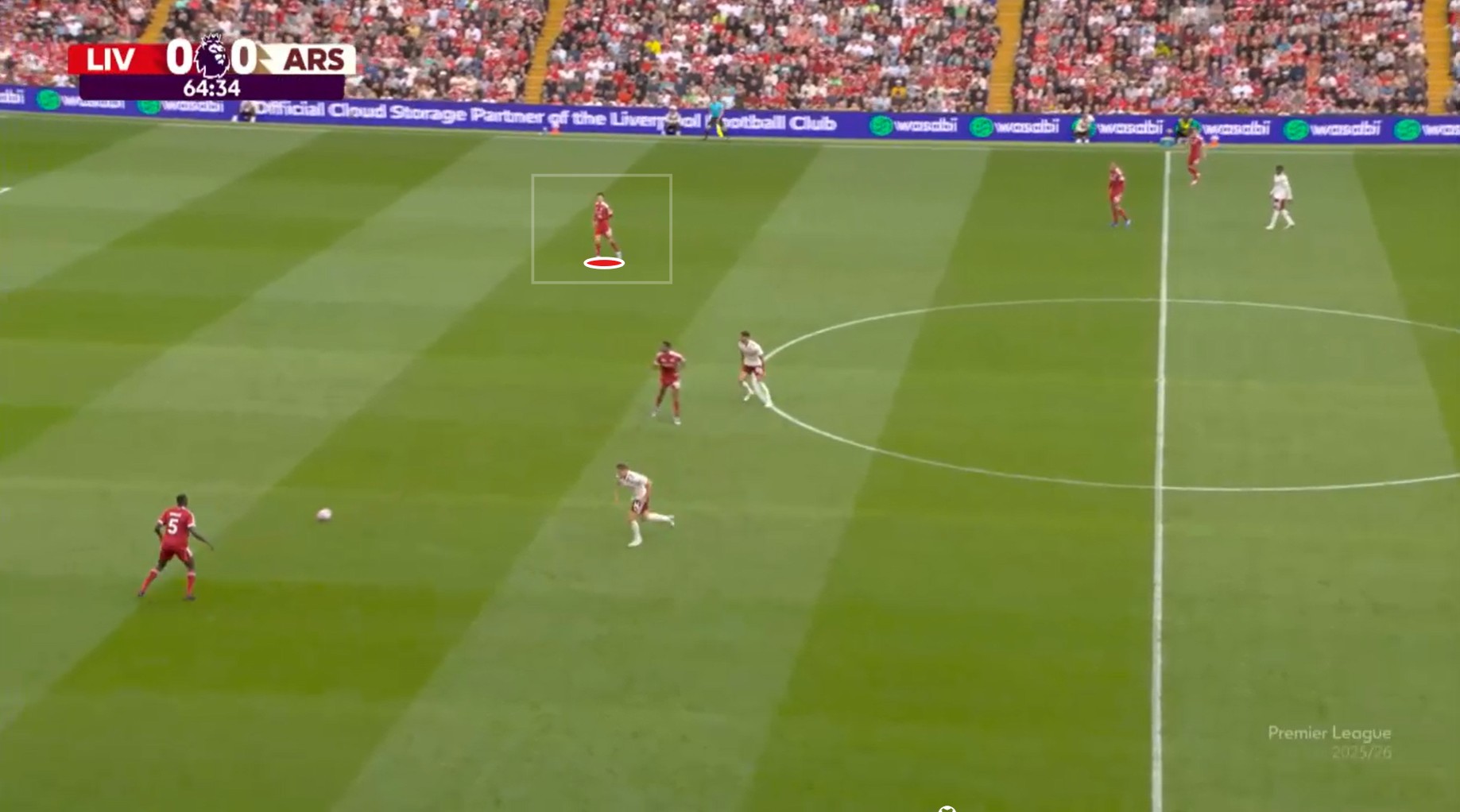
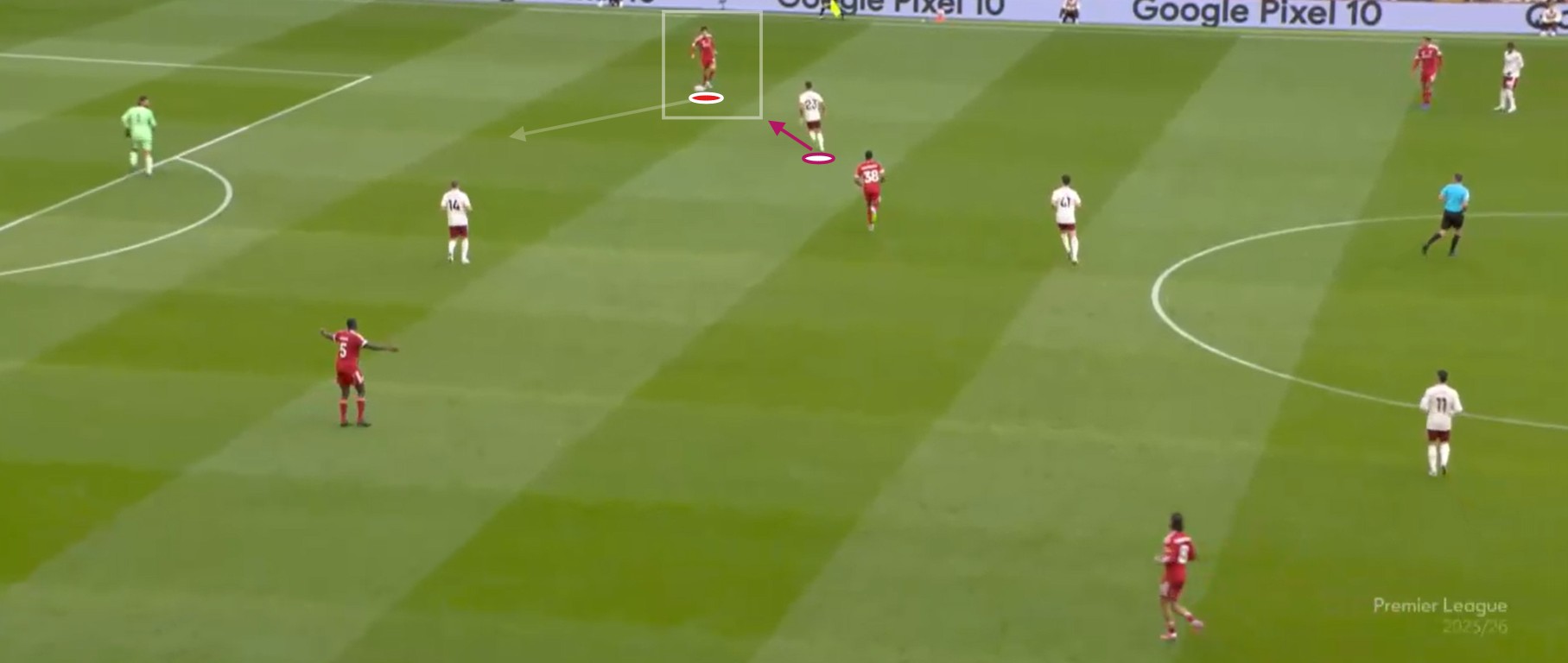
Curtis Jones analyses where the space is and pulls the opposition pressing structure all over the place due to the positions he picks up.
Curtis Jones Vs Alexis Mac Allister – Statistical Comparison
When you compare Curtis Jones to Alexis Mac Allister, the difference isn’t creativity; it’s control.
Jones completes 89.8% of his passes, compared with Mac Allister’s 83.5%, showing greater ball security.
In short and medium passing, the gap widens: Curtis Jones completes 96.4% of his short passes and 94.9% of his medium ones, whereas Mac Allister hits 91.2% and 85.6%, respectively.
That reliability reflects composure under pressure and explains why Liverpool’s circulation looks cleaner when Curtis Jones is involved.
Despite being the safer passer, Jones still advances the play more effectively.
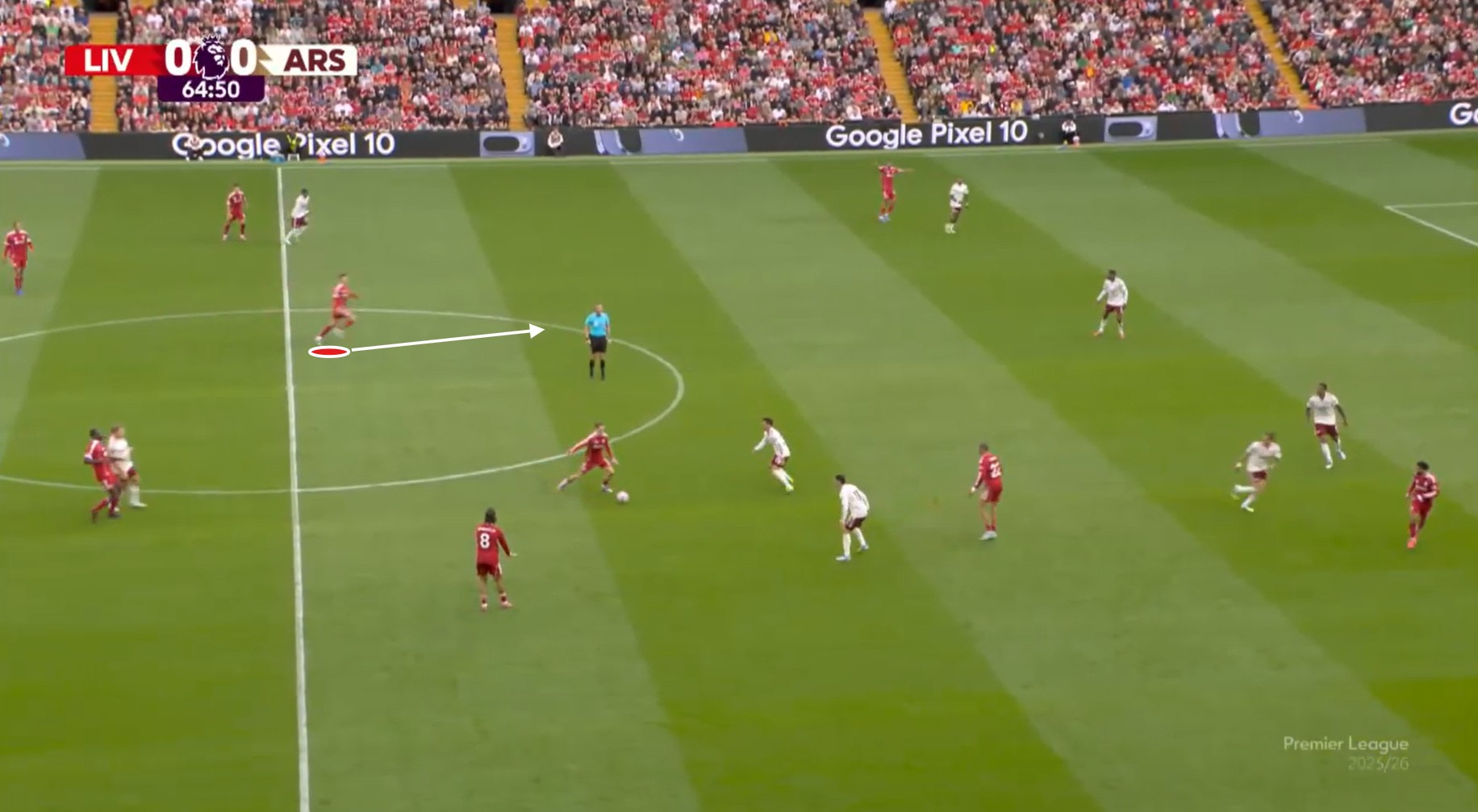
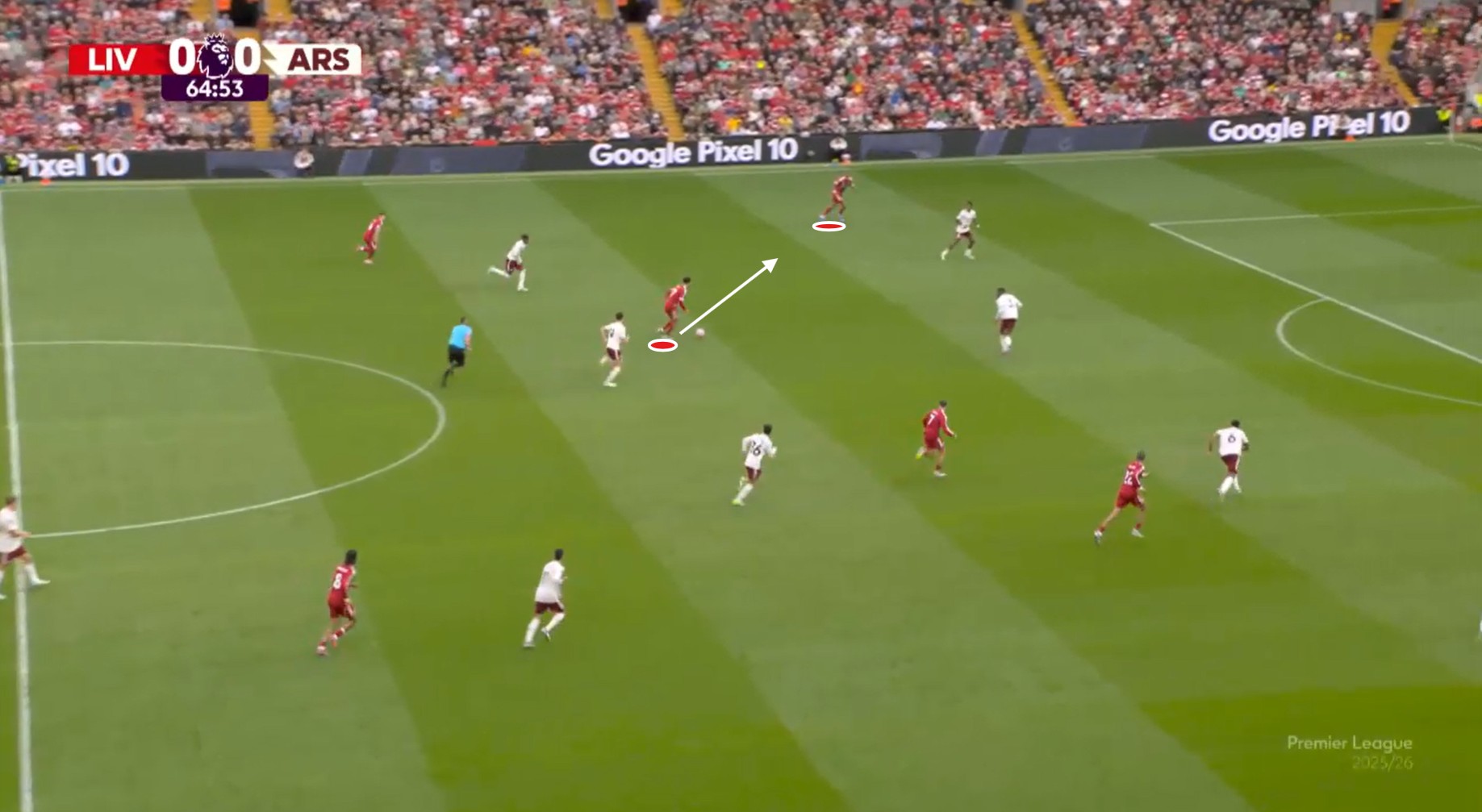
Jones averages 949 metres of progressive passing distance per 90, compared with Mac Allister’s 797 metres, and completes roughly twice as many progressive passes (36 to 17).
So while Mac Allister often takes the flashier option, Jones moves Liverpool up the pitch through control rather than risk.
In the final third, that stability still produces the end product.
Jones averages 0.9 expected assists (xA) compared to Mac Allister’s 0.2, along with 3.14 shot-creating actions per 90 and 0.7 goal-creating actions per 90, again ahead of Mac Allister’s 2.42 and 0.4.
Team impact mirrors those individual numbers.
Liverpool’s xG on-off differential improves by +0.7 when Jones plays, compared with +0.43 for Mac Allister.
Defensively, the swing is even clearer: with Curtis Jones on the pitch, Liverpool’s expected goals against improves by +0.5, showing how his presence reduces the opposition’s quality of chances.
In short, Curtis Jones is the stabiliser.
Mac Allister brings flair and risk; Jones brings rhythm and reliability.
He doesn’t chase chaos; he removes it.
Curtis Jones Vs Eintracht Frankfurt
Curtis Jones Eintracht Frankfurt performance sums him up perfectly.
He played 90 minutes, attempted 127 passes, completed 122 (96%), had 139 touches, and made 18 passes into the final third.
Liverpool dominated possession (65%), created 3.21 xG, and conceded just 0.33.
Jones dictated the tempo on the left interior, constantly offering passing angles and maintaining circulation.
That control allowed Wirtz, Isak, and Salah to receive in advanced positions, not in frantic transitions.
He’s the player who lets others sprint faster by slowing the game down first.
Liverpool is full of racehorses, and Jones is the one holding the reins.
Arne Slot Selection Question – Curtis Jones Vs Alexis Mac Allister
If Slot’s focus is balance and control, the Ryan Gravenberch–Curtis Jones pivot offers more stability than one including Mac Allister.
Mac Allister’s risk-taking can tilt the structure towards transition, while Jones gives Slot the composure to sustain pressure and suffocate opponents instead of trading punches.
Curtis Jones Limitations
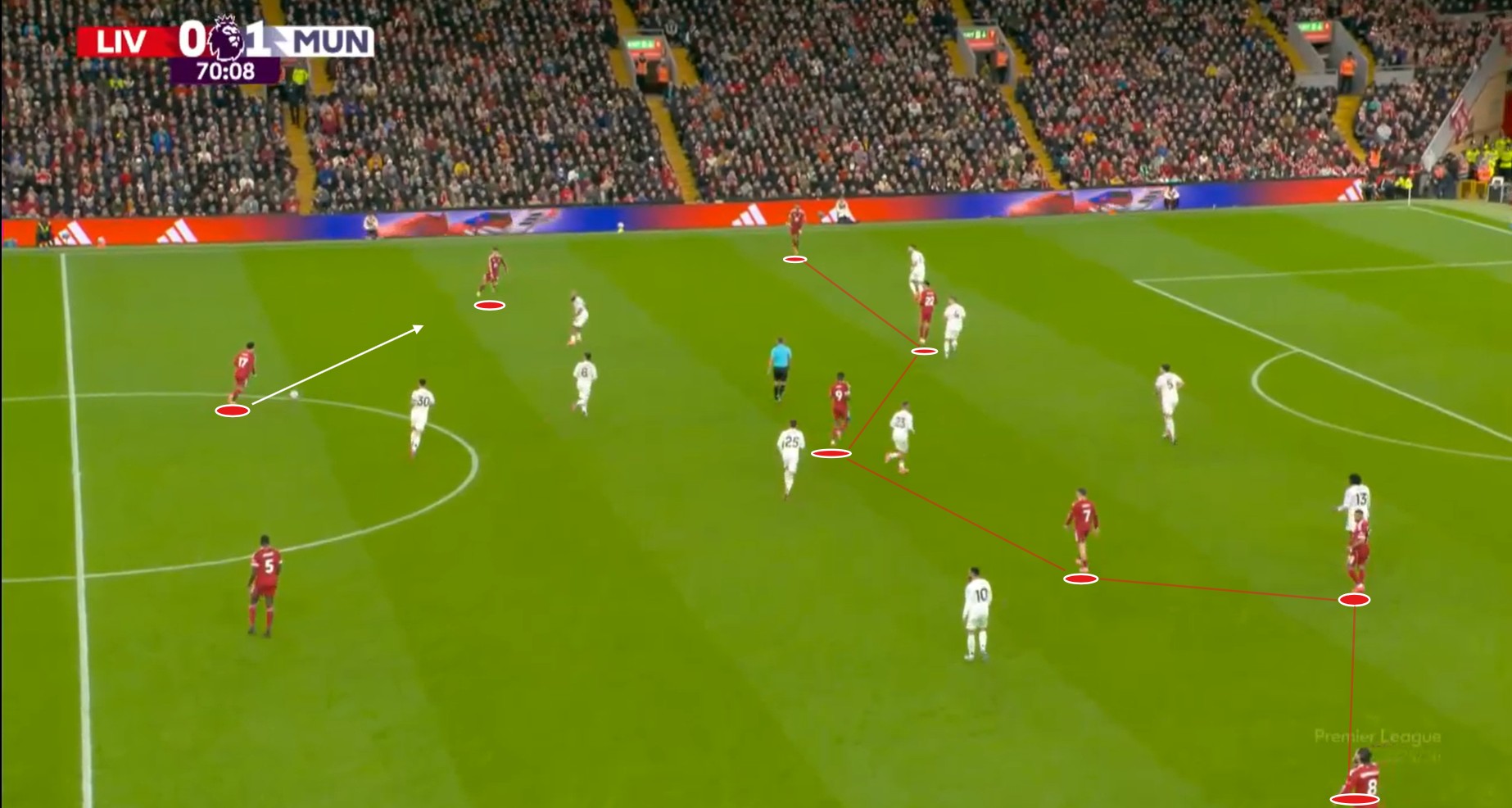
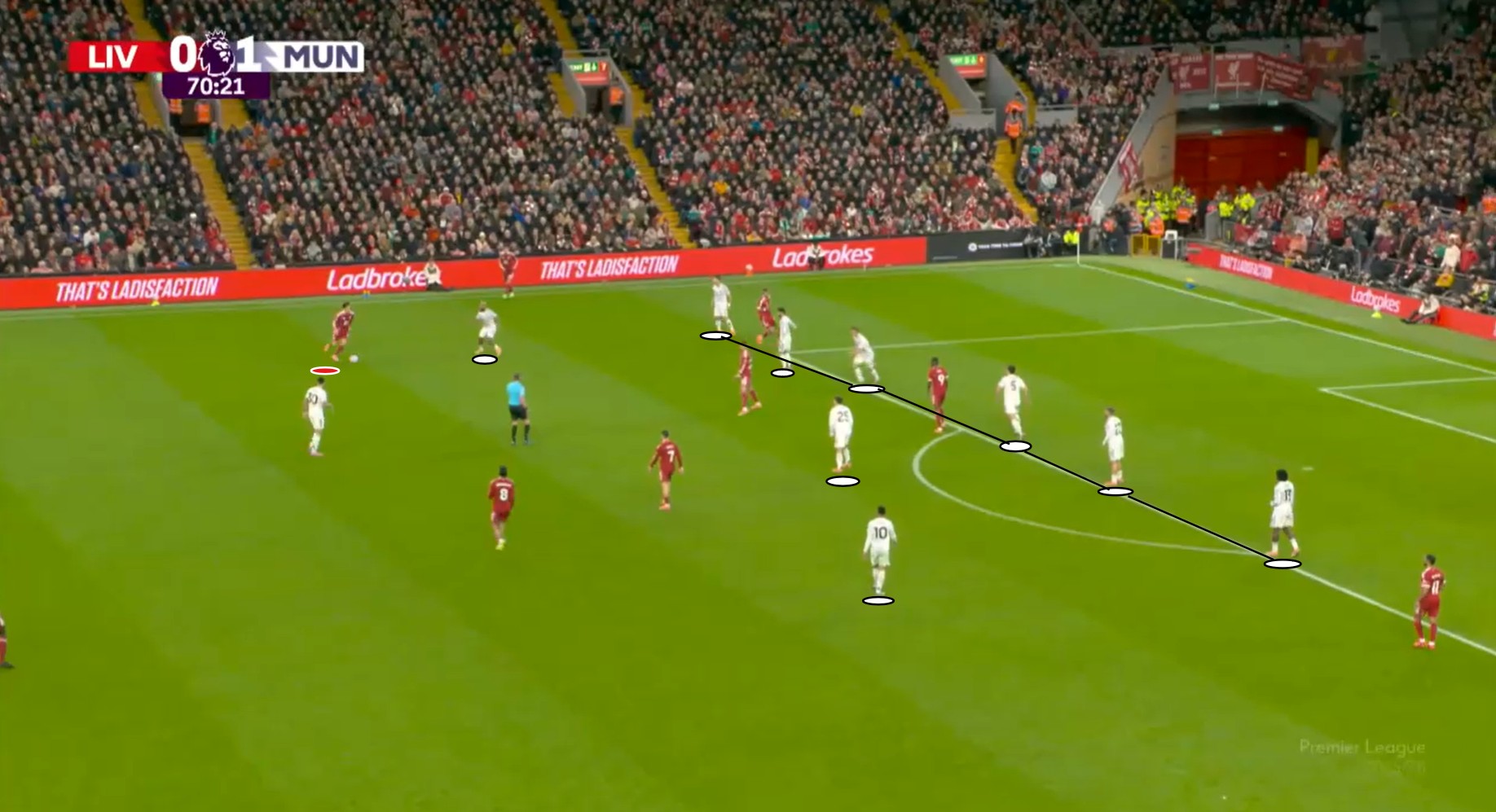
Curtis Jones alone doesn’t fix Liverpool’s defensive volatility as some issues remain systemic: spacing in the first line, full-back positioning, and rest-defence coverage.
But his inclusion dramatically improves Liverpool’s ability to manage that volatility.
He slows games, absorbs pressure, and helps the team control territory.
Should Curtis Jones Start?
For the upcoming run of fixtures, Slot should restore Curtis Jones to the starting lineup.
He’s press-resistant, secure, and positionally intelligent, the exact profile Liverpool need to rediscover balance.
The difference between the direct and controlling profile was clearly evident against Frankfurt and proved why Jones is so important.
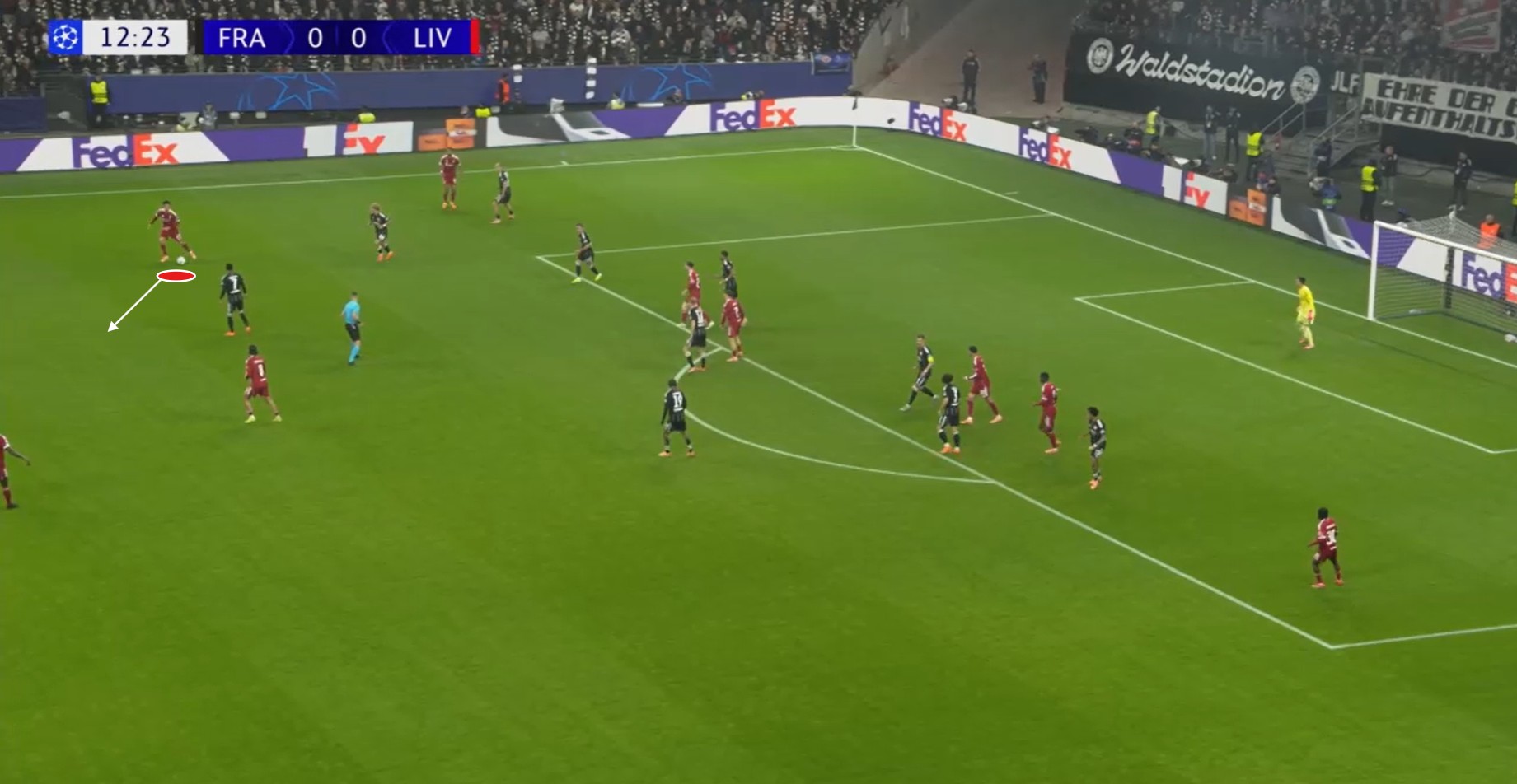
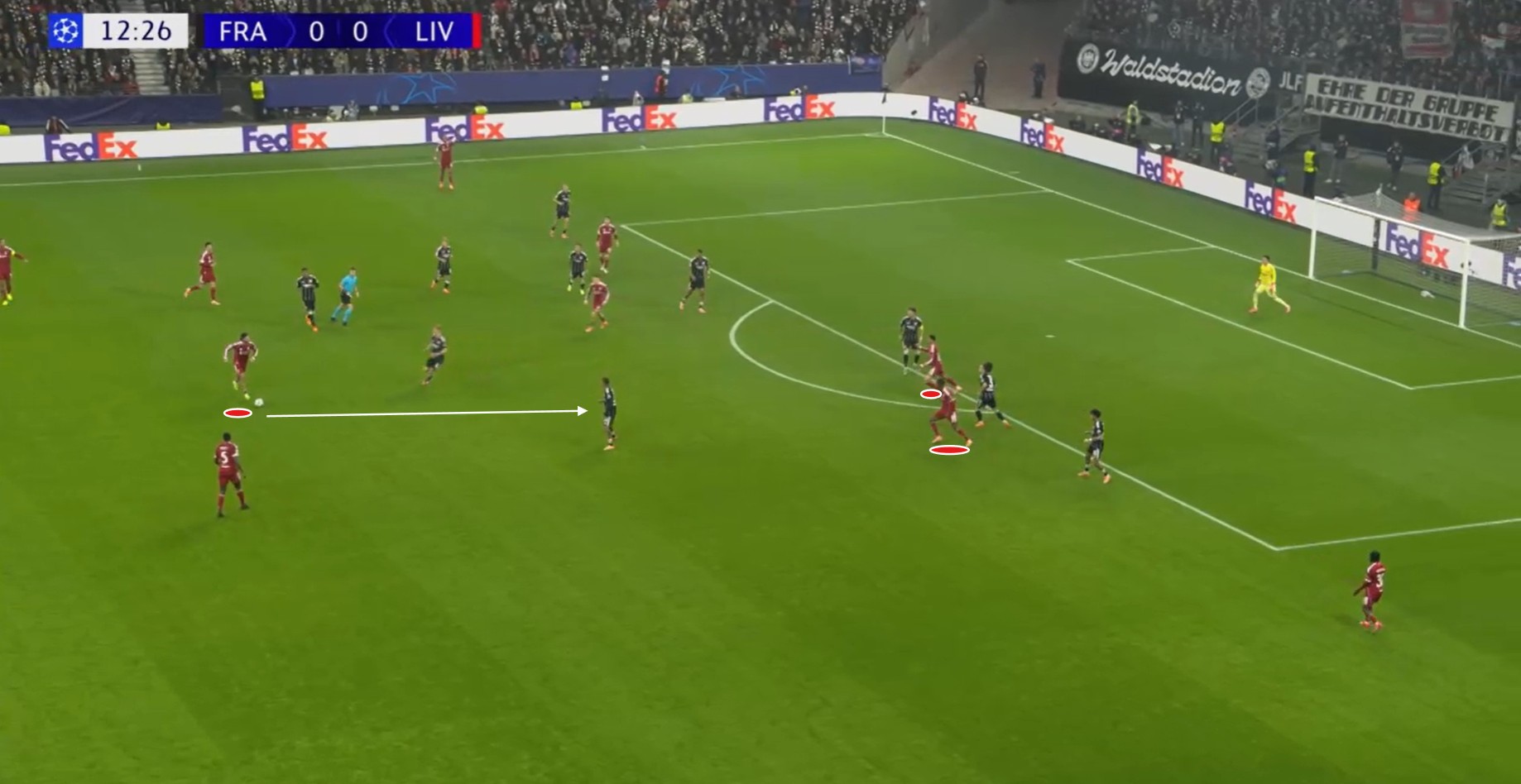
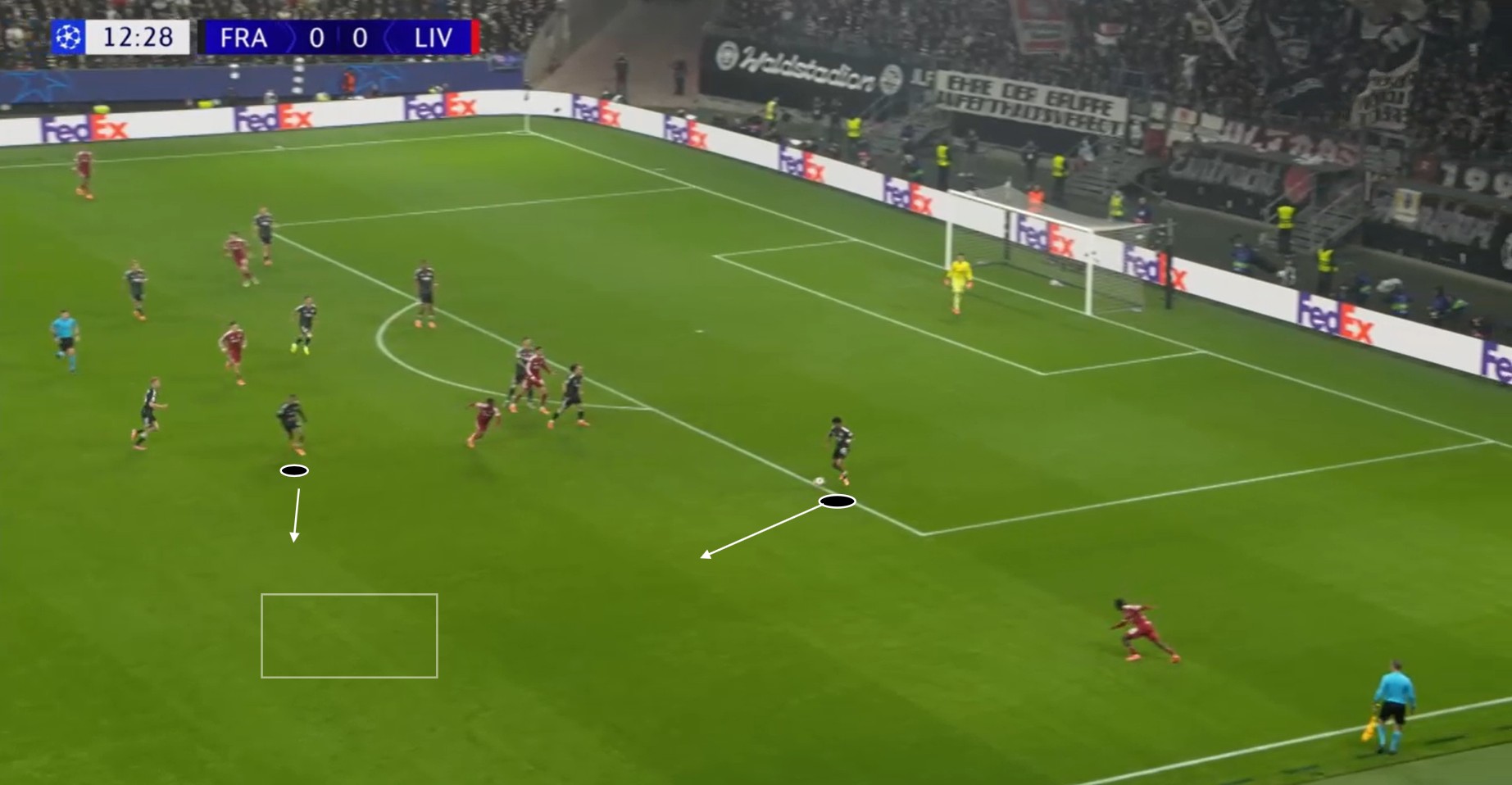
Build around a double pivot that can screen and circulate, then use Dominik Szoboszlai or Florian Wirtz ahead to connect the lines with Salah and the striker.
And the irony?
Despite all the money Liverpool have spent in search of midfield perfection, the solution might already be on the bench.
Conclusion
Liverpool’s ceiling remains elite, but their floor has lowered because of an imbalance.
Curtis Jones is the simplest, most natural lever Arne Slot can pull to fix it.
Even Curtis Jones said in a recent interview with LFC TV, “I want the team to play through me.”
Maybe it’s time for Arne to try that.
When he plays, Liverpool’s xG rises, opponents’ threat drops, and the team’s football regains its structure.
He doesn’t dominate highlight reels; he dictates rhythm.
And for this Liverpool side, rhythm might be everything.
