
After a period of inconsistency and managerial changes, Villarreal have re-emerged among La Liga’s elite under the familiar guidance of Marcelino García Toral.
The Yellow Submarine, now third in the table, have rediscovered their essence.
They are a team defined by compactness, controlled aggression, and a clear tactical identity.
Marcelino’s return has done more than stabilise Villarreal; it has reshaped their football identity.
The team now plays with a newfound defensive maturity and positional smarts, leading to consistent performances.
What truly sets this Villarreal side apart is its balance; a blend of disciplined defence and direct, purposeful attacks.
This Villarreal tactical analysis examines how Marcelino has structured Villarreal’s resurgence, exploring the mechanisms behind their defensive solidity, calculated build-up patterns, and attacking strategies, which have positioned them as one of Spain’s most tactically cohesive sides this season.
Villarreal Defensive Maturity With Marcelino Tactics
Under Marcelino tactics, Villarreal’s defensive strength comes from their disciplined structure and control of space.
They typically use a compact 4-4-2 mid-block, with two tightly packed lines of four.
This formation is designed to clog the middle of the field, forcing opponents to play out wide, where their attacks are more predictable and easier to defend against.
The forwards press selectively, waiting for specific triggers, such as a backward pass, a poor touch, or a player’s poor body position, before closing down.
This smart pressing ensures the team’s defensive shape remains intact.

In the 2025/2026 squad, the central defensive partnership of Juan Foyth and Renato Veiga (or other rotation partners such as Rafa Marín) has brought increased solidity, with Foyth’s return to full fitness making a notable defensive impact.
Full-backs tuck in smartly to maintain the narrowness of the block, while midfielders such as Santiago Comesaña and Pape Gueye / Thomas Partey drop into screening positions to intercept passes between the lines and anticipate second-ball situations.
These roles allow Villarreal to defend not only with numbers behind the ball, but also with clarity about who must cover which space.
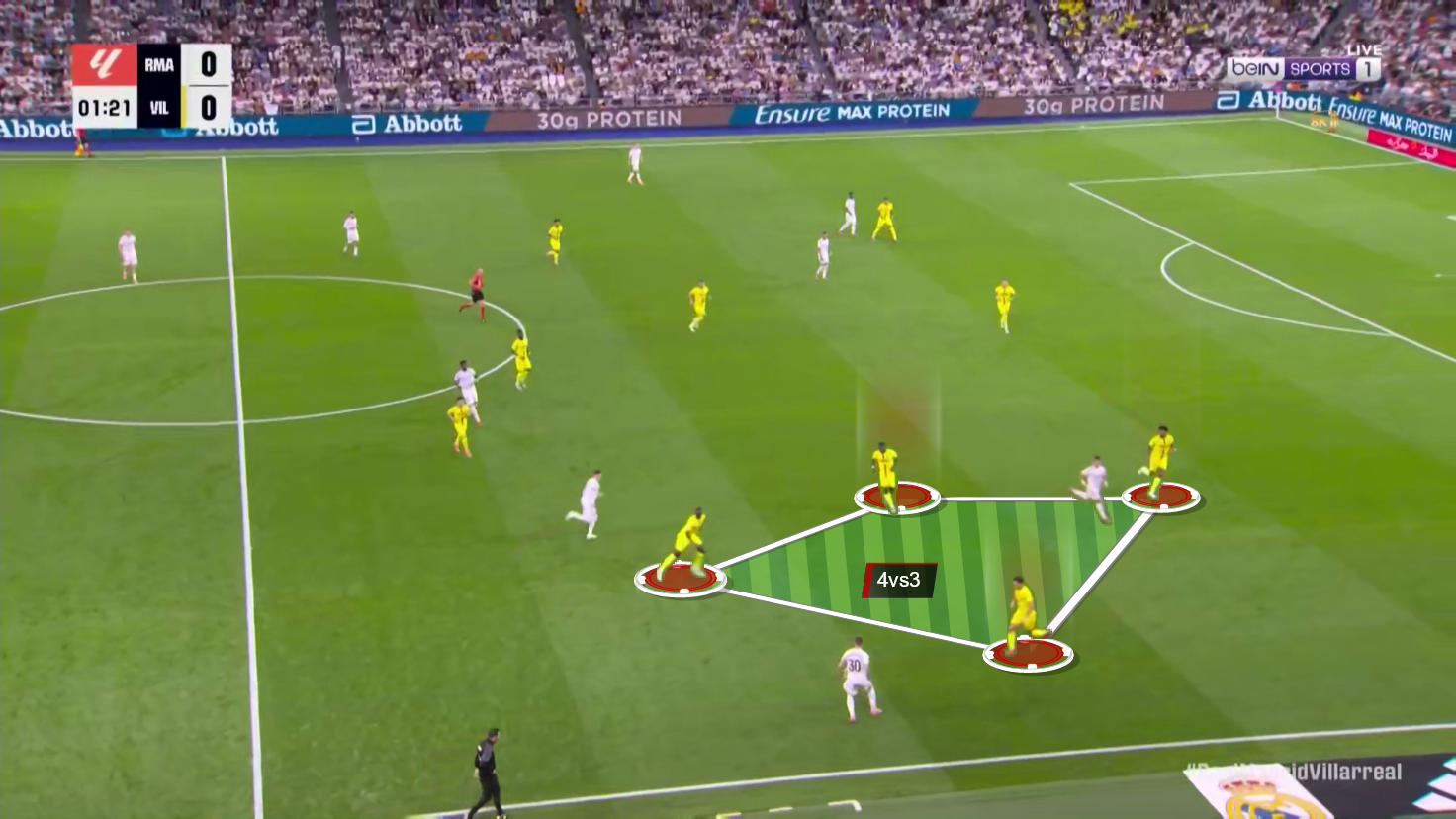
A key characteristic of their defensive block is the proactive tactic of “squeezing the pitch.”
When the opposing team passes the ball sideways or backwards, Villarreal’s defensive and midfield lines push up together.
This coordinated movement shrinks the available playing area, compressing the space between their own lines.
In the final moments, Villarreal executed a pressing trigger on the right flank, forcing Real Madrid’s build-up toward the sideline and obliging them to play backwards.
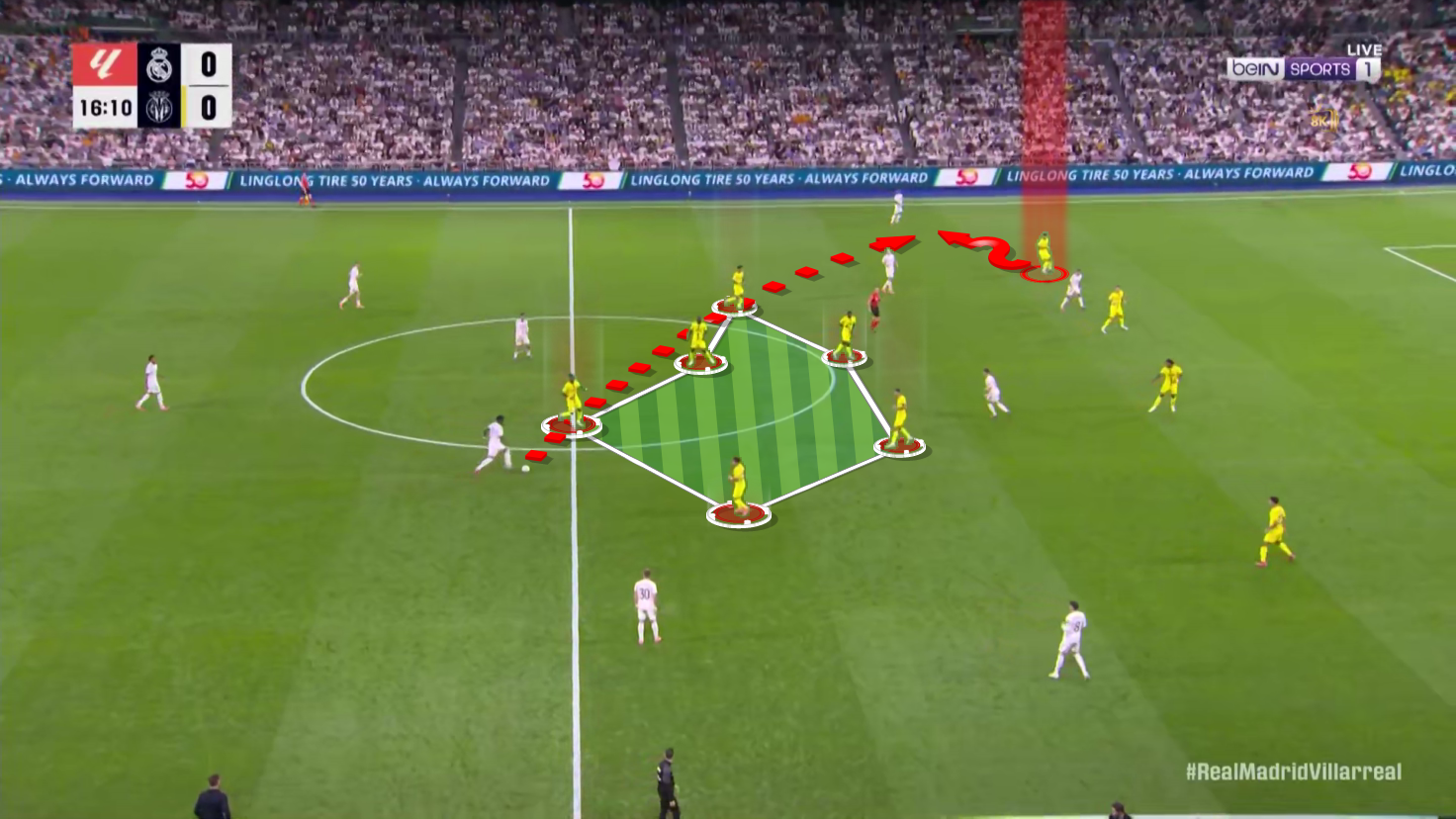
This action forces the opposition into predictable situations, funnelling their play out to the wings or forcing them into long balls, which plays to Villarreal’s defensive strengths.
Marcelino demands that the vertical distance between the defensive and midfield lines remain tight (usually no more than 8-10 meters), making the team far less vulnerable to sharp, cutting passes through the centre.
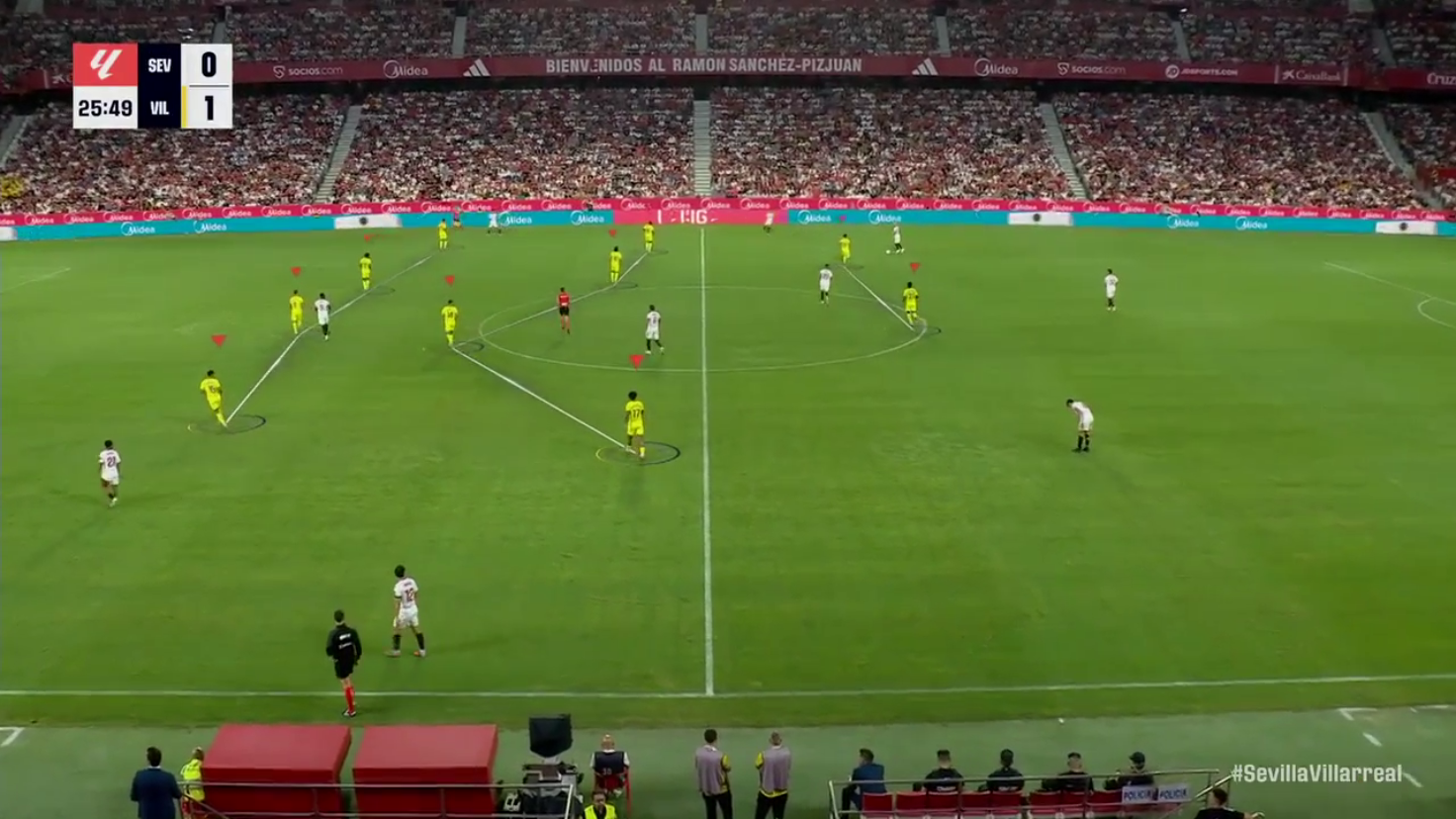
In this way, Villarreal concede fewer high-quality chances not by simply dropping deep, but by structuring smartly and reacting swiftly to transitions.
The collective positioning gives the team defensive energy and tactical control, which is key to their holding third place in La Liga for 2025/2026.
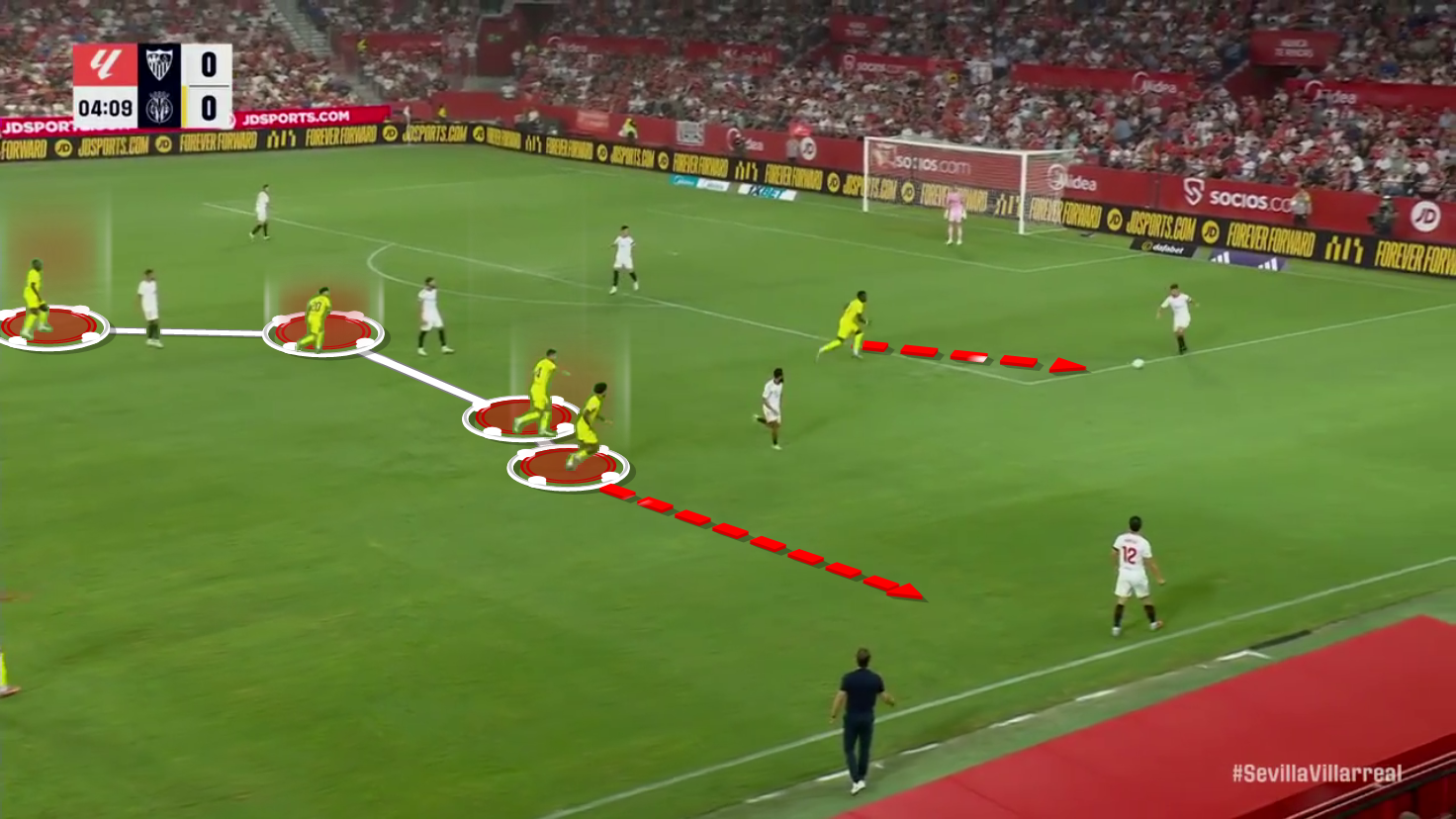 Villarreal’s high press under Marcelino has become sharper and more situational this season.
They trigger pressure primarily when the opponent builds through wide zones, using the front two to screen central access while the near-side winger curves his run to trap play toward the touchline.
Behind them, the midfield line squeezes forward in unison, closing vertical lanes and forcing rushed long balls.
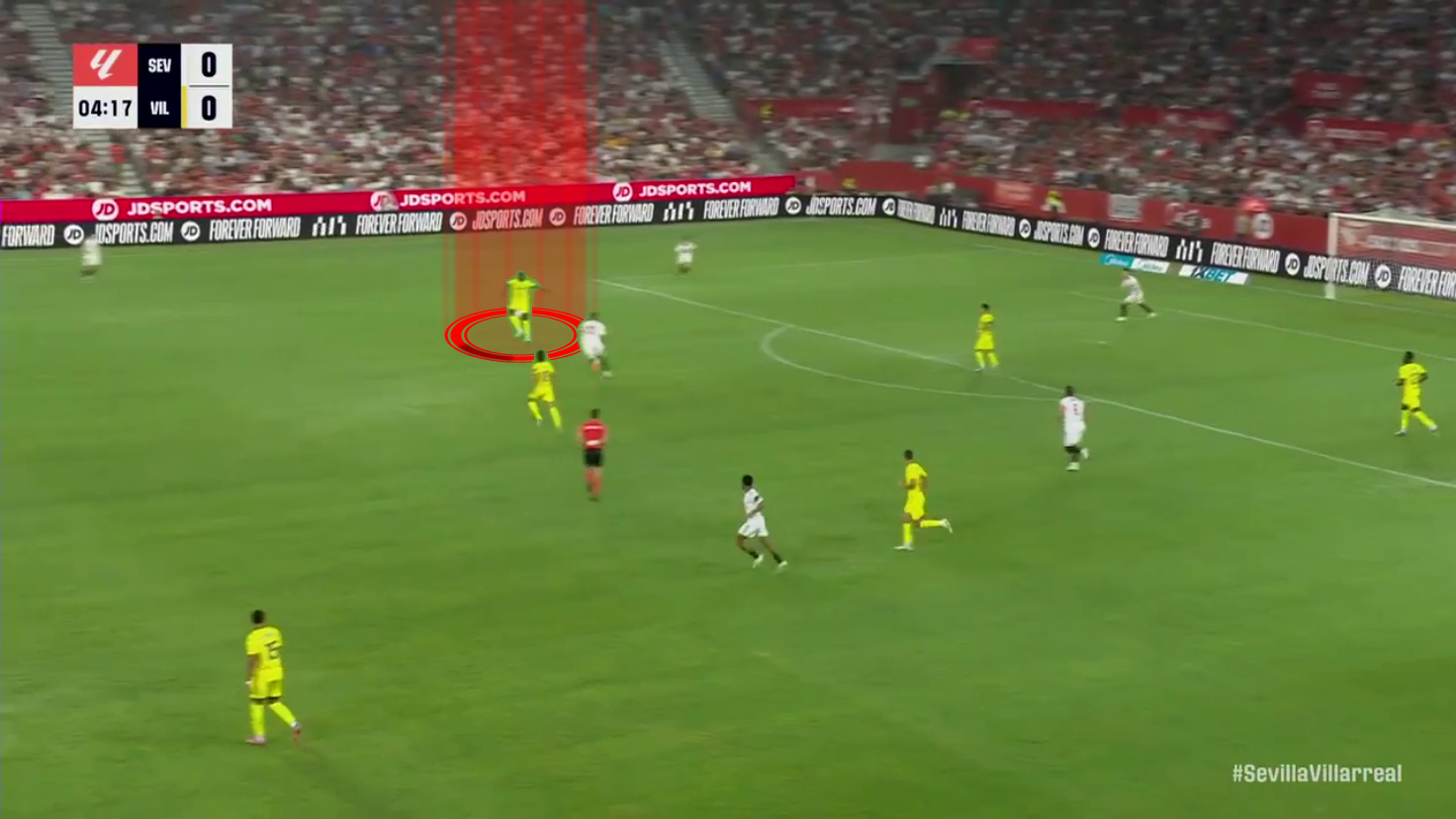
Against several teams like Sevilla, these coordinated movements repeatedly forced turnovers high up the pitch, with Comesaña and Gueye recovering second balls to sustain pressure.
The precision and timing of these presses reflect a side confident in structure and communication: pressing not for intensity alone, but as a controlled mechanism to regain territorial dominance.
Villarreal Build-Up & Progression
Villarreal’s control in possession starts from their disciplined first phase.
Under Marcelino, the team primarily operated in a 2+3 structure, with both centre-backs and the pivot establishing numerical superiority against the first pressing line.
From there, the side progresses the ball with patience and positional clarity rather than risk-heavy passing.
The two centre-backs, Juan Foyth and Rafa Marín / Renato Viega, operate with calm under pressure, inviting the first line of opposition press before releasing to the full-backs or the dropping pivot, usually Santi Comesaña or Pape Gueye.
This composure enables Villarreal to draw the opponent forward, opening channels between the lines for the next progression.
When pressed high, the goalkeeper serves as the third man, completing short triangles that allow controlled escapes into midfield.
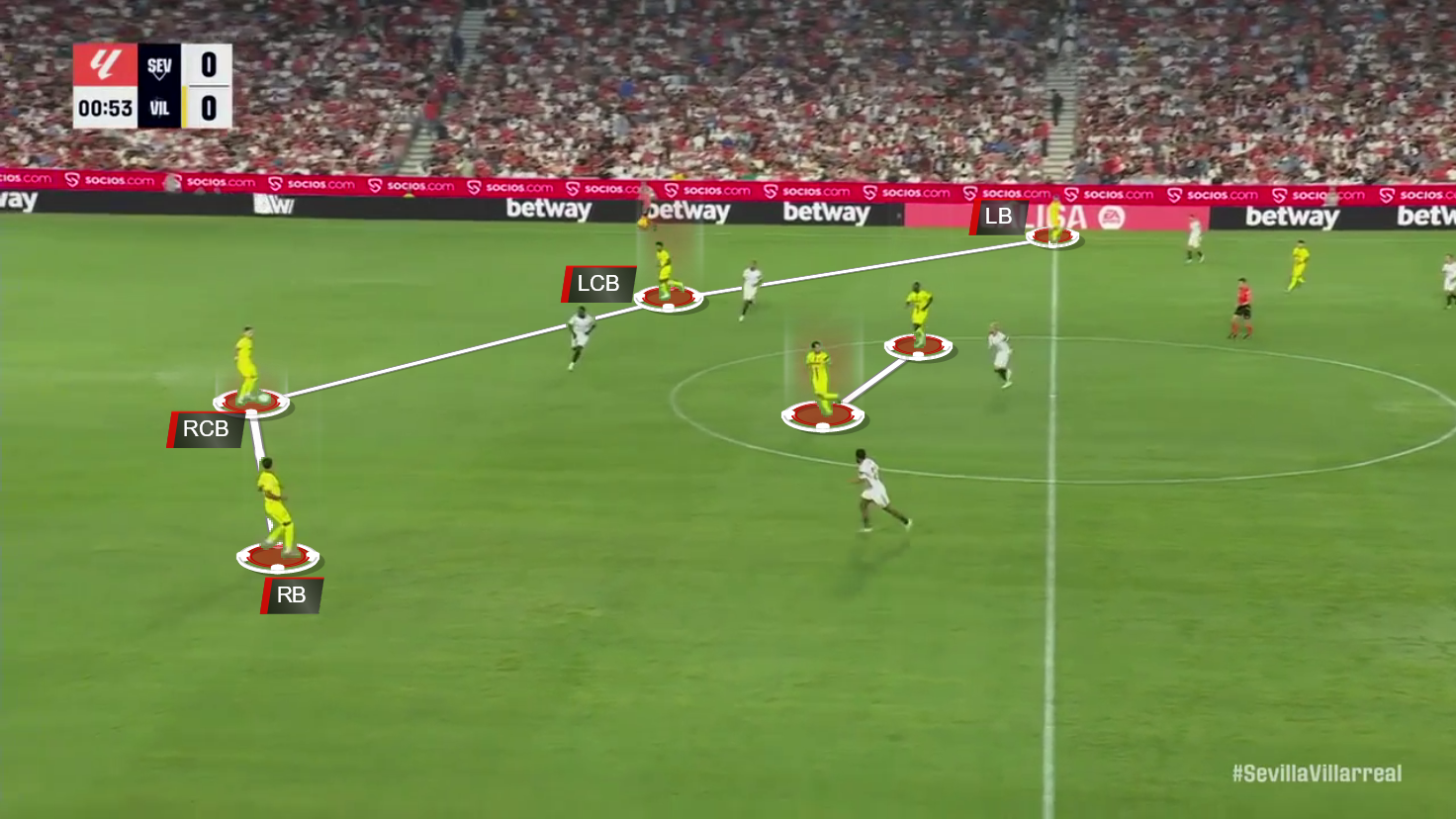
Marcelino employs a modern tactical setup that utilises asymmetrical full-backs.
Alfonso Pedraza plays high and wide on the left flank, acting as a primary attacking outlet.
In contrast, the right-back maintains a more conservative, deeper position to ensure defensive stability.
In midfield, the four players rotate fluidly.
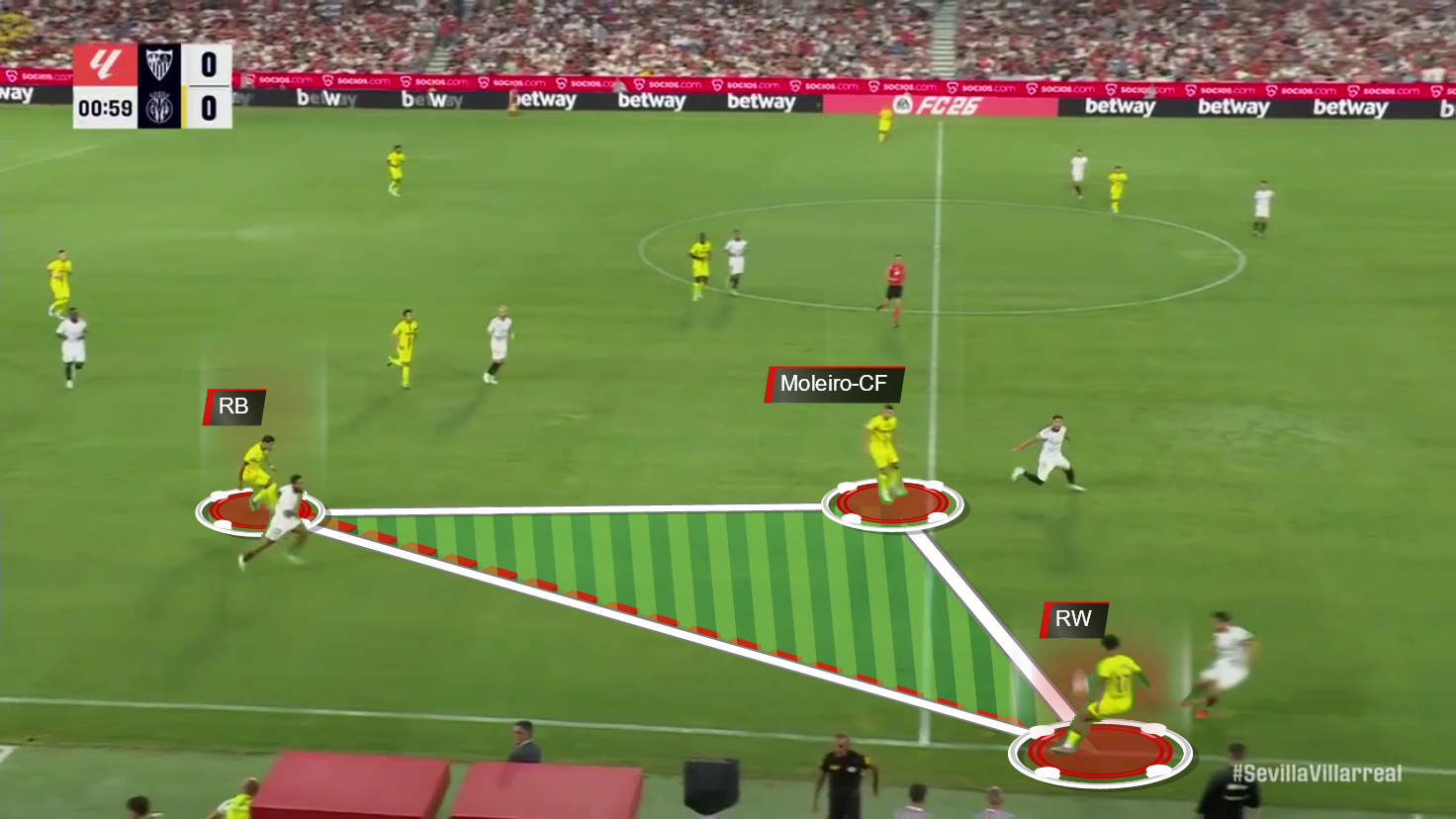
The second striker often drops into the right half-space to combine with the right-back and right winger, creating a short-passing triangle that helps Villarreal progress through the flank and draw out the opposition’s press.
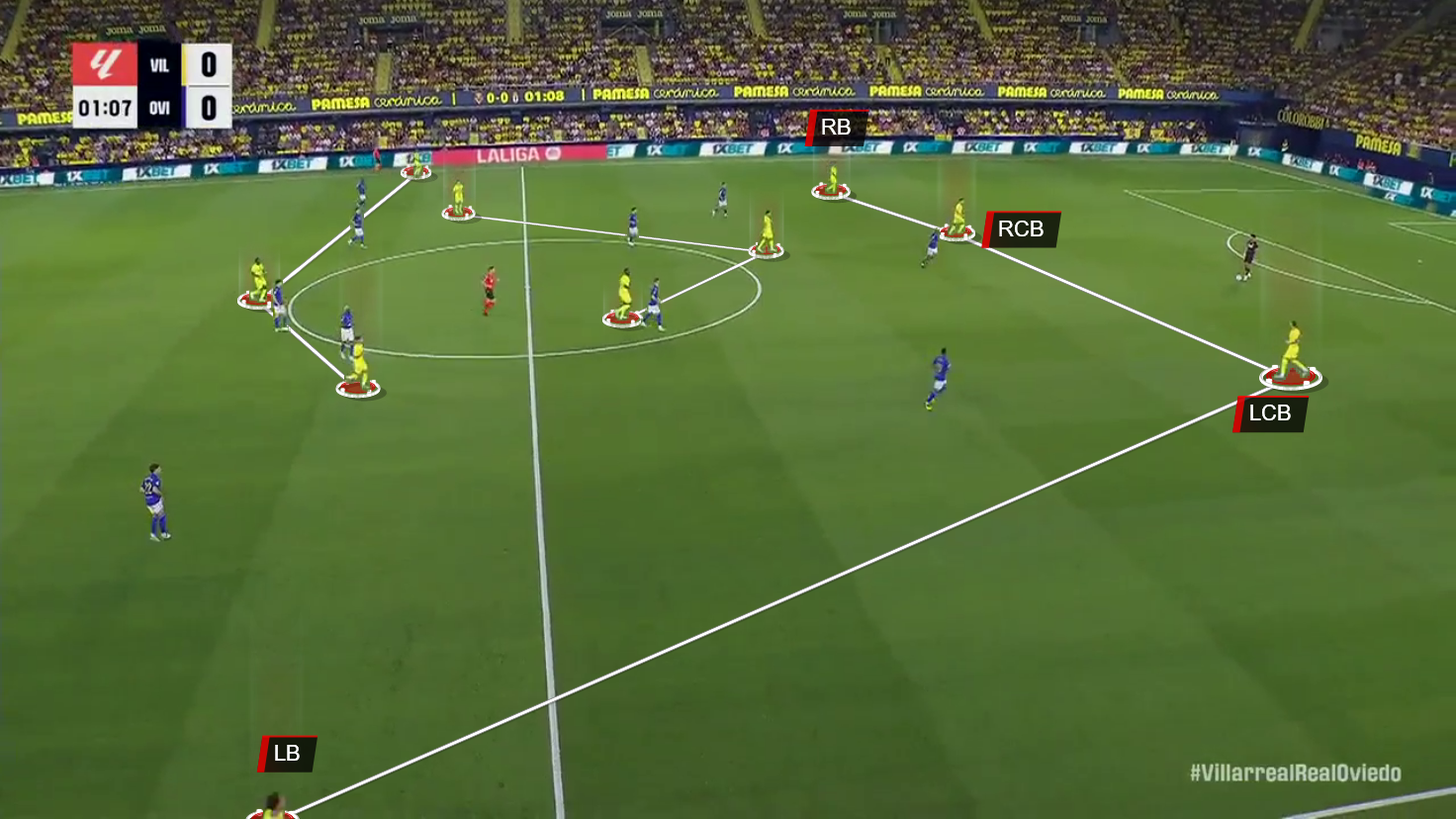
One of the central midfielders drops deeper to support the pivot, while the other advances to a position between the opponent’s midfield and defence.
This creates a dynamic and unpredictable passing rhythm, ensuring both stability in possession and creativity in attack.
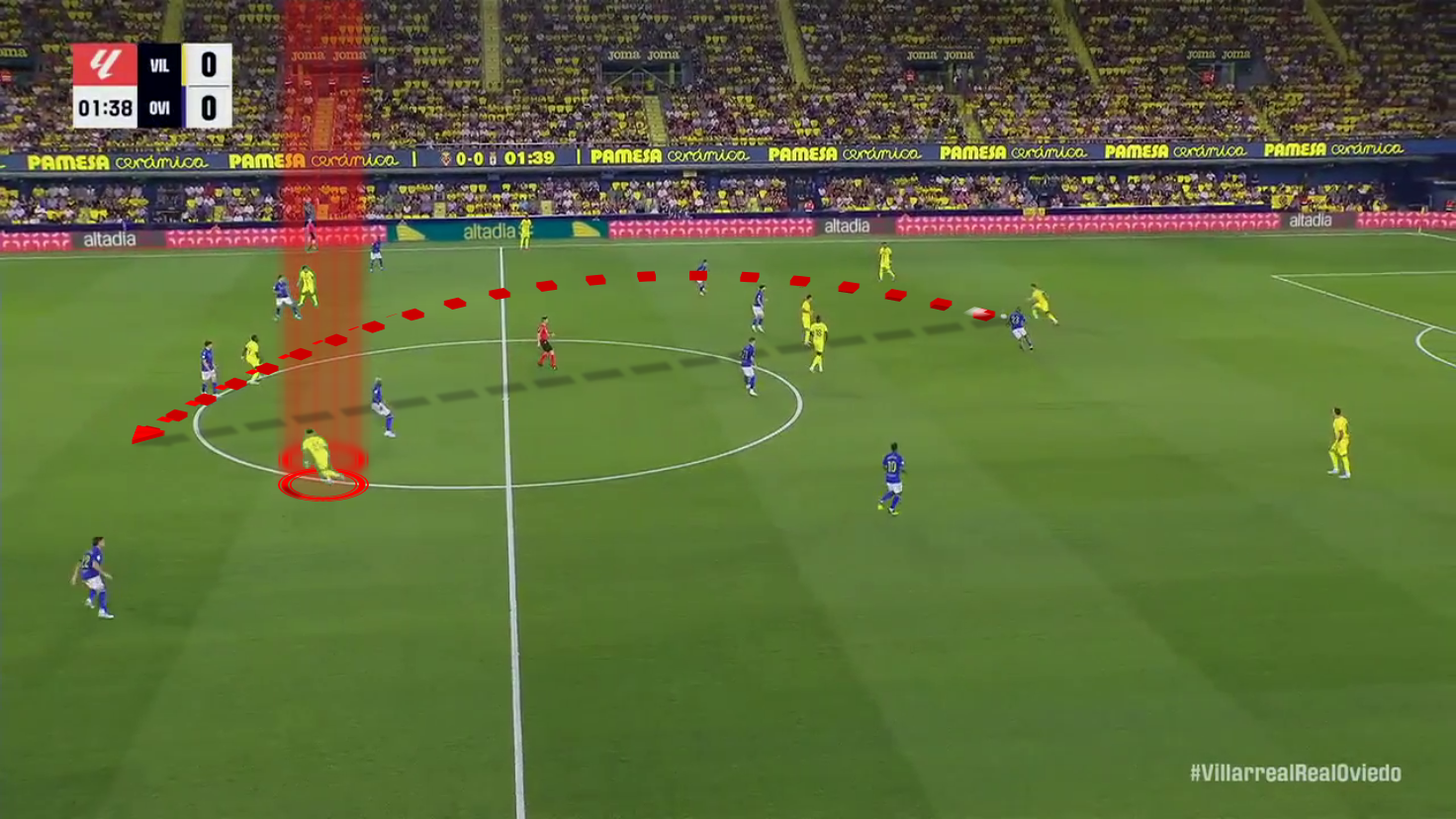
Another variation in Villarreal’s build-up involves Alberto Moleiro, the second striker, dropping between the lines to receive before making dynamic movements to exploit the space behind the defensive line.
When Villarreal moves into the middle third to progress, they often advance the ball through “third-man” combinations, particularly on the right side.
These plays involve coordinated movements between the full-back, a central midfielder, and the forward.
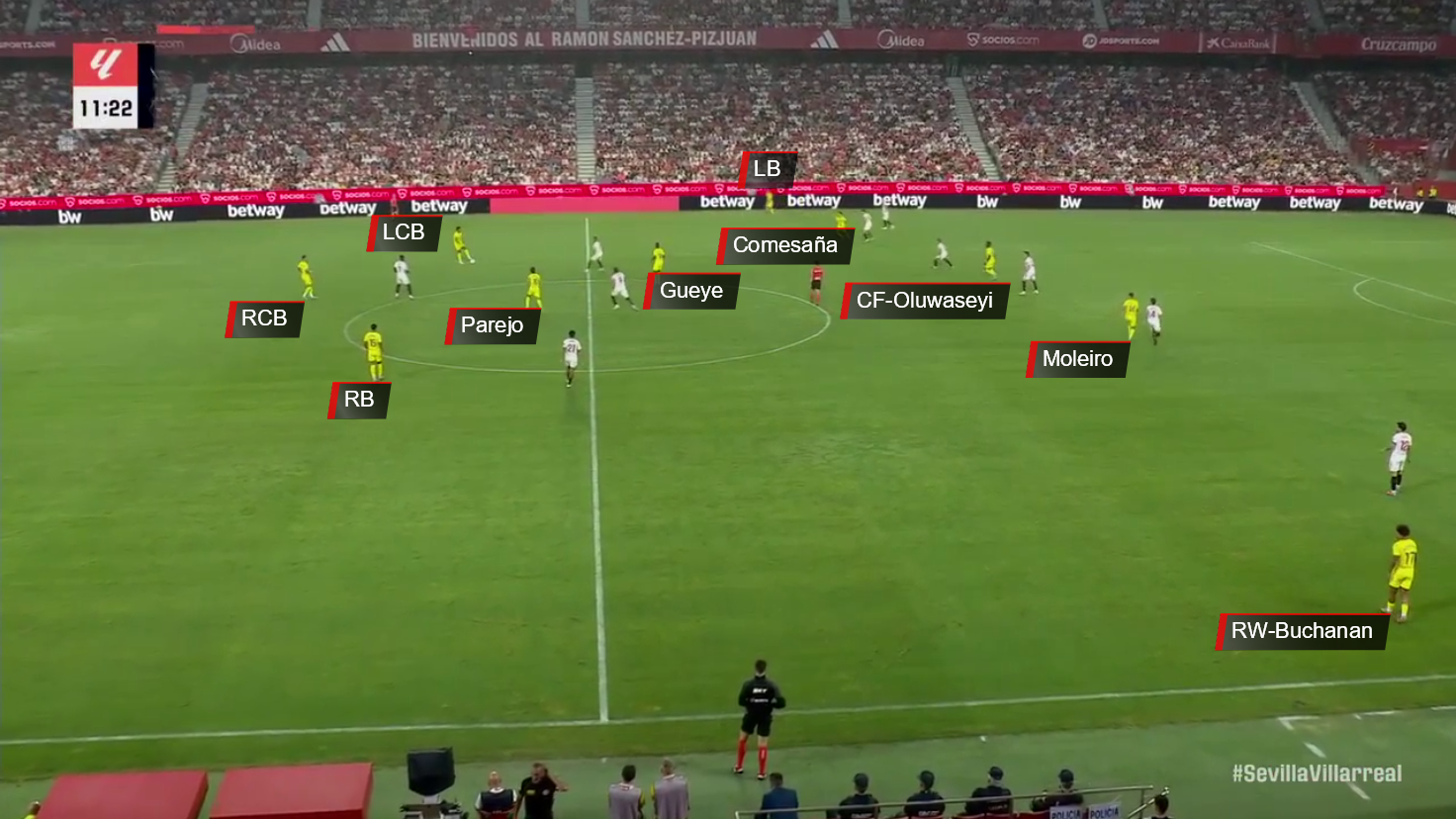
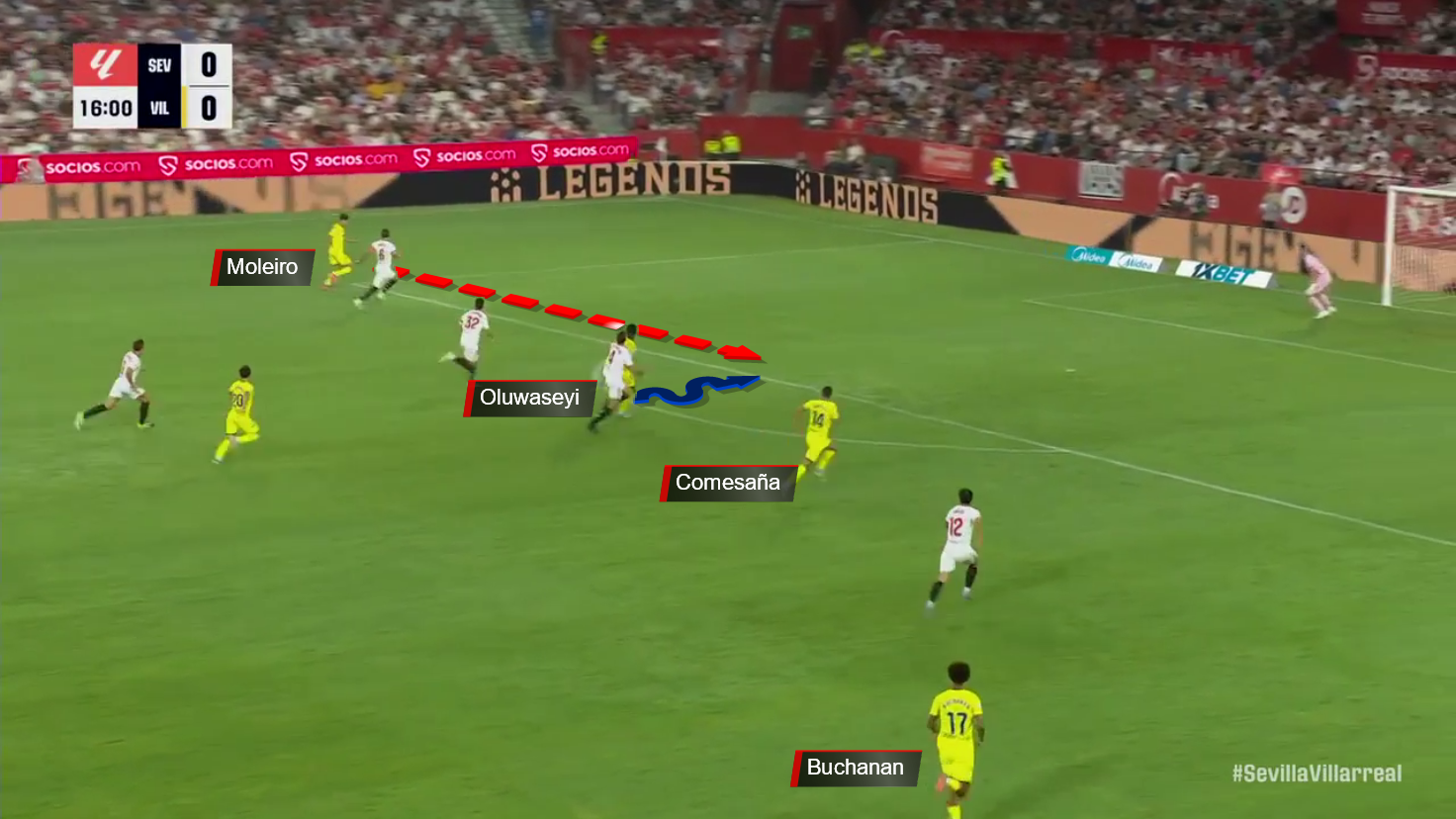
Their spacing in this area is well-drilled: the winger drifts inside to connect with teammates, while the striker Tani Oluwaseyi drops toward the ball to lay it off for a midfielder making an overlapping run.
This tactical approach allows Villarreal to break down organised defences while remaining solid at the back.
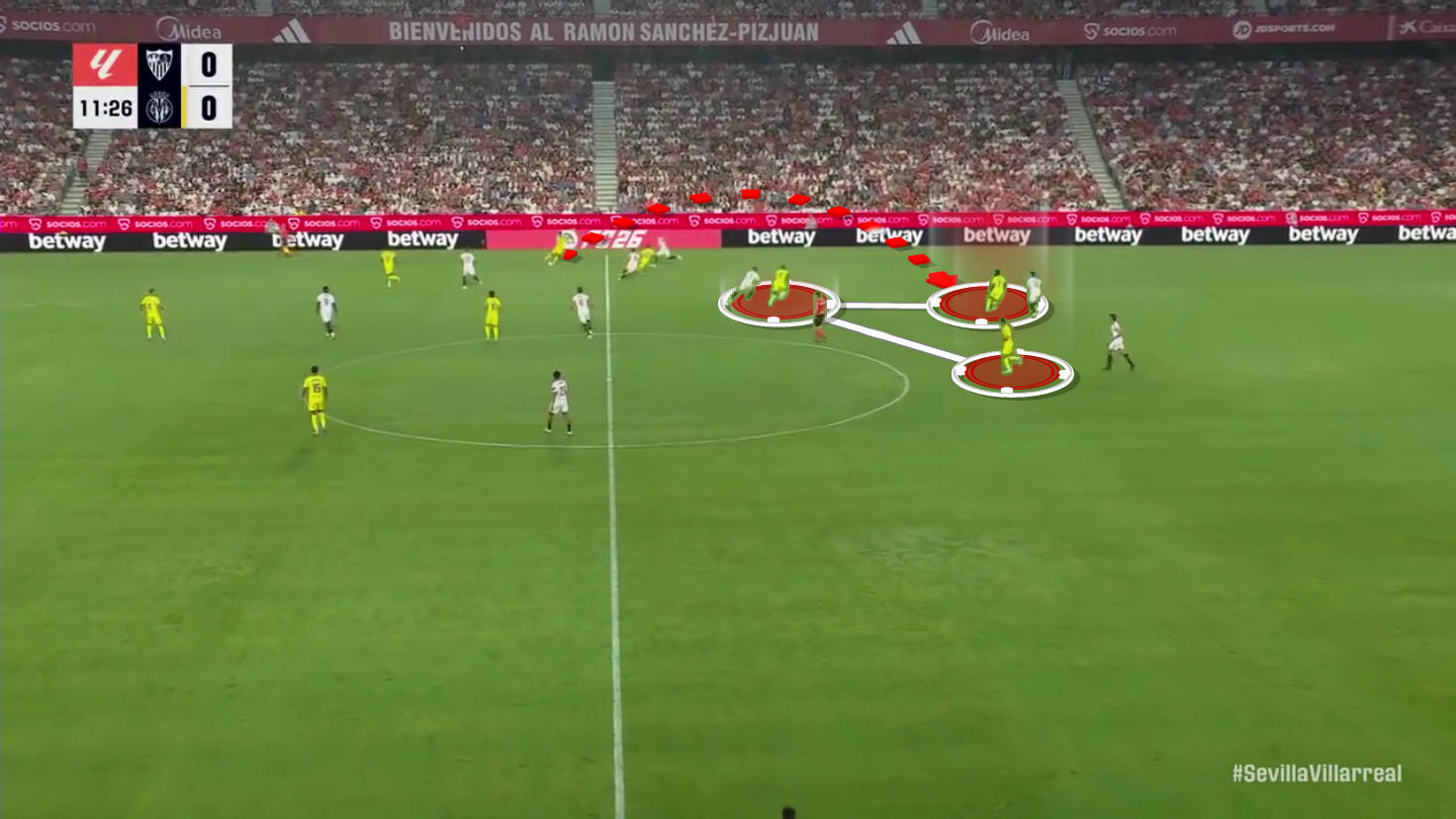
When Villarreal moves into the middle third to progress, they frequently advance the ball through “third-man” combinations, particularly on both sides.
These plays involve coordinated movements between the full-back, a central midfielder, and the forward.
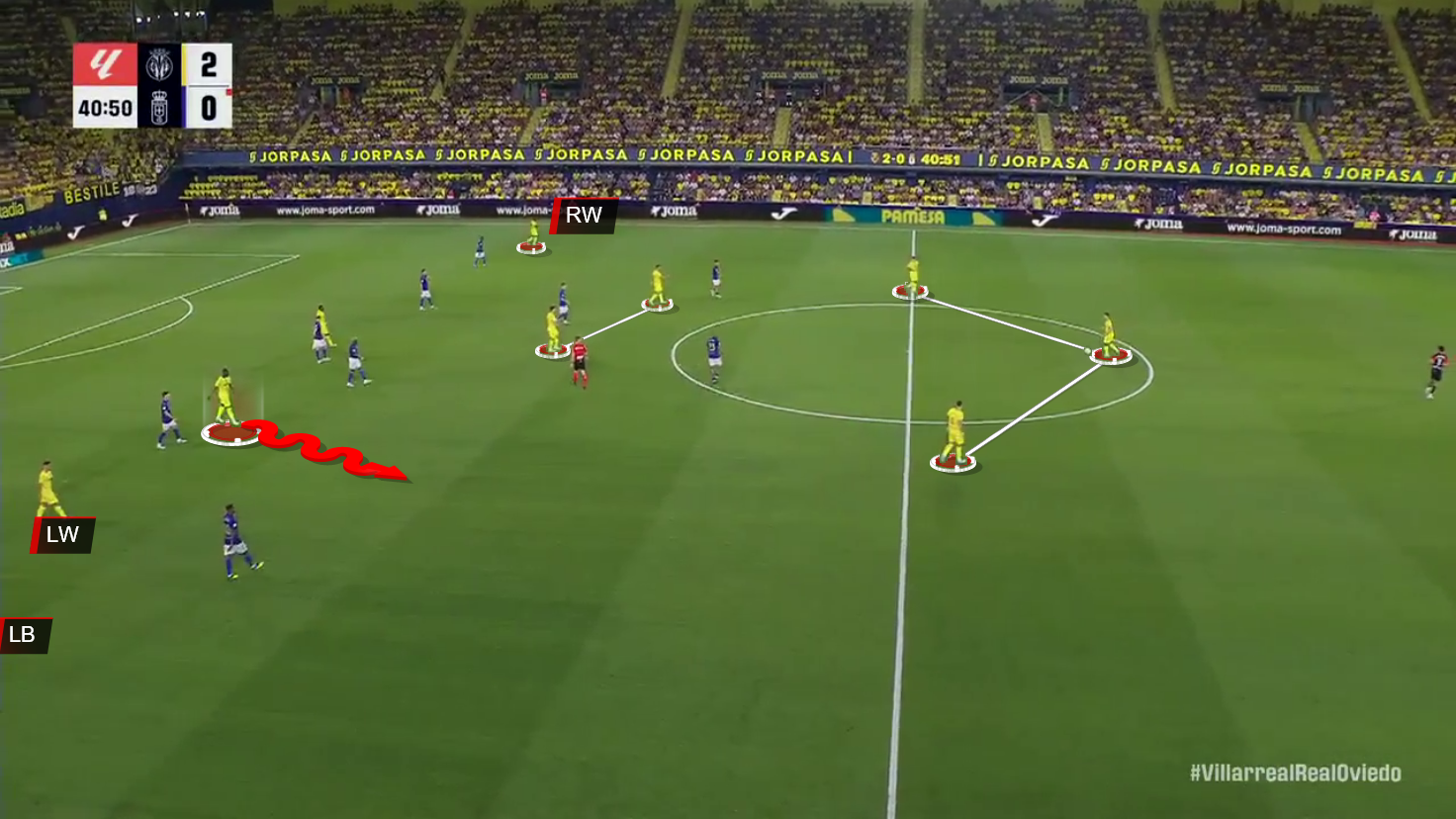
Here, Pape Gueye steps higher to stretch the opposition’s defensive line and create space between their midfield and back unit.
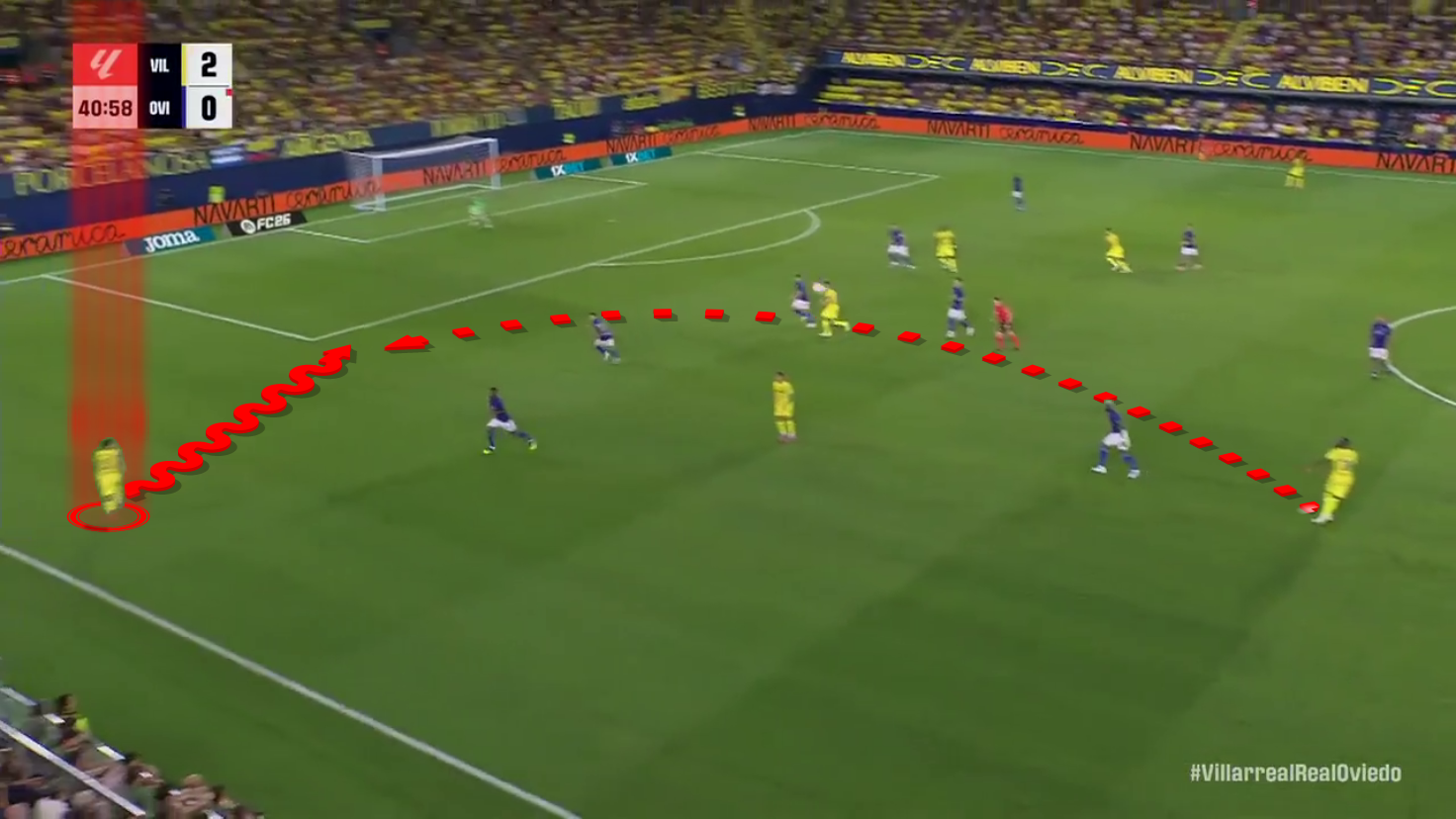
He then drops slightly to receive and releases a diagonal pass that breaks the first line of pressure.
Their spacing in this area is well-drilled: the winger drifts inside to connect with teammates, while the striker Tani Oluwaseyi drops toward the ball to lay it off for a midfielder making an overlapping run.
This tactical approach allows Villarreal to break down organised defences while remaining solid at the back.
In short, Villarreal’s possession strategy focuses on controlling positions on the field rather than simply making a high number of passes.
They prioritise maintaining width, inviting pressure from the opposition, and exploiting the open spaces.
This season, their effective positional play has enabled them to control the flow of the game, even against top-tier opponents, leading to fewer mistakes and fewer turnovers in critical central areas.
Villarreal Attacking Structure & Final Third Play
Under Marcelino’s consistent 4-4-2 formation, Villarreal’s offence has become more dynamic.
The team creates width through its full-backs, uses an inverting winger to create overloads, and relies on striker partnerships to attack the half-spaces and penalty area.
This approach combines disciplined structure with quick, vertical attacks.
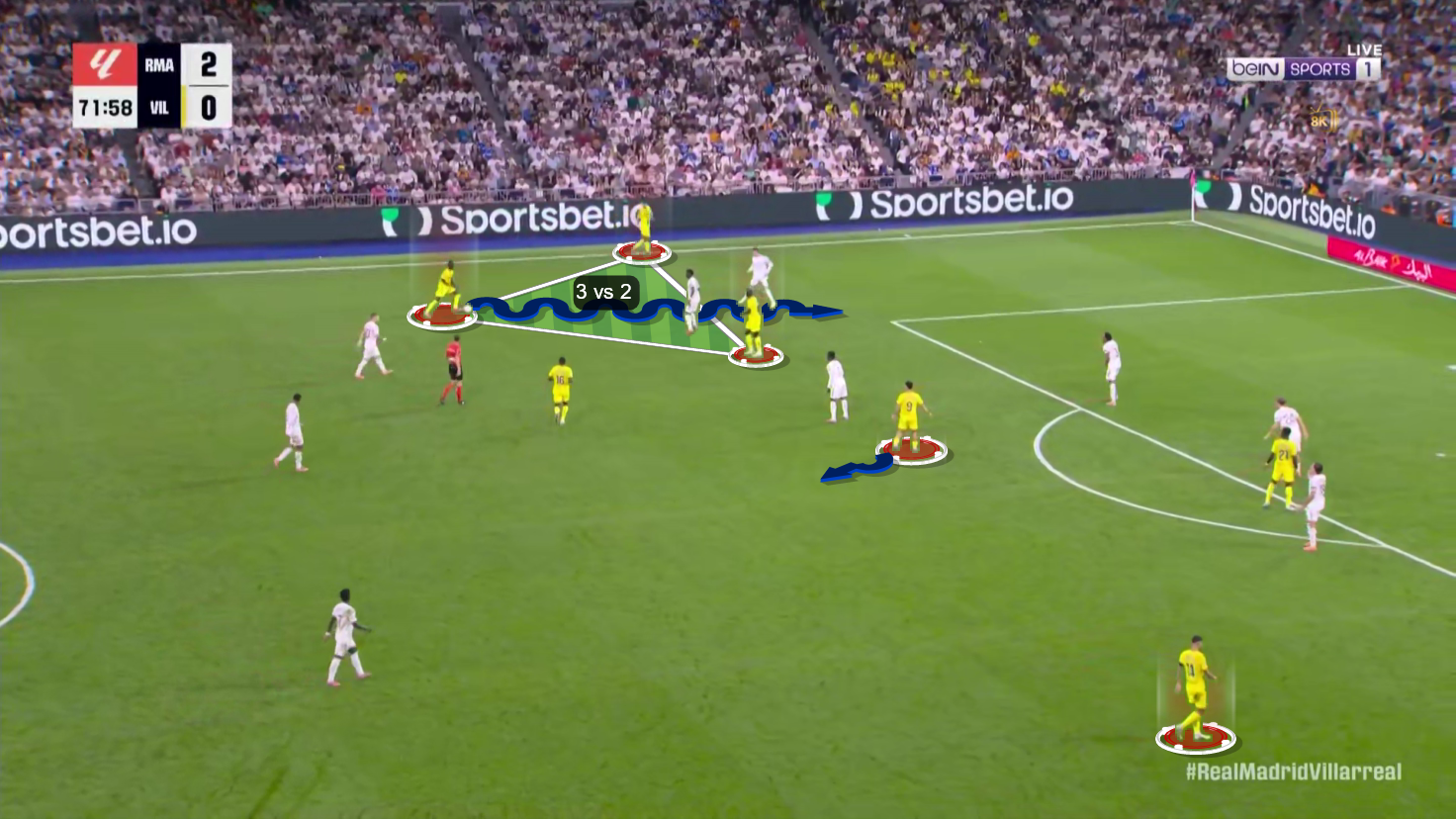
Once the ball reaches the final third, Villarreal’s attack is spearheaded by two main runners.
One striker occupies the central space.
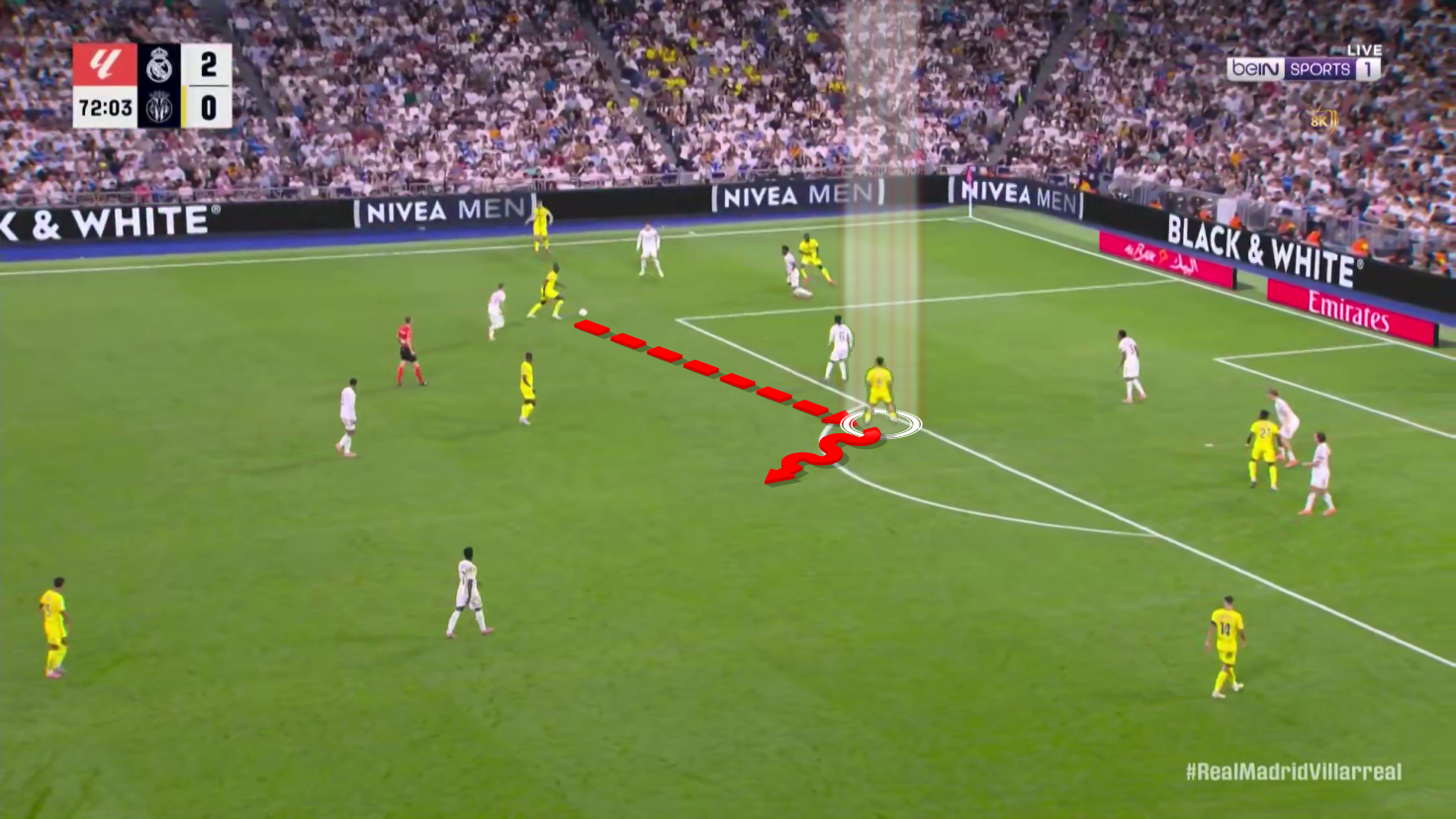
The wingers support them: one holds a wide position to stretch the opposing defence, and the other moves infield to link up with the midfield or the advancing full-back.
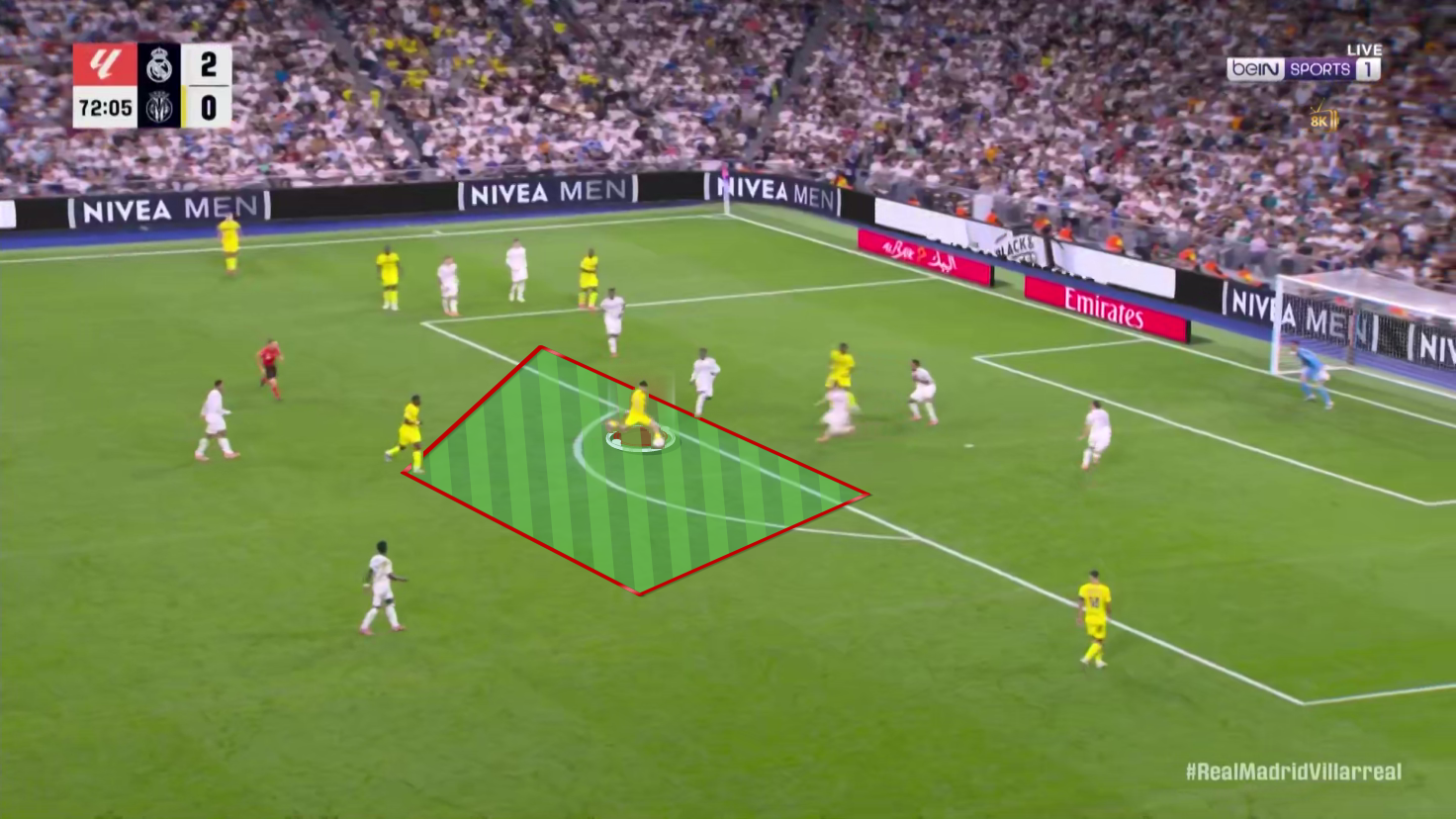
While a second player drops deeper to pull defenders out of position, this movement opens up channels for other players to run into.
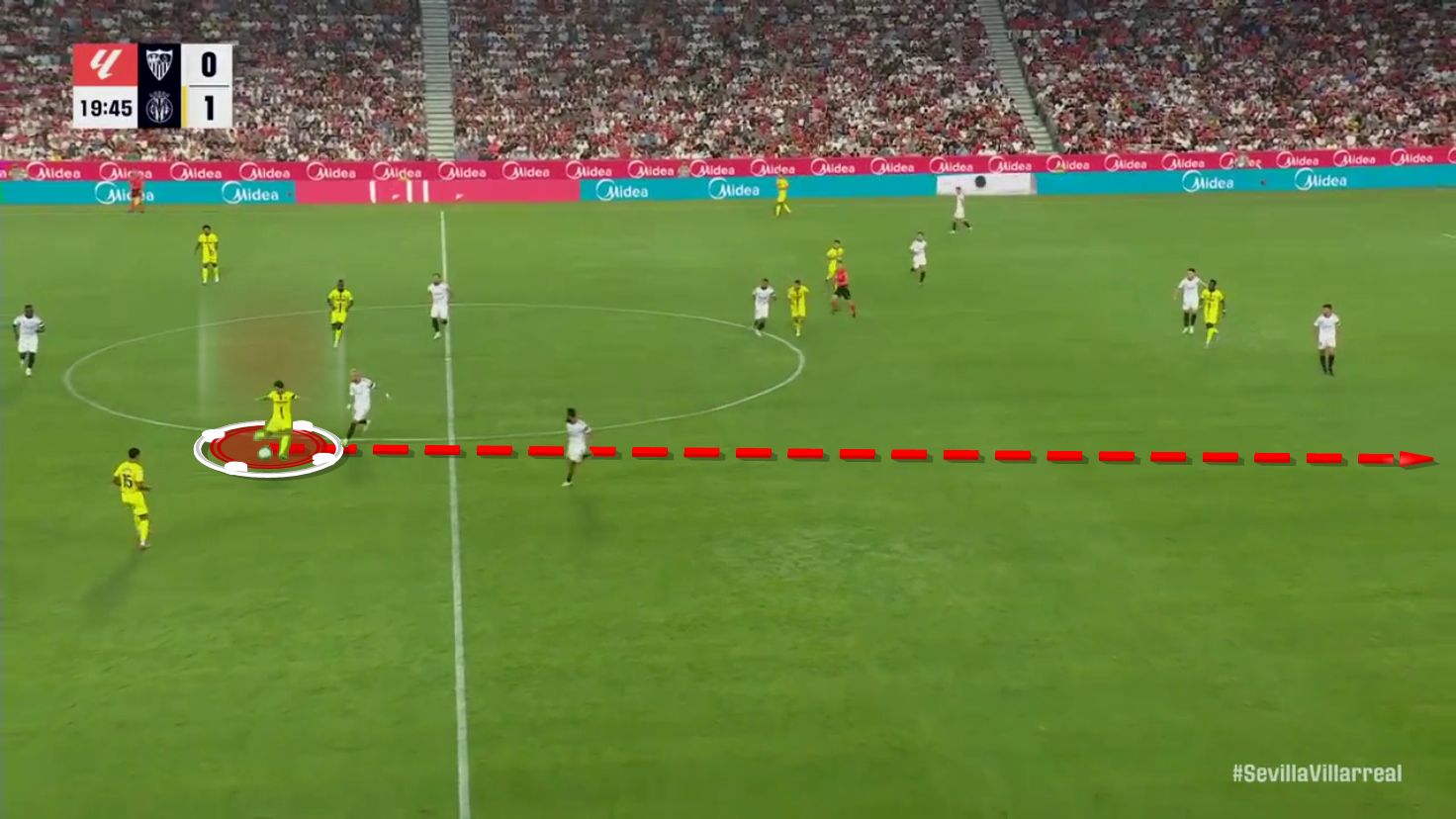
Villarreal also uses long vertical passes from Dani Parejo or Rafa Marín to exploit the space behind the defensive line, targeting wingers who stretch the pitch and provide direct outlets in transition.
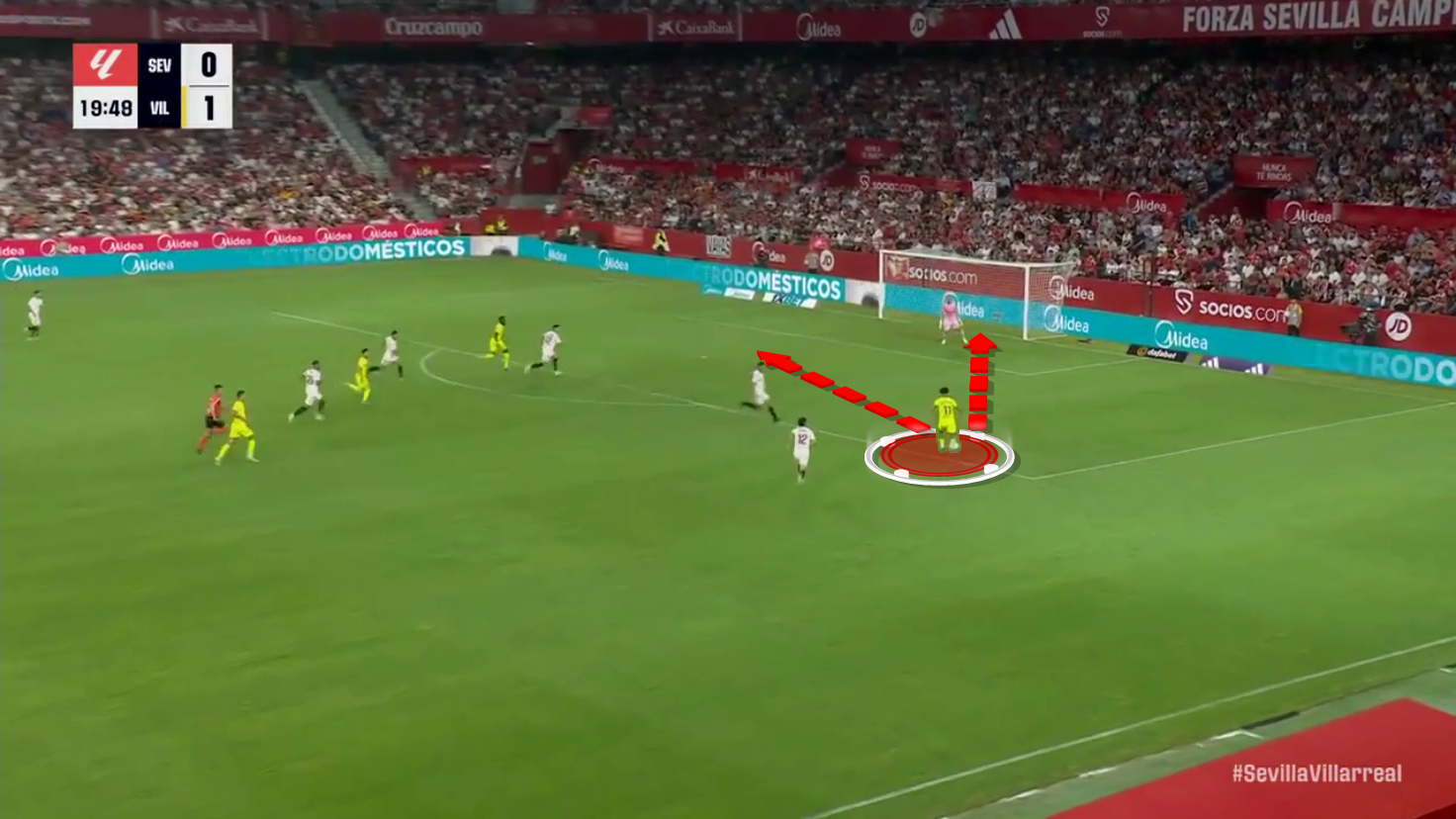
Villarreal’s strategy in the final third prioritises intelligent movement and the exploitation of space over simply delivering a high number of attacks.
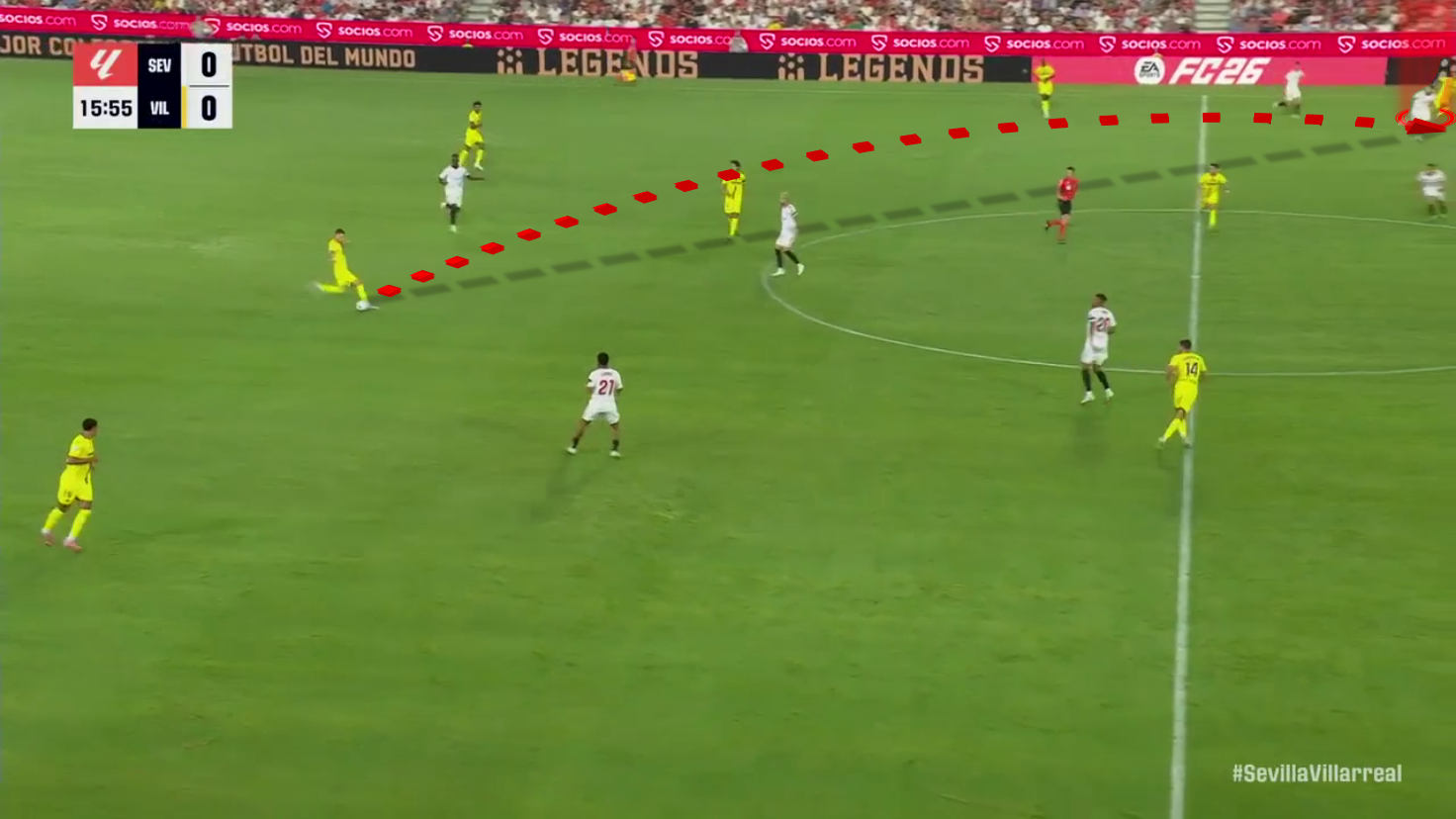
Instead of relying on wide crosses, they frequently use diagonal or chipped passes to target the half-spaces between defenders.
Once they are in a dangerous position, they prefer low crosses and cut-backs rather than high balls, a style evident in the types of goals they score.
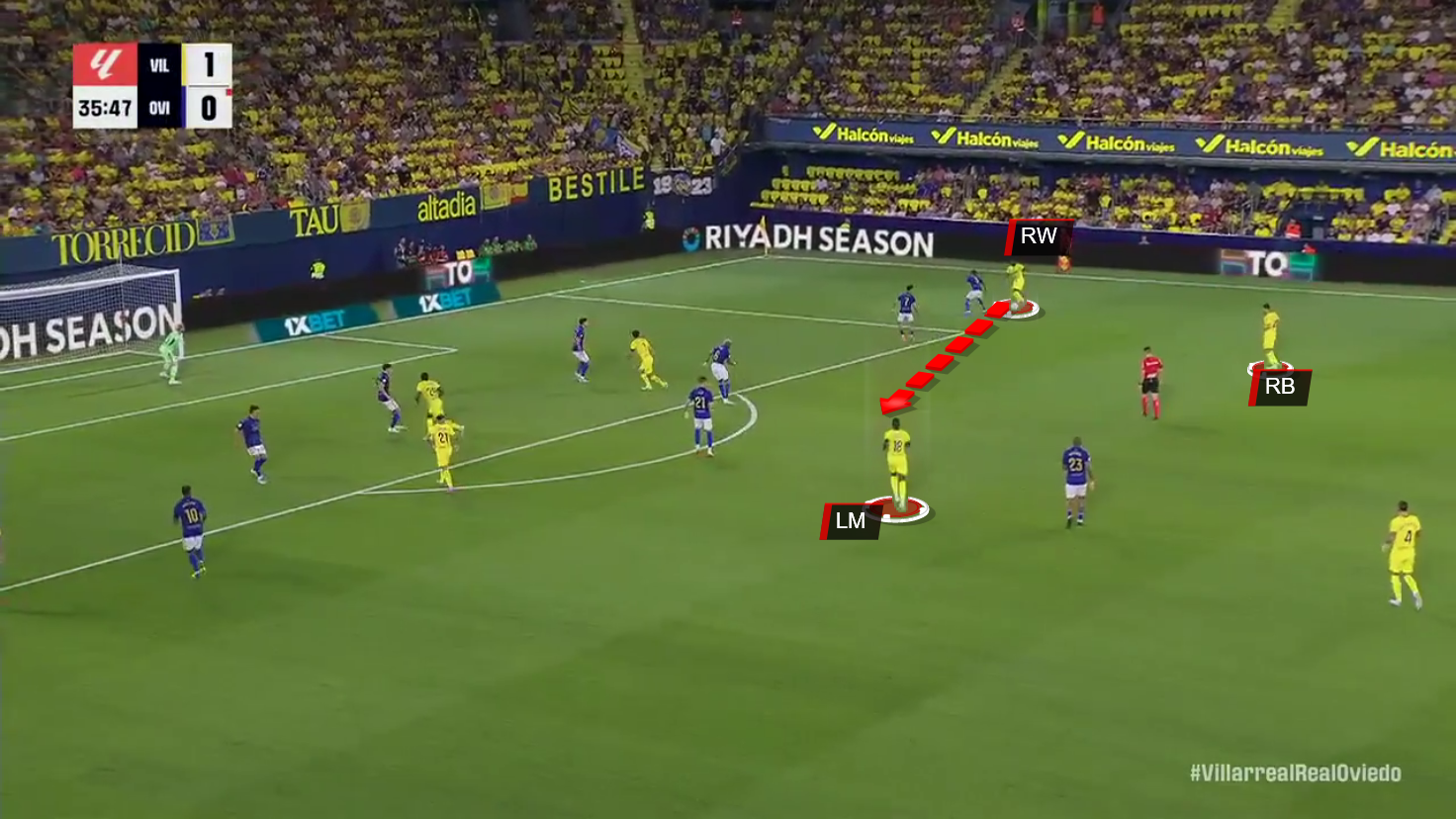
The full-backs, especially on the right, make overlapping and underlapping runs to deliver dangerous passes or cut-backs into the penalty area.
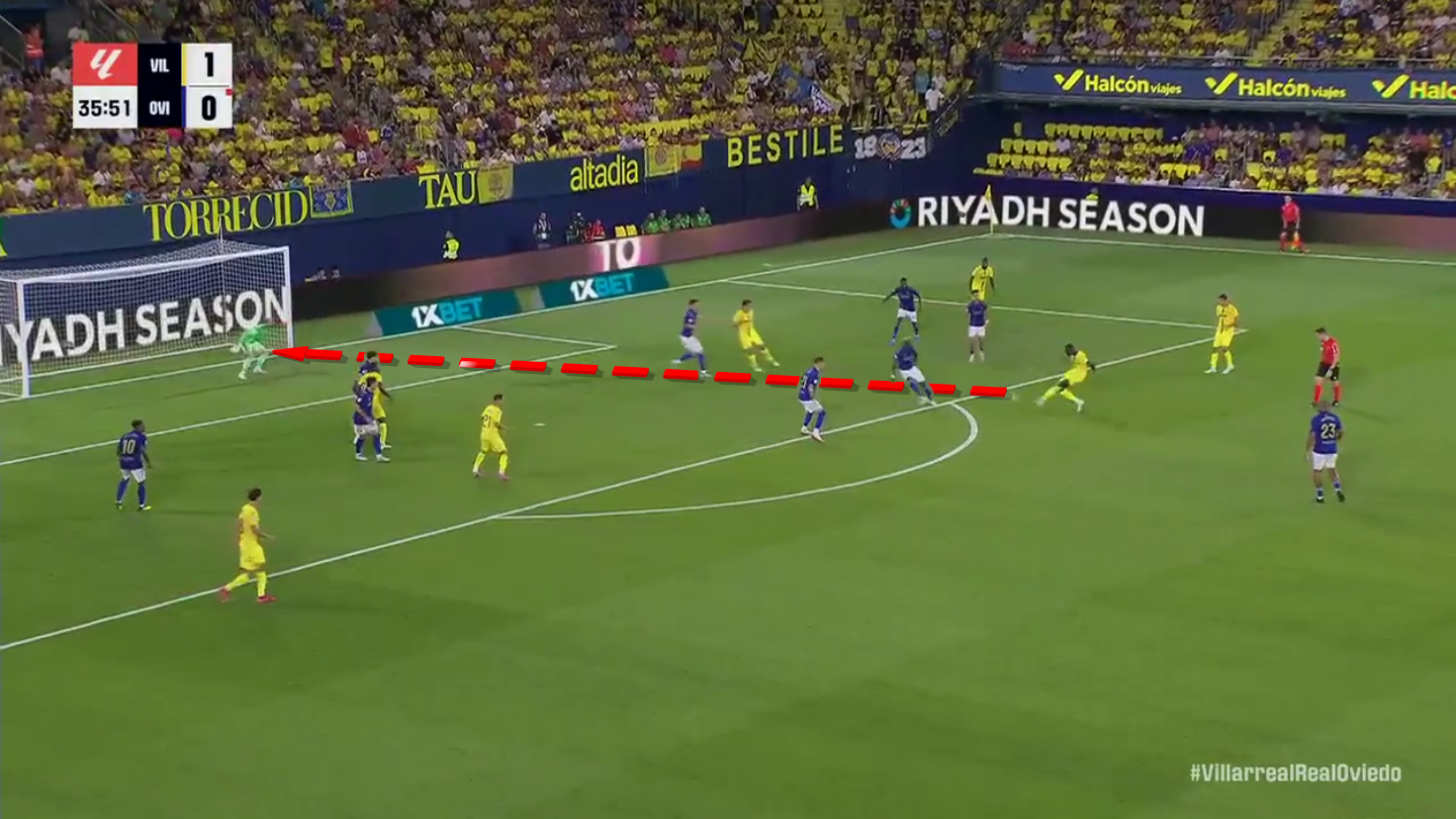
This triggers a well-practised attacking sequence: the strikers pin the opposing centre-backs, creating space for midfielders to make late, supporting runs into the box as a second wave of attack or shooting opportunities.
Villarreal Transitions
Upon winning possession, Villarreal immediately look to attack vertically.
The initial passes are directed forward to a player who can quickly initiate the next phase of the attack.
Pape Gueye often serves as the key outlet, using his strength to shield the ball from defenders before passing it wide or into an attacking channel.
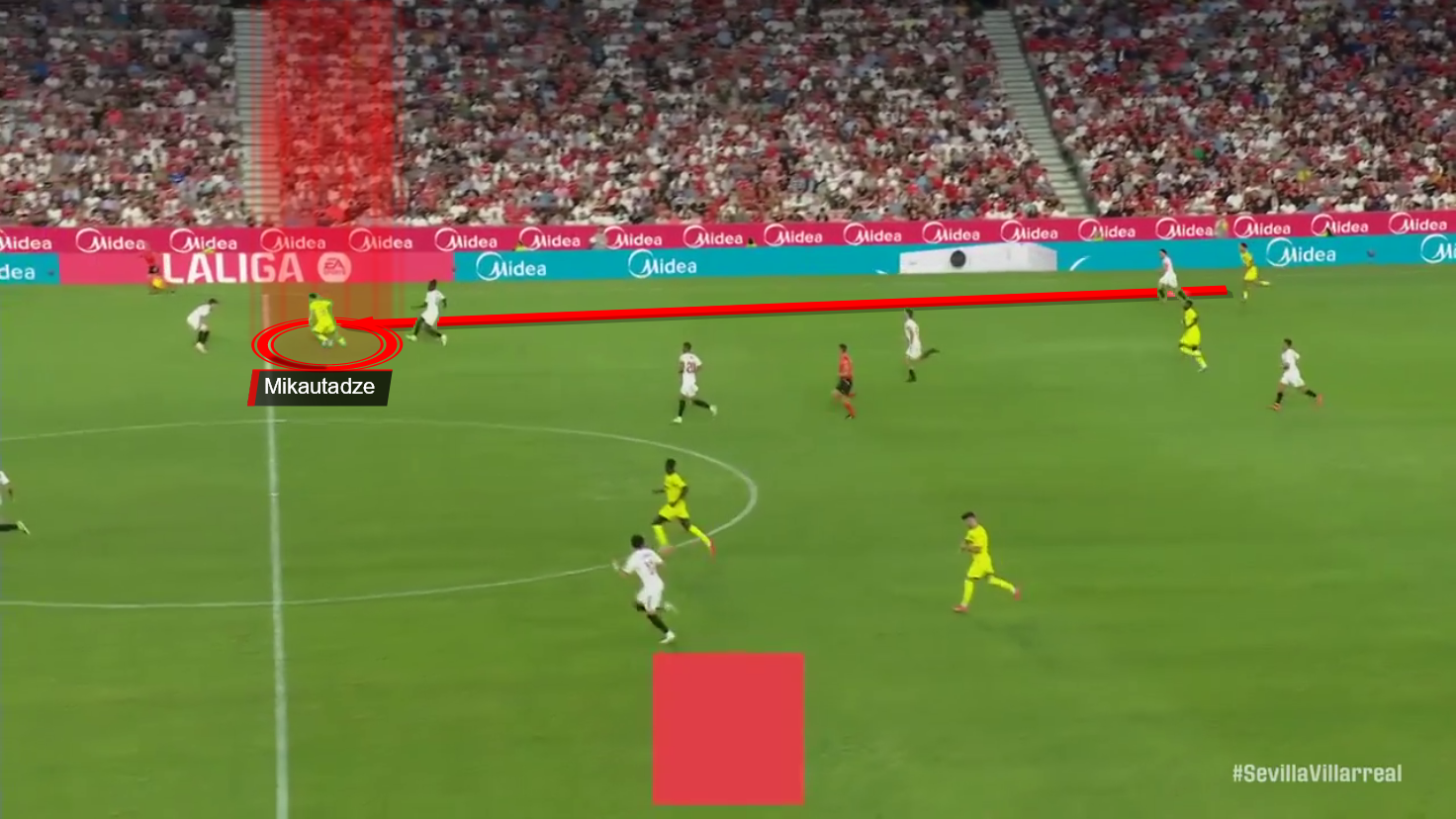
Anticipating these turnovers, forwards like Nicolas Pépé and Alberto Moleiro / Georges Mikautadze make immediate diagonal runs behind the defence to exploit any disorganisation.
This ability to either penetrate centrally or switch play quickly to the opposite wing has led to numerous successful attacks early in their possession.
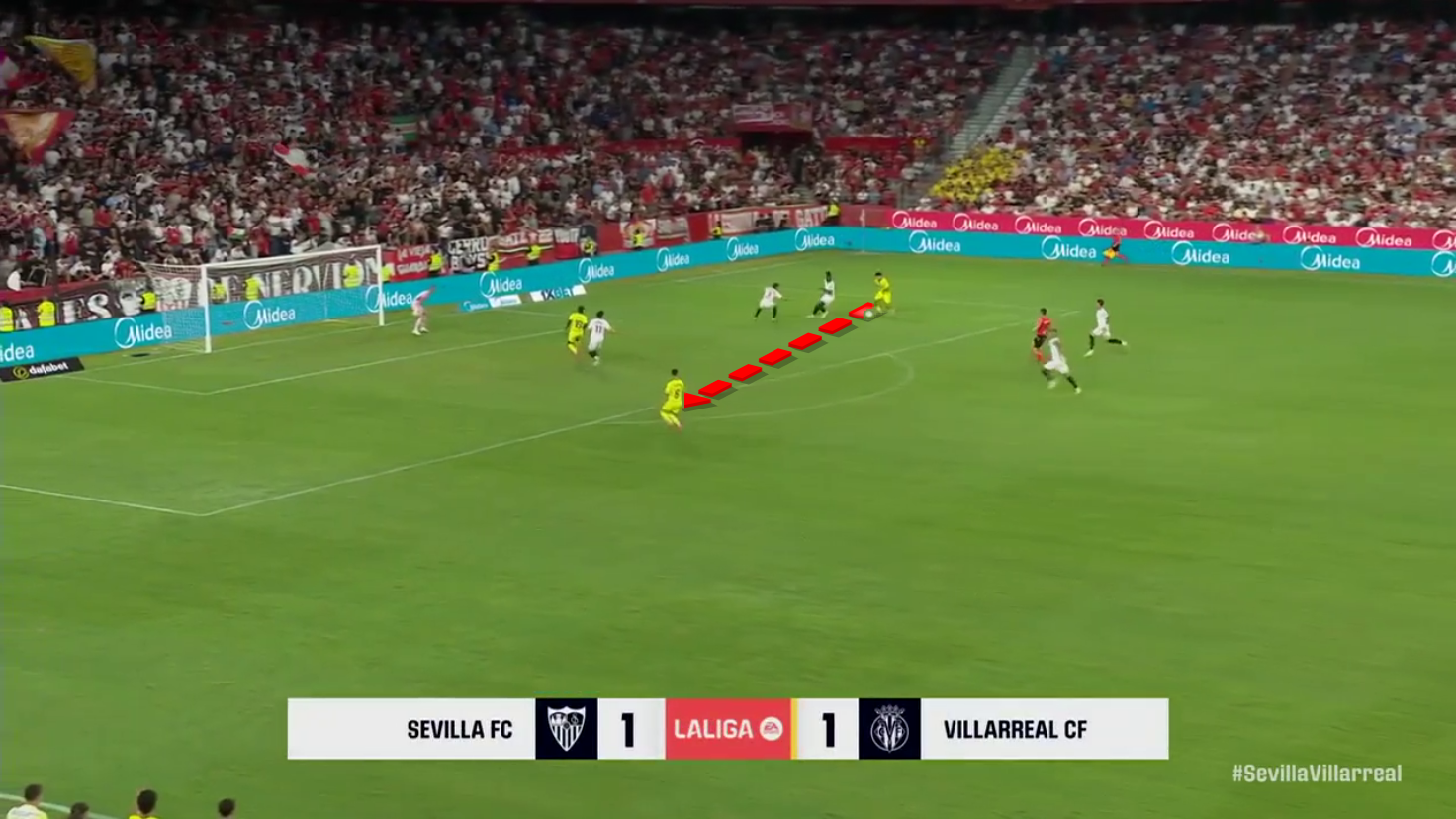
Here, we can see how Villarreal’s quick attacking transition directly translates into a goal.
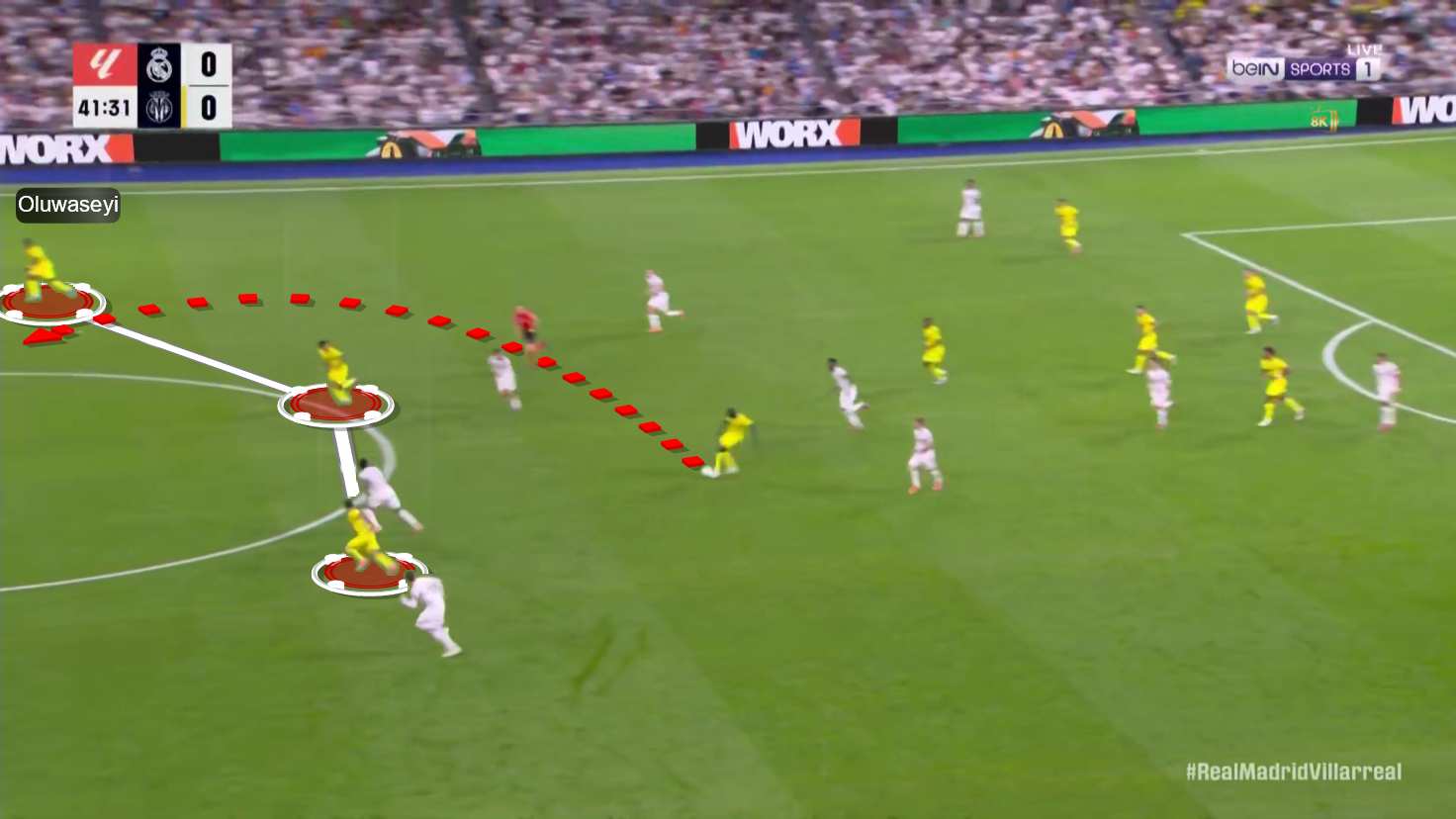
The sustainability of these quick transitions stems from the team’s compact, balanced shape, which allows them to win the ball back effectively.
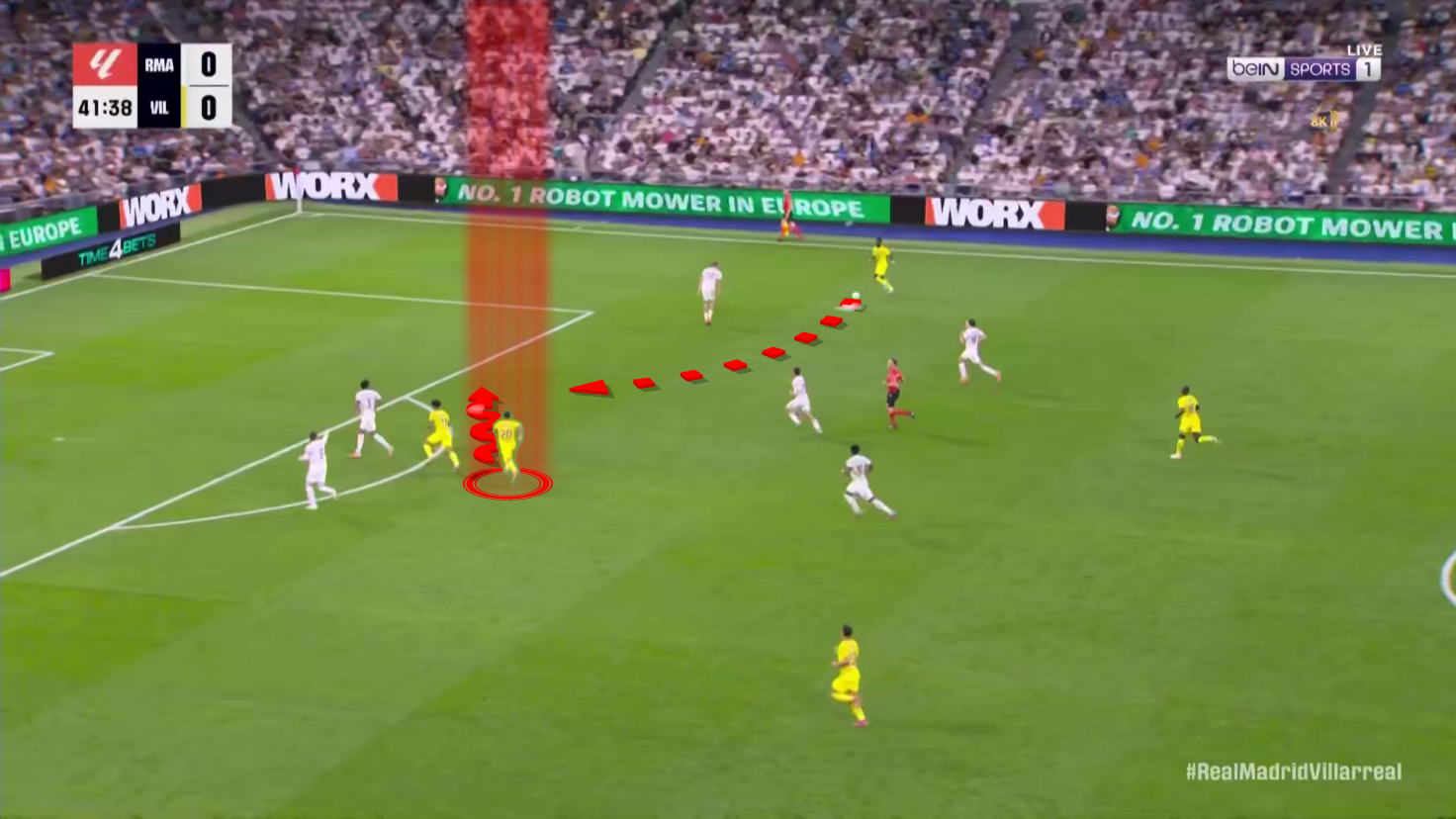
With their full-backs positioned smartly (one high and one deeper), Villarreal can recover loose balls and instantly launch attacks into advanced areas without sacrificing defensive stability.
They avoid overcommitting players forward, typically advancing with only three or four, while the rest of the team maintains their defensive structure.
Villarreal’s defensive reaction upon losing possession is just as organised as their attack.
Under Marcelino tactics, the team follows a “five-second rule” in which the three players closest to the ball immediately swarm the ball carrier to either win it back or slow down the opponent’s play.
Simultaneously, the defensive line pushes forward, squeezing the available space.
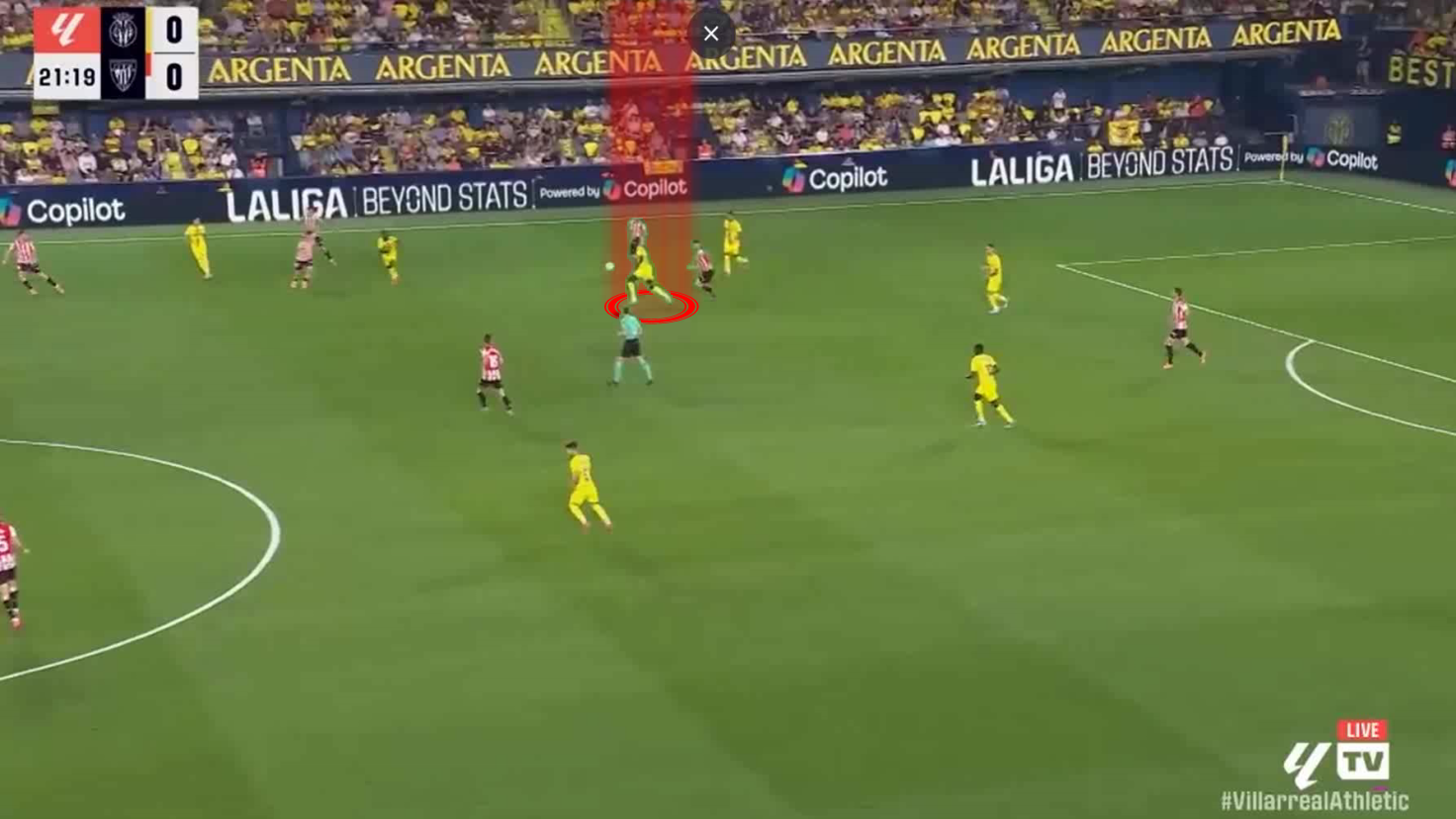
This synchronised response effectively shuts down clean counterattacks.
Santi Comesaña is key to timing this counter-press, while Rafa Marín is instrumental in making sure the defensive line holds its high position and doesn’t drop back prematurely.
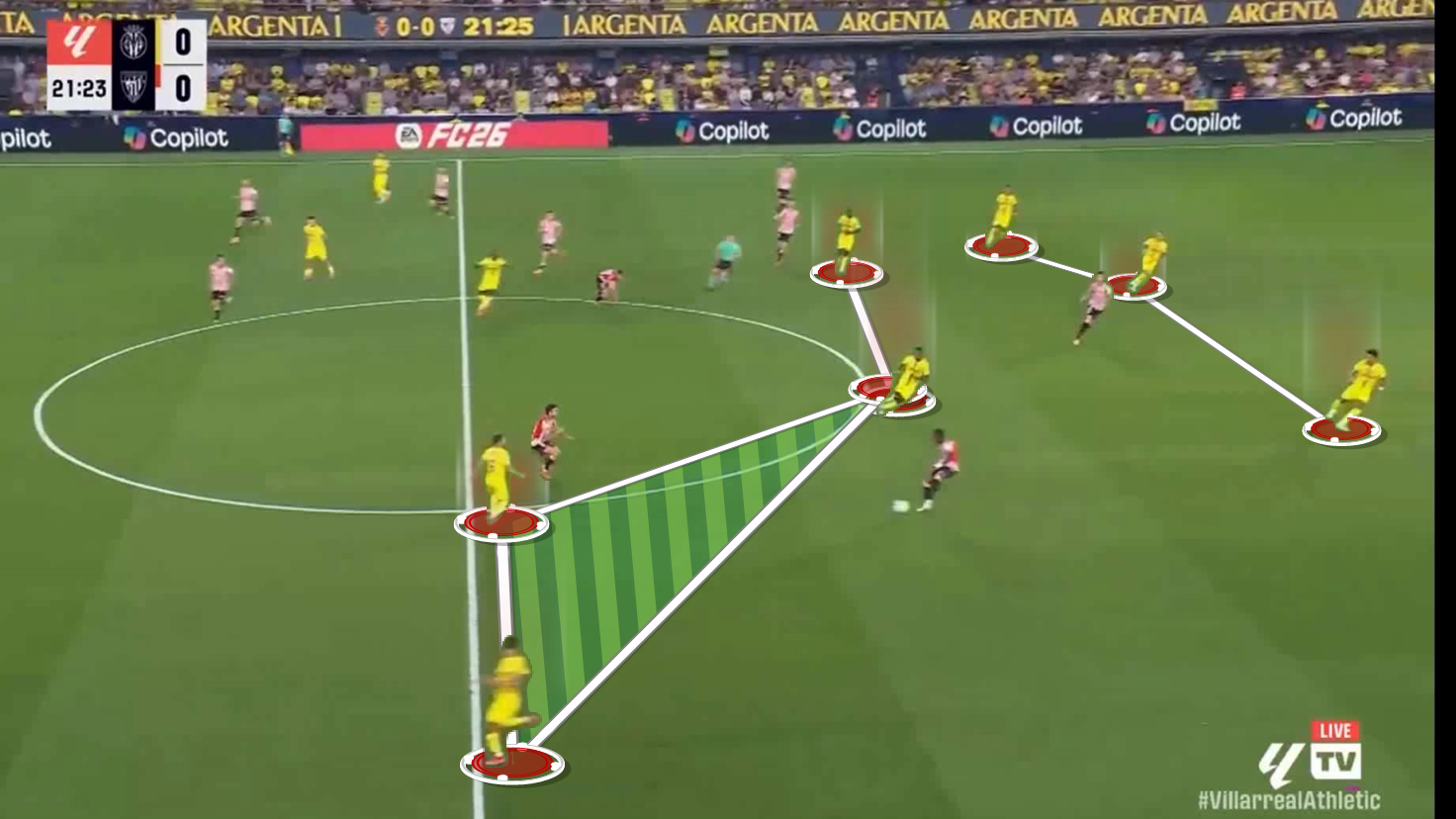
Villarreal’s organised defensive shape (often a 2+3 structure) is clear in these moments.
Even when the full-backs are pushed high up the field, the central midfielder and the winger on the opposite side stay narrow to guard the middle of the pitch.
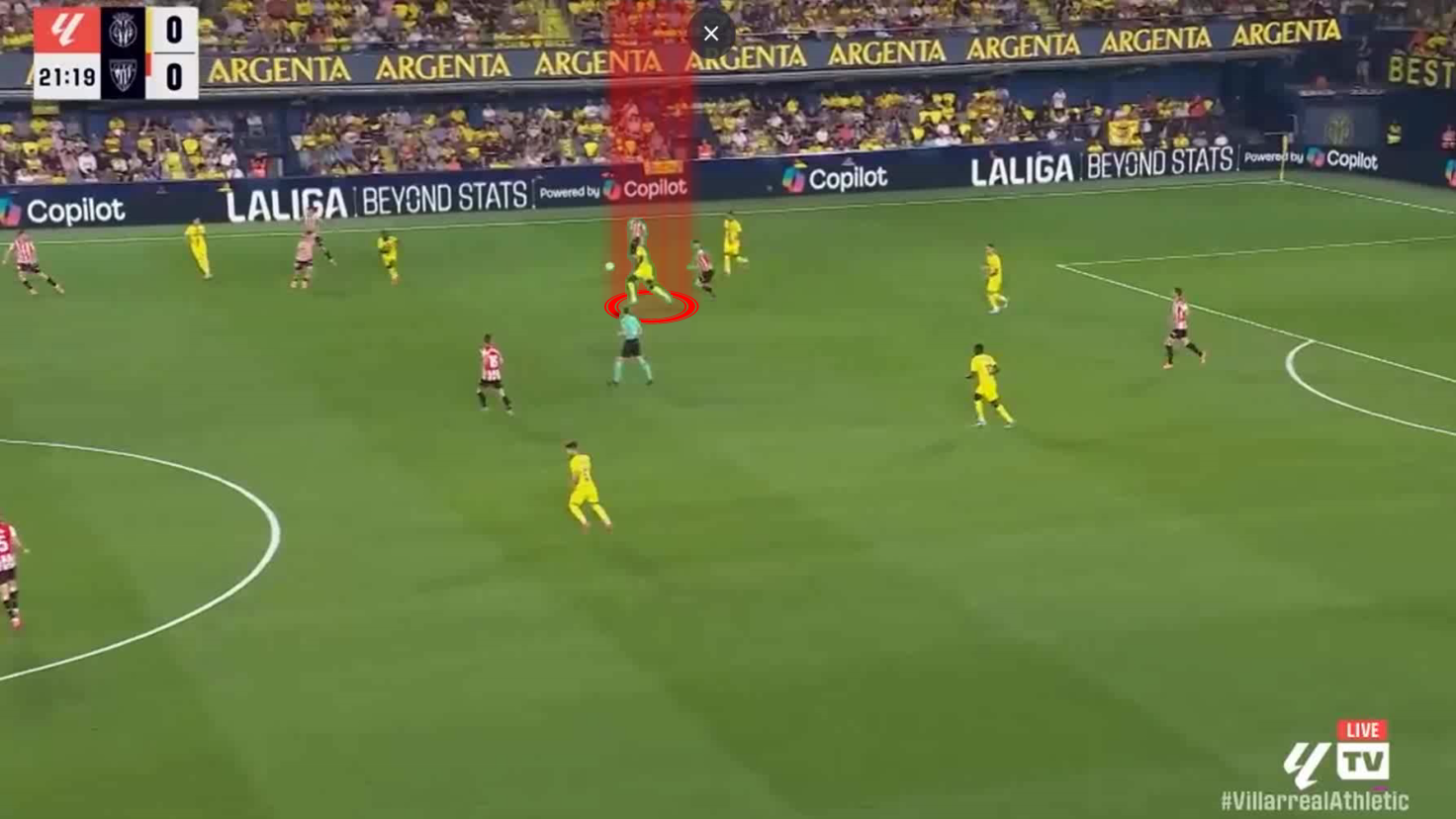
This disciplined positioning allows Villarreal to either win the ball back in advanced areas or, failing that, slow down the opponent’s attack long enough for the team to get back into its defensive formation.
This is a key factor in why they have conceded fewer shots this season.
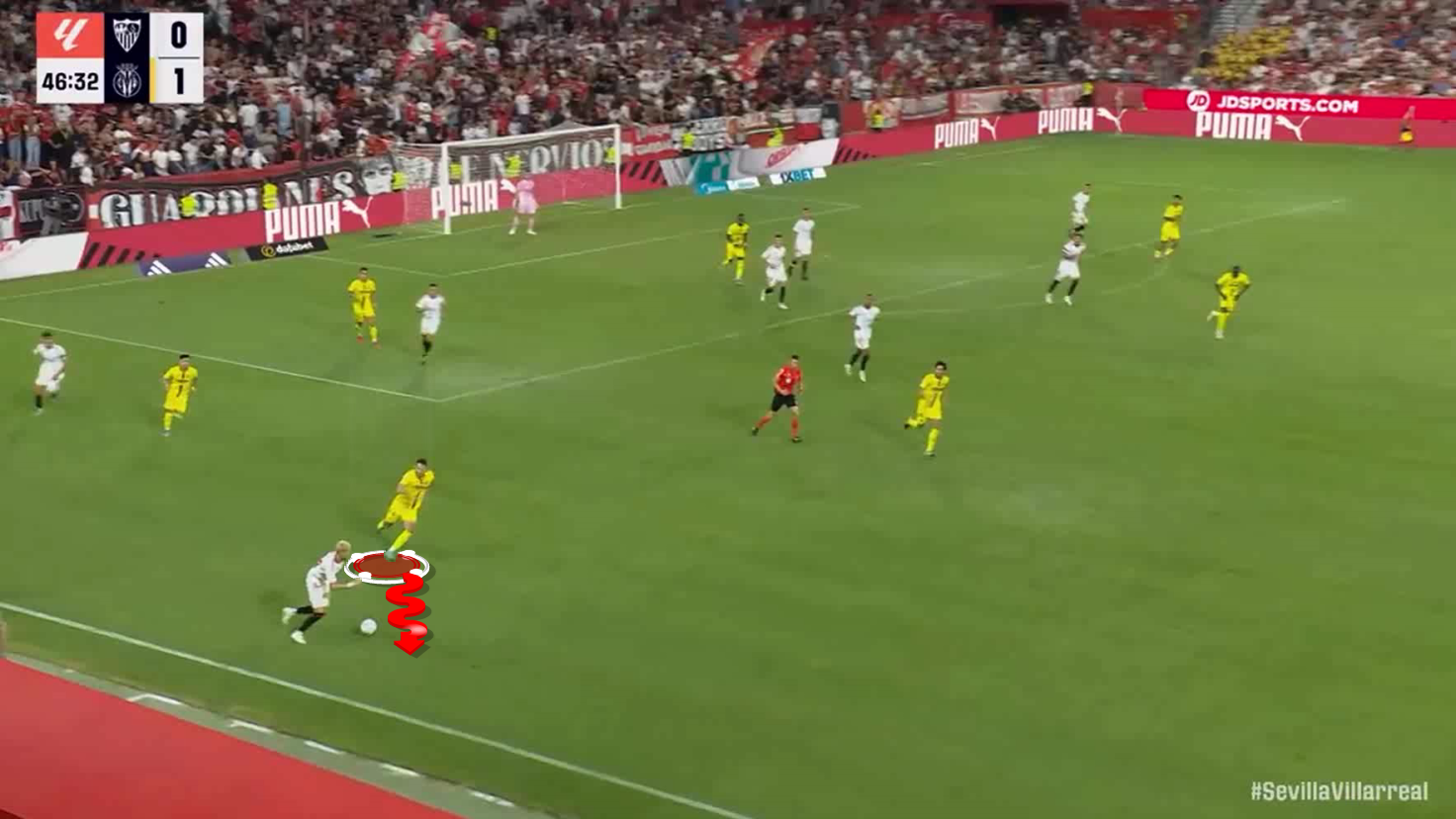
Sometimes, tactical fouls are a key factor in reshaping the team again under the ball lane.
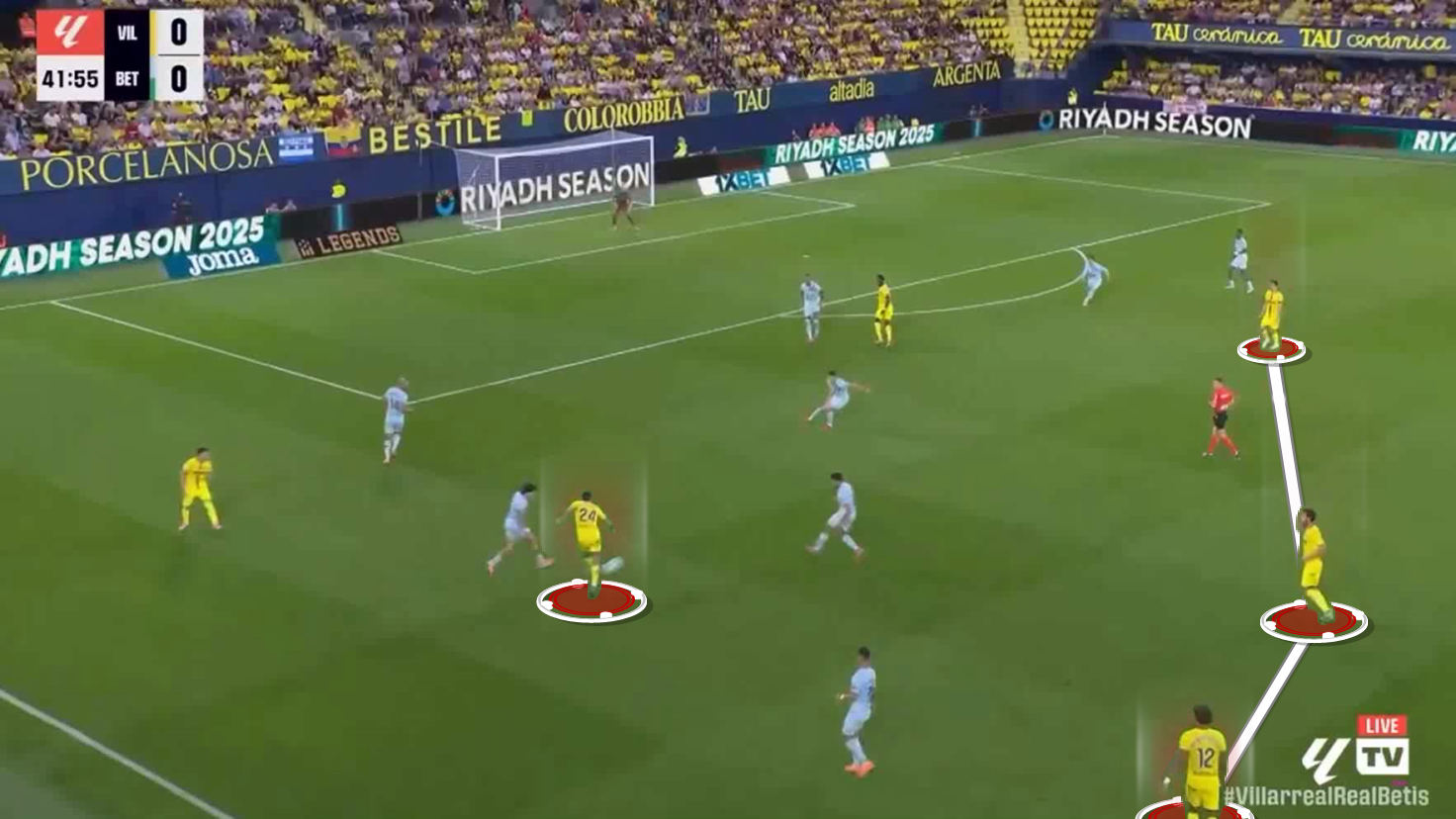
Villarreal’s rest defence is well-positioned in this sequence against Real Betis, with three players already occupying the zone beneath the ball holder’s lane.
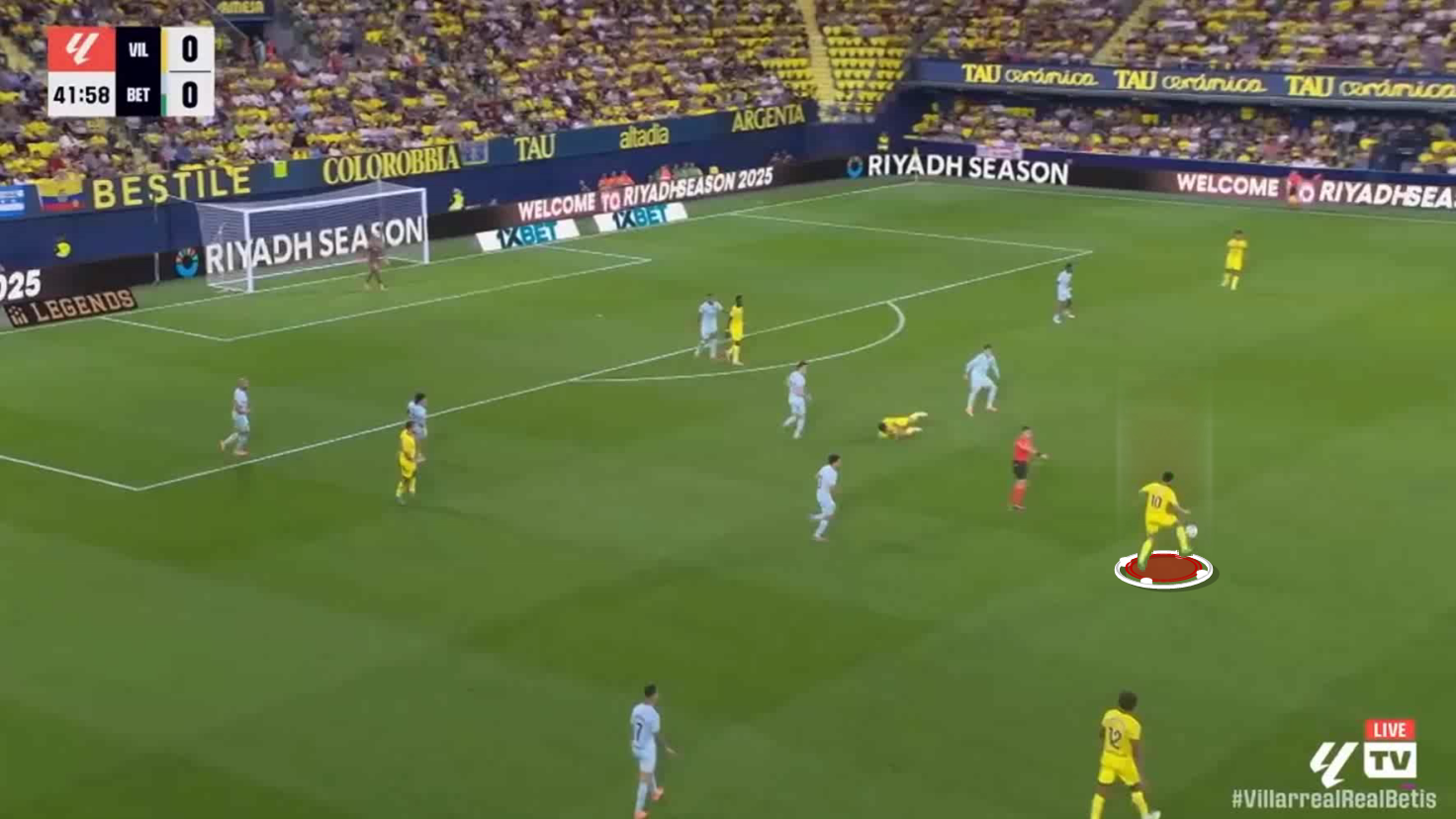
This compact structure allows them to quickly counterpress and recover possession once the attack breaks down.
Conclusion
Marcelino’s Villarreal have re-established themselves as one of La Liga’s most structurally complete teams this season.
Their rise to third place is not built on dominance of possession, but on a clear, disciplined identity: compactness, clarity of transitions, and ruthless efficiency in key moments.
The collective understanding between the defensive and midfield lines, the precision of their rest-defence, and the fluidity of role adaptation during counter-pressing phases all reflect a side that has internalised its tactical principles.
Villarreal’s ability to recover shape in seconds and protect central corridors has transformed what was once a vulnerability into a strength.
Marcelino’s model continues to balance defensive security with vertical threat, a hallmark of his coaching DNA.
In a league increasingly defined by positional fluidity and aggressive high pressing, Villarreal’s success lies in their control of space, not just the ball.
If this trajectory continues, the Yellow Submarine will not only be competing for European qualification but will also be shaping the tactical conversation in Spanish football this season.
