
Liverpool came into Wednesday on the back of a 2-1 loss to Manchester United at Anfield.
It was their fourth straight loss in all competitions for Arne Slot’s side, so they were in desperate need of a positive result.
Eintracht Frankfurt came into the match having lost three of their last five matches.
The last time Dino Toppmöller’s side was in action in the UEFA Champions League, they were beaten soundly 5-1 by Diego Simeone’s Atletico Madrid.
Liverpool changed things tactically for this match, with Arne Slot coming out in a 4-3-3 that really played more like a 4-4-2.
A combination of effective final-third tactics, quick transitions, and set pieces allowed Liverpool to dominate this match and end their losing streak.
In this Eintracht Frankfurt vs Liverpool tactical analysis, we will look at how Liverpool were effective in their transitions, their tactics in the final third against Frankfurt’s low block, their set-piece routines that led to two goals, and some improvements and ongoing concerns with Liverpool’s press.
Eintracht Frankfurt Vs Liverpool Lineups & Formations
For the first time this season, Frankfurt came out in a 3-4-3 formation
Michael Zetterer started in net behind Aurele Amenda, Robin Koch, and Arthur Theate as the three centre-backs.
Hugo Larsson and Mario Götze started together in central midfield, with Nathaniel Brown as the left wing-back and Rasmus Kristensen as the right wing-back.
Ansgar Knauff got his first start of the season in place of Jonathan Burkardt, with Ritsu Doan and Jean Mattéo Bahoya as the two wide forwards.
Dino Toppmöller made five substitutions in the match.
In the 59th minute, Jonathan Burkardt replaced Jean Mattéo Bahoya, and Nnamdi Collins replaced Rasmus Kristensen.
In the 64th minute, Fares Chaibi replaced Mario Götze, and Can Uzun replaced Ritsu Doan.
The final substitution came in the 76th minute when Ellyes Skhiri came on for Ansgar Knauff.
Giorgi Mamardashvili started in goal for the third straight match for Liverpool behind Ibrahima Konaté and Virgil Van Dijk as the usual centre-back pairing.
Andrew Robertson started at left-back for the second time this season, while Jeremie Frimpong started at right-back.
Curtis Jones started alongside Dominik Szoboszlai as the central midfield pairing.
Florian Wirtz, who started as the right midfielder, occupied a new role, while Cody Gakpo started as the left midfielder.
For the first time this season, Liverpool’s two high-priced signings, Hugo Ekitike and Alexander Isak, started up top together.
Arne Slot made five substitutions in the match.
In the 19th minute, Conor Bradley came on for the injured Andrew Robertson.
In the 46th minute, Federico Chiesa came on for Alexander Isak.
In the 74th minute, Arne Slot made a triple substitution, bringing on Mohamed Salah for Hugo Ekitke, Alexis Mac Allister for Cody Gakpo, and Joe Gomez for Ibrahima Konaté.

Liverpool Quick Transitions
One of the reasons why Liverpool have been struggling a bit offensively is because they haven’t been able to break out in transition as much as they did last season.
That was something that changed against Frankfurt, as there was a clear directive from Arne Slot to be as aggressive as possible in possession.
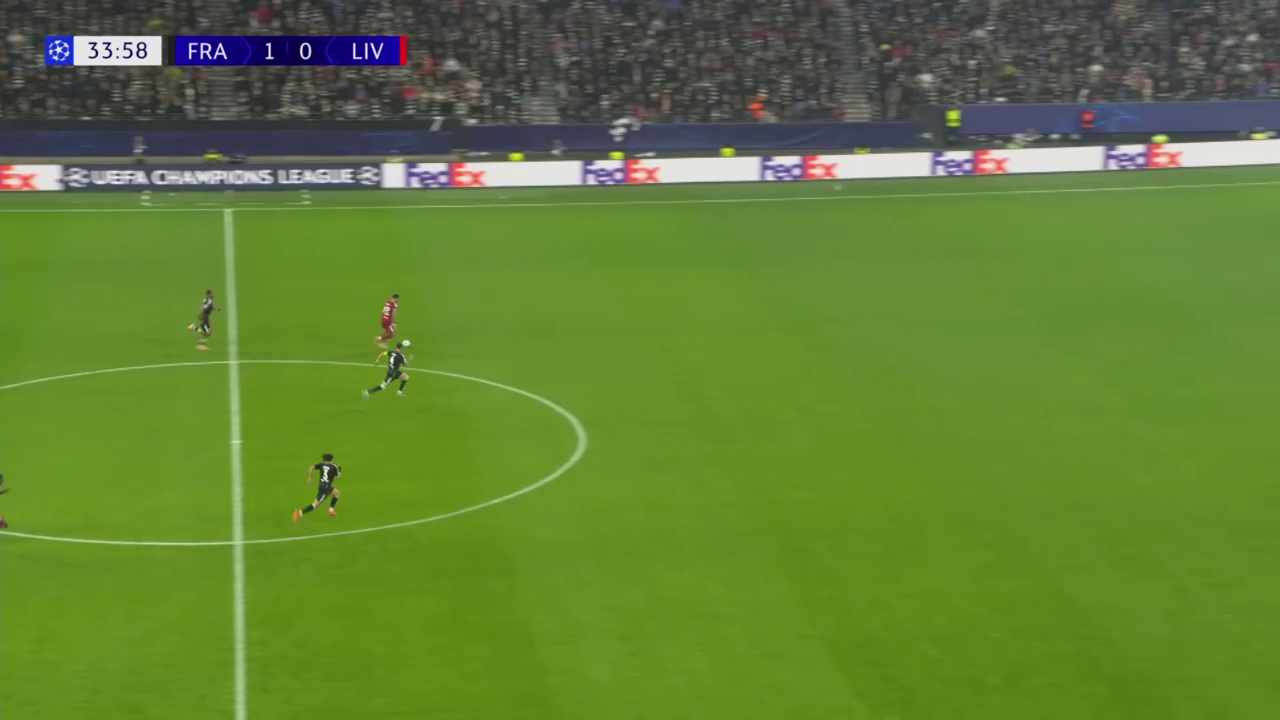
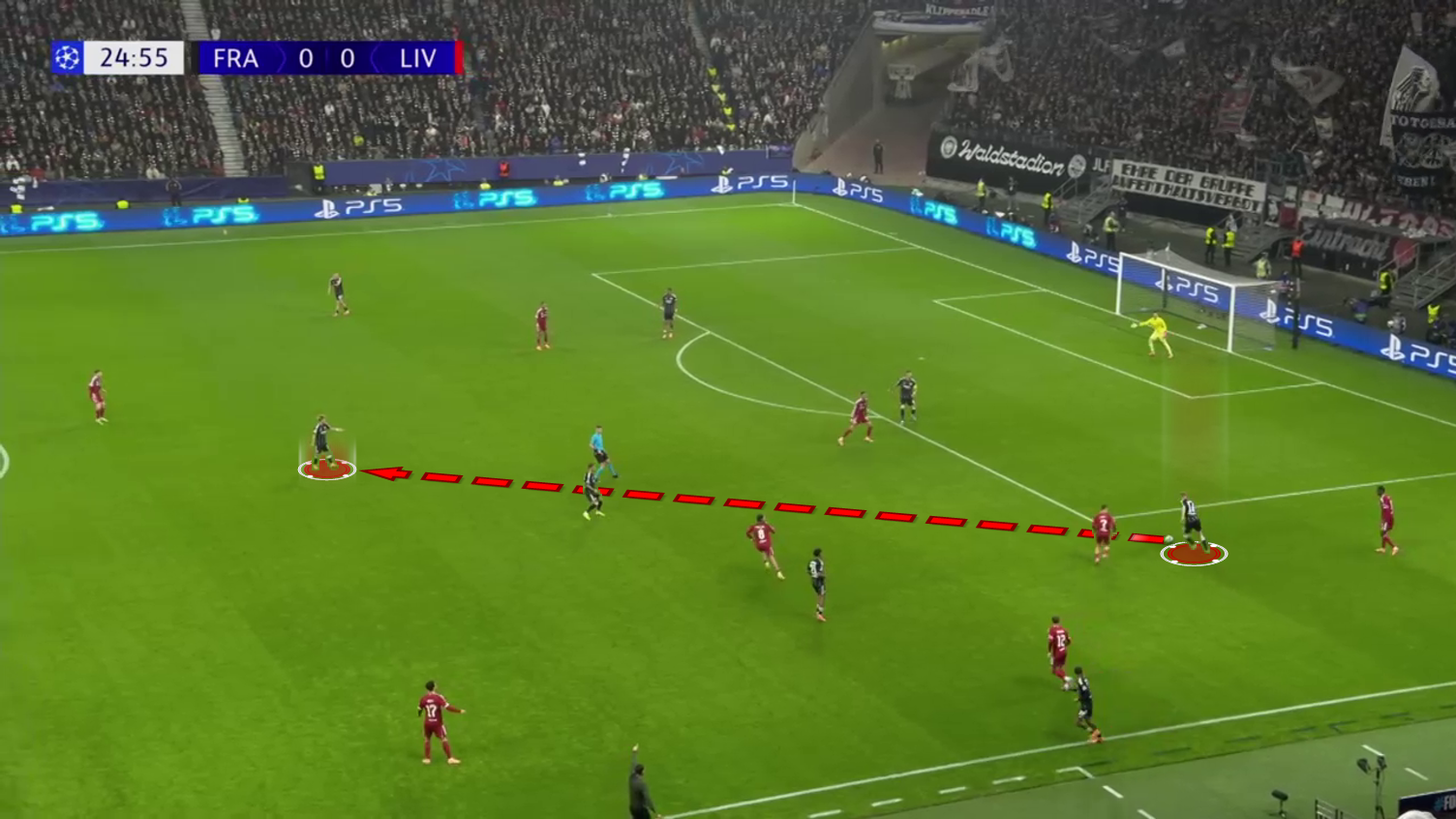
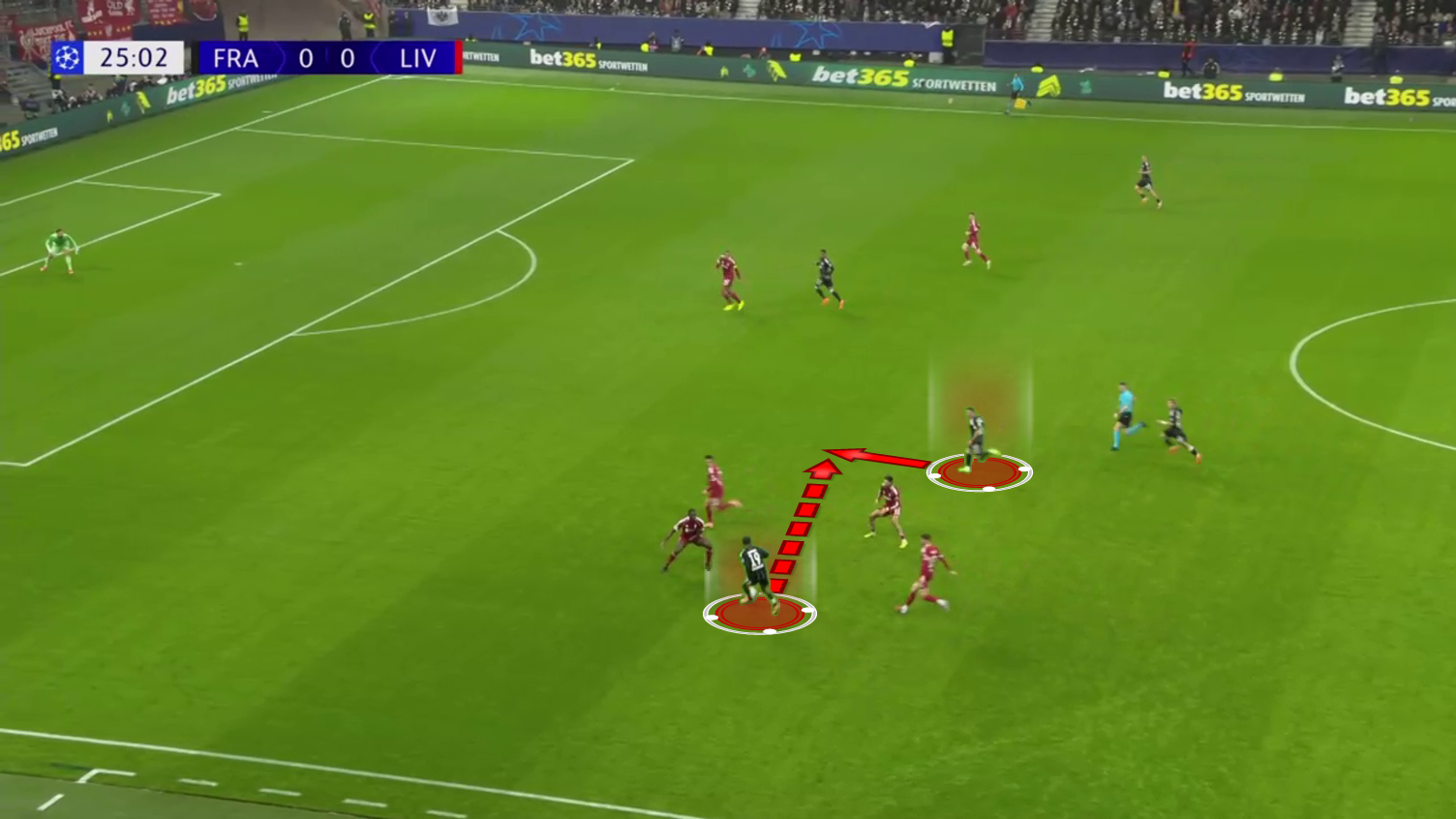
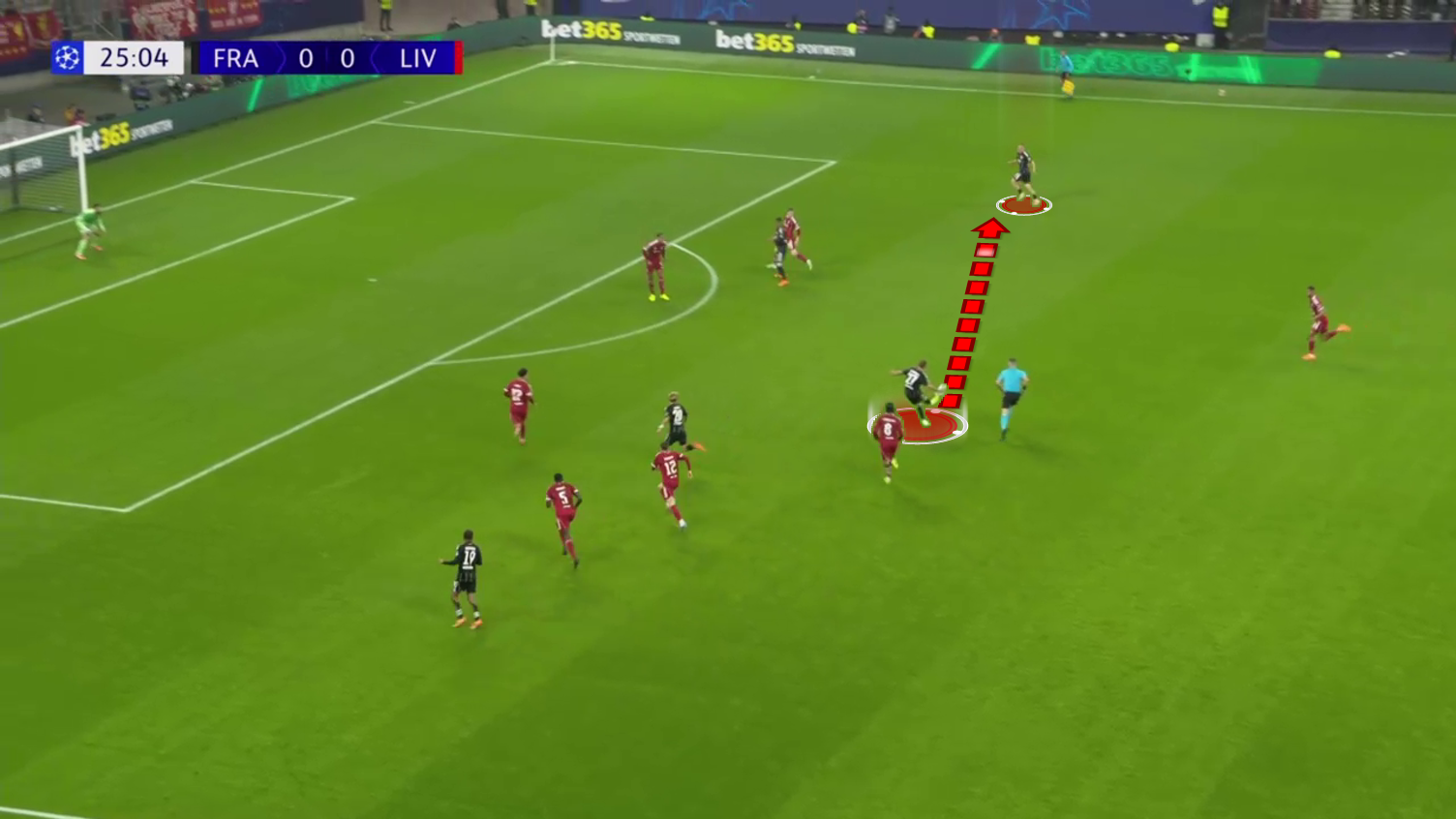
Here, Liverpool wins the ball in their final third, and Wirtz immediately plays a diagonal long ball up to Gakpo.
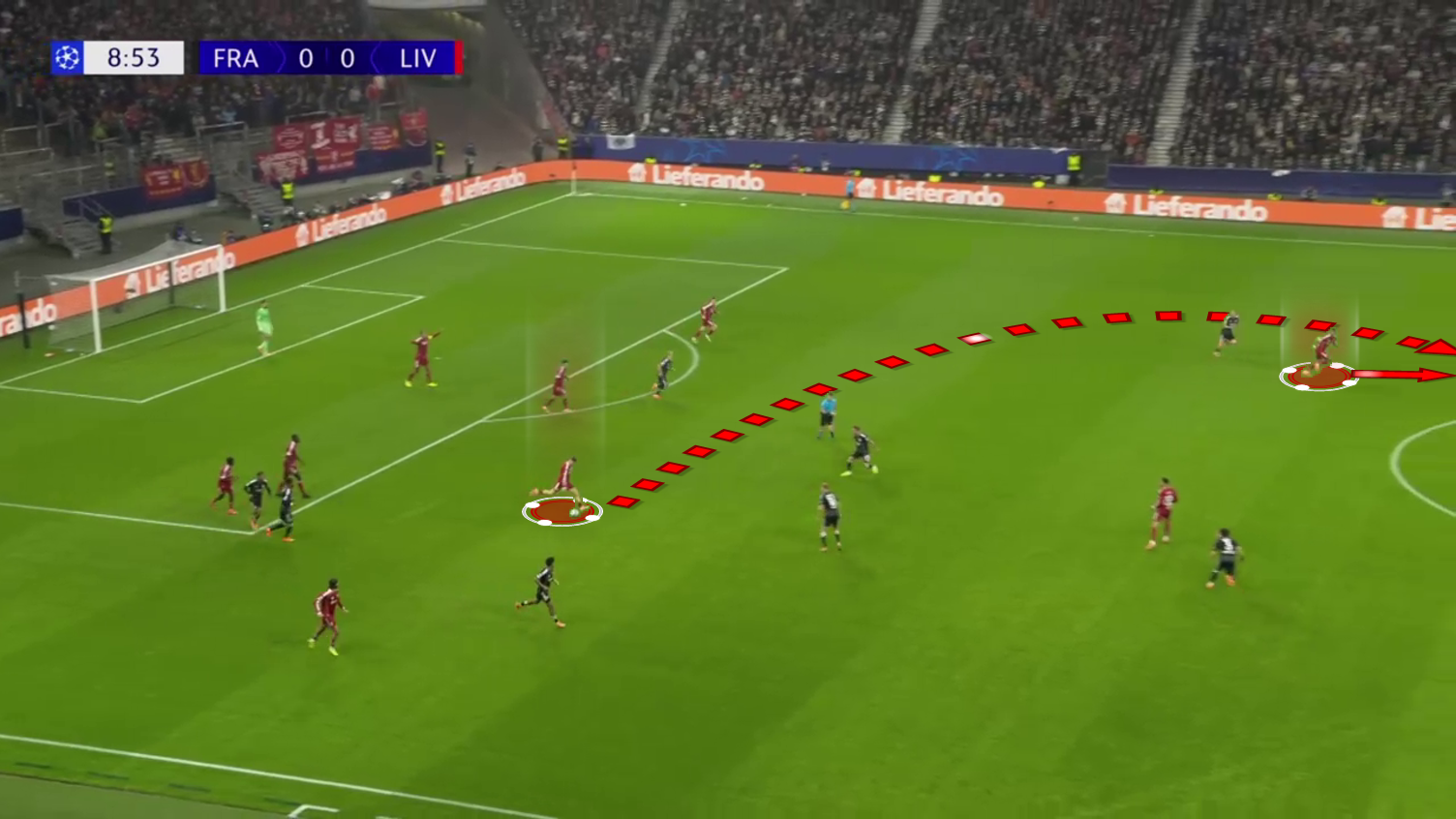
As you can see, Liverpool now have a 2-v-2 break with Gakpo and Isak.
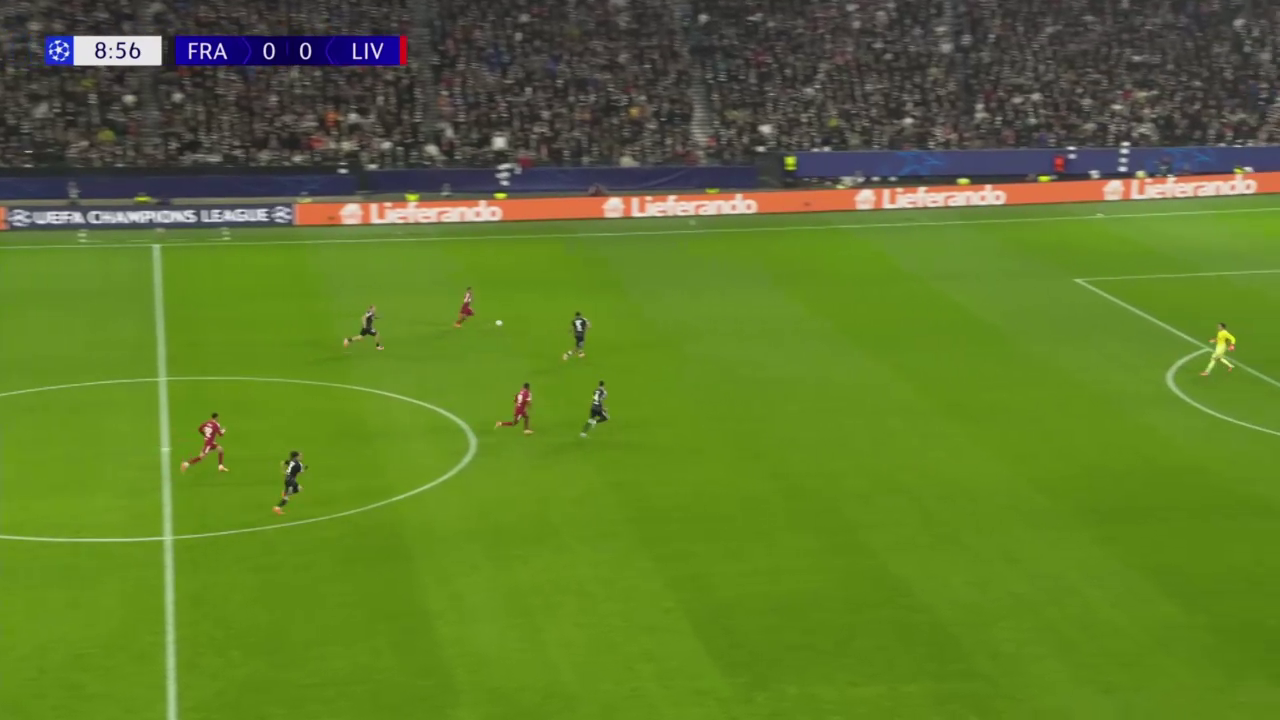
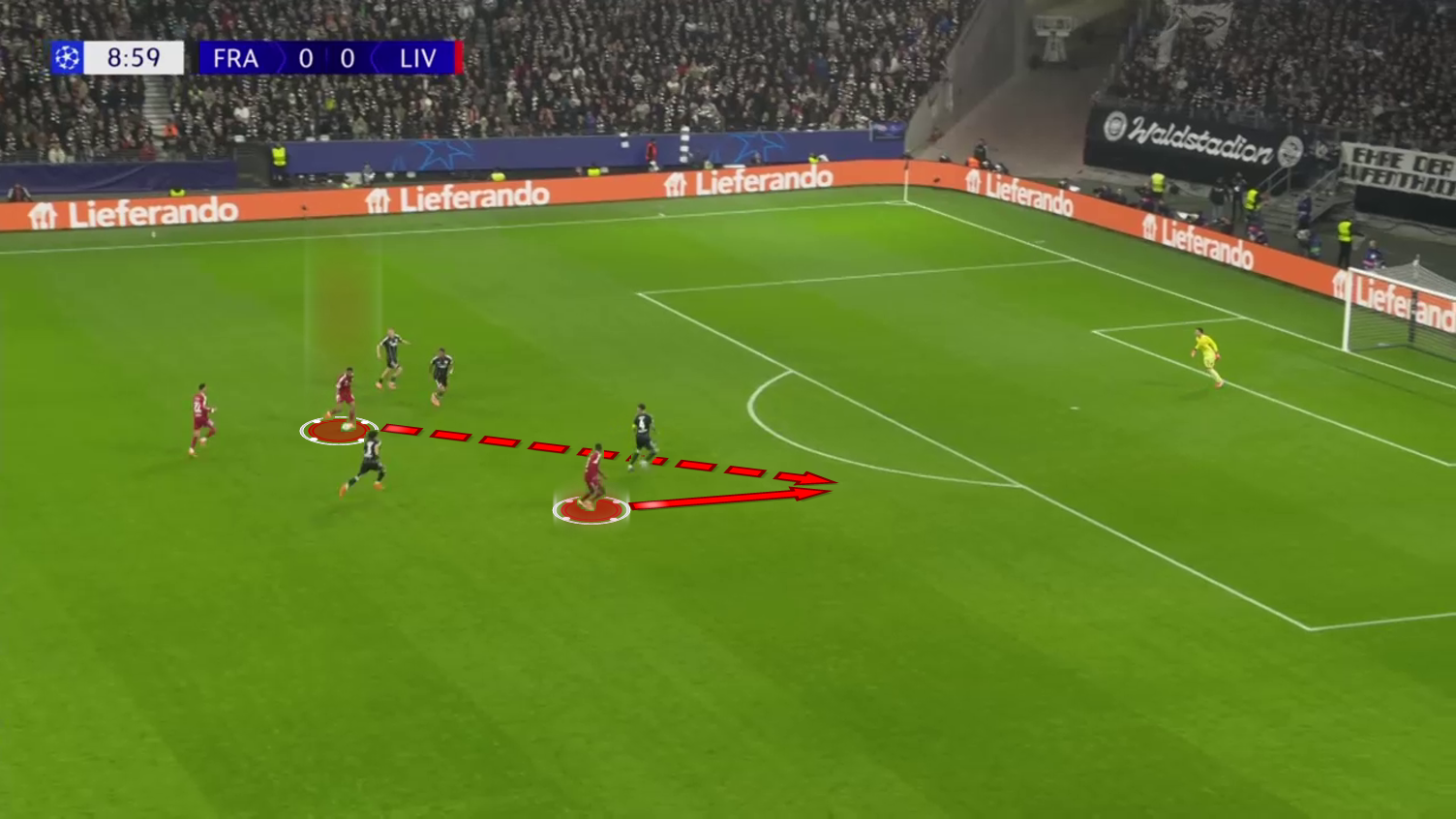
Liverpool’s first goal came from hitting Frankfurt quickly when they were out of position.
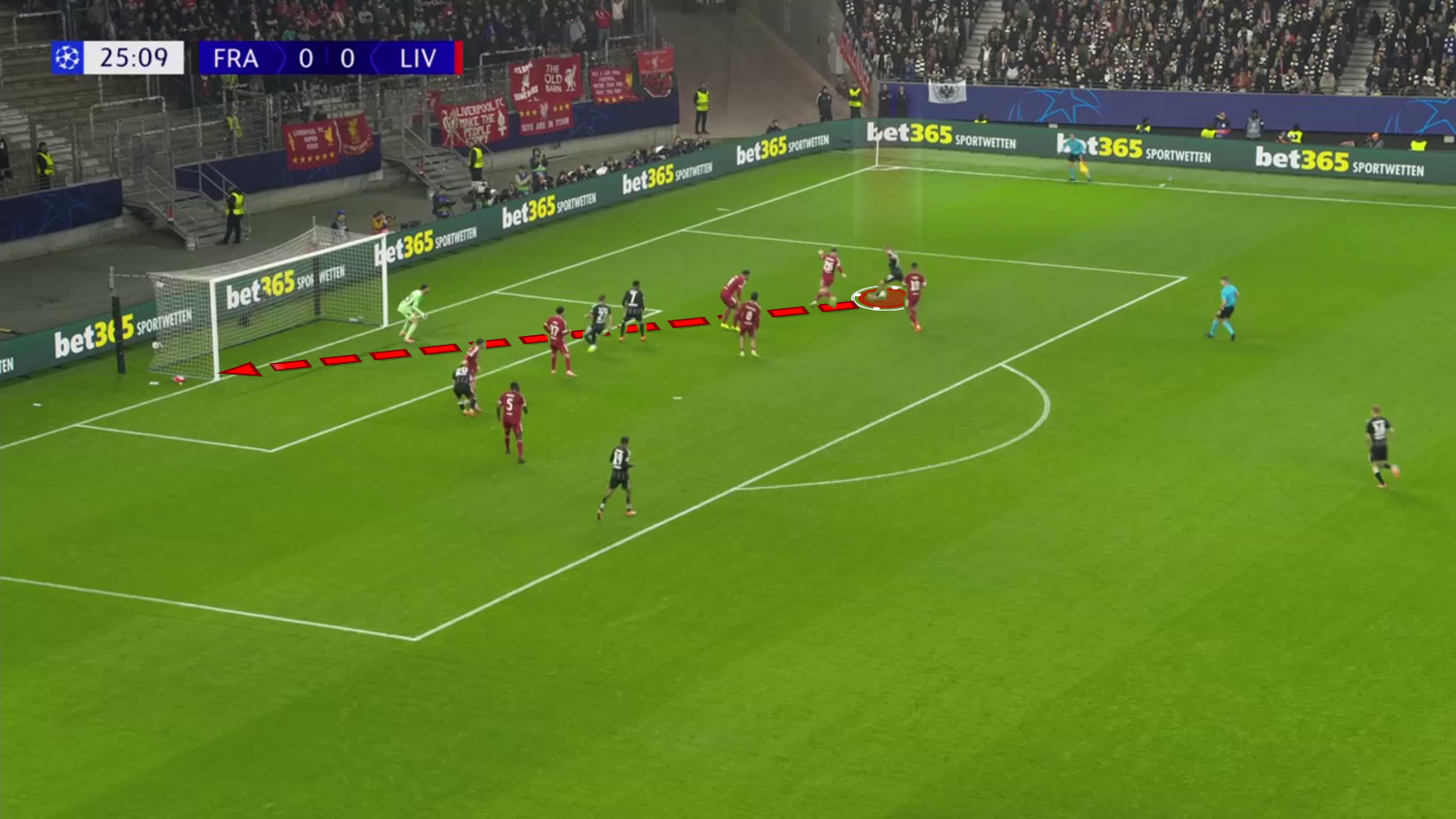
Nathaniel Brown’s cross didn’t find a teammate and went all the way through to Conor Bradley.
Bradley immediately played a ball in behind to Ekitike, who used his speed to beat the defender and score at his former ground.
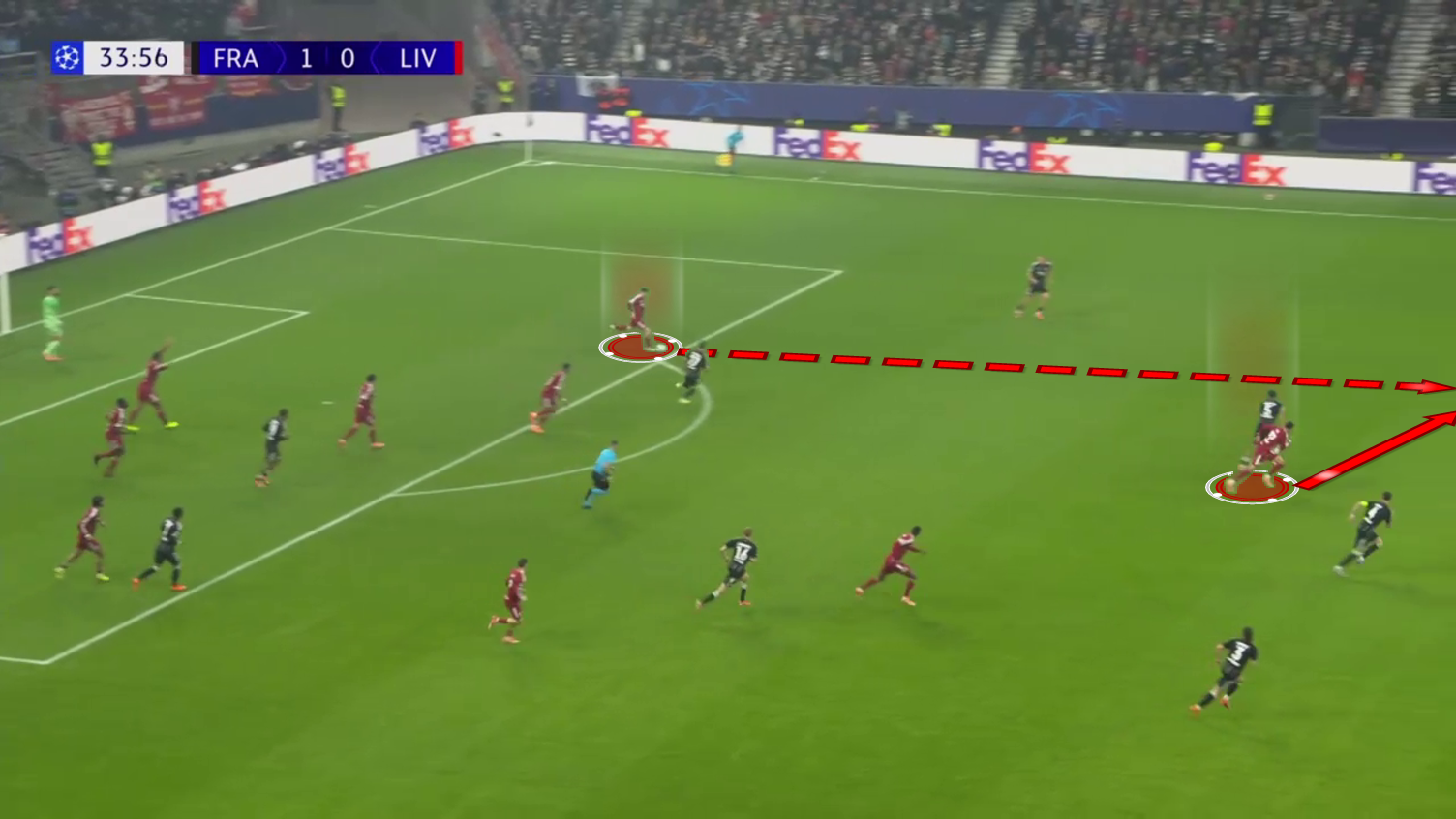
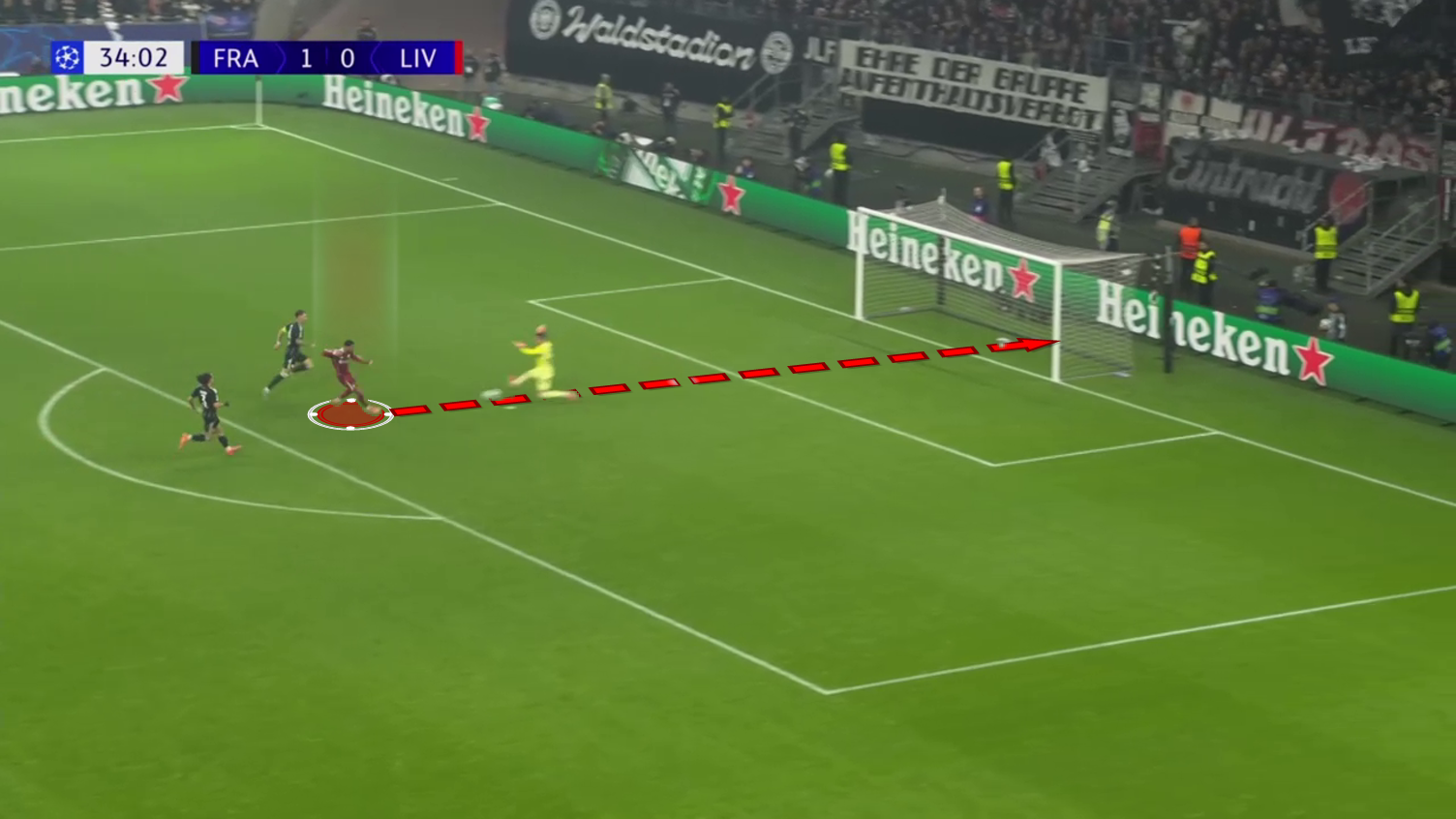
These types of quick transitions led to some of Liverpool’s best chances in the match.
Liverpool In The Final Third
As you can see in the image below, Frankfurt was cutting off many passing lanes in the middle.
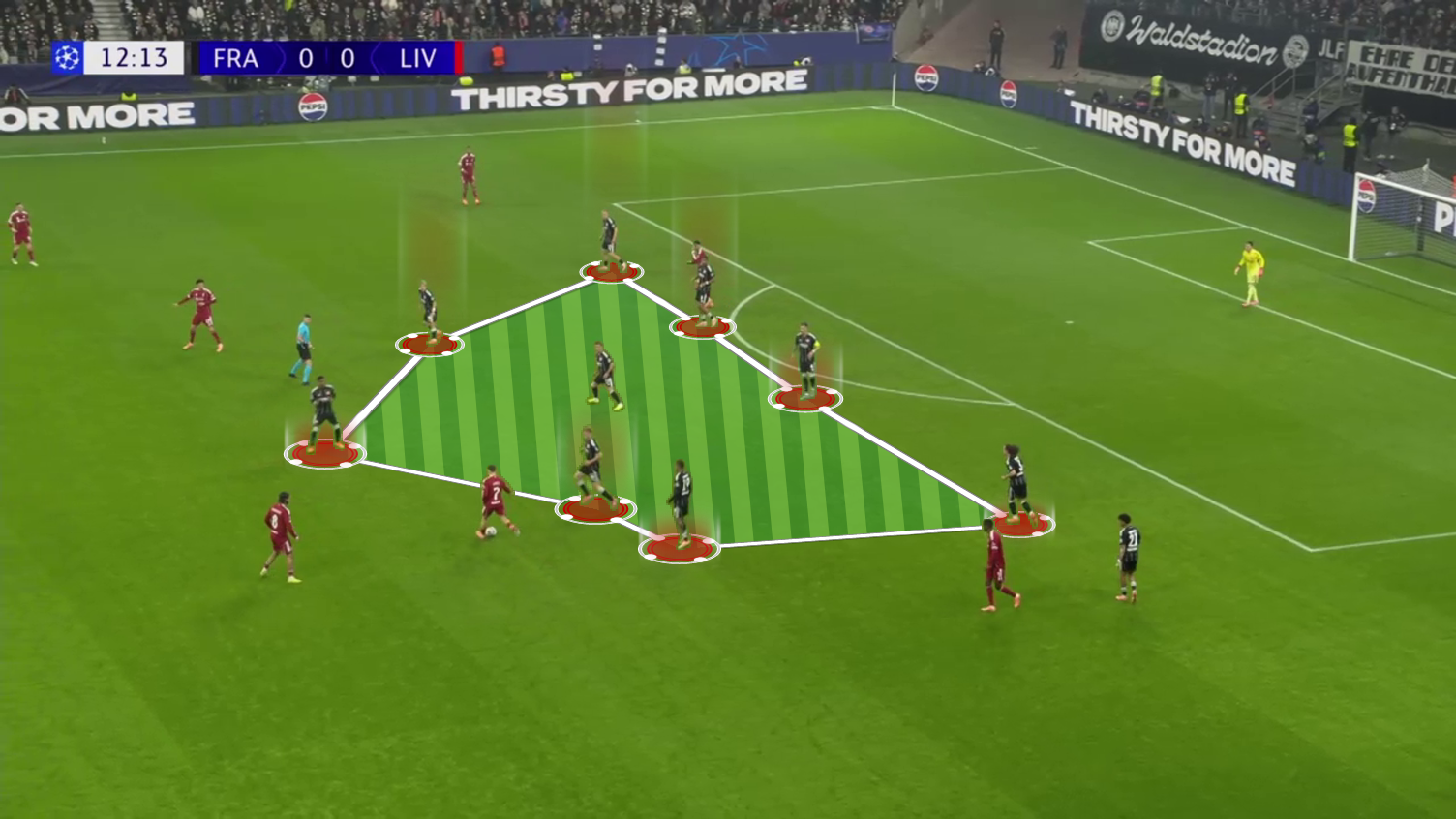
In the past, Liverpool would try to overload the middle by dropping Ekitike and Wirtz into the space between the lines, but teams have been taking that away from them recently.
By starting both Ekitike and Isak up top, Liverpool have two strikers who can make runs off the opponents’ backline.
This meant Liverpool played a lot more balls over the top in this match, allowing their forwards to try and win one-on-one battles with Frankfurt’s centre-backs.
Liverpool also used Florian Wirtz in wider areas, starting him as the right midfielder in their 4-4-2.
Throughout most of the season, Wirtz has been trying to find space centrally, but unlike the Bundesliga, there isn’t much space in the centre of low blocks in the Premier League.
From his heat map, you can see that he spent very little time in the centre of the pitch and instead looked to get on the ball out wide, which allowed him to make some dangerous passes.
Florian Wirtz Heat Map Vs Eintracht Frankfurt
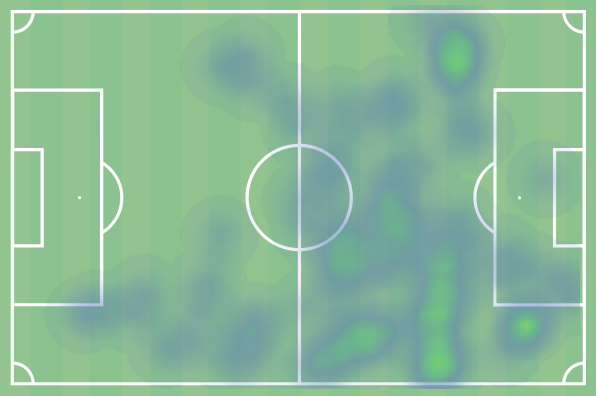
From Liverpool’s fourth goal, you can see he drifts out to the right, makes a run in behind, and finds Gakpo with a perfect cross into the box.
When comparing numbers from last season, Wirtz was so good in these central areas at playing through balls in behind to his forwards at Leverkusen.
He finished the 2024/2025 Bundesliga season with 26 completed through balls.
This season at Liverpool, he hasn’t completed one through ball.
Getting him in more of these wide positions gives him better opportunities to create chances for his teammates, as was shown in this match.
Liverpool Set-Piece Routines
Liverpool had only scored one goal from a set-piece in eight Premier League matches, but after scoring twice from corners on Wednesday, they now have four set-piece goals in three Champions League matches.
Coming into the match, Eintracht Frankfurt had conceded six set-piece goals in the Bundesliga and conceded twice via corners against Atlético Madrid.
To score their two goals, they used their size advantage with Konaté and Van Dijk.
For the first goal, Van Dijk is isolated in the box against Ansgar Knauff, with plenty of space to make a run to the near post.
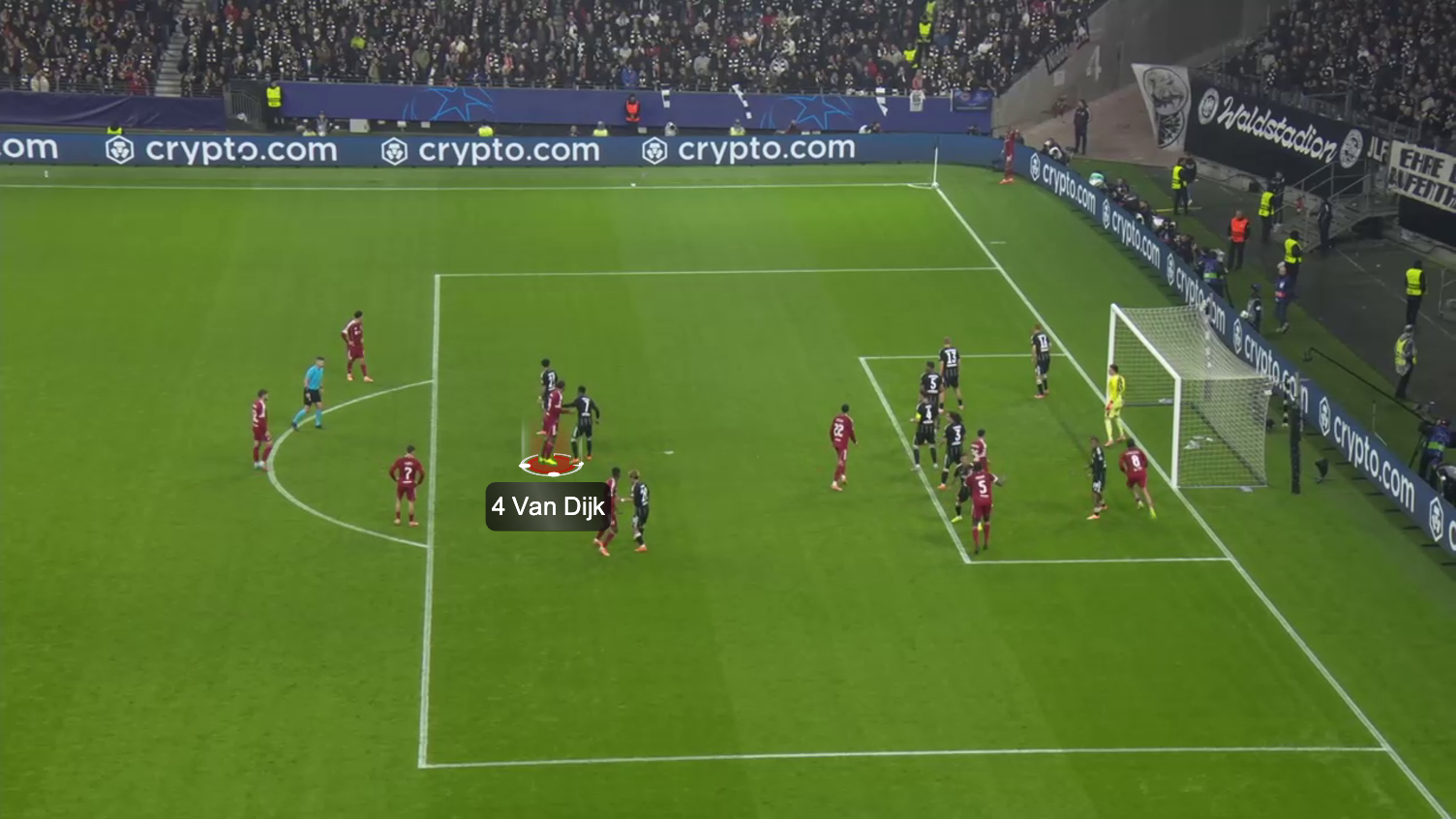
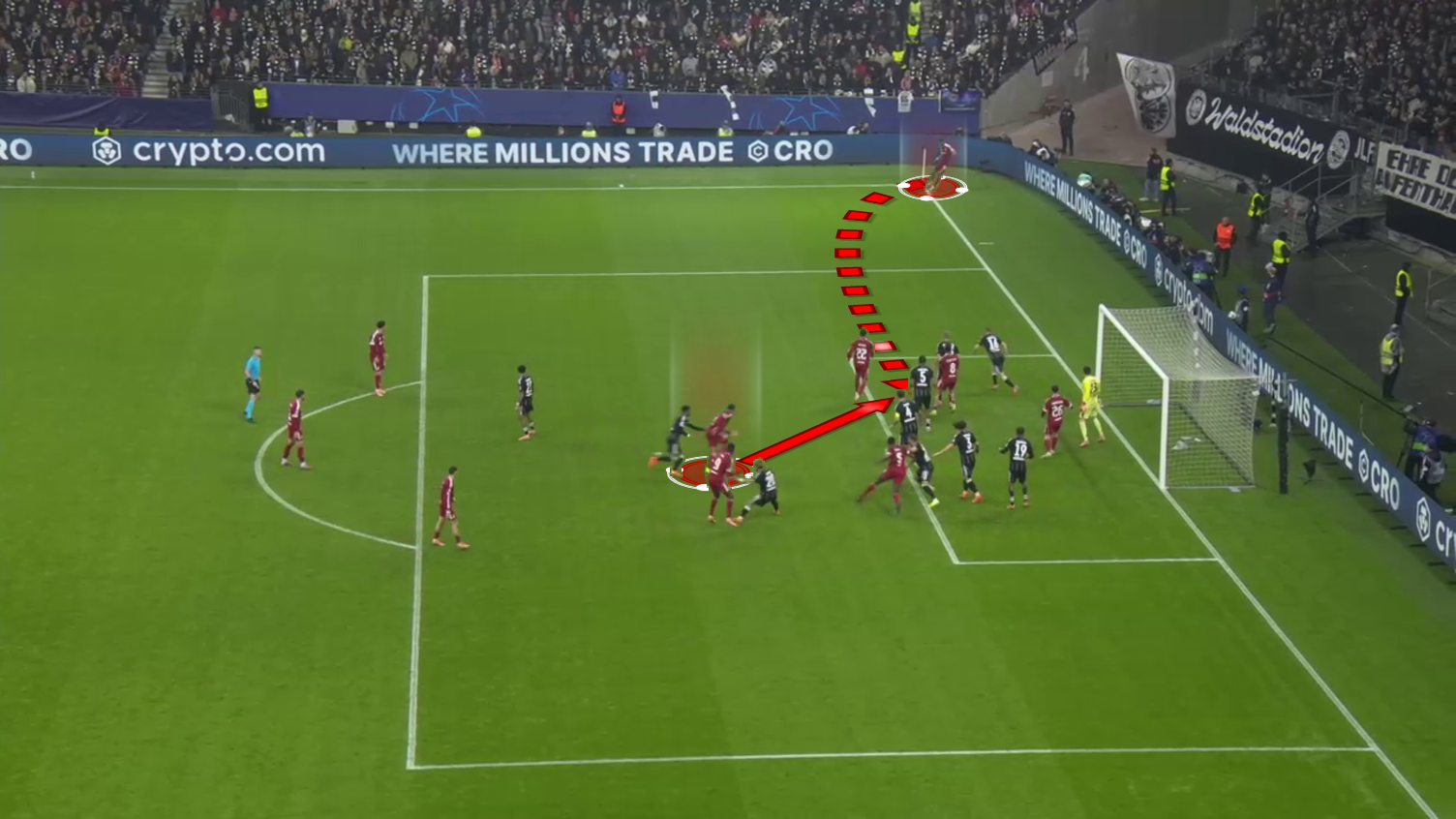
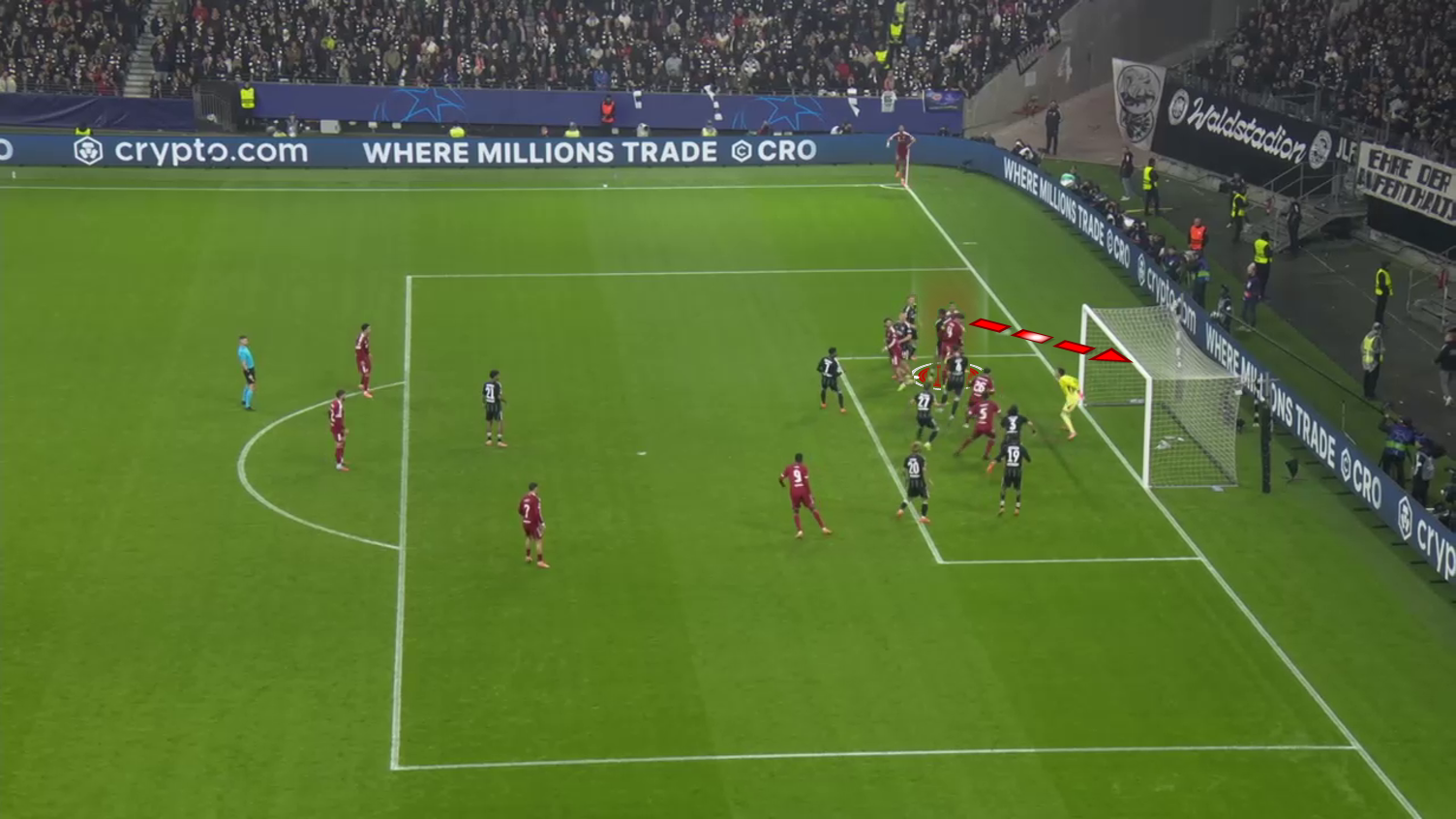
He uses his physicality to get by him, and nobody defending in the six-yard line for Frankfurt picks him up, which allows him to get a free header.
The second goal was a bit of a different routine.
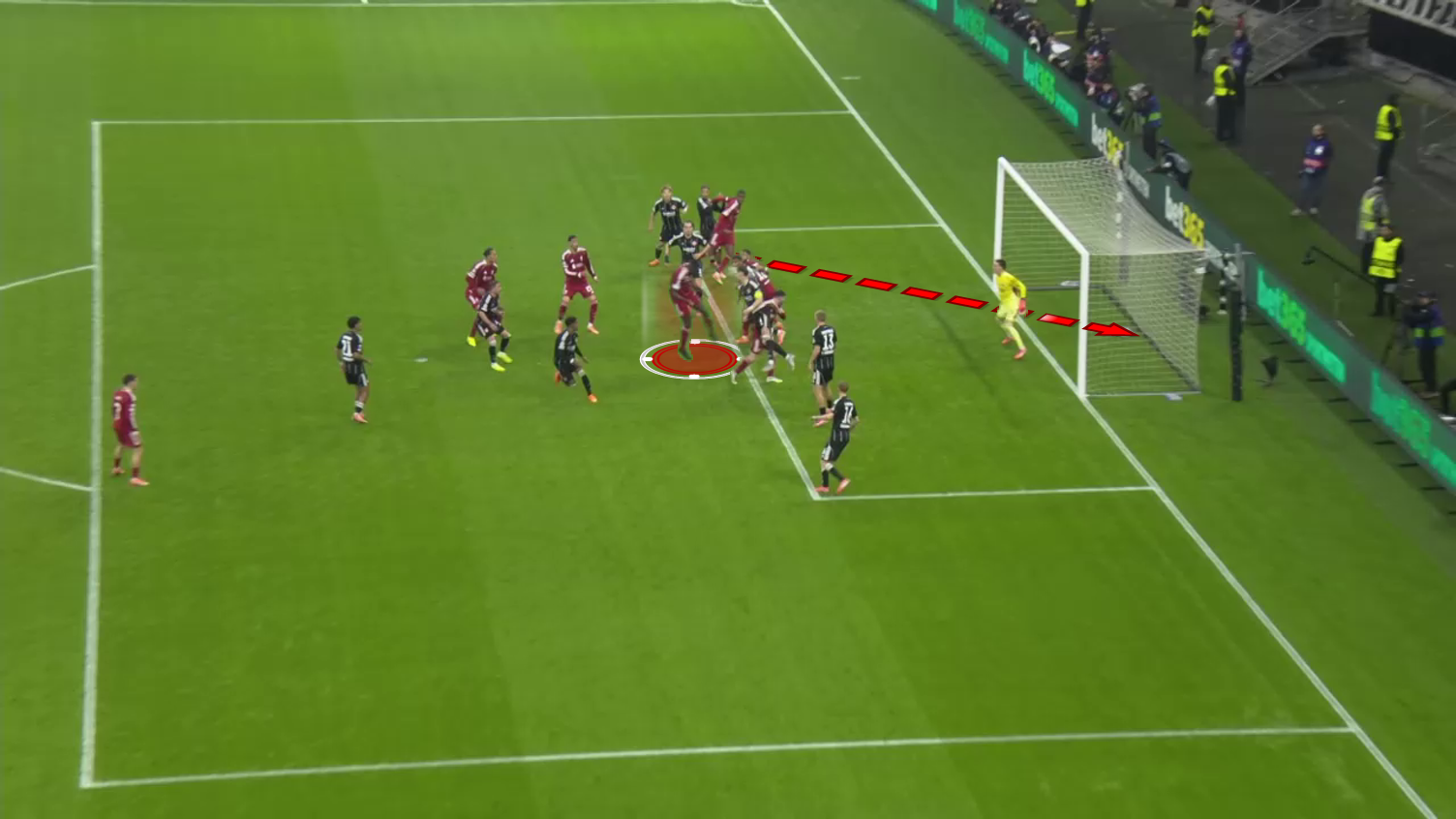
Liverpool used four players bunched up together at the top of the box against three Frankfurt defenders.
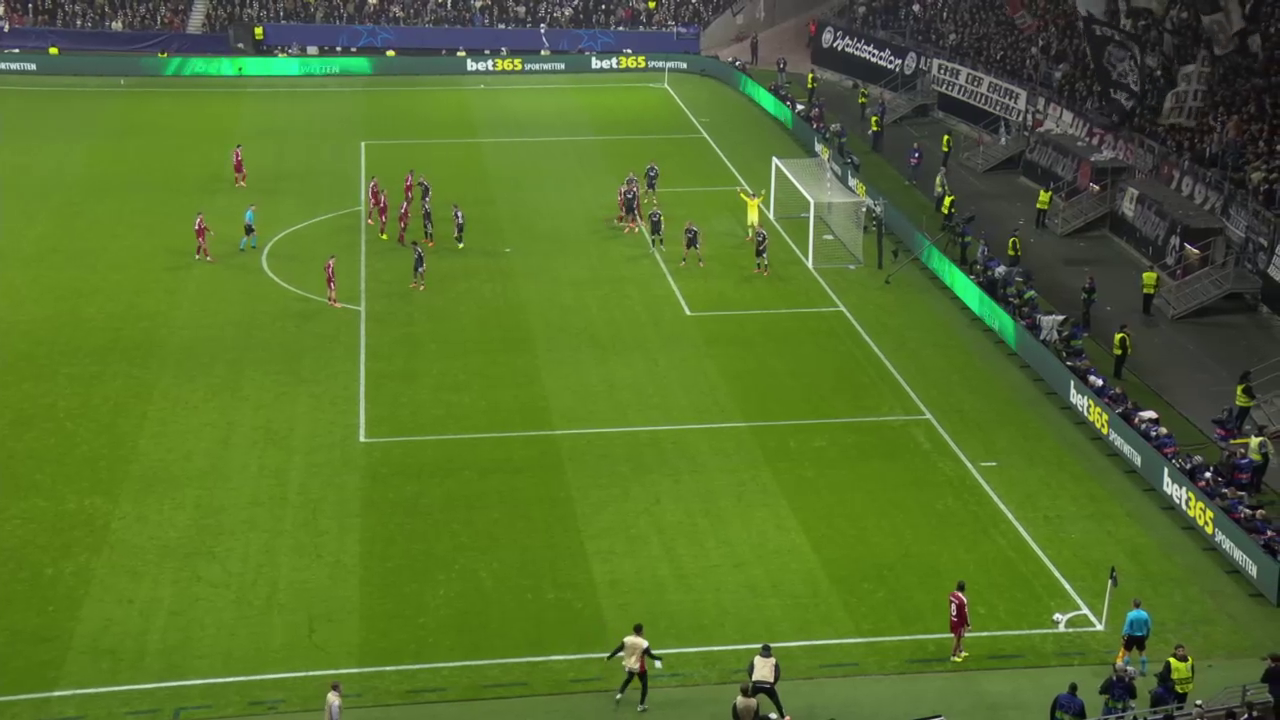
Knauff again is the player who was beaten purely by Konaté being more physical.
He’s able to get a free header right at the top of the six-yard box.
Liverpool Press
Arne Slot mentioned in his post-match press conference that Liverpool’s press was better against Frankfurt because of their opponent’s style of play.
Frankfurt kept trying to play the ball through Liverpool’s press, unlike recent opponents like Manchester United, who decided to play extremely direct.
In the match, Liverpool forced 10 high turnovers, which is the most they’ve had in any match this season.
However, there were instances where Frankfurt were able to overload the middle in build up with Liverpool’s press not being as sharp.
The lone goal is a perfect example of that.
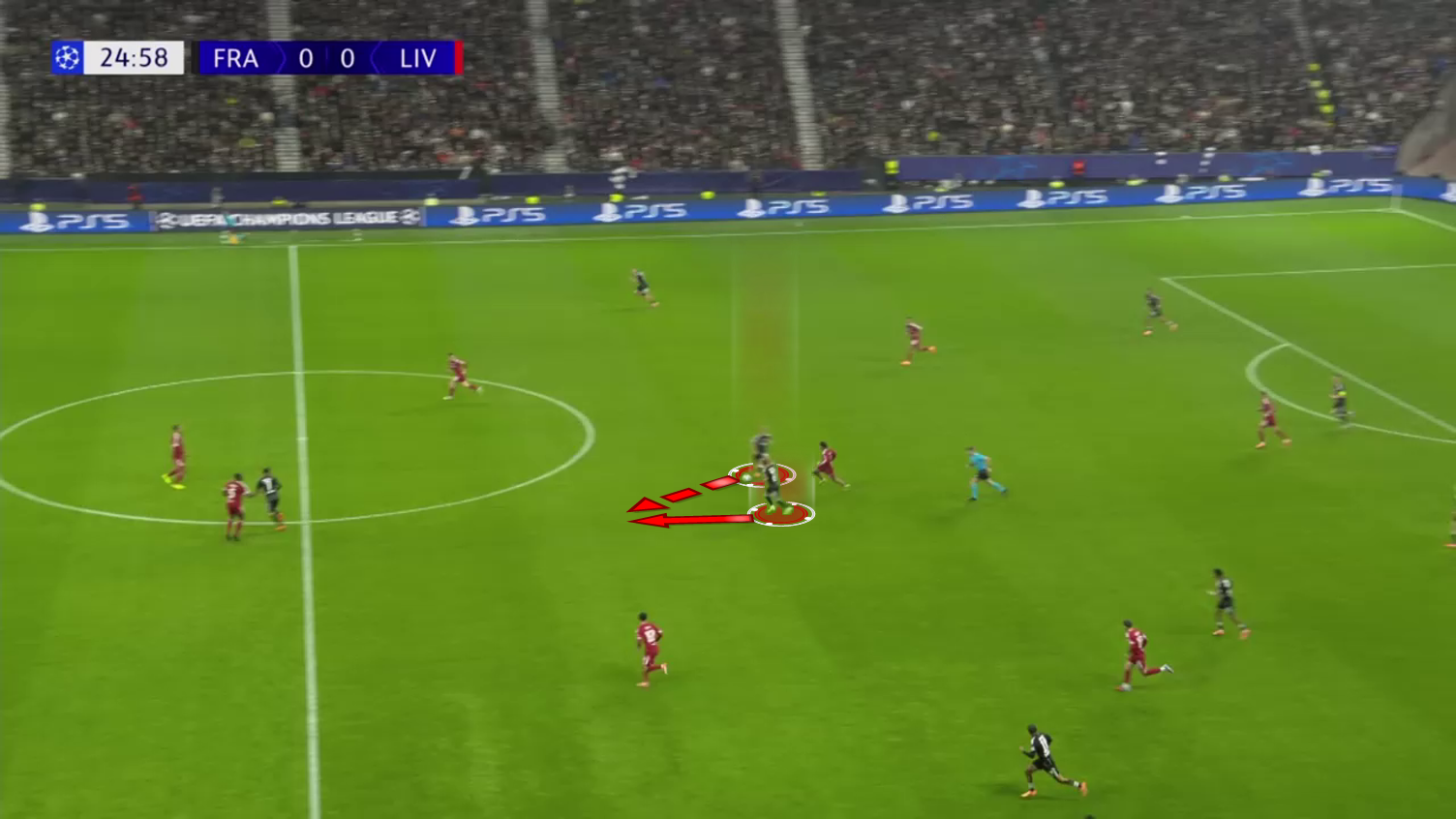
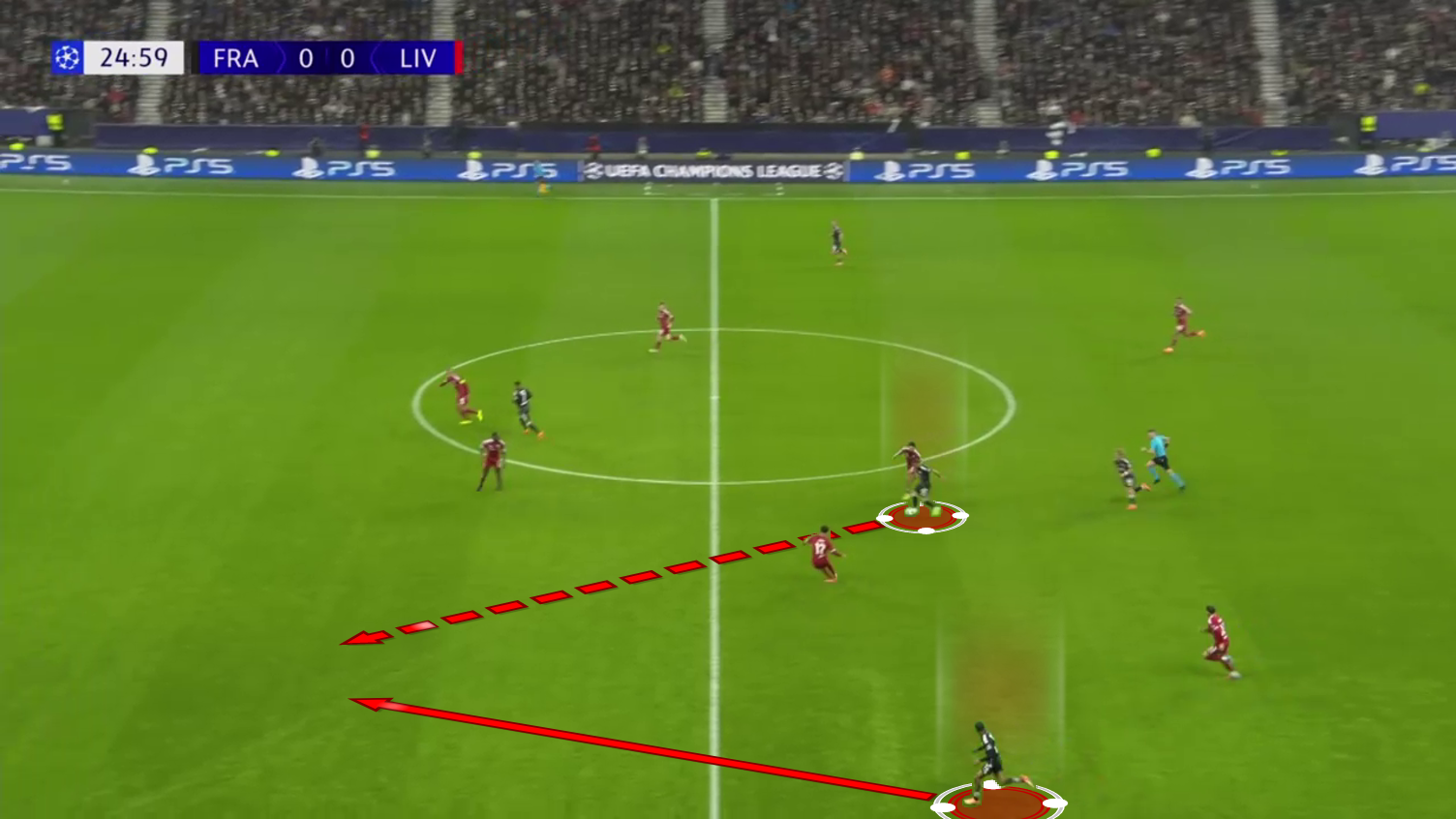
Liverpool are trying to go man for man, but neither centre-back wants to step up on Doan, and Curtis Jones gets caught out on the right side of the pitch.
That allows Frankfurt to receive the ball centrally and attack Liverpool’s backline, eventually leading to the Kristensen goal.
In the end, Liverpool had a very high PPDA of 15.6, so while they turned Frankfurt over quite a bit, they were still lacking the necessary ball pressure of an elite pressing side.
Conclusion
Wednesday was a step in the right direction for Liverpool.
During their four-match losing streak, they were really struggling to break down teams that sat in low defensive blocks.
The key in this match was taking advantage of the few opportunities to break in transition and focusing on Frankfurt’s weakness in defending set-pieces.
There have been opportunities this season for Liverpool to break out in transition.
Per Opta, Liverpool lead the Premier League with 14 fastbreak shots this season, but that is more an effect of their effectiveness rather than their consistently getting those fastbreak opportunities.
They aren’t able to get into these situations as often as they’d like to because teams are sitting very low and compact against them.
The switch to a 4-4-2 definitely has its upsides.
We can use Florian Wirtz in a wider role while also starting both of their high-priced forwards up top.
The downside is that, by process of elimination, a central midfielder and Mohamed Salah will have to start the match on the bench.
