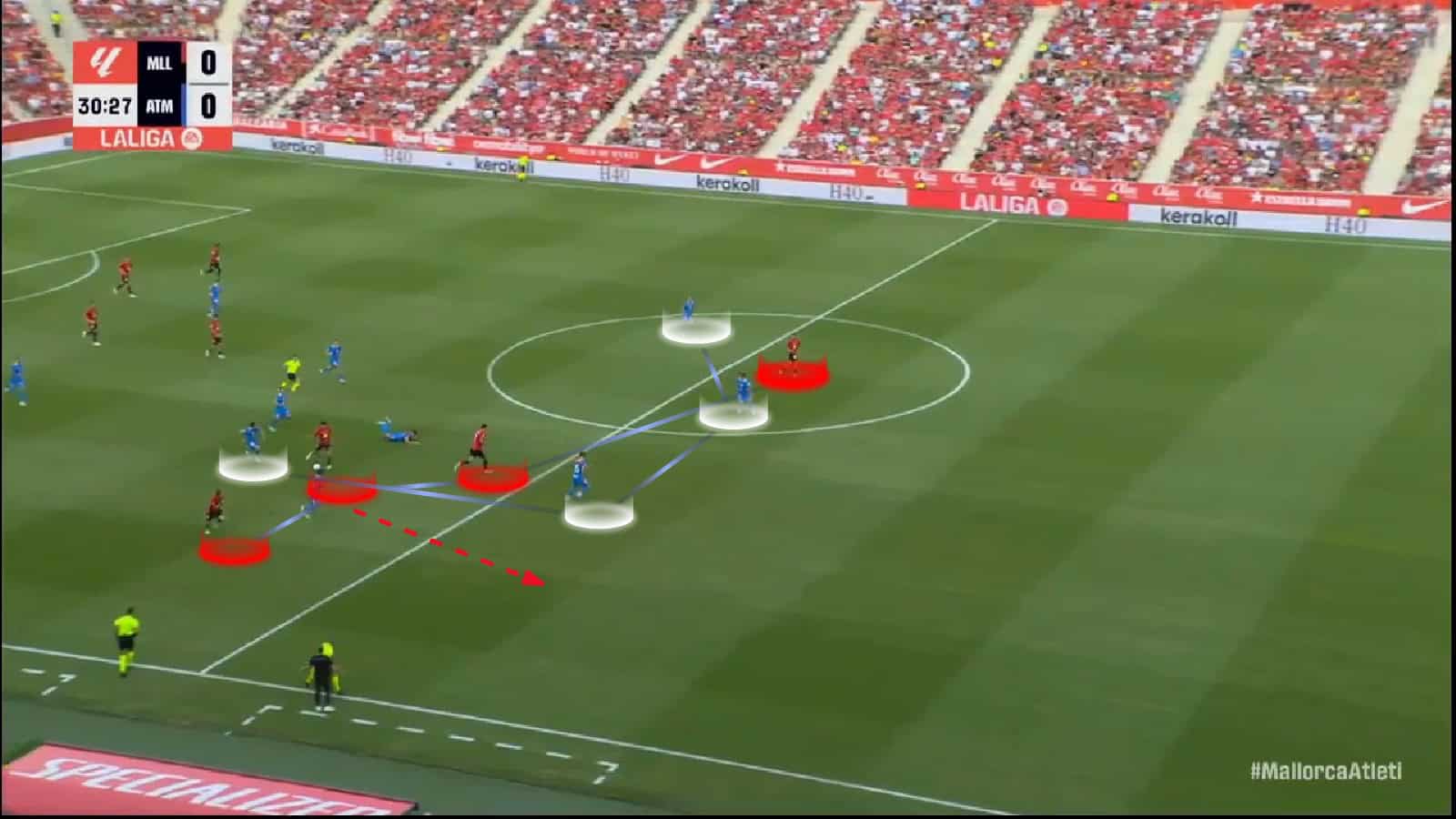
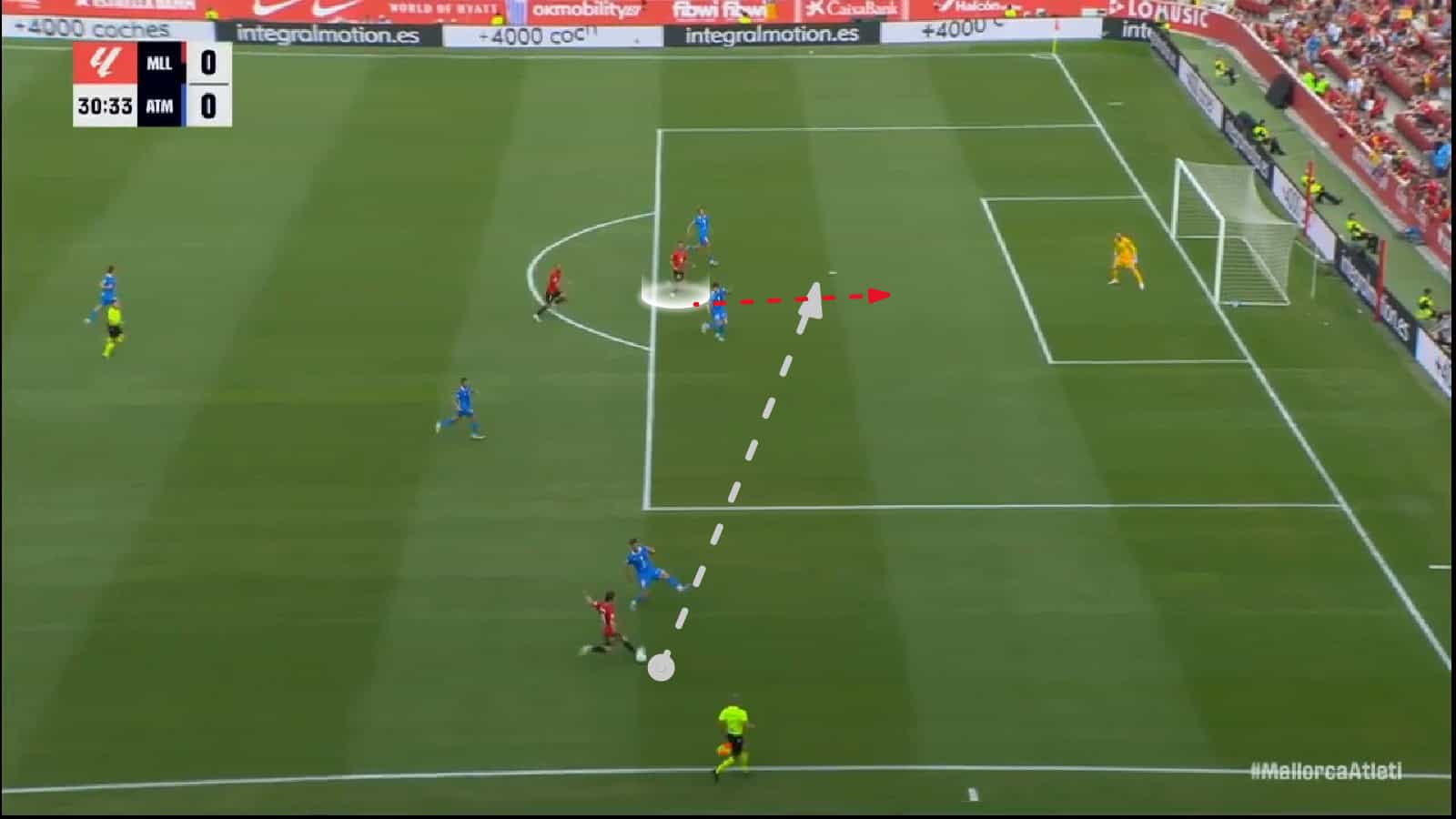
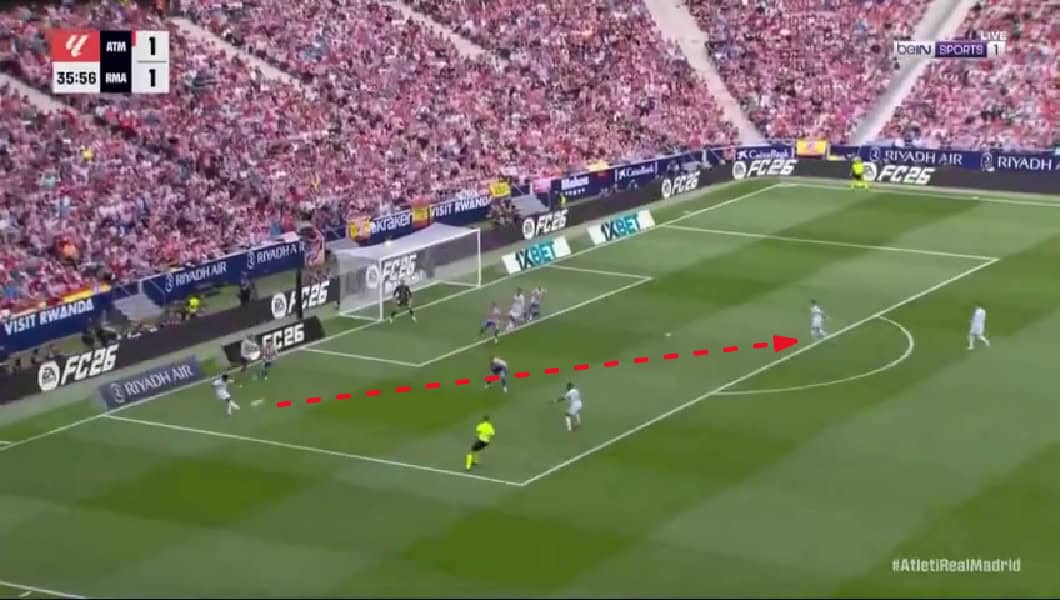
For over a decade, Atlético Madrid under Diego Simeone have been defined by resilience, compactness, and a tactical identity so sharp it became their trademark.
Fierce pressing, ruthless transitions, and defensive solidity made Los Colchoneros a nightmare for opponents in Spain and Europe alike.
But as the 2025/2026 La Liga season kicks off, Atlético Madrid find themselves stumbling at almost every hurdle.
Diego Simeone’s men have dropped points against Deportivo Alavés, Espanyol, Real Mallorca, Elche, and Celta Vigo.
They look far from the disciplined unit that once thrived on suffocating opponents and striking with precision.
The numbers reveal a worrying trend: possession without penetration, pressing with a lack of coordination, and a defence no longer impenetrable.
This isn’t just a poor run of form; it reflects deeper structural issues.
Atlético Madrid appears caught between their traditional counterattacking DNA and Simeone’s push toward a more possession-based style.
The result so far?
A team in transition that looks less like the ruthless teamwork of old, and more like a side unsure of its own identity.
This Atlético Madrid tactical analysis explains how Diego Simeone is still searching for his identity this season.
Atlético Madrid Build-Up & Ball Progression: The Broken Chain
Atlético Madrid, in the initial weeks of the 2025/2026 season, have demonstrated a tendency to control possession but have struggled to convert this dominance into meaningful attacking progression.
Under Diego Simeone, their build-up play this season shows a clear shift towards a more controlled, possession-based approach.
The central defenders and pivot players prioritise stability in the first phase, often moving the ball horizontally with minimal risk.
While this strategy ensures ball retention, it highlights a significant issue: advancing the play.

In the build-up phase, Atlético Madrid set up in a 4-3-3 shape, with their full-backs positioned deep.

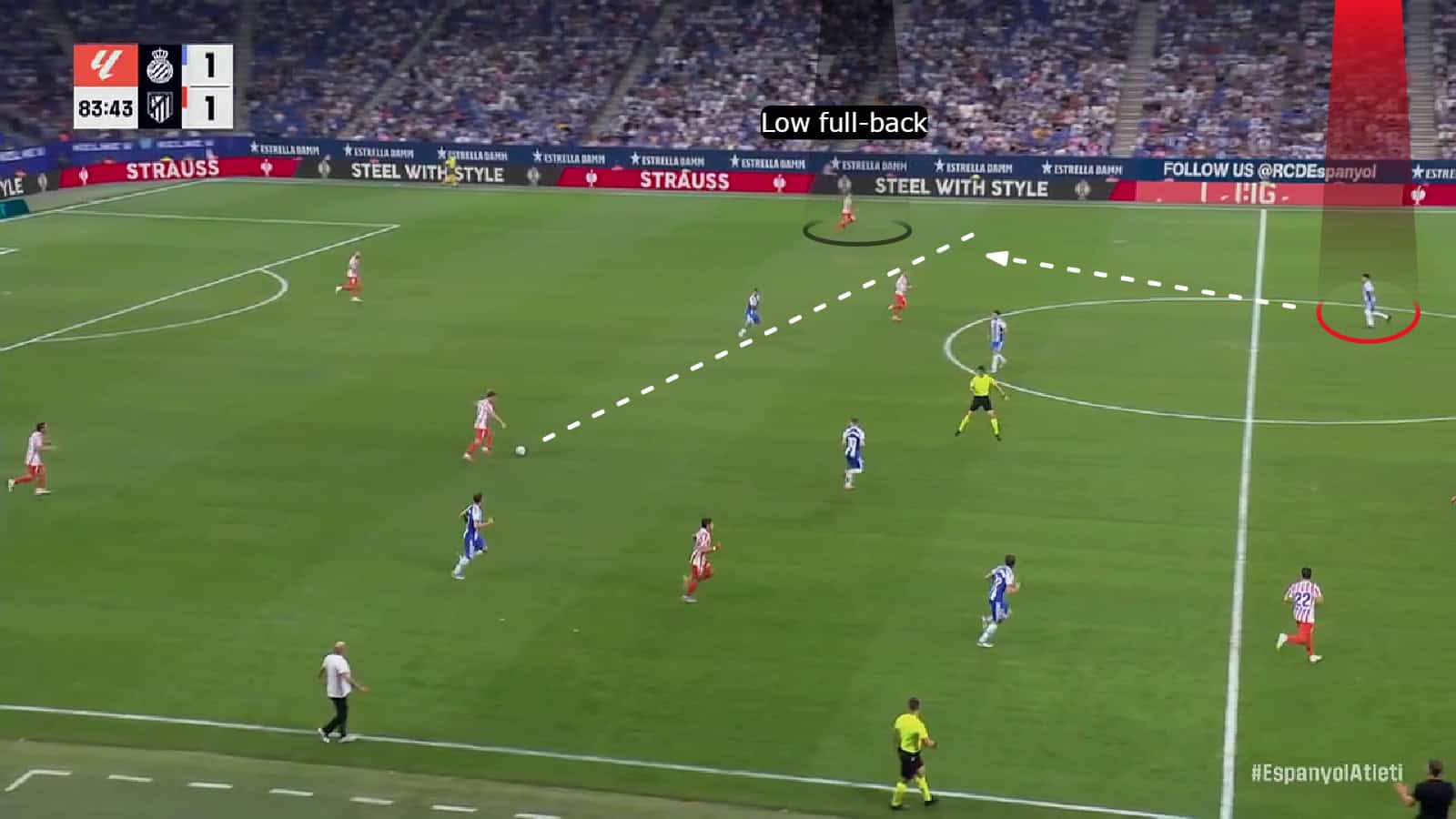
Let’s take a look at Atlético Madrid’s ball progression against Espanyol, where Johnny Cardoso and Marcos Llorente combined against three Espanyol players.
At the same time, Álex Baena and Conor Gallagher pushed higher, leaving exploitable space in the middle.
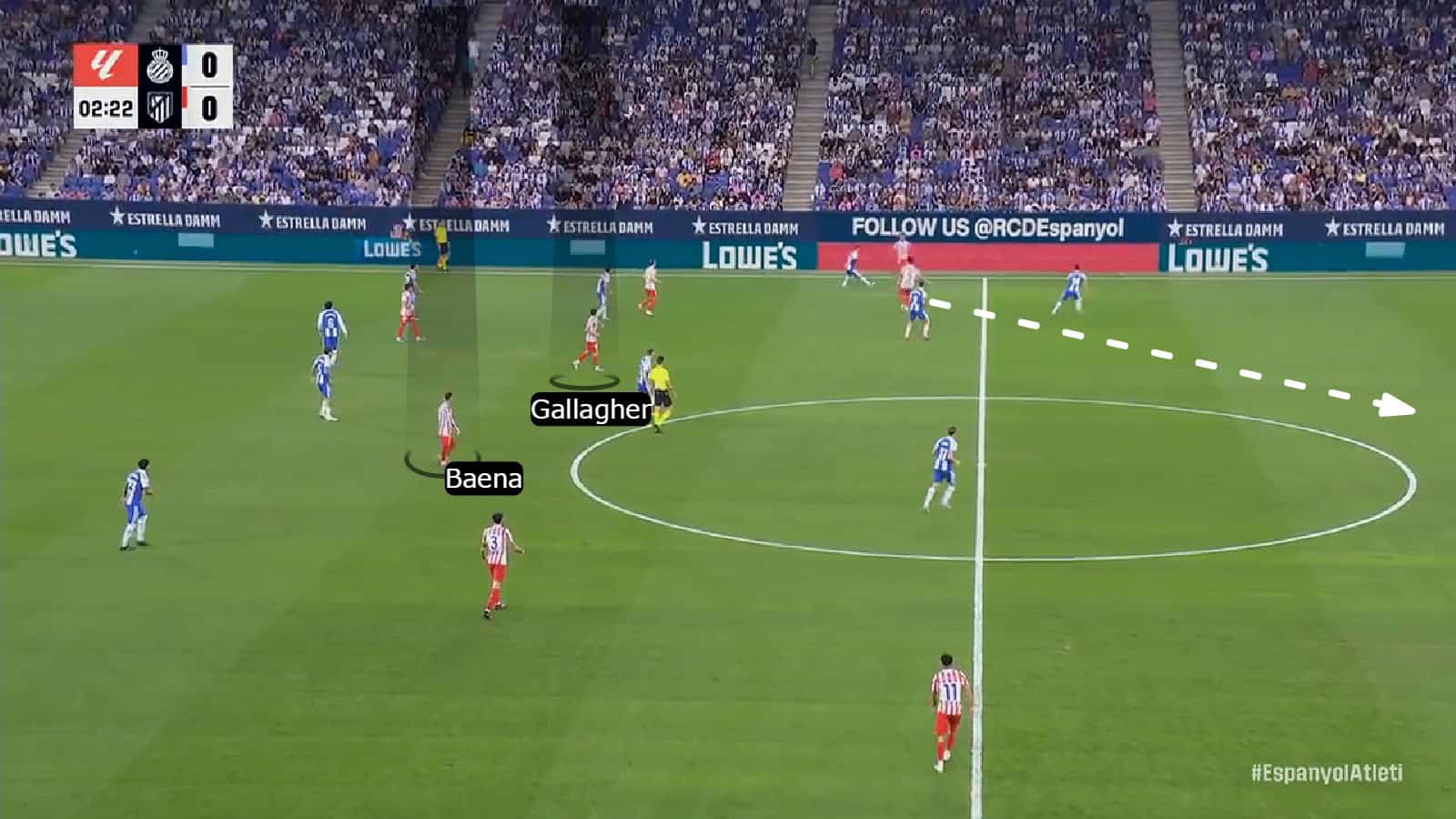
This forced the pass to the GK.
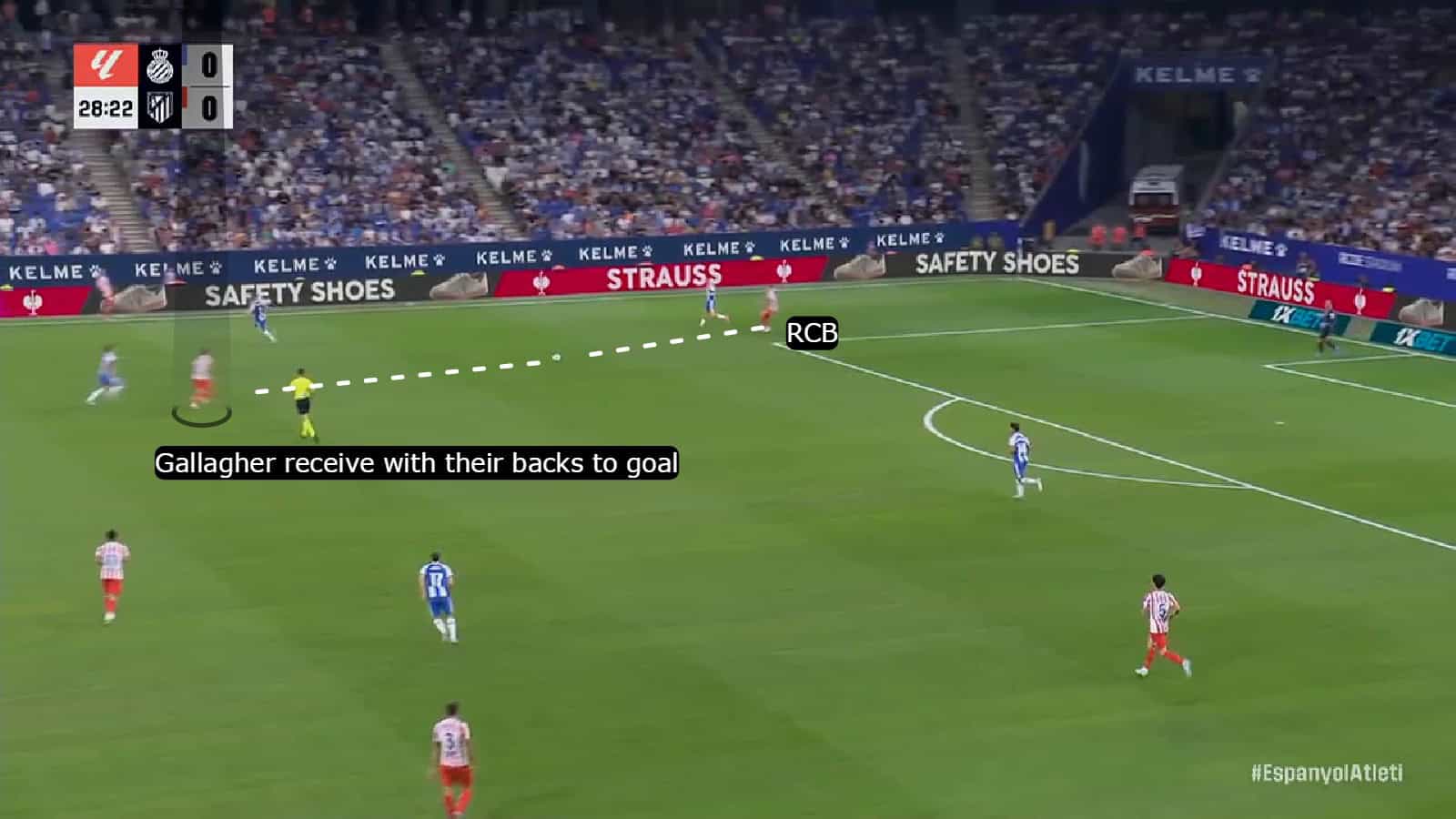
Cardoso positioned himself as the left centre-back in a back three, provoking Espanyol’s press in a 2-v-3 situation.
Conor Gallagher received under pressure with his back to goal.
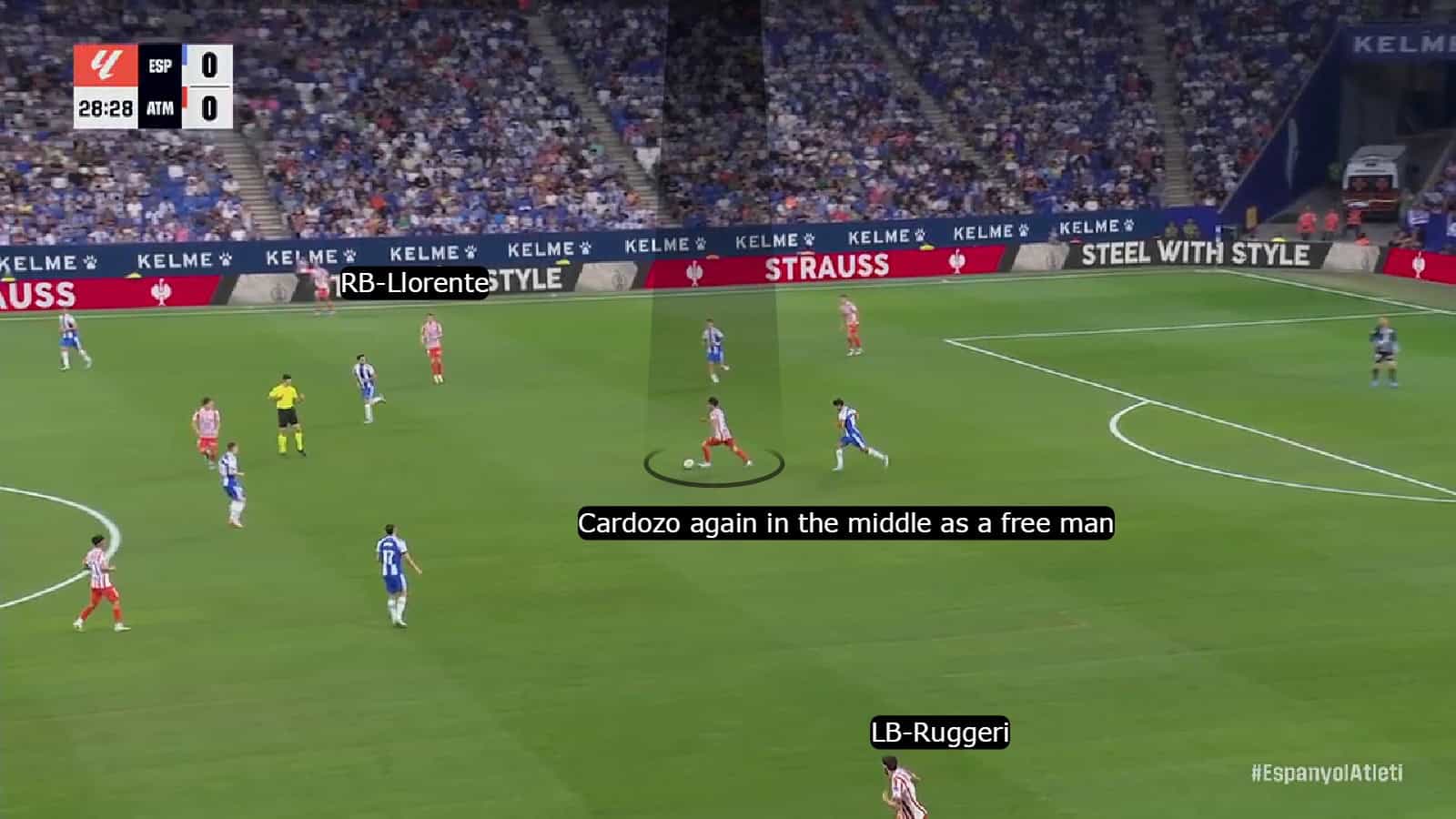
Cardoso then emerged as the free man in the progression phase, stepping out behind Espanyol’s first pressing line.
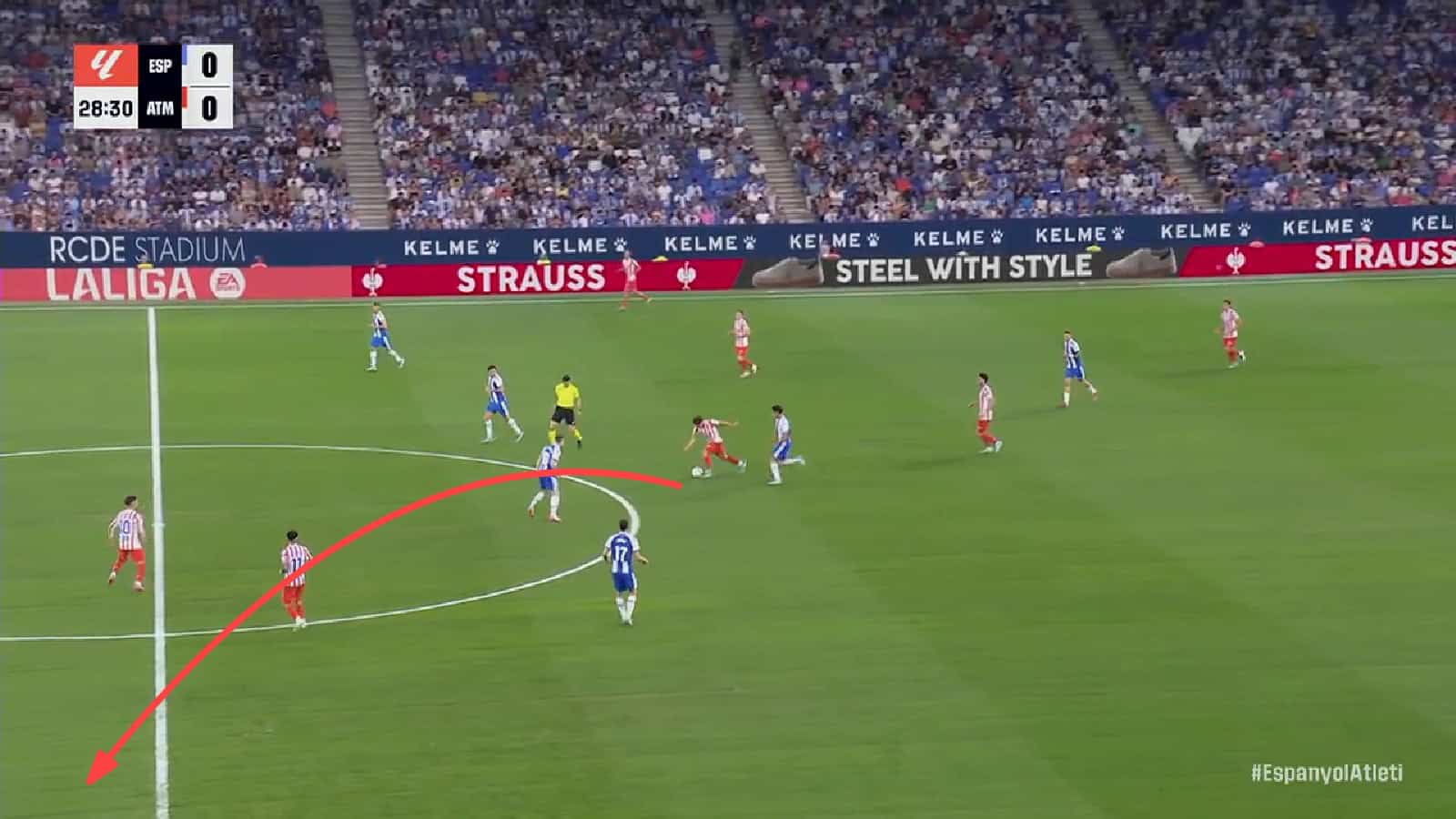
On the left, Matteo Ruggeri immediately recognised the space and advanced vertically to push the attack forward.
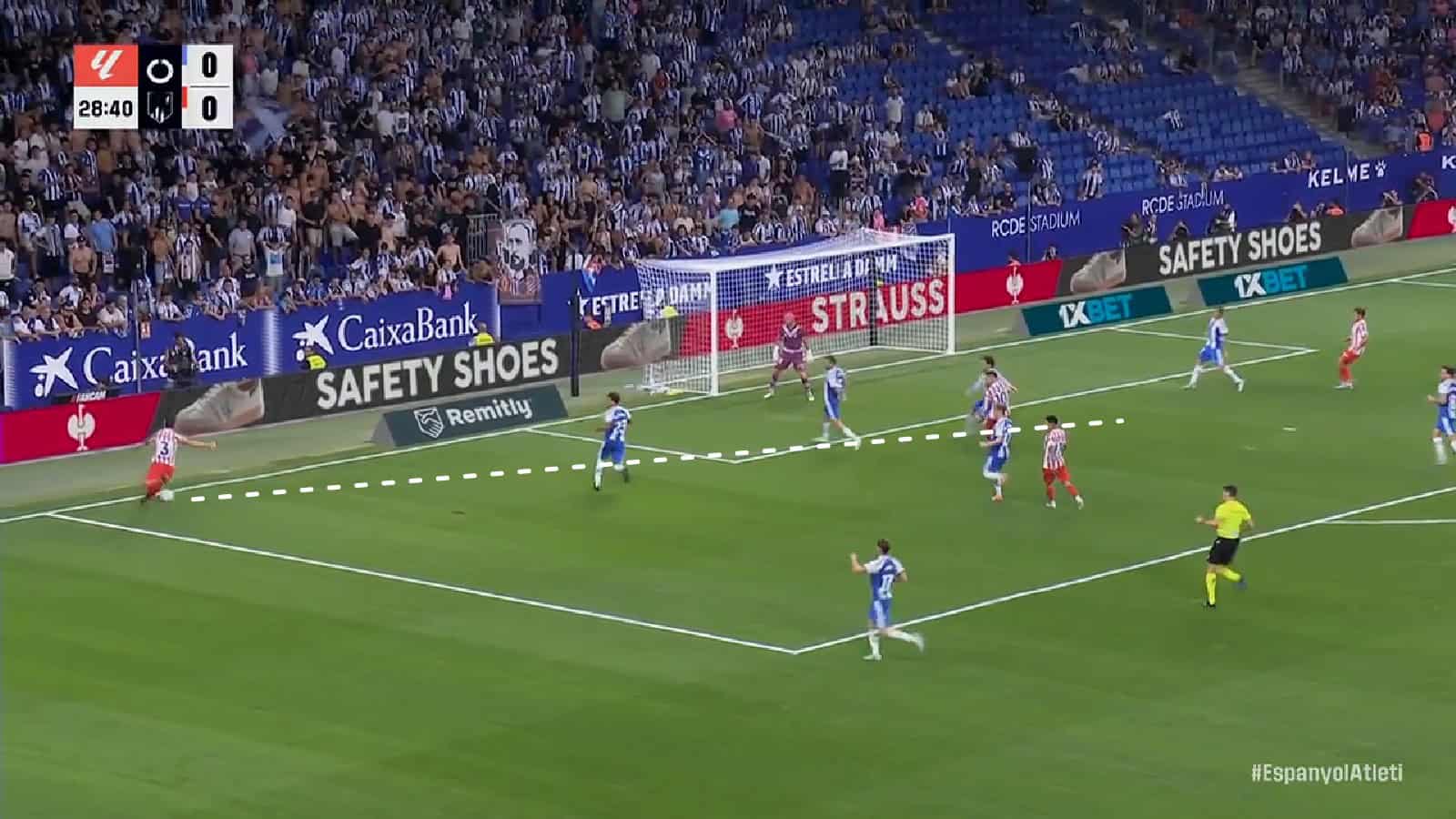
The sequence ended with a lofted cross into the box, but the execution lacked concentration and precision.
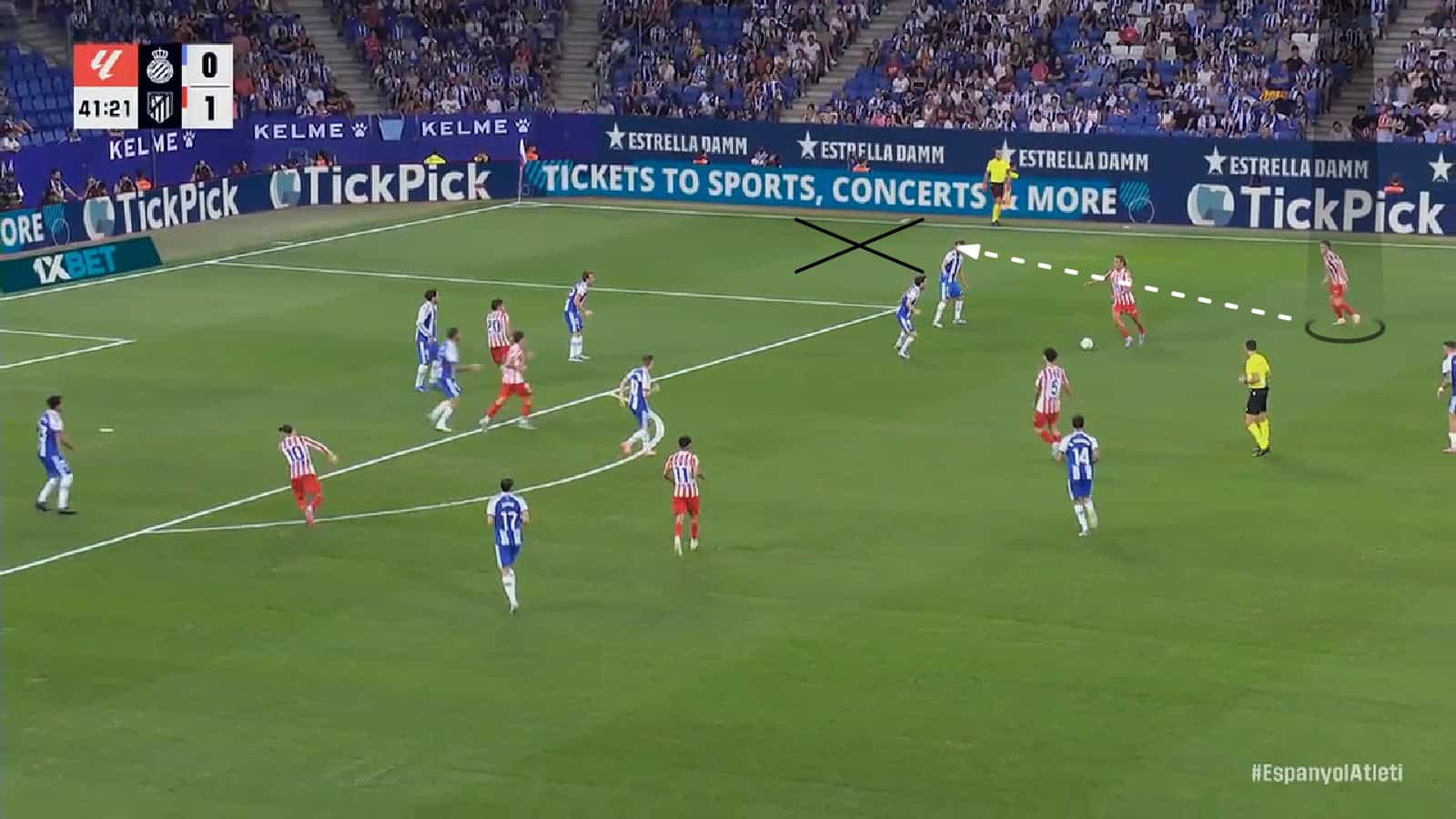
Another issue that stands out is the lack of overlapping runs on the flanks.
This was evident when Marcos Llorente attempted a deep pass but saw it cut out due to the absence of supporting wide movement.
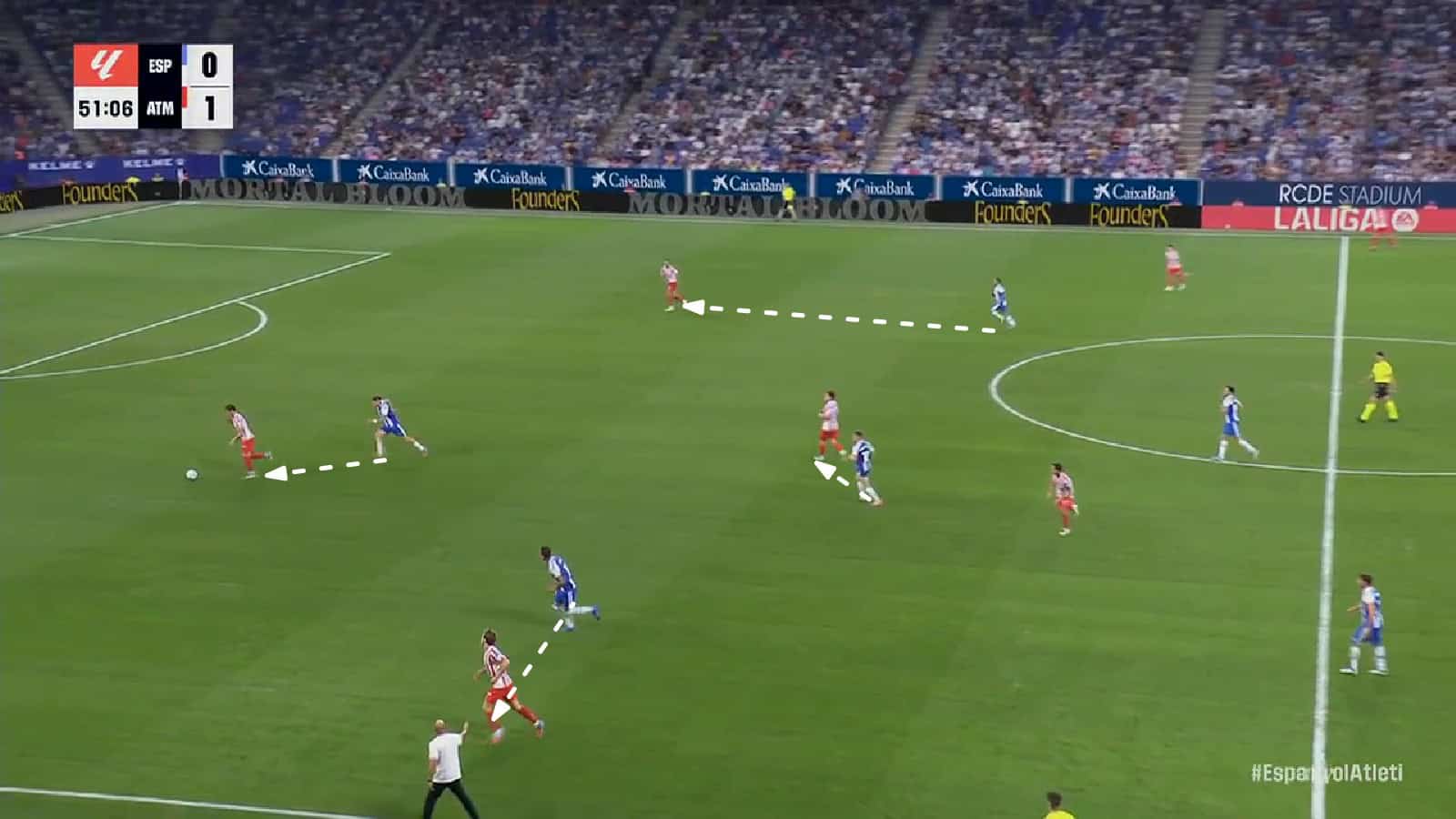
The team struggled against Espanyol’s man-marking press, often forced to lean on Jan Oblak before resorting to long balls.
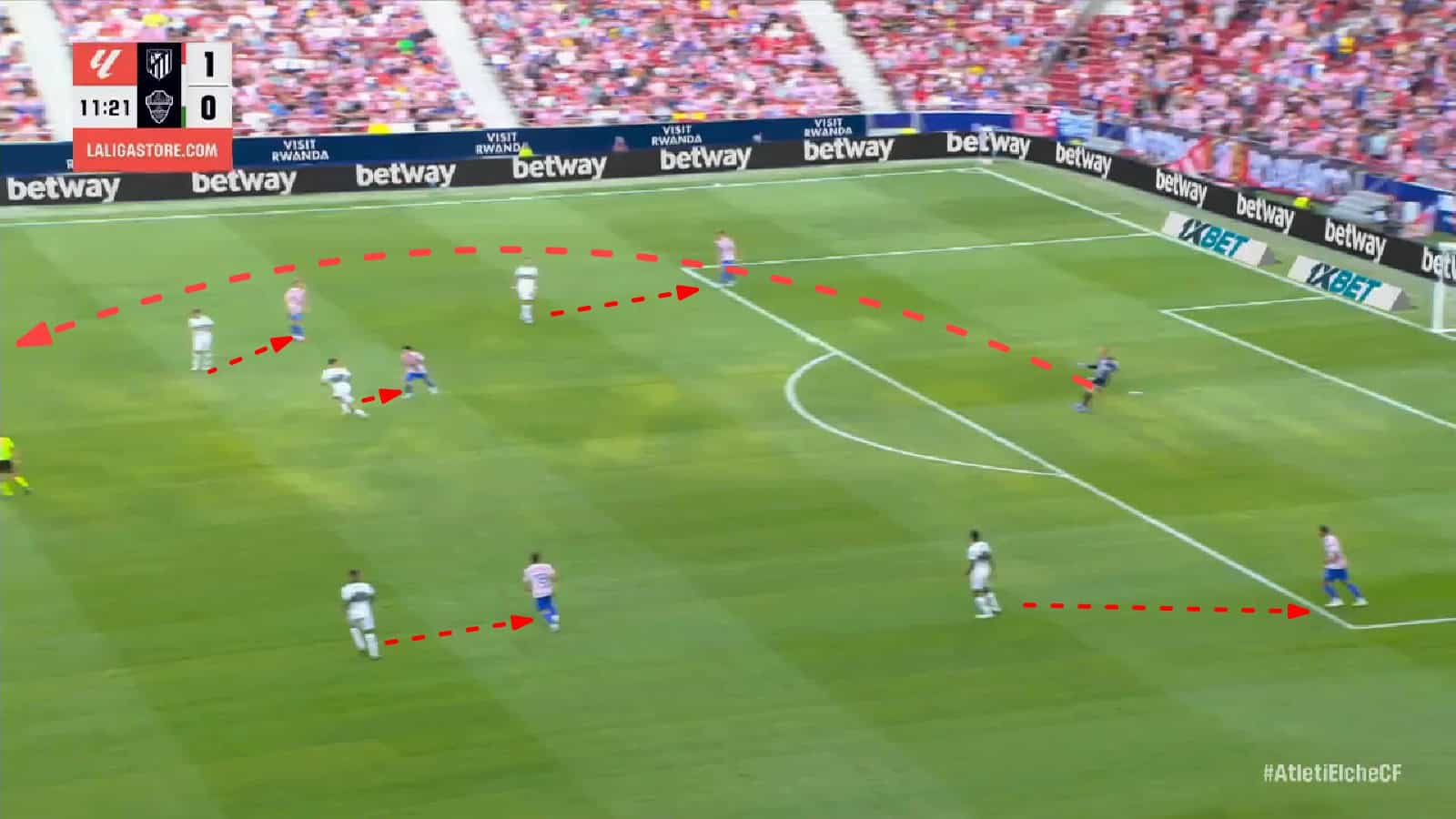
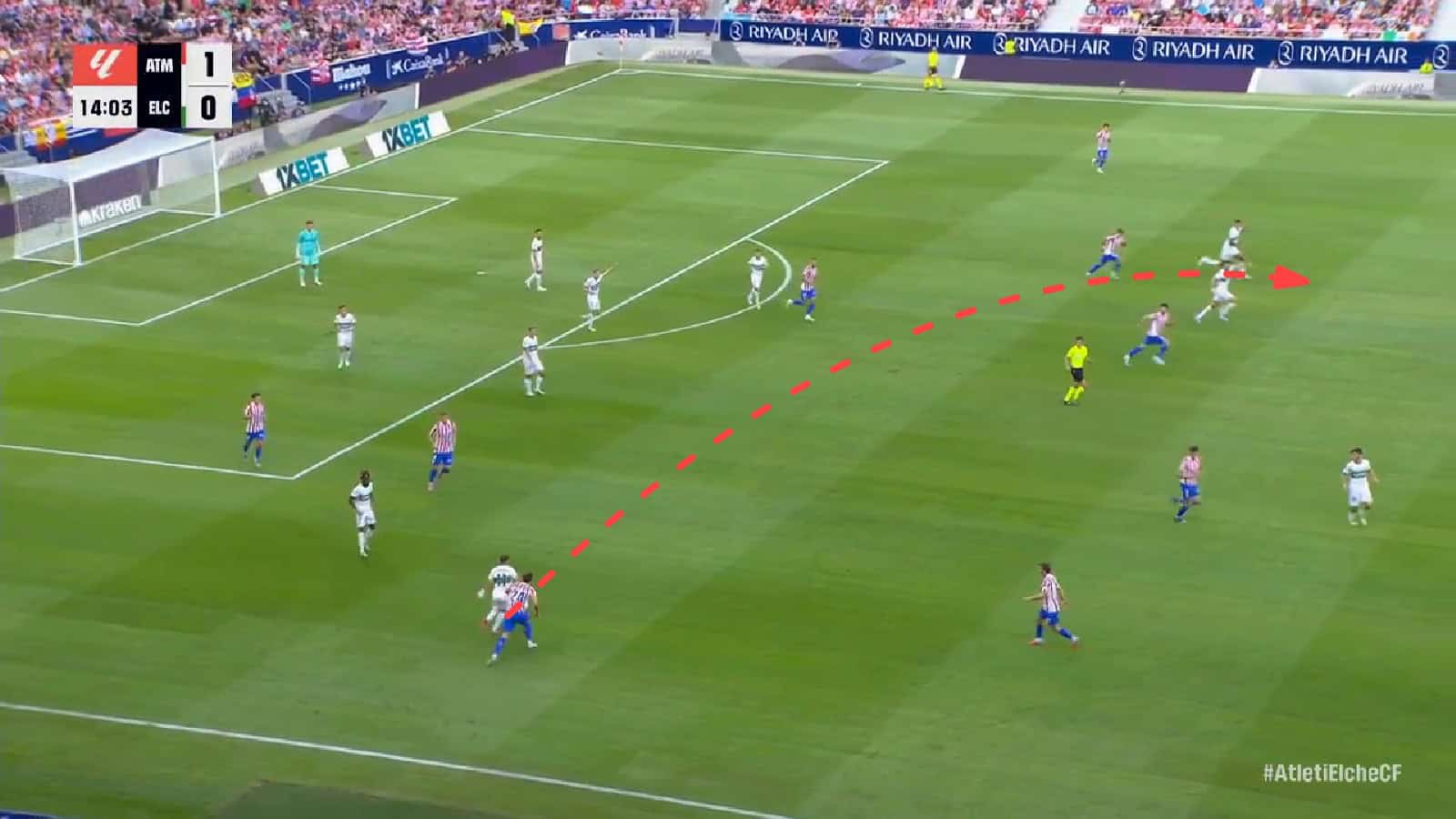
Against Elche, the team once again showed a lack of off-the-ball movement in the first two-thirds, limiting progression options and forcing Jan Oblak to play long balls, which frequently resulted in lost possession.
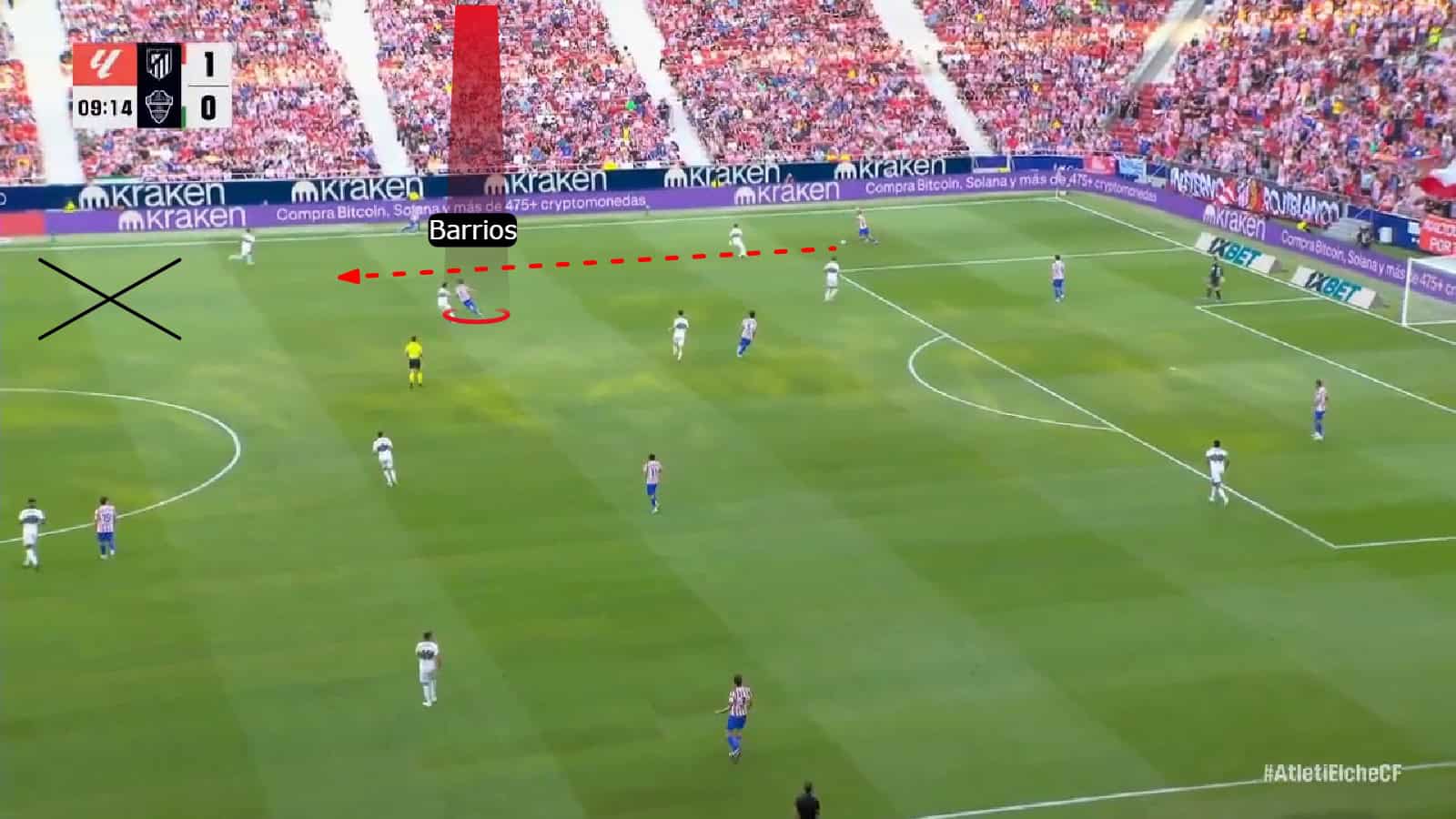
The consistent solution lies in a player provoking the defender to step out of position, then quickly turning and requesting the ball in the space that opens up.
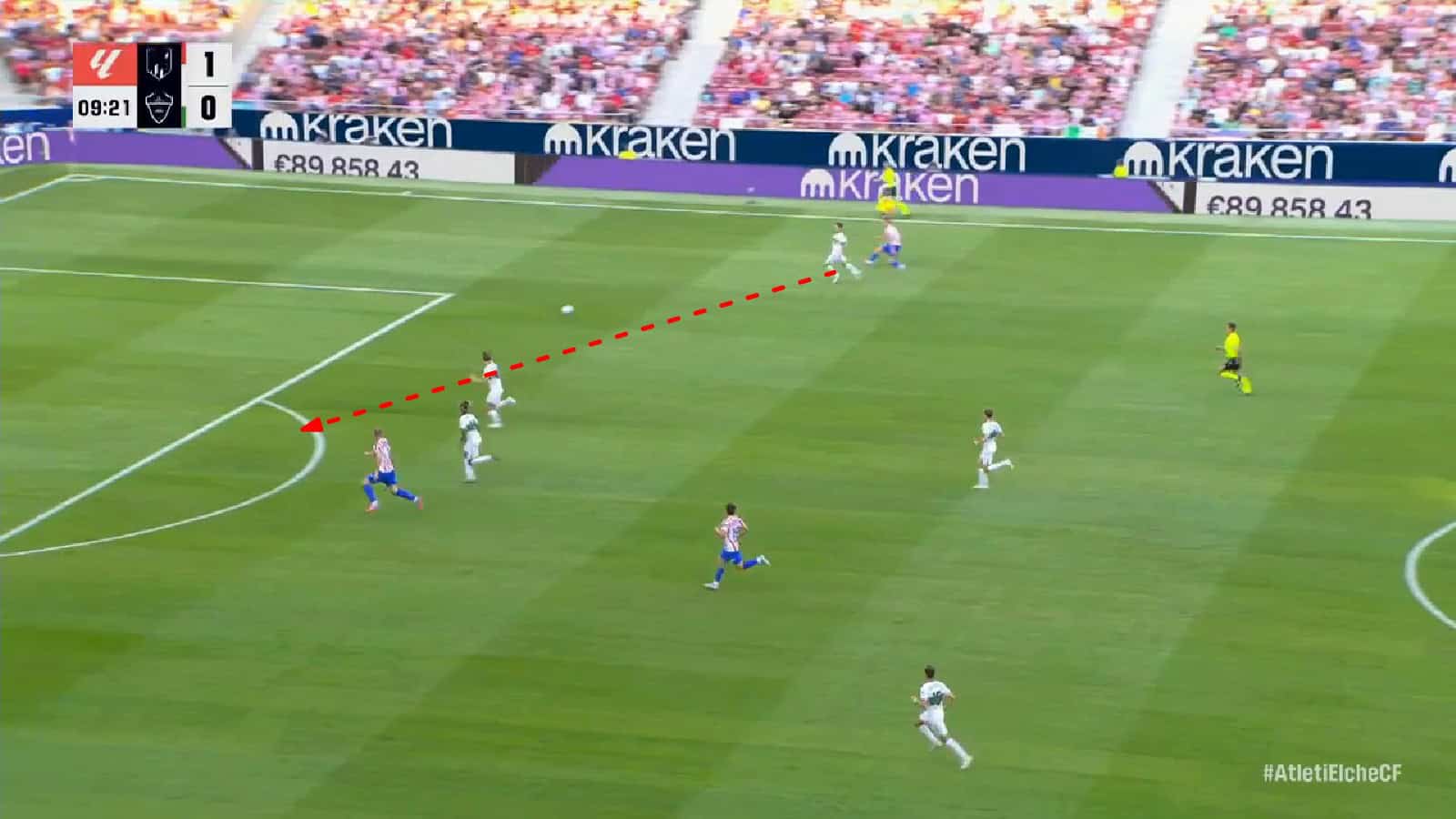
Correct off-the-ball movements create real opportunities.
Midfielders frequently receive the ball facing away from the opposing goal, often opting to recycle possession rather than attempting to break through the defensive lines.
Furthermore, full-backs adopt a cautious stance, rarely pushing high enough to stretch the opponent’s defence with width.
Due to weaknesses in their initial attacking phases, Atlético Madrid’s offensive players frequently find themselves isolated against well-organised defences.
Their attacking strategy is often predictable and confined to the centre of the field.
They focus on passing the ball around the opponent’s defensive shape rather than trying to break through it.
The team struggles to utilise the spaces between defenders, create chances from wide areas, or vary their attacking movements.
As a result, what appears to be controlled possession often becomes ineffective, as Atlético maintains the ball without creating any real scoring threats.
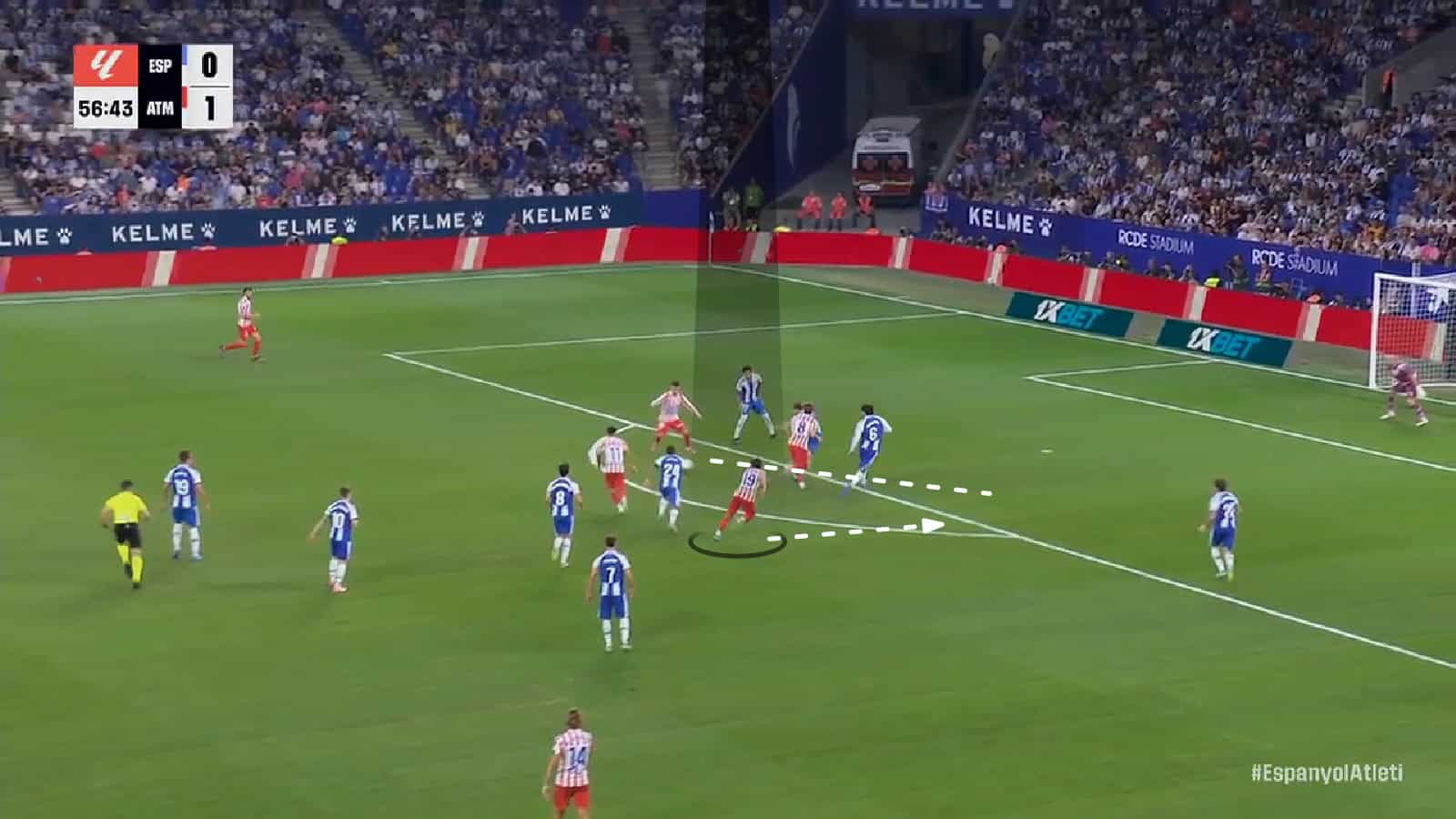
In the final third, notice how Julián Alvarez drops just outside the box to receive the ball.
By doing so, he creates space, supported by midfielders like Barrios, who push higher to occupy defenders.
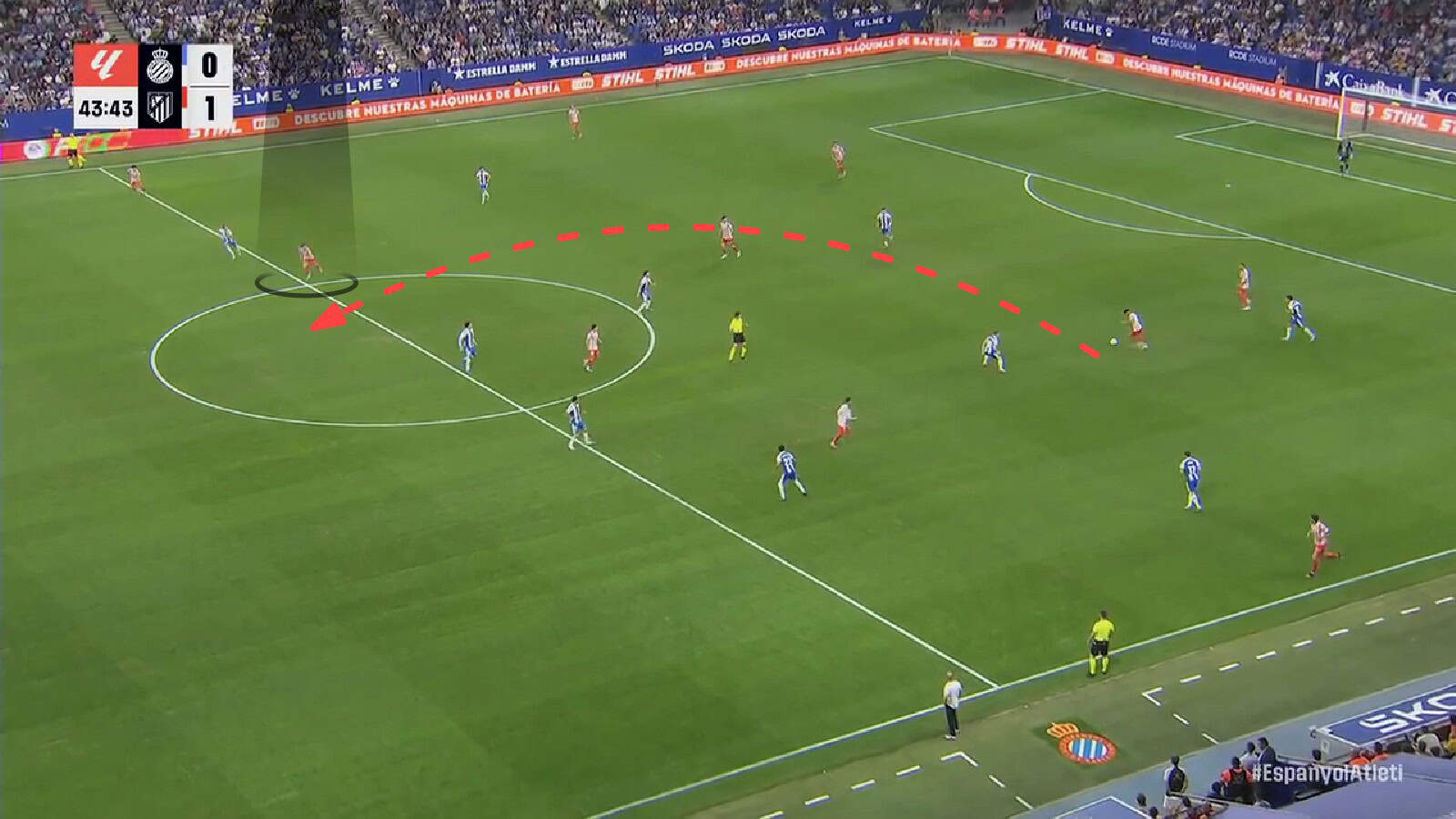
Julián Alvarez drops deep, creating space for Conor Gallagher to receive the ball behind the defence.
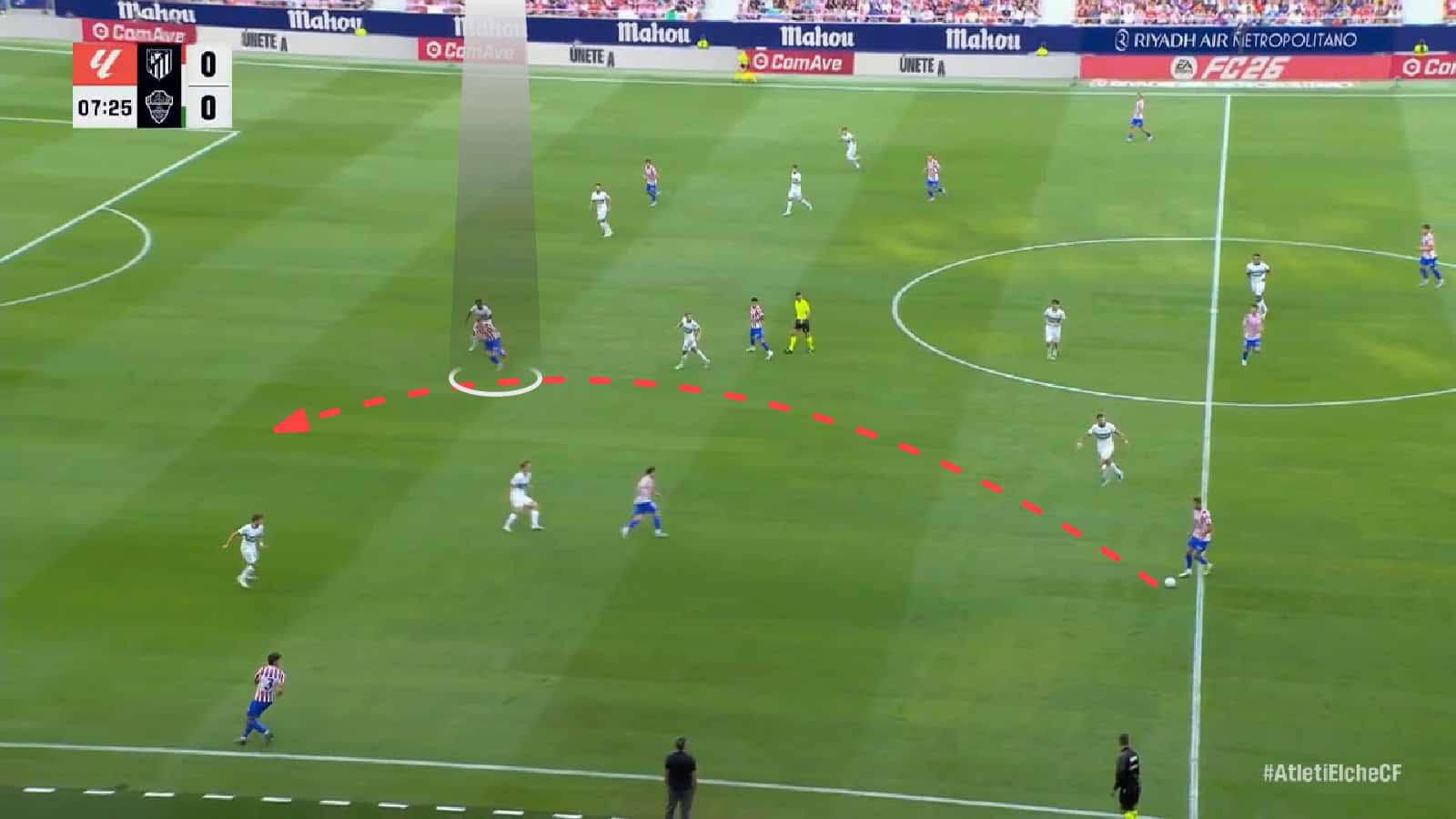
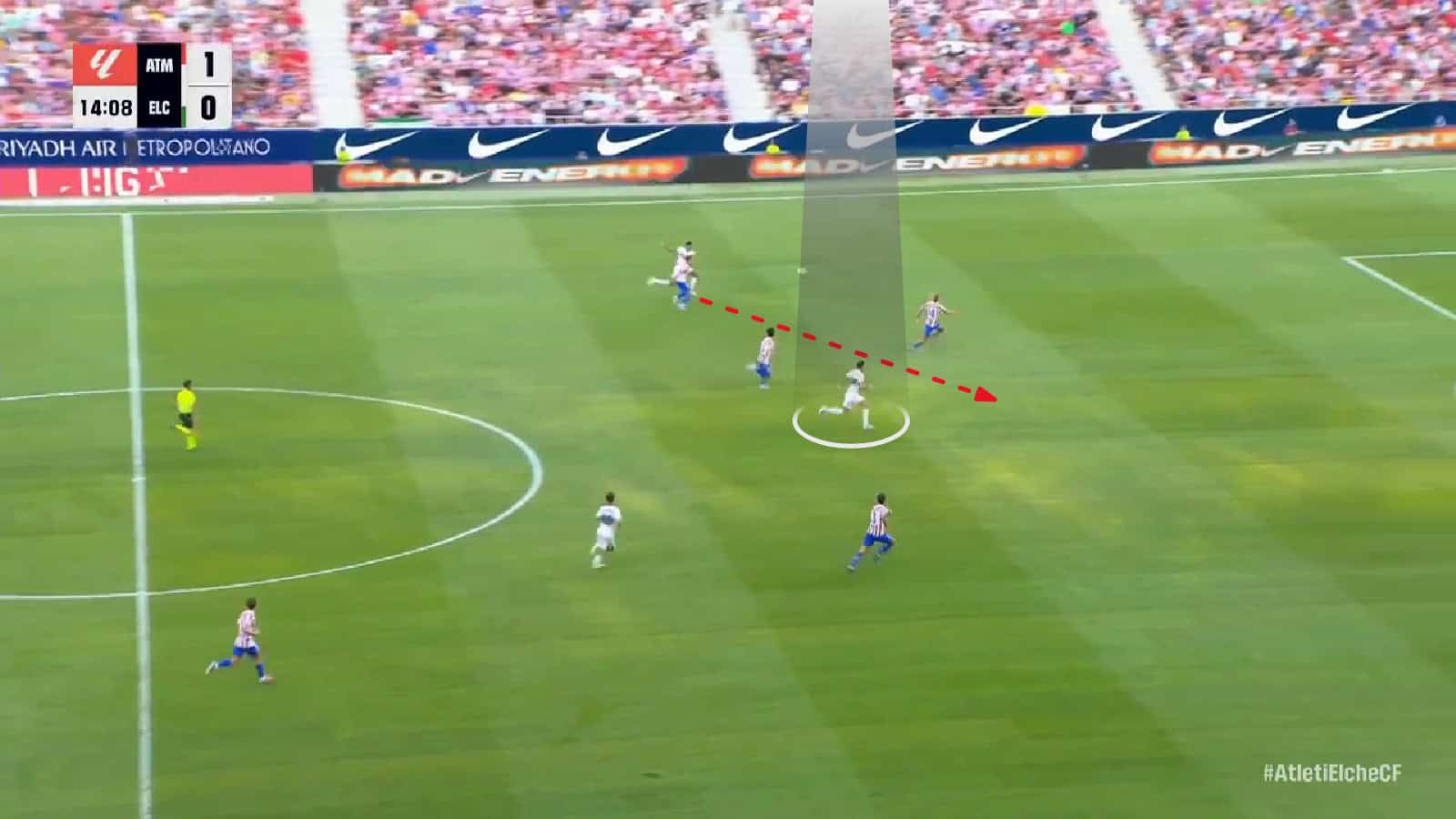
Again long vertical pass, but this time, where Alexander Sørloth scored the goal versus Elche.
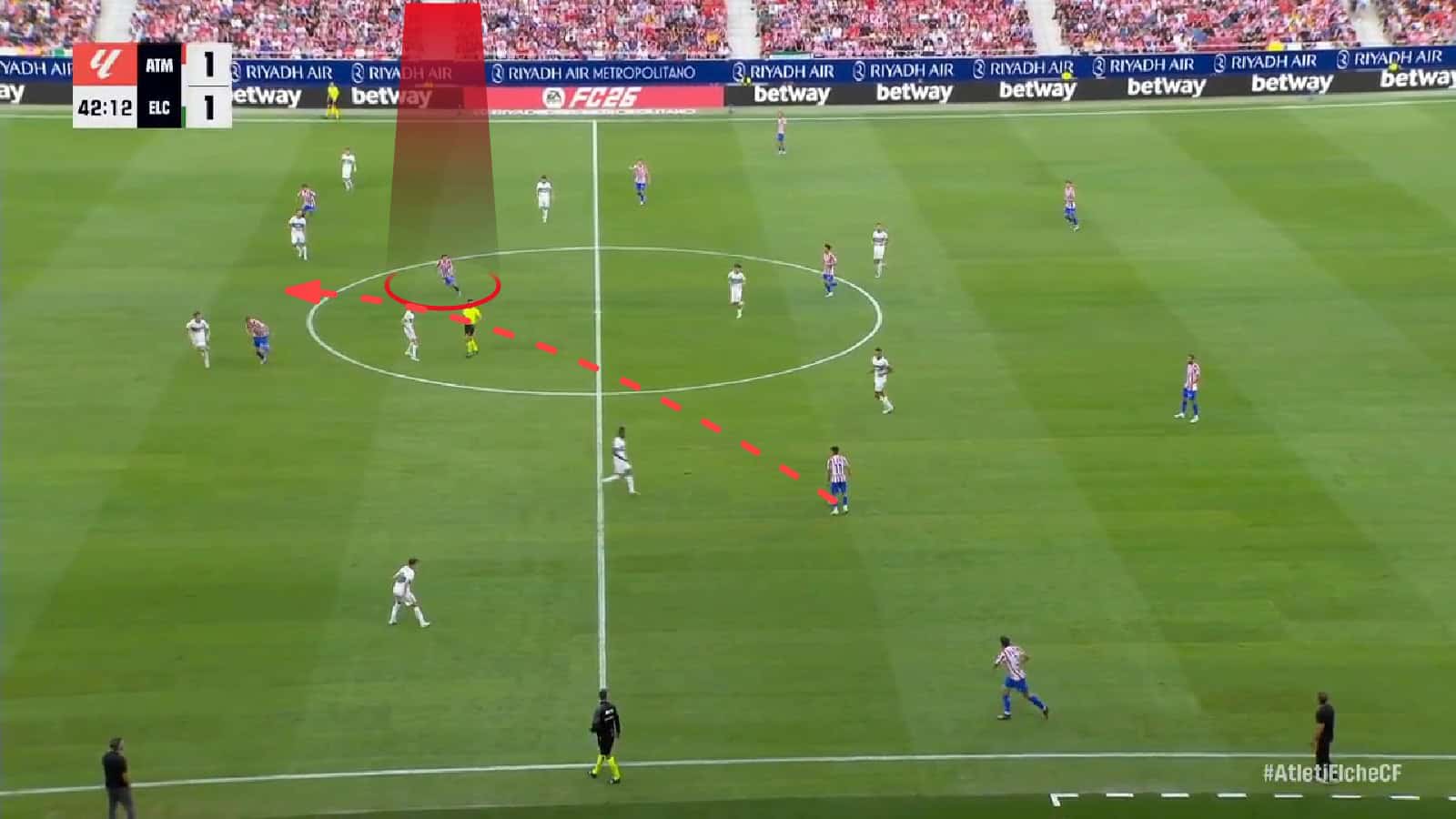
Here, the pattern repeated: They got a long ball between two Elche centre-backs, but the GK played as a libero.
Sometimes, they make another pattern in which one of the midfielders moves to the flank and then drops to provoke the full-back and ask for the ball in the created space.
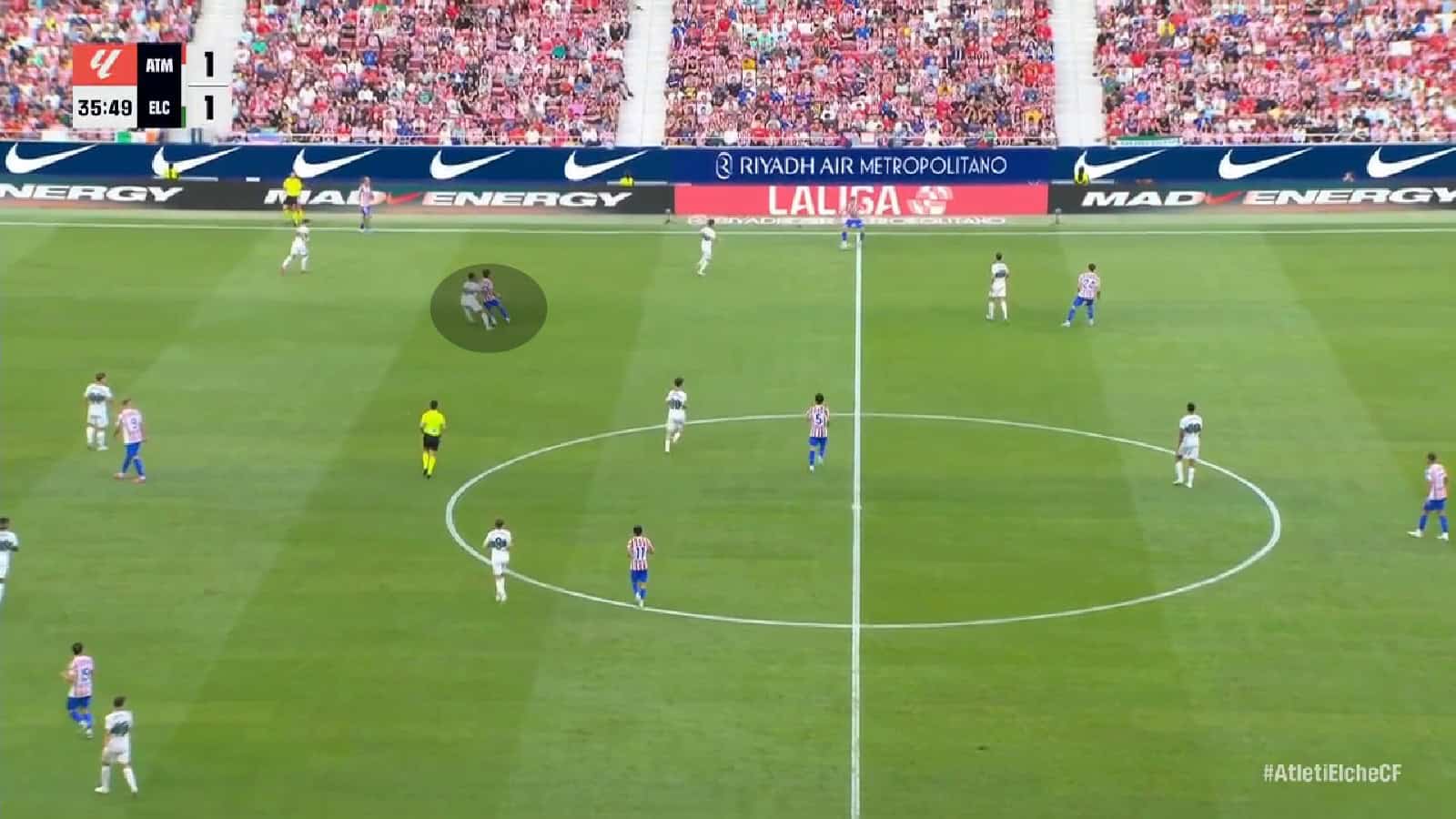
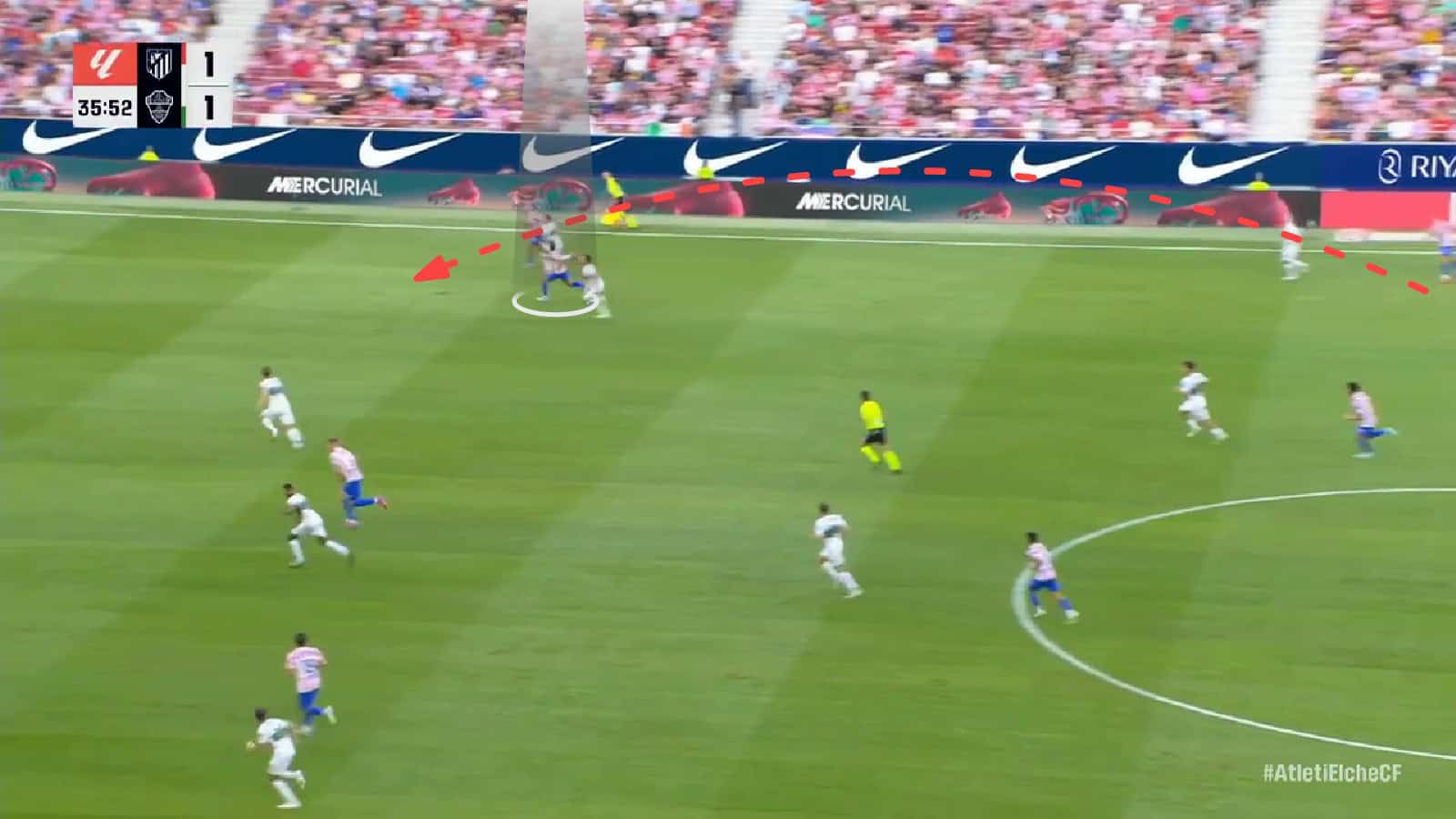
And here we will go for the crossing option, where the striker moves vertically.
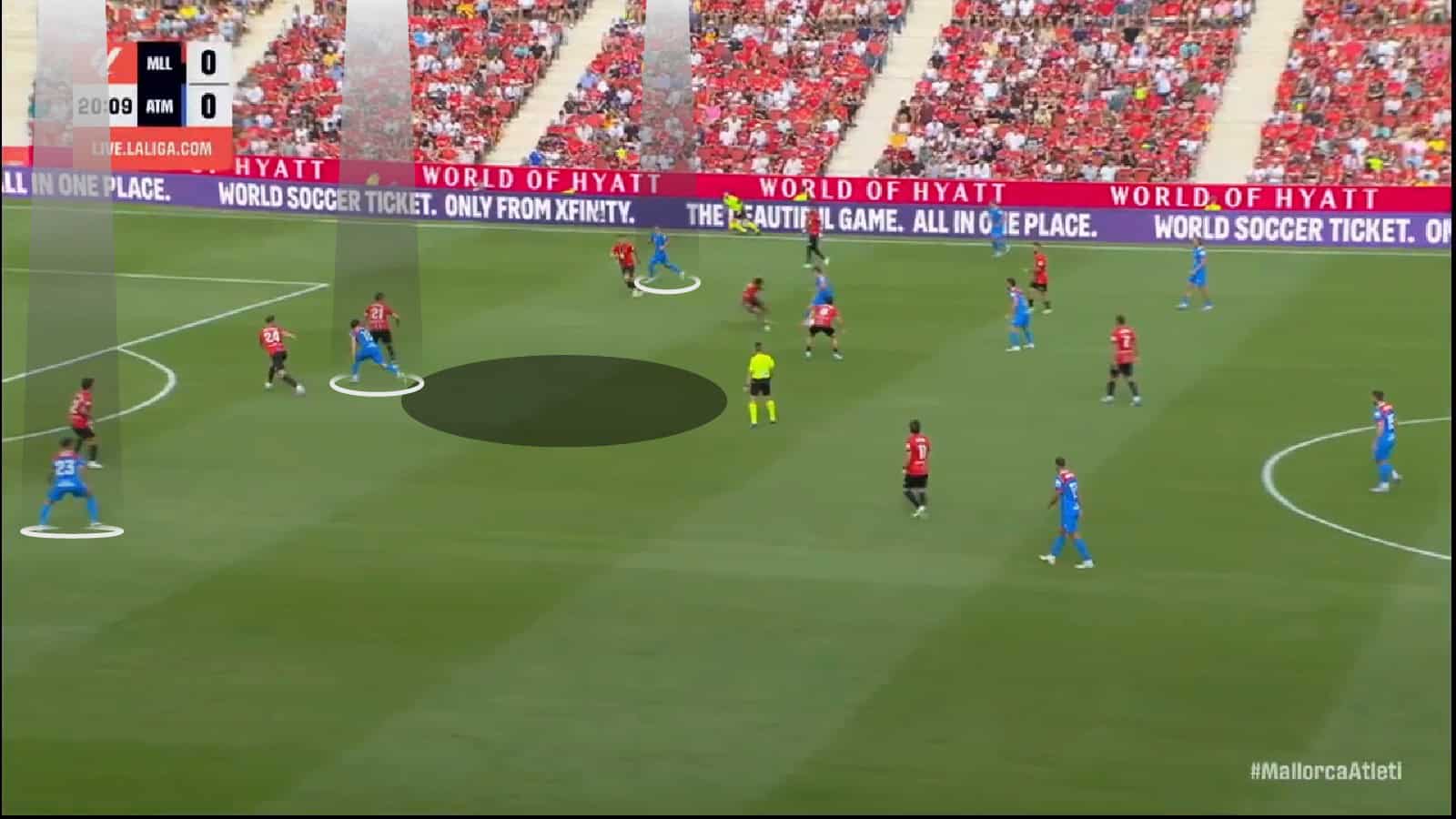
Giacomo Raspadori carried the ball in a 3-v-4 situation, but with no player providing width, the attack lacked balance and options.
As a result, possession was lost.
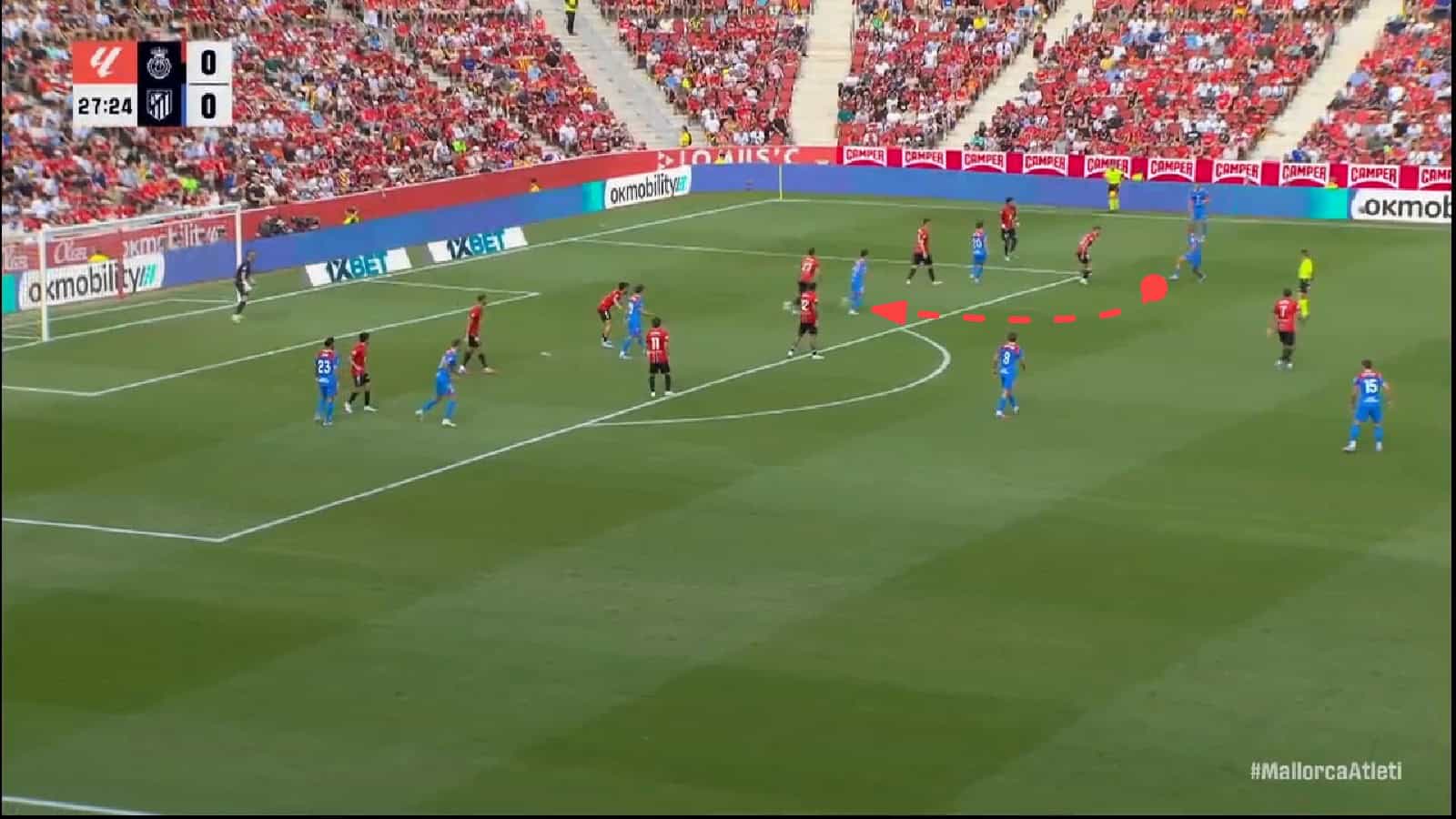
Once again, the attackers remained static, forcing the team to recycle possession back into the middle third.
Even in the wins against Rayo Vallecano (3–2) and Real Madrid (5–2), the goals did not come from penetrations or direct play.
Instead, they were all from set-pieces and crosses.
The team needs to improve its movement and develop more effective ways to break down defences.
Consequently, their possession structure appears organised but lacks the penetrative intent required to move the ball forward effectively.
That’s why the team frequently resorted to long balls.
Atlético Madrid Defensive Shape 2025/2026: Losing Their Identity
Under Diego Simeone, Atlético Madrid was once renowned for its formidable defence, characterised by its tight structure, aggressive play, and clear defensive roles.
However, in the 2025/2026 season, this legendary foundation appears to be crumbling.
The team’s defensive unity has faded, and the synchronicity that made them one of Europe’s most feared low-block teams is no longer present.
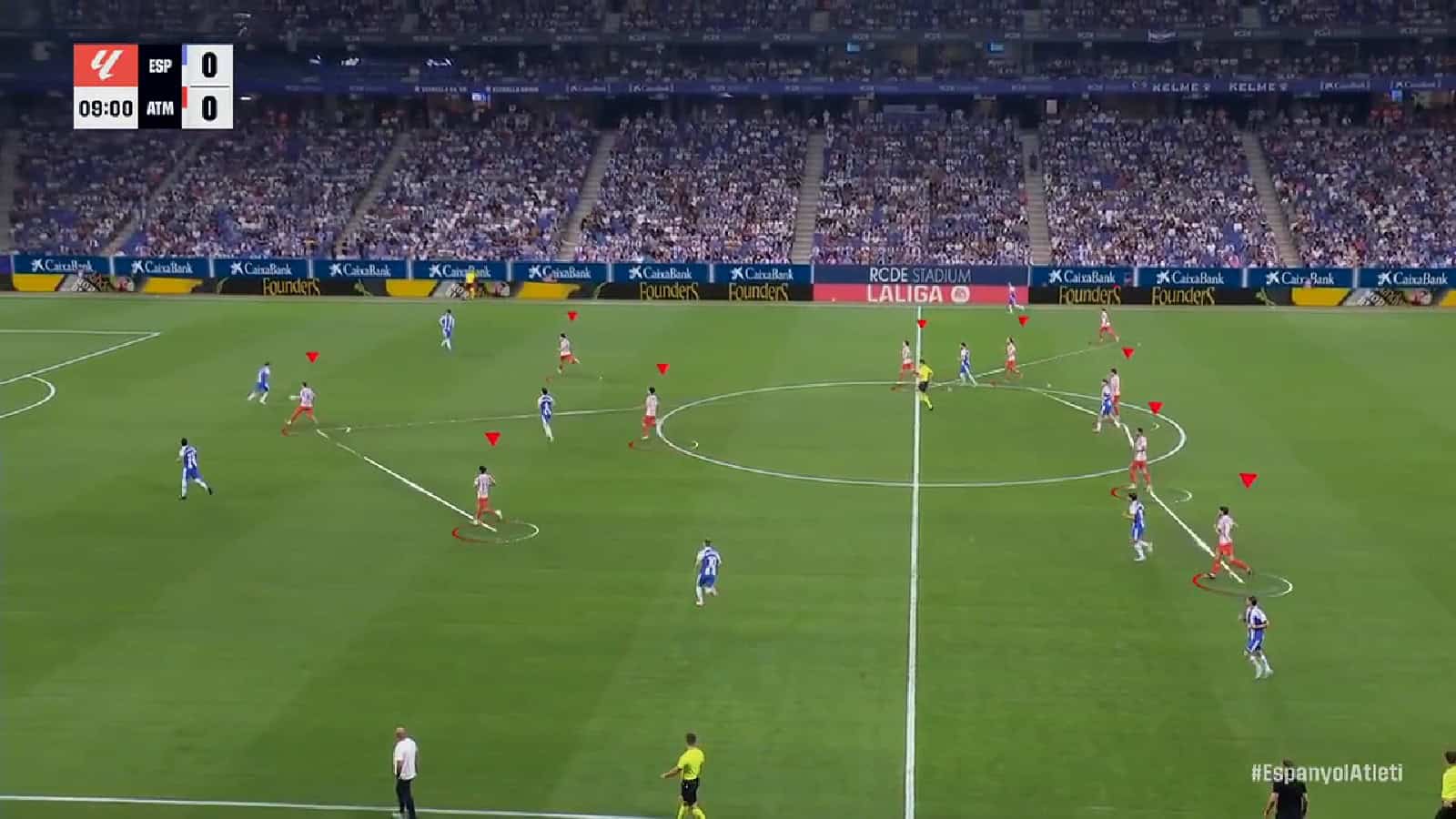
While still a 4-4-2 on paper, the team’s current defensive setup is plagued by tactical issues.
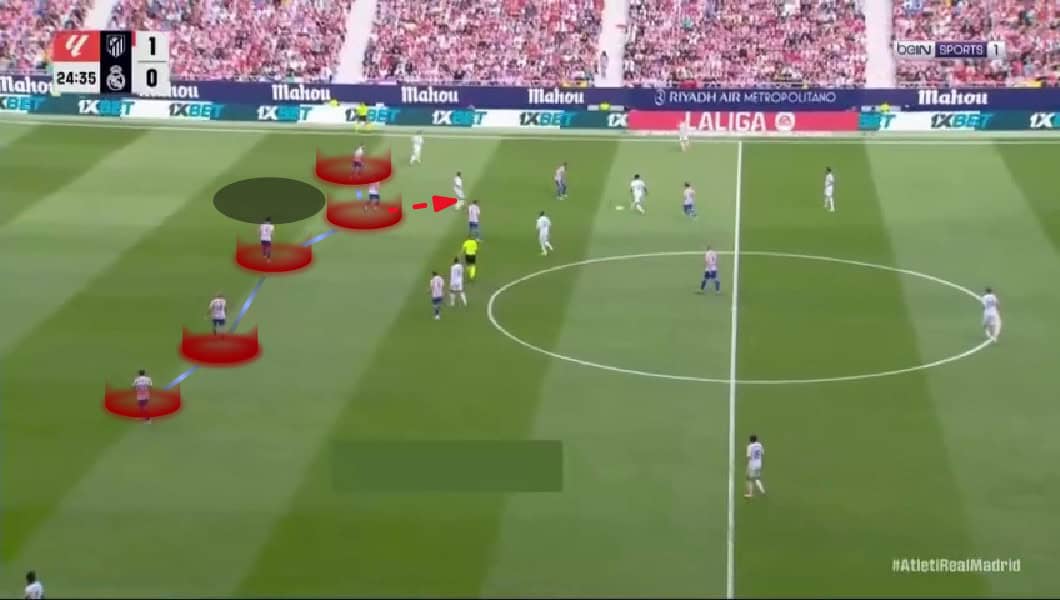
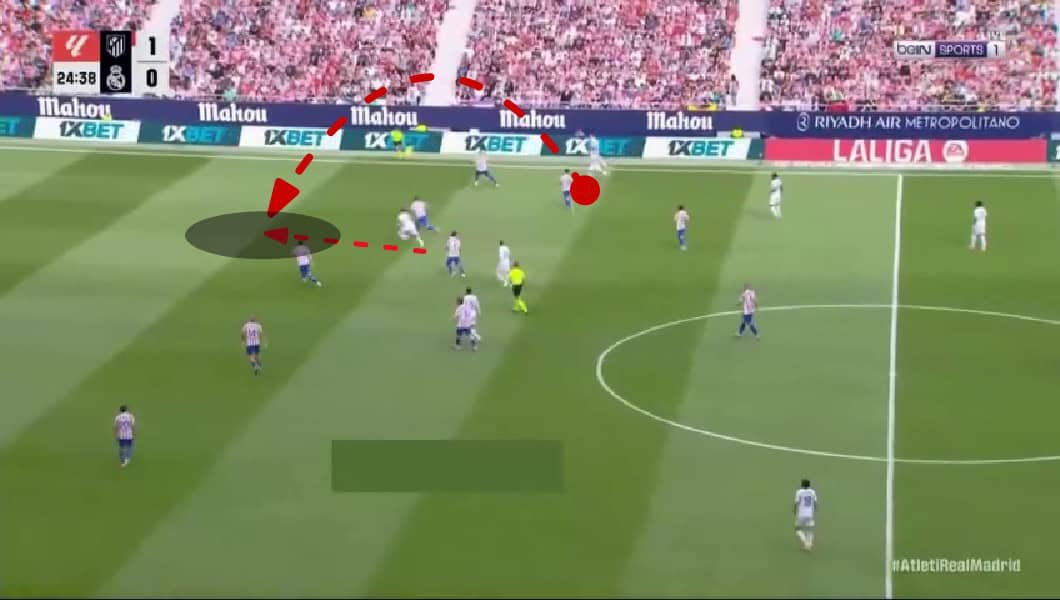
The space between the defensive and midfield lines has grown, leaving them vulnerable.
When the forwards press, the once-relentless pressing becomes sporadic and lacks its former intensity; the midfield fails to provide adequate support, creating significant gaps for opponents to exploit.
This lack of coordination, whether pressing high or sitting deep, has made Atlético’s defence easier to break down and stripped them of their once-dominant defensive identity.
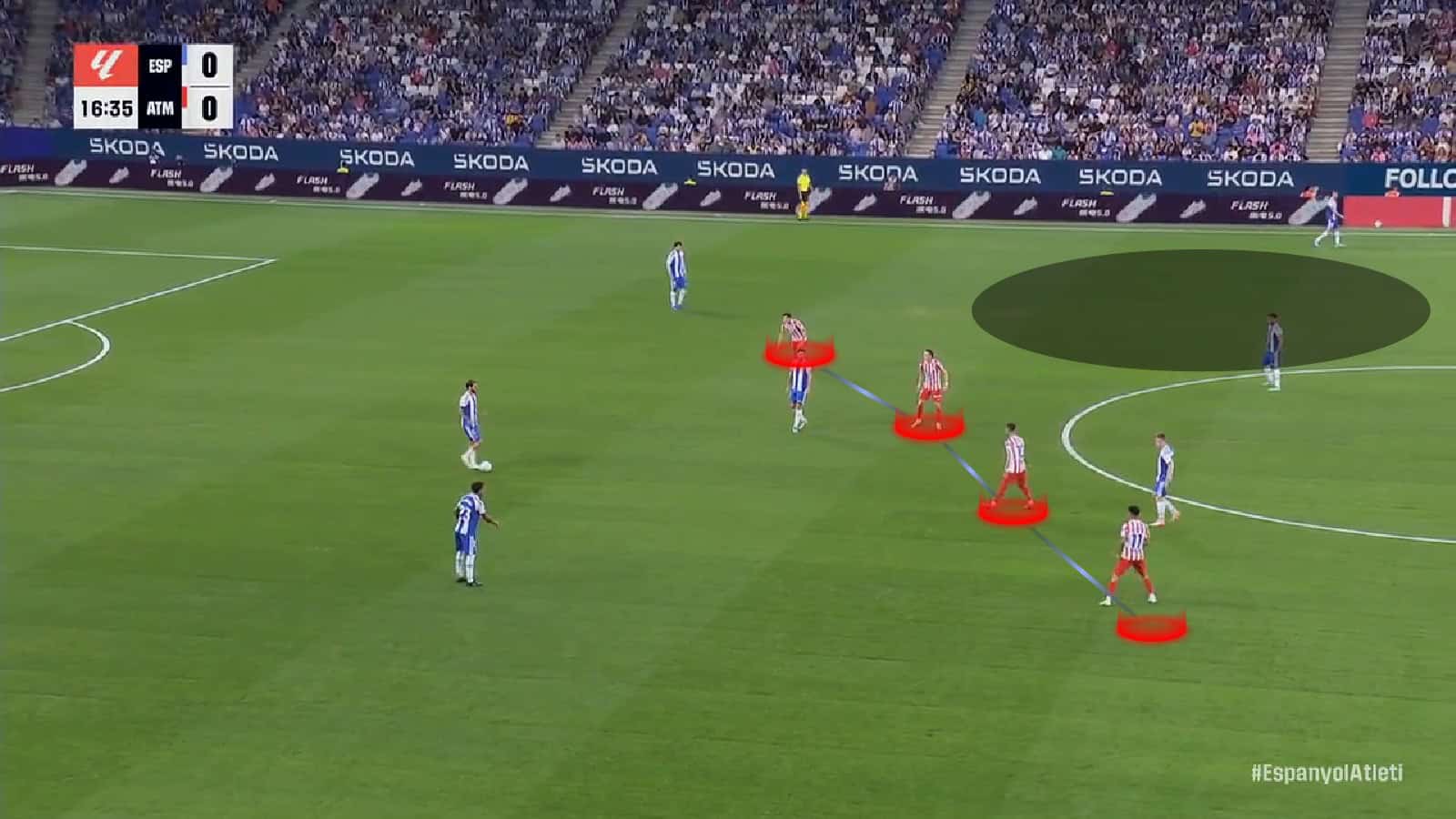
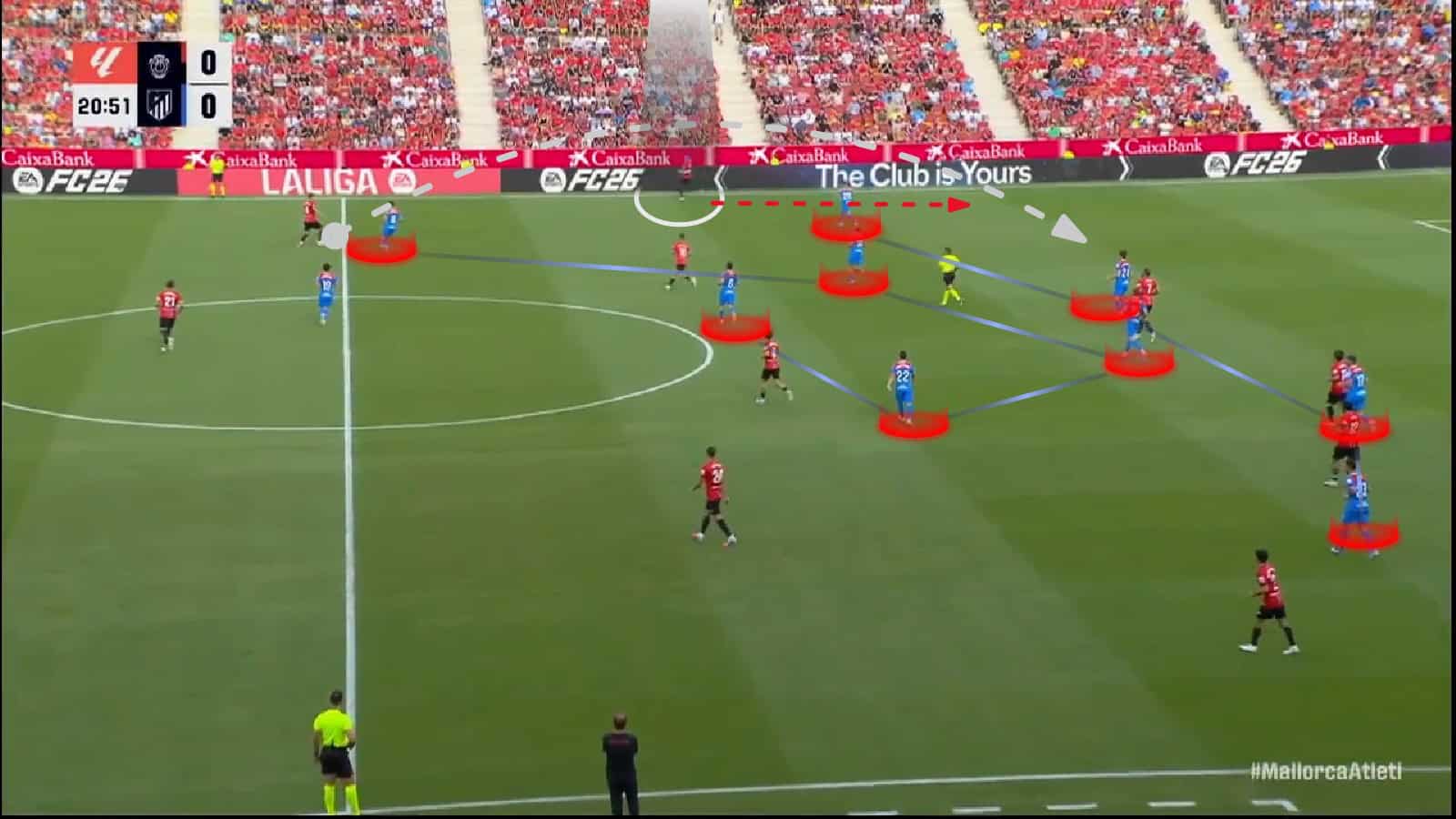
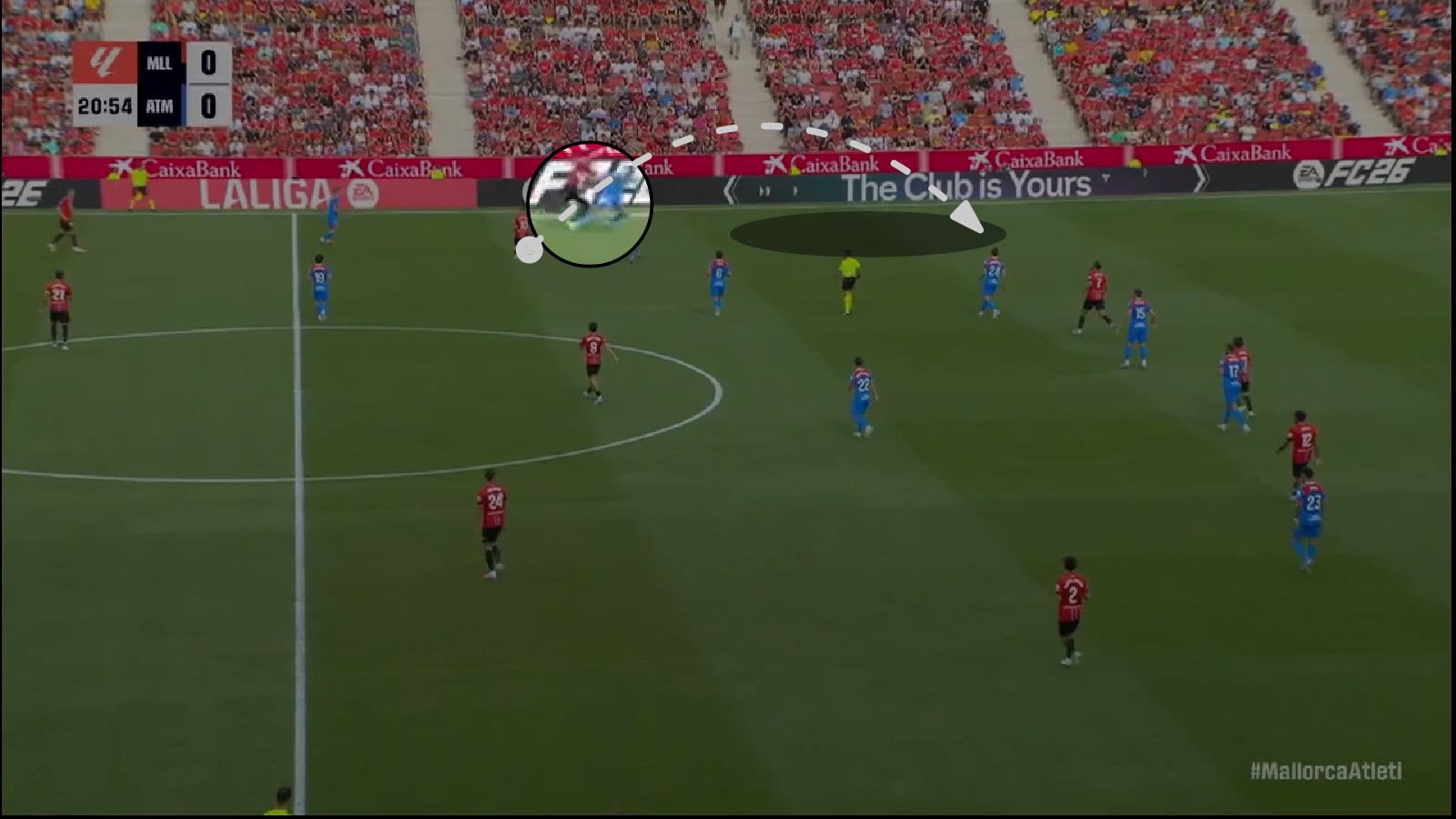
Here, the striker, two midfielders, and the winger are positioned without facing any real defensive pressure.
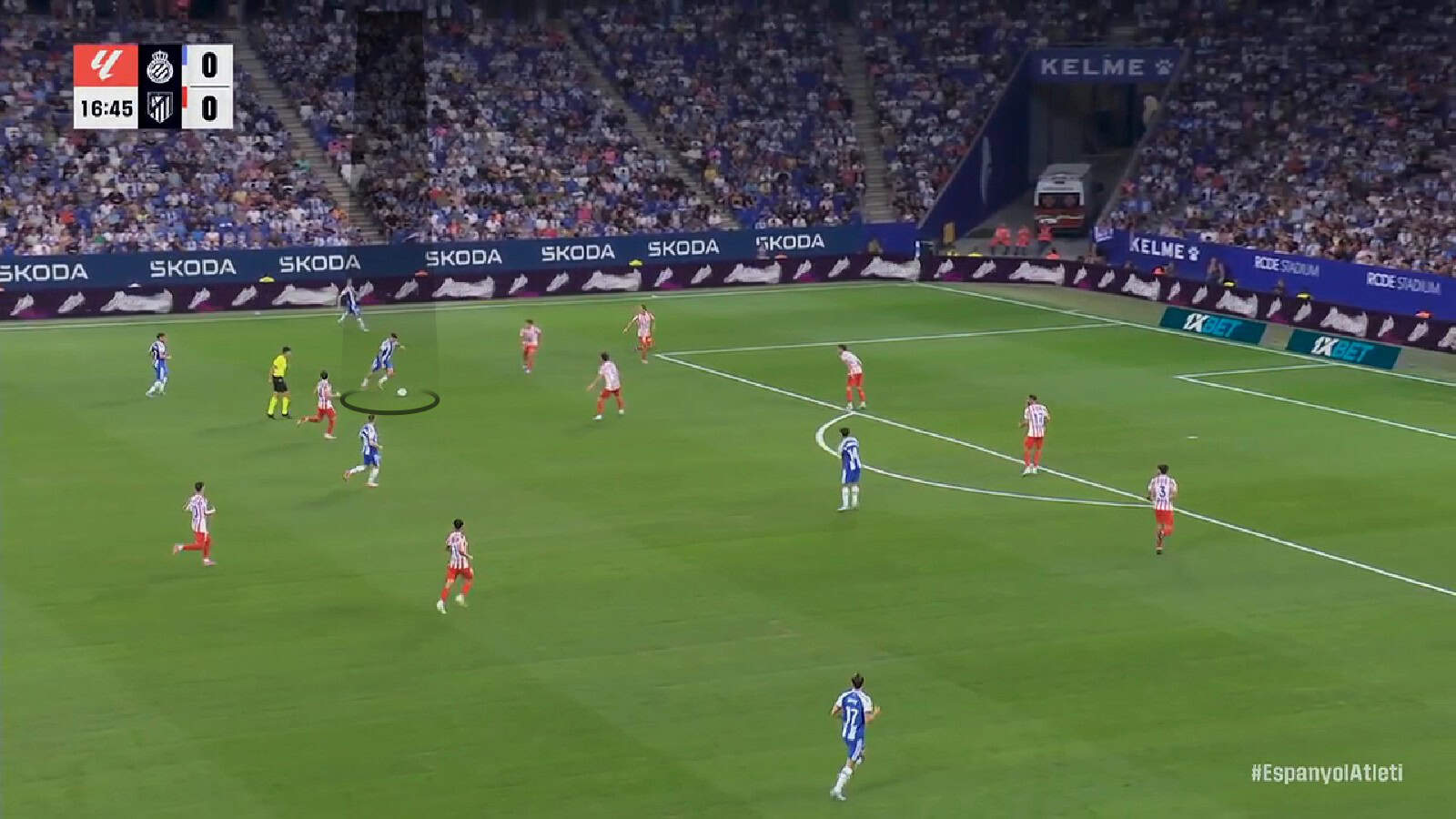
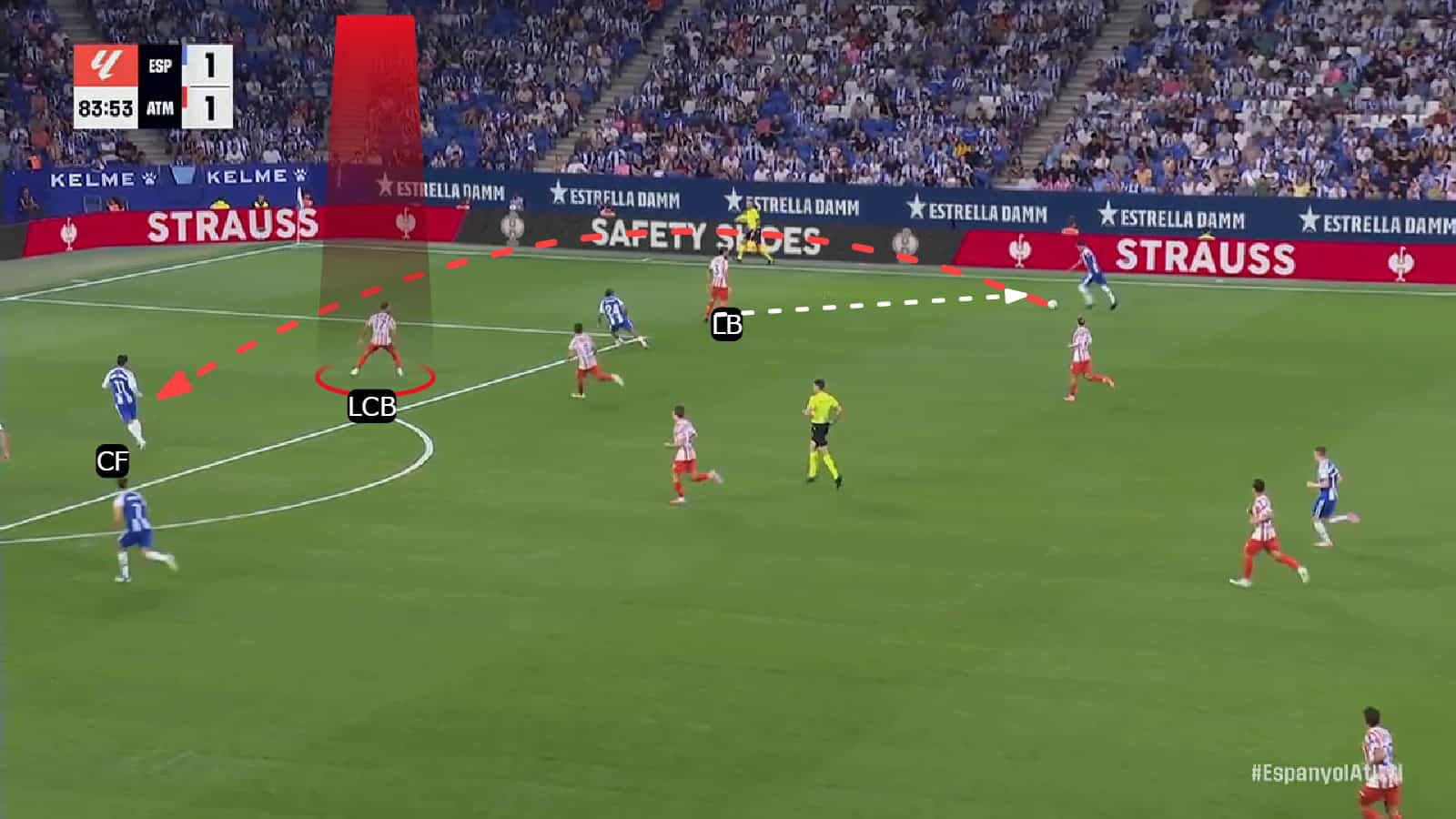
Espanyol easily switched the play horizontally, creating a shooting opportunity without facing any defensive pressure.
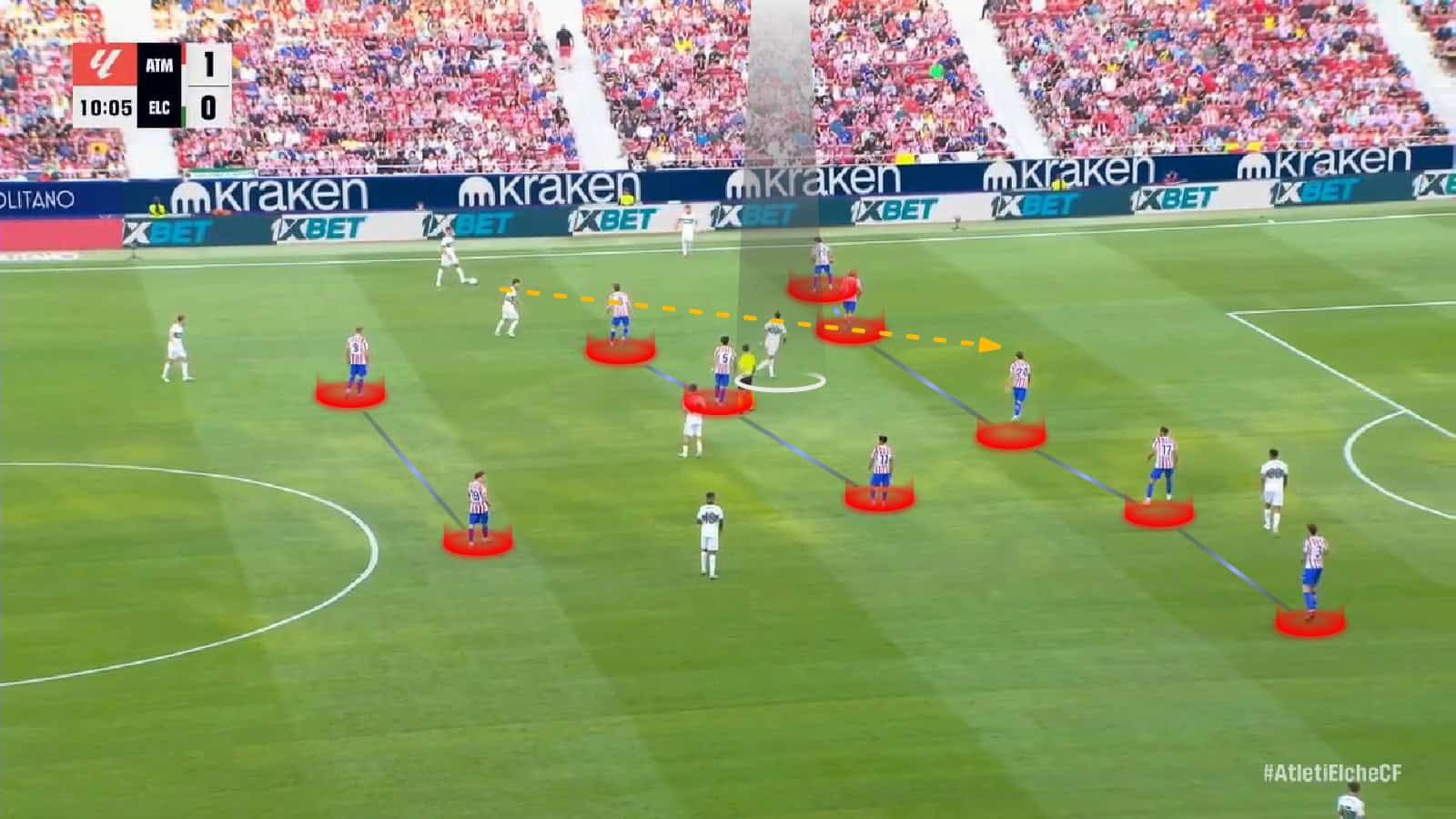
Here we can see a recurring gap in the defensive line this season: Rafa Mir received the pass and managed to shoot without being tracked or noticed.