
For the third time this season, Manchester City conceded a late goal to give away three points.
Pep Guardiola’s side was in complete control on Wednesday, but a late penalty from Eric Dier gave AS Monaco a much-needed point at home.
Manchester City have certainly been an interesting team this season.
We’ve seen dominant matches by controlling the ball, but also playing more direct against certain types of opponents.
The Cityzens had been in better form coming into the match, winning four of their last five matches.
Their improvements came defensively, as they conceded only twice.
Monaco entered the match following a challenging run of form, having lost 4-1 to Club Brugge in their opening UEFA Champions League match and 3-1 to newly promoted Lorient in Ligue 1.
It was a fascinating tactical battle between Adi Hütter and Pep Guardiola, in which Manchester City dominated possession and played inside the Monaco final third for most of the match.
In this article, we’ll take a look at how Manchester City created chances through their central overload, how they limited Monaco from open play, and how Adi Hütter’s low block frustrated Manchester City.
Monaco Vs Manchester City Lineups & Formations
Monaco came out for the first time this season in a 3-4-3 formation.
Philipp Köhn started his fifth straight match in net behind Eric Dier, Thilo Kehrer, and Mohammed Salisu as the three centre-backs.
Mamadou Coulibaly made his second start of the season in central midfield alongside Jordan Teze, with Krépin Diatta and Vanderson operating as the two wing-backs.
Maghnes Akliouche and Ansu Fati lined up as the wide forwards with Folarin Balogun in his usual spot up top.
Adi Hütter made five substitutions in the match.
In the 22nd minute, Kassoum Ouattara came on for the injured Vanderson.
In the 64th minute, Stanis Idumbo came on for Ansu Fati.
The final substitutions were made in the 82nd minute: Mika Biereth replaced Folarin Balogun, Pape Cabral replaced Mamadou Coulibaly, and George Ilenikhena replaced Mohammed Salisu.
Manchester City came out in a 4-1-4-1 formation for the sixth straight match.
Gianluigi Donnarumma started in goal behind Rúben Dias and Joško Gvardiol as the centre-back pairing.
Nico O’Reilly started at left-back for the fourth time this season, while John Stones started at right-back.
Rodri started as the lone defensive midfielder with Tijjani Reijnders and Phil Foden right ahead of him in central midfield.
Jérémy Doku started at left midfield, while Bernardo Silva began to at right midfield for the fourth time this season.
Erling Haaland once again started up top for the Cityzens.
Pep Guardiola made three substitutions in the match.
In the 61st minute, Savinho came on for Jérémy Doku, and Nico González came on for Rodri.
The final substitution came in the 73rd minute when Matheus Nunes came on for John Stones at right-back.

Manchester City Central Overload
Pep Guardiola has been playing a slightly different style this season.
For years, he’s valued control over everything else, but this year, his Manchester City team is far more aggressive and direct than they’ve ever been.
That said, in this match, Monaco didn’t allow Manchester City to get out in transition or play direct, so they went back to their old ways.
For most of the match, they tried to overload the middle of the pitch by dropping Haaland in deep and inverting Nico O’Reilly to create a 3-1-6 structure.
By dropping Haaland, Foden, and Reijnders in deep, they were asking Monaco’s three centre-backs whether or not they were going to follow them into these areas.
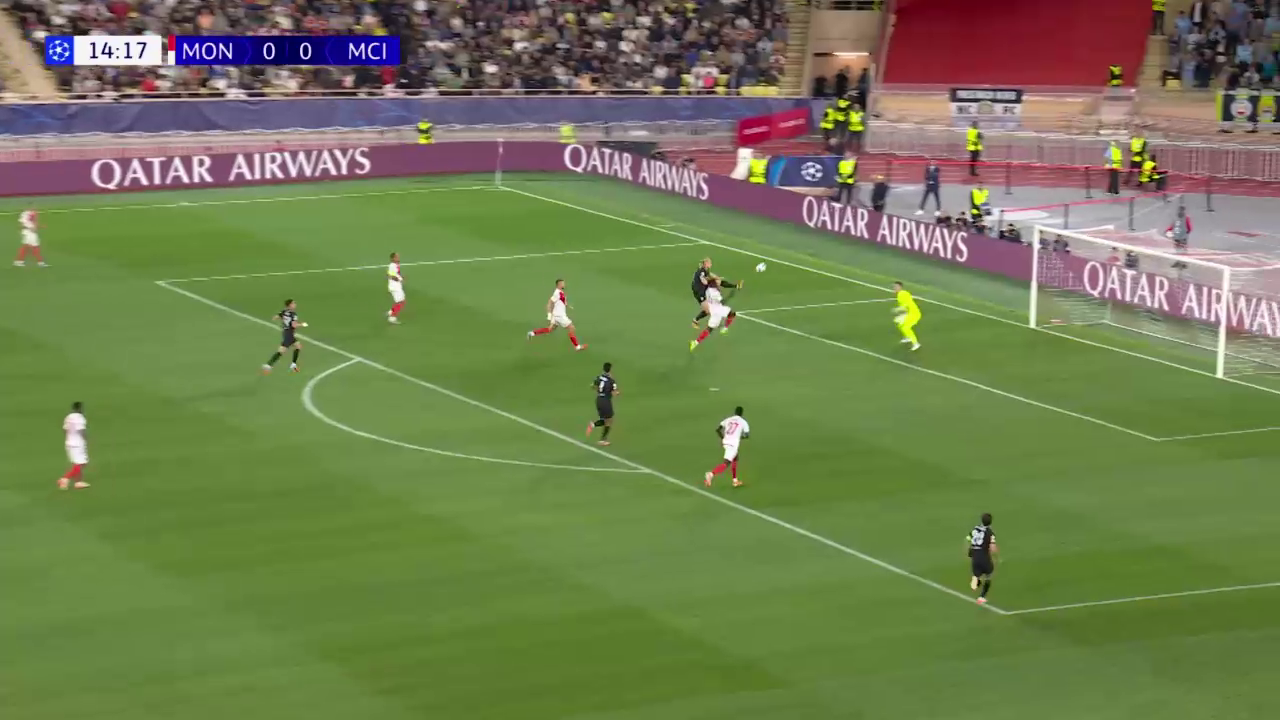
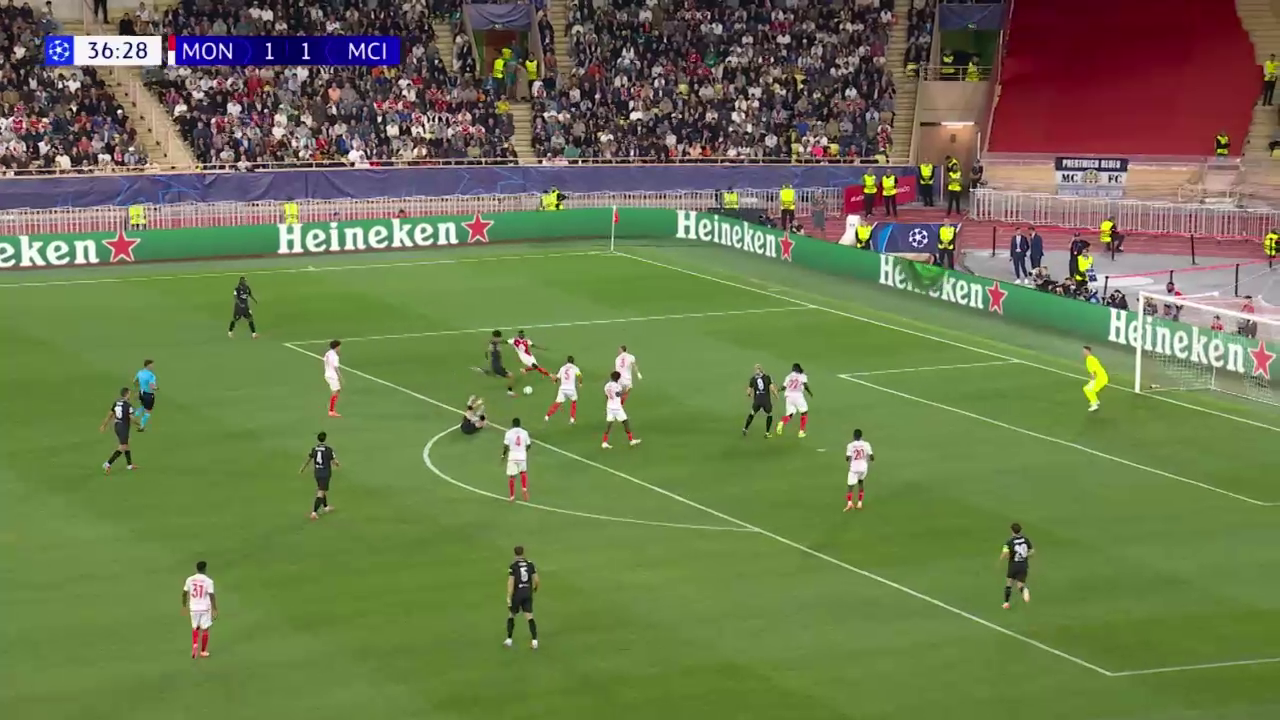
The opening goal is a perfect example of how this type of central overload can create space.
Erling Haaland is a master at these types of runs.
Phil Foden drops in with Eric Dier making a jump to close him down, while Erling Haaland makes a run into the vacated space and chips it over Philipp Köhn to open the scoring.
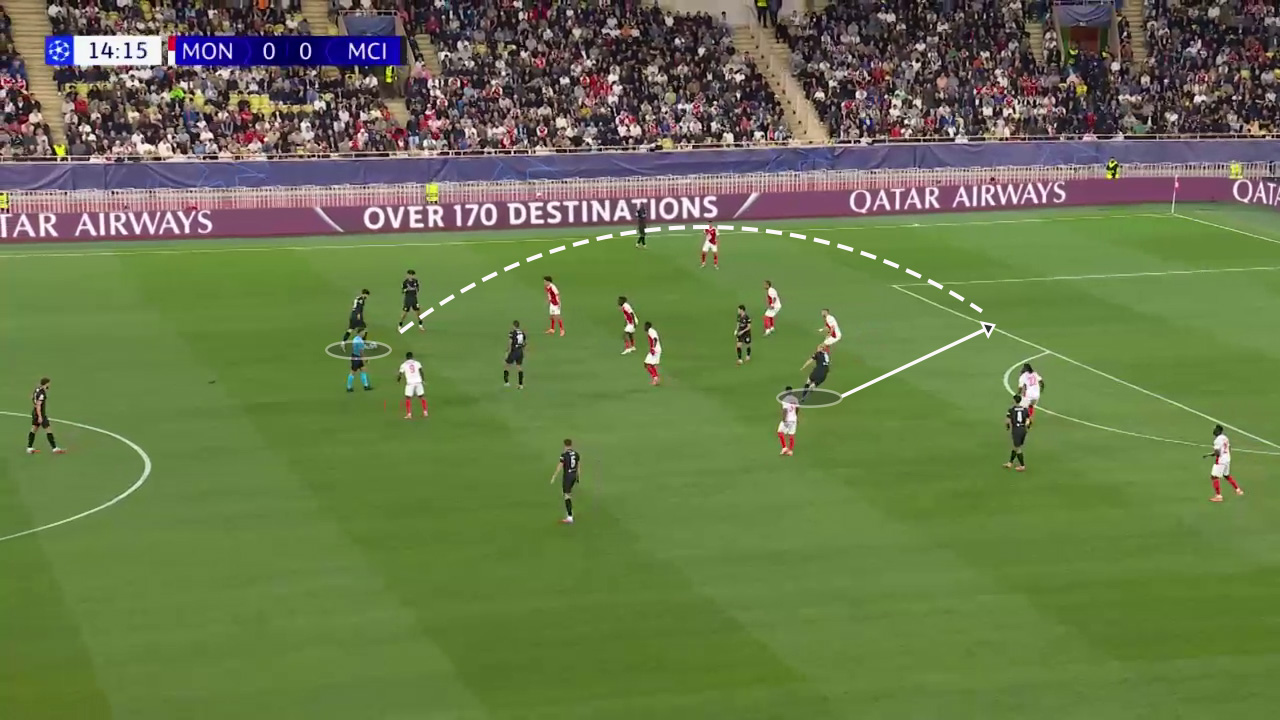
Because Haaland kept dropping deeper rather than sitting on the backline, he was able to go untouched on this type of run, which allowed him to have the space to get off the shot.
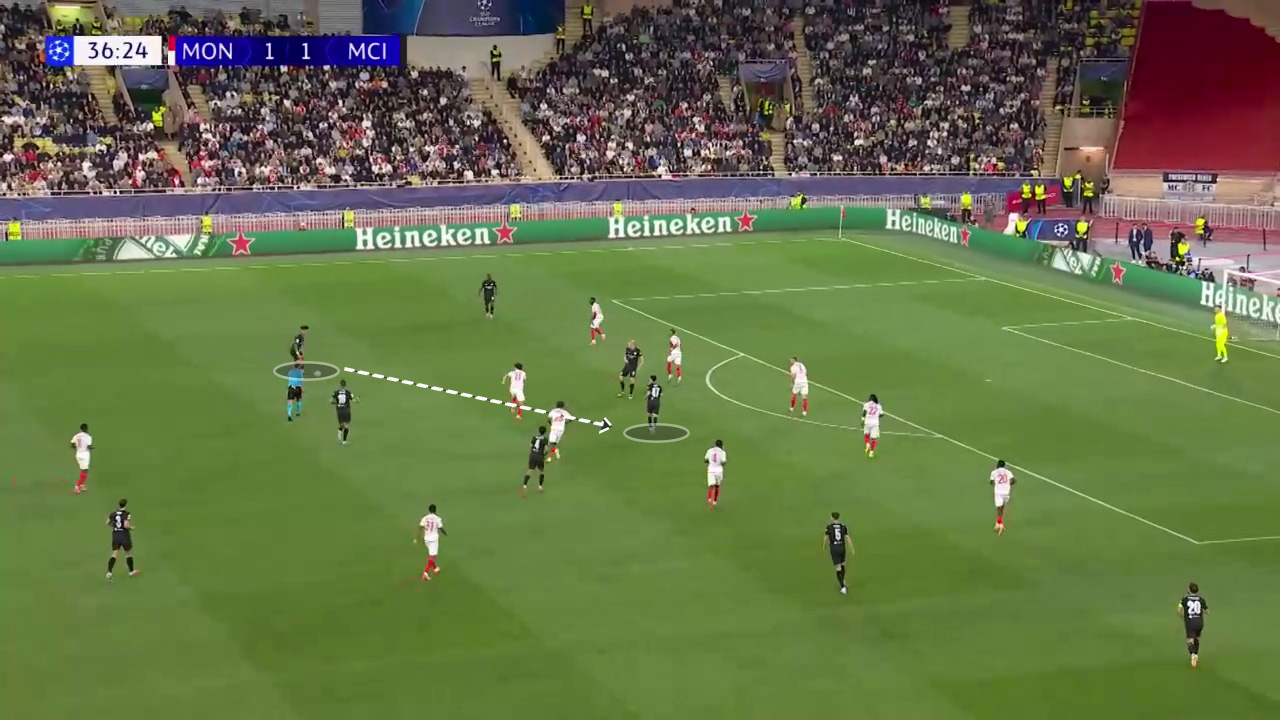
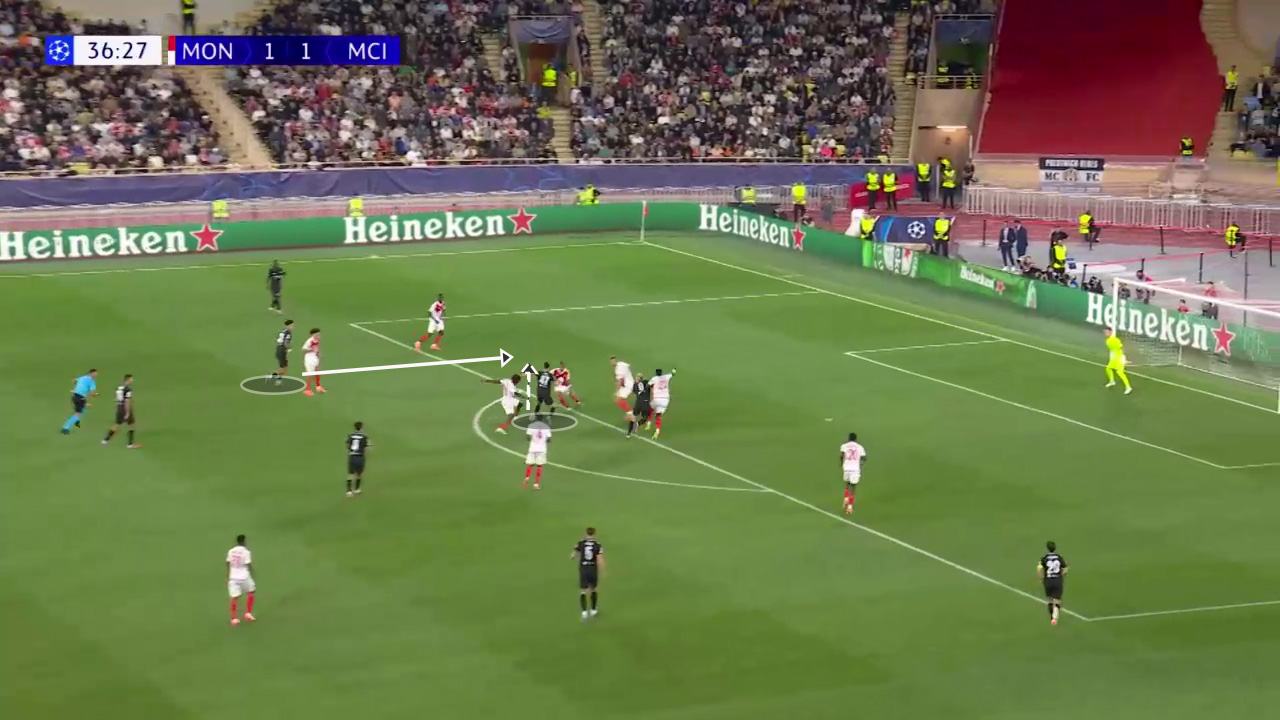
You can even see here that Manchester City created a five-man overload in the left half-space.
Because the centre-backs didn’t press up, Phil Foden was able to freely receive the ball and pass it to Nico O’Reilly for a shot.
Manchester City only ended up creating 1.4 expected goals in the match, but because Monaco’s centre-backs didn’t want to step off the backline, it allowed them to maintain control and tilt the field on Monaco.
We’ll look further below on how this actually helped Les Monégasques limit the quality of chances Manchester City had for the match.
Monaco Low Block Defending
Monaco played out of a 4-4-2 formation for most of last season, which was designed to push the ball to the wide areas and then trap their opponents there.
However, for the last two matches, Adi Hütter has switched his team to a back three and defended in a back five.
Very rarely did Monaco press Manchester City high up the pitch in this match; instead, they chose to sit in a 5-3-2 mid-to-low block, similar to this formation.
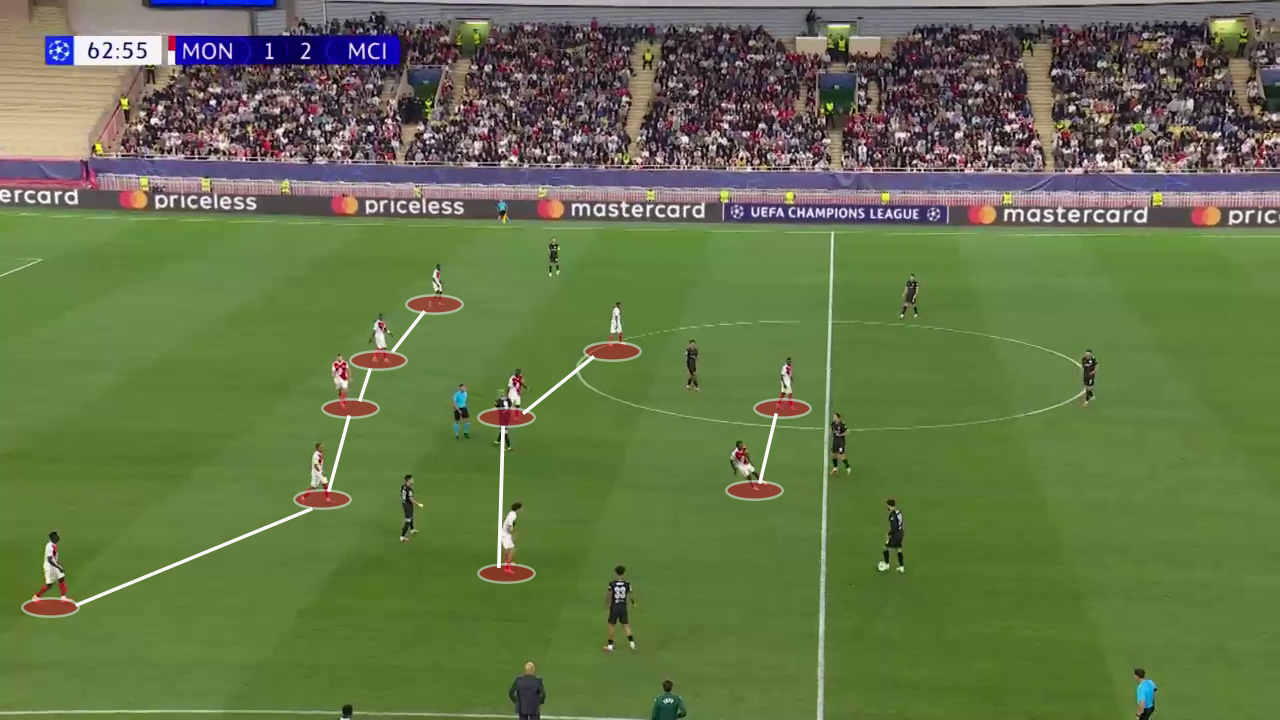
As I mentioned, the backline very rarely stepped up to defend Haaland or Foden when they dropped deep.
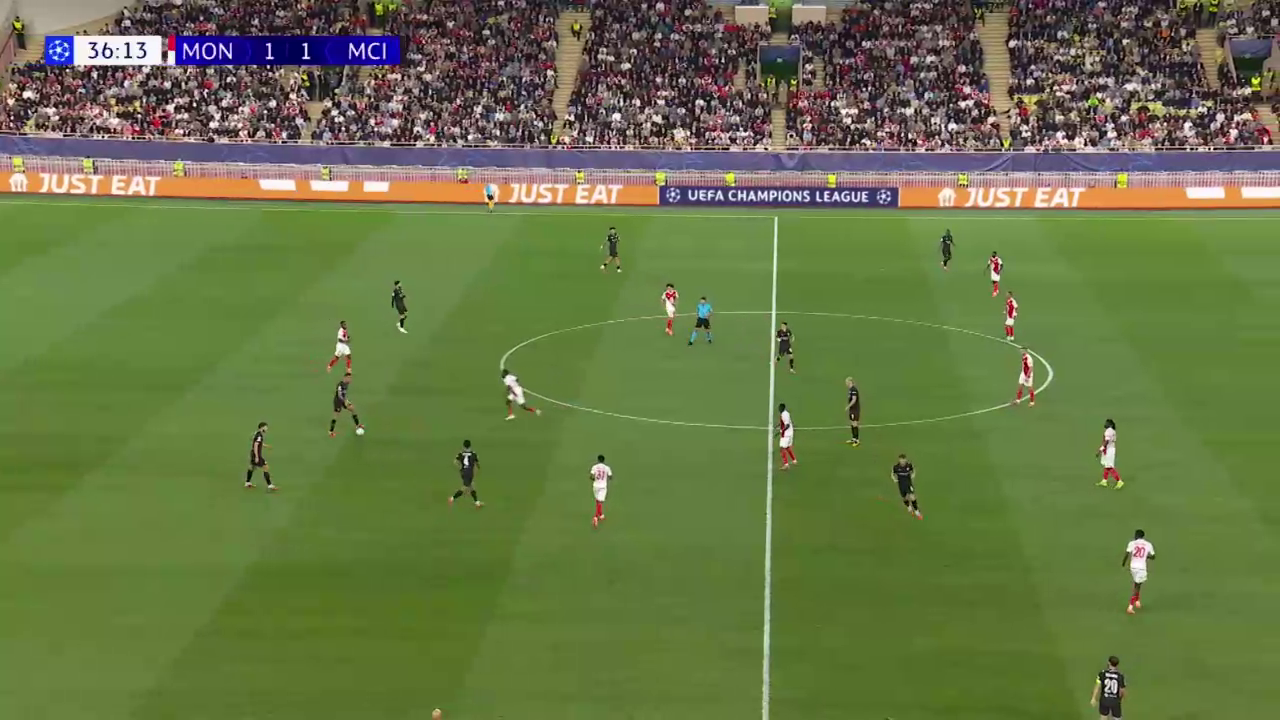
The reason for this is primarily due to what happened when Haaland scored the first goal.
Monaco knew how aggressively Manchester City had been playing this season, with balls being played in behind and over the top.
By holding their defensive line, Manchester City allowed them to overload centrally, but this did limit the chances that Manchester City were able to create, as they were rarely able to get in behind.
For example, Manchester City leads the Premier League this season, averaging 0.15 xG per shot.
In this match, they created 1.4 expected goals from 18 shots (0.08 xG per shot).
In fact, only two of Manchester City’s 18 shots came from inside 10 yards from the goal.
So, while Monaco may have allowed Manchester City to have an overload centrally, it was by choice, and it did limit the quality of chances that Pep Guardiola’s side was able to produce in the match.
Monaco’s Direct Problems
The solution Pep Guardiola has employed lately to counter build-up attacks is to stop them at their source.
Other than the final 30 minutes against Arsenal, Manchester City have been pressing aggressively from goal kicks.
Monaco’s solution in this match was to play extremely direct, which meant they were reliant on winning duels.
They did not do a good job of that because there was a structural issue.
As Hütter switched his team to a 3-4-3, the front three were trying to win duels against Manchester City’s back four, which meant that Monaco did not have numerical superiority.
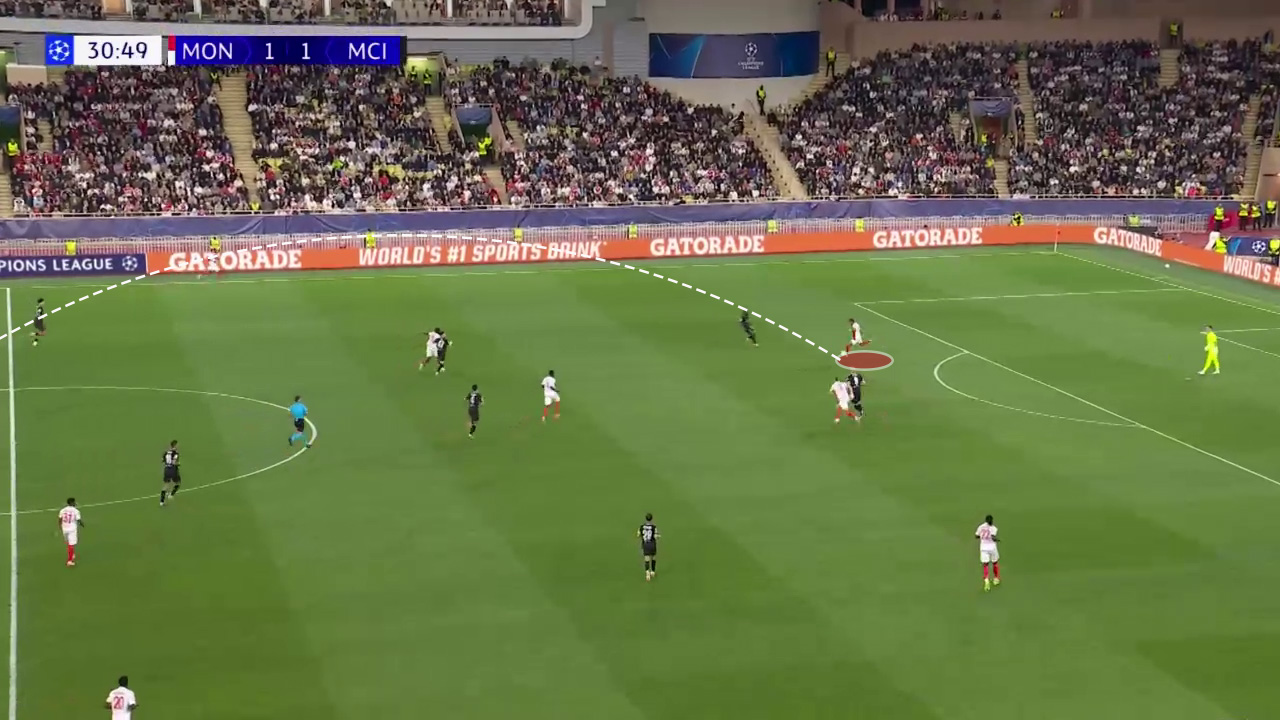
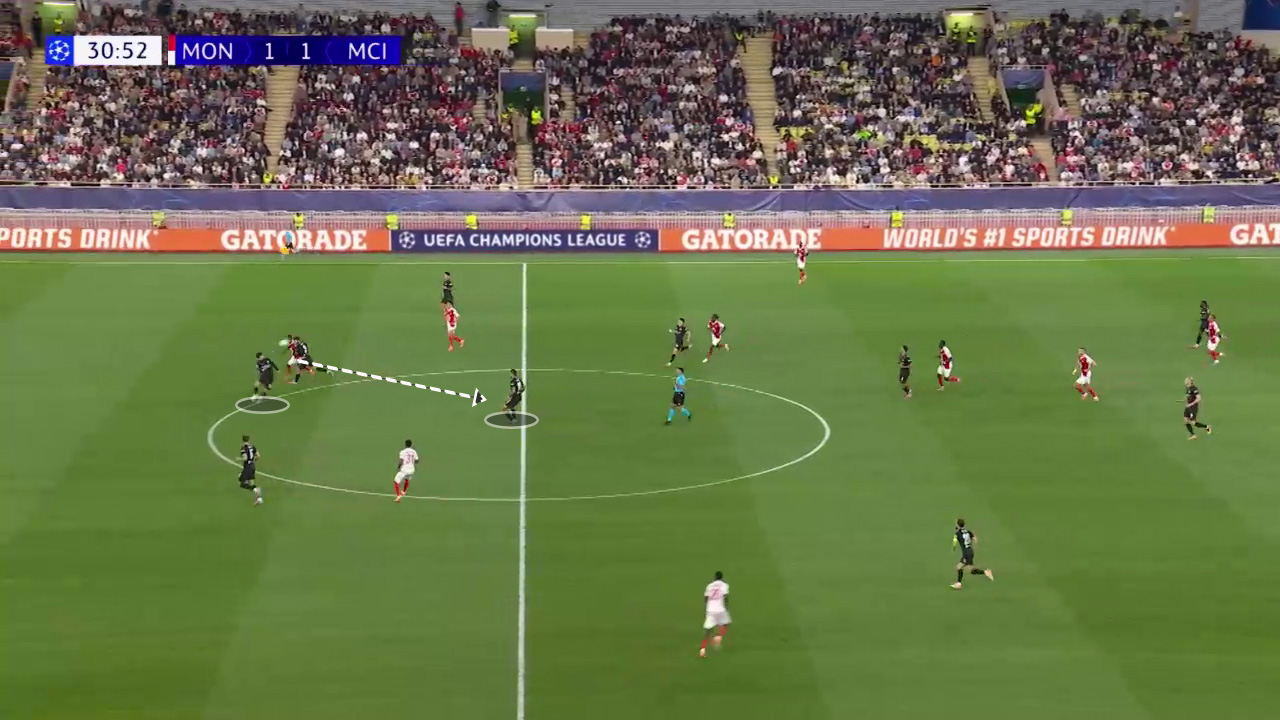
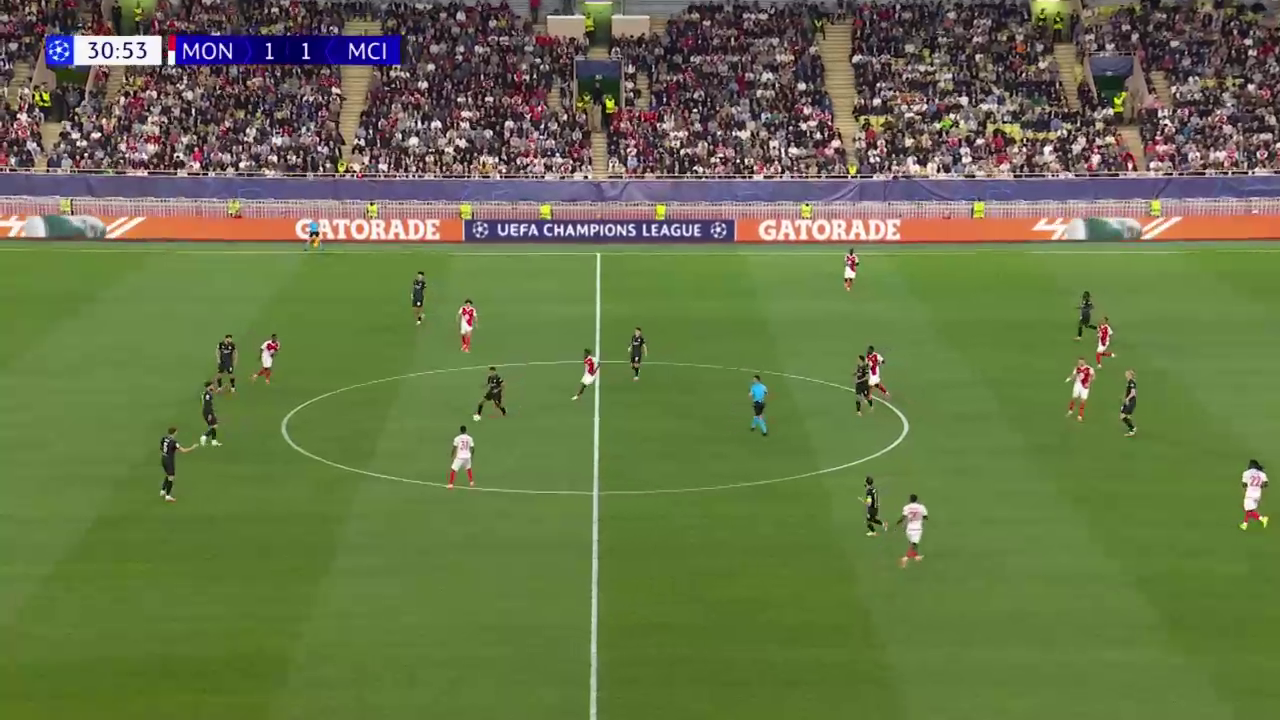
Therefore, Manchester City were able to regain possession on a lot of these direct balls from the backline.
As the match progressed, one of Monaco’s strategies was to attempt to create an overload in the wide areas.
You can see here that Manchester City is pressing out of a 4-3-3.
Because they are trying to take away any routes for Monaco to play centrally, they leave the full-back open out wide to receive the ball.
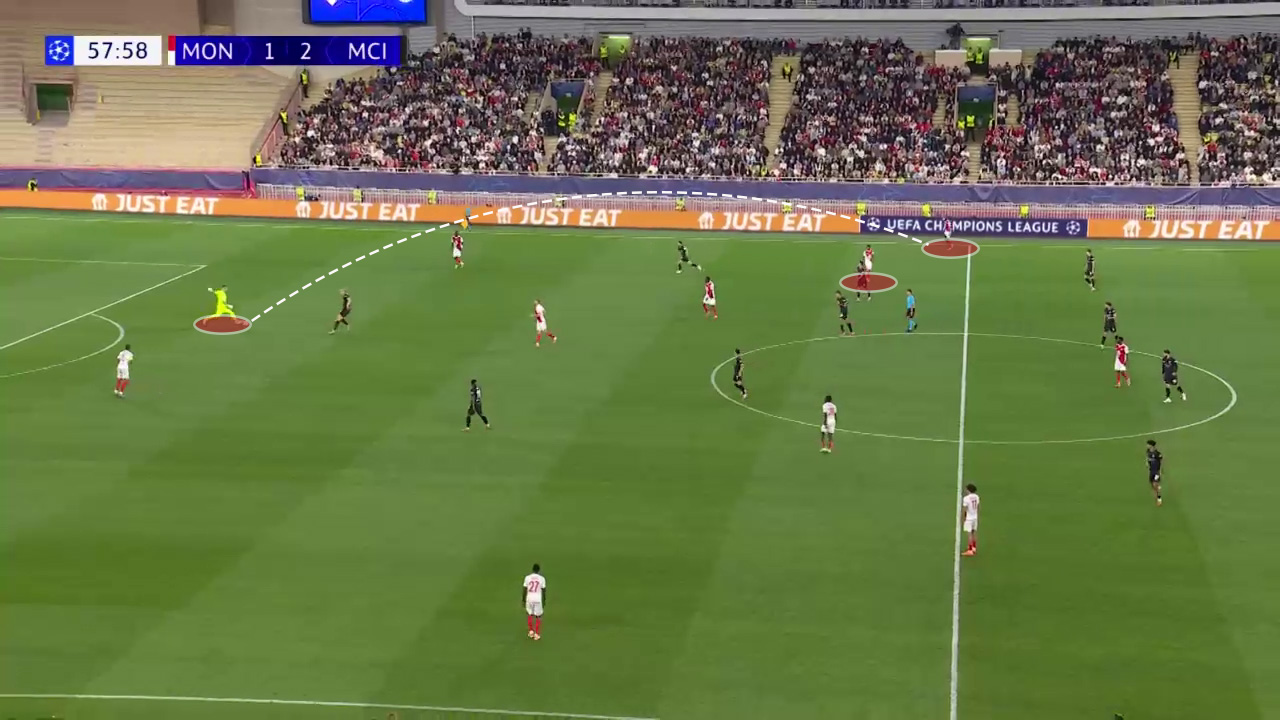
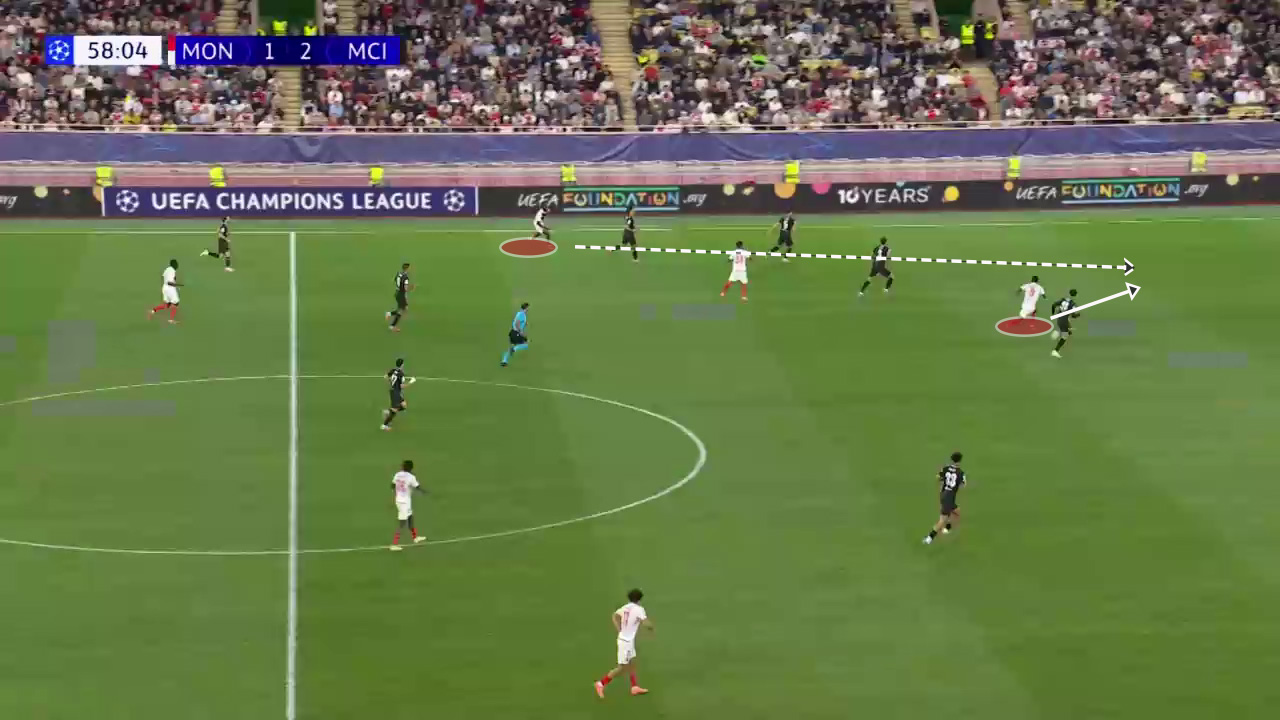
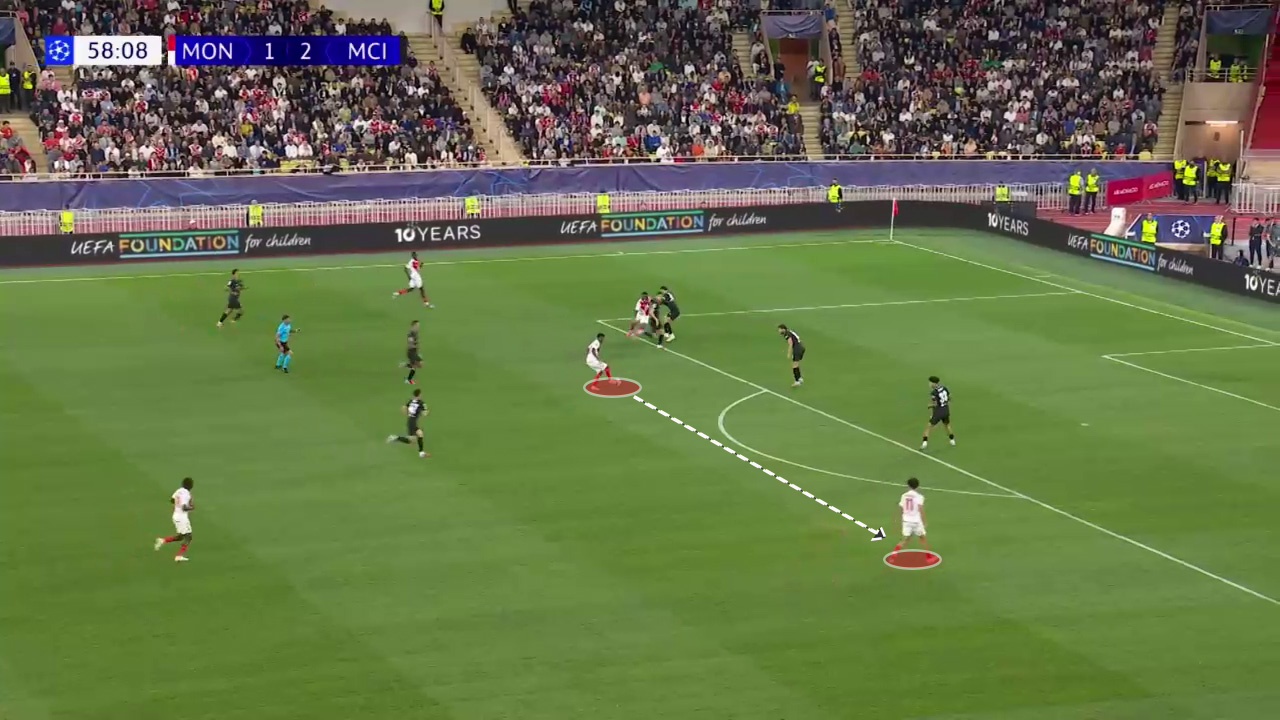
Monaco were able to play the ball through and get a decent shot off here, but that is about all they did for the match.
Manchester City did allow some long balls over the top to be completed, but their defending once the ball got to the final third was outstanding.
Monaco took only one shot in the first half and, from open play, created only 0.15 xG for the match.
Wednesday, honestly, may have been one of Manchester City’s best defensive performances of the season.
Conclusion
Monaco were awarded a late penalty to draw this match, but they did not deserve a point.
Manchester City controlled this match from start to finish, lived inside Monaco’s final third, and did not get exposed in transition.
One of the underrated aspects of Manchester City’s performance in this match was completely shutting down Monaco’s best attacker, Maghnes Akliouche.
He is typically one of the best at taking on wingers in Ligue 1, but in this match, he attempted 10 dribbles but could only complete two of them.
He also lost a match-high 13 duels.
Manchester City’s ability to maintain control and generate some chances, even if they weren’t all of great quality, from the central overloads really should have given them three points.
They will face another 5-3-2 low block in Brentford on Sunday, while Monaco have a very important match at home against Nice.
This match showed more than anything else that Pep Guardiola is not going to adhere to a single tactical ideology this season and will structure his plan based on the opponent he is facing.
