
After nearly six rounds in the 2025/2026 Premier League campaign, many tactical battles and ideas have stood out, offering coaches, analysts, and fans around the world a chance to explore new ideas or revisit old ones through a different lens.
Set-pieces are among the trends in which the Premier League has been considered the best in the world in recent years.
One of the most prominent set-piece trends this season is the increasing number of teams adopting the strategy of using long throw-ins, compared to previous seasons.
If you watch Premier League matches this season, you will notice the dangerous chances or even decisive goals that come from long throw-ins.
In this Premier League set-piece analysis, we will explain how long throw-ins have been used in a different and more structured way than in the past.
In this Premier League tactical analysis, we will demonstrate how teams utilize different starting positions (from the defenders’ blind side) for players who flick the ball, frame the goal, make second-line penetrating runs, and secure the rebound ball on the edge of the box.
We will provide examples of Crystal Palace, Brentford, Chelsea, Burnley, and Newcastle United to illustrate how they share common principles and tactics.
Different Starting Positions & Framing The Goal
Let’s start with Crystal Palace.
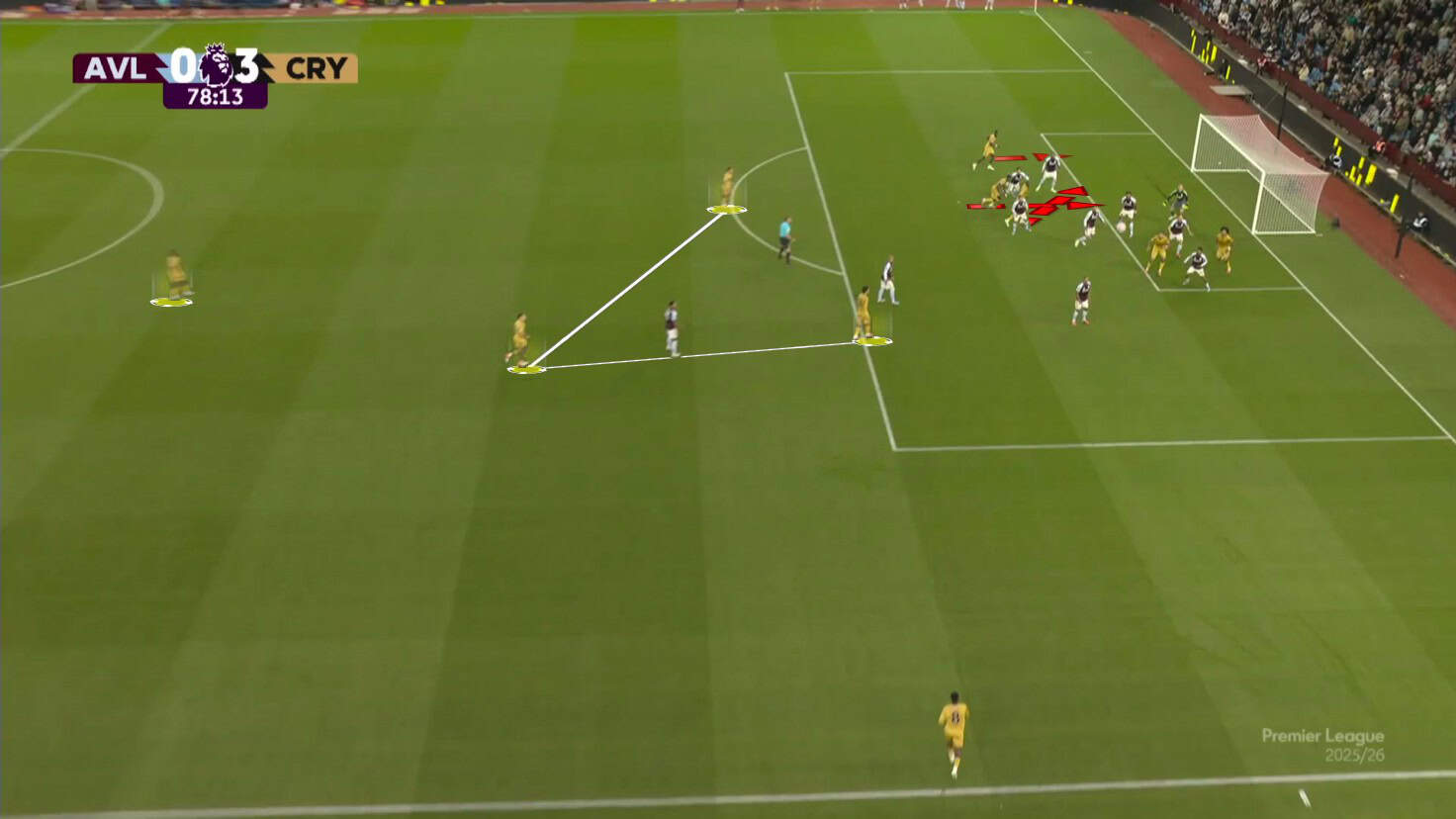
As shown below, Aston Villa defend zonally against Crystal Palace in the Premier League with a 4-4-2 / 4-4-1-1 shape.
At the same time, Crystal Palace’s two players responsible for flicking the ball start near the goal, coming from the blind side of the first defender from two different directions, making it difficult for him to get the first touch against them.
The second advantage of this starting position is that it essentially evacuates the targeted area (blue), leaving one defender there.
The remaining defenders are dragged further inside because of their starting position close to the near post.
This makes the fight easier and nearer to the goal (which we will discuss later).

At the same time, three runners are penetrating Aston Villa’s second line, framing the goal to increase the possibility of getting the flicked ball, as shown below.
They exploit the fact that the defenders keep watching the ball in the air, not attentive to these runs, especially the last runner who runs on the blind side of the last defender.
We shouldn’t neglect how they are careful to get the second ball by having three players in a triangle shape near the edge of the box and an additional security player at the back.
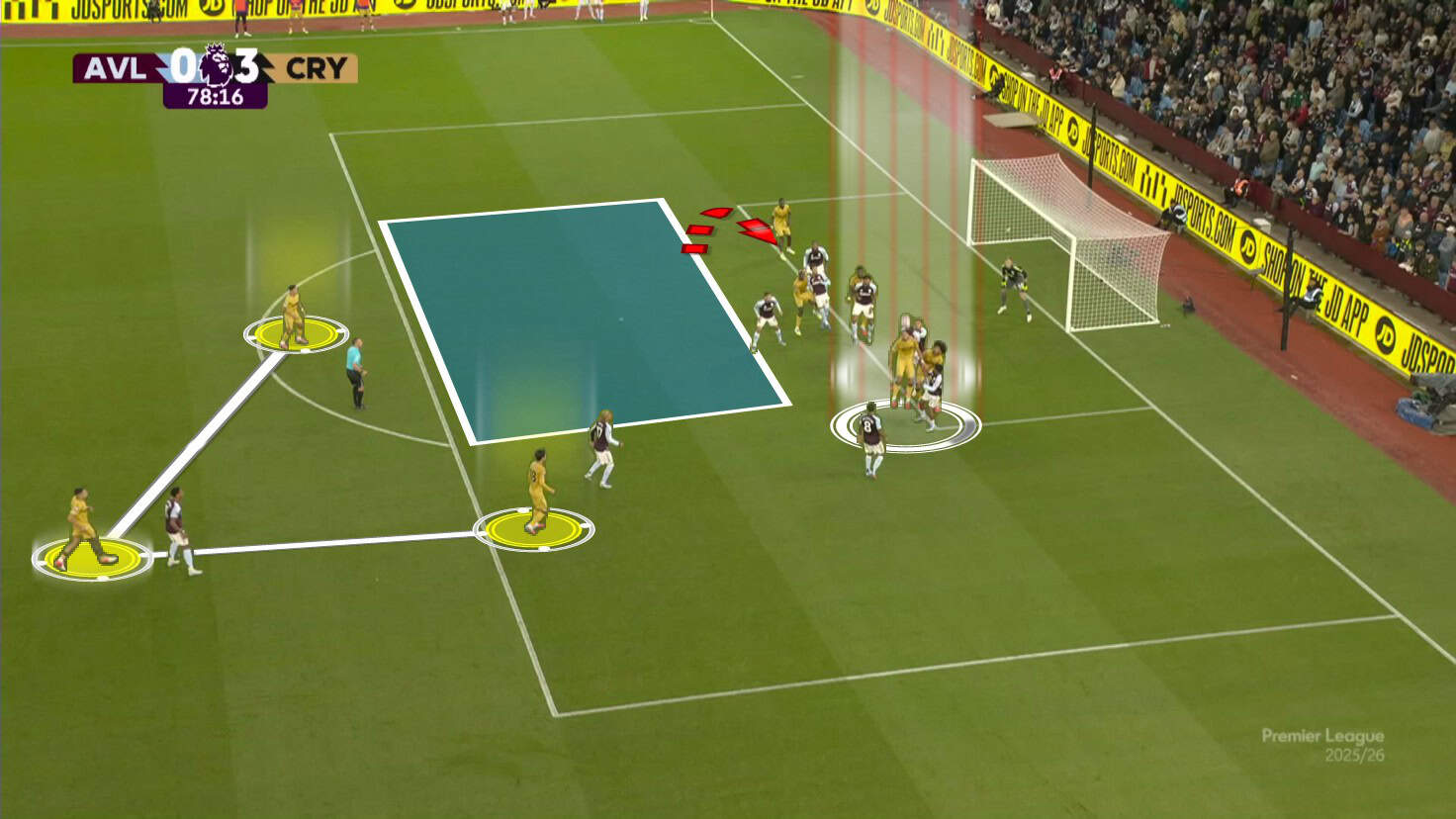
As shown below, they are now set to score a goal.
One of the two attackers can flick the ball with the help of the other, who pushes the first defender from behind to keep him busy.
At the same time, the other three players frame the goal, and finally, the last one runs from the final defender’s blind side to score a goal.
The edge-of-the-box players are also ready to attack the blue area if the ball rebounds.
Simply, the result is a goal.
Returning to the importance of the starting positions of the players who will flick the ball, we noted that it brings the fight closer to the goal.
You can see below a long throw-in for Union Berlin, who are good at long throw-ins.
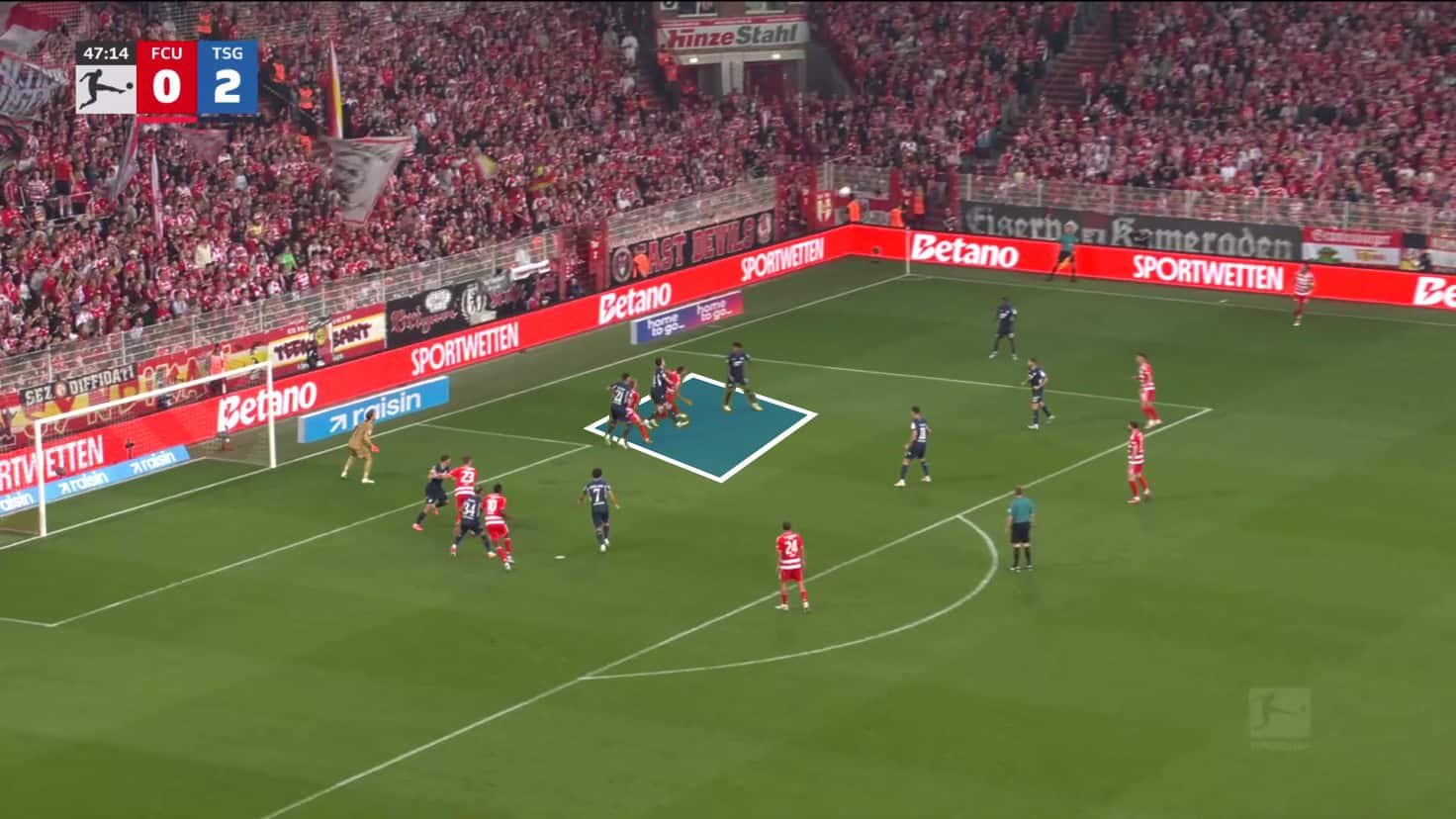
However, their two players start in the targeted area themselves, which brings two defenders and another one in front of them, moving the fight to a further point or at least making them lose numerical superiority in the targeted area, as Crystal Palace did.
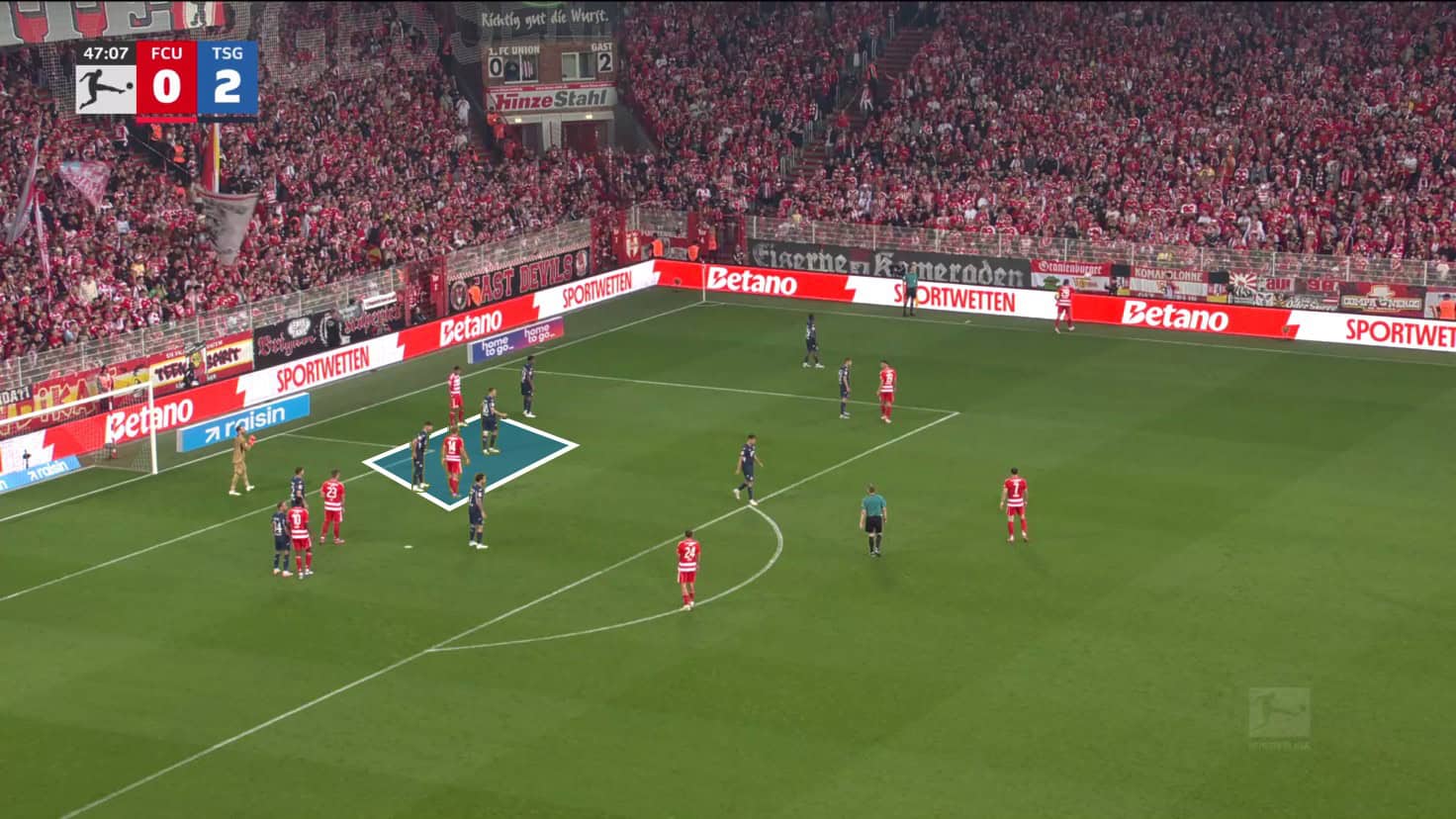
As shown below, the defenders are in a good position to see the ball in he air while keeping contact with the attackers, which makes it easier for them.
Some English Premier League teams follow the same strategy with only a trusted player to flick the ball, as Burnley demonstrate versus Manchester United in the Premier League below.
This idea is more effective against teams that defend zonally and deploy a short player to mark the flick area (around the corner of the six-yard box).
You can see the attacker surprisingly coming from his blind side, exploiting the fact that the strong zonal defender won’t go with him.
At the same time, three runners are against two defenders in the second line.
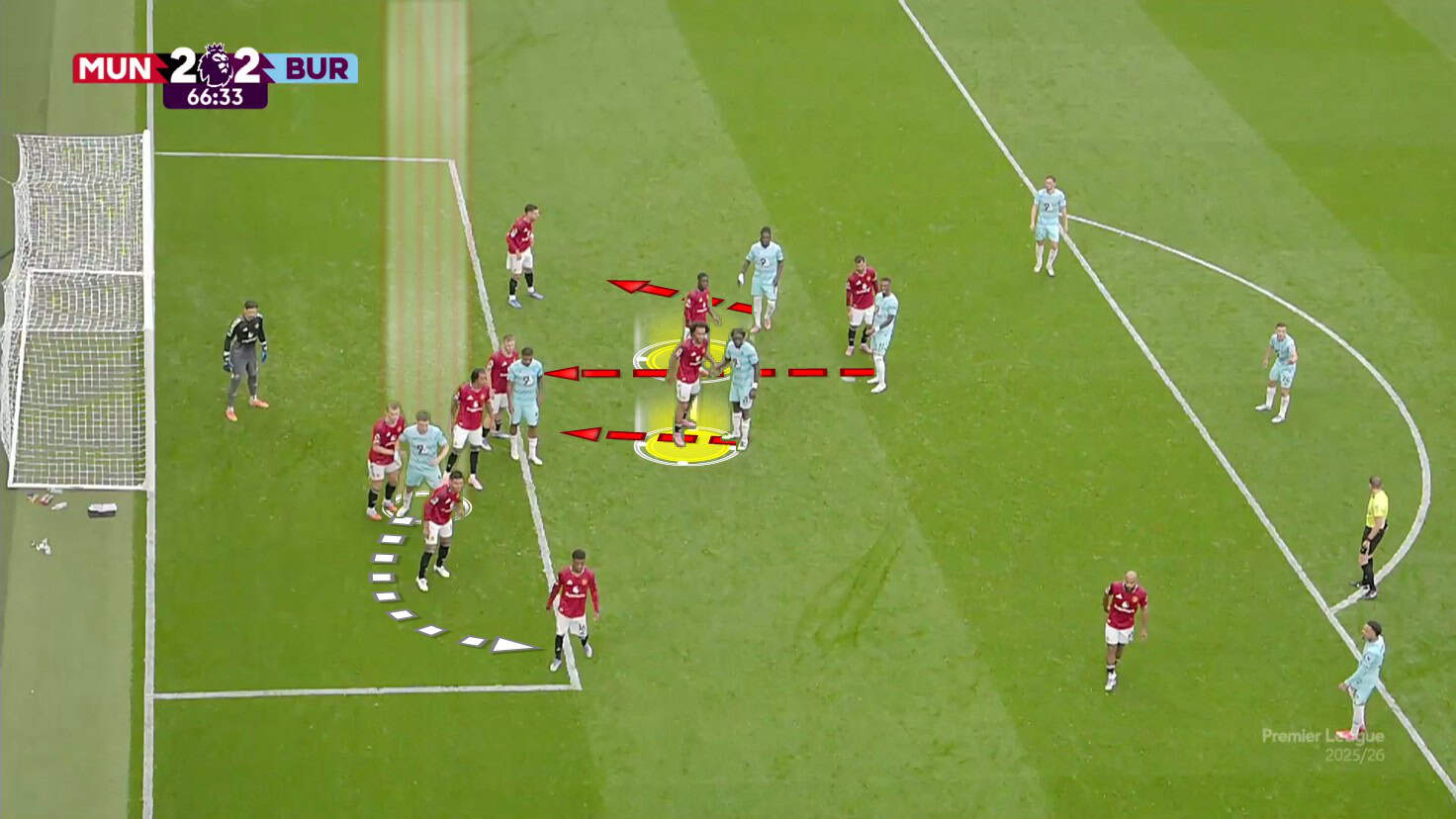
As shown below, the attacker gains an advantage from his starting position while the first runner turns to escape his man marker.
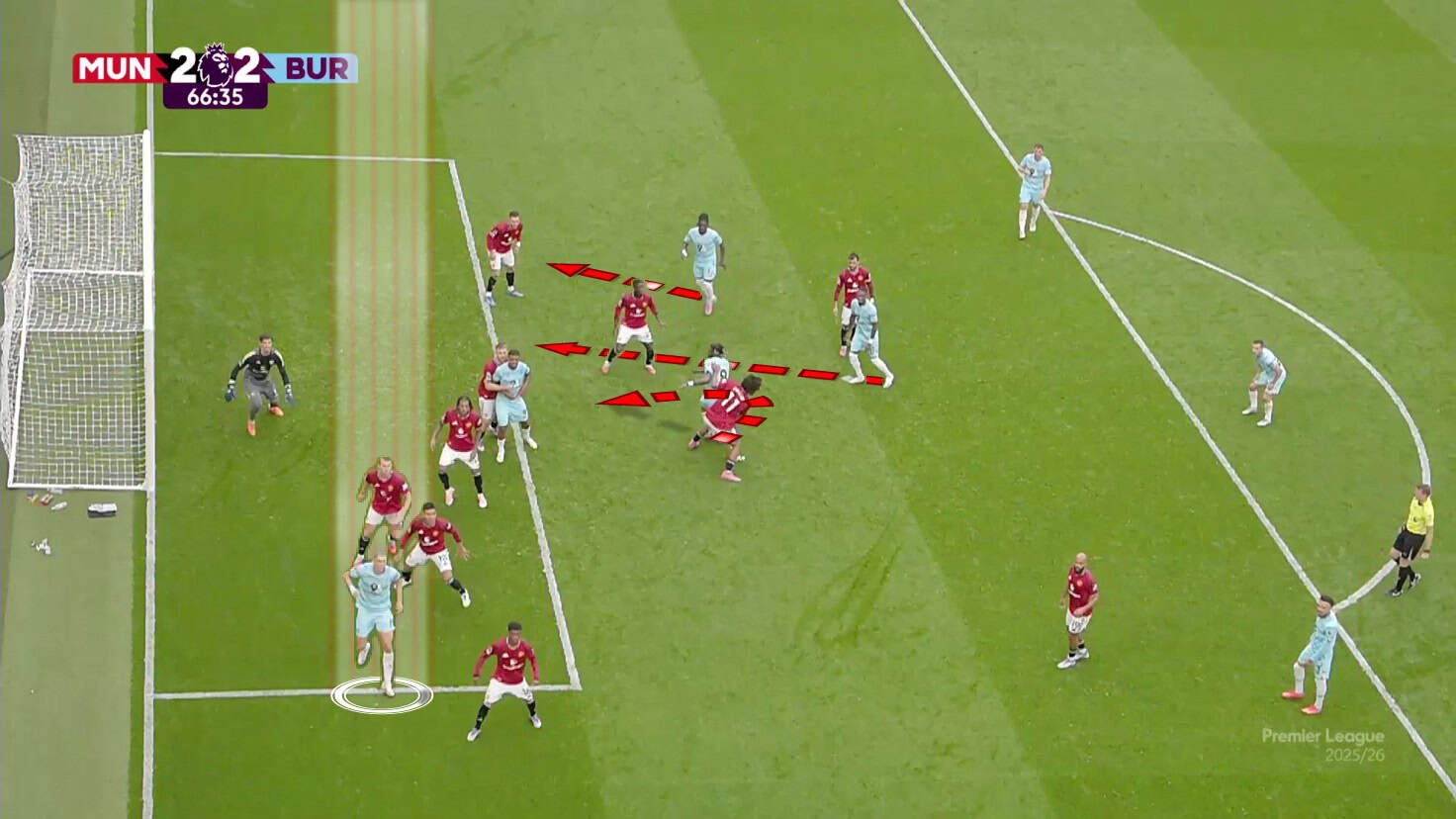
Finally, the attacker can flick the ball while the first runner escapes from his defender, while the second defender of the second line is among the other two runners.
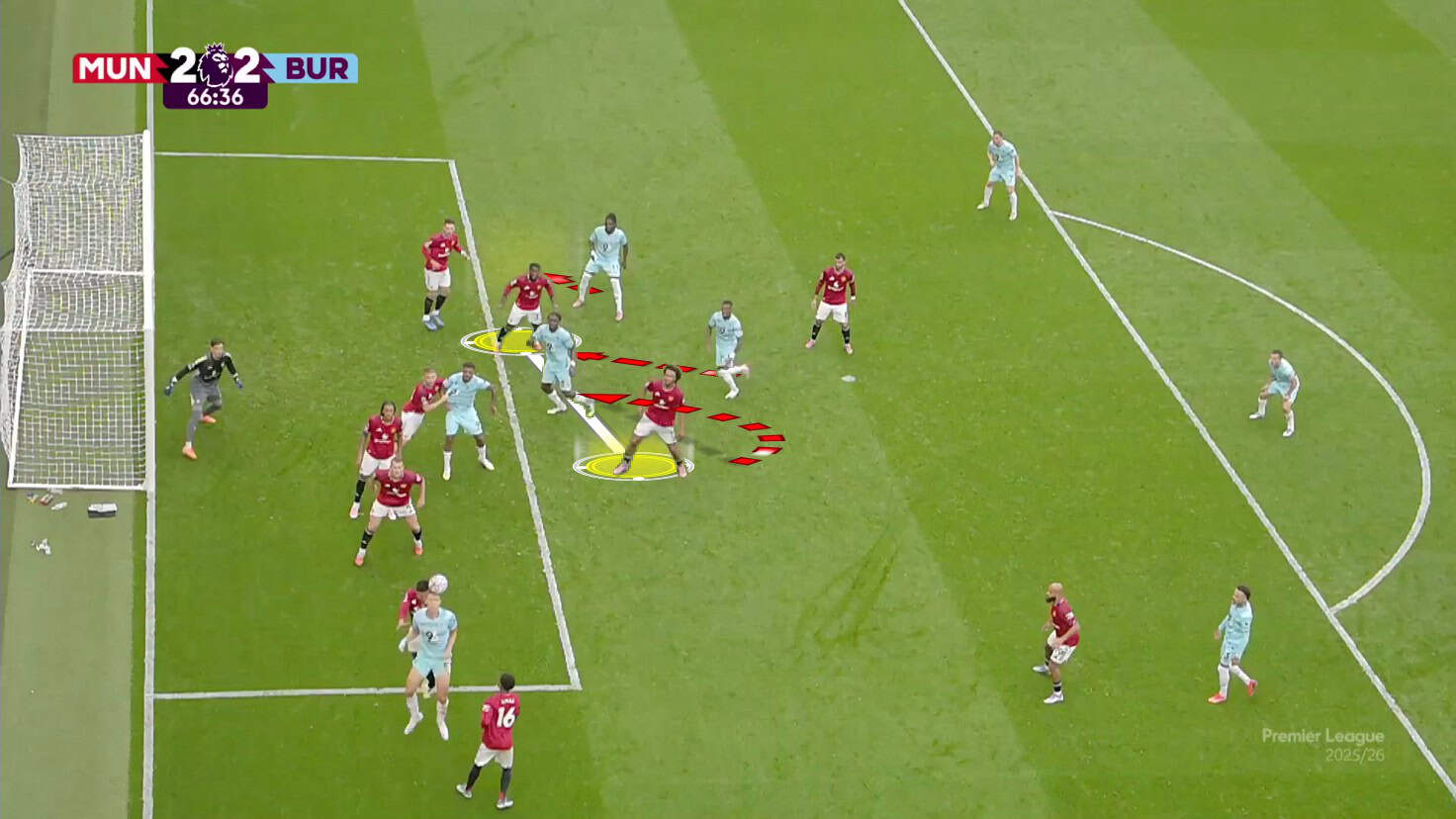
The defence can clear the ball, but the last runner is free on the blind side, as the whole defence focuses on the ball and the aerial battle.
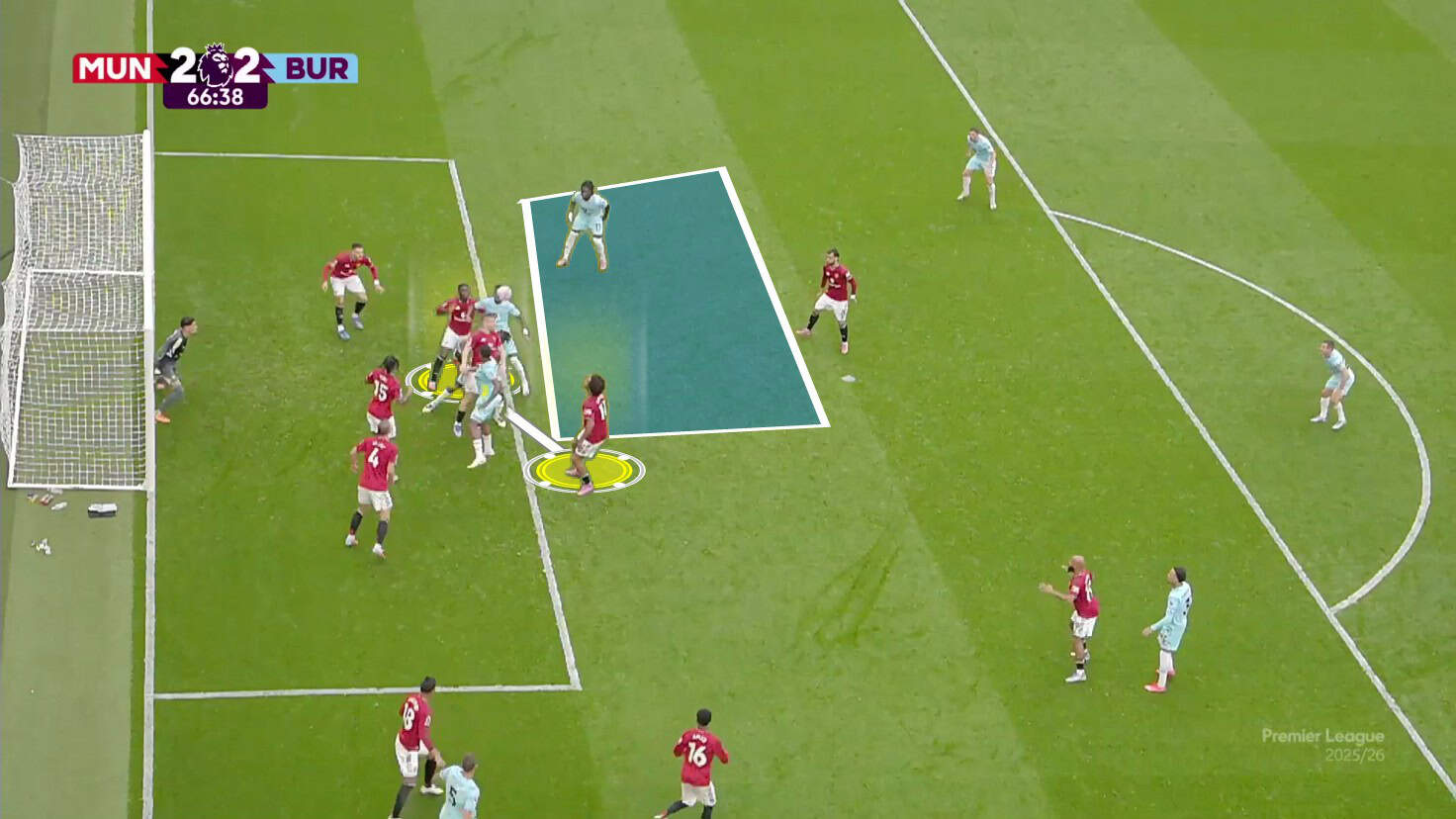
This late runner shoots the ball, and the goalkeeper saves it, but one of the three attackers in the six-yard area scores the goal.
Framing the ball gives you a chance to score when the chaos starts around the goal, which provides an advantage.
The result is a goal.
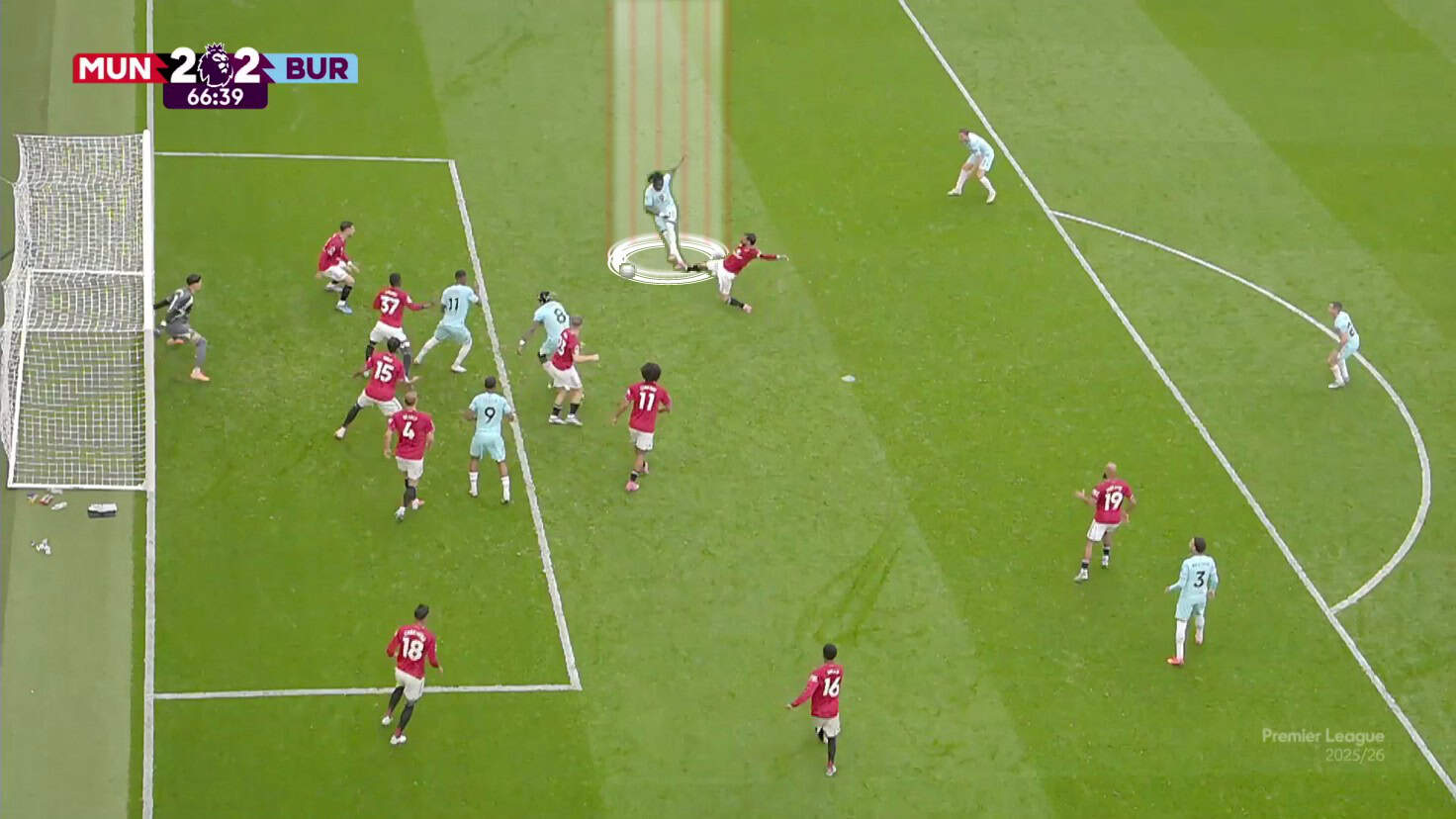
Hence, teams could score from the second, third, or even fourth touch if they keep framing the goal, filling the second-line area with penetrating runs, being ready to get the rebound ball on the edge of the box, and finally trying to get the first touch from the defenders’ blind side to start the deliberately created chaos.
Chelsea Defensive Tactics
Brentford are one of the best Premier League teams at following this strategy, but they have three players starting behind the defensive lines, as shown below.
However, in this case, from a Premier League clash with Chelsea, the Blues have a good counter idea.
As shown in the photo below, they instruct the goalkeeper to leave the goal line to assist the defenders in defending the first touch by clearing the ball with their hands.
They also put a man marker behind the zonal defensive line to mark the first Brentford player.
They ask him to prevent this player from cutting in front of the defence.
The man marker’s body position faces the defender, and he does not care much about the ball because his role is to prevent the defender from reaching the targeted area.
However, one of Brentford’s attackers blocks the goalkeeper, while the remaining one (in white) will go to flick the ball.
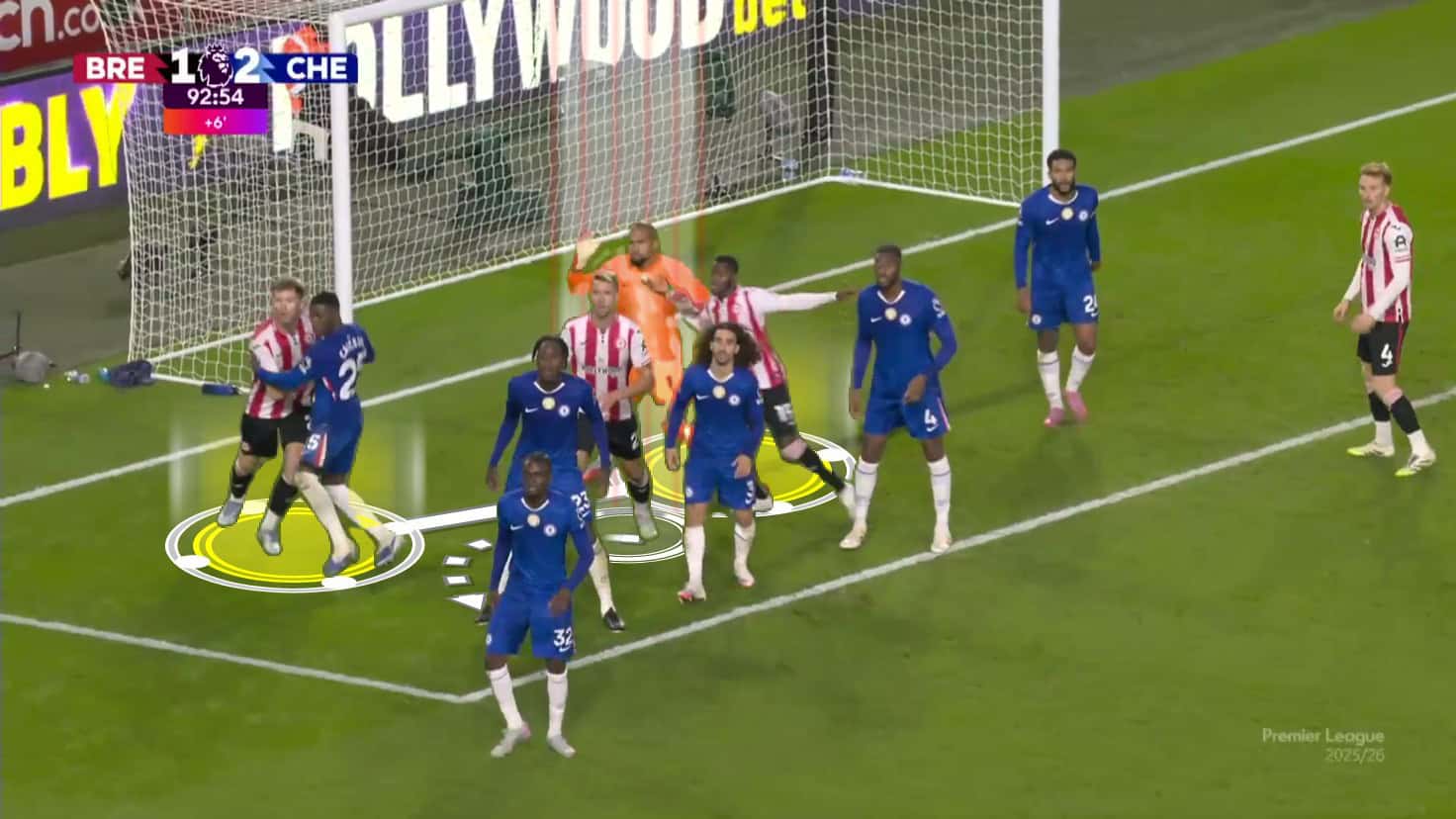
This one player can get the first touch against all of these zonal defenders, as shown in the photo below.
Of course, it is about great individual ability and a bit of luck, but his positioning on the defenders’ blind side helps him come from their blind side unmarked while facing the ball, and he can track it in the air easily.
On the contrary, Chelsea’s players often find themselves in difficult body positions, and you can see some of them trying to jump while also keeping an eye on their backs.
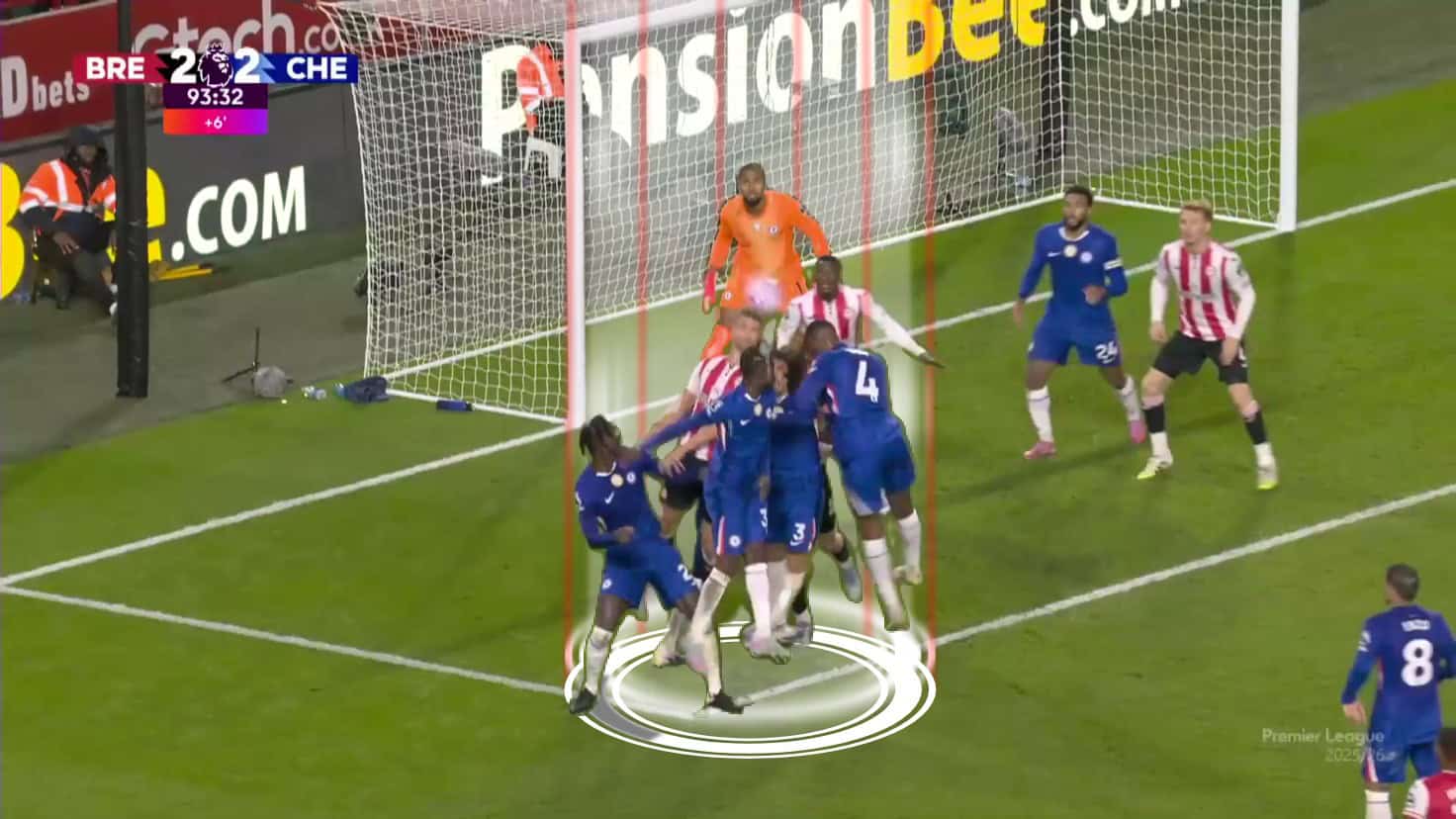
In the end, Brentford score a vital goal via the late runner on the whole defence’s blind side, especially since the defence line is shifted a lot towards the near post, trying to get priority to defend the first touch, as shown below.
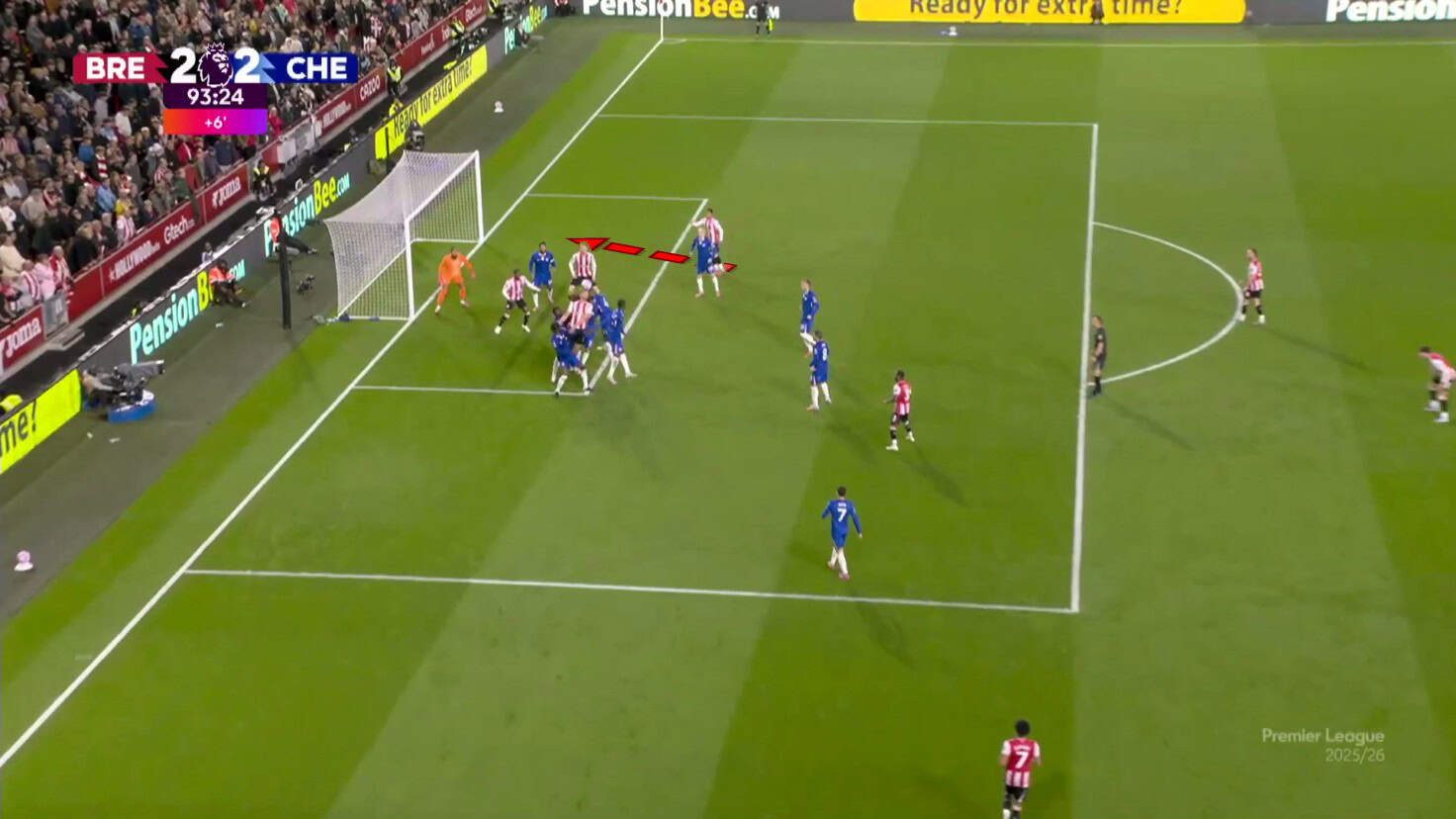
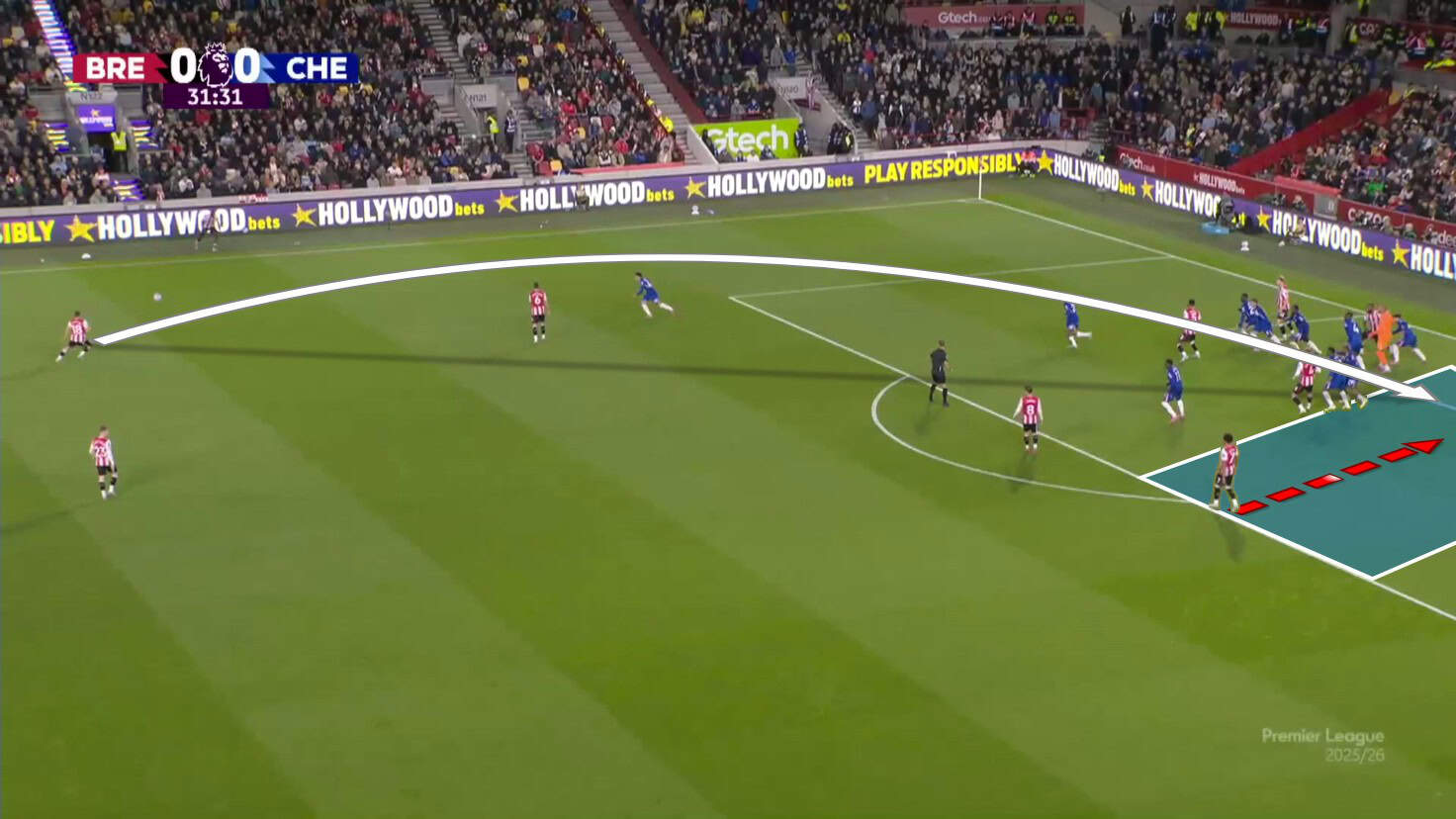
Brentford also had a good idea against this shifted defence and goalkeeper, which involved passing it short and sending a cross to the far post for one of the players initially positioned on the edge of the box, as shown below.
It was a good idea, but the cross wasn’t optimal.
Second-Wave Tactics
In the first wave, winning the first touch on the near post is crucial to flick the ball and start the planned chaos.
However, this traffic on the near post makes targeting the far post so effective in the second wave.
When the plan fails and the defence clears the ball, the good attacking teams are the ones who can always find a way to threaten the far post despite having the best players on the near post in the first wave.
As shown below, Liverpool mark the last runner well, realising the importance of this run during their Premier League battle with Newcastle United earlier in the season.
The man marker continues to follow this runner to the end of his inside run.
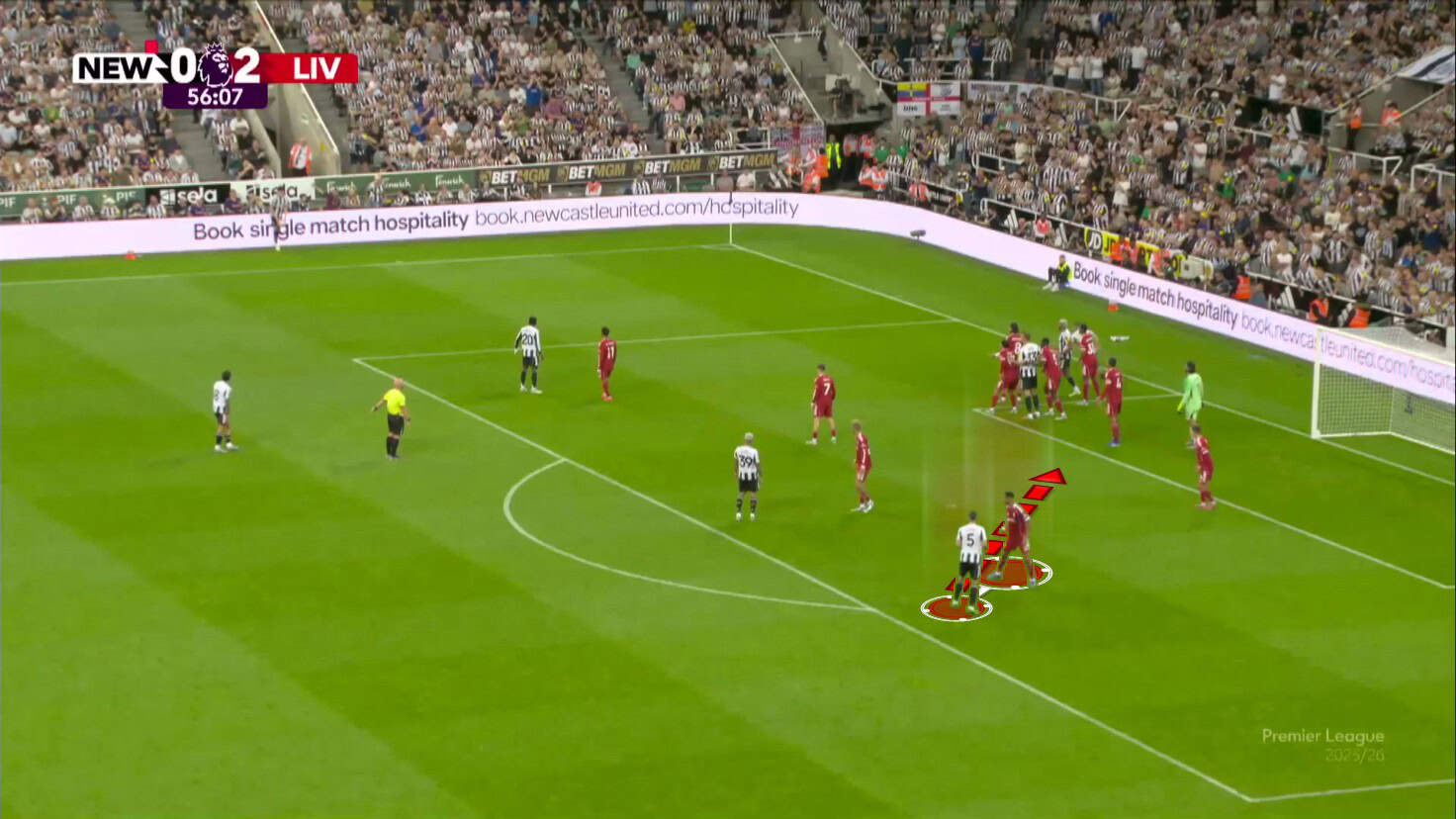
However, this evacuates the second-line area on the far post, leaving the last full-back (Milos Kerkez) alone while the whole team, with the goalkeeper, shifts to the near post, as shown below.
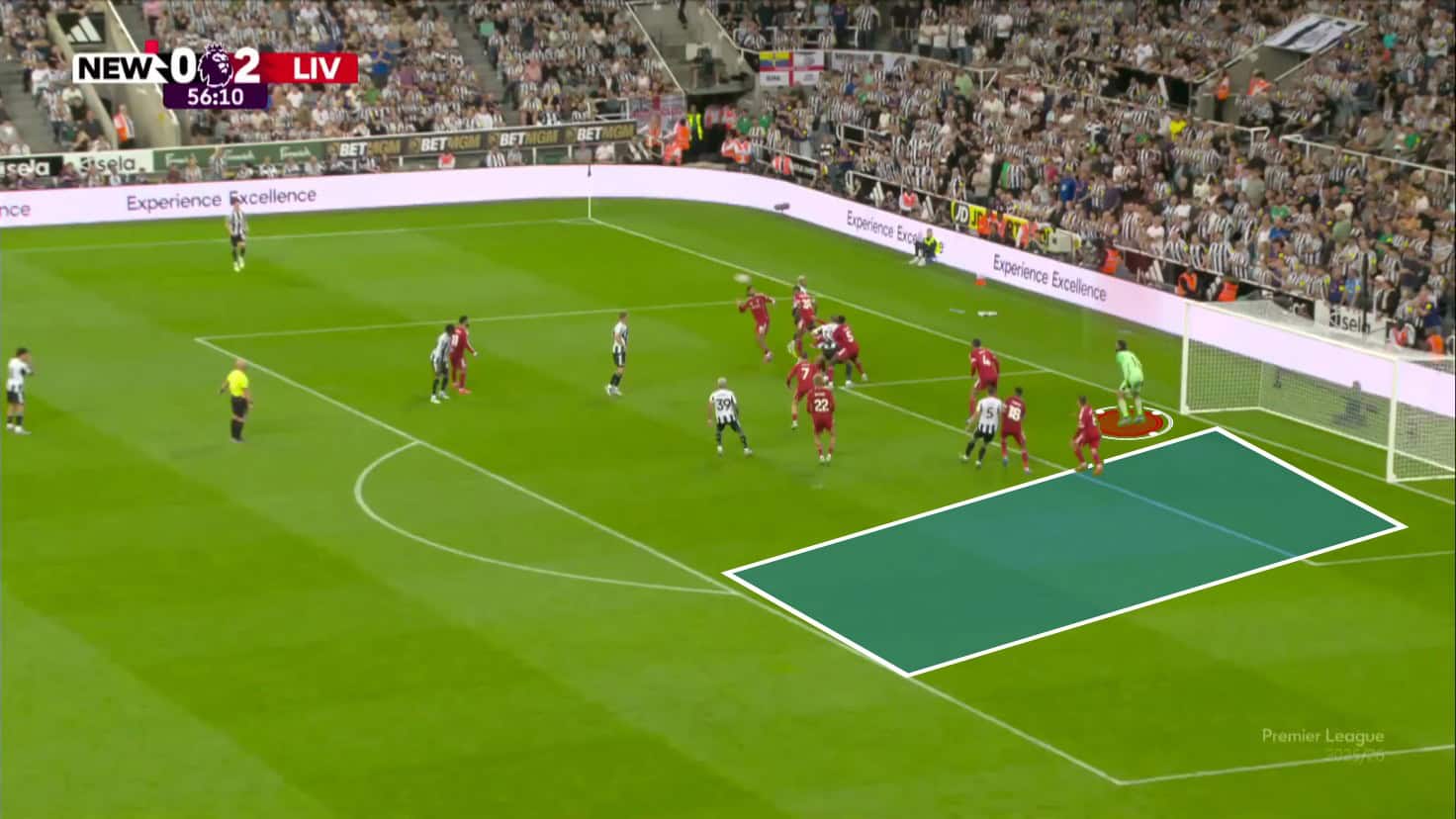
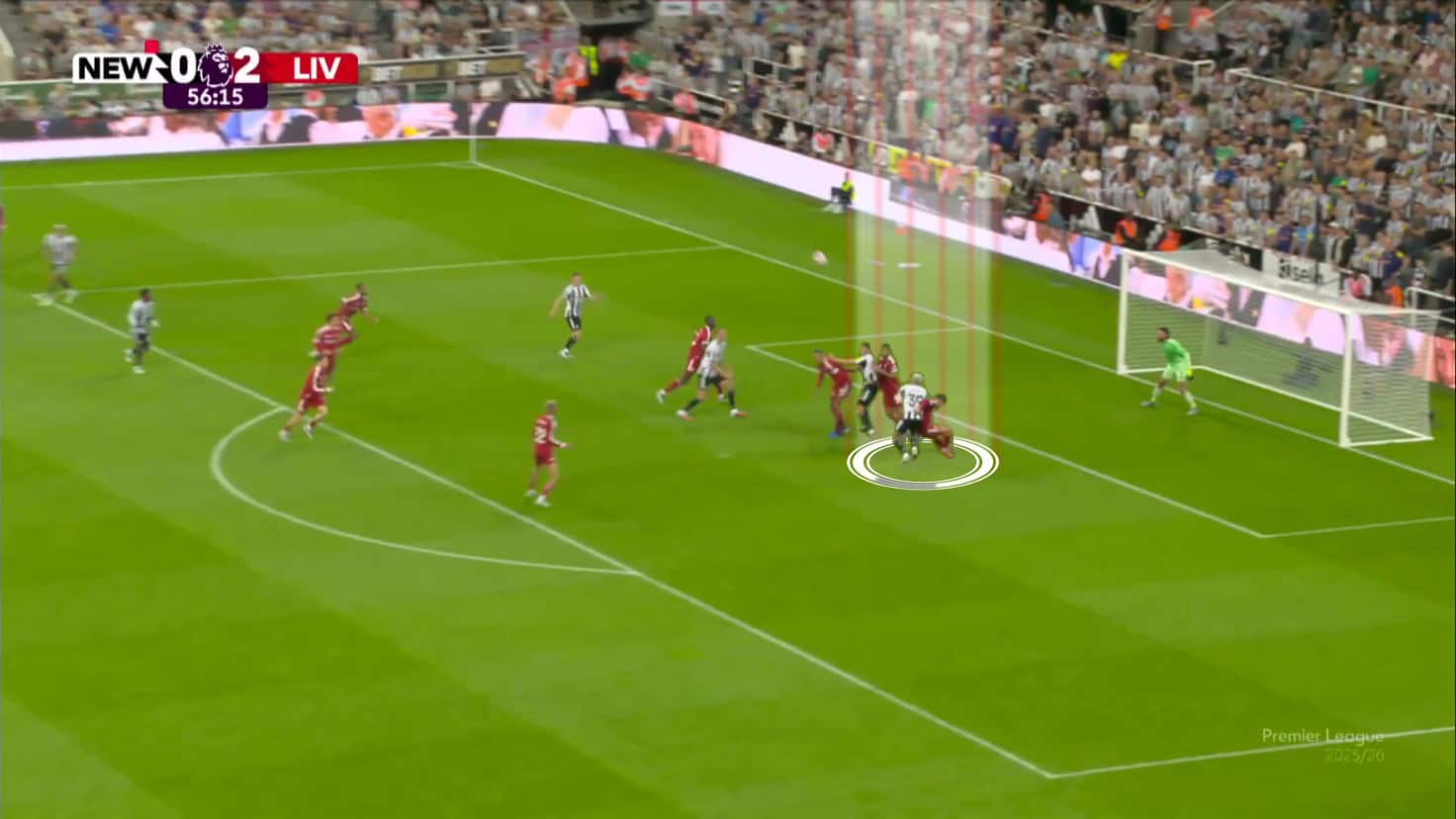
Newcastle United try to send a cross to the far post once they get the second ball, so the edge-of-the-box player turns around and goes to the far post while Liverpool’s last defender focuses on the ball and pushes up in the same line with his mates, as shown below.
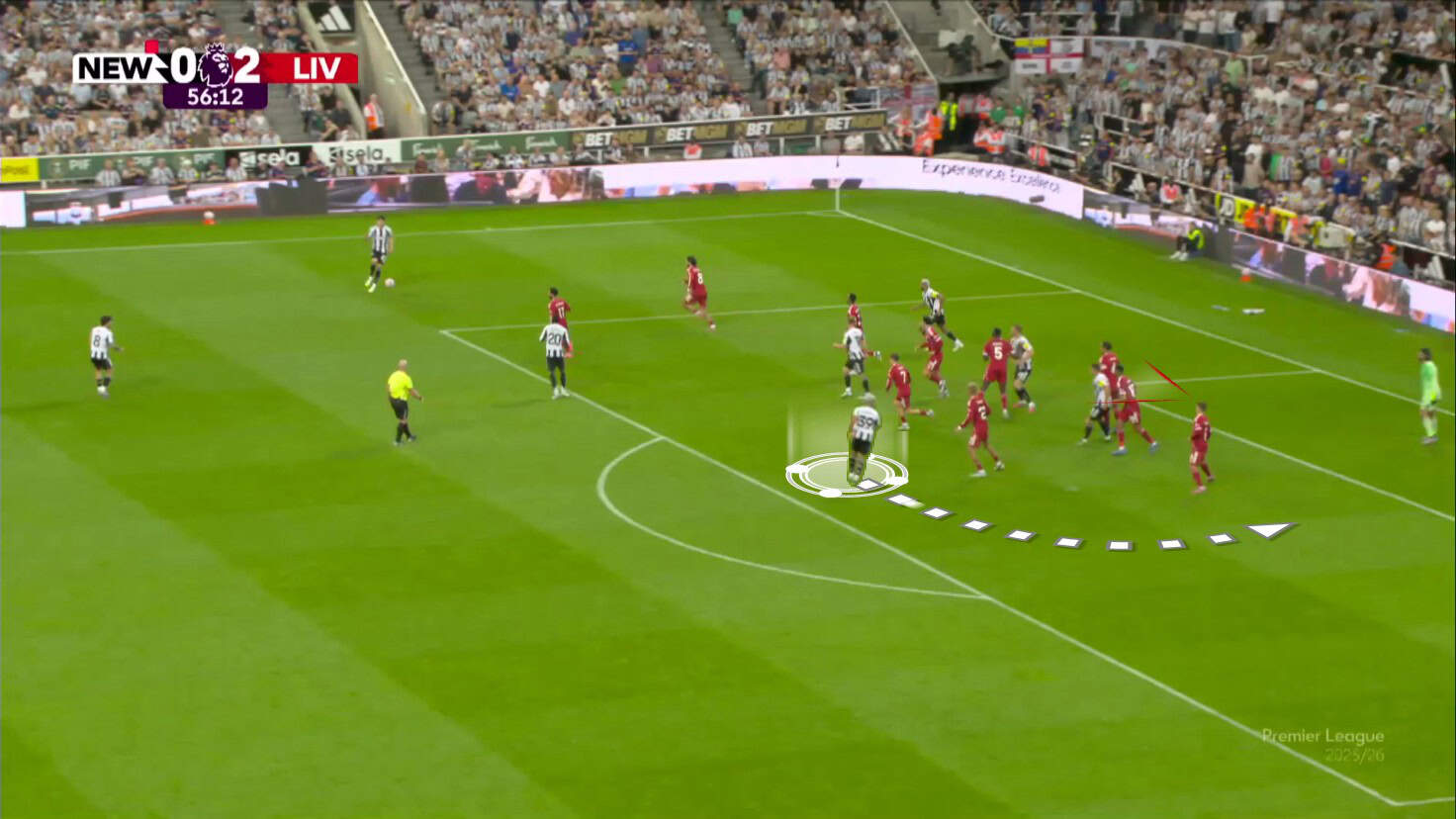
As shown below, the last defender tries to slow down the attacker and block him with his back, which results in a goal.
Conclusion
In this analysis, we have demonstrated that long throw-ins have been used extensively in the Premier League this season, suggesting that the future of the game lies in its past.
However, we explained how some simple tactical points were added to increase the likelihood of scoring a goal, such as coming from the blind side, framing the ball, second-line penetrating runs, and controlling the rebound zone.
