
Keith Andrews tactics are shaping Brentford‘s identity after his promotion to head coach.
He’s been promoted internally to replace Thomas Frank, who was a brilliant coach and has now moved on to Tottenham Hotspur.
While maintaining some of Frank’s principles, Andrews has already stamped his own identity on the side.
This Brentford tactical analysis looks at Keith Andrews tactics out-of-possession.
Since replacing Thomas Frank, Andrews has placed a strong emphasis on out-of-possession organisation, with pressing, compactness, and defensive structure central to his approach.
Pressing Goal Kicks: Repeatable Patterns Under Keith Andrews Tactics
When I assess a team’s out-of-possession approach, the first place I always look is opposition goal kicks.
That might sound simple, but it provides a genuine insight into the coach’s mindset.
Goal kicks are repeatable moments; you can plan for them, and they reveal whether a team has clear ideas and coaching behind them.


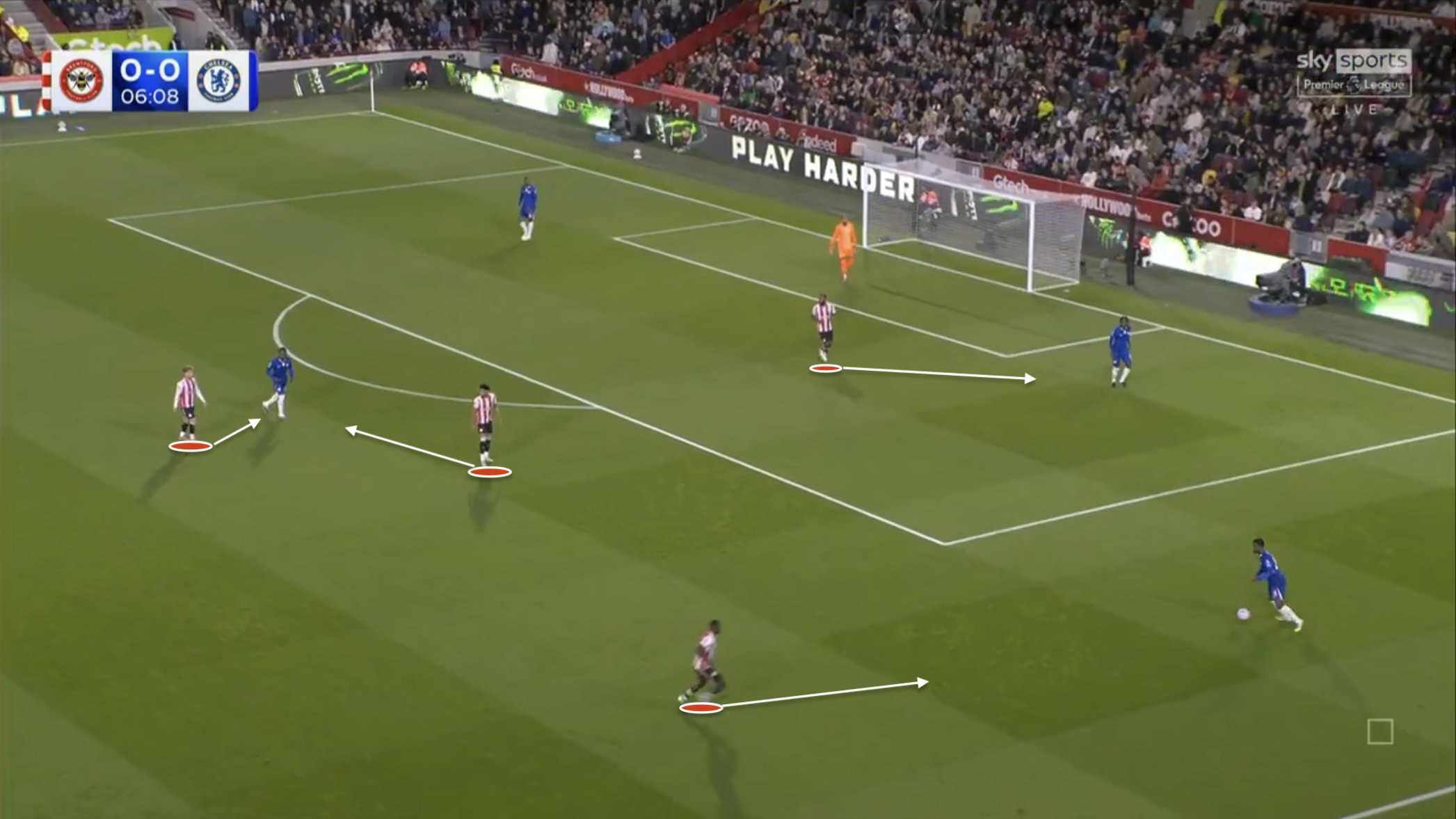
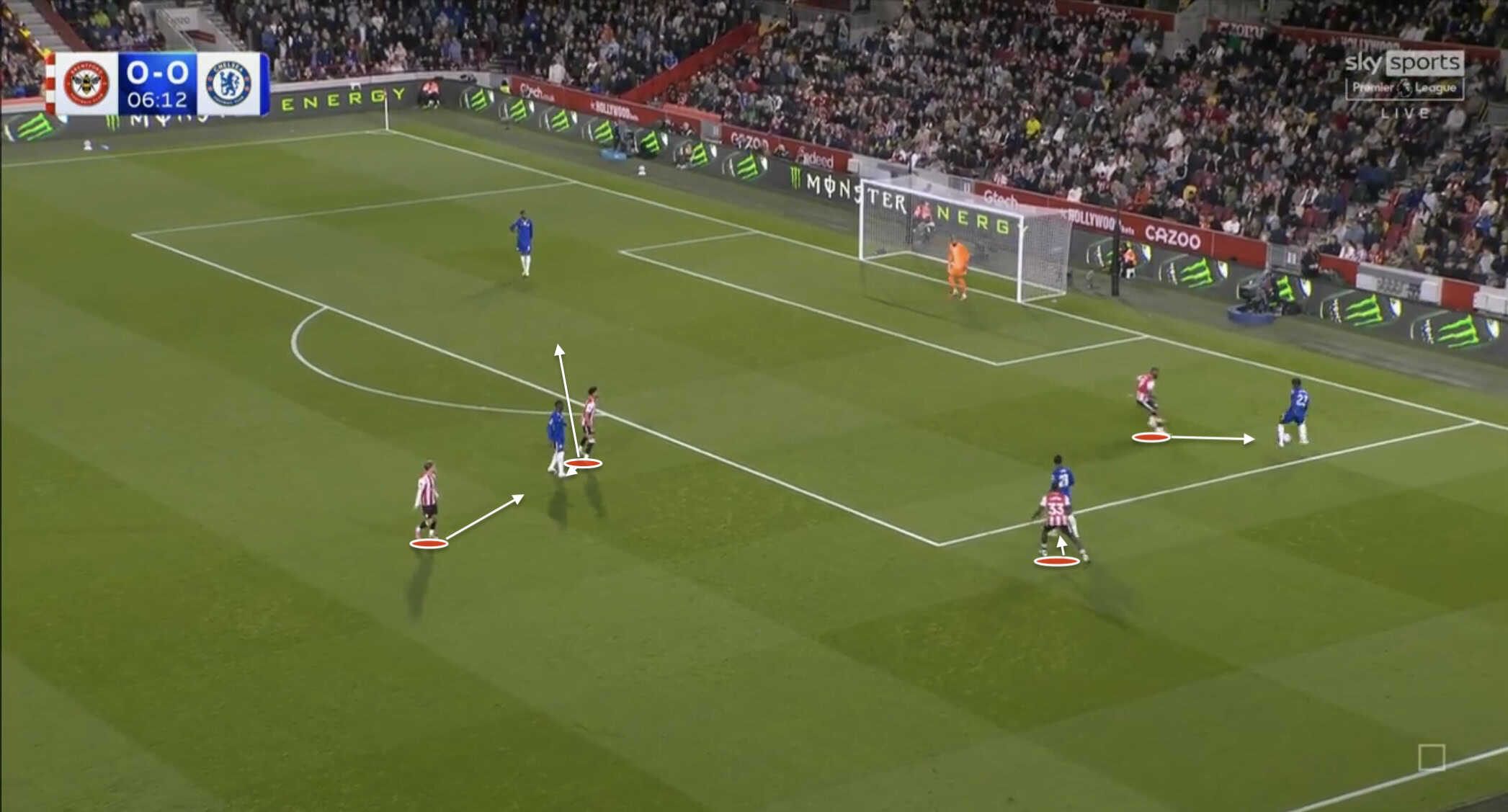
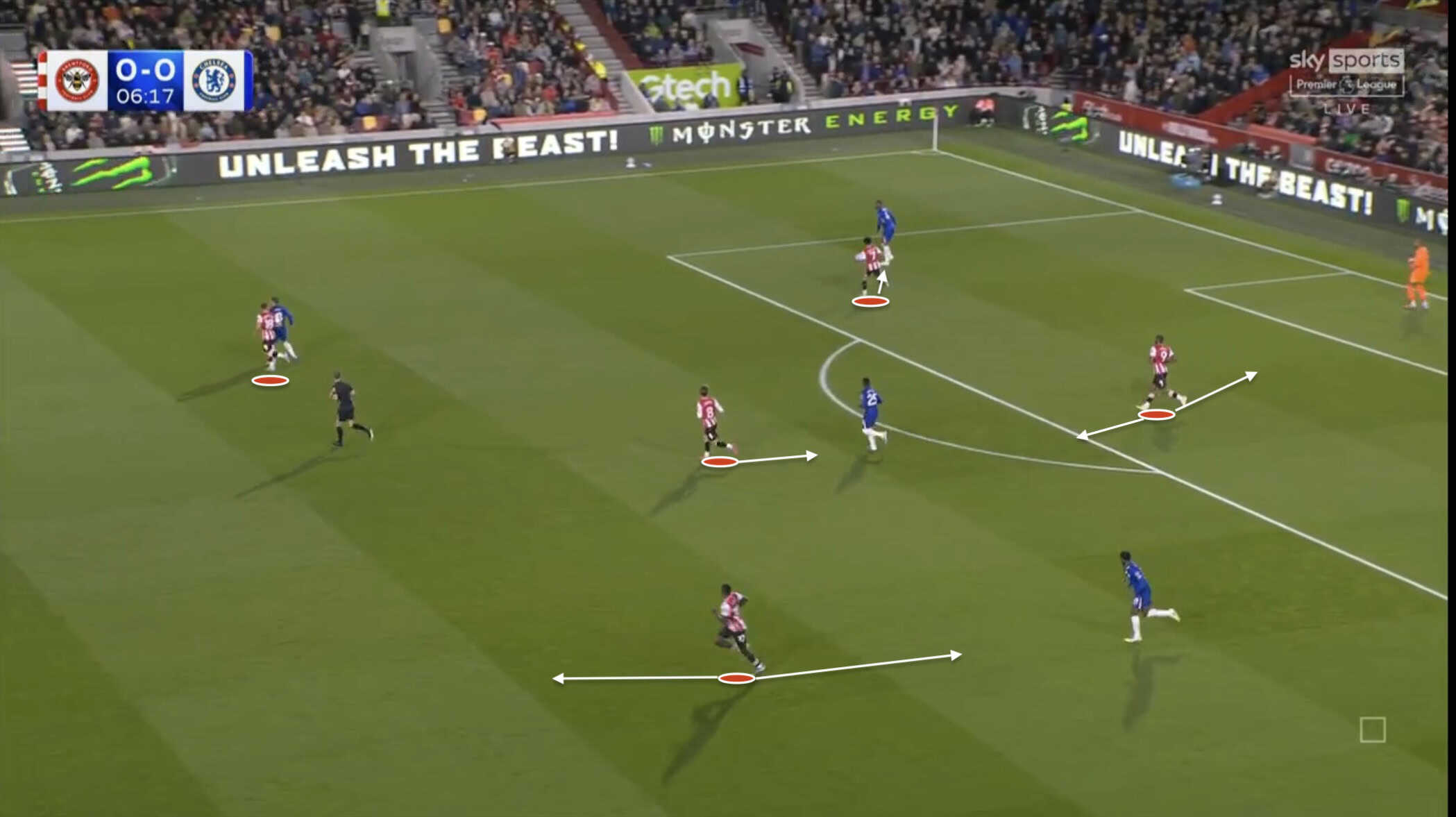
Brentford, under Andrews management, press goal kicks aggressively.
They lock off one side of the pitch and force the opponent into either going long or playing into areas where the Bees are waiting to trap them.
It shows there’s a lot of detail going on behind the scenes.
They know they can’t press high all game because of physical demands and the quality of opposition, but they make sure to press in moments that can be rehearsed.
That’s clever coaching.
Compactness In Brentford Defensive Shape
Compactness is the next big principle.
Brentford try to remain compact in every phase, whether it’s pressing high, sitting in a mid-block, or even dropping into a deep block.
The distances are always short, the lines are tight, and the aim is always to close central spaces.
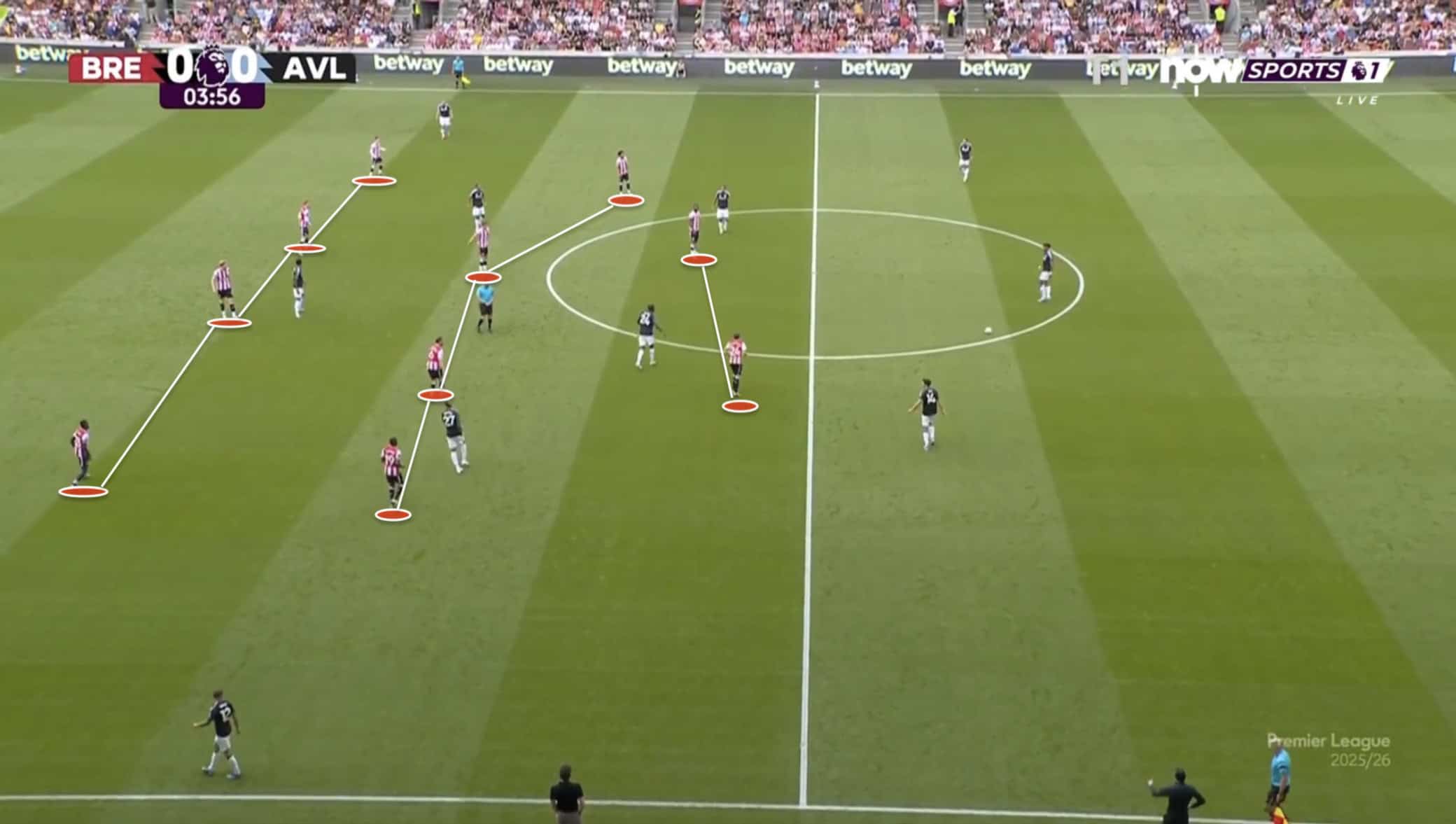
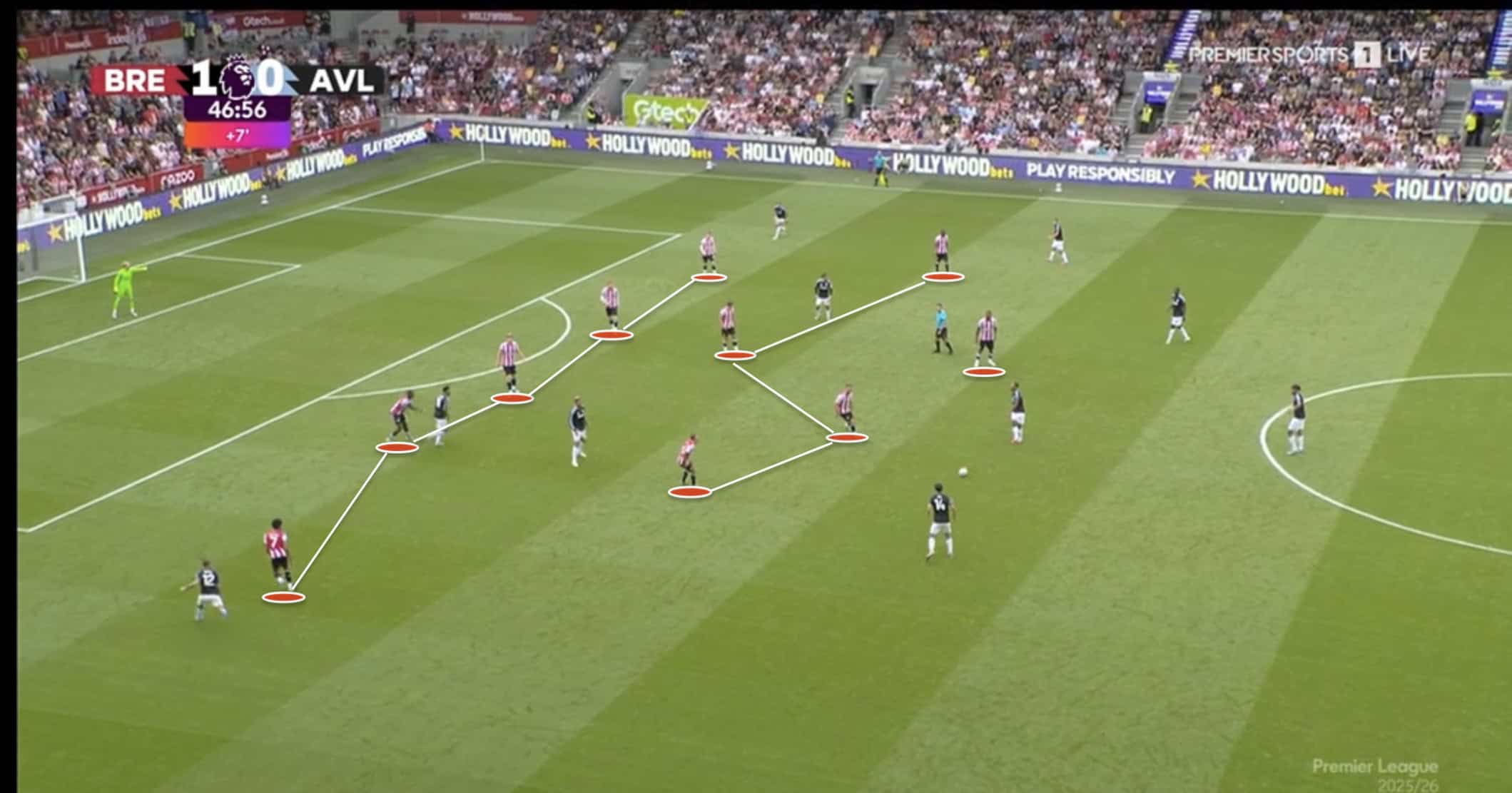
This was something Thomas Frank drilled into the team, and Keith Andrews has carried that torch.
Stopping Central Progression
Stopping central progression goes hand in hand with compactness.
Against teams like Aston Villa and Chelsea, who love to combine and build through the middle, Brentford shut it down.
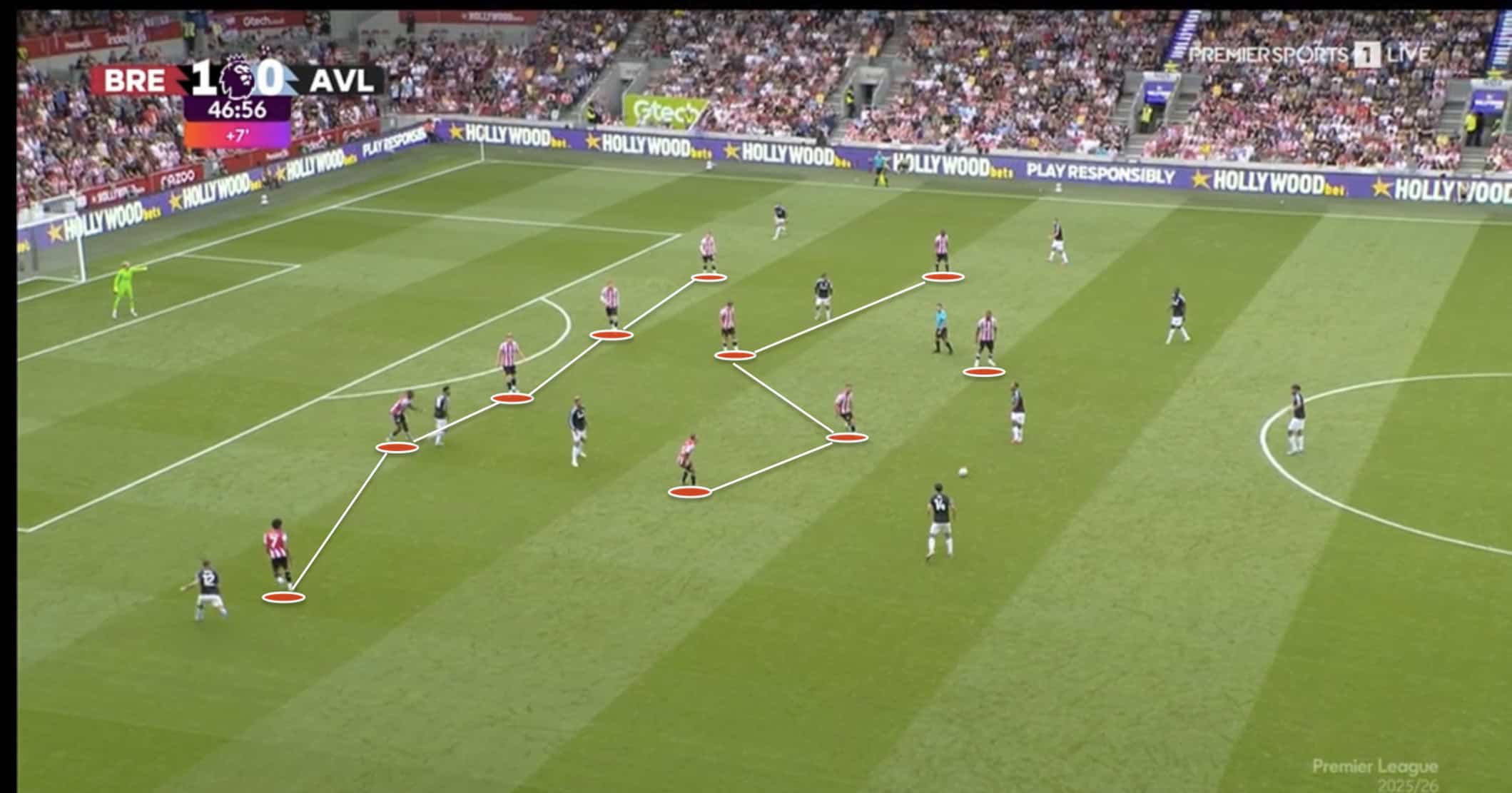
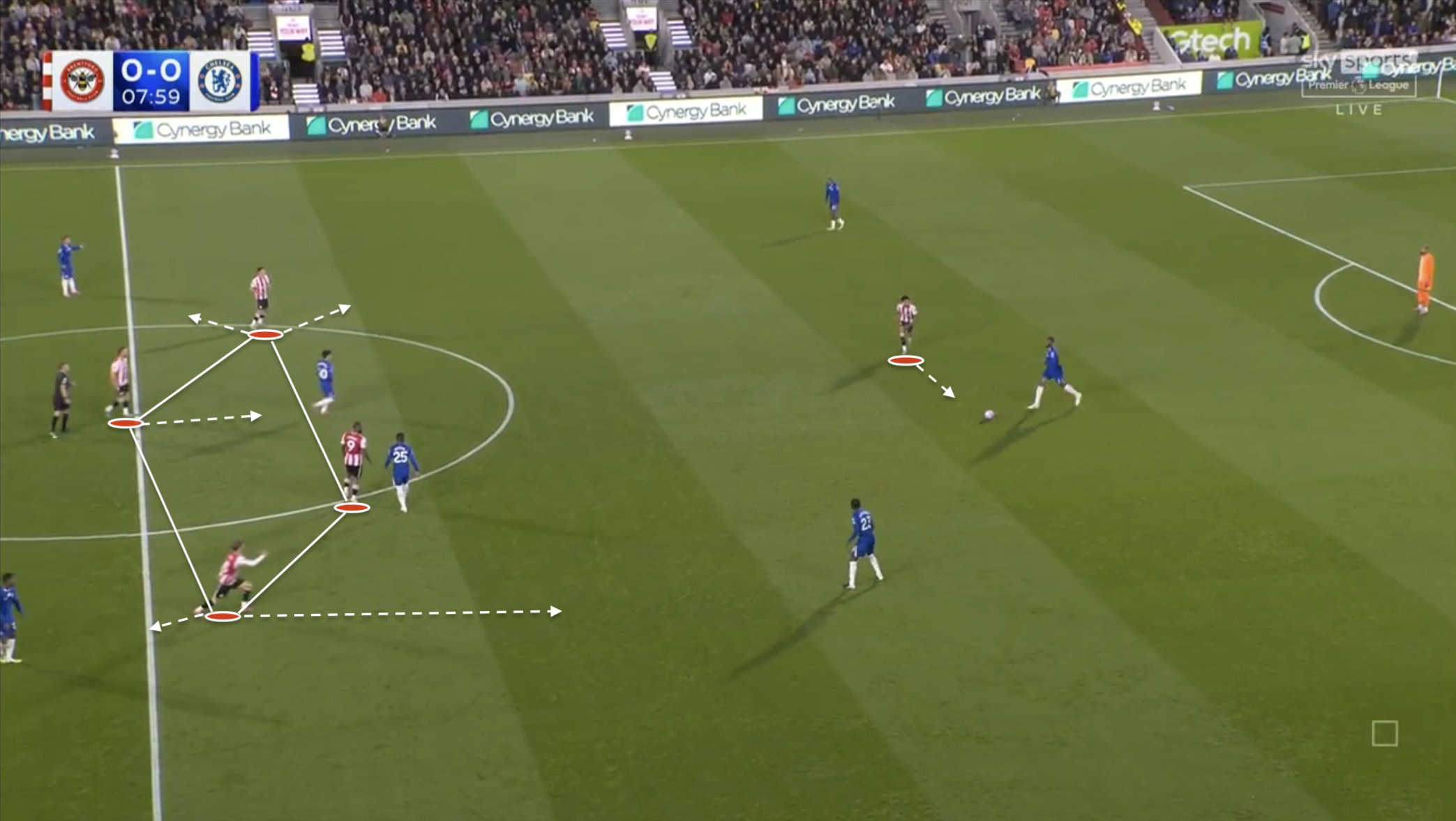
They often line up in a 4-4-2, but it can also be a 5-3-2 or even something that looks like a 5-4-1 diamond.
The shape might change, but the principle stays the same: block the ball into the number six, cut off access to the number 10s, and when it does go in there, the wide centre-backs jump aggressively.
Central progression is vital for teams that want to control matches, as it provides a consistent foothold and creates the most damaging opportunities.
Keith Andrews’ system deliberately denies that route, forcing opponents to move the ball wide where they are less threatening.
Adaptability Of Shape
That adaptability of shape is another hallmark of Keith Andrews’ Brentford.
Against Chelsea, you saw something close to a diamond midfield.
Against Villa, they started in a 4-4-2 but slipped into a 5-3-2 with Dango Ouattara tracking Lucas Digne‘s advanced positioning.
The point is that Brentford are comfortable adjusting their structure, but the non-negotiables always remain: deny central progression, keep the team compact, and press with aggression when the moment is right.
Aggression In All Phases
Aggression is a keyword here.
Brentford don’t have the resources to press like Liverpool or Manchester City for 90 minutes, but Andrews wants them to be aggressive whenever they can.
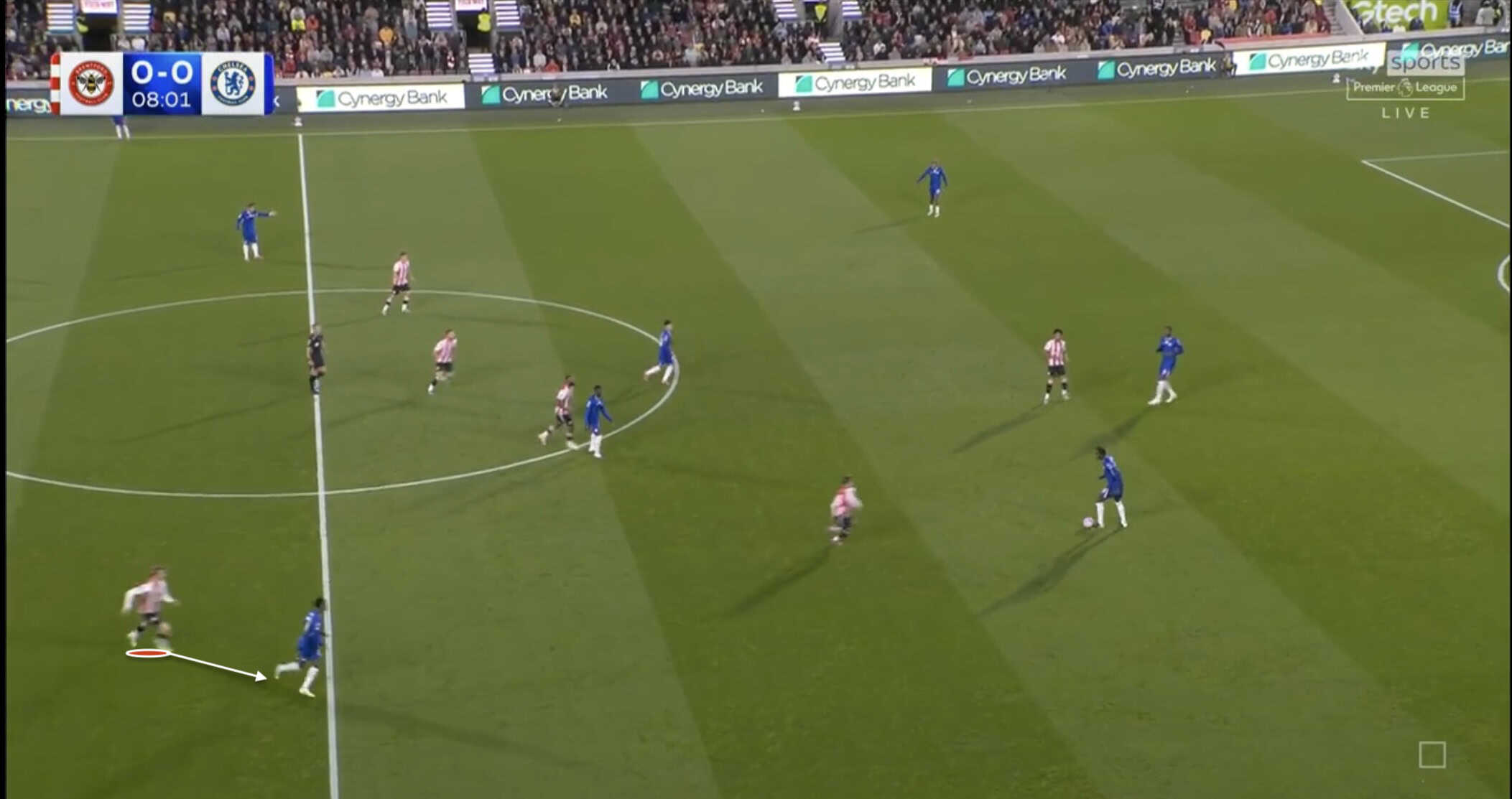
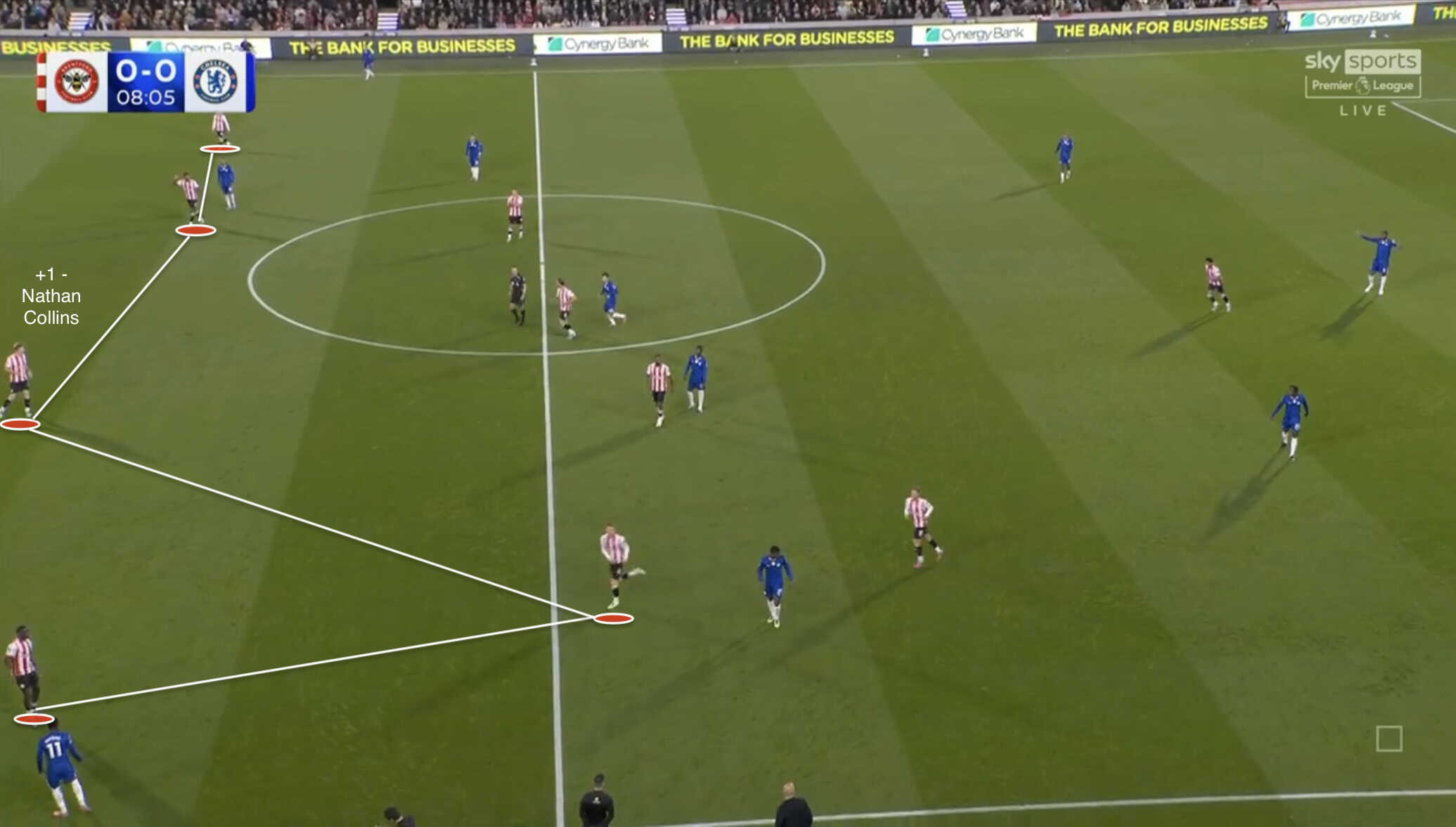
Here, we see the Bees matching up whilst keeping a +1 at the back with Nathan Collins.
From goal kicks, they’ll go man-to-man and try to trap.
In a mid-block, they’re ready to pounce if the ball goes into feet.
Even in a deep block, the centre-backs will step out hard if someone receives between the lines.
And through it all, they always look to maintain a +1 at the back, normally in the form of Nathan Collins, so there’s always cover.
Potential Areas Of Concern For Keith Andrews Brentford
There are a couple of things to keep an eye on with Brentford under Keith Andrews style of play.
Defending Crosses
Brentford have conceded nine goals in the Premier League this season, and four of those have come directly from crosses.
Sometimes it’s just about clearing your lines, and while it’s not always easy when teams overload the box, Brentford are going to spend spells in deep blocks against quality opposition, so they need to tighten up there.
Winning first contact will be vital for Brentford, along with preventing opposition players from having the time and space to cross.
In the Premier League, if you allow top-quality players that freedom, you’re asking for trouble.
Space Between Midfield & Defence
The other issue is when their high press gets broken.
At times, the centre-backs, including Collins, drop off too quickly.
That creates a gap between midfield and defence, which goes against the principle of compactness.
Morgan Rogers found those pockets against Villa, while Chelsea also dropped players in to exploit it.
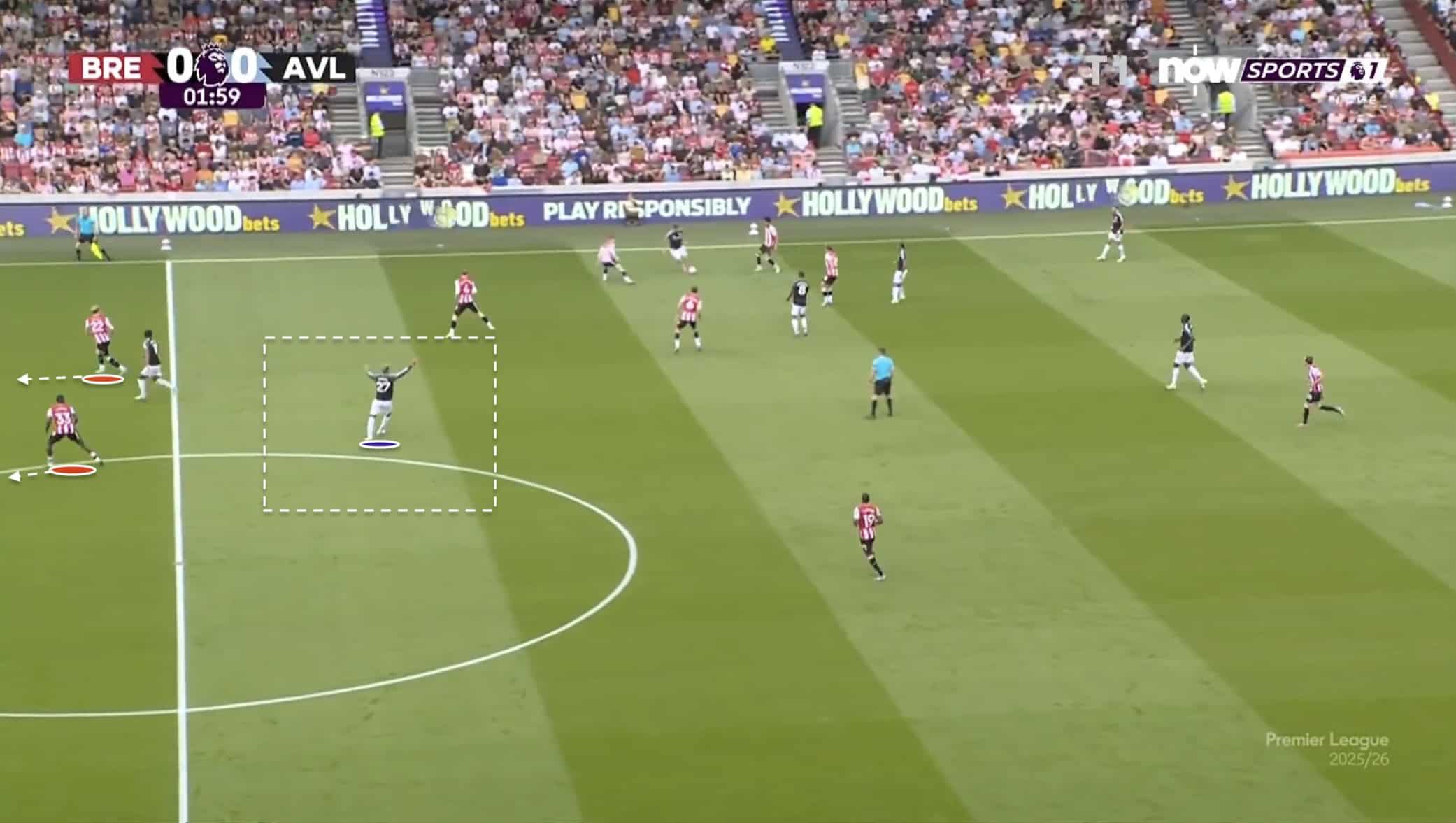
These issues are not crises, but they do need ironing out.
If Brentford keep winning, confidence will keep the lines tight.
If they go on a poor run, those gaps could become more obvious as the team instinctively retreats deeper.
Conclusion
Replacing Thomas Frank was never going to be easy, but Keith Andrews has made a solid start.
His Brentford side are aggressive when they can be, compact when they have to be, and adaptable in their shape.
The main principles are clear: press repeatable moments like goal kicks, keep the team tight, prevent the middle of the pitch from being played through, and always maintain a level of aggression.
It looks like a team built on detail, organisation and belief, and it’s going to be fascinating to see how far Keith Andrews can take it.
