
Both Tottenham Hotspur and Manchester City came into Saturday off the back of opening weekend wins.
It was Thomas Frank’s first big Premier League test as the new Spurs manager, and he passed it with flying colours.
Pep Guardiola has struggled against Tottenham over the years, as Spurs have become Manchester City’s bogey team.
Since Guardiola took over at Man City, he is 11-3-10 against Spurs.
Manchester City had some build-up issues during this match, and their high line cost them again.
While Guardiola has a number of new signings, the defensive issues that plagued them last season have not gone away.
In this article, we will examine both teams’ build-up structures, Manchester City’s issues out of possession, and how Spurs defended brilliantly in a low block.
Tottenham Hotspur Build-Up & Transitions
Tottenham did try for a majority of the match to build out against Manchester City’s press.
Thomas Frank had them building out in a 4-2 base with Rodrigo Bentacur and João Palhinha as the double pivot.

They rarely tried to build out through the middle and almost always would eventually get the ball to the full-back.
From there, Mohammed Kudus or Brennan Johnson would drop in to receive and try to pass a bounce back centrally to create a mini transition against City’s high backline.
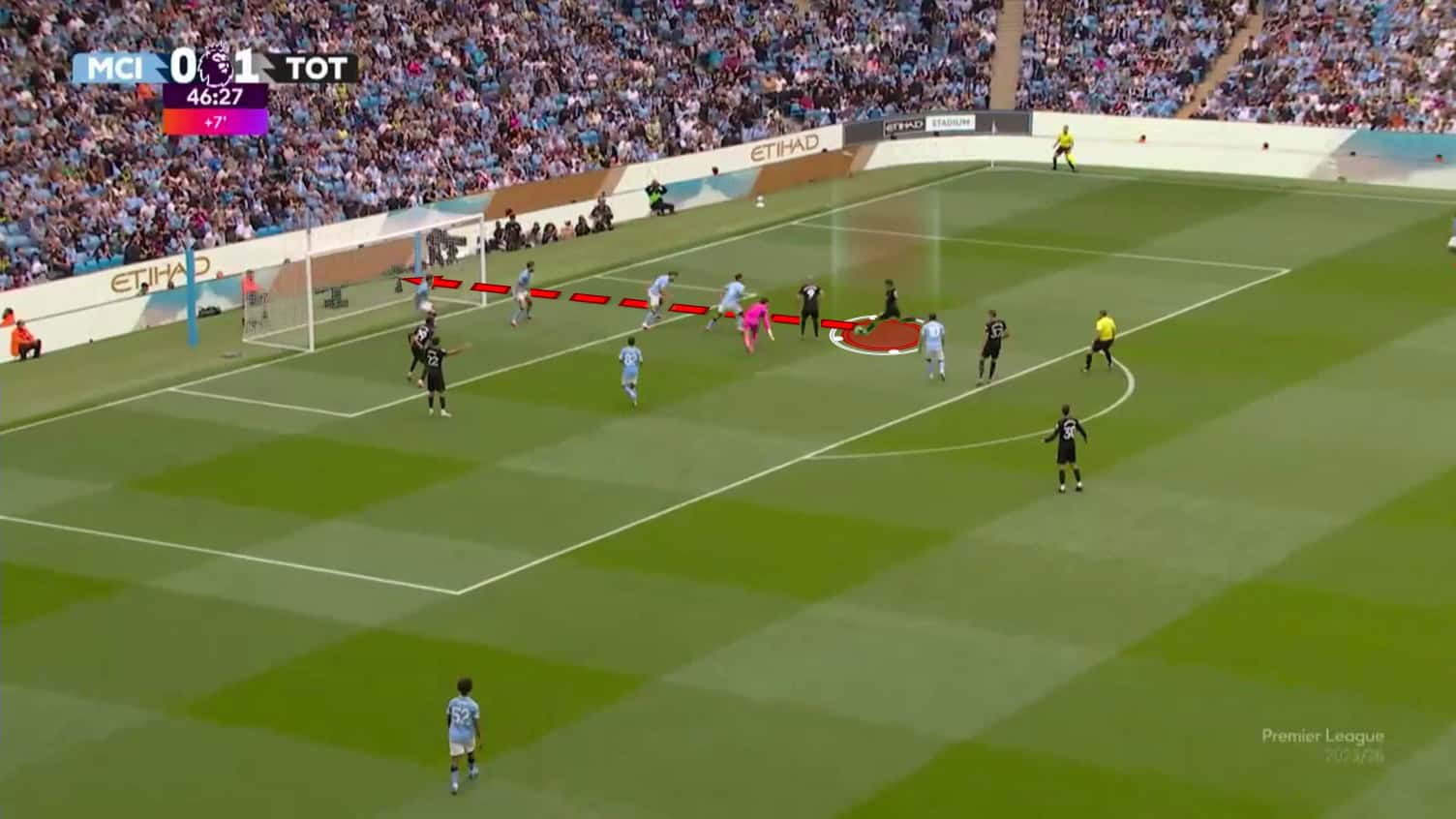
Tottenham had the most success simply playing direct balls from the back, and that’s how they scored their first goal.
Here, you can see Spurs getting pinned into the corner with the only option of playing deep.
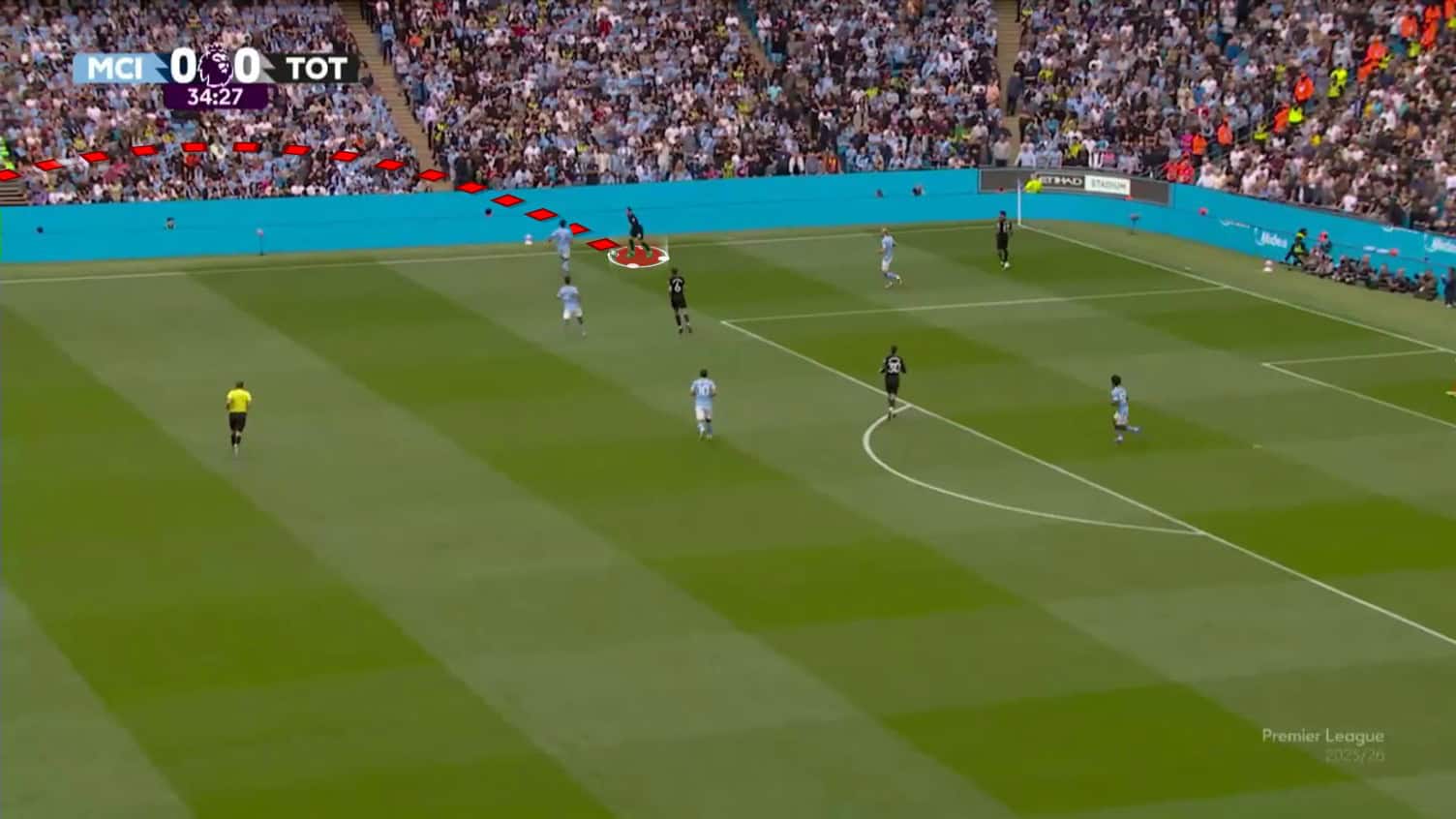
This is a change from Ange Postecoglou, who consistently wanted them to play short, whereas Thomas Frank is much more encouraging of Tottenham taking the low-risk approach when necessary and playing it long.
Here, Tottenham are able to win a header and flick it onto Richarlison, who finds Johnson in the box to open the scoring.
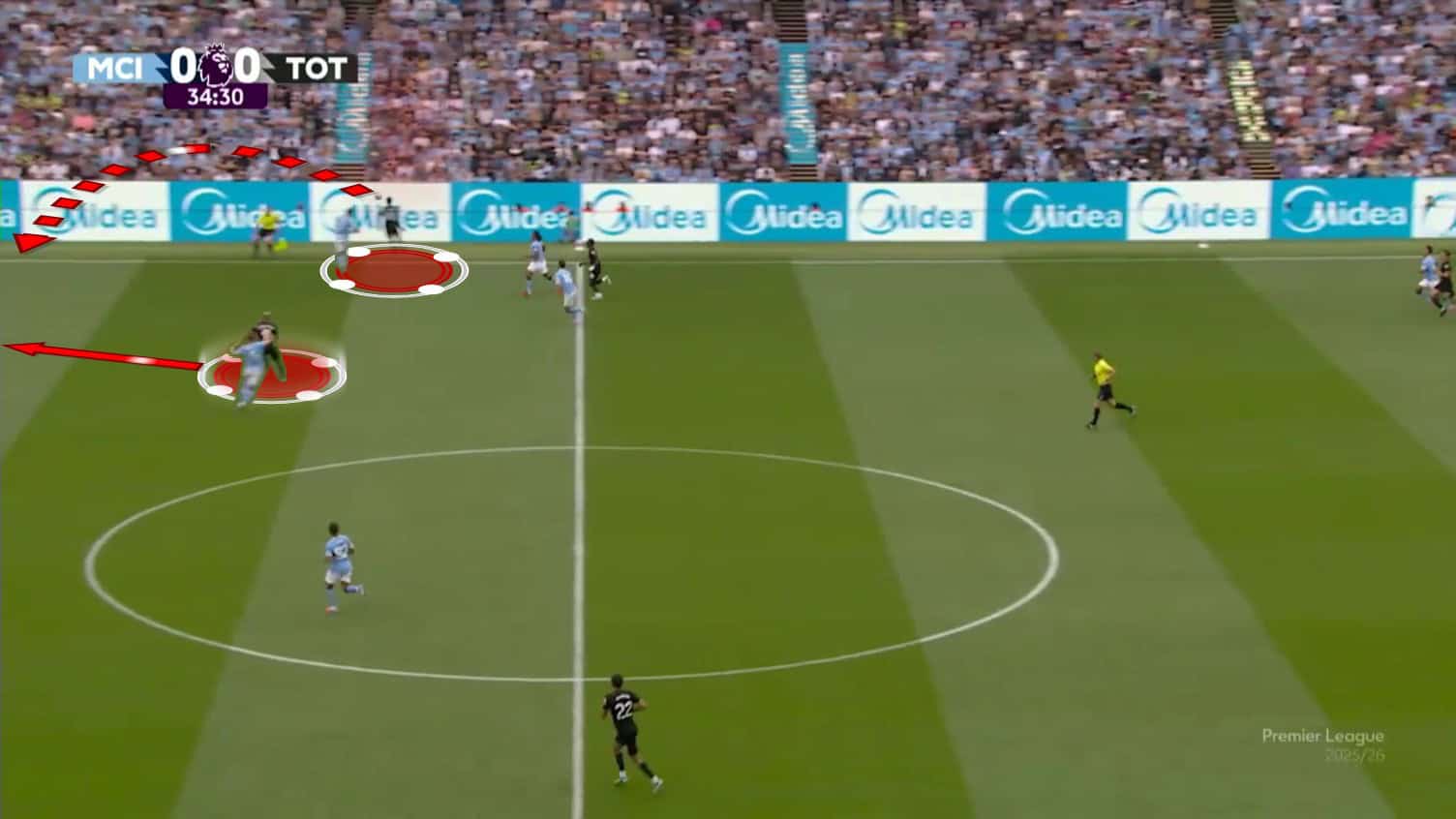
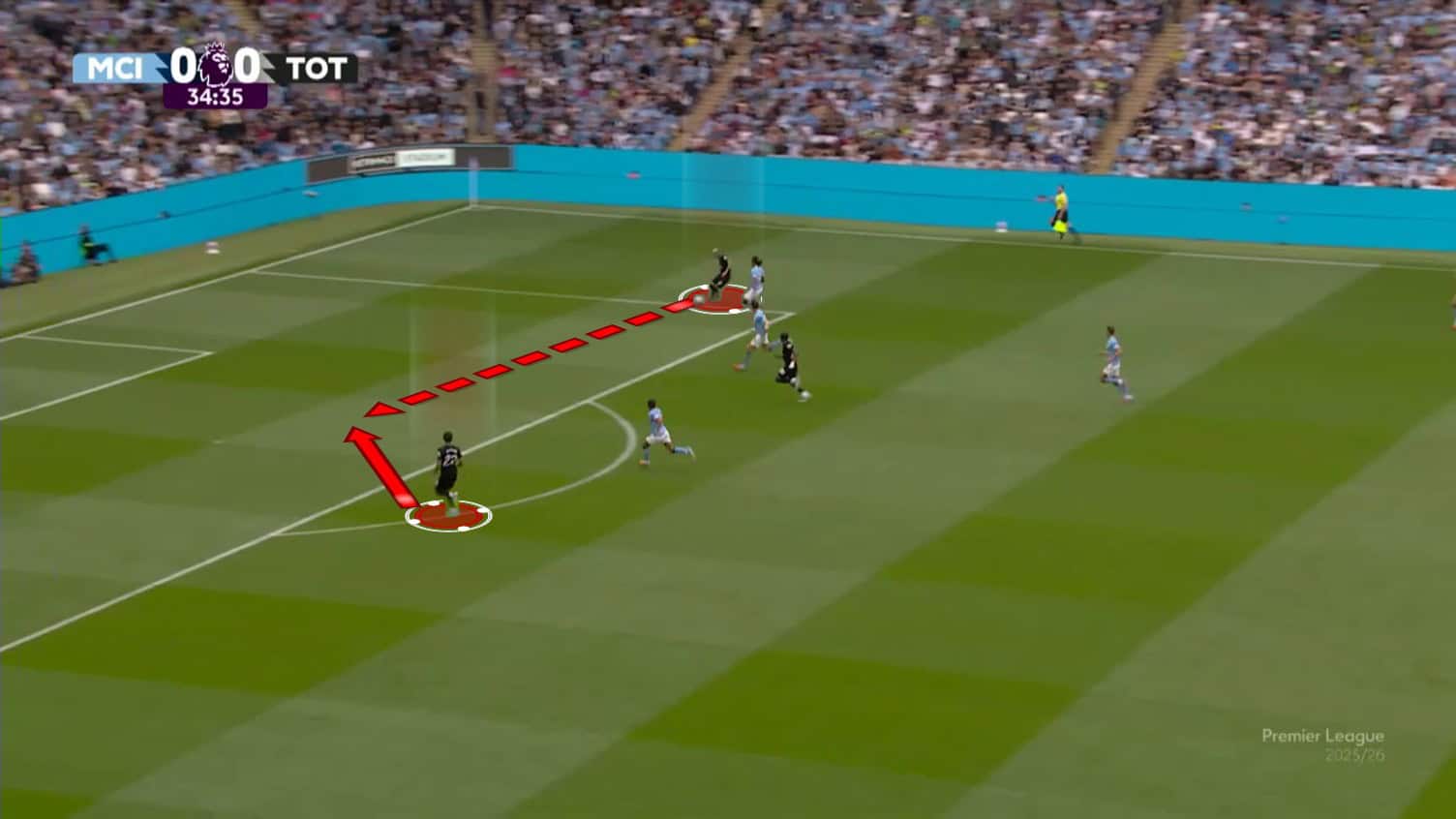
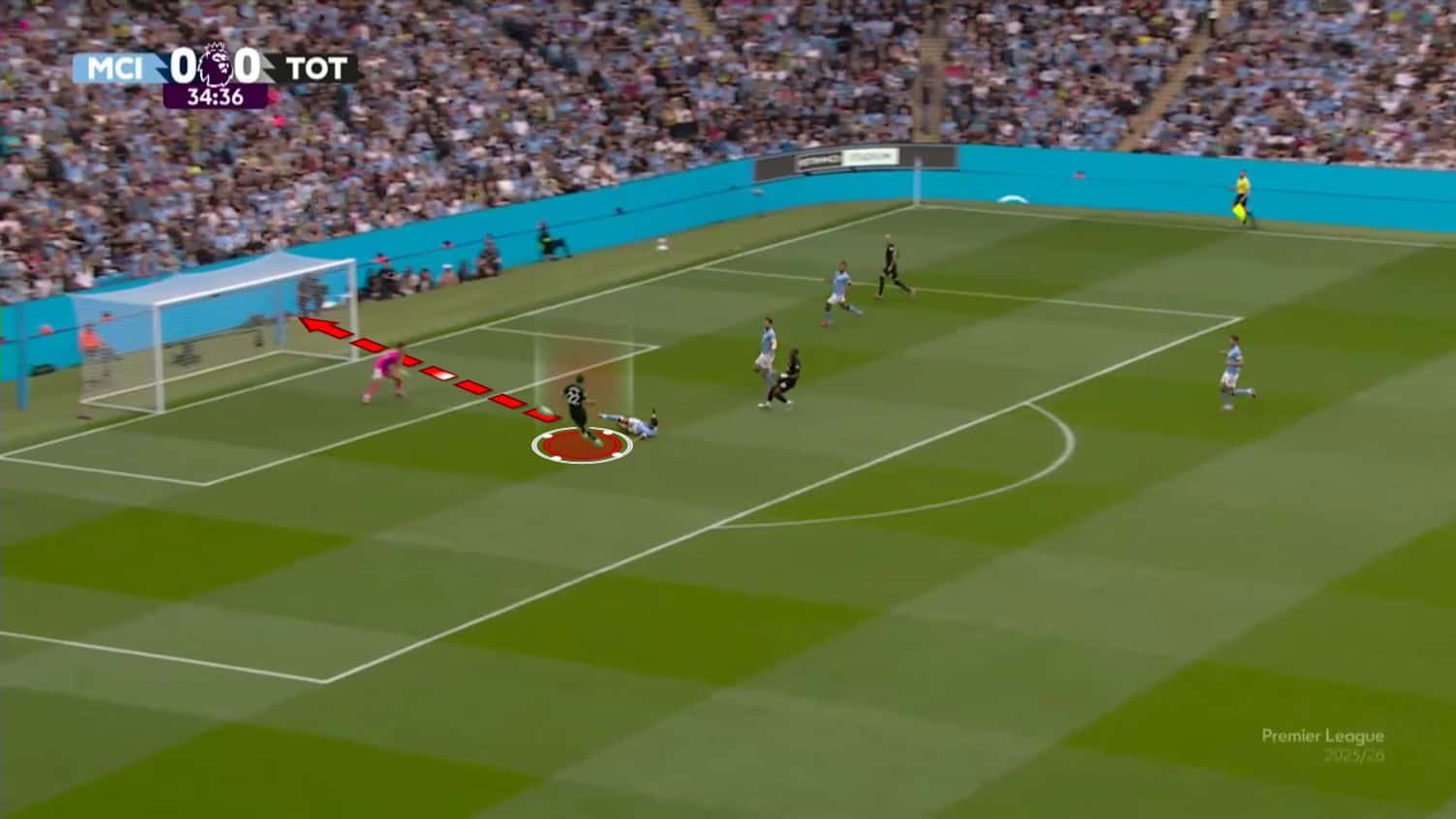
On a side note, Richarlison is really the perfect striker for Thomas Frank’s system.
Ivan Toney was so effective in Frank’s system in large part because Brentford were able to play direct to him and allow him to win 1-v-1 against the opposing centre-back.
Richarlison’s work rate up top in these first few matches has been amazing, and it’s all of the little things that he does, like holding up play, making runs off the back line, and pressing relentlessly, that have greatly helped Tottenham’s attack.
The other element that has drastically changed for Tottenham is that they now have a winger who can beat defenders one-on-one.
Last season, Spurs were dead last in successful take-on percentage, but the addition of Mohammed Kudus has done wonders for their attack.
He had three successful take-ons against Manchester City, which were the most of anyone in the match.
Mohammed Kudus Pizza Chart
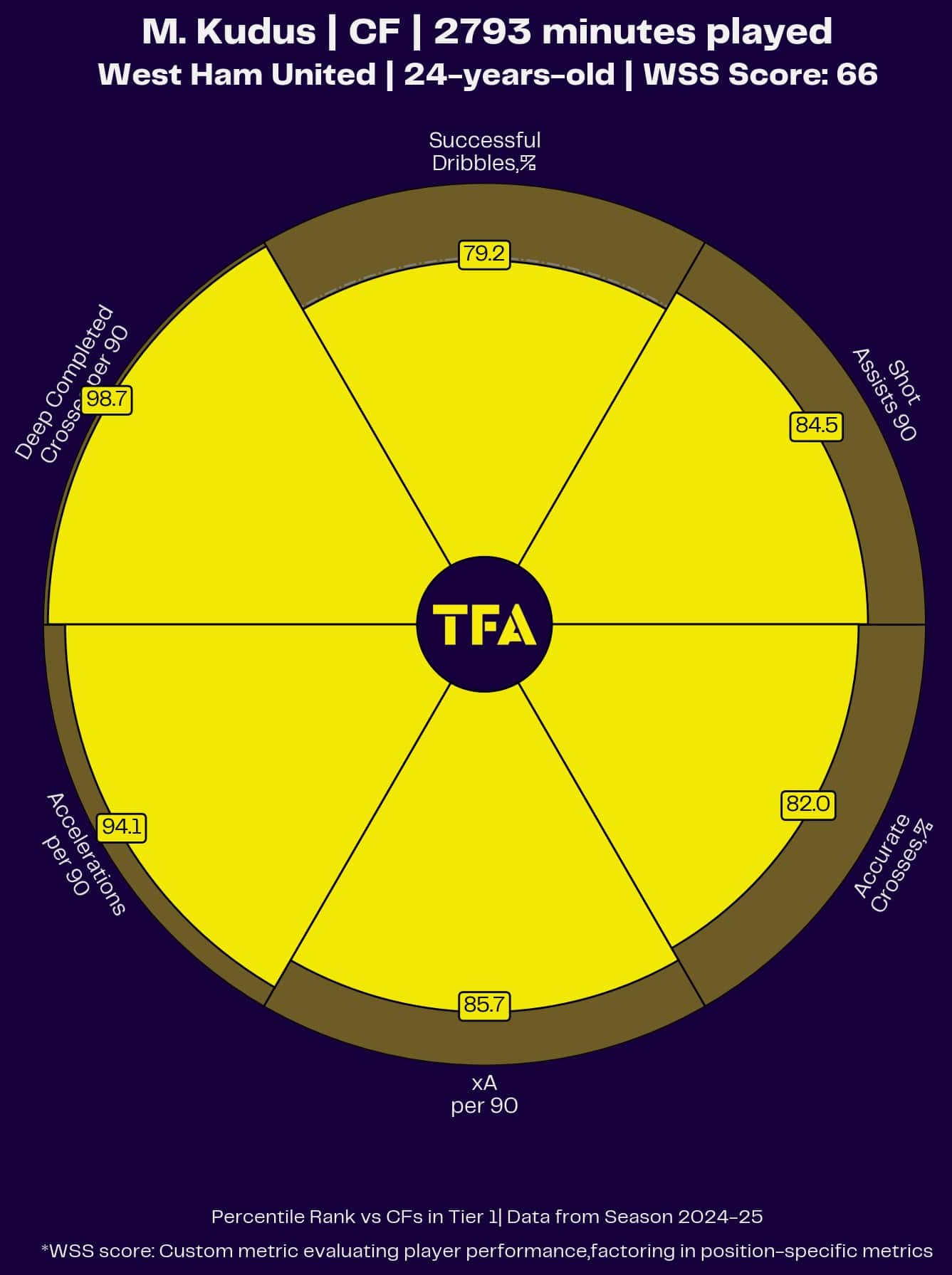
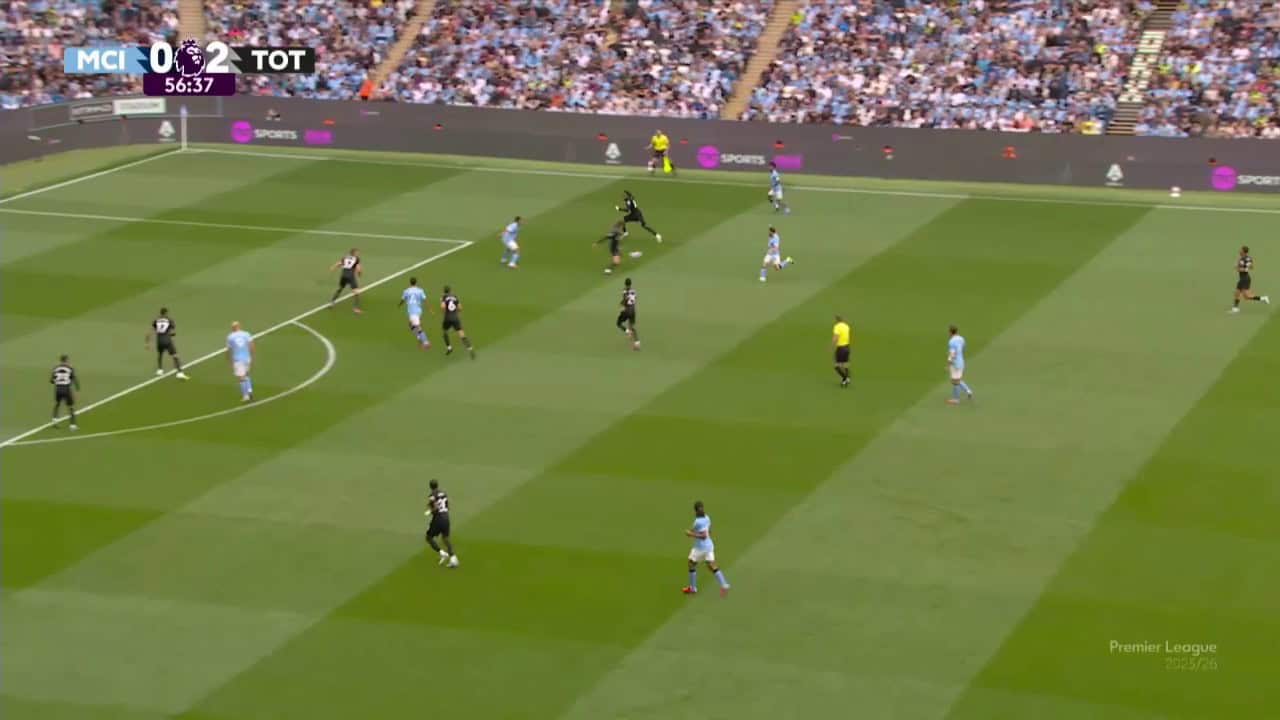
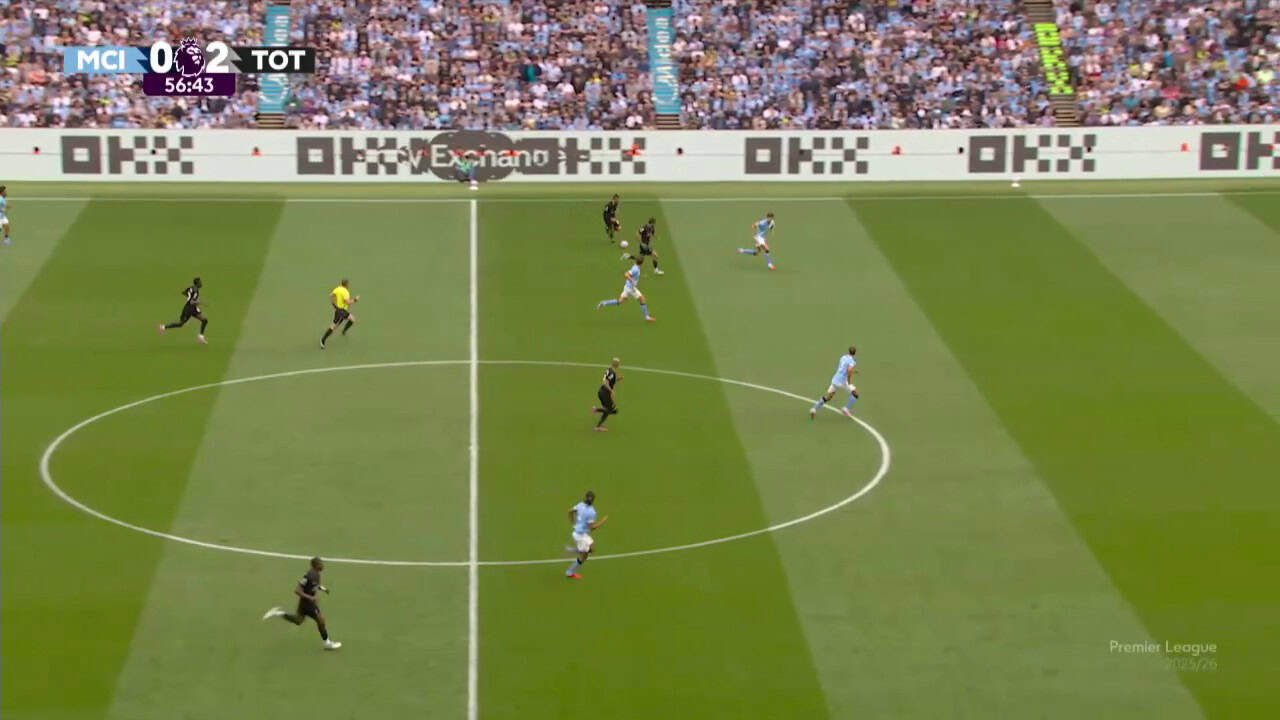
The element that Thomas Frank is adding to Spurs this season is their ability to be effective in transition.
Under Postecoglou, Tottenham were too build-up-oriented.
You can see how Spurs are able to break quickly out of their low block and create a 5-v-4 situation.
Manchester City Build Up
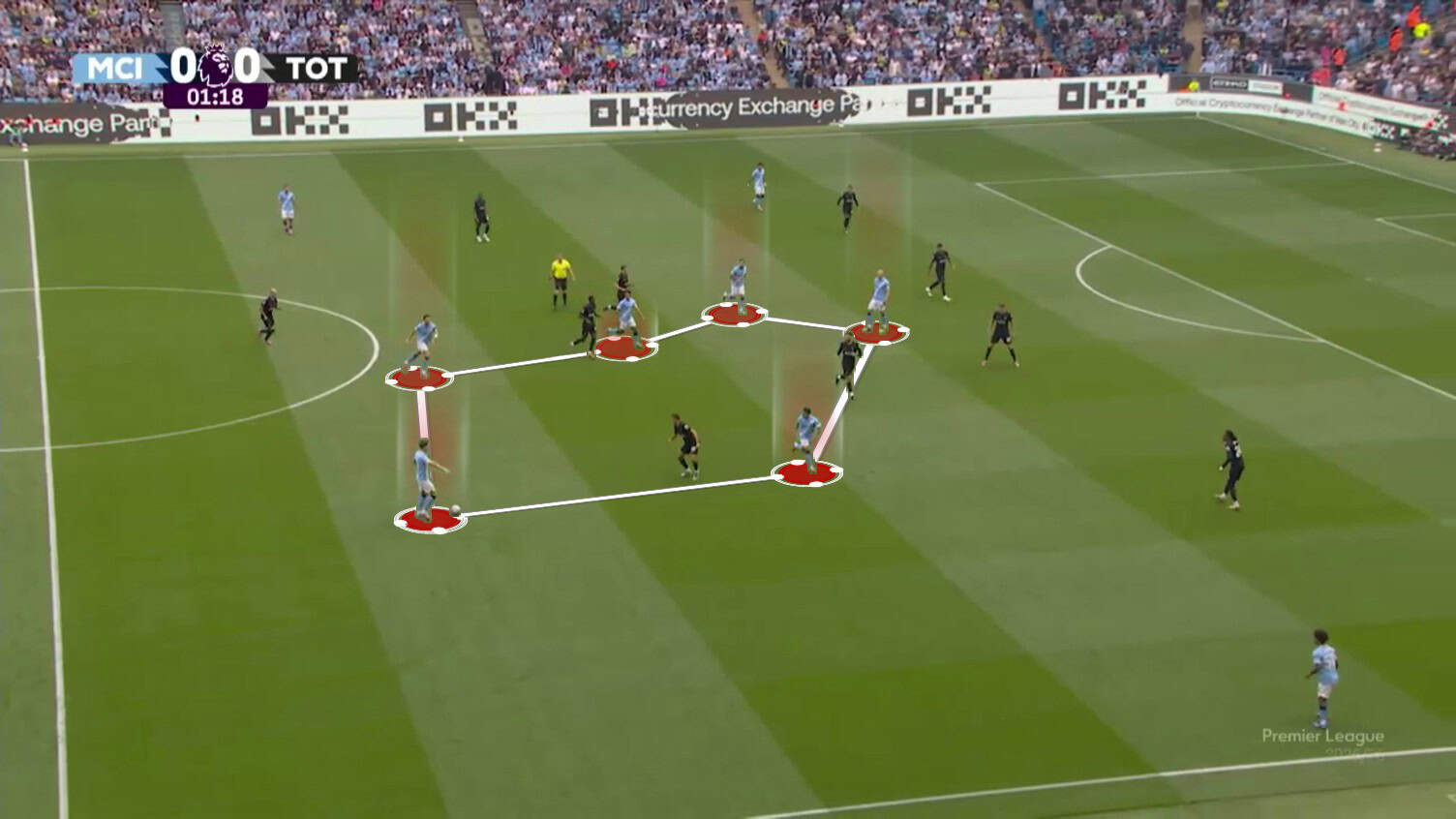
Right from the start, Pep Guardiola made it clear that Manchester City was going to try to control the middle of the pitch.
He had Manchester City building up in a very narrow 3-3-1-3, trying to draw Tottenham’s mid block into pressing them, knowing full well that they had a 7-v-6 numerical superiority through the first phase.
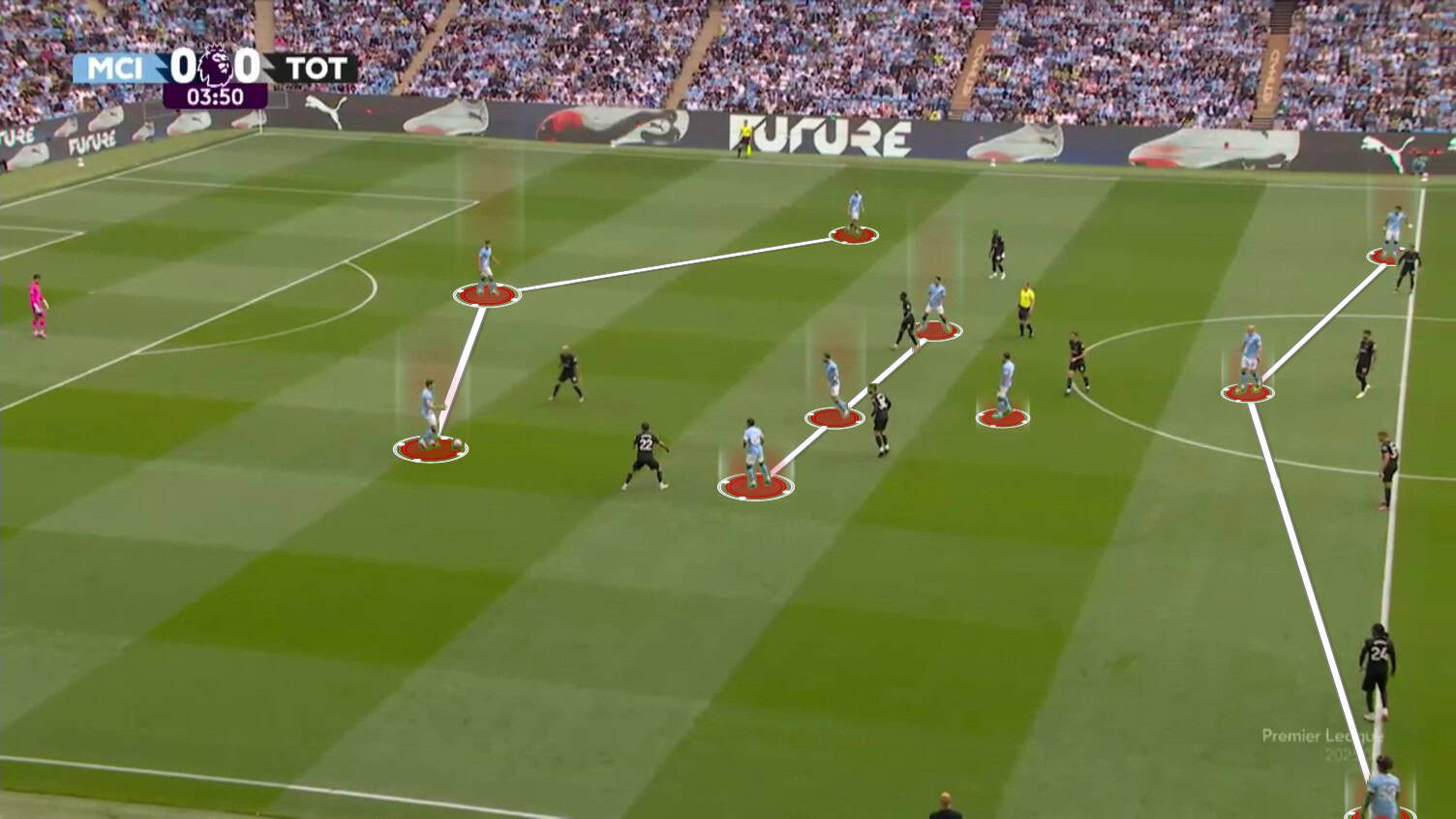
This also allows Manchester City’s wingers to be isolated against Tottenham’s full-backs so that they can play direct balls in behind.
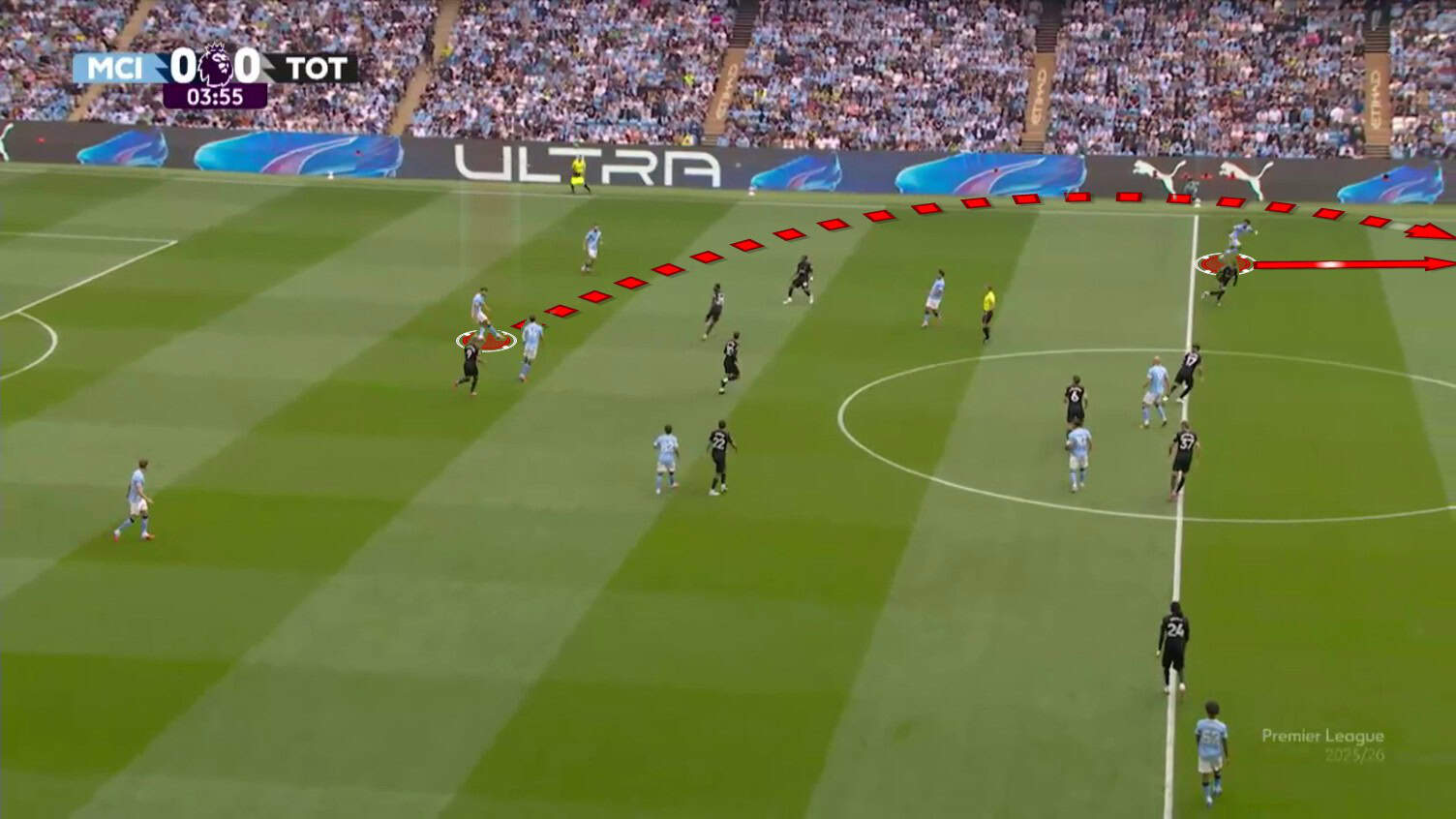
Early on, Tottenham pressed Manchester City in a man-to-man fashion from goal kicks and had great success.
Manchester City kept trying to rotate the ball side to side, but eventually had to play direct to evade the pressure.
Spurs ended up with seven high turnovers for the match despite holding only 39% of the possession.
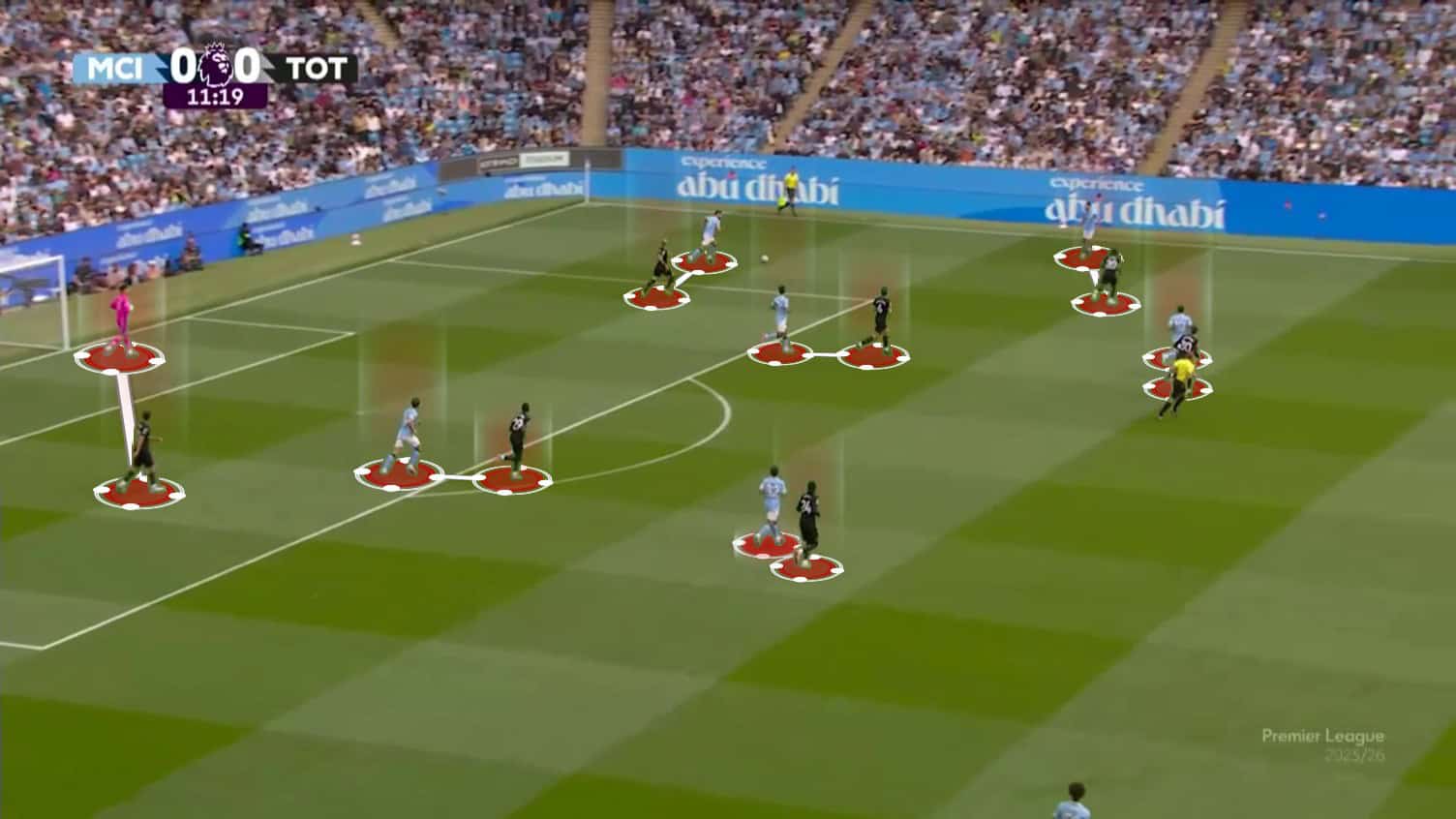
One of those high turnovers led directly to a goal on a horrible pass from James Trafford.
You can see Richarlison making a curved run to take away any passes to Trafford’s left, and Oscar Bobb pointing in the corner for him to take the safe pass to John Stones.
Instead, he tries to play the central pass, but opens up his body before doing so to telegraph where he is passing.
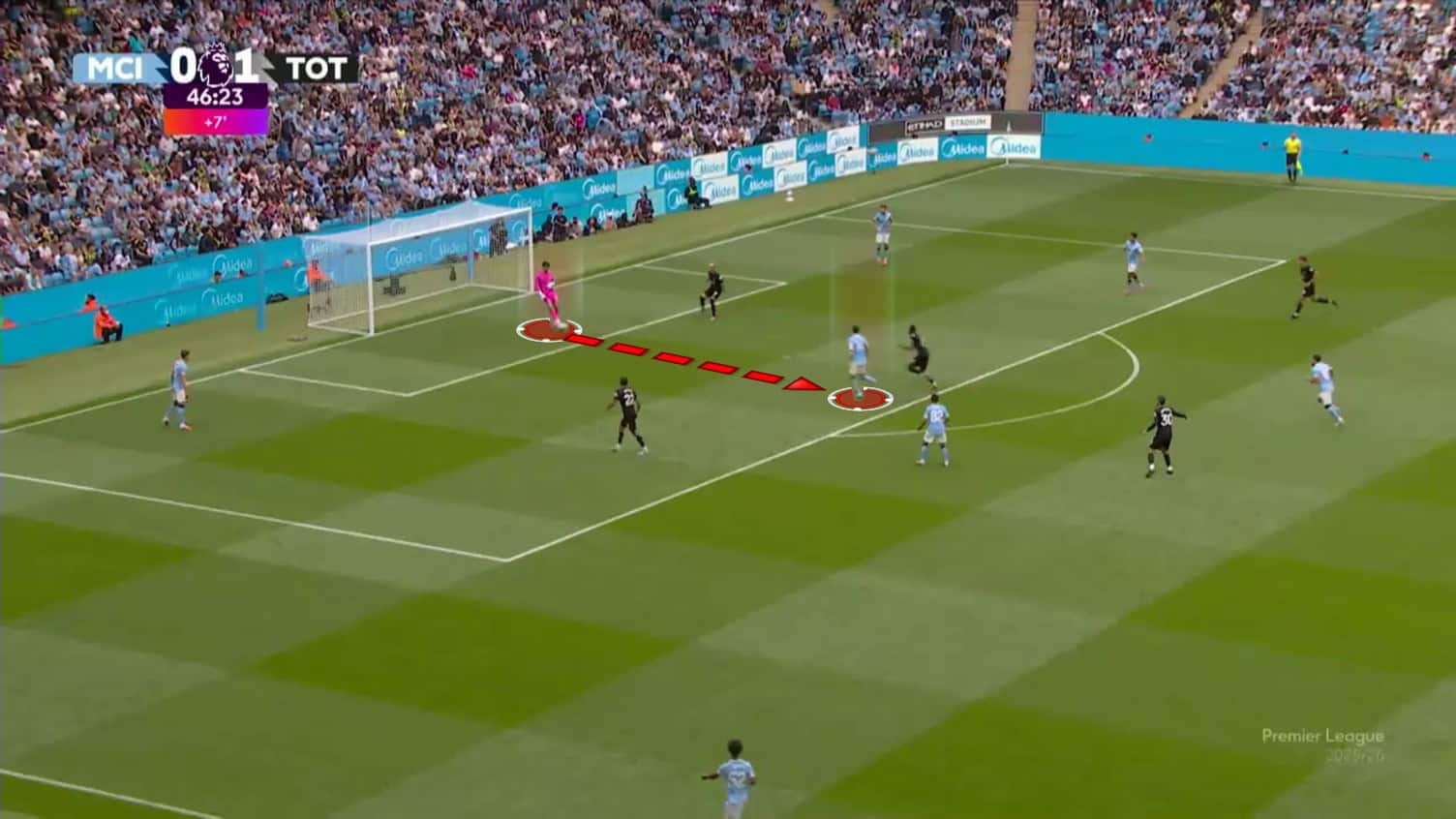
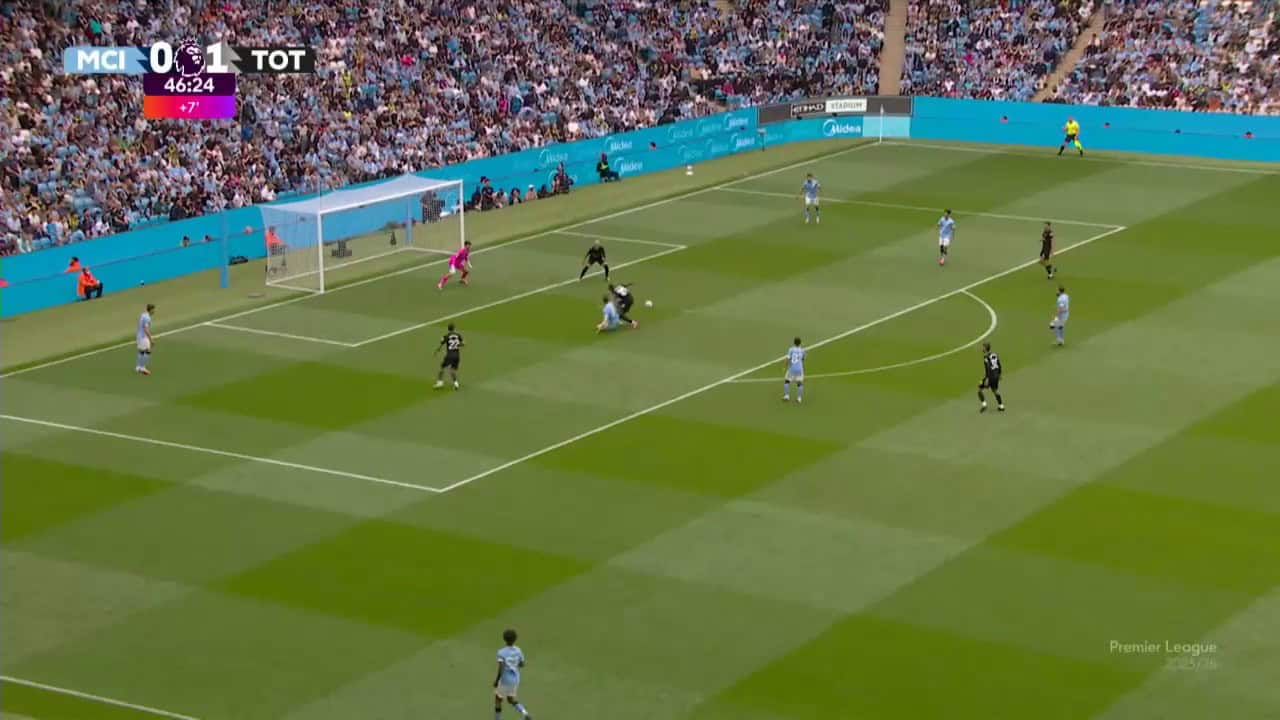
Pape Matar Sarr read it, picked off the pass, and it eventually fell to Palhinha, who thundered it into the back of the net.
Once Manchester City entered the final third, they tried to overload the middle with six players, which didn’t really work because Spurs stayed so compact.
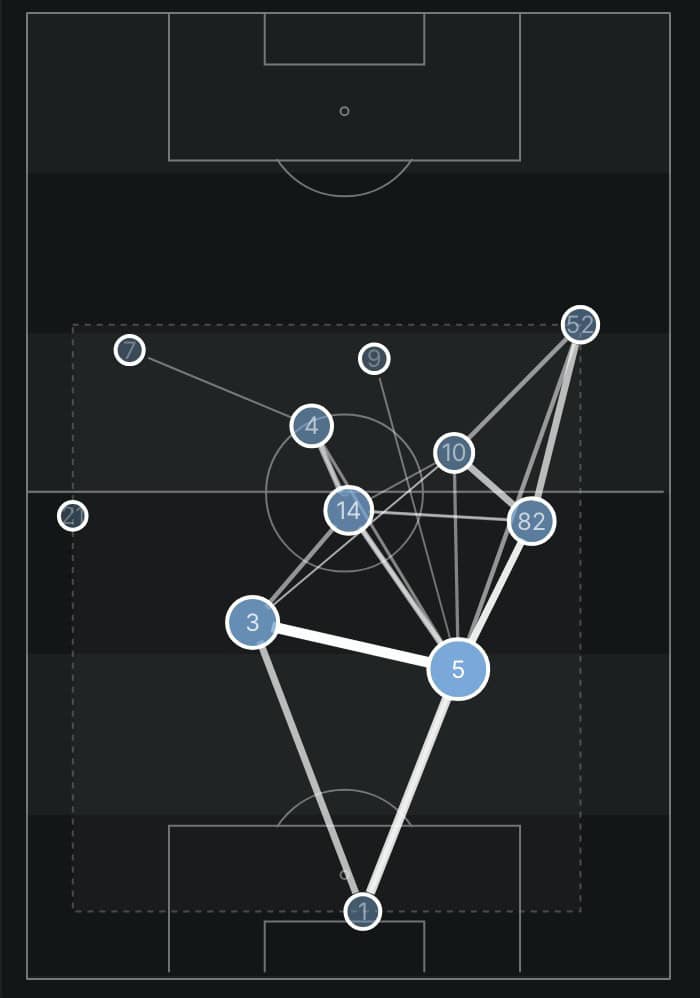
Manchester City’s passing network in the match shows that they did not penetrate the middle of Tottenham’s defensive block at all.
Manchester City Passing Network Vs Tottenham Hotspur
Tottenham Low Block defending
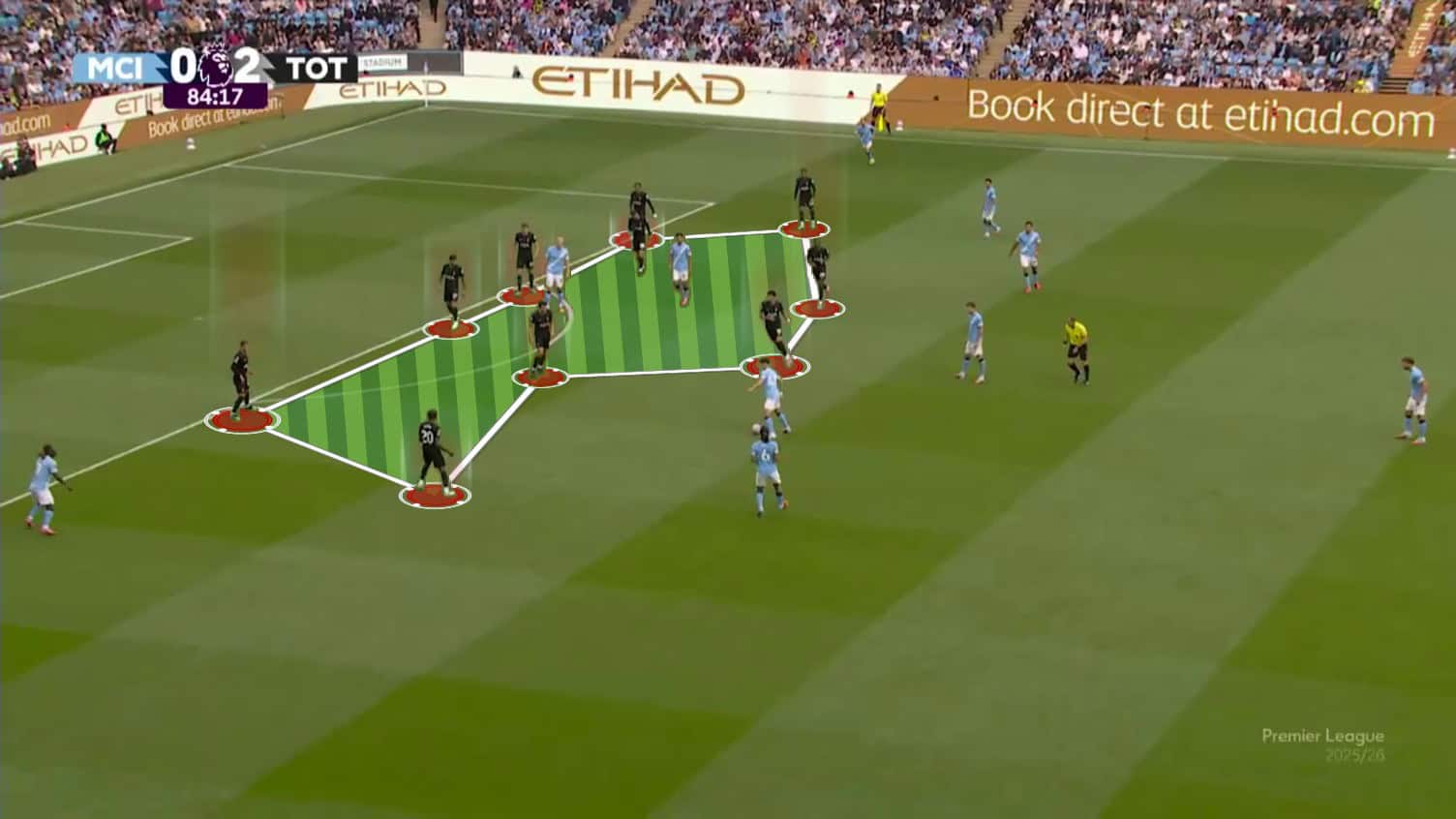
Thomas Frank is known for this from his years at Brentford, and he already has Tottenham playing a really solid, low, compact defensive block.
He had them defending out of a 5-4-1 for most of the match when Spurs would fall back into a low defensive block.
As the match progressed into the second half, he had them in an extremely compact defensive structure to prevent Manchester City from playing through the middle.
Manchester City had a couple of decent chances in the first half, but Tottenham clamped down in the second half.
Spurs held City to only five shots and 0.39 xG in the second half, defending their two-goal lead.
That would have been almost unheard of under Ange Postecoglou last season.
Of those five shots, two of them came via corners.
In fact, for the match, Spurs only allowed Manchester City to create 1.01 expected goals from open play despite allowing Manchester City to have a 73.4% field tilt.
Manchester City Defensive Conundrum
The signings of Tijjani Reijnders and Rayan Cherki highlighted how aggressive Pep Guardiola wanted his team to be in possession.
Towards the end of last season, Manchester City really struggled to break down good, solid defensive blocks, so the hope was that adding those two players could fix those issues.
It doesn’t include Manchester City’s defensive transition issues because those two players do very little defensive work.
Also, Manchester City also had Rico Lewis on the pitch, who is a liability defending 1-v-1 out wide.
There were a few instances where Tottenham were able to play through the Manchester City press or break in transition with Nicolás González, who could win the ball at an above-average level.
Once Tottenham went ahead 2-0, they backed off from aggressively attacking Manchester City on the counter, but more aggressive transition teams will punish them if Pep Guardiola keeps rolling out these types of lineups.
Conclusion
Despite what the final xG tally will show you, Spurs were the better side in this match.
It was a tactical masterclass from Thomas Frank over Pep Guardiola, showing how versatile a manager he is.
Spurs went from aggressively pressing high up the pitch to defending in the lowest, most compact defensive block you’ll ever see and did both of them to perfection.
Although Spurs weren’t constantly threatening and only scored the expected 1.1 goals for the match, they took advantage of the opportunities Manchester City afforded them.
Pep Guardiola has to figure something different out because he has struggled for a long time now against these really compact defensive blocks.
His solution in this match was to deploy an ultra-aggressive lineup with Erling Haaland, Tijjani Reijnders, Rayan Cherki, Oscar Bobb, and Omar Marmoush all on the pitch simultaneously.
He even went with a very attacking full-back selection in Rayan Aït-Nouri and Rico Lewis.
In the end, even with that ultra-attacking lineup, City were able to do virtually nothing defensively against Tottenham’s tactics.
It’s an amazing result for Spurs, who are now second in the table behind Arsenal.
Manchester City have Brighton up next, which will be a fascinating encounter given that they lost at the American Express Stadium last season.
