
Pep Guardiola’s side missed out on a Premier League title for the first time in the last five seasons, finishing in a respectable 3rd place but 13 points behind league leaders Liverpool.
Following a relatively unsuccessful season (by Man City standards), which included an FA Cup Final loss to Crystal Palace, Manchester City has made multiple additions in various positions.
One of them is AC Milan’s Tijjani Reijnders, who had a terrific season in Italy’s Serie A, winning the Coppa Italia by beating arch rivals Inter Milan to claim that title.
At Man City, the Dutch midfielder will be sharing the pitch with midfielders such as Rodri, Bernardo Silva, Rayan Cherki, Mateo Kovačić, İlkay Gündoğan, and Nico González.
Reijnders brings traits of dynamism with and without the ball, which will help Man City a huge deal with verticality.
In this scout report and player analysis, we will look at Tijjani Reijnders playing style and what role he will play under Pep Guardiola tactics.
Tijjani Reijnders Style Of Play

As we can see, the Dutch midfielder boasts impressive statistics in terms of dribbles, shots, and touches within the opponent’s penalty area.
Tijjani Reijnders also boasts a commendable number in terms of progressive passes, especially in the attacking half.
This player is a centre-midfielder who likes to make incisive runs to use the depth in attack.
He can also be deployed as a pivot, which shows his versatility.
It will be useful for Guardiola when Rodri is unavailable.
Tijjani Reijnders As A Pivot
He can be seen operating close to the centre-backs when playing as a pivot.
He will often be the deepest midfielder during the build-up in these situations.
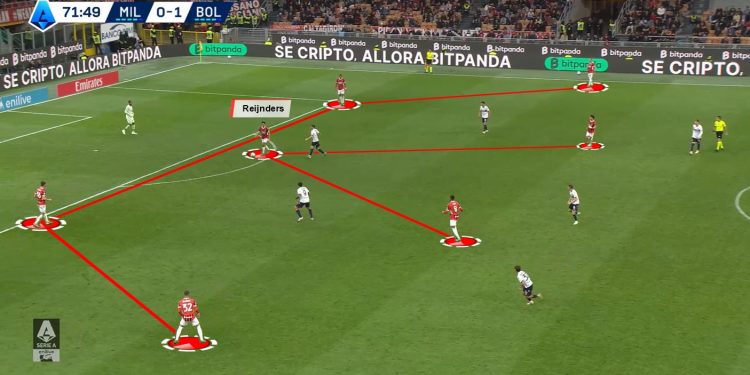
Here, we can see Tijjani Reijnders at Milan, operating as a pivot.
He has positioned himself deeper than the other midfielders.
His dropping in that space also allows the centre-backs to split, and the full-backs to push higher.
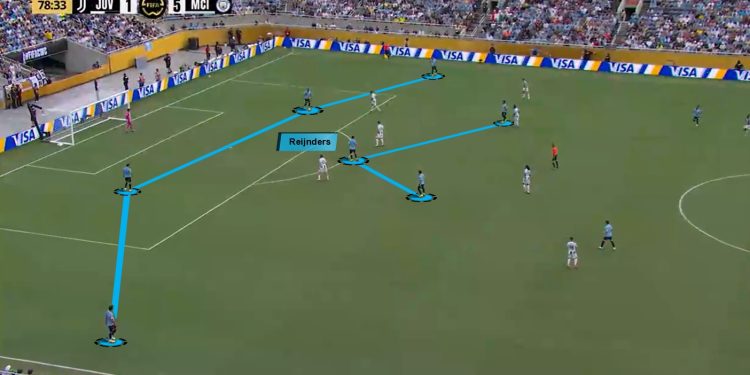
He replicated his positioning for Man City in their FIFA Club World Cup fixture against Wydad Casablanca.
He played alongside Phil Foden and Rayan Cherki in midfield in this game.
This meant that he had to play the role of the pivot.
Guardiola, at times, has his full-backs inverted during build-up.
This offers additional stability in rest-defence.
This means the pivot would be spotted next to a full-back in midfield.
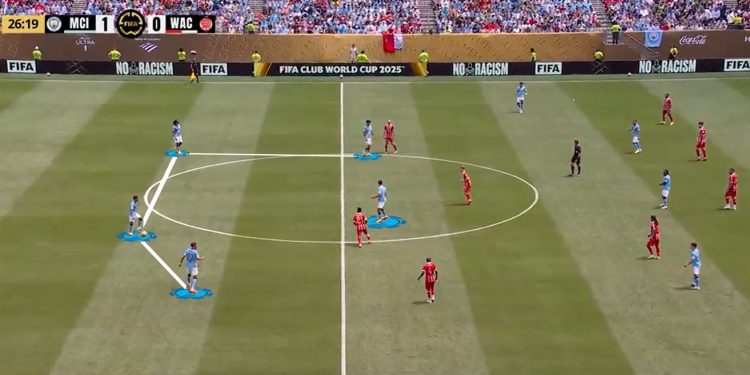
Here is an example of Tijjani Reijnders in midfield next to the left-back (Nico O’Reilly).
The other midfielders are positioned higher up.
Tijjani Reijnders As A More Advanced Central Midfielder
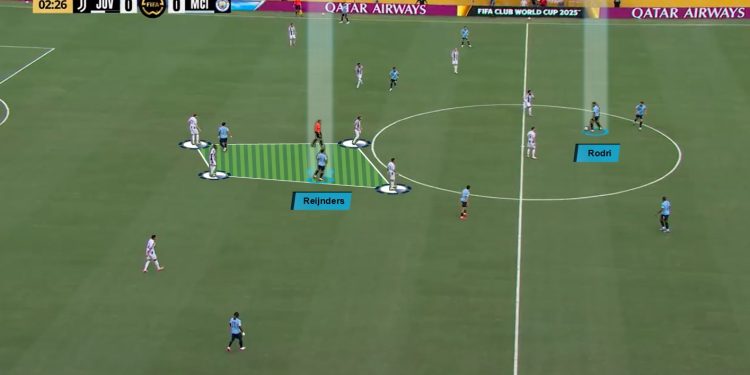
When playing alongside a defensive midfielder, Reijnders tends to push higher up.
Here, Rodri is playing as the pivot.
Hence, Reijnders can be seen operating inside the opponent structure.
Meanwhile, the Spaniard stays outside the structure.
The Dutch International is adept at receiving between the lines and inside small pockets of space to progress the ball.
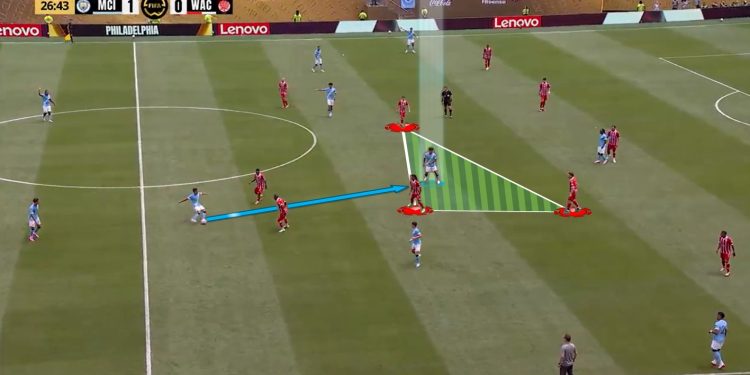
Here, we can see Tijjani Reijnders receiving inside the opponent’s structure.
His positioning helps break lines as he proceeds to play it either forward or wide from these positions.
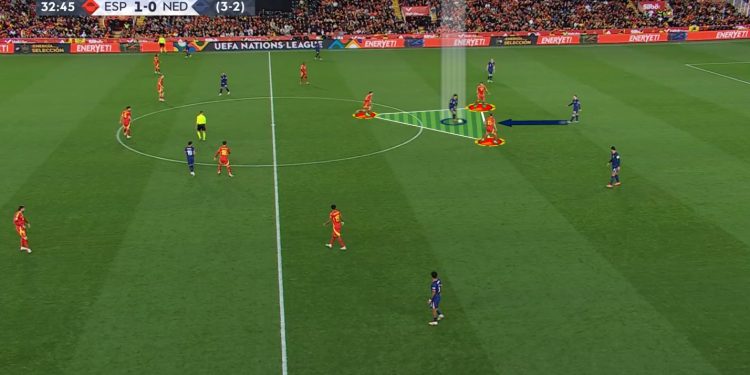
This image shows him receiving inside the opponent structure from Frenkie de Jong (pivot).
Even when Reijnders plays as a more advanced midfielder, he can sometimes drop deeper than the pivot.
This adds more fluidity to the build-up.
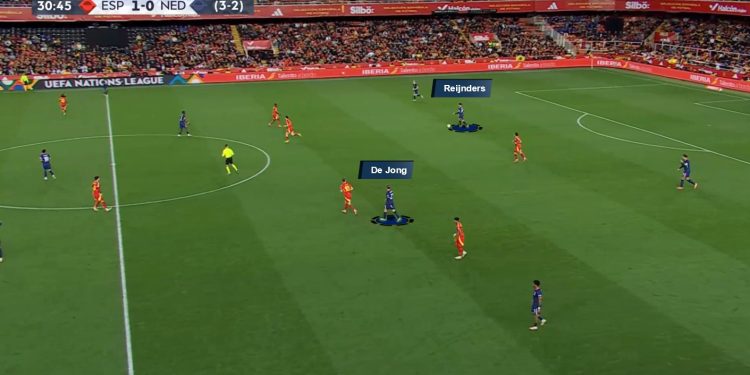
In the following example, although De Jong is playing as the pivot, we can see Reijnders deeper than him to receive the ball.
This allows De Jong to occasionally push higher.
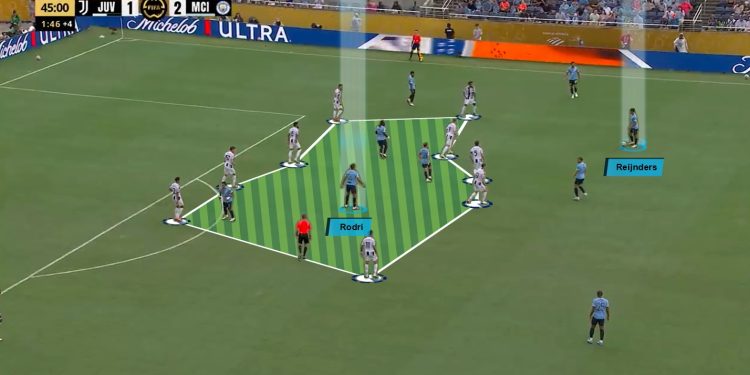
Here, Rodri can be seen positioned inside the opponent’s structure.
Meanwhile, Tijjani Reijnders is in possession outside the structure.
Tijjani Reijnders Ball-Carrying
One of the Dutchman’s strengths is carrying the ball into space.
This is another way to break the opponent’s lines of pressure.
Reijnders receives in the midfield third.
He notices the space and quickly drives forward to break the first line of pressure.
Seconds later, the ball is in the final third.
Here is a situation for Man City.
Tijjani Reijnders picks the ball up in the midfield third and carries it into space.
He holds onto the ball till the right moment and releases Matheus Nunes, who assists Erling Haaland.
Apart from carrying the ball, the Dutchman also makes frequent forward runs into space.
This usually helps him when he cannot receive to feet.
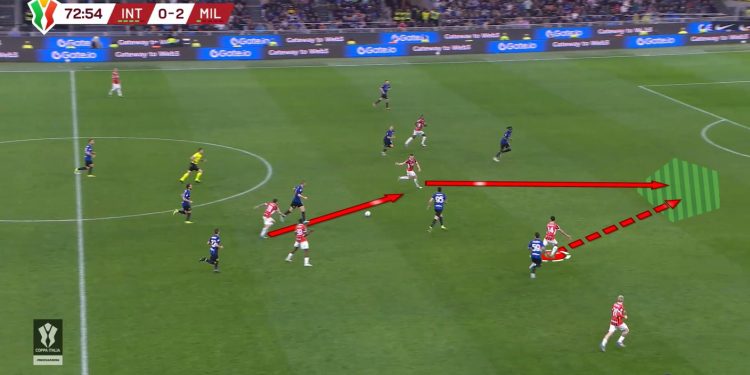
Here, Reijnders identifies the space behind the opponent’s backline.
He starts his run early to beat his direct opponent and exploit the space.
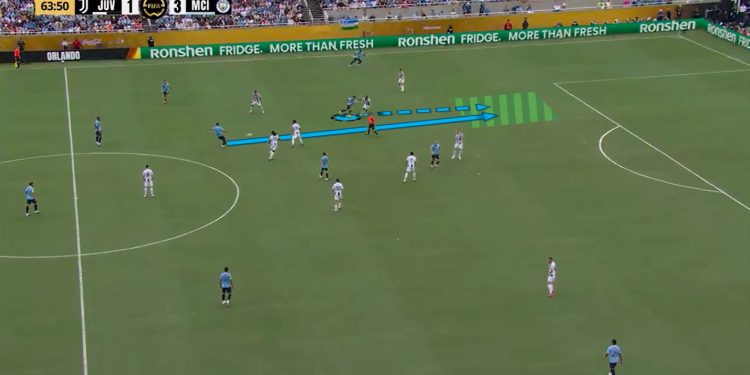
Here is an example for Man City.
He makes a run in behind as Rodri plays a through ball.
In this situation, the option to receive a short pass is infeasible.
Tijjani Reijnders identifies the space ahead and makes a run to receive higher up.
Tijjani Reijnders Movement
The Dutchman noticeably makes sharp runs to receive the ball.
However, he is just as good at moving to create space for his teammates to receive.
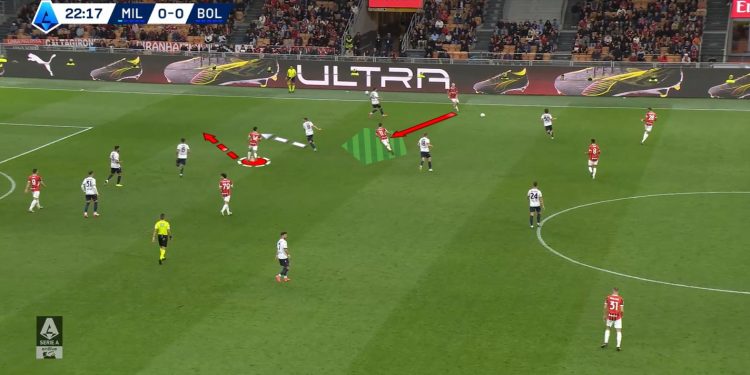
Reijnders creates space for his teammate in this situation by making a dummy run down the channel.
This creates enough space for the player to receive in the pocket of space.
Here, the midfielder receives with pressure on his back.
He quickly plays it back in the same direction and moves out of the area, dragging two defenders with him.
This opens a passing lane to his teammate, who is more centrally positioned.
Tijjani Reijnders Pressing
The new Man City signing also showcases his dynamism by contributing to the press.
He often joins the second line of press, cutting off any passes that get through the first line.
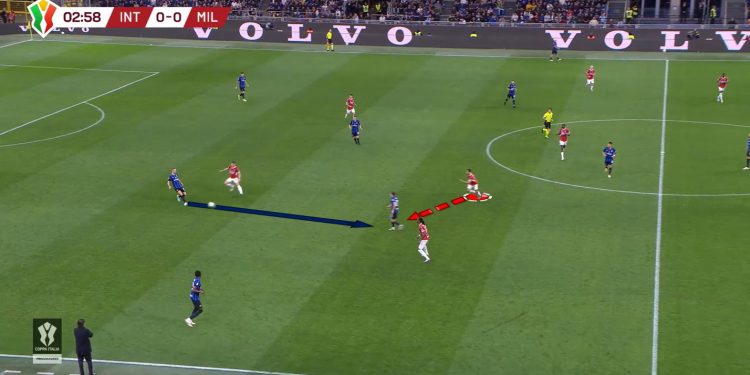
Here, the Dutch International can be seen in the second line of the press.
In this scenario, he often either gets a tackle, an interception or forces the opponent to play backwards.
Tijjani Reijnders’ radius of defensive action is not limited to the central zone.
He can be seen drifting to wide areas to provide cover.
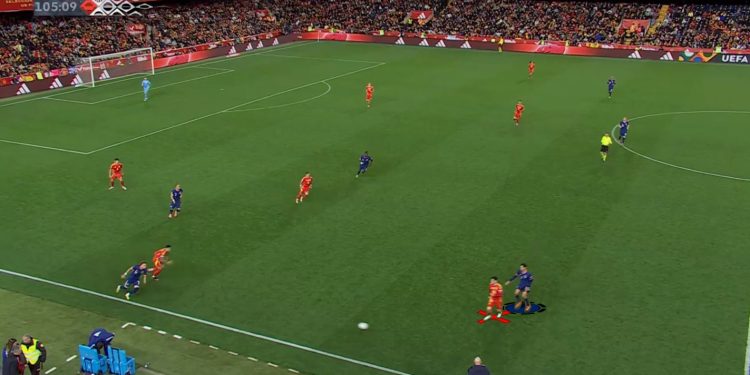
Here is an example of Reijnders pressing in a wide area.
The winger and the full-back are caught out; the midfielder steps wide to rescue.
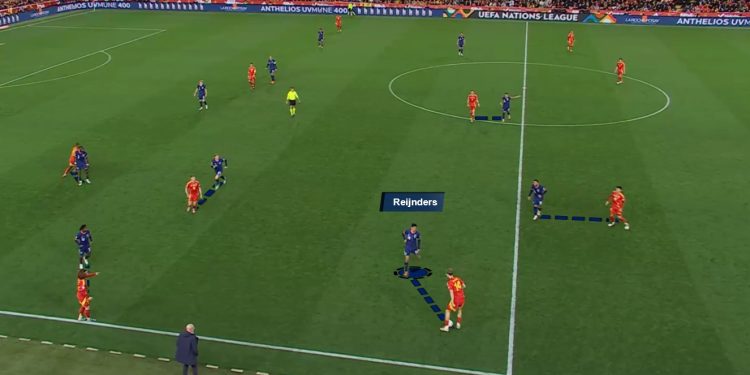
Here is another example of the Dutch International helping by pressing in the wide channel.
Along with aggressive pressing, Guardiola’s latest recruit is also adept at reading play to make interceptions.
It helps his side transition from defence to attack rapidly.
Here, Tijjani Reijnders reads the opponent’s pass and steps in to intercept.
As soon as he lays it off to a teammate, he makes a forward run to offer support in attack.
This ends up in a shot on goal.
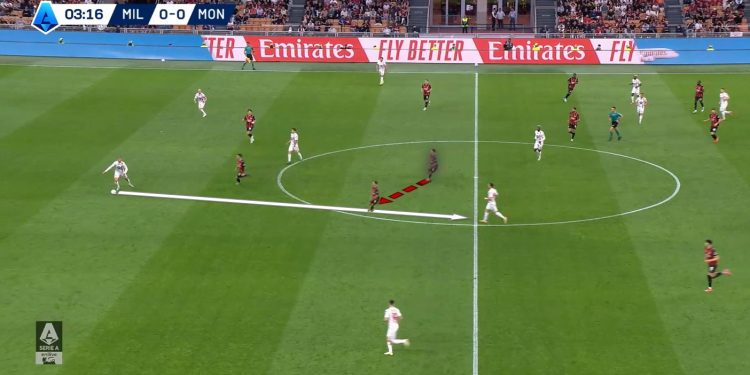
Here is another interception in the midfield third.
He reads the pass and steps in to cut it out.
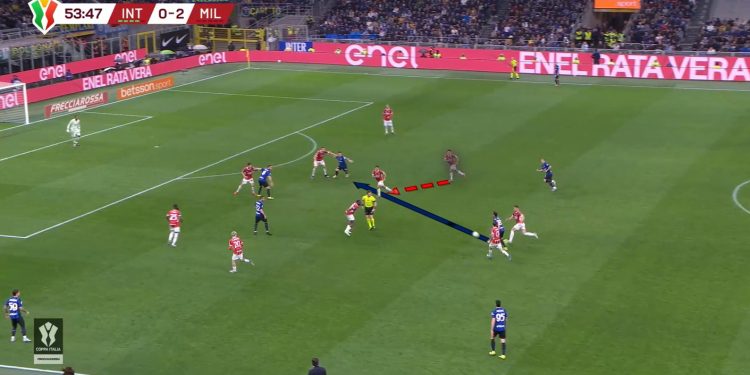
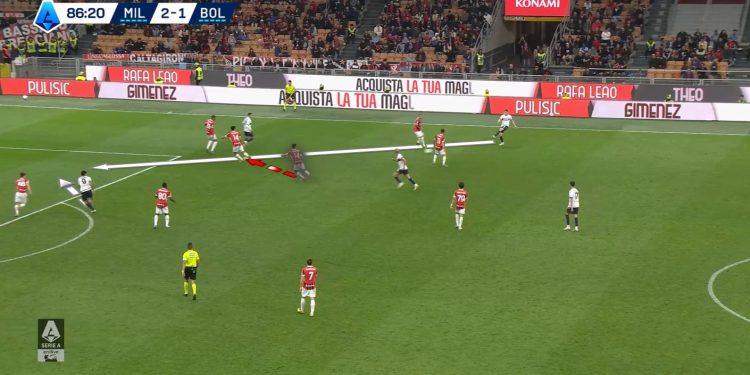
Here are two more examples of interceptions in the defensive third.
The Dutchman reads the opponent’s body language and anticipates the next pass.
Tijjani Reijnders In The Half-Space
A majority of Reijnders’ attacking actions arise from him receiving the ball to drive it into space or play a forward pass.
An area he frequents is the half-space.
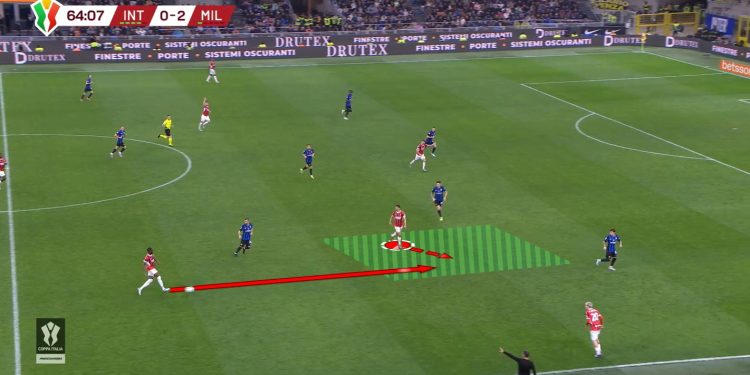
Here, the Hollander moves into the half-space to receive.
This helps him pull away from pressure briefly.
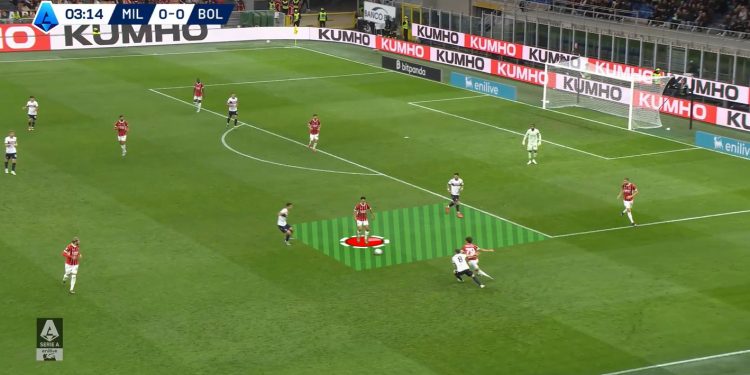
An example of receiving in the half-space in the defensive third.
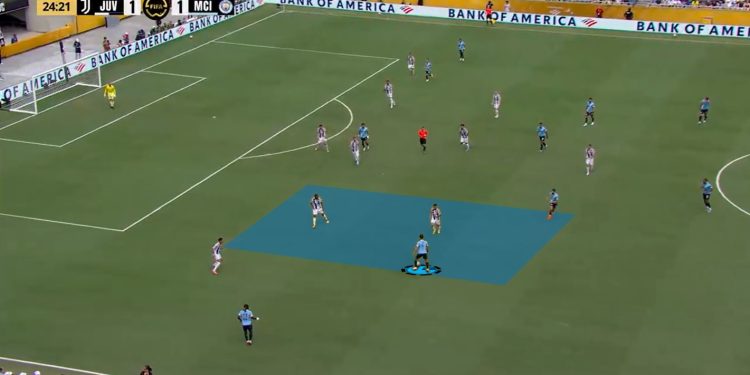
Tijjani Reijnders replicates this for Man City in the Club World Cup game against Juventus.
The Hollander is known for getting involved in combination plays to escape tight spaces.
Here, Tijjani Reijnders receives a sideways pass.
As his direct opponent presses him, he plays a one-two with his teammate.
This helps exploit the space left behind by the opponent.
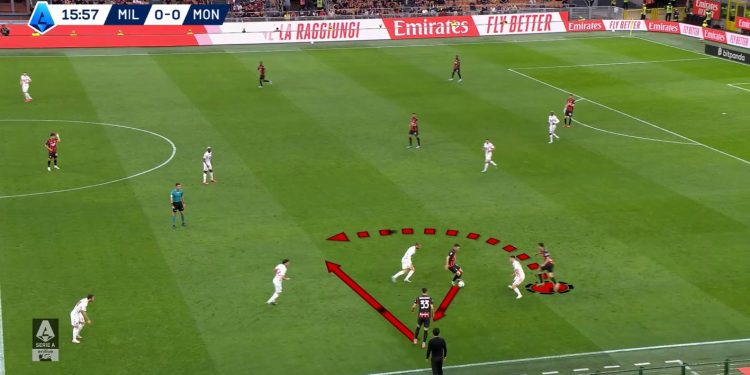
Here is a 3v3 situation in the wide area.
The opponents are focused on the player closest to the touchline.
Reijnders makes a third-man run to receive in the half-space.
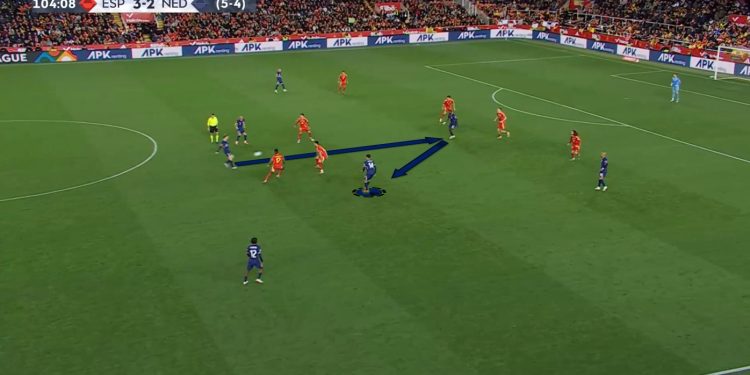
In this situation, for the Netherlands, Frenkie de Jong is on the ball.
Reijnders cannot directly receive from him.
Hence, he peels wider to receive a third-man pass as the striker drops to receive from De Jong.
When receiving the ball facing the play, the Dutchman possesses the ability to break lines through vertical passes.
Tijjani Reijnders Progressive Passing
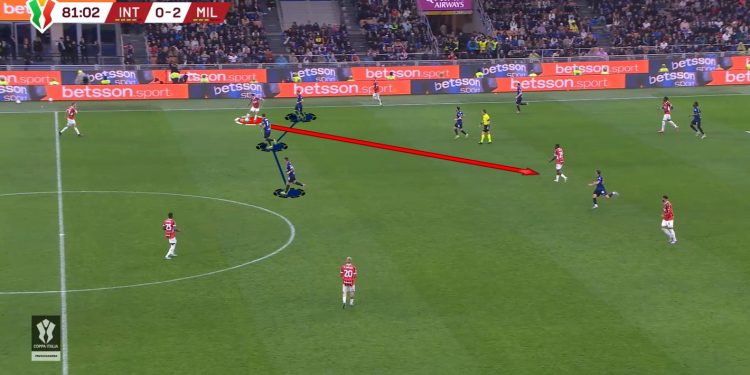
In this example, Reijnders has the ball in the wide zone.
His body shape allows him to be a good passing angle with an advanced midfielder.
He plays a line-breaking pass to feet, penetrating the first line of pressure.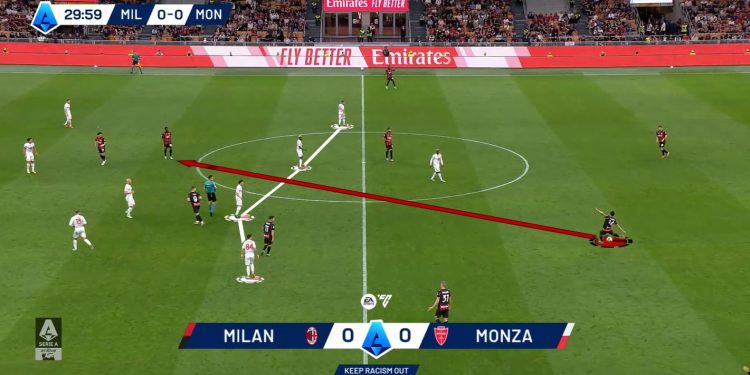 Here, Reijnders is operating outside the opponent structure.
The striker does not press him.
Therefore, he gets enough time to play a vertical pass to one of his teammates.
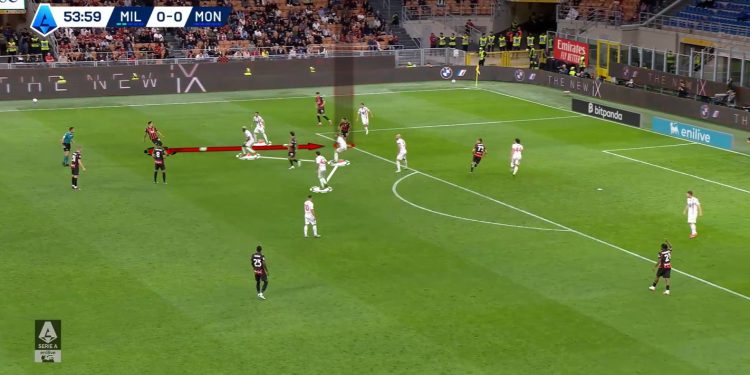
Here is an example in the attacking third.
Although the opponent’s defensive line is compact, Reijnders is able to pick out a teammate.
This happens due to good positioning from his teammate.
If one side cannot be penetrated, Reijnders can either shift play or act as a link player in doing so.
This helps his side attack from the side that has more space.
Here, AC Milan’s left-back (Theo Hernandez) drives forward.
However, he is being closed down by multiple Inter Milan defenders.
Since he cannot attack from the left side, he shifts the ball to Tijjani Reijnders, who acts as a link player in shifting play.
The Dutchman quickly lays it off to an arriving player who completes the shift.
The movement ends up with a goal.
Conclusion
Tijjani Reijnders is a highly versatile centre-midfielder who offers a variety of actions.
Dutchman also has a large radius of action, which means he can comfortably operate in several areas of the pitch.
This will serve as a bonus for Pep Guardiola, who appreciates adaptable players in his squad.
Reijnders can play alongside Rodri, where he can provide the highest output.
However, he is also comfortable playing as a pivot in Rodri’s absence, which will be a relief in the spirit of rotation and rest.
