
David Silva will leave Manchester City this summer after serving for a decade in the club.
At the Etihad Stadium, the Spaniard helped The Citizens in winning four Premier League trophies as well as ten more domestic trophies.
Silva’s on-pitch impact is probably second to none, and it seems that City will work hard to find the perfect replacement for him.
The good news is Manchester ity now have Phil Foden.
The 20-year-old midfielder has been discussed as the true heir to the legendary David Silva, not only because of their similar tiny size, but also their high vision and capability to control the game.
Is he ready to take the responsibility next season? This Phil Foden scouting report will try to answer that question.
Phil Foden Profile
Foden is originally an attacking midfielder who can also play as a central midfielder.
However, due to City’s abundance in the engine room, the English youngster didn’t have a lot of minutes in his preferred role.
Instead, Pep Guardiola gave him more opportunity by playing as a winger.
Such a condition actually gave Foden more versatility, as he can play in both flanks with supreme quality.
If we look at the stats, the 20-year-old played all his games in the Project Restart period as a winger.
He even finished the league campaign with five goals and one assist in just 40 days.
For comparison, he only made one goal contribution in the league from August to March.
Foden’s promising performance also continued in the knockout competitions.
Those being the FA Cup, Carabao Cup, and UEFA Champions League.
The data shows that the David Silva’s heir has eight goals and nine assists so far, across all competitions.
This scout report will dig deep about Phil Foden style of play within Pep Guardiola’s tactics.
Positioning Inside & In Half-space
This part of the analysis will take a look at Phil Foden’s role in Guardiola’s attacking tactics.
Manchester City’s build-up play relies much on the centre-backs to bring the ball forward.
If the centre-back pairing can’t beat the first line of defence then the Spaniard manager would allow one player to make an overload at the back.
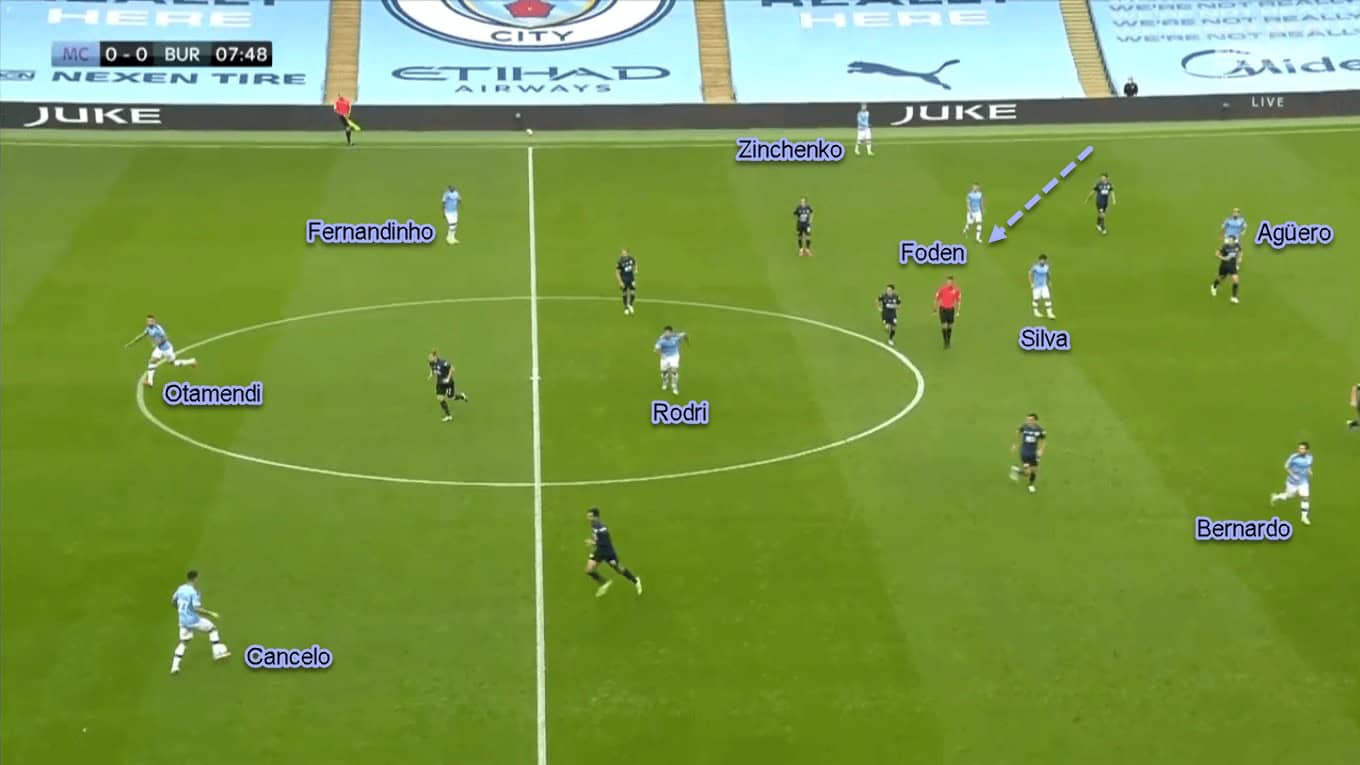
As a winger, Foden would be tasked to stay in City’s attacking line.
The objective is to prevent The Citizens from overcommitting players at the back as well as having vertical options in advanced areas.
To be more specific, the English youngster would be tucked inside more often because the wide-area will be occupied by the full-back.
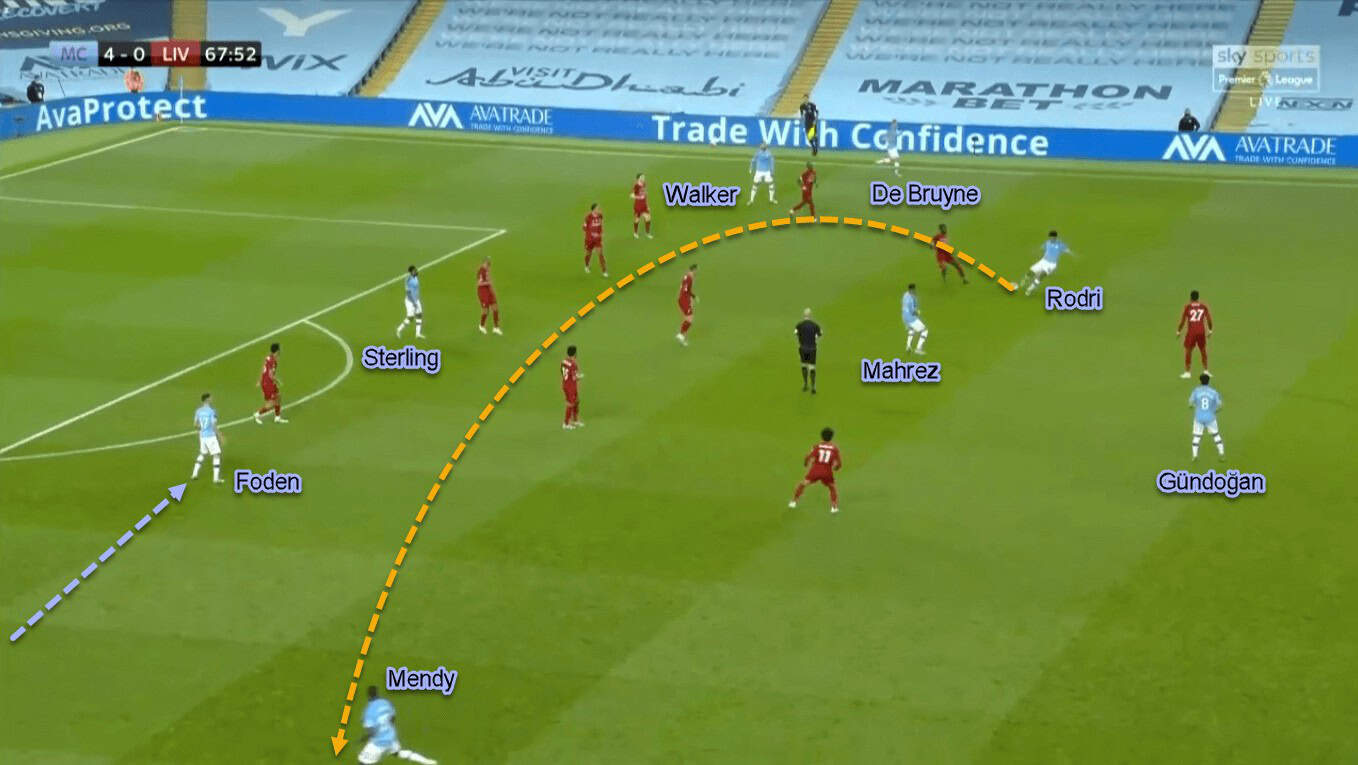
The similar tendency can also be found when the ball moved into more advanced areas.
Instead of drifting wide, Phil Foden could be found more often playing inside.
In doing so, the 20-year-old not only gives the full-back plenty of space in the penalty area, but also varies his approach, dropping slightly and offering himself between the lines.
This would help Foden to receive a vertical pass from deeper teammates, as well as to combine with his attacking teammates.
Phil Foden Spatial Awareness
One of Foden’s main traits is his spatial awareness.
It means that he can detect any opening within the opponents’ defensive block, and also know how to exploit it.
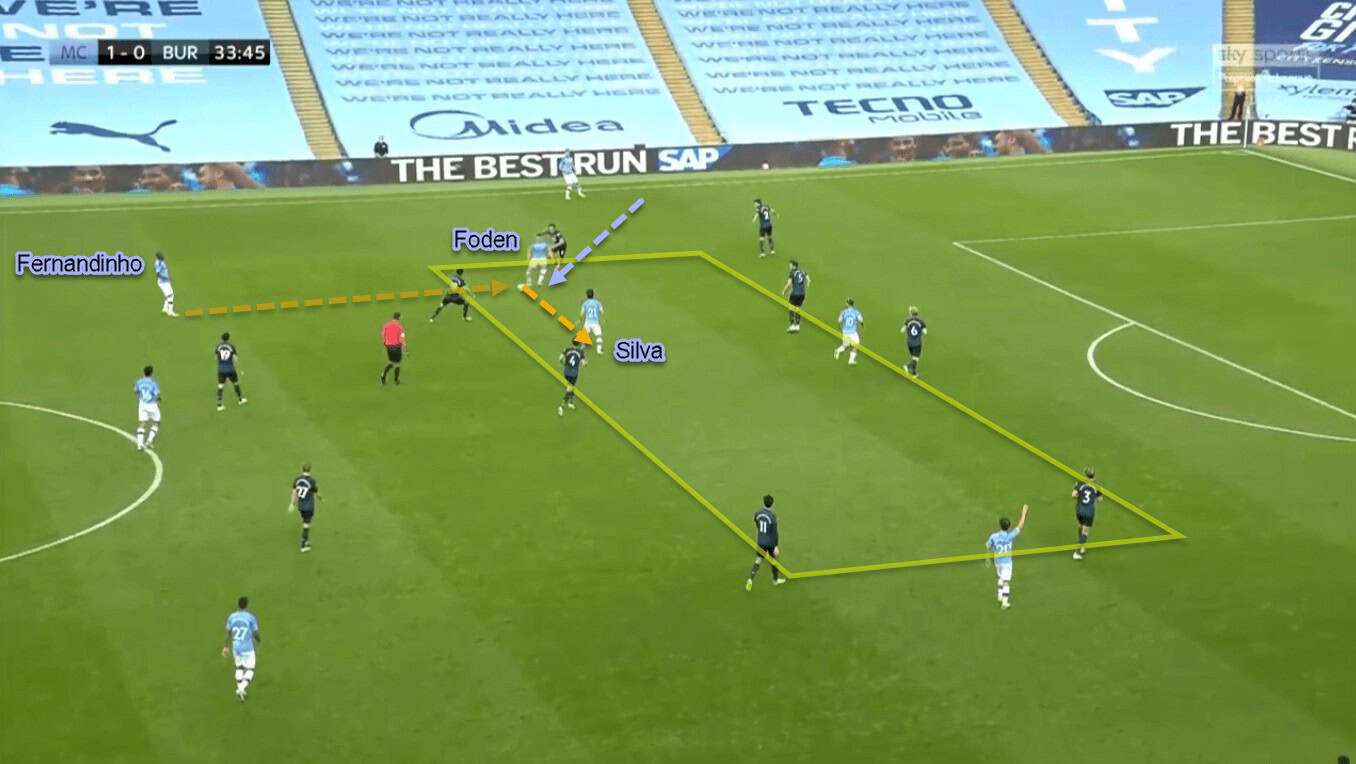
The first way the 20-year-old would do that is by dropping from his position and offer himself close to the on-ball player.
His most common habit is to drop in between the lines, as mentioned previously.
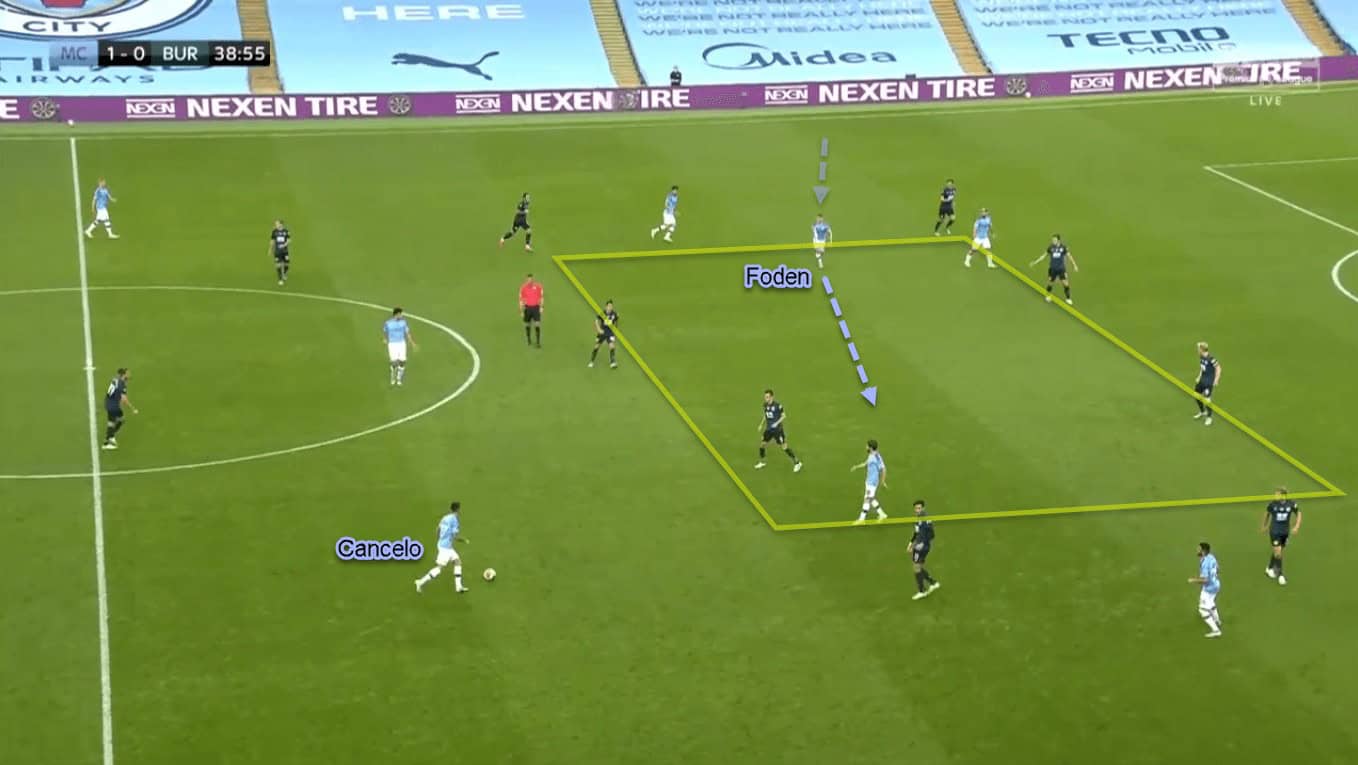
The second way the English youngster would exploit the gap is by running into space.
It occurs mostly in the final third when the opponents are still reorganising to adjust with City’s vertical plays.
The location is also a bit similar: between the defensive lines.
Foden would try to exploit the vacated area by running into it and ask for a cut-back pass from the on-ball teammate.
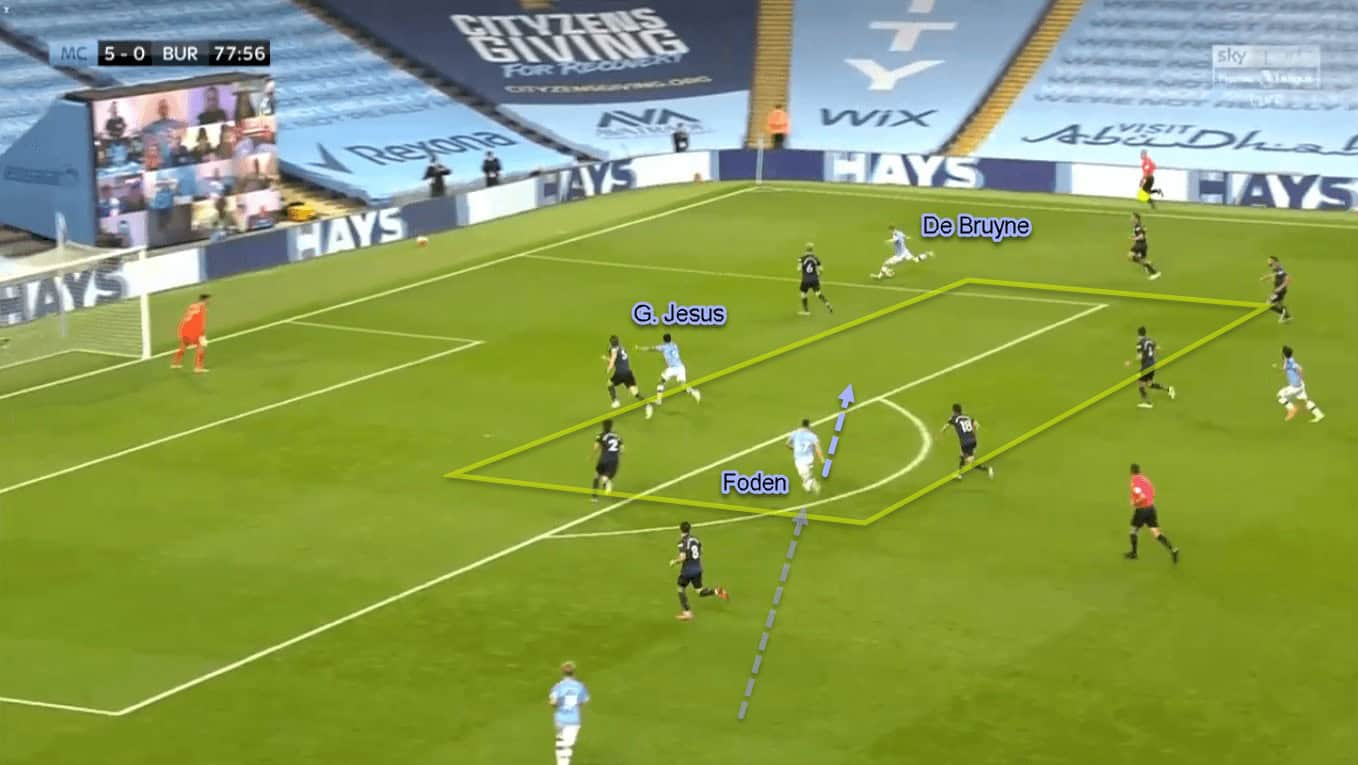
Last but not least, Foden would exploit the gap by driving with the ball.
It happens mostly when he receives the ball in a deeper area and have ample space in front of him.
He would utilise his good acceleration and brilliant close control to bring the ball forward, then sending the ball to his attacking comrade(s) or finish the sequence on his own.
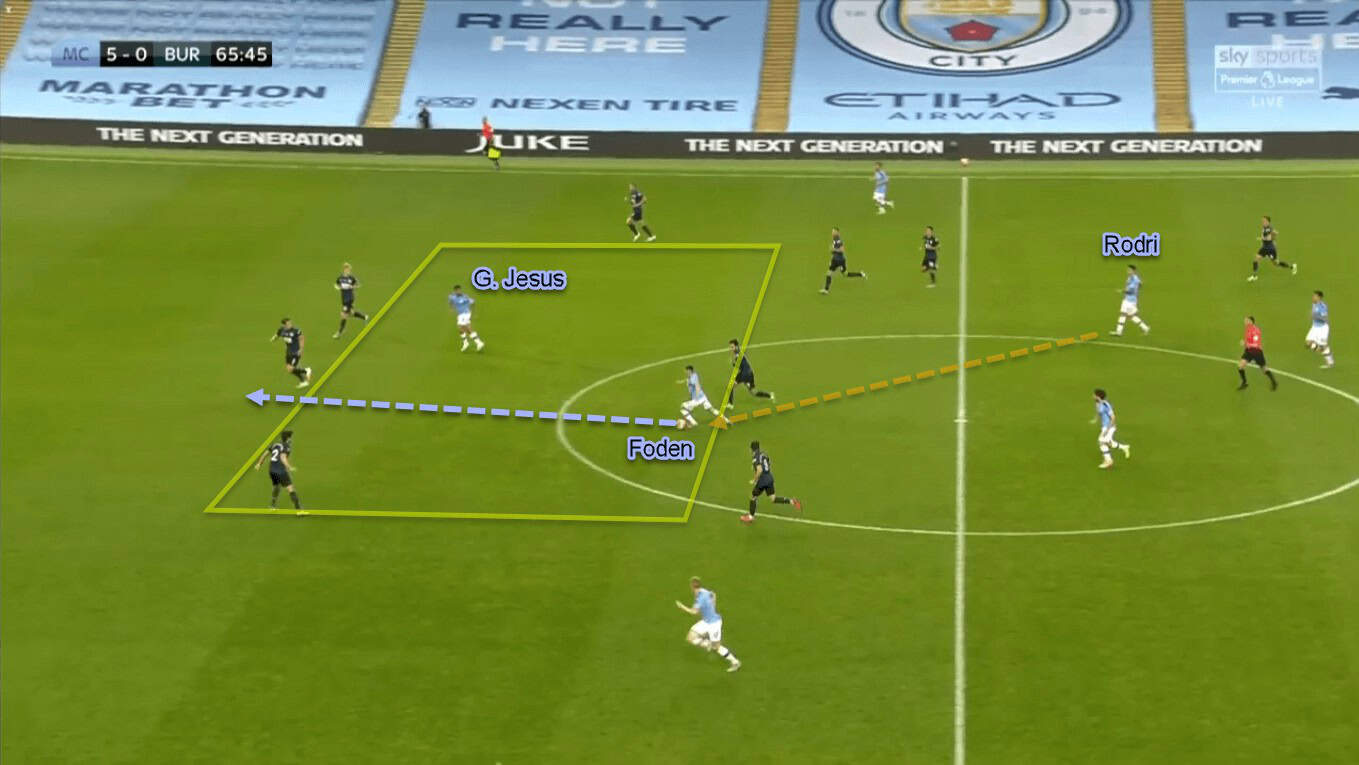
Phil Foden, however, can also allow his teammates to exploit the space within the opponents’ defensive block.
This can happen in two ways.
Firstly, by making a fake run behind the defensive line; by pulling the opponents’ defender(s)’ focus to him thus opening a passing lane to City’s central midfielder.
Secondly, by deliberately moving out from the space; doing this, Foden would allow his fellow Citizen to roam forward and exploit the gap.
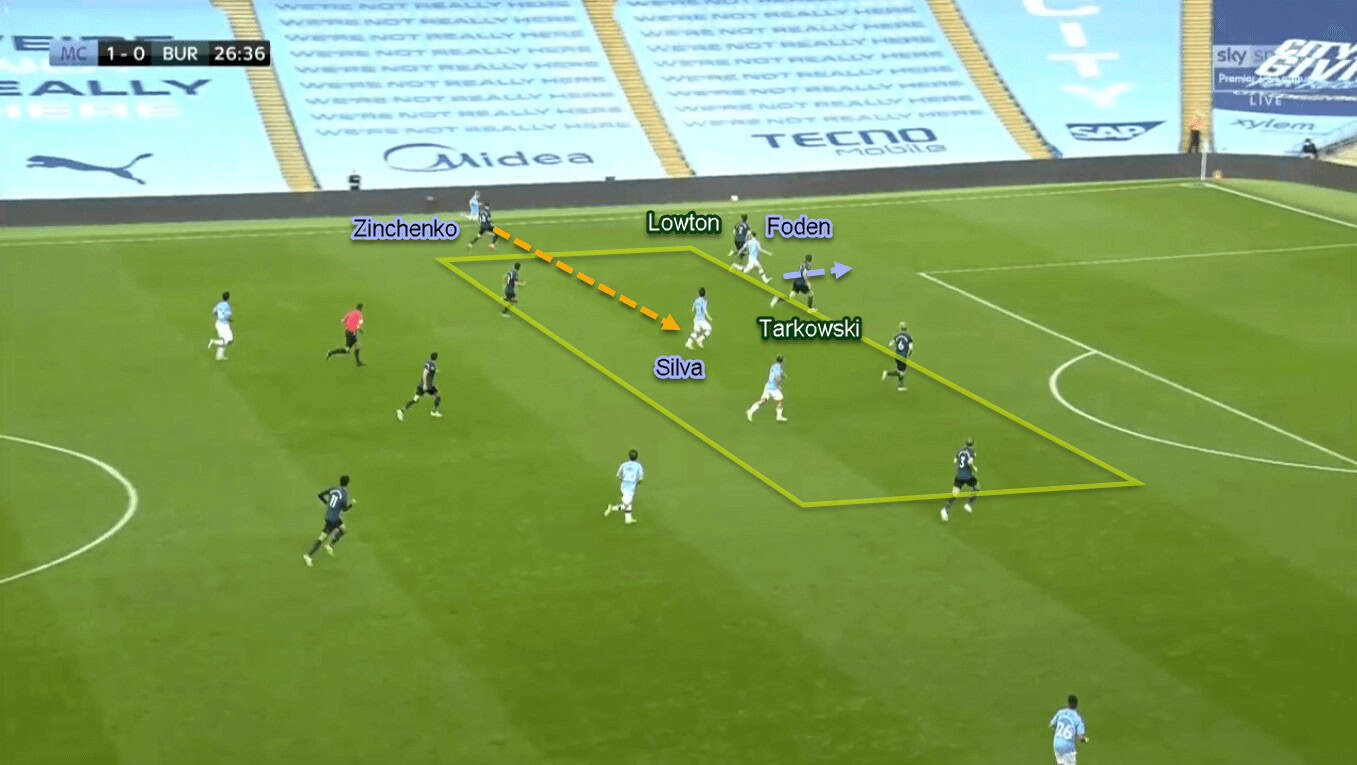
Sticky Feet
Foden’s tendency to drive can also be seen when he has limited space ahead.
The English youngster would happily take on multiple opponents to progress the ball as well as disrupting their defensive block in the process.
Phil has good ball control and a low centre of gravity which make the opponents struggle to tackle the ball from him.
The statistics show that Foden has made 3.9 dribbles (83.63%) per 90 minutes in Europe; the best among Guardiola’s armada.
It doesn’t stop there.
His rate of 2.5 successful dribbles (83.33%) per 90 league minutes is also one of the best in Manchester City’s squad.
However, there is an issue in this particular trait.
We will discuss that later.
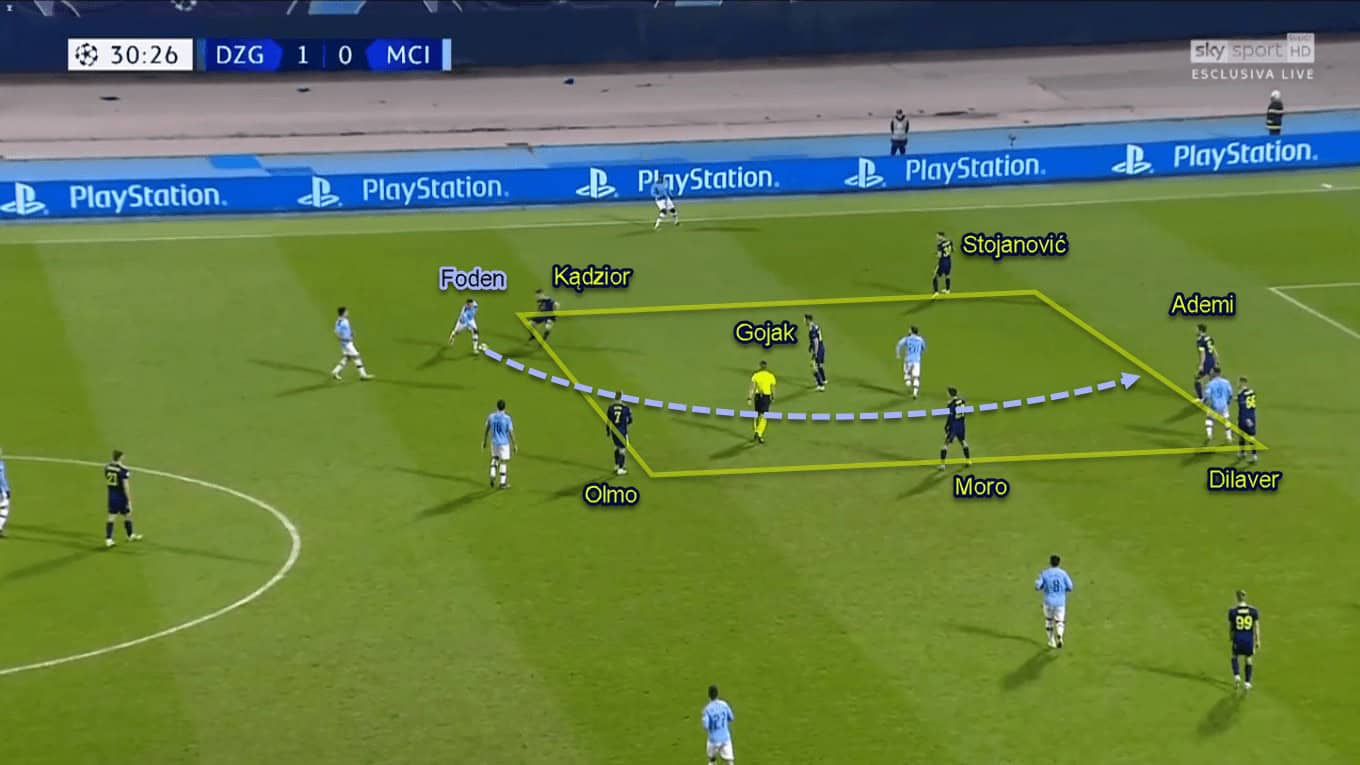
Foden’s brilliant composure on the ball can also be seen when he’s in the receiving end.
The 20-year-old can use almost all parts of his body to control the ball easily and continue Manchester City’s attack.
For example, he can control a clearance with his chest as smooth as receiving the ball under his body while spinning.
This ability is crucial because the Citizens like to play with hard passes, which need pairs of sticky feet to keep the possession.
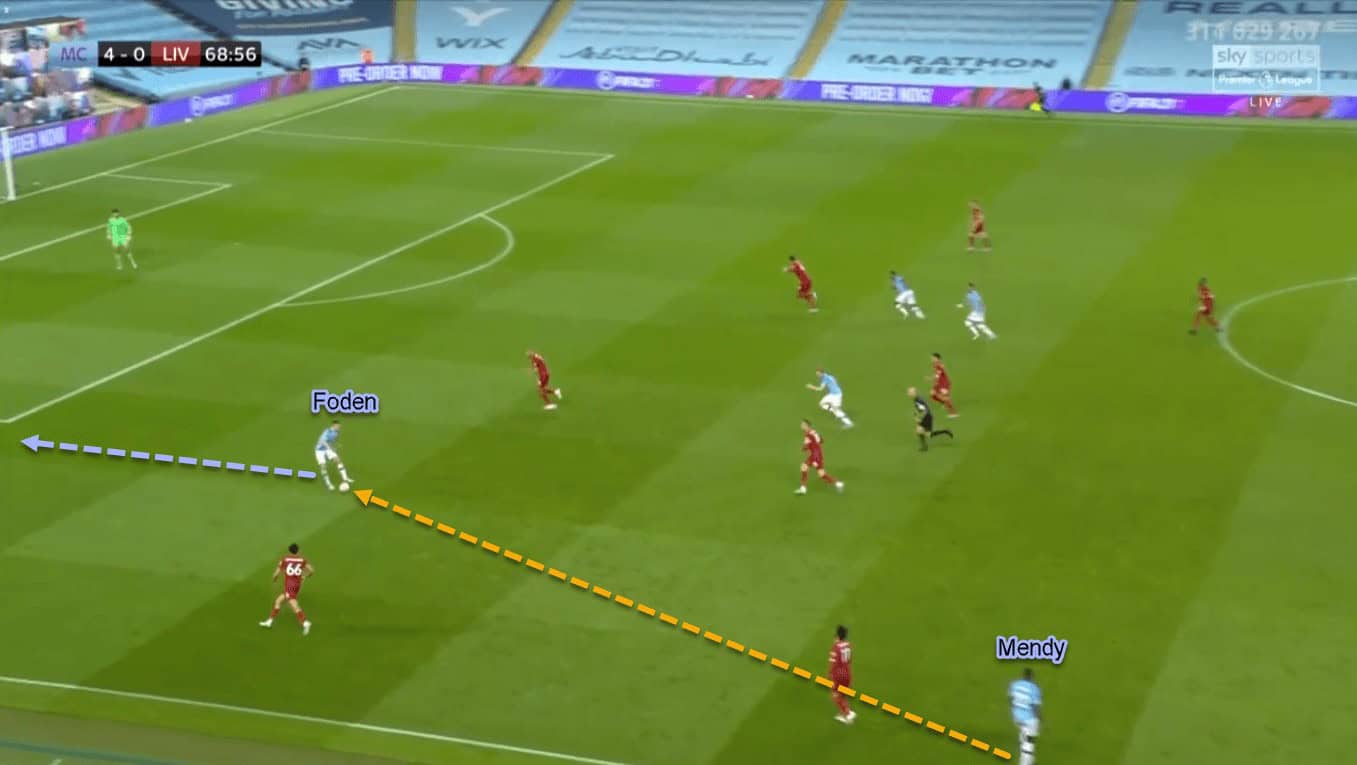
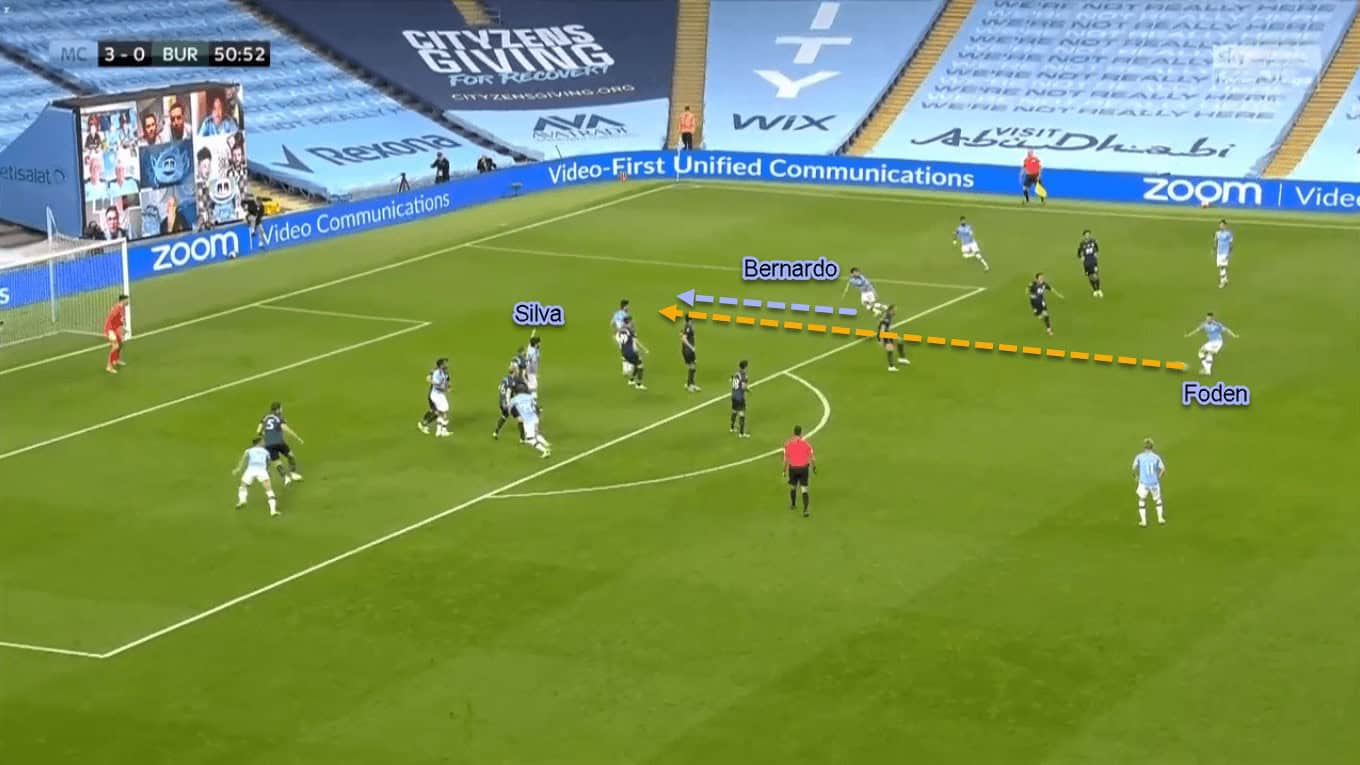
Phil Foden’s distribution quality has massively improved this season.
Its shown mostly by his ability to send perfectly-weighted passes to his advanced teammate(s).
Foden can vary his approach by pushing the ball casually to his overlapping teammates, or sending reverse passes like a seasoned maestro.
By weighing his passes perfectly, he allows the receiver to continue (or even finish) the attack with lesser touches.
Maturity Far Beyond His Years
The 20-year-old on-ball quality doesn’t stop there.
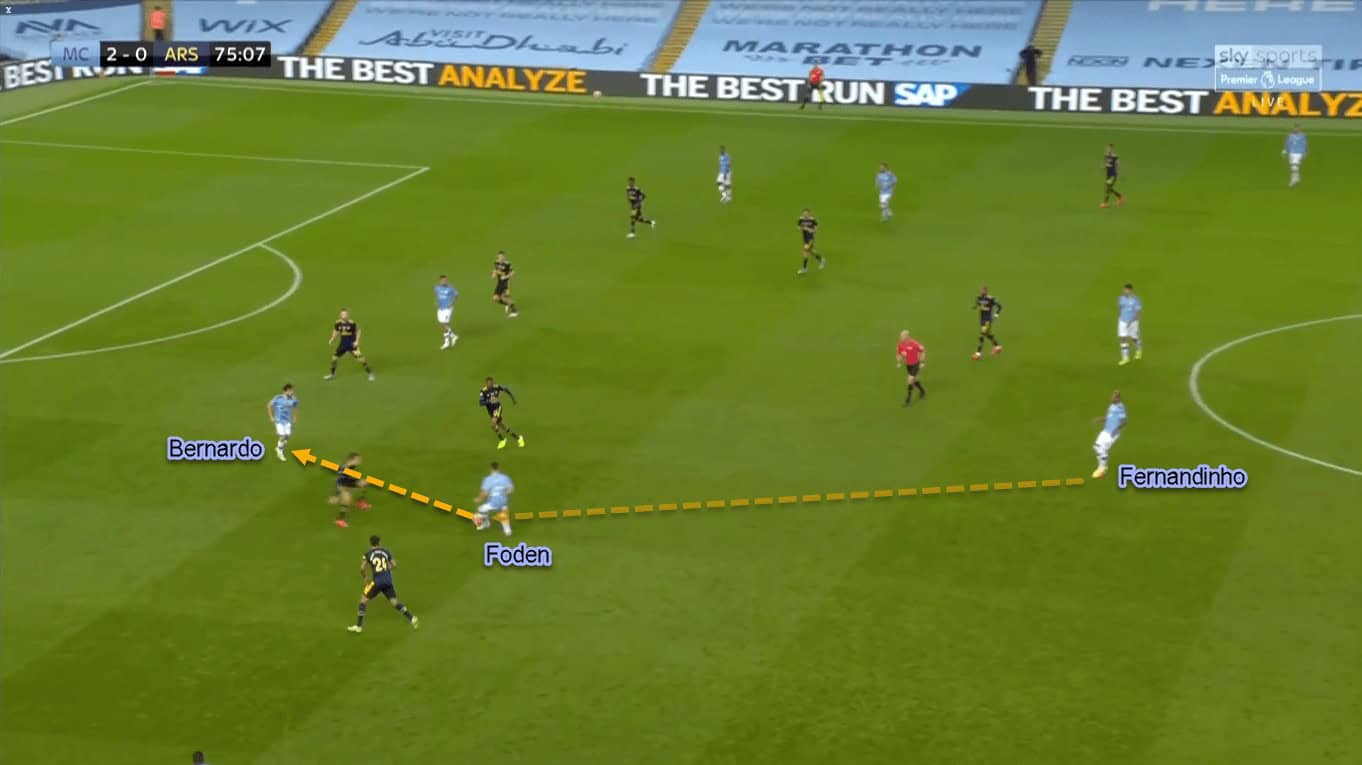
The next trait in the locker is his unique ability to play one-touch passes with ease.
One of the reasons behind this particular trait is his supreme use of body shape.
Foden is able to adjust to the ball trajectory, open his body, then knocks the ball cleanly to his teammate.
However, the English youngster can also alternate by using more touches whenever needed.
Usually, he would use two touches in the process.
First, he would receive the pass and controls it.
By controlling the ball, Phil Foden would try to lure the defender to a certain position he desired.
It would make him dictate the movement of the incoming defender.
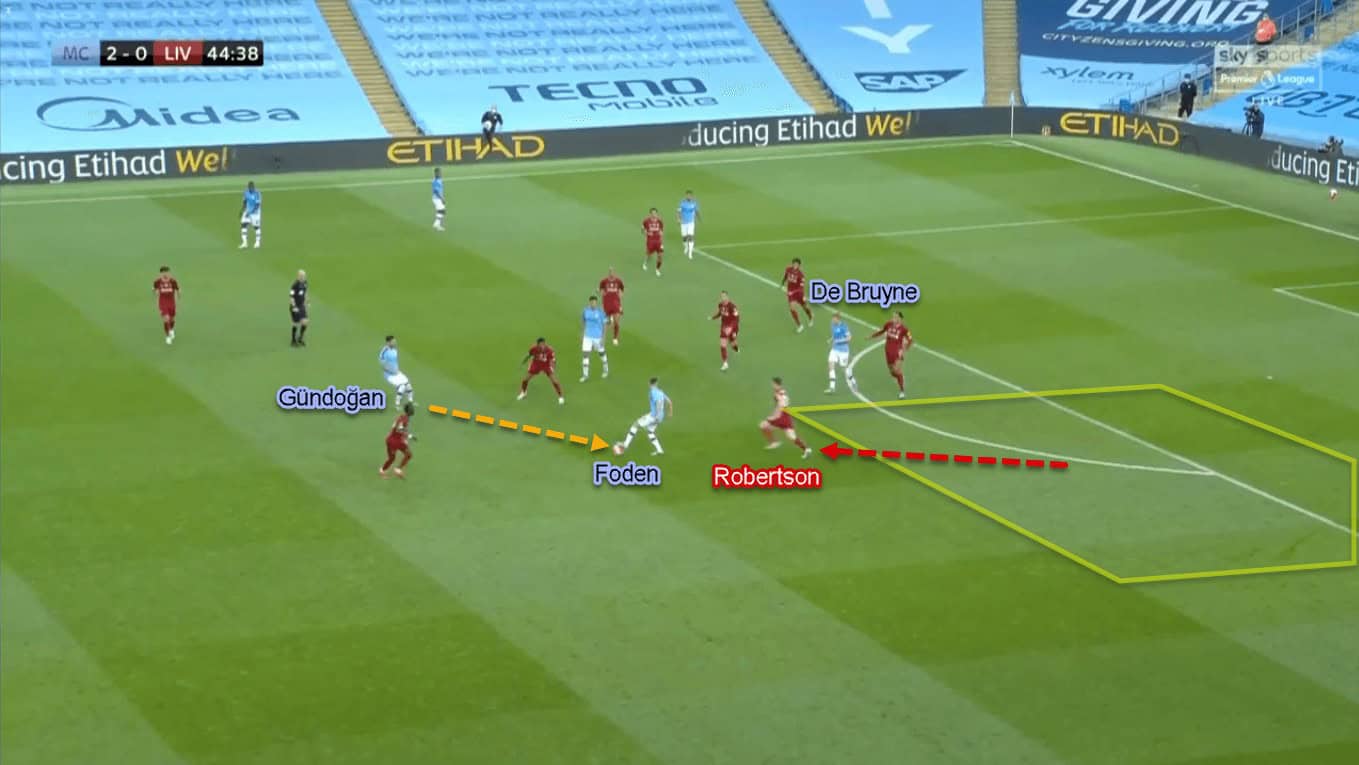
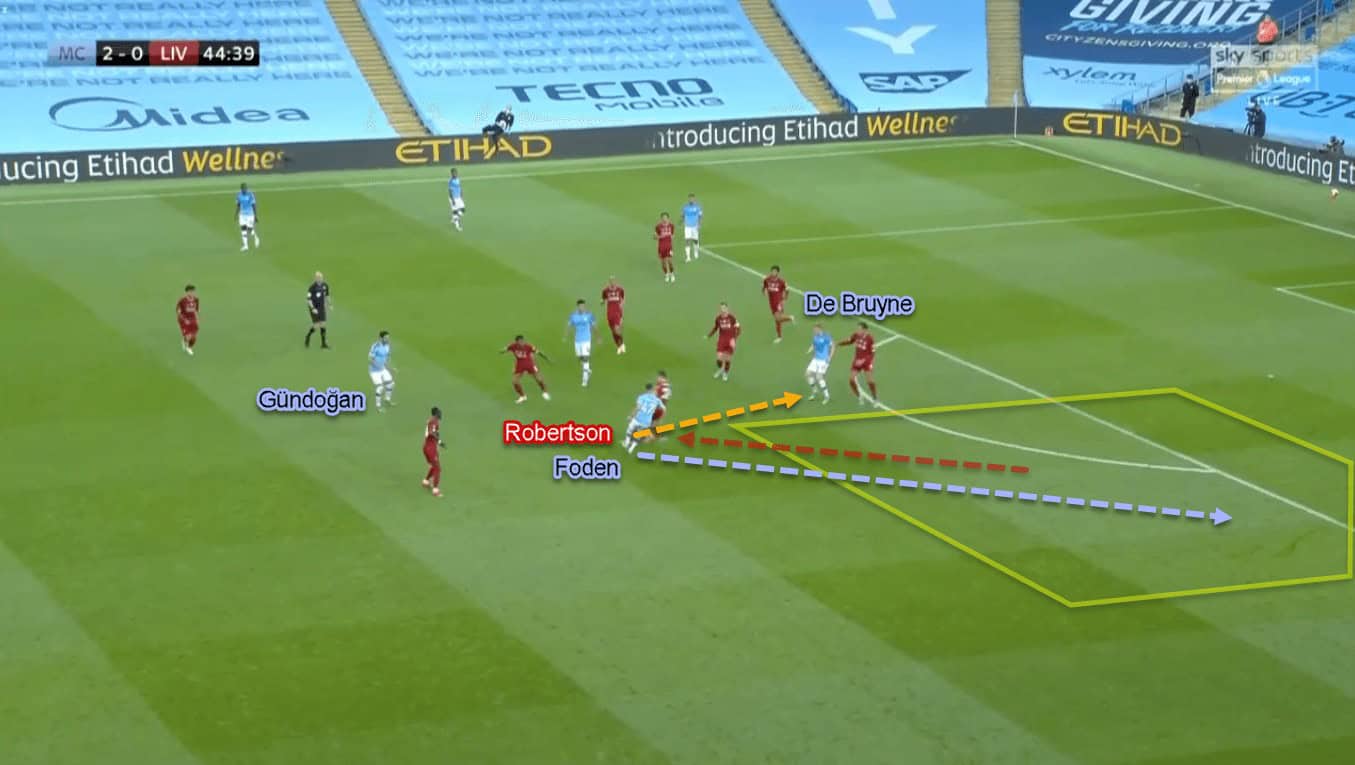
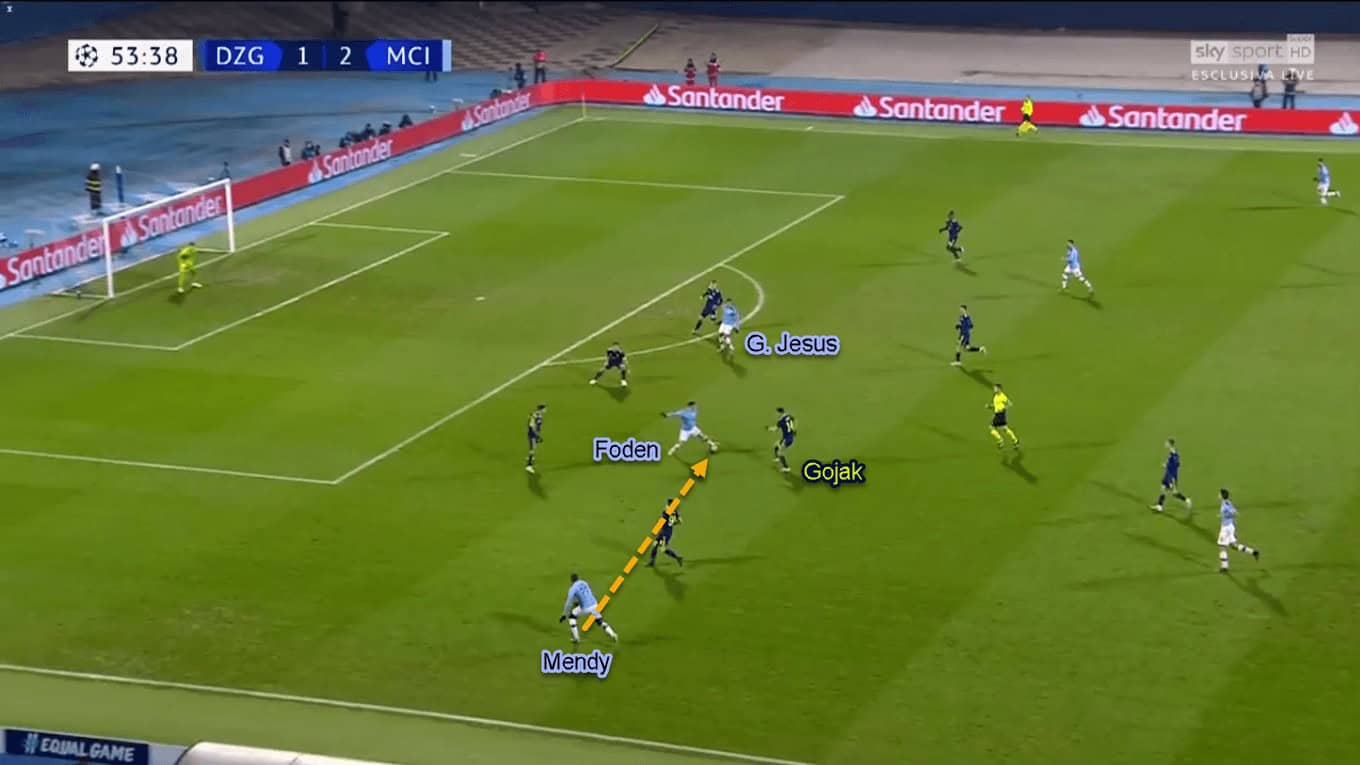
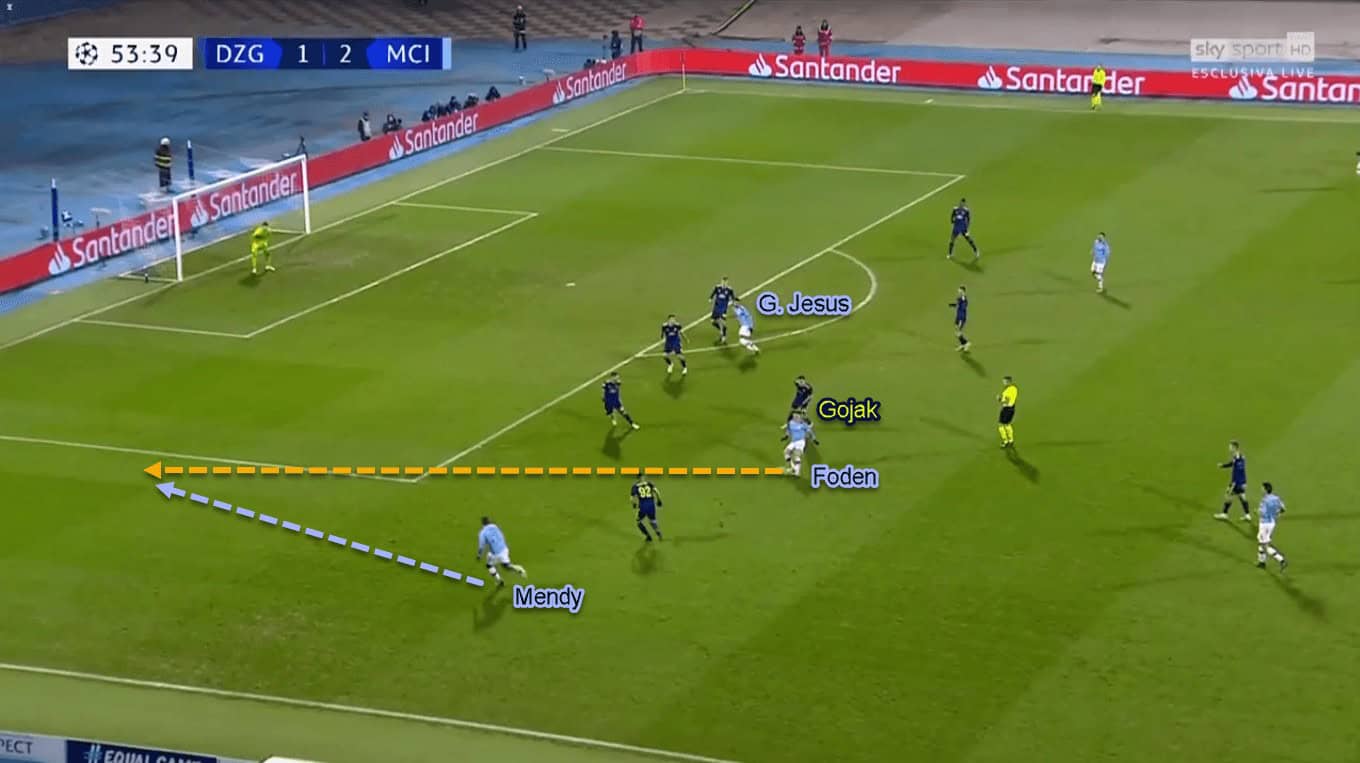
That first touch is actually a trap for the defender, as it would make them out of position for most of the time.
Foden , now free from his marker, can use the second touch to progress the ball.
Even better, the David Silva successor can also attack the gap left by the defender by receiving a wall-pass from his teammate.
Phil Foden Defensive Roles
Guardiola’s men have become more cautious off the ball during the 2019/20 season.
Mainly, because they don’t have a proper high-quality centre-back apart from Aymeric Laporte after Vincent Kompany’s departure.
By ‘cautious’, it means that The Citizens would not press the opponents as aggressive as seen in previous seasons.
Instead, Manchester City would drop deeper in a mid defensive block, and limit the space in behind their defensive line.
Specifically, City would mainly use 4–4–2 formation when they didn’t have the ball.
The Sky Blues’ focus is to defend zonally and protect the central lanes.
In the process, Foden would serve as a winger, while one of the midfielders accompany the centre-forward upfront.
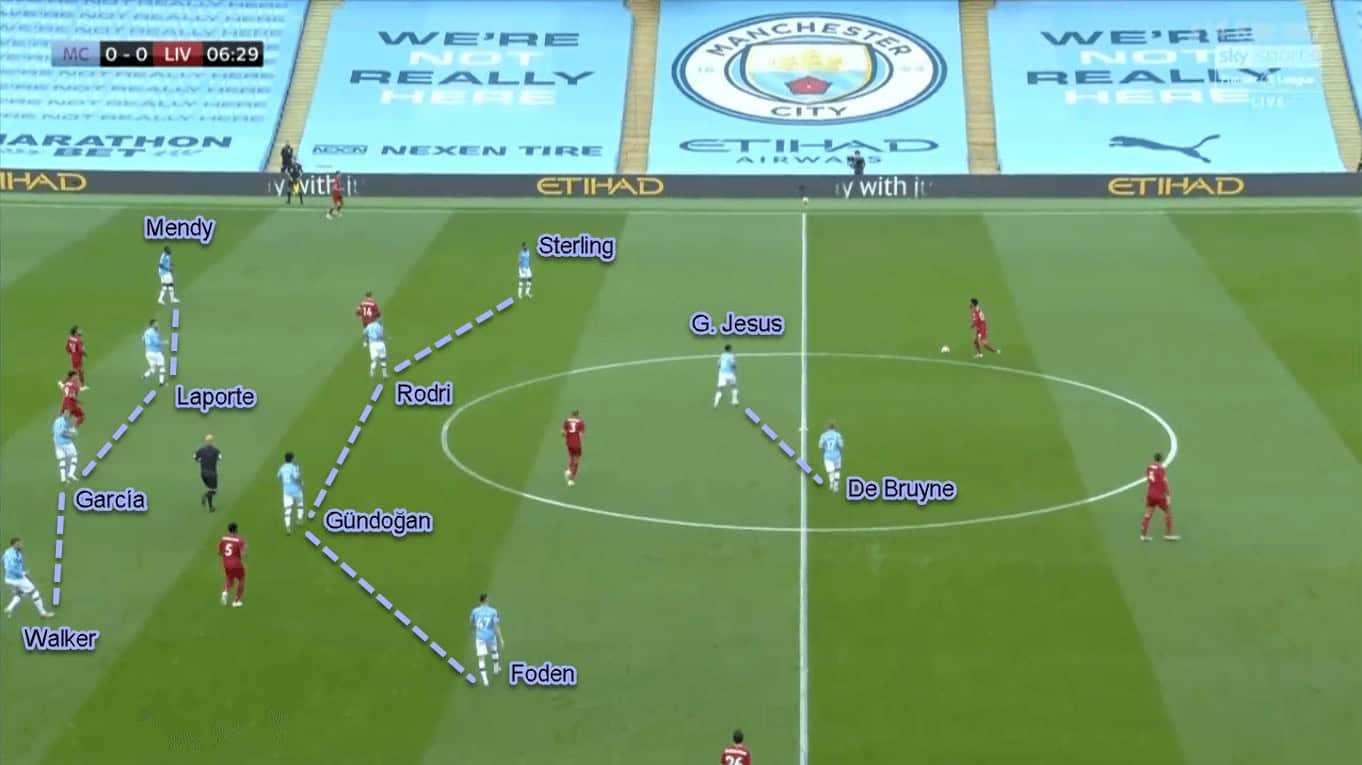
City’s mid-block 4–4–2 would try to force their opponents to build their attacks from wide areas.
However, The Citizens have a particular reaction if that happens.
When the ball goes wide, the on-ball winger will try to press the opponents’ flank player.
This aggressive movement then is followed by his teammates to prevent the rivals from penetrating Manchester City’s defensive block.
As a result, The Sky Blues either win the ball back in the flank or at least force the opponents to play backwards.
Phil Foden Weaknesses
Despite all his talents, Foden still has a lot to improve.
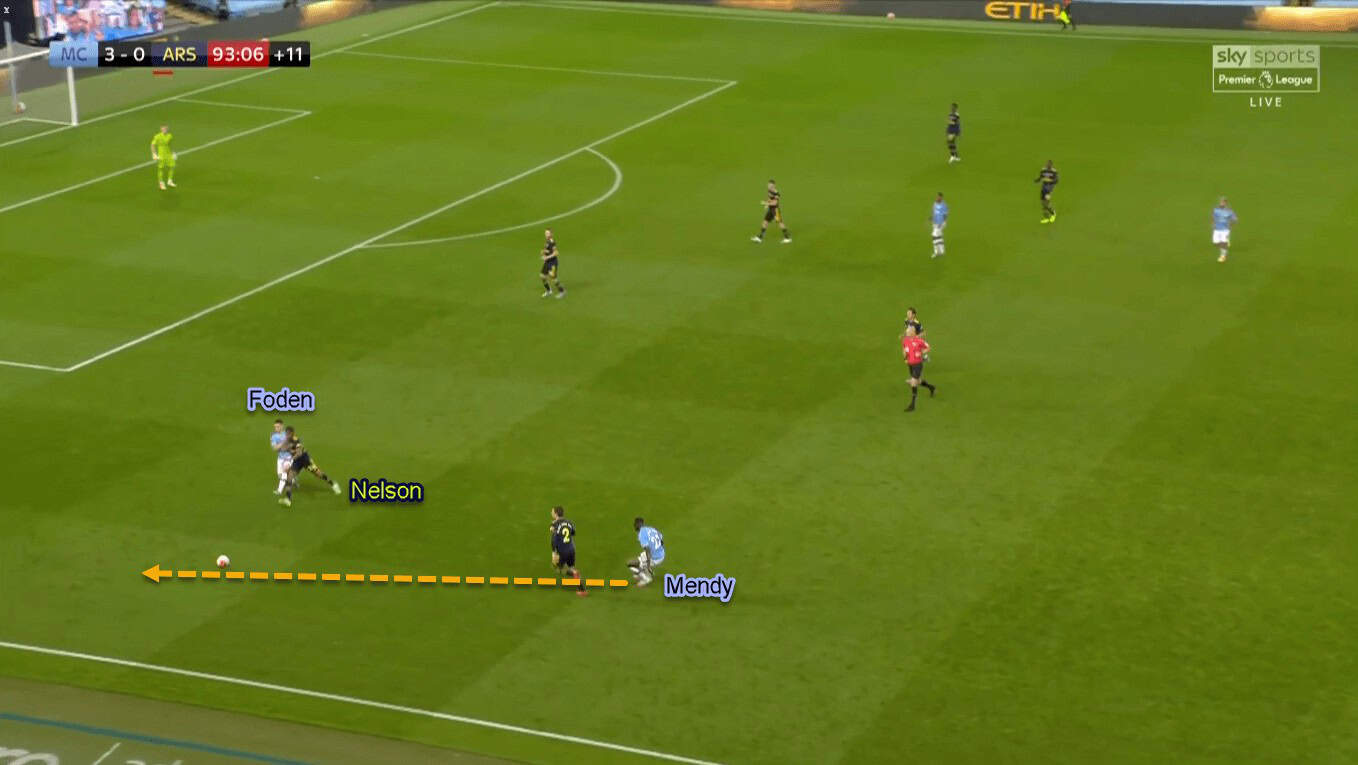
First of all, his lack of upper-body strength.
The teenager’s size makes him very unreliable in physical duels, especially in the air.
If we look at the stats, the 20-year-old has lost 1.0 (71.42%) of his aerial duels per 90 Champions League minutes this season.
This issue can be exploited in set-piece situations or even open-plays when Manchester City need to win the second-balls.
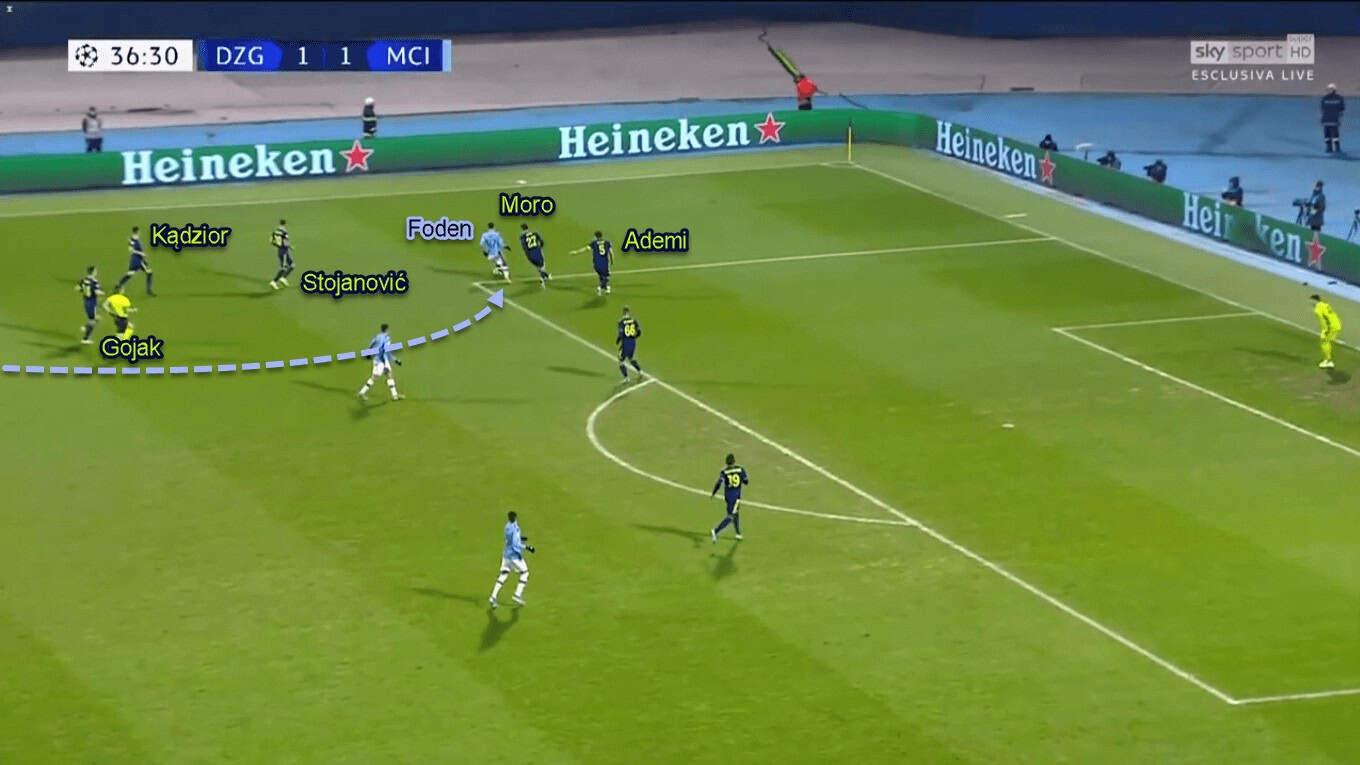
Secondly, Phil’s lack of dribbling repertoire.
Indeed, this Phil Foden scout report suggested that one of his main traits is his ball-carrying ability.
However, the English youngster has one big issue in that; his over-tendency to use his left foot.
As good as his left foot may be, Foden still lacks unpredictability when taking on his opponents.
Even worse, he doesn’t have much trickery or dazzling body feints under his sleeve to vary his dribbles.
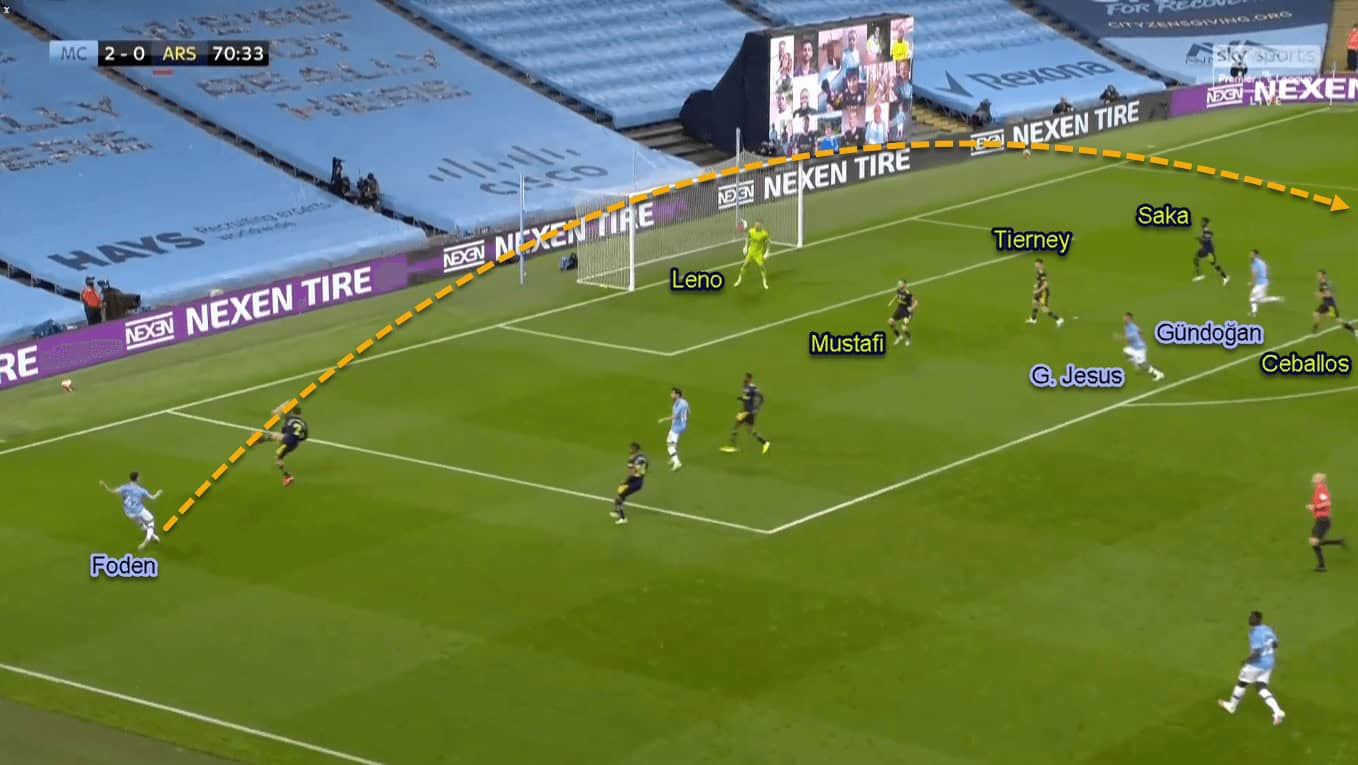
Last but not least, Phil Foden has not developed enough ability to send crosses.
If we look at the numbers, the David Silva’s presumable successor has only averaged 0.7 (24.14%) successful crosses per 90 minutes in the leagues.
Sometimes this happens because he doesn’t read the situation well, and keep sending the cross despite lack of teammates inside the box.
On other occasions, the issue happens just because of his lack of quality to execute such a pass.
Conclusion
Phil Foden is a very exciting player to watch.
The 20-year-old Englishman already has an elite maturity as well as top-level game knowledge for a player of his age.
Foden also has a lot of untapped potentials, which will only make him more enjoyable to observe in the upcoming years.
However, he needs to improve his game before securing a regular spot in City’s squad next season.
He needs to add more unpredictability to his attacking repertoire as well as adding some muscle to be more robust defensively.
If he does that, there will be almost nothing to block Foden’s way to achieve legendary status at the Etihad Stadium.
