
Few players in Europe divide opinion quite like Marcus Rashford.
At his best, he looks unstoppable, combining blistering pace with elite ball-striking and the ability to terrorise defenders one-on-one.
At his worst, he can appear disengaged, lacking intensity and consistency.
Yet across his career, there has always been a clear tactical trend: Rashford shines brightest when deployed in his most effective zones on the pitch within the right environment.
Under Hansi Flick at Barcelona, those zones are being rediscovered.
The German coach has given Marcus Rashford a structure almost identical to the one that produced his career-best season under Erik ten Hag at Manchester United.
For Rashford, that could prove the difference between another false dawn and a genuine revival.
In this Marcus Rashford player analysis and scout report, we explore how his best season under Erik ten Hag in 2022/2023 has provided the blueprint for Hansi Flick to revive the forward and unlock his brilliant best once again.
Marcus Rashford Under Erik Ten Hag Tactics 2022/2023
Marcus Rashford’s best football came in Ten Hag’s debut season at Old Trafford.
Across 56 appearances in all competitions, he scored 30 goals and provided 12 assists.
That output ranked him among the most productive forwards in Europe, a run that carried United to an EFL Cup trophy and a return to the UEFA Champions League.
The numbers were impressive, but the key was his specific role within the team.
Ten Hag did not use Rashford as a conventional left winger nor as a central striker.


Instead, Rashford floated between positions, attacking the last line from the left half-space, drifting wide when space opened up, and consistently threatening with runs behind the defence.


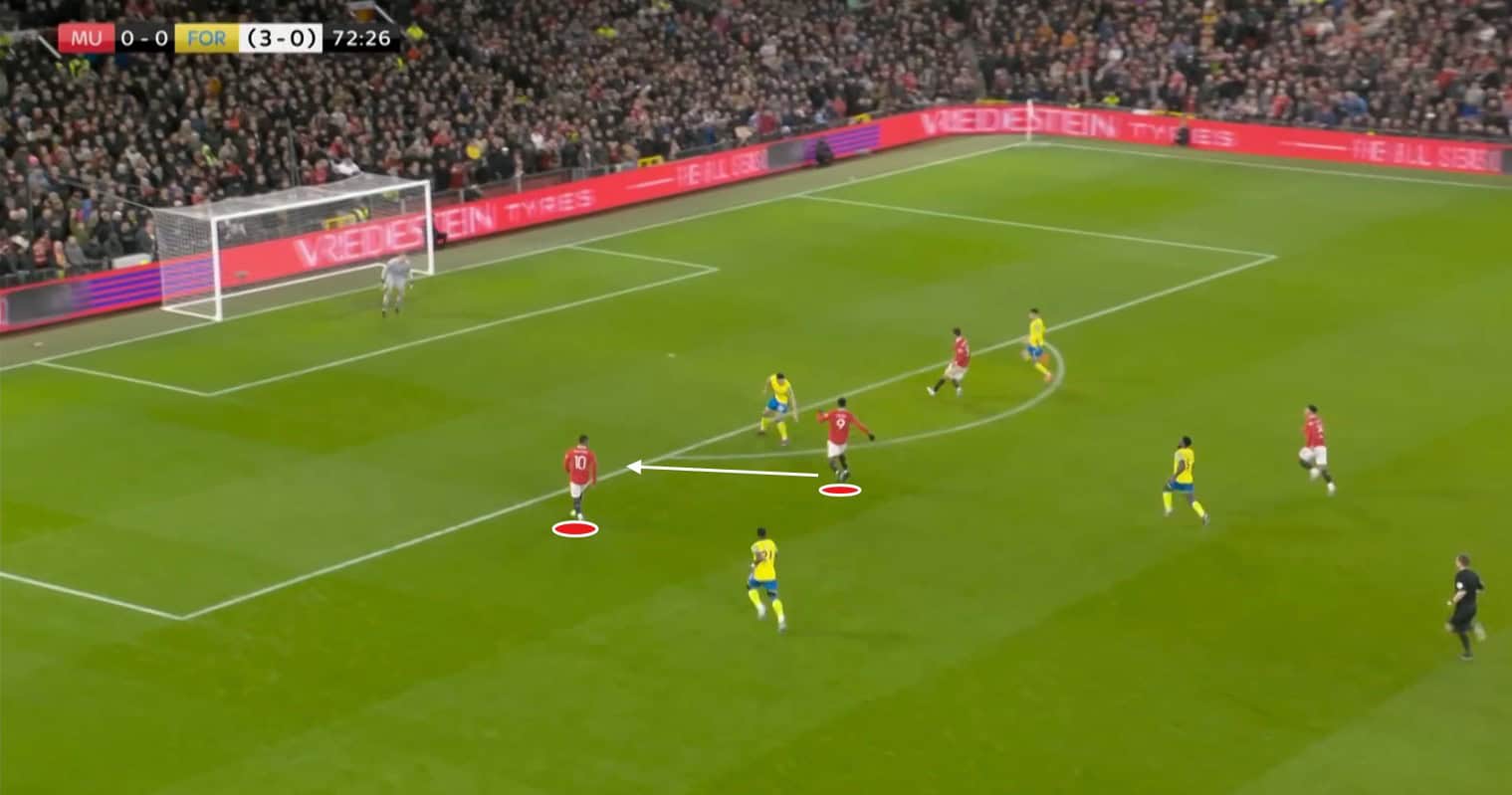
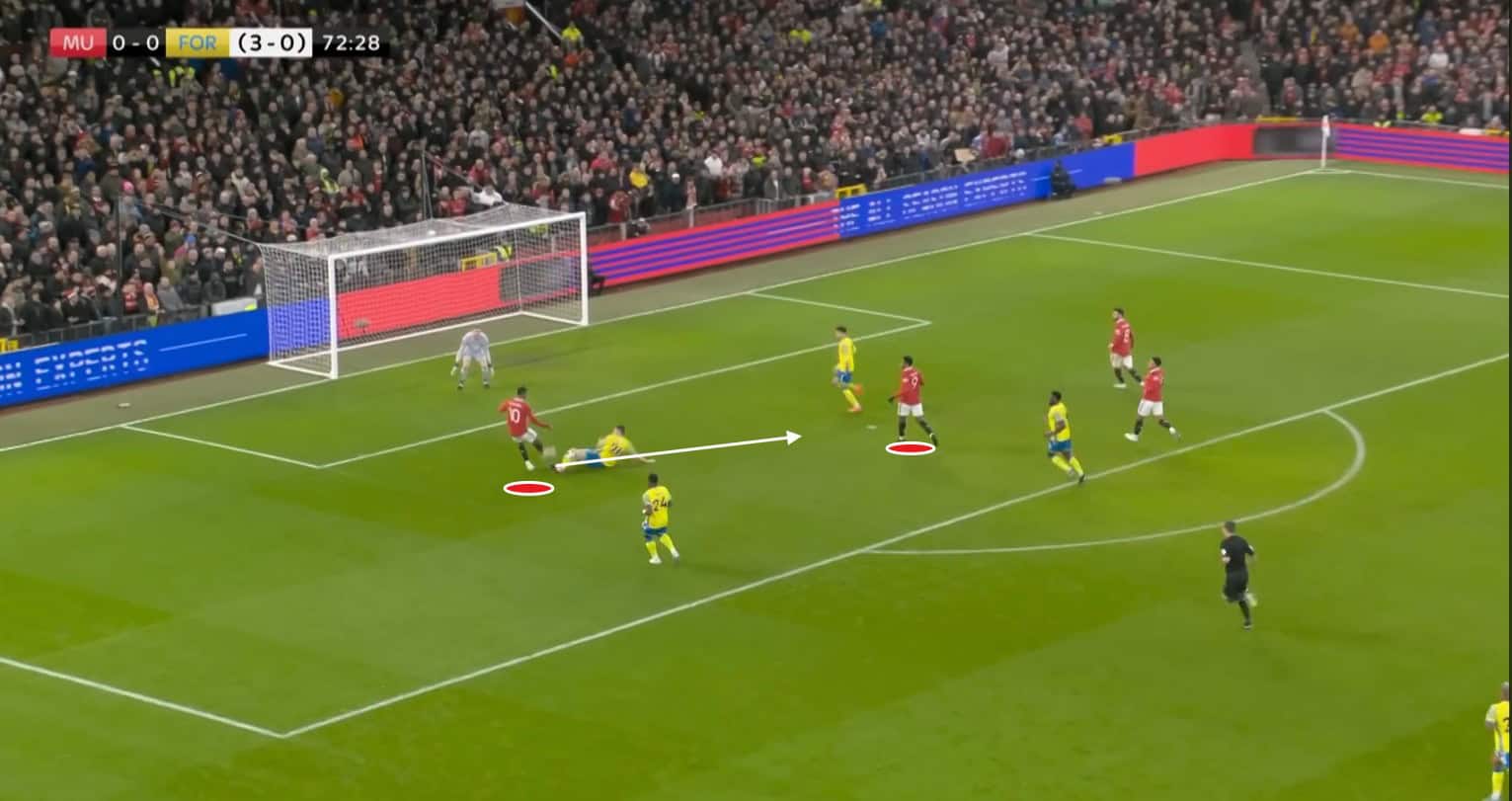
When Rashford moved into wider areas, Luke Shaw or Tyrell Malacia would invert into the half-space or overlap.
Their/overlapping runs offered passing options and pulled markers away, creating separation for Rashford to cut inside onto his right foot.
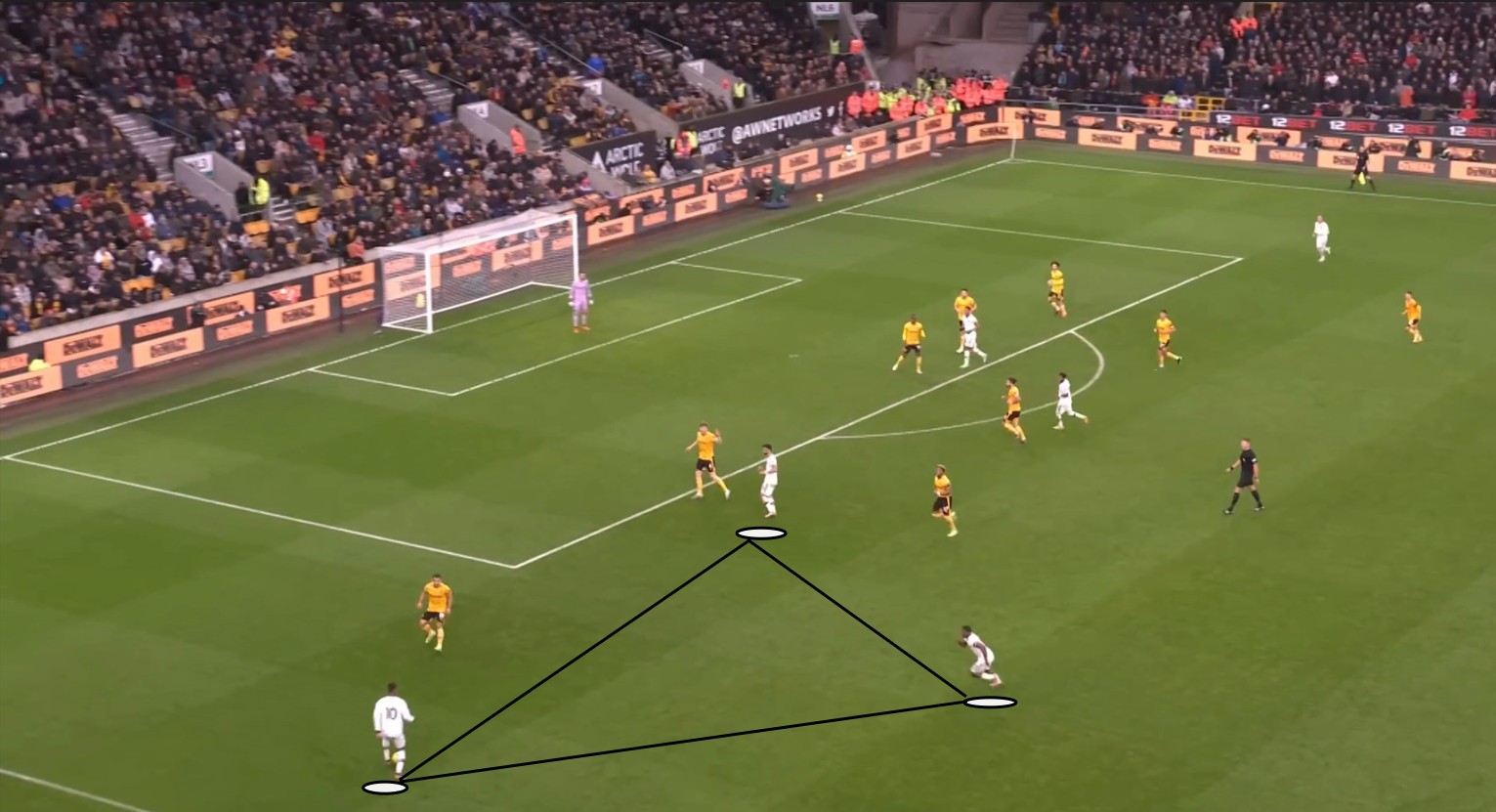
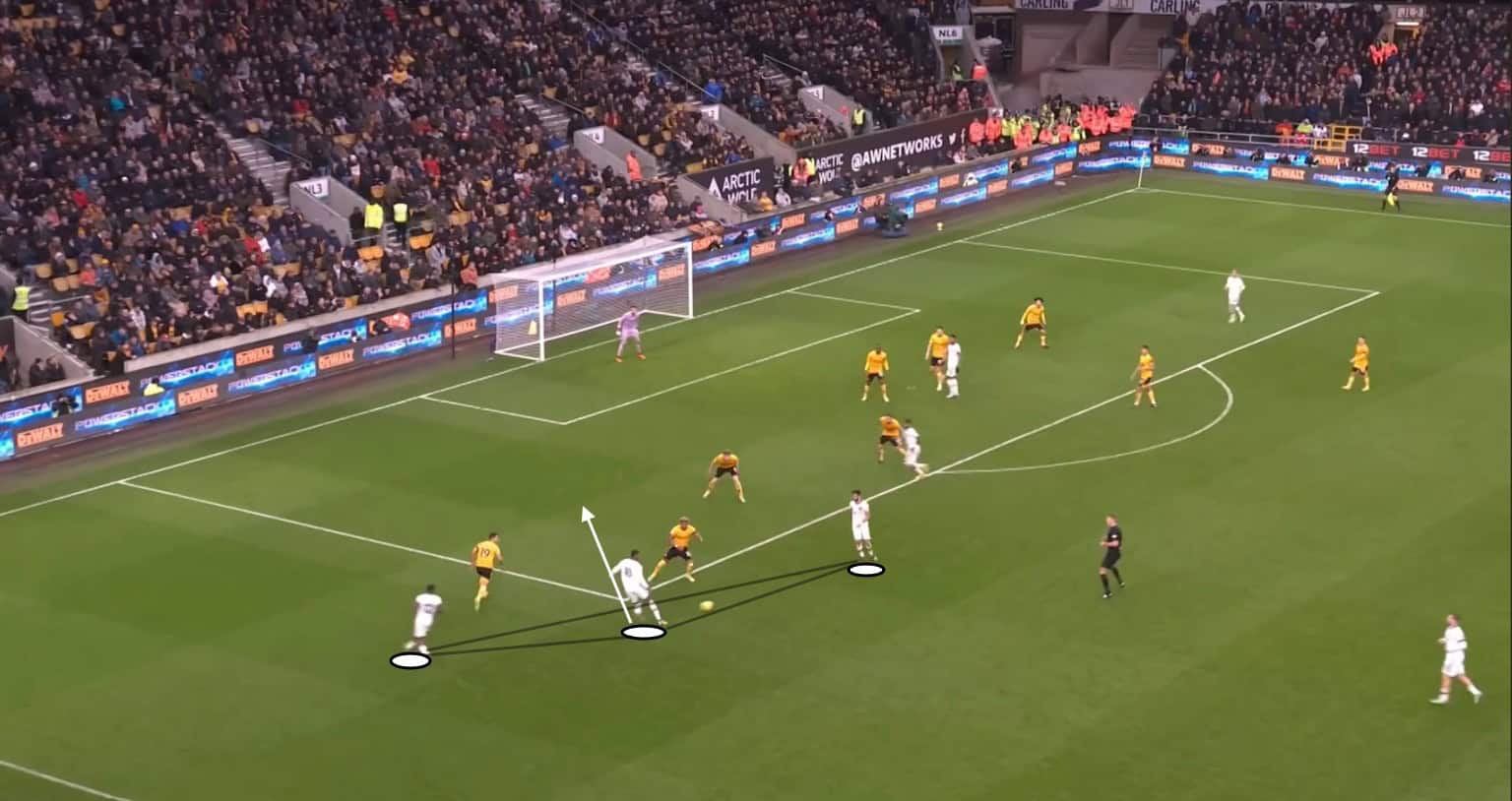
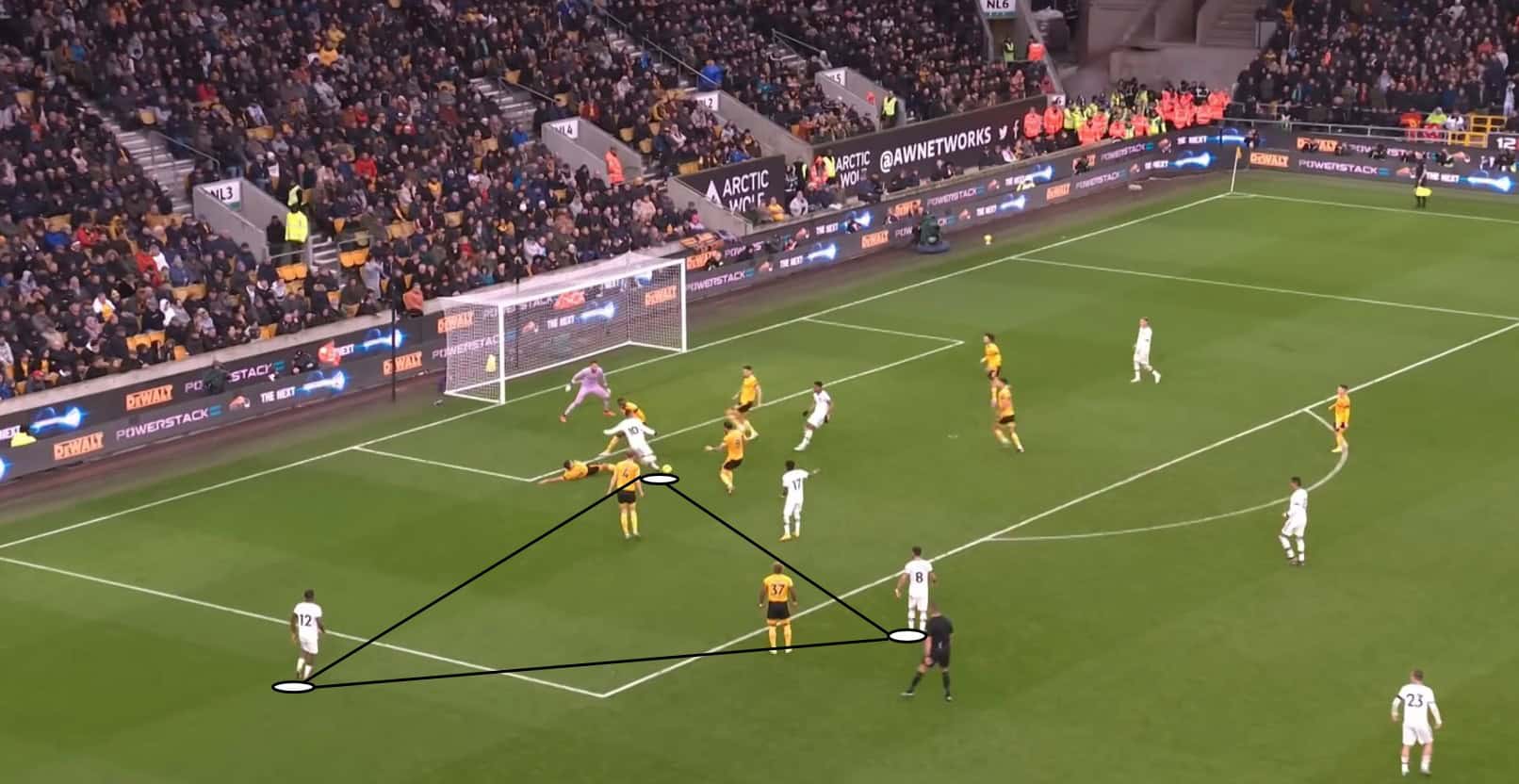
This dynamic, repeated throughout the season, maximised his strengths: acceleration, direct dribbling, and decisive finishing.
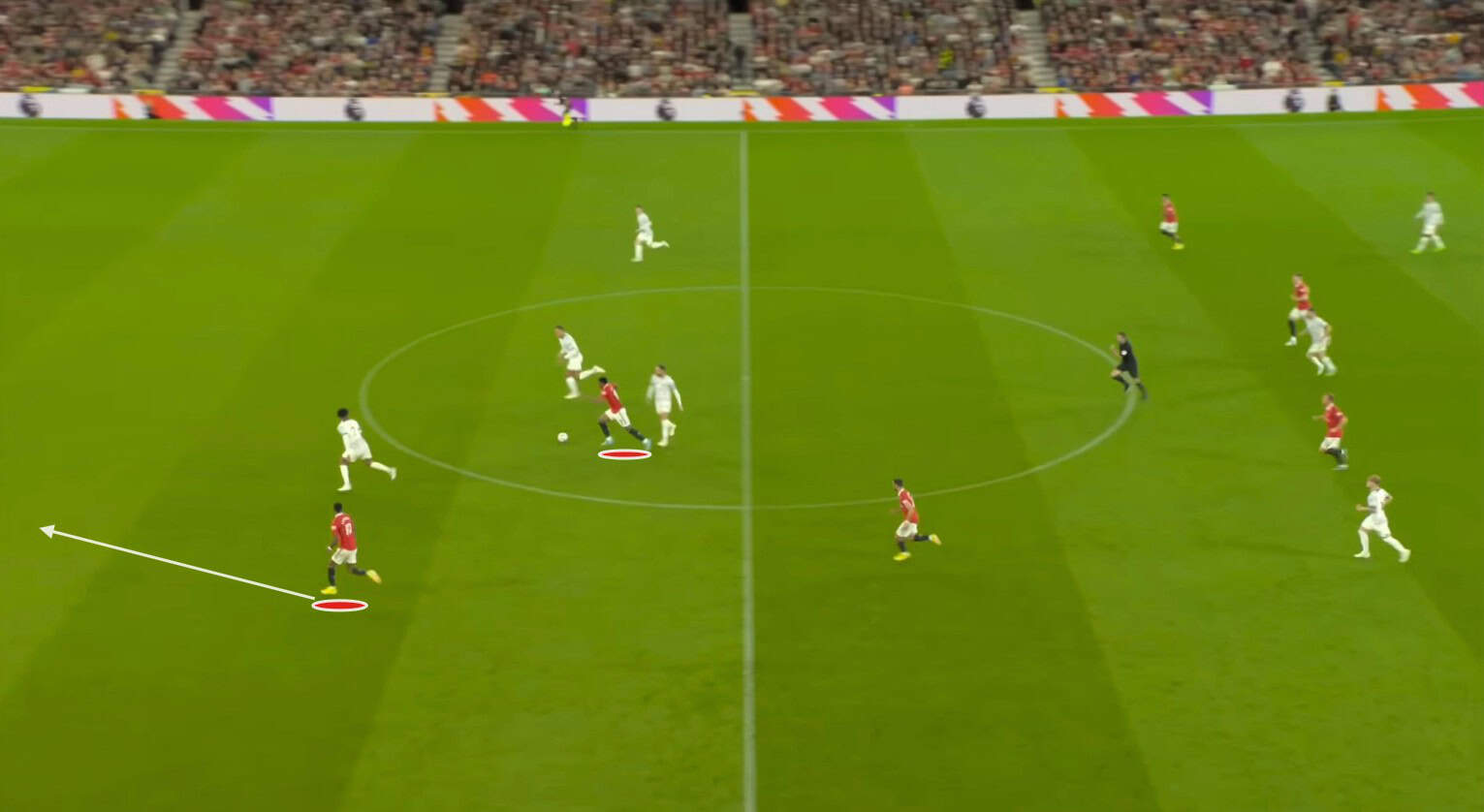
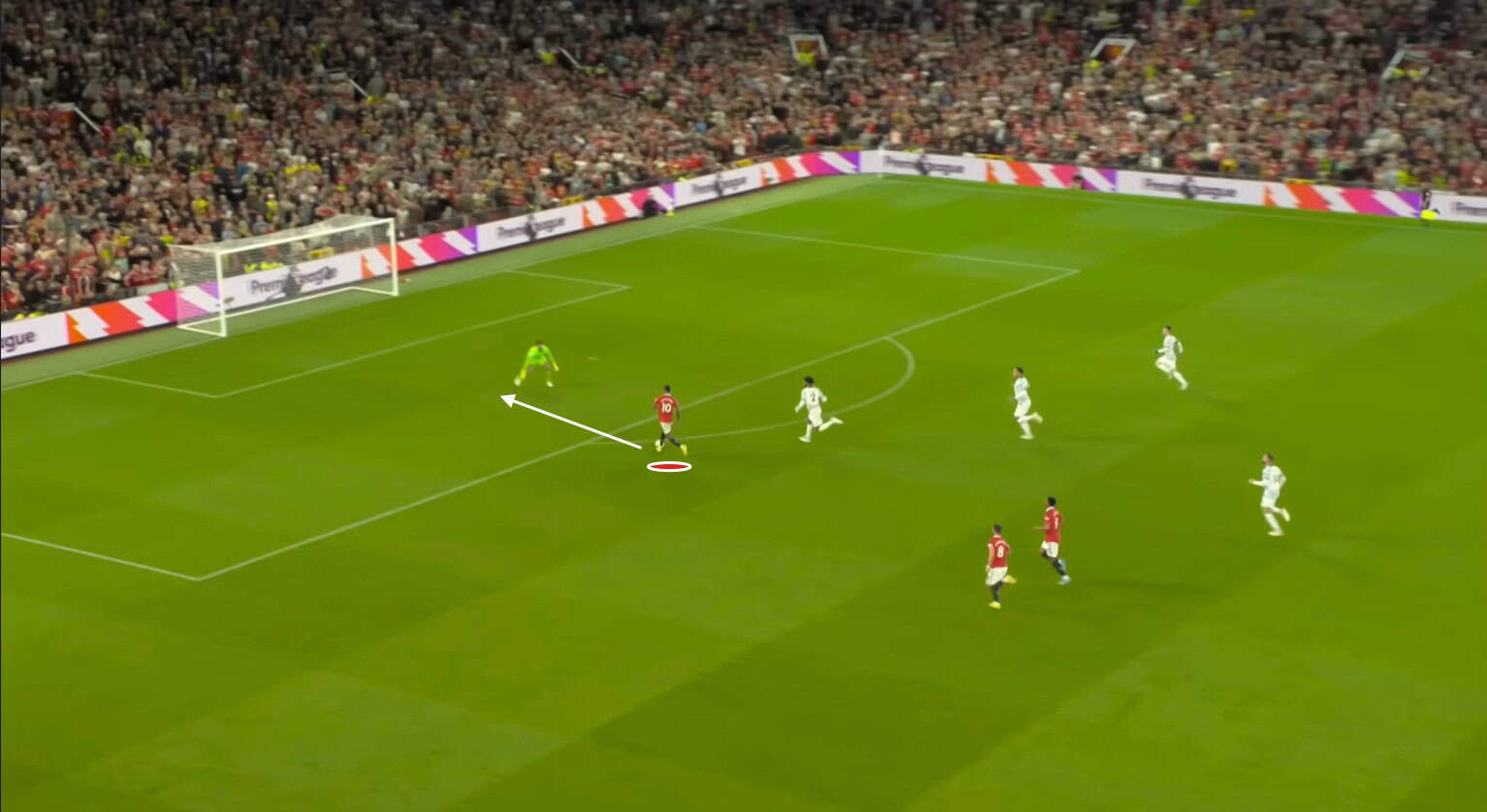
The tactical picture was clear.
Rashford was not asked to create from deep, isolated on the wing, or carry heavy defensive loads.
He was placed where he could do the most damage, on the last line, in the left half-space, with runners around him to open lanes.
Marcus Rashford Under Hansi Flick Barcelona Tactics 2025/2026: Recreating The Platform
Fast forward to 2025/2026, and Hansi Flick has positioned Rashford in almost the same role at Barcelona.
Flick’s sides are built on structured possession and vertical penetration.
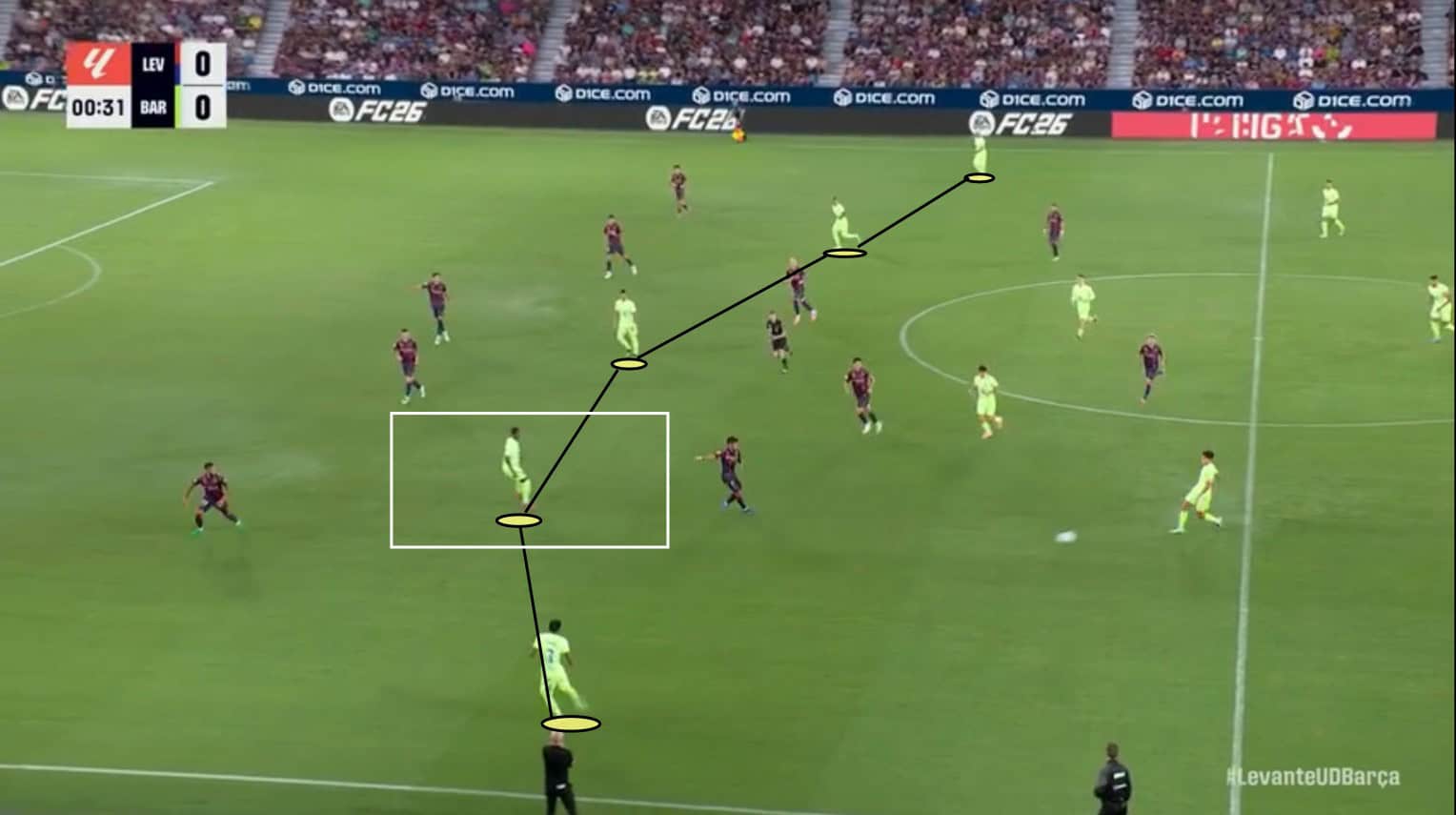
Unlike sterile possession approaches, Flick demands that circulation always has an attacking purpose.
The result is narrow attacking shapes, which naturally funnel Rashford into his most dangerous zones.
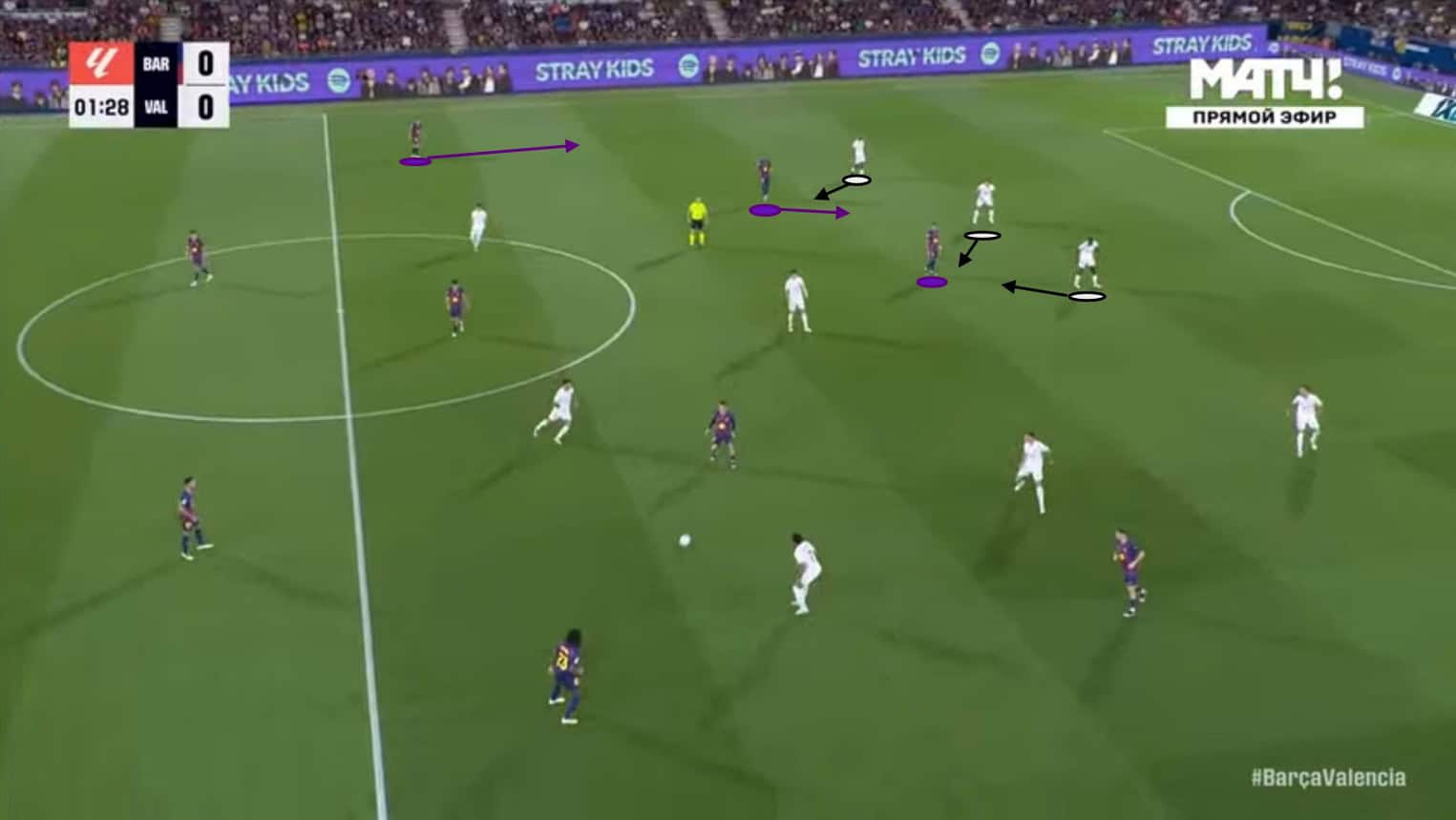
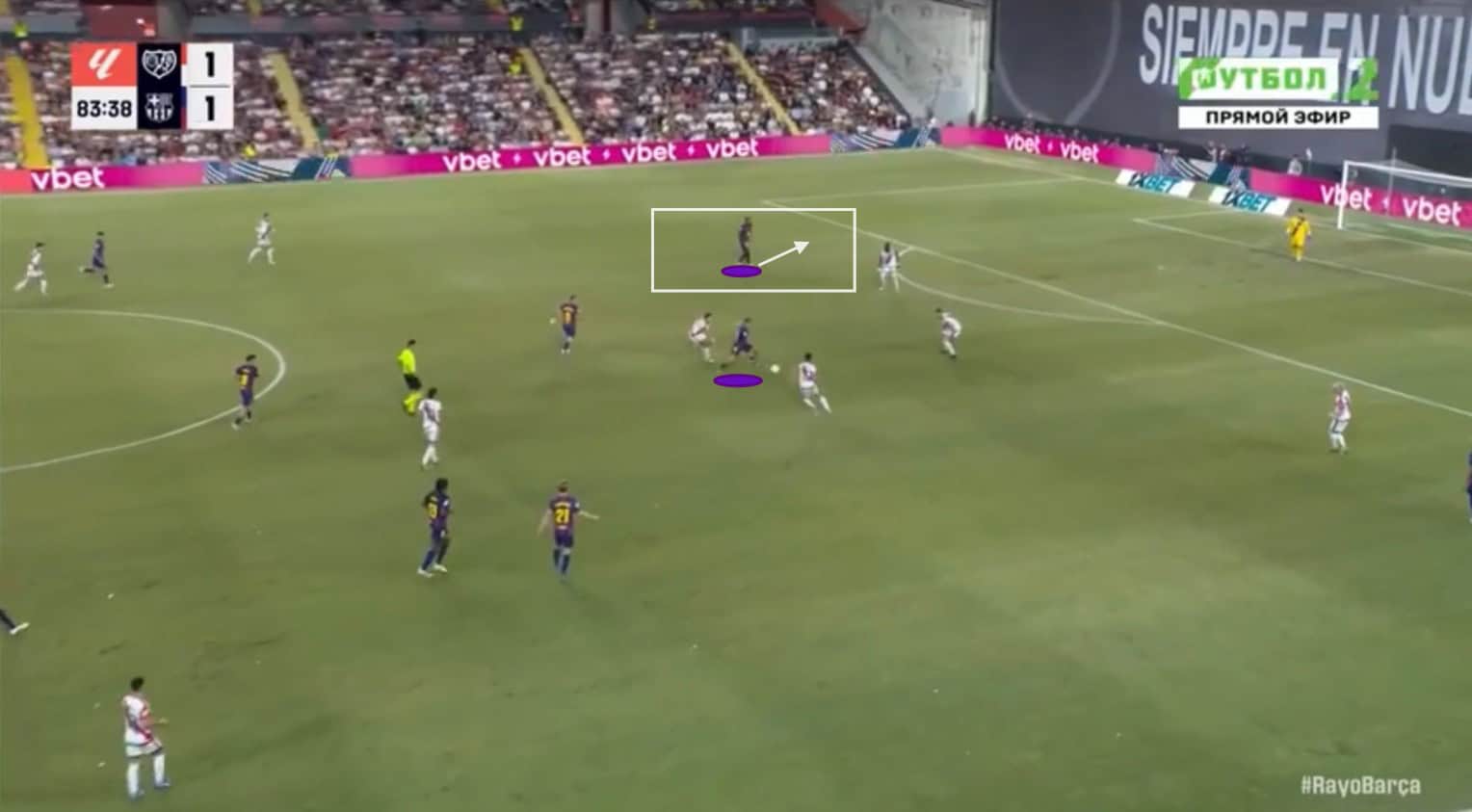
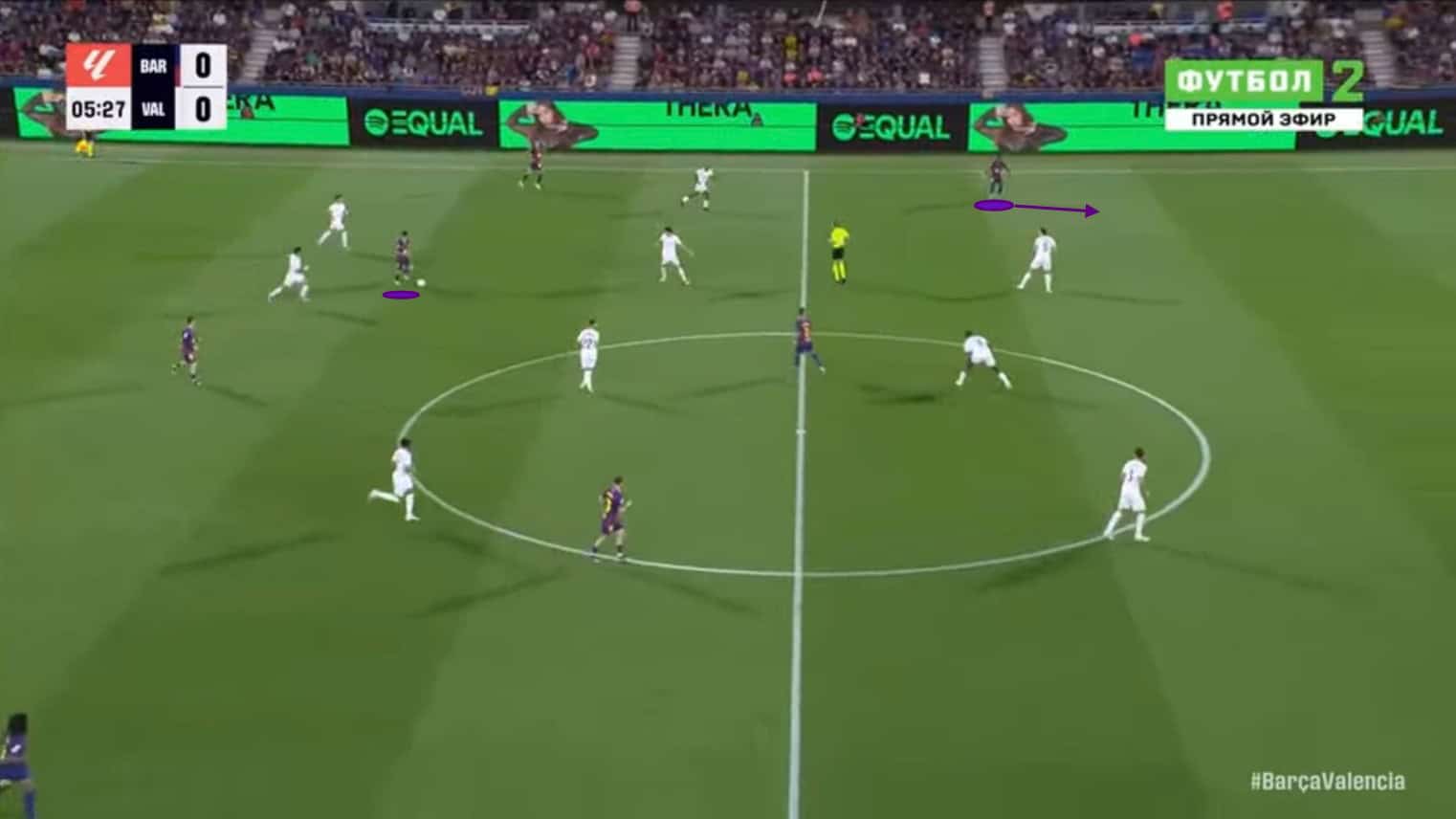
In build-up, Rashford often takes up positions in the left half-space, ready to sprint into the gap between the opposition right-back and right centre-back.
This is where he has always been most effective, and Flick’s patterns of play repeatedly look to create these runs.
When Rashford drifts wider, Alejandro Balde/Gerard Martín takes on the Shaw/Malacia role from United.
Balde/Martín’s tendency to invert into the half-space provides underlapping support, freeing Rashford to isolate defenders one-on-one.
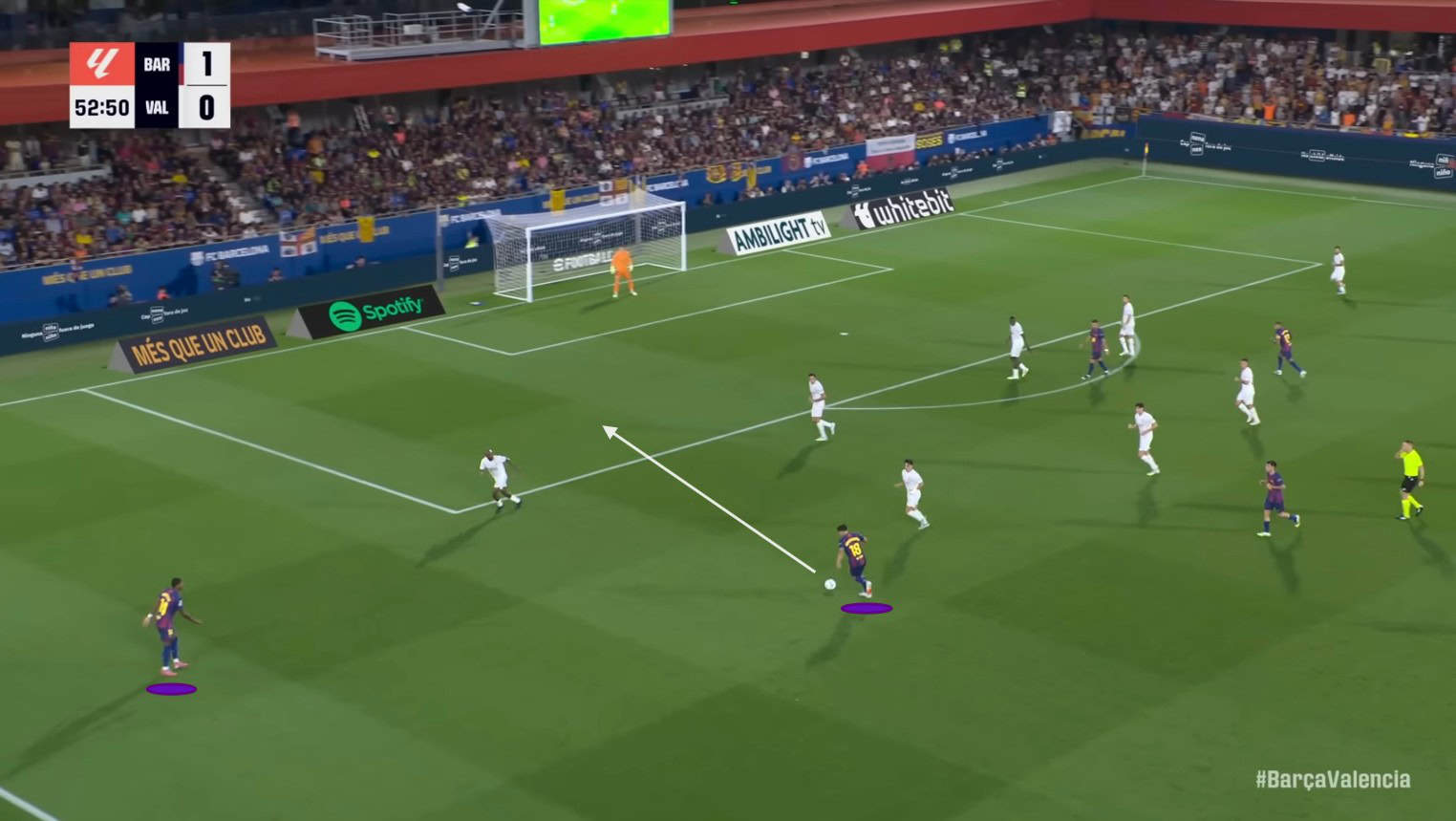
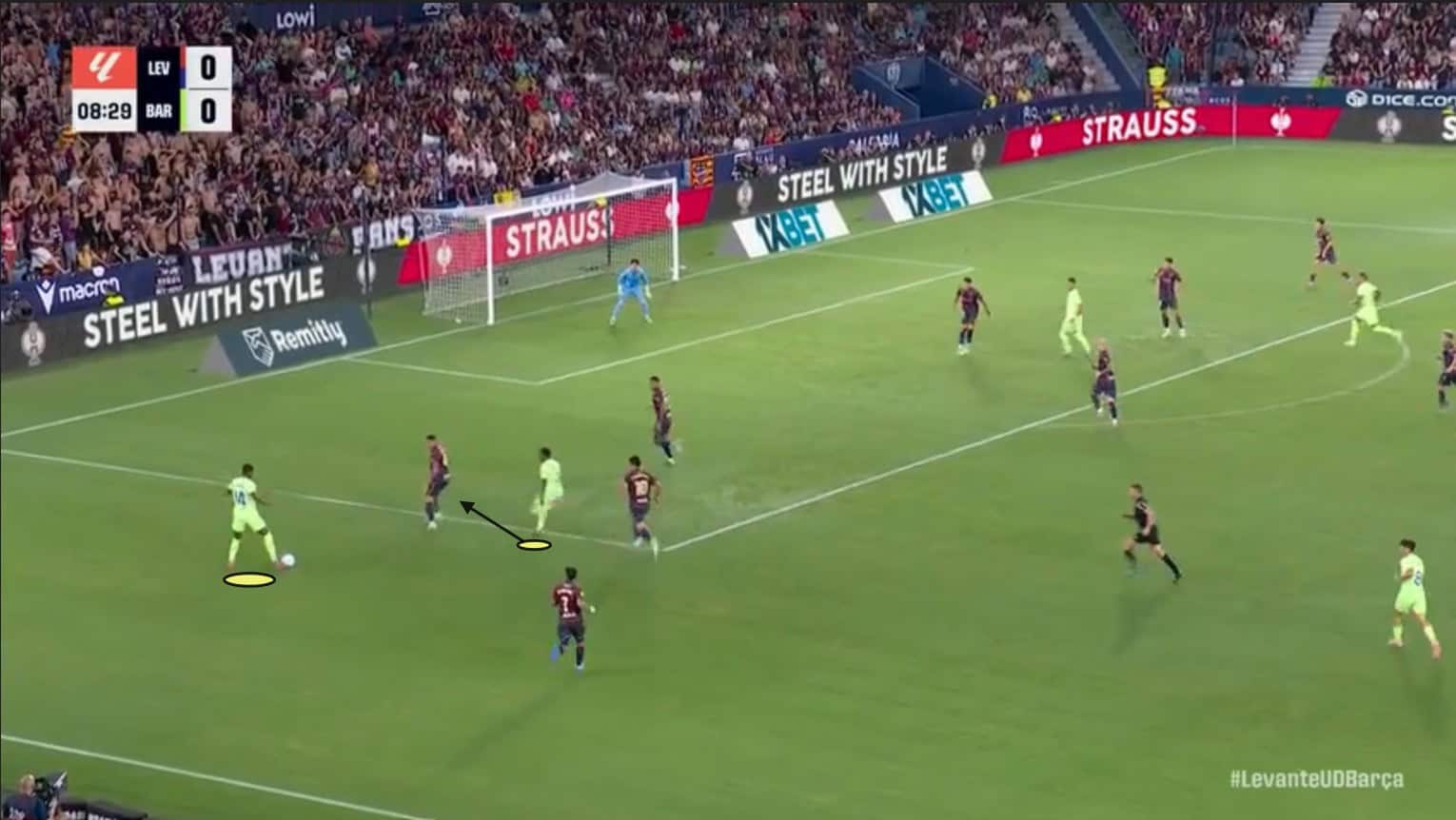
The similarity to his United role is striking: the positioning, the runs, and the support structures are almost identical.
However, there is a crucial difference.
Barcelona dominated possession in a way that United could not.
With Frenkie de Jong and Pedri controlling midfield, Flick’s side suffocates opponents with the ball.
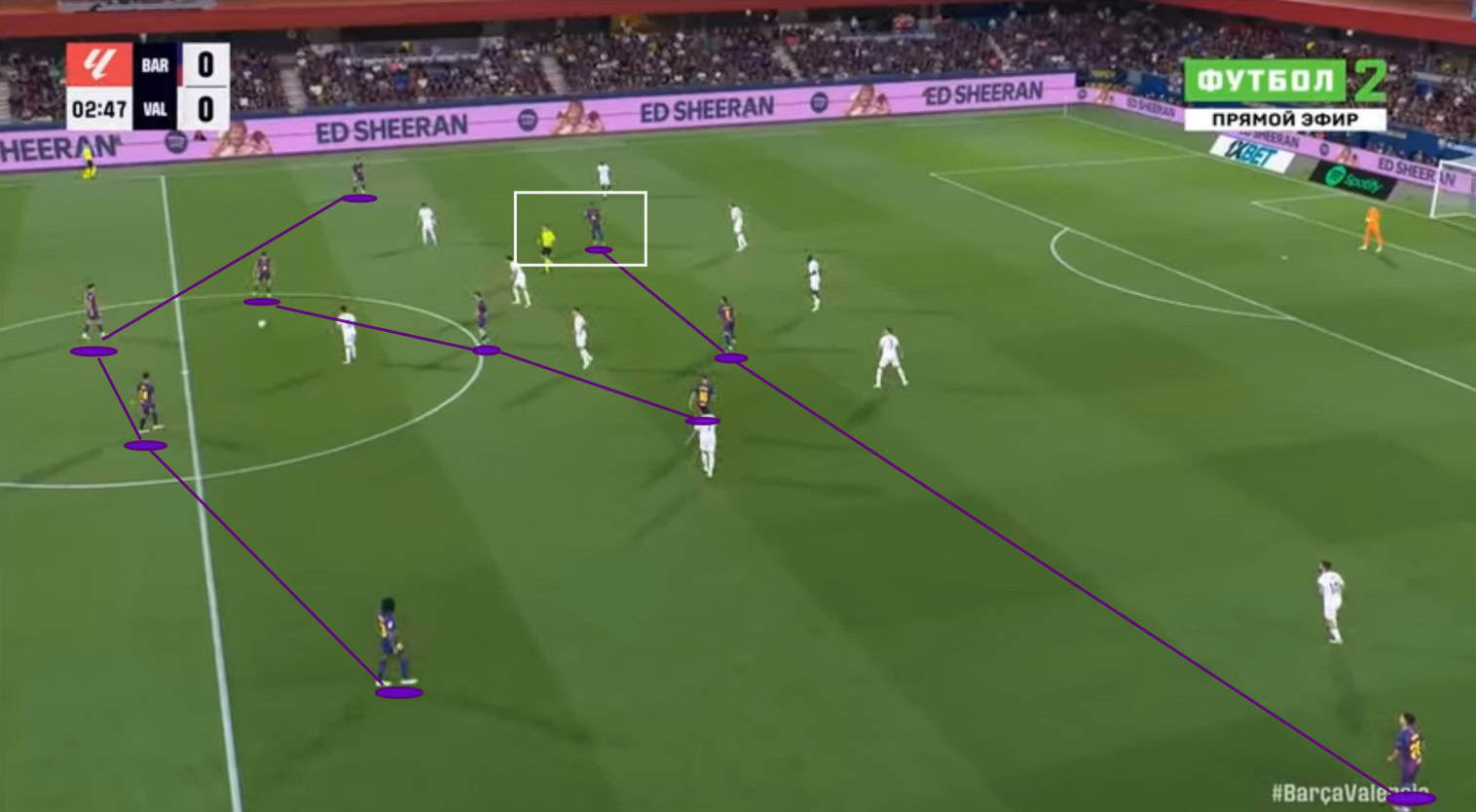
That control means Marcus Rashford spends far less time retreating into defensive phases and far more time waiting in his zones for attacking moments.
The Importance Of Continuity
This continuity matters because it strips away one of the common criticisms of Marcus Rashford: that he needs reinvention to succeed.
In reality, his profile has remained consistent.
He is not a creator in deep build-up phases, nor can he receive in isolation on the wing with a lack of teammates to combine, nor is he suited to heavy pressing responsibilities.
Instead, he is devastating when he can time runs into the left half-space, receive in advanced positions, and combine with overlapping or underlapping teammates.
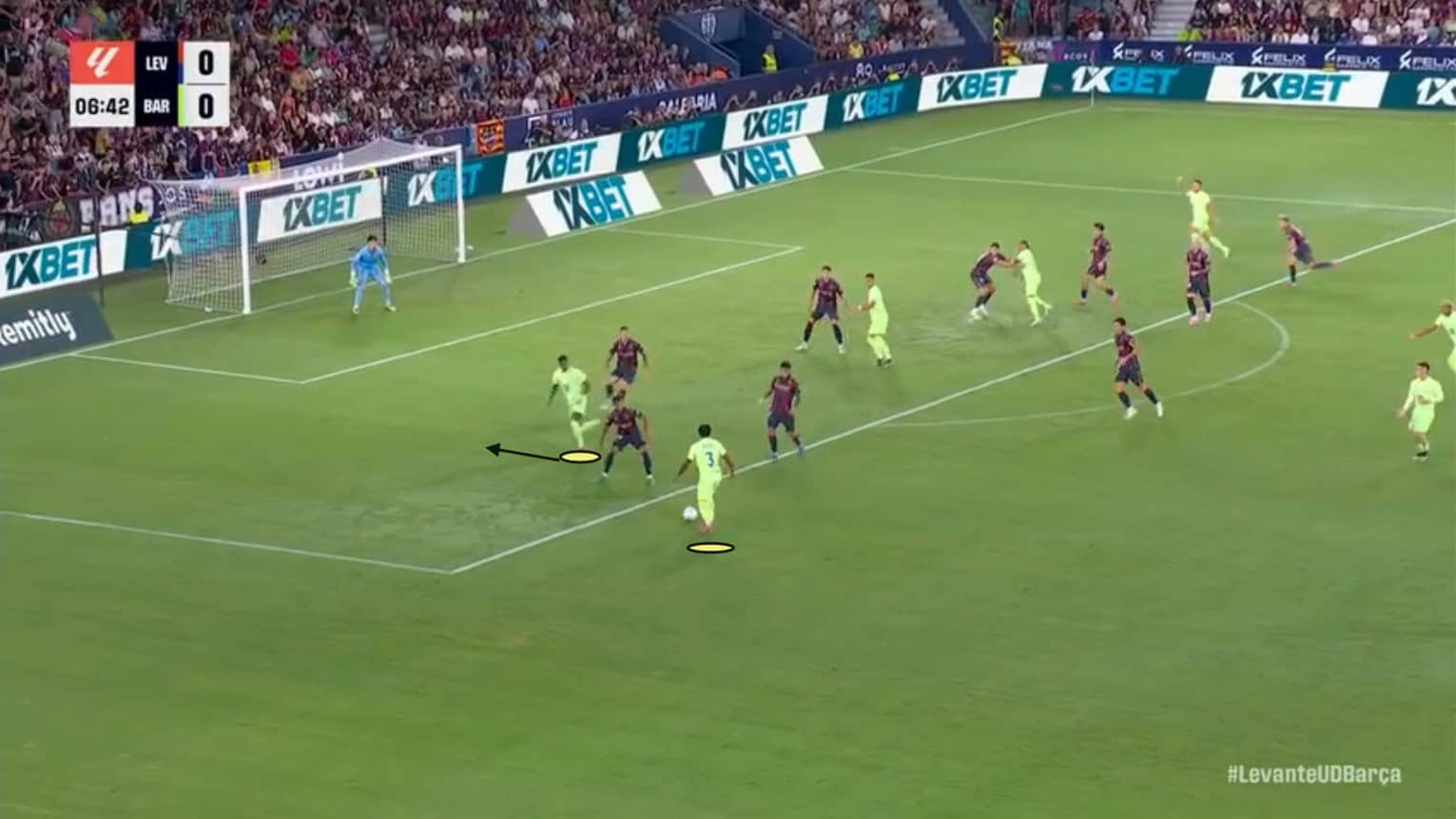
Looking at his positioning under Ten Hag in 2022/2023 and Flick’s early games, the same trend emerges: Rashford repeatedly receives the ball in the left half-space and wide channels, his most effective zones.
Both coaches recognised that Rashford’s unique skillset is best maximised in those channels.
Flick has not reinvented Rashford; he has simply restored him to the platform that once made him one of the most dangerous forwards in Europe.
Marcus Rashford Defensive Role & Environment
Another element where Flick’s structure benefits Marcus Rashford is out of possession.
At United, particularly in Ten Hag’s second season, defensive organisation often left Rashford with huge distances to cover when pressing.
If he stepped forward, gaps appeared behind him.
If he stayed deeper, United lost the ability to press high.
The lack of compactness forced Rashford into uncomfortable defensive roles, exposing his weaknesses.
Barcelona under Flick are different.
The defensive line is aggressive, squeezing play into compact zones.
For Rashford, that means shorter pressing distances and fewer recovery runs.
He is still asked to contribute defensively, but the system makes the demands far lighter than at United.
This environment allows Marcus Rashford to conserve energy for attacking phases, where his explosive qualities make the difference.
It also helps him maintain confidence, something that has often dipped when his off-the-ball workload overshadows his attacking contributions.
Confidence, Quality, & The Do-Or-Die Stage
The recent signs have been encouraging.
Marcus Rashford’s goals against Newcastle were reminders of his enduring quality: the clean ball-striking, the ability to drive at defenders, and the pace that still troubles any backline.
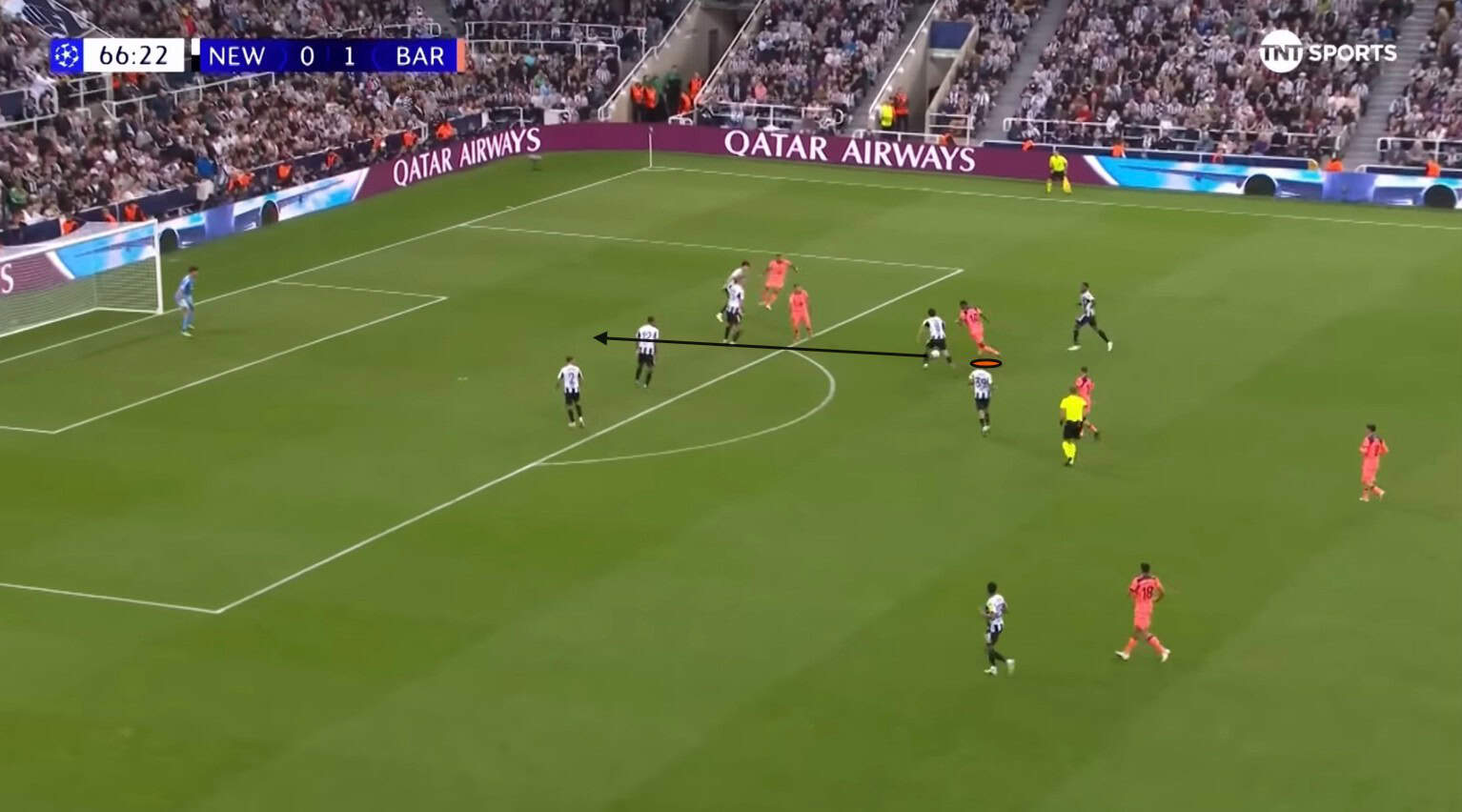
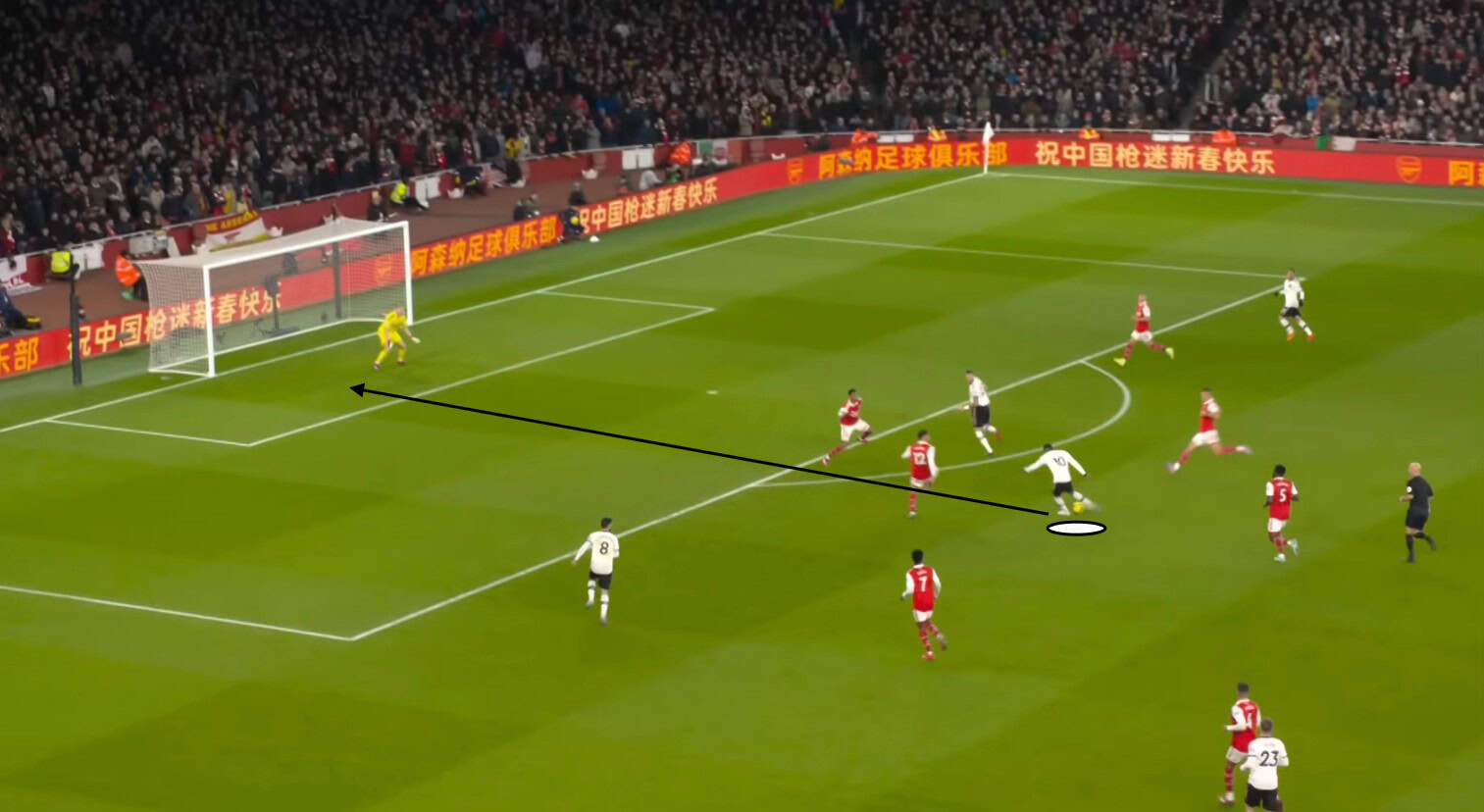
When Rashford scored against Newcastle, it brought back memories of his Emirates goals versus Arsenal, with the same crisp technique and explosive ball-striking.
When Rashford plays with confidence, he remains one of the most dangerous attackers in the game.
Yet the question is no longer about ability.
The talent is proven.
The tactical structure is in place.
The bigger test is mentality.
Even in his peak 2022/2023 season, disciplinary issues surfaced, and his professionalism was questioned.
At 27, he is entering the defining stage of his career.
The excuses are gone: under Flick, he is in the right zones, in the right system, with the right teammates.
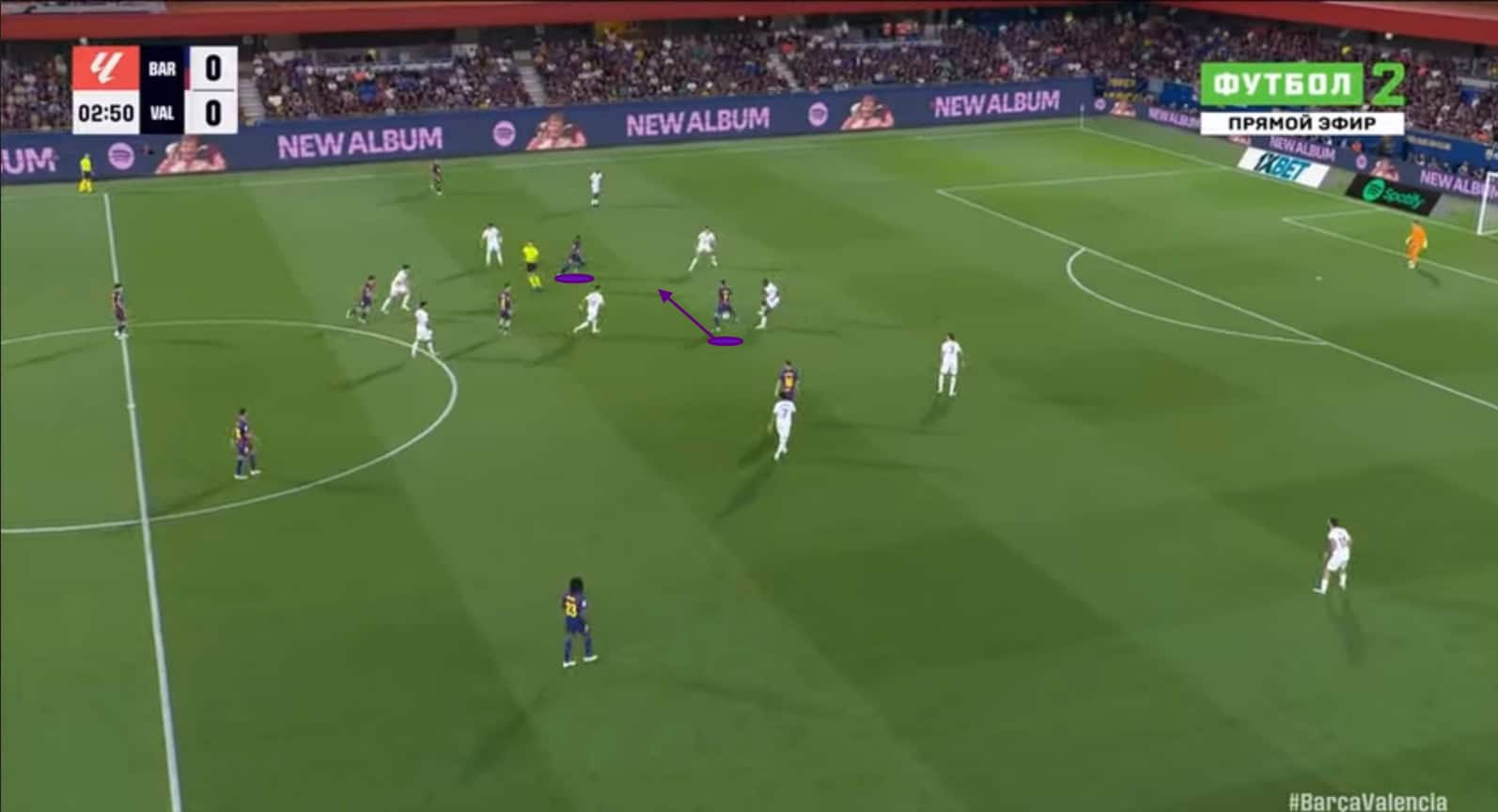
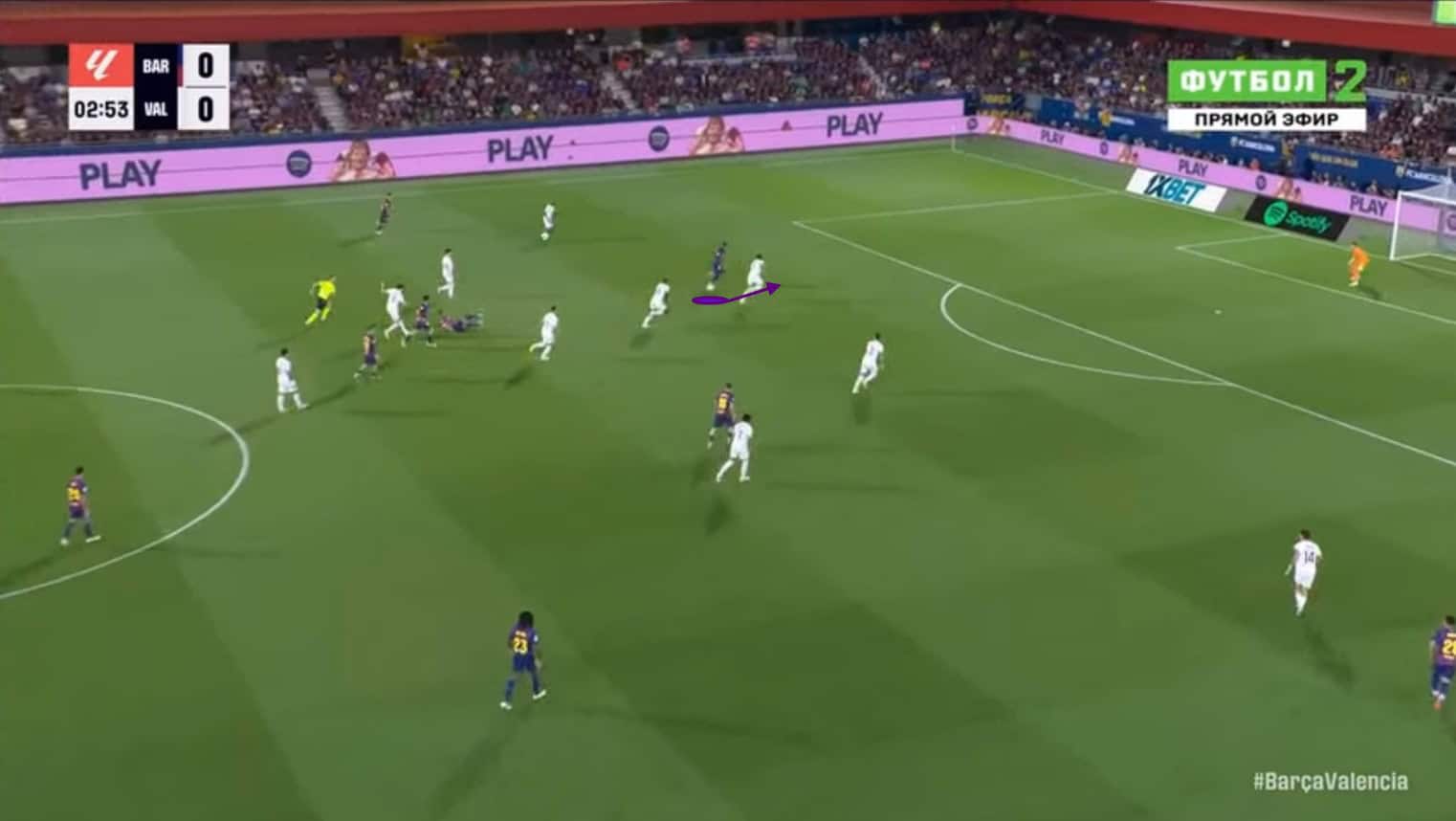
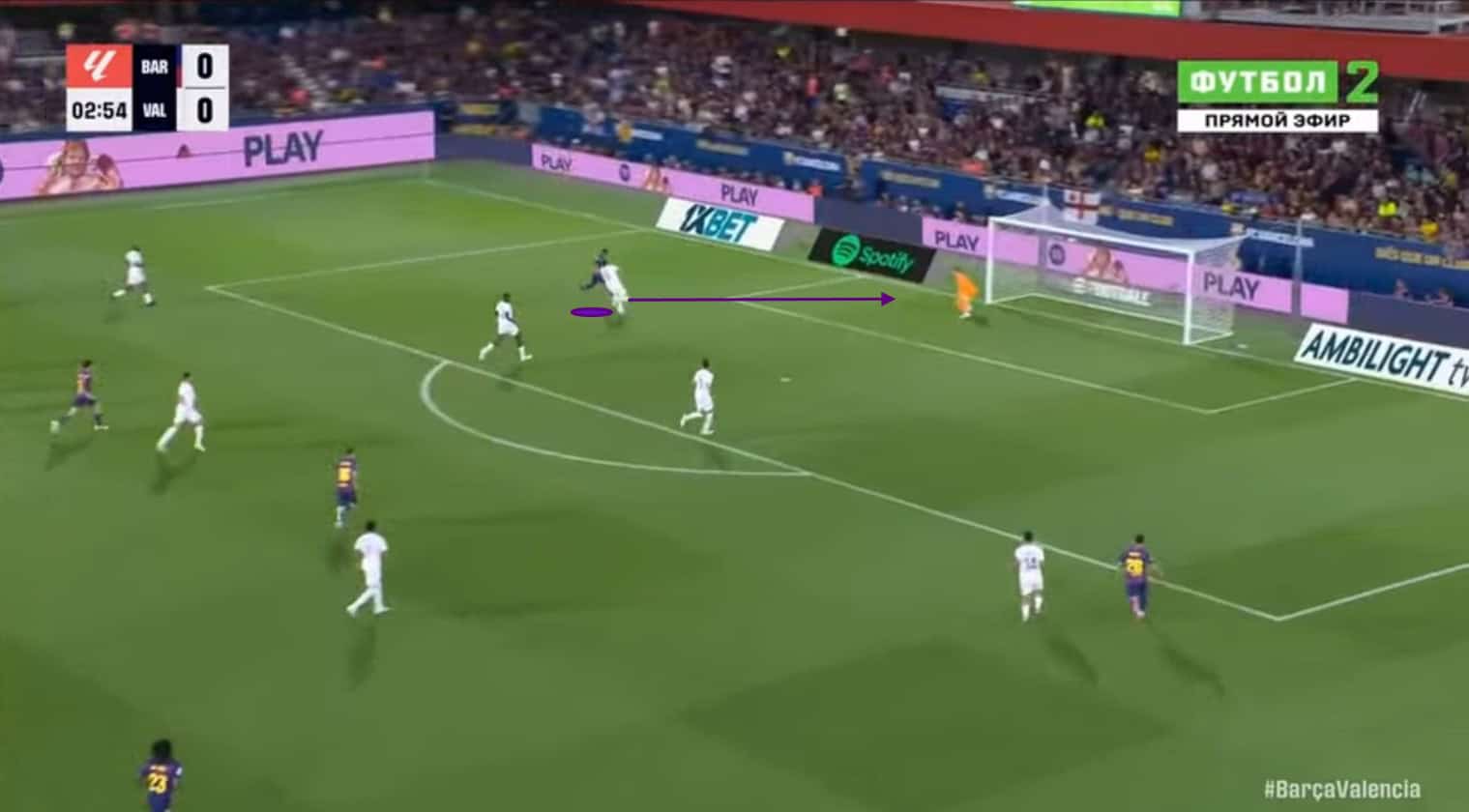
If he embraces this opportunity, Barcelona will have a revitalised Rashford capable of delivering at the very highest level.
If not, the conversation will move away from systems and tactics and focus instead on mentality, an area only Rashford himself can control.
Conclusion
Hansi Flick’s Barcelona may have reignited Marcus Rashford by returning him to the spaces that once made him unstoppable under Erik ten Hag.
The half-space runs, the wide isolations, and the support from underlapping full-backs are all familiar, and they play to Rashford’s strengths.
The difference now is the environment: Barcelona’s control and compactness simplify Rashford’s job, giving him the platform to shine.
Rashford has the structure, the trust, and the platform.
What remains is his response.
At 27, this is do-or-die: either he takes this chance to prove himself as one of Europe’s elite attackers again, or he confirms the doubts that have shadowed his career.
For Rashford, the zones are the same, and the opportunity is the same.
The difference this time is that there can be no excuses.
