
Birmingham City is a club that’s been through a lot in recent years.
While the club played in the Premier League for most of the 2000s, 2011 proved to be a turning point.
Despite heavily investing in the squad and even winning the EFL Cup, beating Arsenal in the final, their Premier League season was a disaster.
They ended up in 18th place and were relegated to the EFL Championship.
Despite a decent push in the season immediately after their relegation, the club fell short of getting promoted back to the English top flight.
They quickly fell into the lower midfield of the second division and have remained there since, struggling financially as well.
In 2024, Blues were relegated from the Championship to EFL League One.
In this tough time, Birmingham City decided to hire Chris Davies, a former assistant coach to Brendan Rodgers and Ange Postecoglou, as their new head coach.
Under Davies and new ownership, further disaster was averted.
With a strengthened squad and a new manager, they collected 111 points, won League One, and returned to the second tier.
However, that is only supposed to be the start; Birmingham City have bigger plans, with a return to the Premier League in their sights.
With a strong summer transfer window, which saw multiple players from the top-five leagues signed, including Marvin Ducksch and Kyogo Furuhashi, the start to the season went rather well.
It’s early days in the season yet, but Davies‘ men are currently in mid-table, just outside the playoff spots, and they look like they have a chance to reach the playoffs this season.
In this Birmingham City tactical analysis, we will examine Chris Davies tactics at Birmingham City, what the Blues did to start the season successfully, and what we can expect from the team throughout the 2025/2026 campaign.
Birmingham City Work Against The Ball
Birmingham City’s start to the season under Chris Davies was rather successful, and this was mostly due to their defensive work.
The team has a clear plan against the ball and can execute it against different opponents and approaches.
The basic shape that Davies uses against the ball is a 4-4-2, a formation that has been out of fashion lately, but still has a lot of tradition in England.
Overall, their entire approach against the ball is relatively simple and basic.
Davies implemented many principles that have been around since the back-four and the concept of a press were introduced in England.
Although it is not the latest tactical trend, it remains very effective for Birmingham City.

What’s really interesting about Birmingham City’s games so far this season is that most of their opponents are trying the same solutions against Davies‘ 4-4-2.
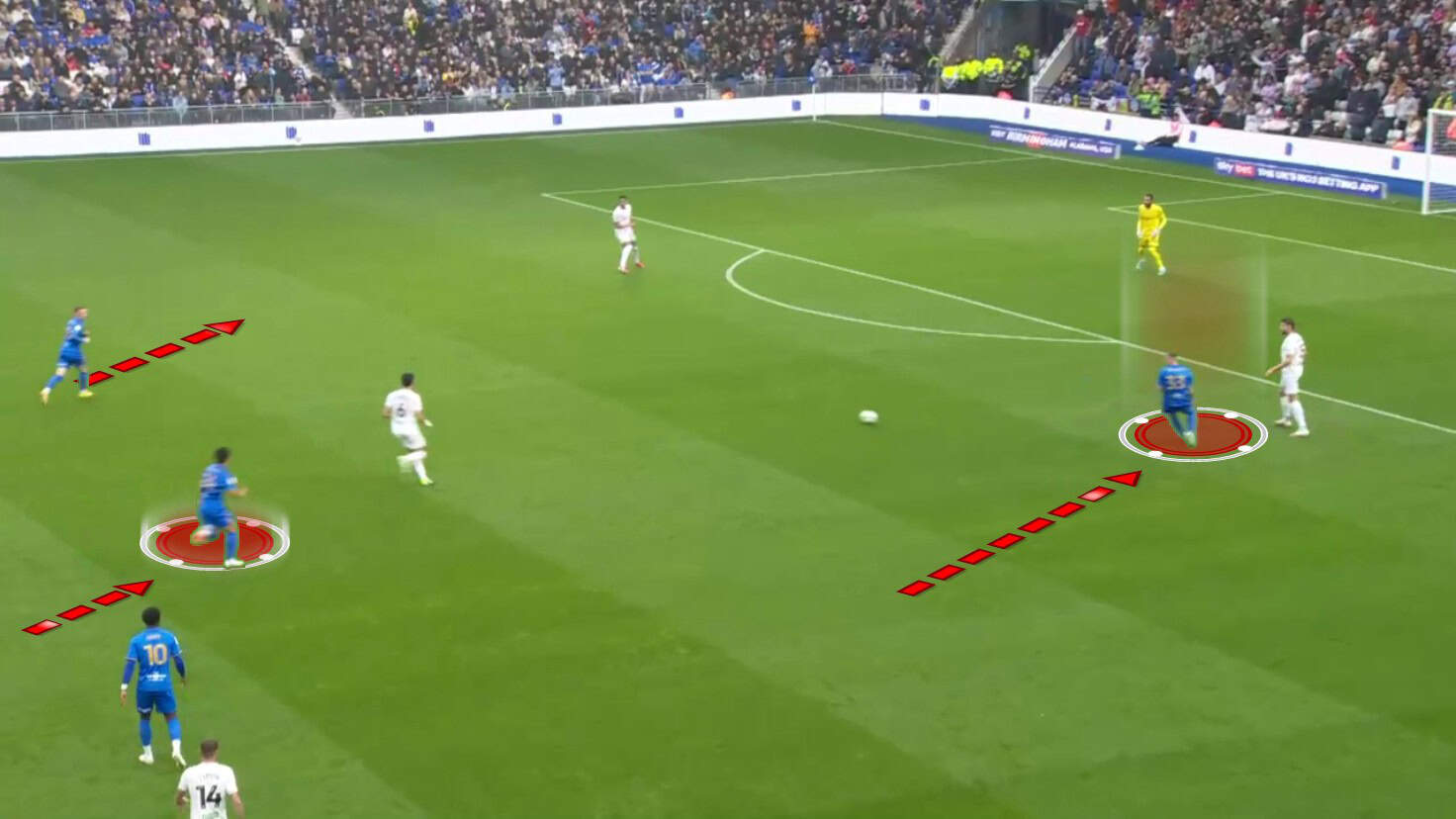
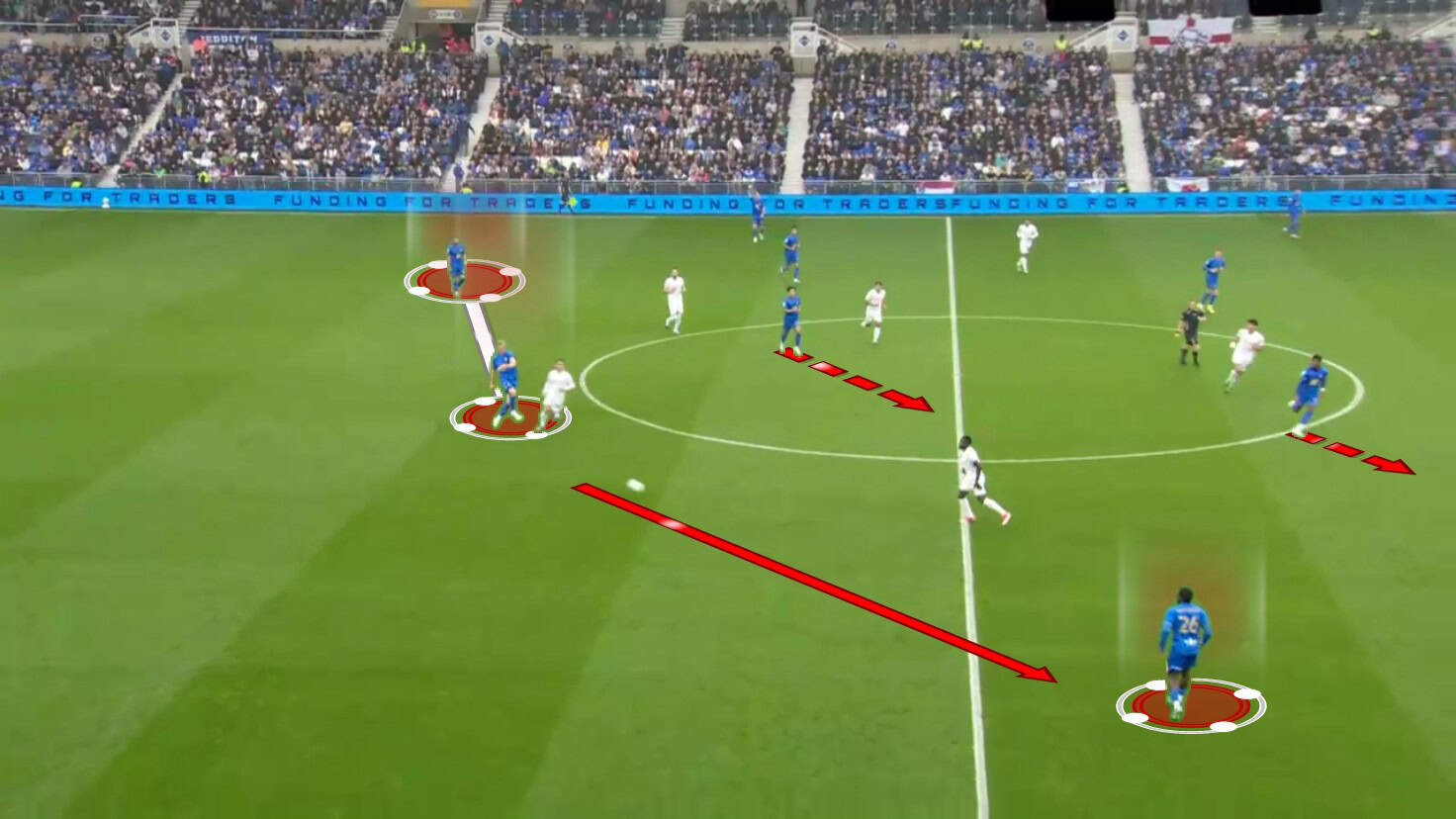
As seen in the picture above, most teams build up with a back-three against Birmingham.
Most of them keep one full-back close to their centre-backs, just like Swansea City did in this situation.
Most teams are also keeping just one holding midfielder in the space behind the two strikers and in front of the two central midfielders.
Birmingham City are still trying to press their opponents in their half of the pitch.
Davies does not want his men to attack right in the box; they are instead trying to trigger their press when the centre-backs have already moved up the pitch a bit.
The near-sided striker is always the player who triggers the press.
The striker is pressing from the inside, cutting off play to the other centre-back and trying to force the opponent to play a pass to the outside.
The other striker drops back into the space behind, covering a potential diagonal pass to the lone holding midfielder.
The four midfielders are in a very narrow shape, especially the near-sided winger, leaving the pass to the wing open on purpose.
Still, all midfielders are ready to pounce, always on the jump to move forward and create a very dynamic press towards the player on the wing.
This cuts off all passing options in the centre of the field and creates a numerical advantage on the wing.
When possible, Davies has his men even engage in a very man-oriented press, especially after trigger passes and especially when their opponents pass backwards out of the initial pressure and can’t go into their three-man build-up.
The two strikers then cover the two centre-backs and aggressively press them immediately, preventing them from establishing a calm and collected build-up phase at all.
The wingers control the full-backs, while the central midfielders push up the field, man-marking their opponent’s midfielders.
This allows Davies‘ men to force often long balls, which puts their defenders in a position to use their physicality in duels.
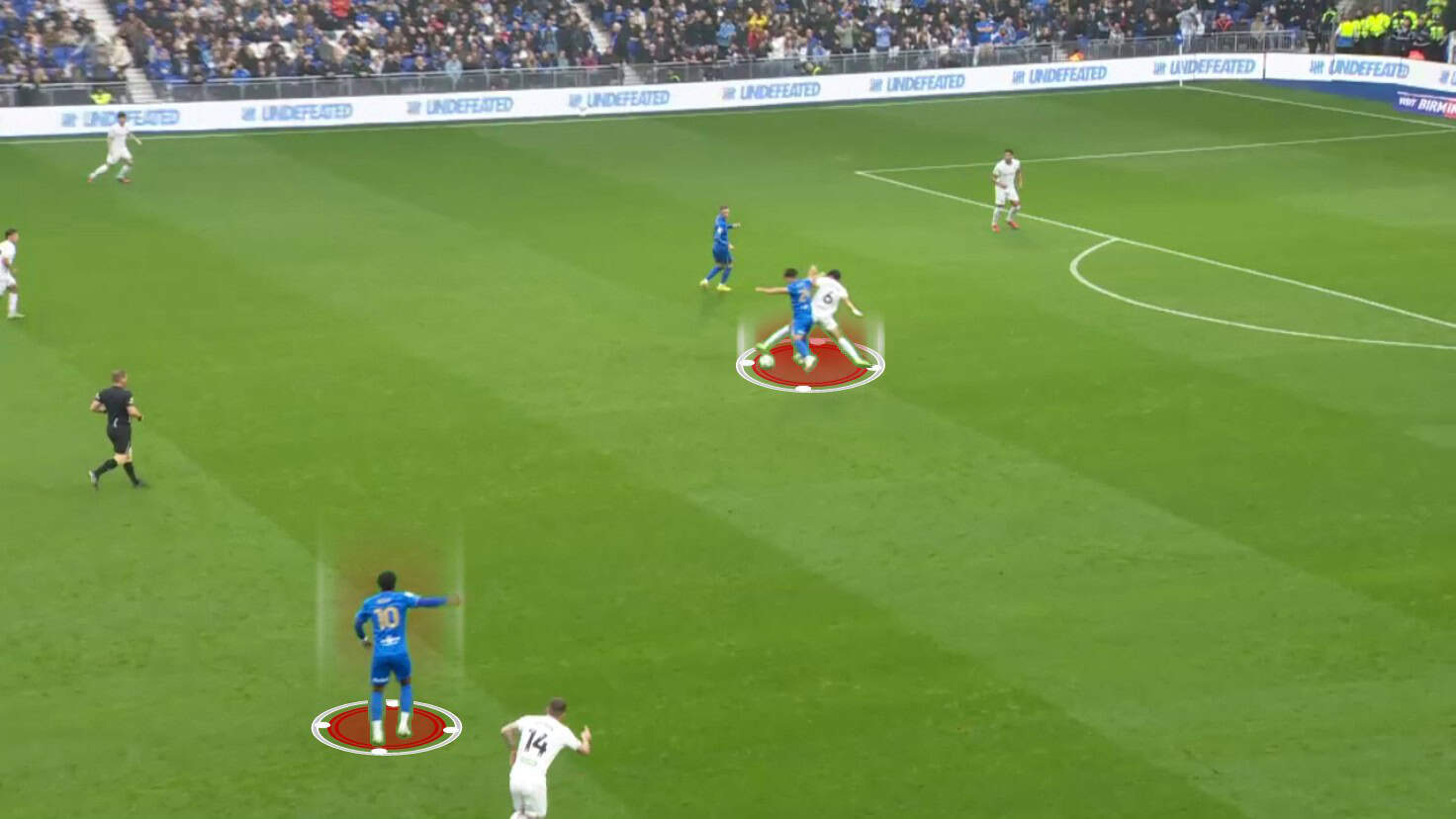
If their opponent still decides to try to play through their press, they pounce.
In the picture above, we can see Swansea attempting to play out from the back, but being instantly forced into a duel by the forward defending the central midfielder.
Birmingham City are able to poke the ball free and now have three players forward in a central position, which puts them in a nice shape to instantly punish their opponent’s loss in the build-up.
The two wingers are also running forward, creating a very dangerous attacking pattern for Davies‘ men.
Birmingham City Build Up Play
Just as is the case against the ball, Davies and his men are a very traditional team with the ball, too.
Over the last couple of years, the traditional way of playing football in England has become somewhat of an afterthought in the Premier League, but the Championship has remained much more true to the roots of English football.
There is a reason the 4-4-2 formation has become a bit of a meme in the English footballing community (with some help from Mike Bassett).
It has to do with the problems that come with building up in the formation, which led to a lot of kick-and-rush football in the past.
While the formation offers two strikers up top and always has multiple players on the wings, with just two midfielders, the formation comes with problems of controlling the centre of the field.
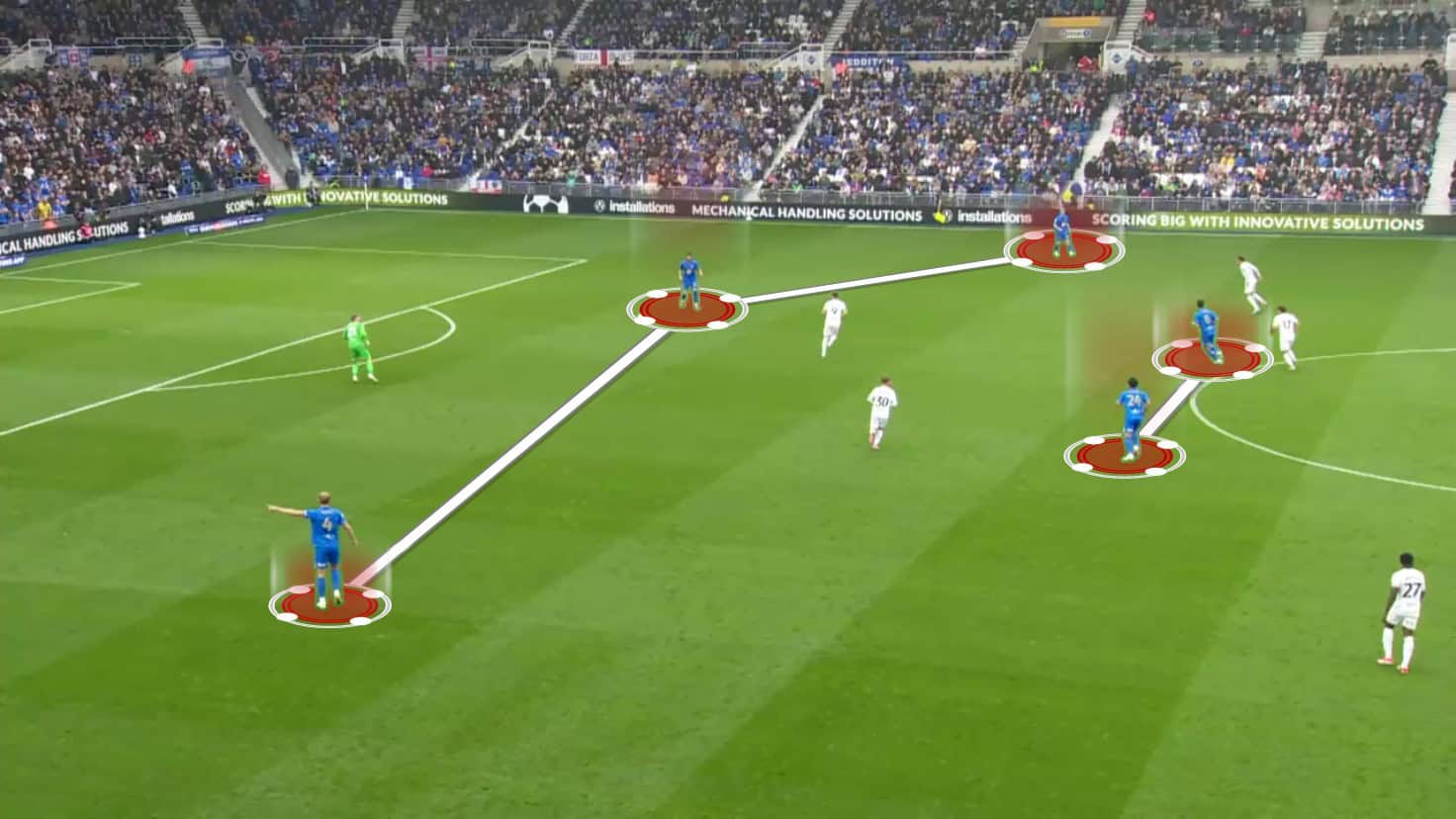
Birmingham City and Davies also face these problems, which are rather visible, but they try to own up to them.
As we can see in the picture above, Birmingham City heavily involve their goalkeeper in their passing game, mostly to distribute to the centre-backs.
Davies keeps one full-back close to the backline; most of the time, it’s the right-back.
The right centre-back stays close to the centre of the field, while the other centre-half moves outwards, playing on the edge, ready to dribble forward with his first touch at all times.
The two central midfielders stay incredibly narrow and close to the backline.
From there on, the two midfielders use the shadow movement principle.
The near-sided midfielder drops back to receive the ball while the far-sided midfielder moves in behind him, creating a ladder, but Birmingham City rarely use their midfielders in the build-up.
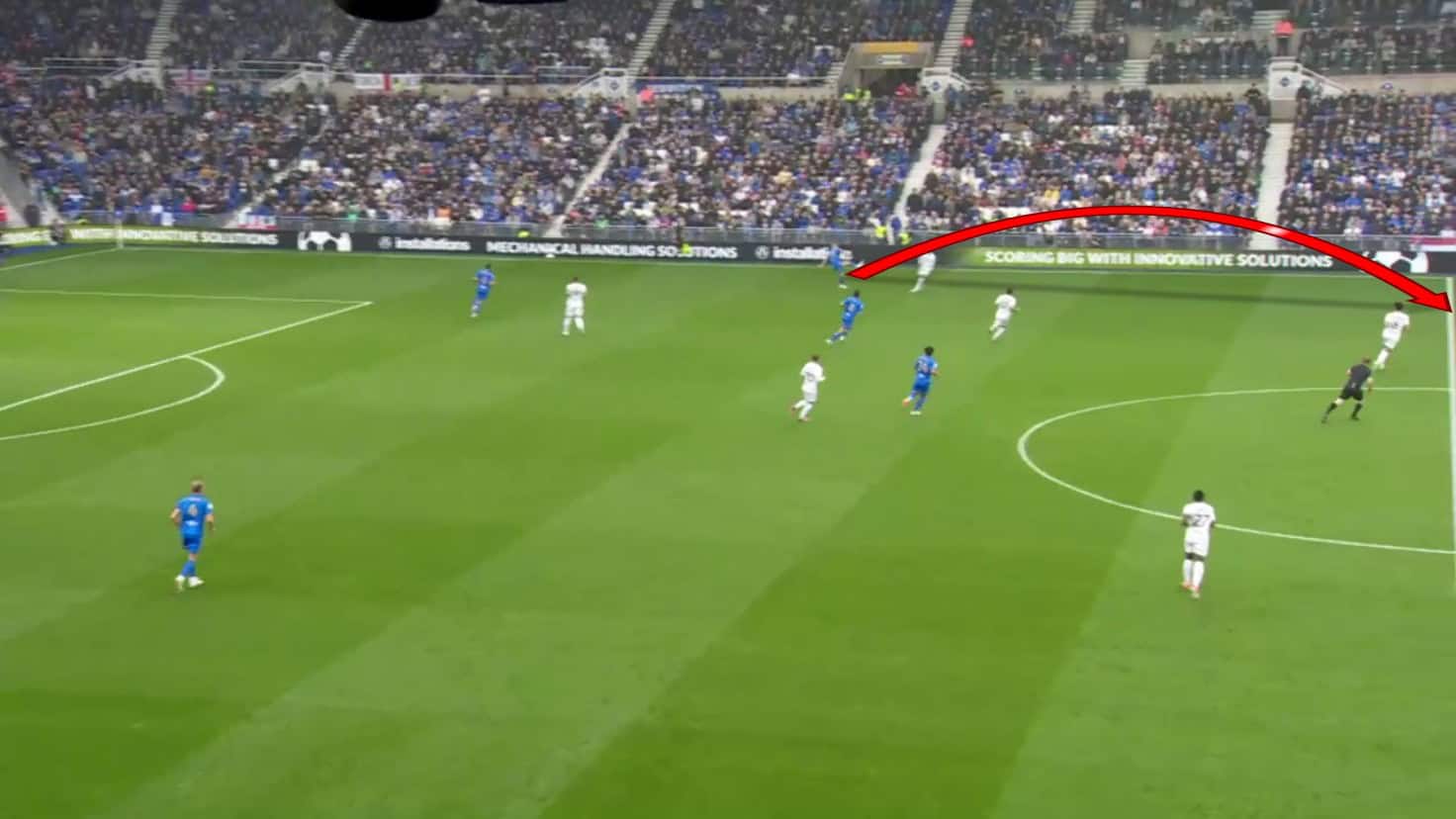
Most of the time, their first pass goes to the full-back, who then gets pressed and has to punt it down the field.
When building up in the first line, Birmingham City often use long balls as a tactical measure, but it rarely ends in success; they are very dependent on their striker making individual high-intensity actions to secure possession for the team.
Birmingham City are also very left-leaning when they build up deep in their own territory, and opponents have already figured them out after six games this season in that respect.
When building up in the second line, things change a bit for Davies‘ men.
They don’t involve their goalkeeper at all when they are pushed forward a bit further, so they keep their centre-backs narrow from this point on as well, with the midfielders now dropping back into the half-spaces rather often.
From then on, they lean towards their right side, trying to find their right-back, who is pushed up behind the opposing team’s midfield.
The other Birmingham City players are now moving diagonally towards the right side, trying to offer a first-time passing option in the middle of the field.
Still, most of the time, they just play it long in the general direction of their two strikers.
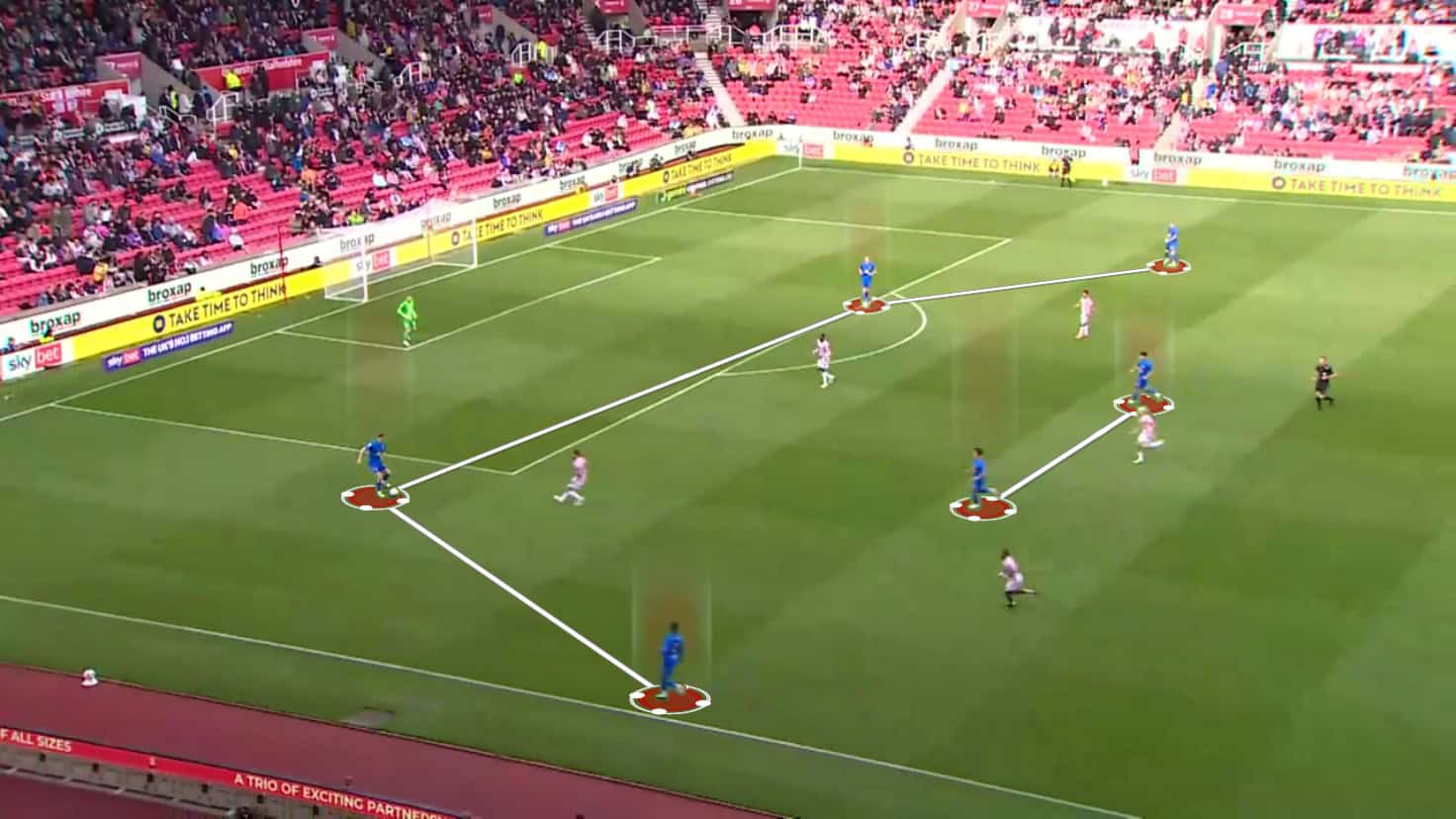
It’s somewhat disheartening to see, as the picture above reveals, that they have a lot of potential for growth.
With their wide backline and narrow double pivot, they often manage to create a lot of space that they could, in theory, exploit and create dynamism with through the shadow movement principles they use.
However, in the end, they often fold under pressure far too often.
Even when they have the numerical advantage, their backline often lacks the ability to play accurate short passes under pressure, so they resort to playing it long far too often.
In the end, Birmingham City have only scored five times so far this season, and this is largely due to their struggles in building up.
Defending Forward As A Unit
The 4-4-2 has been a standard formation for a long time, as it is effective in retaining possession of the ball.
Chris Davies is using that to its full advantage, as he often utilises the strength in defending in a deep block.
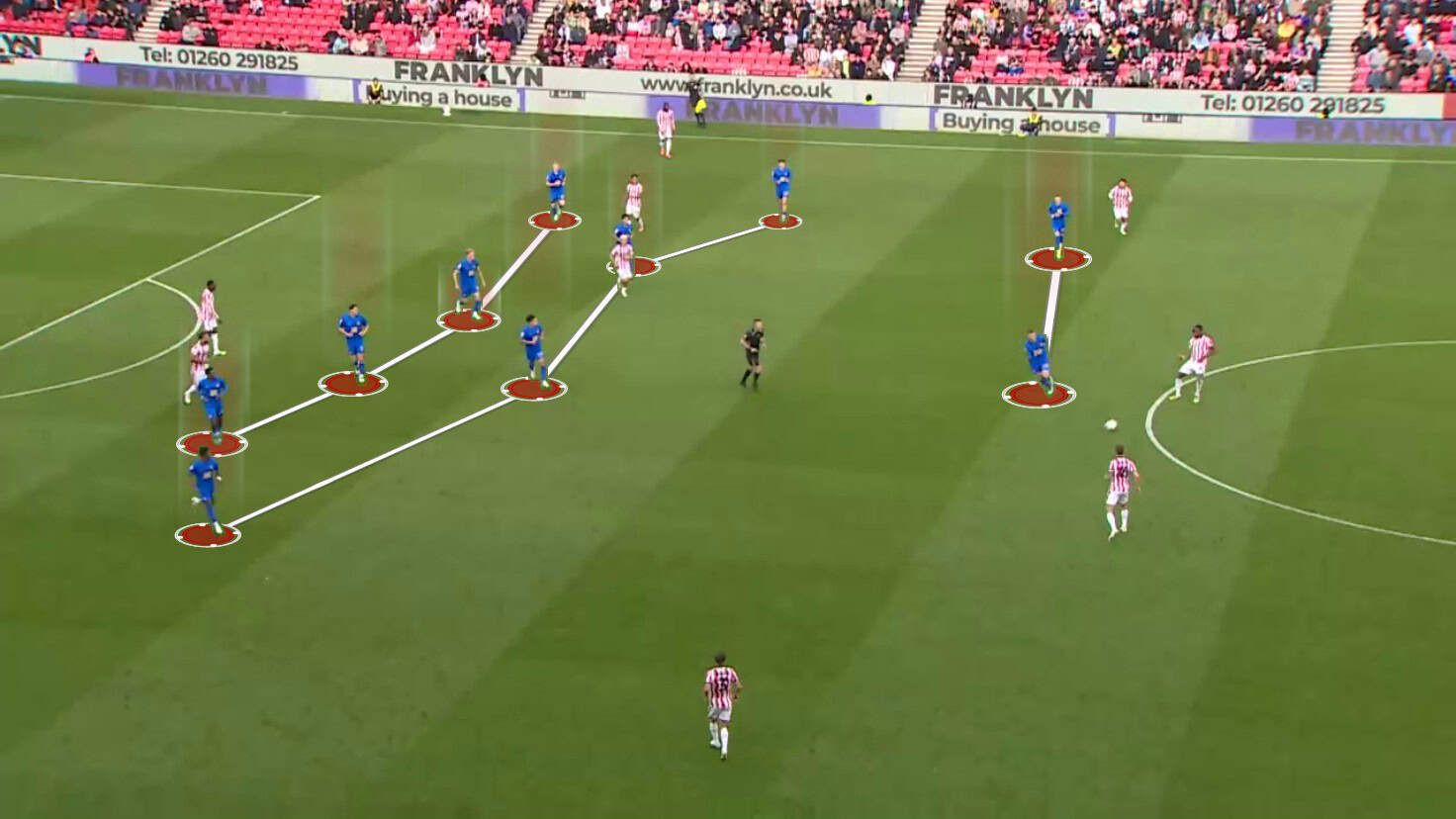
As we can see in their game against Stoke City, Birmingham City often fall back very deep into their own half, defending close to their box.
The distance between their backline and their four midfielders is often very small.
The two strikers, on the other hand, are often pushed high up the field, trying to put minimal pressure on the opposing backline.
Davies wants to keep the space very condensed, and looking at how it’s worked out for them so far this season, it was a good decision.
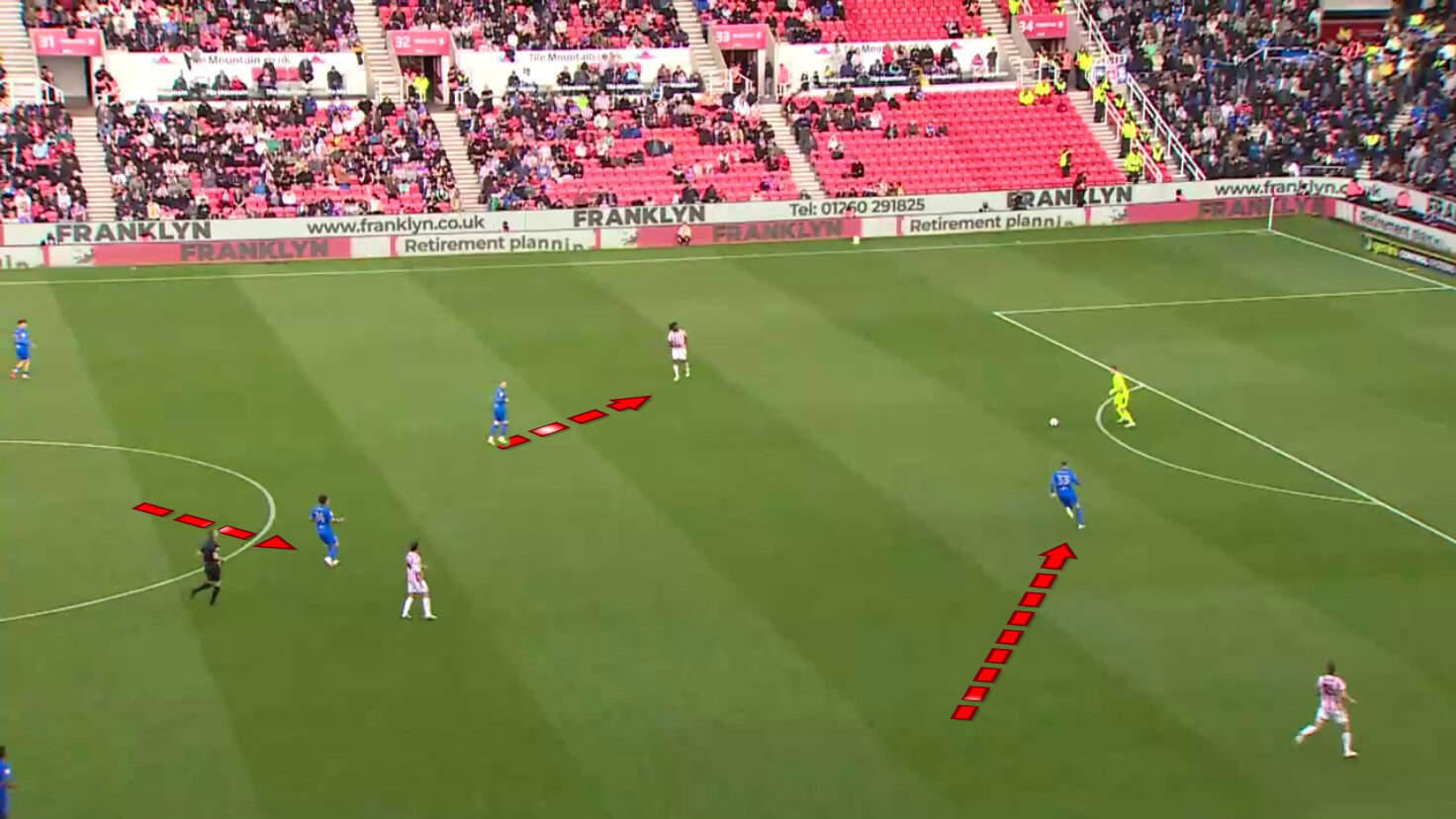
What Birmingham City does exceptionally well is move forward collectively off the block when they get the chance.
Instead of just staying back and hoping for the best, Davies has implemented a very aggressive and proactive approach that allows his team to transition quickly from defending in a block to good situations in the attacking press.
The moment their opponent tries to play backwards, the two strikers explode, putting pressure on the ball immediately, often forcing passes to the goalkeeper.
One striker then continues to run and pressure the goalie, while the other striker marks the opposing centre-half, and the midfielders cover the centre of the field.
This helps them exit power play situations quickly and reestablish control, even without possession.
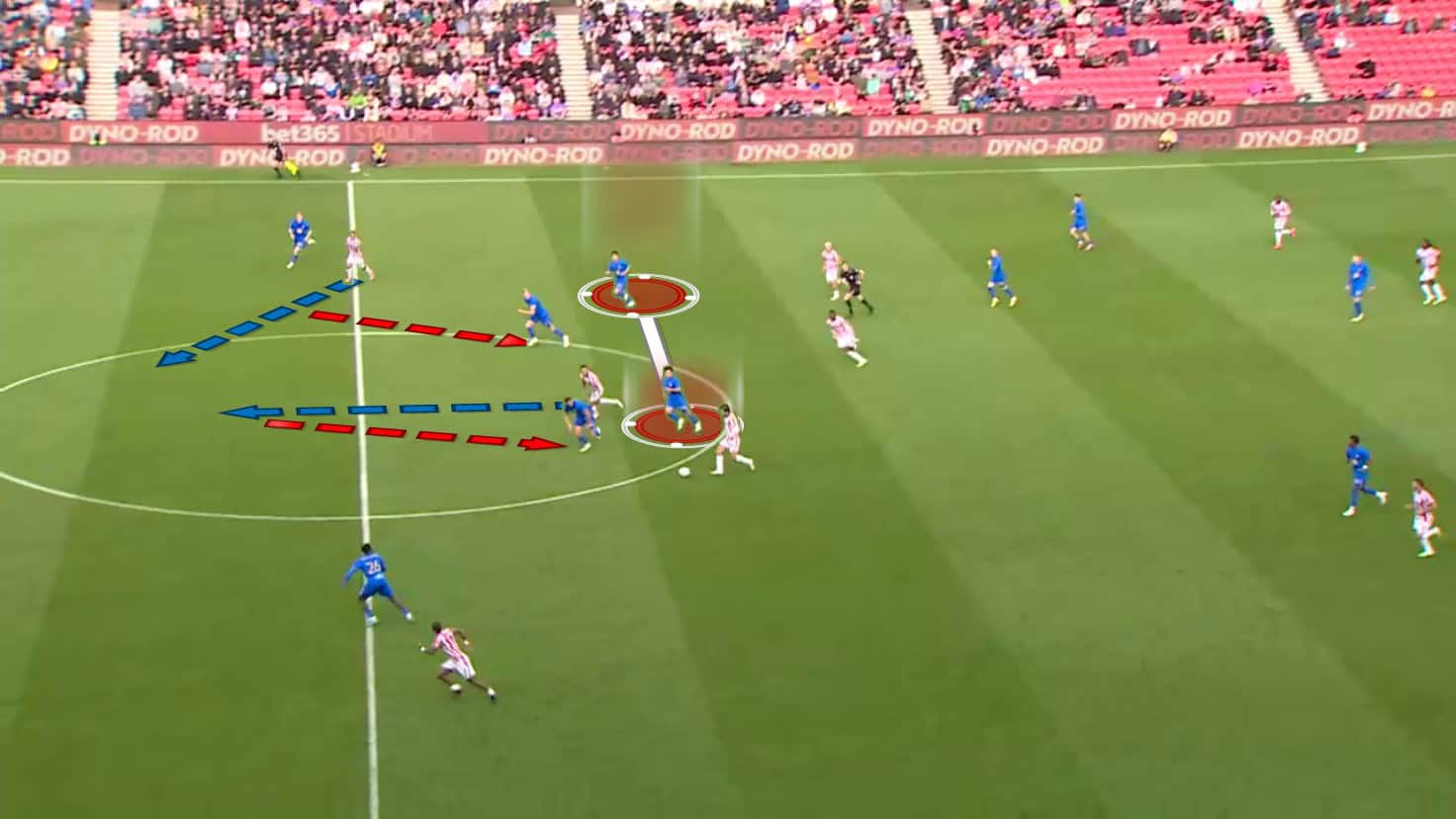
It doesn’t come without risk, however.
Davies‘ men are very aggressive in the centre of the pitch, and even the centre-backs often press forward.
However, the full-backs often fail to manage this correctly and create a second offside line, thereby opening up opportunities for through passes right through the centre of defence.
Birmingham City have been caught once or twice per game in these situations, and it seems weird.
Davies has them defend very well, and the solution seems rather obvious, so it will be interesting to see how they respond to that.
Conclusion
In the end, Birmingham City look decent under Chris Davies and might actually have a chance to stay in touch with the promotion playoff places until the end of the season.
Their work against the ball is really good and forms the basis of their footballing identity.
They look comfortable in every situation against the ball, and it shows.
With the ball, the team struggles, though, especially while building up from the back.
Their struggles in the passing game lead to many long balls and, therefore, many uncontrolled actions and second balls.
While this works out for them at times, it doesn’t appear to be a sustainable approach.
Still, the team has had a decent start to the season, despite their big signings not being perfectly integrated into the squad.
Time will tell if their individual class can help them solve these issues.
