
Even at a tough moment in Barcelona‘s history, one of the most successful and popular football clubs in the world, with a strong tradition of producing talented players and playing with a tiki-taka style of play, La Masia produced two world-class talented players for the first team: Pablo Martín Páez Gavira and Pedro González López, better known as Gavi and Pedri.
This was in sync with the return of club legend Xavi Hernández as a coach.
Under Xavi’s command, FC Barcelona is attempting to execute positional play, maintain possession, work the ball through various channels, and press high to regain possession quickly when lost.
They are big on using some interactions in the half-spaces where Gavi and Pedri are his primary lances.
However, despite their different abilities, the duo complements each other perfectly, with the same contrast and completion between Xavi and Iniesta.
Every game has its tactics, but any manager has principles, and no manager can change all tactics from one game to another.
Hence, this tactical analysis, in the form of a team scout report, will provide a simple clarification analysis for the half spaces and how Xavi uses Pedri and Gavi in his tactics.
Half-space’s short clarification
The half-space or interior corridor is an area of the field located between the sideline and the central lane.
It is also known as half-channels and is often used as channels for attacking play.
As explained previously, the positional approach involves increasing the number of passing options available and having players position themselves in defined areas.
Theoretically, its definition seeks superiority and fluidity, with players required to adhere to certain principles, such as diagonality and dynamism.
Diagonality is not just the difference between diagonal, square, and vertical passes but also the existence of the half-spaces between the centre and wings.
Thus, in the half-spaces, the fields of view are not vertical, but diagonal.
Looking diagonally from the half-space towards the goal gives more options and significantly more space to work with.

FB would be in a lose-lose situation with a long distance and different zones to defend against.
Half-spaces provide an animated dynamism for the combinations by binding the central and wing zones, which effectively confuses the opponents.
Variant one: Keeping wingers wide
The Catalonian coach’s main format seems to be a 4-3-3 in possession.
Using asymmetric fullbacks, the RB inverts deeply to the 1st line to create the back three while the LB moves into a high and wide position.
At the same time, while De Jong or Busquets operate the #6 role, Pedri and Gavi both exist in half-spaces in the gaps in the opponent’s midfield.
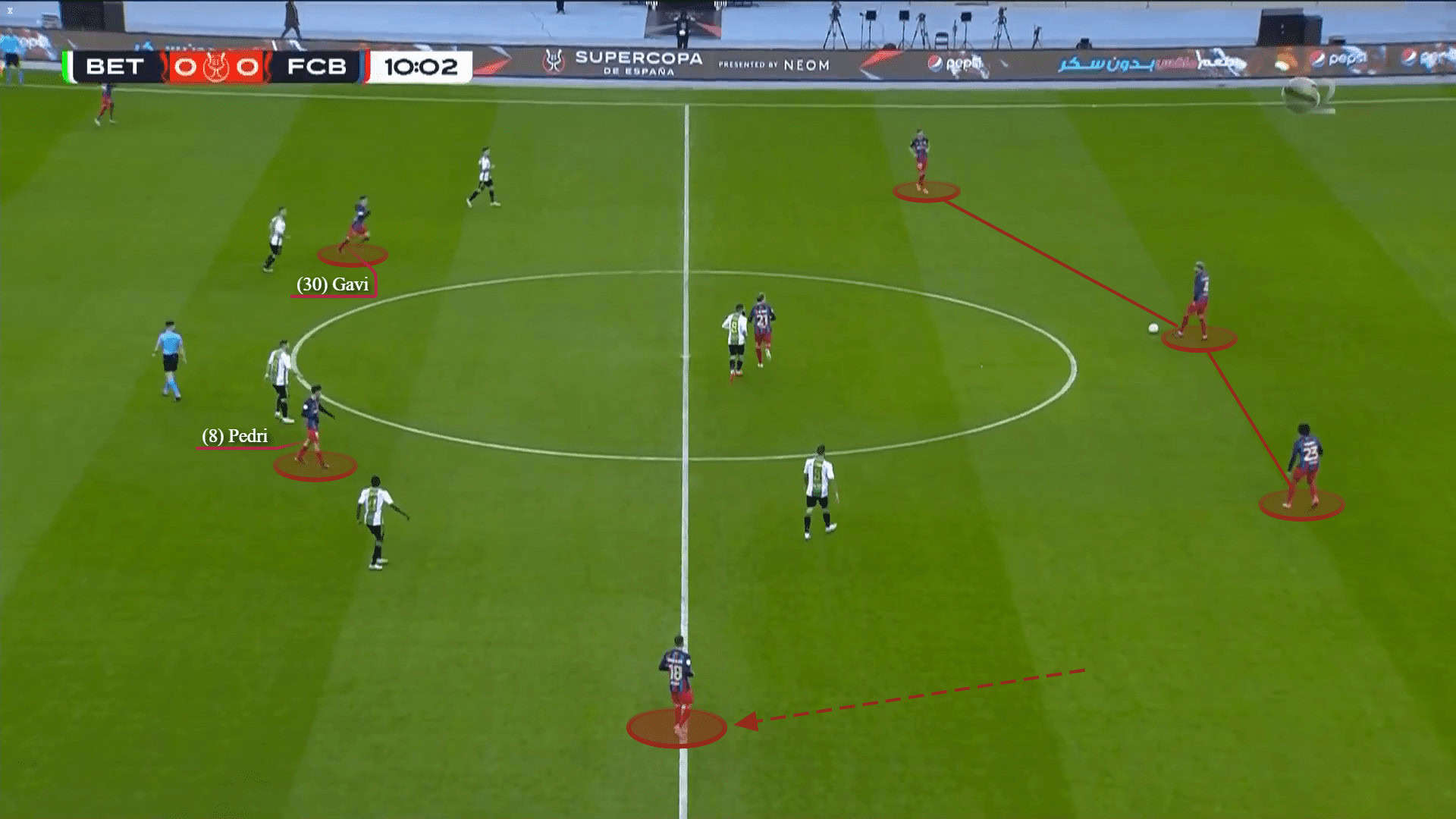
Meanwhile, Pedri and Gavi operate as #8s.
Football is a dynamic, not a static game, so maintaining two wide-wingers is not static.
As mentioned before, the FB seems to overlap; thus, an interconnected action occurs between the fullback and the winger, who moves from wide into the inside channels, which is relative to Pedri.
The Spanish midfielder drops to make the play from a deeper area with the #6 and binds the lines.
This trio’s dynamic motion in different zones creates tactical dilemmas and provokes the opponents to leave their positions.
At this moment, both sides are in an asymmetric form because the other winger is hugging the touchline, and Gavi is higher in the high space.
The striker’s position is also vital because his movements depend on the deep runs of Gavi and the inside winger from the intermediate channels.
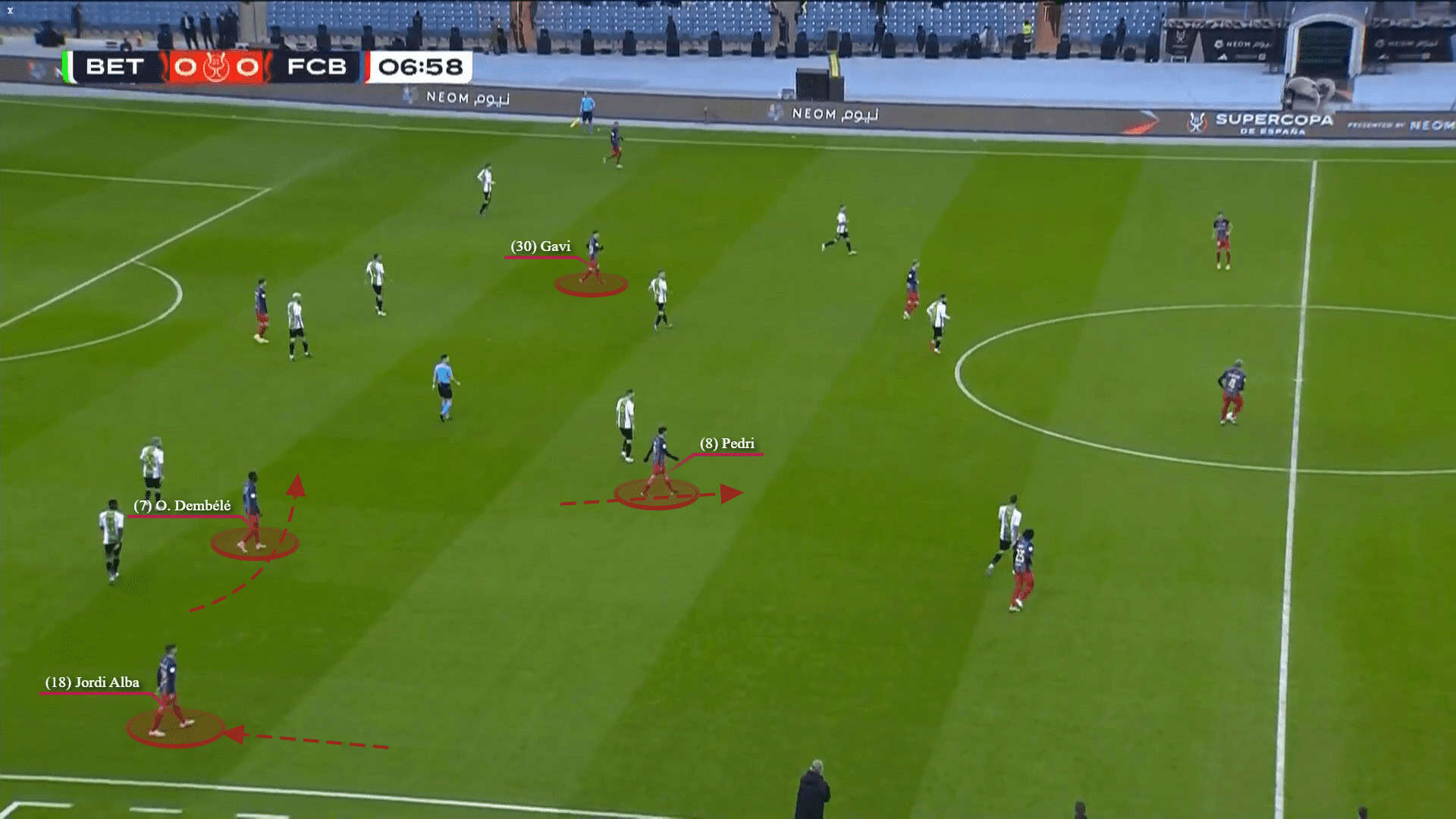 Pedri is dropping off through the left side motion, while Gavi is still high.
One higher is ready to attack the backline, while one lower is more involved in playmaking, which matches their style of play.
Furthermore, the narrow existence of the winger in the left half-space basically supports the direct attack by playing long above the defensive block and implementing deep, vertical, and diagonal runs.
While Lewandowski drops off to combine, Gavi and Dembélé attack the backline with vertical and diagonal runs.
Commonly, Barcelona intend to attack directly by manipulating the defenders, often with the striker dropping off.
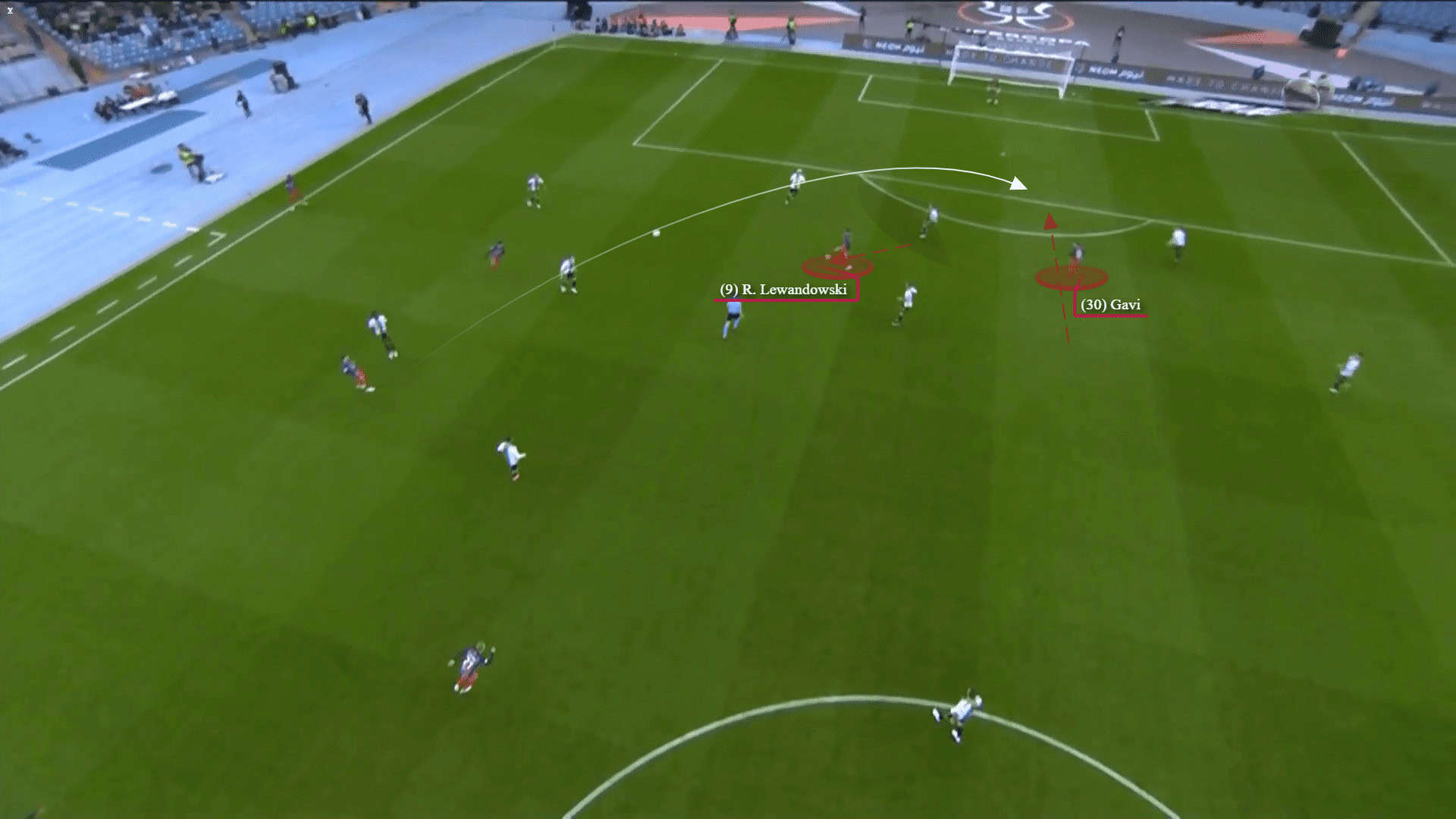 In the blind side of the far centre-back, Gavi is running in behind.
The above attitude is likewise typical when switching the play to the underloaded side, using the high and wide winger, which may occur after executing a wide triangle.
Both #8s are also essentially a portion of these operations.
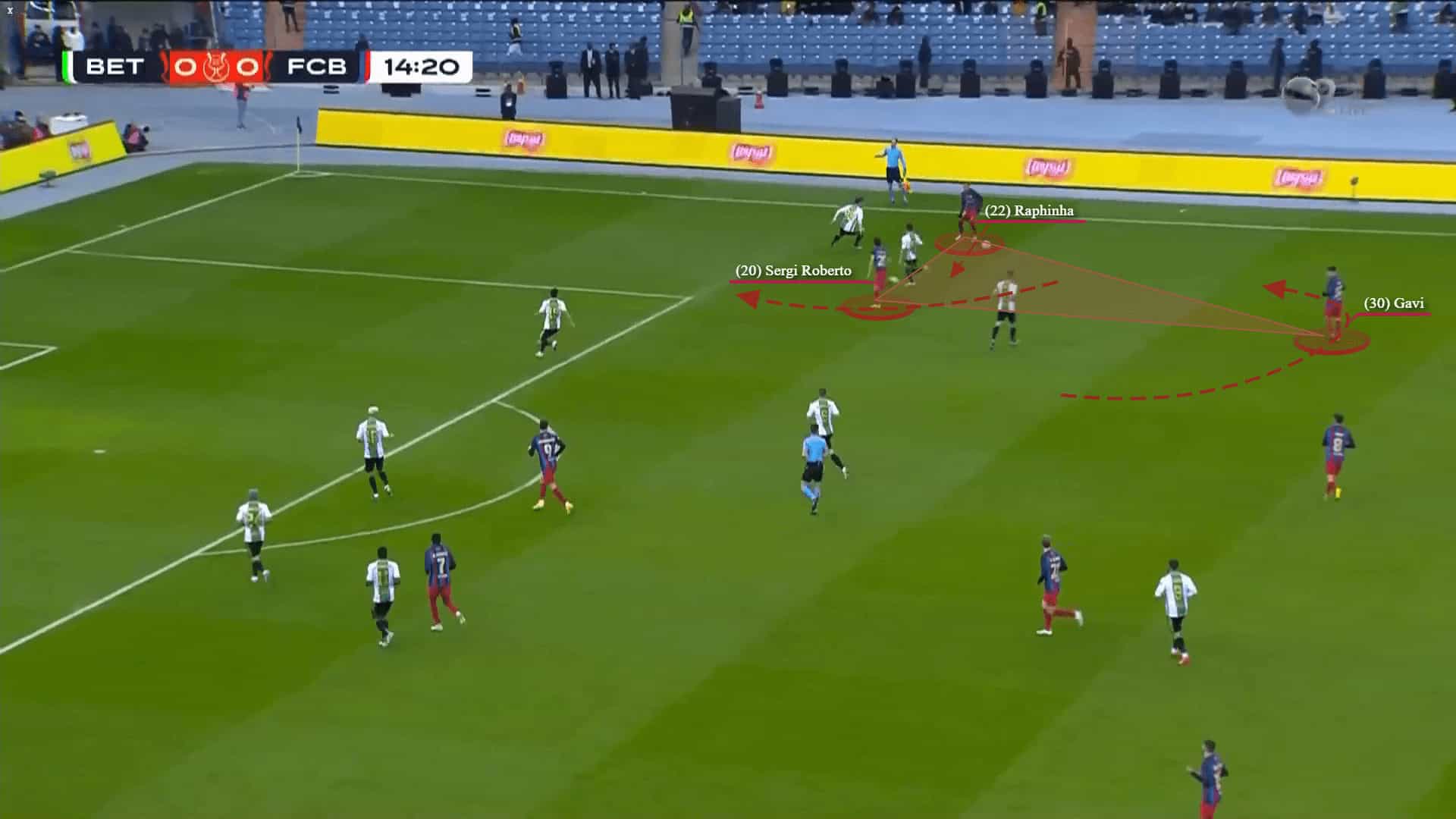 Barcelona are executing a wide triangle.
The previous patterns and others Xavi attempts to implement.
Still, Gavi and Pedri significantly impact fluidity, especially in the switches that disassemble their opponents’ defensive blocks.
Variant two: Losing a position for another
Under the same principles of play, Xavi seems to change a little, especially in the big games, by employing Pedri and, recently Gavi in El Clásico in a high position on the left side with some different roles compared to the previous ones, leaving the left winger out for a deep dynamism by the presence of De Jong and Busquets together.
The starting point of the left wing changes slightly when Gavi or Pedri are playing there, as their presence does not start wide but rather from the half-space, which in turn pushes the left back forward strongly to the last line.
The change in motion has other implications.
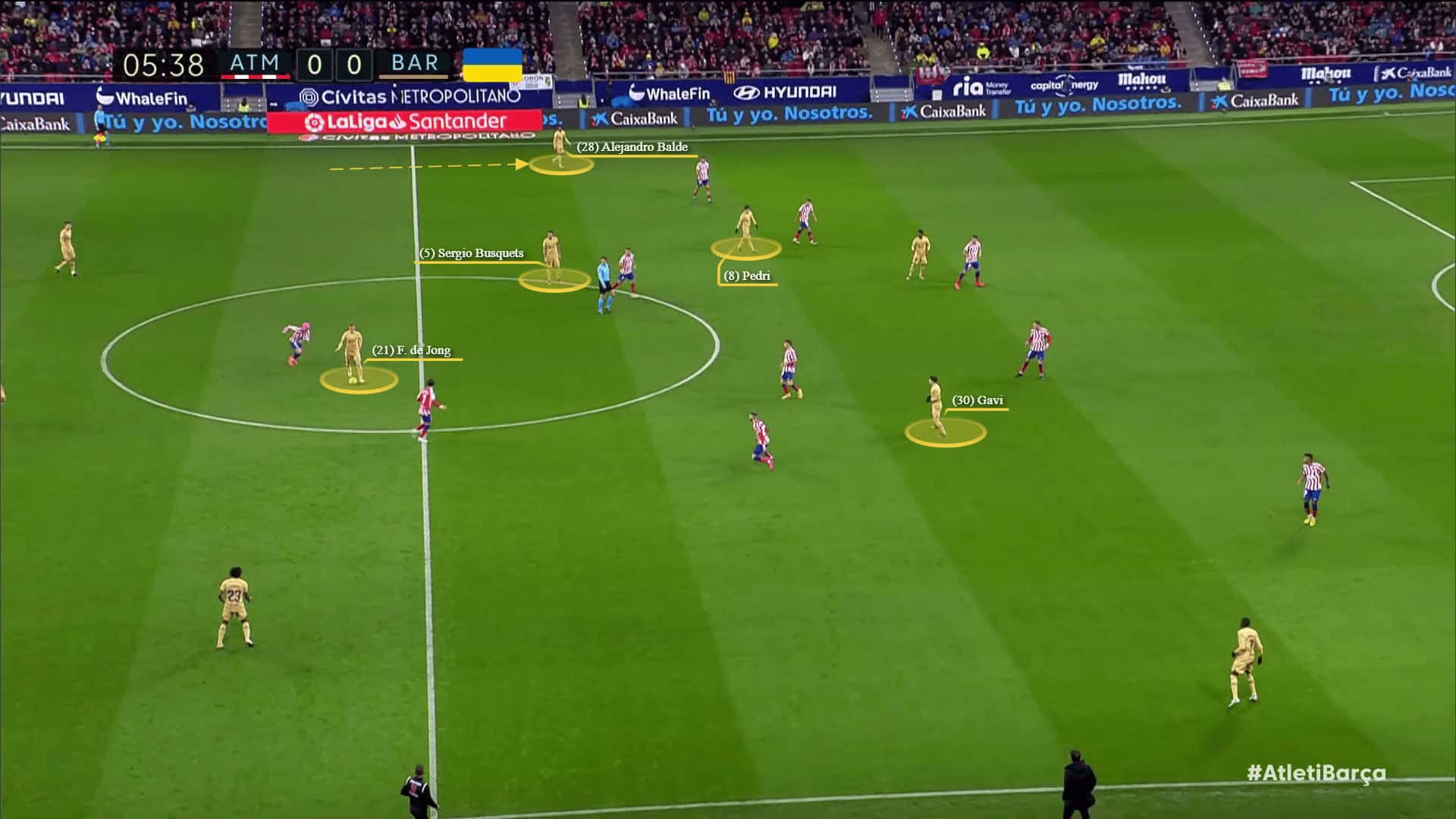 Pedri is starting inside the left half-space instead of the left wide winger.
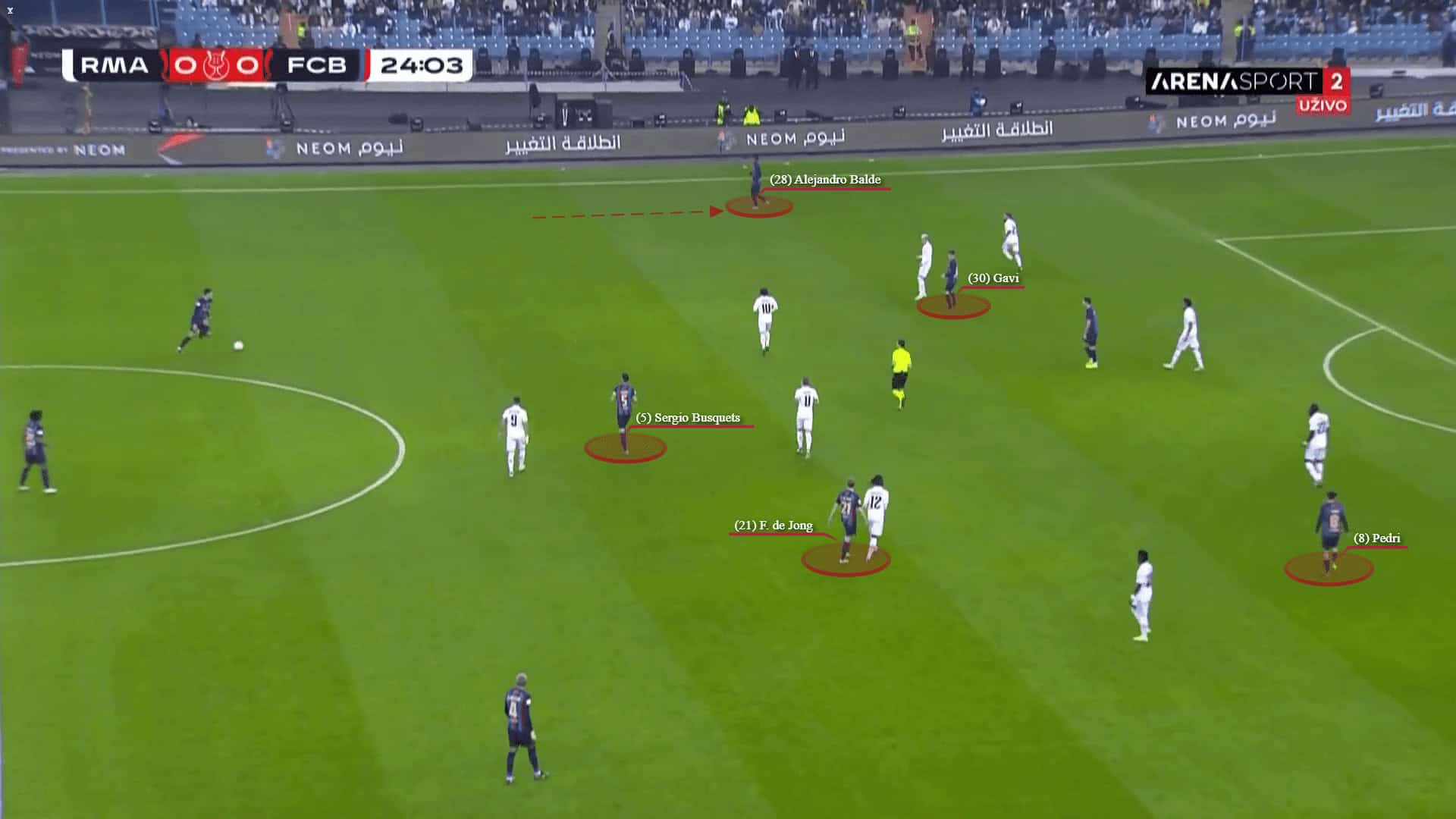 Gavi is starting inside the left half-space.
Pedri’s presence guarantees that Barcelona have an excellent playmaker between the lines.
With his brilliant first touch, he plays in the shadow of the midfield, giving Barcelona an exceptional positional advantage, while Gavi is still running behind the backline.
 Pedri utilizes the positional advantage and receives the ball between the lines.
Meanwhile, Gavi is running behind in the gaps
Pedri usually decides to drop off when there are no options to penetrate.
His dropping deeper could provoke a defender to step forward with him, and then a space appears ready to exploit.
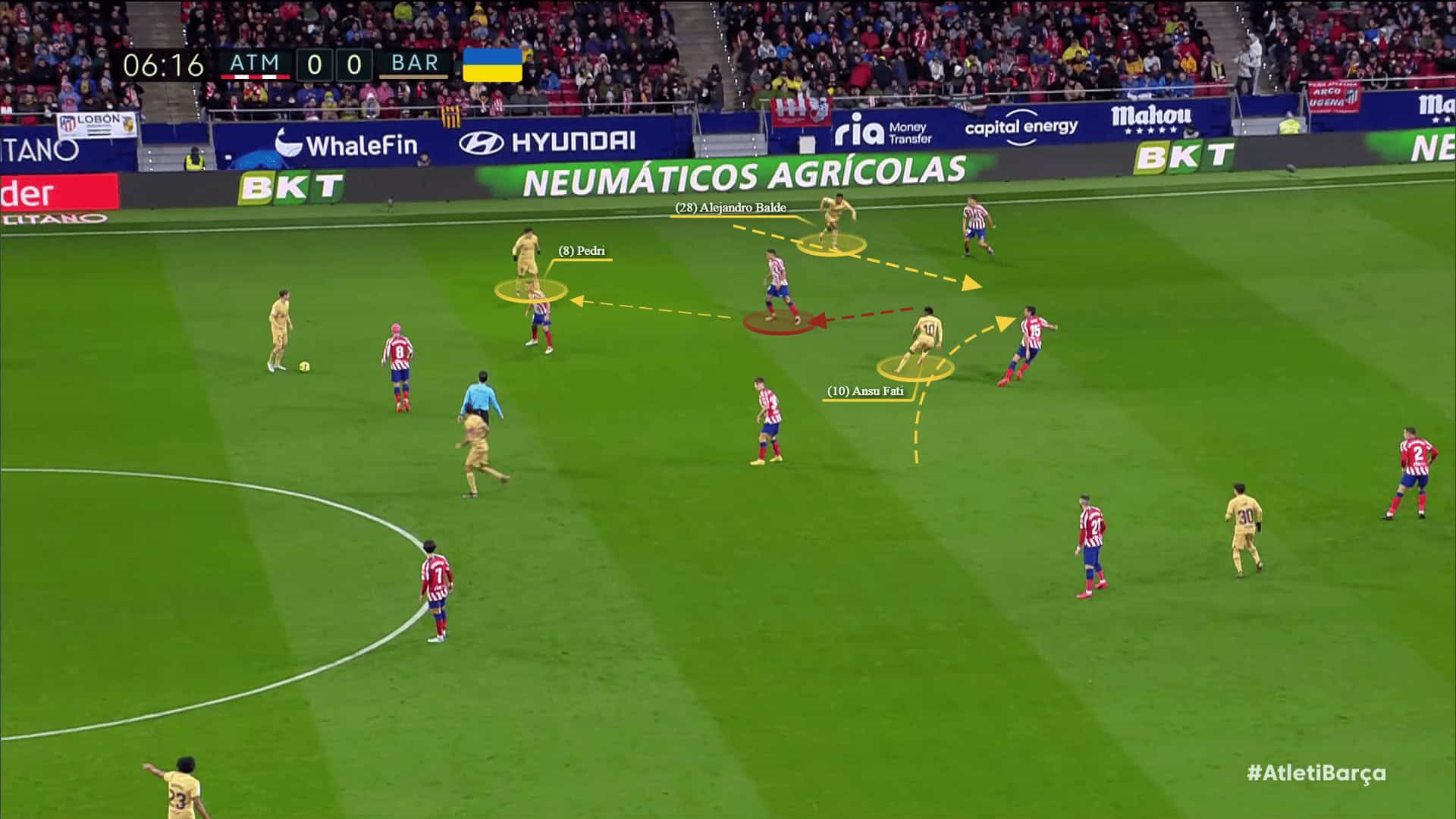 Pedri is dropping deeper, which provokes the defender to follow him.
The above attitude results in a pattern of changing the direction of the attack or switching the play.
Usually, teams that execute the positional attack attempt to switch to isolate the far winger, leaving a big space versus the opposite fullback, and having the qualitative advantage.
However, with this pattern, Pedri contributes to switching between both half-space channels, overloading one and then switching to the underloaded one.
Meanwhile, the defensive block has little time to reorganise again with the large switch to the far side.
Even when penetrating around the central area from a closer distance, the far half-space ball carrier has the option to send to the far winger.
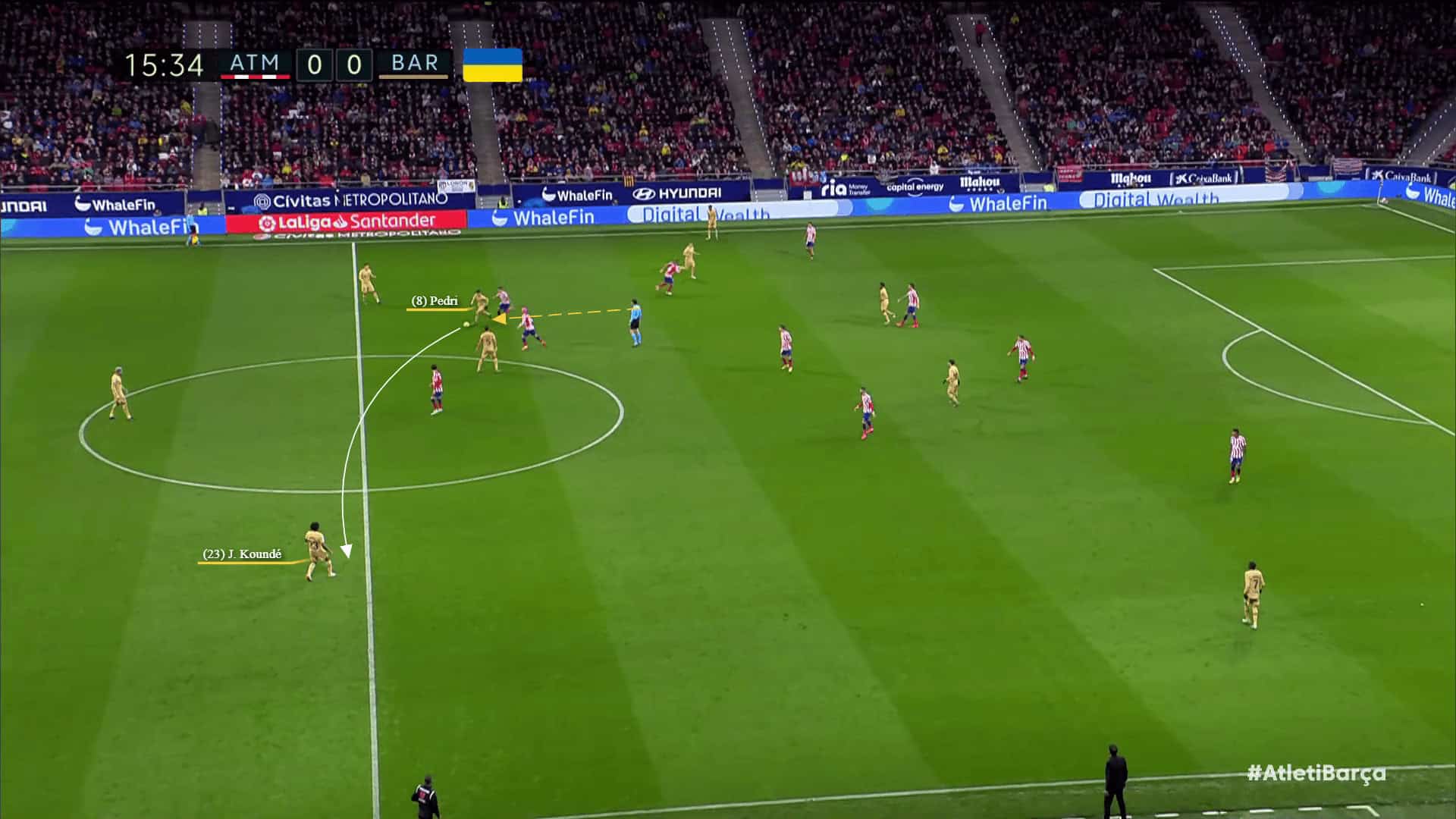 Pedri is dropping off to switch from the overloaded half-space.
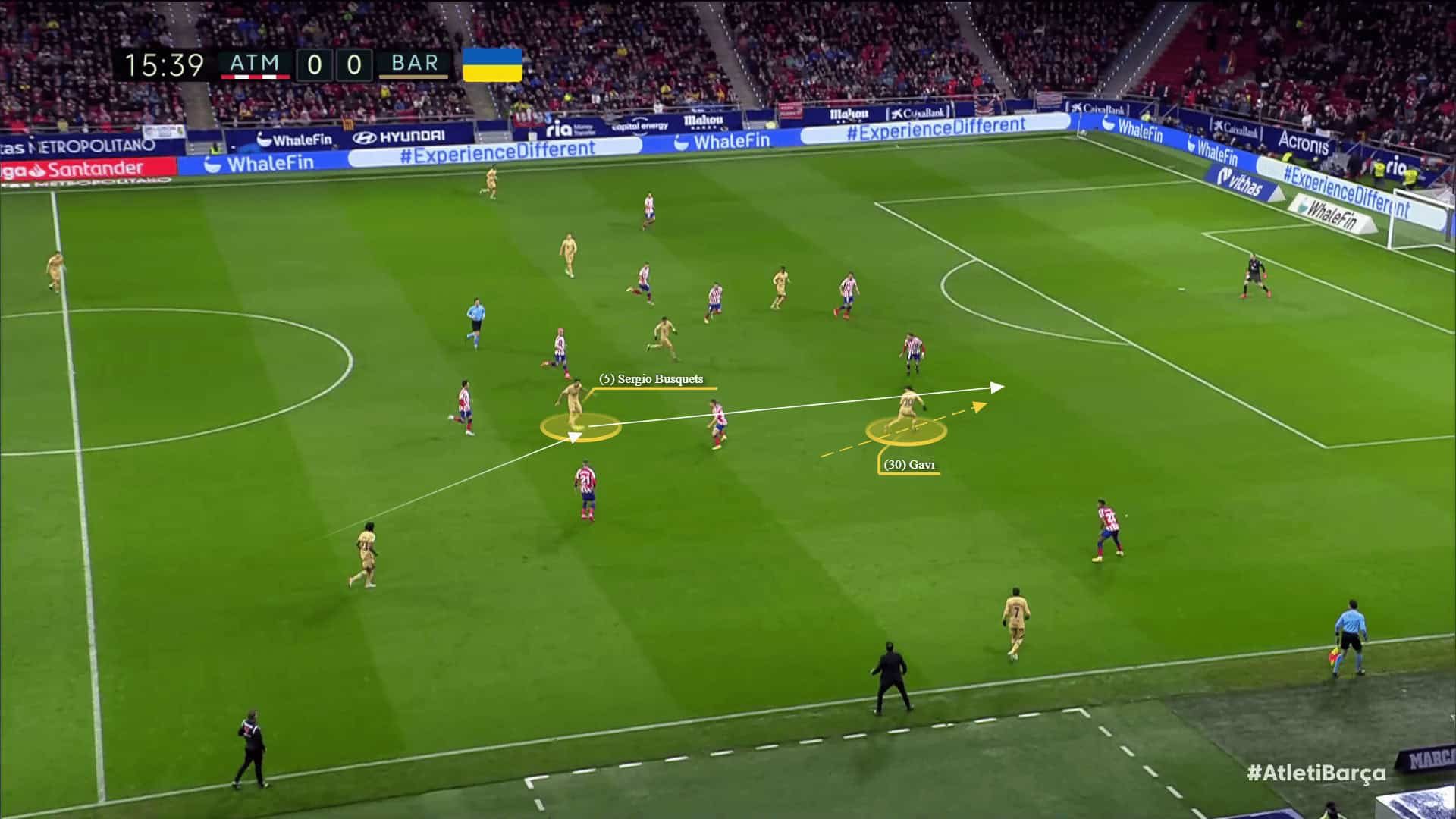 Switching from half-space to the other, Gavi runs vertically to receive.
Another idea from the dropping of Pedri is about the presence of de Jong in a deep position.
De Jong’s connection with Pedri’s movement is vital for the fluidity of his progressive runs and dribbles that break the lines.
Busquets would be a central option, and an anchor would protect the midfield.
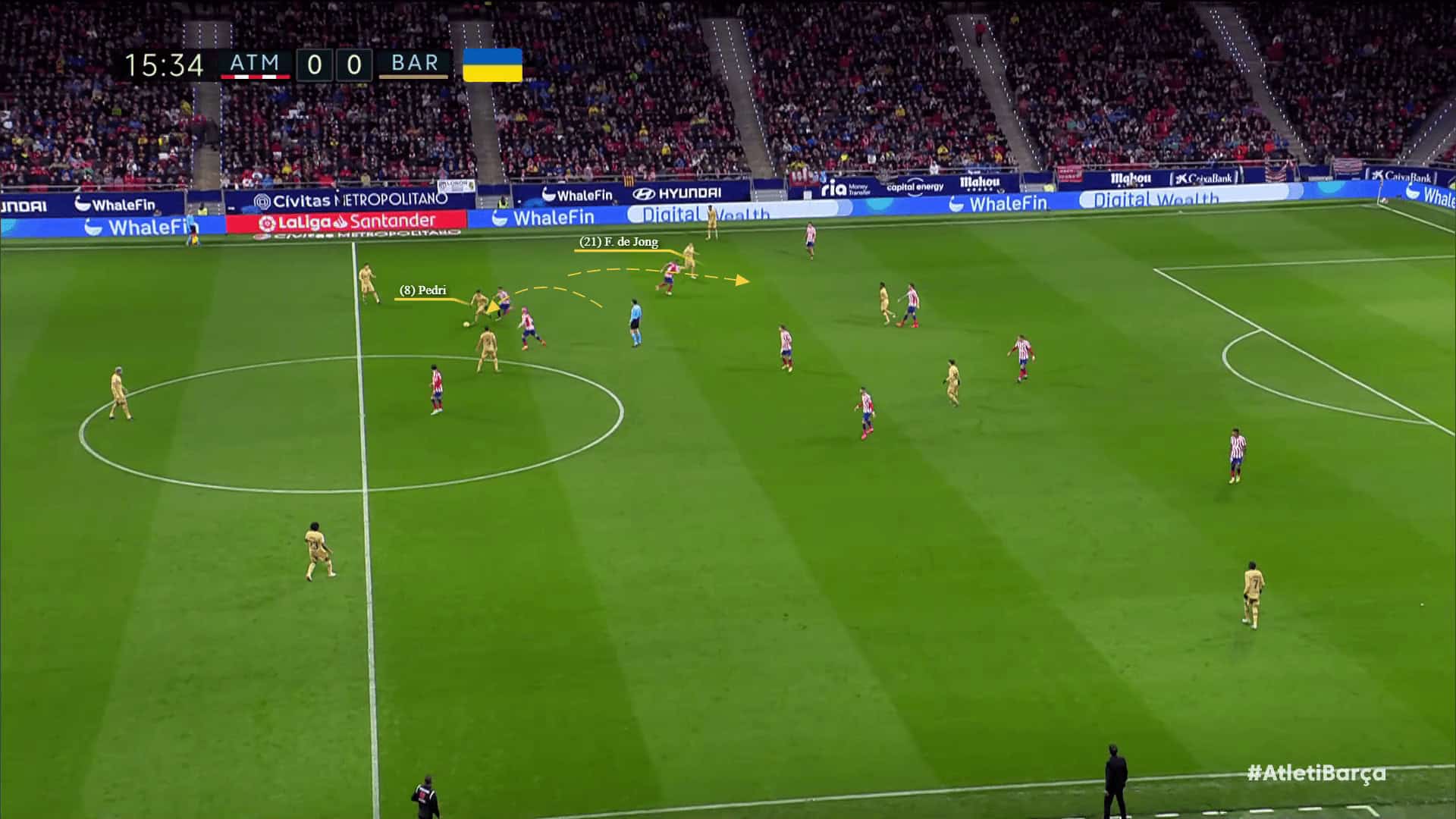 De Jong’s connection with Pedri’s movement
We started with the half-space, so let us end with it.
Exploiting half-spaces in transition
The usage of Gavi and Pedri through the half-spaces for the team in possession has been presented; however, the significance of the half-space also applies to the defense.
Essentially, this attitude is evident in their first goal against Real Madrid.
Below, while applying a high-pressure scheme, Barcelona had closed the wide channel, forcing the ball carrier to pass central in the right half-space, while constructing a pressing trap.
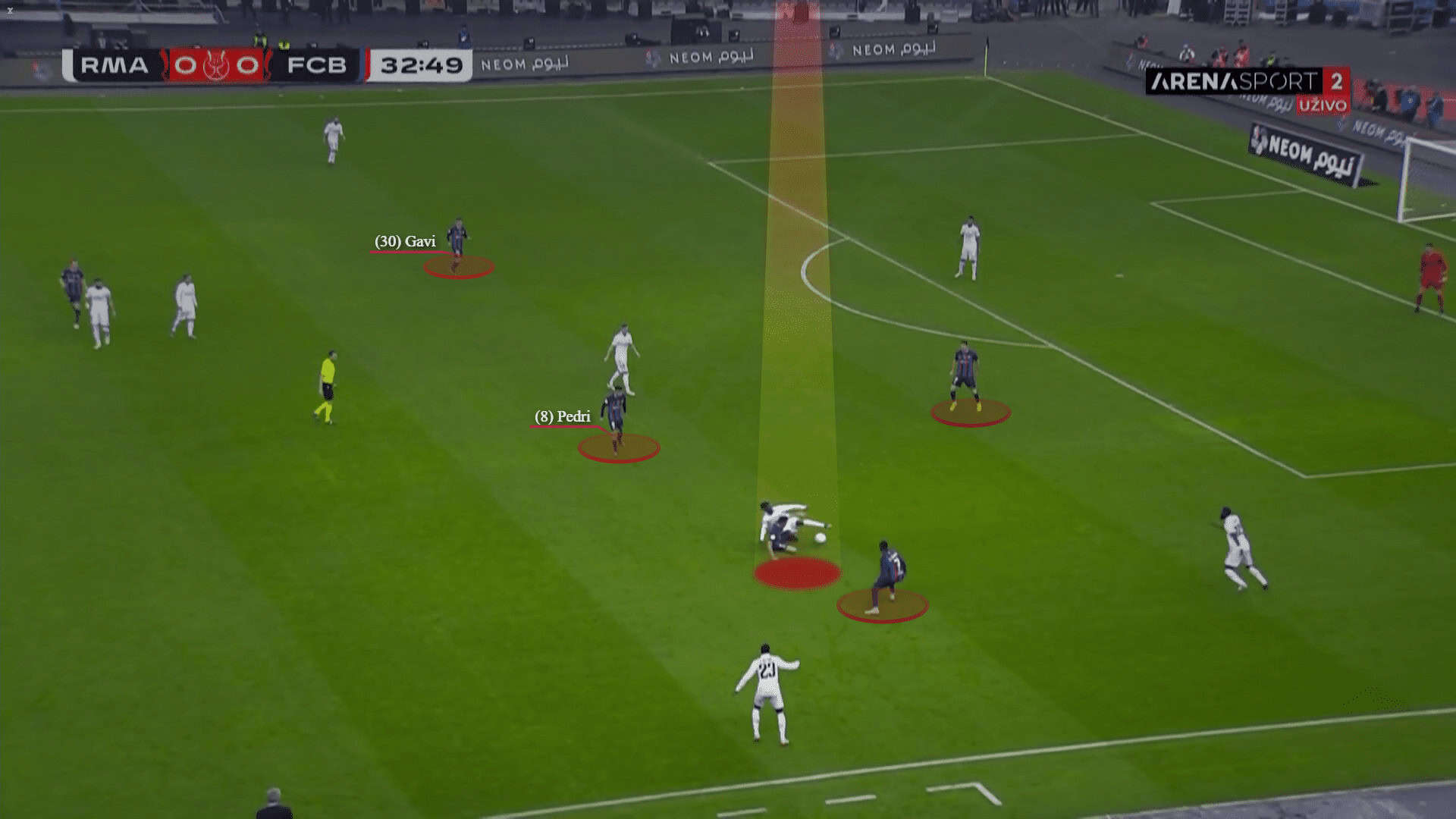 Barcelona are applying a pressing trap into the half-space.
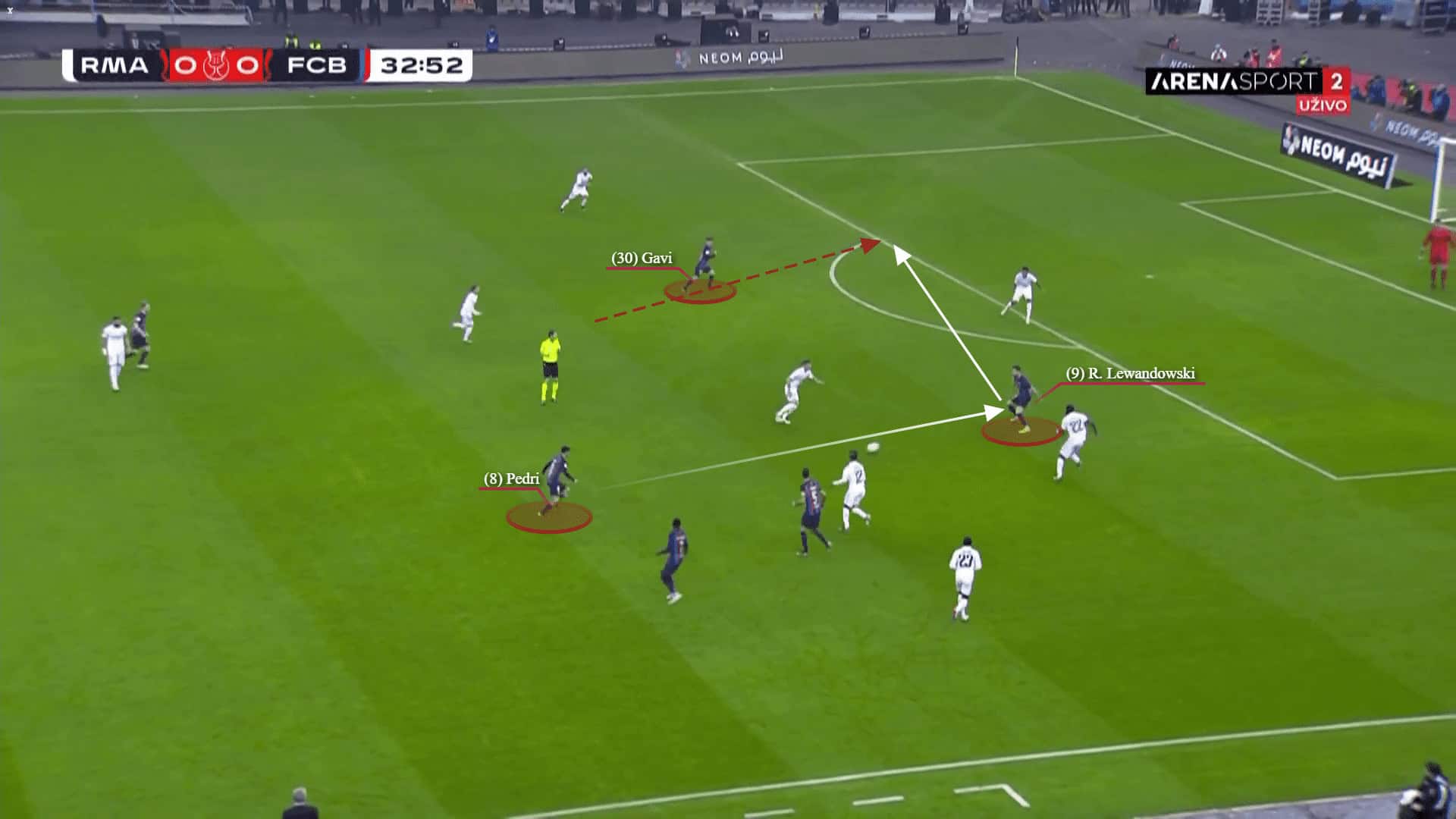 Reaching Gavi who is running in behind from the other half-space.
Once they got the ball back in the half-space, Pedri quickly released towards Lewandowski, who then played to Gavi.
Gavi supported the transition with a deep vertical run from the other half-space before eventually scoring.
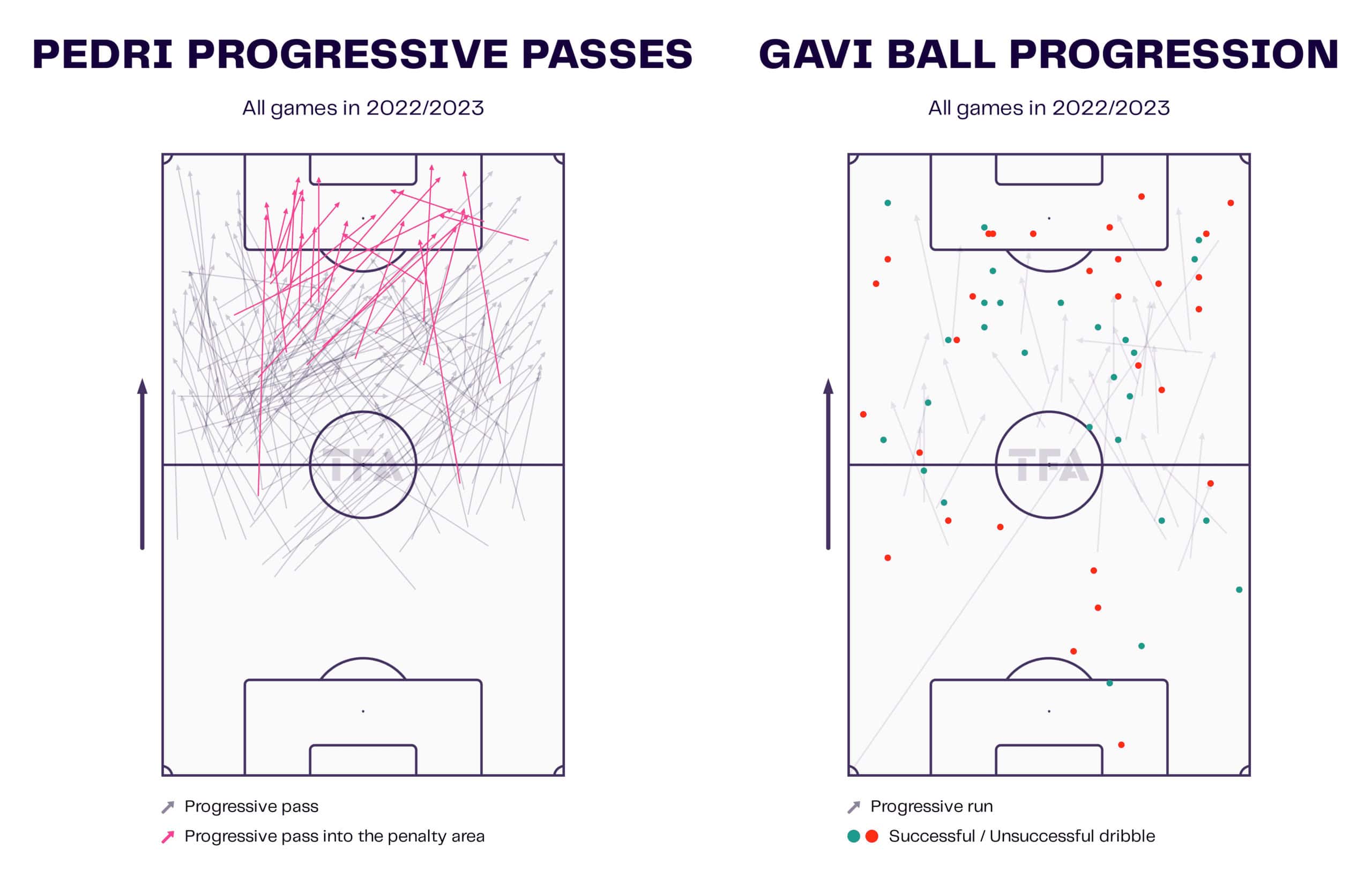
Conclusion
In conclusion, this tactical analysis examined how Xavi utilized Pedri and Gavi.
Despite losing their fluidity frequently with Xavi, Barcelona are developing day by day.
La Blaugrana is a team with a rich history of success and a strong tradition of producing talented players.
Under Xavi’s guidance, the team is attempting to execute a positional attack using the tiki-taka style of play that has brought the club much success in the past.
Gavi and Pedri, with their distinct abilities, complement each other perfectly and are key players in Xavi’s tactical approach.
Let’s see how far they all can develop.
