
Five games into Ruben Amorim’s first start to a Premier League season, there are likely to be mixed feelings among Manchester United fans.
Though the Red Devils currently sit 11th in the English top flight, Wyscout’s expected points (xPTS) metric places them as high as fifth.
An EFL Cup defeat to Grimsby Town and a 3-0 Manchester Derby thumping at the Etihad Stadium will serve as particularly disappointing lows and reminders for Man United fans that the team is very much still in transition at the moment.
On a positive note, however, according to Wyscout, Amorim’s side has generated the second-most xG (9.66) in the league and the most shots (12.78).
This, along with some glimpses of entertaining, attacking football, will perhaps reassure supporters that the club is moving in the right direction.
On top of new signings like Matheus Cunha, Bryan Mbeumo and Benjamin Šeško, who have bolstered the team’s attack this term, United have welcomed Luke Shaw back into the starting XI for his longest run of Premier League starts since late 2023.
As the title of this article suggests, we will have some negative things to say about Luke Shaw.
However, there are significant positives Luke Shaw has brought to Amorim’s side this season.
For starters, Shaw has been solid in the air so far this season, even contributing heavily to United’s second goal against Chelsea last weekend via an aerial duel win.
The 30-year-old has really stood out this term in possession, contributing a relatively high 9.71 progressive passes per 90 at a slightly above-average success rate of 69.23%.
Luke Shaw has been quite strong at helping United progress into the final third, playing a key role in the team’s ball progression phase via passes and, indeed, progressive carries.
Defensively, only four Premier League sides have conceded more goals than United (eight) so far this term, though they haven’t conceded a ton of shots (7.28 per 90, fifth-best).
At the back, their issue has been giving away a small number of big chances, leading to United having the highest xGA per shot (0.181) in the league in the first five games.
In terms of defensive duel success, United rank joint seventh alongside Manchester City and Burnley, with a success rate of 63.7%.
There have been some bright performers in the backline who have helped the team achieve those numbers, such as Amad Diallo, with 83.33% defensive duel success, Matthijs de Ligt with 80.56%, Diogo Dalot with 80%, and Noussair Mazraoui with 76.92%.
Shaw is not one of those who has covered himself in glory through his performance in defensive duels, in particular, however, which is where things take a negative turn.
The two members of United’s backline with the most Premier League minutes this term are Matthijs De Ligt and Luke Shaw.
Luke Shaw’s defensive duel success rate stands at 57.14% at the time of writing, which is lower than that of all Man United defenders this term, bar Leny Yoro, who is at 53.33%.
This Manchester United tactical analysis and team-focused scout report will analyse Luke Shaw’s defending this term to highlight where his defensive duel success has fallen down, how it’s had a negative impact on United, and how Shaw can potentially learn from his Old Trafford teammate Lisandro Martínez to improve on this particular weakness.
Luke Shaw Scout Report: Defensive Duels
We’ve identified three main areas where Luke Shaw’s defending has fallen below par this term.

The first area has been overcommitting or being overly aggressive in 1-on-1s.
Here, the Arsenal ball carrier draws Shaw into a tackle to which the Man United defender commits a little early, overestimating his ability to get out to the attacker quickly.
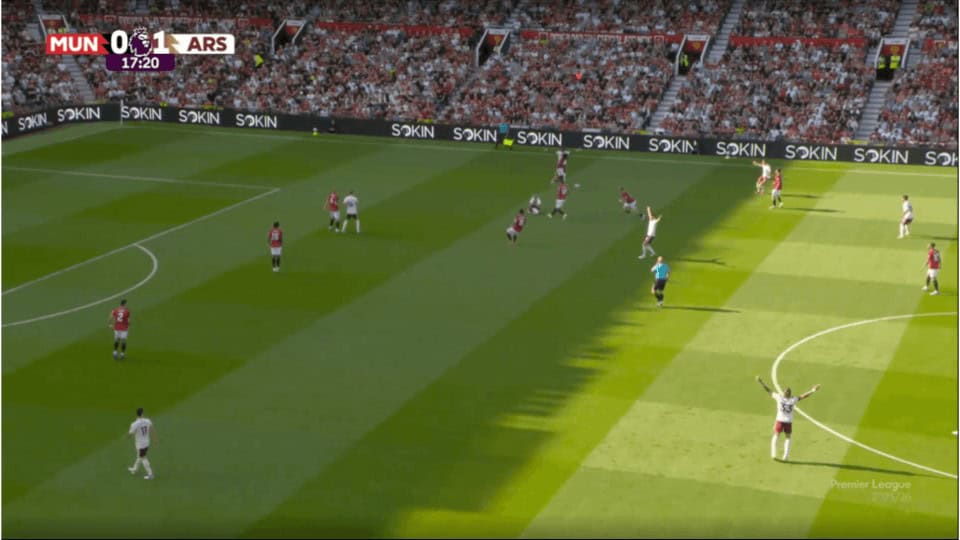
The ball carrier taps the ball away from Shaw, winning a free kick for a strong set-piece side in Arsenal just on the edge of the final third.
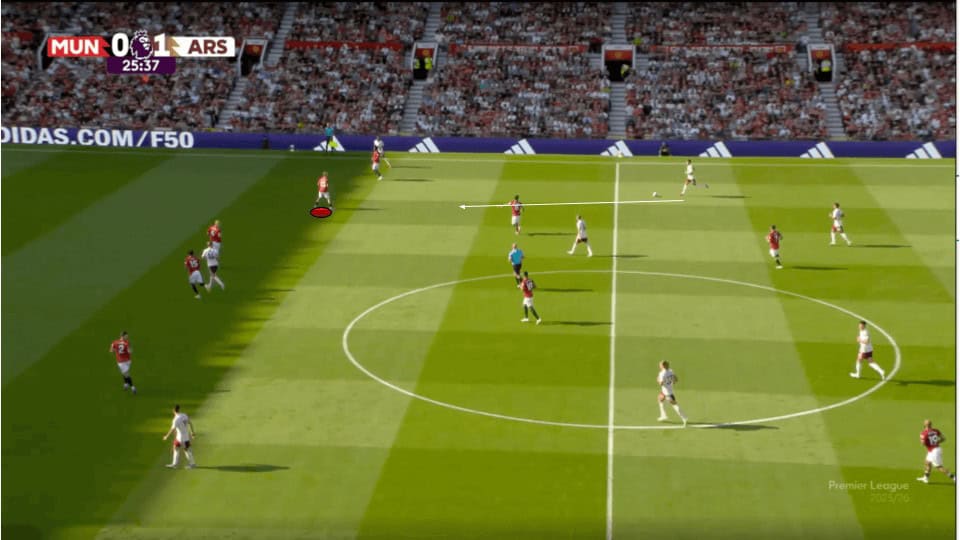
The space Shaw is responsible for is clear in Figure 3, with Arsenal’s Ben White eyeing up that space in front of Shaw as an opportunity for progression.
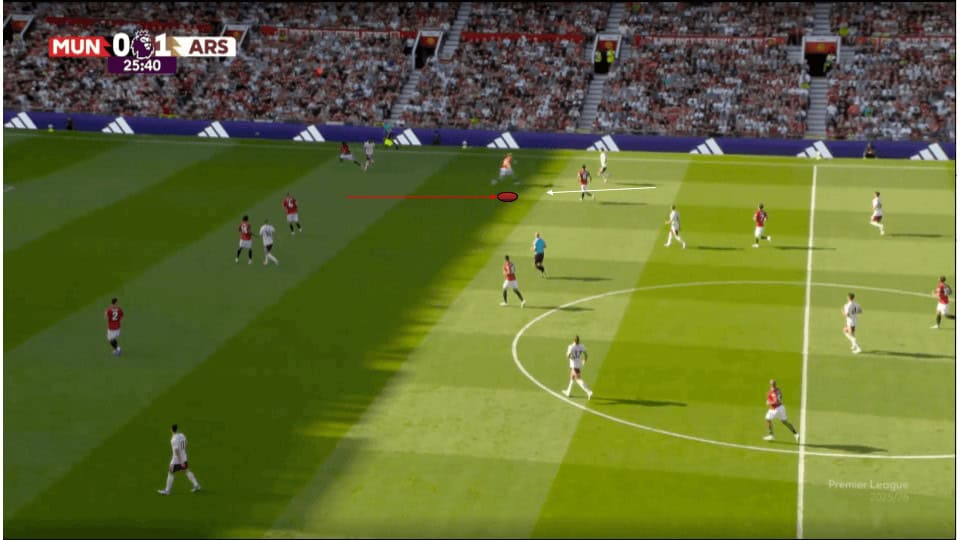
White draws Shaw out of the United backline and into the 1-v-1 duel with his carry.
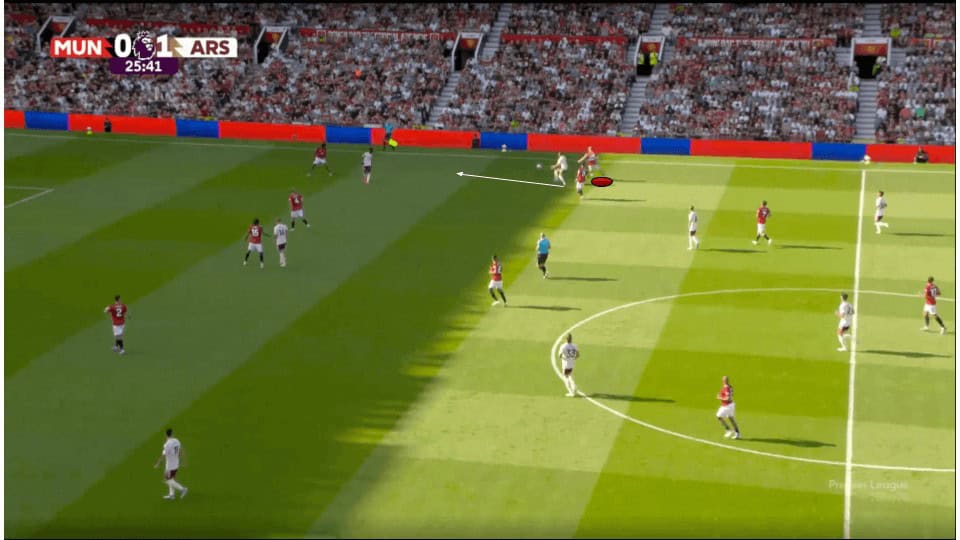
Again, Shaw overestimates his ability to close down the attacker swiftly, enabling White to tap the ball past Shaw and carry on with his run.
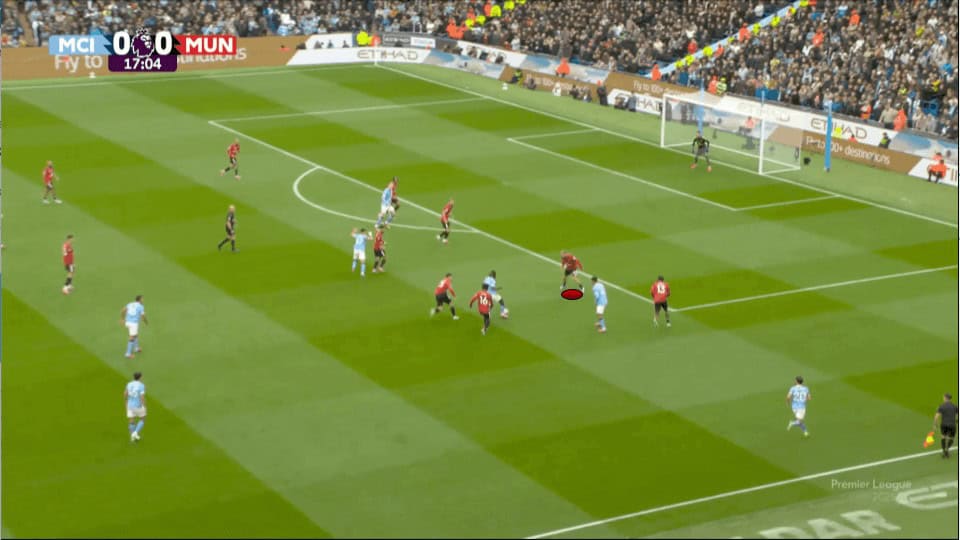
Here in Figure 6, we see another instance of Shaw entering a 1-v-1 duel.
This time, however, our critique isn’t about Shaw’s overzealousness; it’s actually about his body positioning.
Shaw’s hips could be lower, and, crucially, his body profile should be side-on.
He should aim to show Jérémy Doku away from goal.
Instead, Shaw is square with Doku, severely limiting his turning radius and margin for error against an elite dribbler.
He also appears a little too flat-footed when approaching this duel with Doku.
This is essentially a textbook example of how not to approach a defensive 1-v-1.
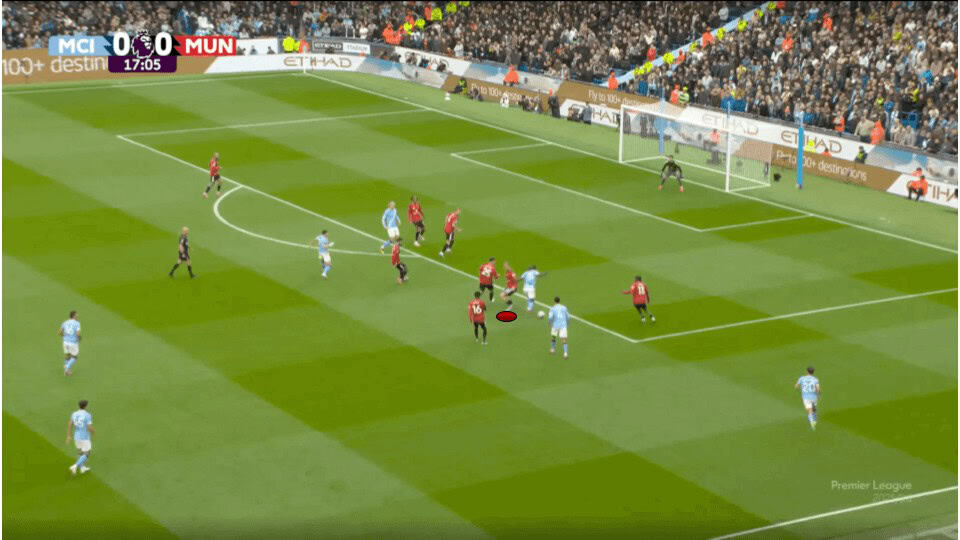
This leads us to Figure 7, where Jérémy Doku has sent Luke Shaw the wrong way before quickly exiting on the other side of the defender with some fast footwork, sending the attacker into the United penalty area.
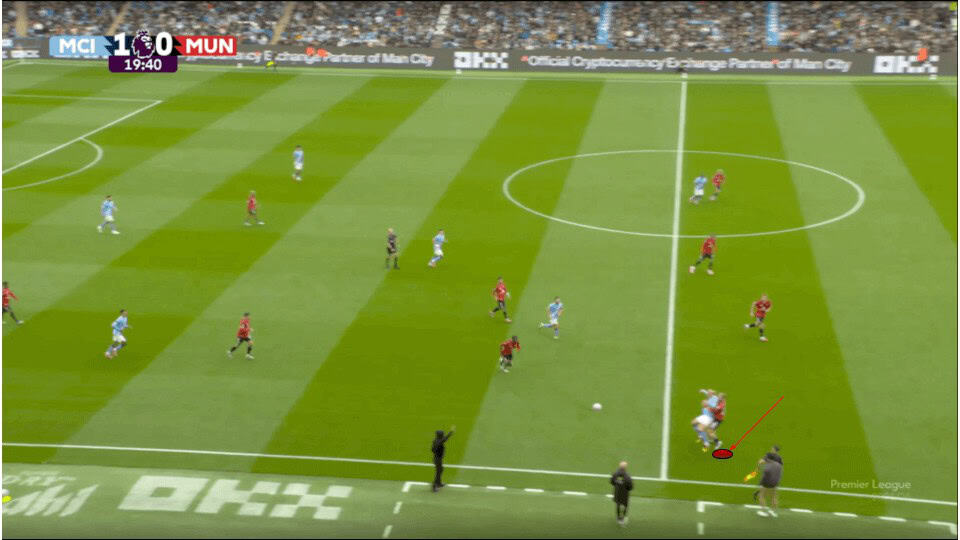
In Figure 8, also an example taken from the Manchester Derby, Shaw is defending touch-tight to Erling Haaland, who has a 14cm height advantage and 19kg weight advantage over Shaw, per Wyscout, at 195cm and 94kg to the Englishman’s 181cm and 75kg.
City played the ball forward to Haaland, receiving it with his back-to-goal.
Shaw is clearly at a disadvantage in this situation and, with his defensive approach, is playing right into Haaland’s hands.
Firstly, the defender is, again, standing too upright as he enters the duel.
Again, he fails to enter the duel side-on, reducing his turning radius and overall balance.
Bearing this in mind, as Haaland backs into Shaw with his height and weight advantage, the defender has no chance of keeping the attacker under control.
With Haaland’s body language screaming that he’s intending to turn, Shaw changes nothing to prepare for the move and stays extremely tight and square.
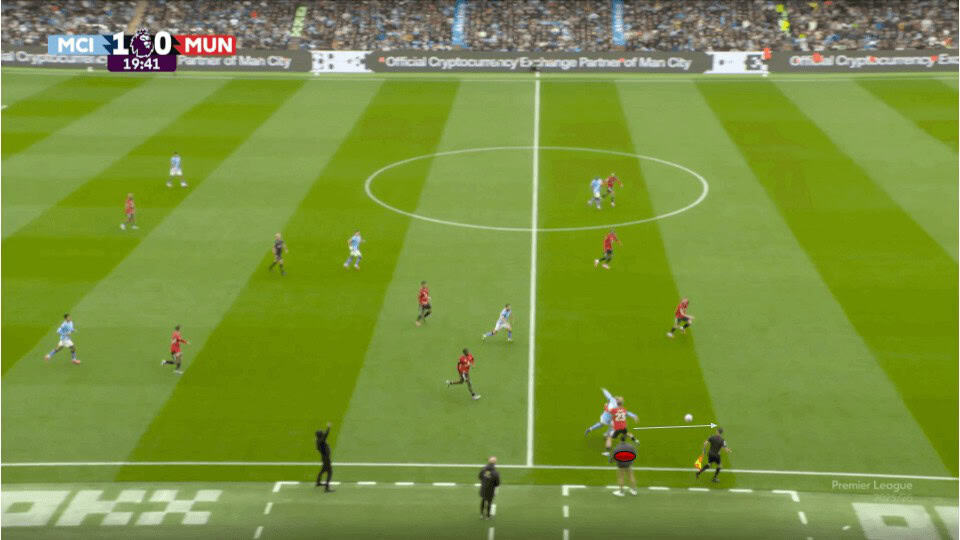
As play moves on, it’s no surprise, then, to find Haaland rolling Shaw, turning past the defender and heading on towards the United goal.
Now, you could say: “But that’s Erling Haaland”, and that’s a fair point, so let’s look at a very similar example taken from United’s Premier League draw with Fulham this season.
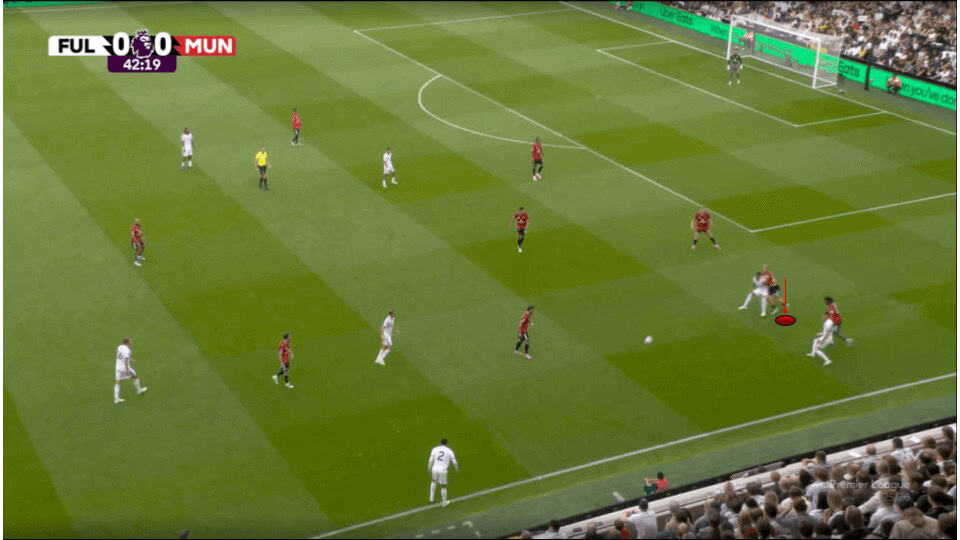
Here, we see Shaw taking the same approach as above versus Rodrigo Muniz as the forward prepares to receive with his back to goal.
Again, Shaw has committed himself to defending touch-tight.
Again, we see signs that the attacker is preparing to roll Shaw, for which the defender isn’t preparing.
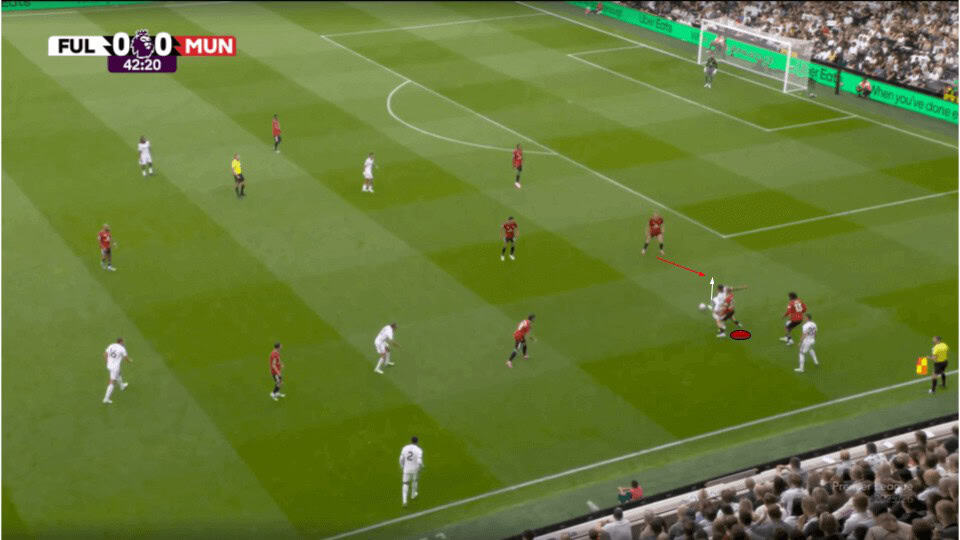
With a well-timed shoulder, Muniz gets Shaw out of the way and places himself well to turn, forcing De Ligt to come over and make a crucial challenge to prevent the Fulham attacker from running at the Red Devils defence.
Indeed, that’s what teammates are there for.
Nevertheless, Shaw’s weaknesses can put a strain on teammates and weaken Amorim’s defensive structure, creating opportunities for the opponent.
Intelligent teams can target United by targeting Shaw’s poor tackling judgment and ability in 1-v-1s, whether that’s in reference to Shaw’s body positioning in entering duels or his aggressive touch-tight approach against strong attackers with their backs to goal.
Lisandro Martínez can also be guilty of overzealousness and poor tackle timing, so the Argentina international probably wouldn’t be a huge upgrade on Shaw in that regard.
Still, the 27-year-old centre-back has definitely demonstrated stronger ability in 1-v-1s and is an expert in defending intelligently against forwards through smart body positioning despite having a height/weight disadvantage.
Lisandro Martínez Scout Report: Defensive Duels
For starters, let’s take a look at the injured Lisandro Martínez’s data for 2024/2025.
Lisandro Martínez Pizza Chart 2024/2025
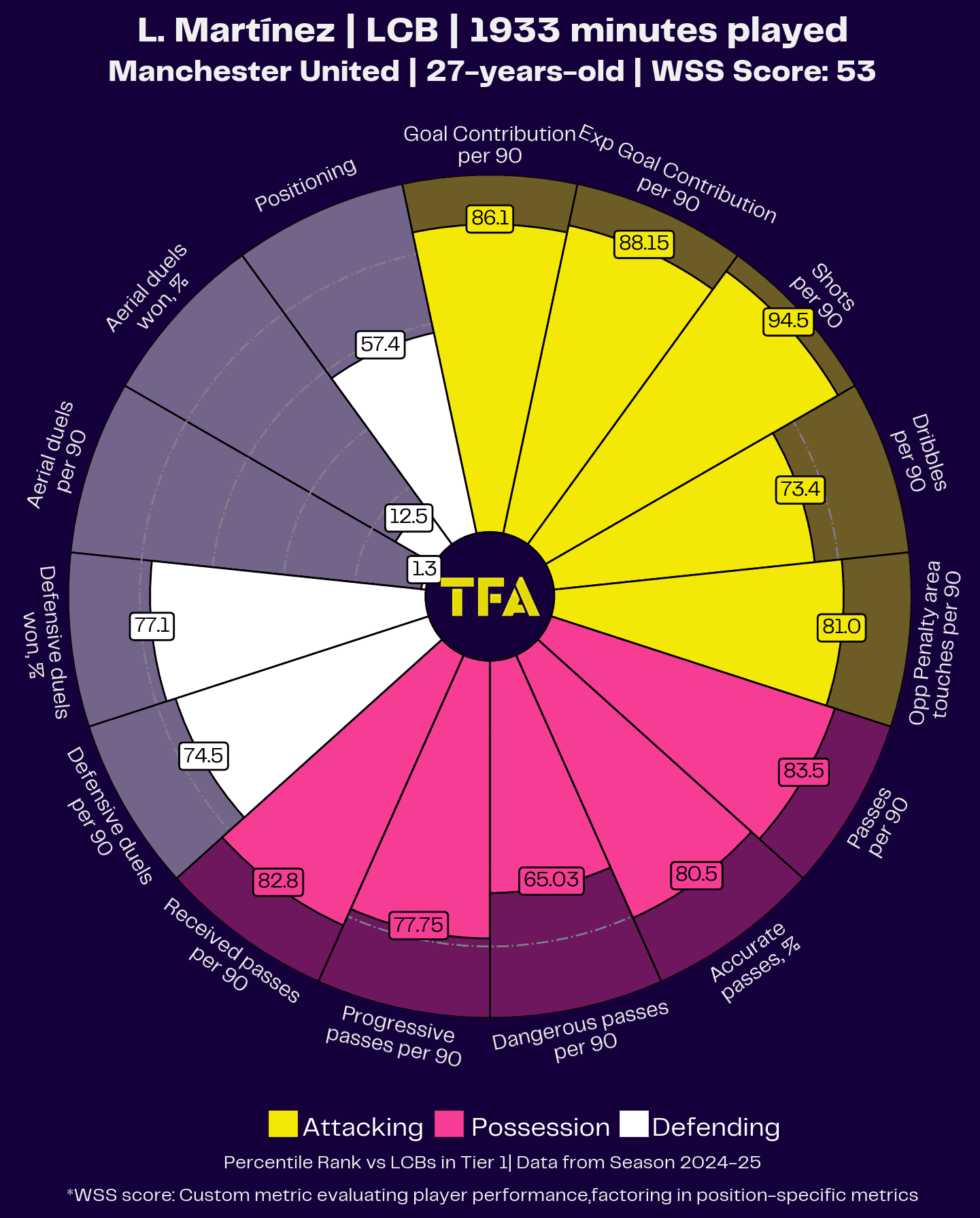
In addition to the very obvious solid in-possession stats when looking at the pizza chart, Lisandro Martínez’s ability in defensive duels stands out.
The Argentinian ranked in the 74th percentile for defensive duels per 90 and 77th percentile for defensive duel win % last season when compared with left centre-backs from Europe’s top-five leagues.
Again, it’s worth noting that we’ve got a very small sample size for 2025/2026 so far, but when comparing Luke Shaw with left centre-backs who’ve played at least 100 minutes of football in Europe’s top-five leagues so far this term, he’s in around the 18th percentile for defensive duel success %.
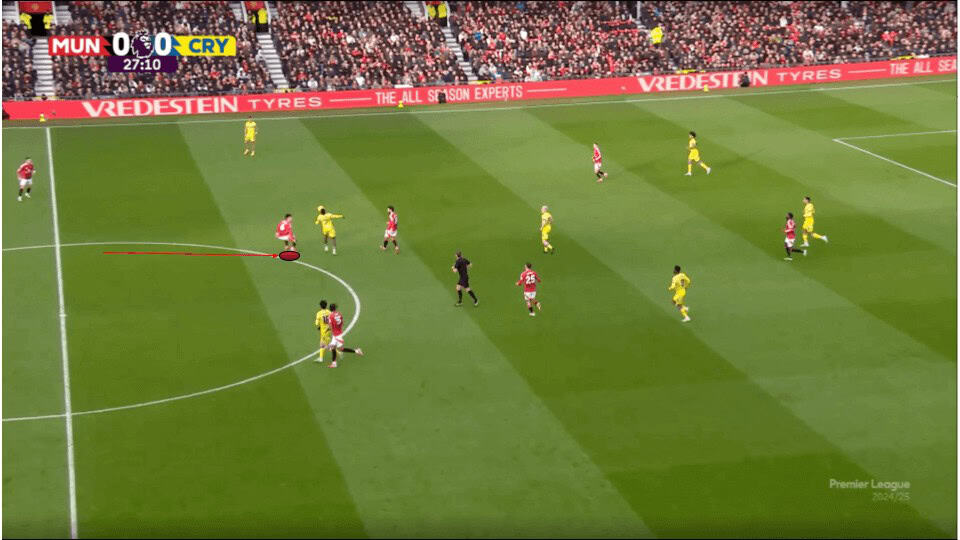
So, how does 178cm Lisandro Martínez deal with defensive duels differently?
The most significant differences to Shaw are body positioning and the extent to which the Englishman gets touch-tight to attackers compared with Martínez.
Compare Martínez in Figure 13 above to Shaw in any of the previous examples.
Firstly, regarding body positioning, Martínez has lowered his hips significantly, and he’s not approaching the attacker directly.
Instead, one foot is slightly ahead of the other, placing his body a little more side-on, and he’s on his toes rather than flat-footed.
All this helps Martínez prepare for the attacker to turn.
Secondly, Martínez gets close to the attacker but doesn’t put his body completely up against Sarr.
The Argentinian leaves some room, getting close enough to put the forward under pressure and capitalise on a potential heavy touch, but not overcommitting to the duel.
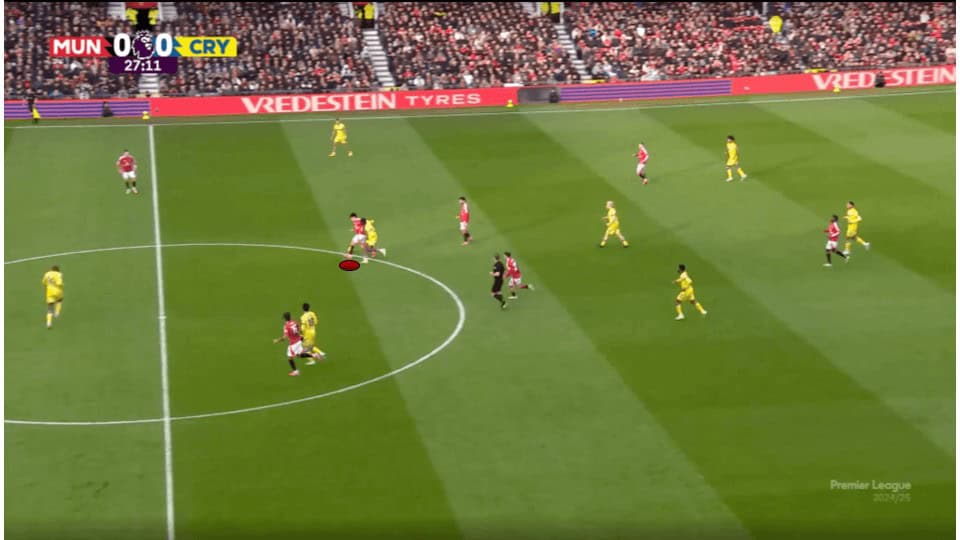
When Sarr tries to get past Martínez, the Argentinian is able to react quickly, placing himself between his opponent and the ball.
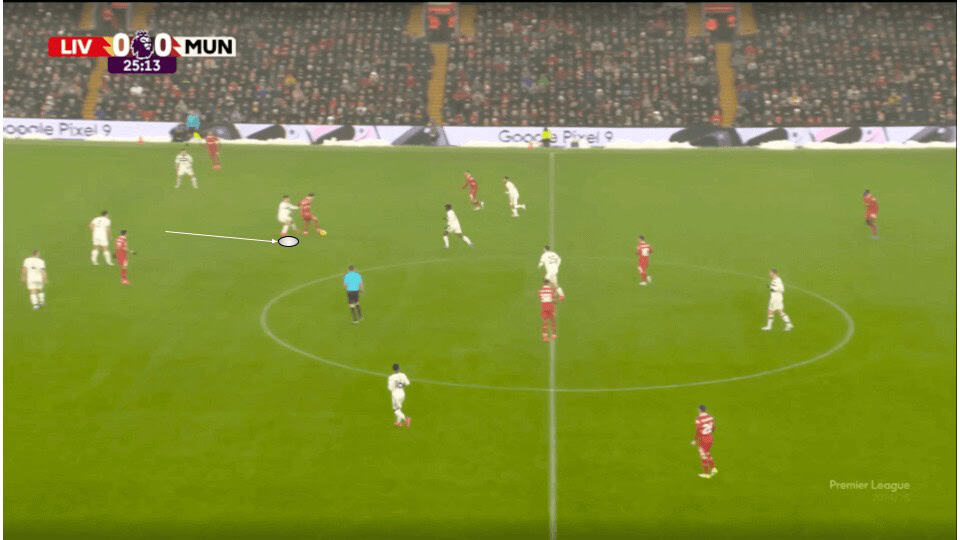
Here, against Liverpool, we see Martínez approaching Curtis Jones from behind.
Martínez lowers his body well, with a knee bend that helps him keep his balance and a wide turning radius.
Again, he gets close enough to pressure the attacker without overcommitting.
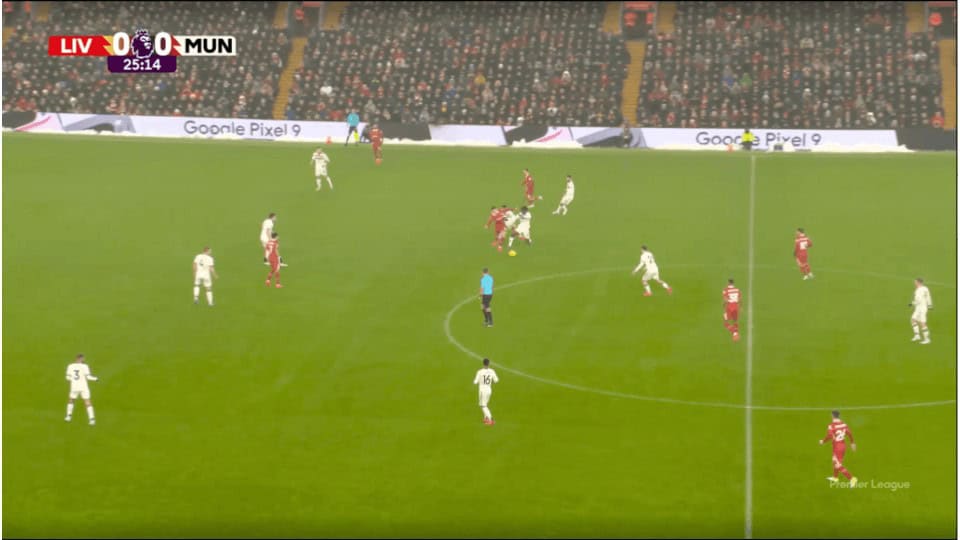
What’s the result of this approach?
Jones is held up long enough for reinforcements to track back and turn this from a 1-v-1 into a 2-v-1 in favour of United.
The Red Devils can then regain possession in the middle third, stopping this attack before it becomes truly threatening.
Conclusion
While Luke Shaw has brought some positives to United’s play this season, there is clear room for improvement in his approach to defensive duels.
By examining his teammate Lisandro Martínez’s game, we find ways in which Shaw can improve, particularly when defending against forwards who have a size advantage.
Specifically, Shaw can’t continue to get as tight as he has been against attackers if he wants to succeed in more defensive duels.
When engaging in duels, he must consider his body positioning and stance, as well as how tight he is to the attacker.
Undoubtedly, this is an area where Martínez’s skill is currently missed by Ruben Amorim’s side.
With Martínez set to remain out of action until at least the New Year, United could remain weak down their left side, especially against strong hold-up forwards, unless Luke Shaw makes marked improvements in the areas mentioned above.
