Total Football Analysis
Once.Sport
  • Football Analysis
    • Data Analysis
    • Formations
      • 2-2-4 Formation
      • 2-3-5 Formation
      • 3-1-4-2 Formation
      • 3-2-2-3 Formation
      • 3-2-4-1 Formation
      • 3-1-6 Formation
      • 3-3-4 Formation
      • 3-4-1-2 Formation
      • 3-4-2-1 Formation
      • 3-4-3 Formation
      • 3-5-1-1 Formation
      • 3-5-2 Formation
      • 4-1-4-1 Formation
      • 4-2-2-2 Formation
      • 4-2-3-1 Formation
      • 4-2-4 Formation
      • 4-3-1-2 Formation
      • 4-3-3 Formation
      • 4-4-2 Formation
      • 4-5-1 Formation
      • 5-3-2 Formation
      • 5-4-1 Formation
      • 6-3-1 Formation
    • Head Coach Analysis
    • Match Analysis
    • Player Analysis
    • Recruitment Analysis
    • Set Piece Analysis
    • Tactical Theory
    • Tactical Preview
    • Team Analysis
    • Training Analysis
    • Tactical Analysis
    • Scouting Report
  • Competition
    • ALL Competitions
    • English Premier League
    • Champions League
    • La Liga
    • Bundesliga
    • Serie A
    • Ligue 1
    • Eredivisie
    • EFL Championship
    • FIFA World Cup 2022
    • WEURO 2022
    • Women’s Super League
    • NWSL
    • Belgian First Division A
    • A-League
    • Liga Profesional de Argentina
    • Austrian Bundesliga
    • Campeonato Brasileiro Série A
    • DFB Pokal
    • 1. HNL
    • Danish Superliga
    • EFL League One
    • EFL League Two
    • FA Cup
    • EFL Cup
    • Indian Super League
    • K-League
    • J1 League
    • Liga MX
    • Copa América 2021
    • Copa del Rey
    • MLS
    • Eliteserien
    • Euro 2020
    • Primeira Liga
    • Scottish Premiership
    • Allsvenskan
    • Europa League
    • UEFA Nations League
    • Liga AUF Uruguaya
  • Coaches
    • All Coaches
    • Alfred Schreuder
    • Ange Postecoglou
    • Antonio Conte
    • Arne Slot
    • Bo Svensson
    • Brendan Rodgers
    • Bruno Lage
    • Carlo Ancelotti
    • Christophe Galtier
    • Claude Puel
    • Claudio Ranieri
    • David Moyes
    • Dean Smith
    • Diego Simeone
    • Domenico Tedesco
    • Frank Lampard
    • Eddie Howe
    • Edin Terzić
    • Emma Hayes
    • Erik ten Hag
    • Ernesto Valverde
    • Gennaro Gattuso
    • Gerardo Seoane
    • Gian Piero Gasperini
    • Giovanni van Bronckhorst
    • Graham Potter
    • Igor Tudor
    • Imanol Alguacil
    • Jesse Marsch
    • Jonas Eidevall
    • Jorge Sampaoli
    • José Bordalás
    • José Mourinho
    • Julen Lopetegui
    • Julian Nagelsmann
    • Julien Stéphan
    • Jürgen Klopp
    • Luciano Spalletti
    • Lucien Favre
    • Manuel Pellegrini
    • Marcelo Bielsa
    • Marco Rose
    • Marco Silva
    • Massimiliano Allegri
    • Mauricio Pochettino
    • Maurizio Sarri
    • Mikel Arteta
    • Niko Kovač
    • Nuno Espírito Santo
    • Oliver Glasner
    • Patrick Vieira
    • Paulo Fonseca
    • Pep Guardiola
    • Peter Bosz
    • Rafa Benítez
    • Ralf Rangnick
    • Ralph Hasenhüttl
    • Roger Schmidt
    • Roy Hodgson
    • Sean Dyche
    • Sérgio Conceição
    • Simone Inzaghi
    • Sonia Bompastor
    • Stefano Pioli
    • Steffen Baumgart
    • Steven Gerrard
    • Thiago Motta
    • Thomas Frank
    • Thomas Tuchel
    • Unai Emery
    • Vincenzo Italiano
    • Xavi
  • Teams
    • ALL Teams
    • AC Milan
    • Ajax Amsterdam
    • Arsenal
    • AS Monaco FC
    • Atalanta
    • Atlético Madrid
    • FC Barcelona
    • FC Bayern Munich
    • Borussia Dortmund
    • Celtic FC
    • Chelsea FC
    • Everton F.C.
    • Inter Milan
    • Juventus F.C.
    • Leeds United F.C.
    • Liverpool FC
    • Manchester City
    • Manchester United FC
    • Paris Saint-Germain
    • Rangers FC
    • RB Leipzig
    • Real Madrid CF
    • Tottenham Hotspur
    • West Ham United
  • Players
    • ALL Players
    • Alisson Becker
    • Bukayo Saka
    • Erling Haaland
    • Harry Kane
    • Jack Grealish
    • John Stones
    • Julián Alvarez
    • Kalvin Phillips
    • Kevin De Bruyne
    • Kyle Walker
    • Kylian Mbappé
    • Lamine Yamal
    • Lionel Messi
    • Luis Díaz
    • Mohamed Salah
    • Phil Foden
    • Virgil Van Dijk
  • Contact
  • Write For TFA
No Result
View All Result
No Result
View All Result
Total Football Analysis
No Result
View All Result
Home Head Coach Analysis

Claudio Giráldez Tactics At Celta Vigo 2025/2026: Imposing Identity, Not Just Results – Tactical Analysis

Bola Atta by Bola Atta
January 28, 2026
in Head Coach Analysis, Analysis, Claudio Giráldez, La Liga, Real Club Celta de Vigo, Tactical Analysis
0
Claudio Giráldez Celta Vigo 20252026

Celta Vigo enters the 2025/2026 season in a completely different position from their traditional image as a relegation-threatened team. 

The team is no longer content with merely reacting to events; it strives to impose its own rhythm, even against higher-quality opponents. 

The continuation of the project under Claudio Giráldez has provided the team with mental and tactical stability, as reflected in clear roles, improved decision-making, and a notable improvement in how they manage match moments, especially off the ball.

This tactical analysis explains why Celta cannot be viewed solely in terms of results, but rather as a team of ideas in 2025/2026.

Celta Vigo In Build-Up & Progression

Celta Vigo typically starts with a 5-3-2 formation, but when in possession, it clearly shifts to a 3-2-5. 

The back three spread out horizontally, while the wingers push high to cover the entire width of the pitch, and one of the midfielders drops back to form a two-man midfield in front of the defence.

Celta Vigo doesn’t build play solely for possession, but also to draw the opposition out. 

The team deliberately slows down in the defensive third to draw the opposition into the press, then exploits the spaces behind the first line.

Claudio Giráldez Tactics At Celta Vigo 2025/26: Positional Discipline as the Base of Their Game Model build up 8build up 9build up 10Here, Celta Vigo don’t begin their build-up play from the traditional 5-3-2 formation, but rather reshape themselves closer to a 3-4-3. 

The full-backs push forward to occupy the full width of the pitch, pinning the opposing full-backs back, while the two forwards move centrally to create numerical superiority in the half-spaces. 

This shift aims not only to advance the ball but also to reshape the opposing defence horizontally and force them into delayed decisions.

At this stage, the ball is circulated horizontally between the back three, not as a safe option, but as a way to draw pressure and change the angles of play. 

The lateral pass between the centre-backs is used to lure the opposing winger or the nearest midfielder out of position.

Here, against Valencia, when the back three exchanged the ball, it prompted the opposing winger to advance an extra step, before a diagonal pass towards the advancing right winger broke the pressure.

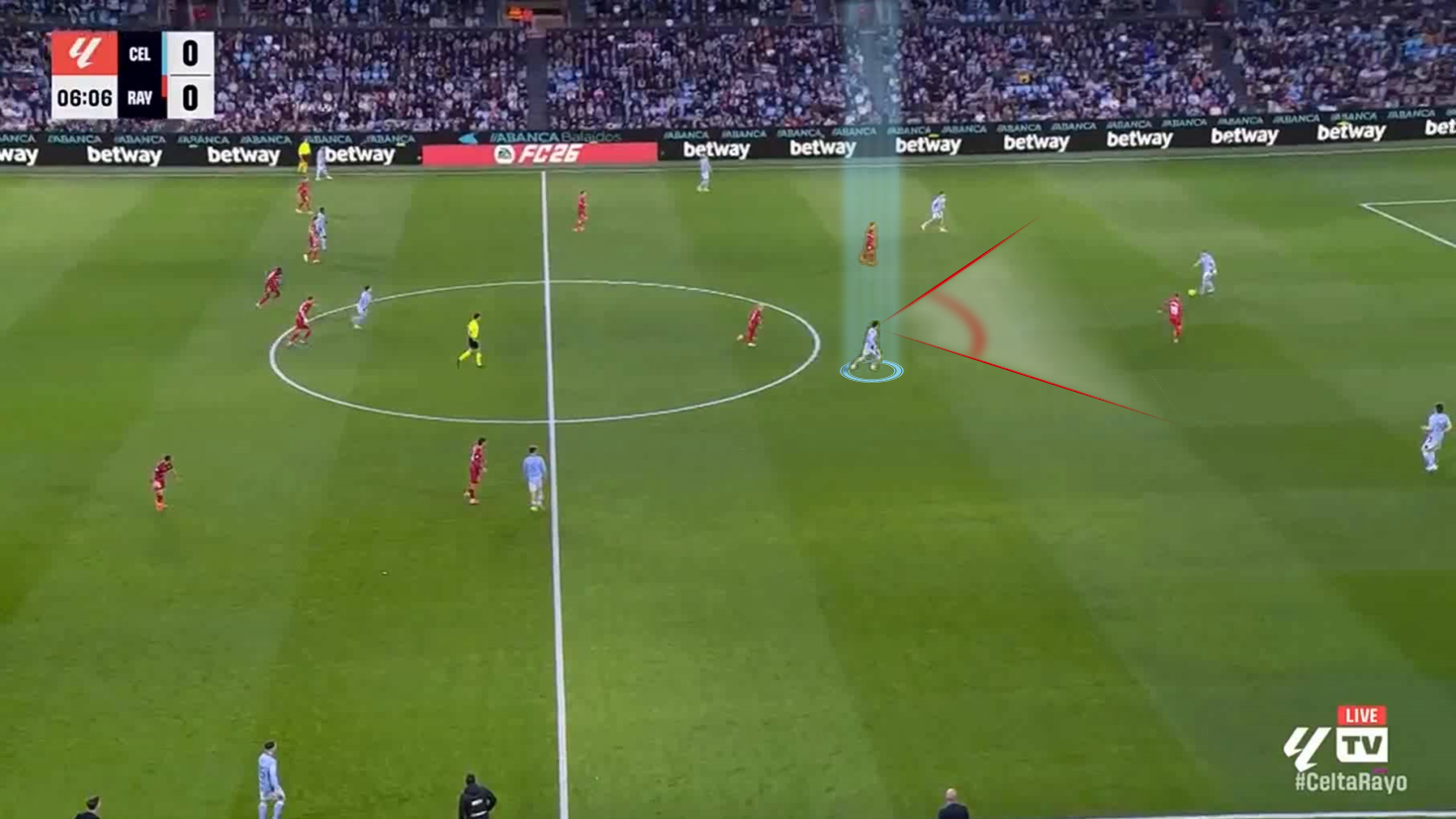
For progression, contrary to stereotypes, Celta Vigo doesn’t primarily rely on crosses. 

The team prefers to advance through the middle, either via an advanced midfielder or a winger cutting inside.
progression 1progression 2progression 3progression 4progression 5progression 6progression 7

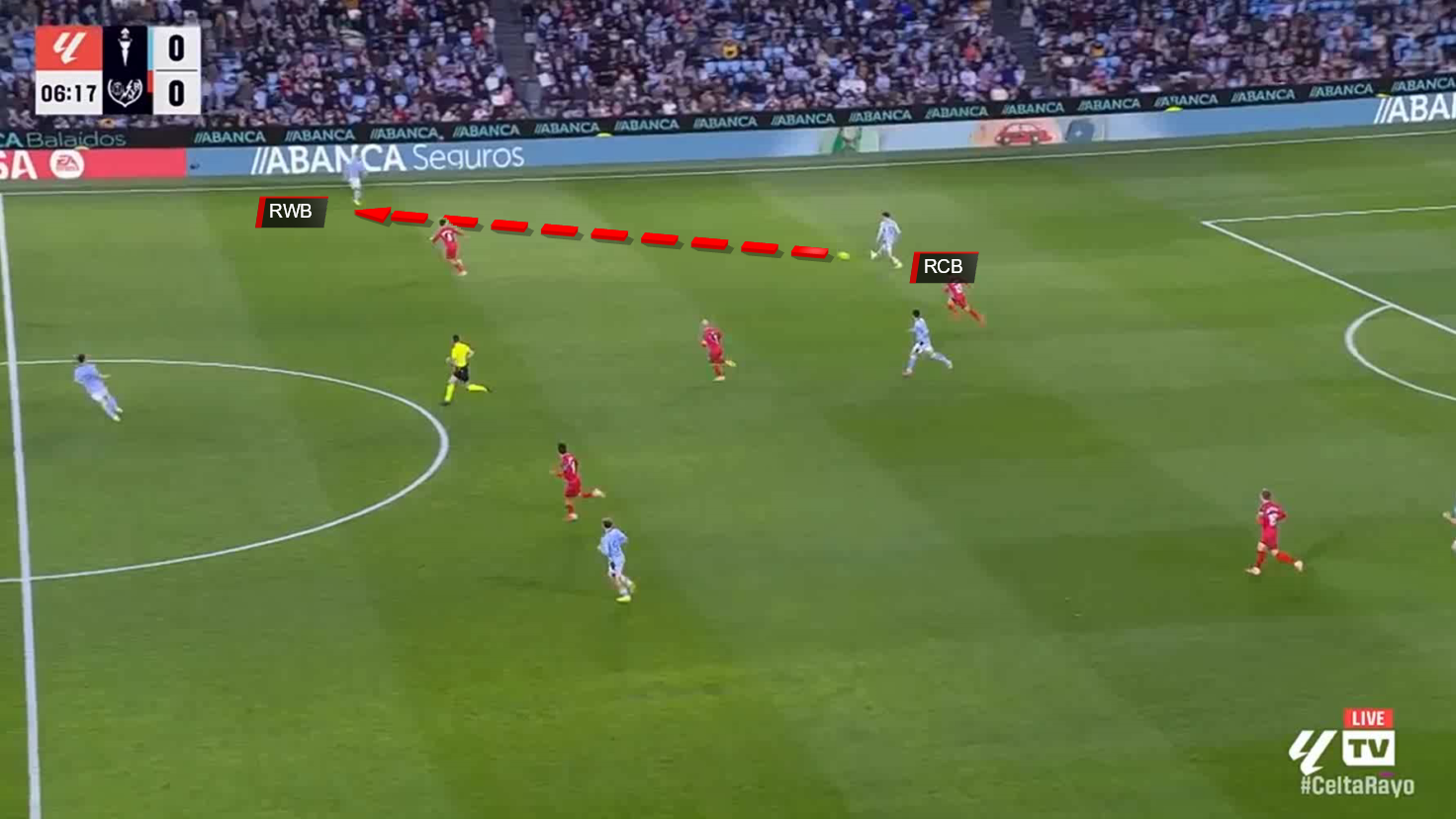
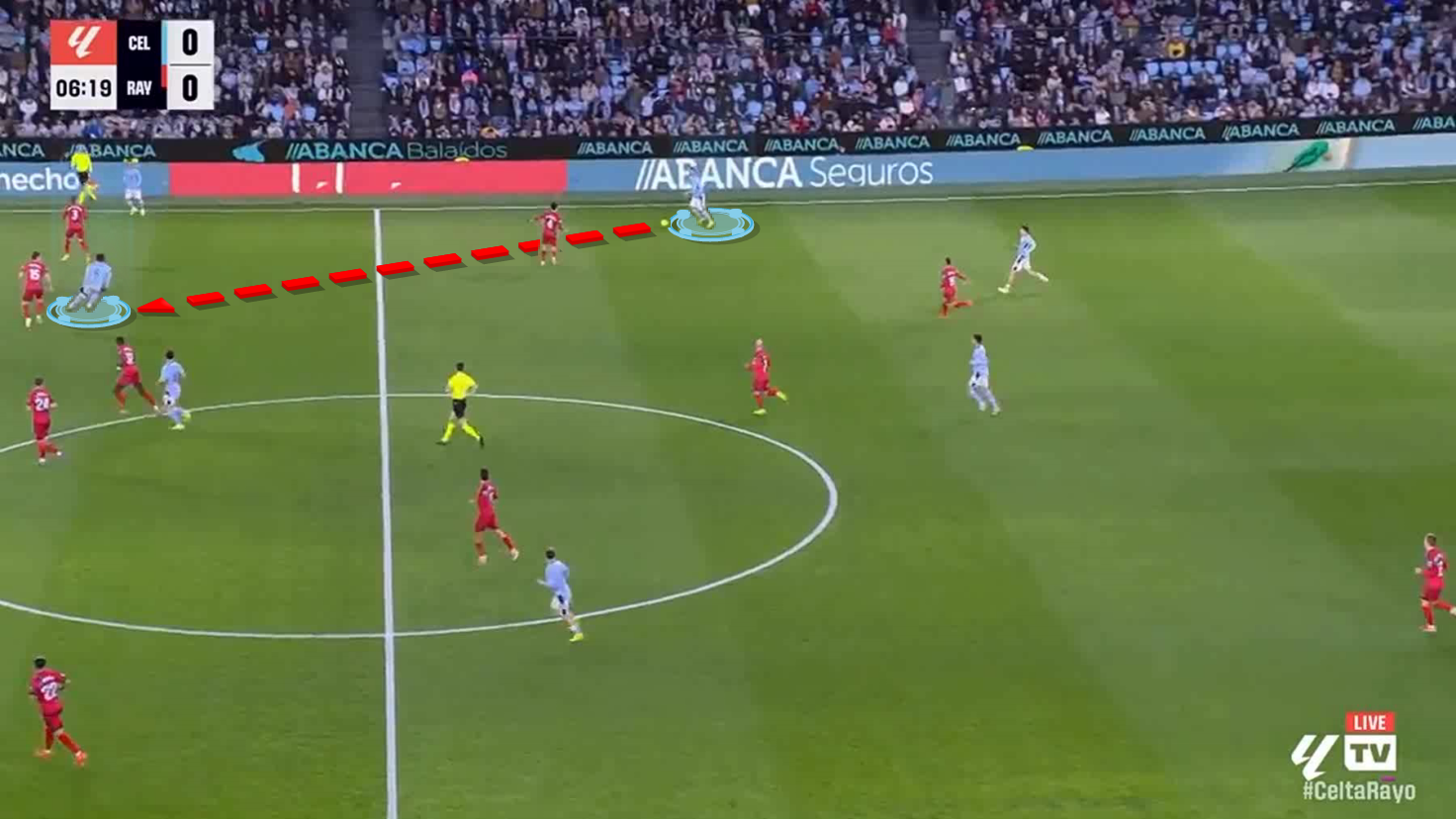
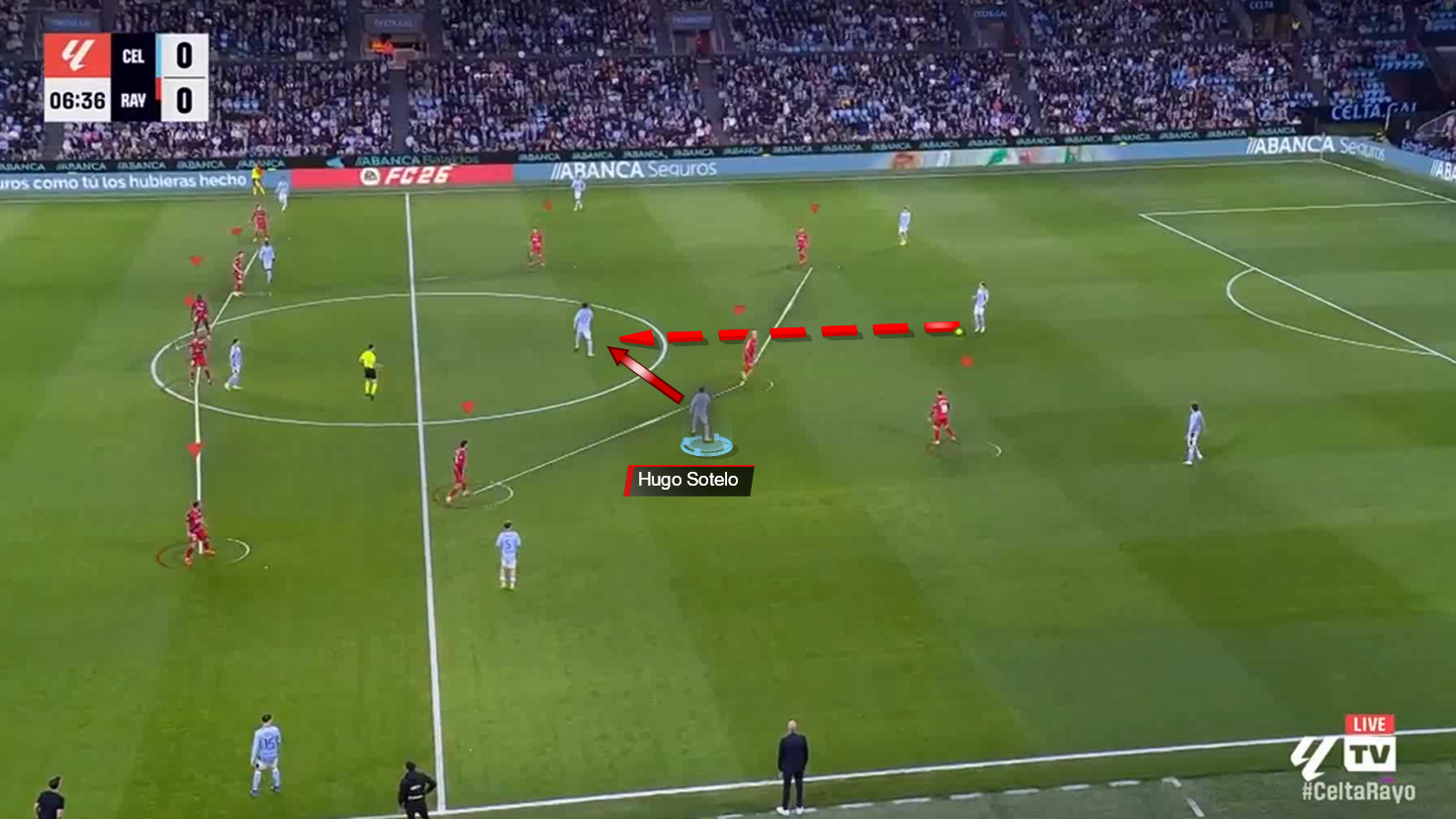
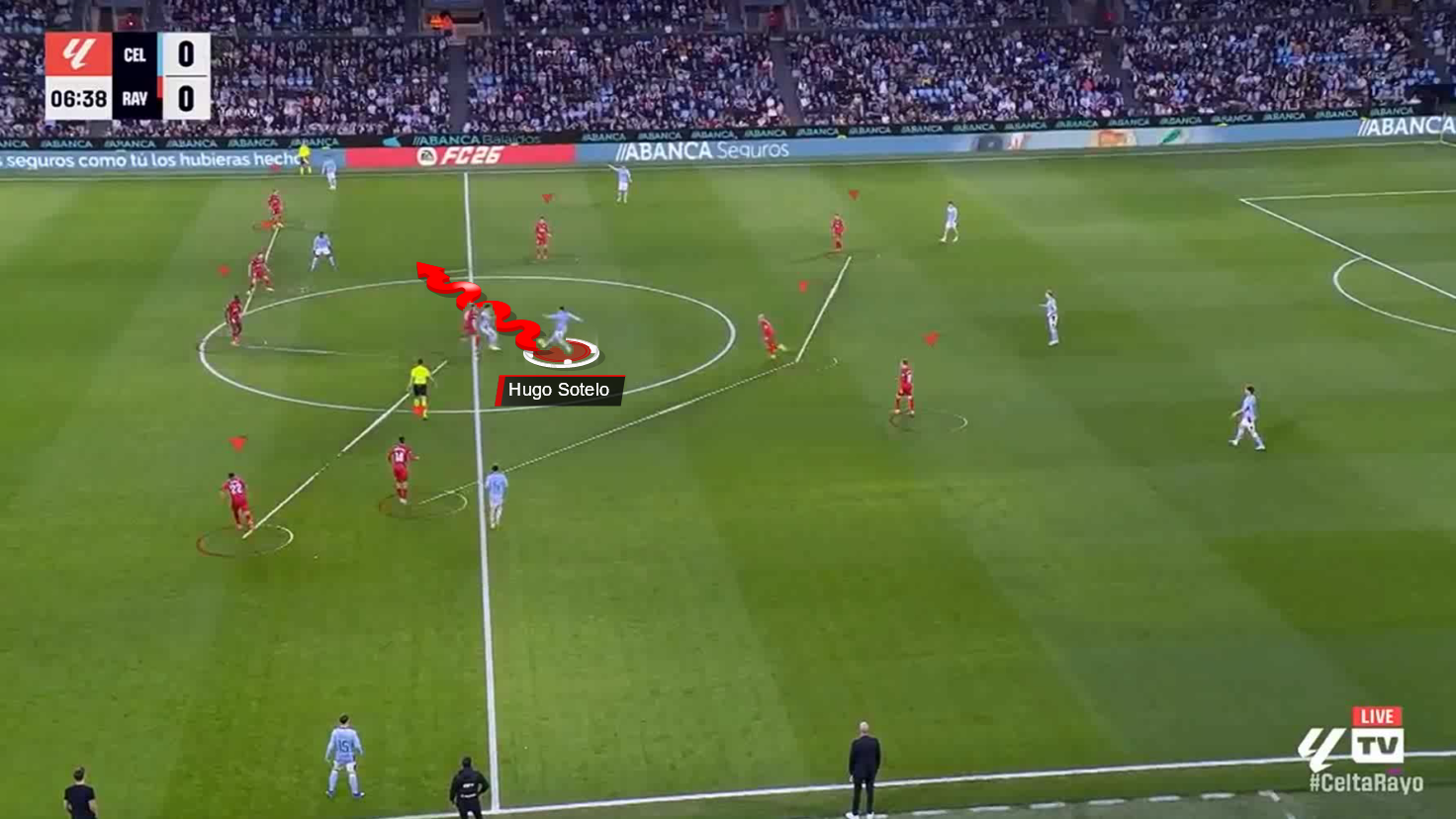
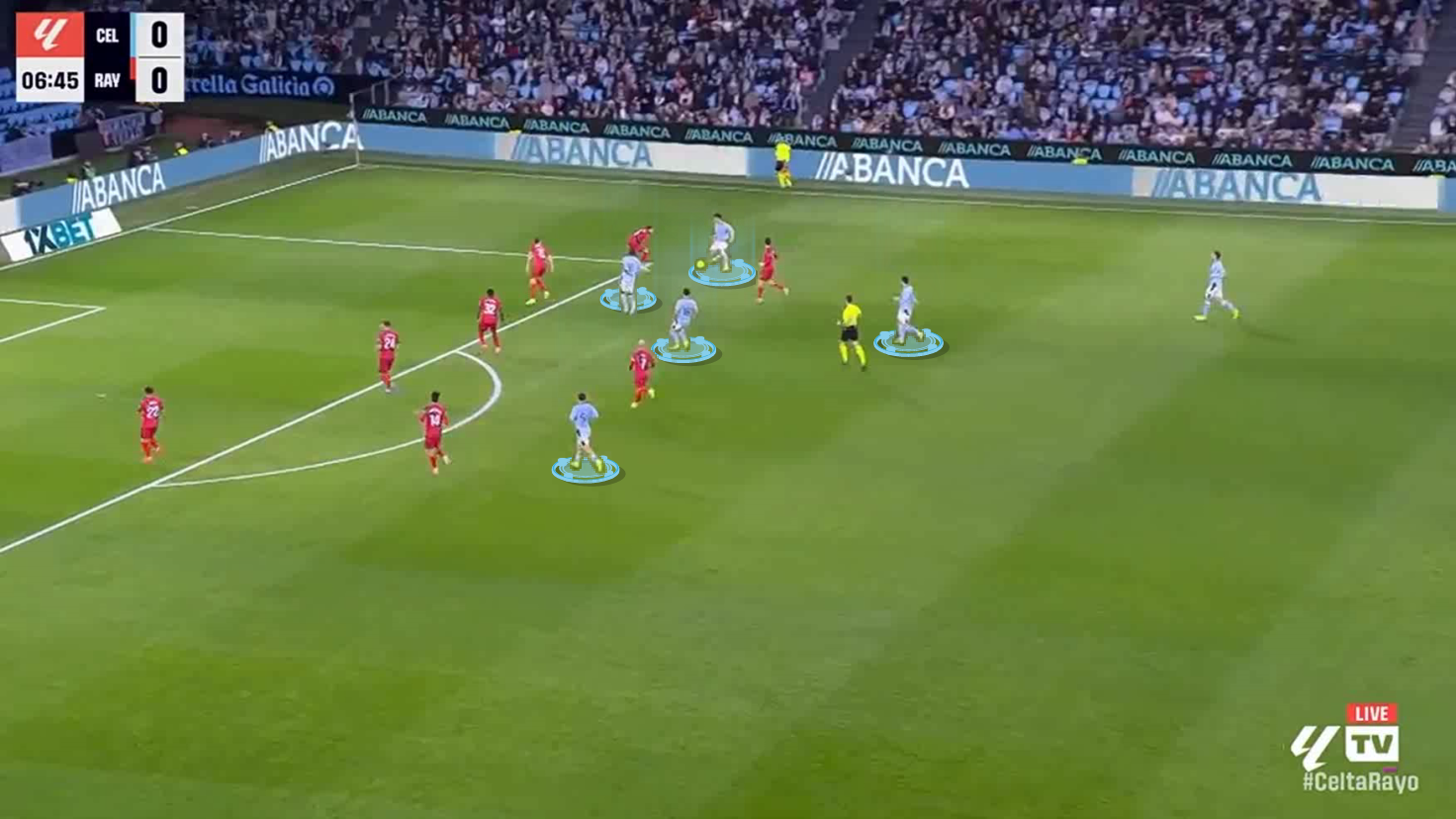
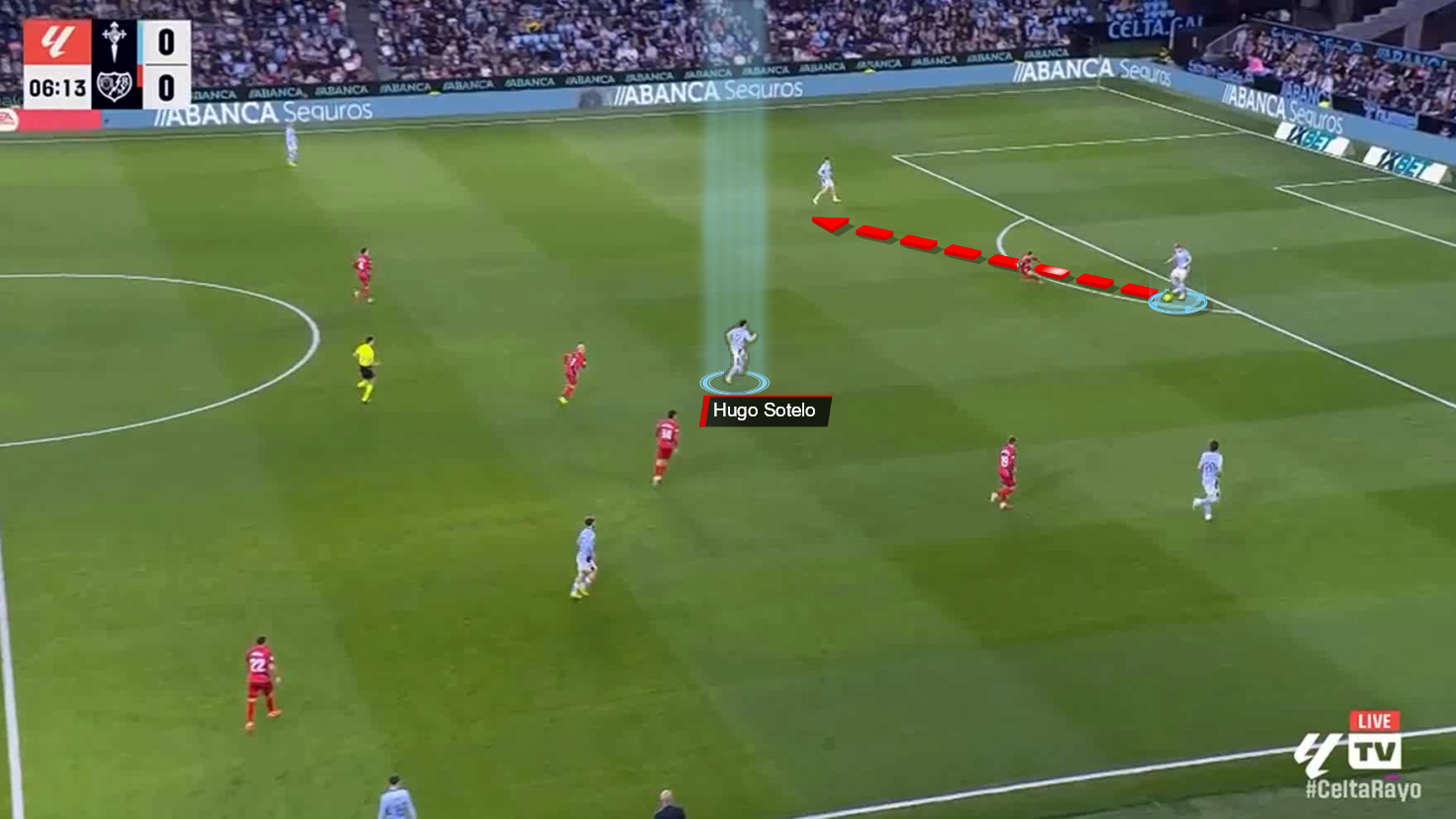
Here, against Rayo Vallecano, we see how patiently the opposing players draw the ball into the press in the final third, then create space for the central midfielder to receive the ball.

Then the striker drops back to support the attack and plays the ball out wide.

This pattern is repeated often, but it requires high-quality positioning and timing, which does not always work against teams with low defensive organisation.

Final Third: Between The Third Man Run & Missed Chances

When Celta Vigo reaches the final third, their style of play shifts from methodical build-up to seeking to gain an advantage in both time and space. 

This is where the team’s reliance on the movement of the third man becomes evident as a key tool for breaking down defensive organisation. 

The fundamental idea is not to pass directly to the striker, but rather to first draw pressure and then exploit the space left by the defender who has moved out of position.
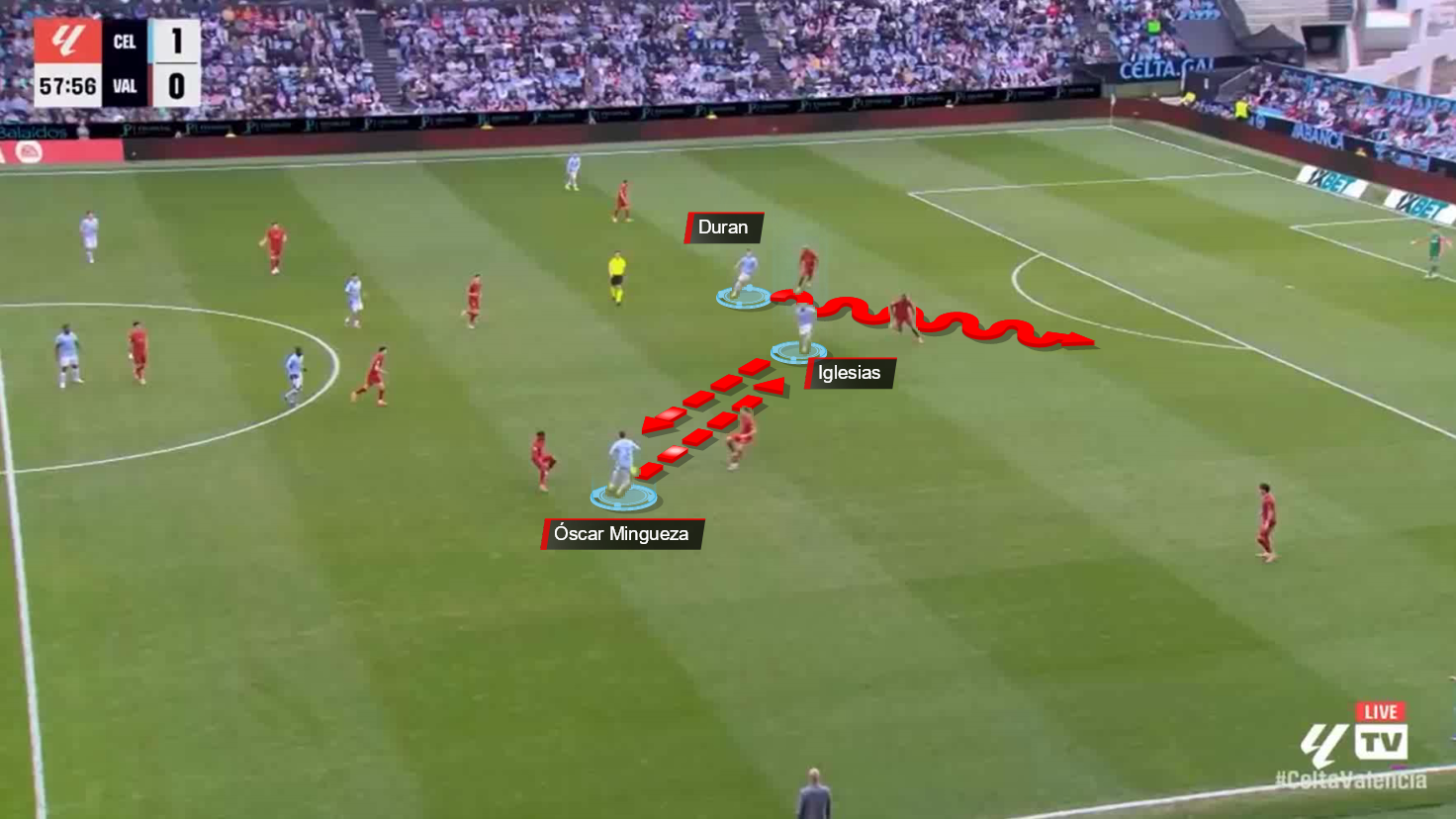
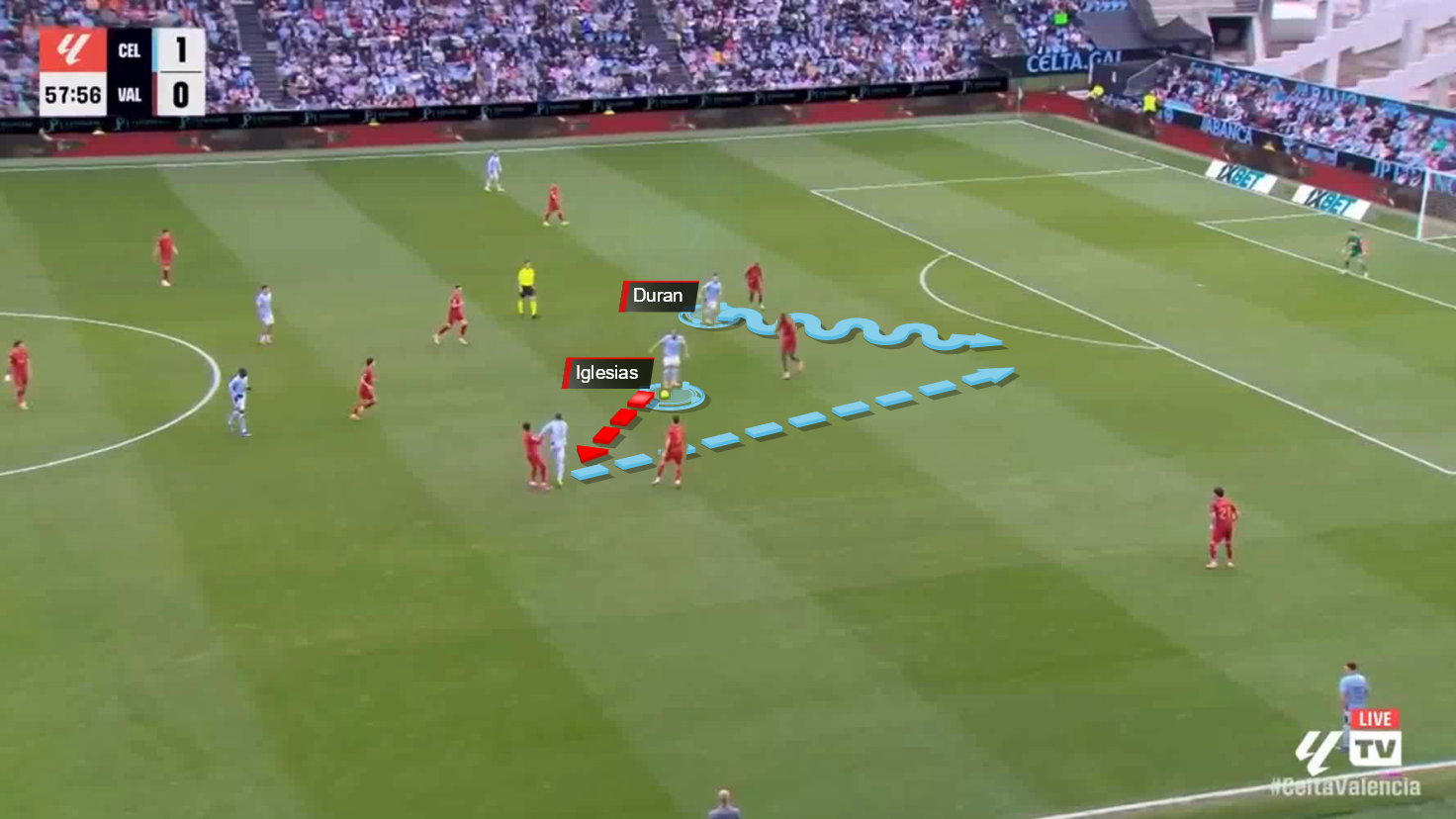
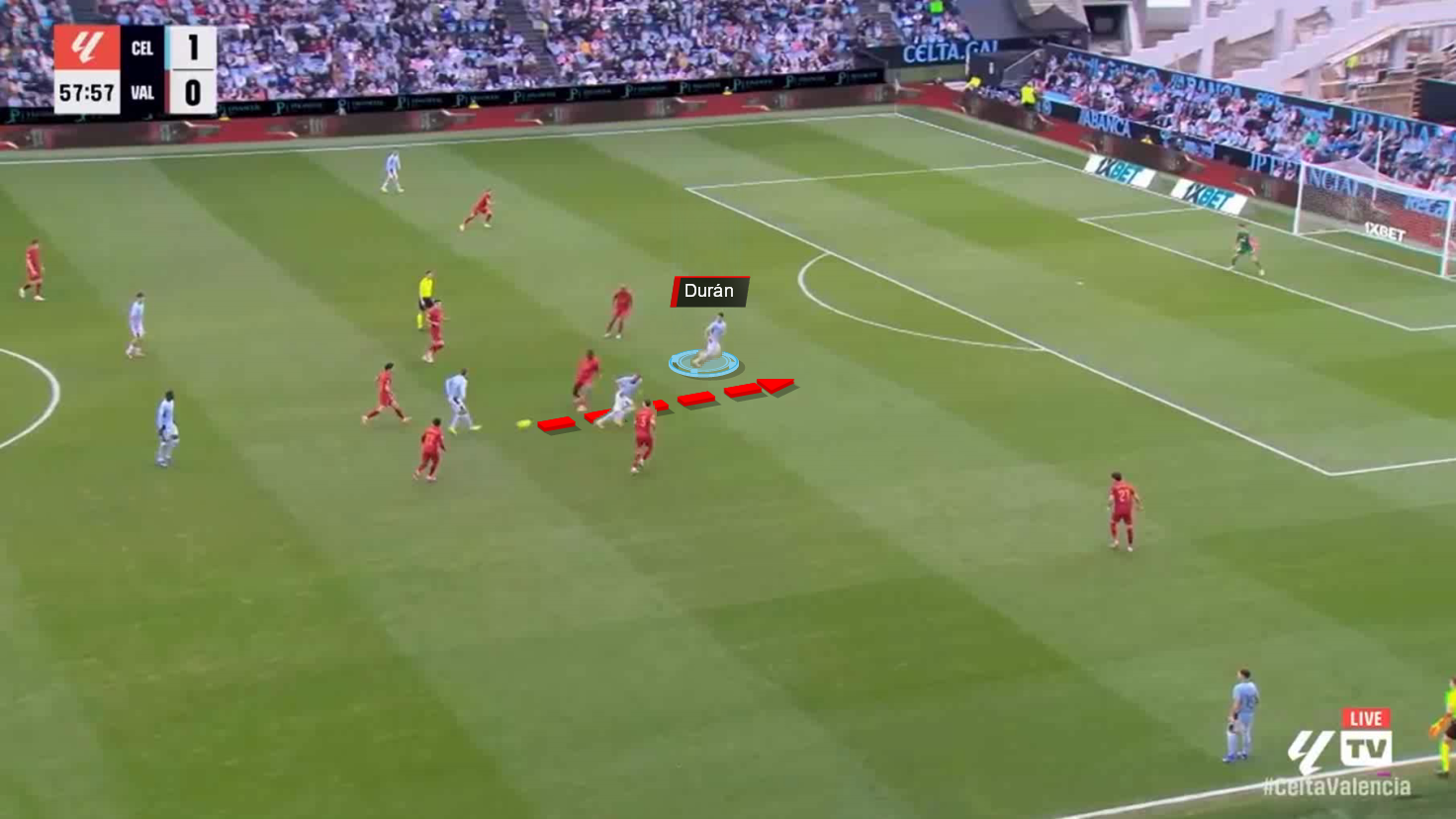
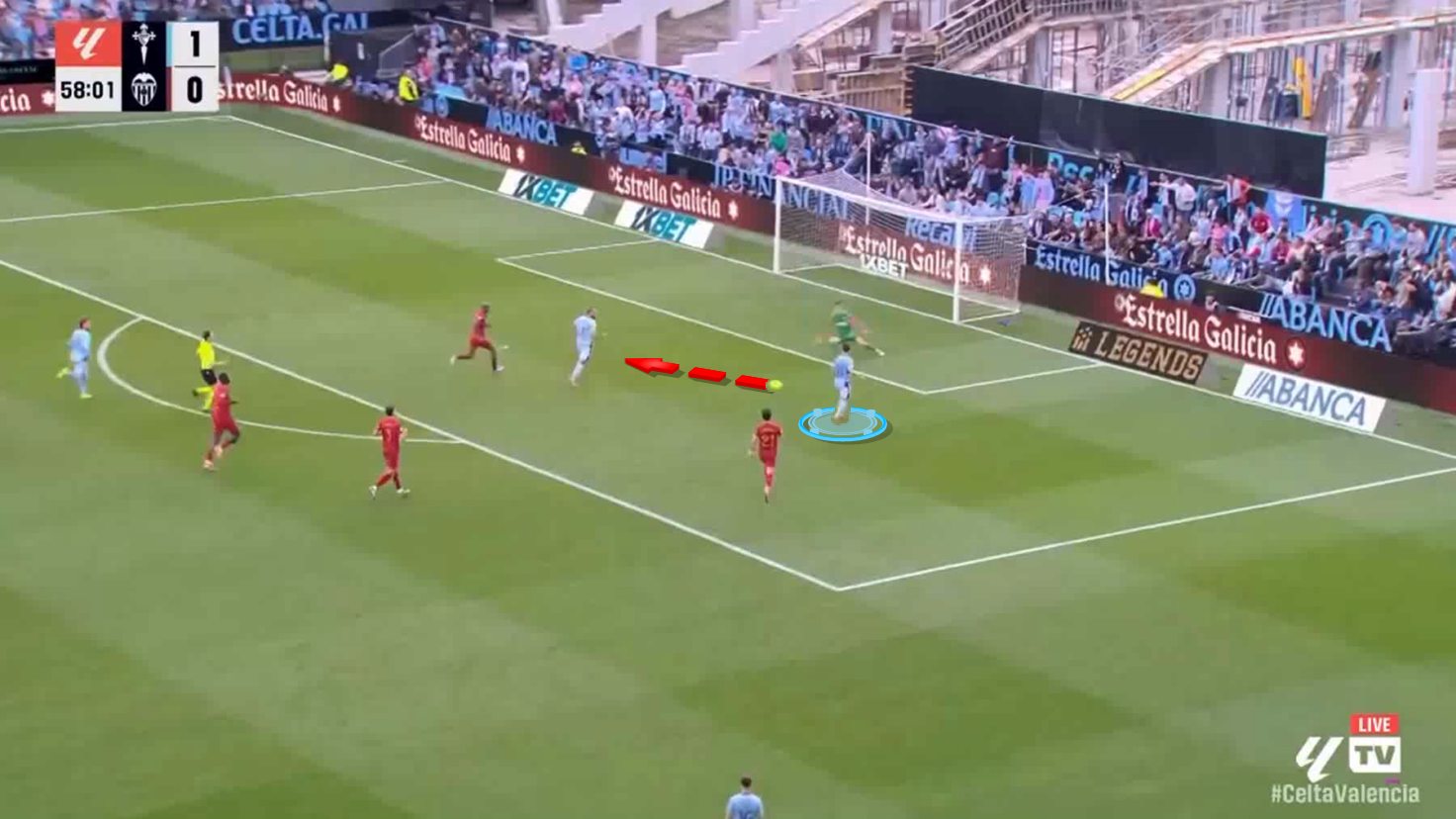
Final third 1Final third 2Final third 3Final third 4The third man’s movements are not limited to the attackers but extend to the midfielders, especially when the defence is pinned across the flank.

Here, versus Valencia, we can see Pablo Durán, Borja Iglesias, and Óscar Mingueza, where we can clearly see the third-man run pattern after the one-two pass, dropping the striker to create space for Pablo, who assisted the goal.

The main idea is to fill the five main lanes into the final third horizontally when the team is in possession to stretch the defensive line.

So you create a 1v1, making it easier for the striker to get away from the defender and create space.
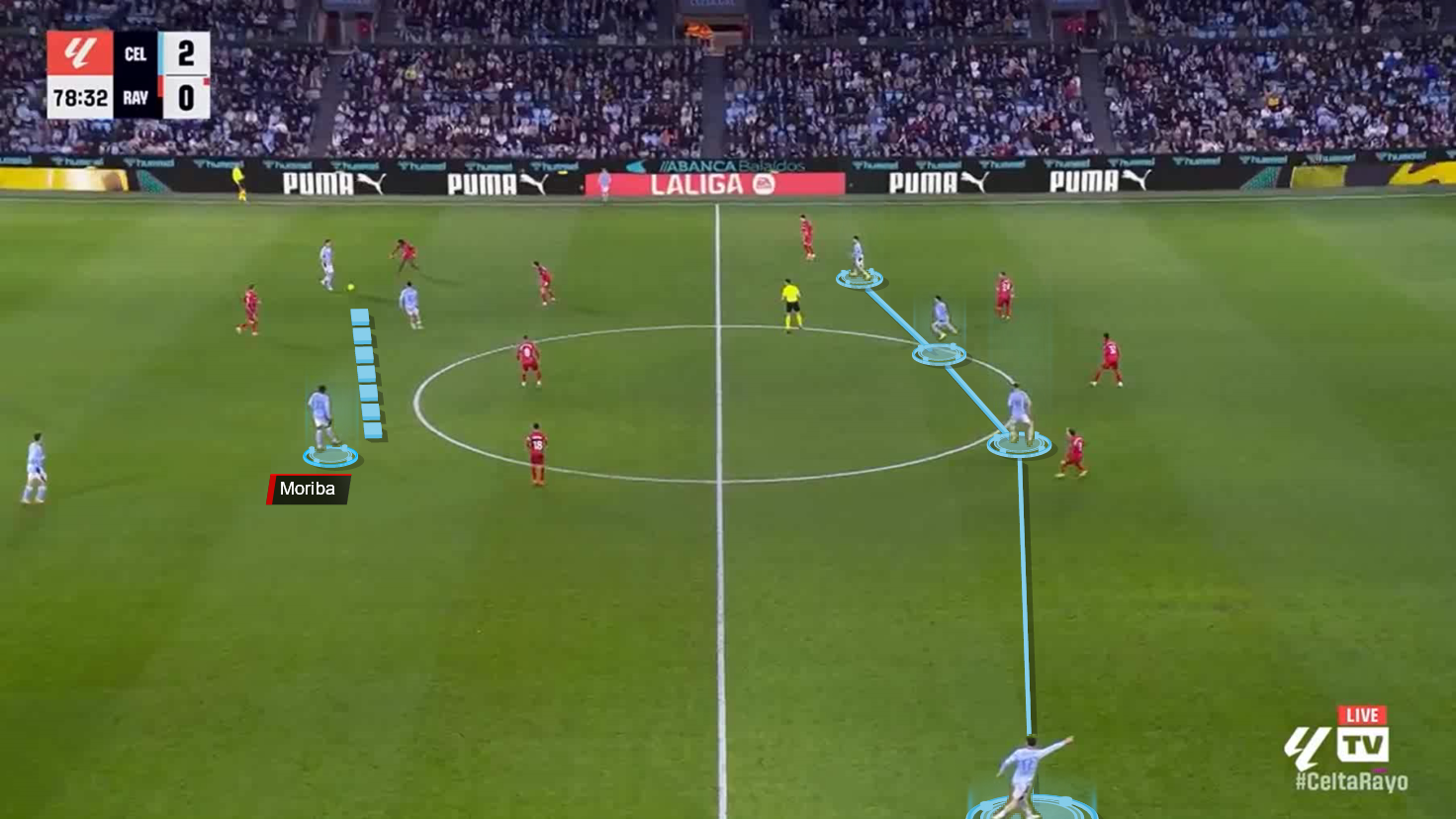
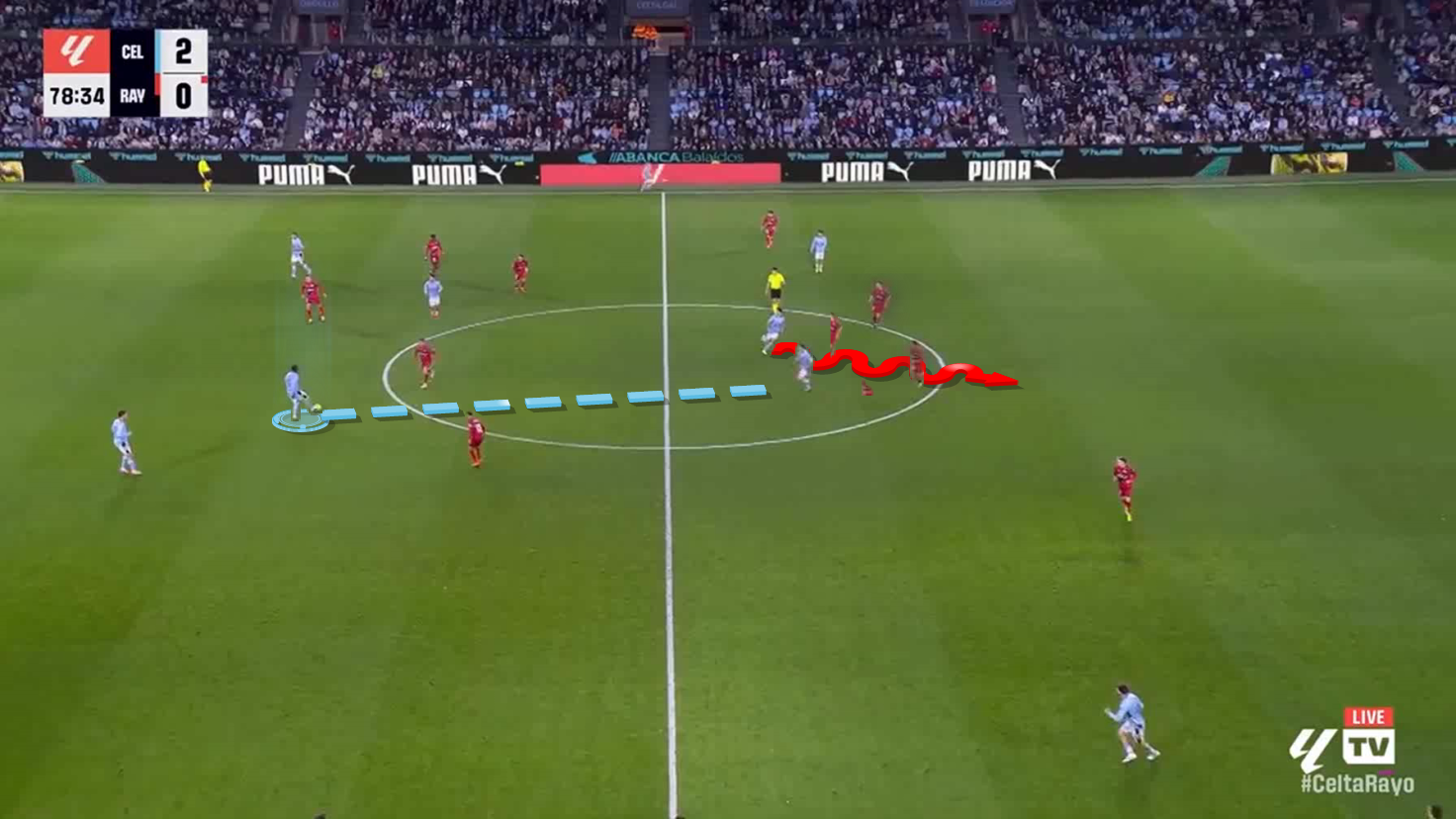
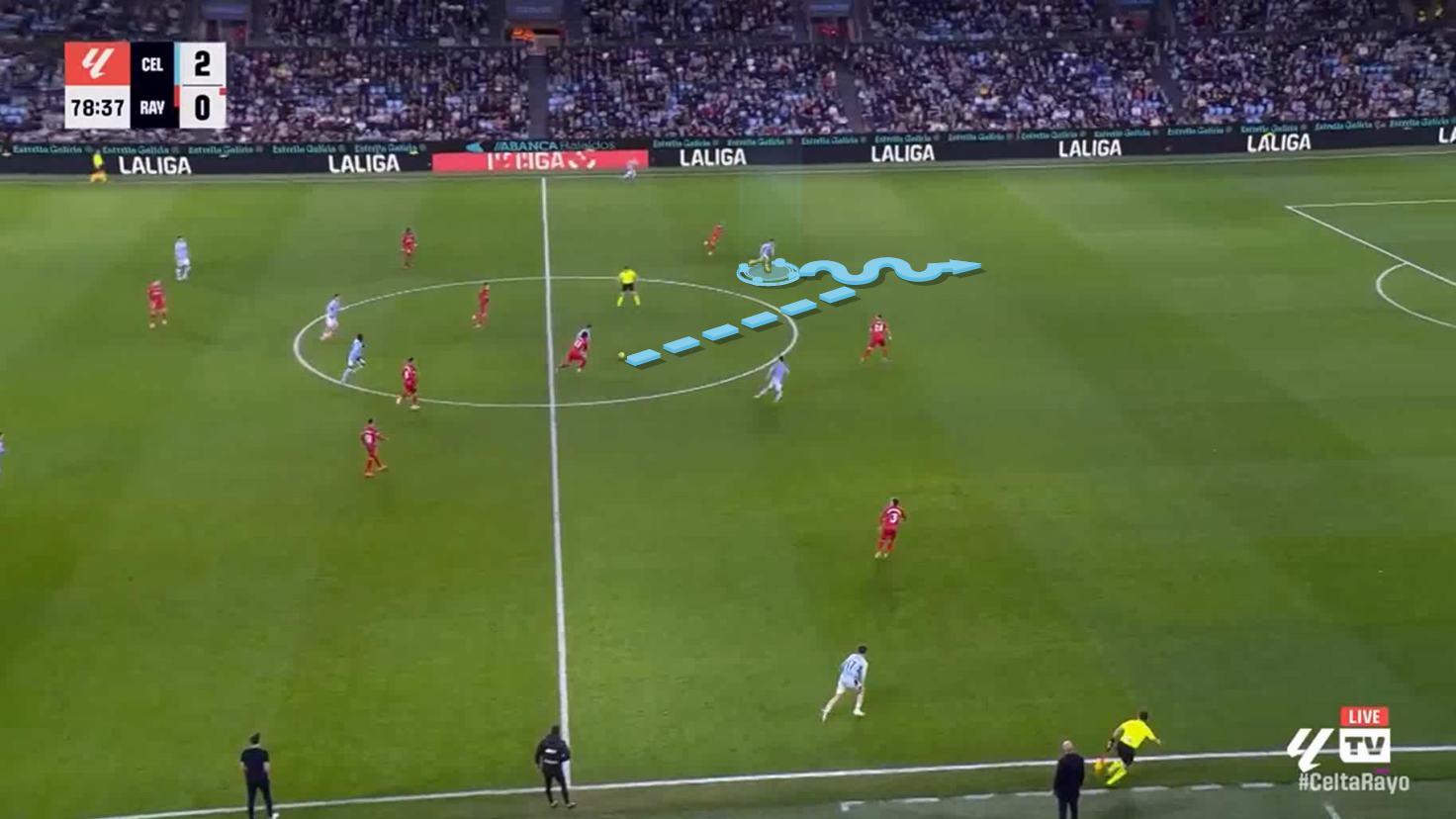
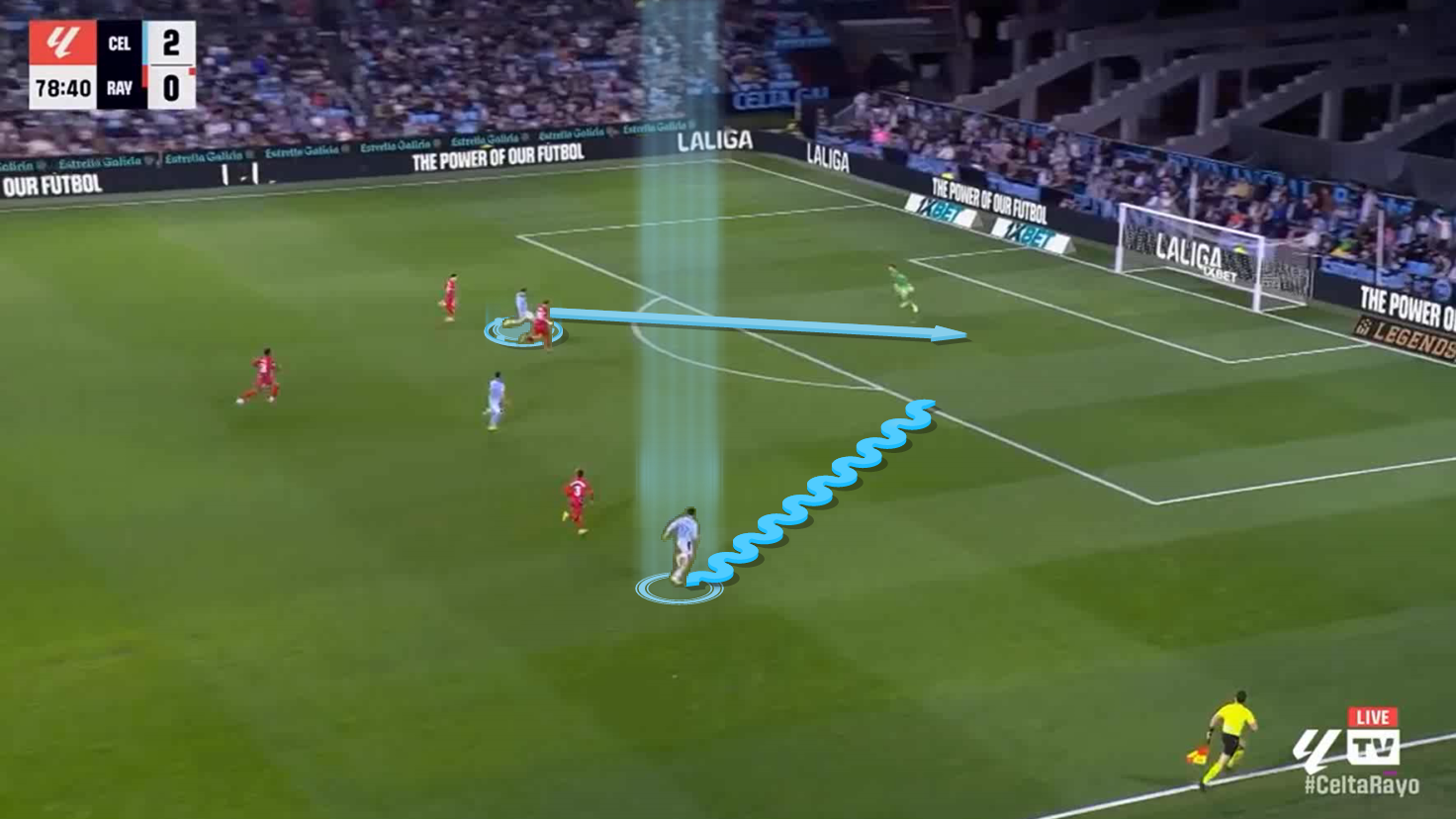
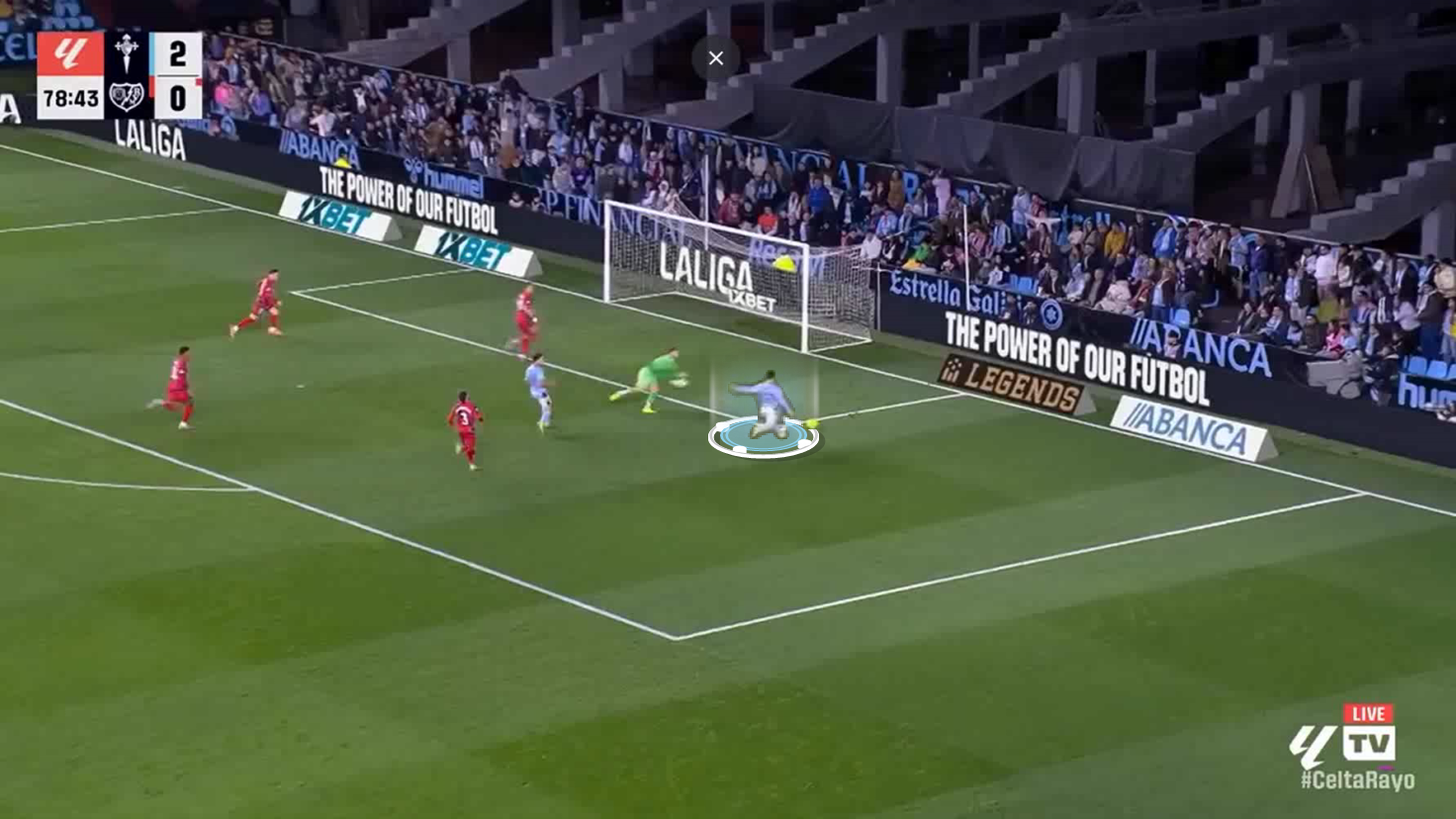
Goal 1 2Goal 2Goal 3Goal 4Goal 5Goal 6Here is the goal against Rayo Vallecano, featuring attacking elements from the Celta team, a calm build-up from the backline through the midfield.

Then the winger, who had dropped back after cutting inside, turned, thus creating space by drawing the defender away.

Then he passed to the winger who had made a run into the space opened up in the defence, and shot.

There was also a good follow-up after the goalkeeper made the save.
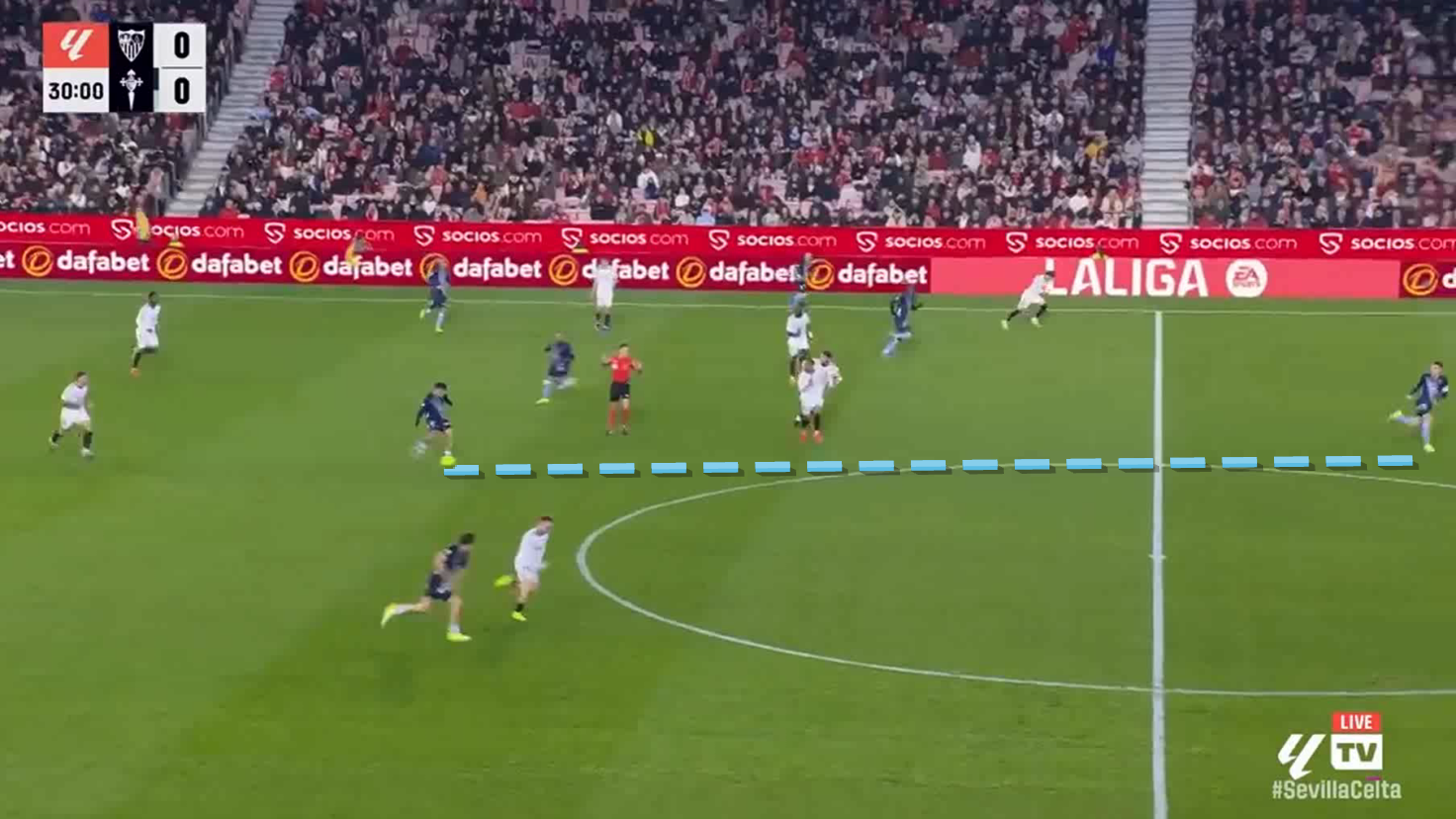
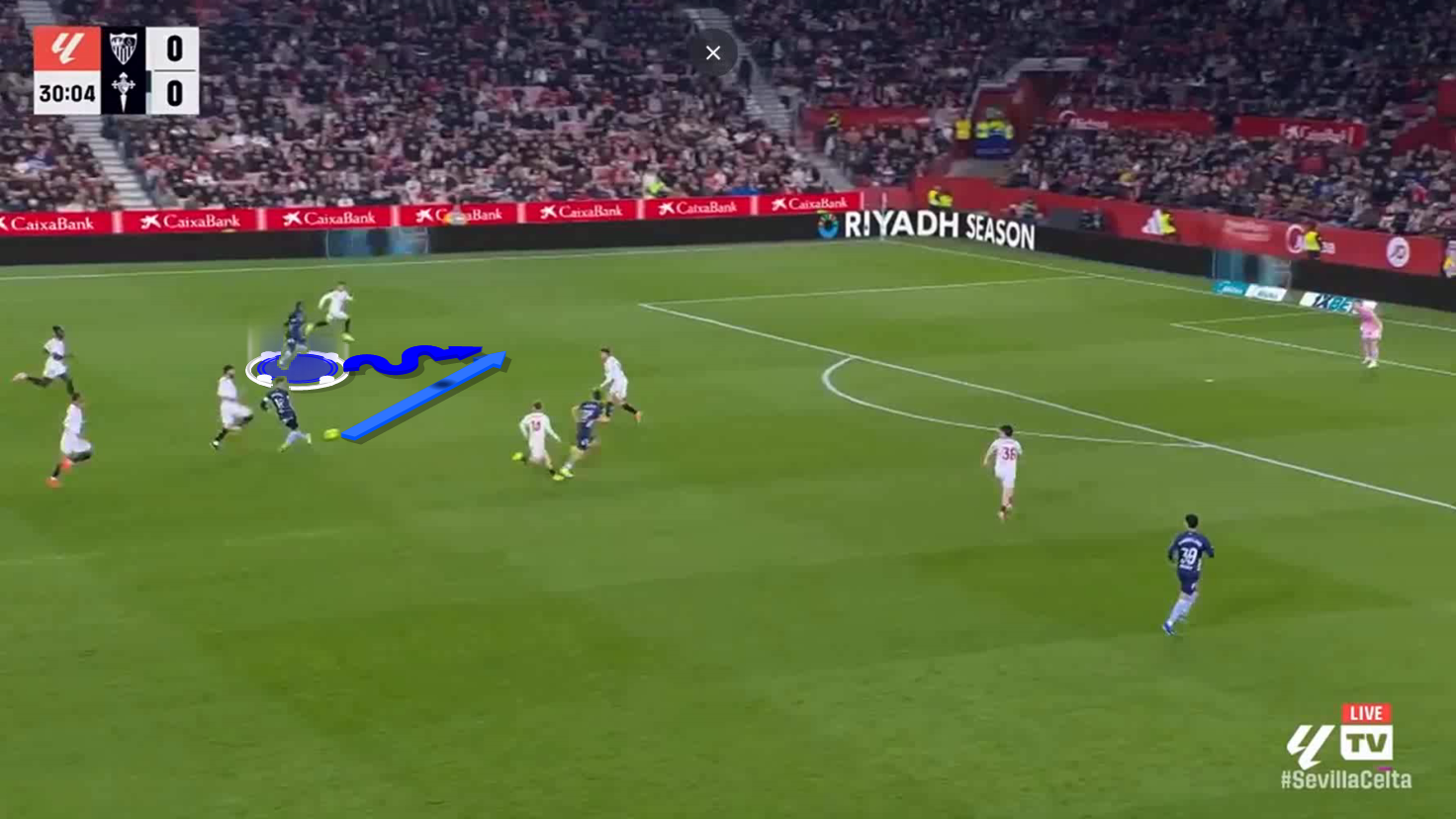
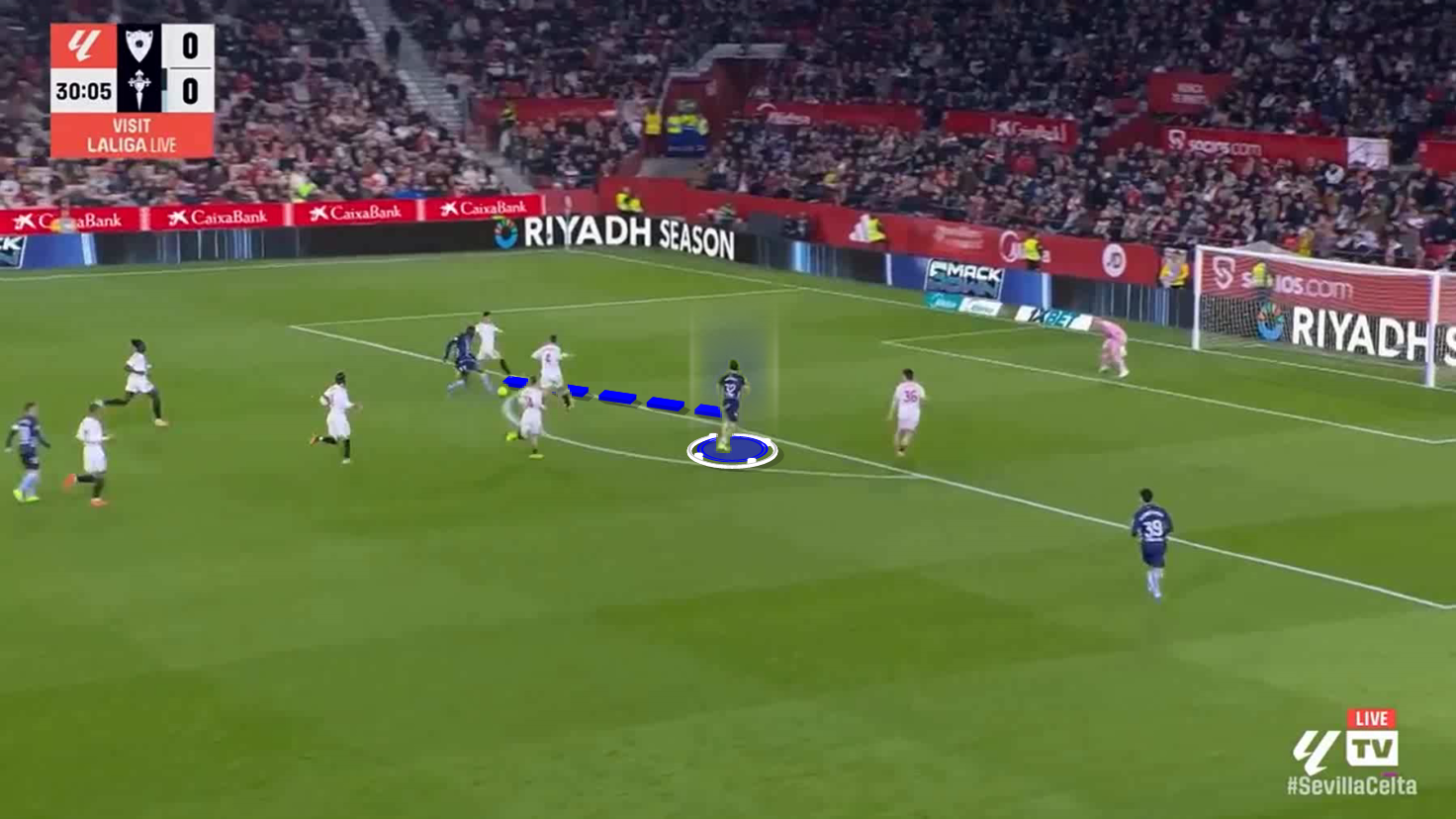
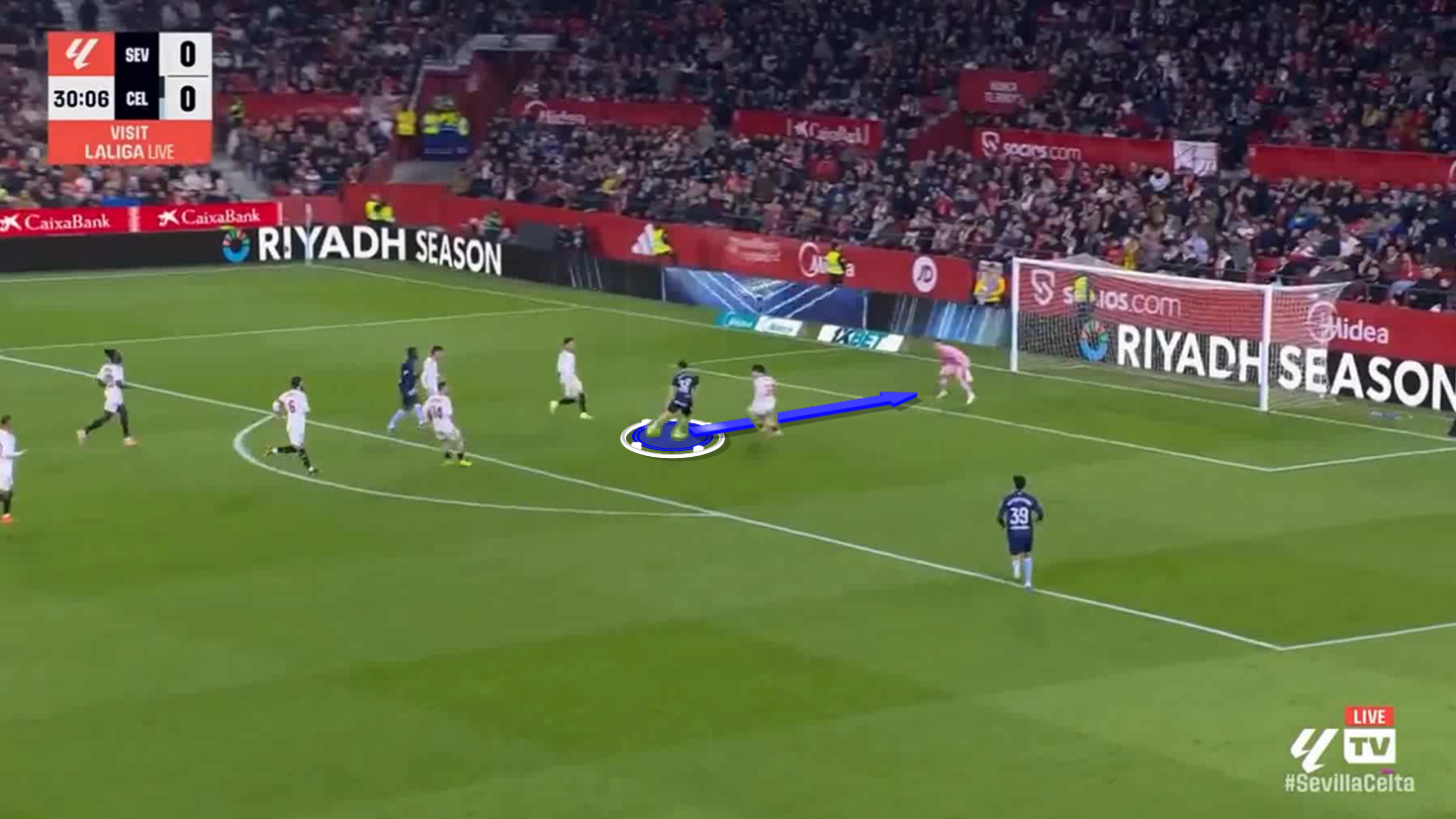
Final missed 1Final missed 2Final missed 3Final missed 4Despite the recurrence of these patterns, Celta Vigo suffers from a clear gap between the quality of their attacks and their finishing. 

The team arrives in dangerous areas with a good number of players, but they often arrive too late.

Here, Sevilla, with a well-organised and swift attack, reached the final third, thanks to the movement of the third man. 

However, the final touch came in the middle of the goal.

The problem isn’t a lack of ideas, but rather their execution under pressure. 

The team creates situations that demand a quick, decisive final touch, but often the wrong decision is made, or the execution falls short of the required technical quality.

Pressure After Losing Possession: A Clear Identity

One of Celta’s most notable features this season is their counterpressing. 

The team doesn’t retreat immediately after losing possession, but tries to regain it within the first 10 seconds.
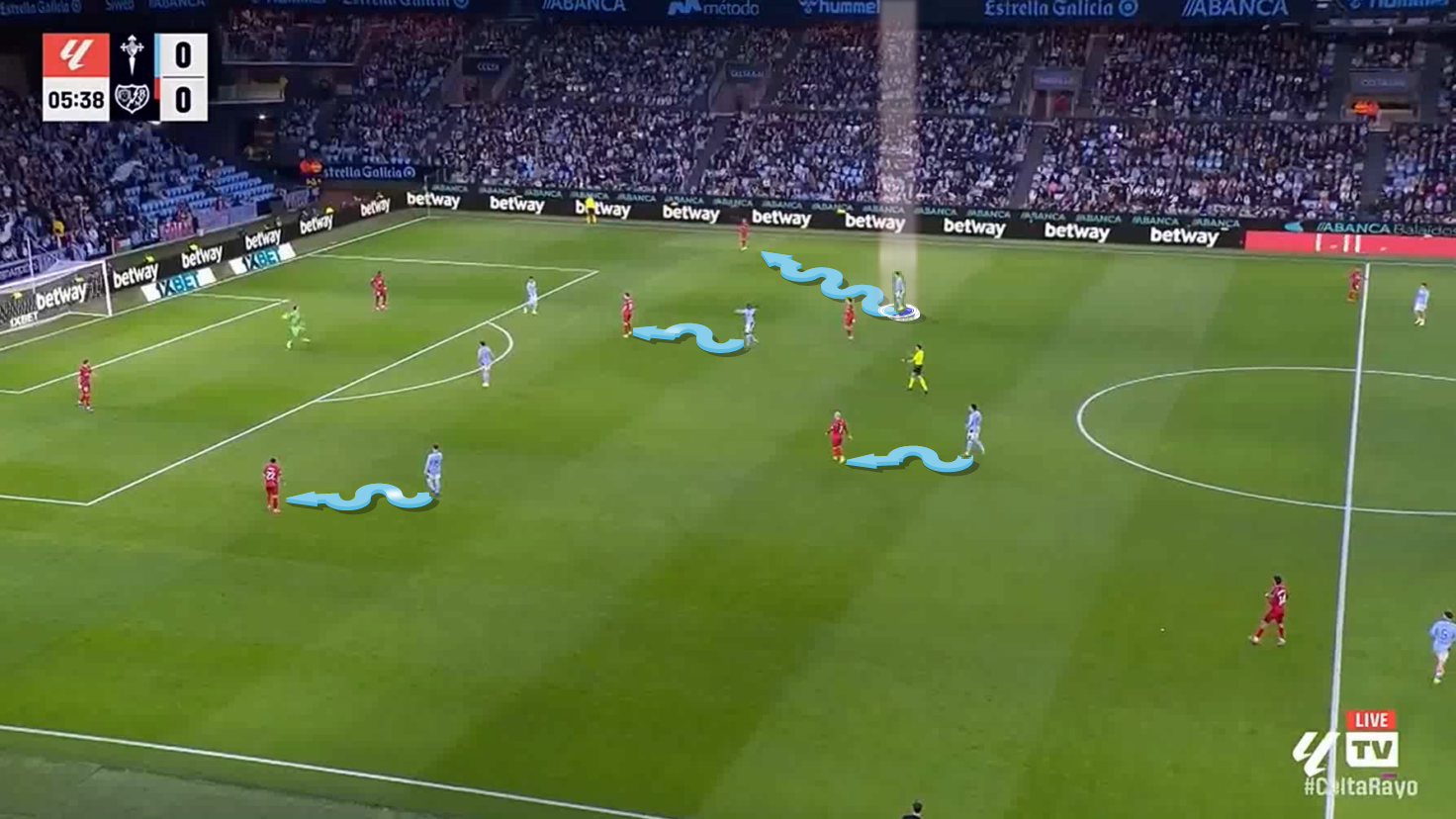
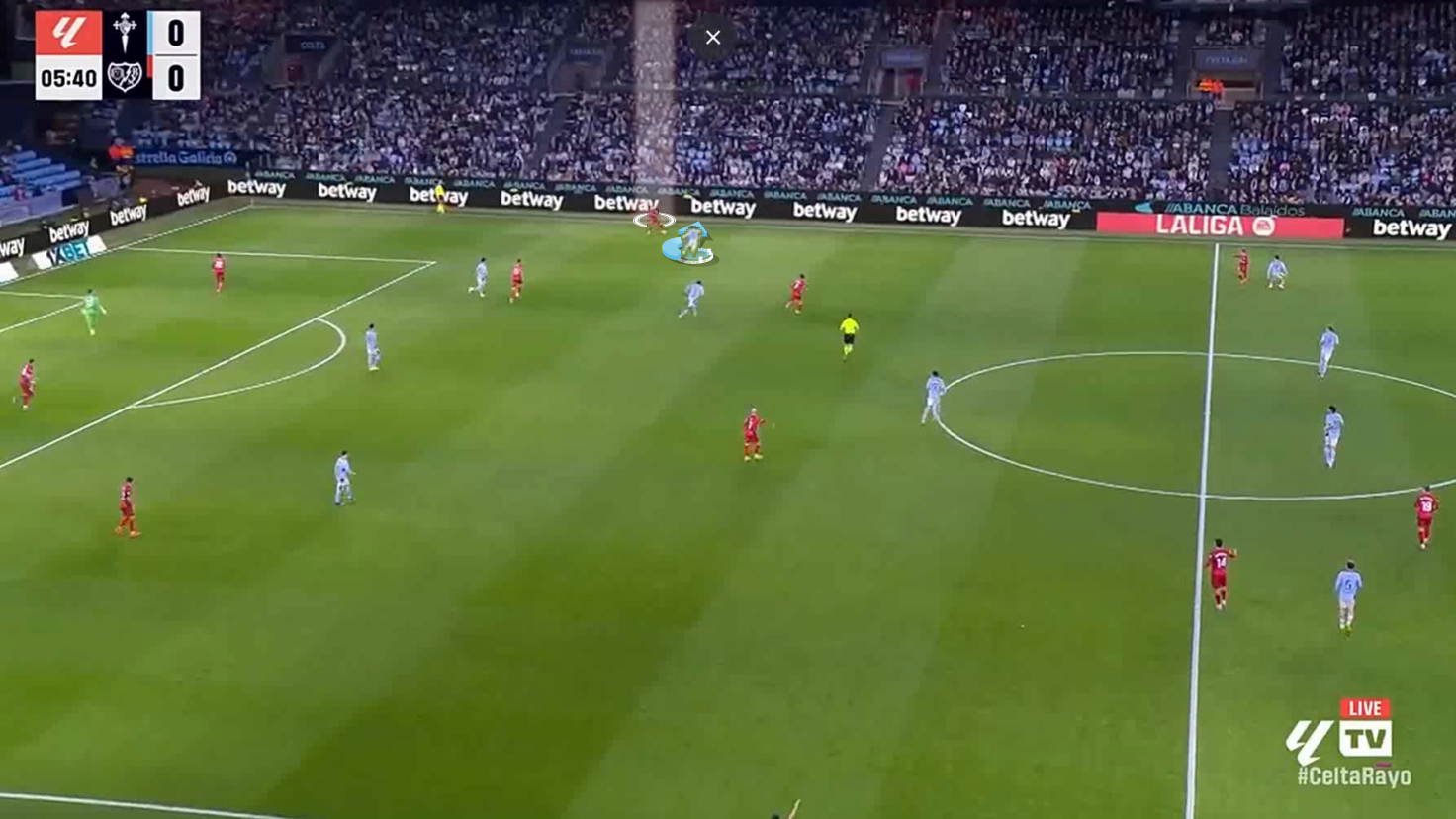
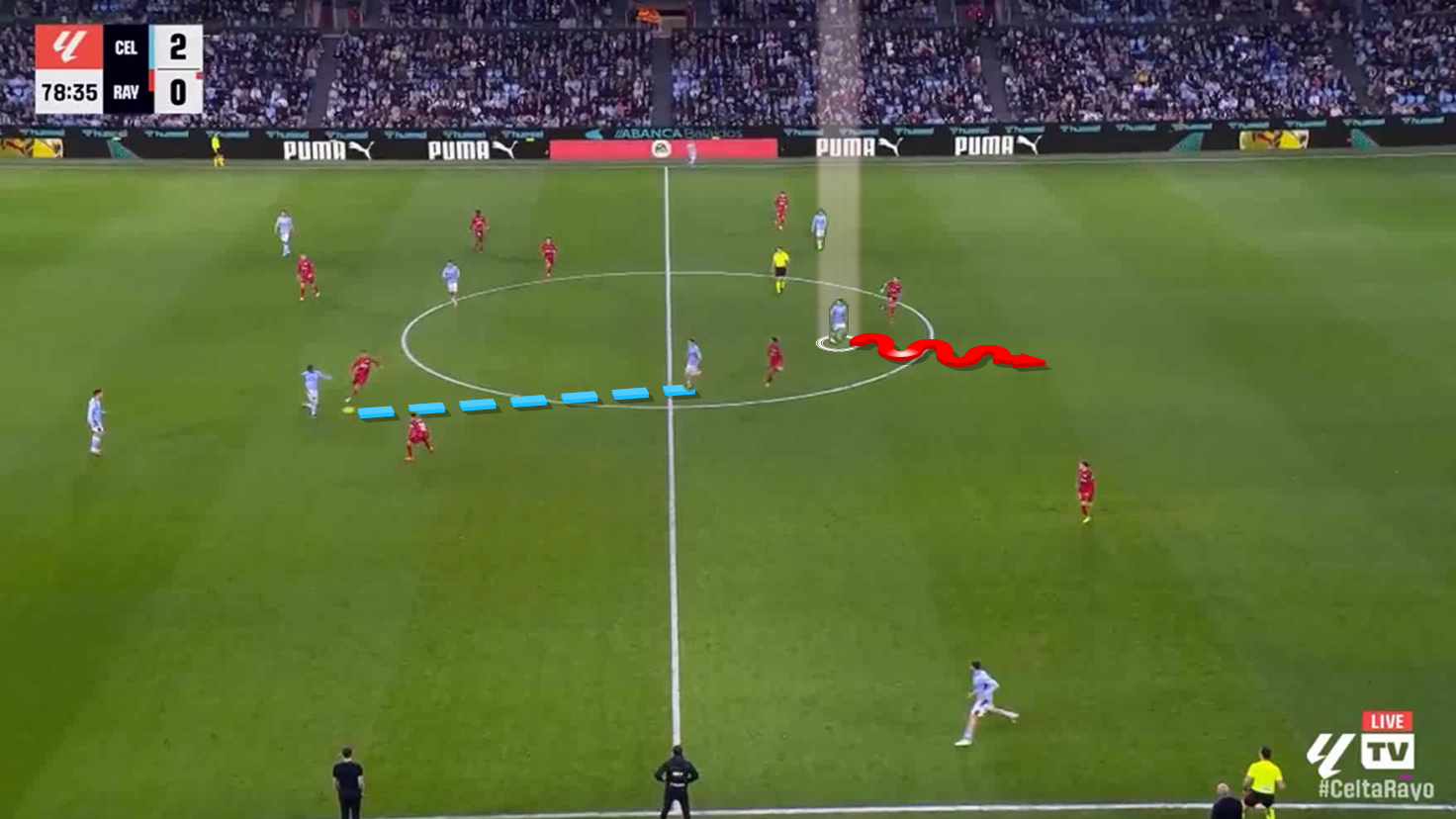
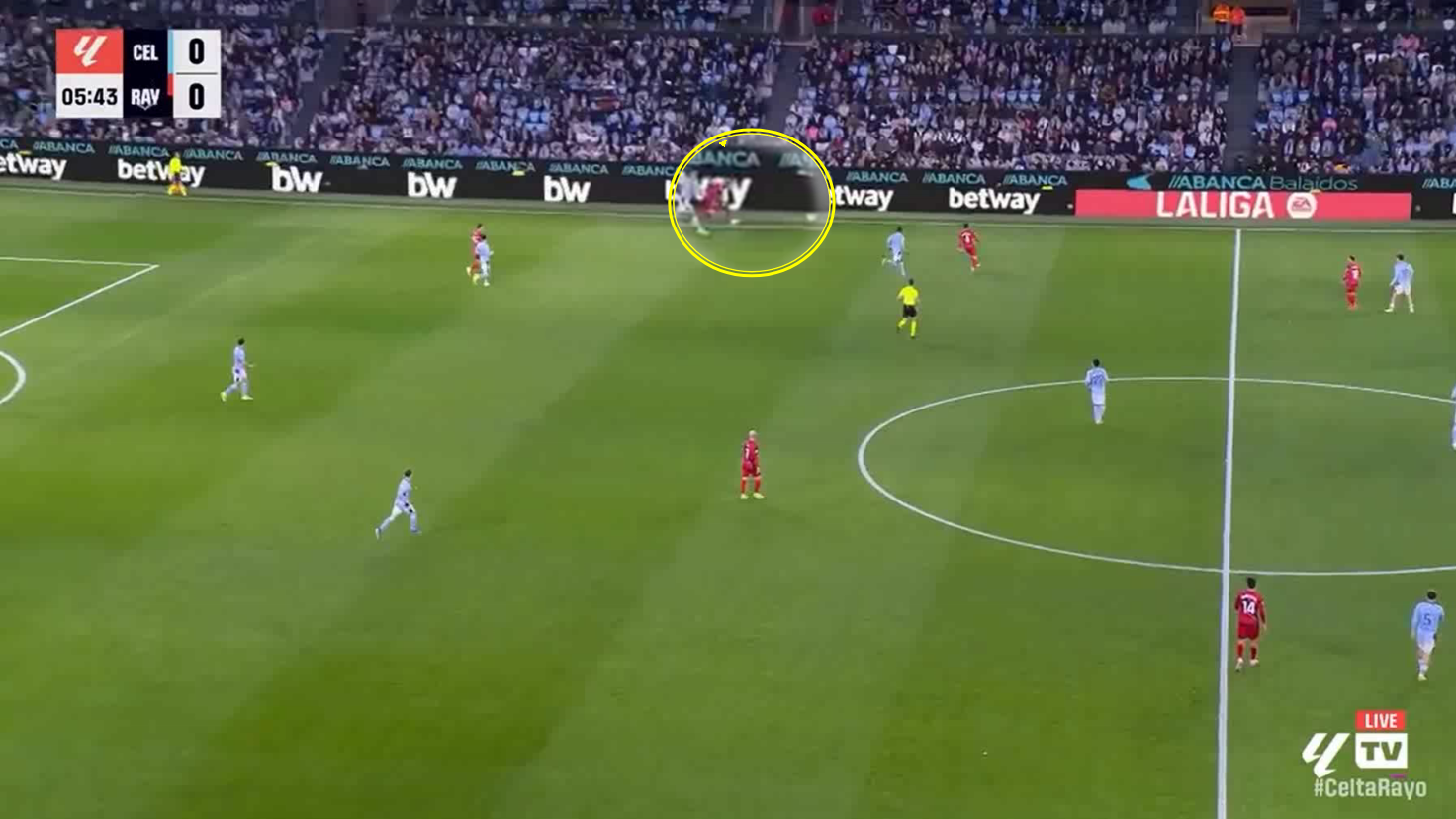
Counter press 1Counter press 2Counter press 3Here, against Rayo Vallecano, Celta lost possession in the final third, but an immediate horizontal press closed down passing angles and forced the opponent to play an inaccurate long ball, regaining possession within seconds.

This behaviour increases the continuity of the attack but also requires high fitness, which explains the decrease in the pressure intensity in the last quarter of an hour in some matches.

Medium & Low Block: More Discipline Than Aggression

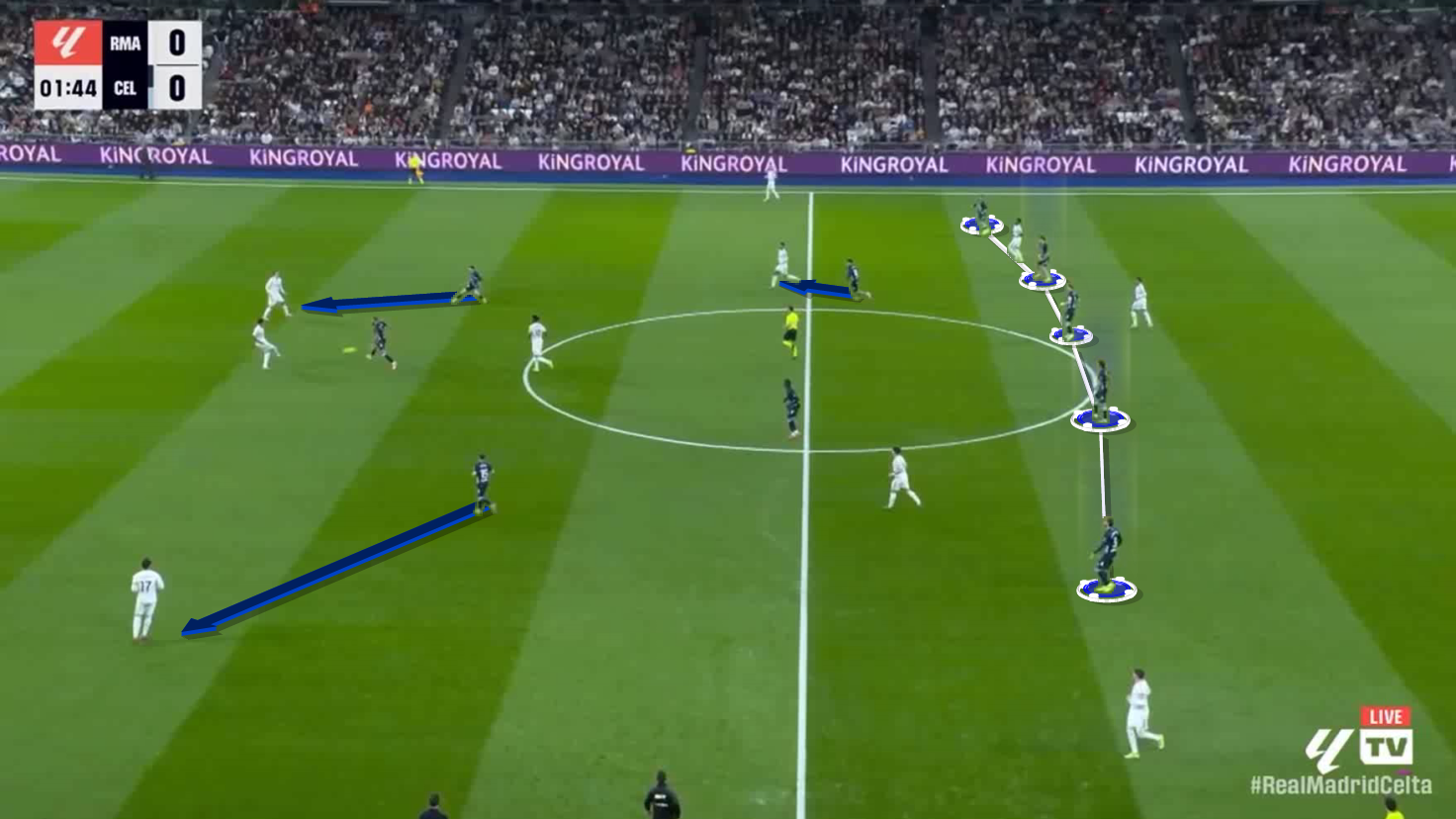
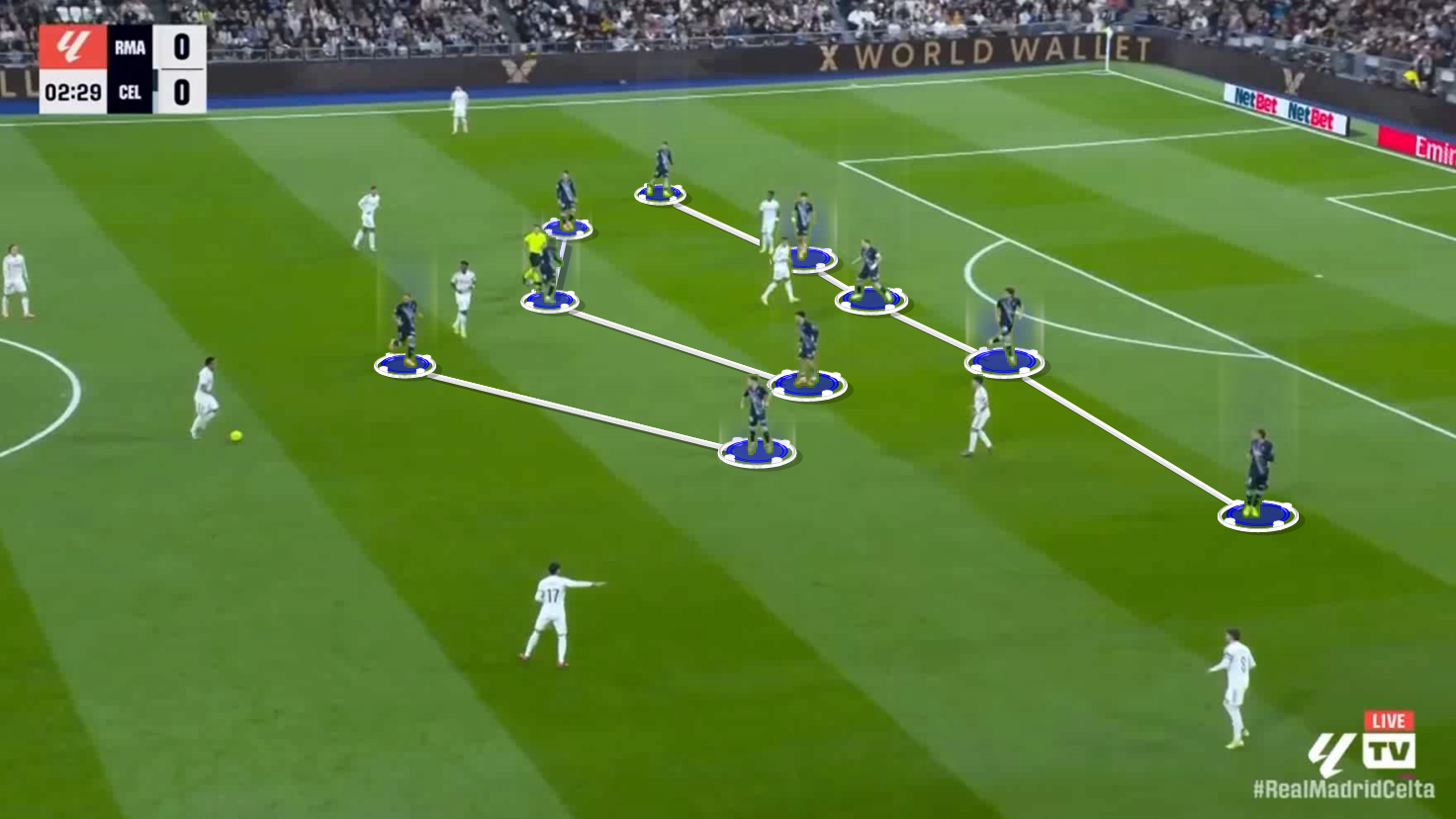
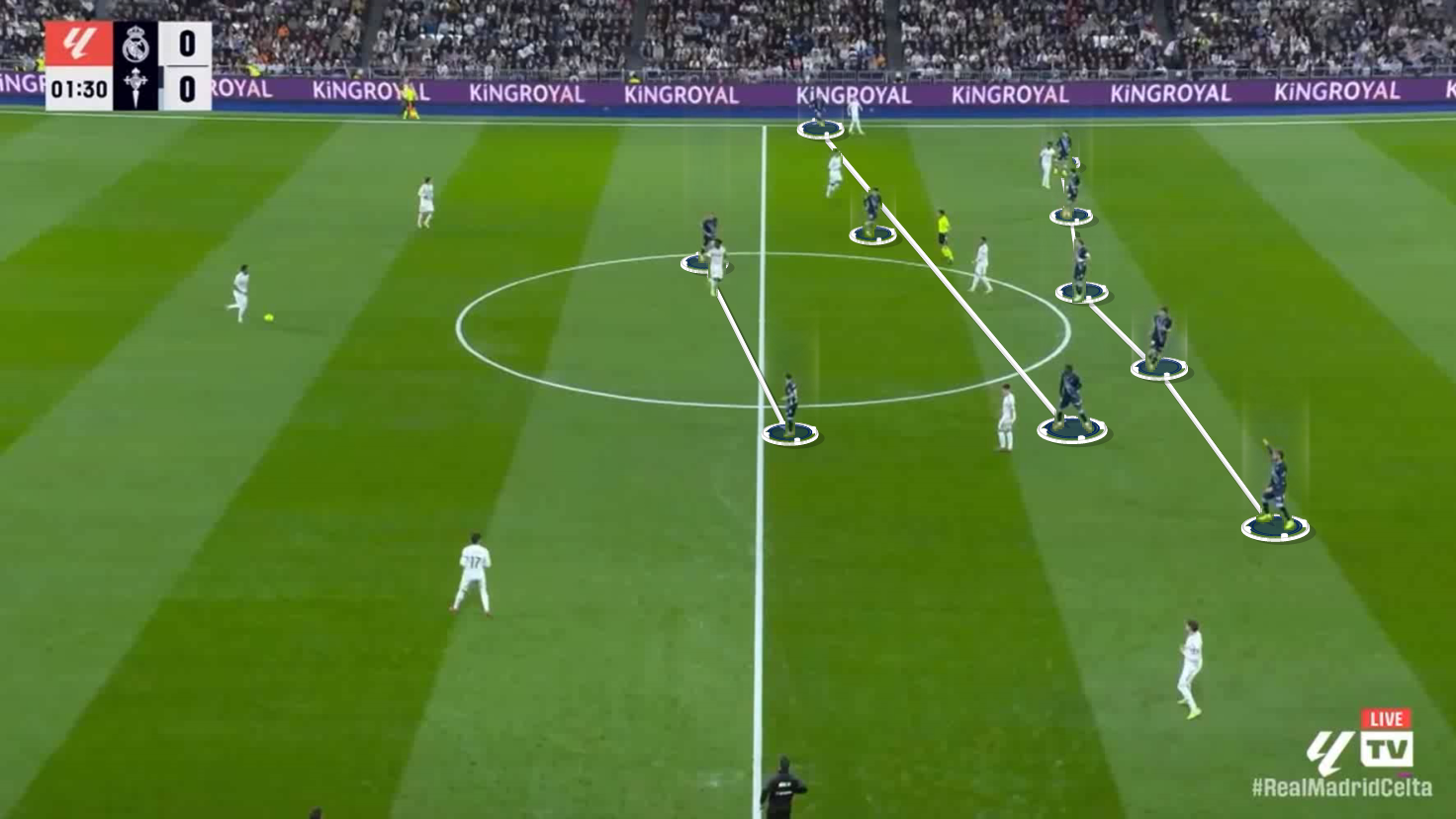
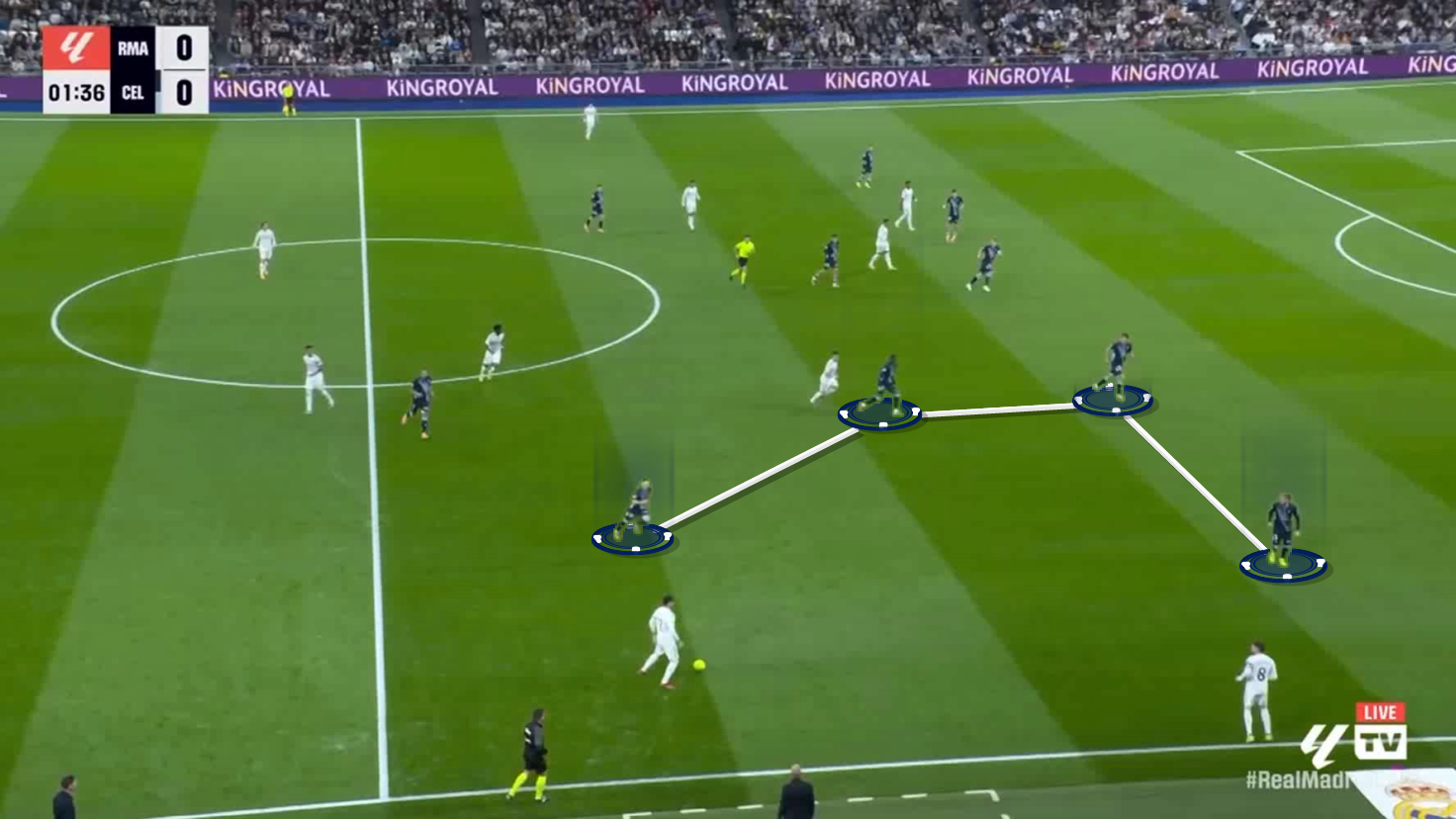
When Celta Vigo are forced to defend in a mid-block, their organisation becomes more apparent. 

They defend with a 5-3-2 formation, with the lines close together and minimal space between the full-back and centre-back.
mid block 1mid block 2mid block 3mid block 4mid block 5

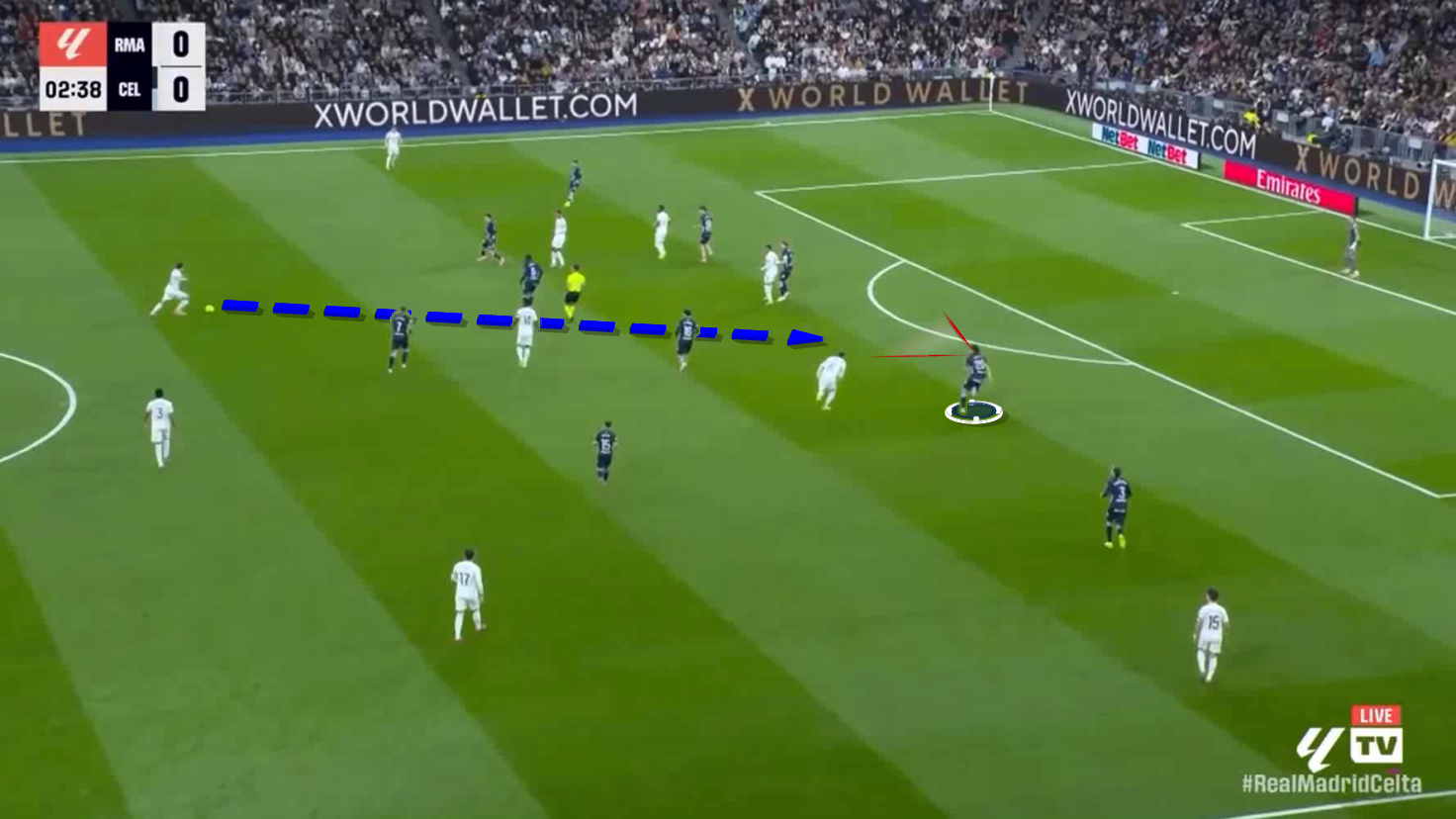
We notice how the play was deliberately directed to the flanks, with the centre closed off, forcing Real Madrid to be patient. Even when a passing lane opened, it went to Celta Vigo due to the correct positioning.

The 5-3-2 formation is used as a system of thinking, not as a defensive plan. 

The team is organised, knows when to press and when to wait, and has clear roles, especially on the wings.

Defensive Transition

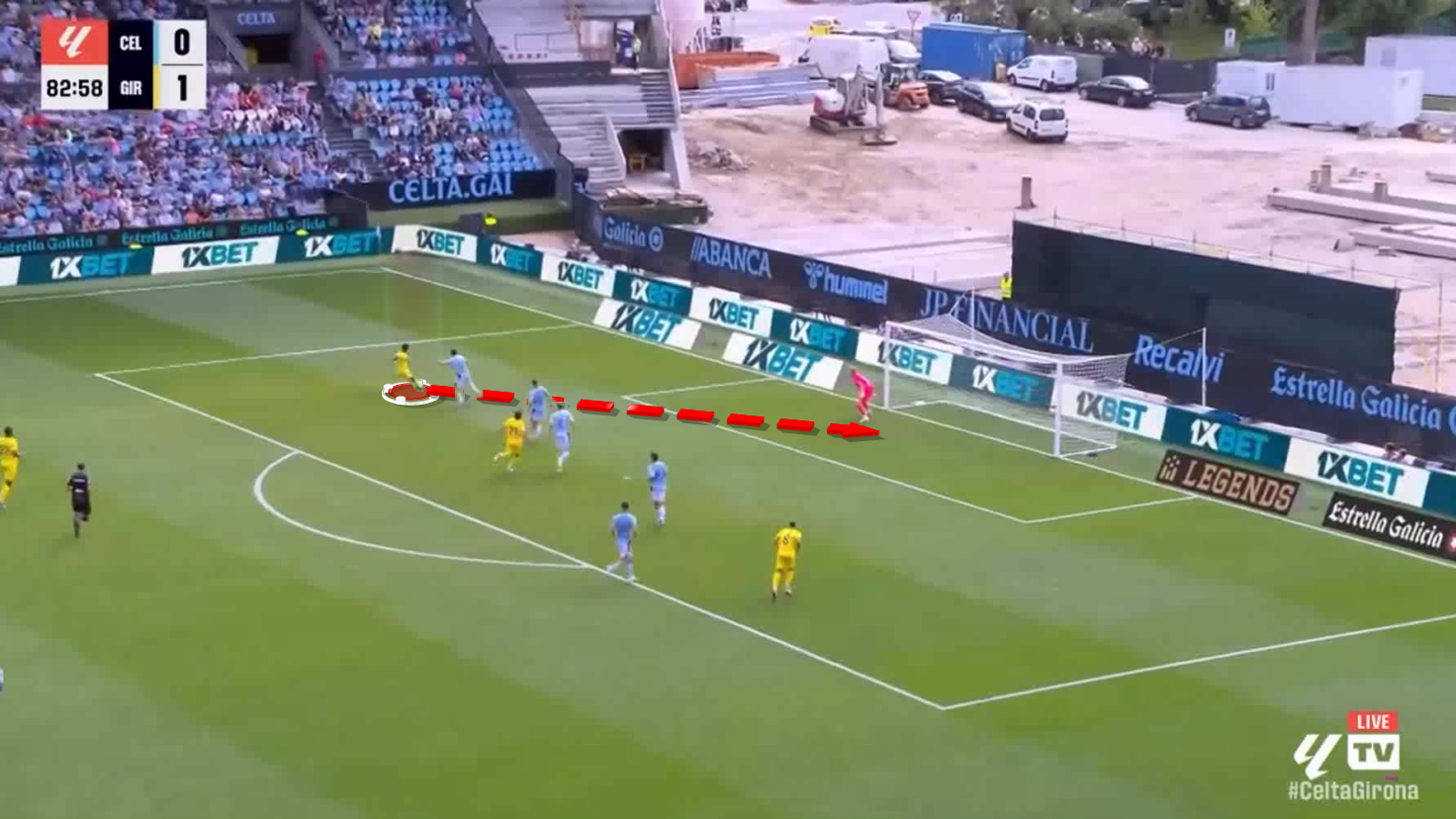
The biggest weakness in Celta’s system is evident in defensive transitions after losing the ball, particularly when the full-backs advance.

Playing with a 5-3-2 formation provides the team with good protection in a well-organised defence, but it leaves space behind the wingers during counterattacks.
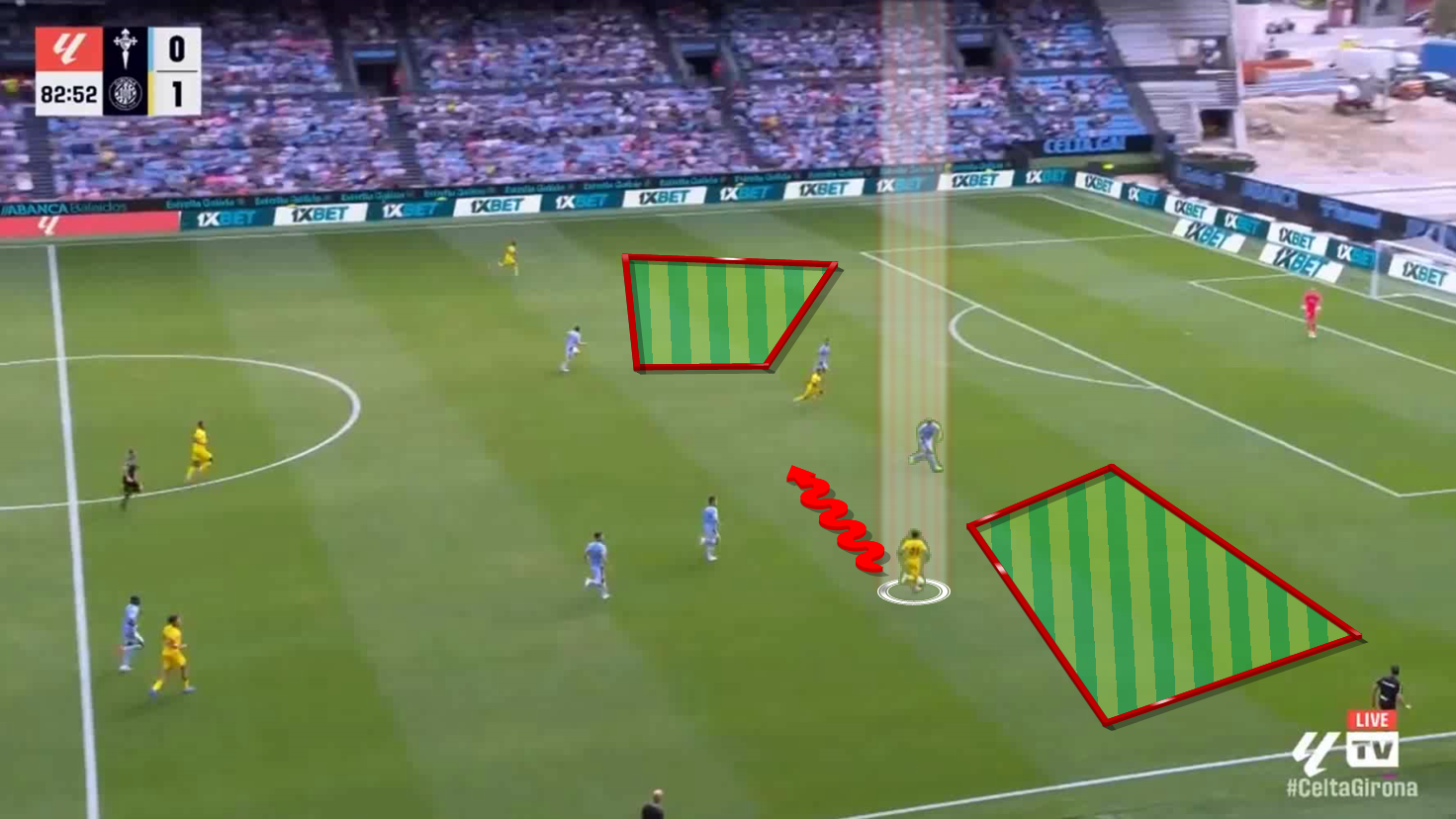
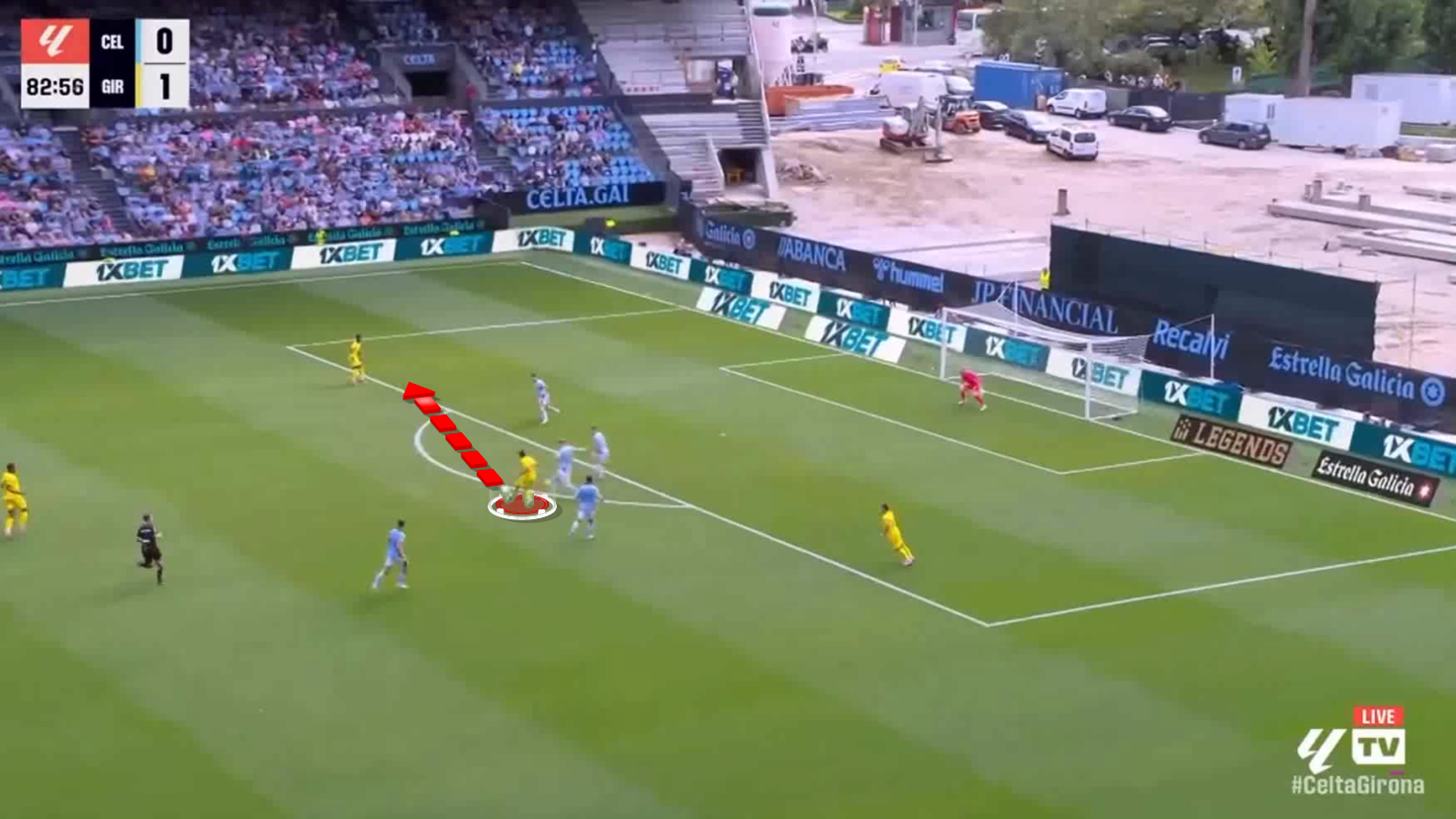
Def transition 1Def transition 2Def transition 3Here against Girona, spaces appear in the defensive transition, especially in recent matches, even after a great effort, and opportunities arise behind the flanks.

These situations do not occur frequently, but they are enough to punish the team against opponents who are good at quick transitions.

Conclusion

Celta Vigo in 2025/2026 isn’t a perfect team, but it’s a clear-cut one. 

They know how to build attacks, when to press, and where to hurt the opposition. 

Their tactical project is more mature than in previous seasons, but they lack decisiveness in the final third and better management of defensive transitions.

If this development continues, Celta Vigo won’t just be a stable mid-table team, but a project with a proven track record of European qualification, not a series of surprises.

Tags: Celta VigoCelta Vigo FormationCelta Vigo LineupCelta Vigo NewsCelta Vigo Style Of PlayCelta Vigo Tactical AnalysisCelta Vigo TacticsClaudio GiráldezClaudio Giráldez Coaching StyleClaudio Giráldez FormationClaudio Giráldez Manager StyleClaudio Giráldez NewsClaudio Giráldez Style Of PlayClaudio Giráldez Tactical AnalysisClaudio Giráldez TacticsLa LigaLa Liga NewsLa Liga Tactical AnalysisLa Liga TacticsScouting ReportTactical Analysis
Previous Post

Arsenal Vs Manchester United [2–3] – Premier League 2025/2026: How Michael Carrick Punished Mikel Arteta – Tactical Analysis

Next Post

Phil Foden Scout Report At Manchester City 2025/2026: Pep Guardiola’s Complete Interior – Player Analysis

Next Post
Phil Foden At Man City 20252026

Phil Foden Scout Report At Manchester City 2025/2026: Pep Guardiola's Complete Interior – Player Analysis

  • About Total Football Analysis
  • Contact Total Football Analysis
  • Write For Total Football Analysis
  • Advertise
  • Privacy Policy
  • Cancellation / Refund Policy
  • Resources
  • Terms Of Service

© 2026 Total Football Analysis

No Result
View All Result
  • Football Analysis
    • Data Analysis
    • Formations
      • 2-2-4 Formation
      • 2-3-5 Formation
      • 3-1-4-2 Formation
      • 3-2-2-3 Formation
      • 3-2-4-1 Formation
      • 3-1-6 Formation
      • 3-3-4 Formation
      • 3-4-1-2 Formation
      • 3-4-2-1 Formation
      • 3-4-3 Formation
      • 3-5-1-1 Formation
      • 3-5-2 Formation
      • 4-1-4-1 Formation
      • 4-2-2-2 Formation
      • 4-2-3-1 Formation
      • 4-2-4 Formation
      • 4-3-1-2 Formation
      • 4-3-3 Formation
      • 4-4-2 Formation
      • 4-5-1 Formation
      • 5-3-2 Formation
      • 5-4-1 Formation
      • 6-3-1 Formation
    • Head Coach Analysis
    • Match Analysis
    • Player Analysis
    • Recruitment Analysis
    • Set Piece Analysis
    • Tactical Theory
    • Tactical Preview
    • Team Analysis
    • Training Analysis
    • Tactical Analysis
    • Scouting Report
  • Competition
    • ALL Competitions
    • English Premier League
    • Champions League
    • La Liga
    • Bundesliga
    • Serie A
    • Ligue 1
    • Eredivisie
    • EFL Championship
    • FIFA World Cup 2022
    • WEURO 2022
    • Women’s Super League
    • NWSL
    • Belgian First Division A
    • A-League
    • Liga Profesional de Argentina
    • Austrian Bundesliga
    • Campeonato Brasileiro Série A
    • DFB Pokal
    • 1. HNL
    • Danish Superliga
    • EFL League One
    • EFL League Two
    • FA Cup
    • EFL Cup
    • Indian Super League
    • K-League
    • J1 League
    • Liga MX
    • Copa América 2021
    • Copa del Rey
    • MLS
    • Eliteserien
    • Euro 2020
    • Primeira Liga
    • Scottish Premiership
    • Allsvenskan
    • Europa League
    • UEFA Nations League
    • Liga AUF Uruguaya
  • Coaches
    • All Coaches
    • Alfred Schreuder
    • Ange Postecoglou
    • Antonio Conte
    • Arne Slot
    • Bo Svensson
    • Brendan Rodgers
    • Bruno Lage
    • Carlo Ancelotti
    • Christophe Galtier
    • Claude Puel
    • Claudio Ranieri
    • David Moyes
    • Dean Smith
    • Diego Simeone
    • Domenico Tedesco
    • Frank Lampard
    • Eddie Howe
    • Edin Terzić
    • Emma Hayes
    • Erik ten Hag
    • Ernesto Valverde
    • Gennaro Gattuso
    • Gerardo Seoane
    • Gian Piero Gasperini
    • Giovanni van Bronckhorst
    • Graham Potter
    • Igor Tudor
    • Imanol Alguacil
    • Jesse Marsch
    • Jonas Eidevall
    • Jorge Sampaoli
    • José Bordalás
    • José Mourinho
    • Julen Lopetegui
    • Julian Nagelsmann
    • Julien Stéphan
    • Jürgen Klopp
    • Luciano Spalletti
    • Lucien Favre
    • Manuel Pellegrini
    • Marcelo Bielsa
    • Marco Rose
    • Marco Silva
    • Massimiliano Allegri
    • Mauricio Pochettino
    • Maurizio Sarri
    • Mikel Arteta
    • Niko Kovač
    • Nuno Espírito Santo
    • Oliver Glasner
    • Patrick Vieira
    • Paulo Fonseca
    • Pep Guardiola
    • Peter Bosz
    • Rafa Benítez
    • Ralf Rangnick
    • Ralph Hasenhüttl
    • Roger Schmidt
    • Roy Hodgson
    • Sean Dyche
    • Sérgio Conceição
    • Simone Inzaghi
    • Sonia Bompastor
    • Stefano Pioli
    • Steffen Baumgart
    • Steven Gerrard
    • Thiago Motta
    • Thomas Frank
    • Thomas Tuchel
    • Unai Emery
    • Vincenzo Italiano
    • Xavi
  • Teams
    • ALL Teams
    • AC Milan
    • Ajax Amsterdam
    • Arsenal
    • AS Monaco FC
    • Atalanta
    • Atlético Madrid
    • FC Barcelona
    • FC Bayern Munich
    • Borussia Dortmund
    • Celtic FC
    • Chelsea FC
    • Everton F.C.
    • Inter Milan
    • Juventus F.C.
    • Leeds United F.C.
    • Liverpool FC
    • Manchester City
    • Manchester United FC
    • Paris Saint-Germain
    • Rangers FC
    • RB Leipzig
    • Real Madrid CF
    • Tottenham Hotspur
    • West Ham United
  • Players
    • ALL Players
    • Alisson Becker
    • Bukayo Saka
    • Erling Haaland
    • Harry Kane
    • Jack Grealish
    • John Stones
    • Julián Alvarez
    • Kalvin Phillips
    • Kevin De Bruyne
    • Kyle Walker
    • Kylian Mbappé
    • Lamine Yamal
    • Lionel Messi
    • Luis Díaz
    • Mohamed Salah
    • Phil Foden
    • Virgil Van Dijk
  • Contact
  • Write For TFA
  • Login

© 2026 Total Football Analysis