
Young Senegalese defender Nobel Mendy continues to establish himself as one of the most prominent defensive discoveries of the current season with Rayo Vallecano, after joining on loan from Real Betis.
The 21-year-old player presents a modern model of a left-footed centre-back.
Despite his young age and limited La Liga experience, the player has successfully established himself, providing the team with crucial balance in ball distribution and defensive organisation, especially within a system that relies on aggressive pressing and high-tempo play.
Nobel Mendy’s participation in 16 matches was not just to compensate for absences, but also reflected clear confidence in his ability to perform precise tactical roles, especially in building from the back and maintaining defensive stability when the team moves forward.
In this tactical analysis, we will define Mendy‘s profile with the Rayo Vallecano team.
Nobel Mendy In-Possession Analysis
Nobel Mendy plays a pivotal role in the initial build-up phase, as his position as a left-sided centre-back provides a tactical advantage, allowing the team to stretch the field naturally without needing to rotate his body before passing.
His positioning is often slightly wider than his defensive partner, creating a clear passing angle towards the midfielder or full-back, and preventing the opposition’s pressure from confining the play deep.
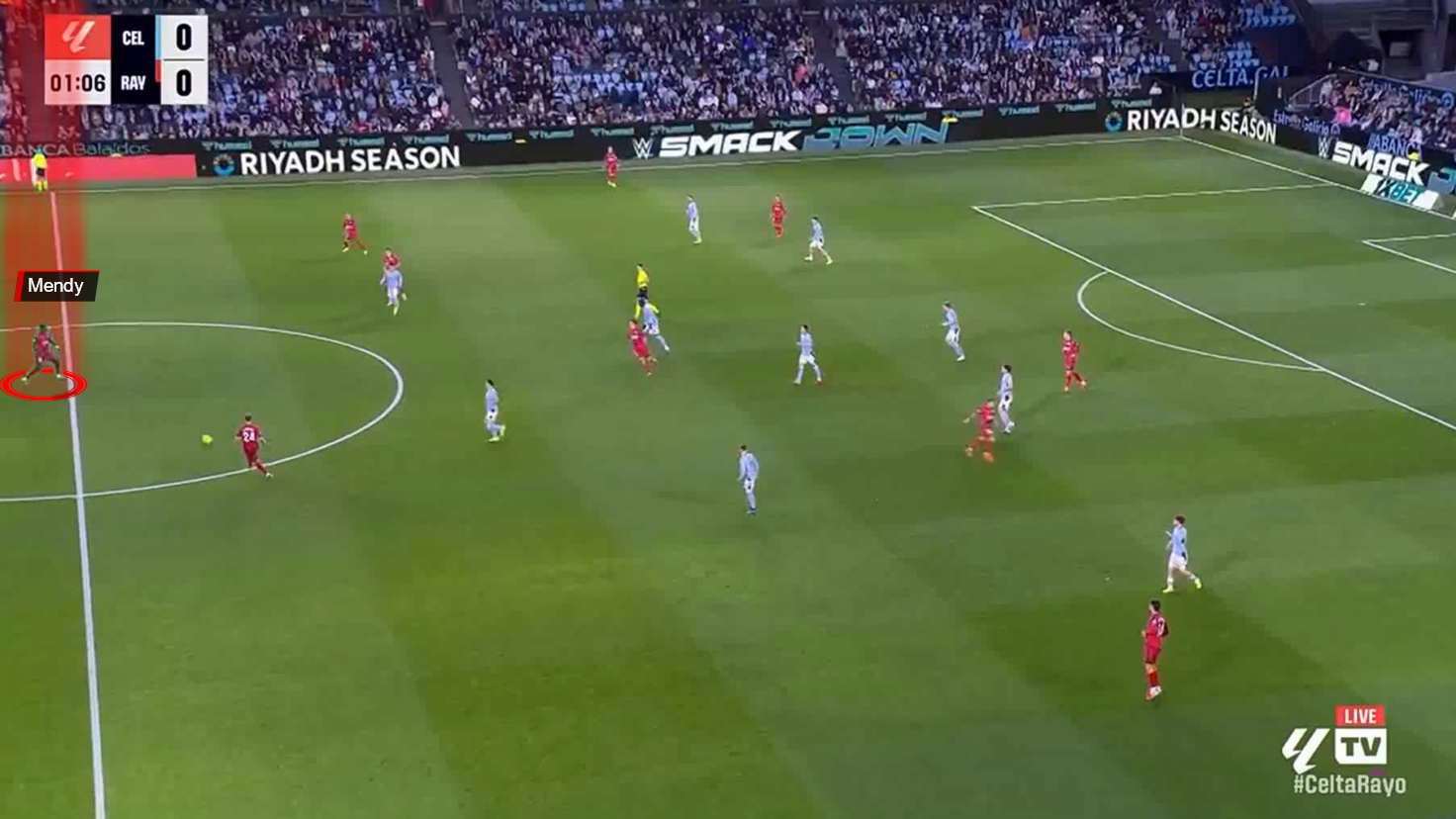
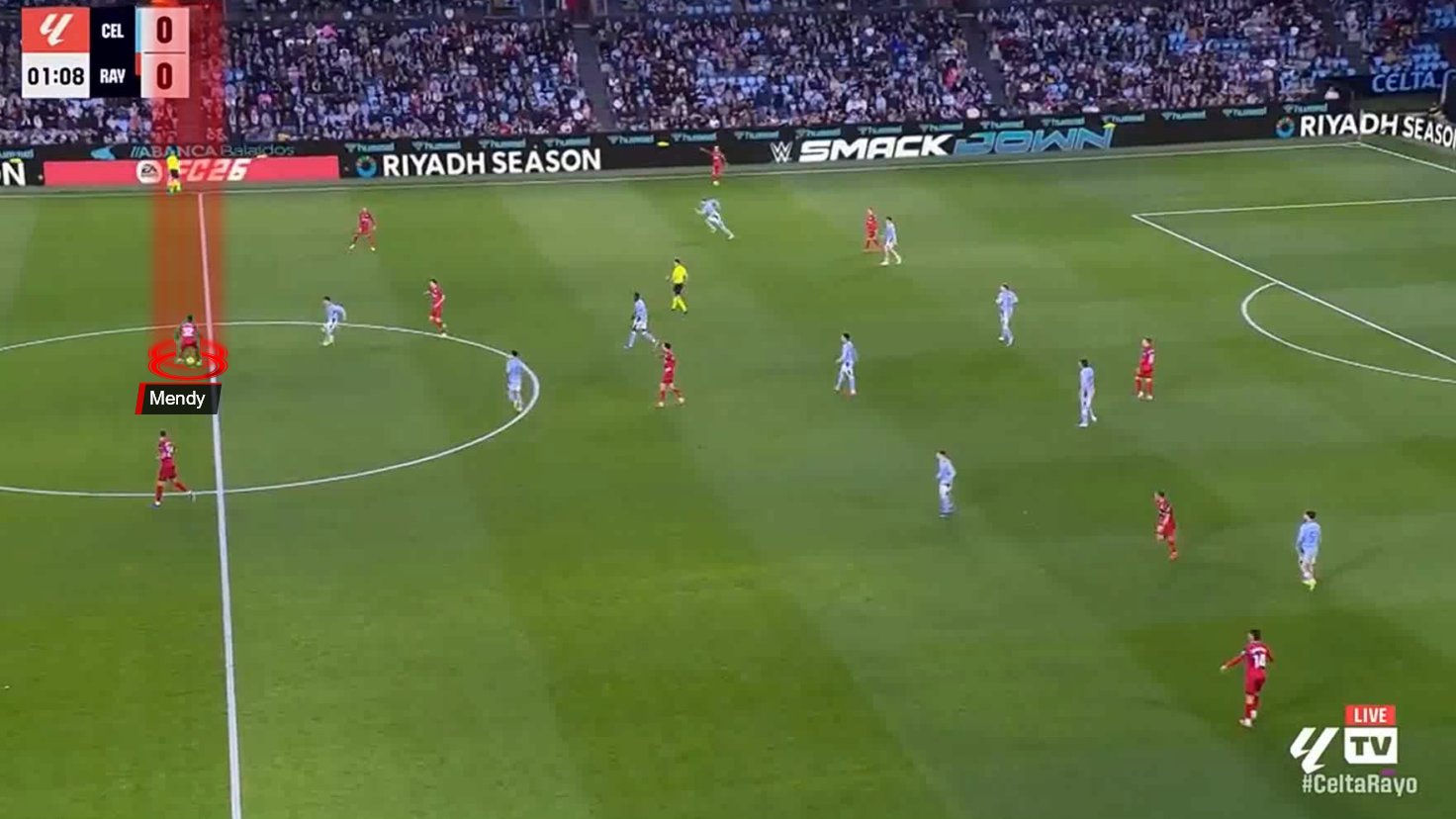 Above, Nobel Mendy is positioned correctly, behind the right centre-back on the left side, providing security while simultaneously opening up a passing angle versus Celta Vigo, where he opened the left side lane of pass before the striker moves in with speed to press.
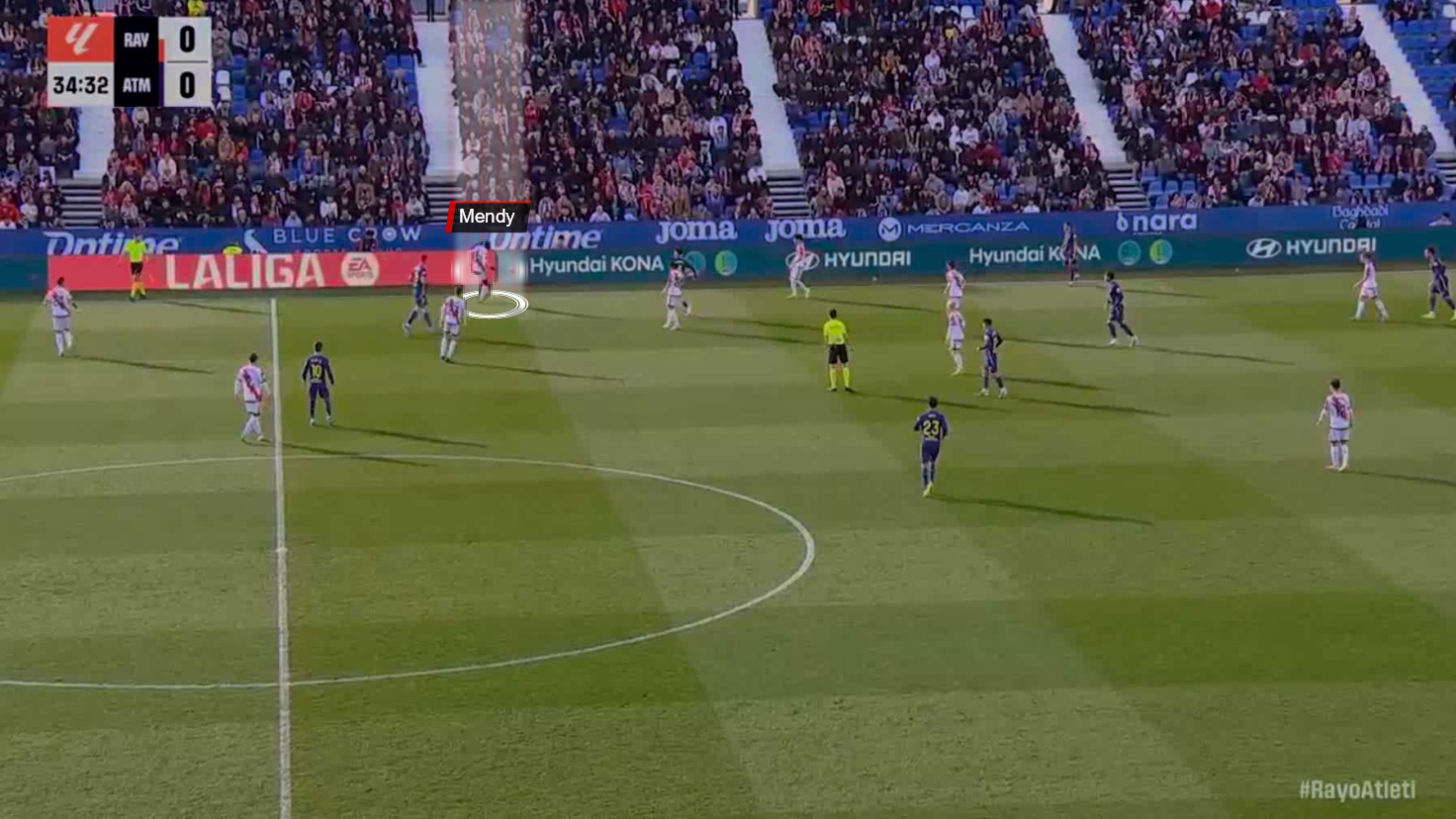
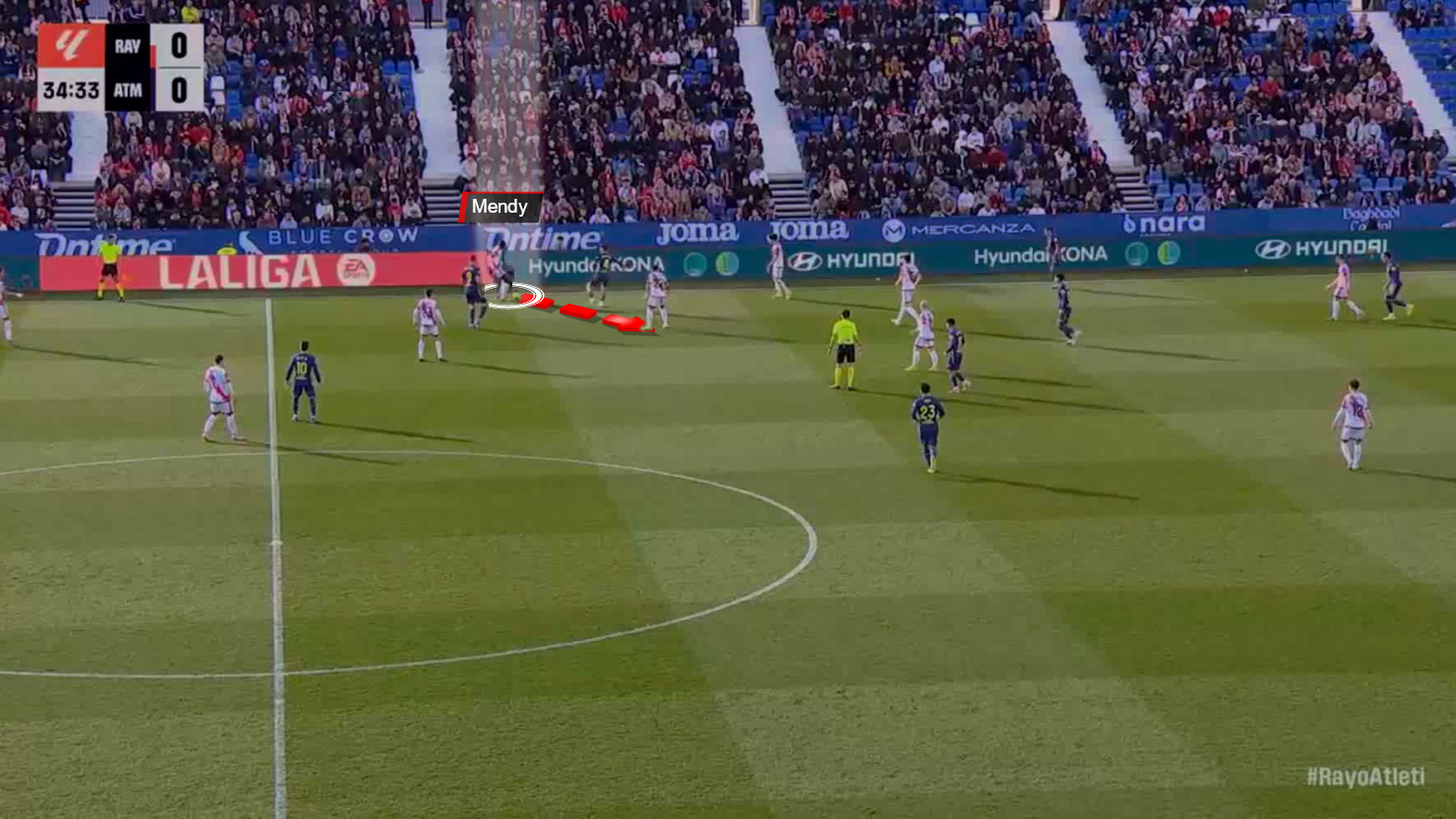 Here in the Atlético Madrid match, after a throw-in, Mendy makes a horizontal pass between the lines on the left side, which allows the winger to take possession and dribble.
One of Mendy’s most notable technical strengths is his ability to execute long diagonal passes with pinpoint accuracy.
This tactical tool gives Rayo Vallecano a direct way to bypass pressure or quickly switch play.
These passes aren’t made haphazardly; they’re often made after drawing the opponent to the left flank during build-up play, before Mendy launches a long ball towards the opposite side, where space lies.
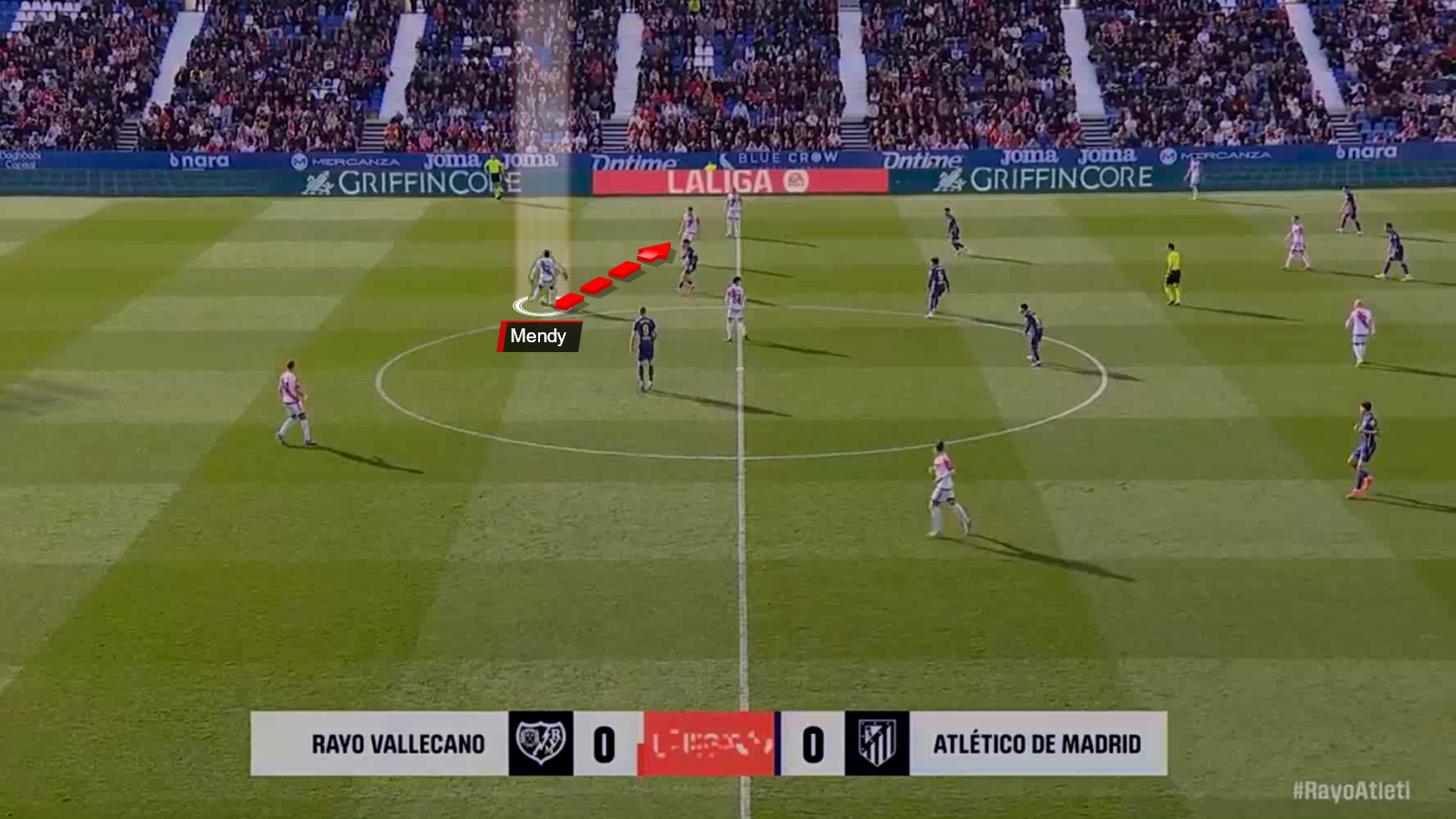
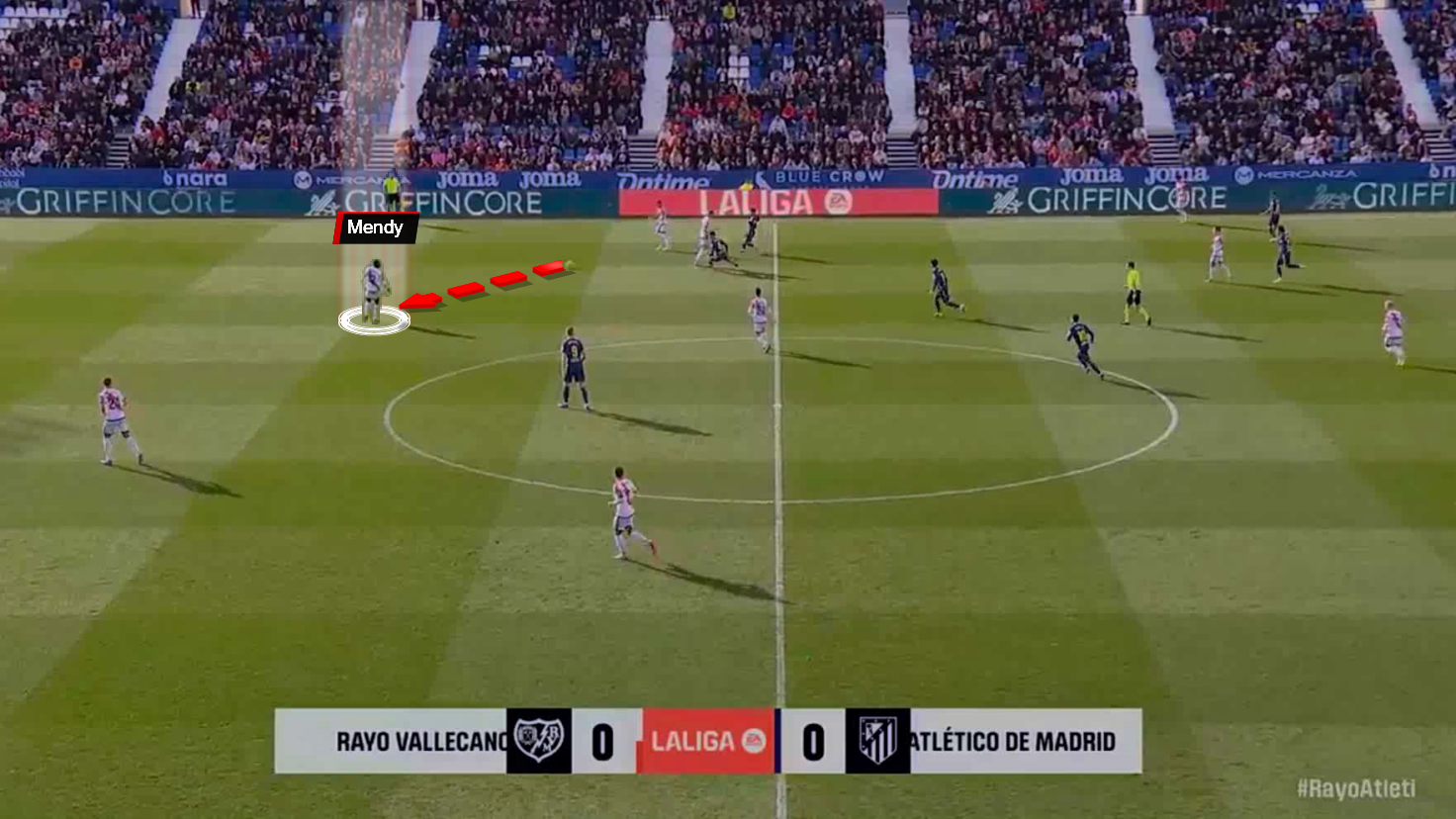
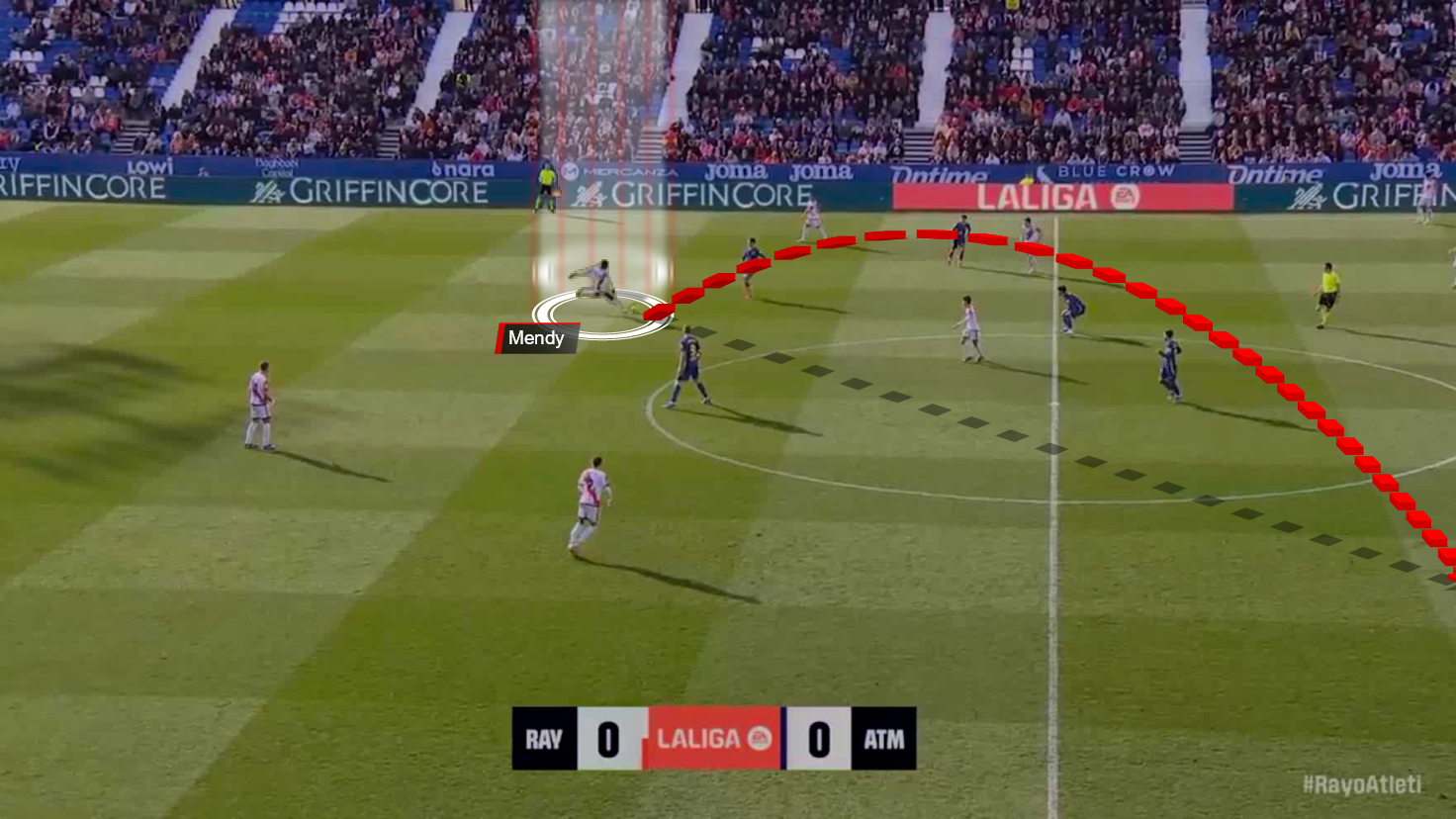
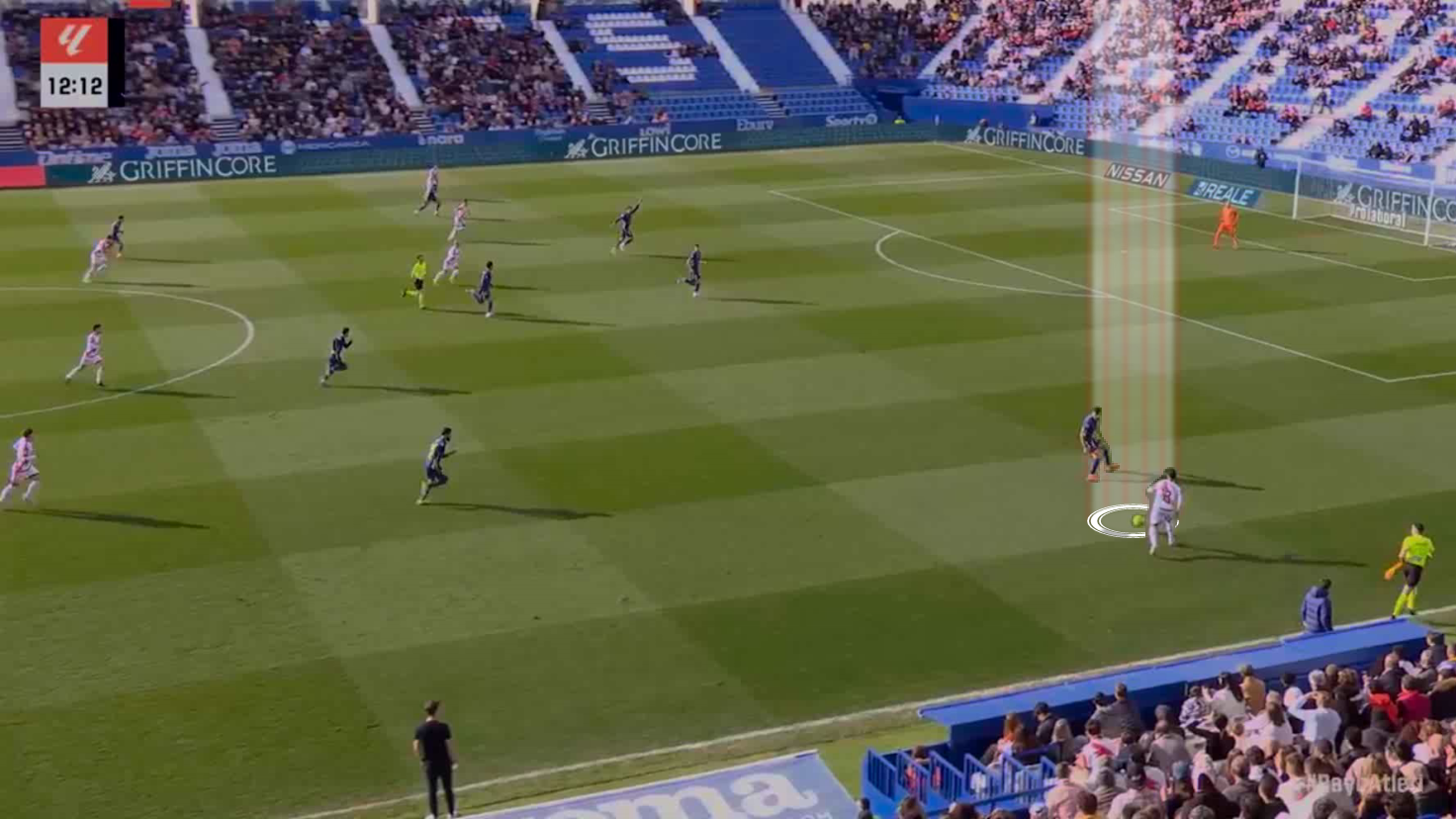 Here, against Atlético Madrid, Nobel Mendy initially plays a pass under pressure, before stepping back to open a receiving channel, then straightening the body and playing the diagonal ball to the opposite side.
Nobel Mendy’s most notable quality is his composure under pressure; he doesn’t rush to release the ball, but rather waits for his teammate to make a move to create a clean passing lane.
When near-term options are limited, he can advance the ball short distances to draw out a pressing player and disrupt the opponent’s initial formation.
Nobel Mendy’s Defensive Positioning
One of the most notable aspects of Nobel Mendy’s development is his defensive positioning, in which he prefers to stay in place rather than rush after the ball.
He positions himself at an angle that allows him to mark both the attacker and the space behind him simultaneously, thus reducing the danger of vertical passes behind the defensive line.
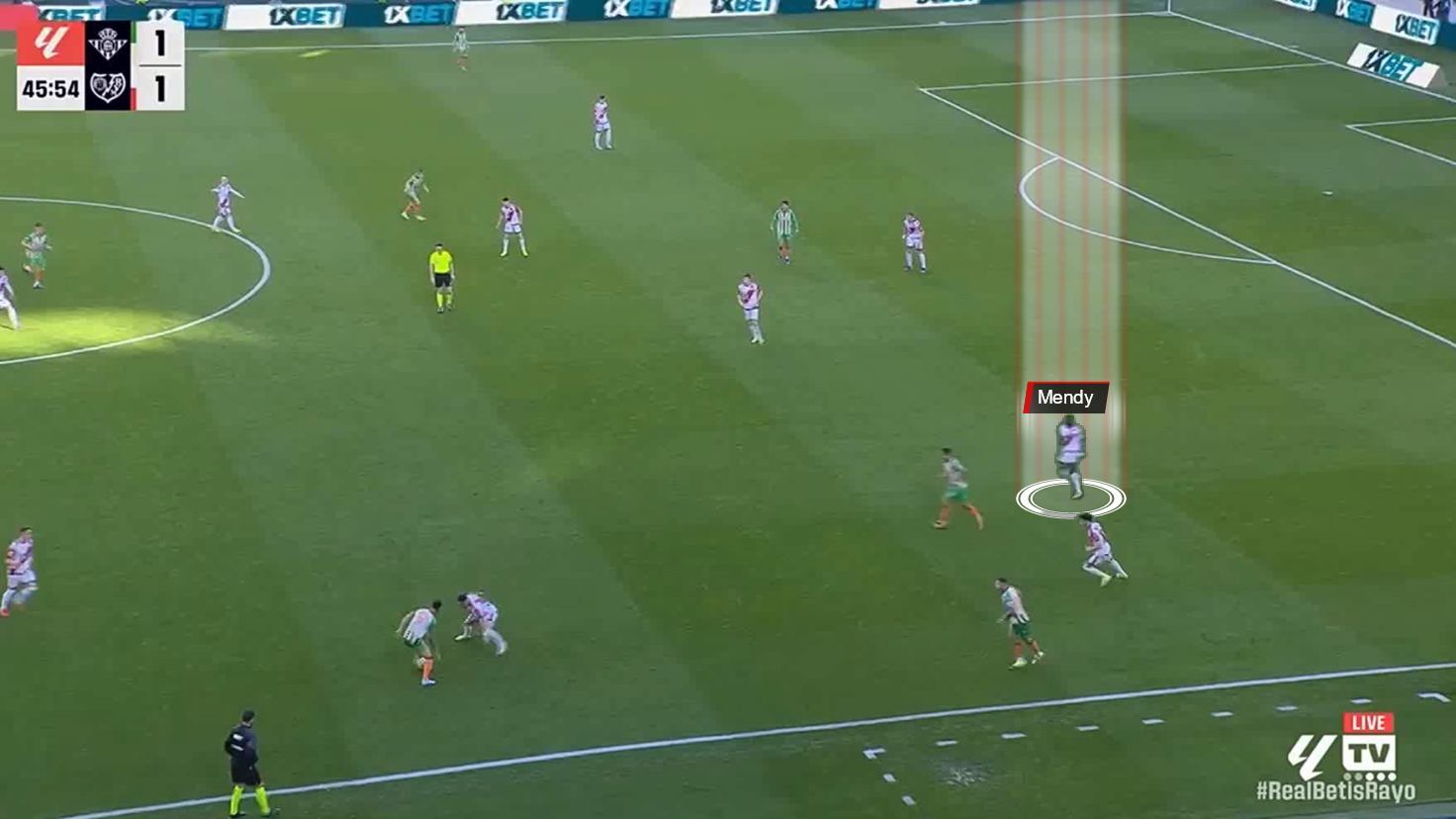
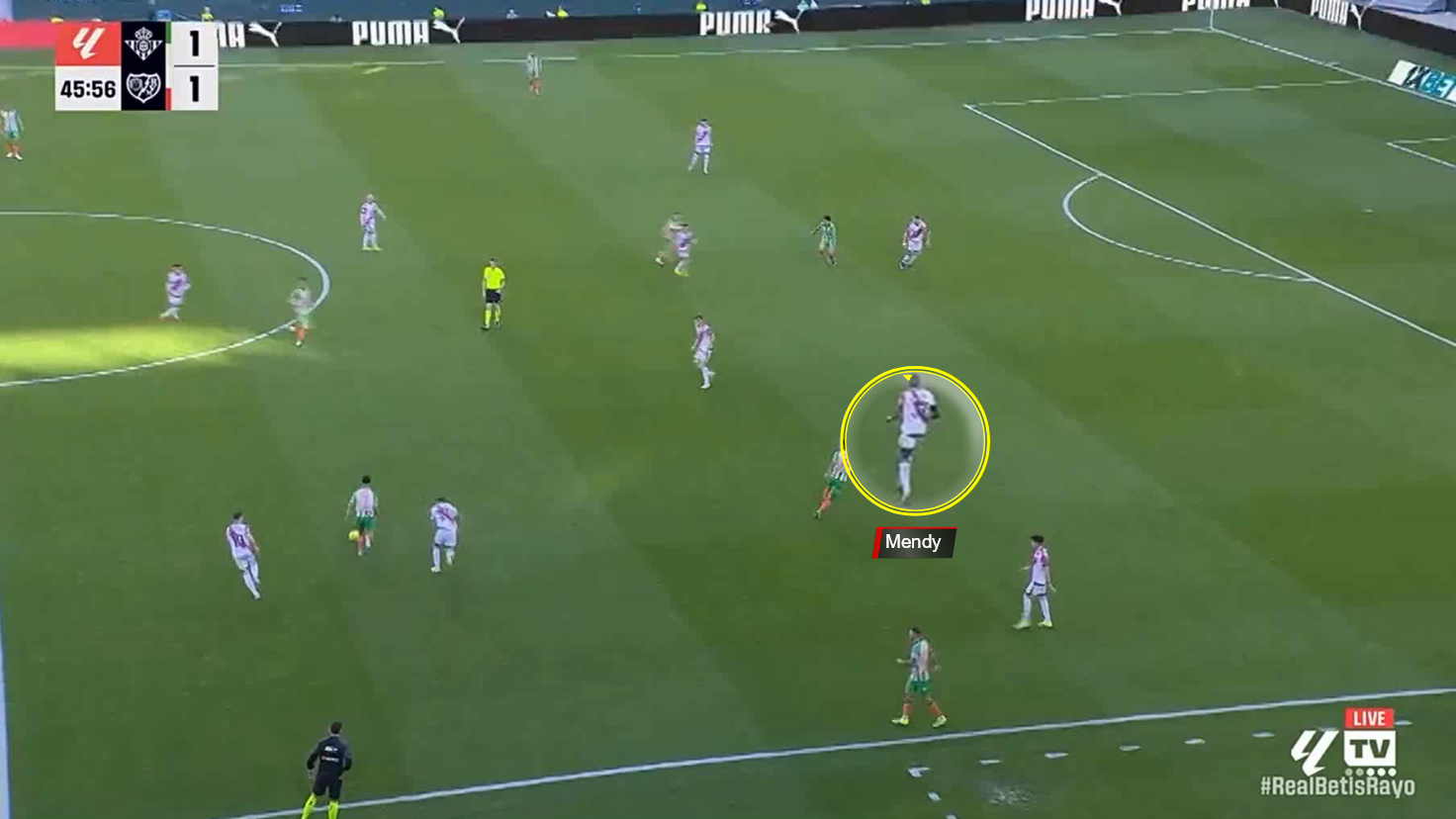
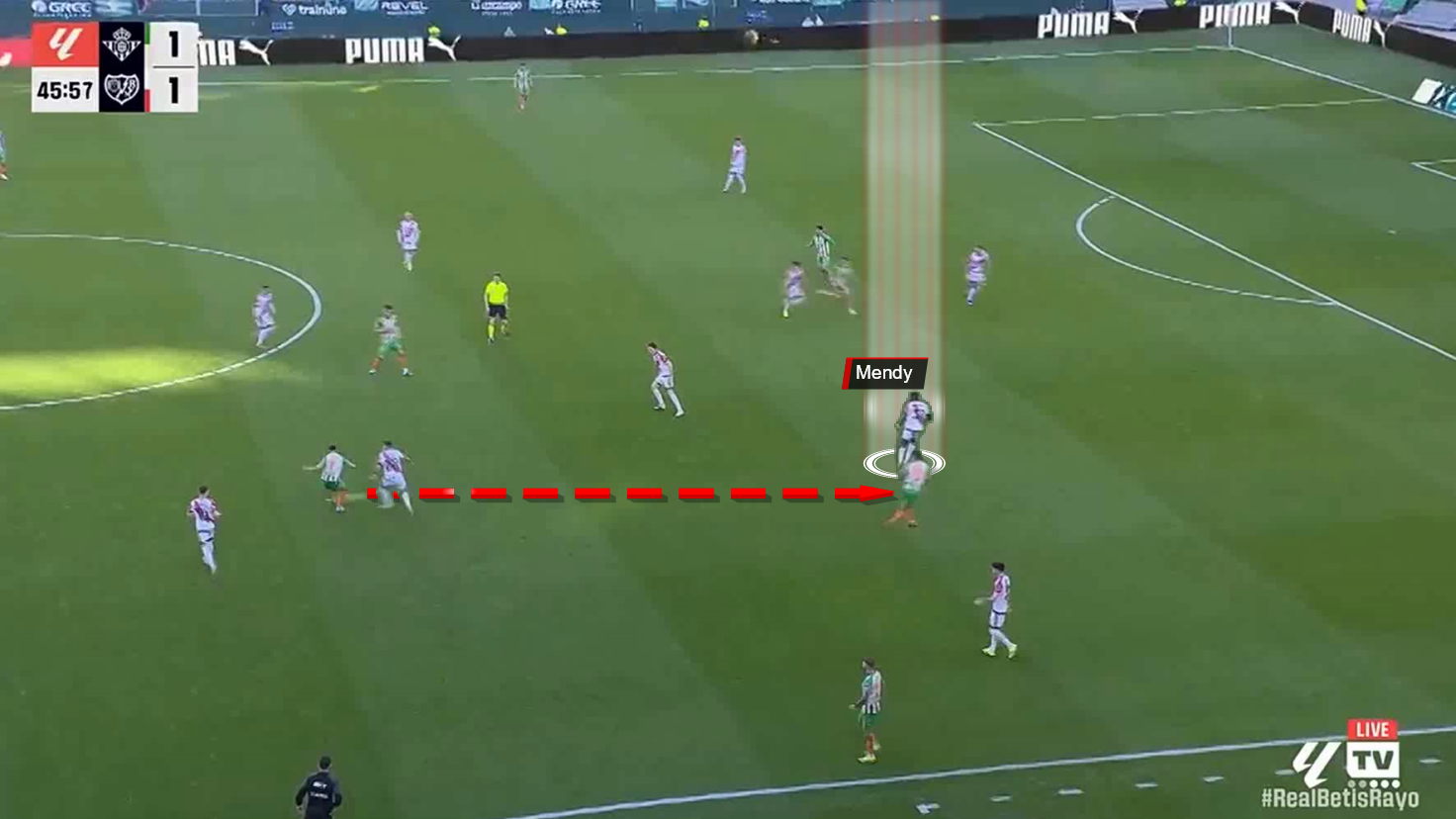
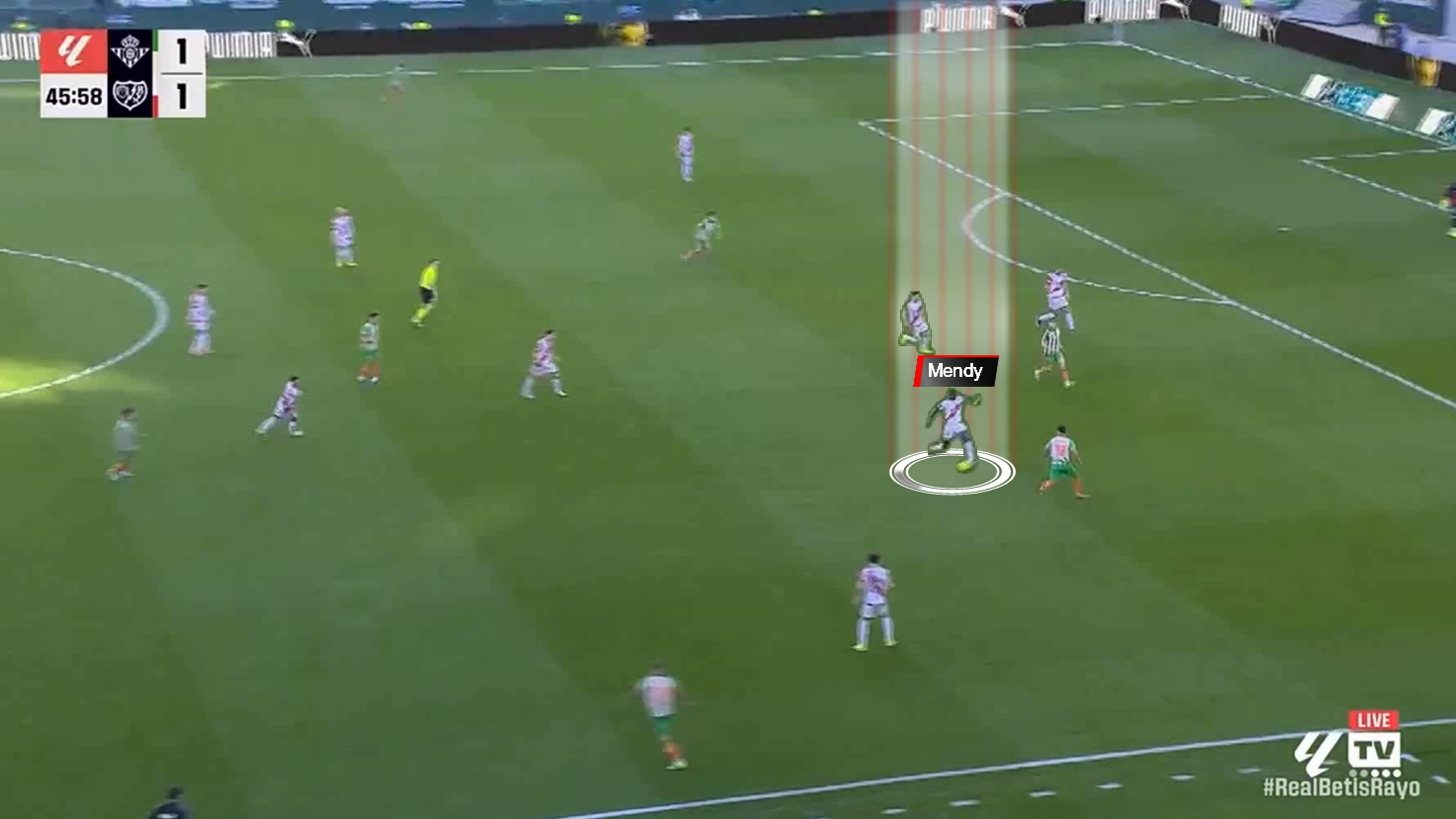 Here, against Real Betis, we can see Nobel Mendy’s defensive positioning and how he adjusts his body shape to cover both the opponent and the space behind.
He changes his body shape so quickly to check between the opponent and the space where he could have the right timing to tackle the ball.
When the defensive block is low, he demonstrates remarkable discipline in maintaining distance from his defensive partner, a crucial factor in minimising gaps between the two centre-backs.
He also excels at gradually adjusting his position as the ball moves, rather than making sudden movements, thus providing greater stability to the backline.
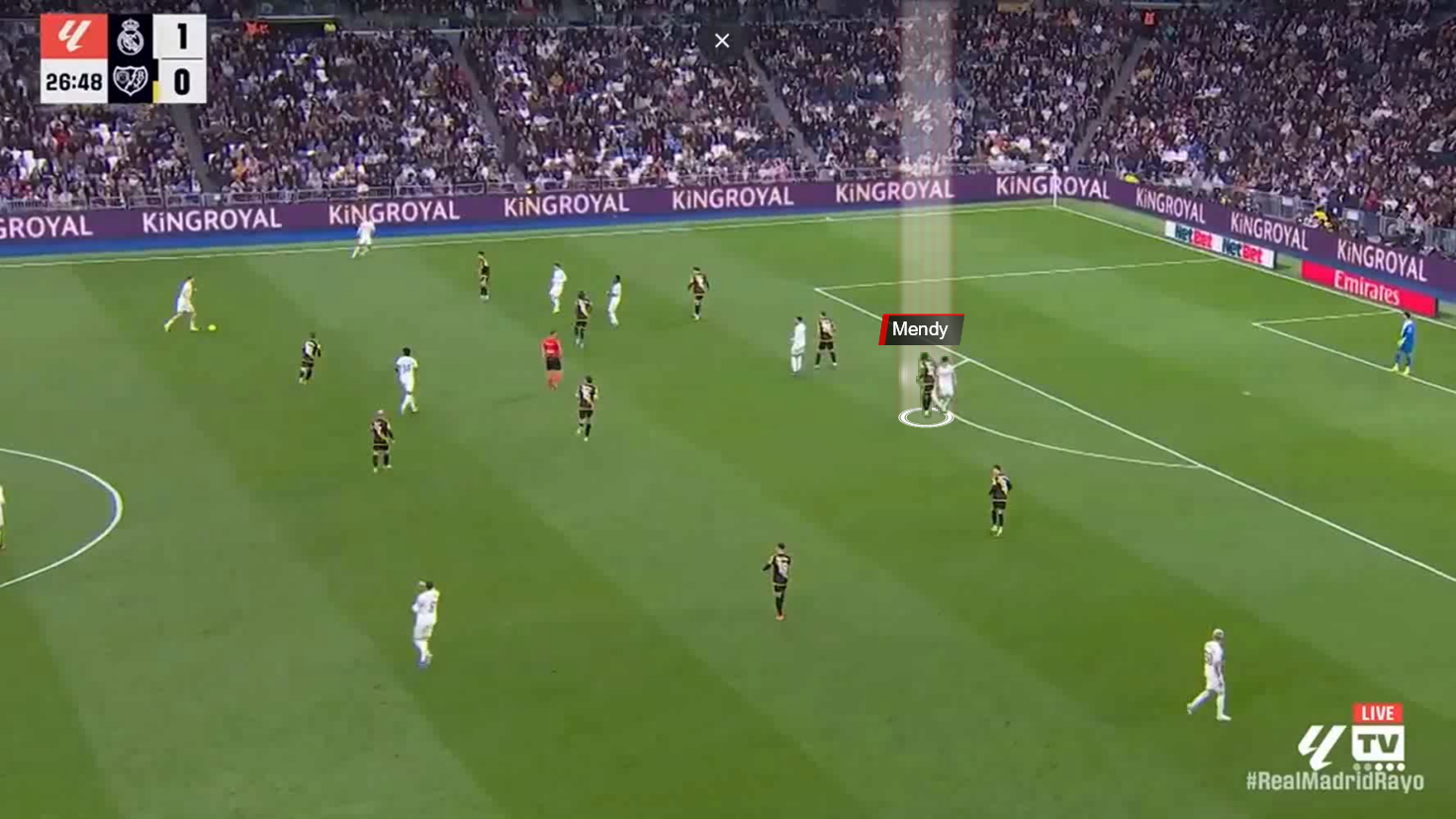
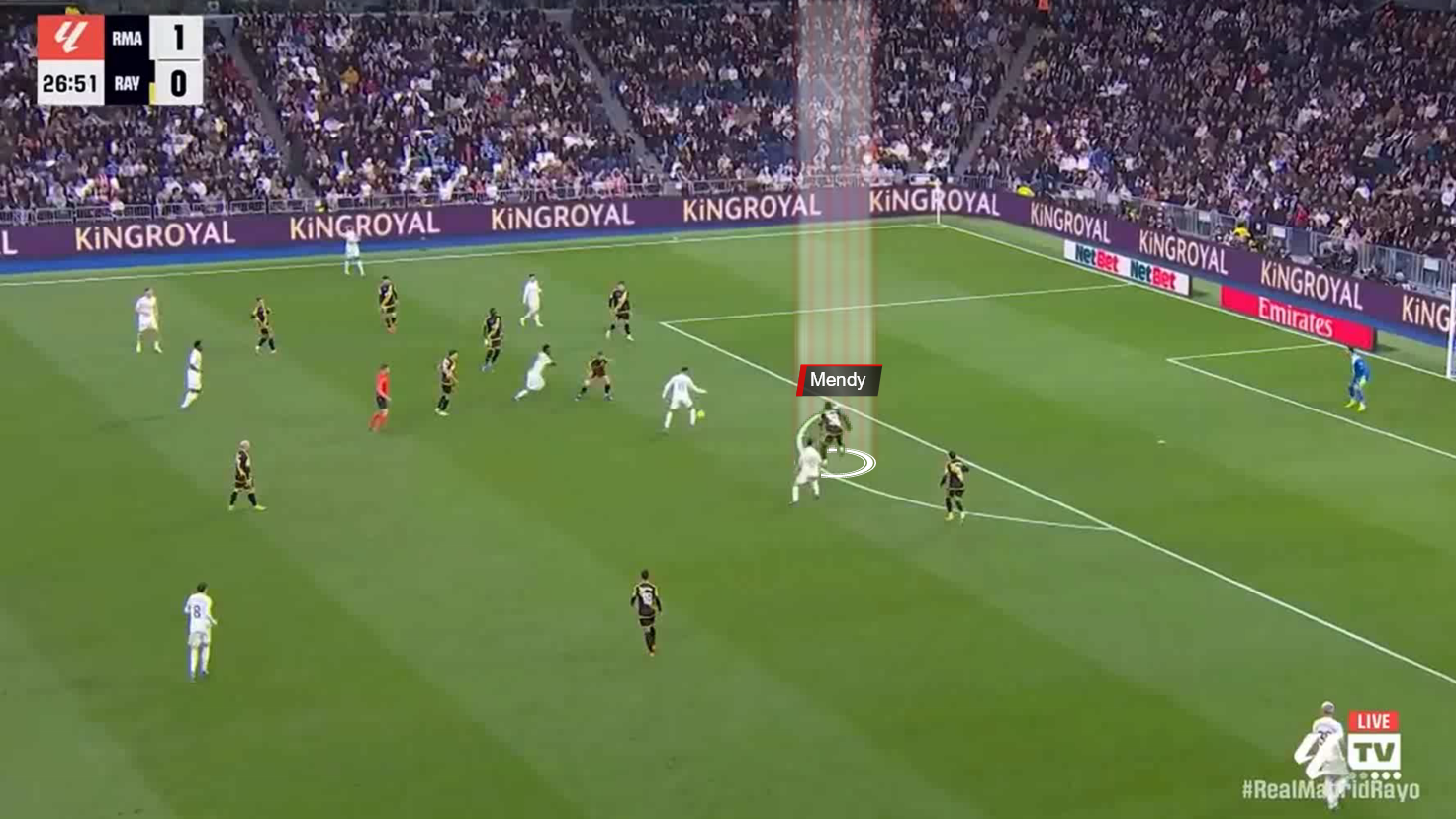
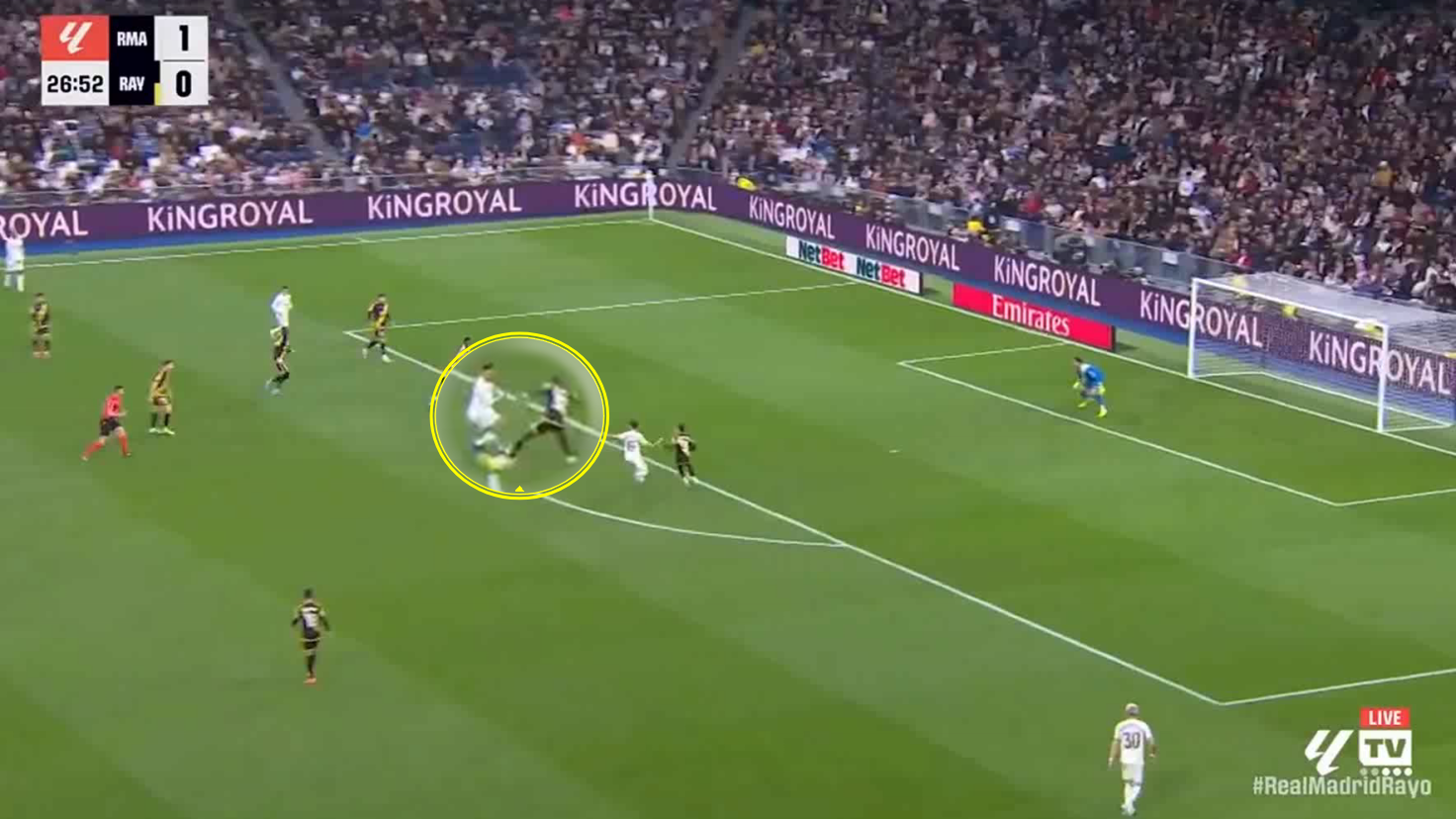
Here, Nobel Mendy, facing Real Madrid, after his central defender moved out to press, remained calm and intercepted the ball from Kylian Mbappé.
Defensive positioning is one of his most important qualities, which is why he is primarily on the field in the final period of the team’s matches.
Nobel Mendy Individual Duels & Defence In Open Spaces
Nobel Mendy’s defensive style relies more on anticipation than physical strength.
He rarely makes rash tackles, instead trying to direct the attacker wide or force him to play back.
This approach reduces errors and helps the team regain its composure quickly.
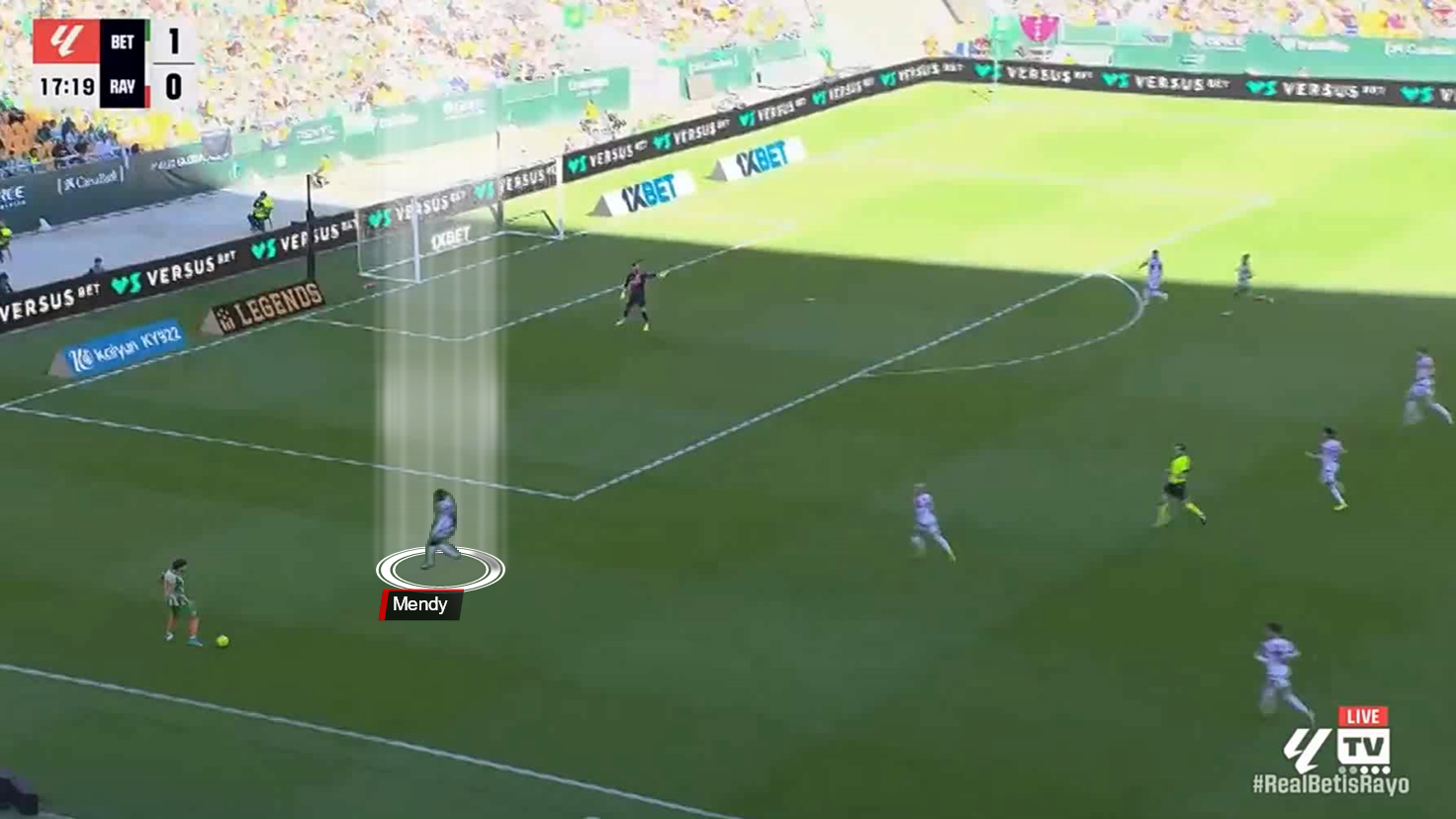
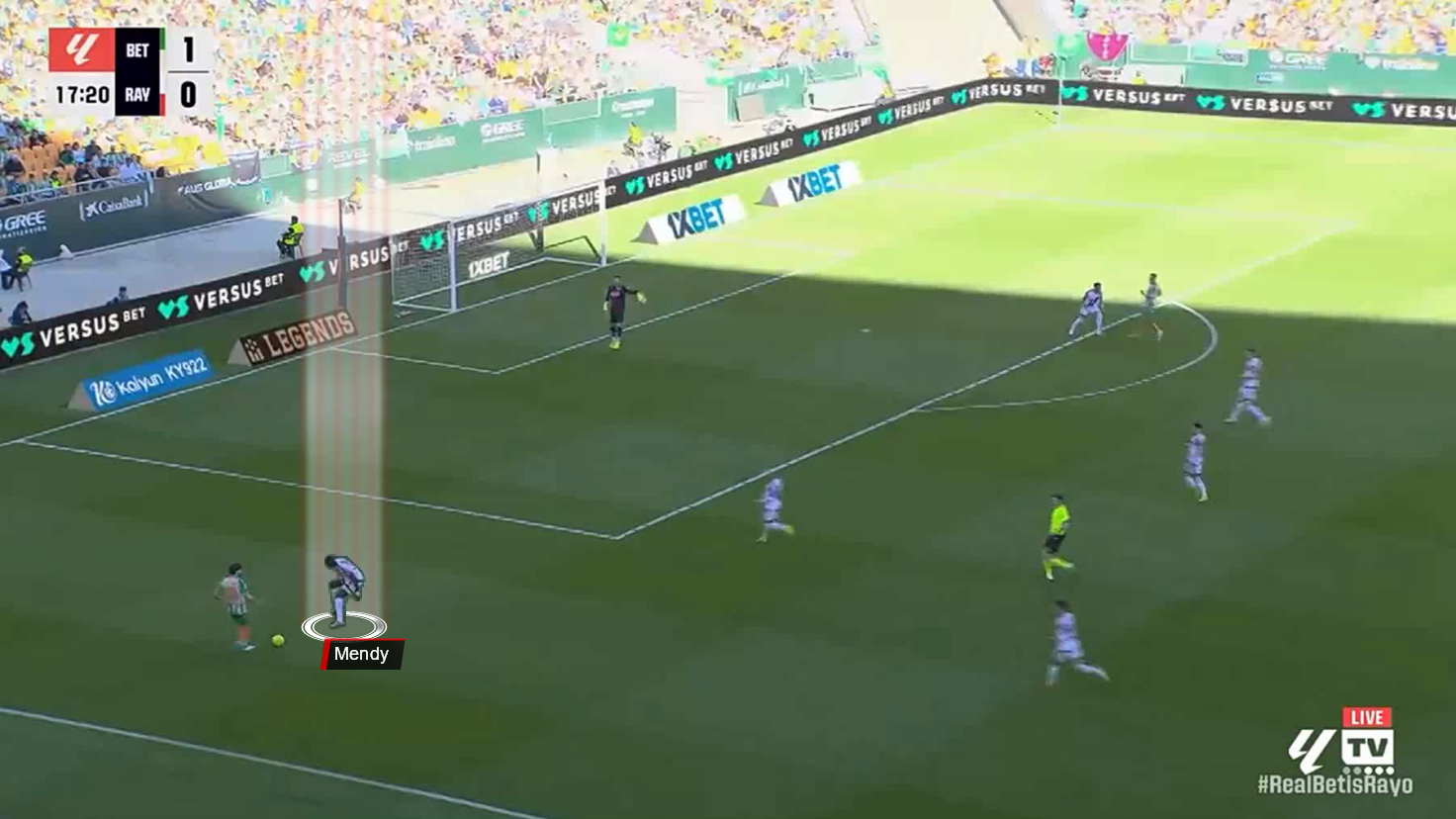
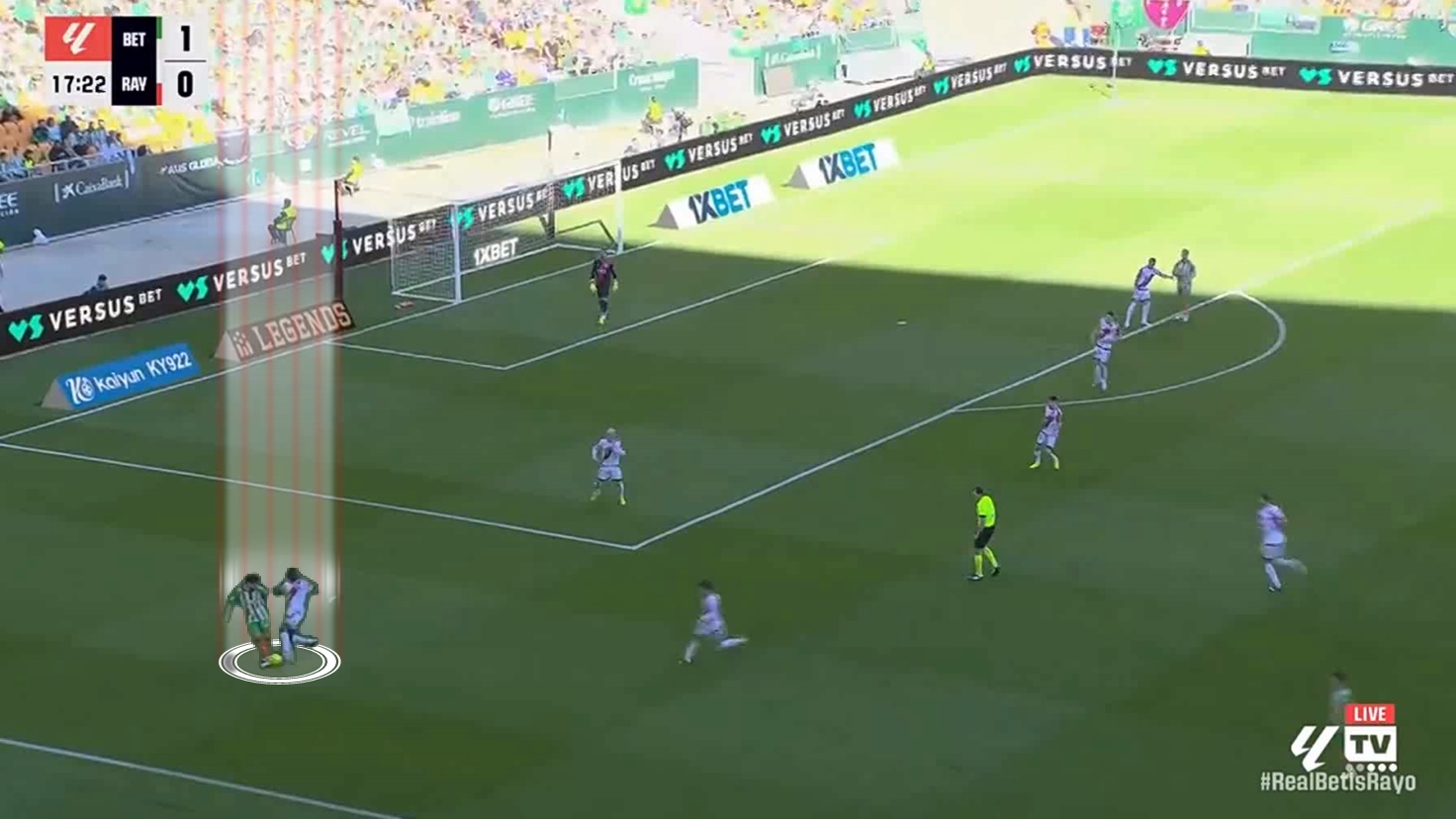
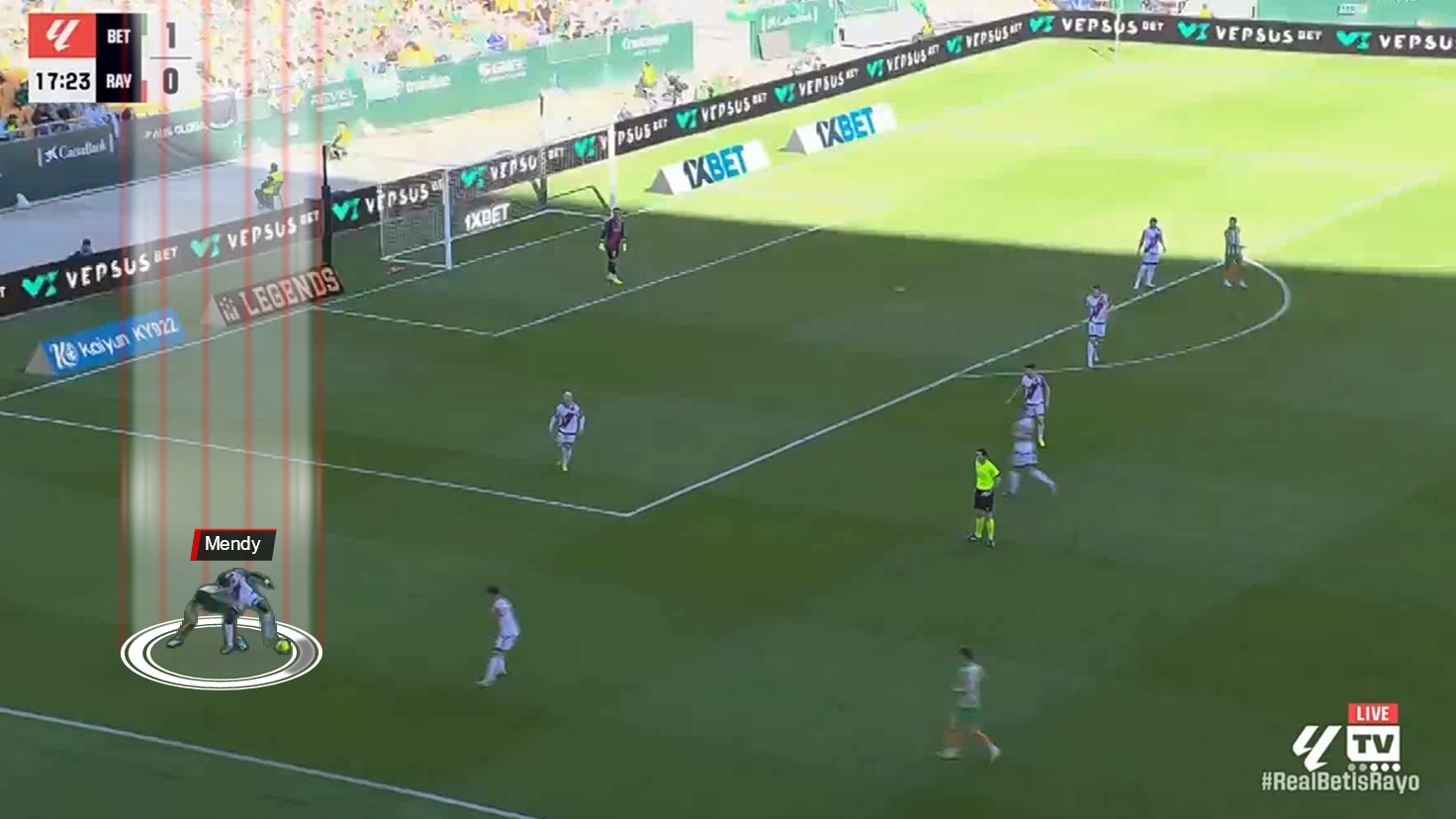 Here, facing Abde Ezzalzouli, and with Rayo Vallecano not organising themselves quickly in the defensive transition, Nobel Mendy tried to occupy the space, waiting for the defenders to return.
He then intercepted the ball with a pass and initiated an attack.
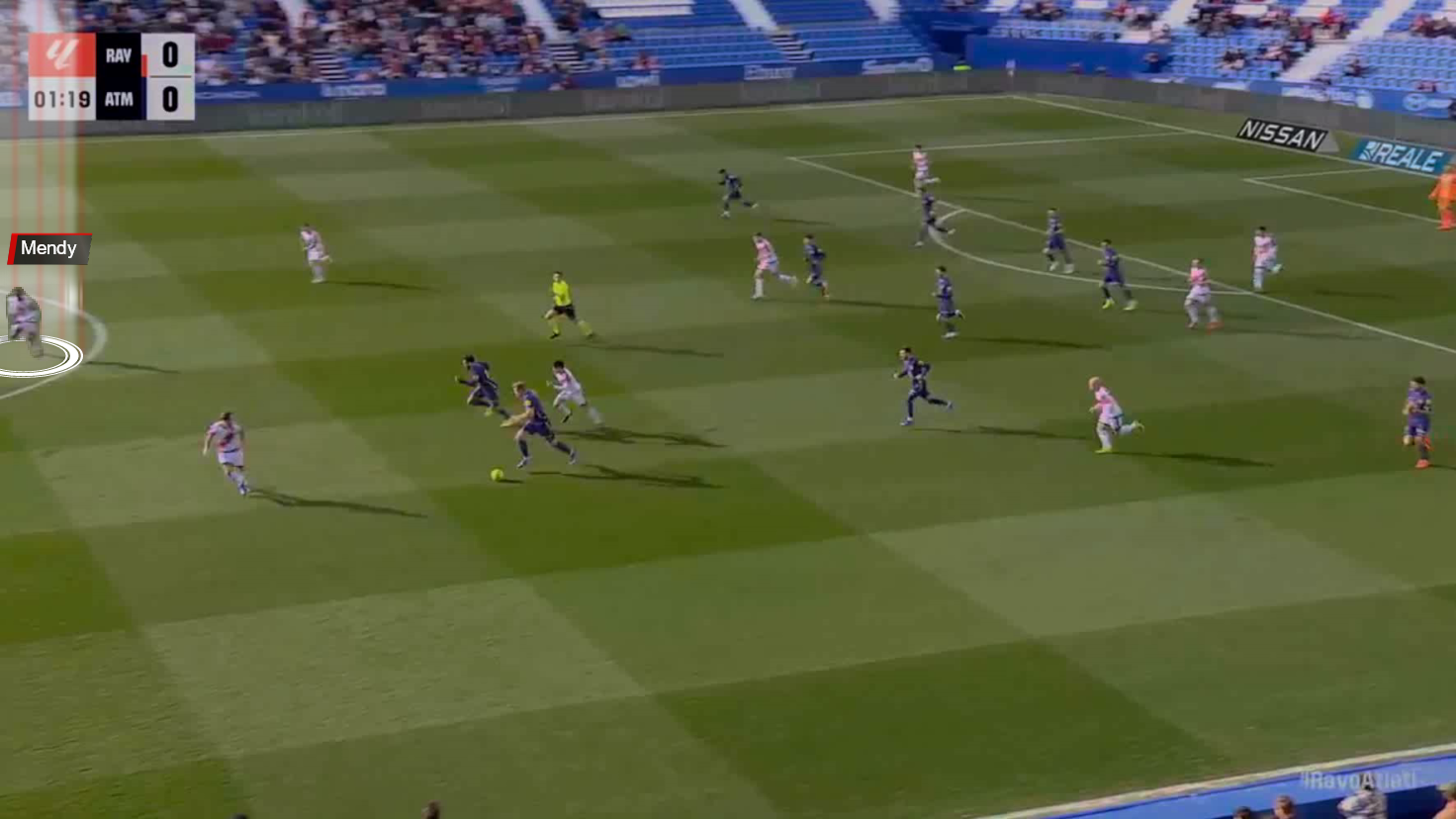
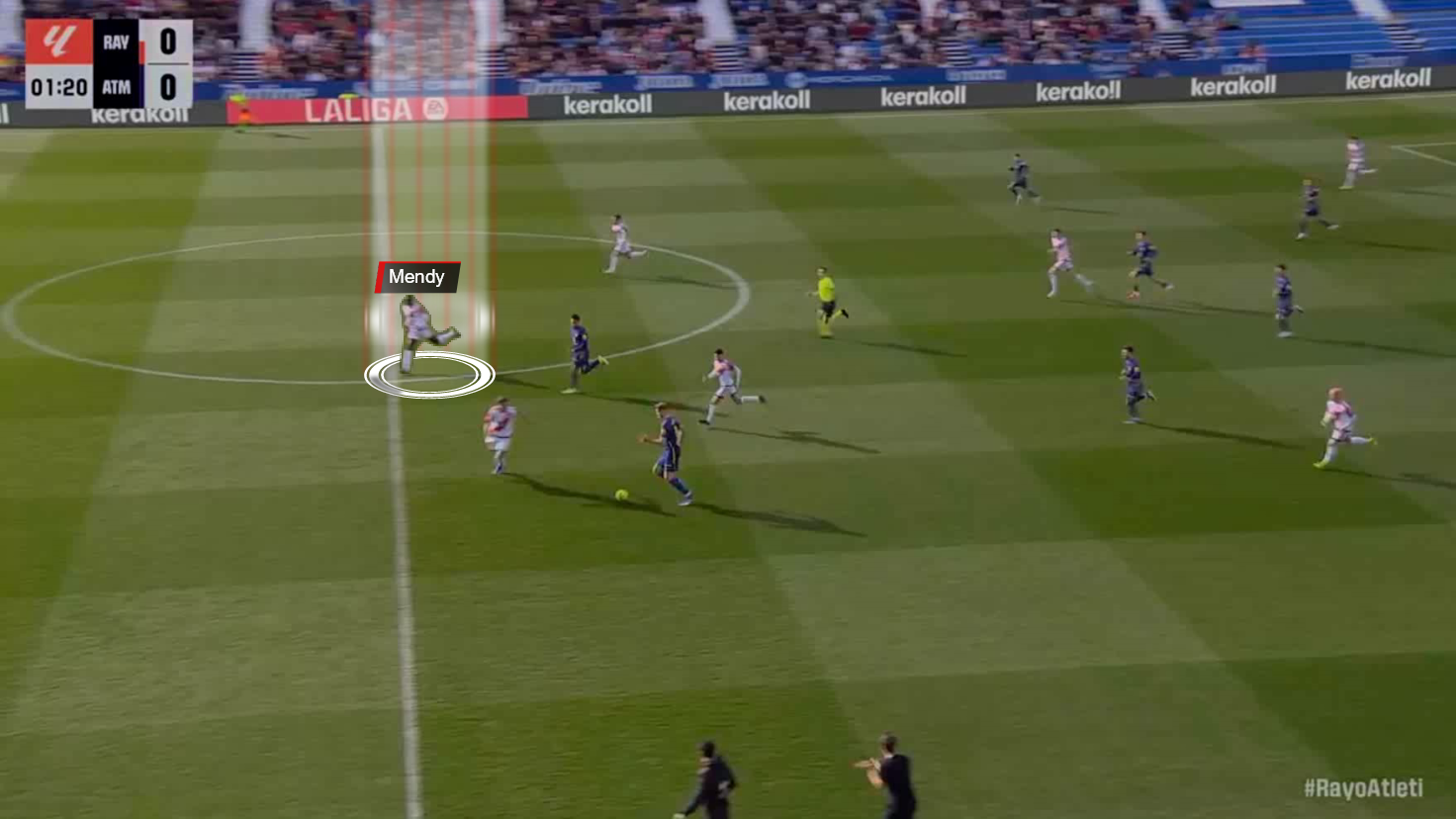
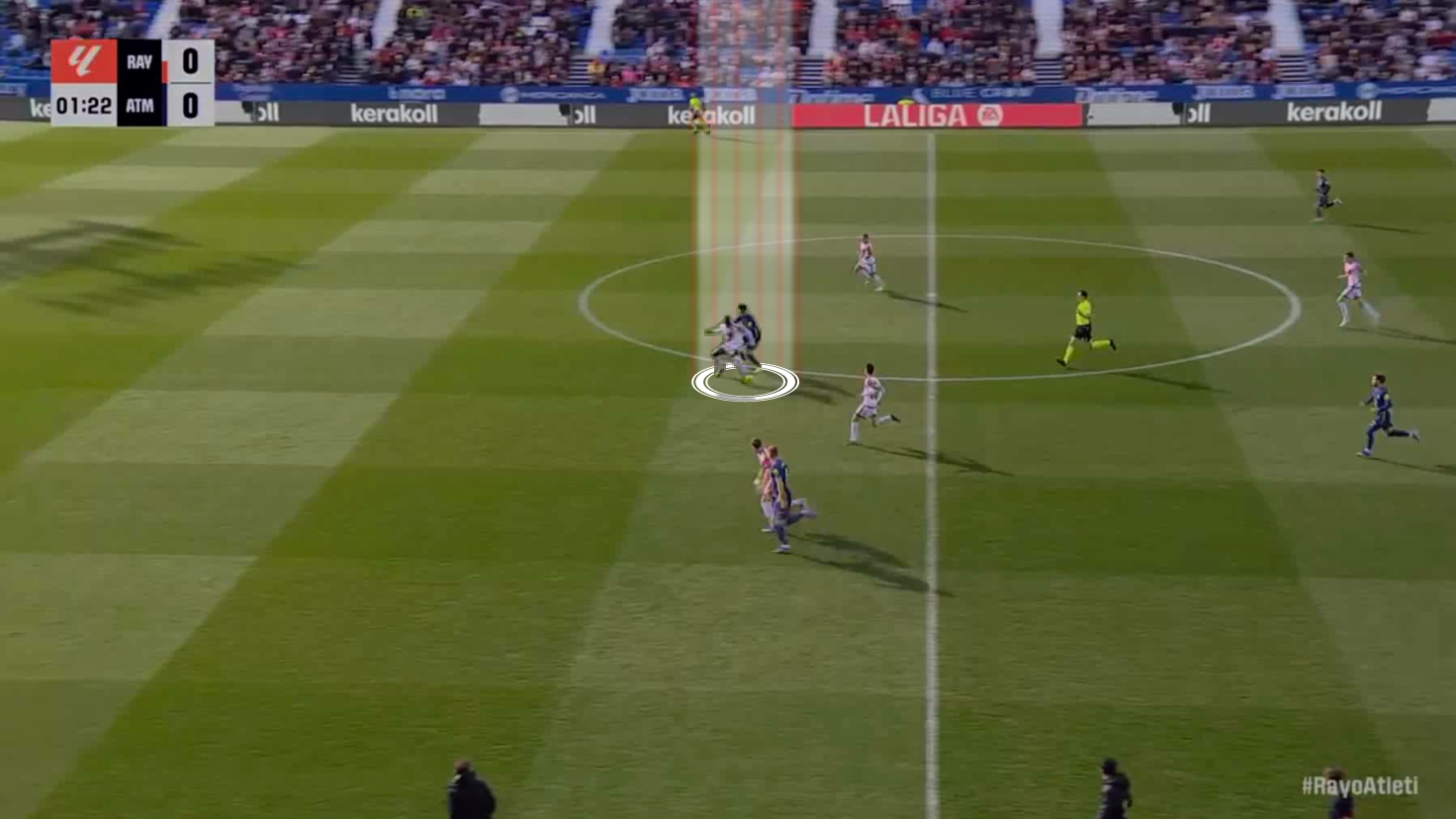
Here we can observe his speed in defensive transitions while maintaining body balance and intercepting the ball.
In open spaces, his true physical superiority is on display, as he has enough speed to catch up with attackers during quick transitions and a good ability to maintain balance while running backwards, which is an important point for a defender on a team that sometimes presses high.
Nobel Mendy Rest Defense
During Rayo Vallecano’s possession phases, Nobel Mendy acts as a defensive anchor behind the ball.
His positioning is relatively conservative, monitoring the space behind the full-back and anticipating any long balls.
This behaviour prevents the team from being directly counterattacked, especially against teams that rely on quick transitions.
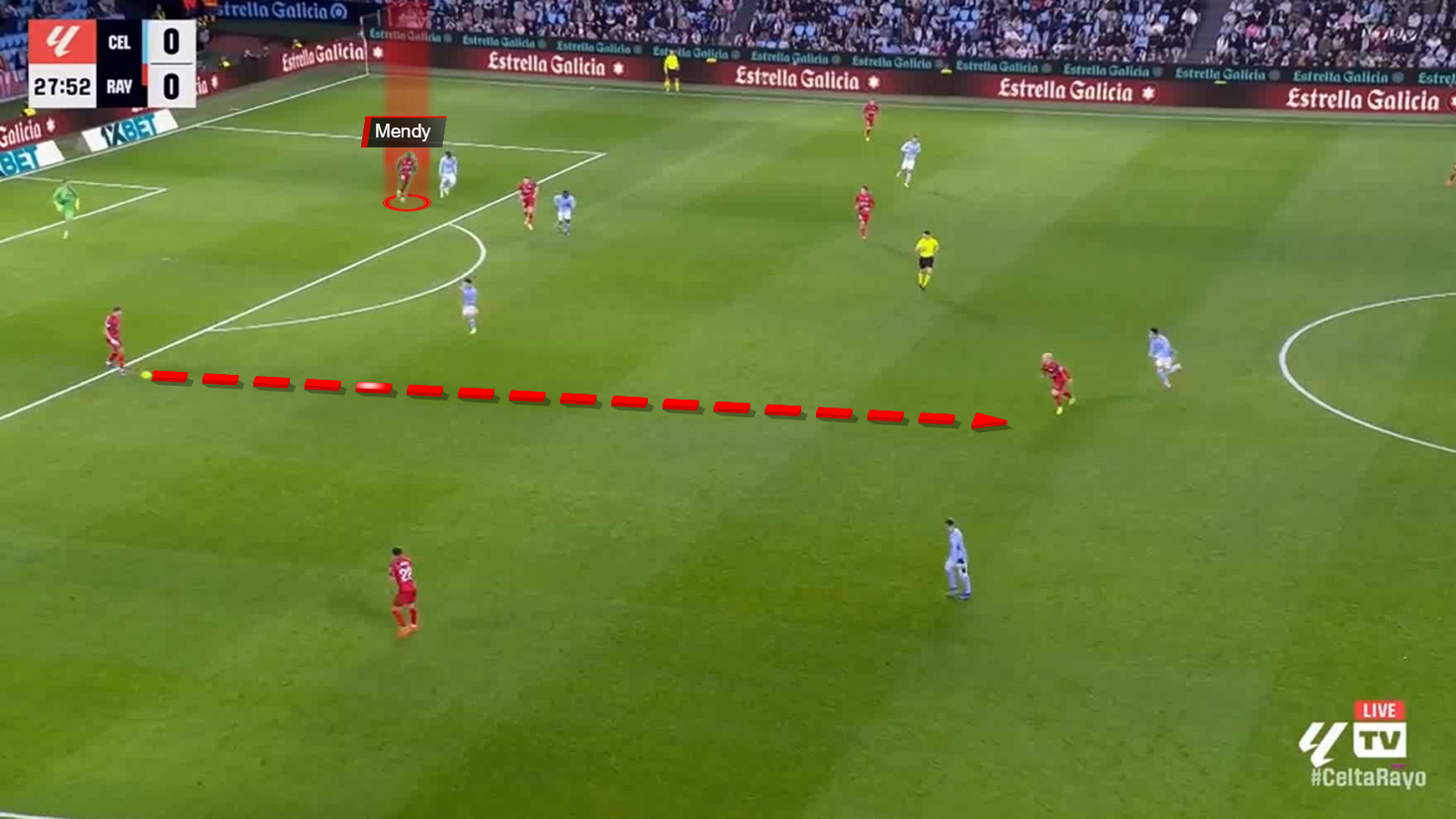
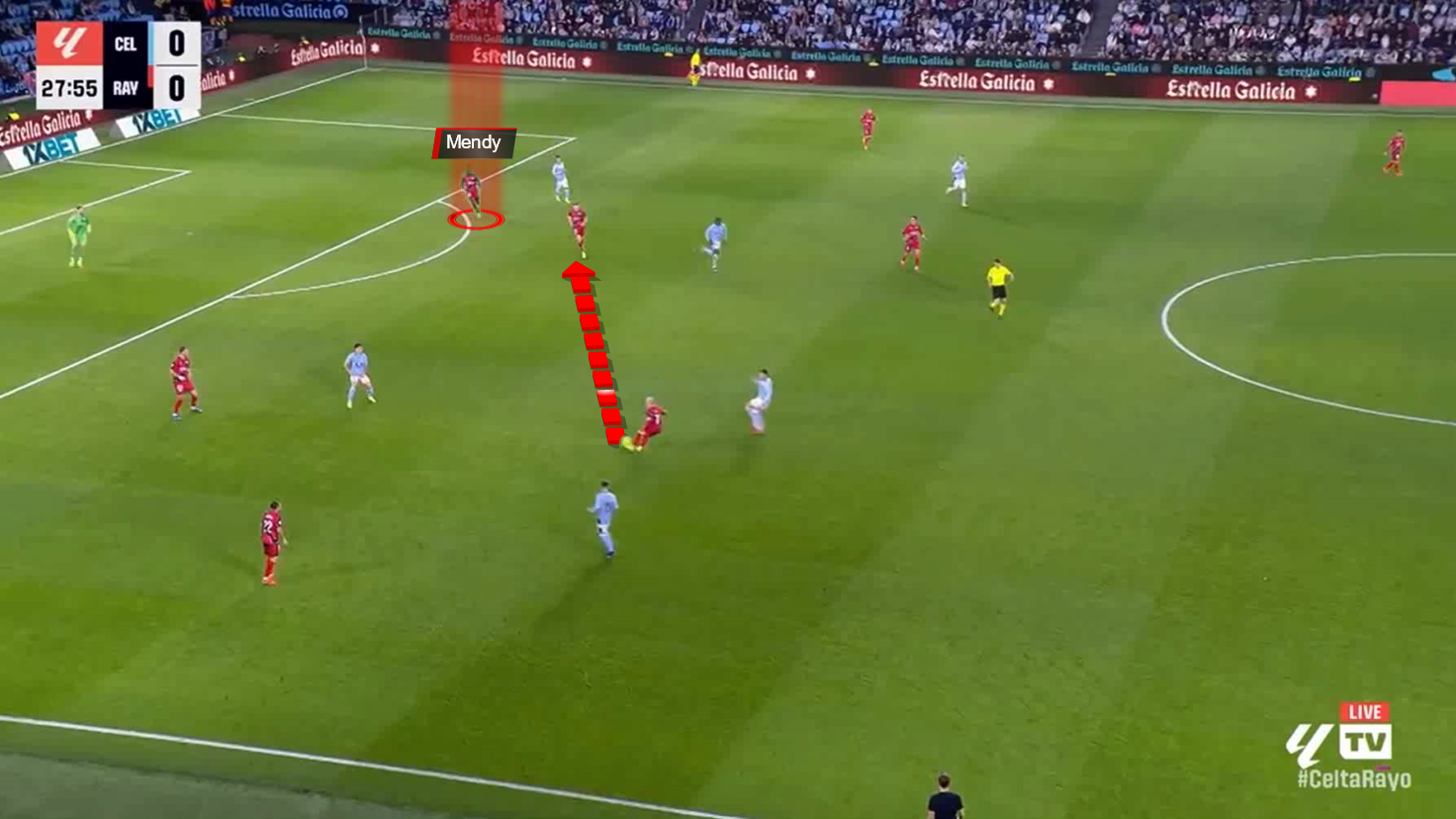
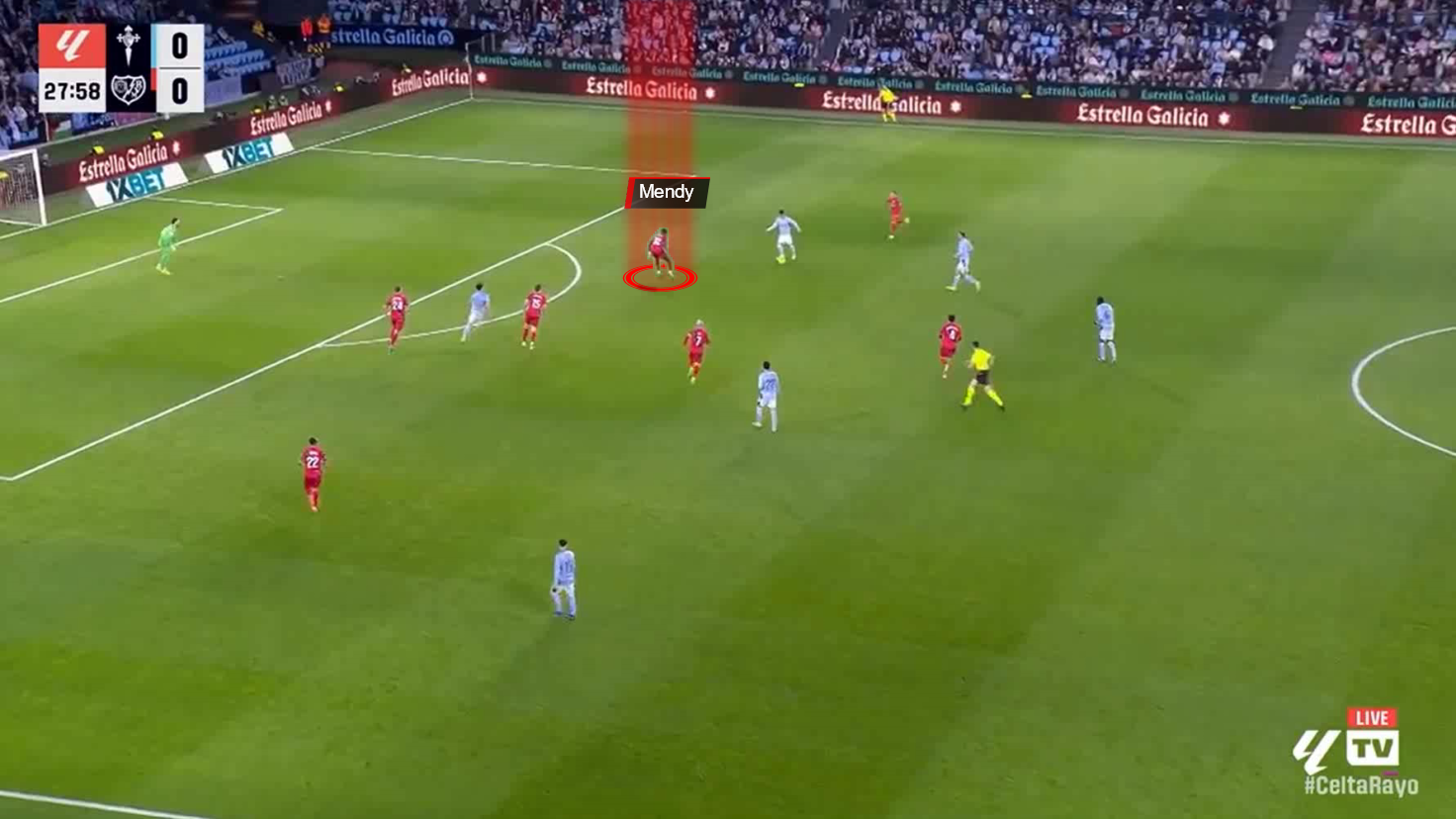
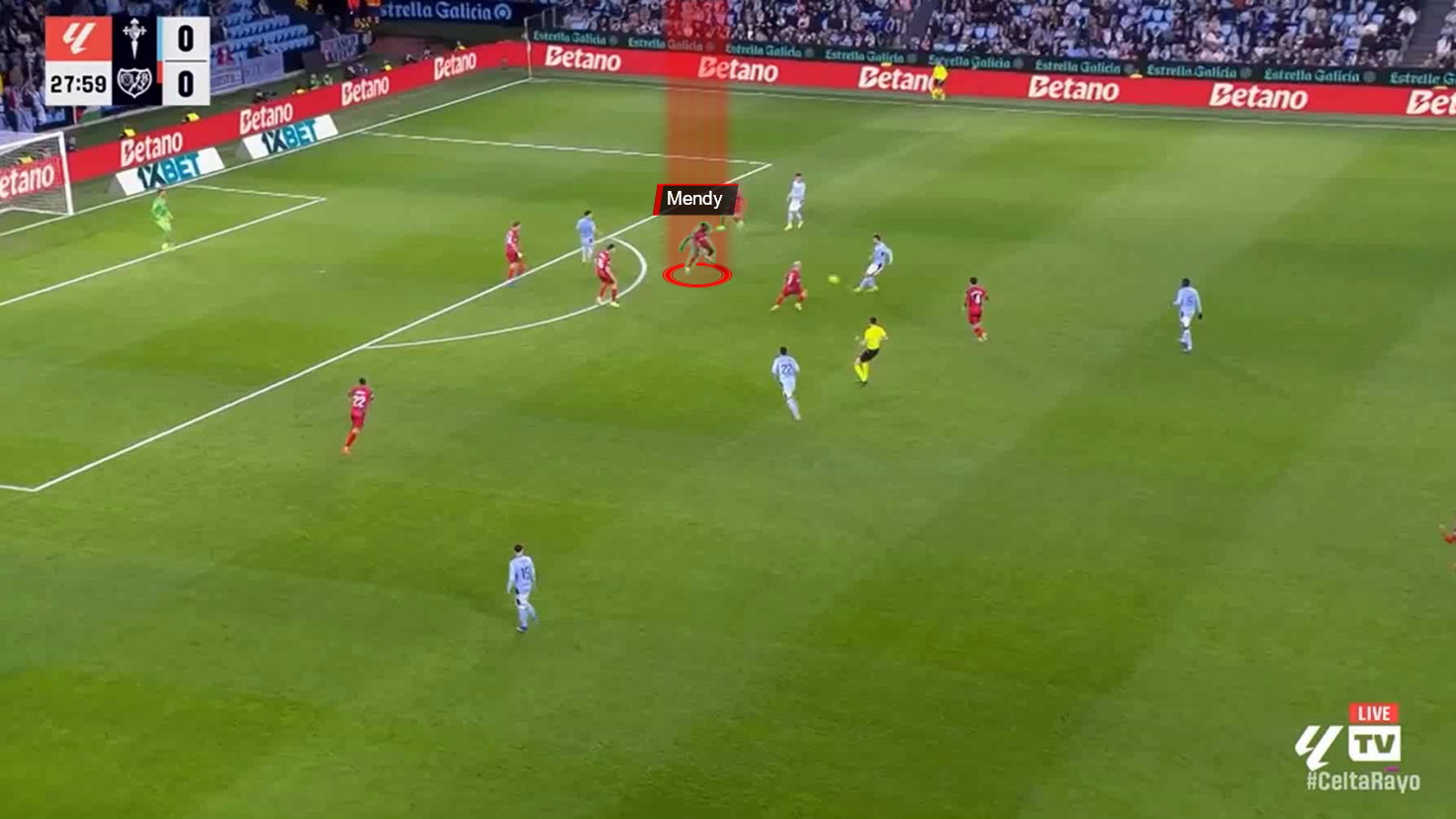
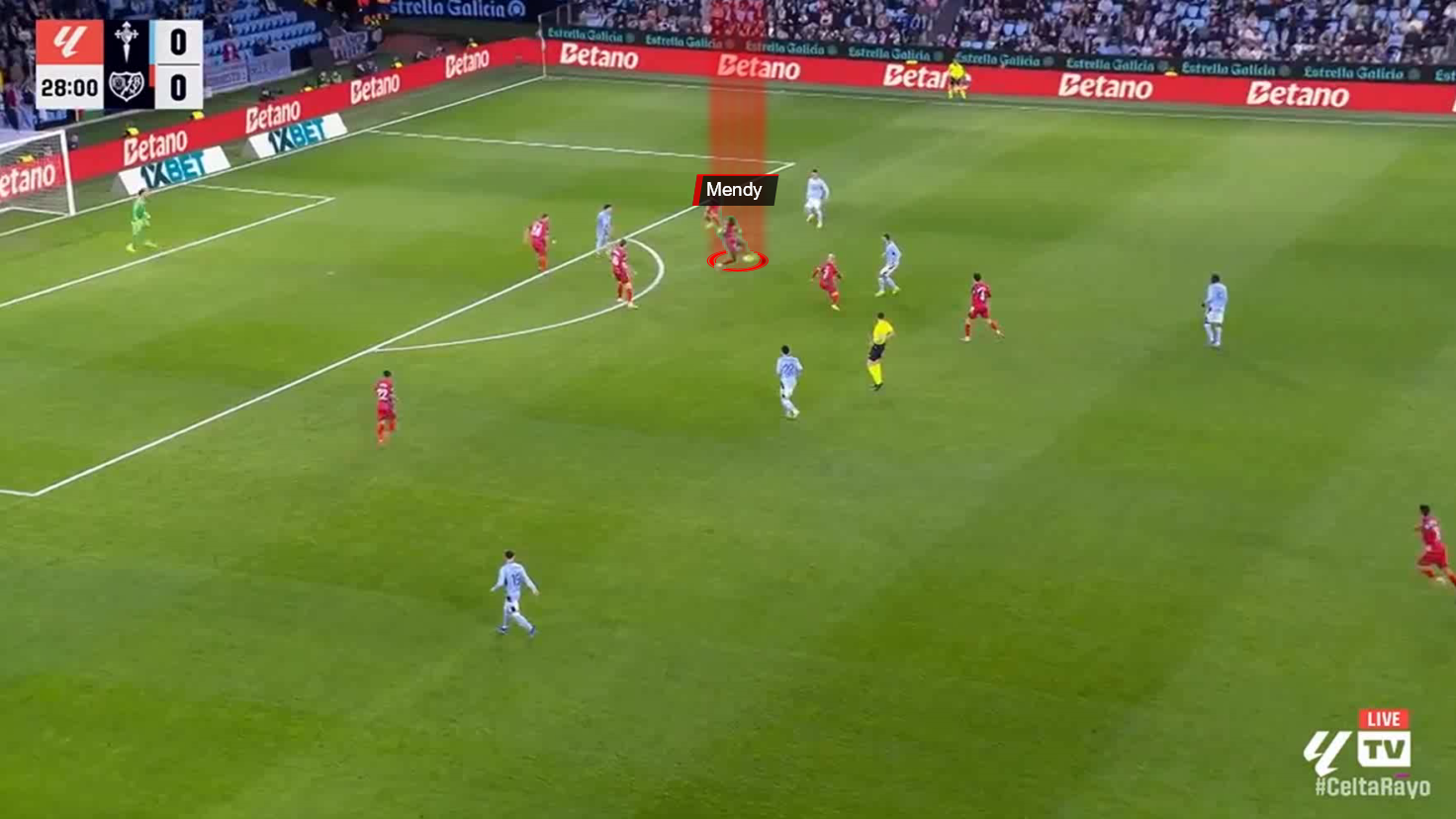 Here against Celta Vigo, the team was in possession, but upon losing the ball, Nobel Mendy straightened his body, calmly observed the path of the pass, and intercepted it.
Most importantly, he is not drawn towards the ball outside his area, but rather maintains a balanced defensive line that allows the rest of the team to apply advanced pressure without losing back protection.
Nobel Mendy Aerial Duels
Although his aerial prowess isn’t solely based on physical superiority, his timing and ability to read crosses give him significant effectiveness inside the penalty area.
He moves a step ahead towards the ball’s landing point instead of waiting, reducing the opponent’s chances of winning the duel.
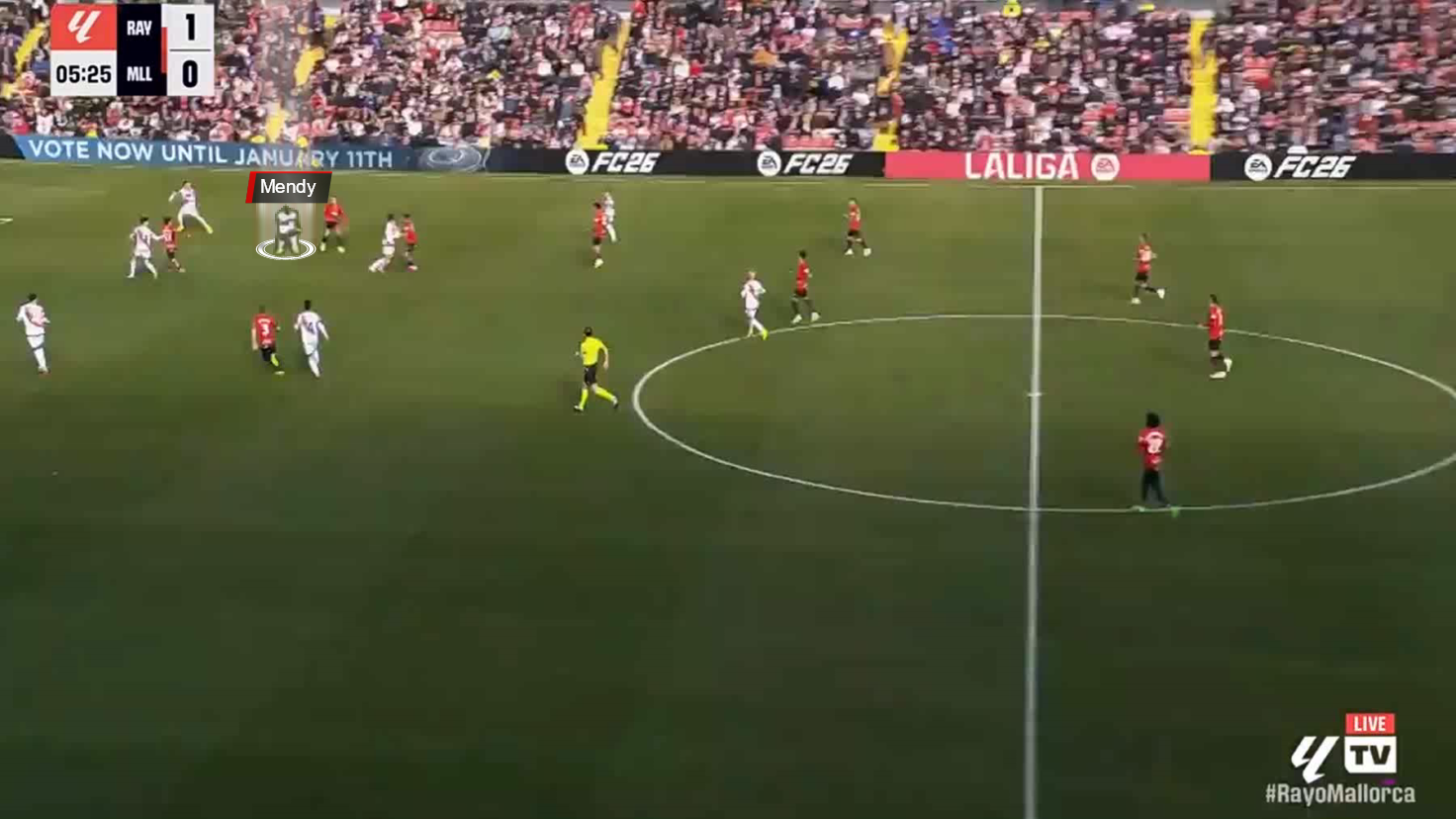
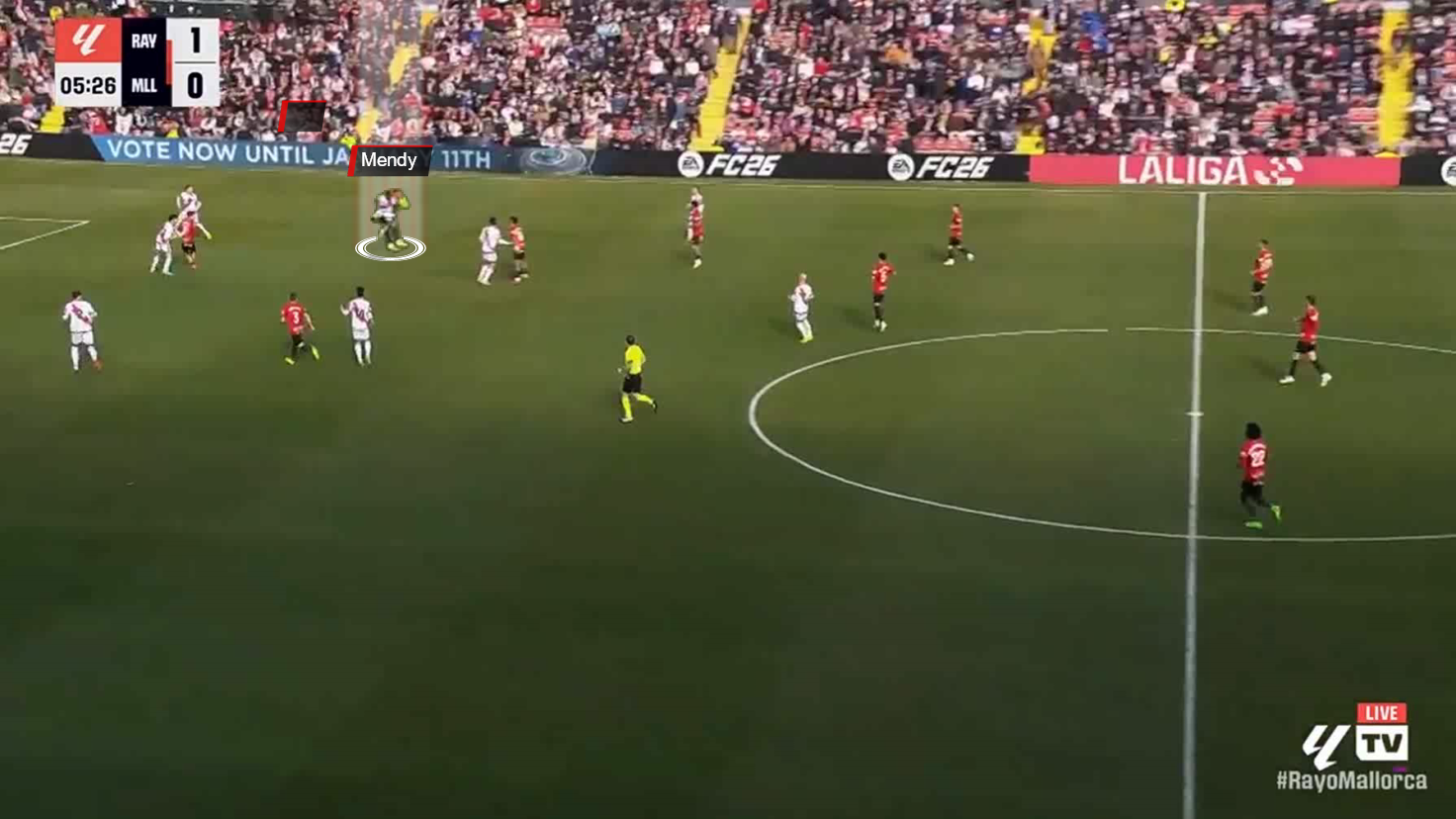 Here, against Real Mallorca, in a one-on-one duel with Vedat Muriqi, we see him waiting for the perfect moment to jump.
Then he decided to win the duel outright.
Nobel Mendy Areas Of Improvement
The player still needs to improve his decision-making speed under very high pressure, as he sometimes passes directly rather than adjusting the tempo of the game.
He can also improve his leadership of the defensive line by maintaining constant communication and organising the offside trap, elements that usually come with increased experience.
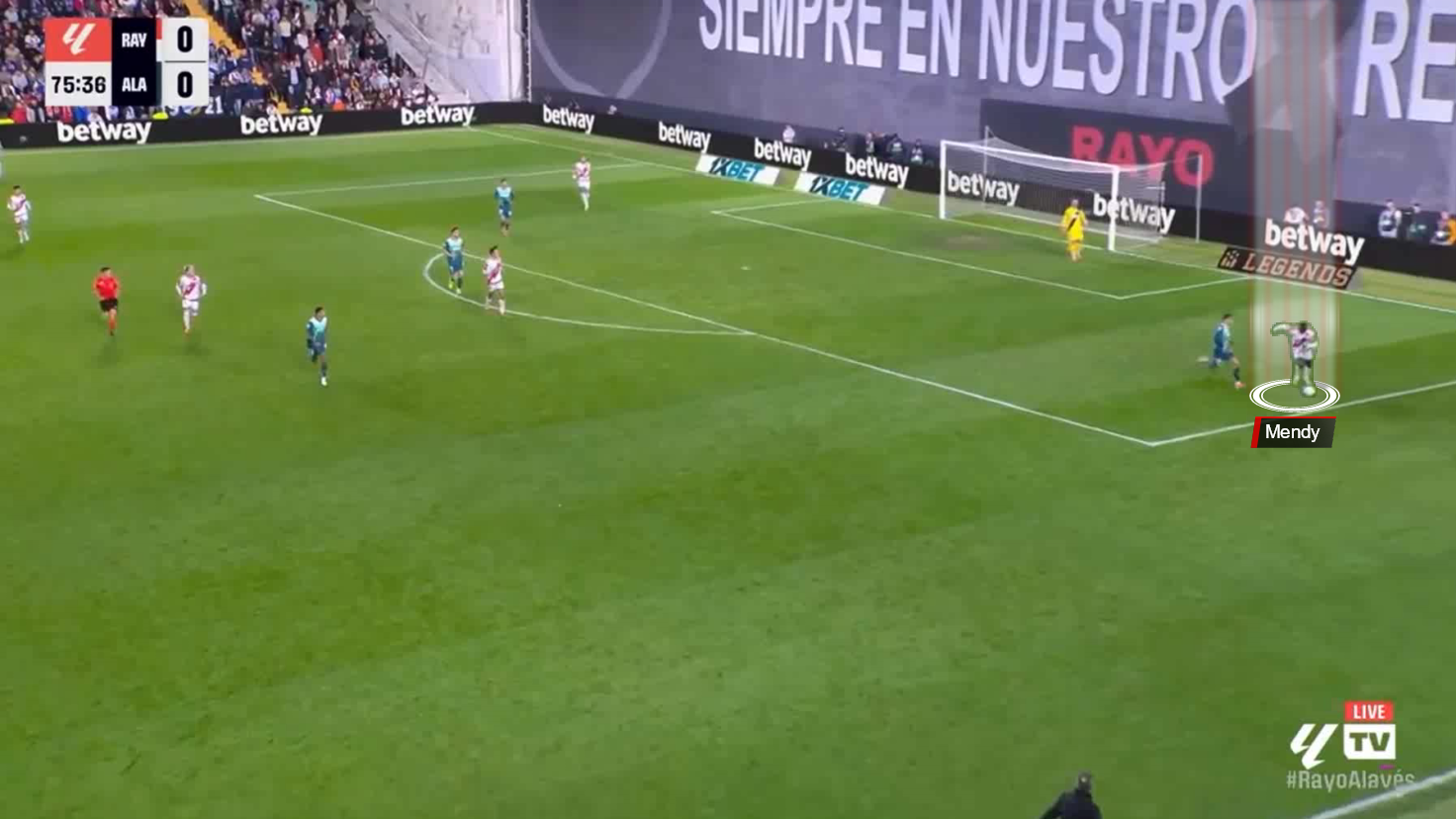
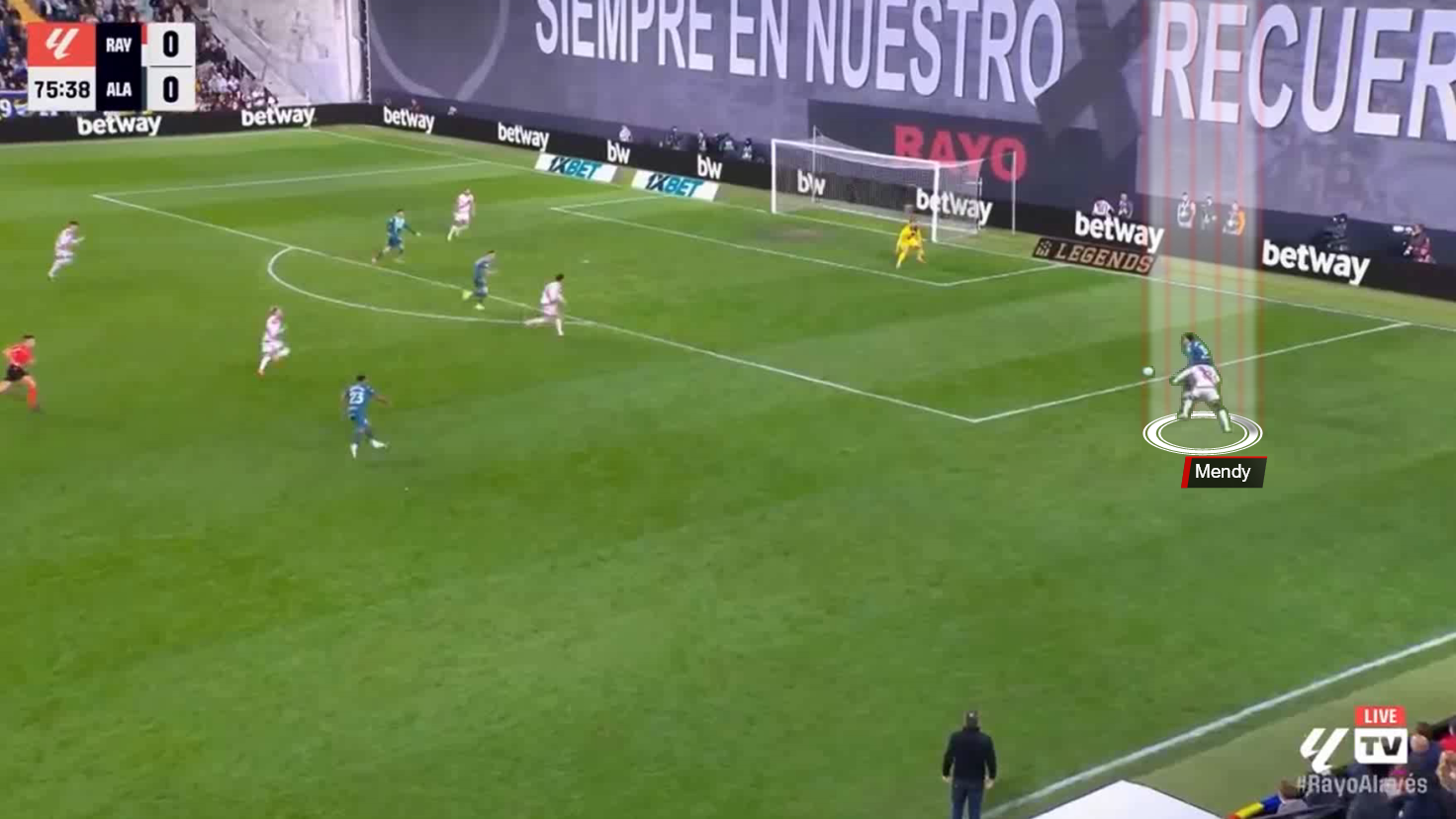
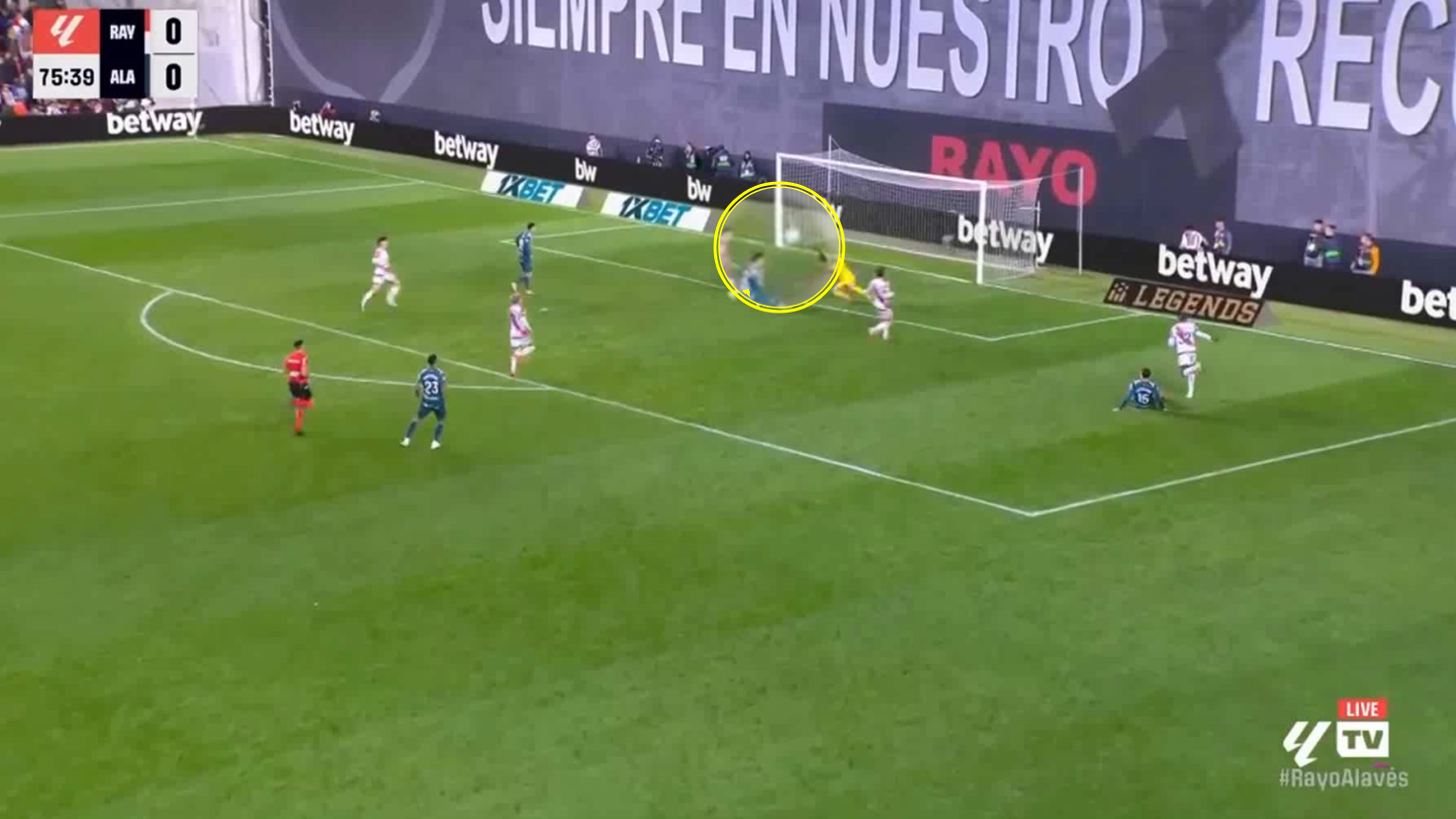 Here, he tried to play a direct pass, lost possession in a sensitive area, and a dangerous attack ensued.
Despite the positive signs Mendy has shown this season with Rayo Vallecano, the next stage of his development will depend on his ability to refine the small details that separate a promising defender from a defender capable of maintaining a high level of performance.
Conclusion
Nobel Mendy presents the model of a modern centre-back, combining composure in build-up play, disciplined positioning, and the ability to defend in large areas.
Having a left-footed defender of this calibre gives Rayo a clear balance in both ball distribution and transition management, and as his tactical development continues, he looks like a promising defender capable of establishing himself at a higher level in La Liga in the coming years.
