
After 24 matches in La Liga this season, Real Betis occupy fifth place on the table, with 41 points at the time of writing.
It has become clear that Real Betis are not only having a good season in terms of results, but they are also undergoing a real tactical transformation compared to the 2024/2025 campaign.
The team has become more mature in managing match tempo, no longer relying on short periods of dominance or individual moments to make the difference.
They have been able to maintain a stable playing style for long periods.
This development is directly linked to the work of Manuel Pellegrini, who redefined the relationship between possession and effectiveness.
Instead of possession for the sake of mere control, it became a means to draw the opponent out and create organised spaces that could be exploited later.
In this Real Betis tactical analysis, we will define how Real Betis have improved their playing style this season.
Real Betis In The Possession Phase
During the build-up phase, Real Betis didn’t transform into a team reliant on rigid positional structures, but rather maintained the pragmatic character that distinguishes Pellegrini’s teams.
The team often starts with a traditional four-man formation, but the structure changes based on the opponent’s pressure rather than adhering to a fixed, predetermined model.
When facing pressure, one of the midfielders tends to drop closer to the centre-backs to facilitate the first attacking move.
Meanwhile, one of the full-backs stays wide across the field to create a safe passing option instead of narrowing the spaces in the depth.
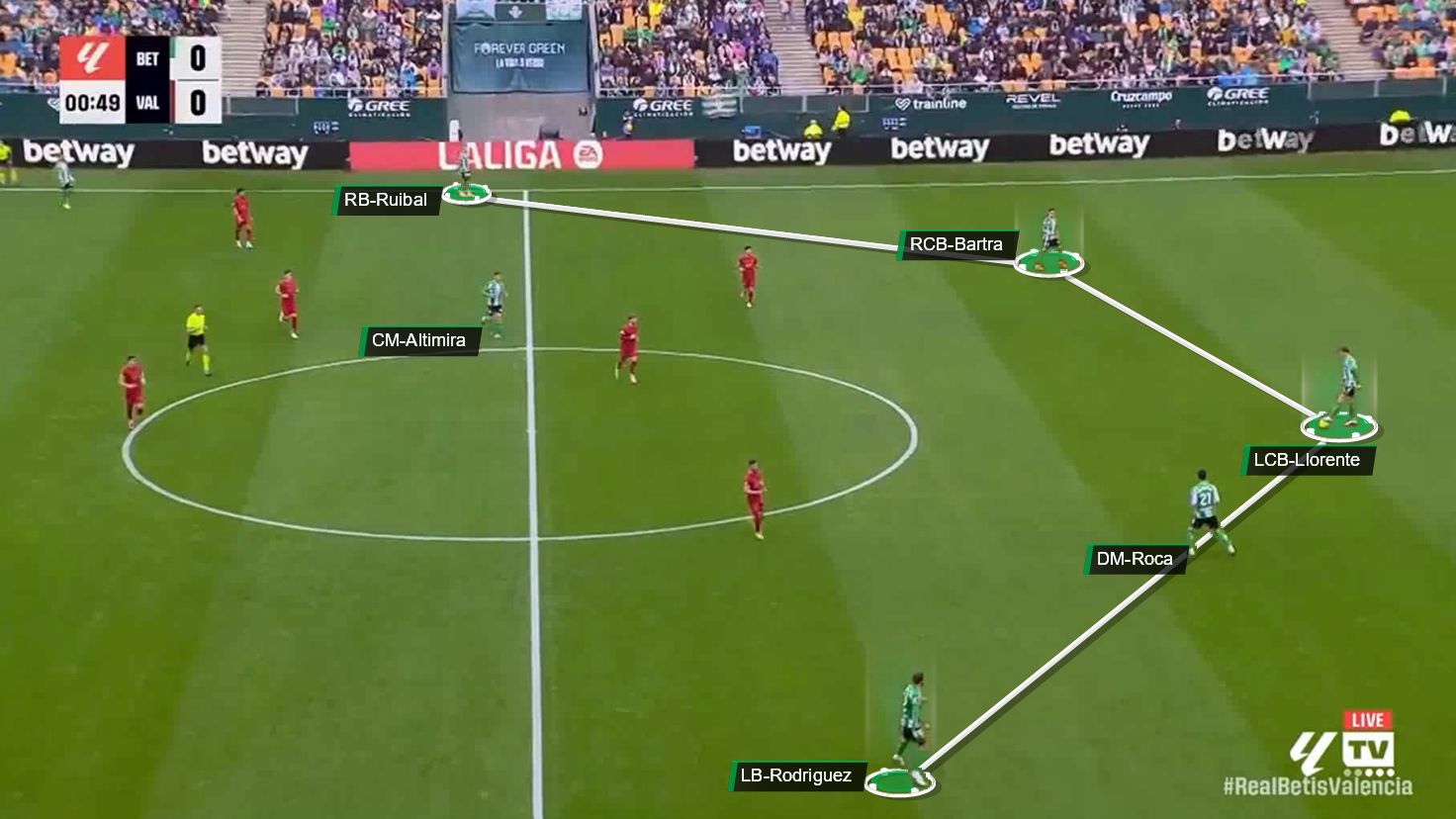
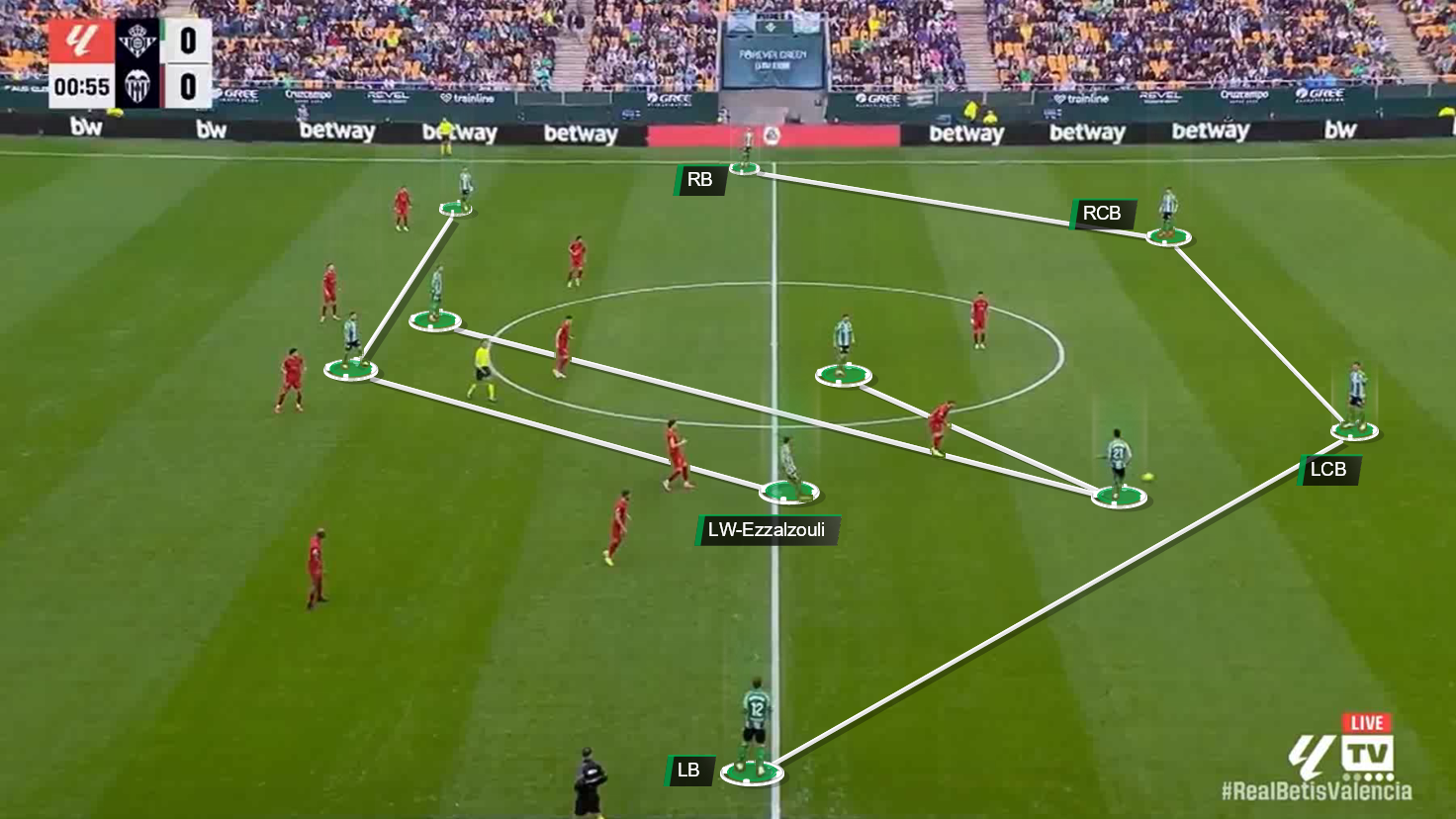
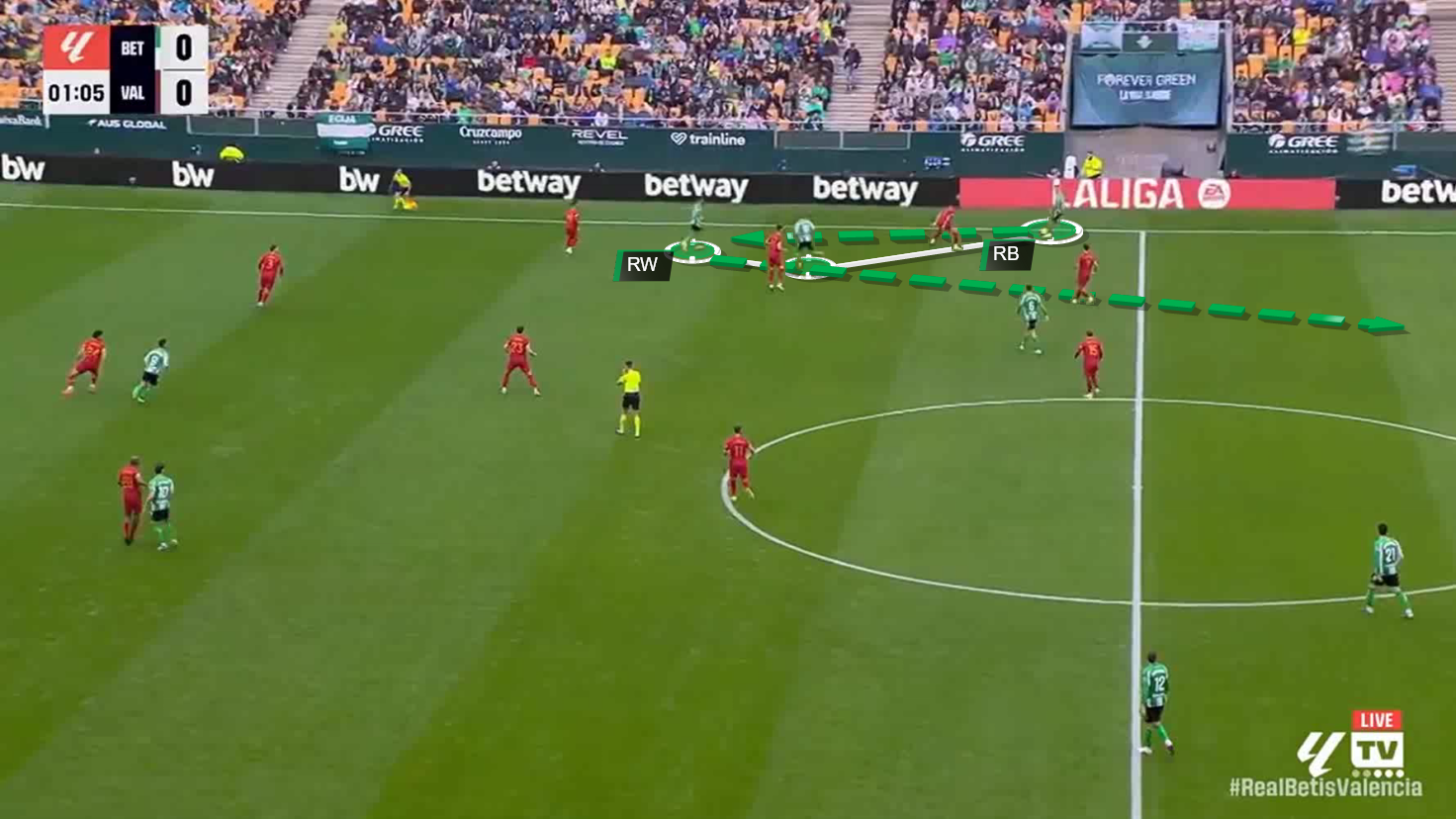
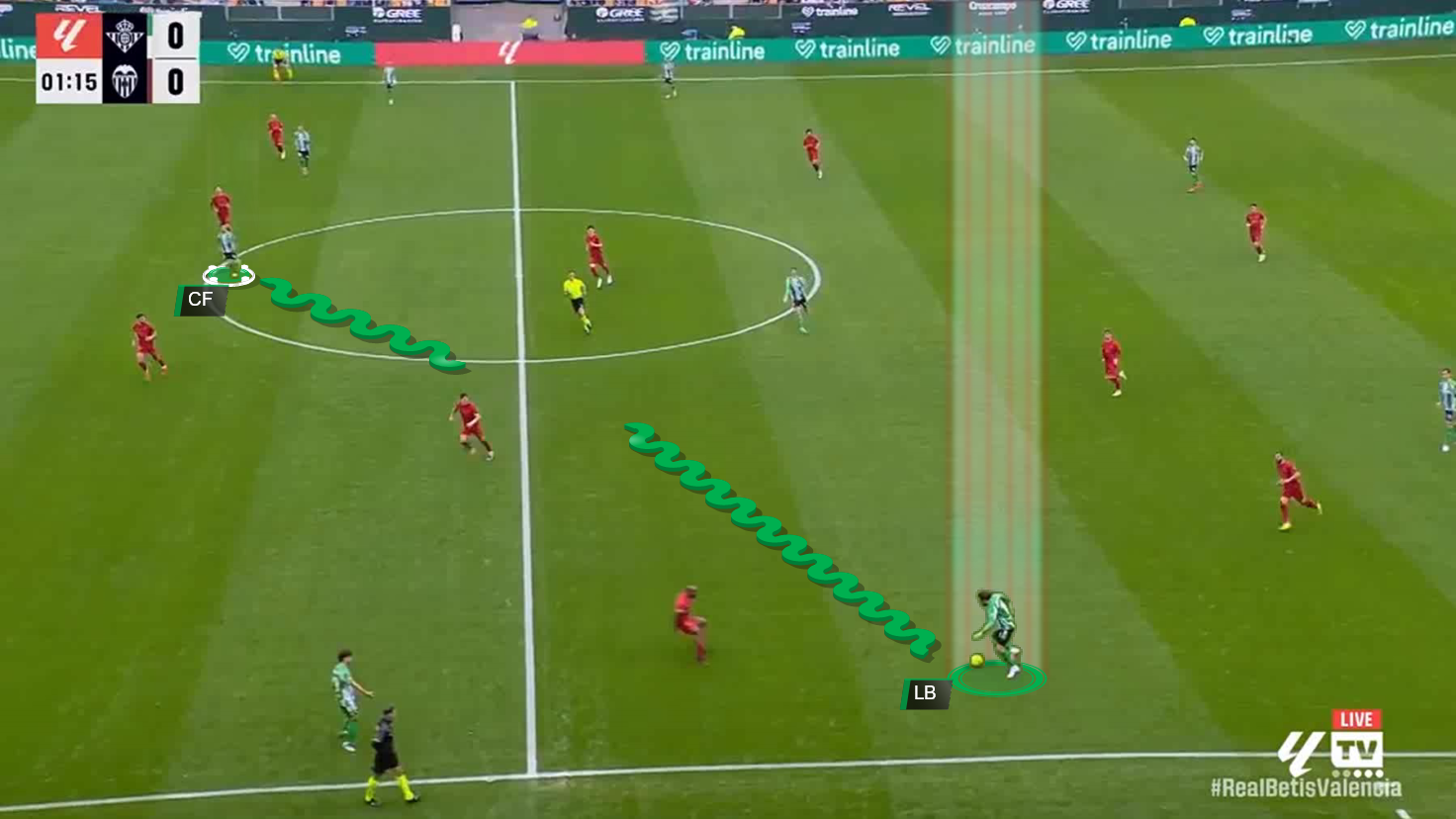
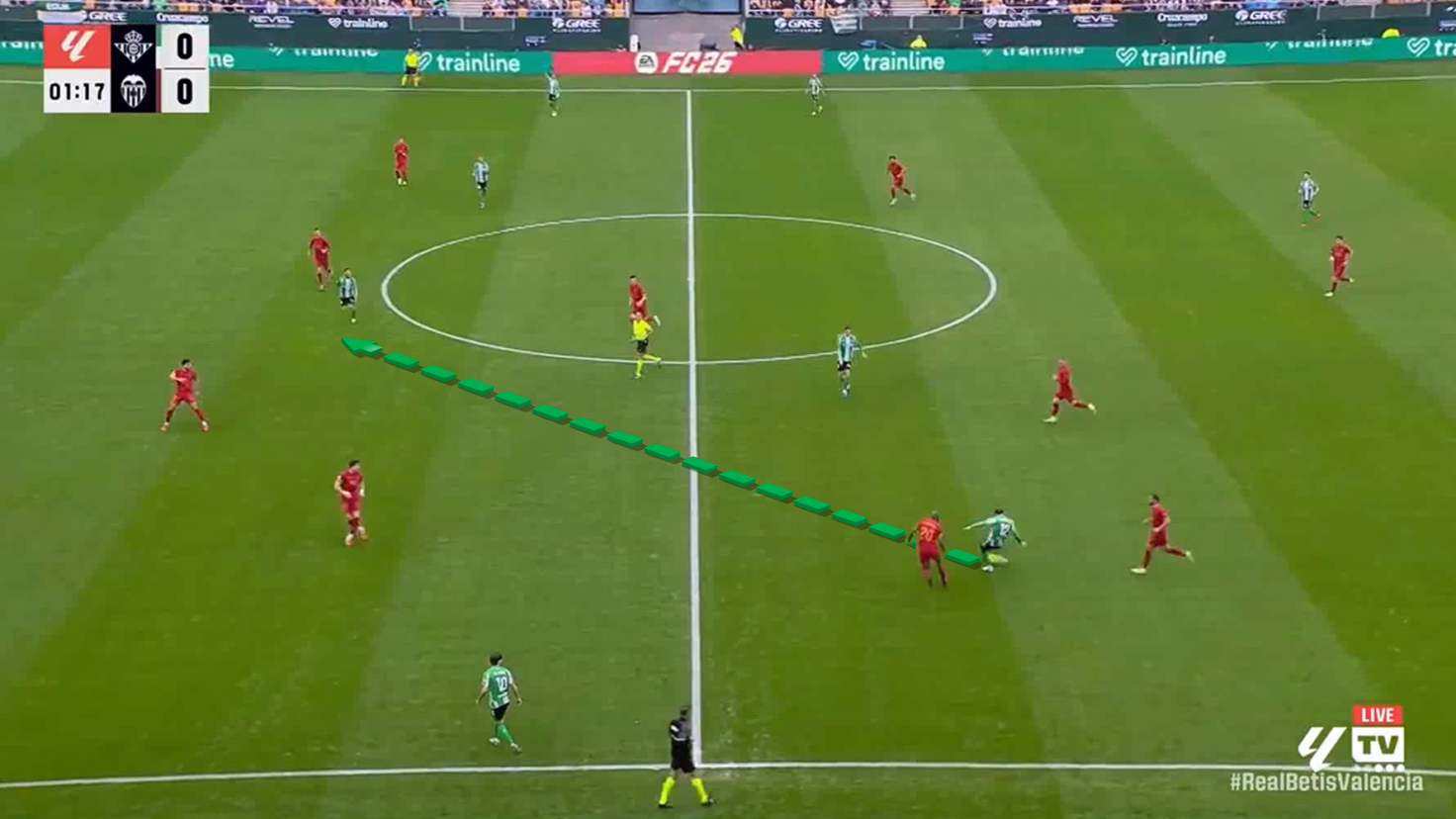
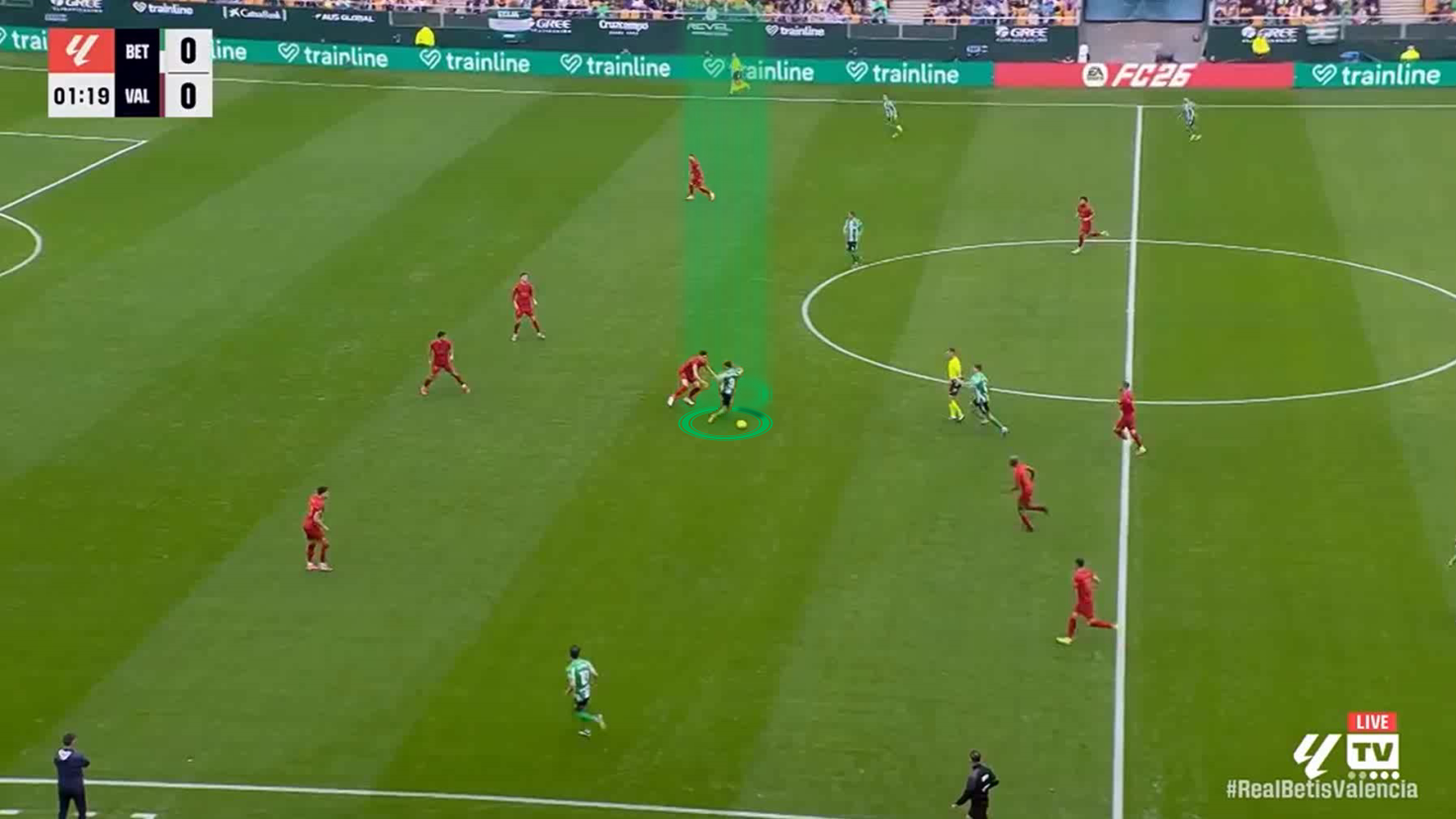 Initially, the ball is circulated in the first third, attempting to create numerical superiority on the flanks, with a midfielder dropping back, as seen in the Valencia match.
Then, the ball is played from the right wing and back to Real Betis’ left, creating space for the left-back to advance and pass to the striker in the area created by the lateral possession.
The pressure was entirely drawn to one side before a quick switch to the opposite flank.
The key idea here is not the speed of the build-up but its timing; the team waits for the right moment instead of forcing the ball forward, which reduced turnovers in the first third compared to the previous season.
Real Betis’ progression this season hasn’t been driven by a central playmaker, as was the case in previous periods, but rather by a redistribution of responsibilities among the midfield trio and the wingers.
The lack of physical consistency among some creative players has forced the team to find collective solutions to attack, rather than relying on a player to receive the ball between the lines and dictate the tempo.
Therefore, attacking has become more dependent on synchronised movements between the central midfielder and the wingers, with one of the midfielders dropping deep to receive the ball under pressure.
In contrast, the winger moves into the half-spaces to create a vertical passing angle.
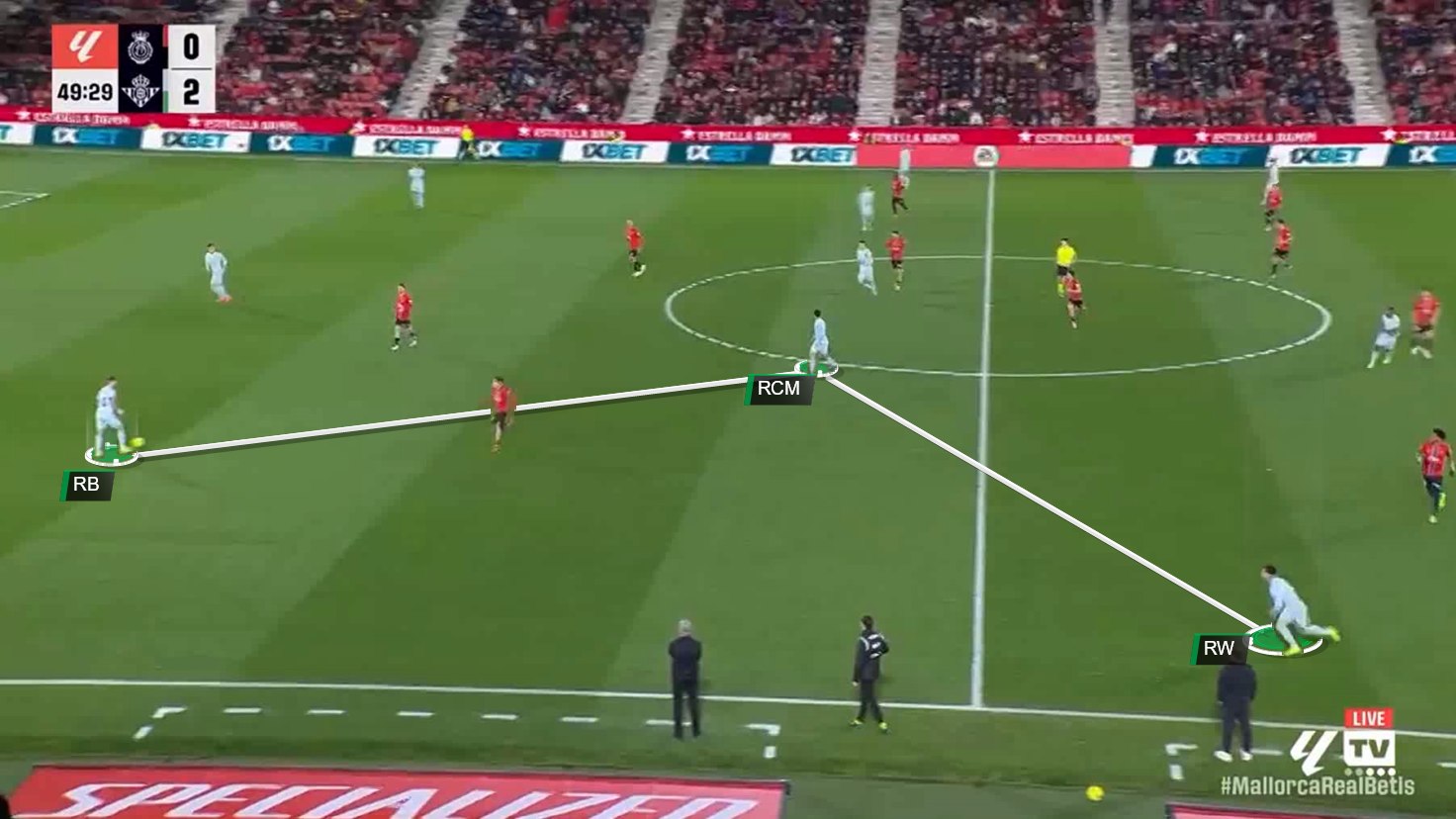
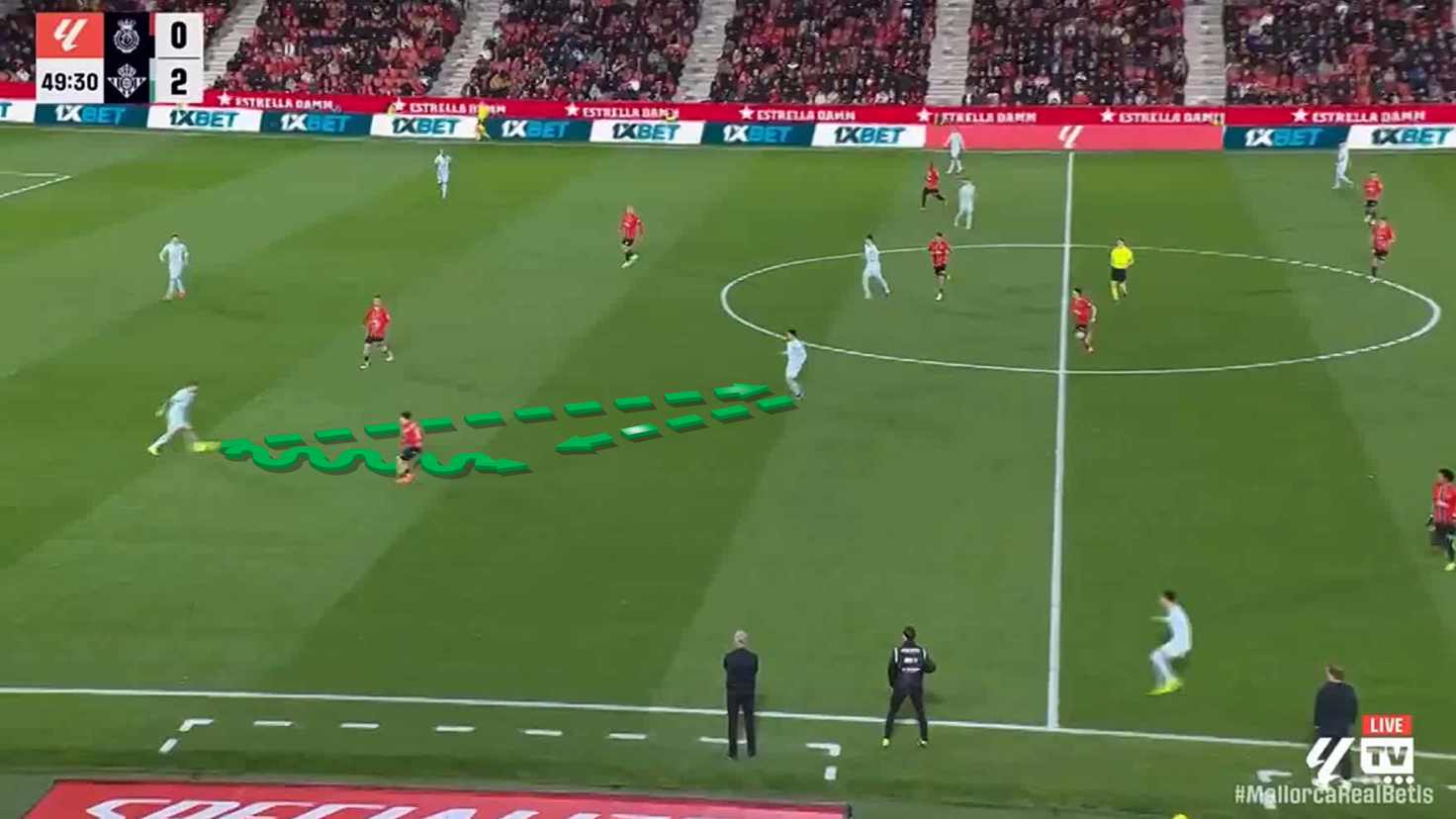
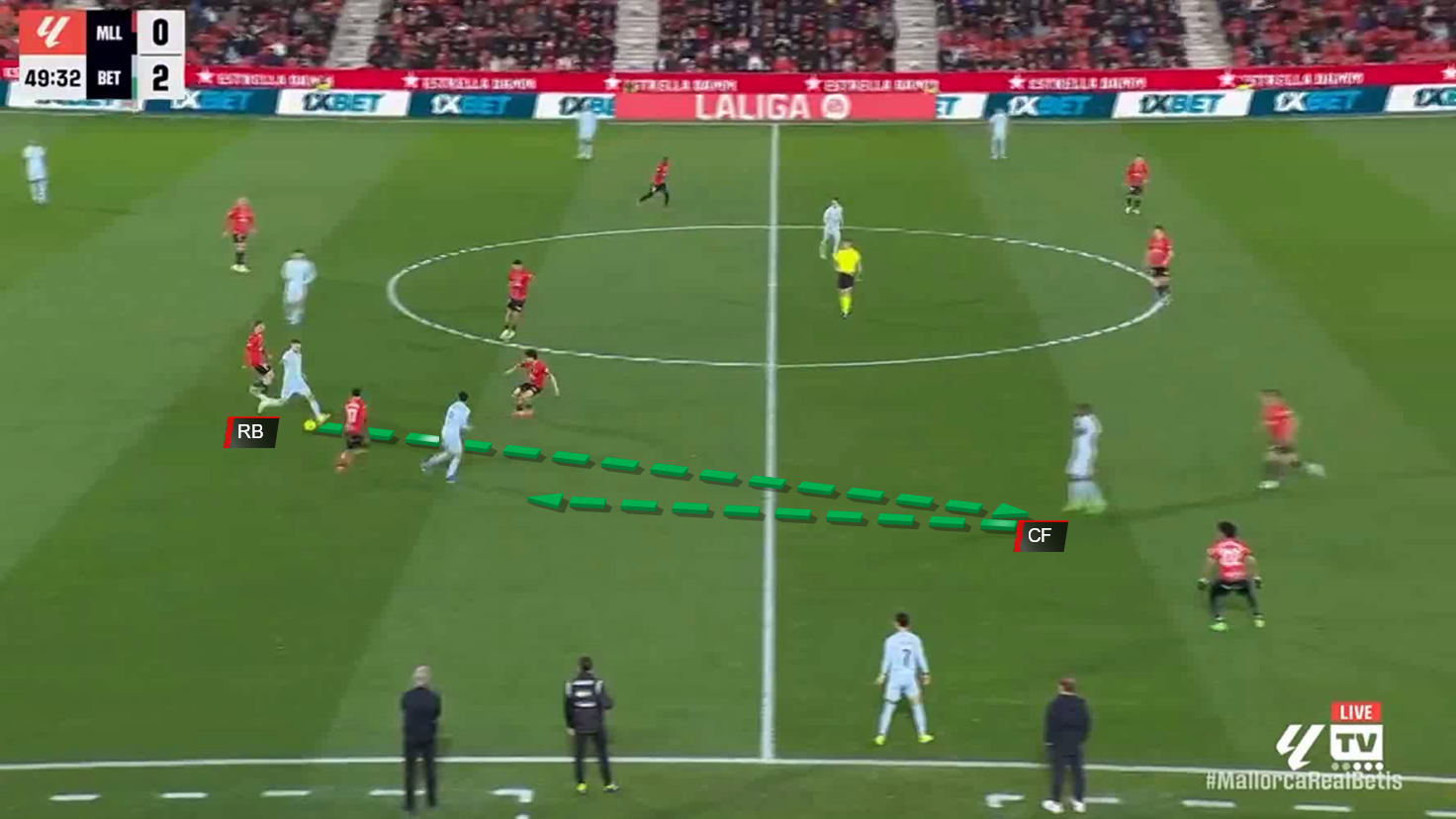
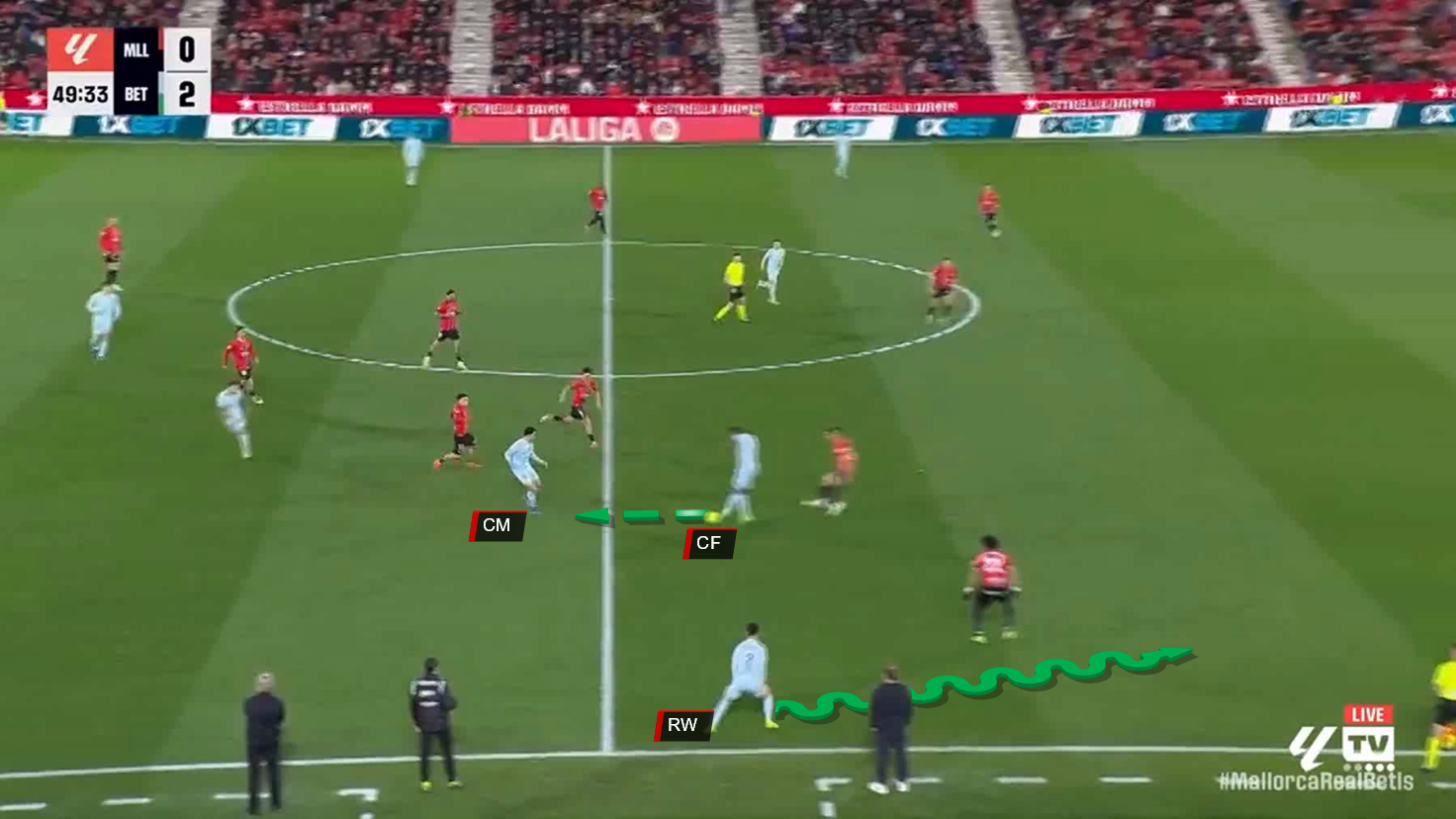
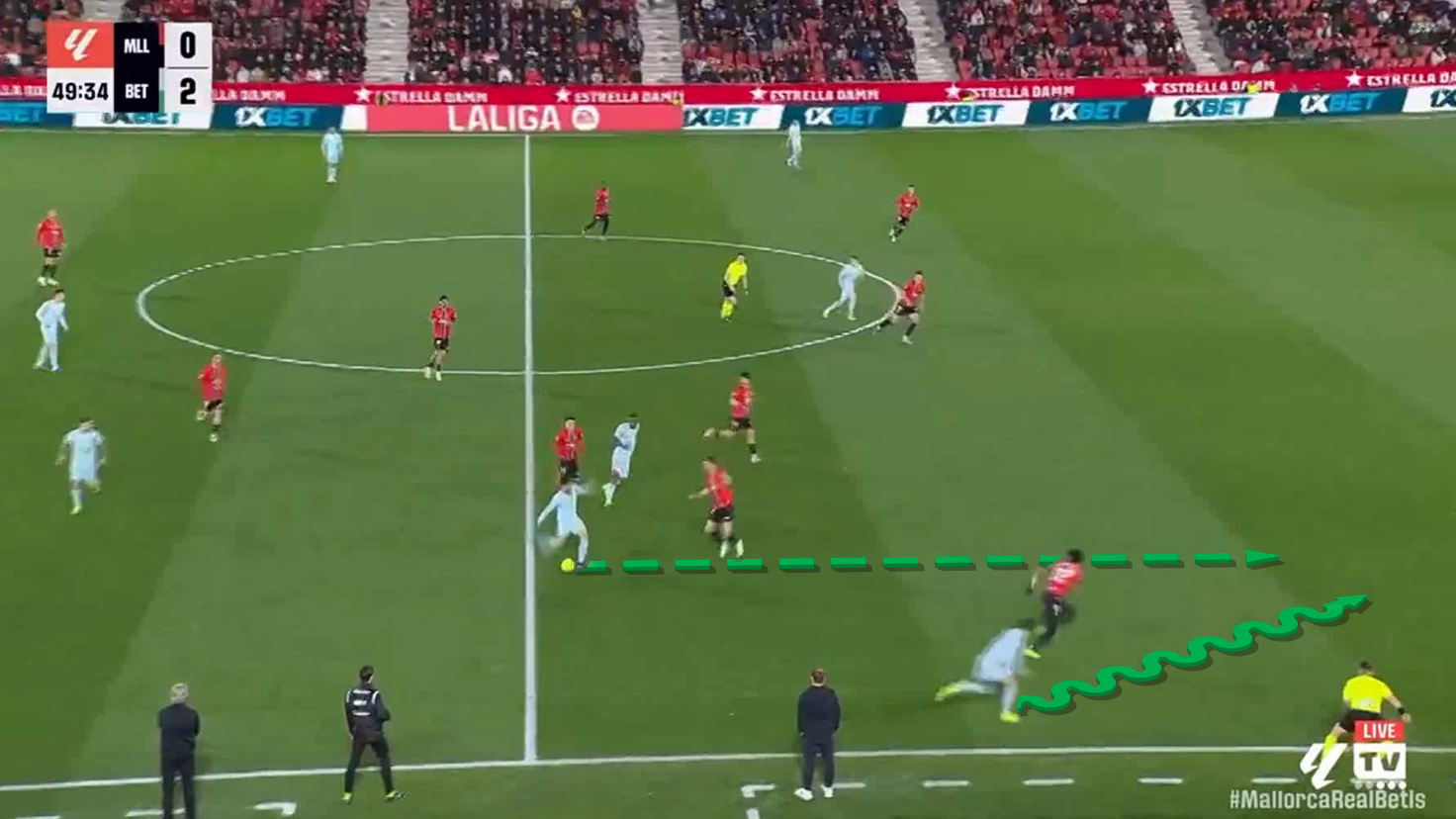
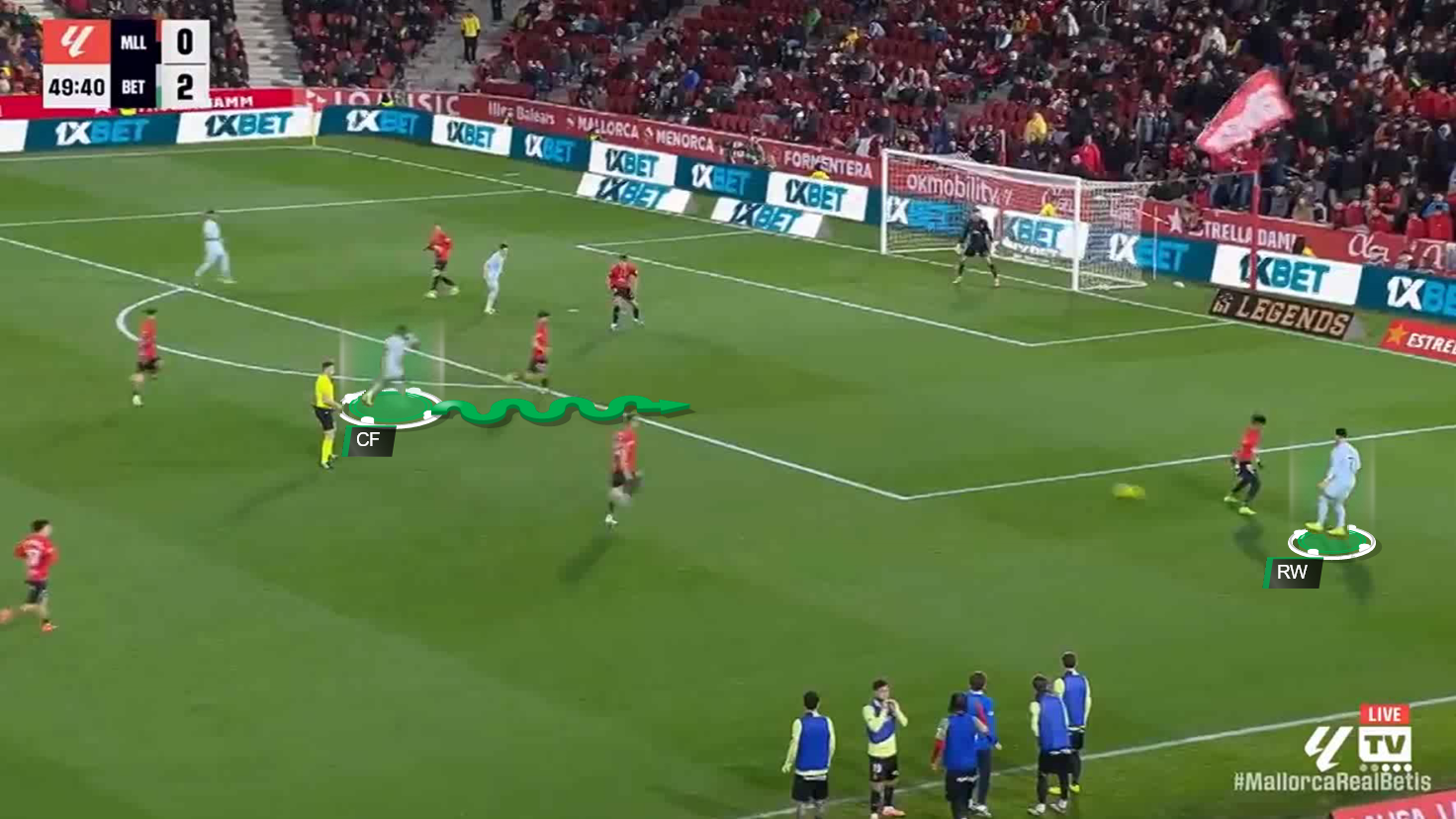
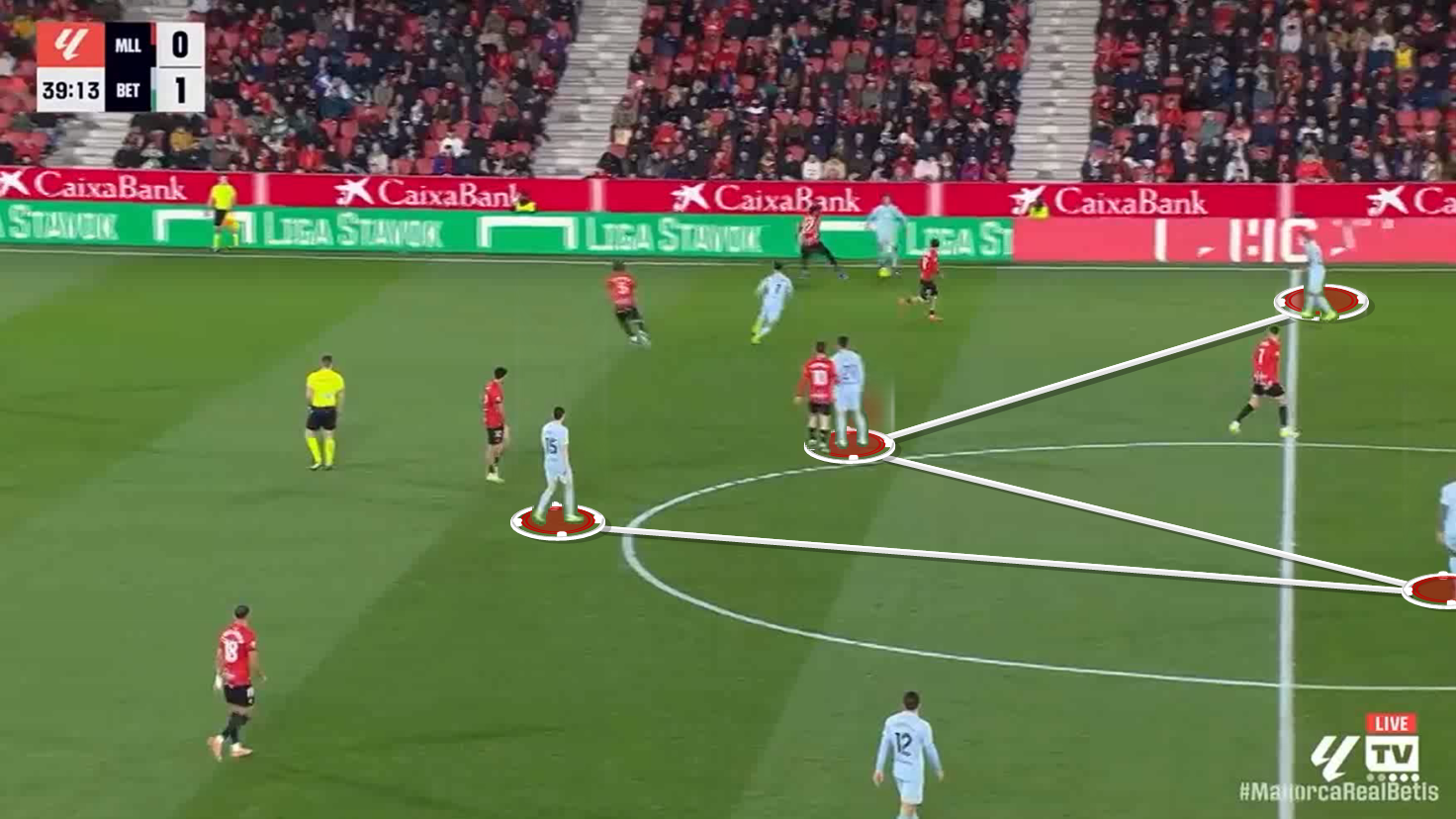
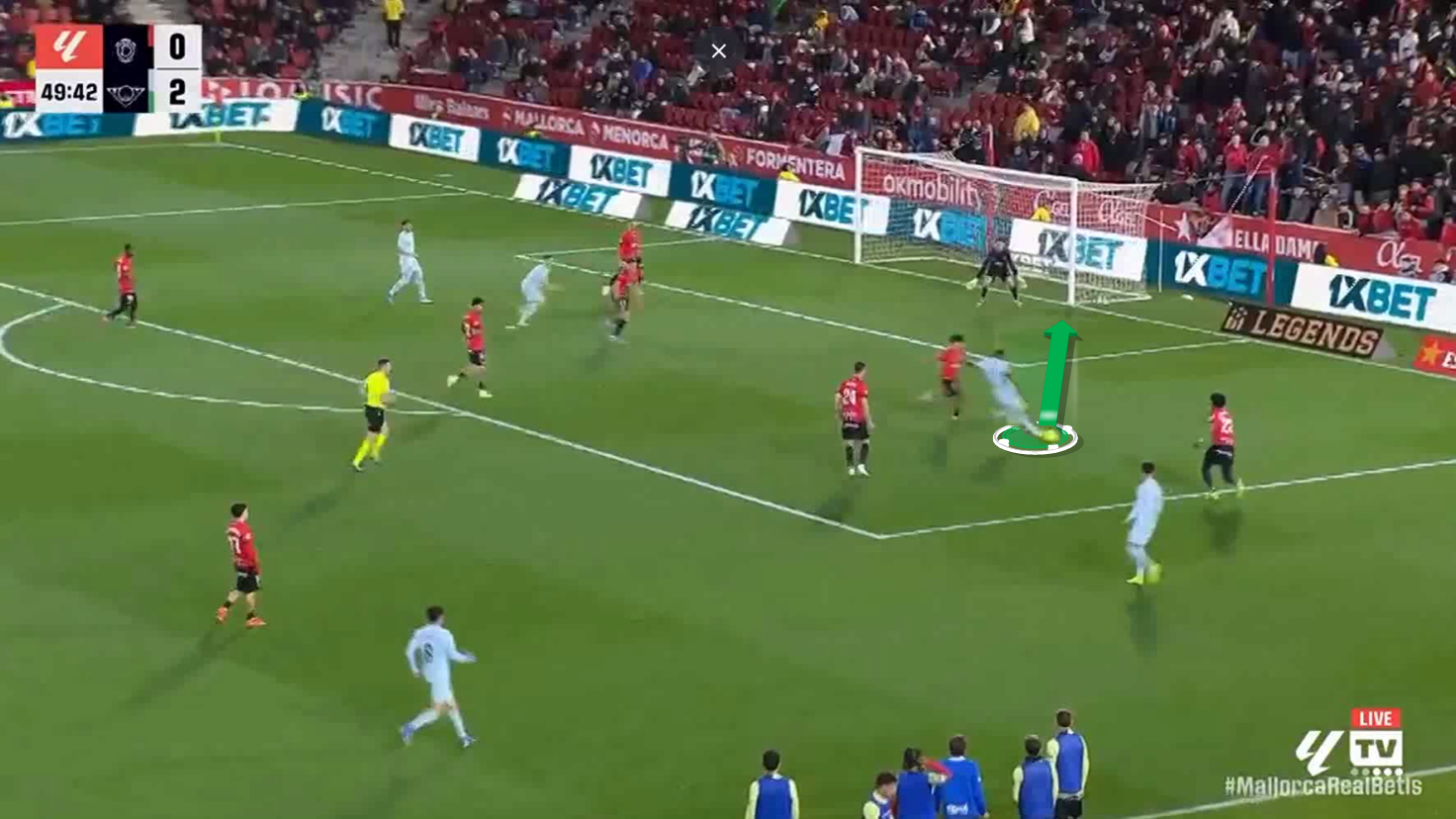 Here, against Real Mallorca, we can see the progression phase of Real Betis’ team and how the full-back, midfielder, and winger connect diagonally in the half-spaces.
And how this gives them an advantage in exploiting the space created by the opposition players dropping out of position to press.
This behaviour, which has been repeated several times this season, reflects a growing confidence in breaking lines through movement with the ball, not just passing.
Real Betis has become less reliant on individual creativity and more dependent on creating dynamic passing angles through constant positioning, making their attacking play more stable even in the absence of a traditional playmaker capable of orchestrating play between the lines.
Final Third For Real Betis
In the attacking third, Real Betis have become less reliant on individual brilliance this season and more inclined to build attacks through positioning and constant movement around the penalty area.
The team doesn’t attack the box in large numbers early on, preferring instead to first pin the opponent back by controlling the edge of the area and then looking for a moment of weakness in the defensive organisation.
This behaviour is particularly evident when the ball is moved several times laterally before attempting to penetrate, which allows the opposing midfield line to be pulled outwards and creates room inside the half-spaces rather than facing them directly.
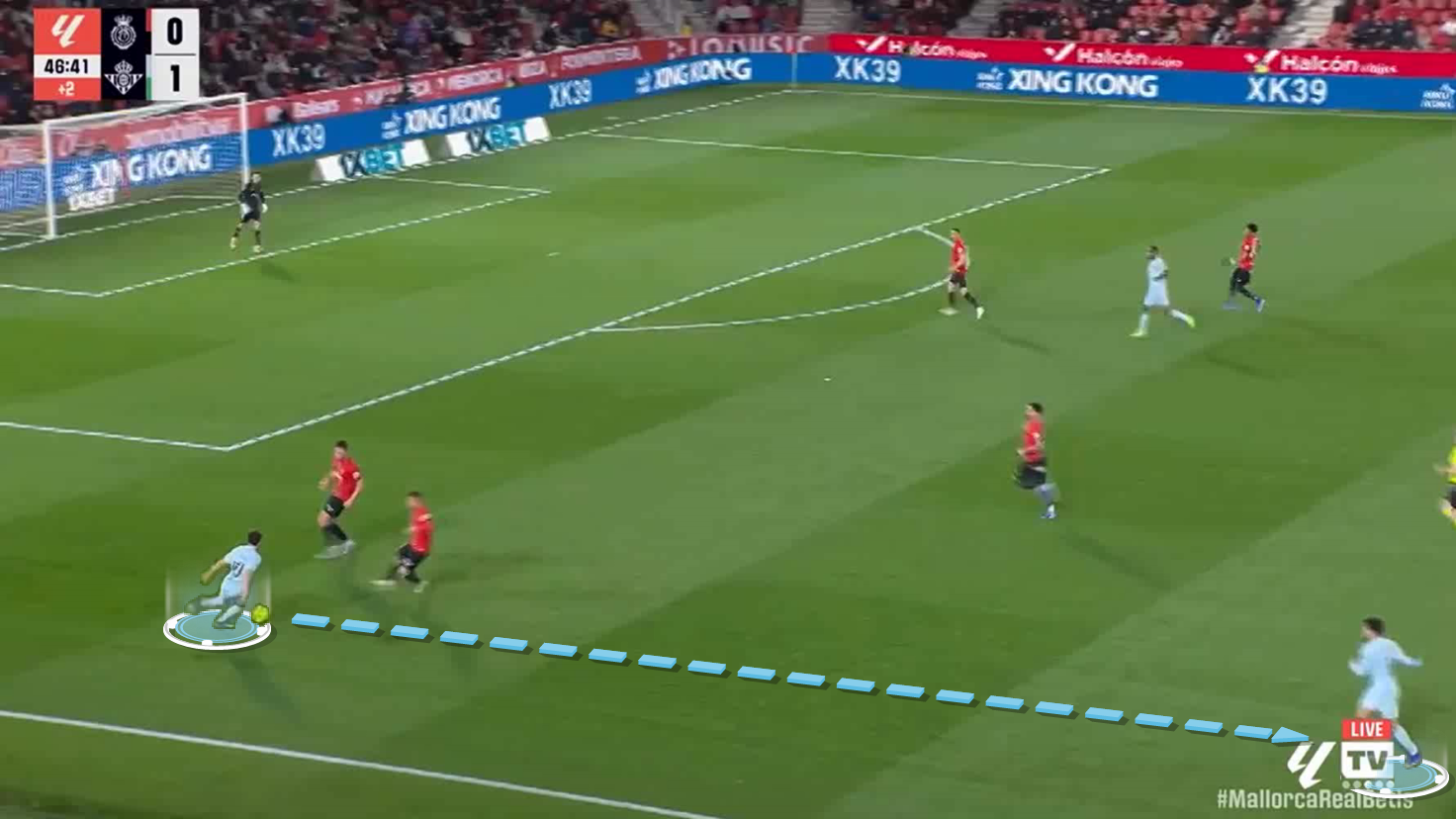
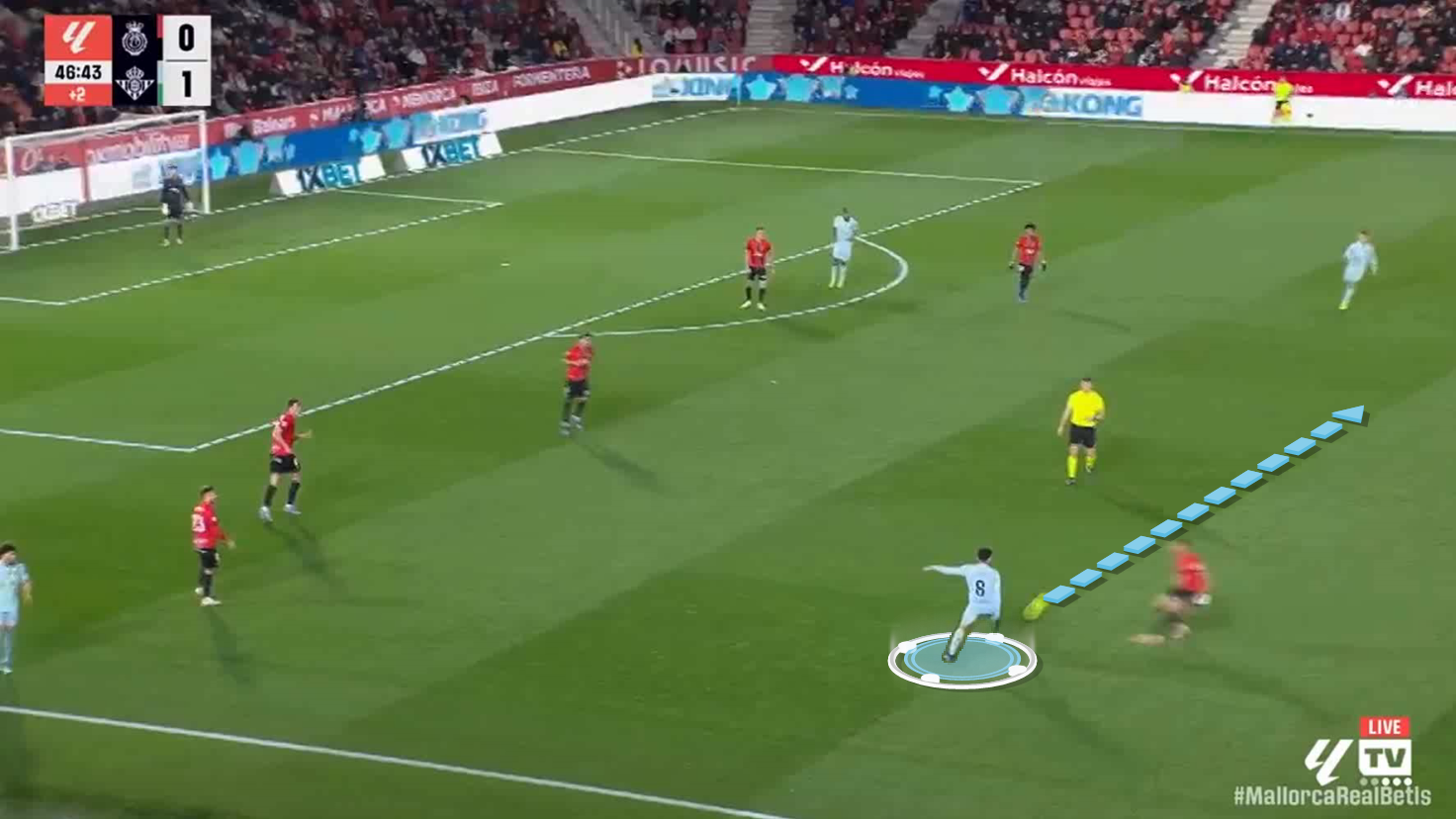
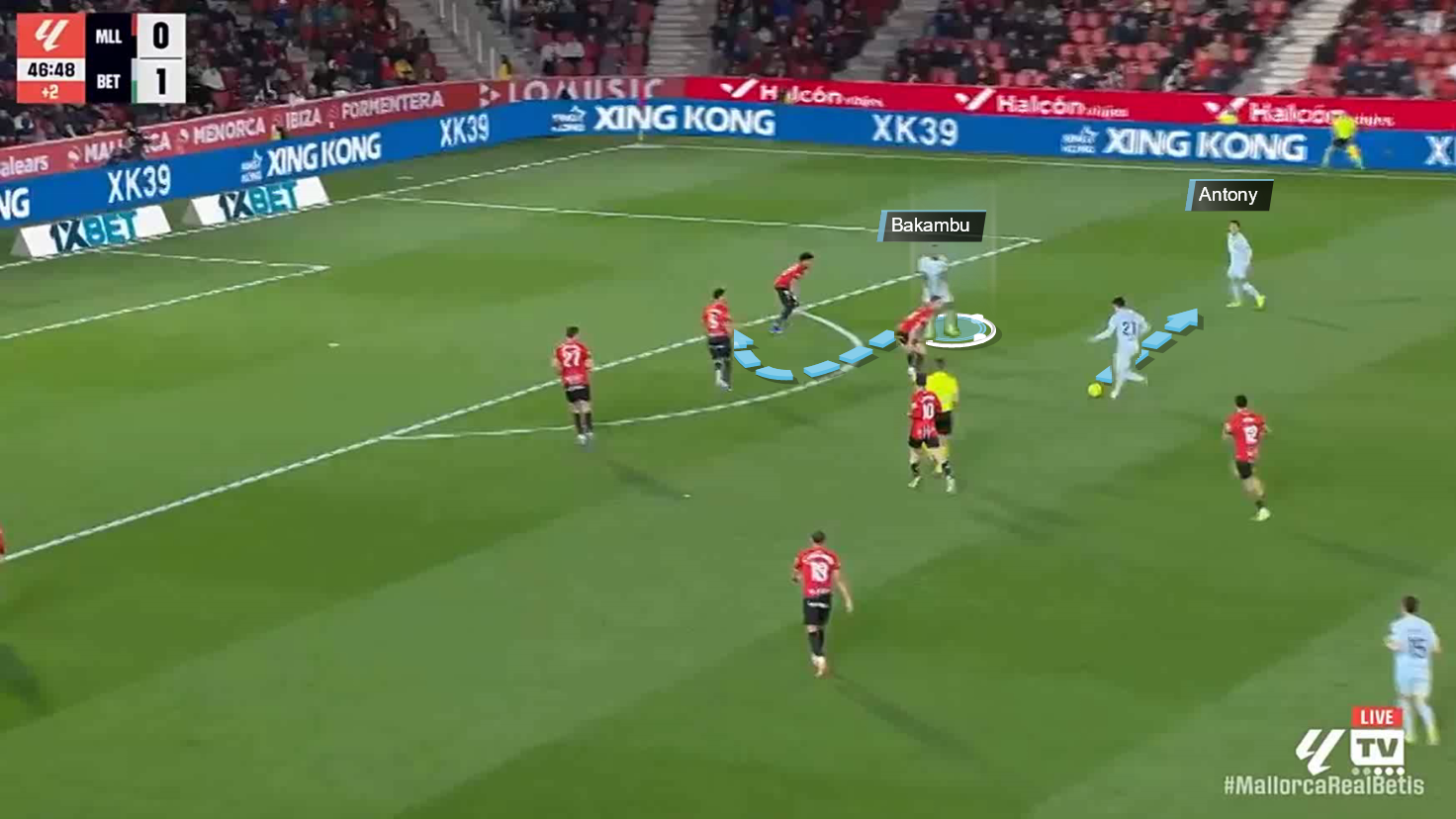
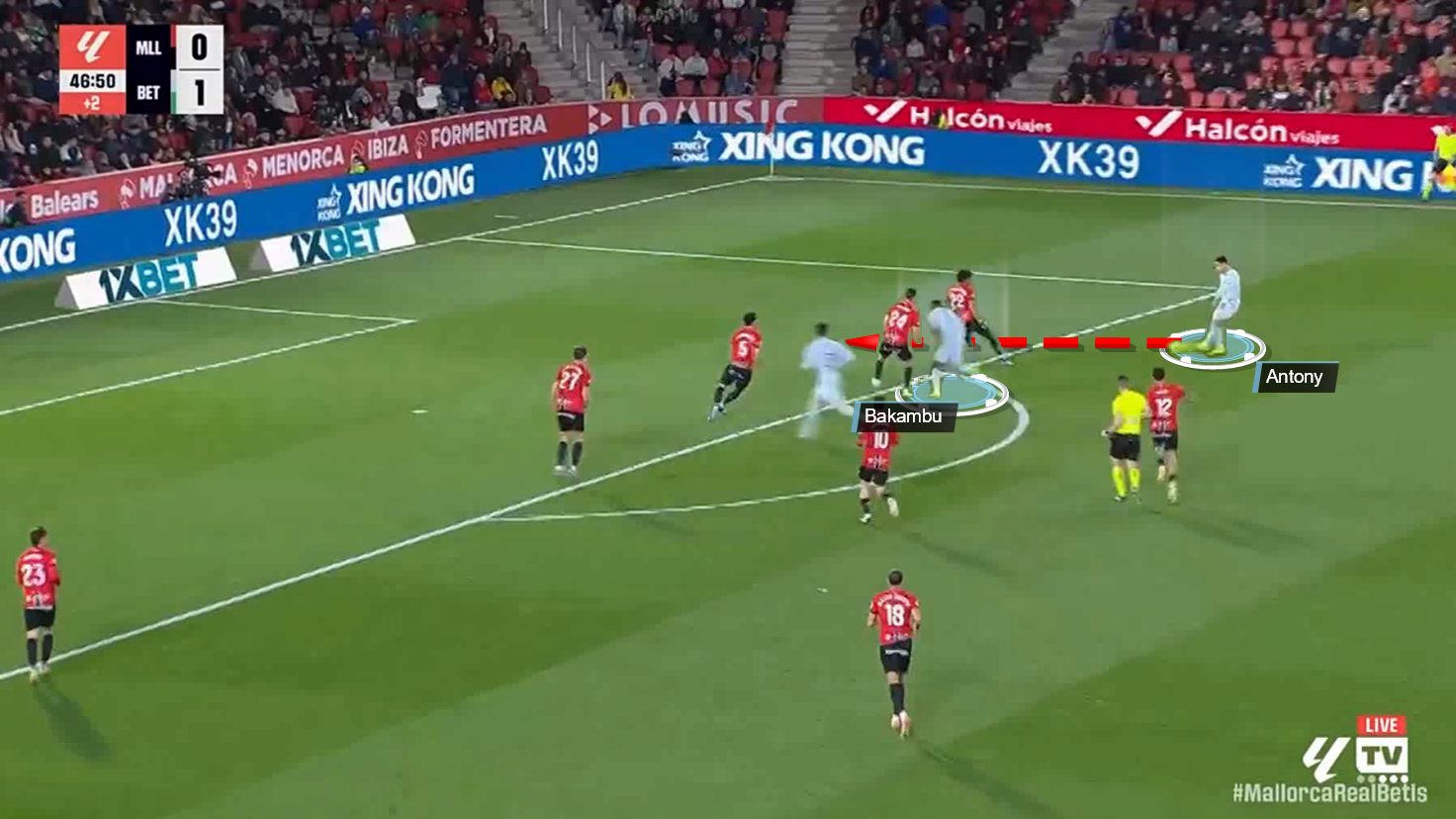 Here’s Real Betis’ second goal against Real Mallorca.
Notice the change of direction on the pitch, then a run from Cédric Bakambu, with Antony moving into the half-space.
Then a through ball, and after Bakambu’s brilliant run, the goal.
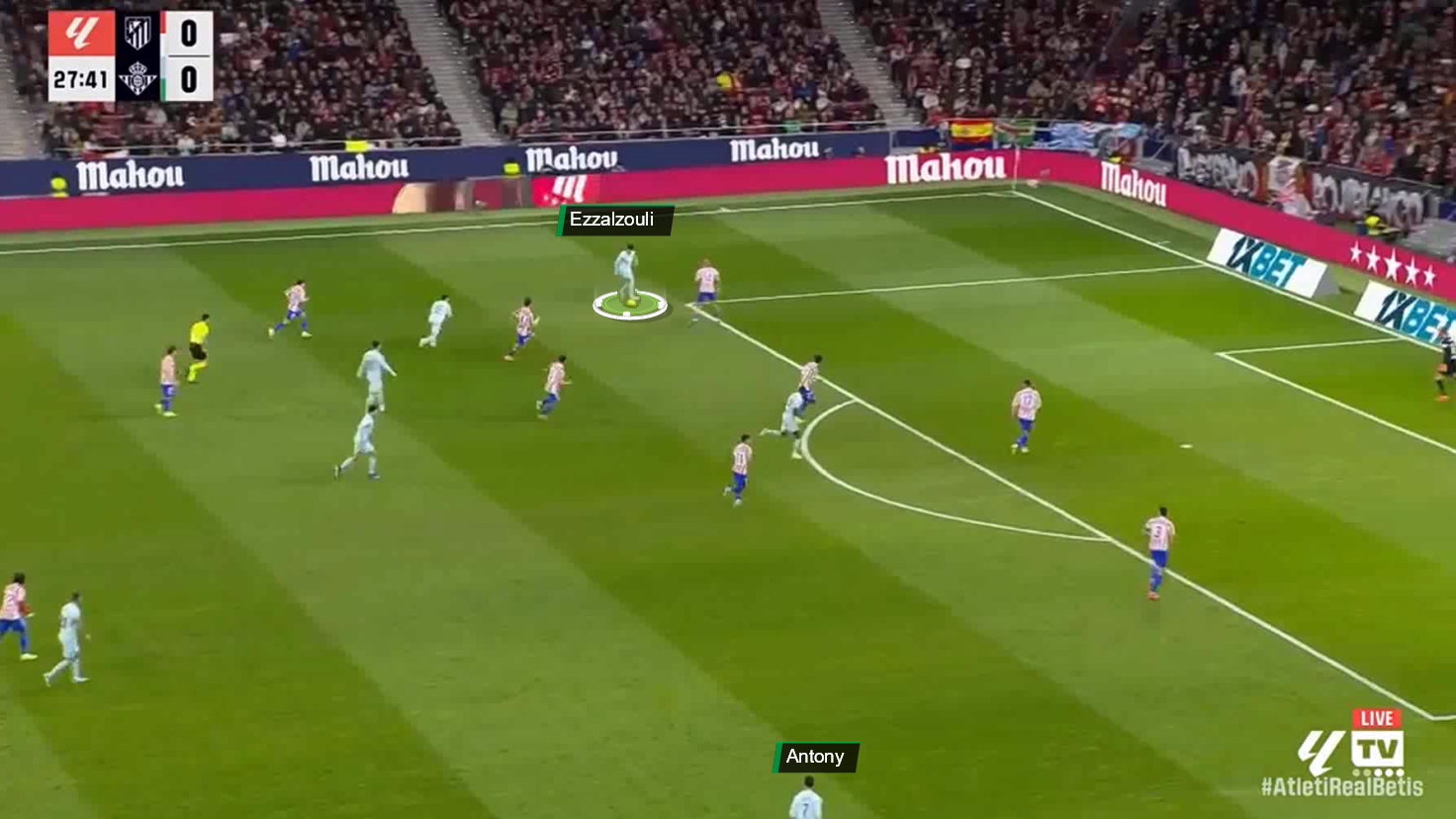
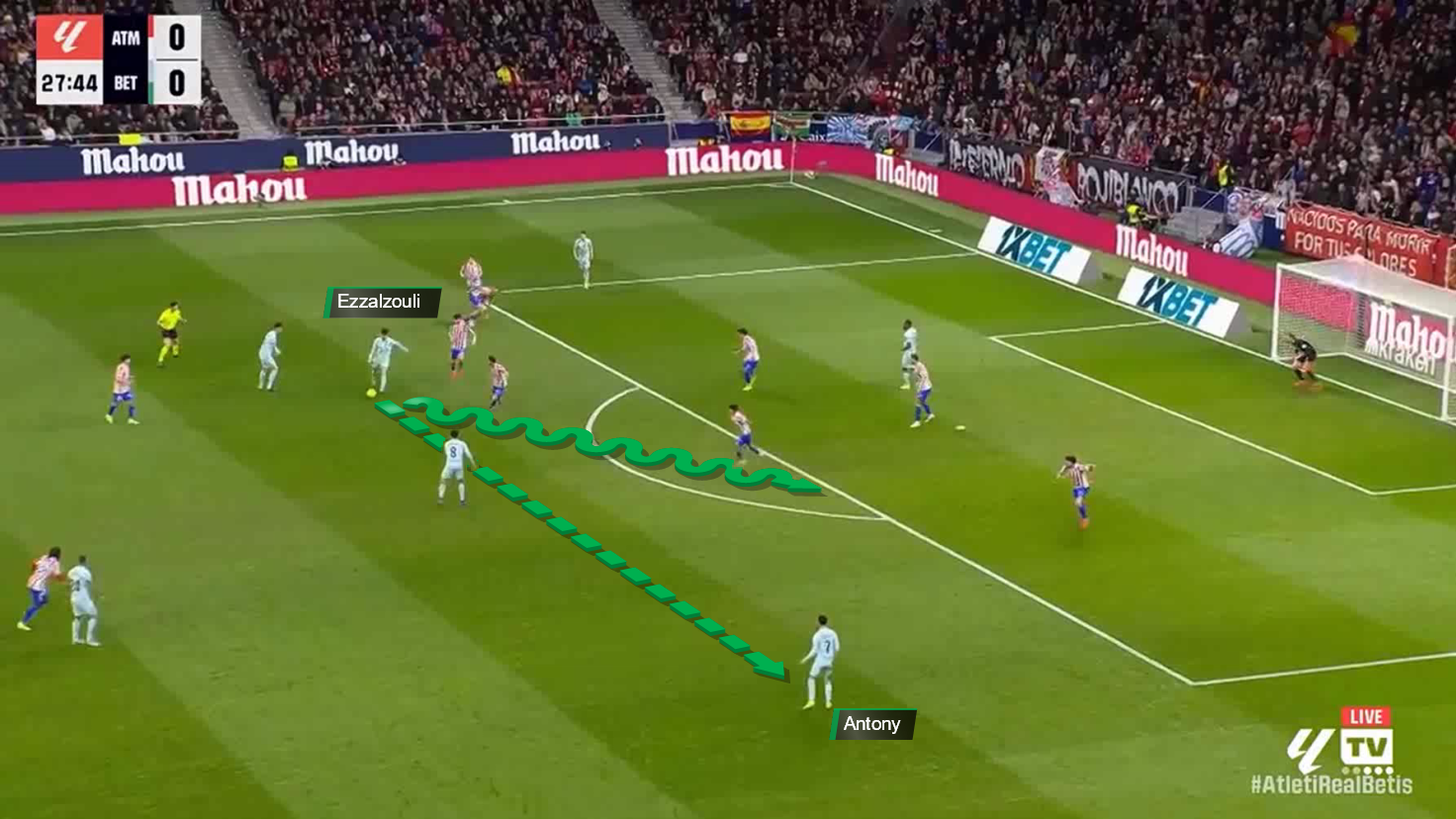
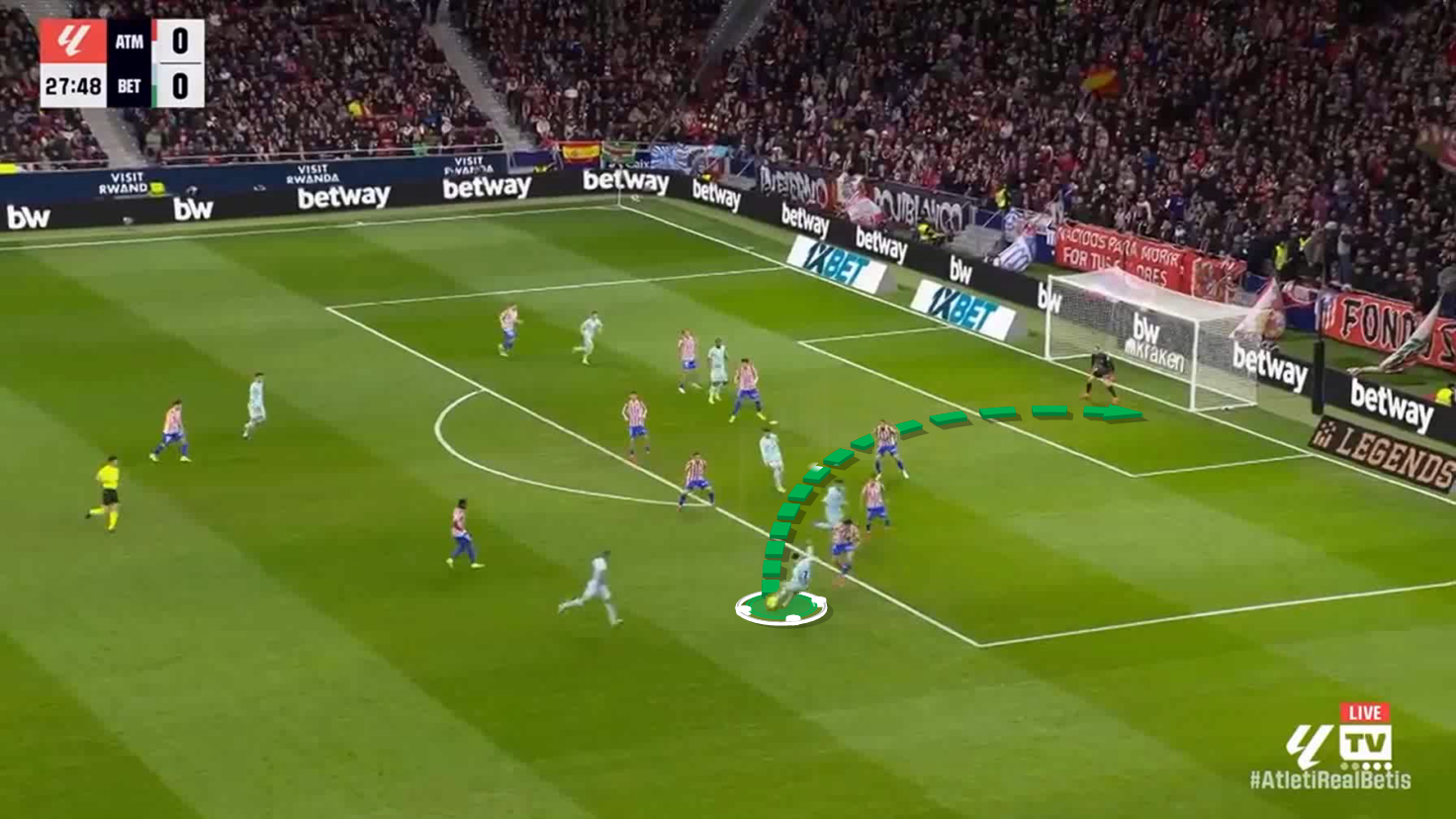 Here, Abde Ezzalzouli carried the ball from the left side to the right and played the ball to Antony, then moved to draw the defender and open up space to shoot and score.
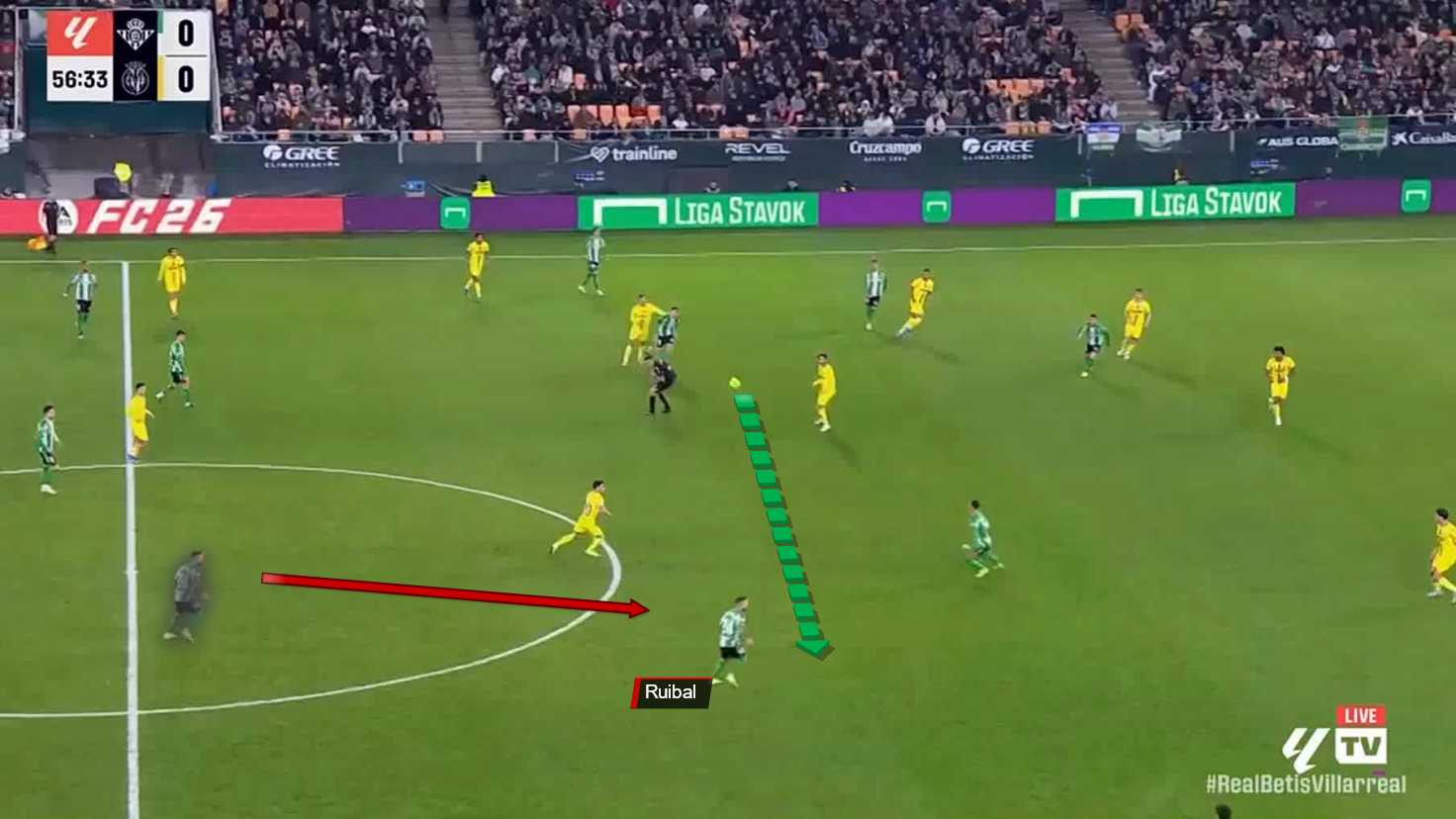
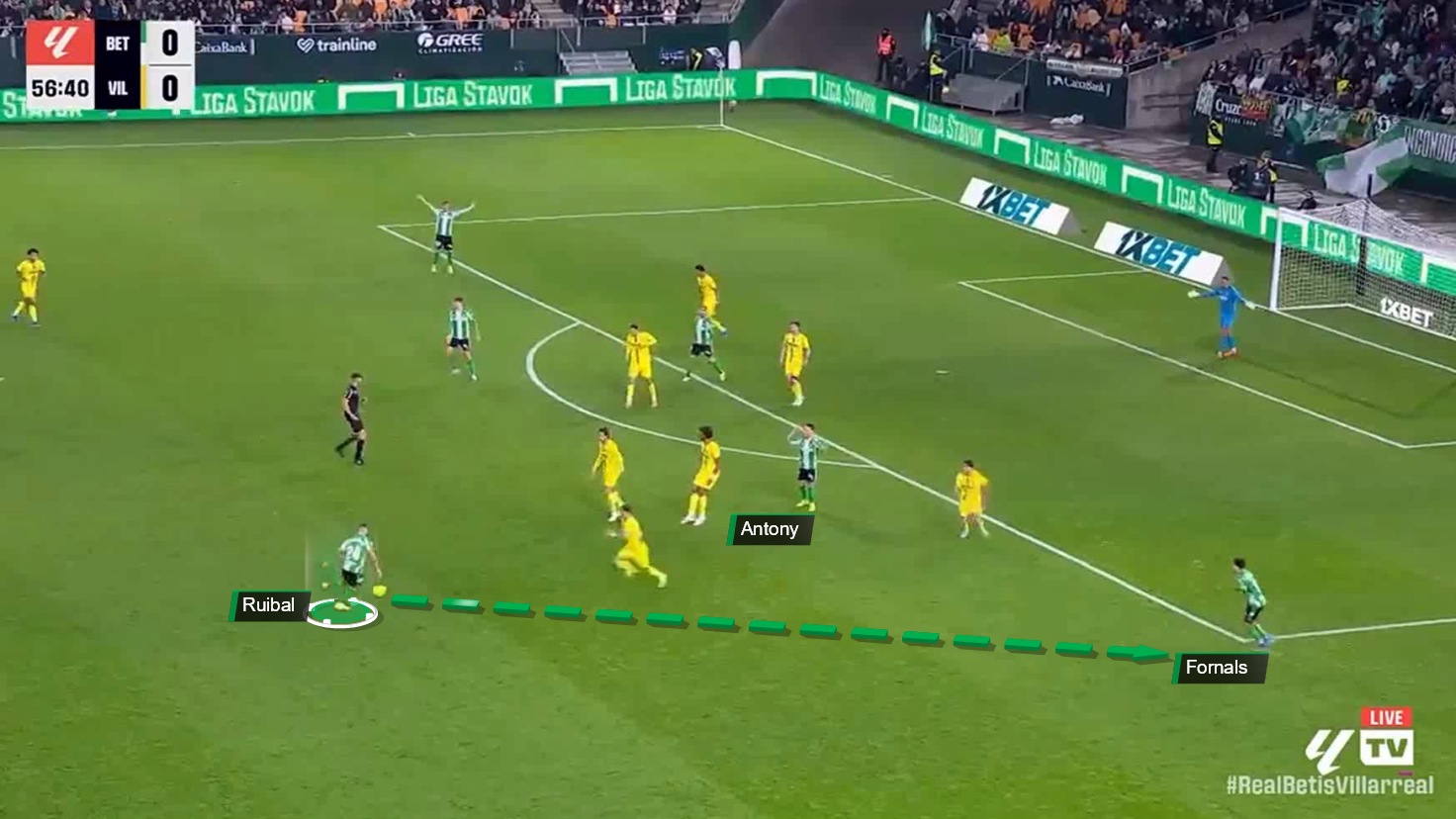
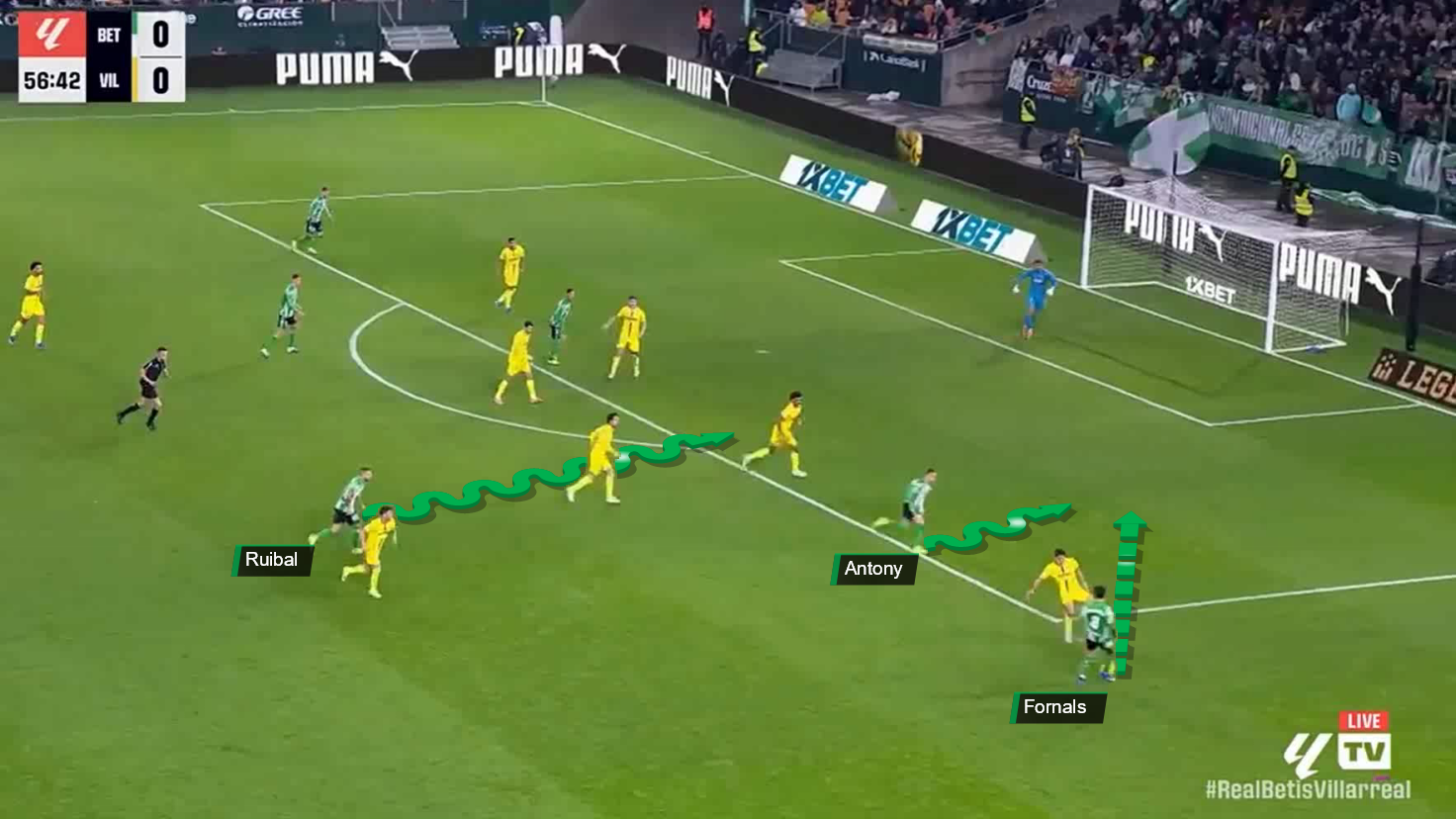
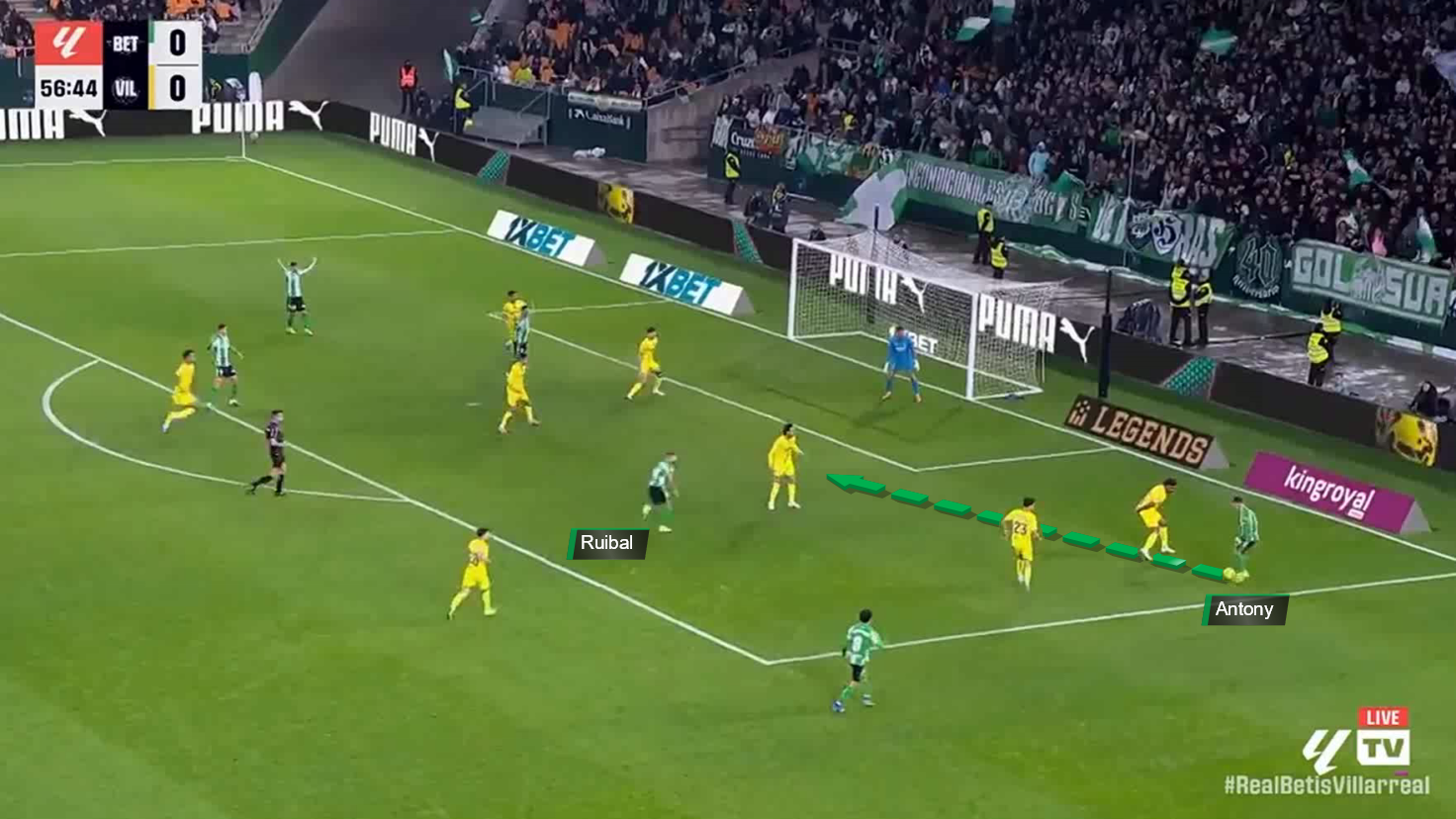
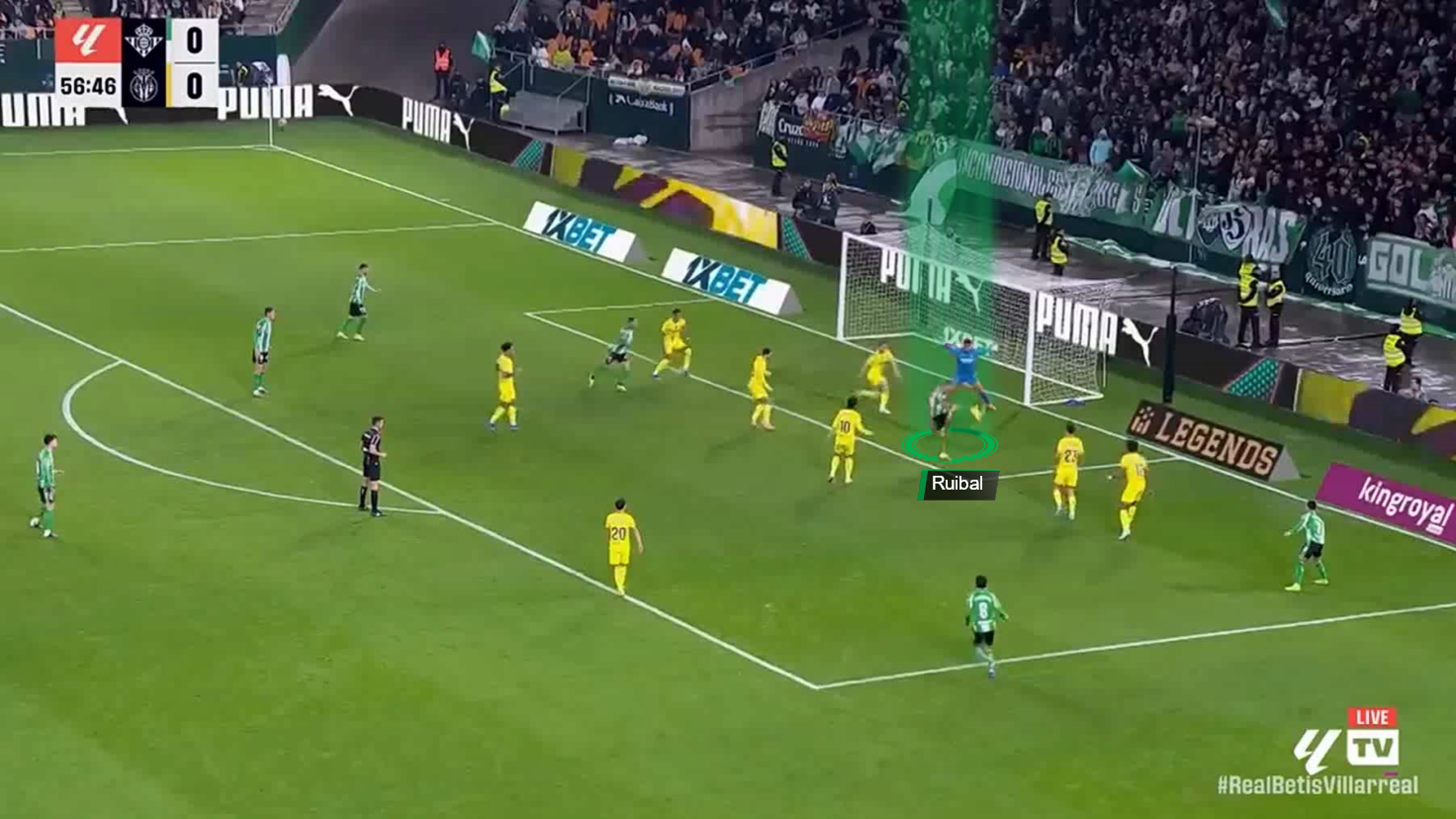 Here’s Aitor Ruibal‘s goal against Villarreal.
Notice the change in the direction of play, and then the interchange of positions between the full-back, the winger, and the midfielder.
Midfielder Pablo Fornals moves wide, Antony moves into the half-space, and right-back Ruibal makes a horizontal run, receiving the ball in a position that allowed him to score.
A rapid exchange of positions between the winger and the full-back forced the defensive line to move horizontally, opening up shooting angles from deep.
Despite this development, the team sometimes remains slow in decision-making when faced with a very low defensive block, where possession turns into a long lateral rotation without a real penetration.
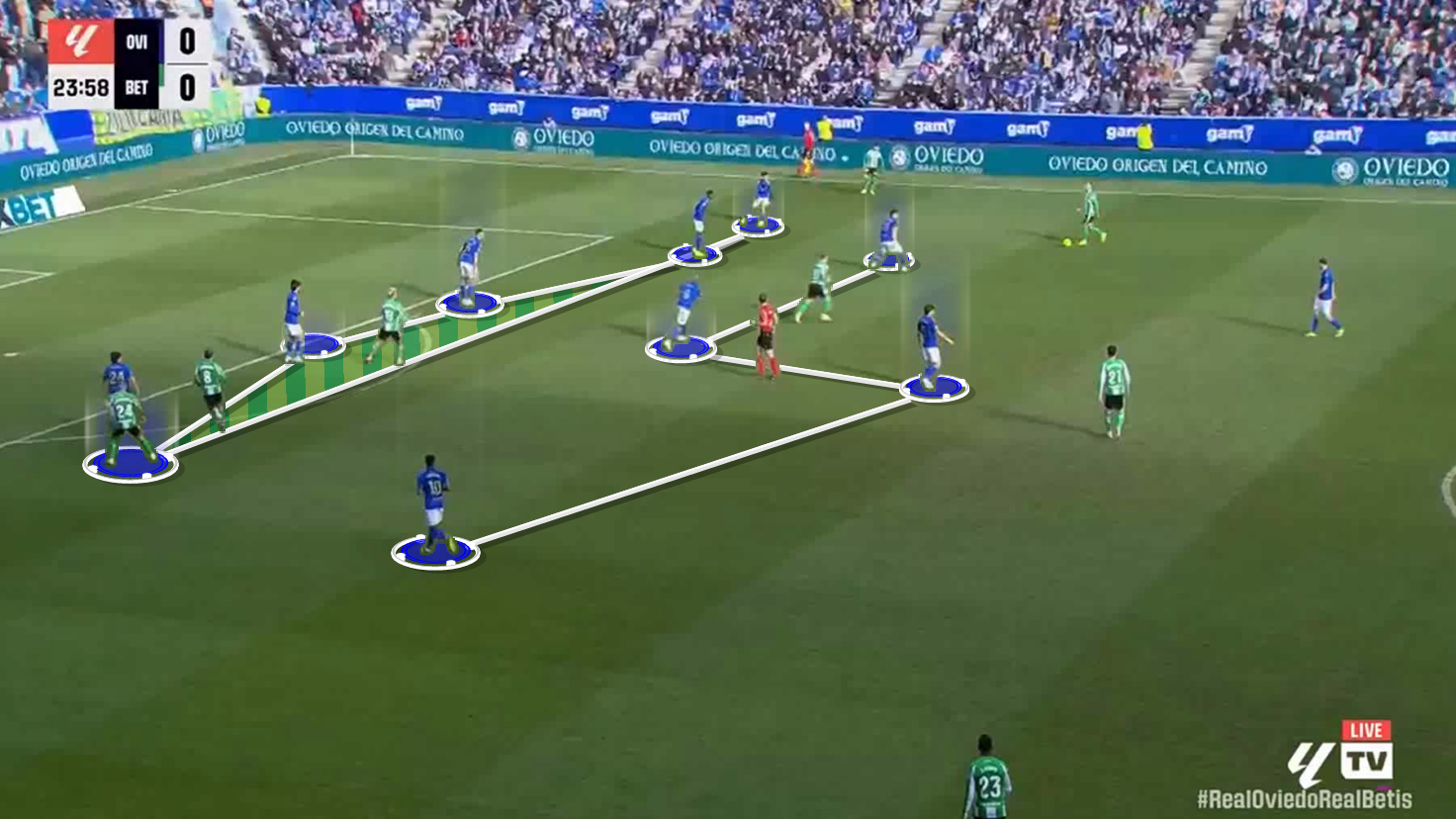
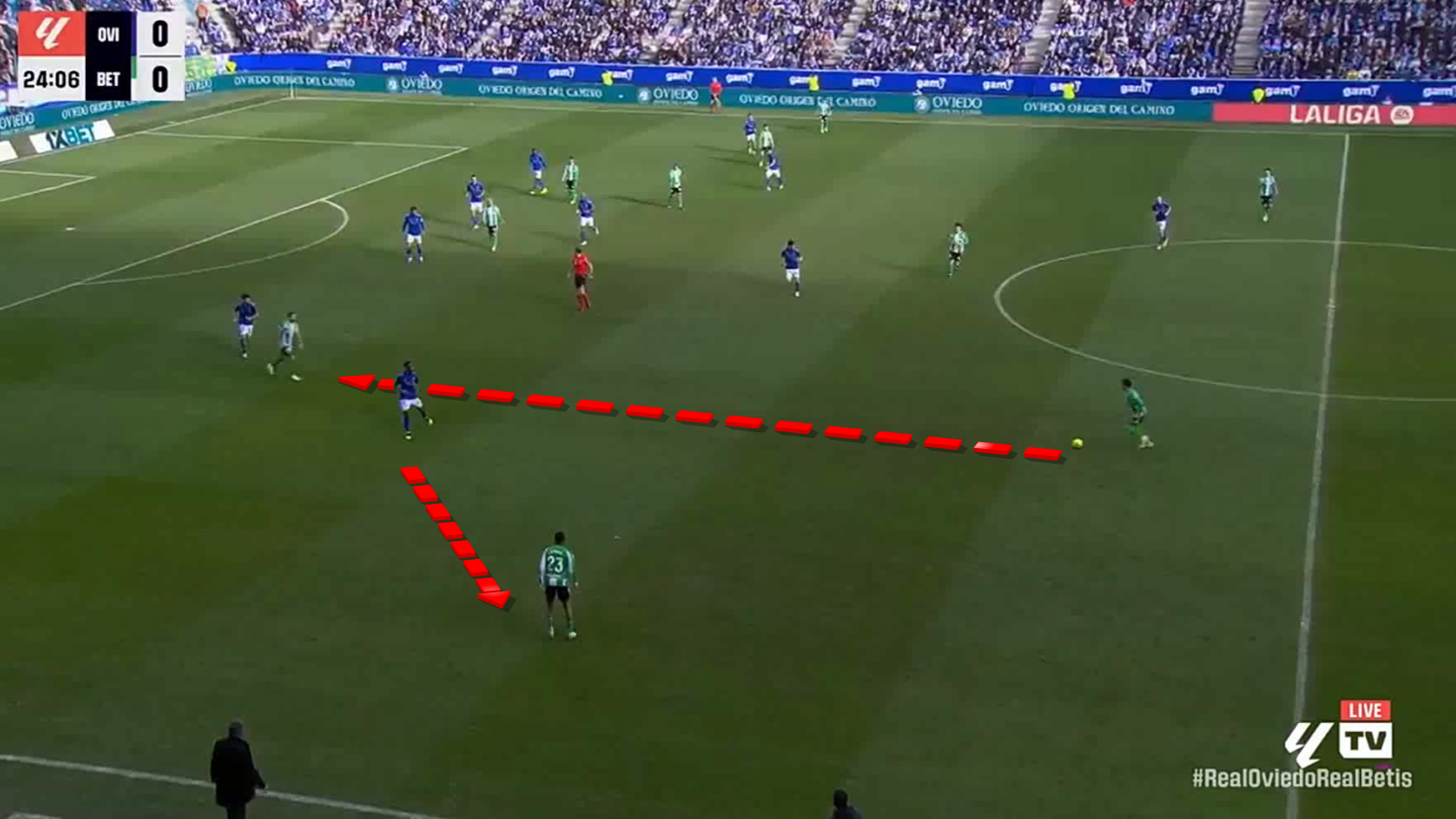
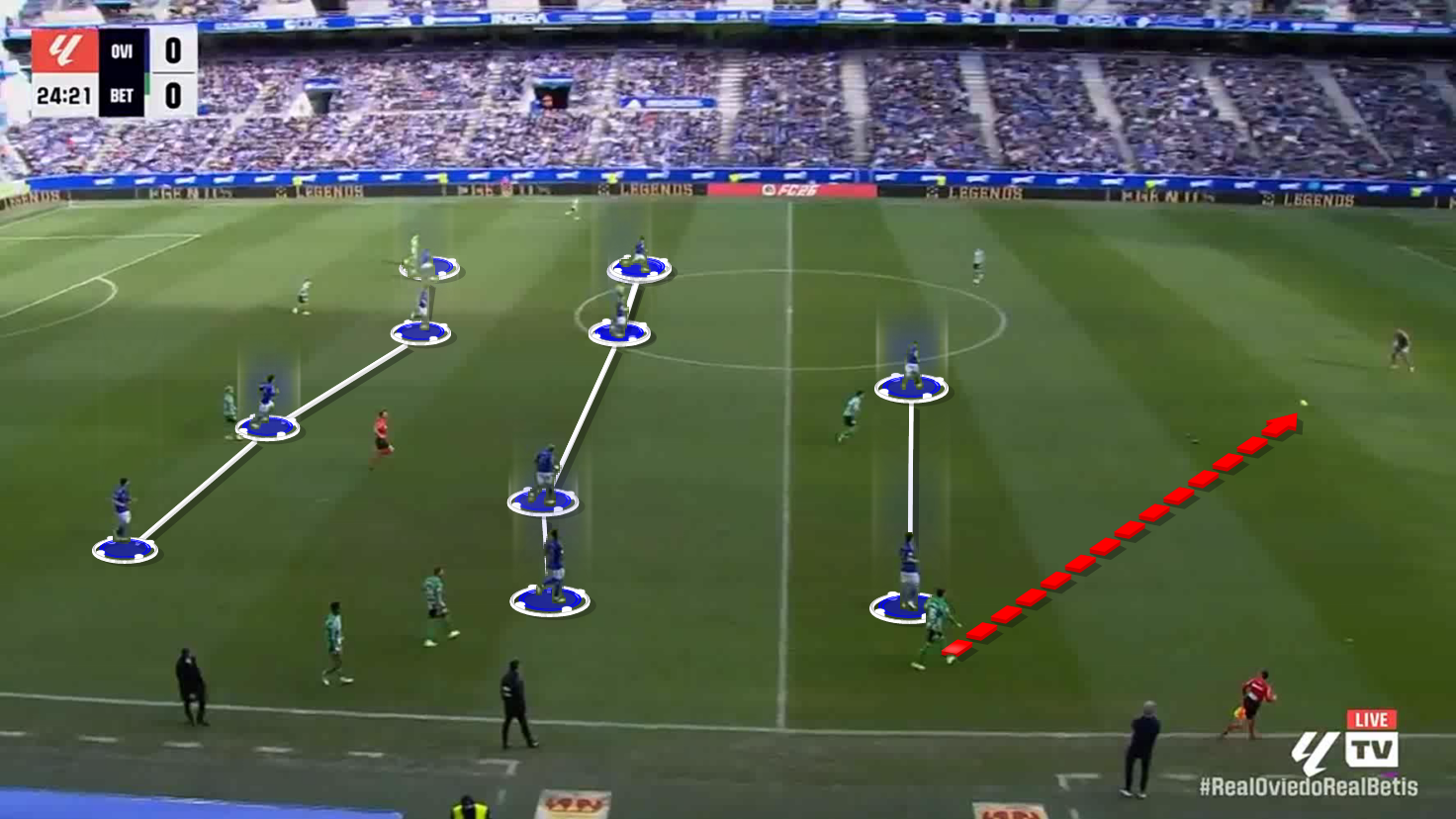 Here is the attacking aspect that needs development: dealing with low blocks.
Here, against Real Oviedo, with a 5-3-2 defence, the ball gradually returned to the first third.
These attacking patterns demonstrate that Real Betis is now creating superiority through off-the-ball movement rather than relying on individual dribbling.
Real Betis Defensive Phase
Defensively, Real Betis did not undergo a clear structural transformation compared to last season, as the team maintained the same principles that characterise Pellegrini’s system: an organised midfield, targeted pressure instead of continuous high pressure.
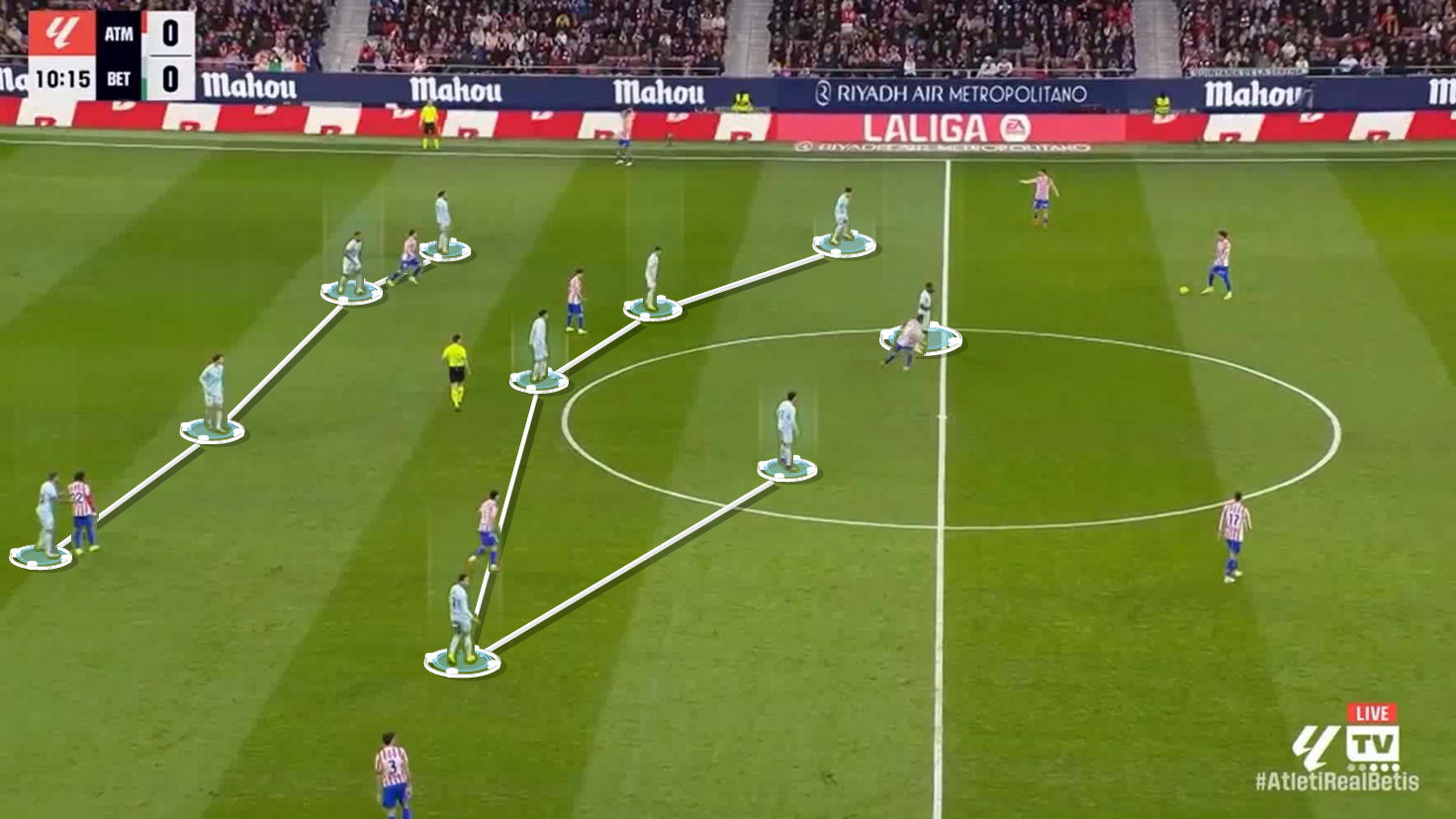
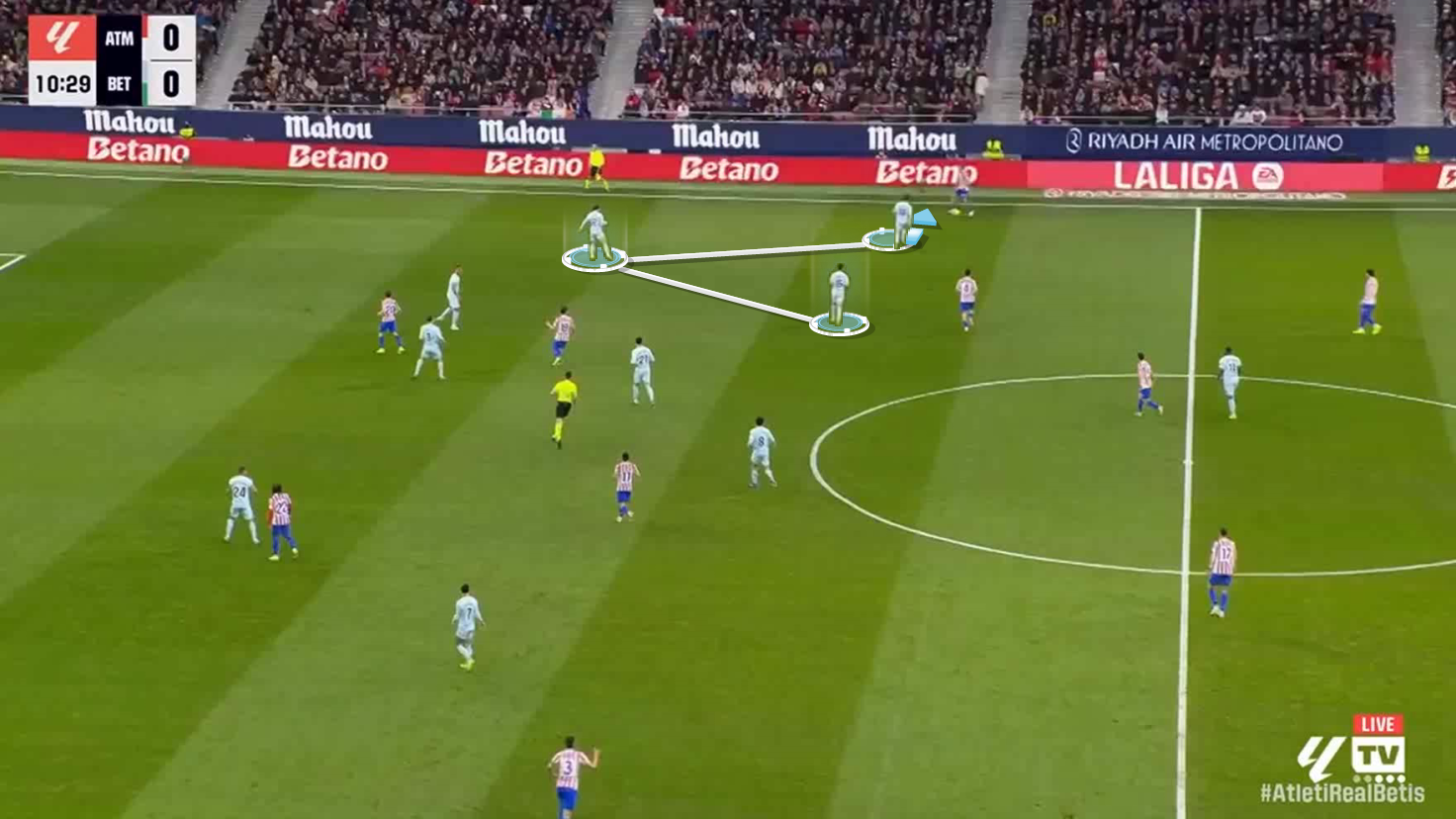
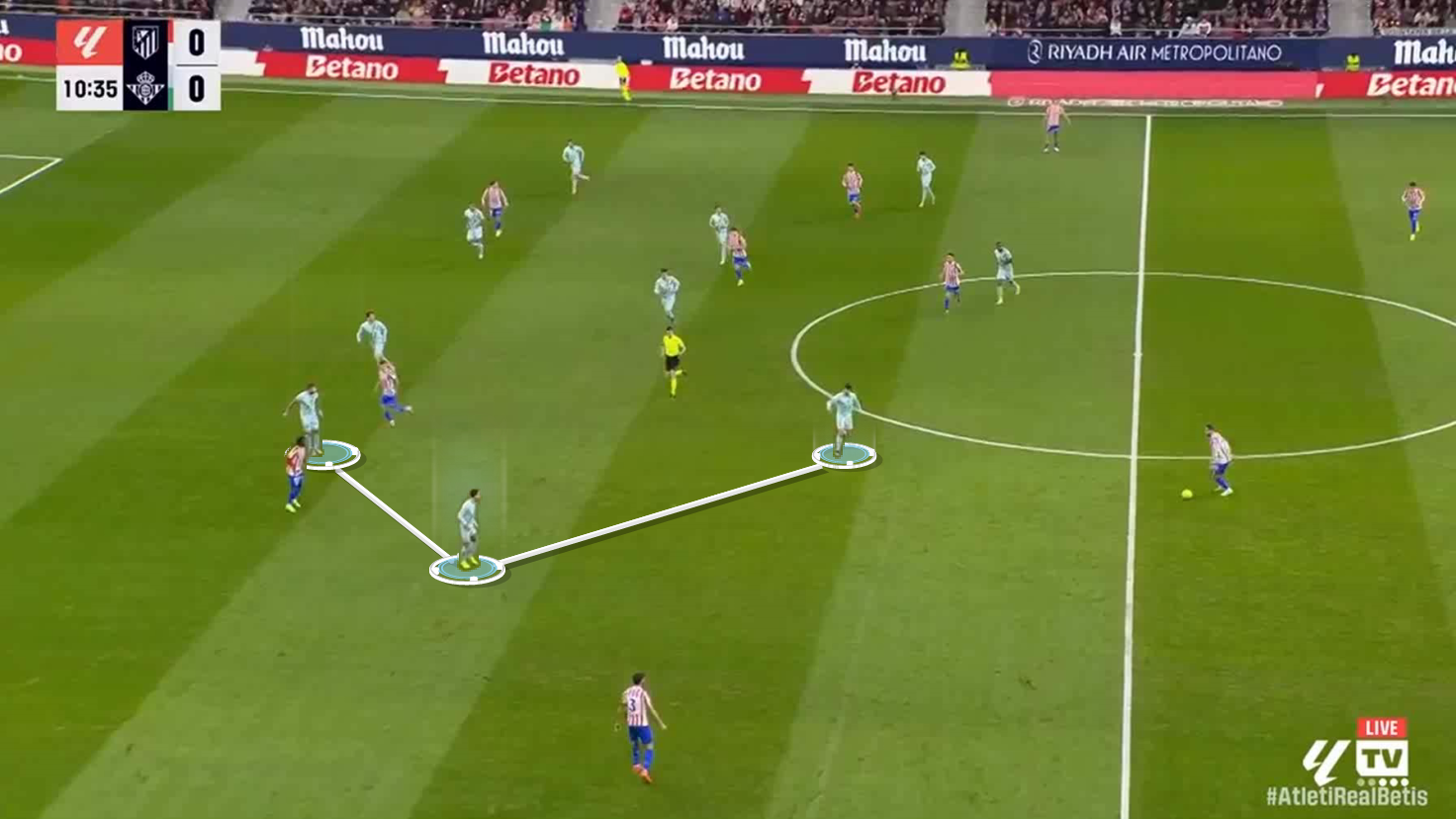
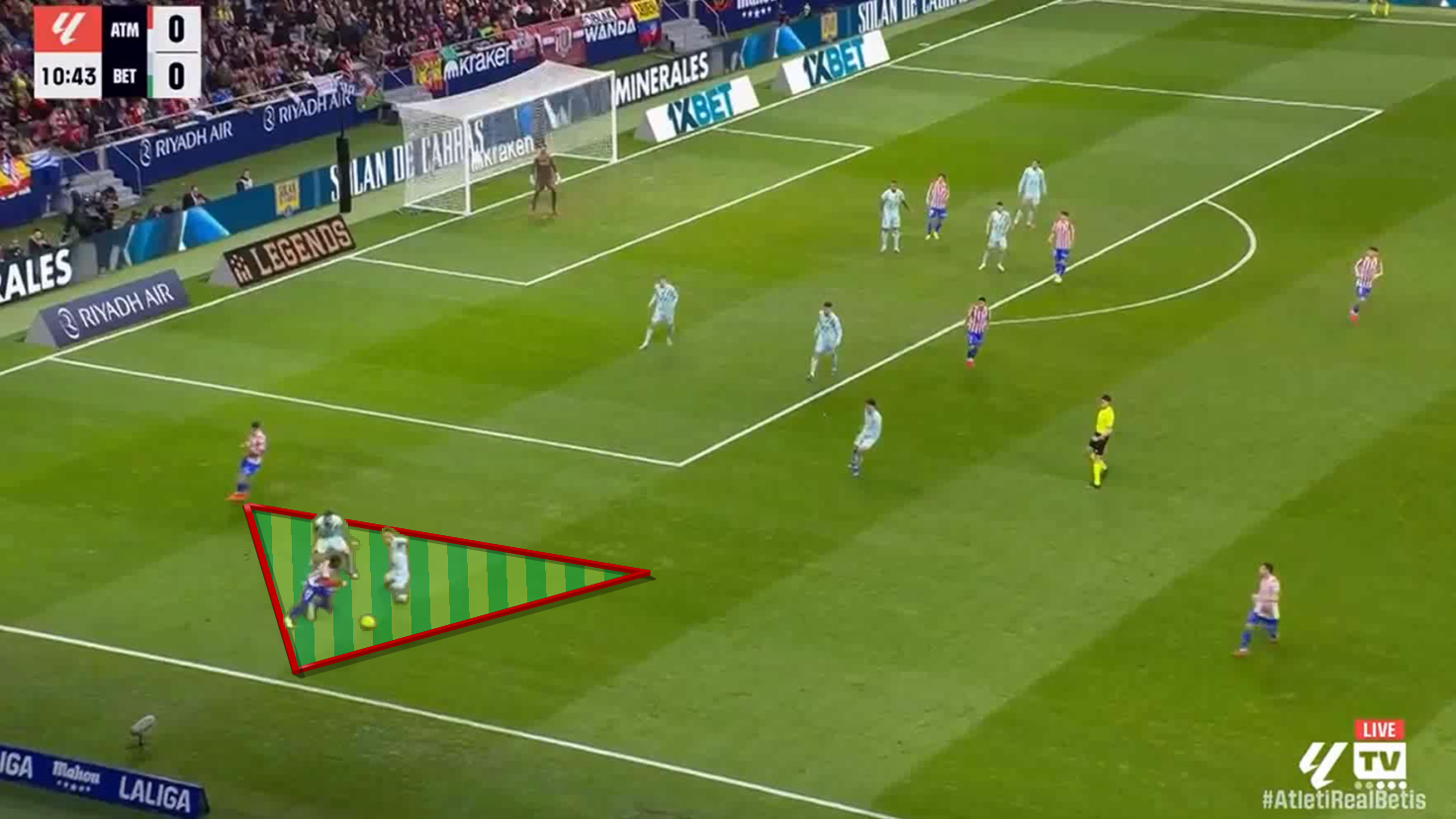
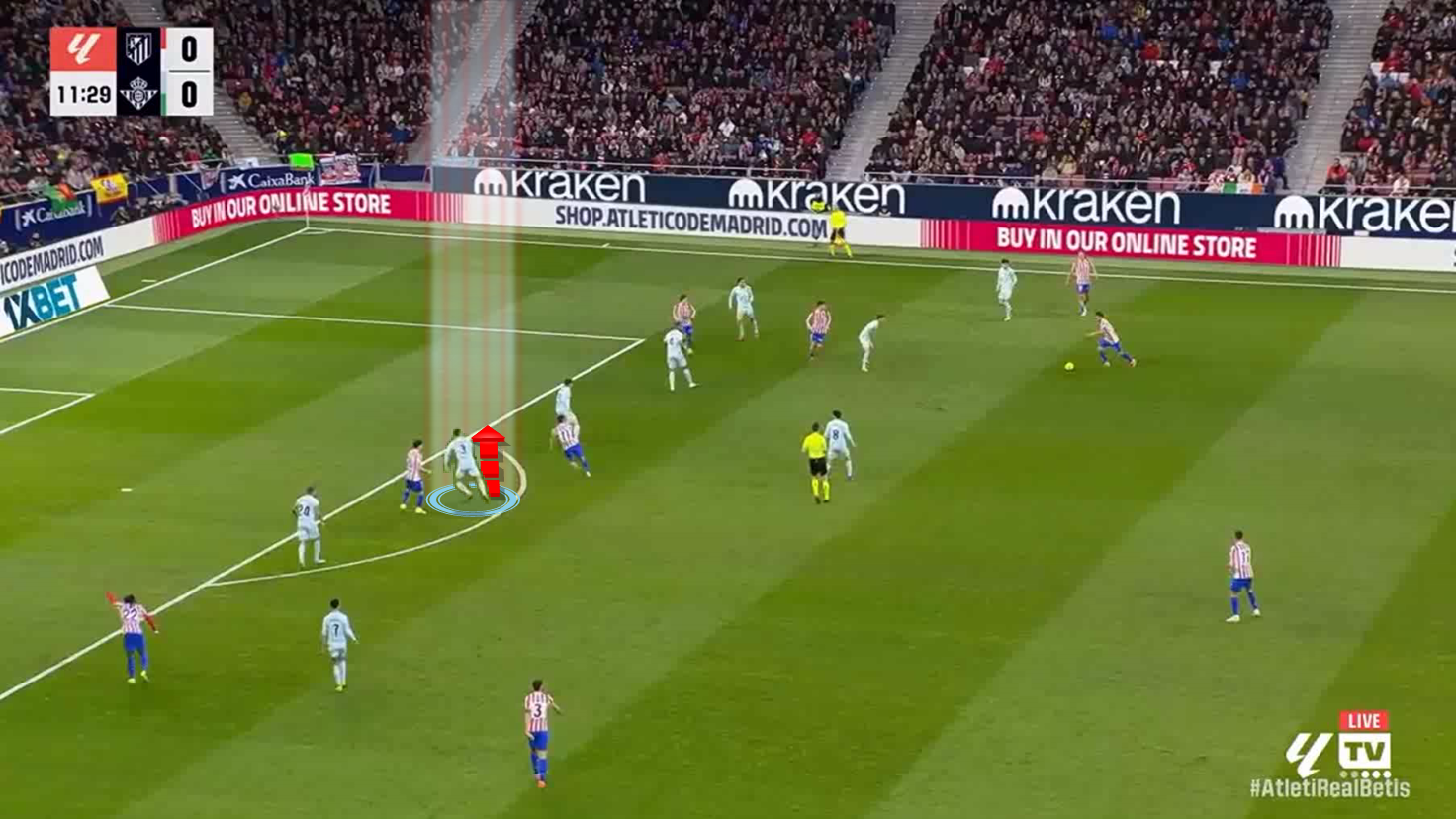
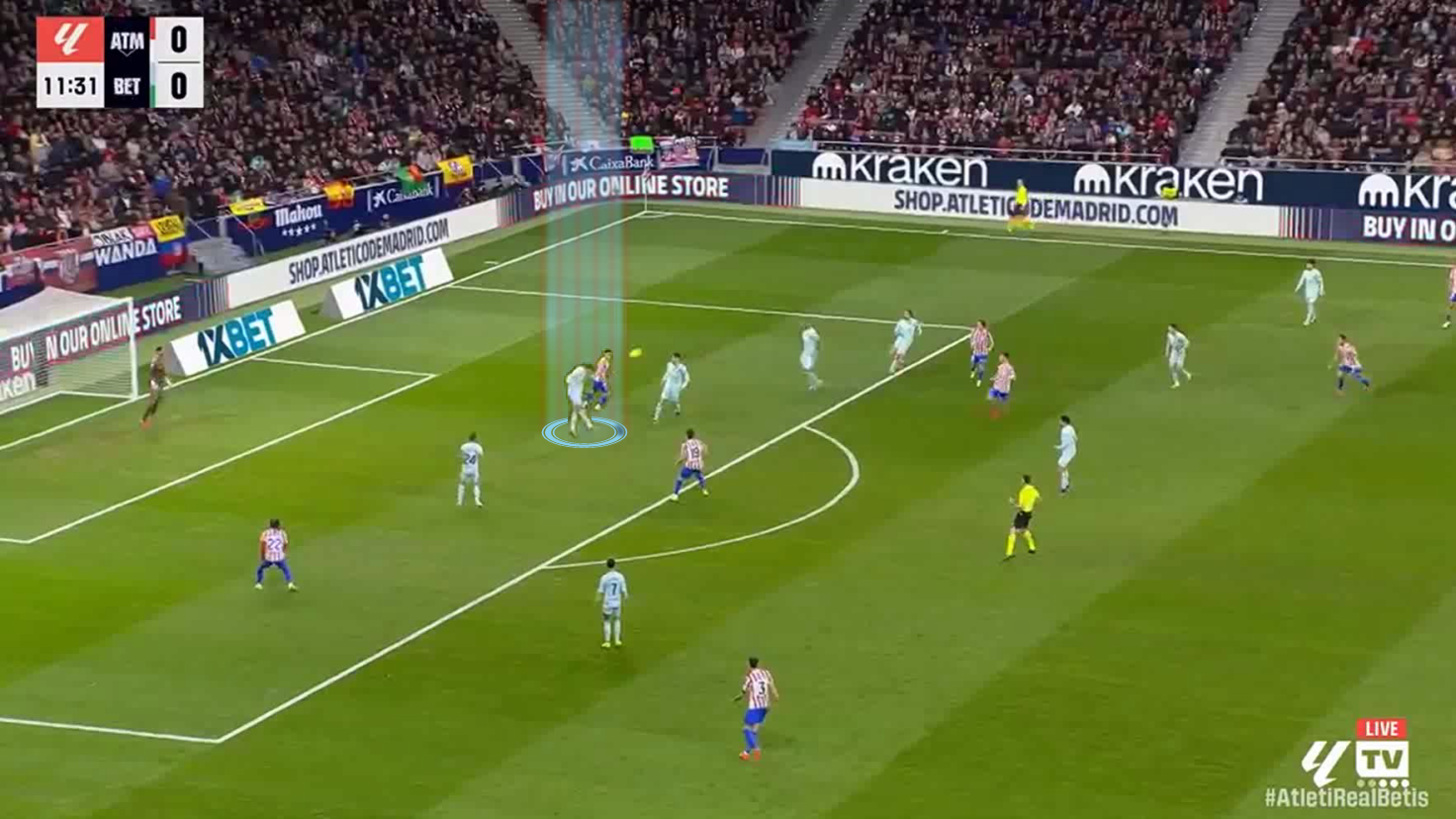 Here against Atlético Madrid, the spaces between the midfield and defence became more compact, the 4-4-2 pressing reduced space, and excellent ball distribution when the ball went to the flanks, thus limiting the opponent’s horizontal options.
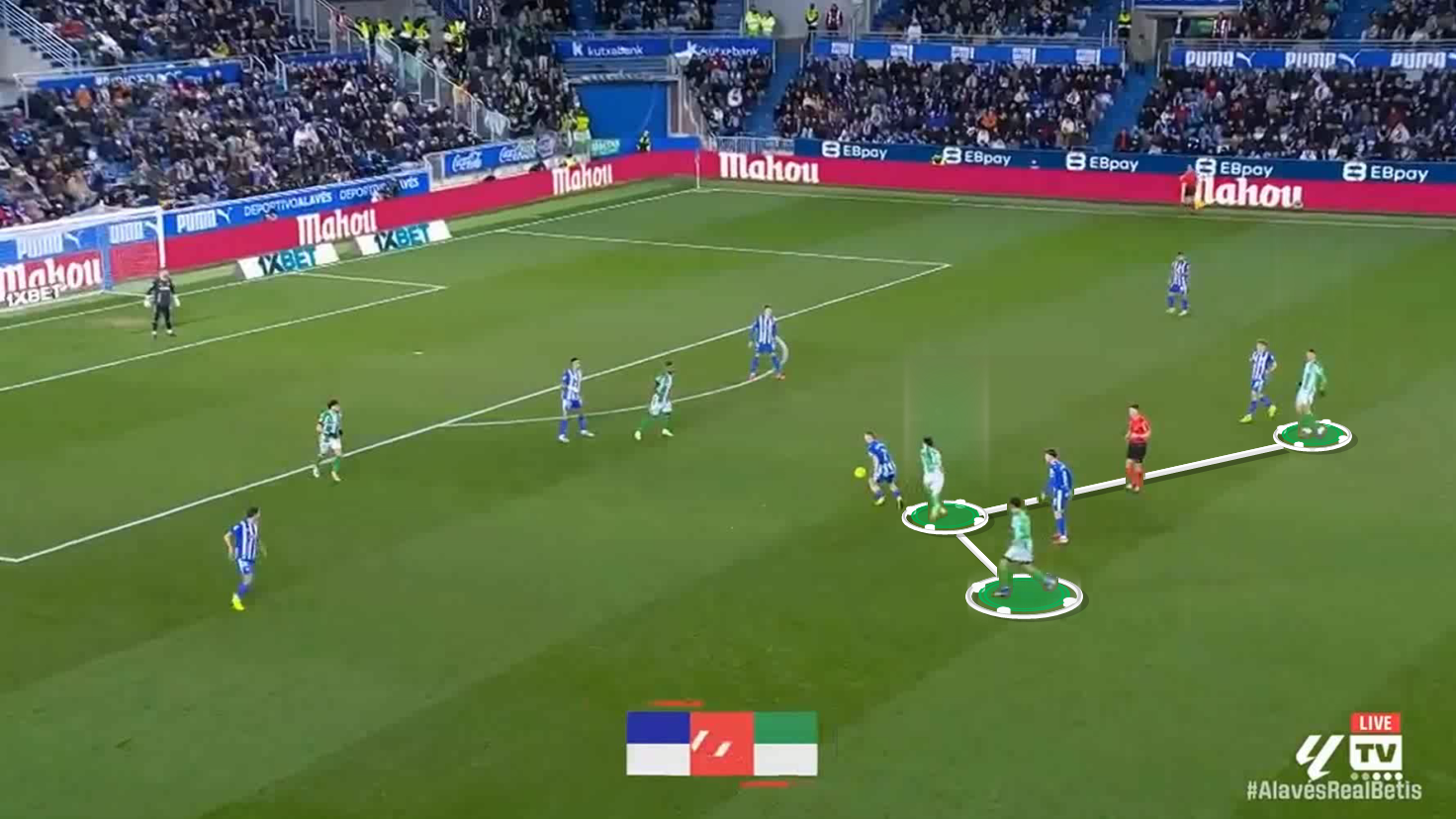
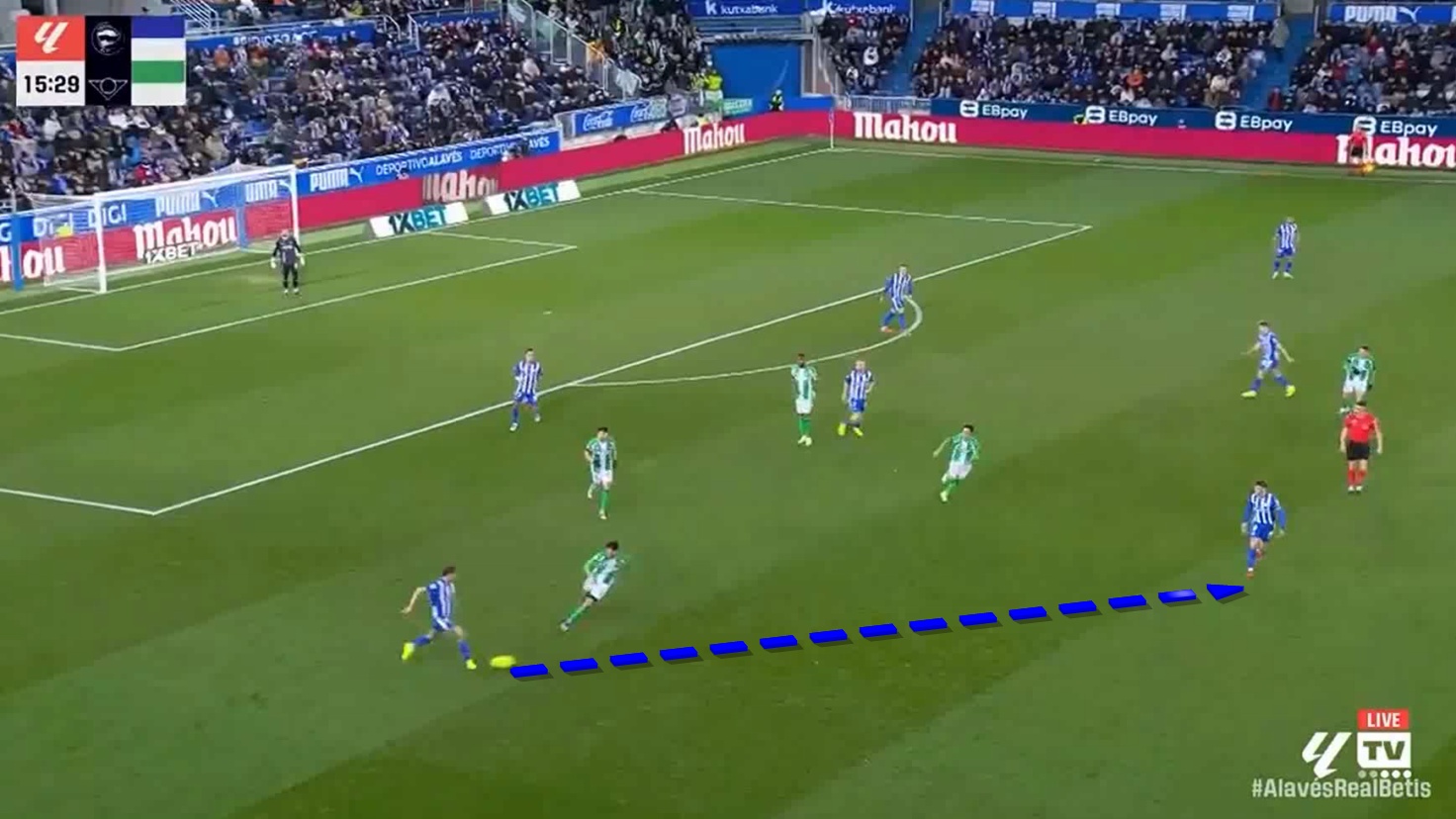
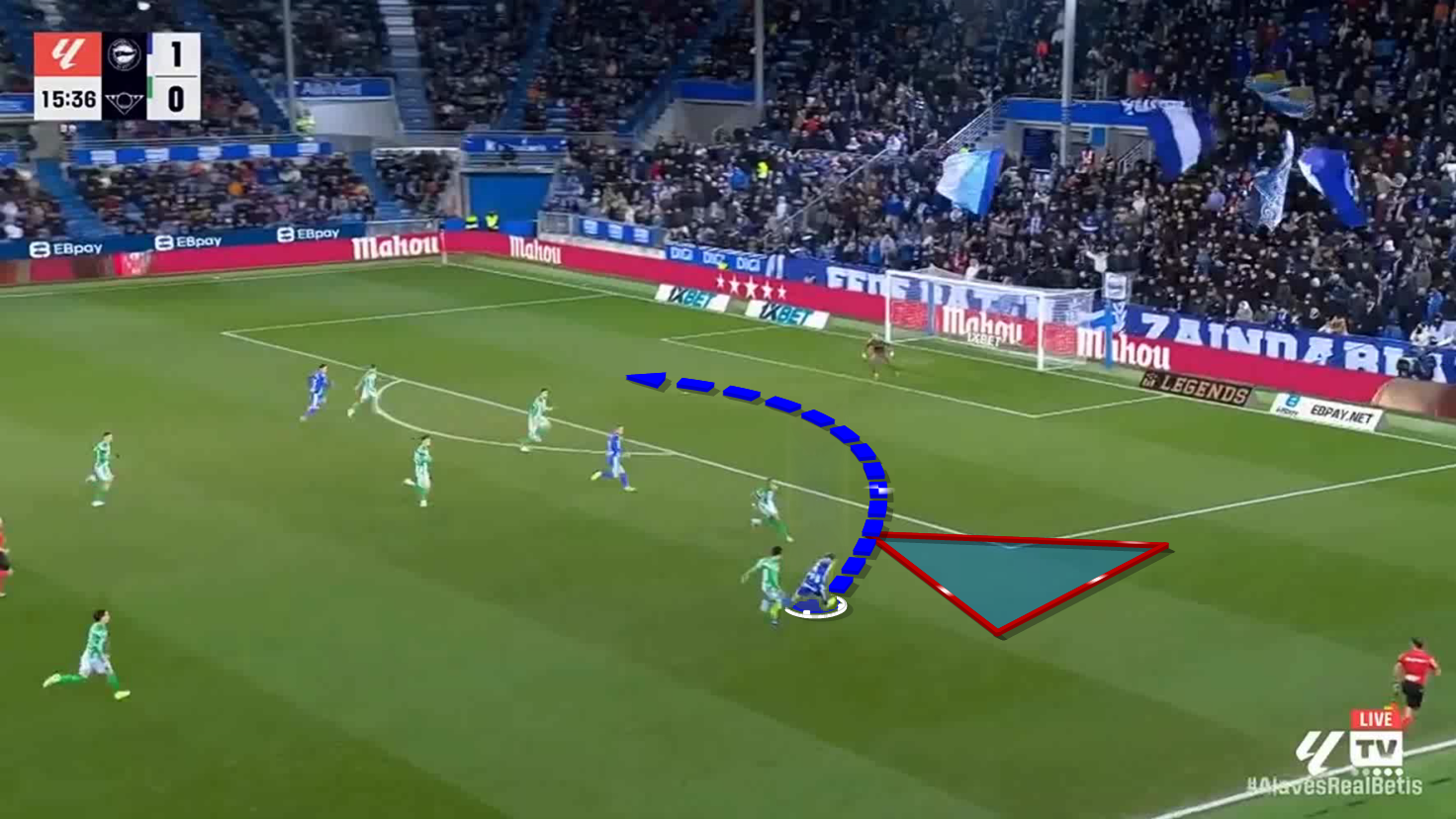 Deportivo Alavés: here, the high press of Real Betis was dealt with, and the space behind the full-backs opened up, creating a real opportunity.
Real Betis Transitions
Real Betis have become more adept at exploiting quick transitions after regaining possession, not by relying on a single player, but by distributing responsibilities between the midfield and the wingers.
The team often wins the ball back in the halfway lines and initiates the attacking transition.
The wingers or one of the pivot players moved into the half-space to create vertical passing options.
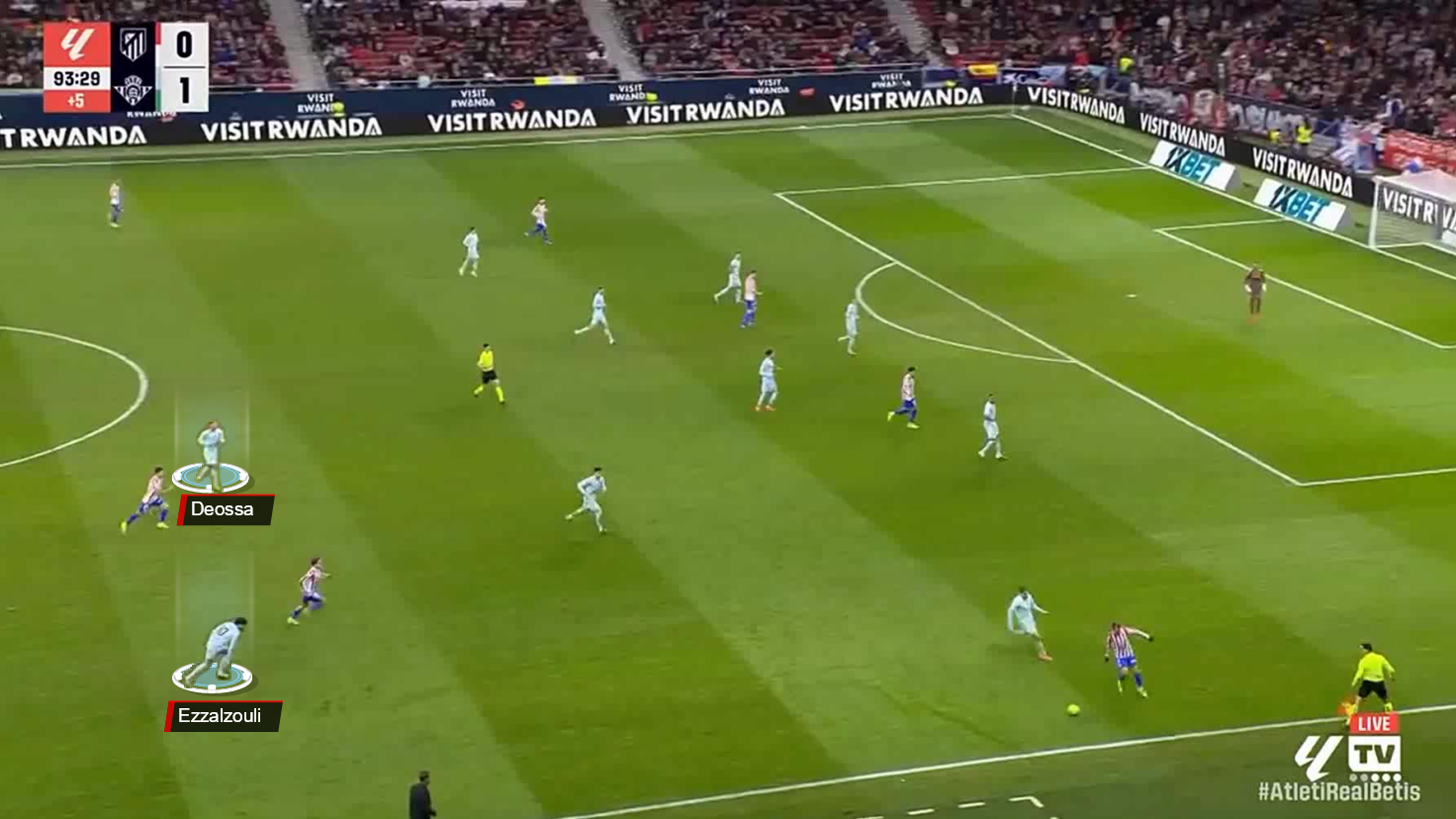
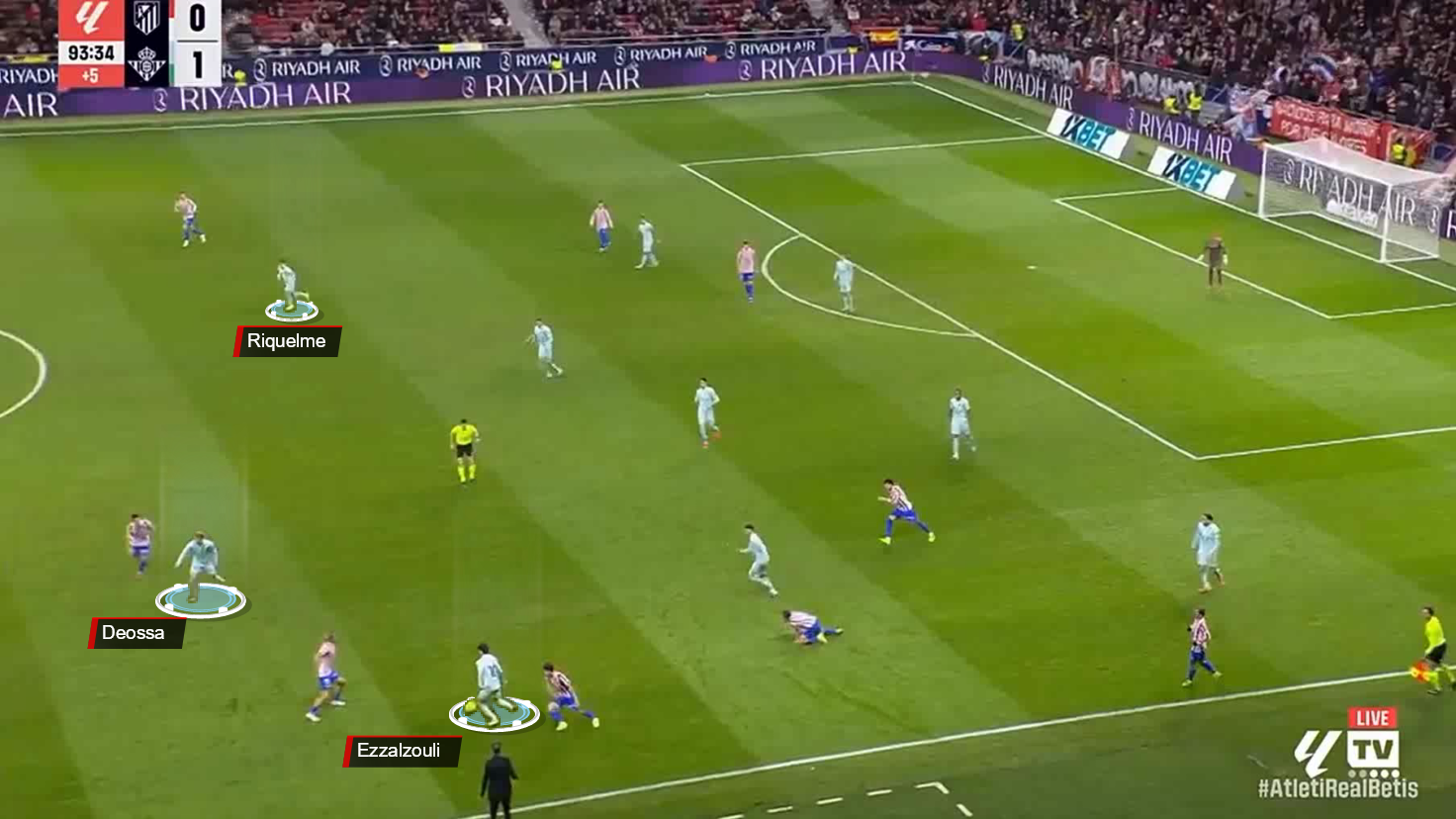
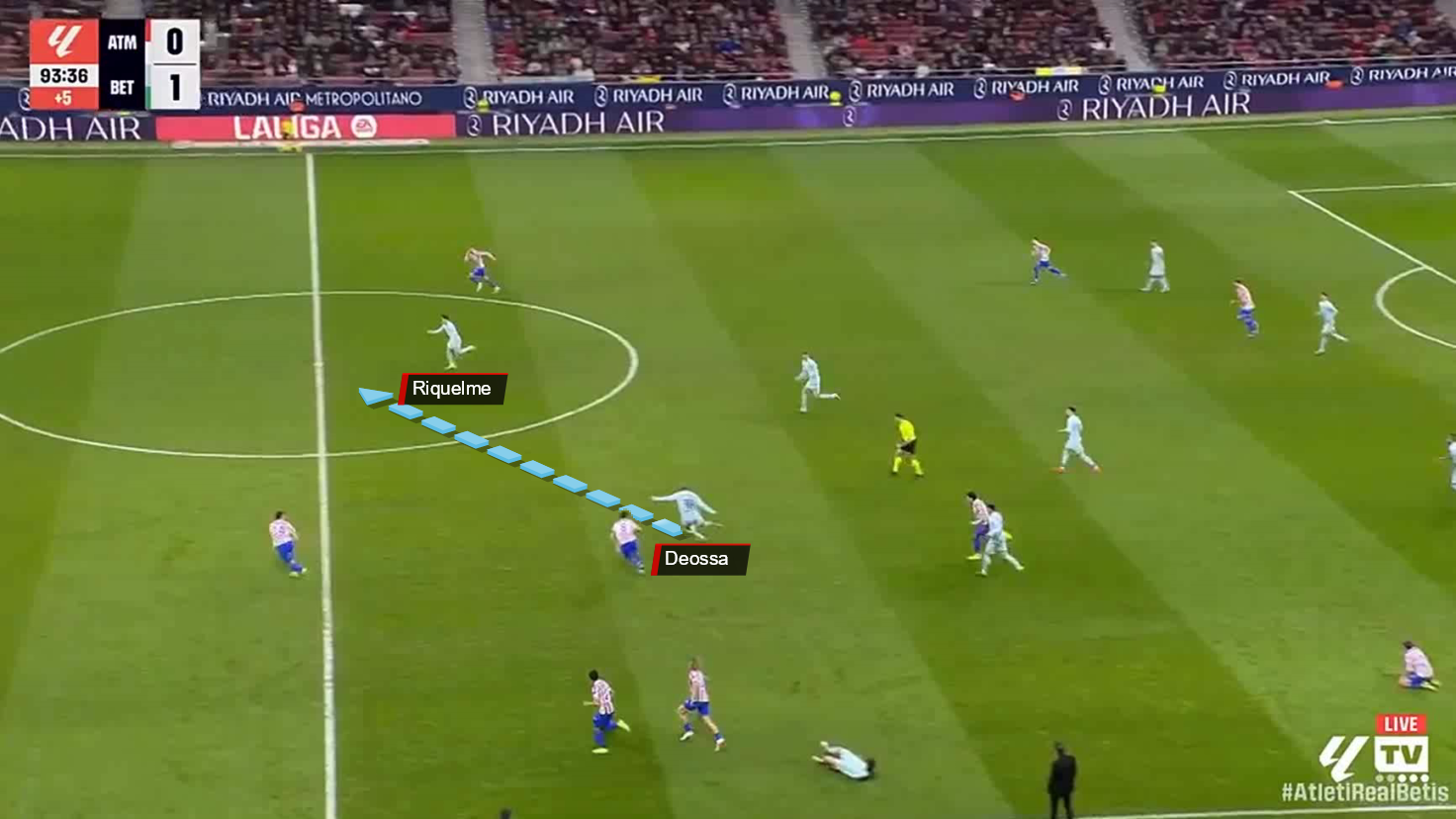 Here, we can see the left midfielder, Nelson Deossa, moving on the flank.
Ezzalzouli opened a diagonal pass and played it to Rodrigo Riquelme.
When possession is lost, Real Betis do not rely on a constant high press, but rather on intelligent defensive organisation.
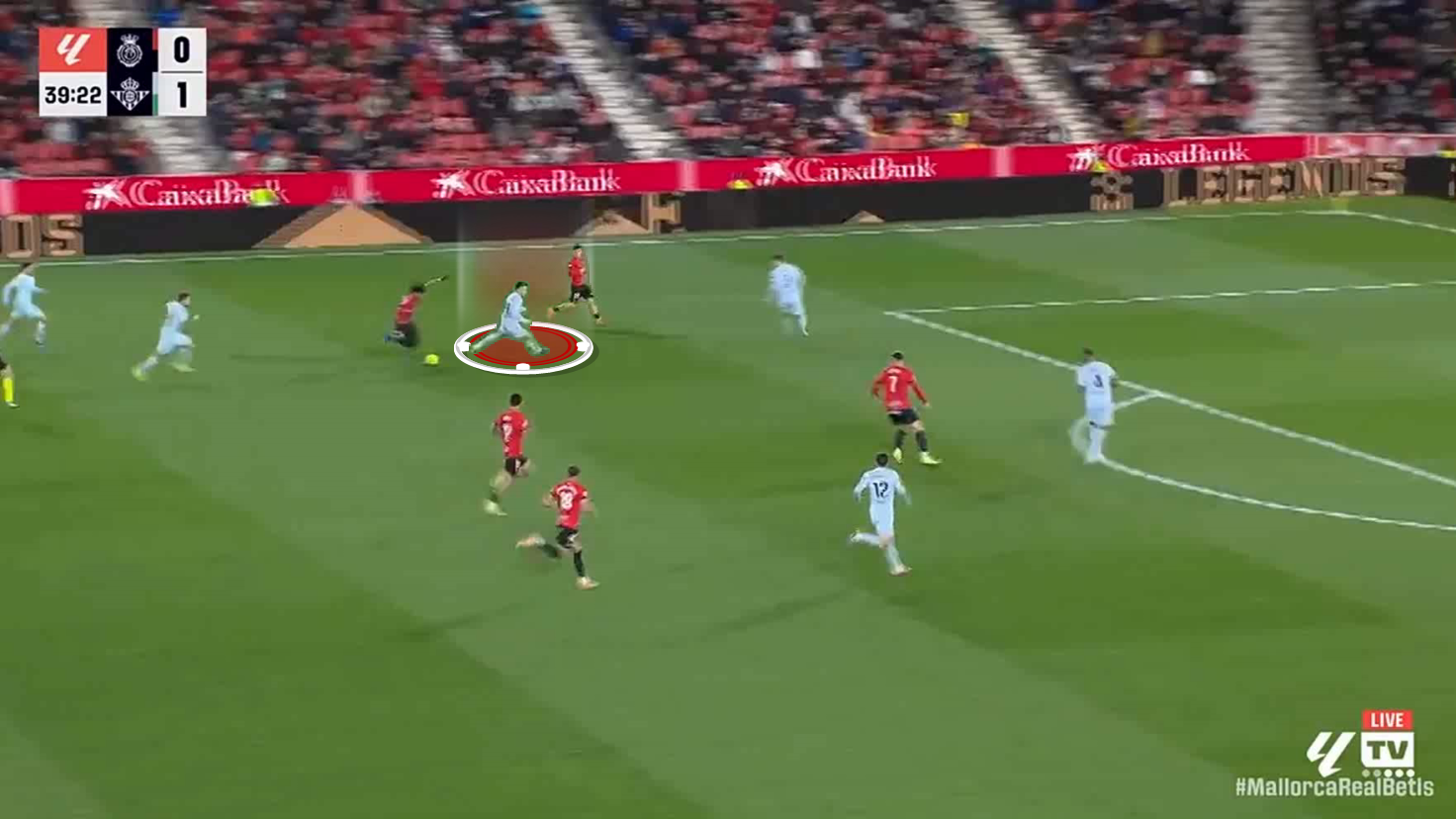
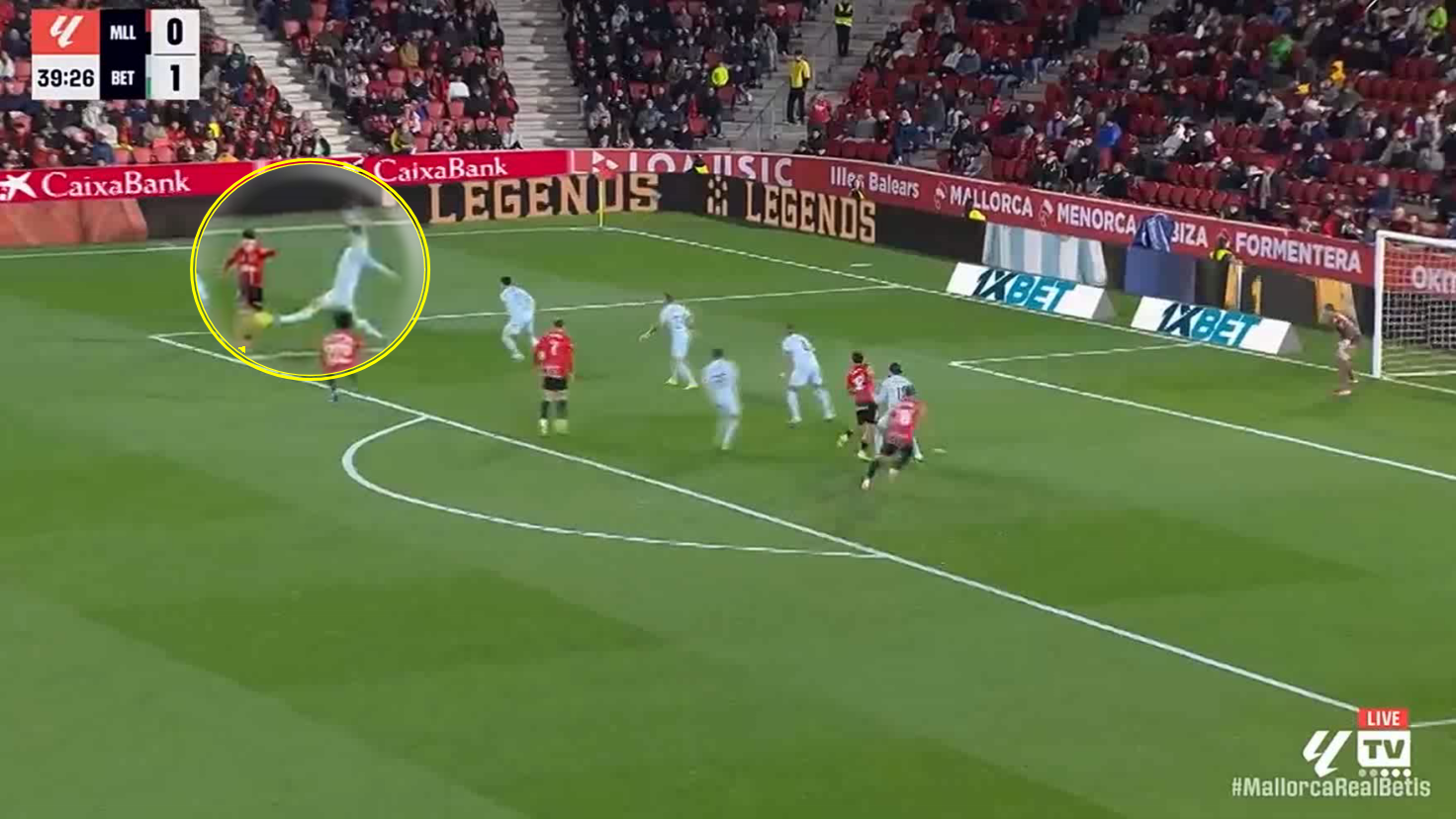 Here, against Real Mallorca, when losing possession in the middle third, they attempted limited pressing near the point of losing the ball to slow the opponent down without opening up spaces in depth.
Conclusion
Real Betis in the 2025/2026 season displayed a cohesive, organised team capable of controlling the tempo of matches and creating opportunities through intelligent collective movement.
The team effectively balanced attack and defence, with build-up play from the back allowing for calm ball possession.
At the same time, the final third relied on varied attacking options and precise exploitation of space.
Defensive and offensive transitions were carefully managed, minimising the risk of counterattacks and stabilising the team throughout the game.
The overall performance reflected the team’s tactical maturity, demonstrating its ability to manage matches with consistency and efficiency, while maintaining a constant attacking threat without compromising defensive organisation.
