
Deportivo Alavés have become highly effective at using set-pieces, particularly corner kicks, to their advantage in the 2025/2026 La Liga season.
As the league heads into its winter break, the Basque team has earned eight of their fifteen points from corners.
This success is not accidental but the result of careful planning.
The team has scored from a range of corner-kick strategies, including direct shots, practised short plays, clever player movements, and a clear focus on flicking the ball at the near post.
These football tactics have done more than win points; they have forged the team’s identity.
Previously viewed as a team that struggled to create scoring opportunities during regular play, Alavés has now established set-pieces as a dependable strength.
In this set-piece and tactical analysis, we will discuss how Eduardo Coudet relies heavily on corner kicks in his tactics.
Deportivo Alavés Direct Corner Threat
In their match against Barcelona, Alavés employed a familiar set-piece formation but added a clever variation.
Pablo Ibáñez, designated to run to the near post, held back his movement for a moment, effectively serving as a screen to obstruct Barcelona‘s zonal defender.

That tiny hesitation shifts the rhythm of the routine, creating space for the delivery to be whipped into the front post zone.


Once the ball arrives, the flick does the rest by dragging Barcelona’s defensive line toward the ball, opening the far-post channel, and allowing the late runner, Ibáñez, to arrive in a position where the finish feels almost automatic.
Even in a match where Barcelona monopolise possession and dictate most phases, Alavés’ goal is a reminder that their corner routines operate independently of momentum.
They are rehearsed patterns that apply pressure no matter the game’s context.
The winning goal against Real Sociedad follows the same core idea but highlights two of Alavés’ most reliable mechanisms: first-post attraction and staggered attacking lines.
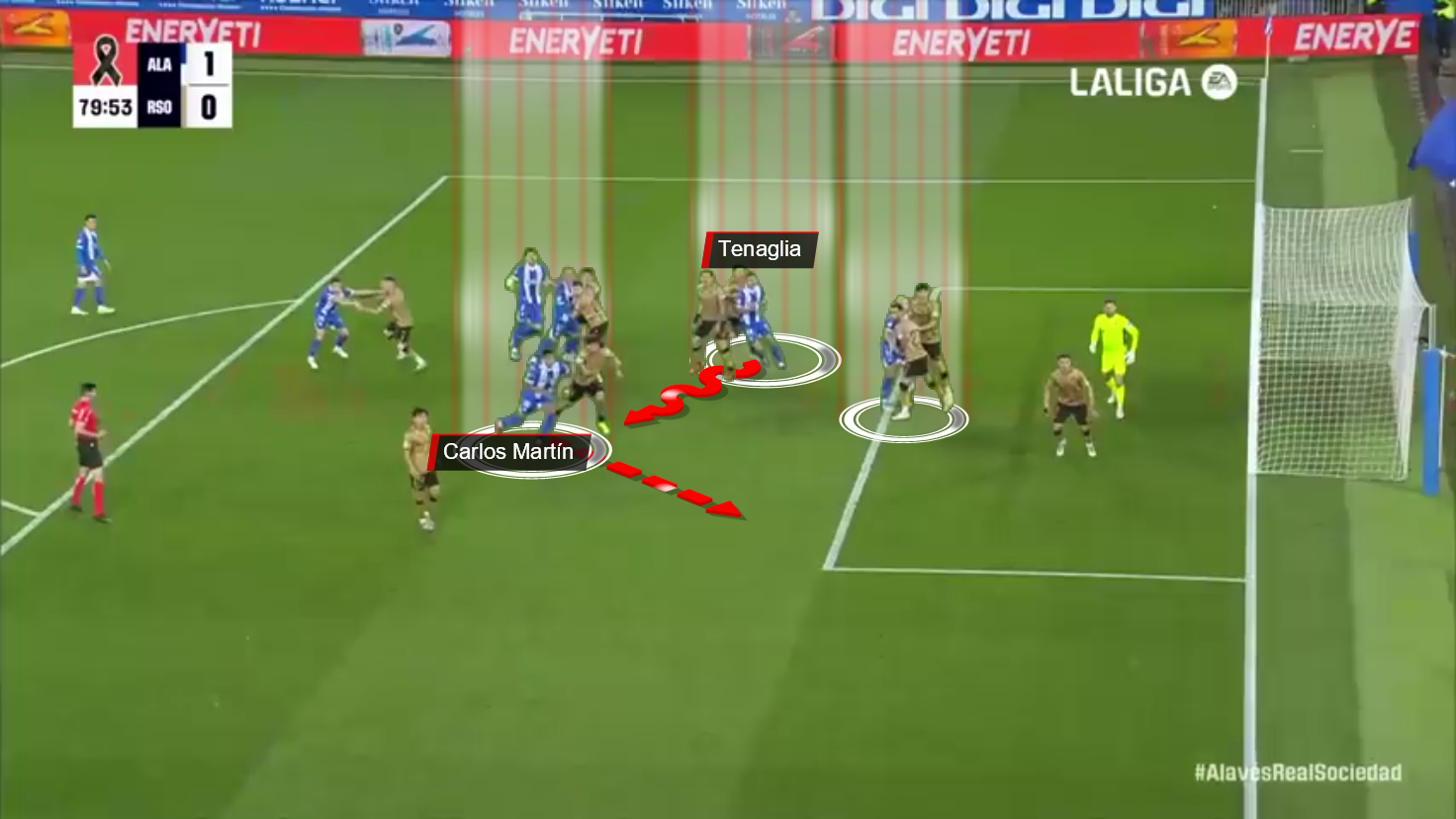
As the corner is delivered, three Alavés players occupy the front-post zone, forcing Real Sociedad’s defenders to collapse inward.
The key detail is the timing: the near-post runner, Nahuel Tenaglia, starts from a deeper position, accelerating late to meet the ball rather than standing in the crowded zone.
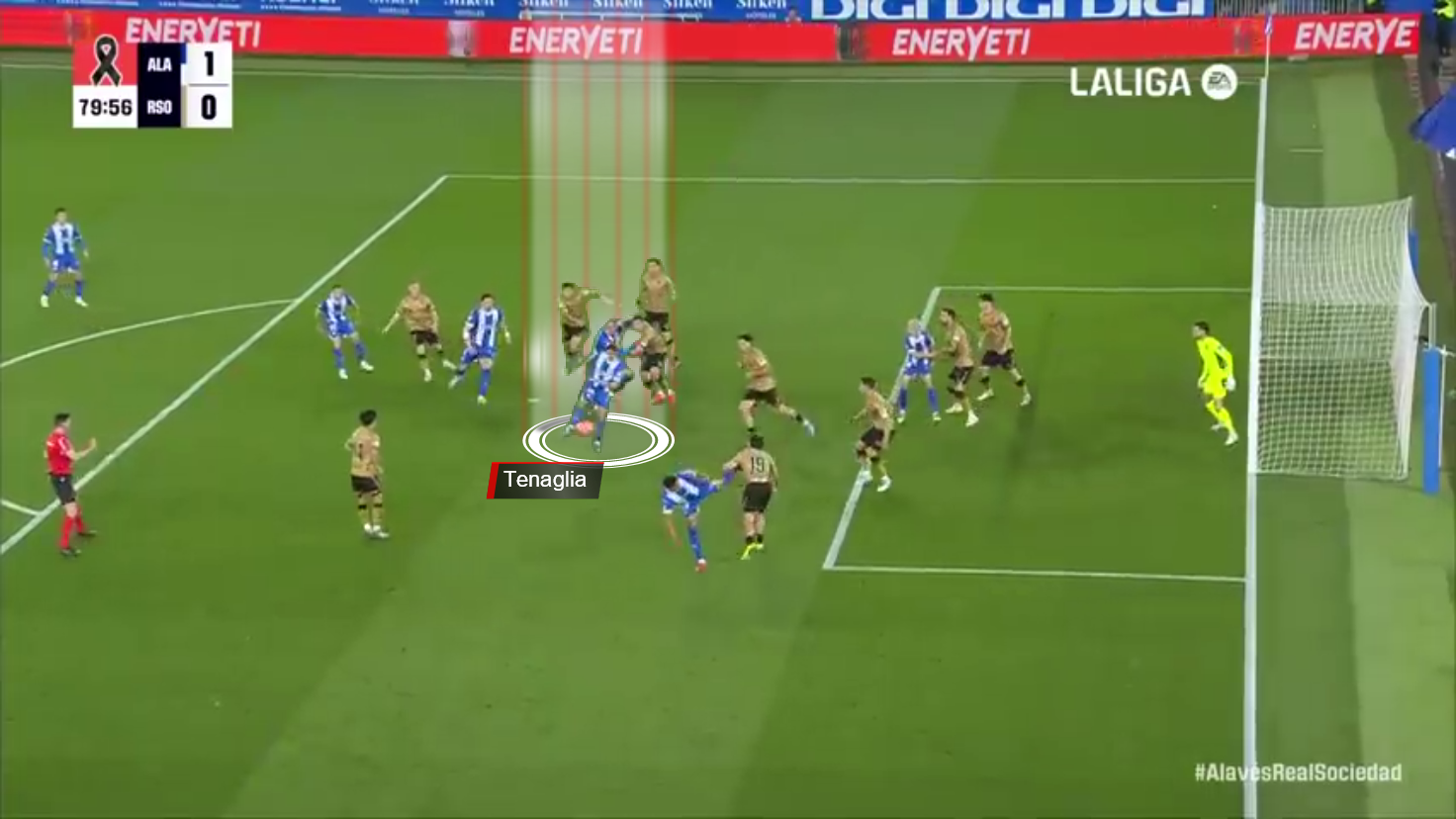 This movement creates separation, allowing him to flick the ball across the goal.
The flick itself is not aimed at goal but into the high-probability zone between the penalty spot and far post, where a second-line attacker arrives unmarked to finish.
Deportivo Alavés Short Corner Variations
While the direct first-post corner is the most well-known play in Alavés’s set-piece playbook, their use of short corners demonstrates a more advanced tactical development.
They tend to use short corners most often against teams that are strong in the air and can defend against high balls into the box.
Rather than trying to force a cross into a crowded penalty area, Alavés uses quick, short passes to pull the defensive formation out of shape.
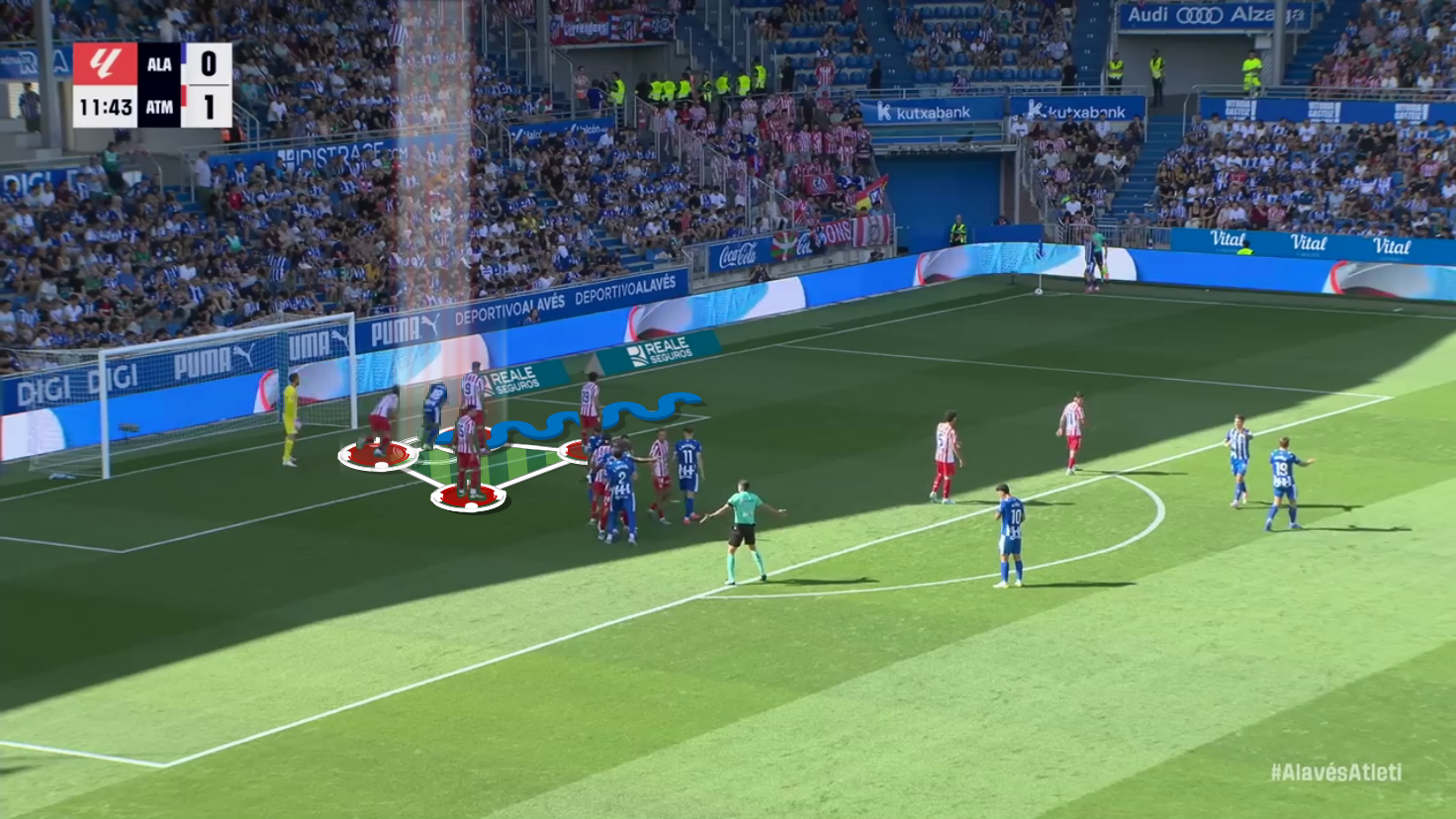
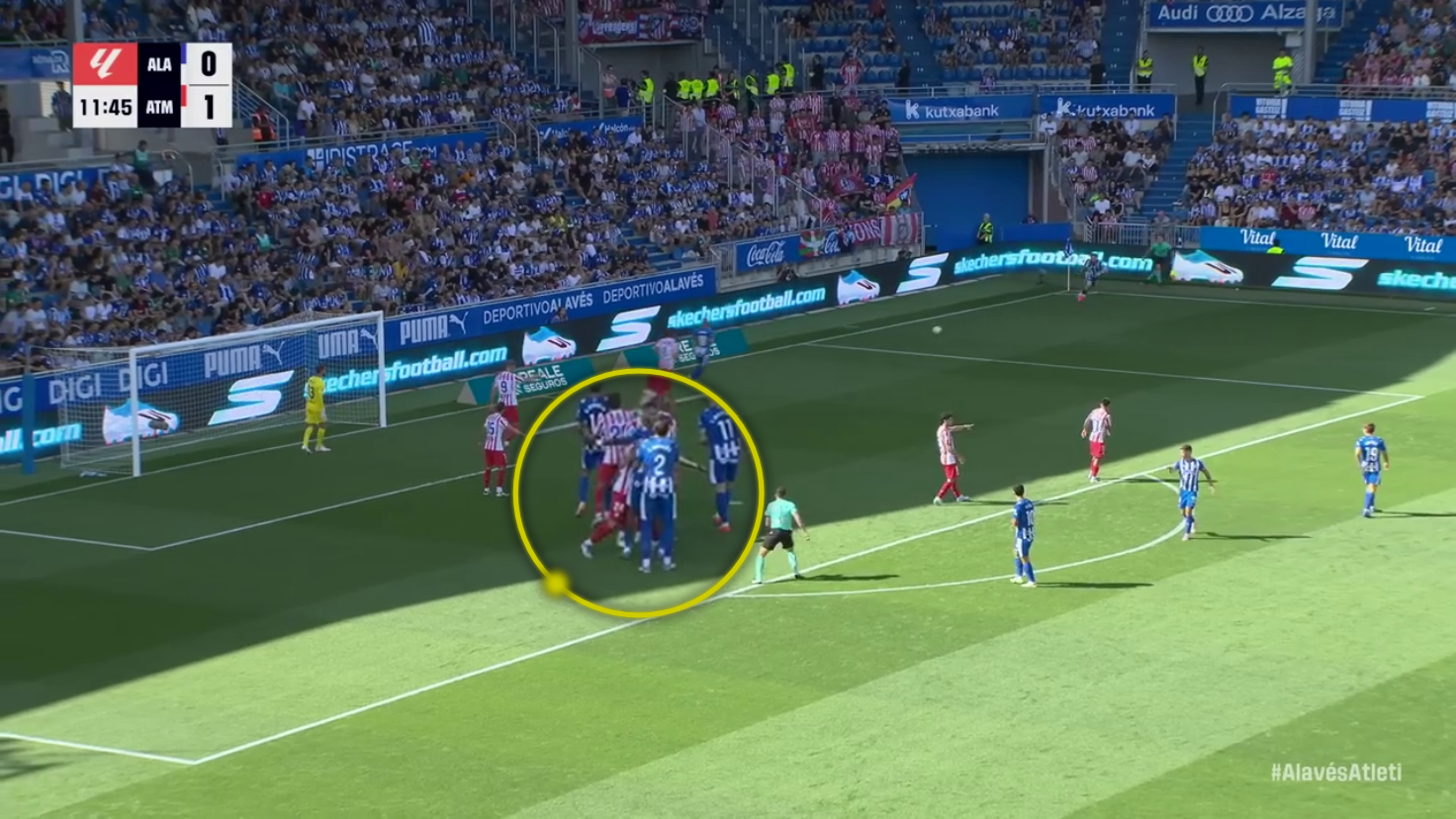
The equaliser against Atlético Madrid is an excellent example.
Knowing Atlético defend corners with a compact hybrid system, zonally on the six-yard line, man-oriented around the penalty spot, Alavés aim to draw markers out of that structure.
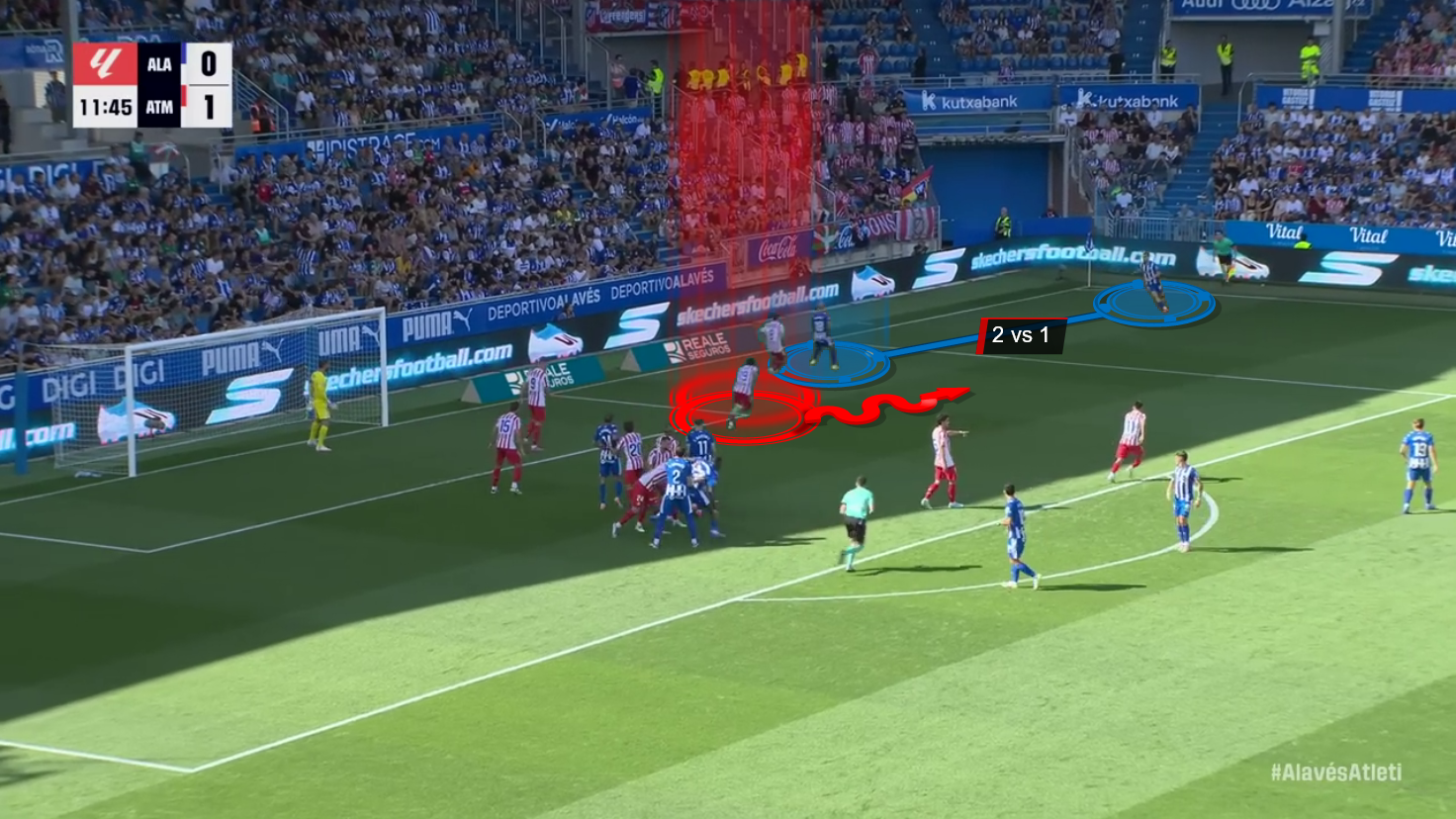 By taking a short corner, Alavés create a temporary two-on-one advantage near the ball, which compels the defender from Atlético positioned at the near post to move out and confront them.
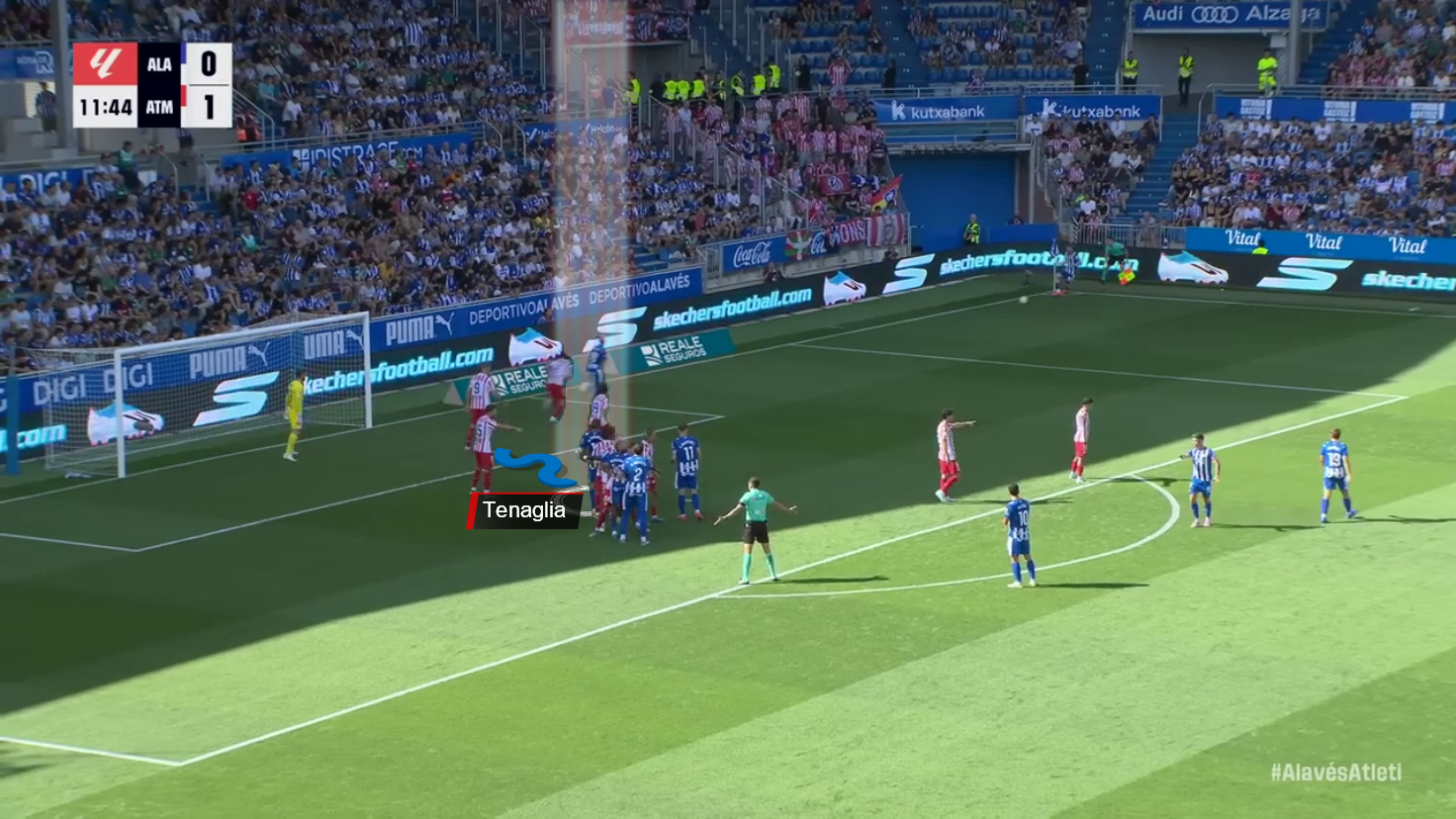
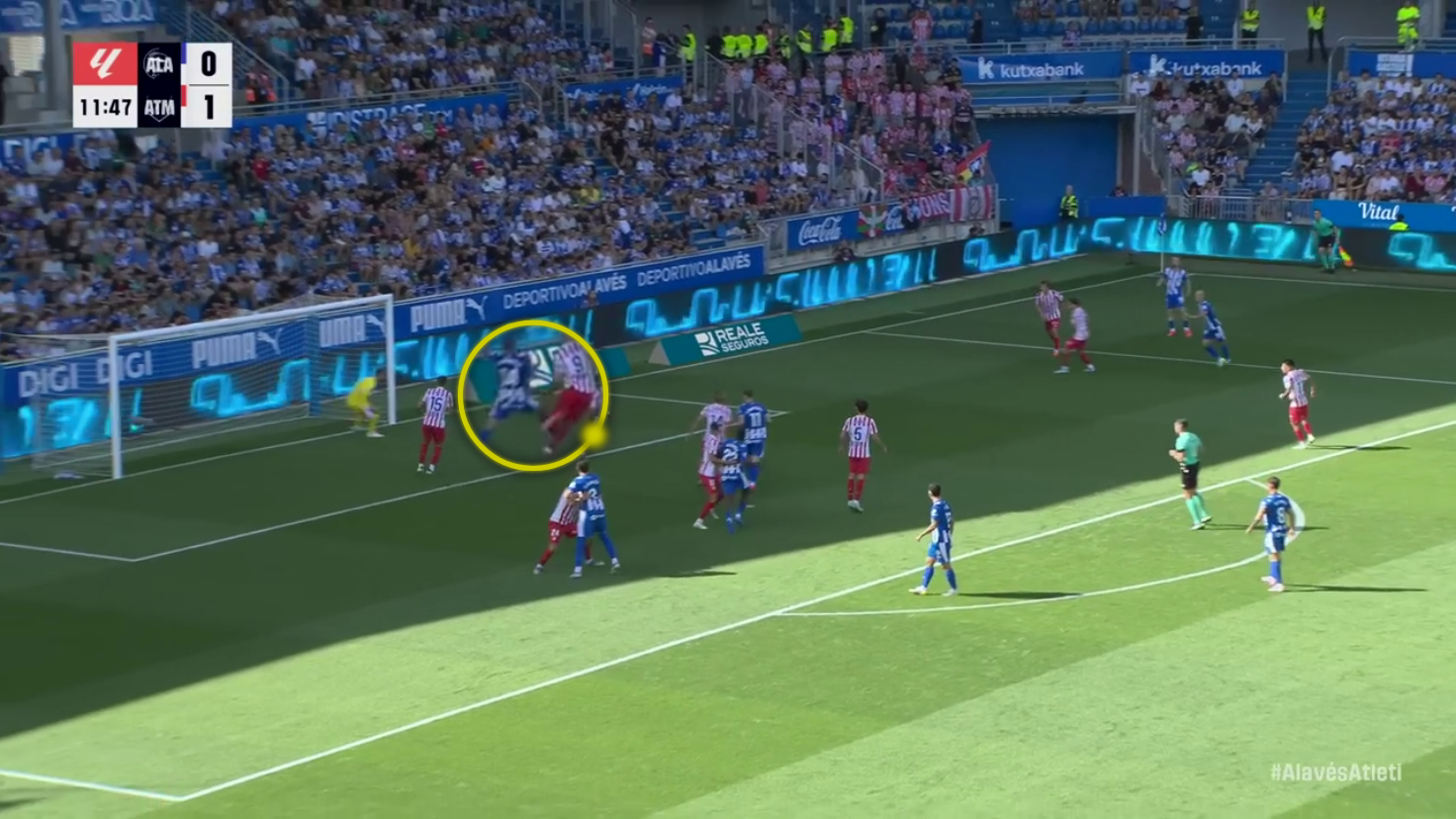
This alone is enough to break the integrity of the zonal line.
A quick layoff, followed by a quick cross ball on the ground towards the first post, where Nahuel Tenaglia took the front foot before Alexander Sørloth made a crucial interception.
Their winner against Athletic Bilbao also comes from a short corner, but this time with added deception.
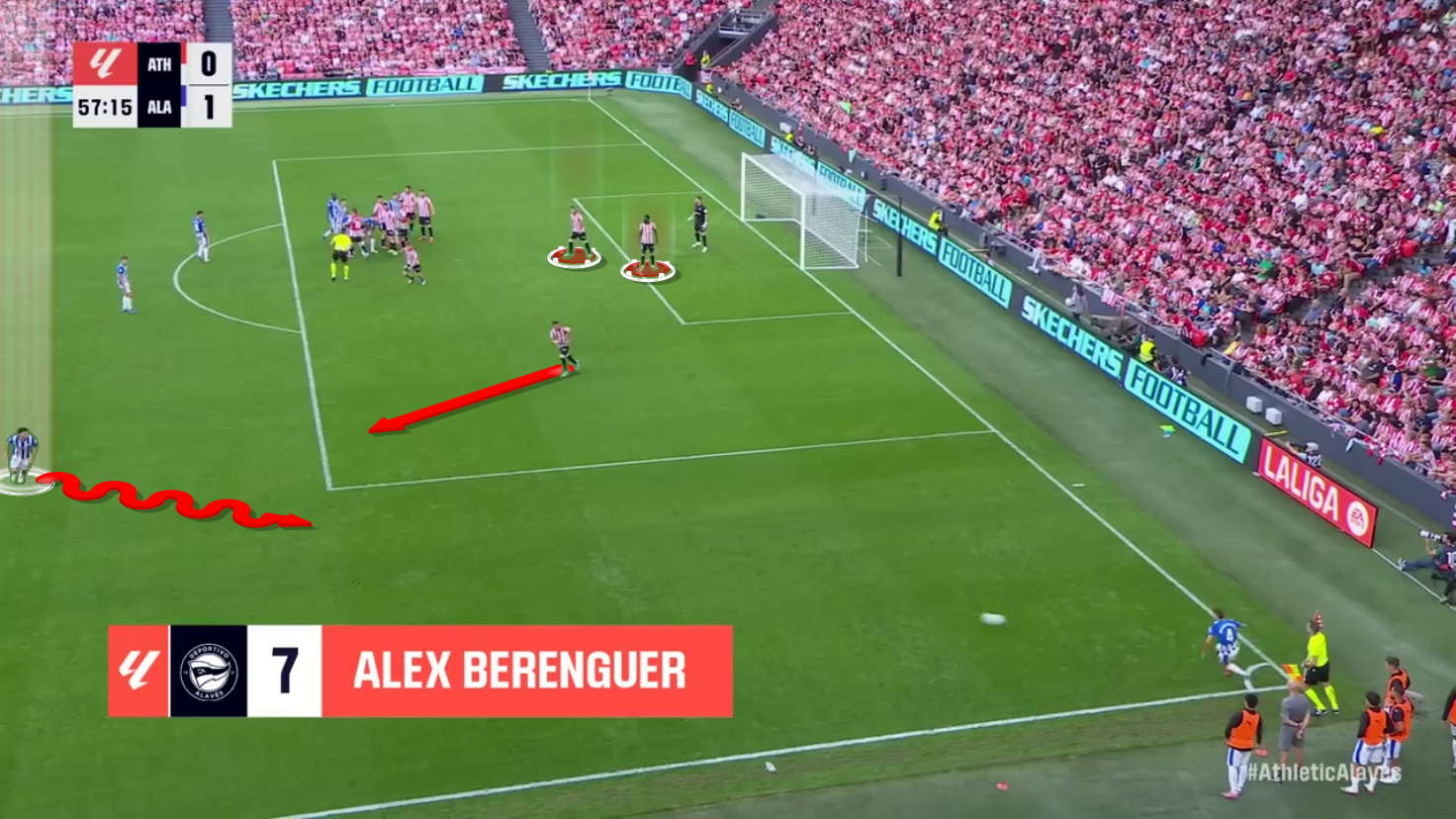 The play starts in the same way, with two players moving towards the ball.
However, instead of passing it short right away, they pause.
Alavés freeze Bilbao’s first defender.
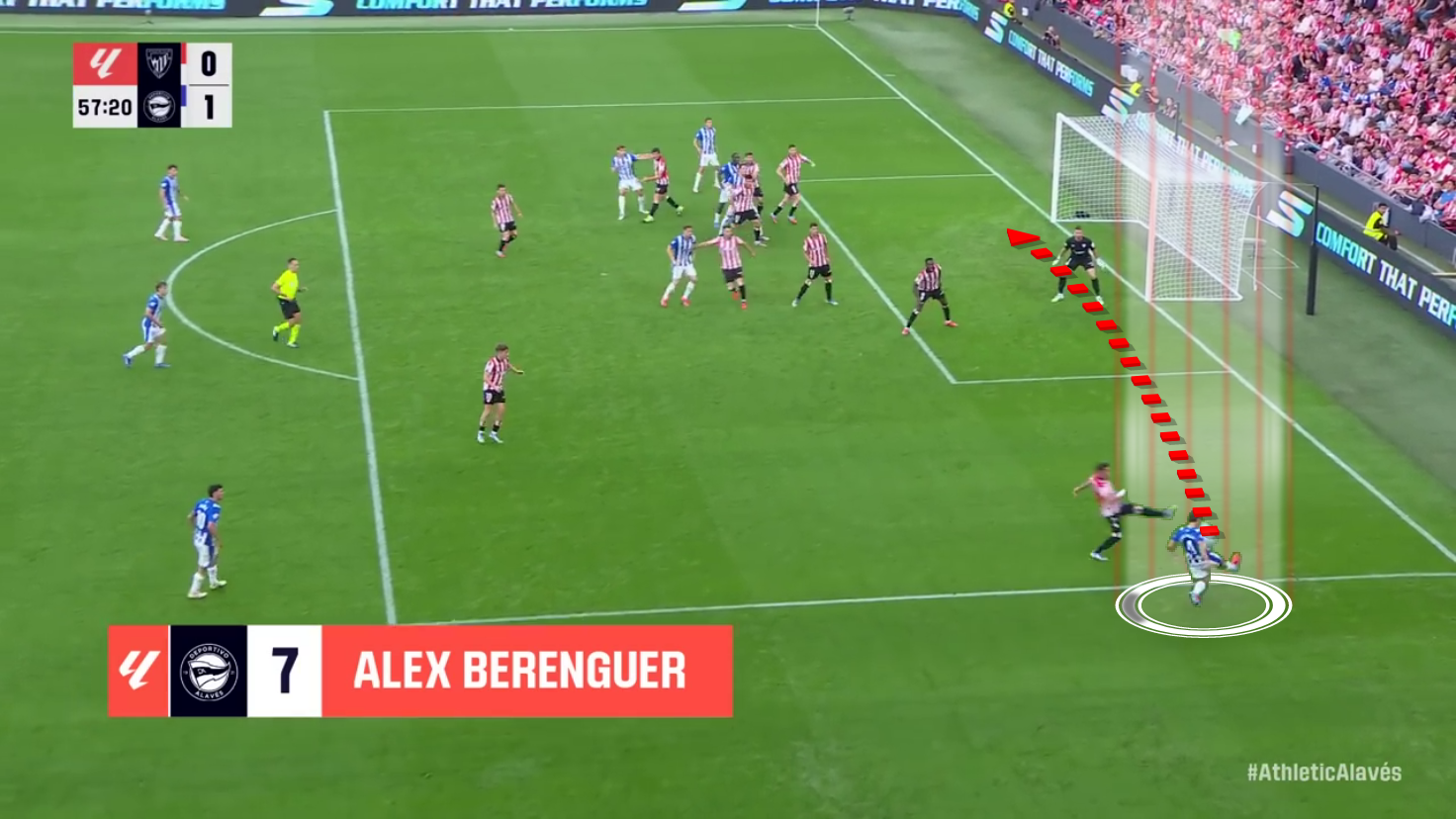 The ball is then delivered with pace into the space between the first and second post.
In the chaos, the second movement becomes decisive: Alex Berenguer attempts to clear, but the ball deflects off him and past the goalkeeper.
Though technically an own goal, the routine deserves full credit.
The manipulation of Bilbao’s cover positions and the timing of the delivery create the scenario from which the decisive touch emerges.
Deportivo Alavés Exploiting Zonal Weaknesses
Despite Getafe‘s use of one of the most inflexible zonal marking systems in La Liga to defend corners, Alavés counter it with a straightforward strategy: using dynamic movement to attack the spaces between the defensive zones.
Because zonal systems depend on defenders maintaining their positions, any play that makes them turn or chase attacking players can effectively disrupt their structure.
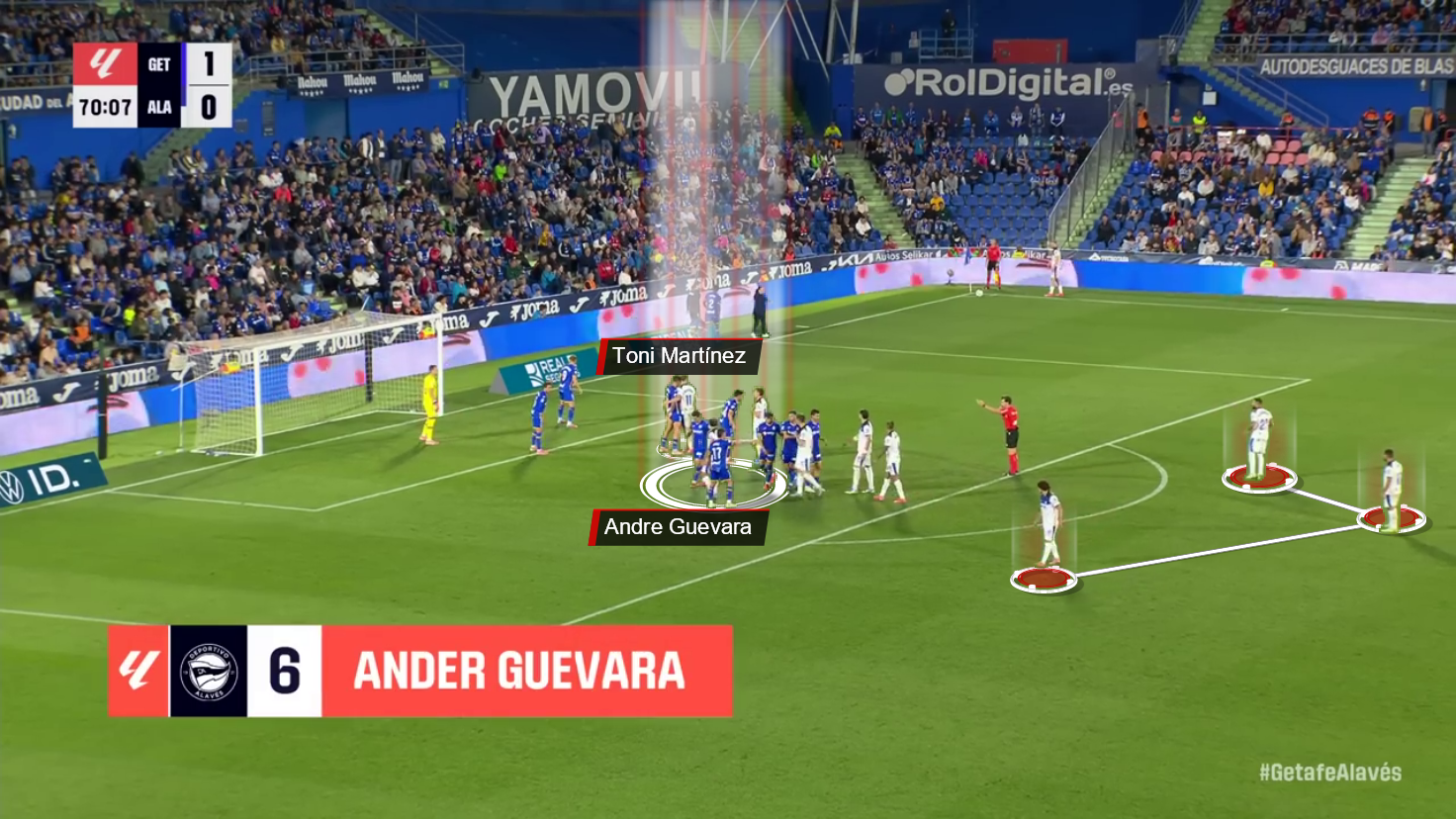 To score the equaliser against Getafe, Alavés set up with two players positioned together outside the penalty box.
As the corner kick is taken, the player in front runs directly towards the near post, while the second player makes a curved run into the space between the central and far-post defenders.
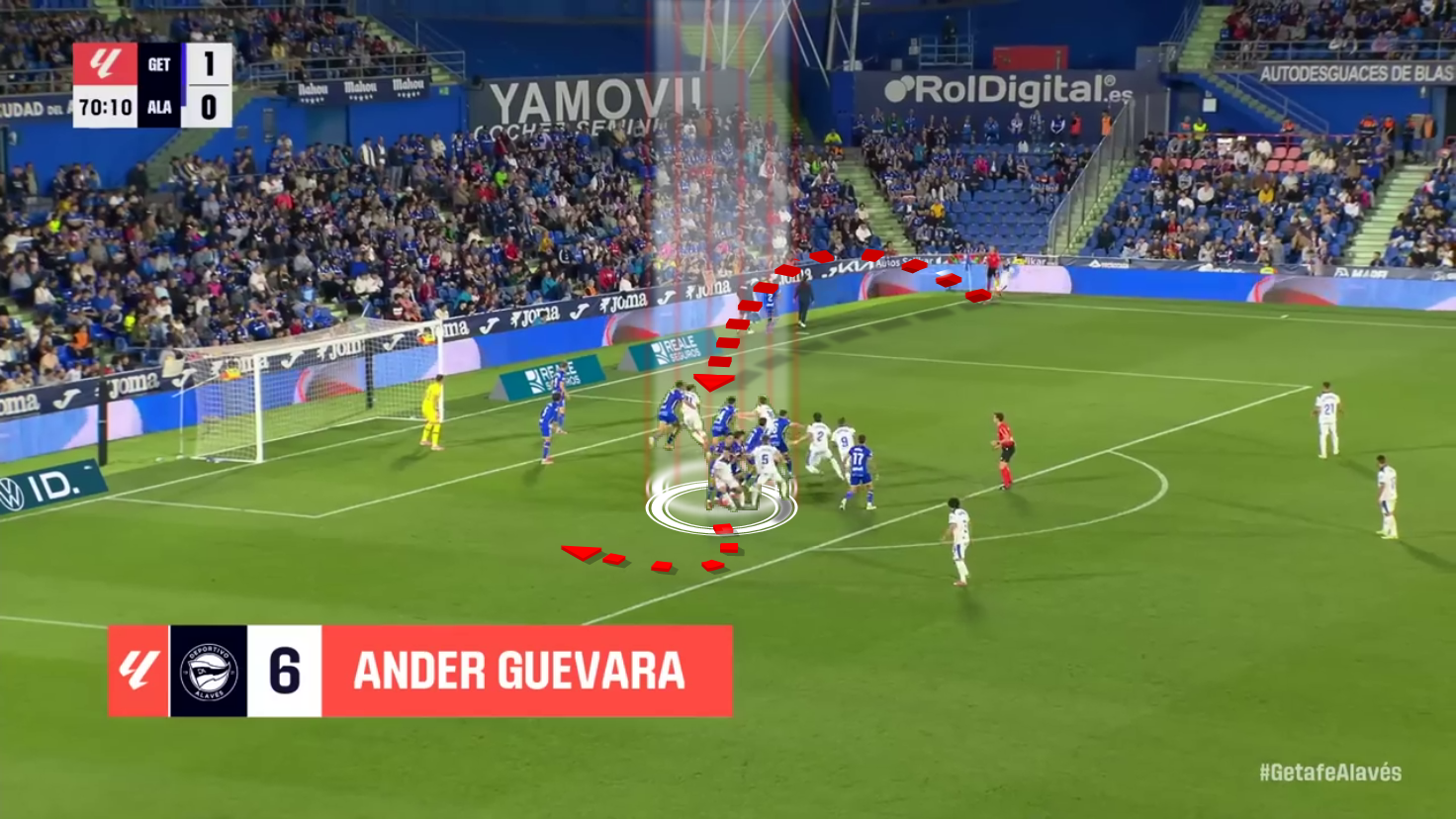
The first-post movement drags two Getafe players with him: an overreaction caused by the group’s fear of the Alavés flick-on routine.
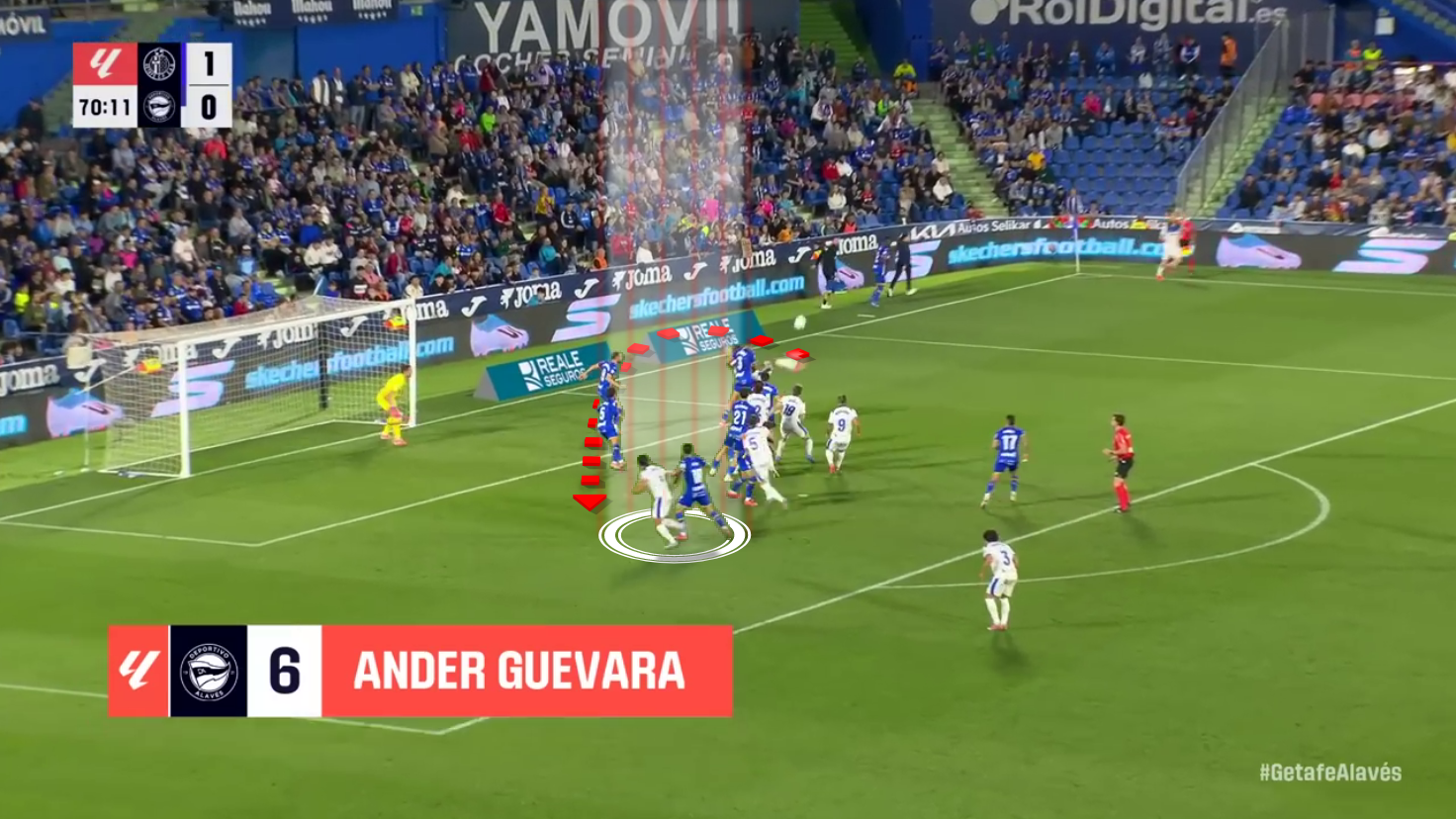
This is precisely where Alavés want the defence.
The second runner, Ander Guevara, now has a free channel to attack, meeting the ball cleanly and redirecting it into the far corner.
Deportivo Alavés Corner-To-Penalty Sequence
Even when set-pieces do not directly lead to goals, they often trigger chaotic sequences.
Against Elche, Alavés’ opener comes from a penalty, but the entire action originates from a corner-kick structure.
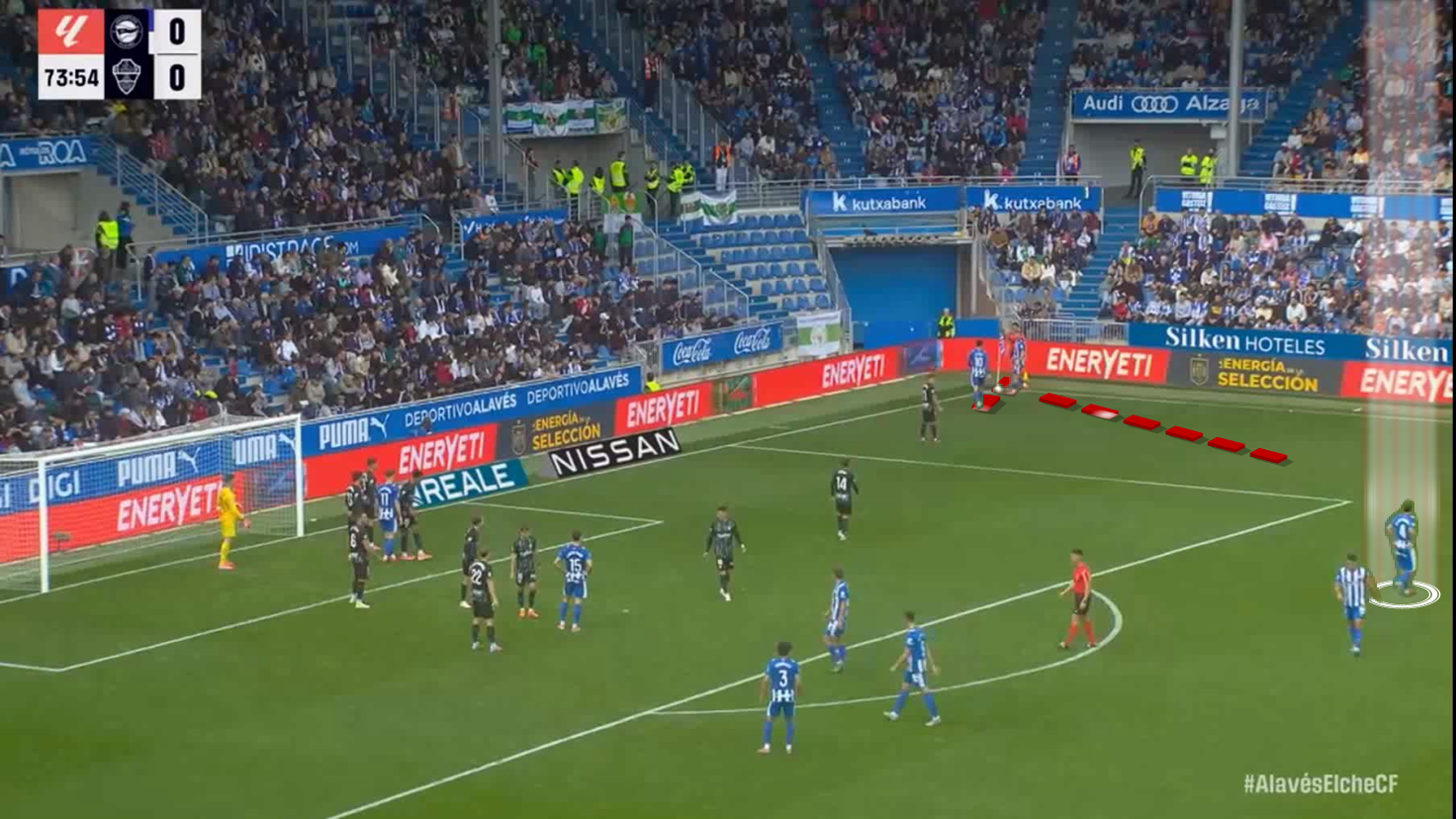
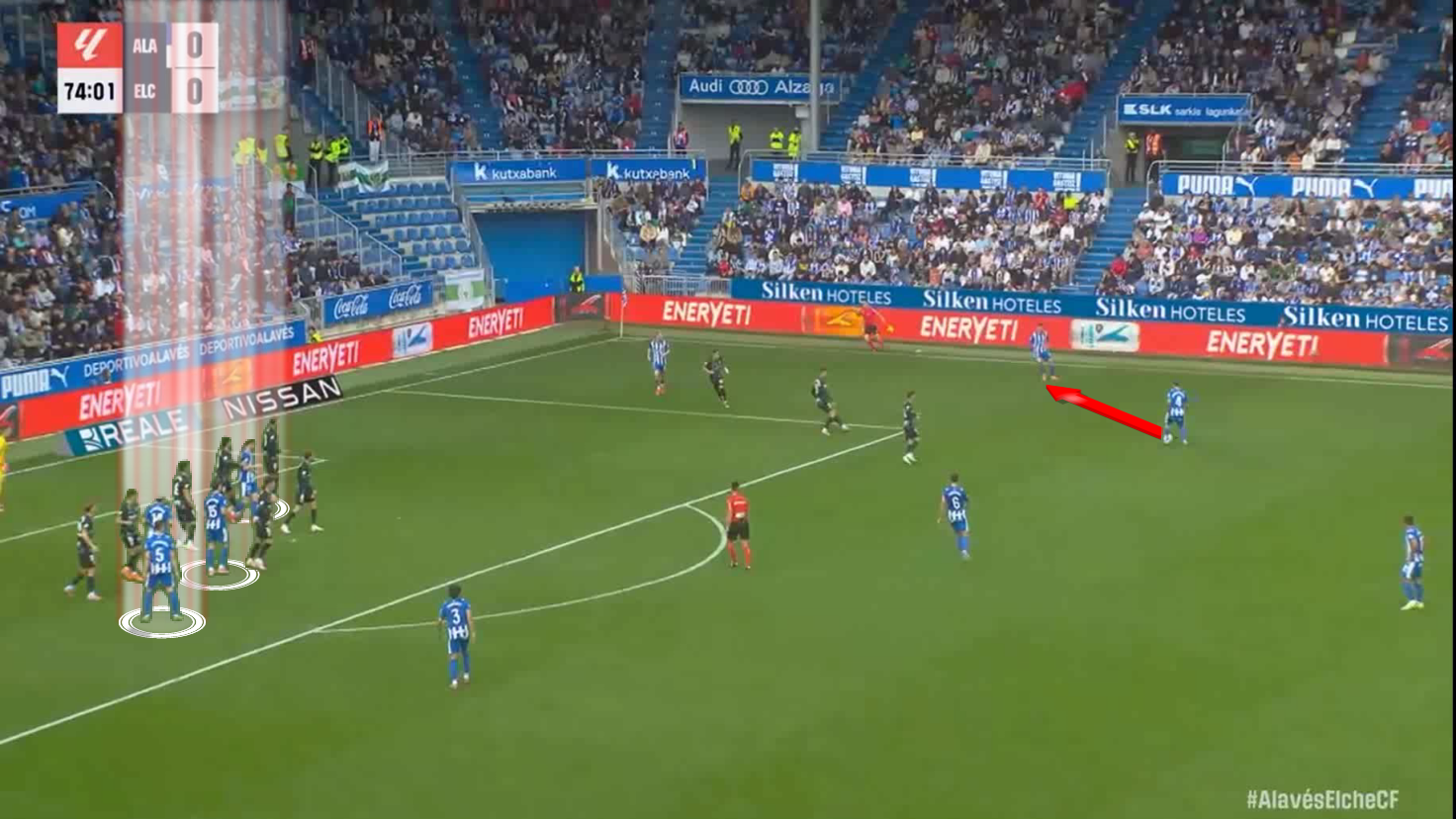
By executing their signature near-post overload, Alavés manufactures a second-phase opportunity.
This tactic deliberately congests the primary zone, forcing a defensive clearance under pressure.
The resulting loose ball is directed toward a predetermined central area, where Alavés’s strategically positioned second wave can exploit the transitional gap before Elche’s defensive structure is re-established.
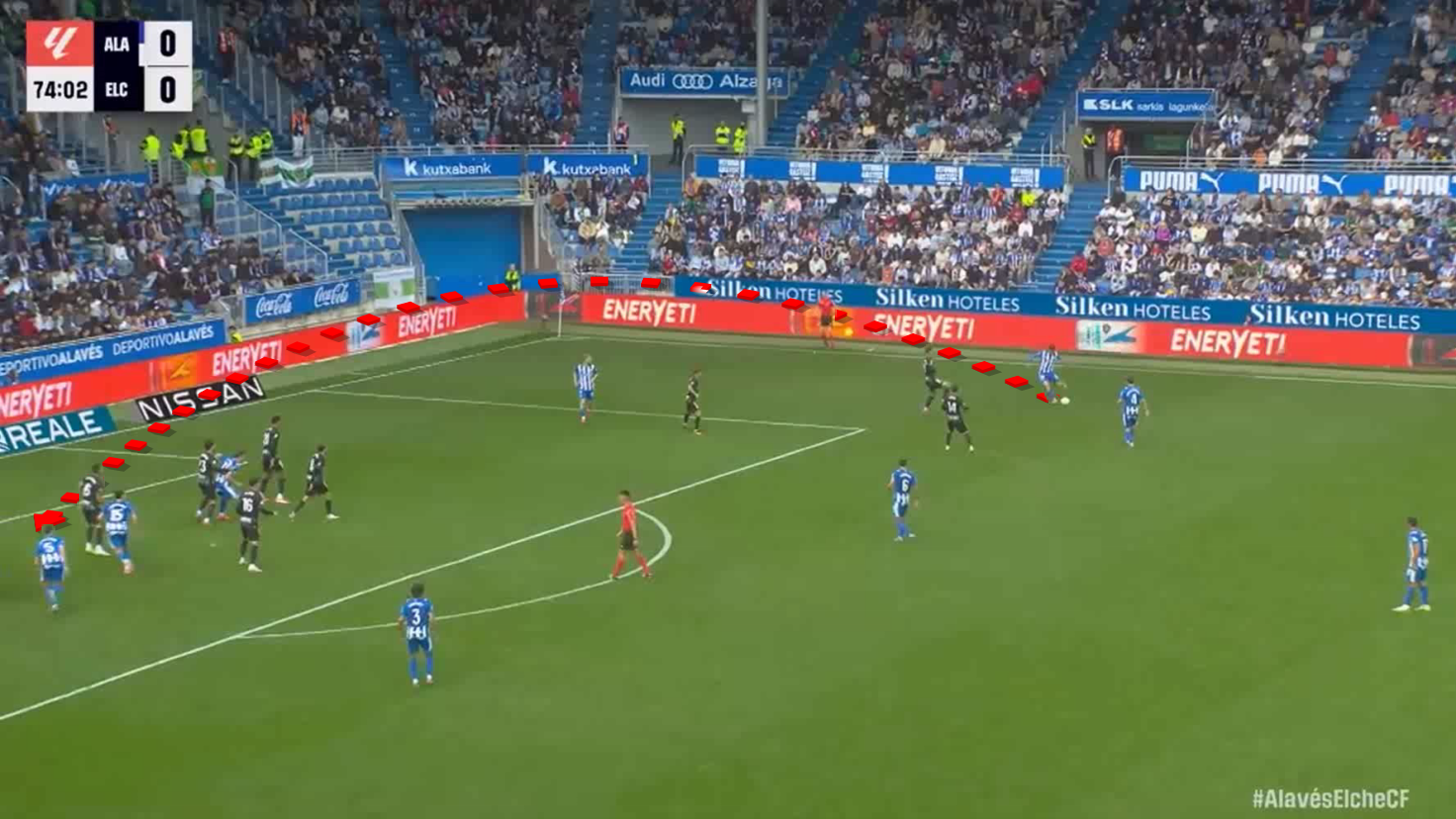 The forced turnover leads to a desperate defensive challenge inside the box, resulting in the penalty.
This example underscores how well-drilled Alavés are in sustaining pressure after the first phase of a corner.
Instead of retreating to defensive rest positions, they maintain compactness around the box, prepared for second balls, and ready to continue the attack.
Conclusion
Throughout the 2025/2026 campaign, Deportivo Alavés have established themselves as one of La Liga’s most productive set-piece sides.
Their combination of direct corner deliveries, creative short routines, and well-drilled first-post mechanisms has yielded decisive goals against Real Sociedad, Getafe, Atlético Madrid, Barcelona, Elche, and Athletic Bilbao.
Few phases of play have had a greater impact on their season; set-pieces have become a defining feature of their offensive identity and a significant source of their points.
This is not luck.
It is coaching, clarity, repetition, and a squad fully committed to extracting the maximum advantage from every dead-ball situation.
For a team navigating the margins of Spain’s top division, these routines have become their identity, and their greatest competitive weapon.
