
Inter Milan’s perfect UEFA Champions League record came to an end on Wednesday against Atlético Madrid.
A stoppage-time goal from a corner by José María Giménez lifted Diego Simeone’s side to a sixth straight win.
Atlético Madrid desperately needed the win because they were hovering near the bottom eight of the league phase, but the win jumped them up into 12th place.
It was a second straight loss for Inter after their 1-0 defeat in the Milan Derby to their inner city rivals.
This season after Simone Inzaghi left for Al-Hilal hasn’t really gone according to plan for Inter.
They are currently sitting fourth in the Serie A table and have already lost four league matches, when they only lost a total of five last season.
It was a fascinating tactical battle between Diego Simeone and Cristian Chivu, but the match more than likely should have ended up as a draw.
In this tactical analysis article, we will take a look at Atlético Madrid’s build-up tactics against Inter Milan’s mid-block, Inter’s utilisation of their full-backs pushing forward, and how Inter Milan tilted the field against Atlético Madrid.
Atlético Madrid Vs Inter Milan Lineups & Formations
Atlético Madrid came out in a 4-1-4-1 formation for the second straight match.
Juan Musso started in net behind José María Giménez and Dávid Hancko as the centre-back pairing.
Matteo Ruggeri started at left-back, while Nahuel Molina lined up at right-back.
Johnny Cardoso got his first start as the lone defensive midfielder, with Conor Gallagher and Pablo Barrios ahead of him in central midfield.
Alex Baena started at left midfield, while Giuliano Simeone started in his usual spot at right mid.
Julián Álvarez started once again up top at striker.
Diego Simeone made five substitutions in the match.
In the 58th minute, Nicolás González came on for Nahuel Molina, Koke came on for Conor Gallagher, and Marc Pubill came on for Johnny Cardoso.
In the 68th minute, Antoine Griezmann came on for Alex Baena, and Alexander Sørloth came on for Matteo Ruggeri.
Cristian Chivu lined Inter Milan up in their usual 3-5-2 formation.
Yann Sommer occupied his usual spot in goal behind Yann Bisseck, Manuel Akanji, and Alessandro Bastoni as the three centre-backs.
Federico Dimarco started at left wing-back, while Carlos Augusto started at right wing-back.
Hakan Çalhanoğlu started alongside Nicolò Barella and Piotr Zieliński as the three central midfielders.
Ange-Yoan Bonny got his first Champions League start up top next to captain Lautaro Martinez.
Cristian Chivu made five substitutions in the match.
In the 65th minute, Marcus Thuram came on for Ange-Yoan Bonny, and Petar Sucic came on for Piotr Zieliński.
In the 72nd minute, Francesco Esposito came on for Lautaro Martínez, and Davide Frattesi came on for Hakan Çalhanoğlu.
The final substitution came in the 79th minute when Luis Henrique came on for Federico Dimarco.

Atlético Madrid Build-Up Tactics
Throughout the match, Atlético Madrid were mainly building up in a 4-2-4, but their key was Nahuel Molina at right back.
When you face a 5-3-2, naturally, the pockets of space that are going to be easily accessible are going to be in the wide areas.
Here you can see Atlético Madrid, but Molina is pushing up into the pocket of space to receive a free pass.
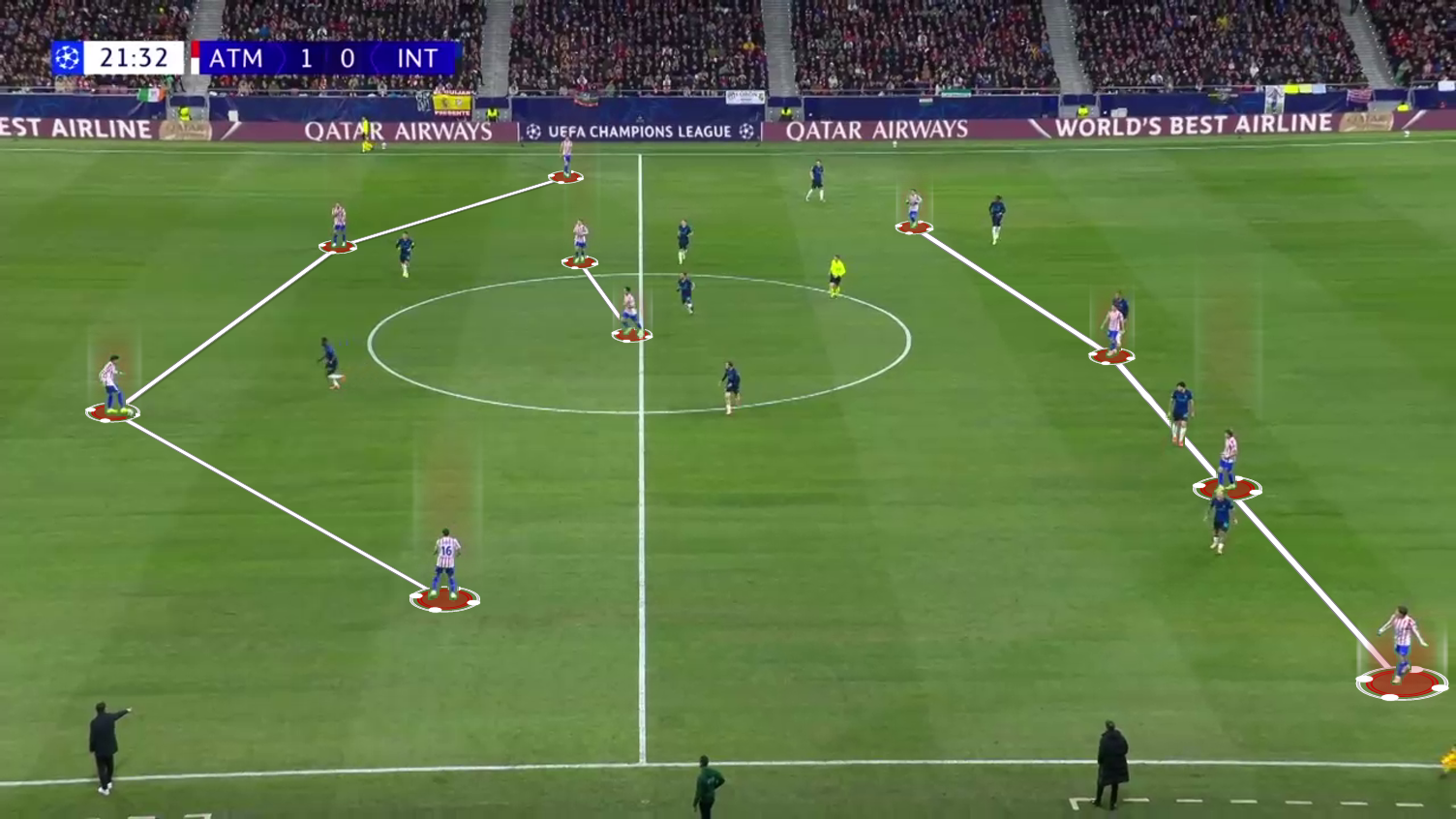
Inter Milan are more worried about Atlético playing through the middle, so they allow the pass to be made.
One thing Diego Simeone loves to do is switch the play from one side of the pitch to the other to catch the opposition out of position.
Here, Atlético is pinned into the corner, but a long switch pass easily opens Inter up and even gives them a 2-v-2 down the right flank.
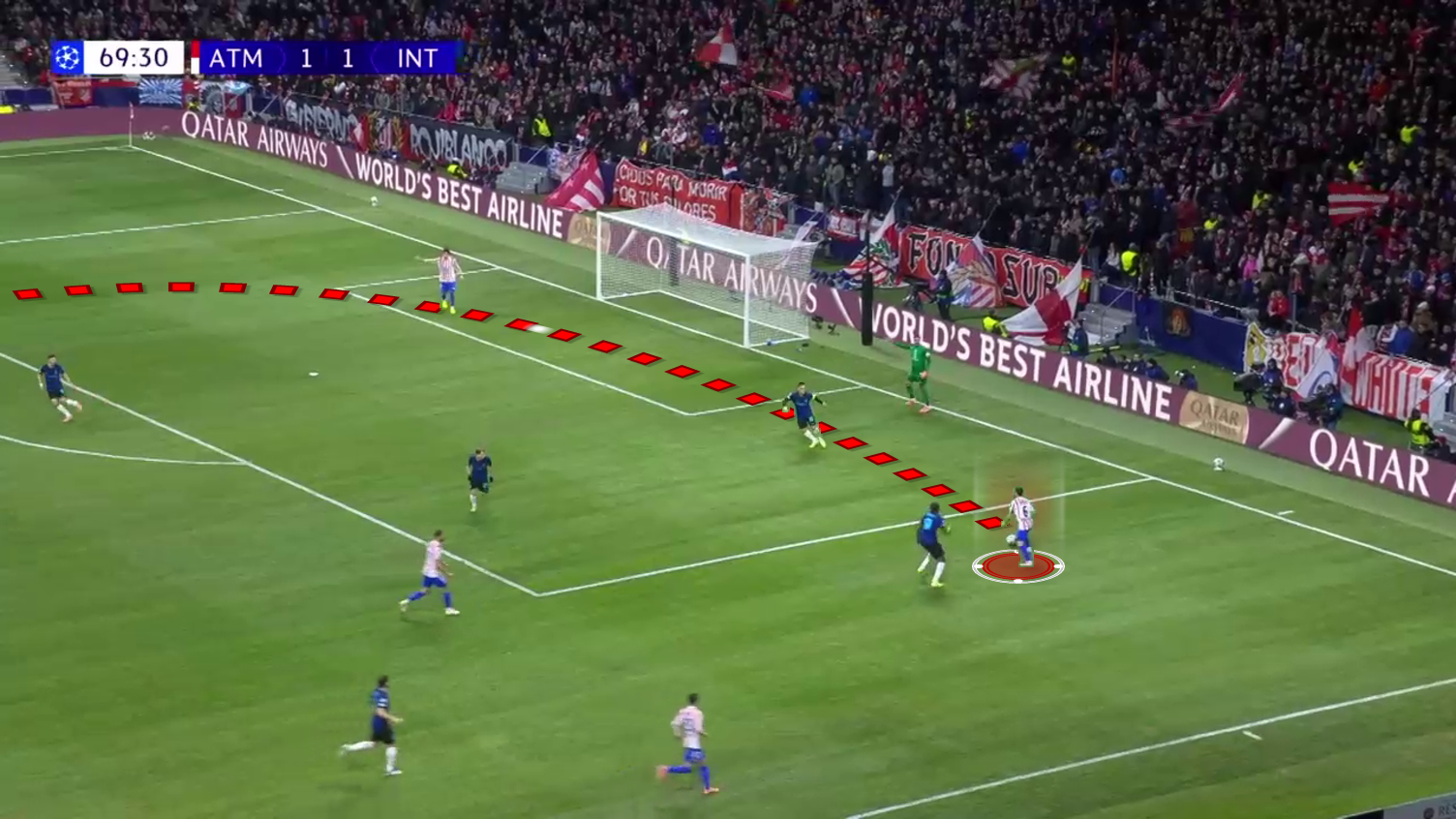
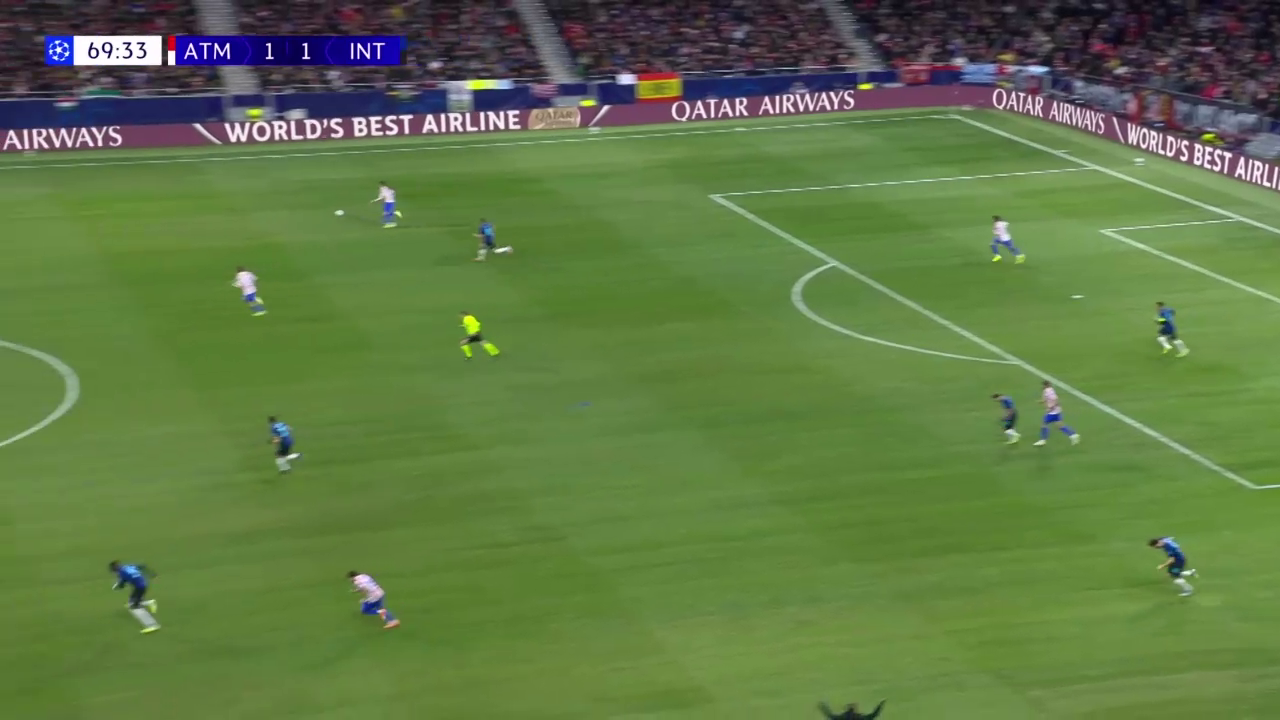
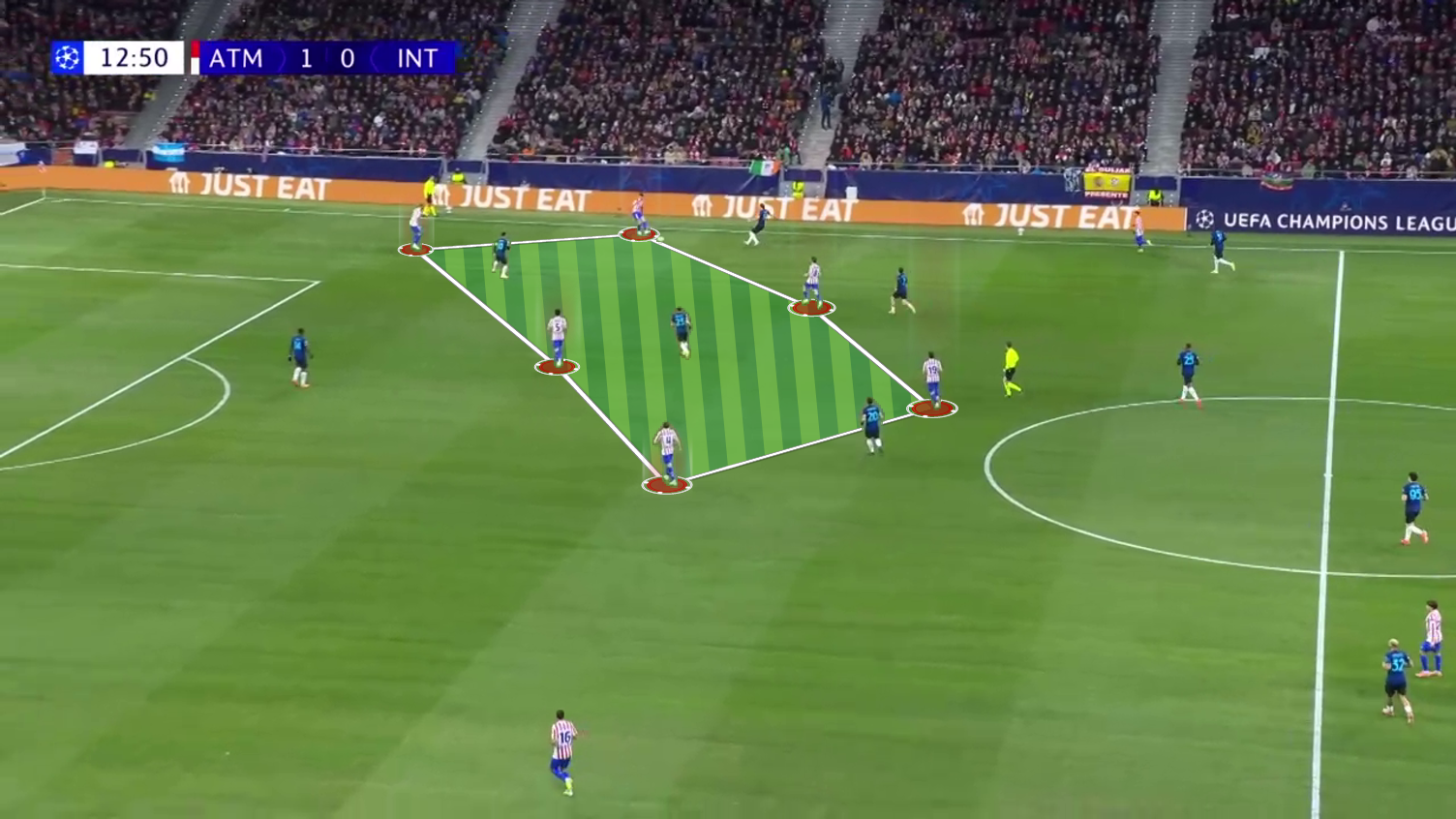
The other tactic Diego Simeone likes to try and deploy is some relationist concepts, getting as many players around the ball as possible to overload the opponent.
When both Álvarez and Griezmann start up top, he will typically have both of them drop deep to pull centre-backs out of position or create an overload.
Here is an example of Atlético dropping multiple players deep to try and overload Inter Milan.
The issue for Atlético in the match was the fact that they really weren’t that effective building out of the back.
Once Inter Milan settled into their mid-block, Diego Simeone’s side couldn’t find a way to play through the middle and weren’t very successful attacking them from out wide either.
Inter forced 27 danger zone losses from their mid-block, which is something they’ve greatly improved on this season.
Chivu’s side leads Serie A in high turnovers, and in the Champions League, they have forced the fourth-most shots directly from high turnovers.
This is why 54.5% of Atlético Madrid’s passes for the match came in their own third of the pitch.
Inter Milan Full-Backs
Tactically, Inter Milan haven’t changed much from Simone Inzaghi to Cristian Chivu.
That isn’t really a shock, considering Chivu was coaching in the Inter youth ranks from 2018 to 2024 before taking the Parma job towards the end of last season.
One thing that is very key to Inter’s tactical system is how far they push their full-backs up in possession.
You can see here in their build-up, besides Lautaro Martínez, the full-backs Federico Dimarco and Carlos Augusto are the highest-positioned players up the pitch.
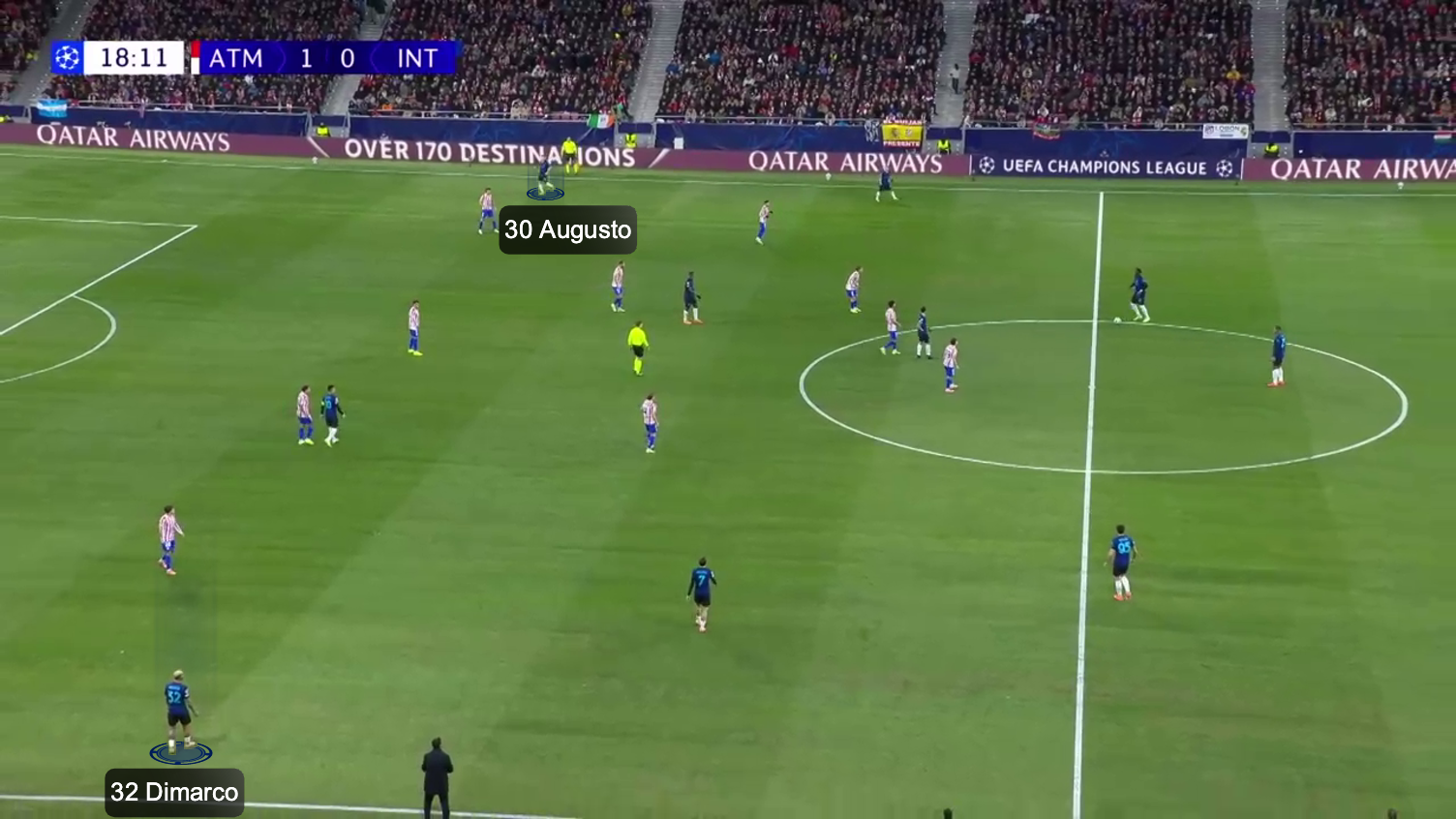
Federico Dimarco specifically is who they like to target, but how they utilise them is interesting because they always try to quickly play the ball to them in space or when they have a numerical advantage.
You can see here that Inter originally overloaded the right side of the pitch, circulated the ball back to the left and had a 3-v-2 overload against Atlético’s backline, which allowed them to play a ball in behind to Dimarco for a shot.
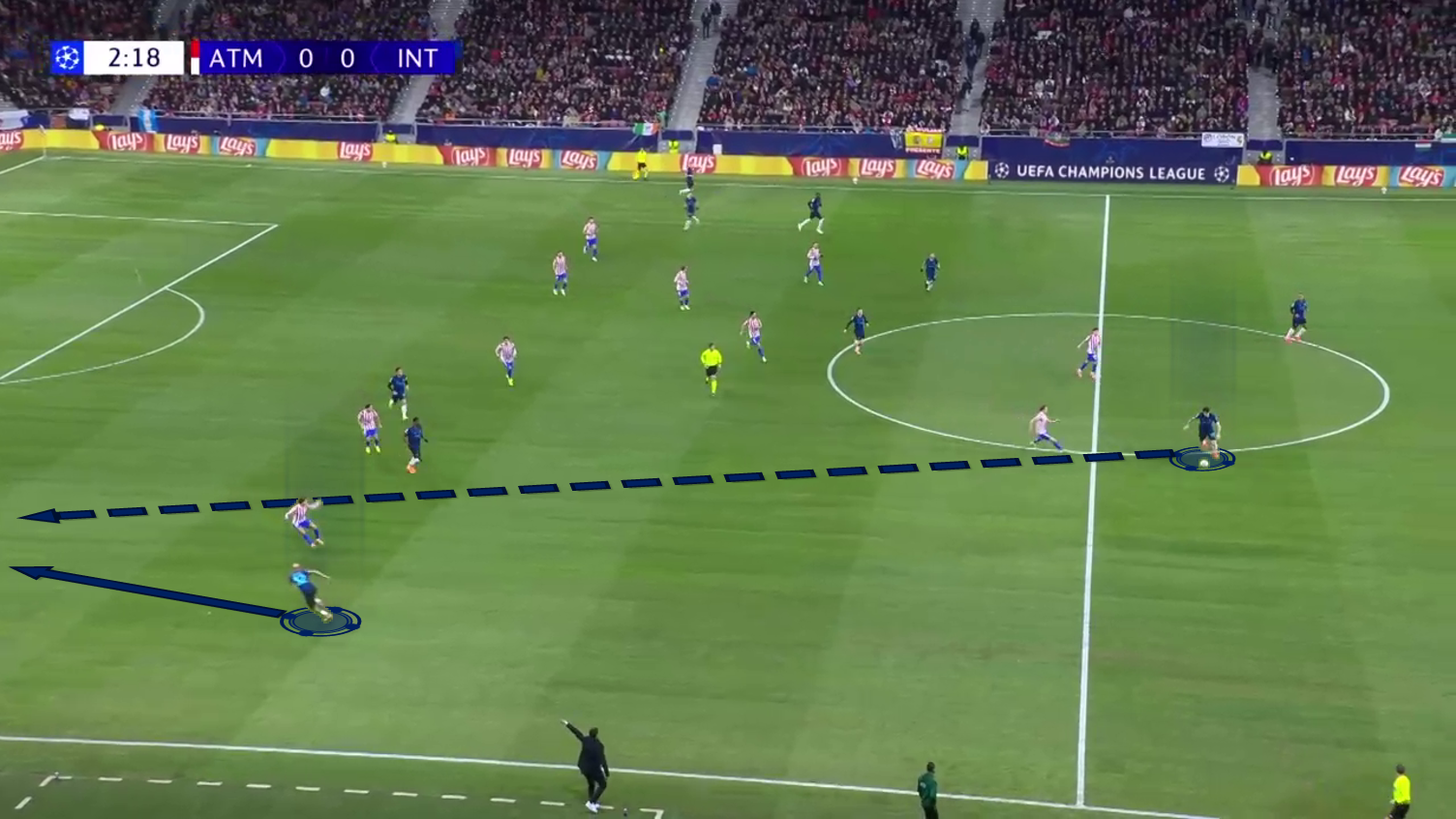
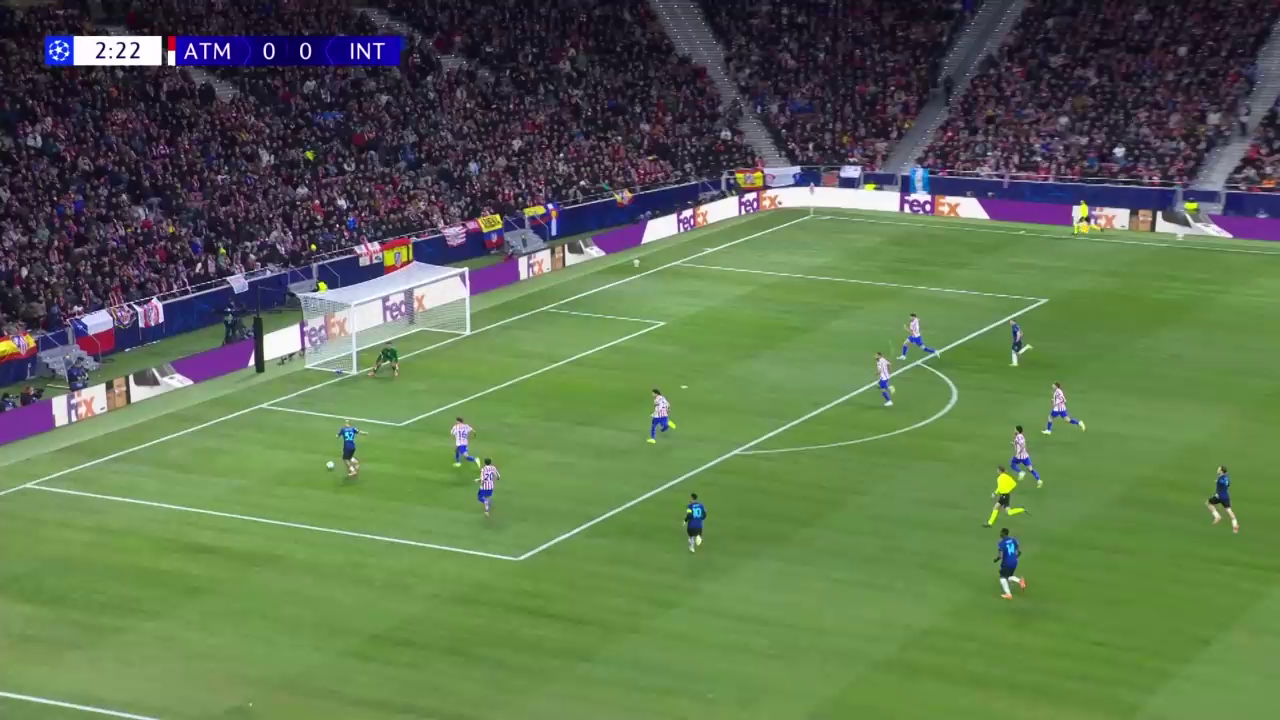
Another way Inter utilise them is by switching the play quickly to find them in space.
Here, they make a one-touch switch ball to find Dimarco in a ton of space, which eventually allows Inter to play a cross into the box.
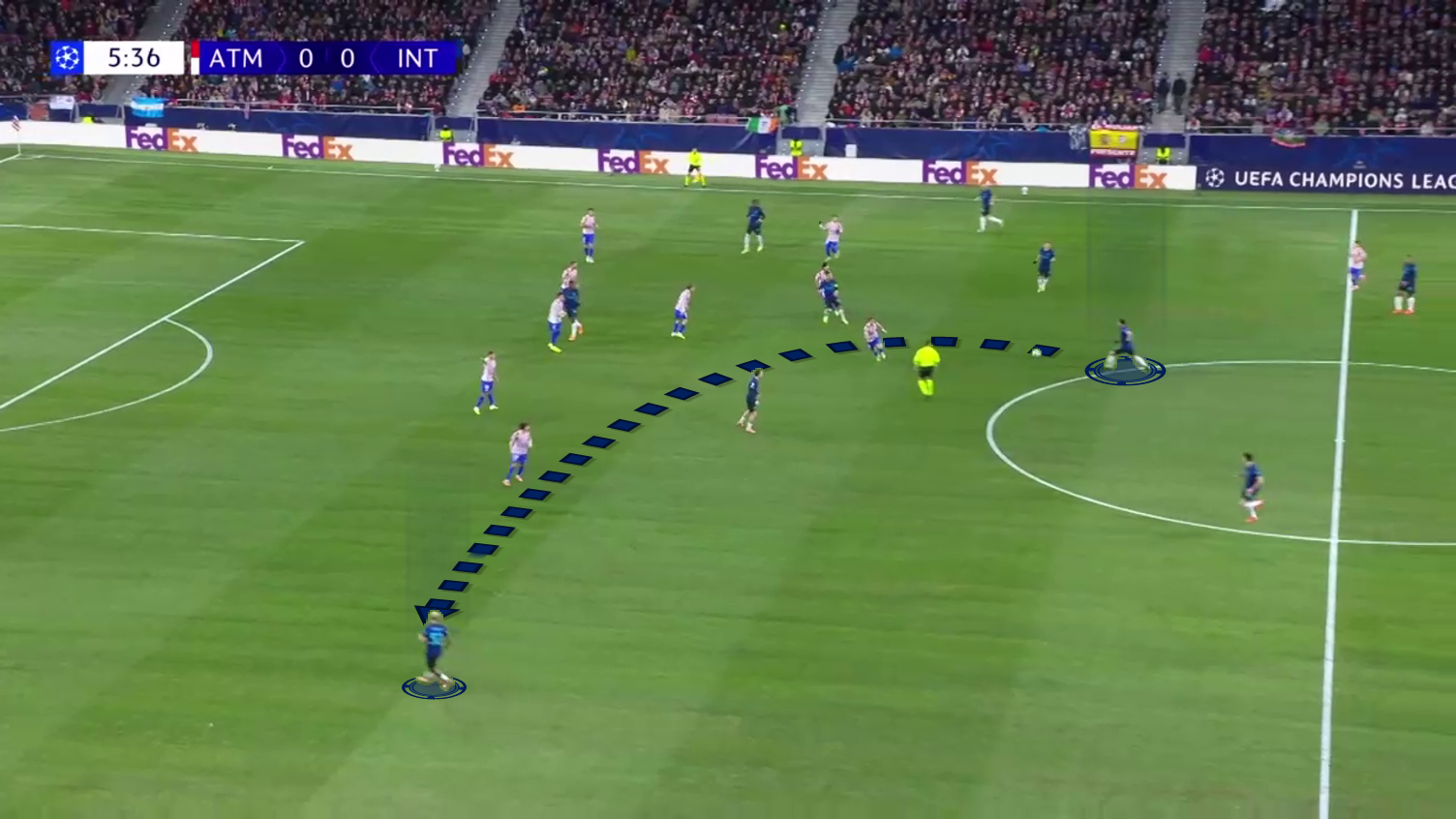
This has been a big key for Inter Milan this season, and it’s the utilisation of their full-backs that has allowed them to create a lot of chances via crosses.
They currently lead Serie A with 42 completed crosses into the penalty area and have 12 in their five Champions League matches.
Inter Milan Field Tilt
Despite Inter Milan losing the match, they were able to spend a majority of the match in Atlético Madrid’s third of the pitch.
The reason was that Atlético Madrid did not consistently press their build-up, which allowed Inter to easily move the ball into the final third.
Once they did, they were able to set up a really solid rest defence around Atlético’s low block, which made it very difficult for Diego Simone’s side to break out in transition when they did win the ball.
Inter did only control 52% of the ball, but had a 64.8% field tilt for the match.
They completed 274 passes in the final third, which was almost 100 more than Atlético’s 181.
Inter counter pressed really effectively to keep Atlético in their own final third when they did lose the ball.
Inter won 61% of the ground duels in the match and had a PPDA of 9.4.
Conclusion
Atlético Madrid were pretty fortunate to grab a late winner in what was a very even match.
The final expected goals favoured Inter Milan 1.4 to 1.1, which has been the story of their season.
Cristian Chivu’s side has by far the best underlying numbers in Serie A, but simply haven’t gotten the results.
In terms of expected points, Inter Milan lead Serie A with 26.4, but are sitting in fourth place.
This was their first tough Champions League match, and Inter were actually very impressive out of possession.
Atlético Madrid only had 25 touches in the penalty area and forced them to take nine of their 15 shots from outside the box.
Other than getting the ball out wide and trying to attack from there, Atlético weren’t able to effectively threaten Inter’s penalty area.
The first Atlético Madrid goal was somewhat fortunate, as a couple of deflections.
While José María Giménez was impressive, it did cover up what was a pretty lacklustre performance from Diego Simeone’s side.
It was yet another unlucky result for Inter Milan, but they still remain in the top eight of the league phase after matchweek five.
Atlético Madrid will be tested after their match with Oviedo over the weekend, as they have back-to-back road trips to Barcelona and Athletic Bilbao.
Inter Milan have a tough Champions League schedule to finish, facing Liverpool, Arsenal, and Dortmund, so this loss may cost them a spot in the top eight when all is said and done.
