
Barcelona defeated Villarreal 2-0 in Gameweek 17 of the 2025/2026 edition of LaLiga at Estadio de la Ceramica.
With goals from Raphinha and Lamine Yamal, the Catalans went four points clear of Real Madrid.
The visitors had most of the ball, having 79% possession.
Although missing Pedri was a concern for Hansi Flick’s side, they dealt with the deficit fairly well.
Putting in a standard display, they showcased some attractive football.
However, the possession statistic tells only half the story.
Villarreal had a total of 14 shots, out of which three were big chances.
This indicates that the hosts created problems from the limited ball possession they had.
Through this tactical analysis, we aim to examine how Barca played against Villarreal and the defensive issues they faced.
Villarreal Vs Barcelona Lineups & Formations
Let us look at how Marcelino and Hansi Flick fielded their squads.

The hosts, Villarreal, played in a 4-4-2 formation.
Luis Júnior started between the sticks.
Pau Navarro (right-back), Rafa Marín (right centre-back), Renato Veiga (left centre-back), and Sergi Cardona (left-back) were the starting back four.
Santi Comesaña and skipper Dani Parejo played as the centre-midfielders.
Tajon Buchanan (right)and Alberto Moleiro (left) were the two wide midfielders.
Parejo was taken off for Carlos Maciá at the 75th minute.
Nicolas Pépé and Ayoze Pérez were the two strikers.
Pépé made way for Tani Oluwaseyi (75′) and Pérez for Georges Mikautadze (64′).
The visitors, Barcelona, played in a 4-3-3 formation.
Joan García started in goal, behind a back four of Jules Koundé (right-back), Pau Cubarsí (right centre-back), Gerard Martín (left centre-back), and Alejandro Balde (left-back).
Koundé was taken off for Marc Casadó at the 79th minute.
Eric García played as the pivot, with skipper Frenkie De Jong and Fermín López as the attacking midfielders.
García came off for Marc Bernal (66′), and López made way for Marcus Rashford (62′).
Lamine Yamal (right) and Raphinha (left) were the wingers alongside Ferran Torres (striker).
Robert Lewandowski replaced Torres after 62 minutes.
Barcelona Attacking Tactics
As evident from the possession statistics, the majority of Barcelona’s game consisted of attacking actions.
Barcelona Build-Up & Progression
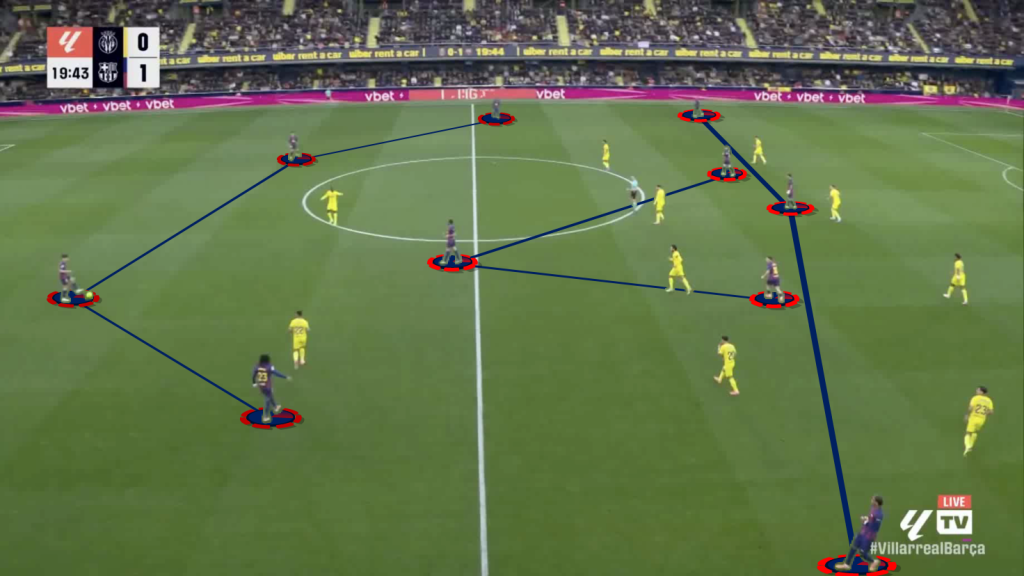
Similar to the structure on paper, Barça were in a 4-3-3 shape in build-up.
Eric García stayed deeper than the other midfielders, who stayed higher up inside the opponent’s structure.
Villarreal’s press did not cause Barcelona significant problems in the build-up.
Thus, García was not required to drop outside the structure.
He stayed behind the first line of press.
De Jong was seen dropping alongside García to help with more control in midfield.
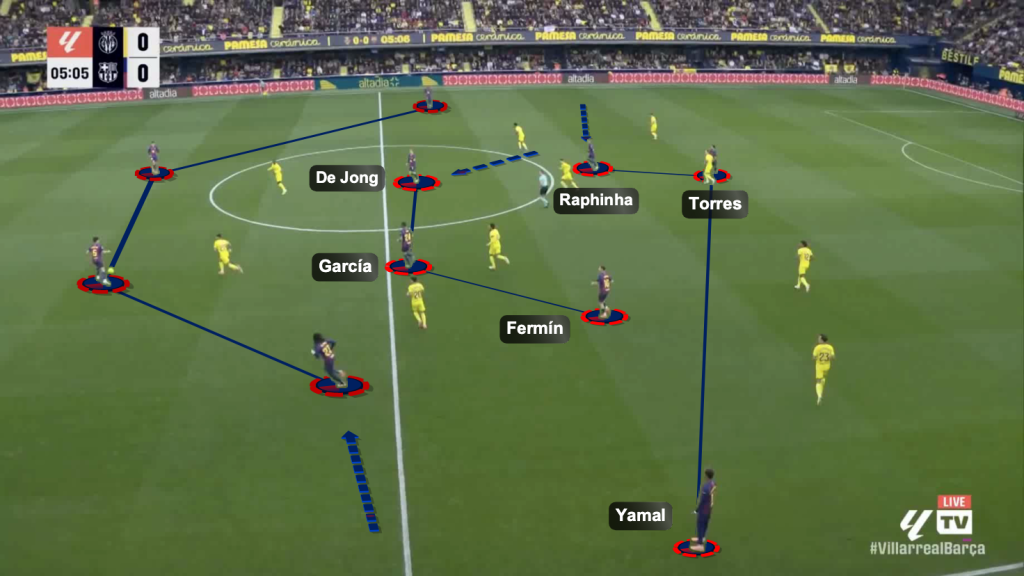
The full-backs operated in a staggered shape.
Balde stayed high and wide, while Koundé played slightly narrower and closer to the centre-backs.
Yamal hugged the touchline on his side; meanwhile, Raphinha roamed into the half-space.
Fermín López usually operated in the right half-space.
The moments when the hosts pressed high, Barcelona played right through the press with quick combinations.
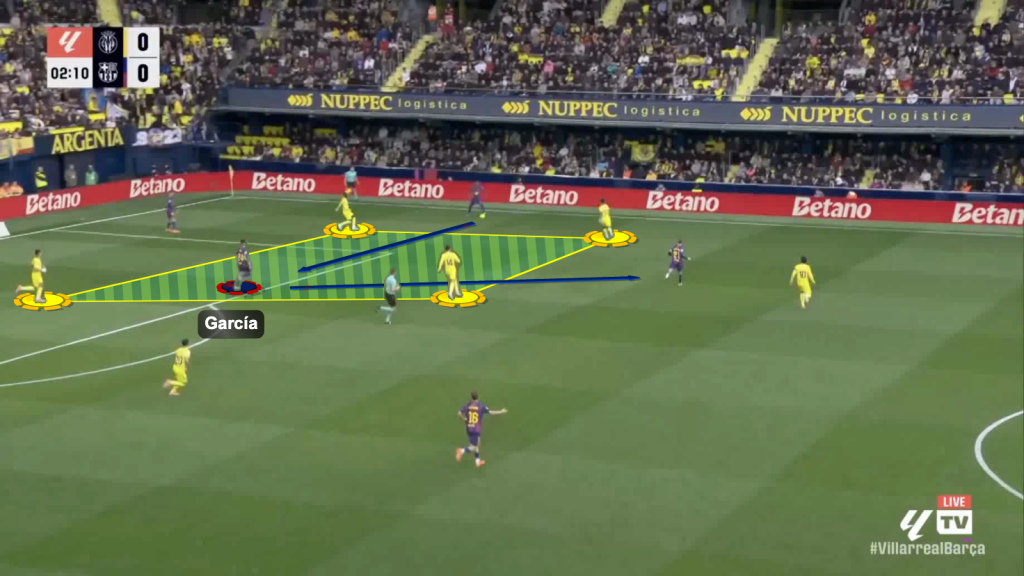
Villarreal are in their high-press shape; once Barcelona get the ball to the wide area, they play an in-to-out pass through the pivot (García).
Third-man combinations like this were on display across the pitch throughout the game from the Catalans.
In several build-up moments for the visitors when Villarreal pressed high, their lines were disconnected.
Barcelona exploited this time and again.
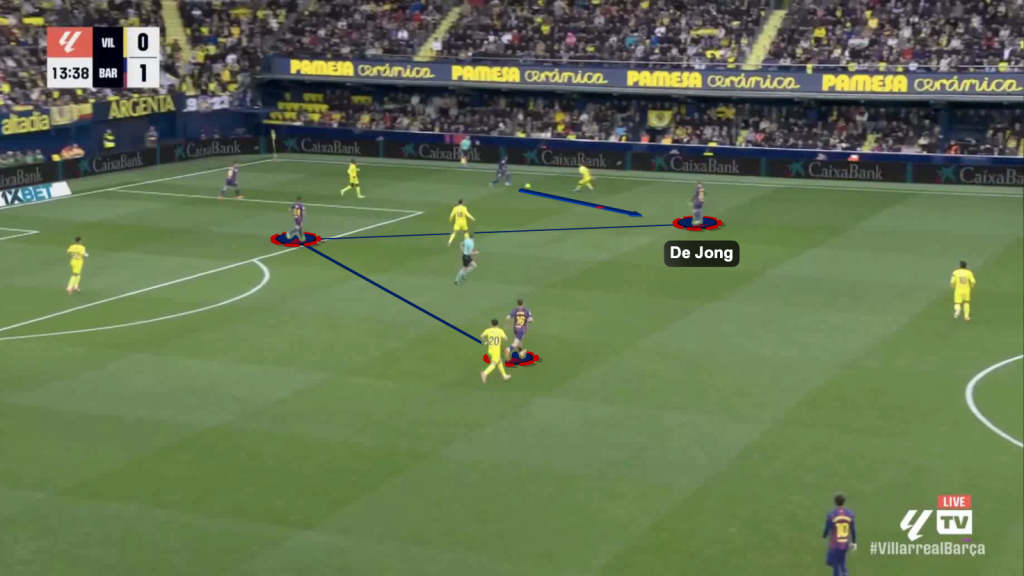
De Jong receives the ball in the left half-space in the defensive third.
The Villarreal winger presses Balde, cutting the outside pass.
This opens the passing lane into the half-space.
Barcelona’s midfield three shape is visible here.
They were consistently positioned at these supporting angles with respect to each other.
This not only helped them connect more passes, but also find exit passes under pressure.
The midfielders’ positioning helped the back four release pressure when the opponents applied pressure following pressing triggers.
In the situation above, Barça achieve progression with one-touch passes.
This is possible due to the positioning with respect to each other.
There were situations where the visitors were squeezed into a corner, which led to them giving the ball away.
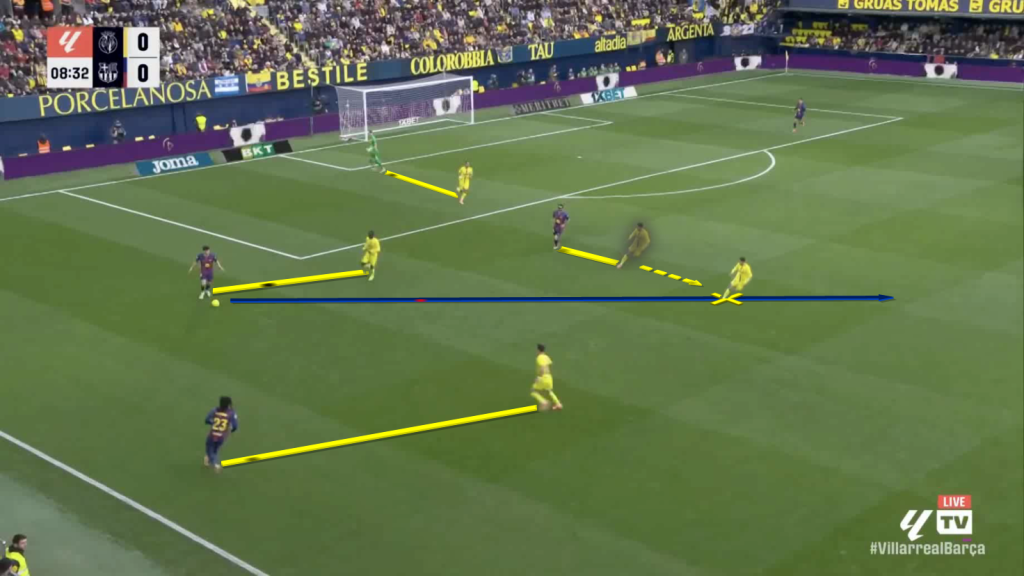
Pau Cubarsí is under pressure and attempts to play a pass into the midfield third.
The Villarreal player is quick to read the pass and steps in to intercept it.
This led to them having a shot on target. Quick transition moments like these gave the hosts multiple goal-scoring chances.
Shifting Play
Playing against a low-block side, Barça were bound to face a compact structure, the effect of which was felt in the wide channel as well.
Villarreal made sure to double up on key opponents.
The highest concentration of Barcelona’s attacking play came from their right side, with Yamal being the driving force.
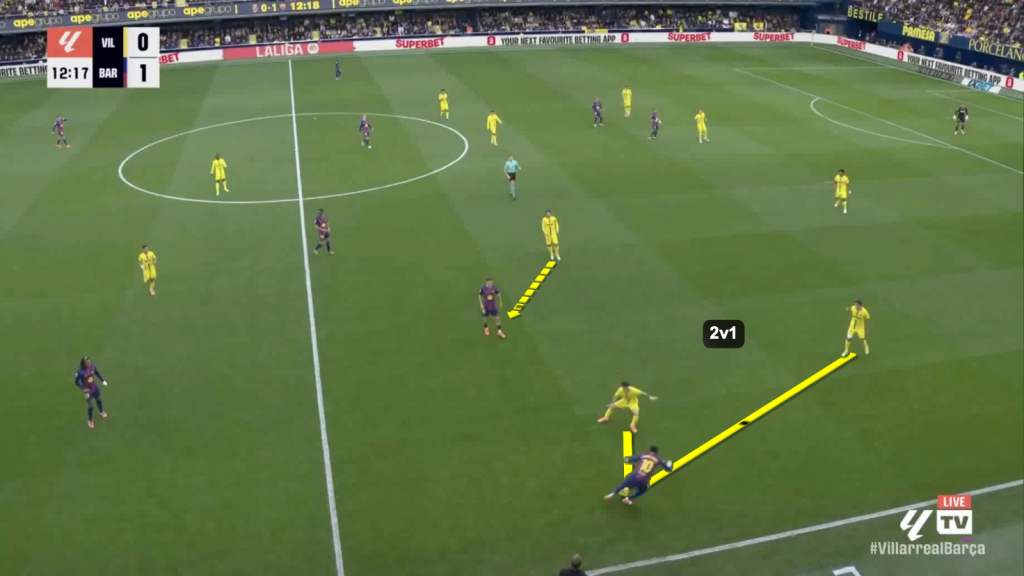
The opponent’s left-winger and left-back were seen double-teaming the 18-year-old.
Any teammates in the vicinity were also closely followed.
Apart from the moments of individual show of brilliance, Yamal was forced to keep it simple and move the ball sideways.
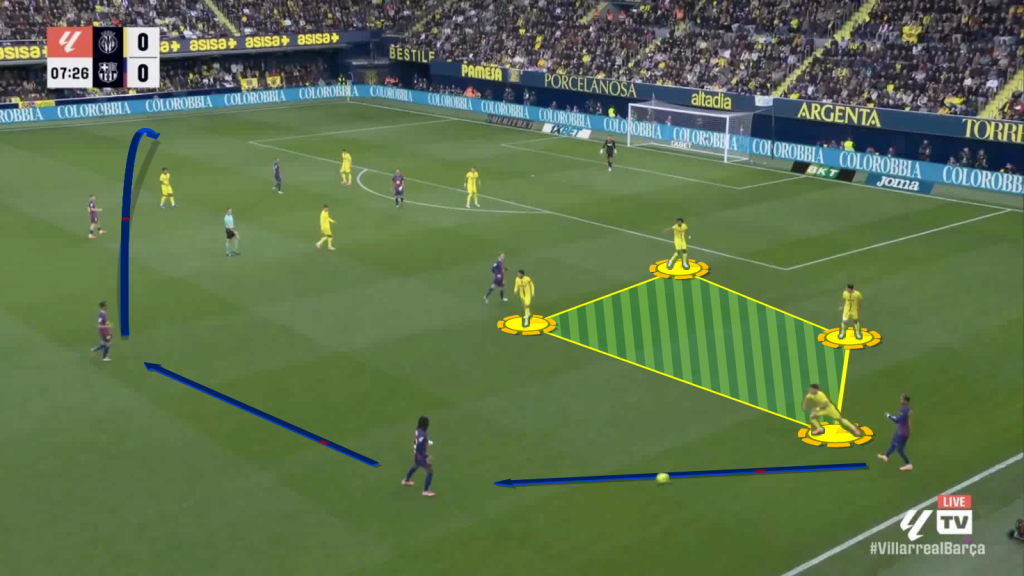
Yamal is in possession in the wide channel. However, a block of opposition defenders slides across.
With no support in the form of overlaps or underlaps, the Spaniard is forced to go back to shift play.
He receives the ball in the central channel and makes a diagonal switch.
The opponent striker stayed close to García to prevent the switch of play.
However, the Spaniard moved to drag the opponent and opened the lane for De Jong to step in and receive.
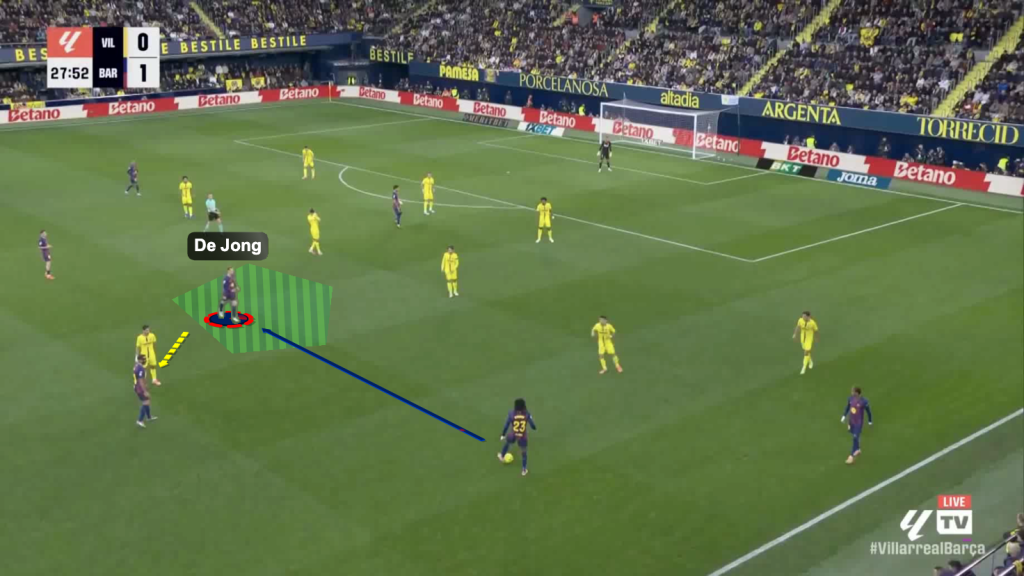
Once the Dutchman gets on the ball, he has enough space due to the disconnection between Villarreal’s lines of pressure.
Fermín López Involvement In Attacking Half
Barcelona excelled in having their players receive under pressure inside the opponent’s structure.
Fermín López very often received the ball between the midfield and defence lines.
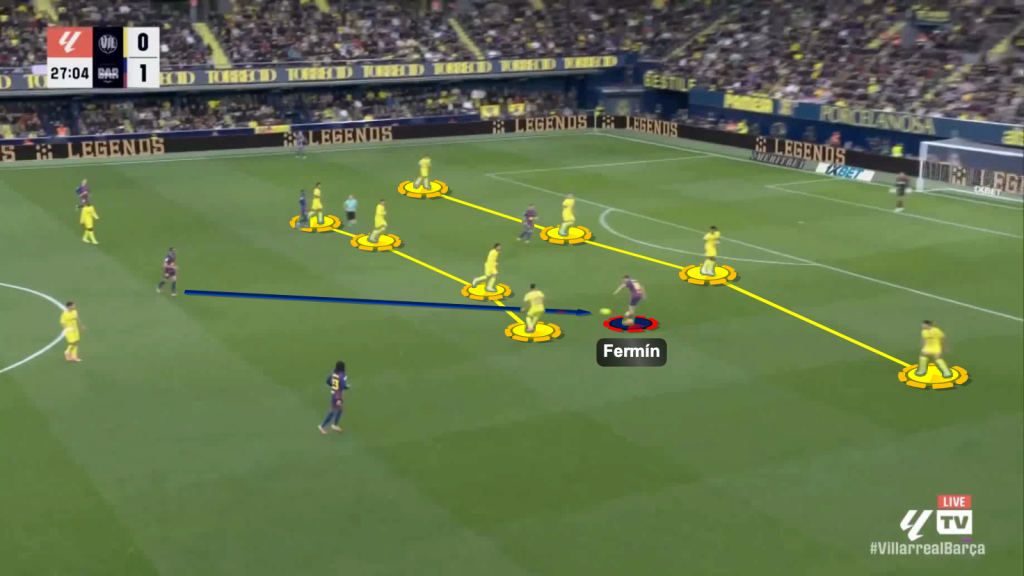
It was either a direct vertical pass from deep or a third-man pass being played in the vicinity.
Here, Fermín receives a direct vertical pass from García.
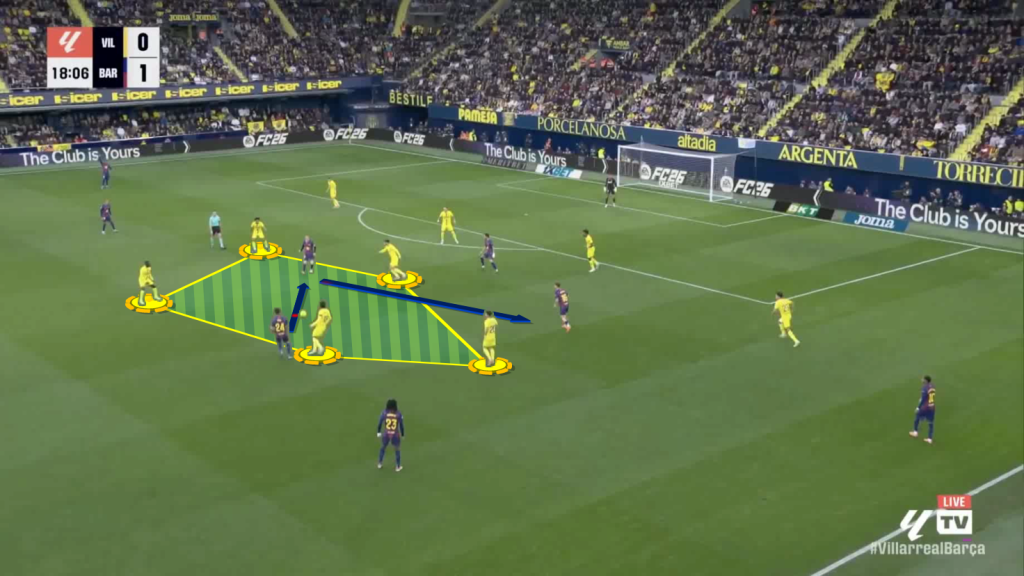
Fermín López receives a third-man pass in the attacking third between the lines.
This is orchestrated by De Jong dropping to meet a penetrative pass from García.
With a combination like this, Fermín can receive facing the goal and create more danger.
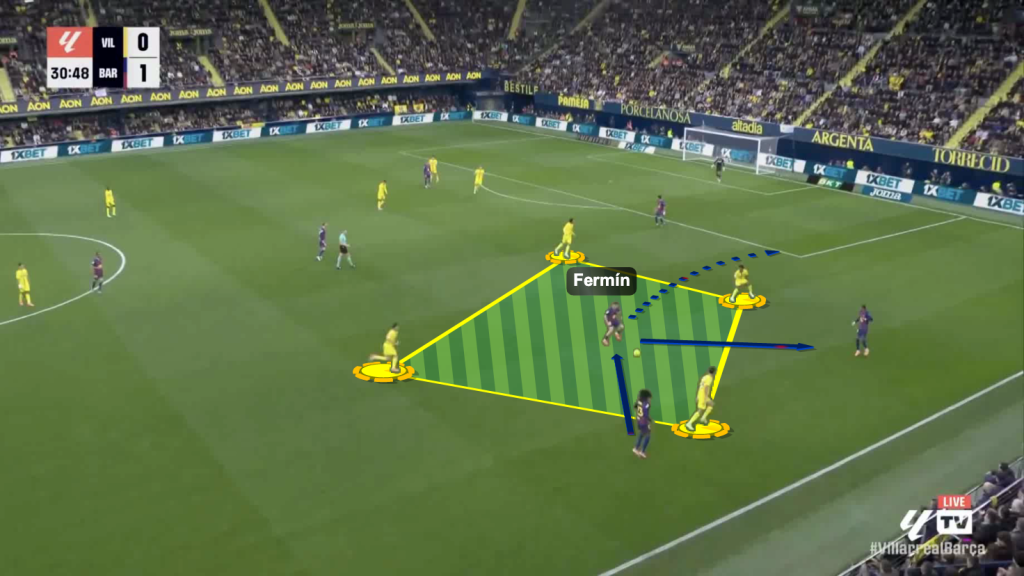
Another example of Fermín López being involved in a third-man combination, this time in the wide channel.
He connects an in-to-out pass, which helps Barcelona bypass a block of opponents.
After playing the pass, the Spaniard immediately starts an underlapping run.
Since he mostly operated in the right half-space, the attacking midfielder was involved in some off-the-ball running in the half-space in relation to Lamine Yamal.
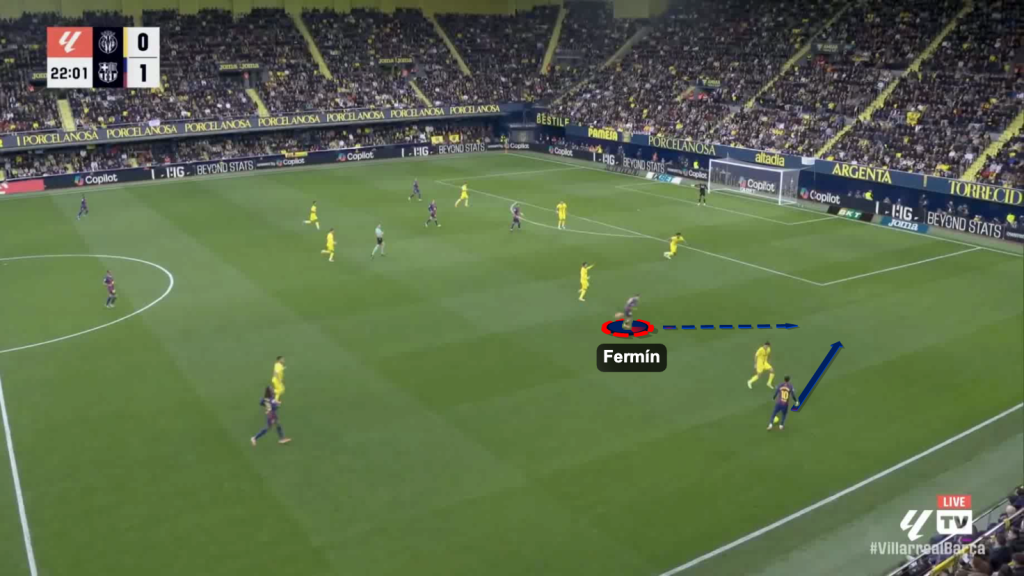
When Yamal got on the ball in a 1-v-1 with the opposition left-back, Barça players, especially Fermín, made underlapping runs to either receive on the full-back’s blind side or create space for Yamal to cut inside.
Raphinha Style Of Play
The Brazilian international had a significant impact on the attacking side of things for his side.
He was seen floating through different areas of the pitch while Balde held width on the left wide channel.
Apart from moving into the left half-space, he was also seen in the right half-space and frequently in the central channel during the second half, when he was assigned as the central attacking midfielder.
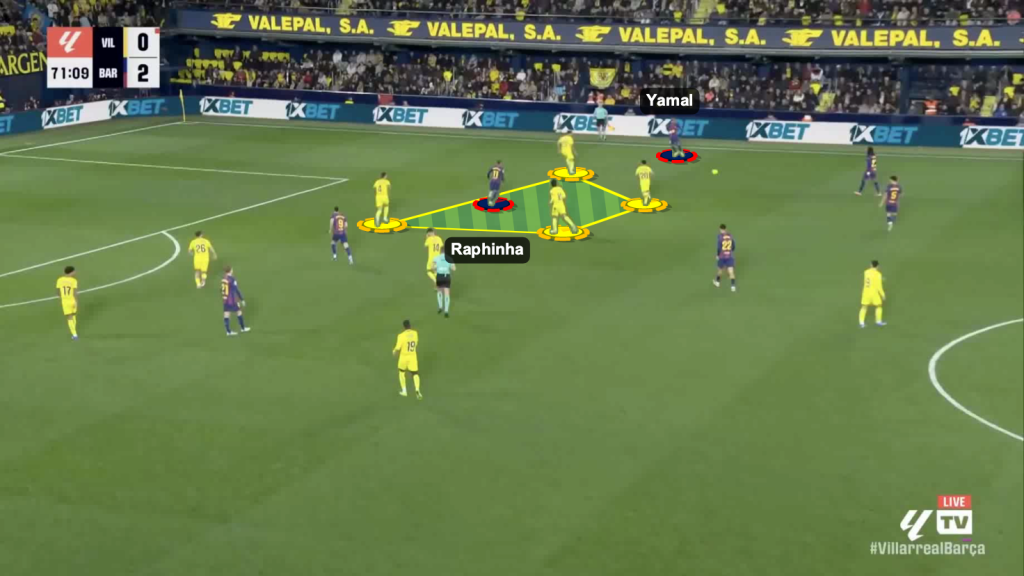
Raphinha positions himself in the right half-space, making himself available to Yamal for a combination.
The Brazilian is adept at receiving the ball in small pockets of space and is comfortable executing link-up play in tight areas.
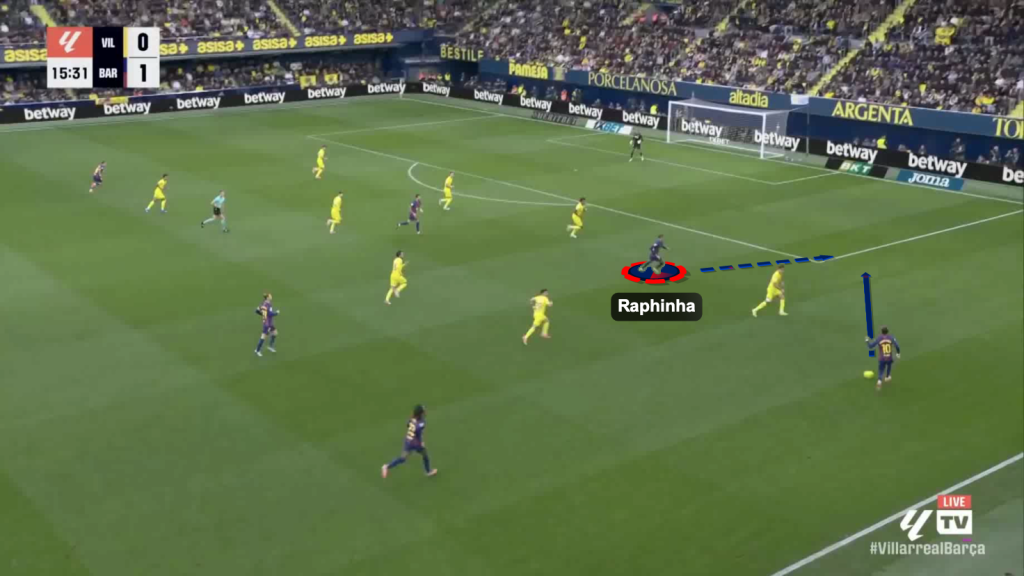
He was also seen offering underlapping runs, filling in for Fermín López on multiple occasions.
Different Barça players making runs into the same area interchangeably caused problems for their opponents in terms of tracking runners.
He also drew the penalty for his goal by cutting inside from the right side.
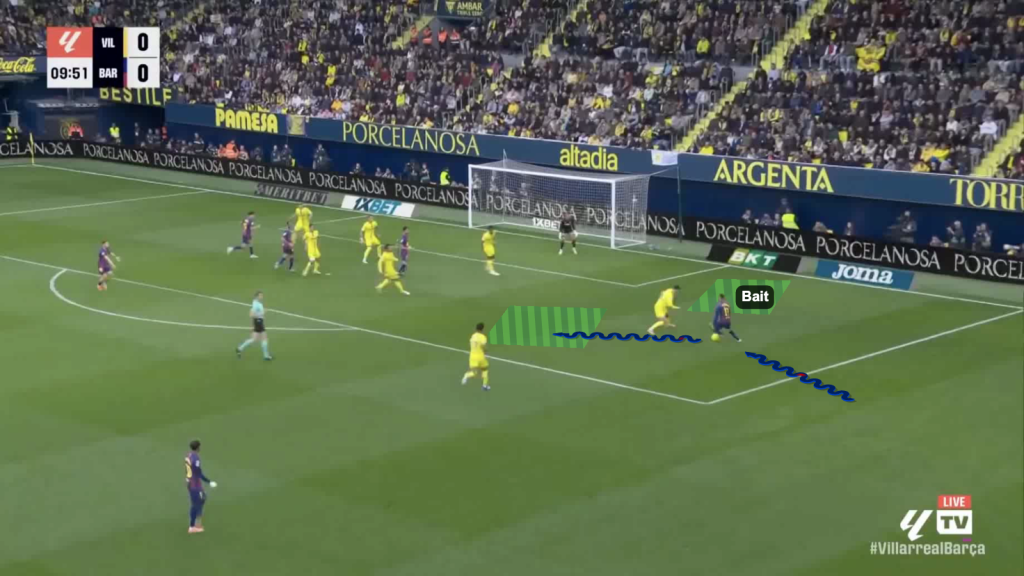
As he enters the penalty area, there is space on either side of the engaging defender.
The Brazilian baits the space down the line to cut inside on his dominant left foot.
This is when the opponent lunged in with the foul.
When in the central channel, Raphinha posed a significant threat, getting on the end of cutbacks and square passes to shoot from zone-14.
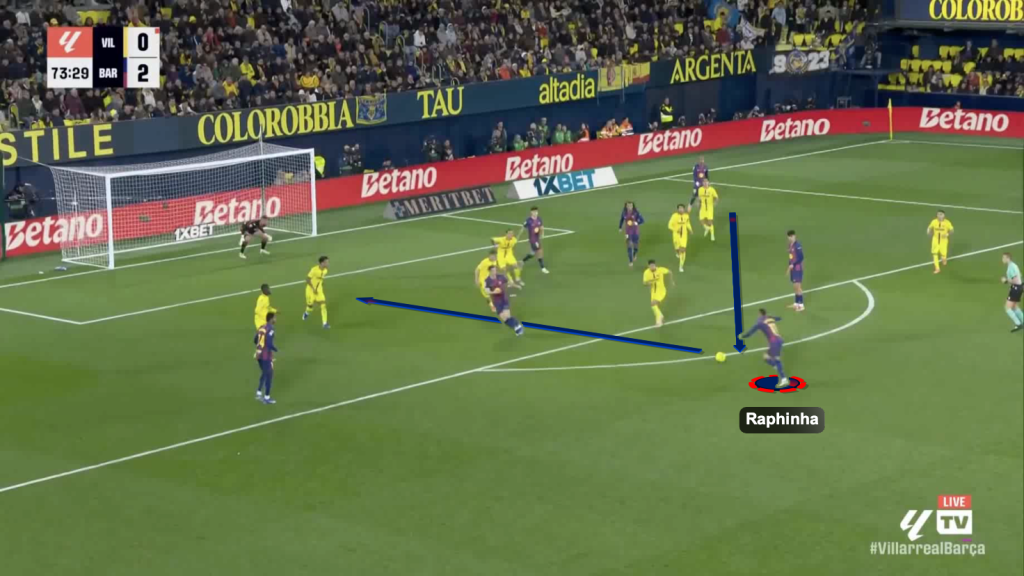
Yamal plays a cutback into zone-14.
Raphinha meets it with a first-time shot.
Barcelona Defending Tactics
While in the opponent’s half, Barça executed their defensive duties adequately.
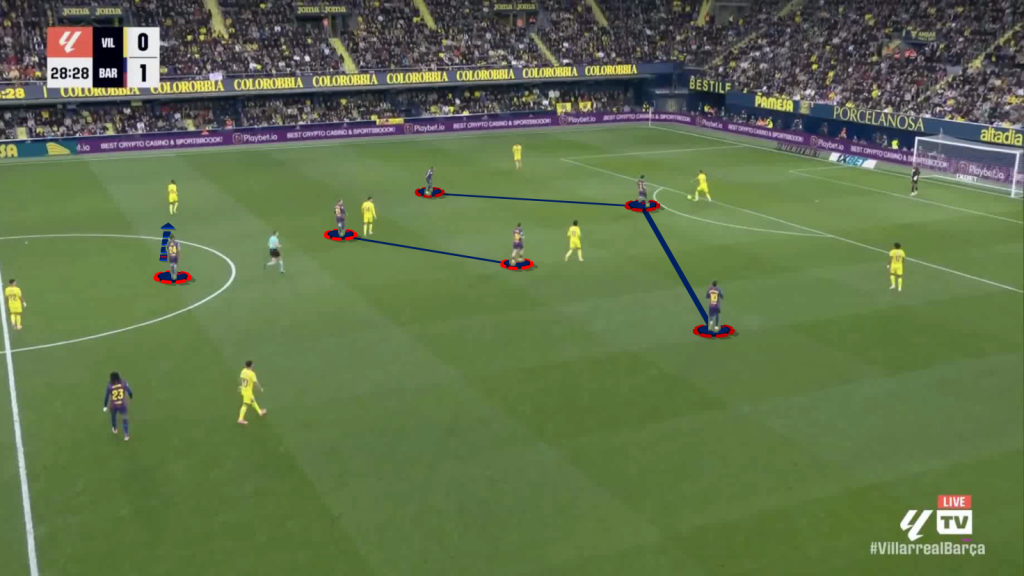
They pressed with man-orientations, forcing the opponents to play long, which allowed them to win the first contact.
In situations when the opponents opted to play short, the visitors ended up winning possession high up the pitch.
Defending in their own half was a troublesome affair for the Catalans.
They were far from efficient in covering spaces; this allowed their opponents to eventually exploit spaces in-behind.
Fortunately, goalkeeper Joan García rose to the occasion and made five crucial saves, four of which were from shots inside the box.
Barça also lost possession far too many times within their own half and the midfield third.
This kept the game alive for their opponents and put considerable pressure on Hansi Flick until the second goal was scored.
Barça lose the ball in the defensive third, which results in a shot from zone 14 for Villarreal.
Conclusion
Barcelona dominated ball possession, bypassing Villarreal’s waves of pressure through third-man passes, in-to-out passes, and finding teammates positioned between the lines.
Hansi Flick’s key players, especially Fermín López and Raphinha, impacted the game in the Catalans’ favour with their positioning, movement, and combination play.
Barça were shaky defensively, conceding counterattacks as they were dispossessed multiple times in their own half.
However, a combination of Villarreal’s unsatisfactory finishing and Joan García’s goalkeeping heroics rescued the clean sheet for them.
