
Barcelona remains one of only two teams, alongside Paris Saint-Germain, that can win their domestic league, domestic cup, and the UEFA Champions League in 2024/2025.
Hansi Flick’s men successfully defeated their arch-rivals Real Madrid in the Copa del Rey Final on Saturday, with Jules Koundé securing the victory for Barça late on in the second half of extra time.
The Catalan giants have earned three wins from three games versus Los Blancos this season, having now defeated Carlo Ancelotti’s side 4-0 at Estadio Santiago Bernabeu in La Liga, 5-2 in the Supercopa de España and now 3-2 in the Copa del Rey Final.
Indeed, looking at the scorelines, it would appear as though Madrid are getting closer to a positive result against their rivals, but that will be no consolation at all for a club as fixed on silverware as they are.
Earlier this year, when Barça thrashed Real Madrid away from home in the league, I wrote about their defensive tactics and the role they played in the Catalan side’s victory.
Today, it’s more about the attack, for us.
Our post-match tactical analysis will break down how Flick set his side up to exploit Real Madrid’s possession.
We’re specifically going to single out three key tactical principles, in particular, that proved critical to Barcelona’s cup-final win.
Copa Del Rey Lineups & Formations
To start, we’ll outline how both finalists lined up for Saturday’s El Clásico.
Beginning with the eventual winners, Flick set his team up in a 4-2-3-1 shape.
Wojciech Szczęsny started in goal behind Jules Koundé (right-back), Pau Cubarsí (right centre-back), Iñigo Martínez (left centre-back) and Gerard Martín (left-back).
Frenkie de Jong and Pedri played at the base of midfield behind Lamine Yamal (right wing), Raphinha (left wing) and Dani Olmo (attacking midfield).
Meanwhile, Ferran Torres started up front.
Flick made five substitutions before the game was over on Saturday evening.
Firstly, Fermín López replaced Olmo just after the hour mark before Ronald Araujo and Gavi came on for Martín and De Jong about 20 minutes later.
Two of Barça’s substitutions came in extra time.
Eric Garcia was introduced for Pedri in the 98th minute before Flick’s final change saw Pau Víctor take over from Torres in the 115th minute.
Their opponents, Real Madrid, also lined up in a 4-2-3-1 shape.
Thibaut Courtois started between the sticks, with Lucas Vázquez (right-back), Raúl Asencio (right centre-back), Antonio Rüdiger (left centre-back) and Ferland Mendy (left-back) playing in defence.
Federico Valverde and Aurélien Tchouaméni played at the base of midfield, while Rodrygo (right wing), Dani Ceballos (left wing) and Jude Bellingham (attacking midfield) occupied the three spaces behind centre-forward Vinícius Júnior.
Ancelotti made six changes to his starting XI during the Copa del Rey final.
Real were forced into their first change quite early on as Ferland Mendy picked up an injury.
The French full-back was swiftly replaced by Francisco Garcia.
Kylian Mbappé came on for Rodrygo at half-time, 10 minutes before a double substitution saw Luka Modrić and Arda Güler step in for Lucas Vázquez and Dani Ceballos.
Madrid’s fifth sub saw Brahim Díaz introduced for Vinícius Júnior just before the end of regular time.
Lastly, Endrick came on for Rüdiger in the 111th minute.
Barcelona Wing Play
Flick has done an excellent job of instilling his tactical principles at Barcelona.
One such principle that contributed to his side’s Copa del Rey victory is stretching the opposition horizontally.
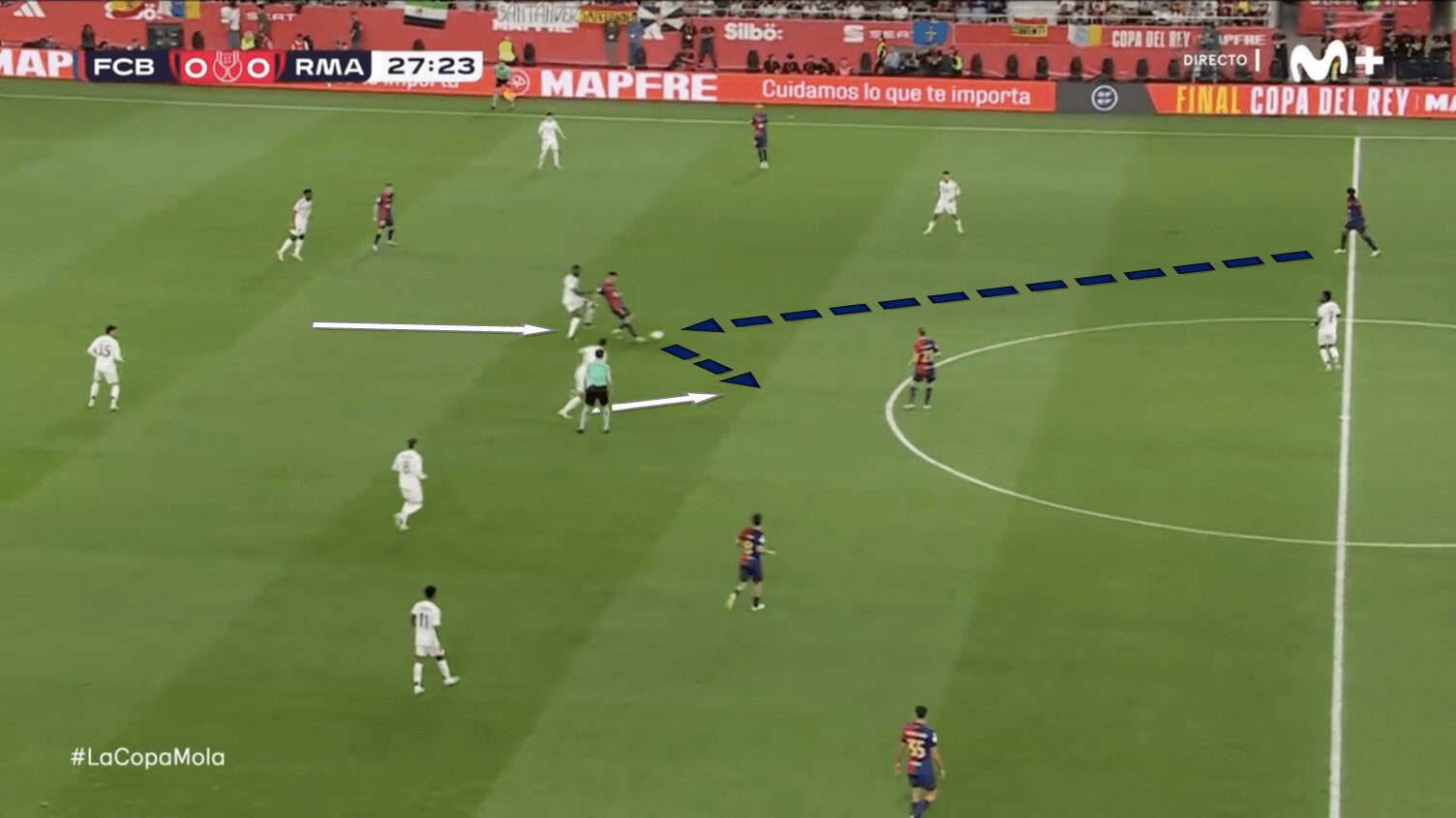
Barça found it challenging to break Real Madrid down by playing through the centre of the pitch.
Ancelotti set his side up to be very horizontally compact without the ball, focusing on protecting those valuable central areas.
Looking at Figure 1, we see Barça attempting to play through the middle, with Torres dropping off from the backline to receive a pass centrally.
Madrid are able to apply pressure to the striker immediately, forcing a wayward pass and, consequently, a turnover.
This passage of play emphasises the extent to which Real Madrid successfully protected the centre of the pitch on Saturday and made it difficult for Barça to build attacks through their midfielders and striker.
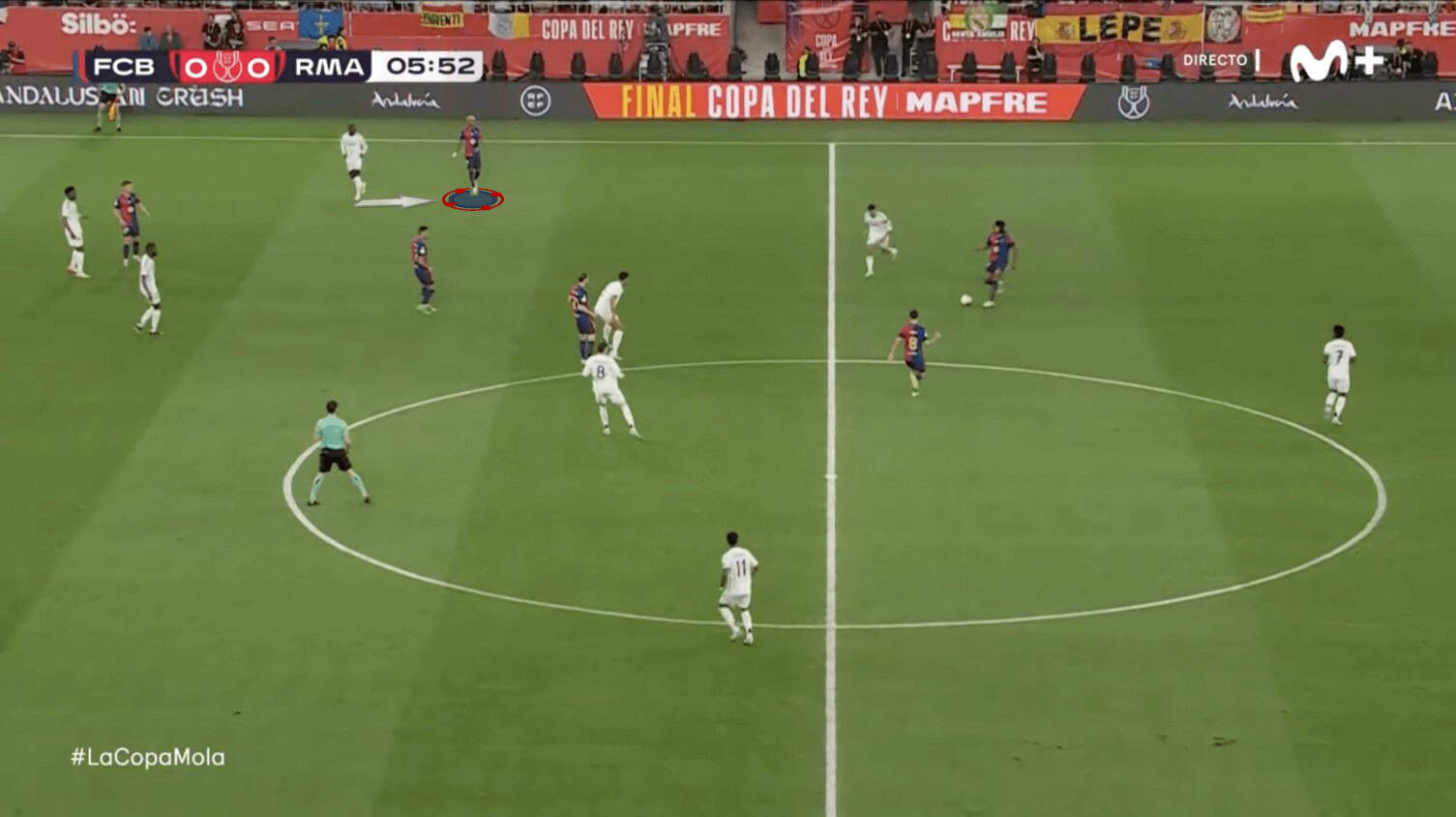
When Barça had possession of the ball on the right side, Real normally made a noticeable effort to get out and close down Yamal, with that duty being performed by the left-back.
Ferland Mendy especially did a great job of this during his few minutes on the field, as seen in Figure 2.
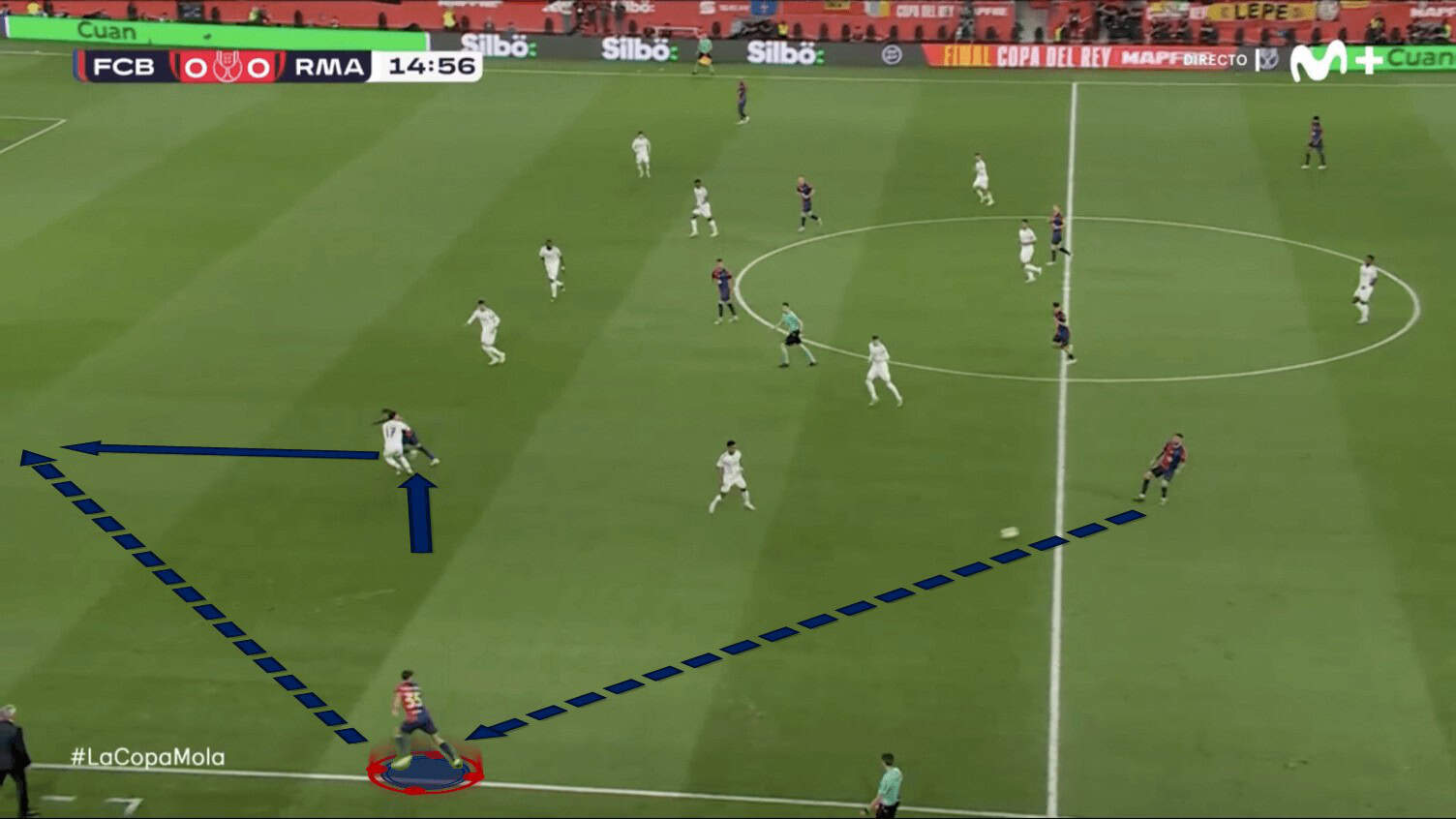
When Barça made it to the left wing, it was a very different story.
Raphinha inverted to play more centrally throughout Saturday’s game.
The responsibility for providing the width on the left wing fell to overlapping full-back Gerard Martín.
With Barça focusing a lot more heavily firstly on protecting the centre, then on preventing Yamal from getting the ball in space on the left, then on ensuring Raphinha didn’t get any joy in the left half-space, Martín was often able to enjoy a lot of time on the ball on Saturday which he could use to progress the ball either into the centre or up towards one of the attackers, like Raphinha, which was the case in Figure 3.
Here, Martín received in space, had time to settle on the ball and get his head up.
Subsequently, he played a good through ball to Raphinha, making a run in behind the Real Madrid backline.
This set Barça up to play a dangerous ball into the box via their left-winger.
Barcelona’s most common passing connection on Saturday was between left centre-back Iñigo Martínez and left-back Gerard Martín.
As many as 36 passes were played between those two players, most of which moved from centre-back to left-back.
Of course, Barcelona would have preferred to have their more glamorous and, with no disrespect to Martín, skilled players on the ball more often.
However, Real set up well to prevent that, frequently leaving Martín as a free man.
The lack of respect from Madrid, which was shown to Martín, allowed the 23-year-old full-back to become a key component of Barcelona’s first-half success.
Indeed, Martín would probably be the Barça player you’d want on the ball if you had to choose one from the starting XI.
With that said, Madrid still allowed him far too much time and space, enabling him to play dangerous passes that put Barça’s bigger threats in valuable positions.
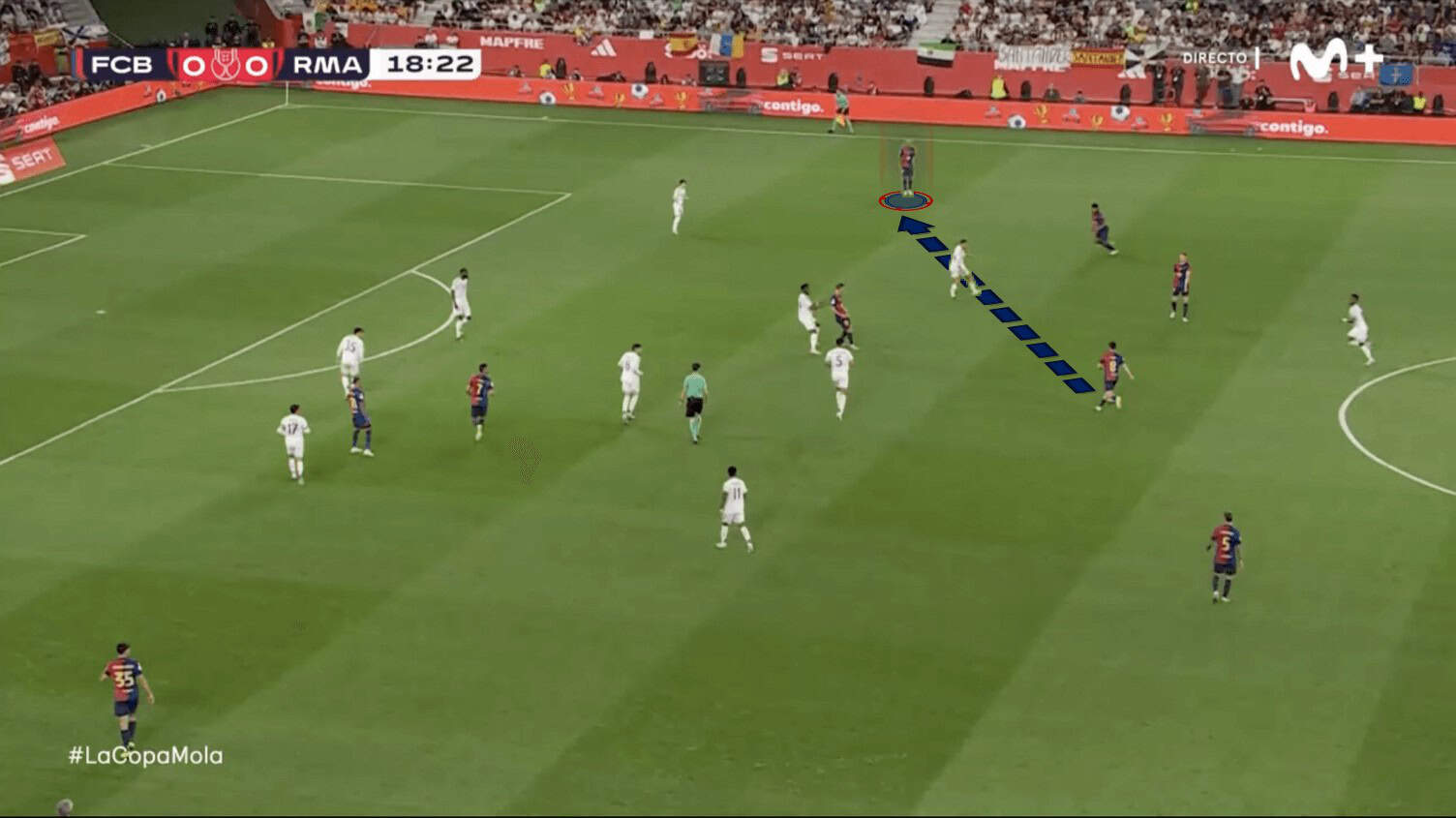
Although Madrid rightfully showed Yamal more respect, he too was able to exploit space on the wings frequently in the Copa del Rey final.
Sometimes, this was due to Real’s focus on protecting the centre, while other times, it resulted from Barça successfully drawing bodies towards the left to create space for Yamal on the right.
In Figure 4, we see the winger receiving in space on the wing.
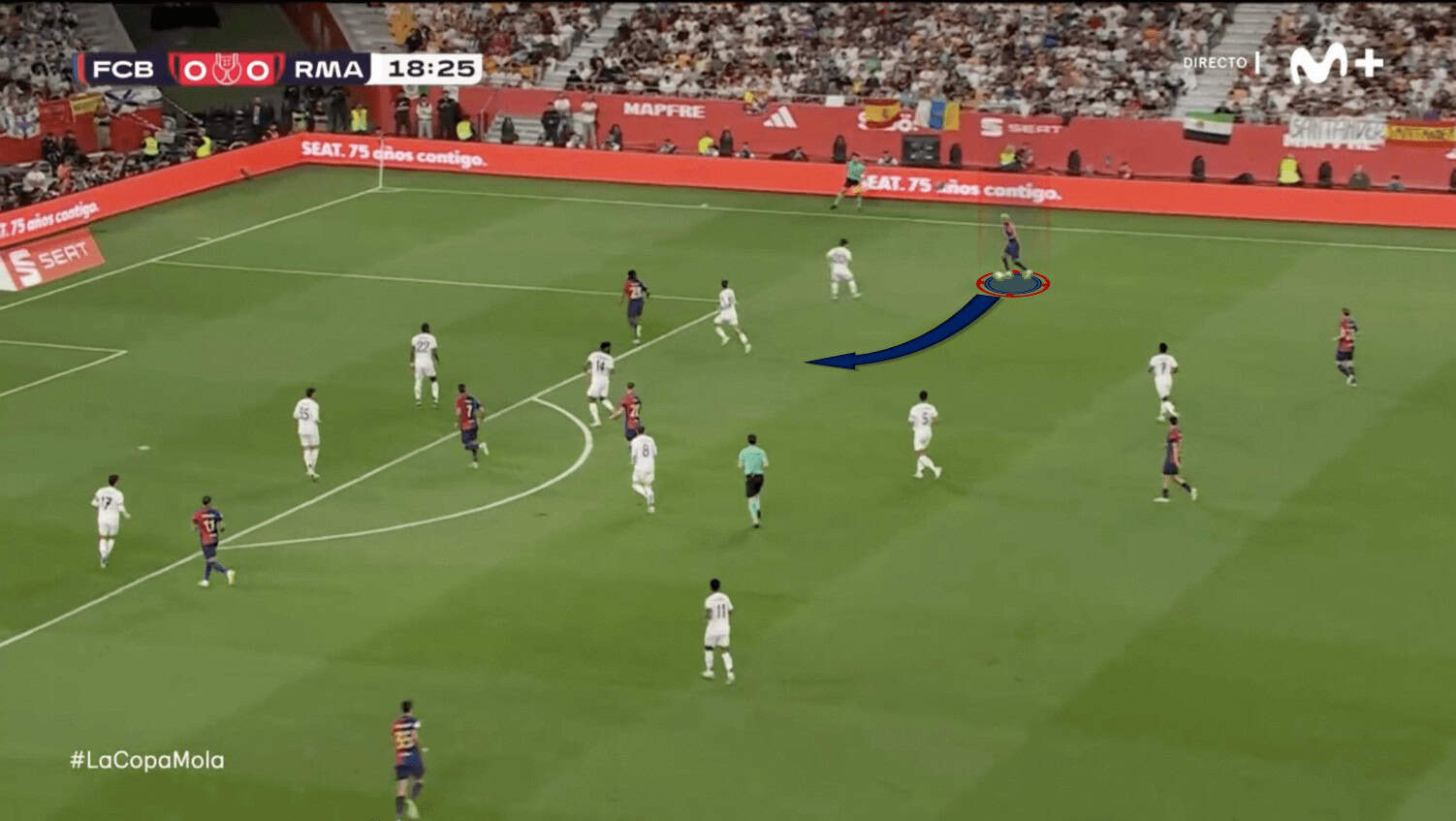
As play moves on, Barça bodies enter the box, including that of right-back Koundé, whose run provides a solid option for Yamal on top of attracting a defender away from the centre of the pitch.
At the same time, Real’s left-back comes out to close down the winger.
In the end, Yamal decides to dribble inside, attacking the box from the inside right channel rather than the right wing.
The playmaker does well to get past the Real full-back before getting a shot off, which just goes wide of the post.
Finding Yamal in space on the right wing and helping him use his dribbling ability was one of the main ways in which Barça made their wing play a vital part of their game plan on Saturday.
Yamal engaged in 26 offensive duels in this contest—the most of any Barcelona player.
The 17-year-old starlet’s dribbling ability is one of the key components of his game, and he showcased that in style versus Real Madrid, creating quite a lot for his side through his ball-carrying ability.
Barcelona Verticality
Another important in-possession principle of Flick’s Barça is their verticality.
In the second half on Saturday, Madrid began pressing much higher as they went into the break a goal down and felt the need to force the issue a bit more.
This led to Barça using the wings less and actually finding space through the centre at times, with more direct play and transitional attacks becoming an option as Real abandoned their mid-block, protecting the centre, for a higher press.
Real’s press created opportunities for them and made the game more end-to-end, which suited them more than Barça, who were unable to settle into their game as much in the second half as they had in the first.
However, Flick’s Barça are still tactically flexible and prepared for all game dynamics.
They were comfortable enough playing directly to create chances still, and, crucially, Madrid’s higher press, which came hand in hand with a higher defensive line, opened up space for Ferran Torres to make runs in behind, stretching Madrid vertically.
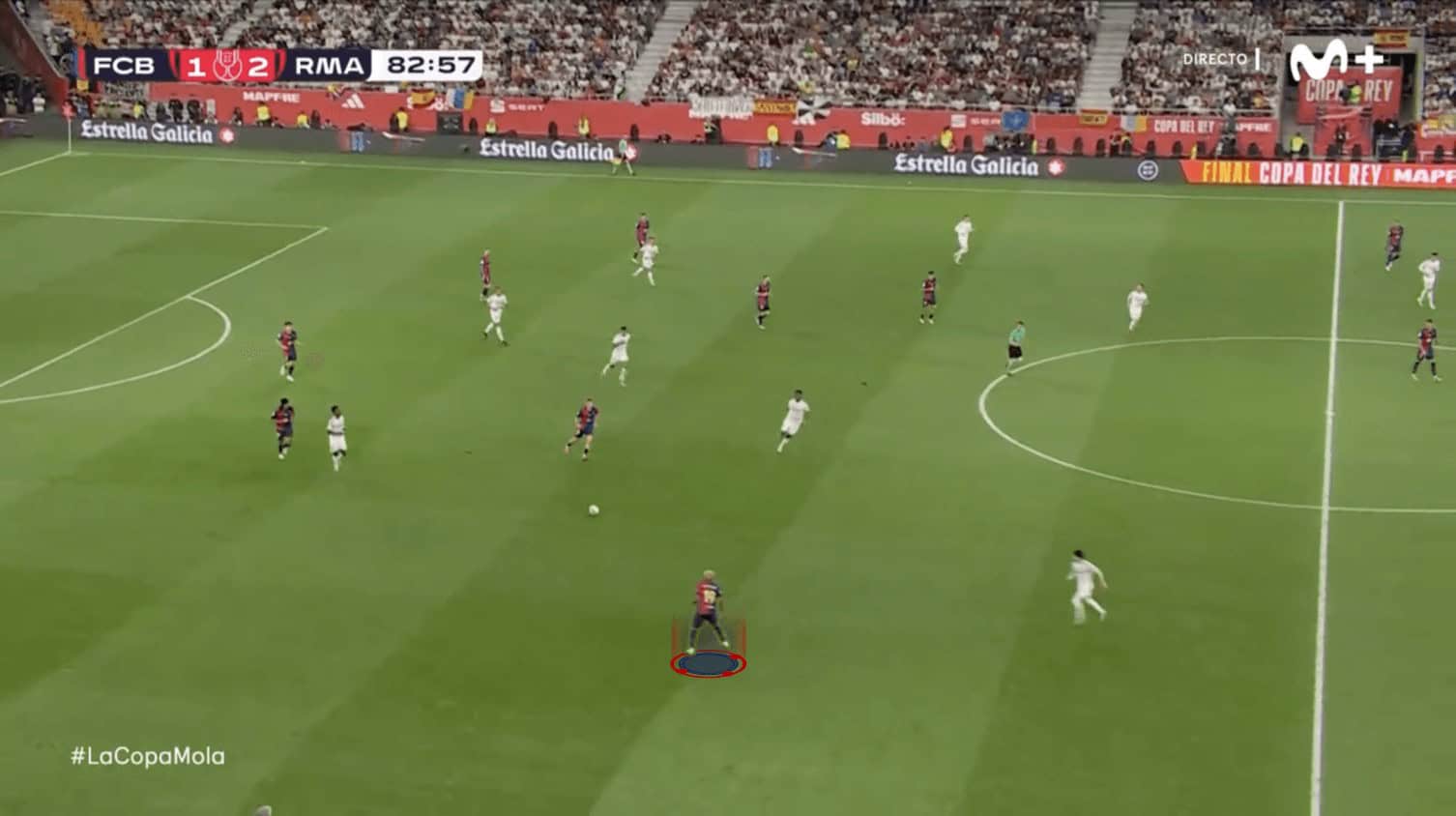
As the ball comes towards Yamal, he’s looking to the right, taking note of the oncoming pressure from Real’s left-back and noting Ferran Torres’ position.
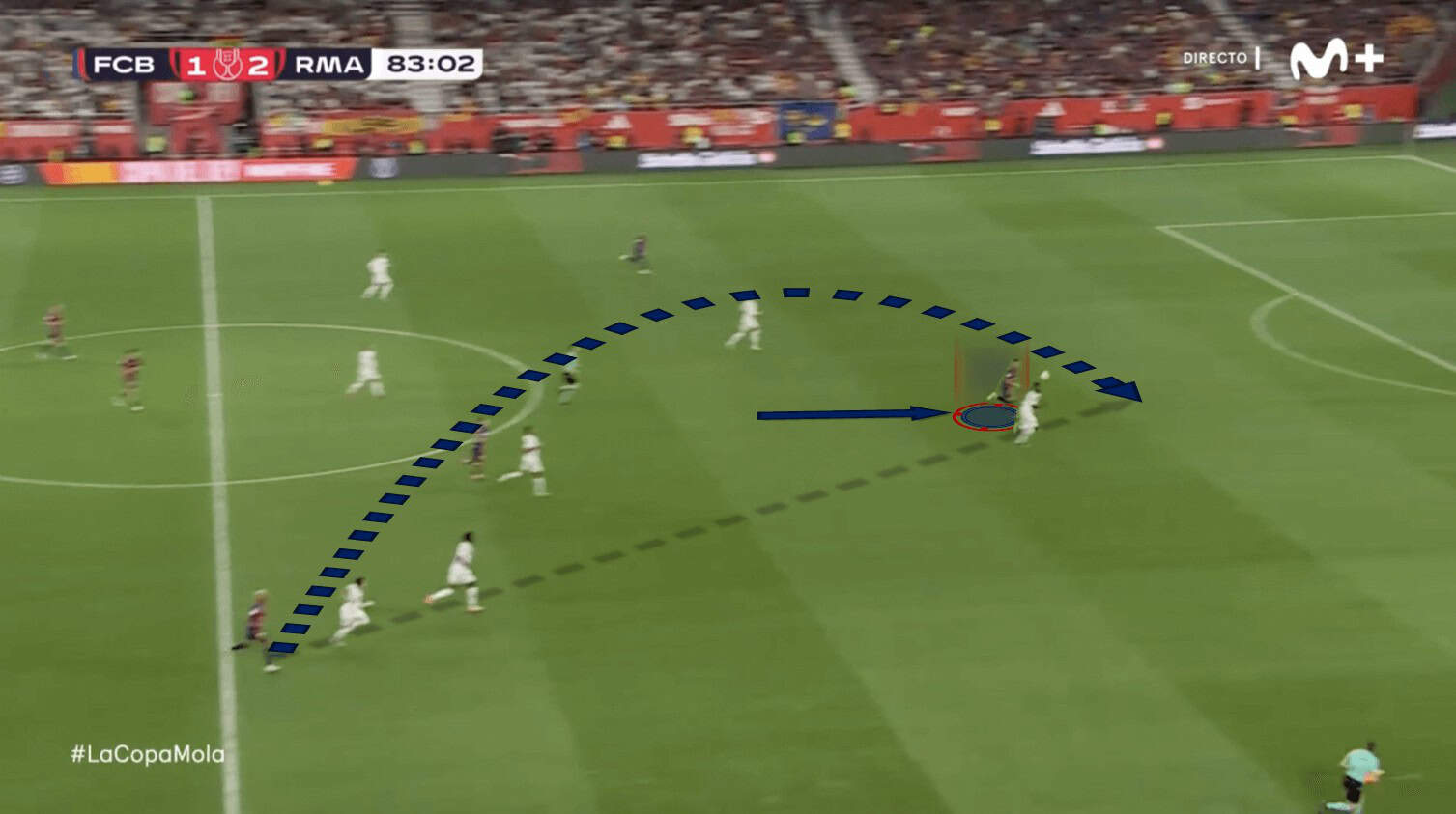
Torres makes a threatening run in behind Real’s backline, and Yamal picks the runner out with an excellent ball over the top.
Courtois comes out to close down Torres here as Rüdiger struggles to keep up, but the striker rounds Courtois, leaving Torres with an empty net to slot the ball into, tying the game back up again at 2-2 to take the game into extra time.
Indeed, Real Madrid’s high press helped them get back into the game, but it also left them open to these kinds of attacks, one of which proved critical.
Koundé Defensive Effort
The third and final principle we’re going to touch on, which contributed to Barcelona’s attacking success on Saturday, is their own pressing game.
We analysed Barça’s high press versus Real Madrid in detail earlier this season, and it is something that requires a whole article to delve into in detail and analyse properly.
We will examine one specific aspect of their press and how it played a key role in Saturday’s win; however, the role of right-back Jules Koundé, who ended the game with 11 interceptions—the most of any Barcelona player.
Koundé was full of energy and contributed massively in all phases of defence from start to finish on Saturday.
The 26-year-old adapted well to different phases of the game, pressing and counter-pressing effectively early on and late on when the game was tied.
Madrid were a little bit more reserved, as well as covering space behind his team’s defence and intercepting aerial balls when Madrid put Barça a bit more on the back foot in the second half of normal time.
His impeccable fitness helped him stand out for the entire two hours of play.
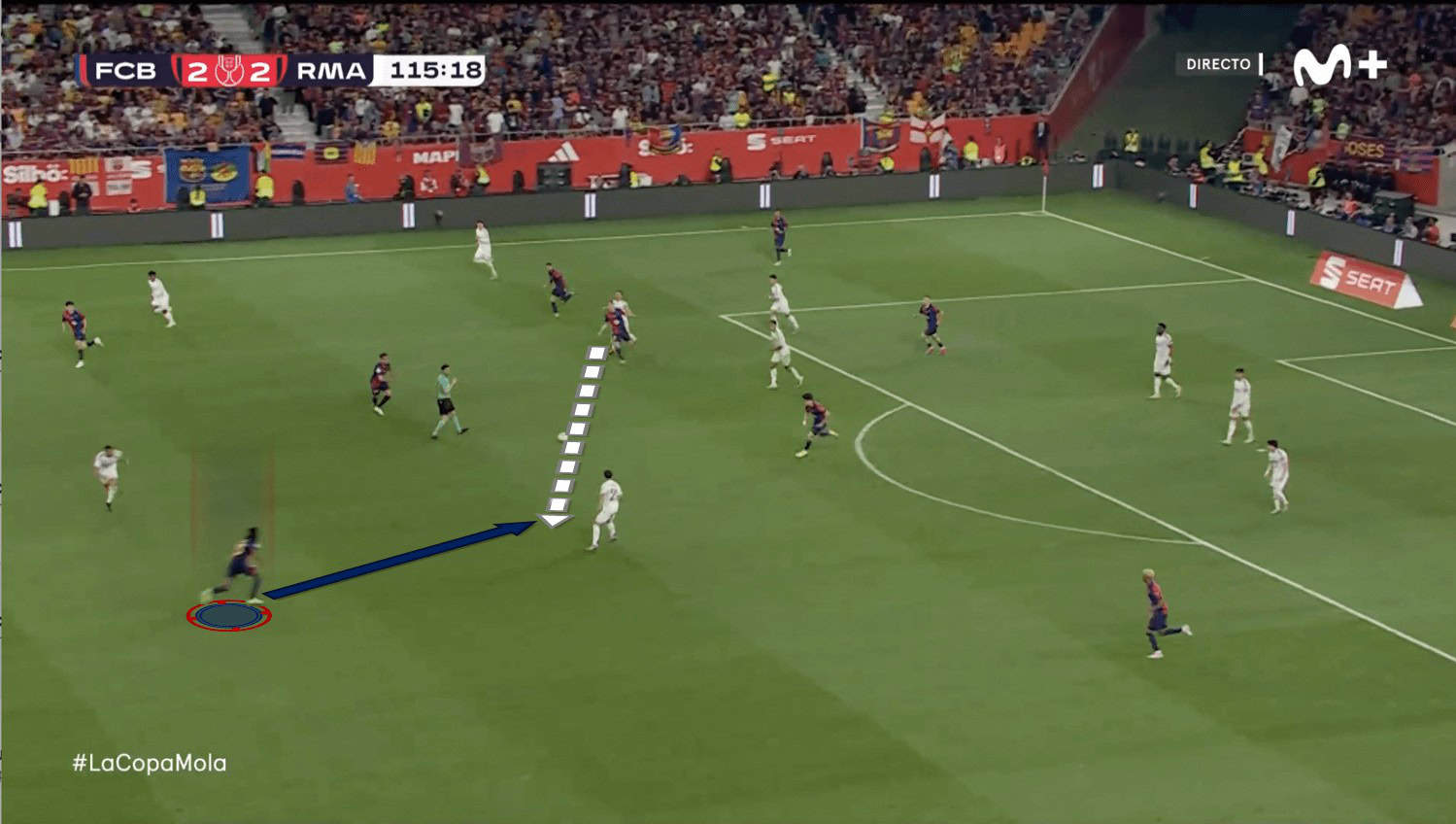
The best example of Koundé’s pressing and how it contributed to Barça’s win came very late on indeed.
In our example above, the right-back can be seen bursting upfield as Real try to play out of their half.
Koundé spots an opportunity to get in ahead of the Real receiver and takes it as the play moves on.
The Frenchman wins the ball back for his side and sets up a shooting opportunity, which leads to Barcelona’s winner.
Here, the press directly created Barcelona’s winning goal.
However, there were numerous occasions throughout Saturday’s game when Koundé’s pace and anticipation enabled Barça to regain possession in both the final third and the middle third, leading to goalscoring opportunities for the Catalan side.
The fact one of those was eventually rewarded with a goal is a testament to Koundé’s perseverance and, again, fitness levels from start to finish.
Conclusion
In conclusion, Barcelona stretched Real Madrid both horizontally and vertically at different points in Saturday’s game to break down Los Blancos and create chances.
Furthermore, their high pressing successfully denied Real opportunities to advance upfield on numerous occasions, with Koundé’s work, in particular, standing out both visually and in terms of the numbers.
This was a well-deserved victory for Barça, who succeeded in overcoming Real’s solid defensive structure, protecting the centre of the park with the help of the aforementioned principles.
