
Azzedine Ounahi’s arrival at Girona ahead of the 2025/2026 La Liga season was not just another midfield signing; it represented a response to a clear structural challenge.
However, the subsequent action is not exploited effectively.
He then continues his press toward the ball-side flank, helping Girona regain possession.
Girona’s tactics blueprint under Míchel prioritises controlled possession and dynamic interior movement.
Still, the team previously lacked a consistent conduit capable of transforming build-up into vertical progression against organised defensive blocks.
Ounahi’s profile, technically secure on the ball, pressed resistant, capable of carrying the ball forward, and increasingly impactful in scoring moments, has aligned with Girona’s need for a midfield operator who can link phases, destabilise mid-blocks, and create value in the final third.
In this Azzedine Ounahi scout report, we will define Azzedine Ounahi’s style of play and his initial impact on Girona’s performances.
Azzedine Ounahi Spatial Periodisation & Interior Movement
Azzedine Ounahi doesn’t play like a typical number 8 who stays in one part of the midfield.
Instead, he plays with more freedom, almost like a roaming playmaker.
He drifts between the centre of the pitch and the left side, always looking to make himself available for a forward pass and help the team move the ball up the field.
This positional elasticity allows Girona to escape low- and medium-blocks without reverting to horizontal circulation, which historically reduced their penetration.
His late arrival into pockets of space, particularly between the opponent’s midfield and defensive lines, enables him to receive facing forward and to provoke delayed defensive reactions.
 The sequence begins with Girona circulating possession on the left side, drawing Real Madrid’s midfield block toward the ball.
Azzedine Ounahi initially holds a wider, deeper position, delaying his movement as Madrid’s defensive structure shifts horizontally.
 Ounahi makes a curved interior run from the left half-space into zone 14, arriving late and outside the immediate scanning range of Madrid’s centre-backs.
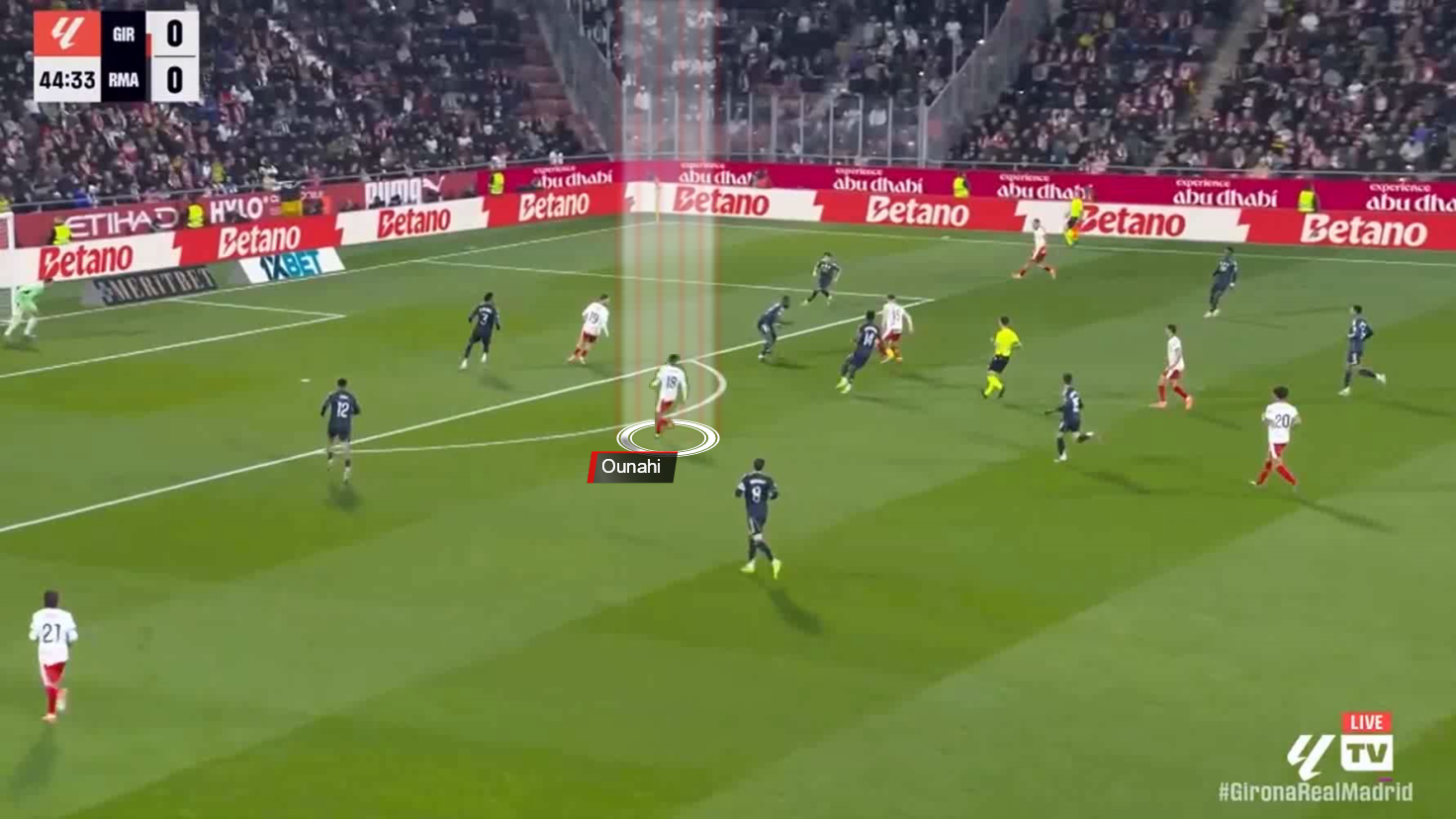
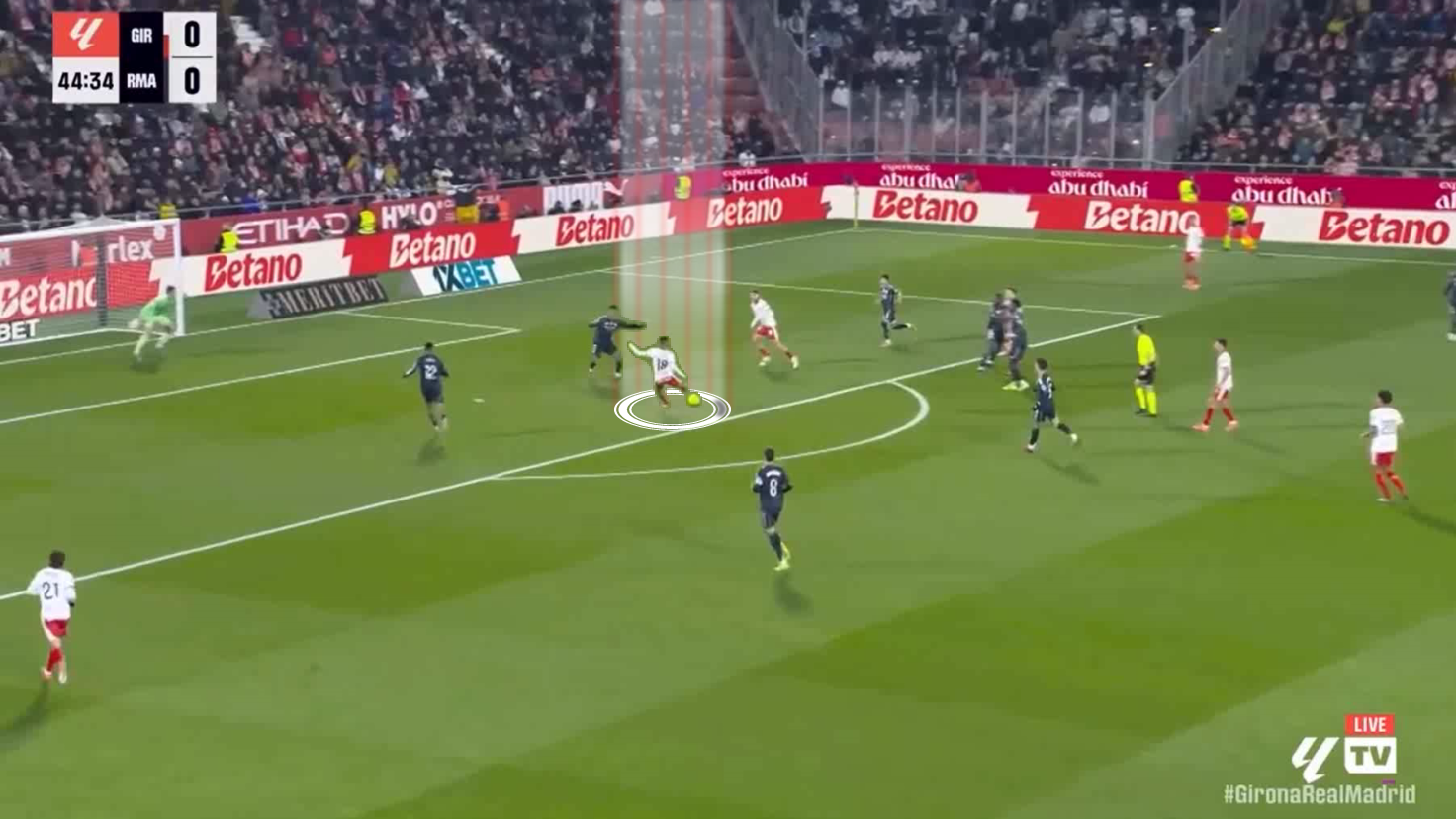 Receiving on the half-turn, he uses his first touch to open his body and create separation from the nearest defender, who is unable to step out without breaking the defensive line.
Recognising the lack of immediate pressure and the goalkeeper’s positioning, Ounahi opts for a direct strike rather than an extra touch.
This type of spatial engagement not only creates a direct scoring threat but also compels opponents to adjust their mid-block shape asynchronously, opening corridors for Girona’s front line to exploit.
Azzedine Ounahi Ball Progression, Transitional Carries & Press Resistance
Azzedine Ounahi has been a key player for Girona this season, standing out for his ability to move the ball forward even under heavy pressure from opponents.
While many players might pass the ball sideways to avoid risk, Ounahi excels at carrying it directly through or around the defence.
This ability to absorb contact from defenders and still advance has been crucial in preventing Girona’s attack from stalling under aggressive pressing from the opposition.
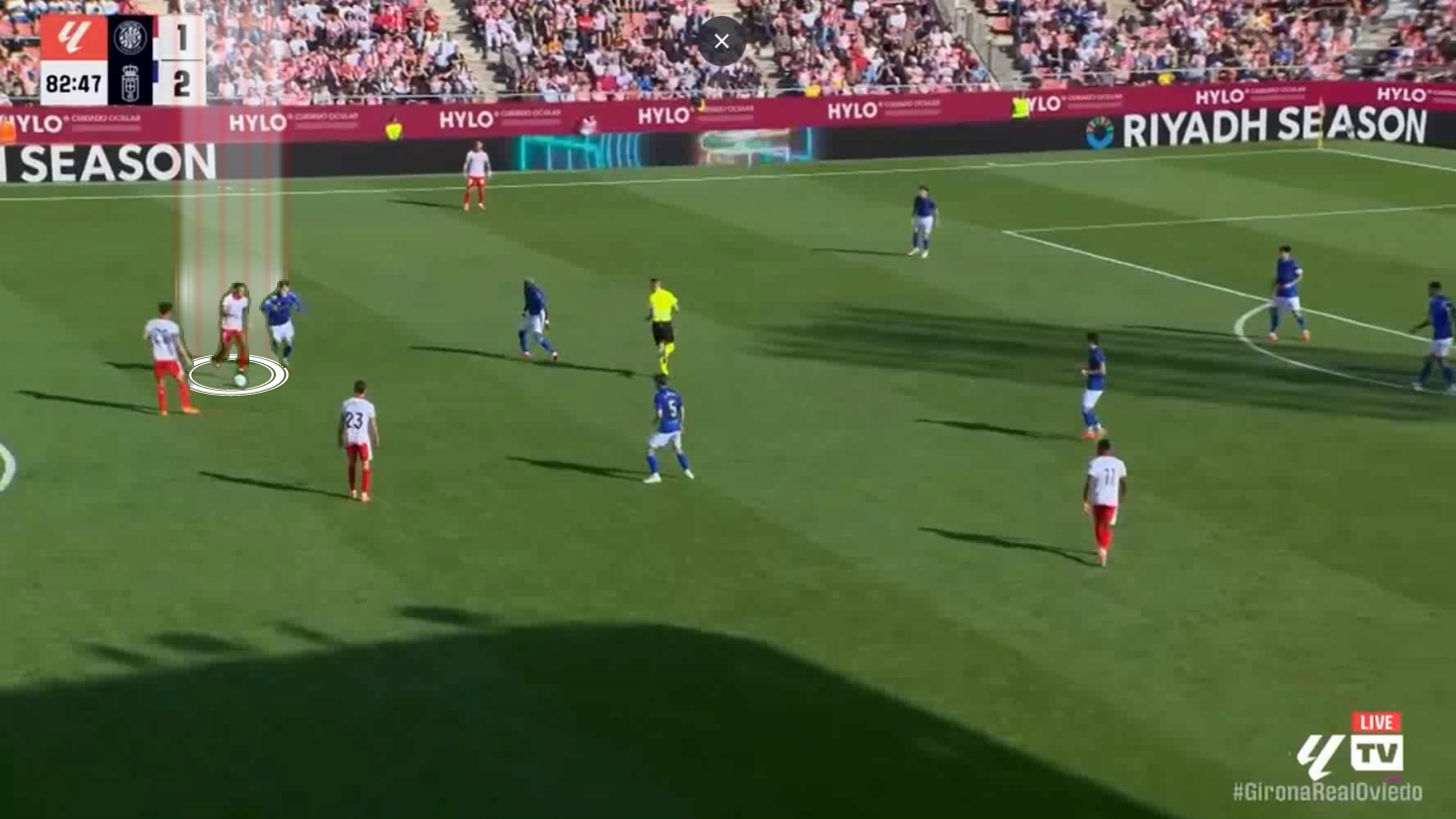
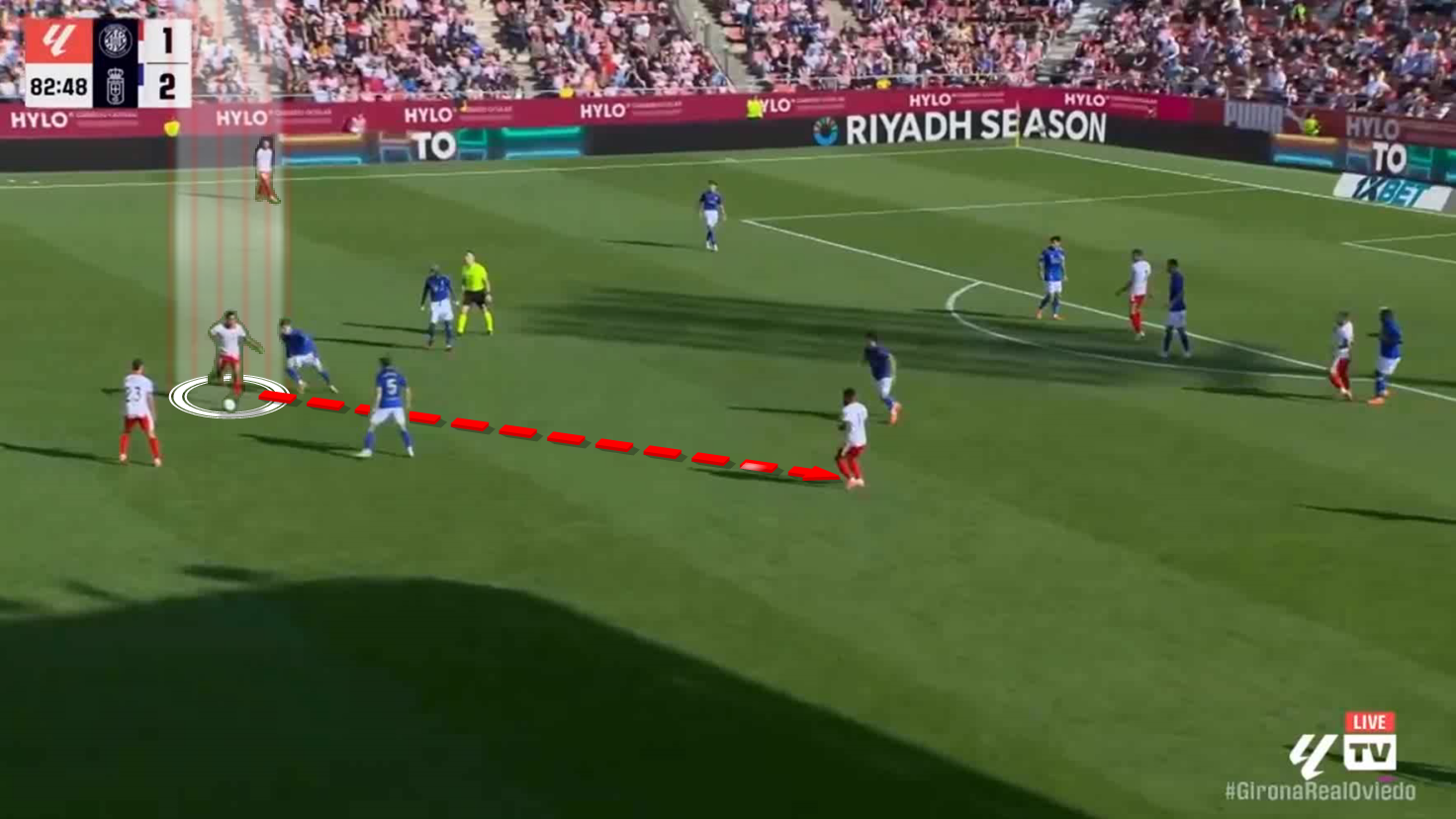
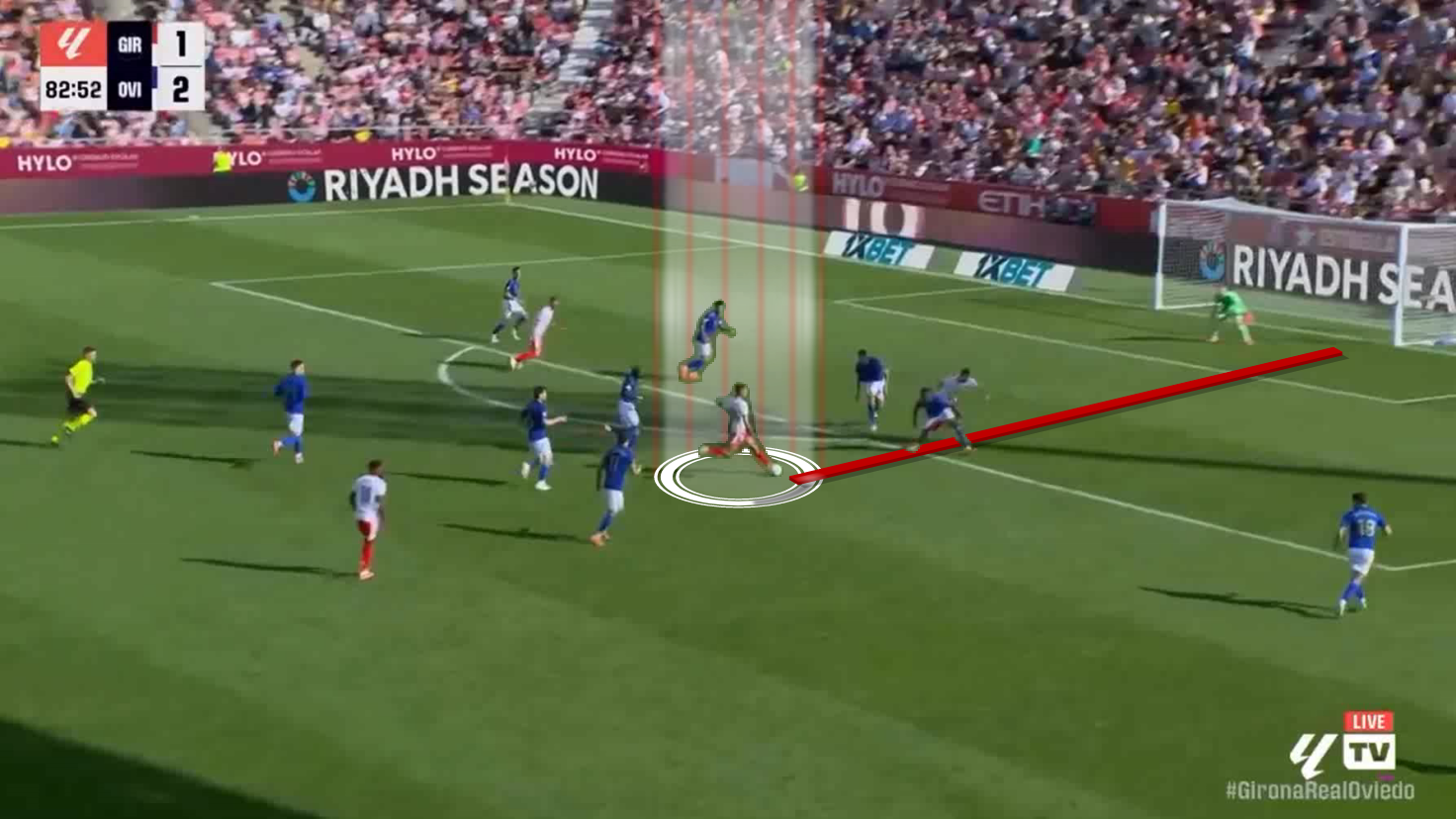 The goal against Real Oviedo develops from a transitional moment, with Ounahi initially holding a deeper interior position as Girona advances the ball.
As Oviedo’s defence retreats, he accelerates late into the central channel, arriving unmarked at the edge of the box.
Receiving a pass, he takes a controlled touch and finishes decisively, exploiting the defenders’ passive positioning.
The action highlights his timing of arrival and ability to convert transitional advantages into an end product.
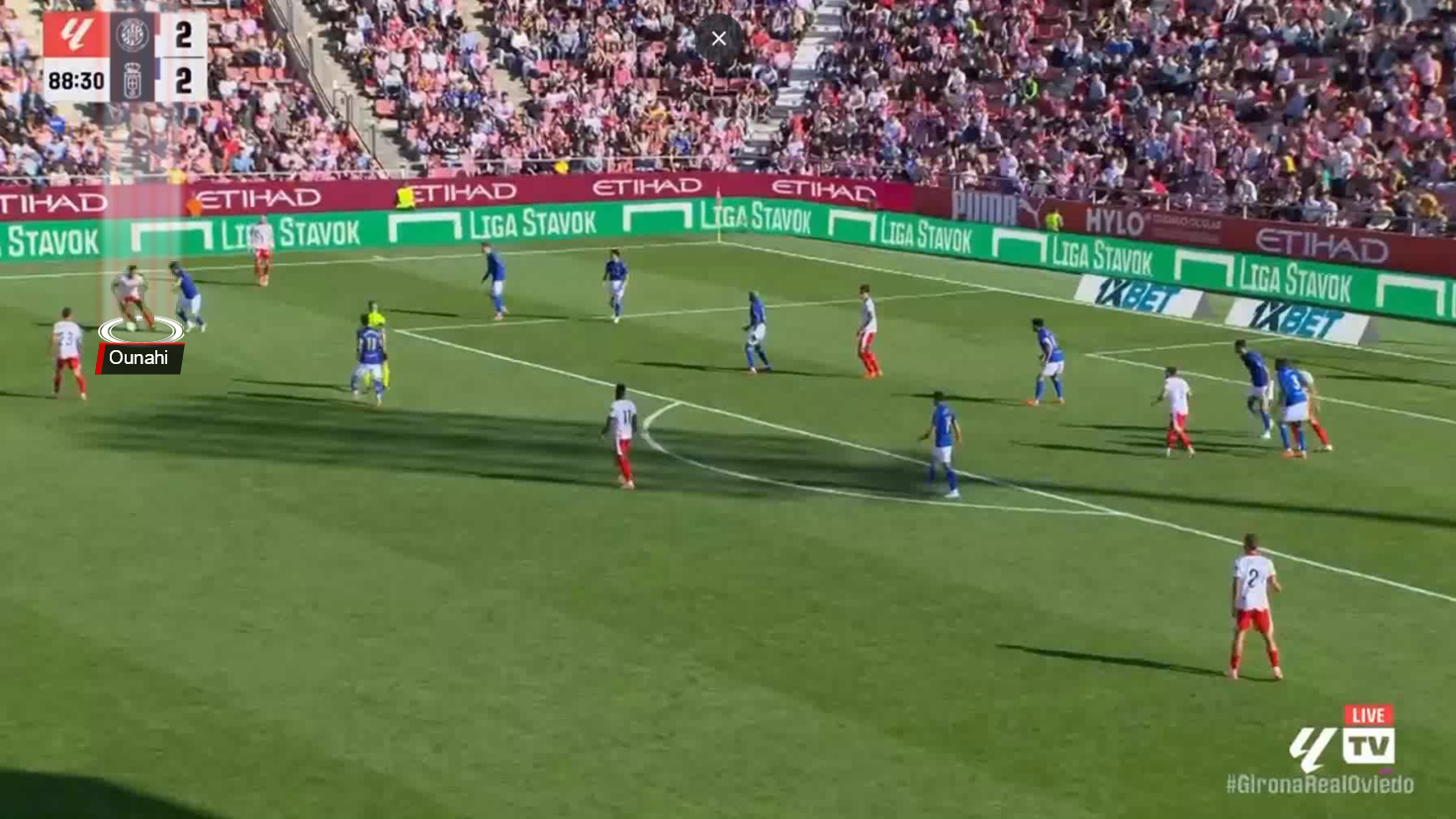
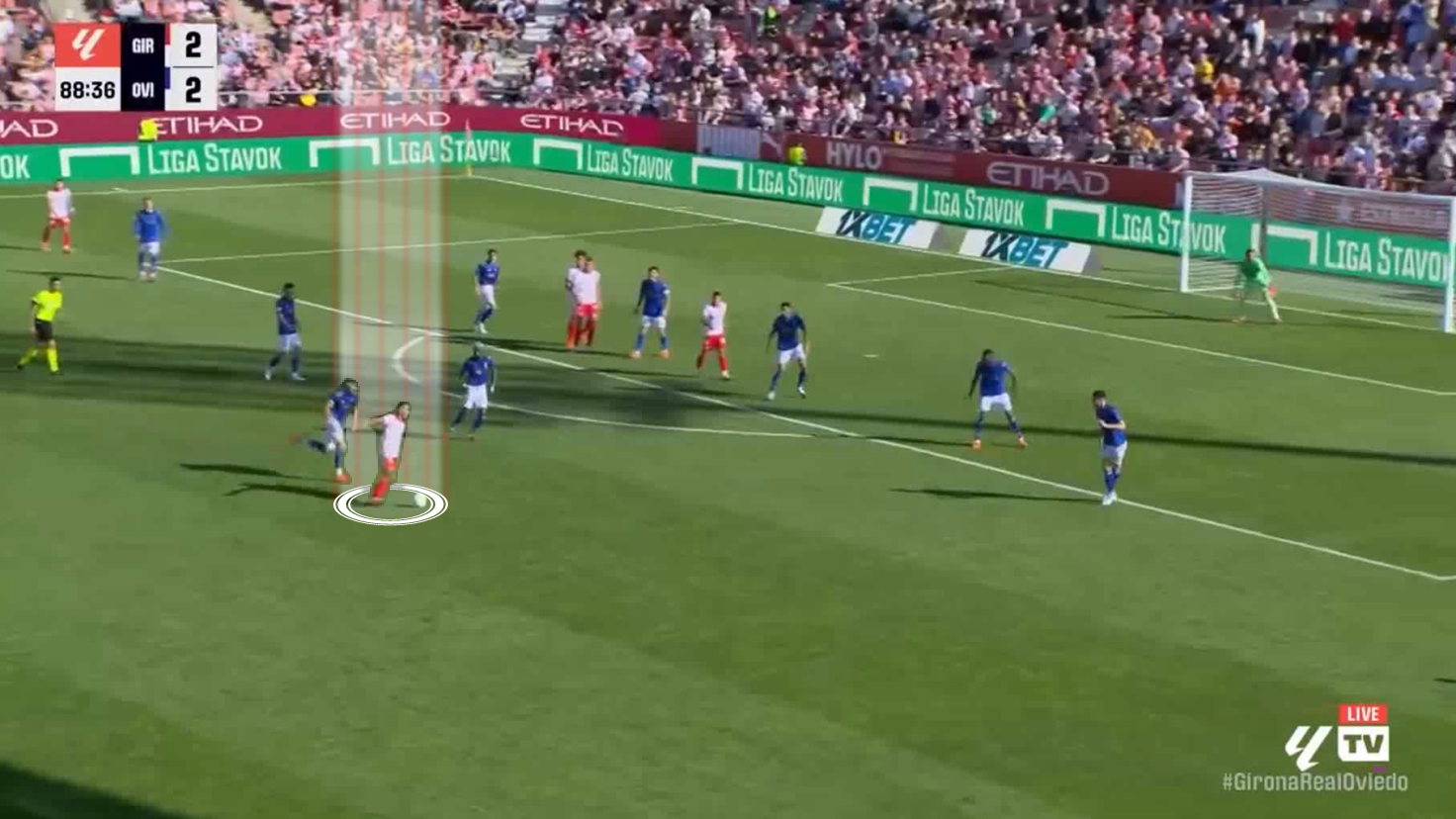
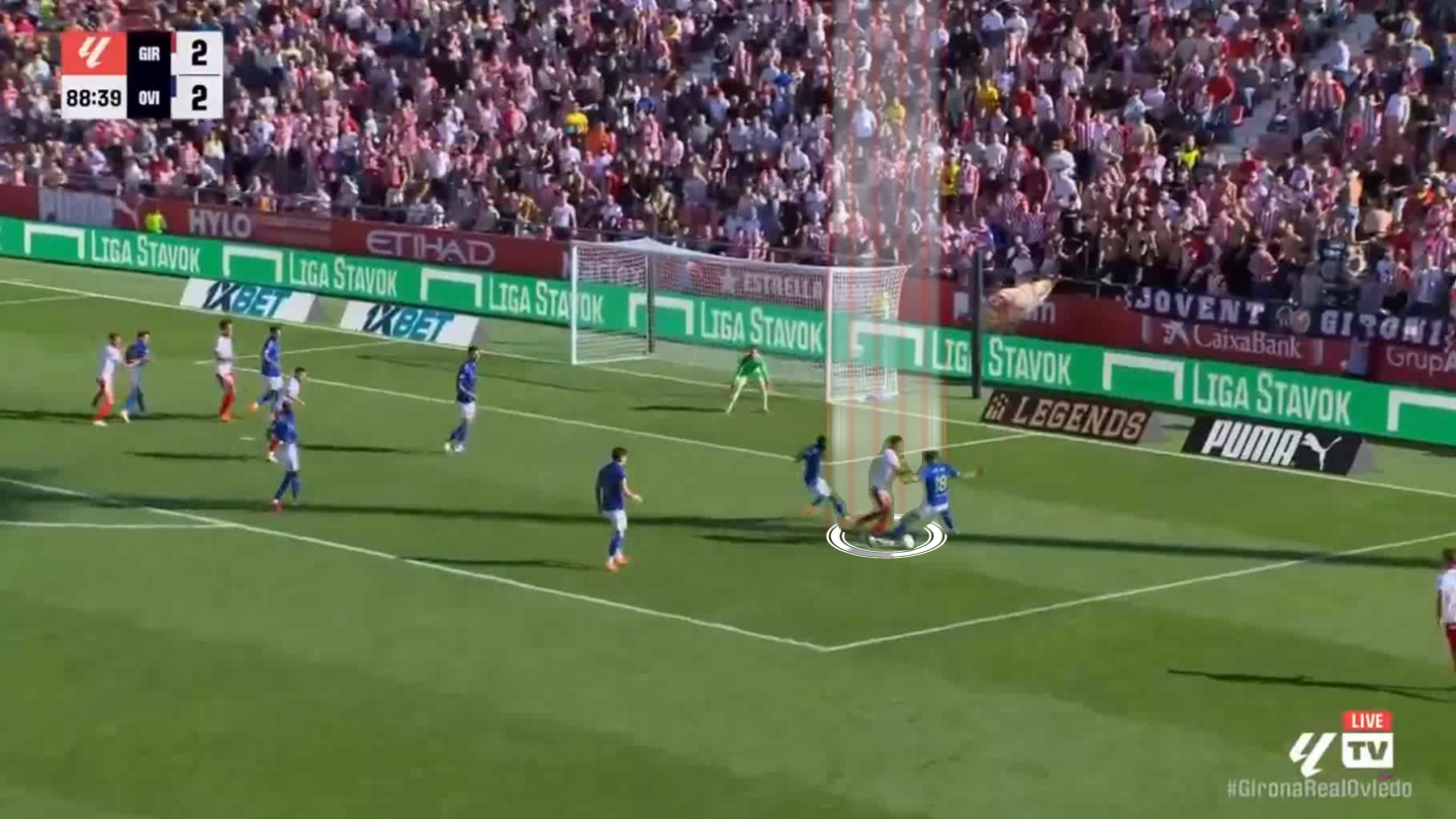
The penalty sequence begins with Ounahi receiving between the lines during a transitional phase, as Oviedo’s midfield retreats and the defensive line steps unevenly.
Rather than releasing the ball early, he carries forward into the edge of the box, drawing the nearest defender toward him.
By shifting the ball across his body at the moment of contact, Ounahi forces the defender to make a late challenge, resulting in a foul inside the area.
The action reflects his ability to prolong advantage, invite pressure, and convert transitional imbalance into a decisive outcome.
Azzedine Ounahi Final-Third Decision-Making
Azzedine Ounahi’s statistical output this season, three goals and two assists, is essential, but the context of those contributions reveals deeper tactical impact.
Ounahi has brought a new threat to Girona’s attack by scoring from central areas of the field, not just from passes between forwards or crosses from the wings.
This forces defenders to change how they play, often pushing them to step up and block his shots.
As a result, the defensive structure in the middle of the field becomes less compact and easier to break down.
Ounahi’s goal against Athletic Bilbao arises from a structured positional build-up that transitions quickly into a half-space overload.
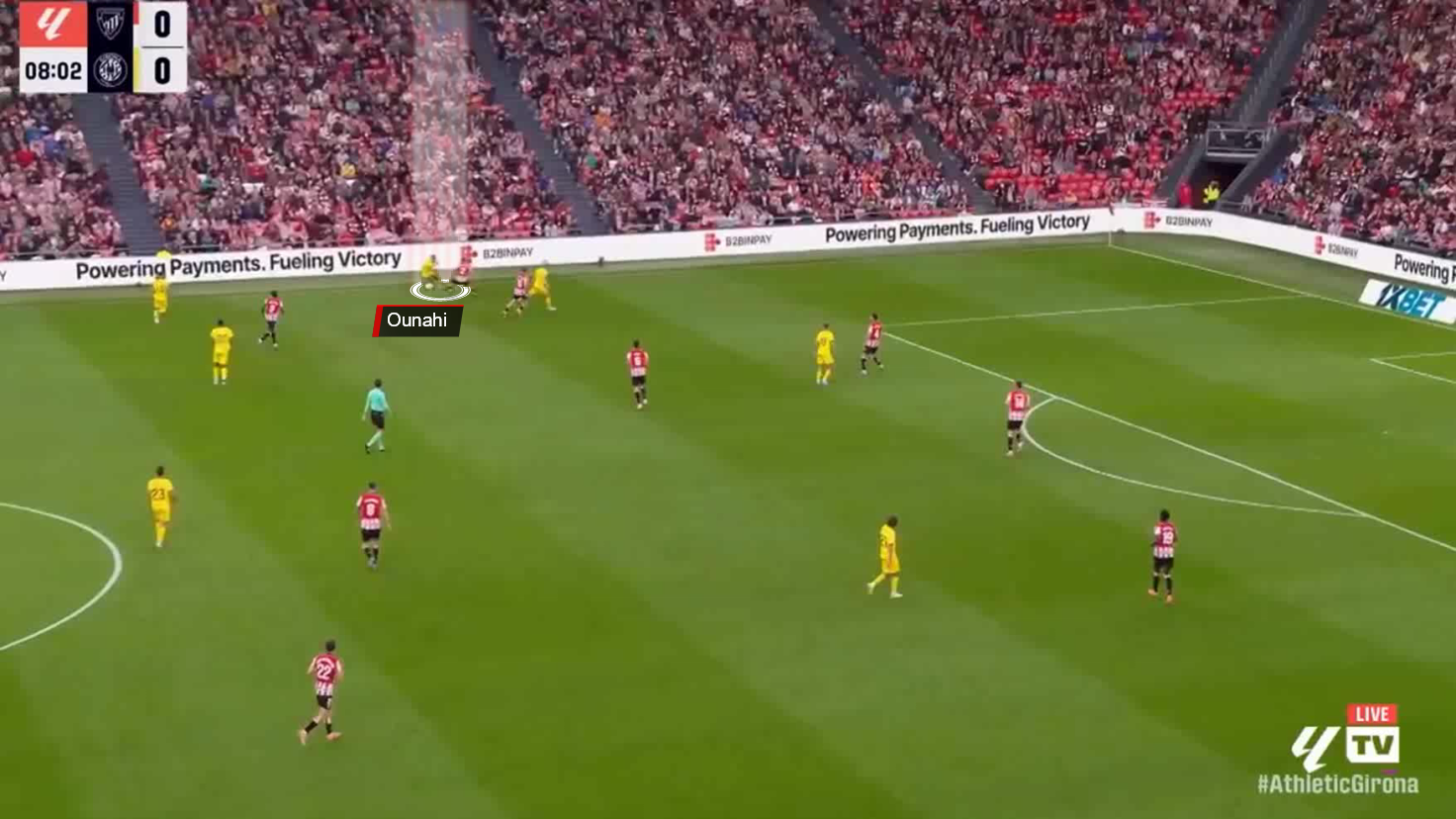
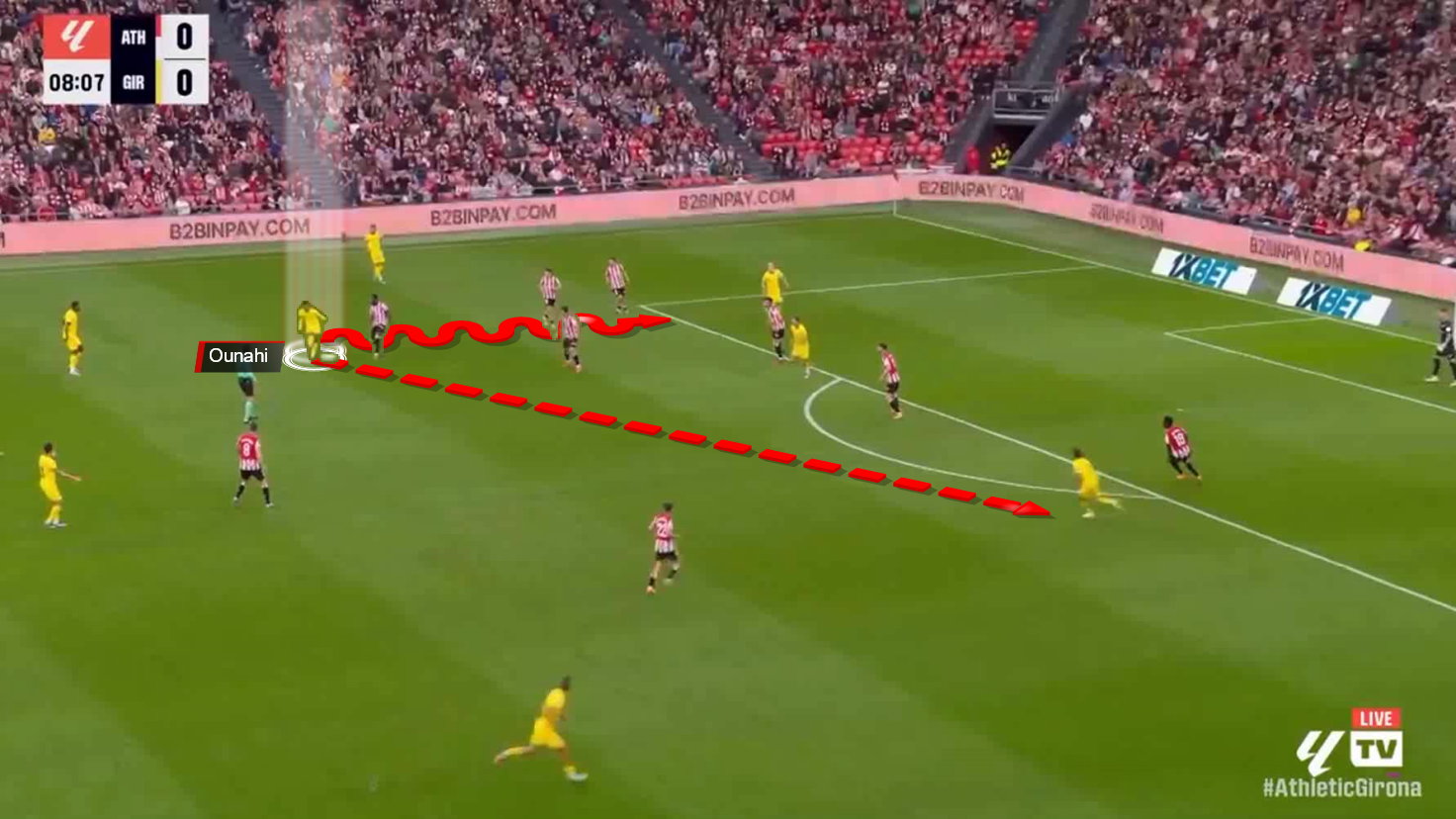
Girona circulate possession on the left, pulling Bilbao’s midfielders toward the ball, while Ounahi positions himself just outside the box in the central channel.
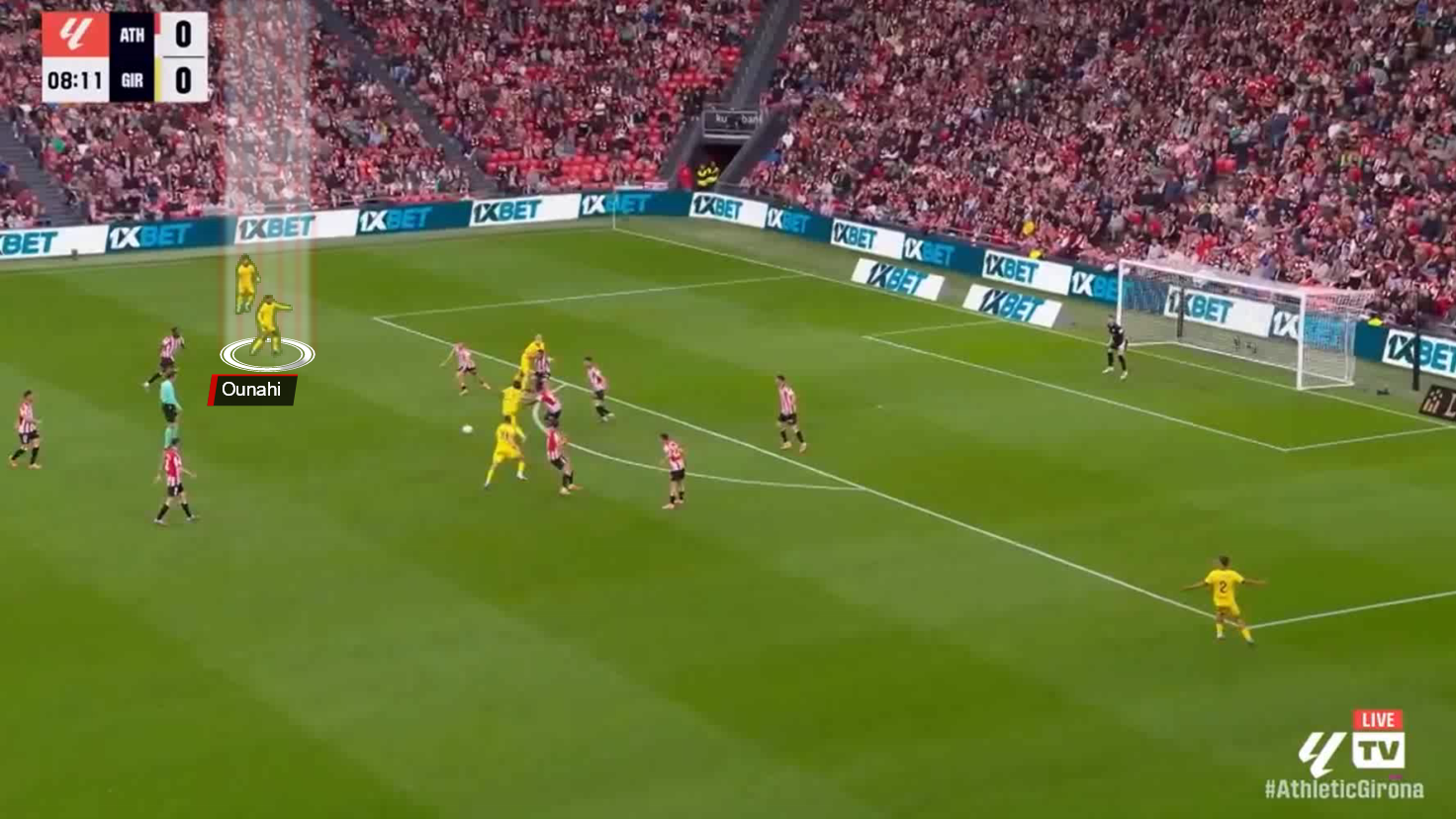
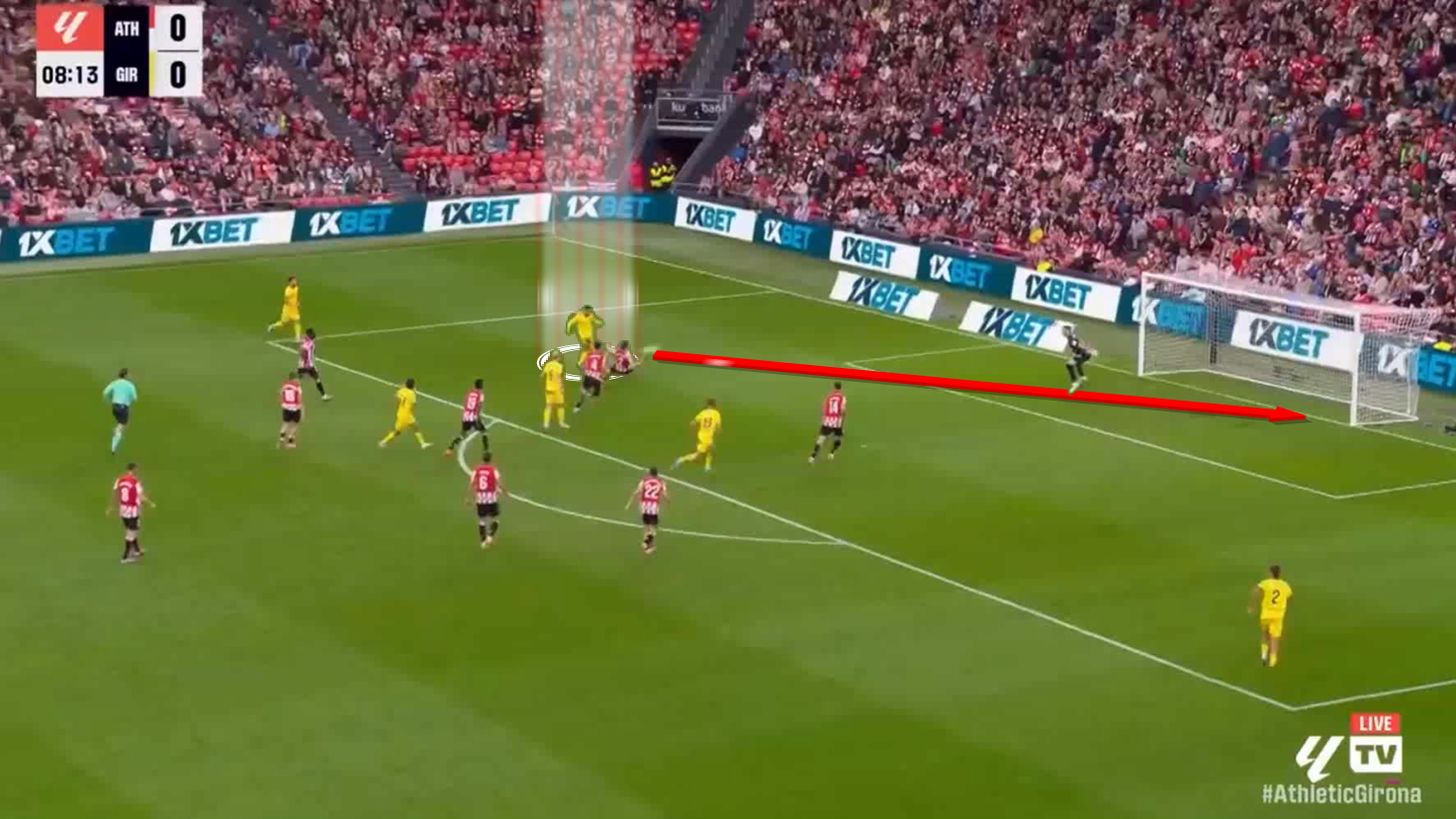
As the ball is switched inside, he times a late run between the centre-backs, arriving unmarked in a pocket of space created by Bilbao’s defensive shift.
Receiving on the half-turn, he takes a composed first touch and fires low into the far corner, exploiting the slight gap between the goalkeeper and the near post.
Azzedine Ounahi Defensive Contribution
Azzedine Ounahi’s impact extends beyond direct ball involvement, with his off-the-ball movement serving as a key structural catalyst for Girona’s transitions and positional balance.
Although Azzedine Ounahi isn’t primarily a defensive midfielder, his work off the ball is vital to Girona’s overall defensive strength, especially when the team shifts from attack to defence.
During these moments, instead of aggressively tackling opponents, he focuses on smart positioning.
He consistently positions himself to block forward passes from the other team, slowing their attack and giving his own team time to get back into defensive shape.
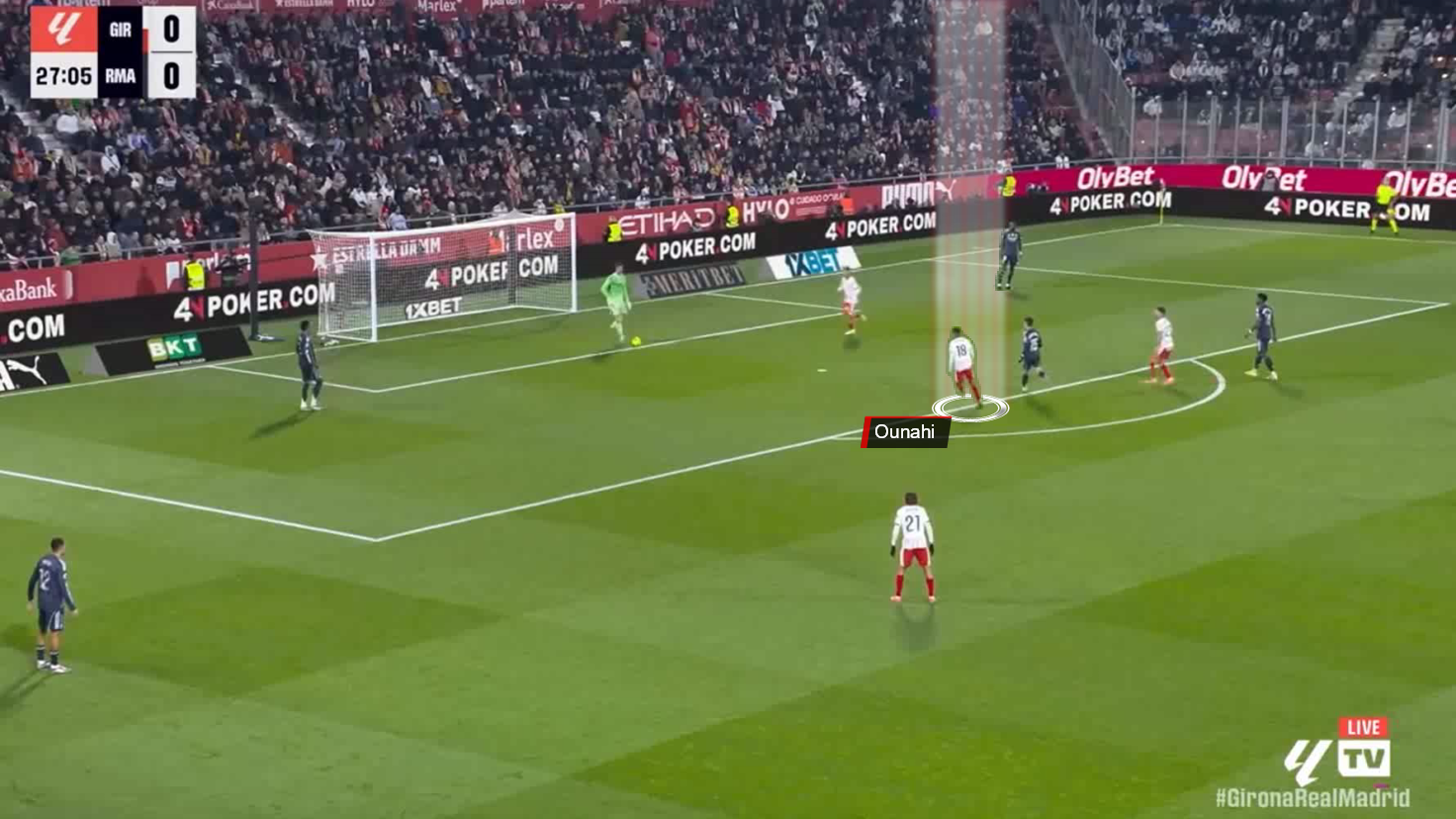
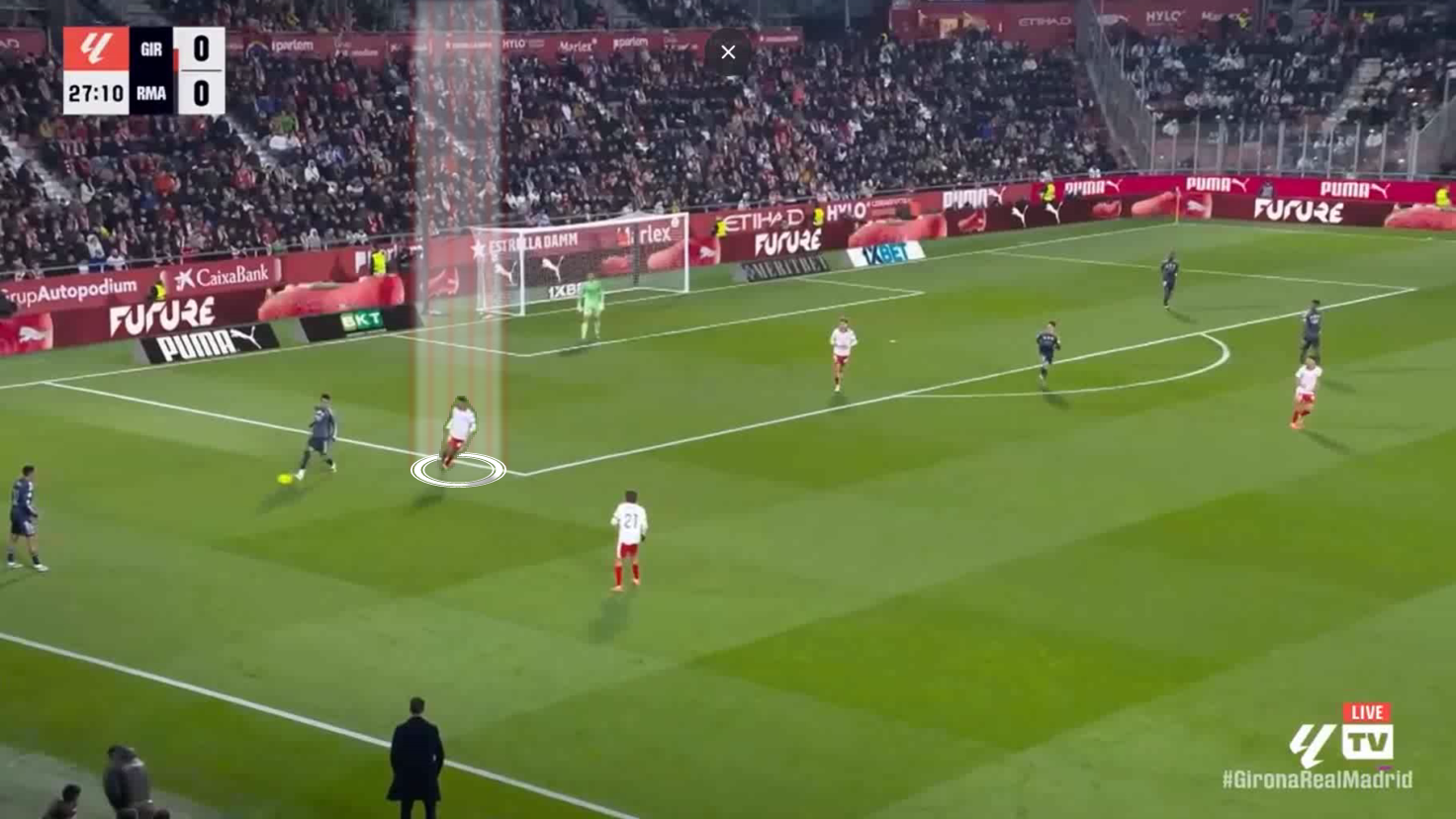 Here, Azzedine Ounahi shadows Arda Güler, cutting off the vertical passing lane and forcing play into a diagonal circulation toward the right flank.
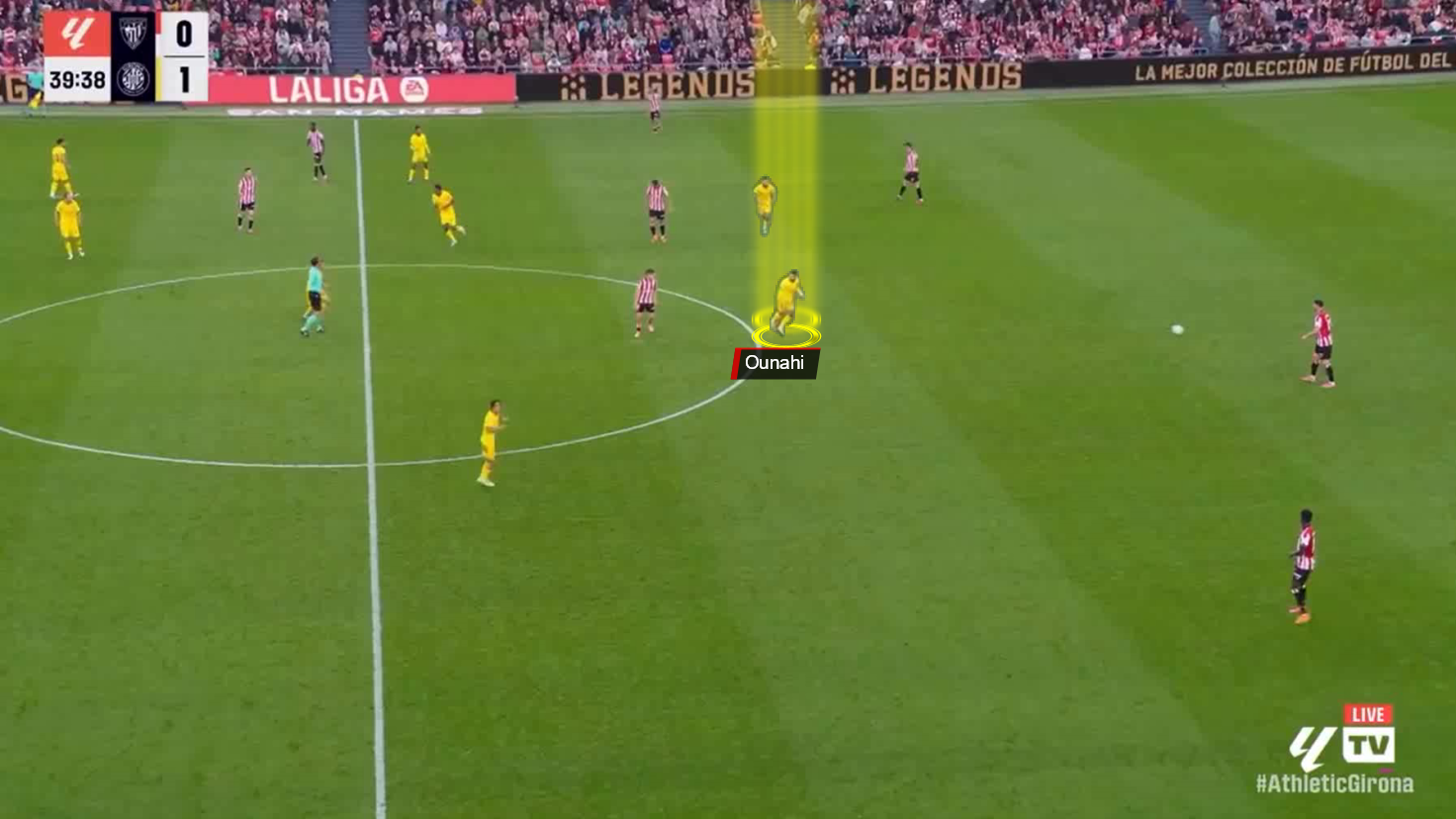
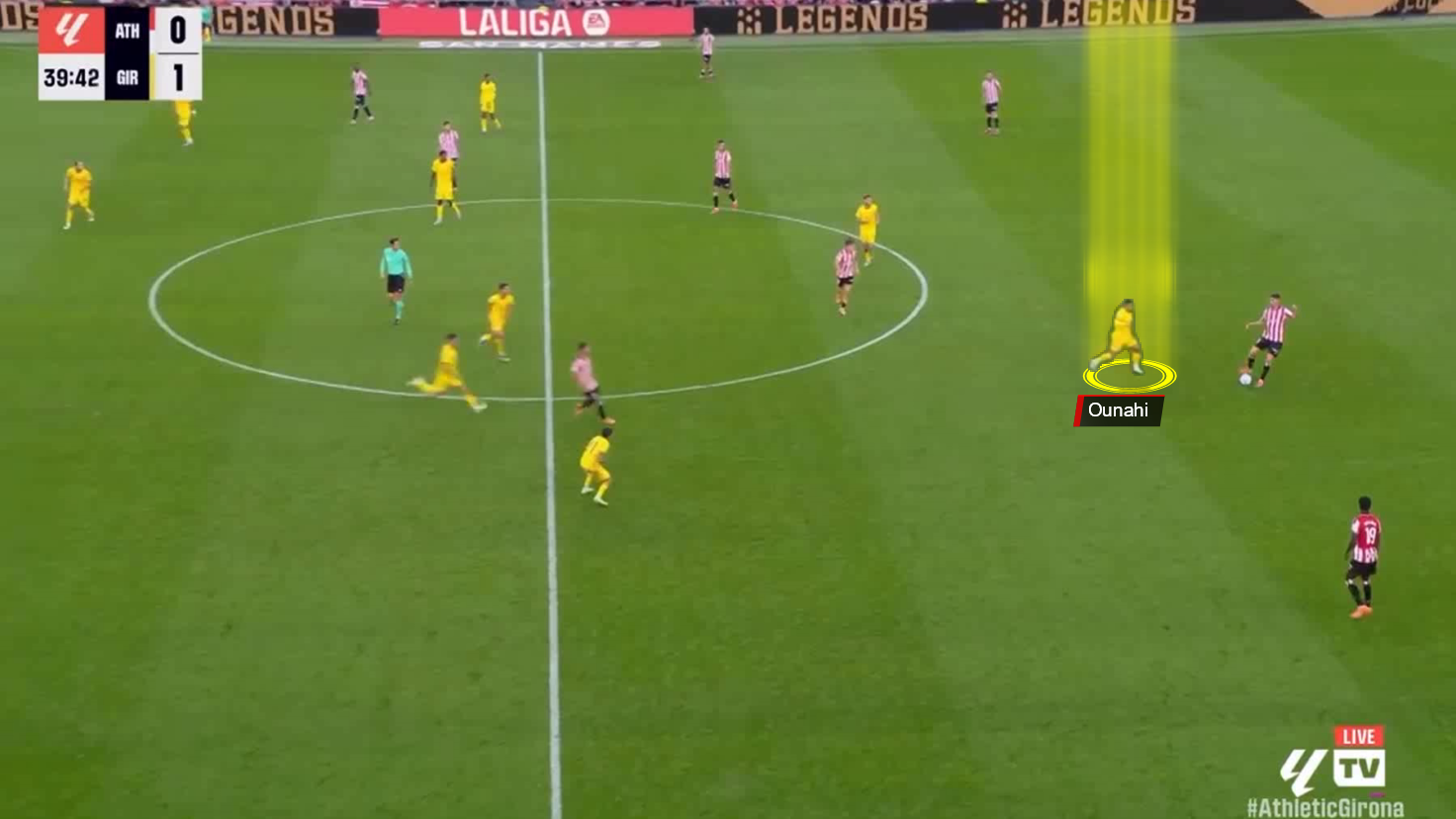
This approach allows Girona to regain compactness after turnovers and prevents opponents from immediately gaining access to central zones.
During organised defensive phases, Ounahi tends to occupy intermediate spaces between midfield and attack, maintaining horizontal compactness and supporting pressing triggers by stepping toward the ball-side zone when required.
Conclusion
Azzedine Ounahi’s 2025/2026 season at Girona highlights how a player can thrive when their role perfectly matches the team’s strategy.
His true value isn’t just in statistics, but in his crucial in-game decisions, carrying the ball under pressure, making smart runs, and choosing the right moment to shoot or pass, which have directly impacted match outcomes.
He has proven his ability to perform key actions in high-pressure situations, such as leading a comeback against Oviedo and scoring a vital goal against Real Madrid.
By acting as the link between defence and attack, Azzedine Ounahi has solved Girona’s long-standing issues with moving the ball forward effectively.
His performance is a prime example of how a technically skilled and tactically astute midfielder can significantly boost a team’s attacking threat and overall efficiency.
