
Tottenham Hotspur will face Aston Villa on Sunday at the Tottenham Hotspur Stadium for game week eight of the Premier League.
It will be a good opportunity for Spurs to continue their journey to the top spots.
They have been climbing up the standings to reach third place with 14 points, just two points away from the leaders, Arsenal.
The start of the season under the management of the new head coach, Thomas Frank, has been positive so far, especially in terms of the home games that the team has played.
Tottenham Hotspur kicked off the season with a convincing 3-0 win over Burnley.
They then went to the Etihad Stadium to beat Manchester City 0-2 before losing at home against Bournemouth.
What followed was a 0-3 away win against West Ham United, a draw against Brighton, another draw against Wolves, and finally a crucial away win against Leeds United.
Overall, the results and performances have been positive under Frank’s management so far, as he has relatively succeeded in making the team much more compact and organised defensively, and capable of resisting even when facing powerful attacking teams such as Manchester City.
That said, a lot of work is still needed to make the playmaking and the attacking aspects more powerful and reliable, as Tottenham have not really been that convincing in this regard until now.
This tactical preview of the match between Aston Villa and Tottenham will mainly focus on identifying what Frank has changed in Tottenham’s tactics and what he needs to focus on when facing Aston Villa in order to get a positive result at the Tottenham Hotspur Stadium.
The analysis will, therefore, consider Aston Villa’s strengths and weaknesses in order to identify how Frank can exploit them and adapt his match plan according to the opponent’s tactics.
Tottenham Tactical Changes Under Thomas Frank
Frank’s arrival helped change the spirit and atmosphere around and within the club despite the higher pressure compared to what he used to have at Brentford.
That is already a partial success for Frank, who succeeded in making a good enough first impression and first impact on the team despite coming from a club with less ambitions than Tottenham.
Frank’s experience, especially at Brentford but also with the Danish youth national teams and Brøndby, helped Frank a lot in dealing well with the situations he faced with Tottenham at the start of this season.
Tottenham Defensive Fixes
Frank tried to build a more compact team from a defensive perspective compared to last season, so he changed the team’s defensive style to a more effective one.
He has done that by narrowing the spaces between defenders and between the midfield and defensive lines to limit the opponents’ passes and movements in that dangerous zone of the field.
Frank’s side was capable of limiting spaces and showcasing the excellent defensive work they had done when they faced Manchester City.
They finished the match with a clean sheet.
That result gave the whole team an additional boost to continue playing with more defensive resilience even when facing big rivals.
If Frank succeeds in preserving and reinforcing these collective and individual defensive qualities within the team, Tottenham will most likely achieve great results this season.
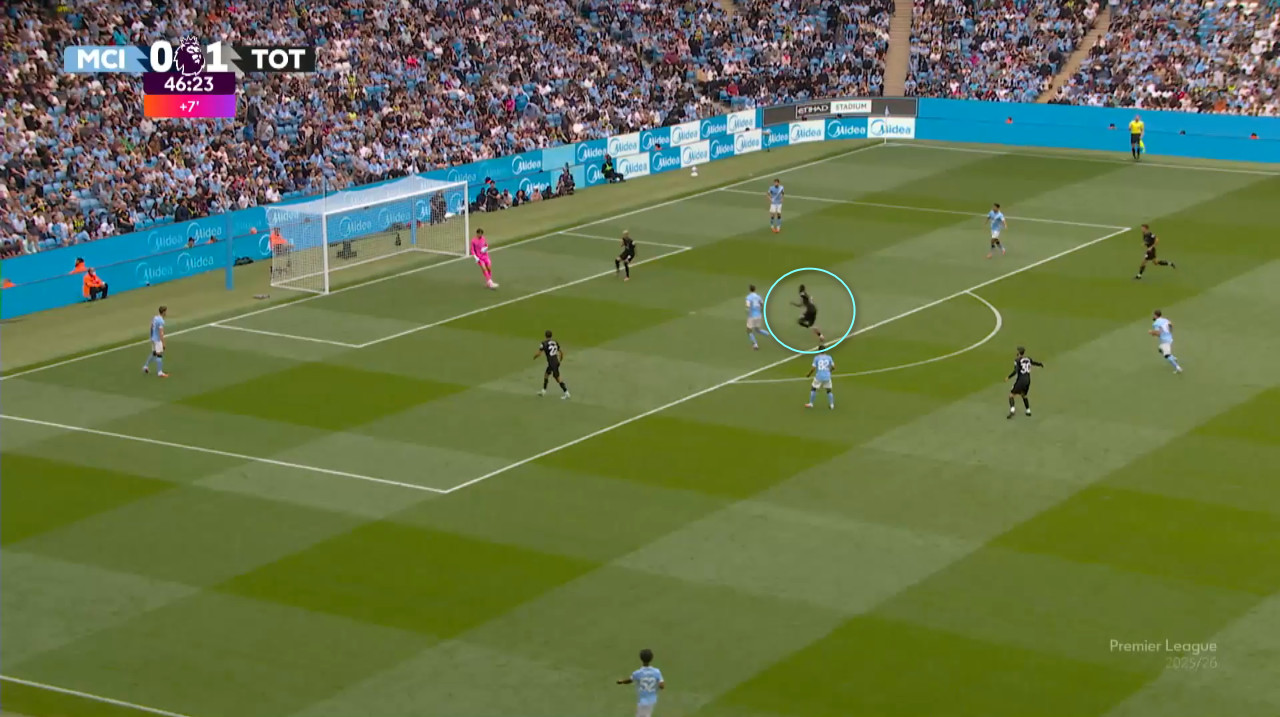
The following picture highlights not just Tottenham’s close defensive lines and the little spaces that they concede to Manchester City, but also their focus on filling the middle of the pitch and narrowing their marking in that area to avoid penetrations or dangerous passes while keeping the wide areas relatively uncovered.

Tottenham Improved Dangerous High Pressing
Another aspect that Frank succeeded in changing and improving at Tottenham is their initial high pressing and how effective and dangerous they can be from that perspective.
In fact, Tottenham started using high pressing as a concrete tool for goalscoring.
Thanks to their high pressing, they have been capable of creating goal-scoring situations, even against teams that master the build-up from the back and are used to resisting high pressing.
The best example we can mention is the goal that Tottenham scored against Manchester City.
Thanks to their effective high pressing, they anticipated the goalkeeper’s passing decision and applied high pressing to the receiver to intercept the ball and score.
The fact that all of Tottenham’s attacking players became extremely disciplined in the high pressing process and very well distributed to mark any potential receivers of the ball made their high pressing method much more rewarding than last season.
Tottenham Intensified Presence Inside The Box & Reliance On Explosivity
Frank was also capable of adding a new important trend within Tottenham’s tactics as he pushed his players to advance a lot more to fill the final third and be at the receiving end of crosses, increasing the chances of the potential touches inside the box and therefore increasing the goalscoring chances, per se.
Furthermore, the use of dynamic and explosive wingers like Mohammed Kudus and Wilson Odobert, with explosive and physical players like Mathys Tel and Xavi Simons, made Tottenham a much more dangerous side compared to last season, especially during the attacking transitions, which became much more effective with such quick players.
This reliance on explosivity was obvious in numerous games, and the fact that players like Kudus became much more confident and dangerous in terms of goalscoring says a lot about Frank’s efficient attacking strategy, which encourages penetrations, cuts inside, shooting from distance, and crossing when needed.
If we take the example of Kudus, this player provided four assists and scored five goals in 35 appearances last season, while he has already given five assists and scored one goal in 10 appearances so far.
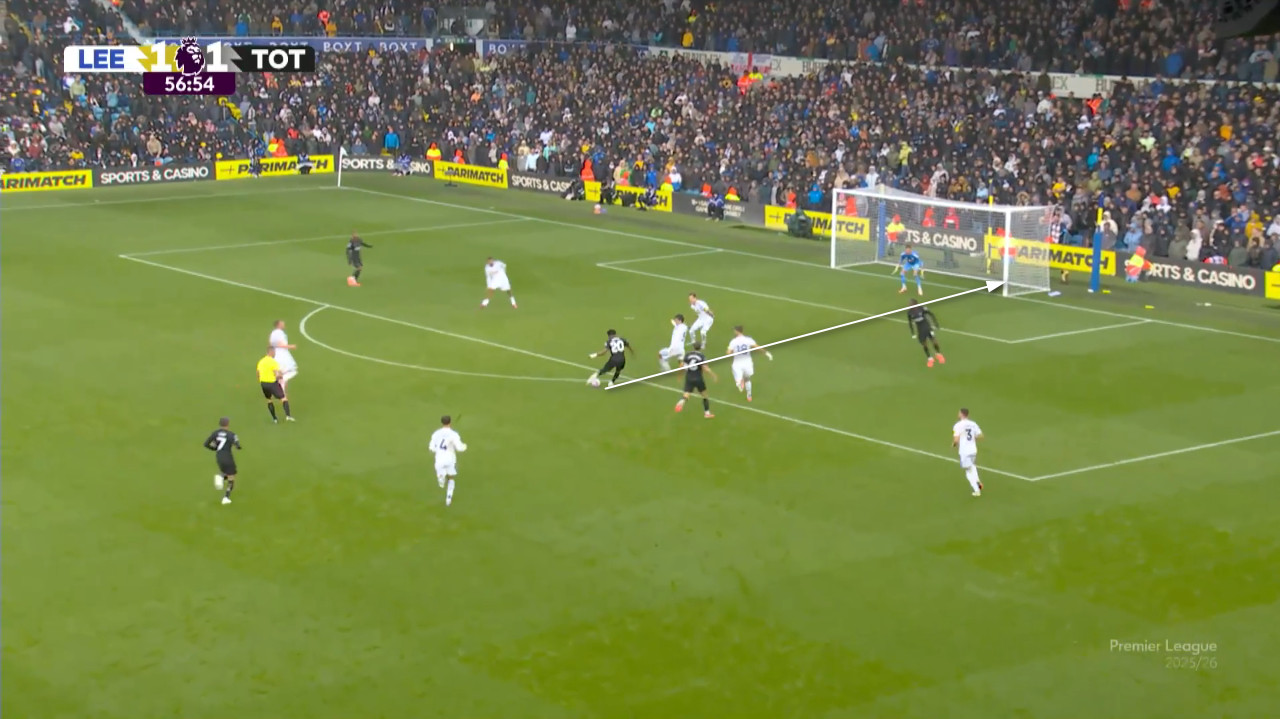
The difference in terms of accuracy and danger is concrete, and the following goal action highlights Frank’s impact on the team’s attacking players in particular.
He helped them become much more crucial and decisive inside the final third.
How Can Tottenham Hotspur Beat Aston Villa?
First of all, Tottenham will have to make sure they don’t concede goals in this game and try to fix the errors that have led to conceding goals previously this season.
Despite the defensive fixes made by Frank, the team still commits some errors at times, and that penalises the team heavily.
Performing an error-free defensive performance this time would guarantee a positive result against a tough side that usually tries to exploit spaces left by the opponent.
Ollie Watkins Threat
In this regard, it will be crucial for Tottenham to mark their striker Ollie Watkins tightly and isolate him from the rest of his attacking teammates, as that can effectively limit Aston Villa’s attacking solutions.
Although Watkins had a poor start to the season, like the whole Aston Villa team, Tottenham should not be misled about this team’s potential threat.
Watkins can exploit Tottenham’s moments of defensive lack of concentration and often works hard to do so as a way to score.
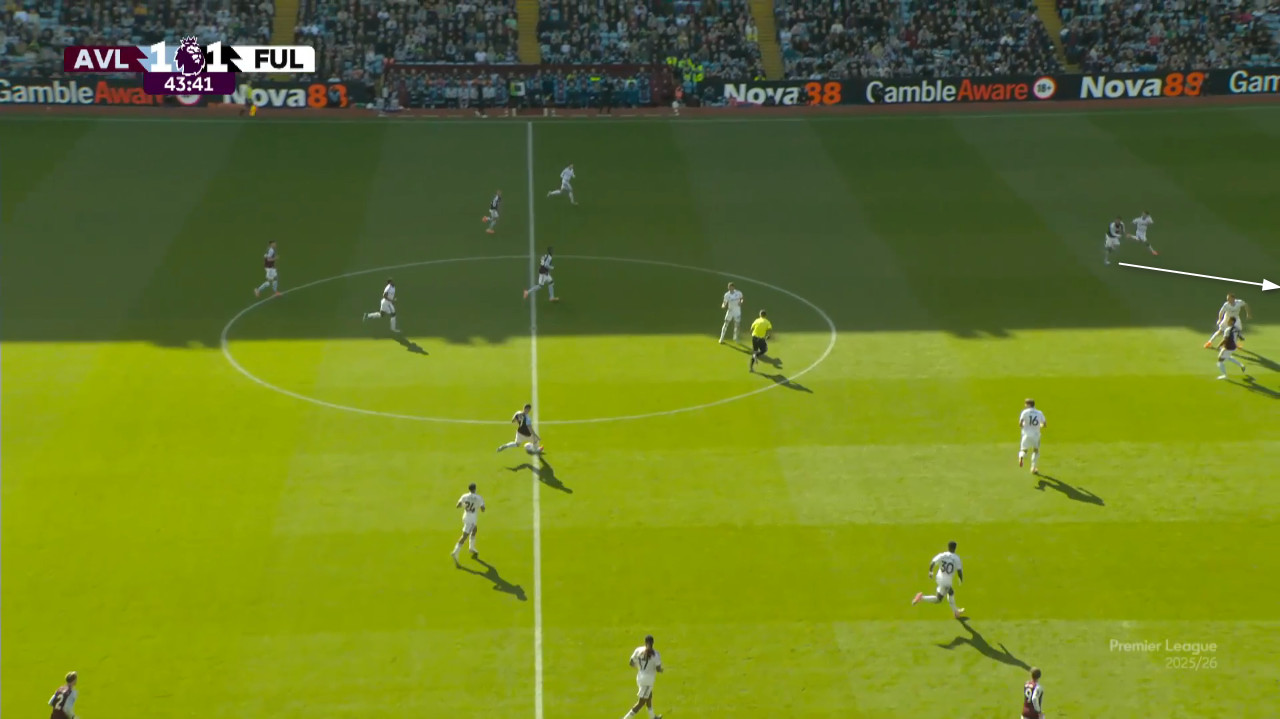
The following picture highlights his anticipation of defenders’ errors and his intelligent movements without the ball, especially towards the back of the defensive line.
That’s another reason why Tottenham should mark Watkins tightly even when he seems to be distant from the action, as his movements without the ball are often done with a purpose.

Aston Villa Long Passing At The Back Of Defensive Lines
Aston Villa have also developed other attacking trends relying mainly on long passing with forwards’ movements without the ball towards the box in an anticipatory way that allows them to break defensive lines and be in one vs one situations with goalkeepers.
Tottenham will need to be aware of this trend and make sure to be extremely cautious when advancing their defensive block.
An effective preventive solution would be to rely on a low defensive block and retreat quickly whenever the team loses the ball, while keeping the lines close to each other in case the team advances.
Donyell Malen And Aston Villa Attacking Variety
Lately, Unai Emery started making some tactical changes upfront.
He started relying on the attacking duo made up of Watkins and Donyell Malen to be more dangerous in the attacking phase.
Tottenham needs to be aware of this possible attacking variation on Sunday.
They will have to mark Malen properly and make sure not to allow any opportunities for passing combinations between the two, as the mission will be to isolate both of them from each other.
In fact, Emery understood that the reliance on Watkins solely upfront would be restrictive on certain occasions and that adding a second striker would be the solution to liberating Watkins and having a second option for goalscoring in case Watkins remains marked.
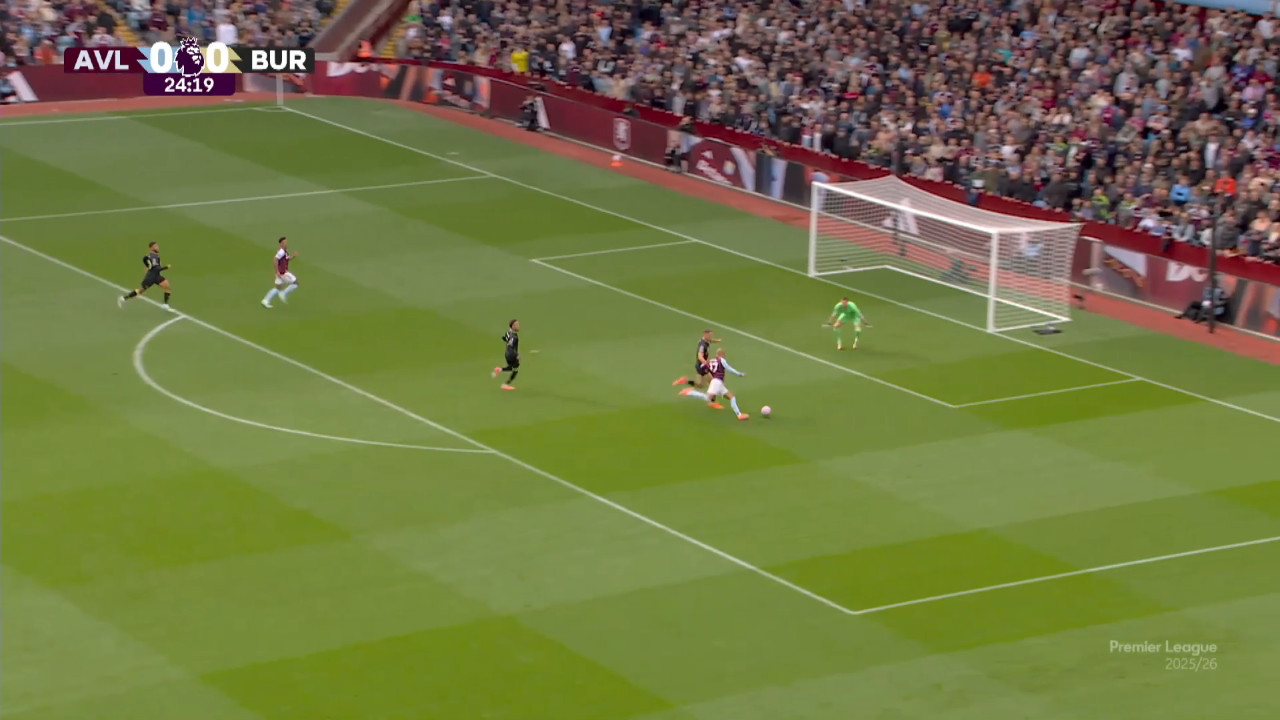
The following goal action highlights how dangerous Malen can be.
Thanks to his movements inside the final third, he asked for the ball, exploiting the opponent’s poor defensive positioning, received a through pass, and was able to score despite the late disturbance of two opponents.
This means that both Malen and Watkins need to be marked tightly in case Emery chooses to play with both strikers.
This will require maximum attention since Malen is a player who can exploit even a little space to create a threat.
Wingers & Advanced Playmaker Threats
It should be said that Aston Villa’s midfield is full of dynamic players who master dribbling and passing in tight spaces and know how to get out of complicated situations before serving the attacking players.
Names like Morgan Rogers, Evann Guessand, Emiliano Buendía, and Harvey Elliott should not be allowed a lot of space in the middle of the pitch, as these players are capable of making dangerous penetrations or providing key passes in a dangerous way.
Exploiting Full-Backs Attacking Support
Tottenham can benefit greatly from Matty Cash and Lucas Digne’s attacking support to Aston Villa’s attacks.
Both players are usually involved in transitions and crosses since they are expected to cover the length of wide areas.
This can leave them exposed at the back, with Tottenham’s wingers capable of exploiting that attacking support effectively.
Furthermore, Digne and Cash’s attacking support is usually not that dangerous, as both players are not powerful enough in one-on-one duels and often tend to rely on predictable crosses.
The Mid-Block Compressed High Line Defensive Style
Defensively, Aston Villa are known for their mid-block compressed high line, which forces opponents to rely on long passing and set-pieces to break that defensive line.
Furthermore, Tottenham can rely on their effective and quick attacking transitions to punish that high defensive line while making sure not to fall into their offside trap.
During the start of the season, Aston Villa showed some weaknesses and had a hard time keeping their defence as compact and error-free as needed.
Tottenham should make frequent attempts to push Aston Villa into committing those collective and especially individual mistakes.
Conclusion
Tottenham have the tools needed to beat Aston Villa, but they need to be defensively solid enough and play with a very close line to avoid conceding dangerous attacks.
They should keep an eye on Watkins and potentially Malen throughout the game, as both players represent Aston Villa’s most dangerous players.
At the same time, it will be crucial to use the team’s powerful wingers and effective high pressing to pressure Aston Villa into committing mistakes.
