
This summer, the heat in Newcastle was intense, not only because of the rising global temperatures but also because of the transfer tension surrounding Newcastle United’s main centre-forward at the time, Alexander Isak.
The Swedish striker decided to join Liverpool, and the Magpies attempted to delay the move until the last moment.
They aimed to persuade Isak to stay or buy time to identify a proper replacement.
With Isak’s move to Liverpool completed, Newcastle United announced the arrival of their new centre-forward, Nick Woltemade.
In March, we published an article about Nick Woltemade during his time at VfB Stuttgart.
Now, after his first few appearances with Newcastle, we turn our focus to analysing his start under Eddie Howe tactics.
So far, Woltemade has featured in seven matches for Newcastle, four in the Premier League, two in the UEFA Champions League, and one in the EFL Cup, scoring three goals across all competitions.
With this Nick Woltemade scout report, let’s dive deeper and get to know Nick Woltemade’s role better as a centre-forward in this Newcastle side.
Watch Nick Woltemade Scouting Report On YouTube
Nick Woltemade Link-Up Play
Rather than waiting inside the box or staying high on the last line to make a run in behind, Nick Woltemade is the type of centre-forward who prefers to get on the ball and help his team progress play, particularly under pressure and in tight areas.
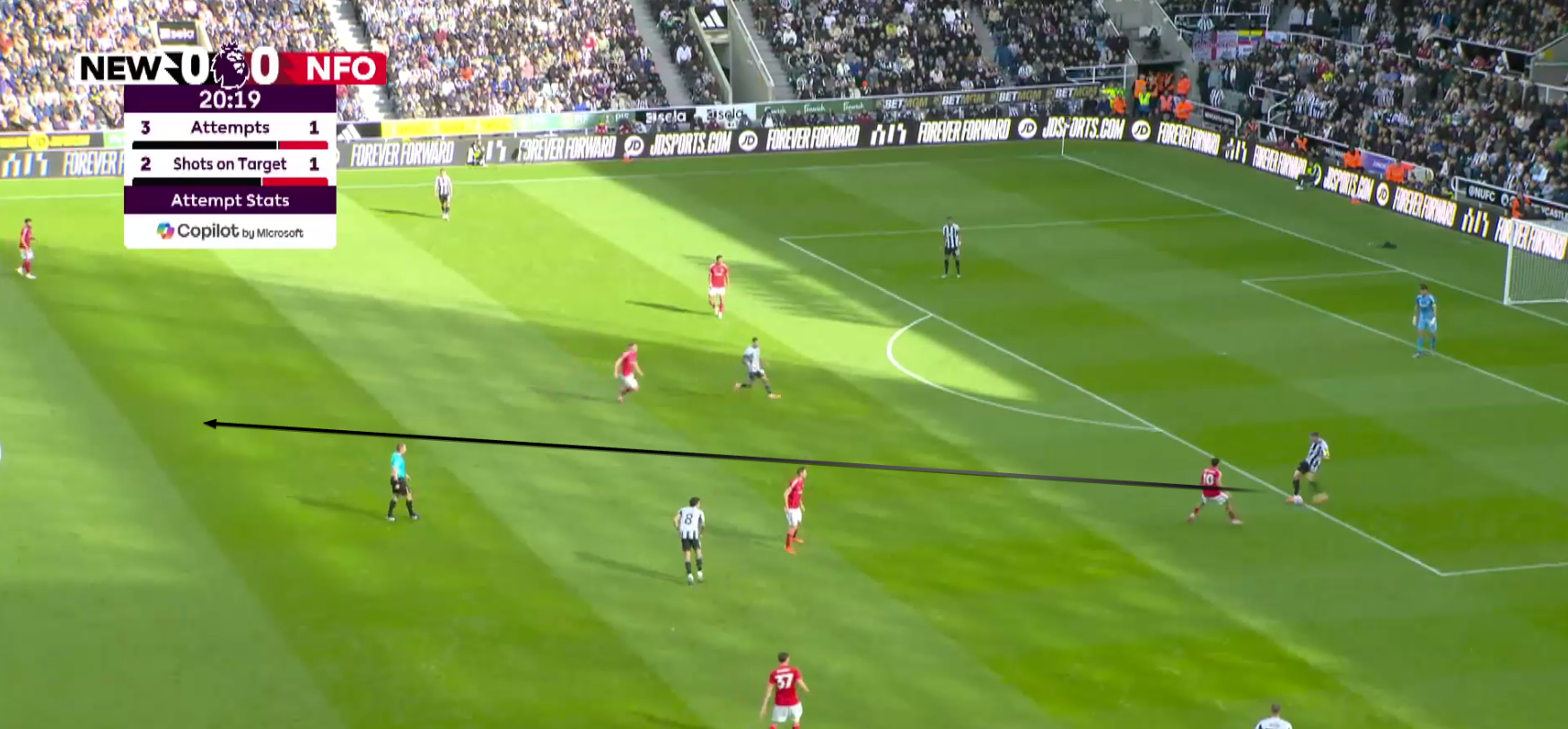
 This week’s game against Nottingham Forest shows Woltemade starting away from the ball side while his teammate Bruno Guimarães prepares to receive a pass.
 Once he notices Guimarães turning, Nick Woltemade immediately makes a horizontal run to move out of the defender’s cover shadow and present himself as a passing option between the lines.
 By suddenly making this move, Woltemade prevents the defender behind him from applying immediate pressure once he receives the ball.
This gives him the space and time to make a composed pass to Anthony Gordon.
 Another example that highlights Nick Woltemade’s desire to be involved in build-up play comes when he drops deep to help his team break the opposition’s high press.
With Sven Botman in possession and searching for a forward passing option, Woltemade drops and offers a passing option.
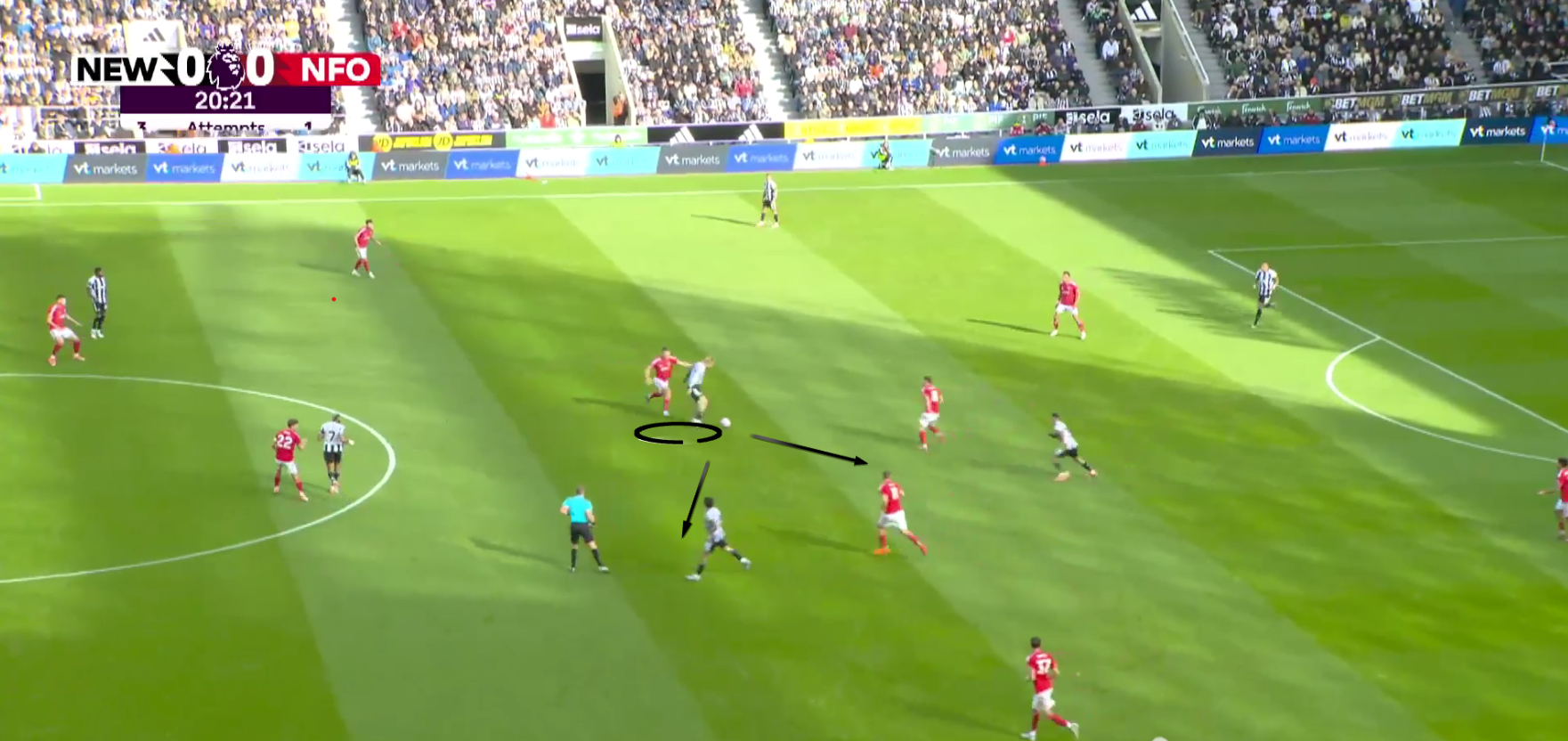 In this case, Nick Woltemade drops to receive with his back to the goal and a defender closely following him.
Some of the good things here are that he approaches the ball diagonally, creating a better angle, and taking a solid first touch.
However, under these kinds of pressures from behind, he could be vulnerable, so sometimes he lowers his head and focuses solely on shielding the ball, causing him to miss passing options, such as Sandro Tonali or Guimarães, as seen here.
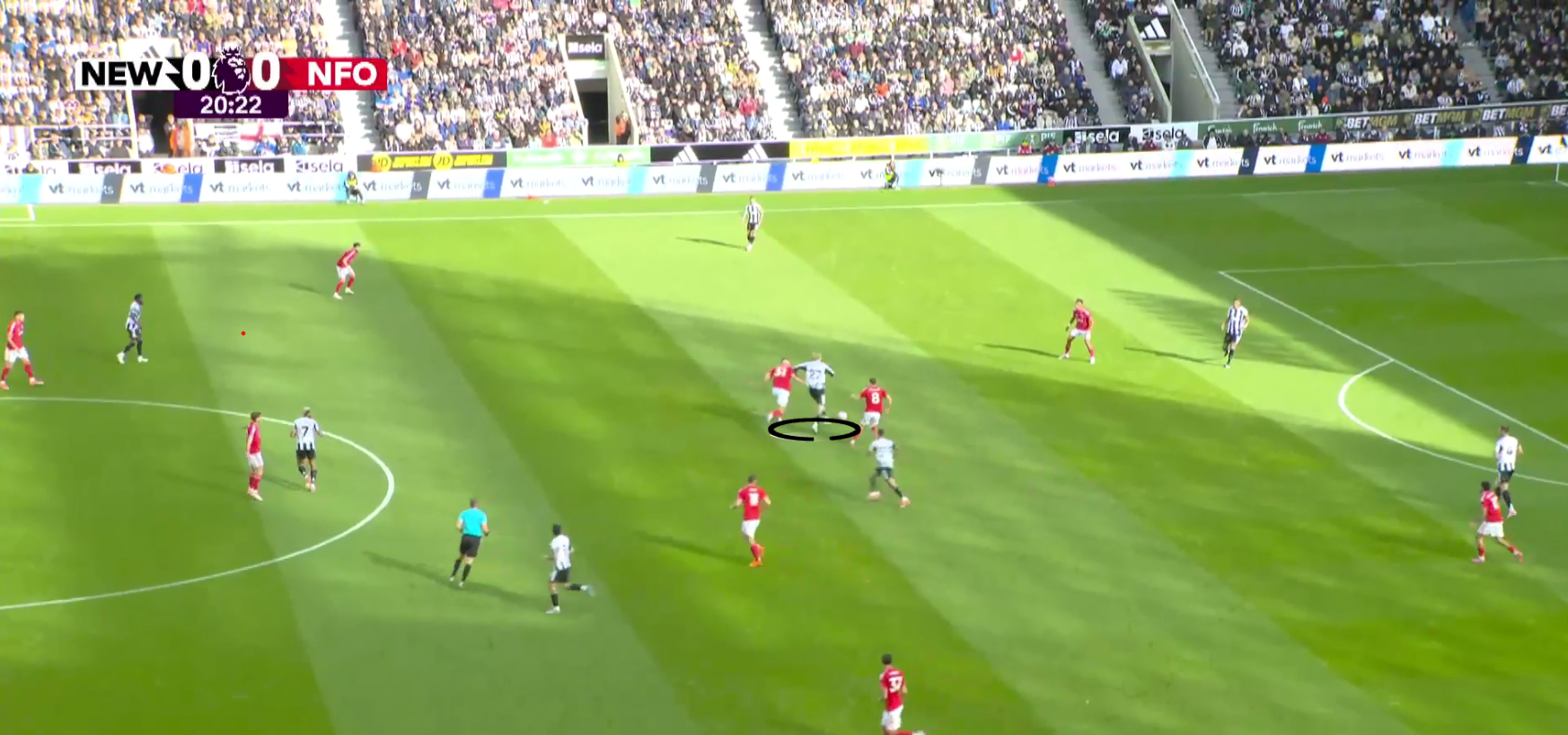 Ideally, Nick Woltemade handles these moments by controlling the ball with the inside of his right foot while shielding with his left hand and turning toward the left side.
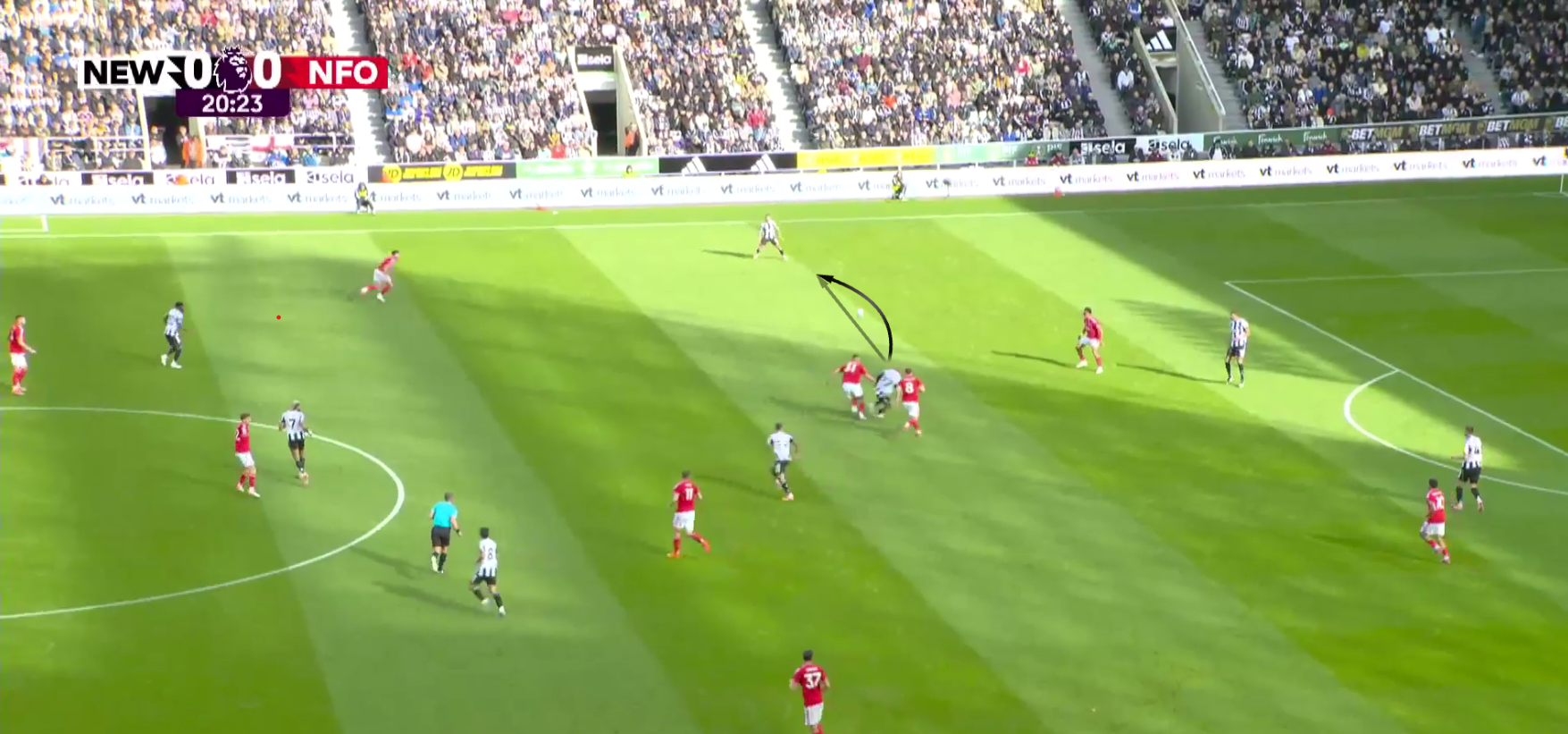 However, when pressured, Woltemade can lose balance while trying to make the pass, as shown here, where the lack of stability causes his pass to lift off the ground.
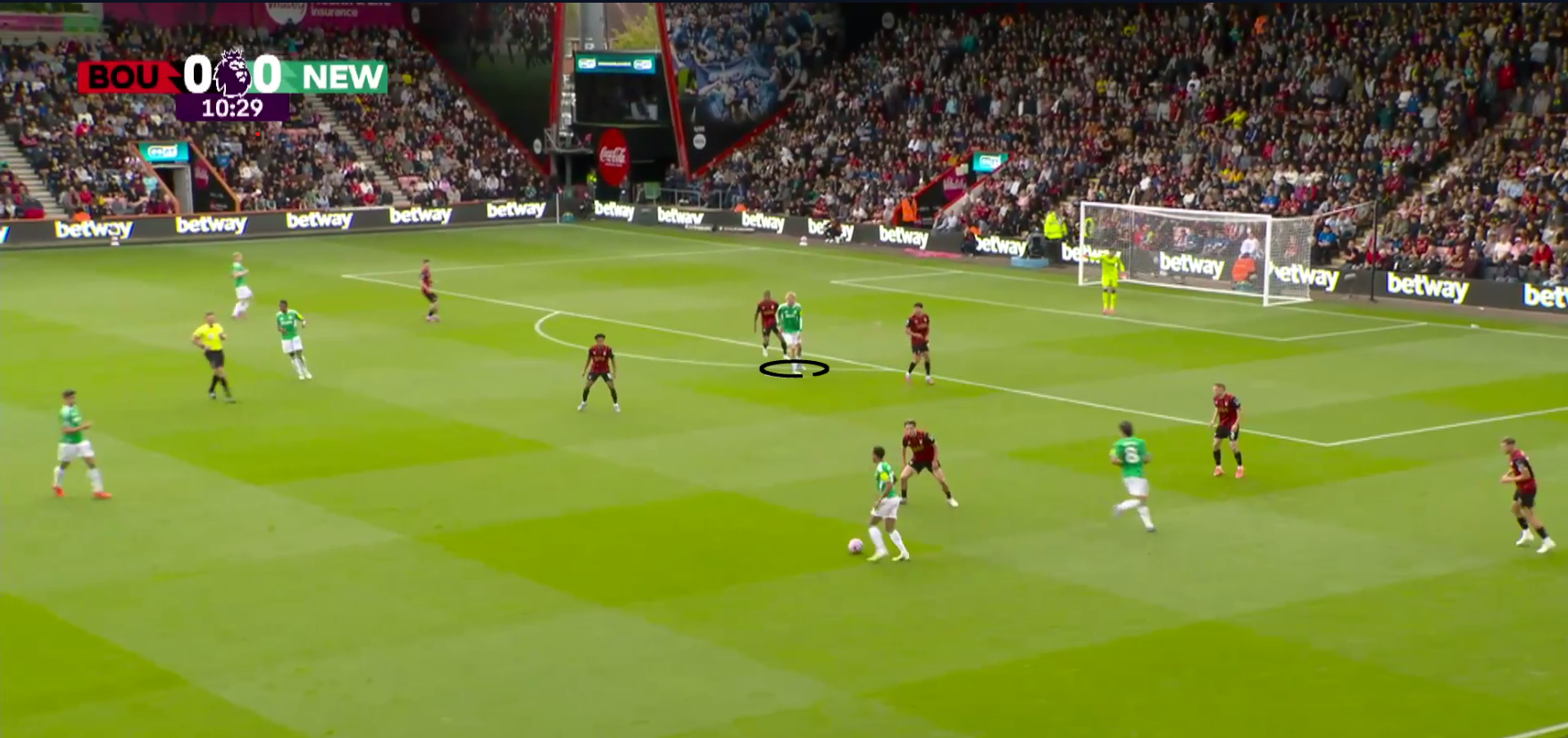 Another issue that occasionally affects Nick Woltemade is his timing when approaching the ball carrier to receive.
In this one against Bournemouth, he begins well, positioning himself between two defenders to make marking decisions more difficult.
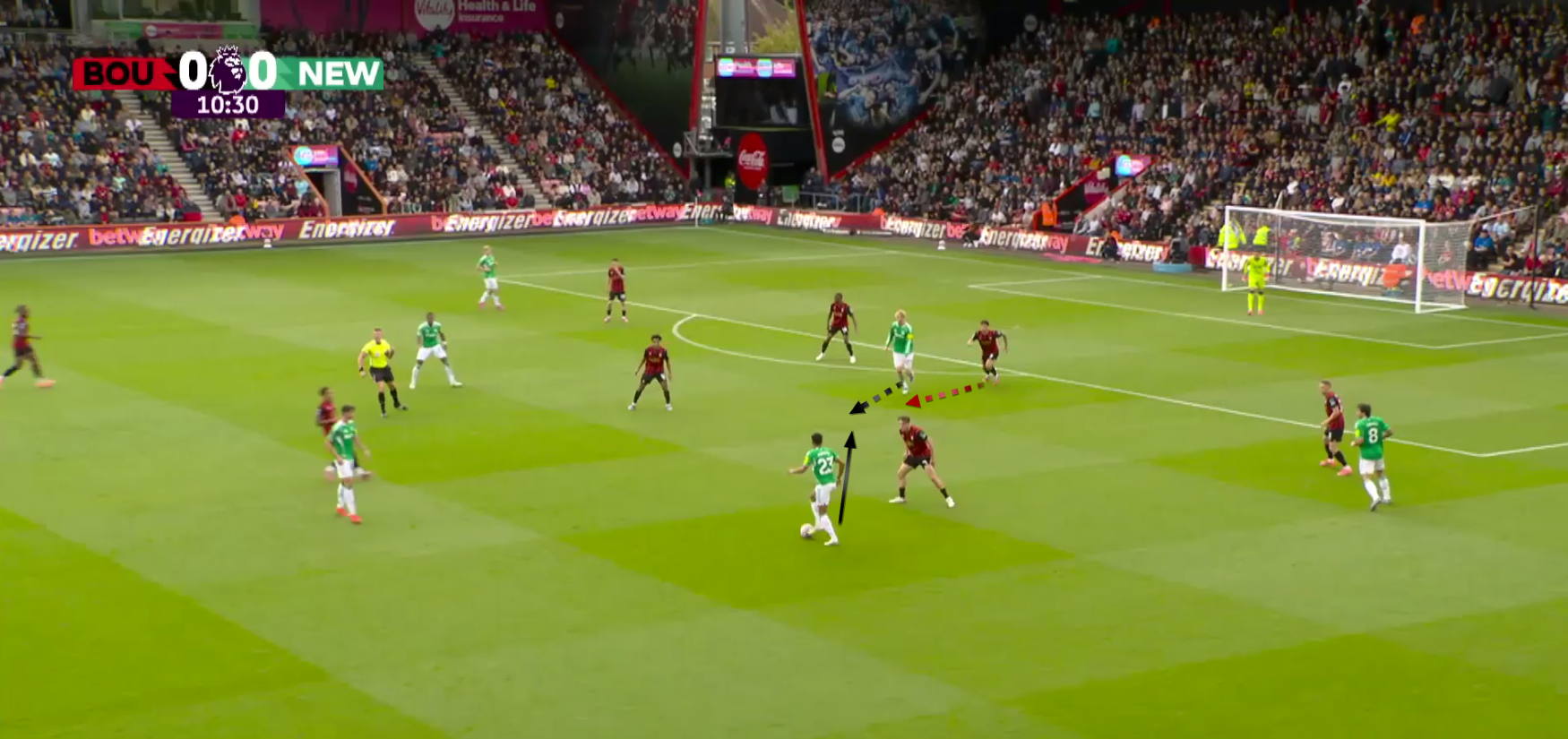 However, he moves toward the ball carrier too early, making it easier for the defender to track his run.
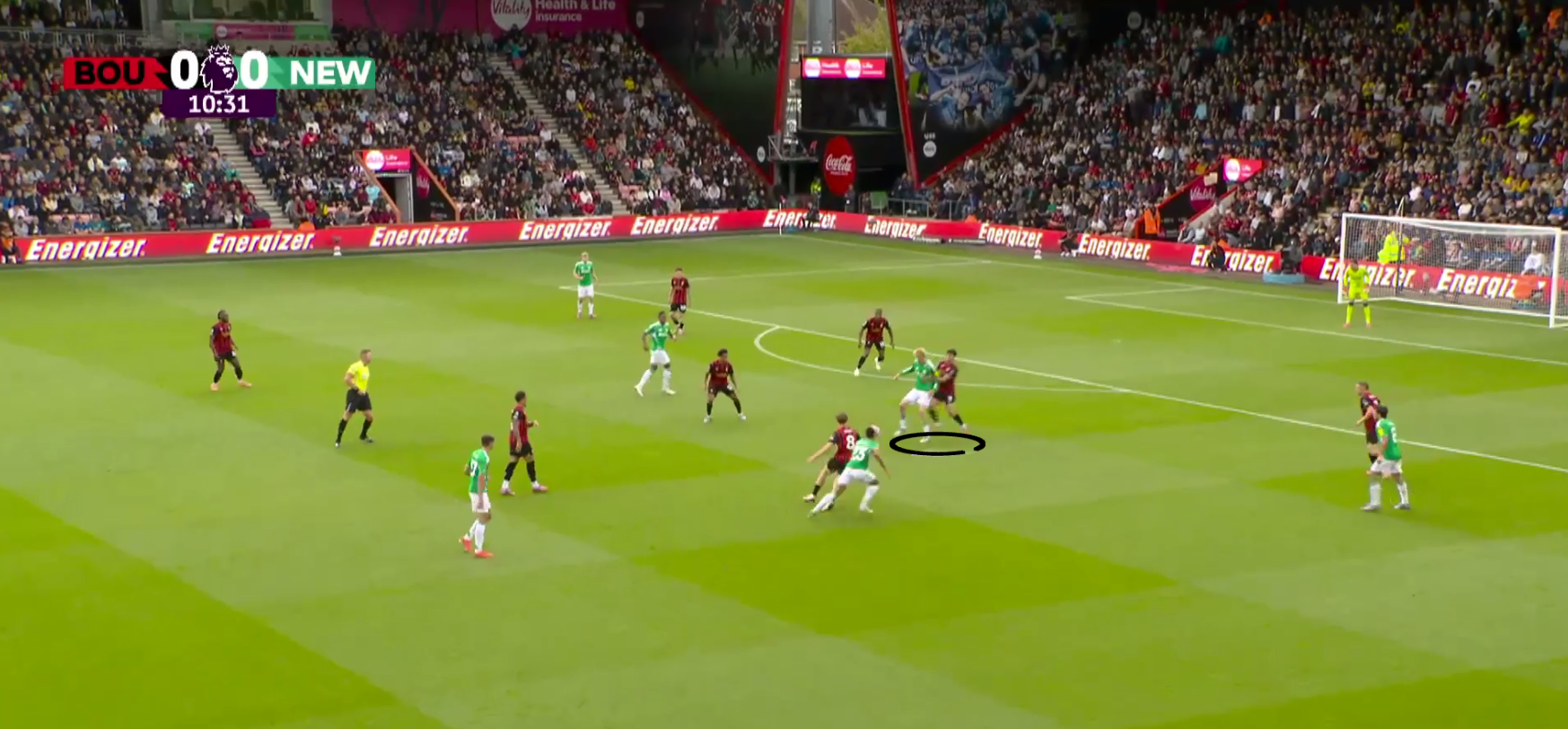 That would make it harder for Nick Woltemade, as he now should challenge the defender physically and try to shield the ball while passing.
The defender gains access as soon as Woltemade touches the ball, which can make him lose his balance.
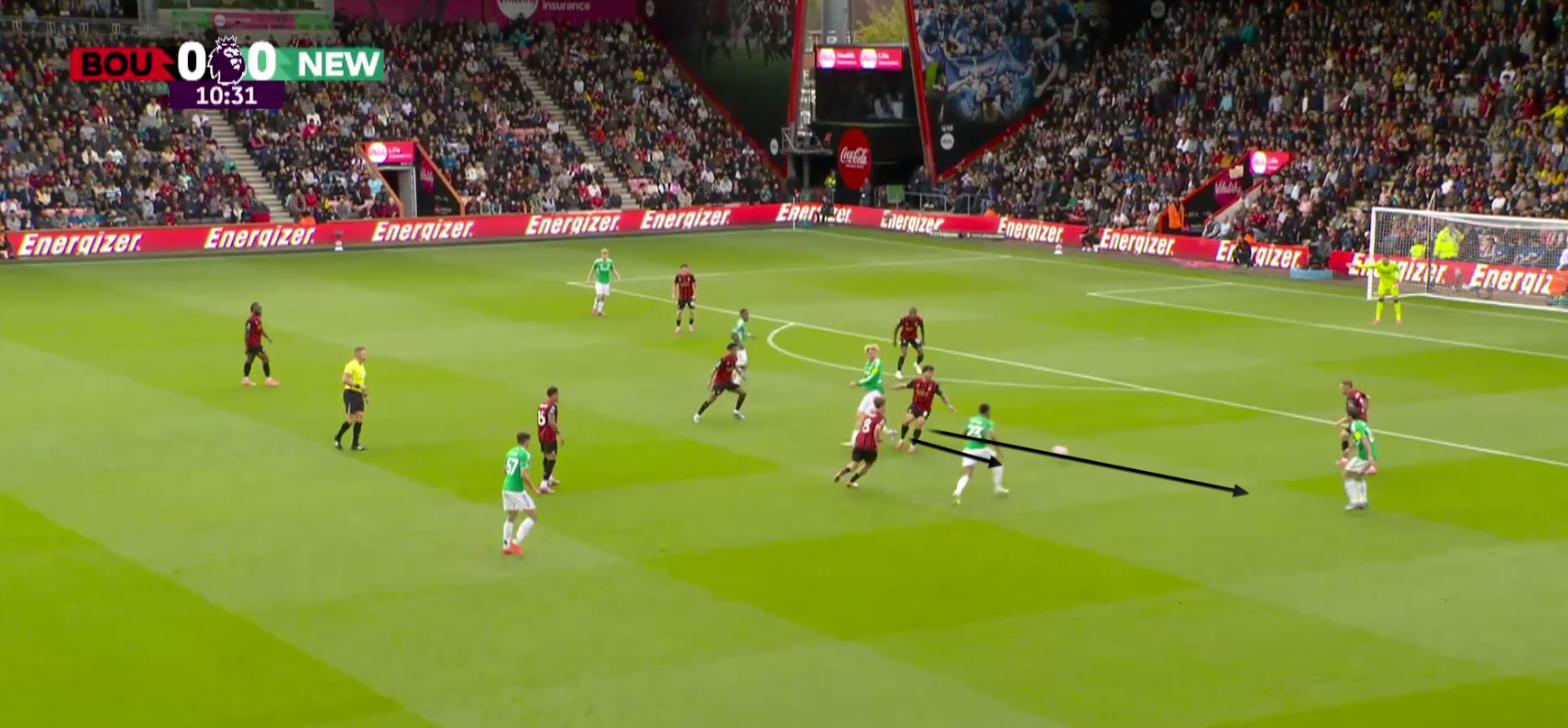 Here, the defender’s contact affects his execution.
Woltemade aims to pass to Jacob Murphy, but the ball falls in Tonali’s favour instead.
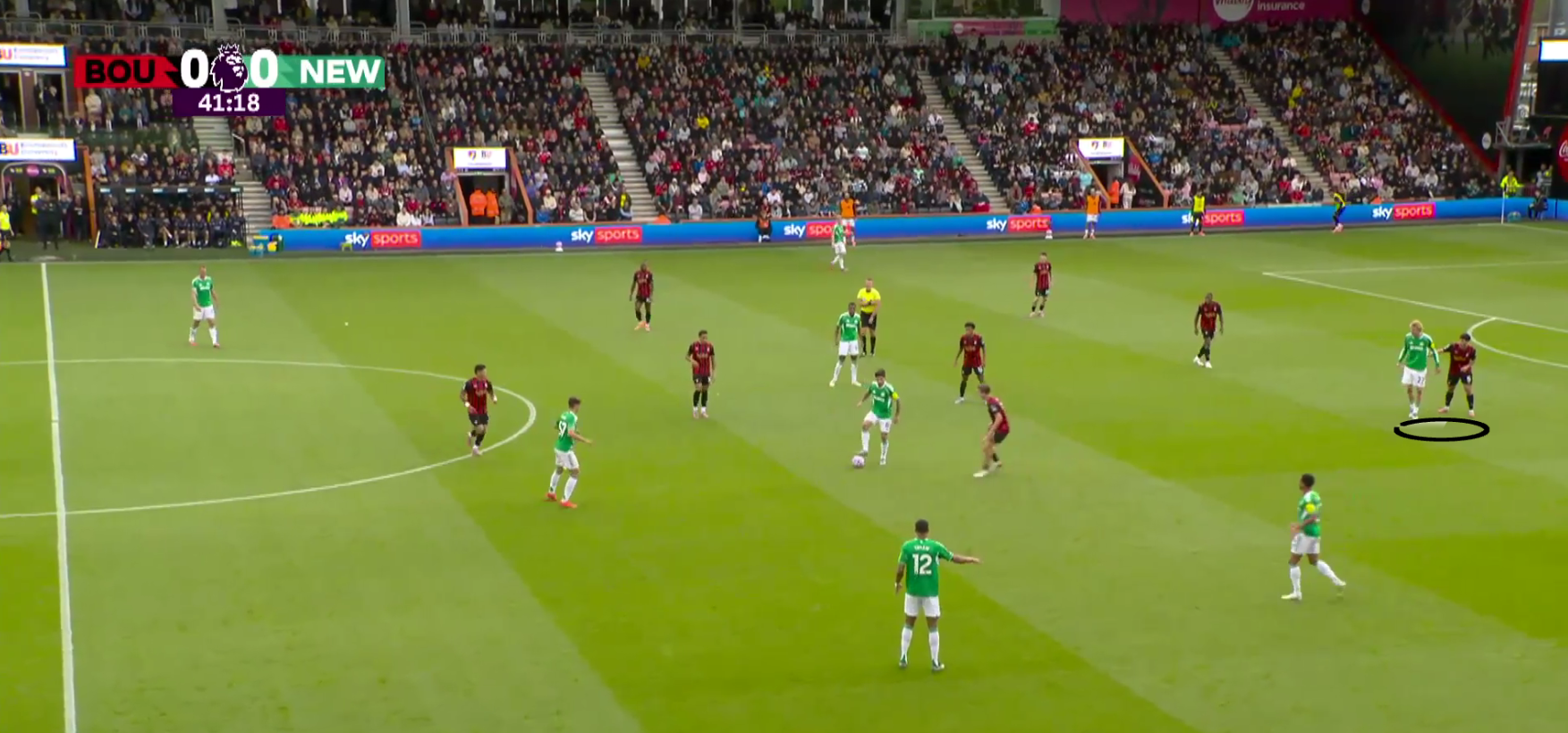 In a similar instance from the same game, we can see that even before Murphy gets the ball, Nick Woltemade positions himself too close to one defender.
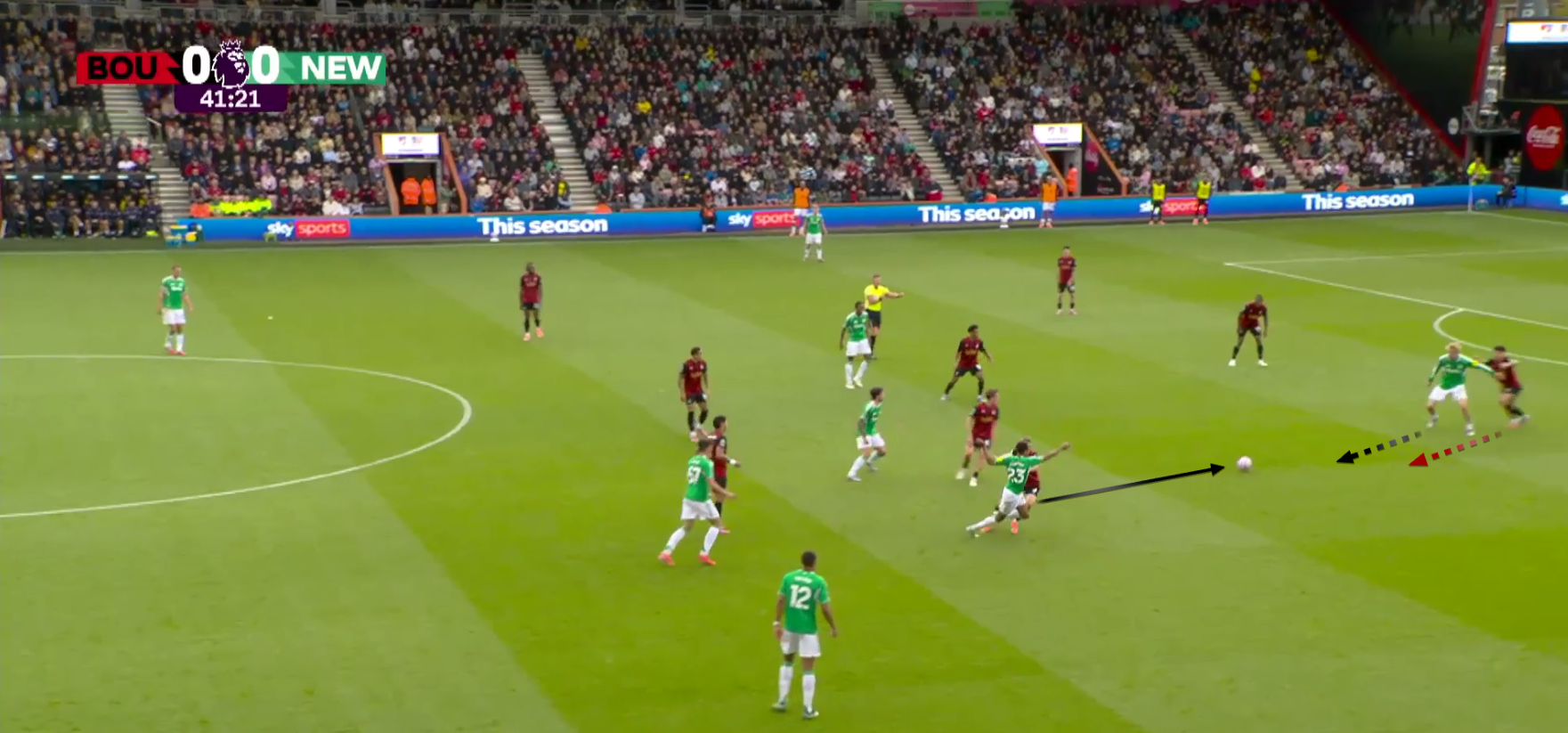 Making it clear who is responsible for marking him.
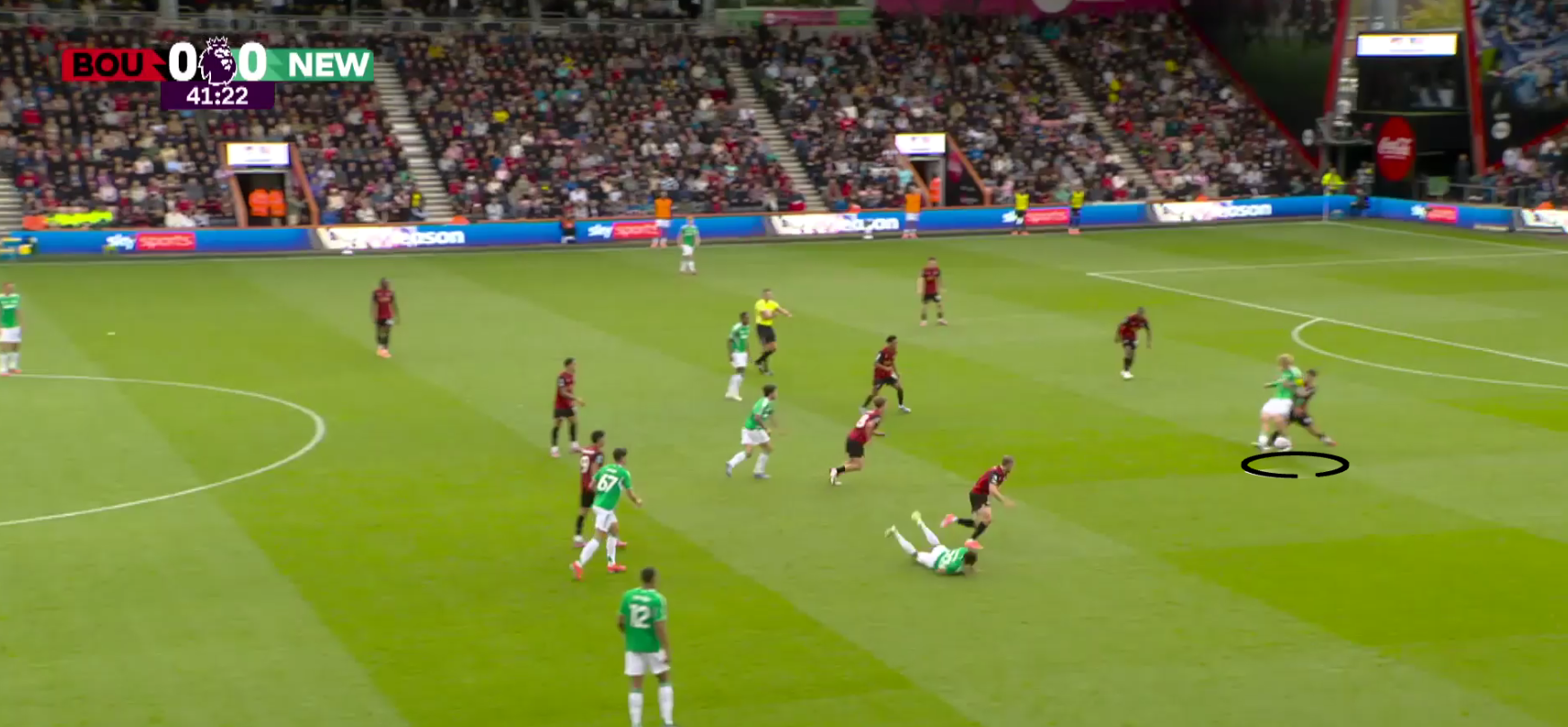 The defender times his challenge well, making contact and disrupting Woltemade’s balance and pass.
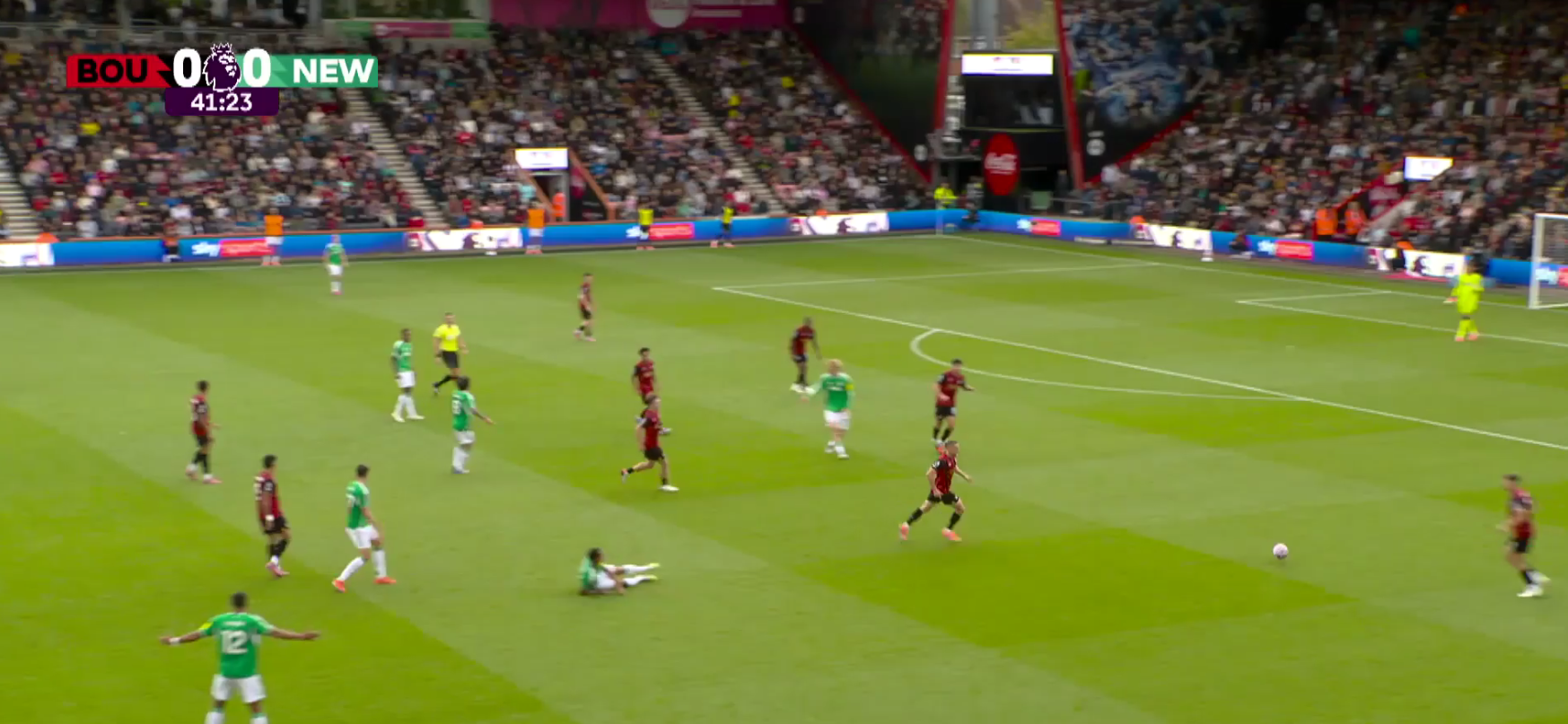 As a result, Nick Woltemade fails to deliver the intended pass.
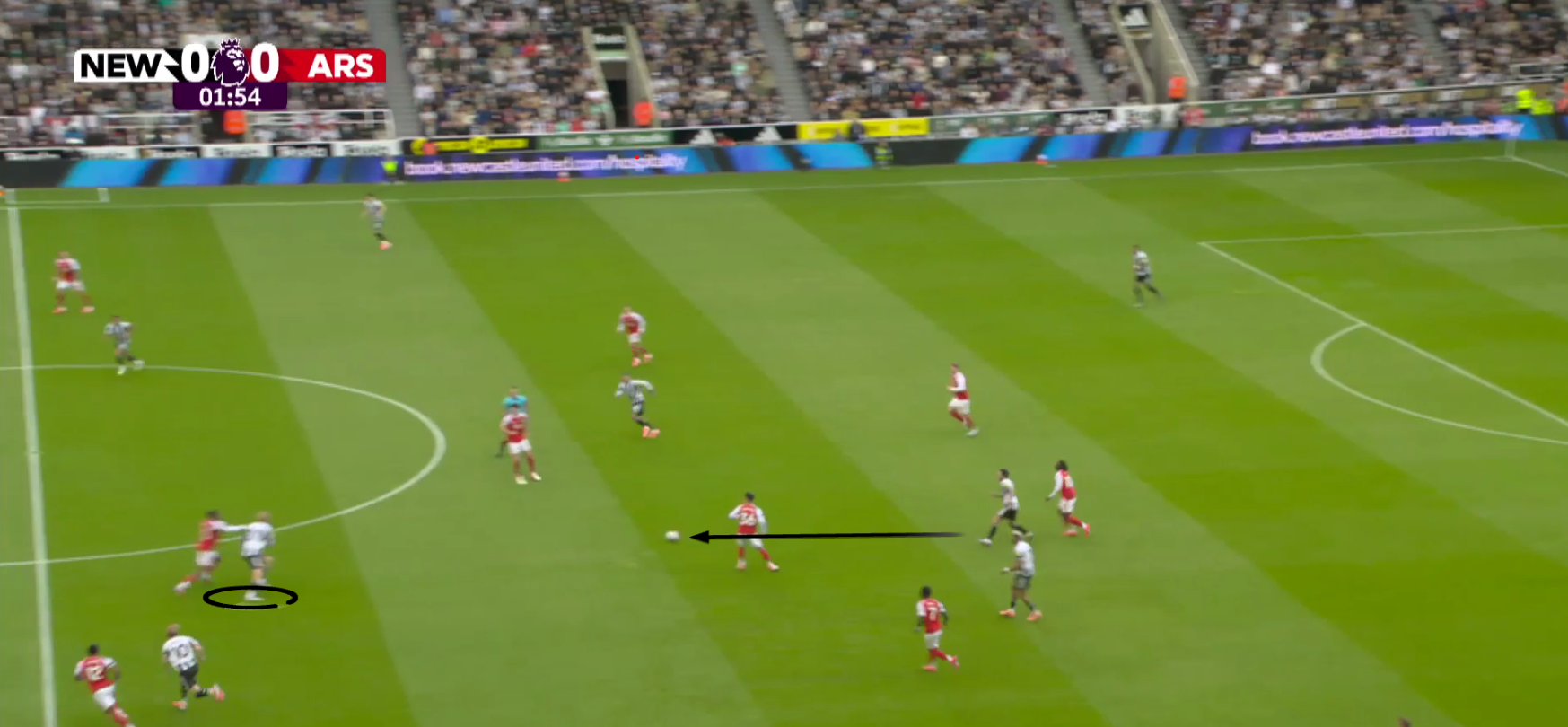 Another moment showing Nick Woltemade under pressure comes against Arsenal.
As he tries to meet Tonali’s pass with a defender tight behind him, the opponent steps forward to challenge on the front foot.
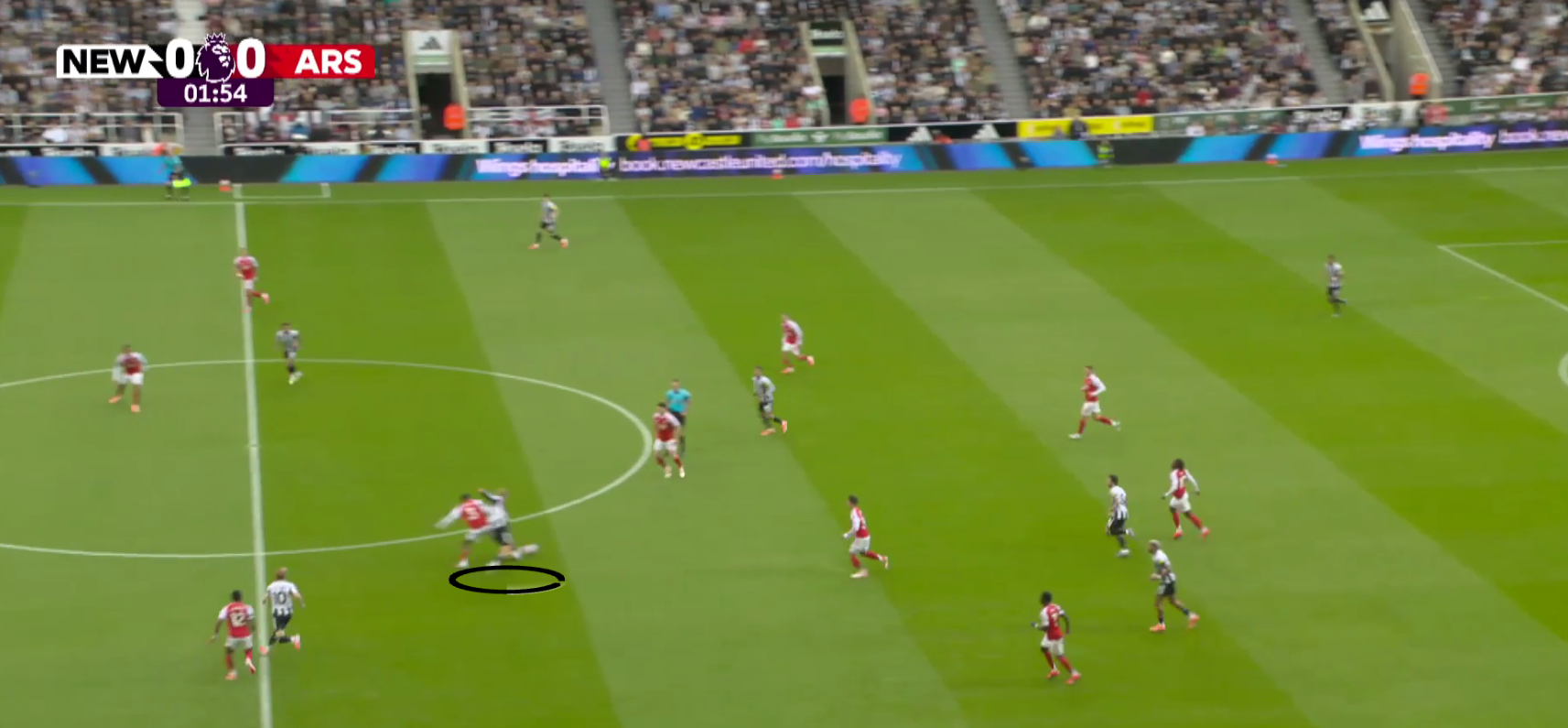 When Woltemade attempts his first touch, the defender’s contact prevents him from shielding, and he loses possession.
Nick Woltemade Hold-Up Play
In terms of hold-up play, Nick Woltemade exhibits a distinct technique that enables him to escape the pressure typically associated with these situations.
Despite standing at 198cm, he remains agile enough to perform quick footwork, turn, and evade defenders.
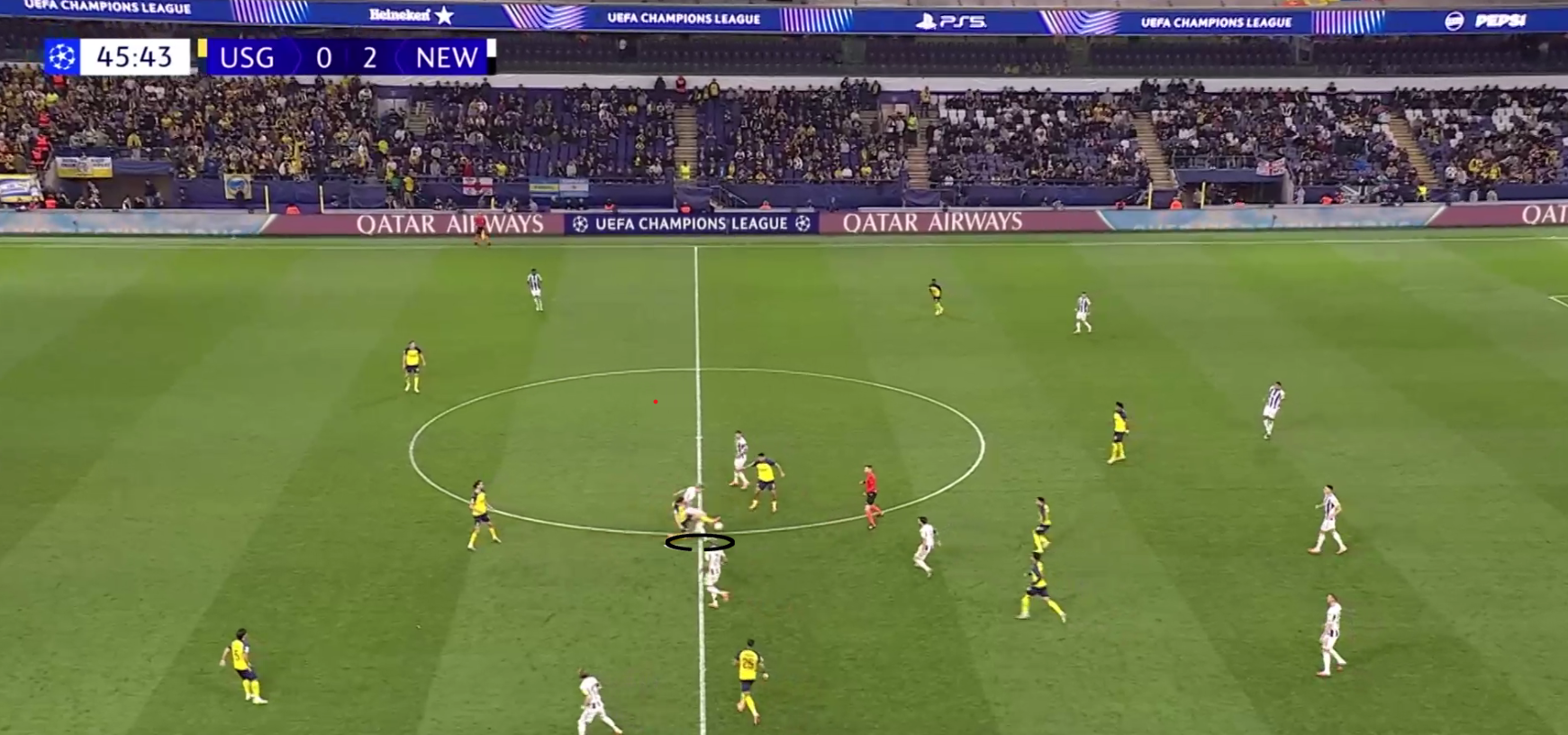 In this UEFA Champions League encounter with Royale Union Saint-Gilloise, Nick Woltemade is fighting to control the ball under pressure.
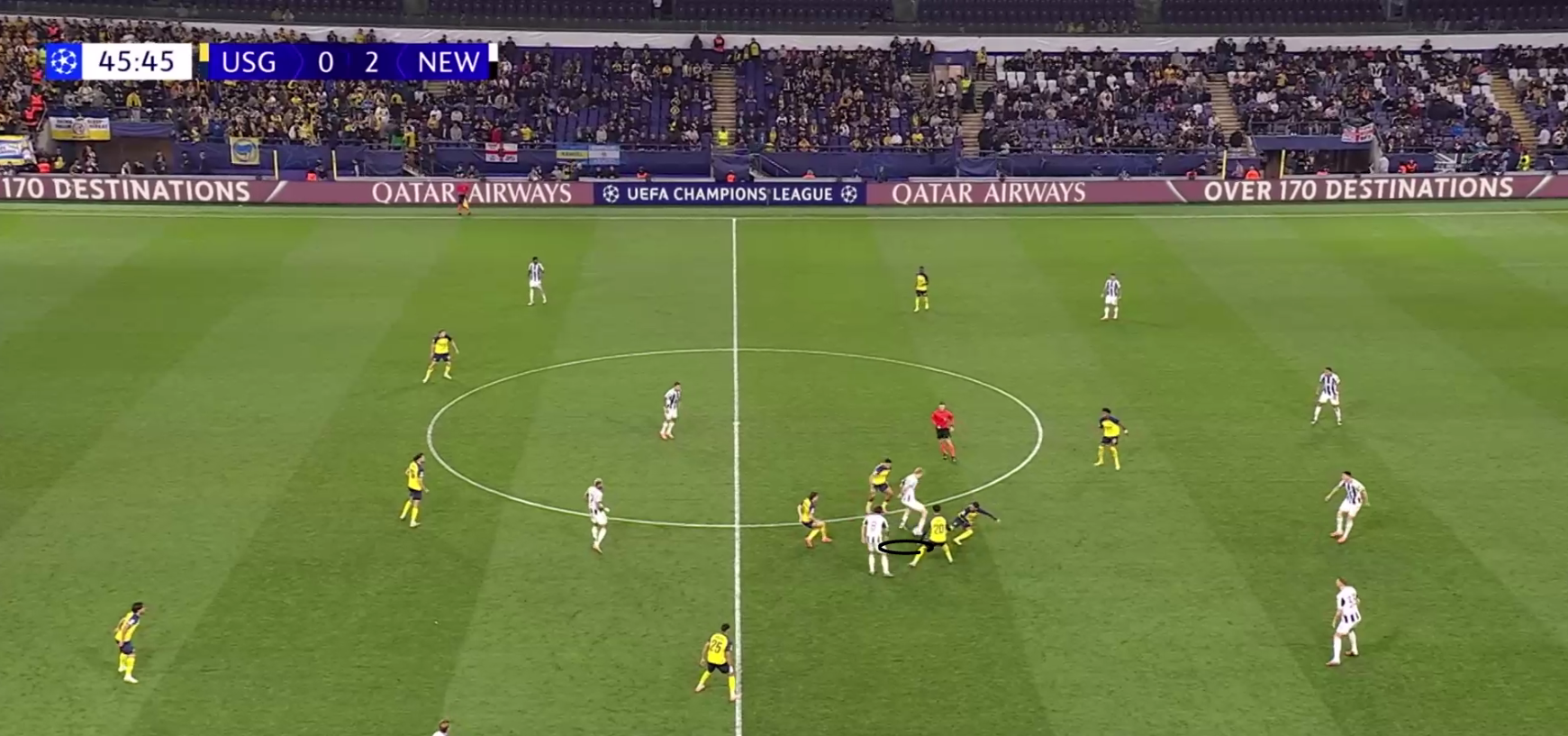 Surrounded by opponents, Woltemade stays on his toes, shifting the ball between both feet before turning to his favoured left side.
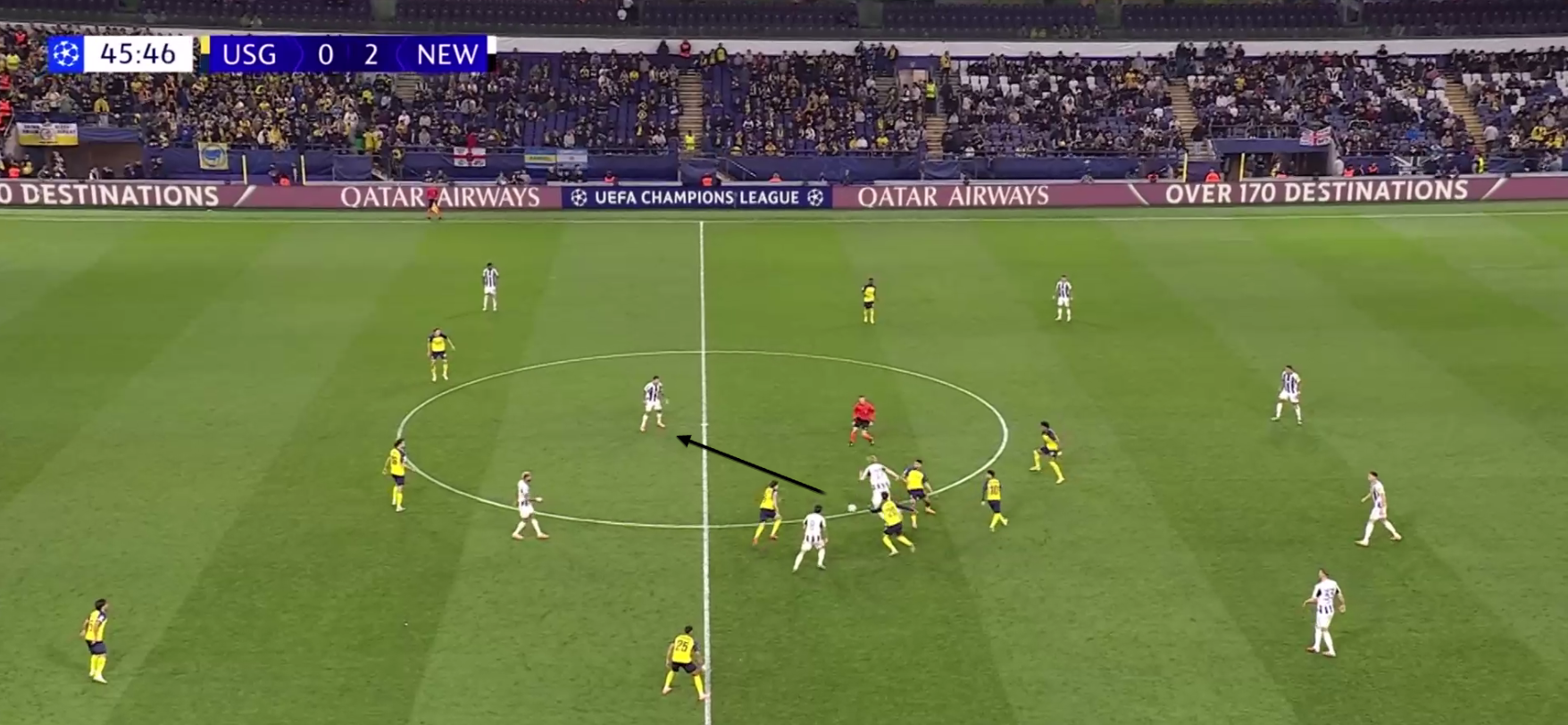 He then escapes the pressure.
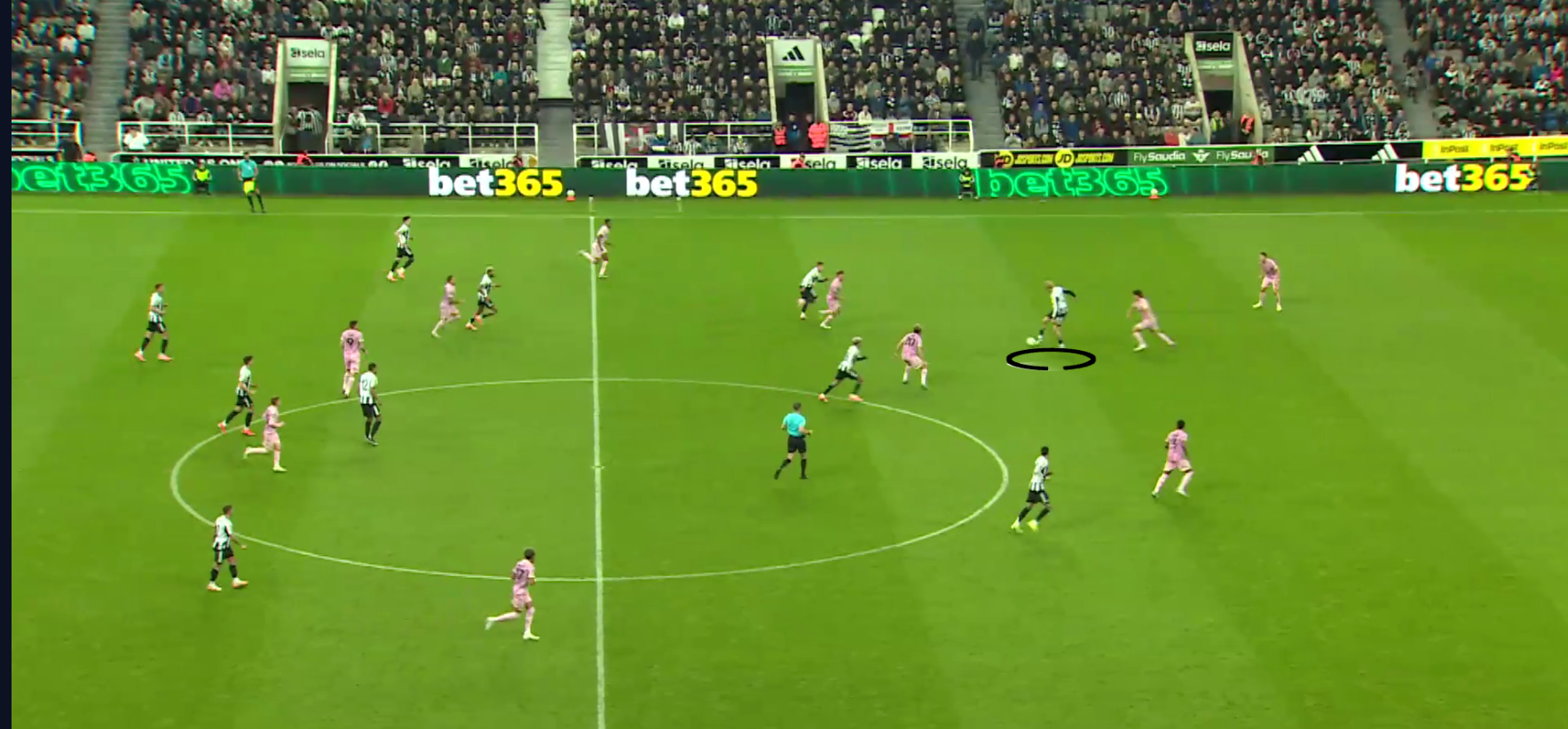 In this instance, Woltemade receives the ball without pressure, allowing him to make a controlled first touch before the defender closes in on him.
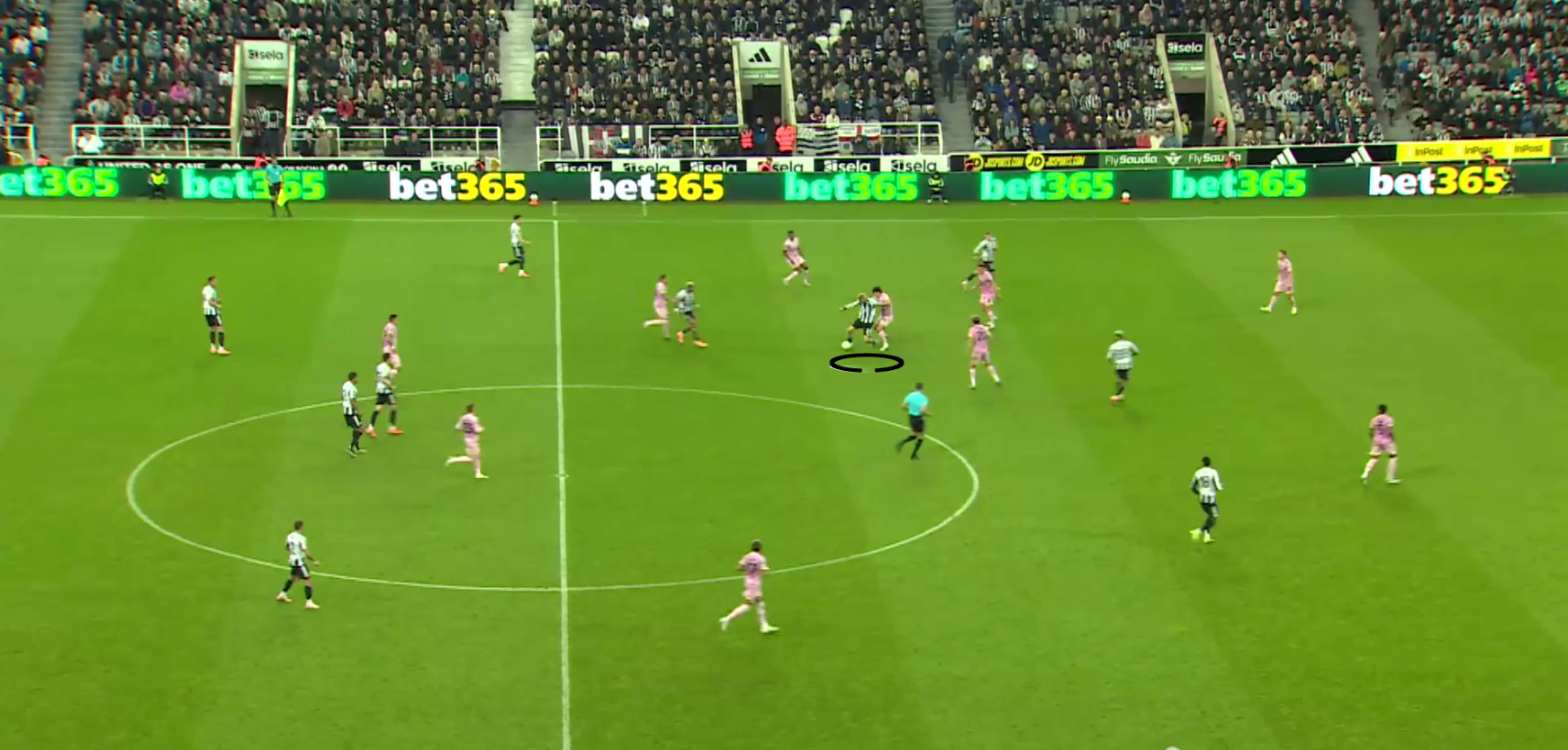 Using a technique similar to link-up play, Nick Woltemade employs the inside of his right foot to control the ball while his left arm and foot combine to shield it effectively.
Through this movement, he turns to his favourite left side.
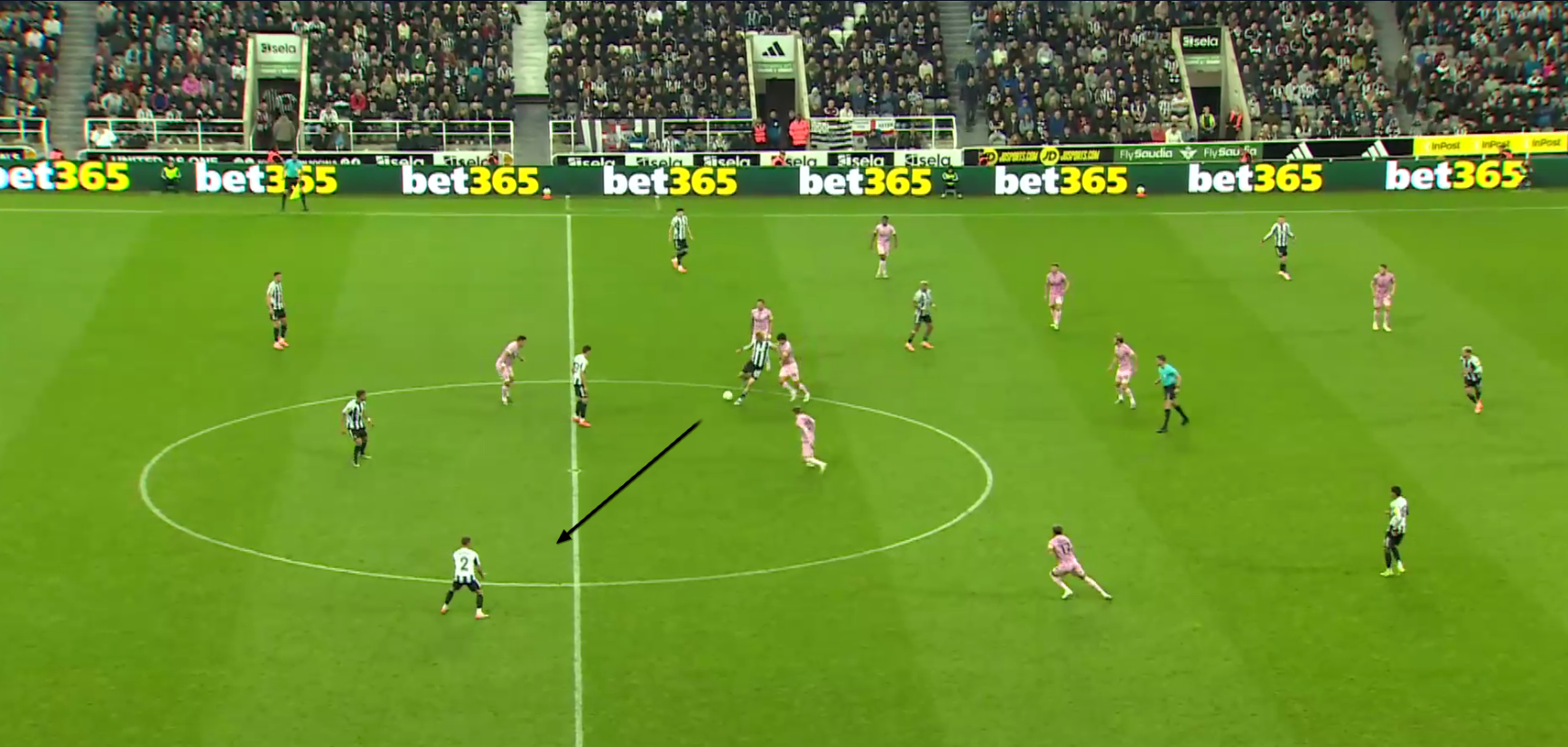 Then, a safe passing option is executed to retain possession.
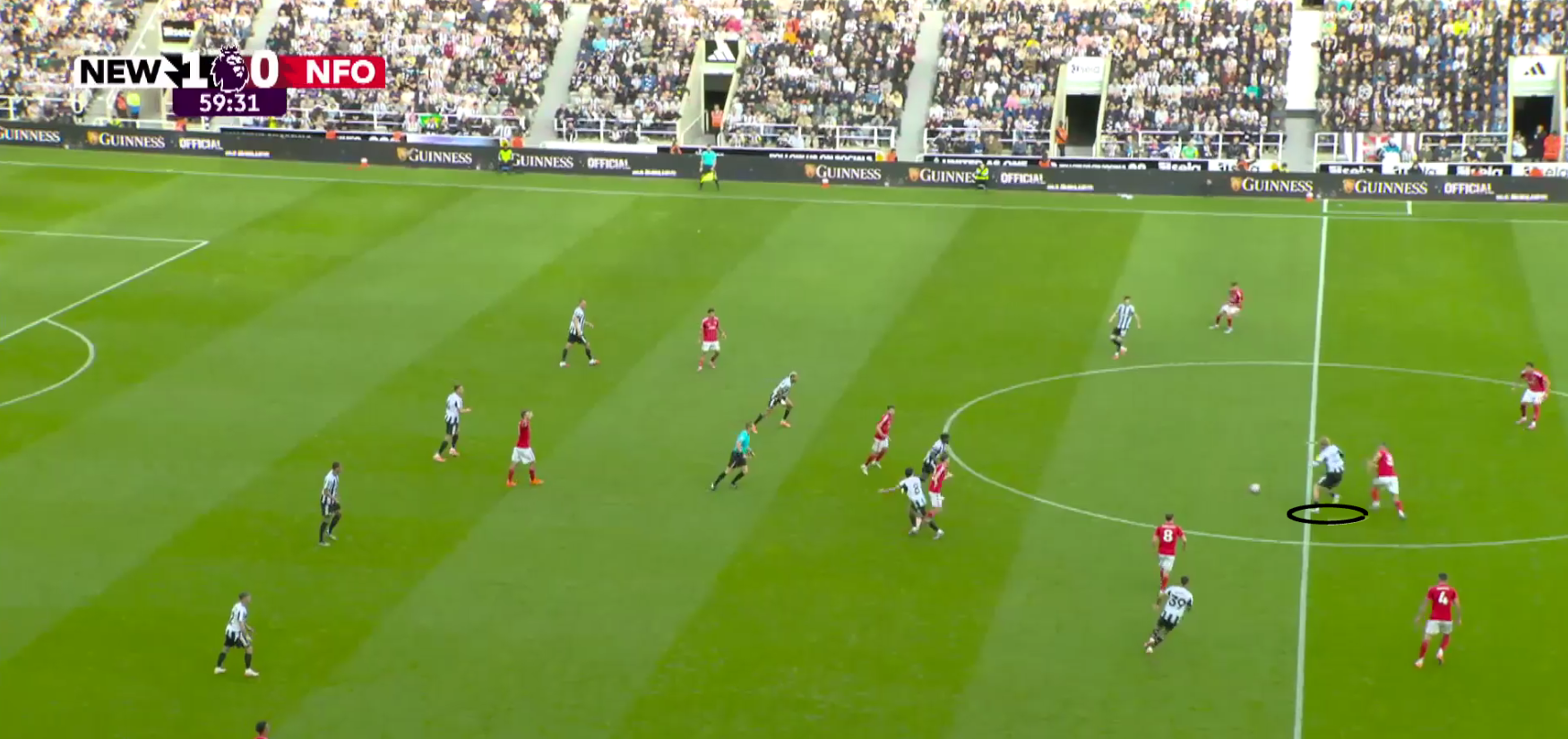 Here, Woltemade receives the ball, with a defender ready to press him.
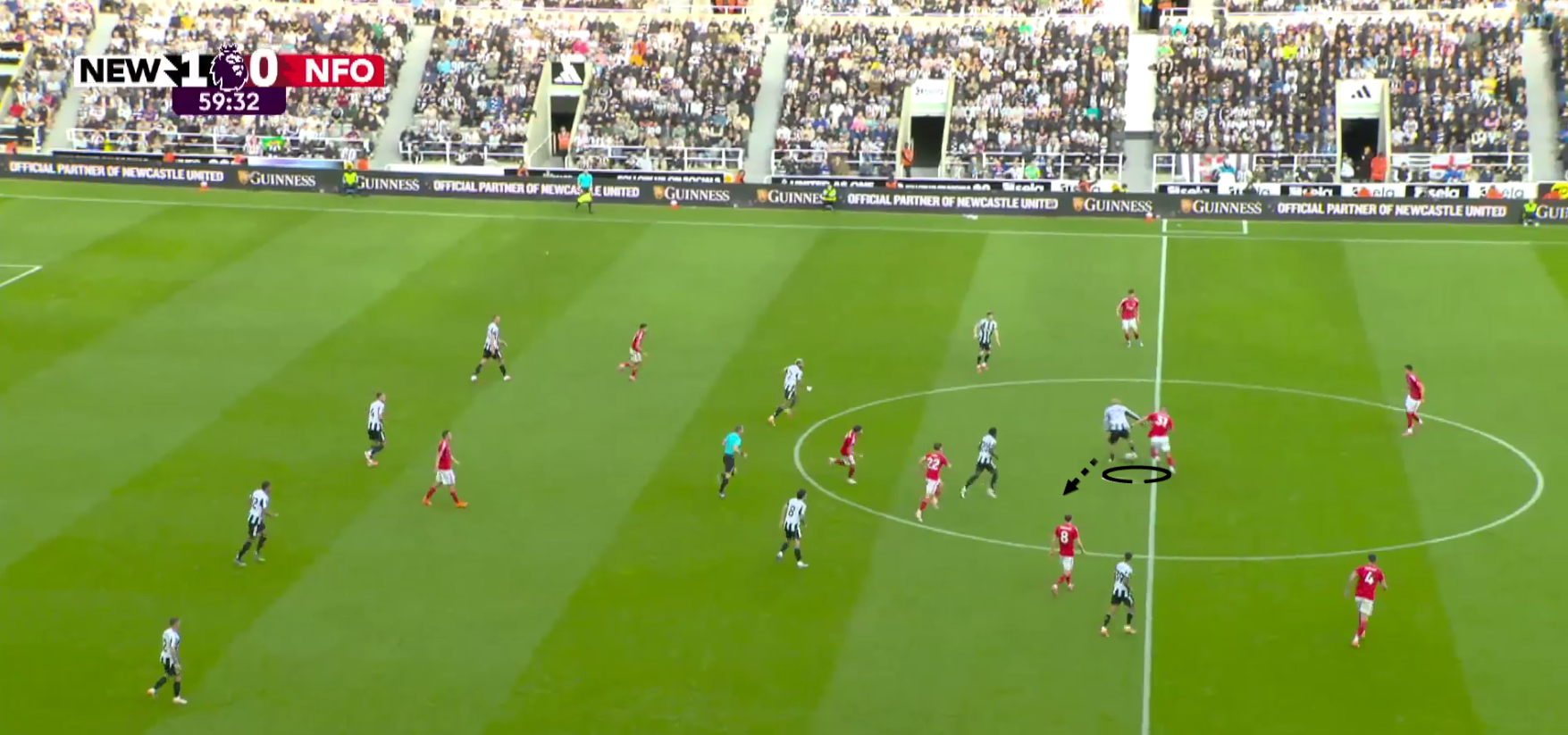 Here, Nick Woltemade senses pressure coming from his right side and immediately prepares to turn toward his preferred direction.
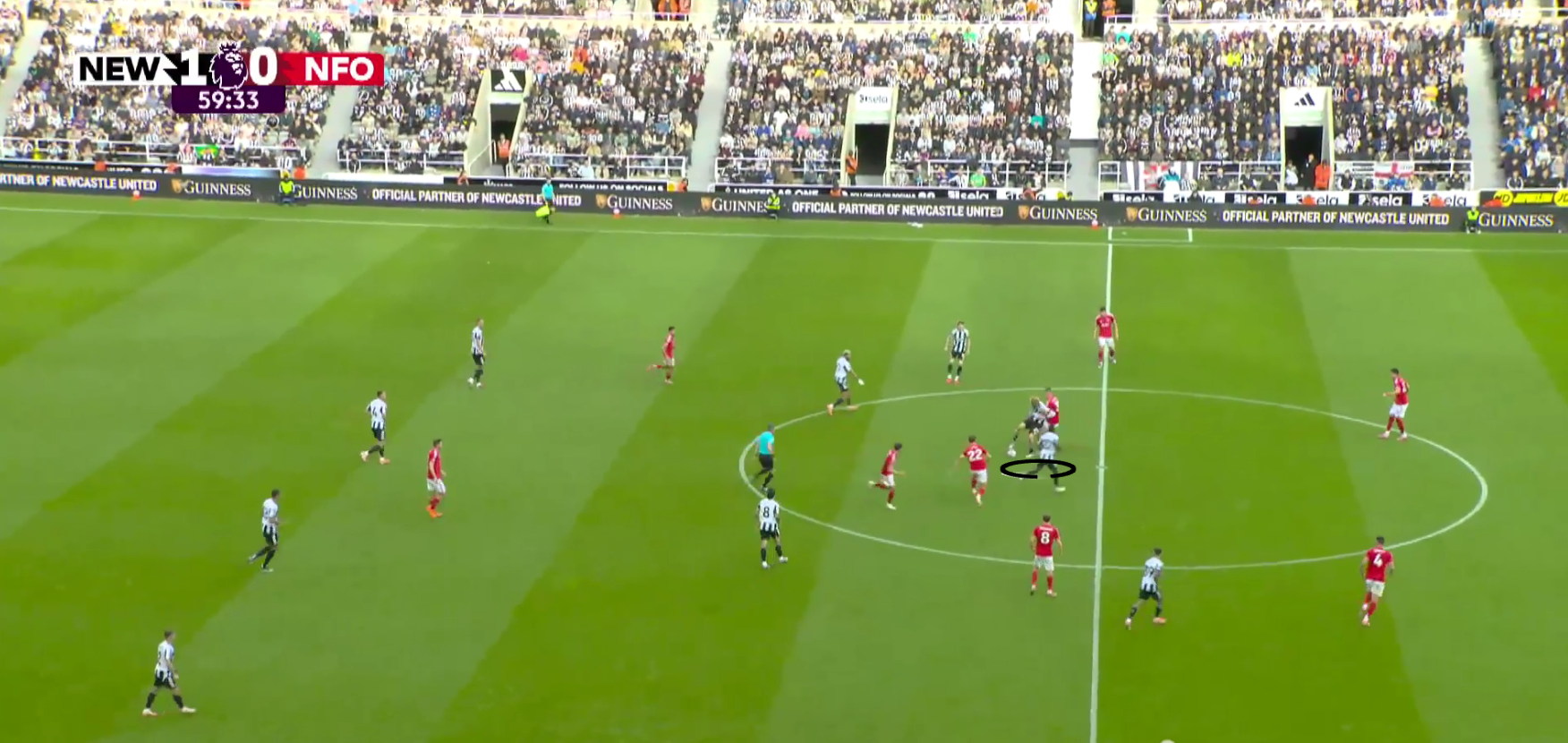 With quick footwork and agility, he shifts his right foot, places the defender on his back, and successfully turns away.
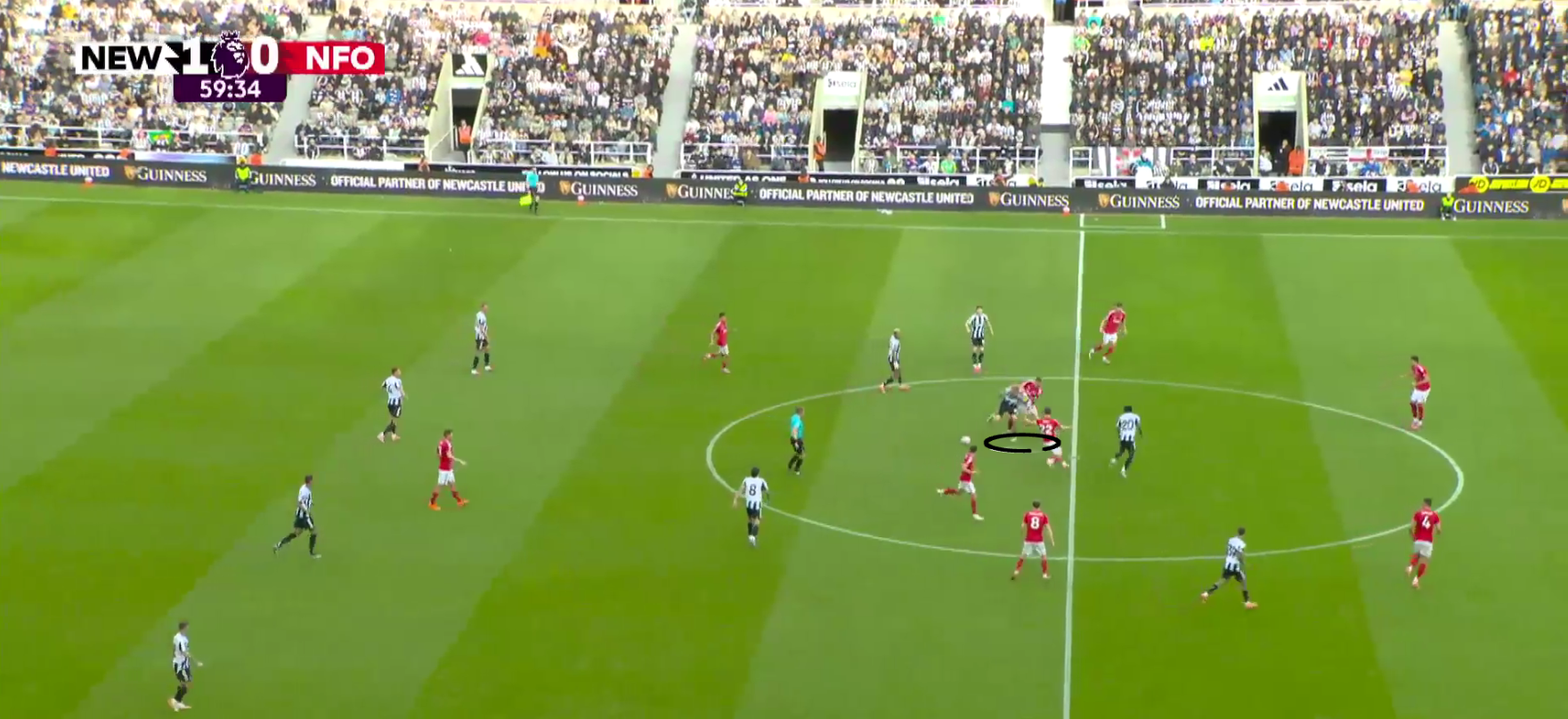 Unable to recover, the defender resorts to holding Woltemade, resulting in a foul.
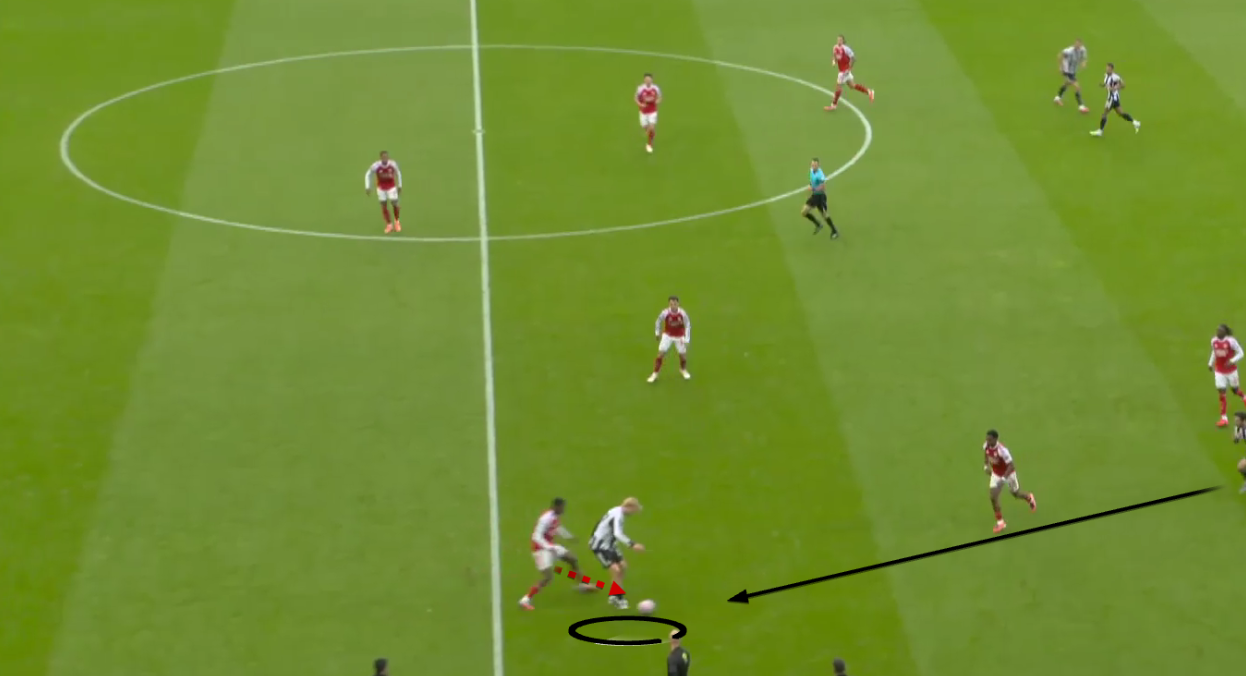 Although Nick Woltemade’s unique technique often helps him escape pressure, there are moments when he struggles.
Positioned wide, he receives Tonali’s pass with a defender tight behind him.
Ready to make contact immediately, he presses from the left, his preferred turning side.
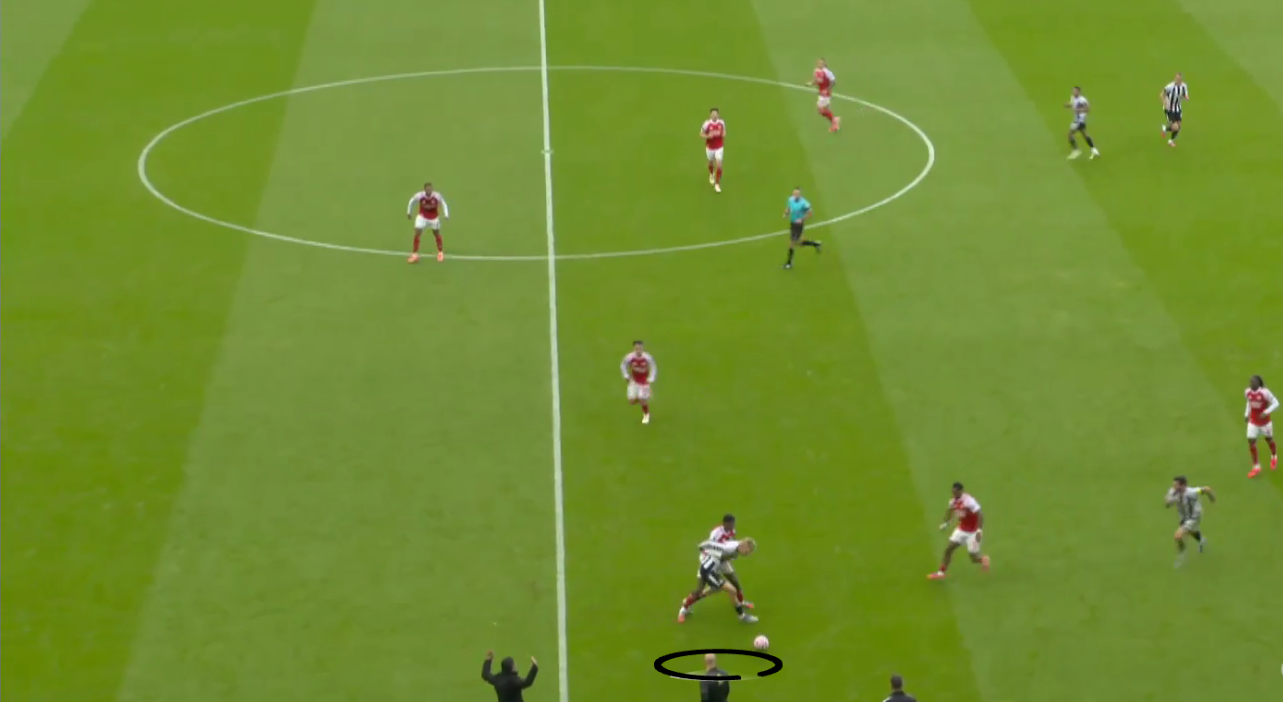 Blocked from turning left, Woltemade is forced now to shield the ball and move it away from the defender behind him, a scenario that often challenges him.
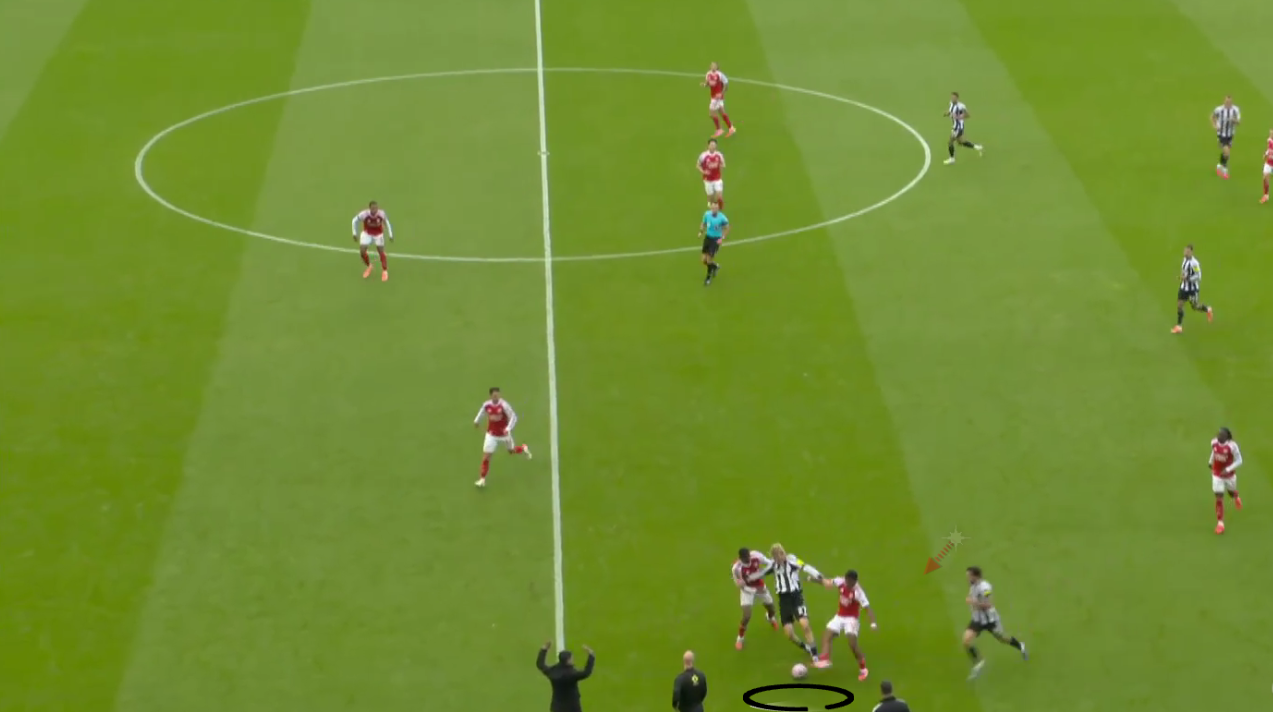 As a result, Woltemade loses his balance and time, allowing another defender to close him down from the front, ultimately leading to a loss of possession.
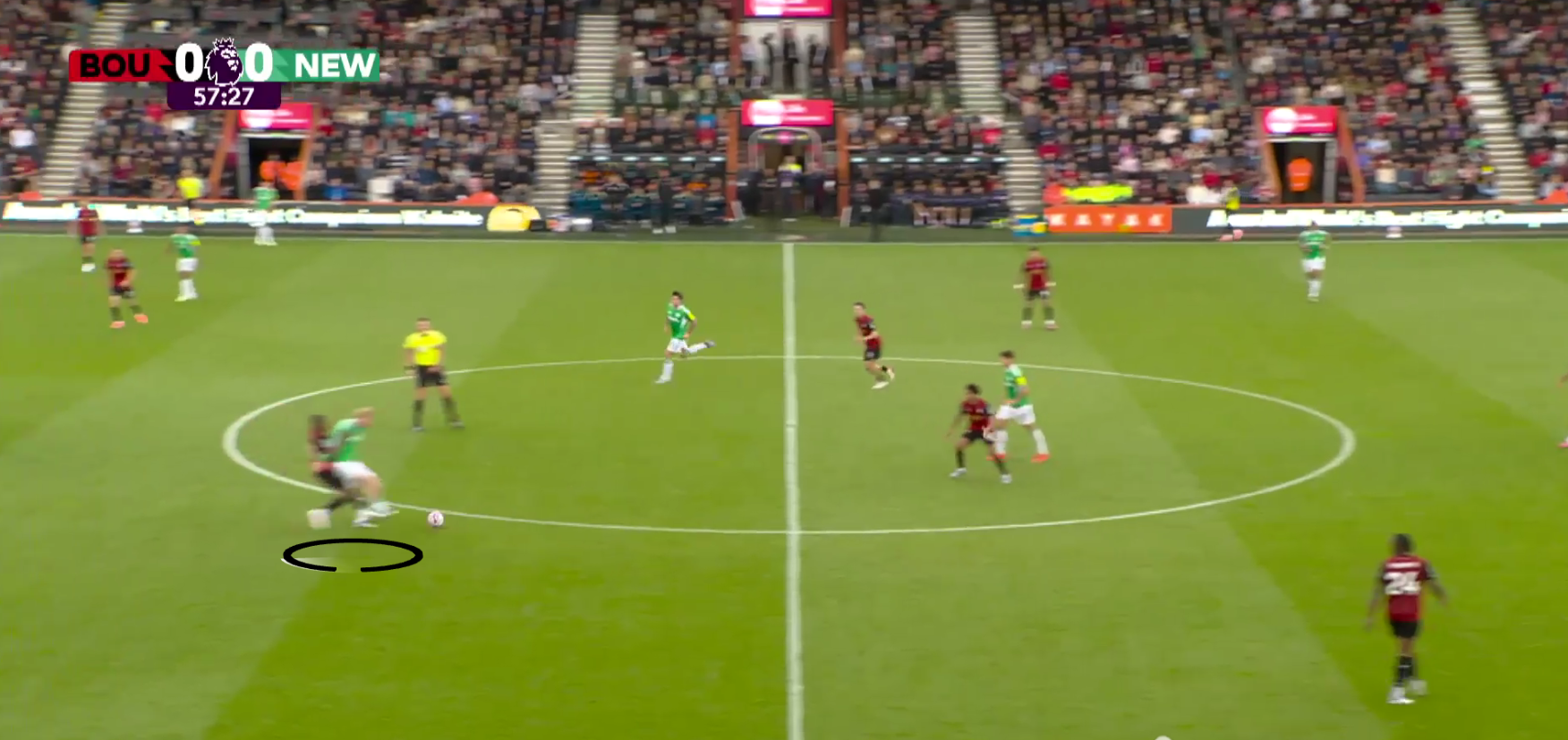 Again, Nick Woltemade drops to receive the ball while a defender marks him tightly from behind.
He attempts to shield the ball by pushing the defender back while, with his legs, moving it away from him.
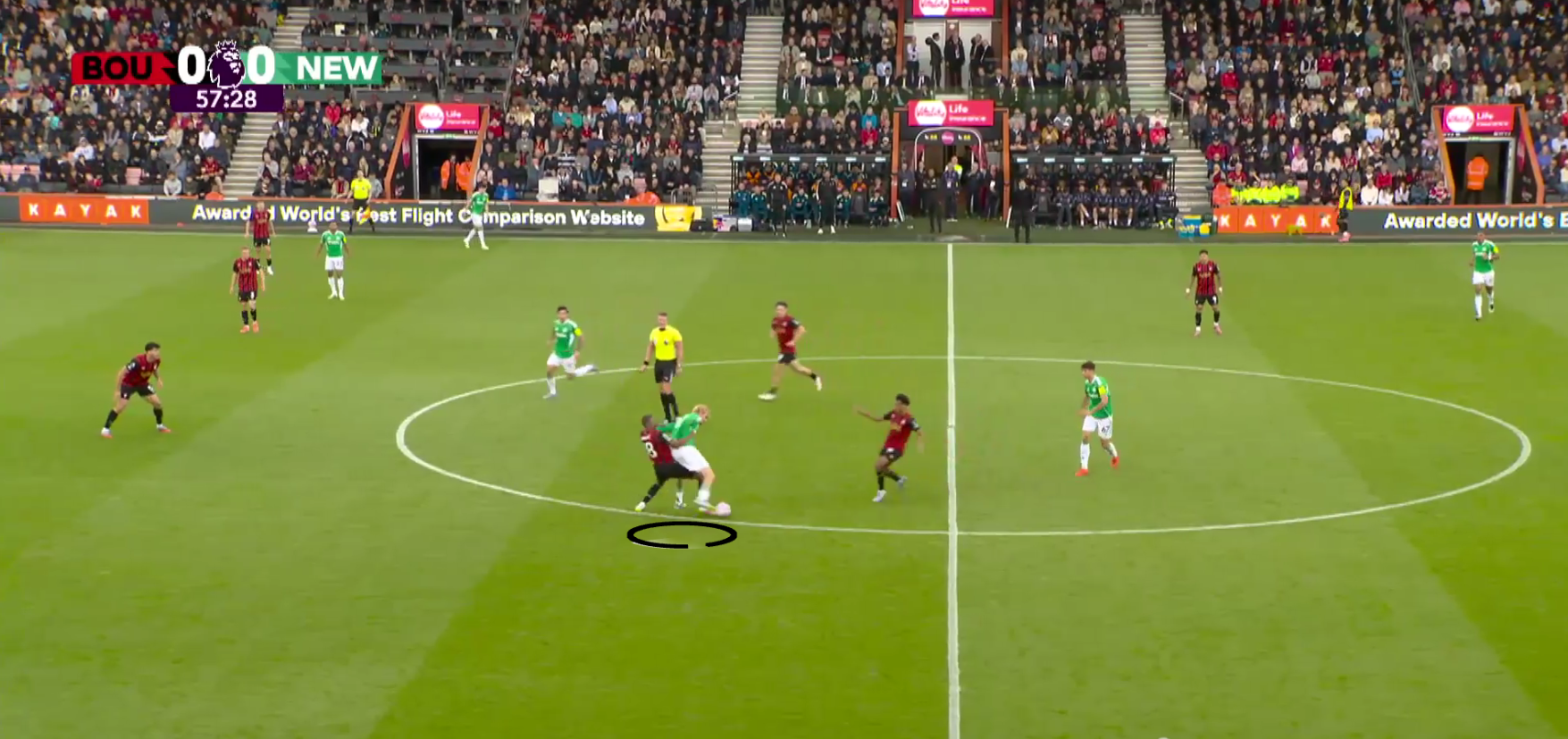 However, Woltemade fails to execute either action effectively.
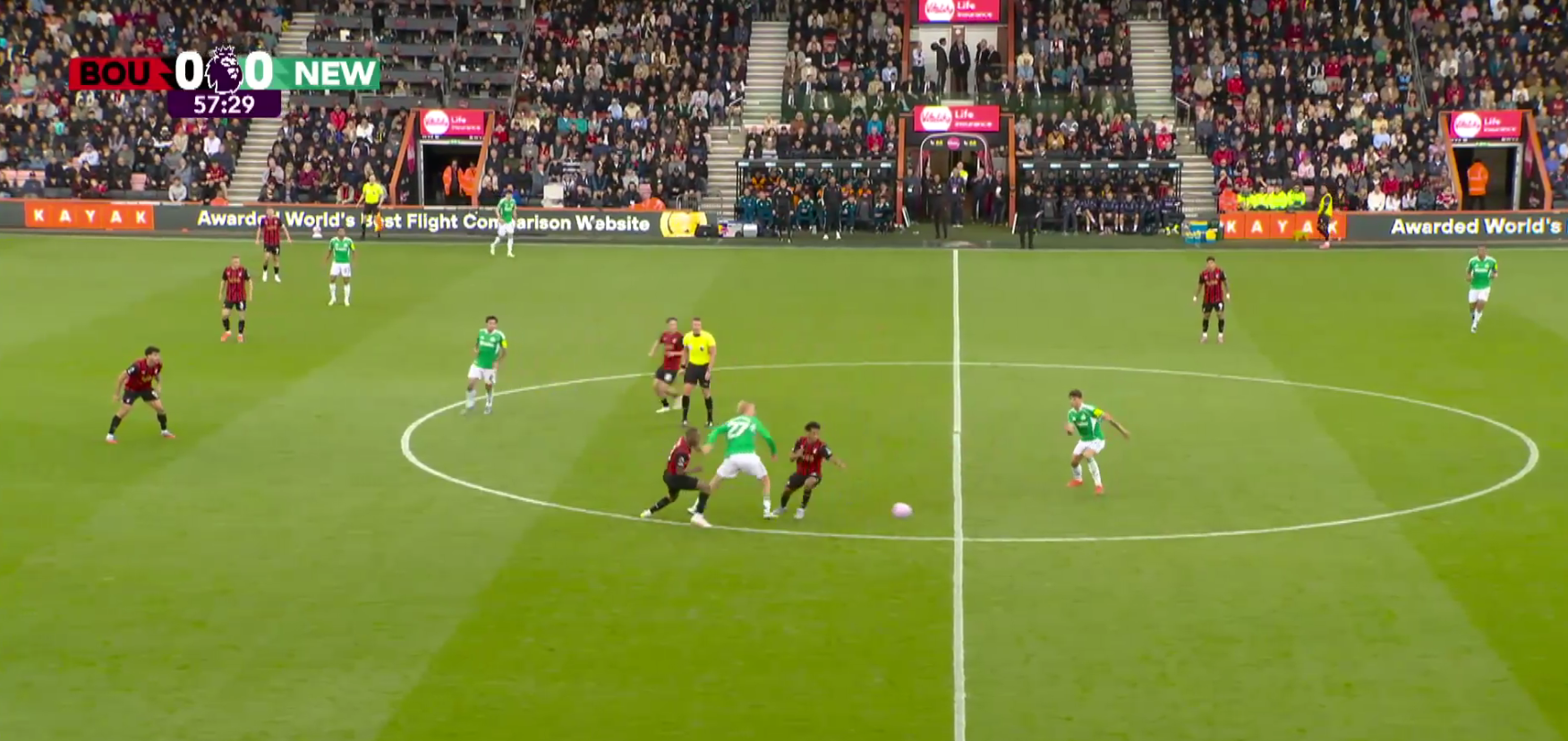 And ends up losing possession.
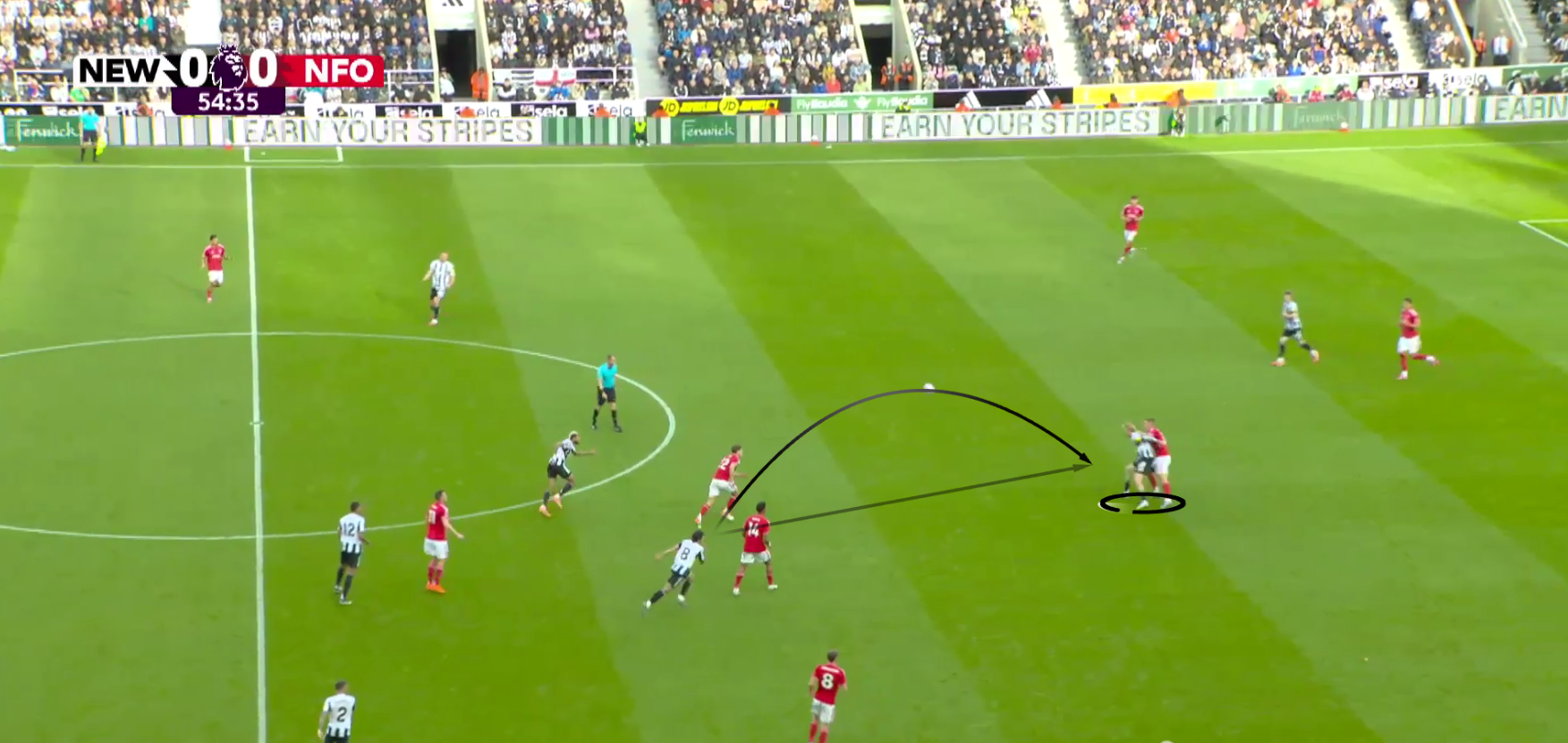 Here, Tonali’s header drops in front of Woltemade as he moves towards it, facing strong physical pressure from a defender behind.
He attempts to reach the ball while resisting the challenge.
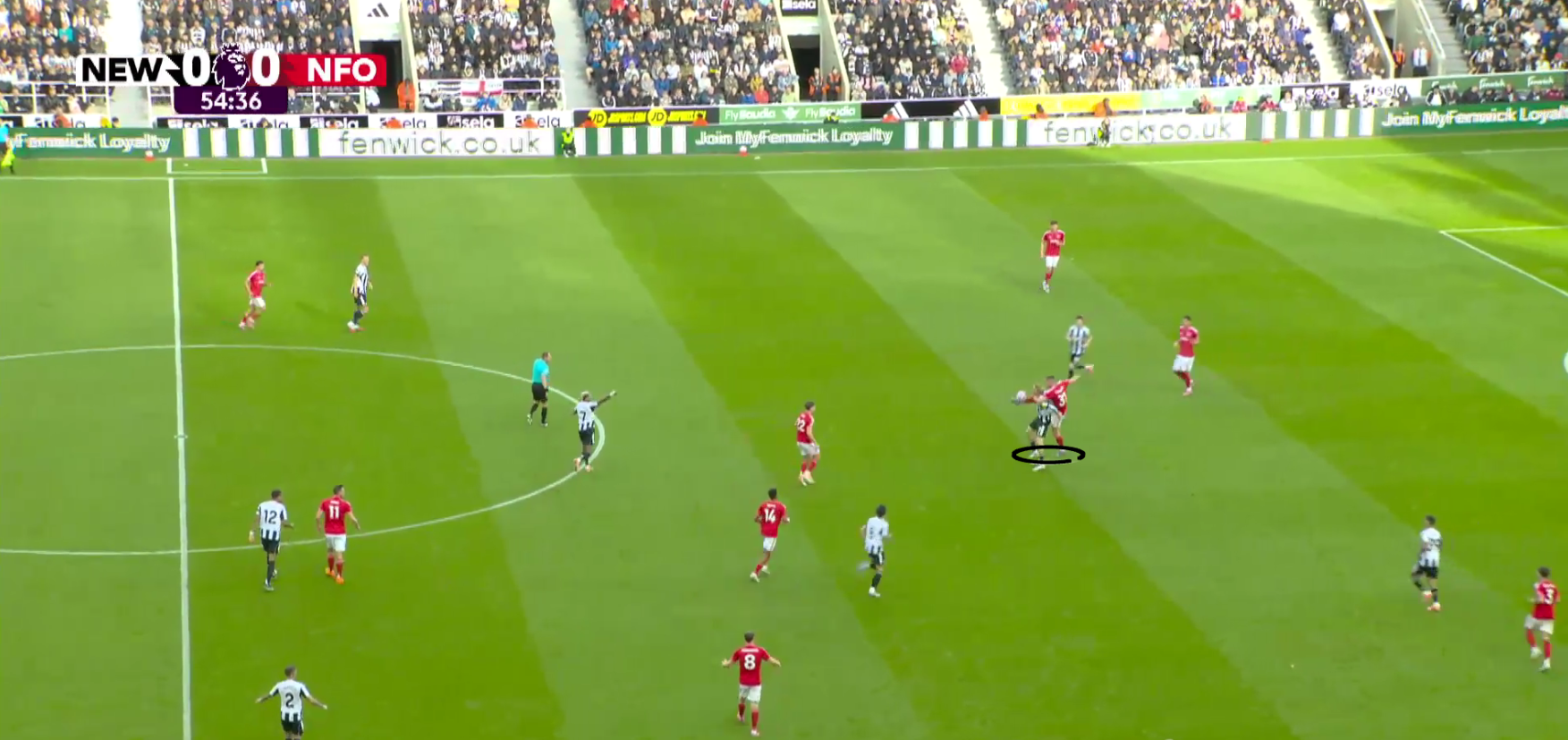 Despite his effort, the defender anticipates the play better and reaches the ball first.
Nick Woltemade Heading Skills
At 198cm, one might expect Nick Woltemade to be a strong target man capable of winning numerous aerial duels.
However, he tends to avoid meeting long balls with his head, often losing such challenges as defenders rise above him to win possession.
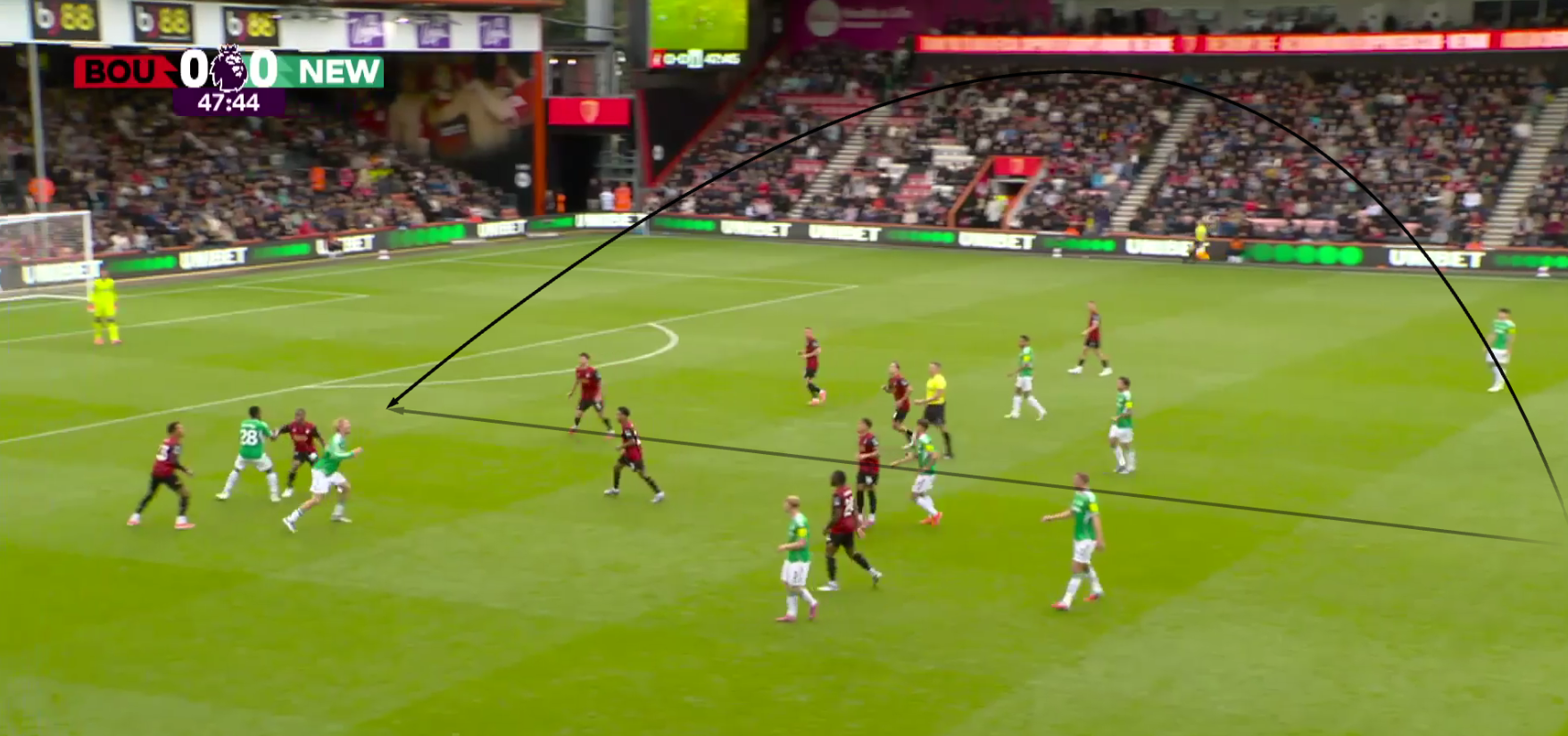 In this example, after a long ball from the goalkeeper, Nick Woltemade positions himself close to the ball’s destination.
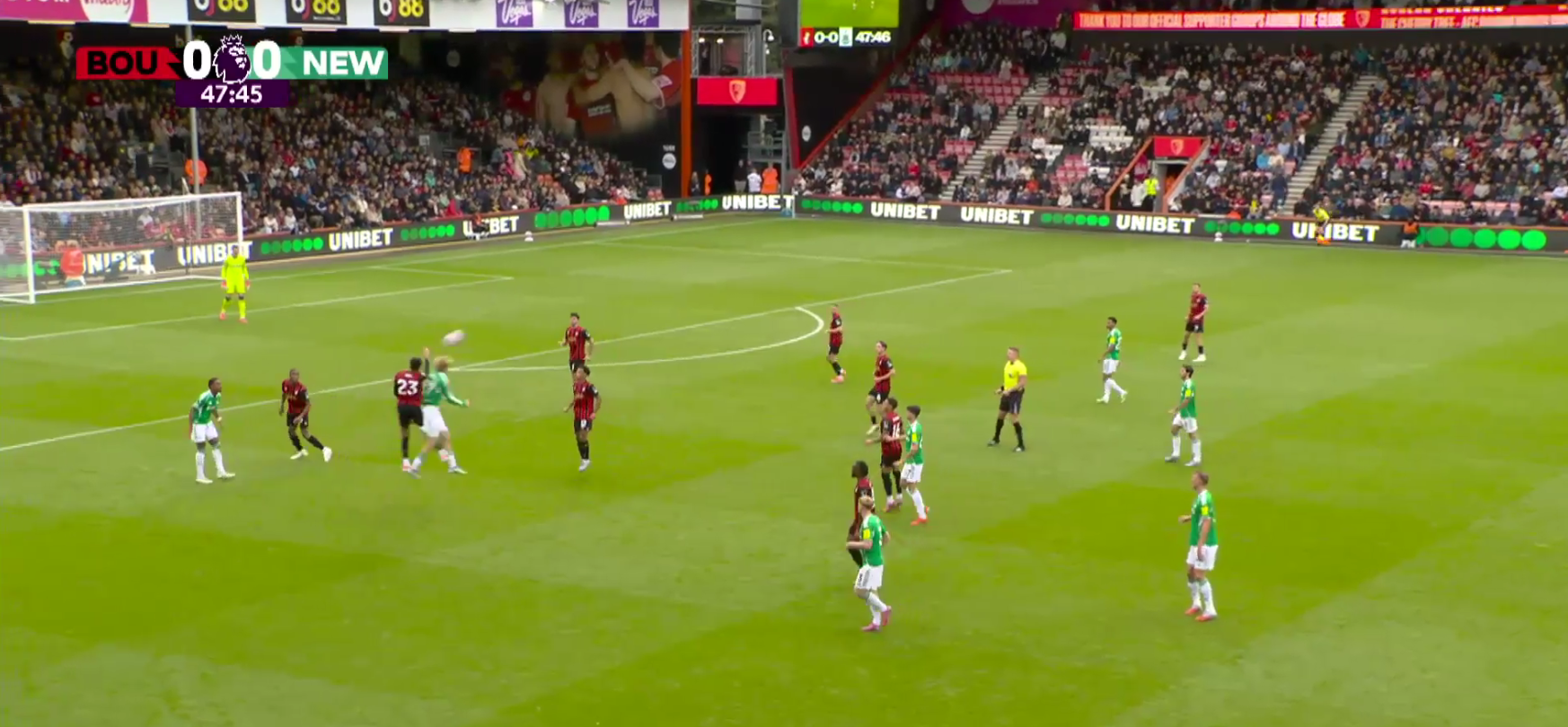 Here, the opposition’s right-back leaps above Woltemade and wins the header.
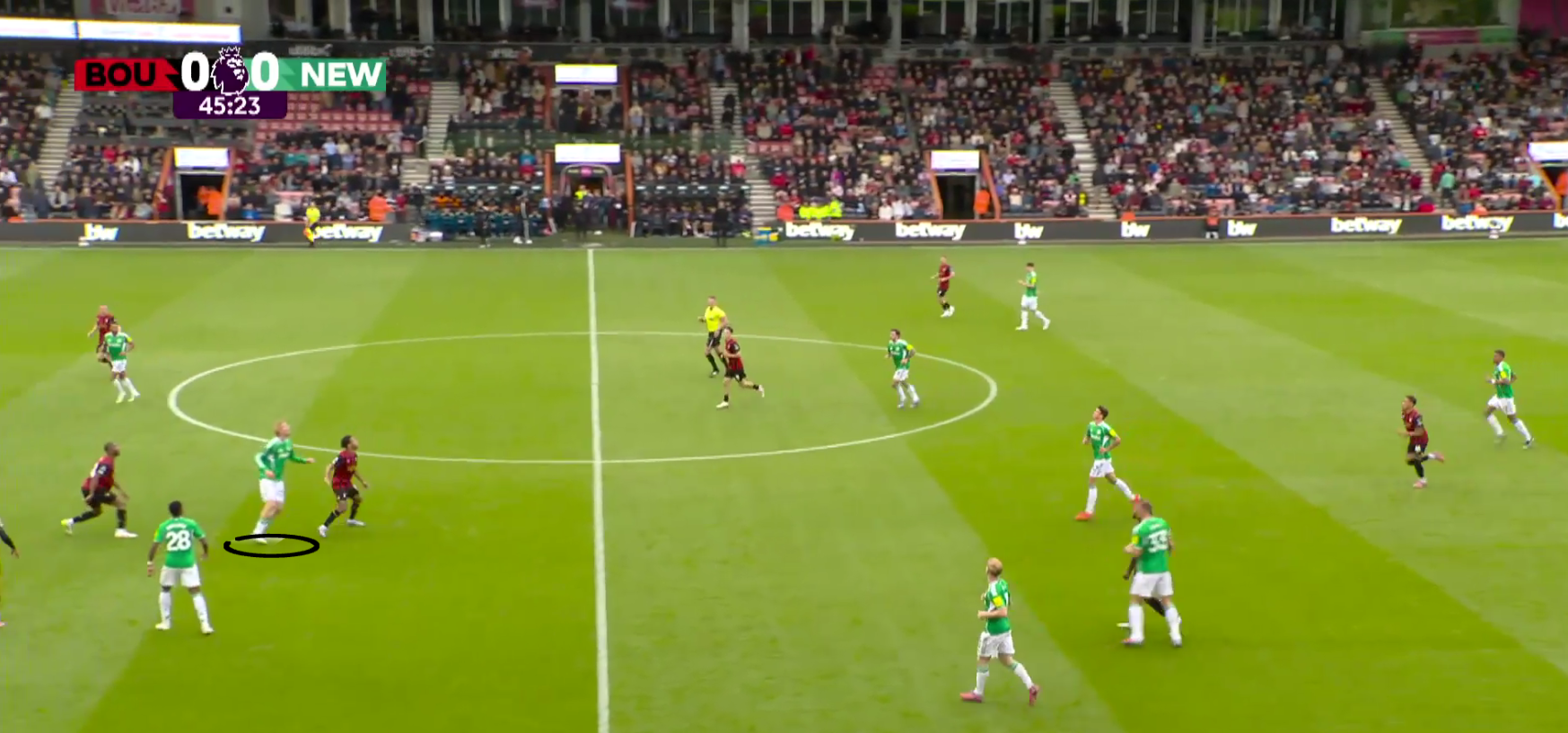 In another instance, the opponent facing Woltemade is not as tall as him, seemingly giving him an advantage in the aerial duel.
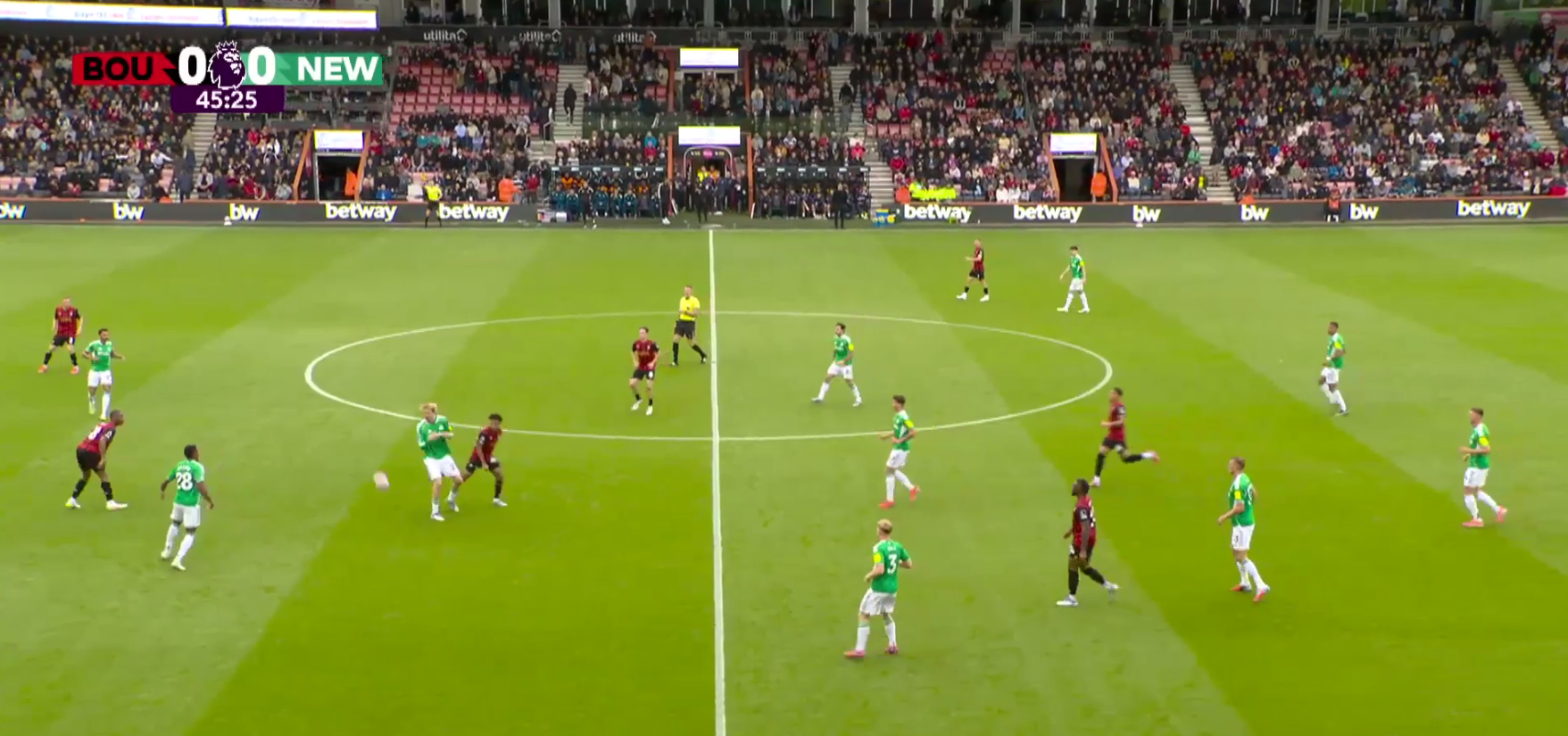 Despite this, Nick Woltemade fails to win the duel and loses the challenge.
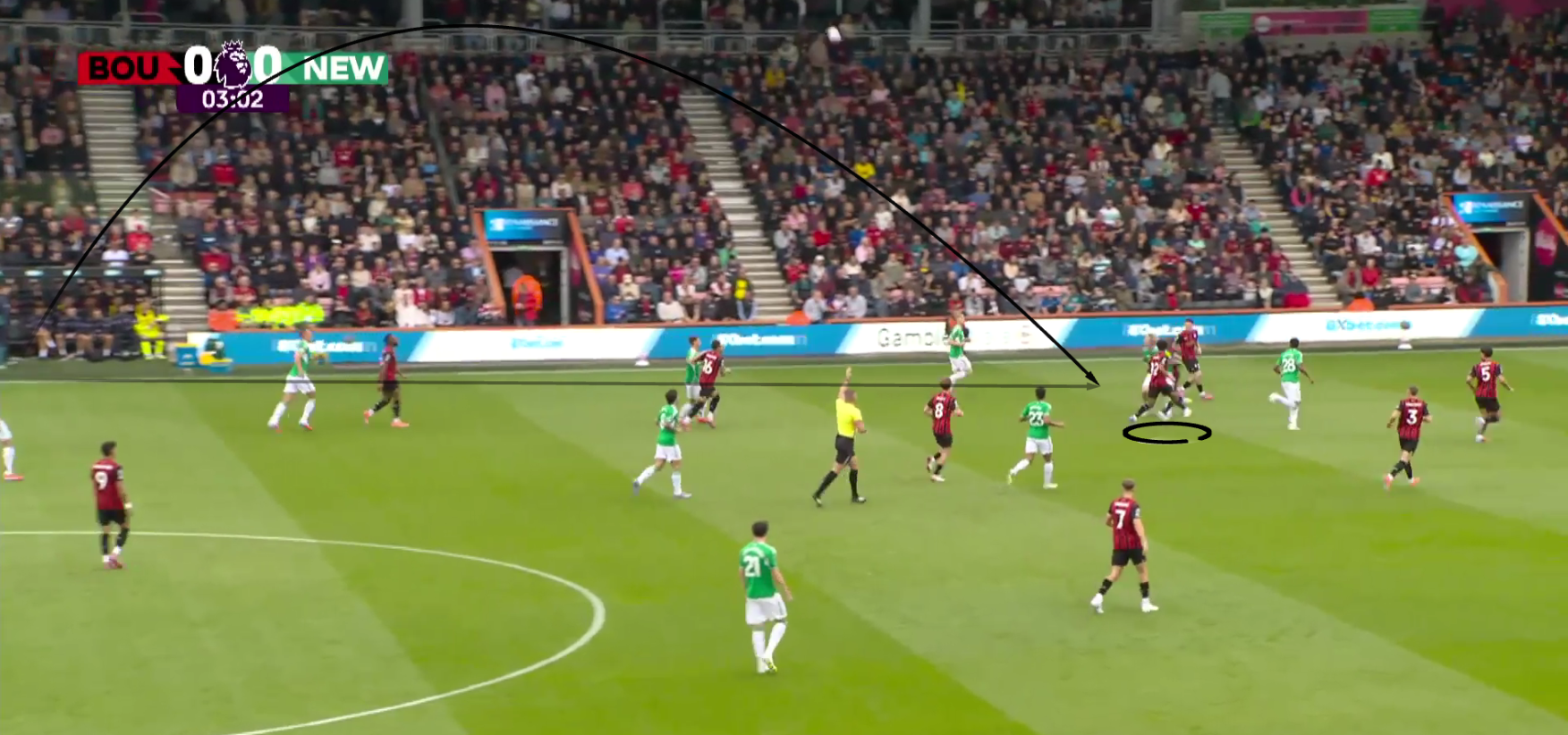 In these situations, Nick Woltemade prefers an alternative approach rather than heading the ball.
Here, he positions himself, waiting for the long ball.
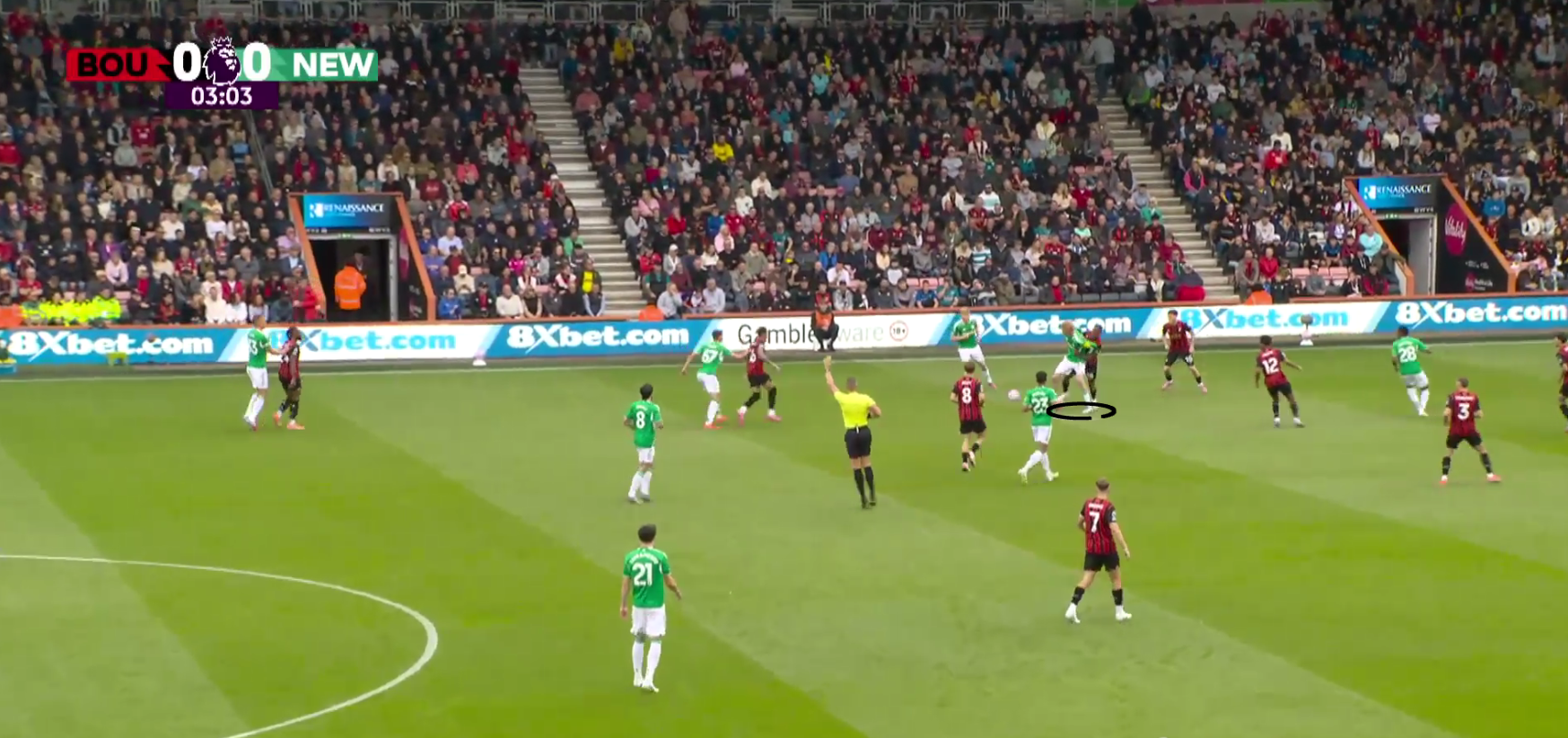 Woltemade attempts to use his body to push the defender back and receive the long ball with his right foot, a skill that demands high technical receiving ability and excellent shielding.
However, since he often struggles in shielding situations, he can also lose possession in these moments.
Nick Woltemade Movement Inside The Box
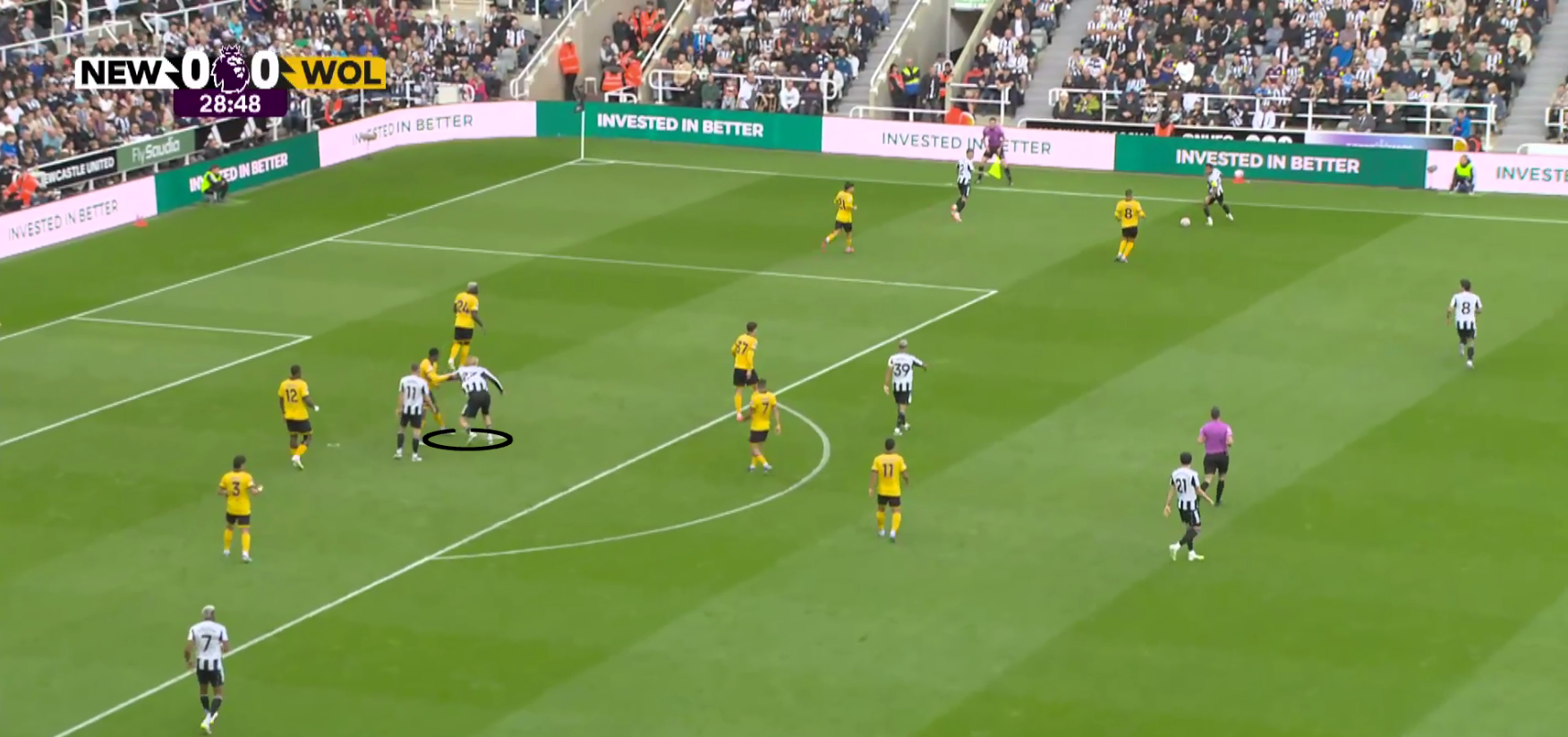 Up to this point in the season, Woltemade has mostly operated outside the penalty area under Eddie Howe at Newcastle.
However, when he enters the box, he demonstrates intelligent movement.
Here, against Wolverhampton Wanderers, the ball is wide, and Nick Woltemade finds that his position at the near post makes him tightly marked.
He tries to push his marker away and escape.
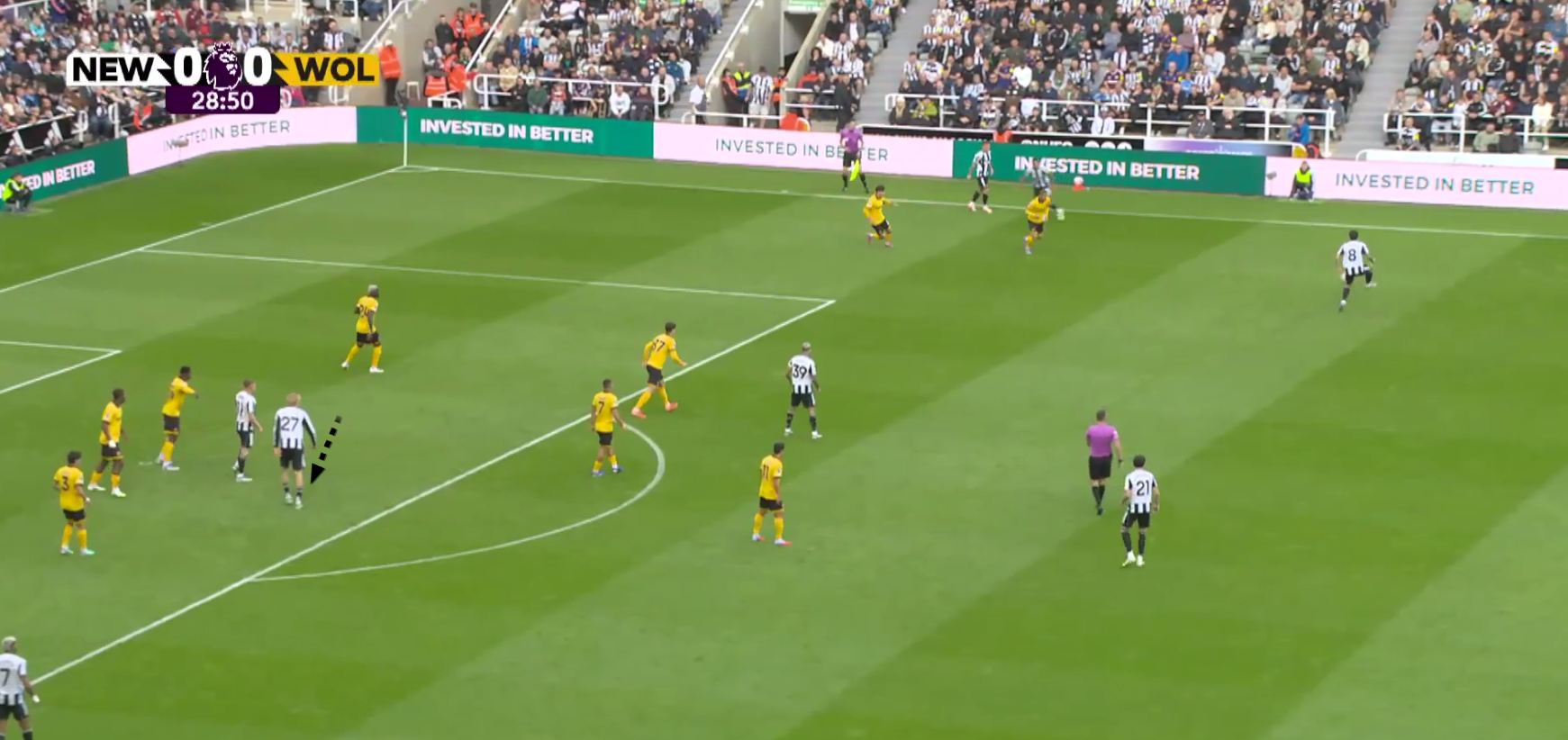 After freeing himself, Nick Woltemade drifts towards the edge of the box, creating space and maintaining access to both the near and far posts.
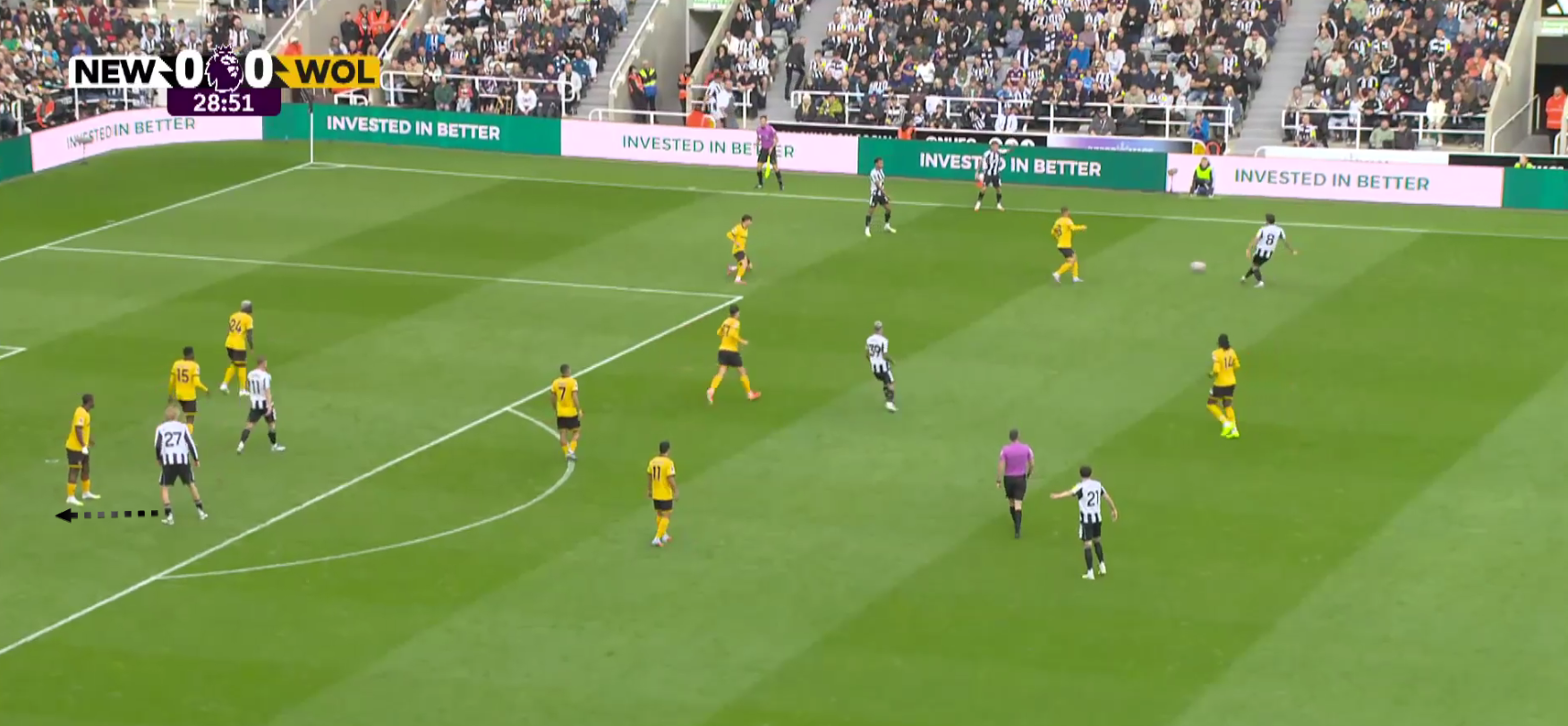 Closely tracking the ball’s path, Woltemade recognises a potential crossing opportunity and begins moving toward the far post, entering the defender’s blind side.
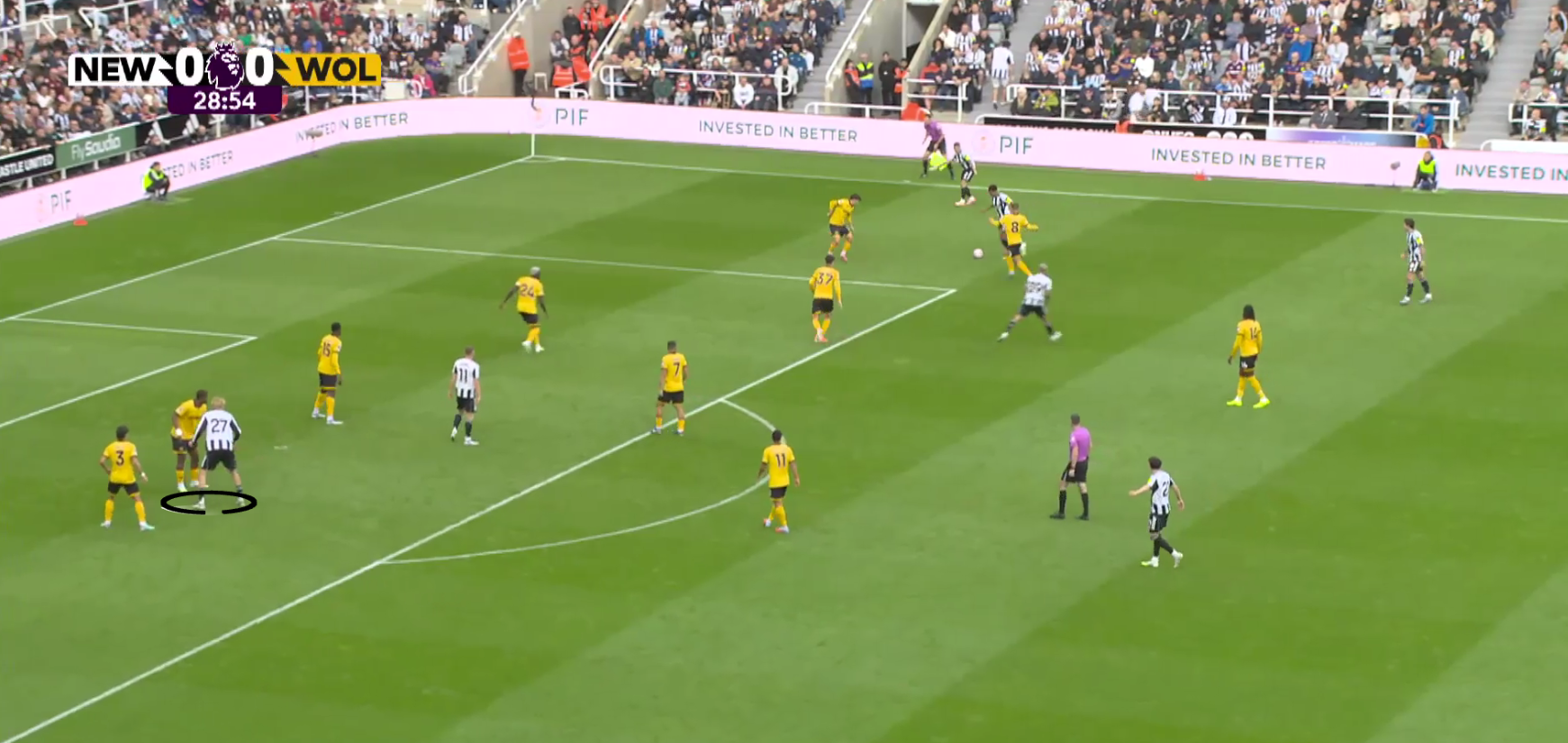 This movement places the defender in a difficult position, forcing him to split his attention between the ball and Woltemade.
His body shape shows how the defender wants to maintain awareness of both.
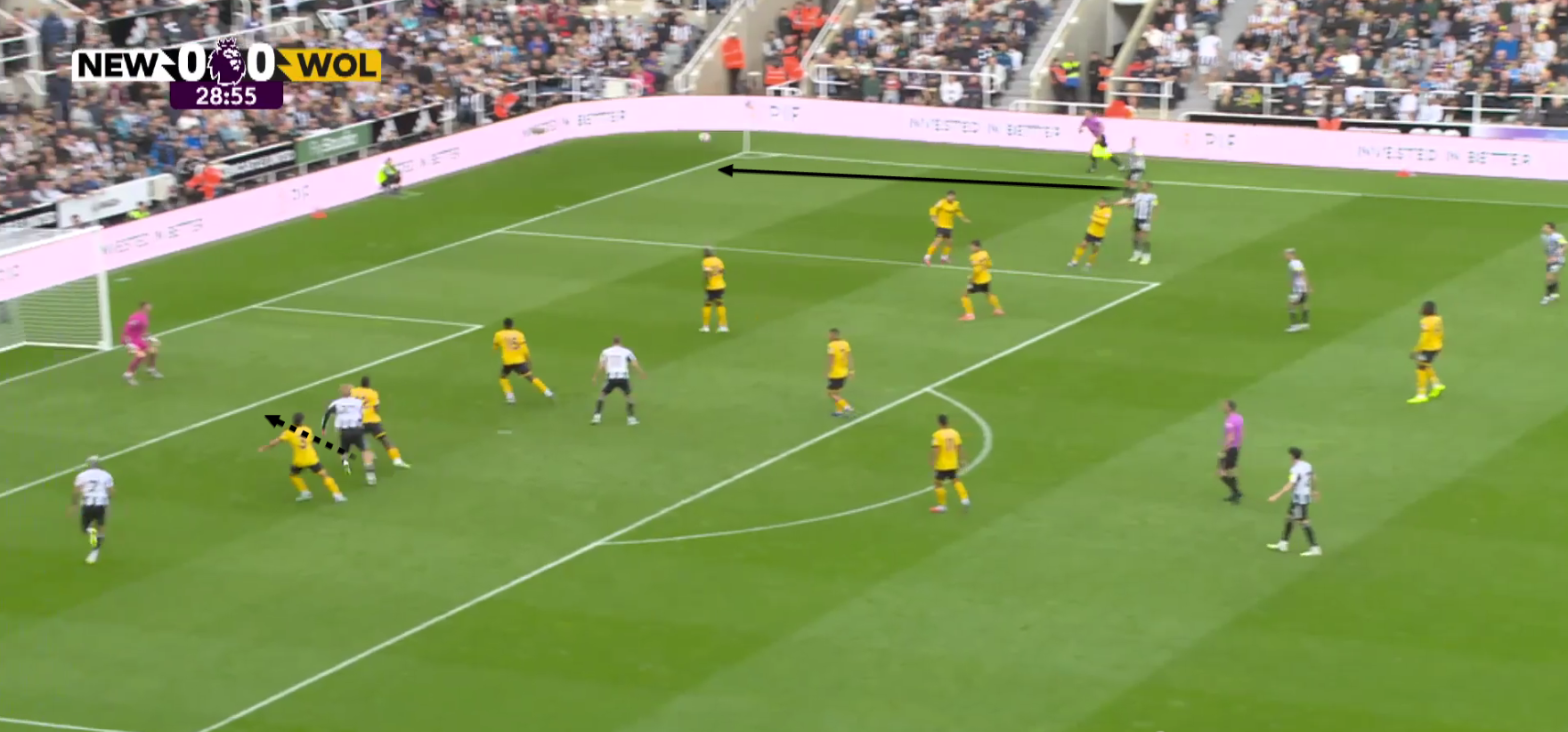 As Nick Woltemade advances to the far post, the defender loses sight of him completely, turning his focus toward the ball.
Woltemade uses this moment to move freely and get to the end of the cross.
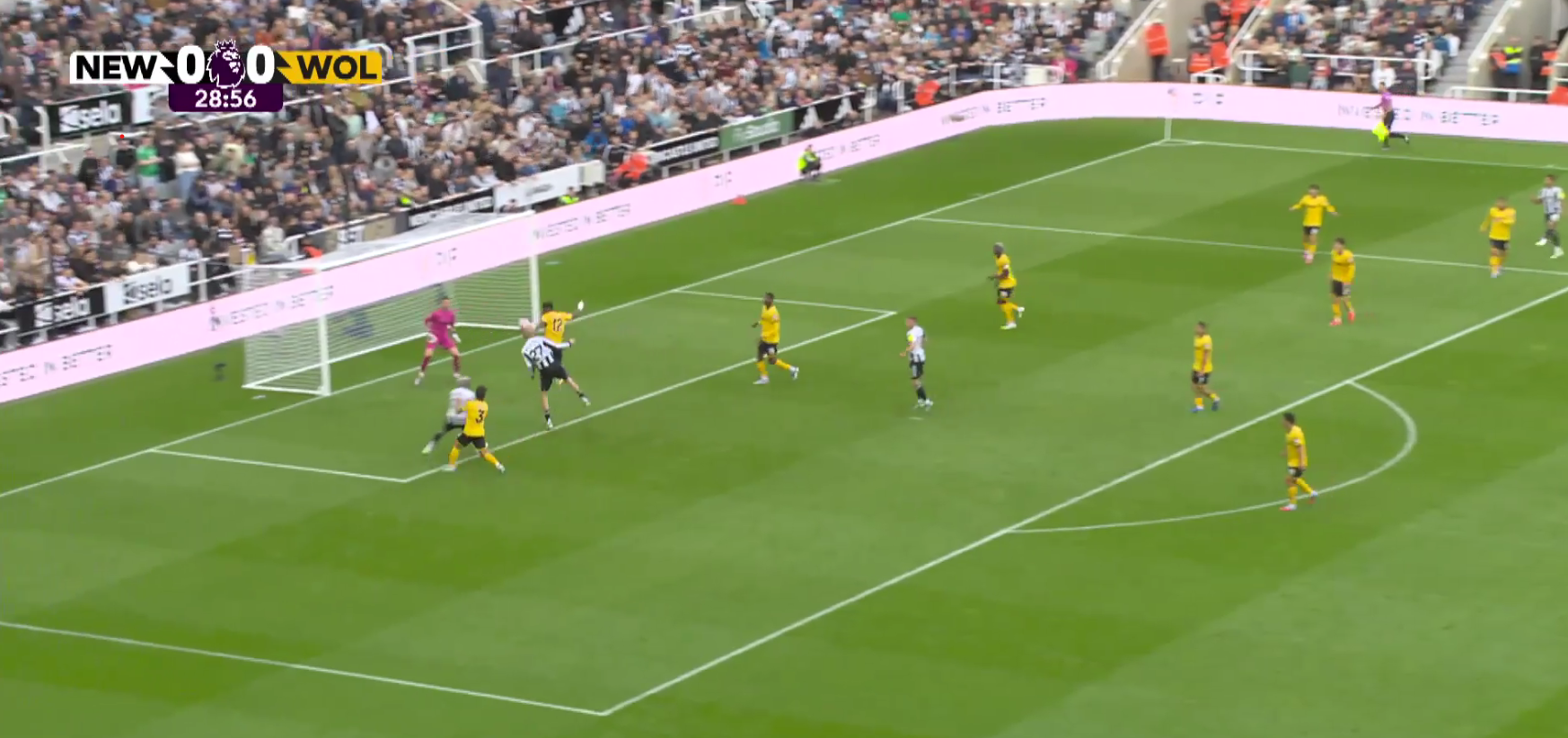 With no defender challenging or pushing him, Nick Woltemade rises comfortably and directs his header into the back of the net.
Conclusion
Nick Woltemade possesses several impressive qualities, but given Newcastle’s current level, competing in both the Premier League and the UEFA Champions League, the demands are significantly higher, leaving room for improvement.
For example, although he often positions himself well, whether between the lines or out wide to receive the ball, he can sometimes struggle to find enough space and time at this level to control, pass, or carry forward.
This often forces him into physical duels to maintain possession, where his effectiveness under pressure can drop.
On the positive side, it didn’t take him long to find the back of the net, which is certainly encouraging.
The real question now is whether Nick Woltemade can become a suitable replacement for Alexander Isak as Newcastle moves forward.
