
3 AFCON Players To Watch
Every two years, just as Europe’s December calendar peaks, the Africa Cup of Nations reminds the world where so much of its footballing talent comes from.
AFCON has a habit of delivering drama.
Ivory Coast’s 2023 win came after they barely squeezed through the groups and changed managers mid-tournament.
It is a tournament where stars and unknowns share the same spotlight.
The world tunes in for familiar names like Mohamed Salah and Victor Osimhen and leaves with new favourites who have just been given a platform.
This AFCON scout report highlights three players to watch closely at AFCON 2025.
These profiles blend role, metrics, and tactical fit to explain why each could shape the tournament.
Noah Sadiki Scout Report At Sunderland – DR Congo
The first thing that stands out is how much ground he covers and how he turns chaos into control.
For anyone following the Premier League this season, Sunderland have been one of the surprises, and part of that rise is Noah Sadiki.
At 20, he profiles as a ball carrier, a tough and aggressive disruptor of opposition play, a reliable carer of the ball, and an interceptor.
As shown in the pizza chart, his strengths lie in on-ball progression.
His defensive profile is mixed, with good positioning and engagement.
Noah Sadiki Stats 2025/2026

He plays as a defensive or box-to-box midfielder next to Granit Xhaka, and he is the legs and the coverage for both (Habib Diarra provides this too).
The pairing works because the responsibilities are clear.
Xhaka is the rhythm and the passer who sets angles, while Sadiki provides the running and the pressure.
He is also part of Régis Le Bris’ hard-to-break-down 4-4-2 block, which is challenging to play through.
Sadiki closes space quickly, and despite being 5’8″, he remains balanced through contact.
He tackles forward rather than waiting.
As shown in Sunderland’s 2-2 draw versus Arsenal, Sadiki (no. 27) is able to notice that Mikel Merino was holding onto the ball for too long.
He quickly shuts him down and wins the ball.
When he chooses to go, he arrives with intent, and the numbers back this up.
He makes 1.47 interceptions per 90 (89th percentile when compared to his positional peers) and 1.41 passes blocked per 90 (93rd percentile).
These are disruption metrics that reflect his timing and distance control, which are at an excellent level for his age.
He reads triggers early, squeezes the lane on the side of the ball, and takes away the inside option before jumping the pass.
On the ball, he keeps it simple and direct.
He will recycle to the centre backs or play a safe pass into a teammate’s feet rather than attempt a killer ball through the last line.
What he does have is the ability to carry.
His 1.82 progressive carries per 90 (79th percentile) are achieved by receiving on the back foot, shifting the ball across the frame of his body to protect against the nearest pressure, and accelerating through the gap.
When he drives, he draws opposition and opens the release to a full-back or the near-side winger.
As a result, in Sunderland’s build-up, he tends to position a line higher than the first pass.
He is then ready to receive from Xhaka or to arrive from an out-to-in movement and take the ball on the turn.
The partnership with Xhaka benefits both.
Xhaka can sit and spray passes and be the connector because he knows Sadiki will handle the first and second waves.
His aggression needs to be reined in at times.
The line between front foot and overcommit is thin.
When he arrives too square, a quick wall pass can take him out of the picture and expose space behind.
The learning curve for a young midfielder is understanding that the best duel is the one that never happens because the lane is covered, and the angle is already wrong for the opposition.
He is showing signs of that judgment.
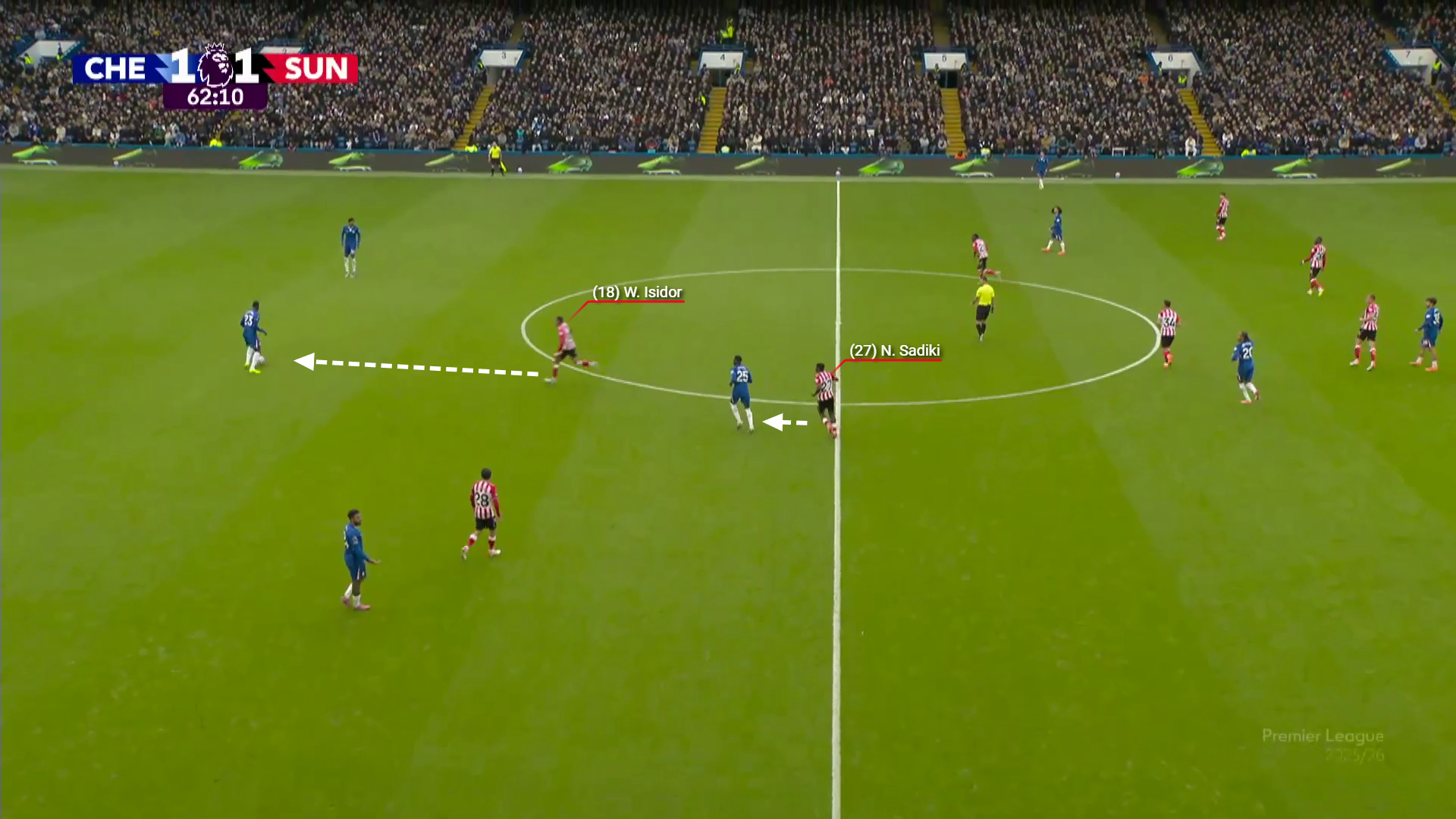
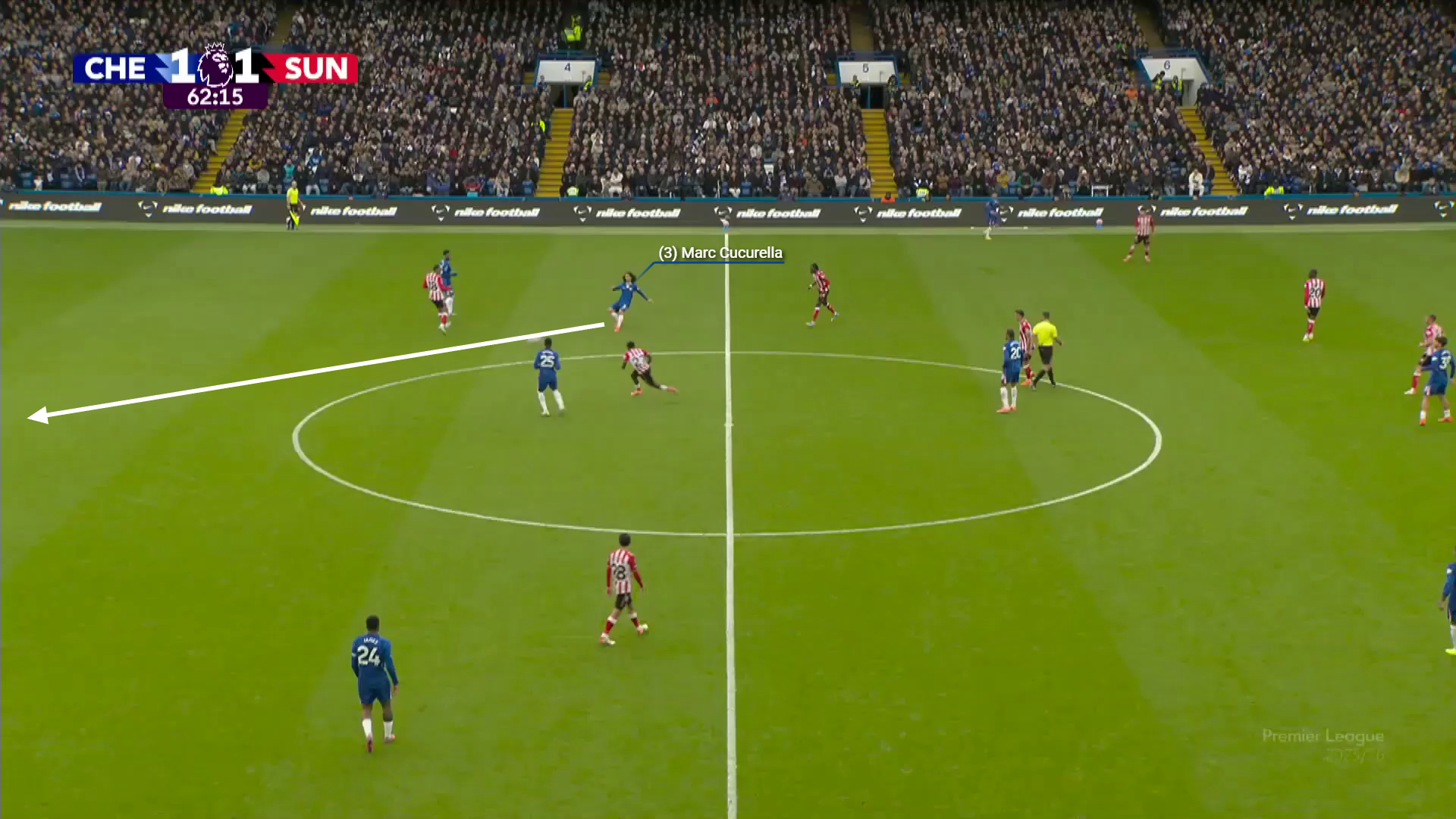
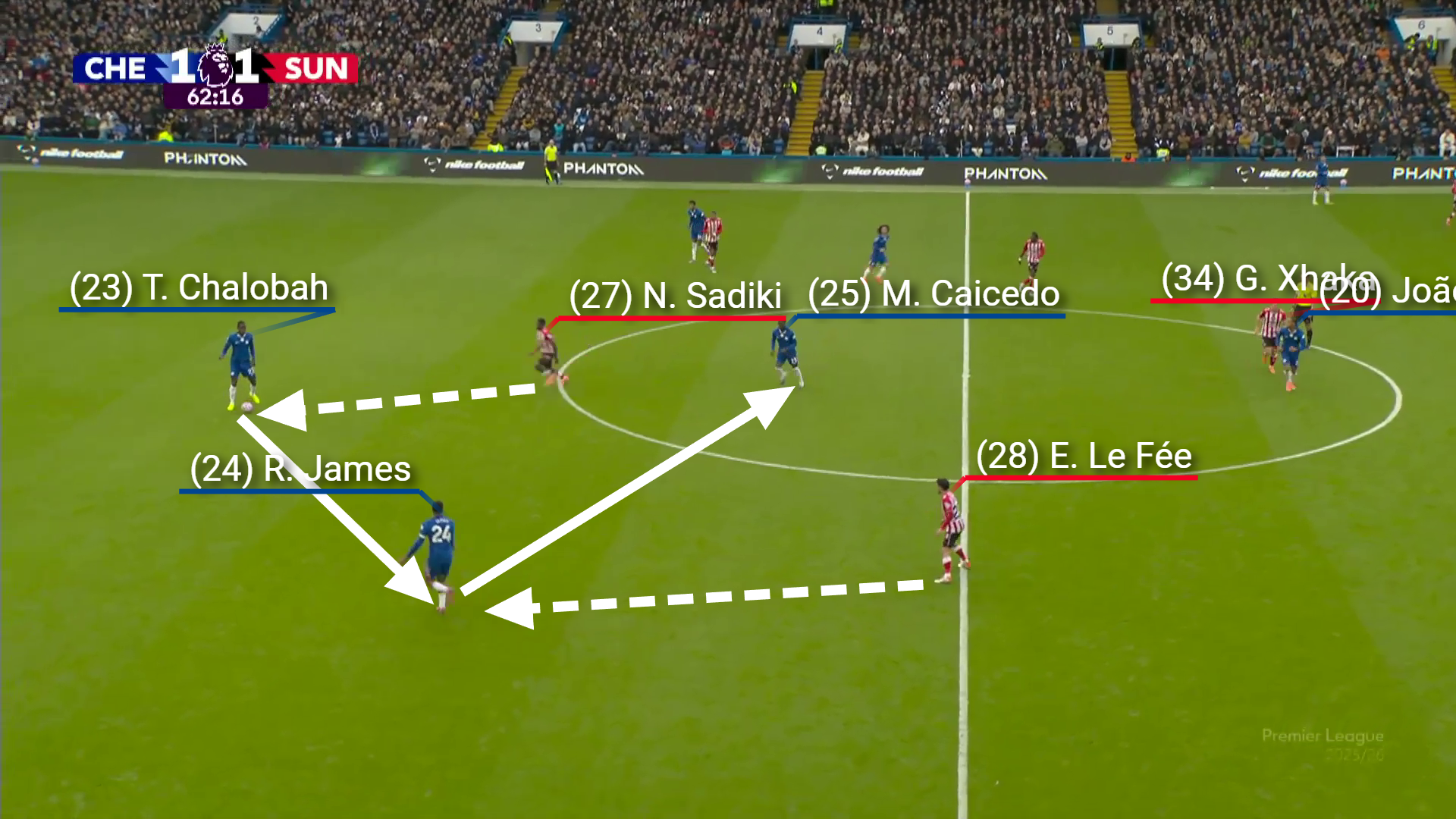
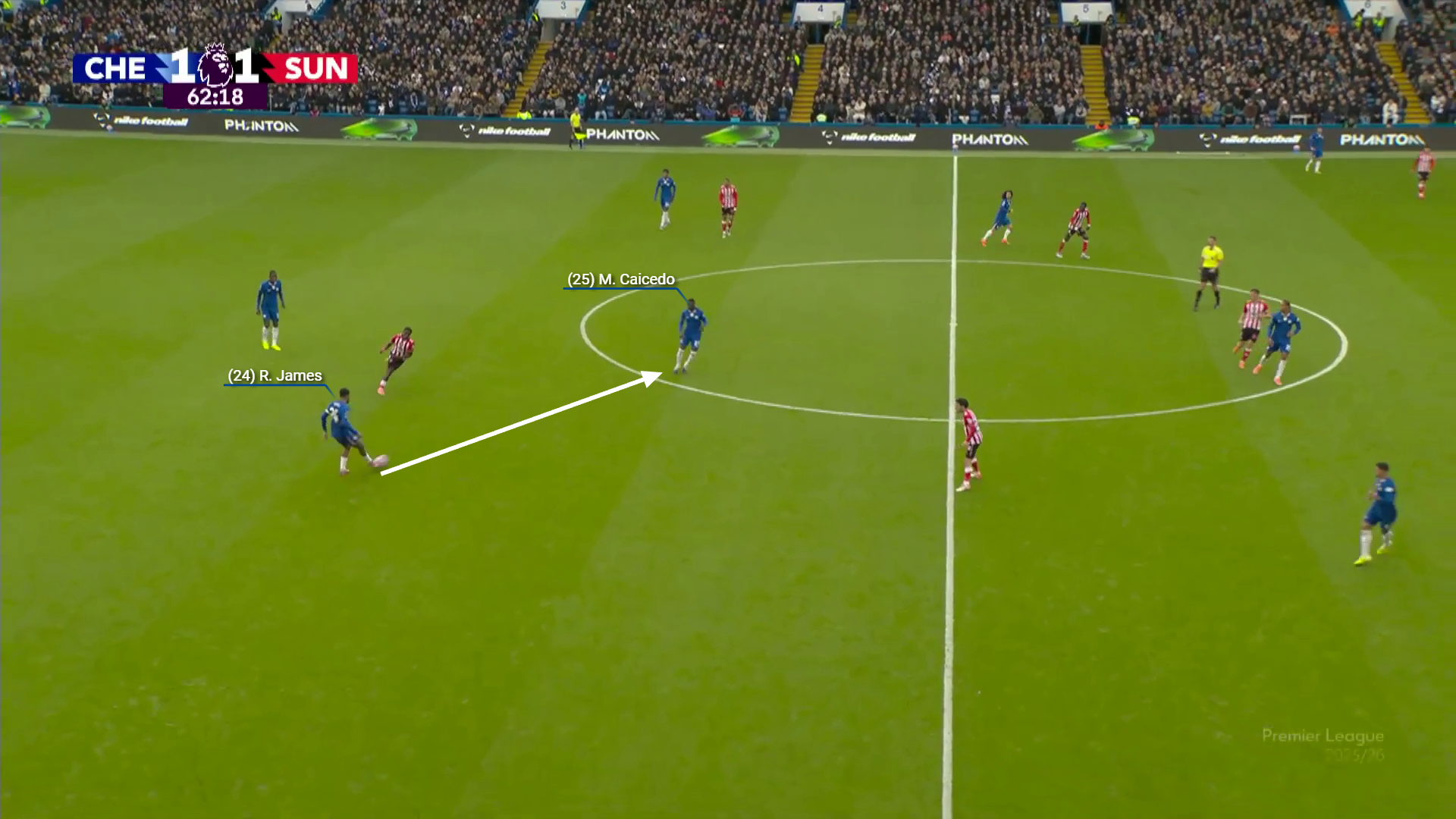
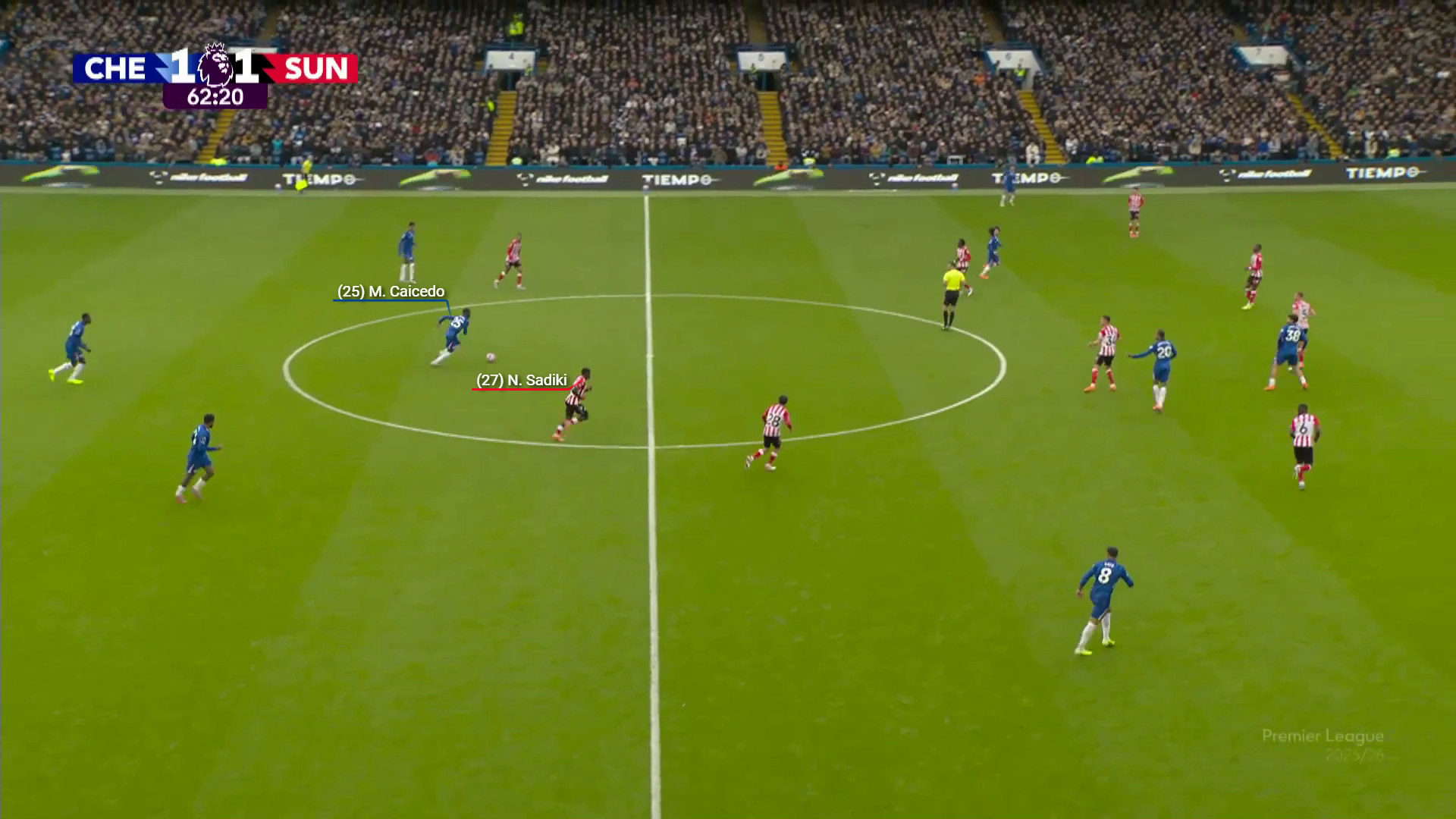
In Sunderland’s away win at Chelsea, Sadiki’s eagerness to press backfired in one key build-up phase.
He sprints in a straight line to close Trevor Chalobah, but that direct route breaks the cover shadow on Moisés Caicedo, the primary no-receive target in Sunderland’s scheme.
Granit Xhaka is tied to João Pedro, and Enzo Le Fée is unable to jump to Caicedo without freeing Reece James on the right.
There is no lateral curve to Sadiki’s run, and Chelsea play through the single-man press.
The result was an access pass into Caicedo, created by Sadiki’s aggression and the domino effect it triggered across Sunderland’s midfield.
At AFCON, the tactical context with DR Congo should suit him.
Tournament football rewards players who simplify the picture and protect the middle.
Sadiki has formed a solid midfield with Ngal’ayel Mukau, and it is a partnership that can make it difficult for other countries to play through and have sustained possession.
He is unlikely to own the headlines, but he will influence games due to his tenacity on and off the ball.
Yan Diomande Scout Report At RB Leipzig – Ivory Coast
Yan Diomande is a 19-year-old left winger but can also play on the right.
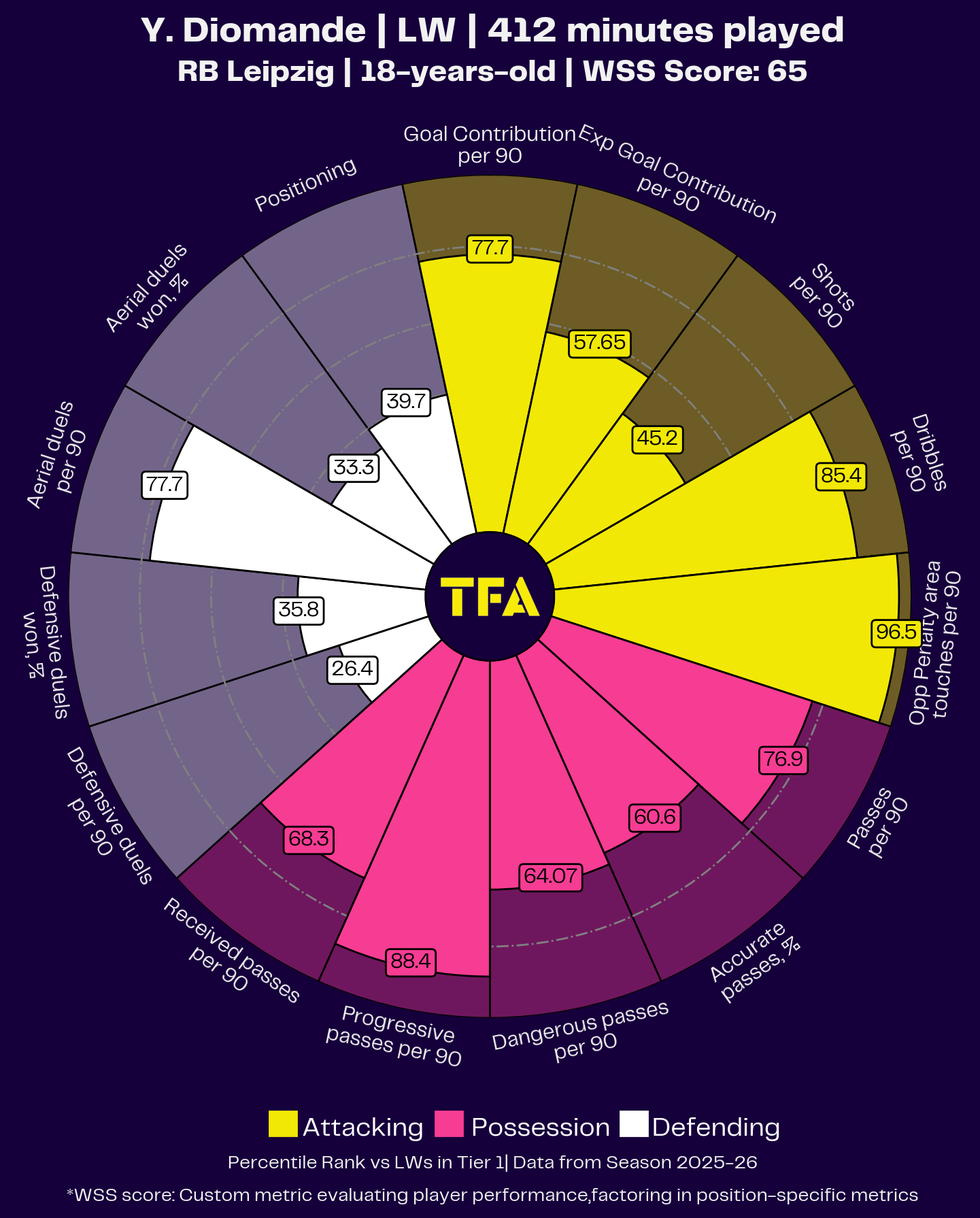
Yan Diomande’s pizza chart shows a high‑ceiling attacking winger among league peers.
He rates elite for opposition‑box touches, shots, goal contribution, and expected goal contribution, with strong passing volume, accuracy, and progressive passing.
His receiving and dangerous passing are solid, and he has an excellent direct, chance‑creating profile.
Yan Diomande Stats 2025/2026
 He is a prototypical one-v-one threat who combines elite athleticism, high-level dribbling and ball-carrying with good final-third decision-making.
On the ball, he usually hugs the touchline to stretch the last line, but he can drop into deeper zones to help defensively and connect the first pass out.
The moment he receives the ball, he drives forward and causes damage to the opponent.
As shown against Borussia Dortmund, Diomande backed himself to beat Julian Ryerson down the line.
His first touch with the left suggested a recycle inside to an eight, but he used it as a cushion before accelerating past Ryerson on his right.
At RB Leipzig under Ole Werner, typically within a 4‑3‑3 that prioritises fast, wing‑led attacks, Diomande’s athletic profile opens up the floor by creating separation and forcing back lines to retreat.
The physical base is outstanding.
Diomande’s acceleration over the first five metres creates instant gaps, and his top speed holds across long carries, keeping on the back foot.
He can balance through contact, allowing him to ride shoulder checks without losing speed.
Among positional peers in the top five leagues, he makes 7.10 progressive carries per 90 in the 99th percentile and 3.84 carries into the penalty area per 90 in the 99th percentile.
Those numbers put him as a territory winner who turns wide receipt into penalty box presence.
In addition, Diomande can play with both feet, making him a two-way threat that recalls the ambidextrous profile of a Ballon d’Or-level wide creator like Ousmane Dembélé.
As shown against Stuttgart, Diomande drove forward on his right, then manipulated the ball onto his left and finished beyond the goalkeeper’s reach.
There is no bias toward chopping inside or burning the outside lane, which only compounds the problems for defenders who try to show him one way.
He is a confident shooter off both sides, and he strikes early if the lane opens.
The output is already at a high level, with 5.09 shot-creating actions per 90 in the 92nd percentile, 0.83 goal-creating actions per 90 in the 96th percentile, and 4.34 successful take-ons per game in the 99th percentile.
The combination of take-on volume, carry distance, and end product suggests repeatable chance creation, which is needed at the highest level.
For the Ivory Coast, the talent pool across the front line is deep, and Diomande’s profile meshes naturally with different forward types.
The potential attacking chemistry with Sébastien Haller could be something for Emerse Faé to think about.
Haller’s ability to pin centre-backs and play as a wall allows Diomande to receive wider and face forward, or to bounce into a give-and-go that puts him running inside the full-back.
Haller also takes up areas around the near post, which frees Diomande to drive to the byline and play cutbacks or to take the shot from the channel when the far-side centre back is late to step across.
The forward line dynamic with Amad Diallo looks dangerous.
Diallo can operate as the connector, while Diomande remains the more direct threat, committing defenders, opening underlaps, and switching to the weak side.
Ivory Coast should fancy their chances as holders, and having a talent like Diomande in the fold just adds to their quality and increases their chances of retaining.
Lamine Camara Scout Report At AS Monaco – Senegal
Lamine Camara is a 21-year-old central midfielder with experience playing higher as an attacking midfielder and deeper in a holding role.
This means he provides added value at every phase of play.
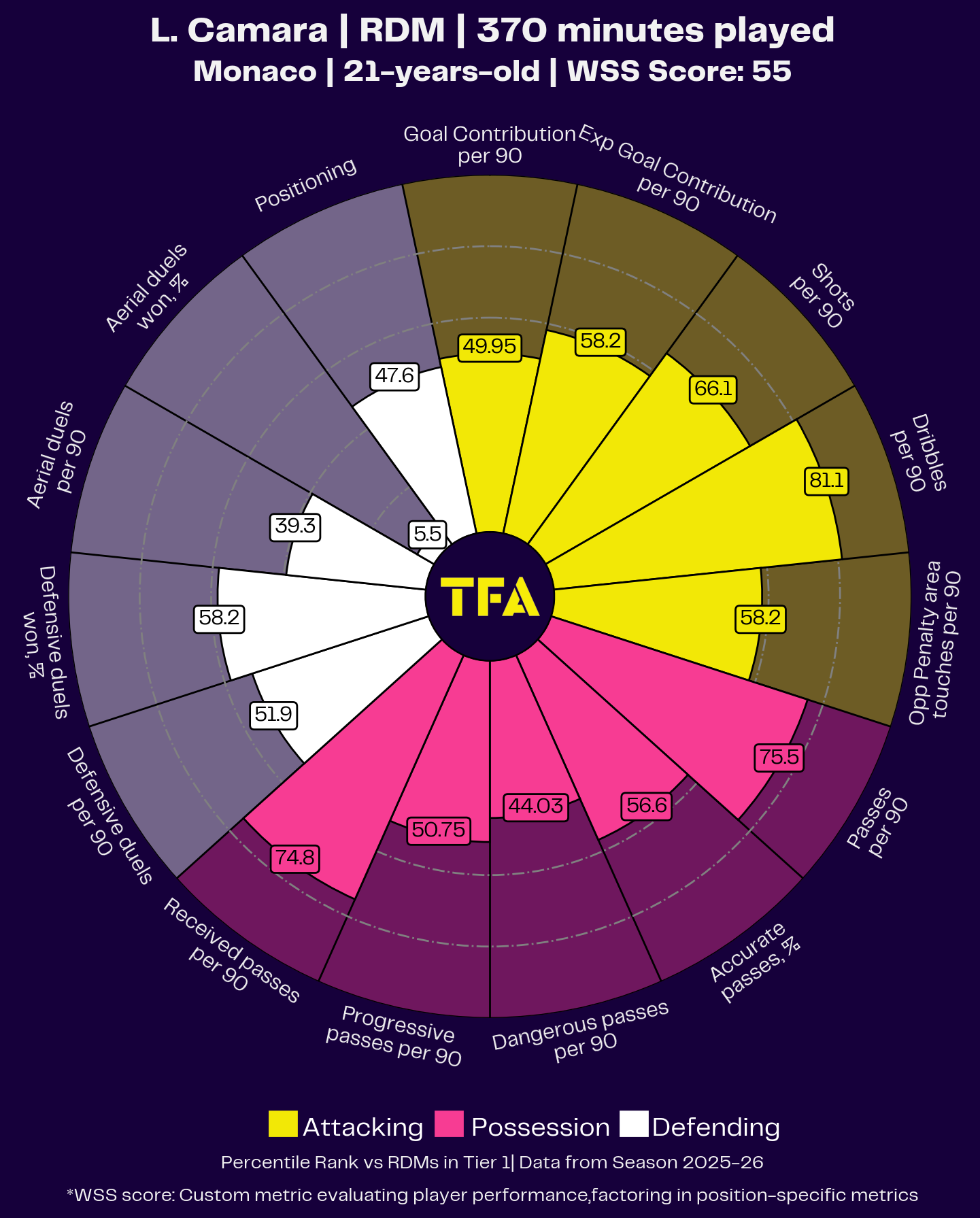
Lamine Camara’s radar shows a midfielder with high-level possession and progression levels.
Lamine Camara Stats 2025/2026
He opens tight windows with that initial control, then uses acceleration to separate from pressure and carry through contact.
He is strong in duels, balanced when riding challenges, and agile enough to shift body shape at speed.
From an off-the-ball perspective, he times his tackles well, wins his share of shoulder-to-shoulder contests, and recovers ground quickly if play breaks behind him.
Camara is also a reliable set-piece deliverer and has a broad passing range, which makes him one of the most complete profiles in Ligue 1.
On the ball, he is incredibly press-resistant.
He can protect possession with his frame before releasing the ball at the right moment.
As shown against Brest, Camara is protecting the ball by feinting and using his body.
Before he gets the chance to release the ball, he is fouled.
He can recycle with one or two touches to move the block, or he can hold onto the ball to draw a presser and play a line-breaking pass into the space that the press leaves.
Among positional peers in the top five leagues, he receives 52.67 passes per 90 in the 84th percentile, a reflection of both trust and availability under pressure.
He also draws 2.01 fouls per 90 in the 91st percentile, showing how he tempts contact and escapes the first man.
He knows when to be progressive and when to reset.
The calm temperament is obvious. Nothing looks rushed, even when the game becomes chaotic.
For AS Monaco, Camara often drops into the base, sliding between centre-backs to dictate.
From there, he sets the tempo, switches play to isolate wingers, and likes to play passes through the first two lines.
In the middle and final thirds, he switches between roles.
Sometimes he stays as the central regulator, circulating until the wide spaces open, and then plays a long diagonal.
At other times, he steps up to break lines into the half-space, finding the ten or the near-side eight on the move.
He averages 6.29 passes into the final third per 90, ranking in the 87th percentile among the top five league midfielders, which captures both his vision and his willingness to be progressive.
As shown against Rennes, Camara dropped to the base of midfield and slipped a perfectly weighted through ball into the final third, beyond the reach of the opposing left back.
Out of possession, he is a top-quality ball winner.
He steps into ground duels with conviction and tackles through the ball.
He funnels opponents to less dangerous lanes and separates ball from man without fouling.
Camara ranks at 3.89 tackles and interceptions per 90 in the 83rd percentile and 7.47 ball recoveries per 90 in the 99th percentile.
His athleticism lets him cover wide to help full backs and still recover central.
The aggression is well channelled most of the time, giving his team a platform to squeeze the pitch.
As shown versus Lille, Camara prevents Edon Zhegrova from cutting in and shuts him down by getting close and making a timed tackle.
There are development areas.
Due to his high-energy pressing style, he can be drawn toward the ball during broken phases, which exposes the central lane in transition.
The fix is less about capacity and more about control.
In defensive transitions, it may help if he prioritises delaying actions to hold his central post and force play away from the most direct route to goal.
Camara’s trajectory points upward, and there is precedent for big-game performances.
Back in 2023, he was Player of the Tournament at the U20 AFCON and led Senegal to their first title.
The same traits that stood out then remain present now, but in a more polished form.
For Senegal, he fits naturally into a midfield three that can cover ground and control games.
A likely unit with Idrissa Gueye from Everton and Habib Diarra gives Pape Thiaw a good mix of experience, legs, and ball progression.
Gueye handles a share of the screening and duel work, Diarra adds shuttle power, and Camara brings the progressive passing and switches that move opponents from side to side.
On the ball, he is the most forward-facing of the trio.
The attacking quality ahead in Iliman Ndiaye, Nicolas Jackson, and Sadio Mané will benefit from Camara’s passes.
He will be able to connect quickly with Ndiaye’s pocket movements and hit both Jackson and Mané early into space.
This Senegal group looked dominant in the win over England last year and breezed through AFCON and World Cup qualification, so expectations are high for December.
A deep run is the expectation, and a final is a realistic target given the collective quality, and Camara looks central to that plan.
Conclusion
With AFCON now less than a month away, players and national teams will be in the final phases of their preparations for this year’s tournament.
The three players highlighted in this scout report stand to play crucial roles for their respective sides and could enjoy breakout tournaments, which they and their teams hope will lead to AFCON glory, potentially providing these players with a platform to build momentum.
