
Central midfielder Adam Wharton has been a revelation since joining a struggling Crystal Palace side in the 2024 January window.
His silky left foot and relentless work rate have been a massive part of the Oliver Glasner-led side’s upturn in form, and he will soon be looking to help the Eagles lift their first major trophy in the FA Cup.
Despite an injury-hit year, Wharton has still managed to take his game to the next level.
His confidence and comfort in the world’s toughest league are only growing.
Rumours are growing about which top sides are looking to swoop, including Manchester United, Newcastle United, and Liverpool.
With £100m fees being touted for his services, how good can this young English midfielder become?
This scout report and Adam Wharton analysis will examine his role in the Palace team, his current strengths and weaknesses, and his true potential ahead of the summer transfer window.
Adam Wharton Style Of Play
For his club, Adam Wharton operates on the right side of a midfield pairing in a 5-2-3 / 5-4-1 formation.
Adam Wharton style of play is an old-school ‘8’ in his style and loves to be involved at both ends of the pitch.
He is not a specialist CDM or CAM like many modern players.
He is a front-footed, forward-thinking central midfielder with abundant energy and a great work ethic.
Both on and off the ball, he looks aggressive, pressing the opposition high and moving the ball forward when in possession.
His combination of out-of-possession tenacity and on-the-ball elegance makes him a unique profile and drives current market demand.
Adam Wharton Ball Progression
Arguably, Wharton’s biggest strength is his ability to progress in play and transition into attack.
He appears very simple and has openly discussed his hesitancy to overcomplicate or make football fancy.
Instead, Wharton looks to take one touch and execute his action, leaving defenders with much less time to react.
Amongst top-five league midfielders, Wharton ranks in the 72nd percentile for progressive passes per 90, 74th for passes per 90, and 93rd for dangerous passes per 90.
Adam Wharton Stats

Wharton is very vertically dominant in his passing options.
He enjoys starting attacks, and this works well alongside Jefferson Lerma, who is much safer in possession.
This leads to his passing completion being lower than that of a typical midfielder, which could be improved.
However, this is due to his risk-taking nature.
Attacking, vertically minded footballers will always be expected to give away possession more, but the reward of their passes is much higher if successful.
For reference, Cole Palmer, Bruno Fernandes, Trent Alexander-Arnold, Bukayo Saka, and Mohamed Salah all have lower completion rates.
Adam Wharton Vision
Wharton’s ability to play fast, two-touch football while remaining incisive and progressive stems from his positional awareness of both teams.
When asked to receive the ball, he constantly scans the field to ensure he is aware of oncoming defenders, his teammates’ positions, and their movements.
This allows him to take one touch away from the oncoming press upon receiving before swiftly playing the ball into the space/ teammate he had recognised before even seeking possession.
This game intelligence separates him from other first-division midfielders.
It is extremely effective at allowing him to play before the opposition gets into shape and prevents the pass that creates an opportunity to attack.
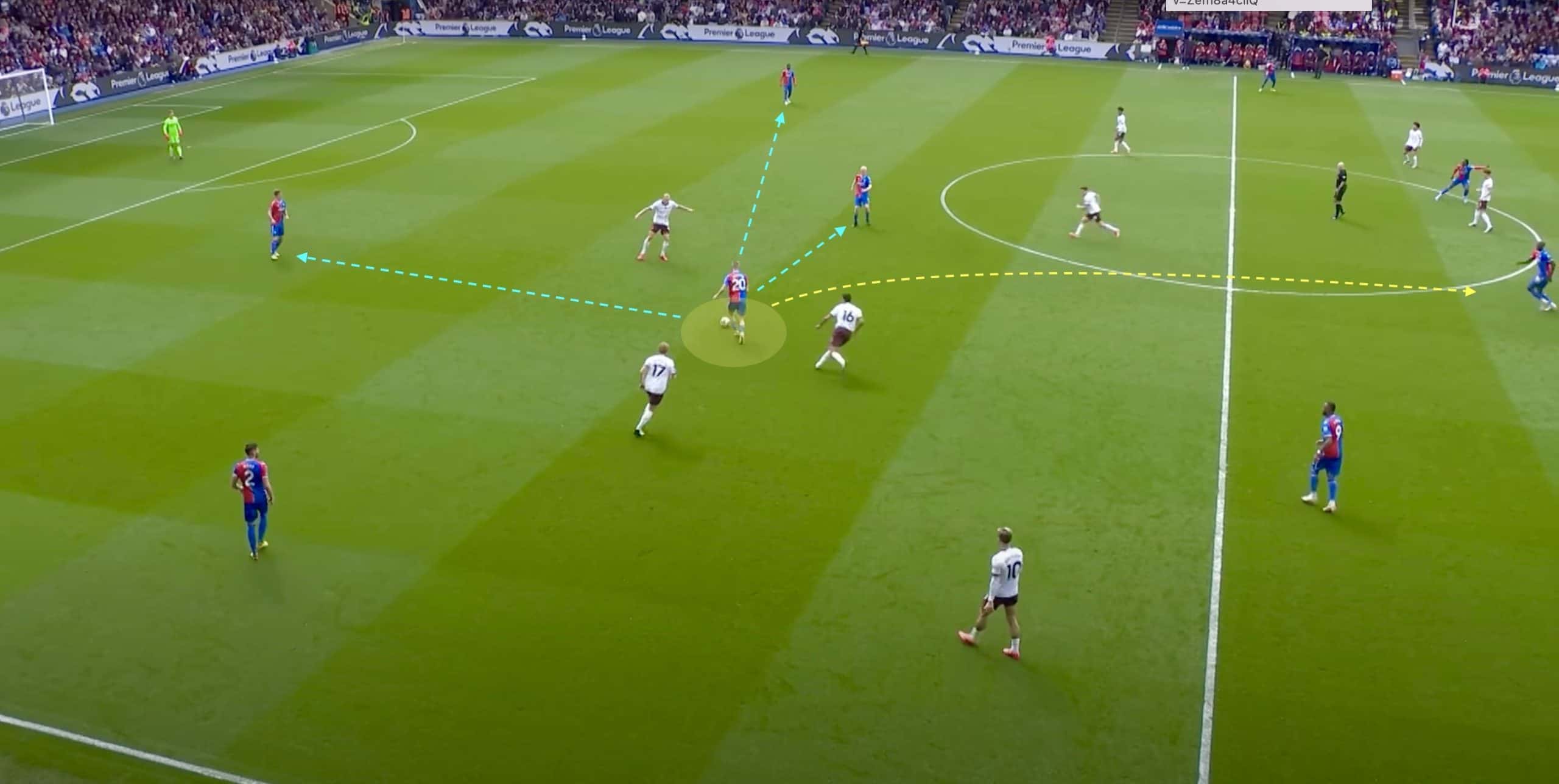
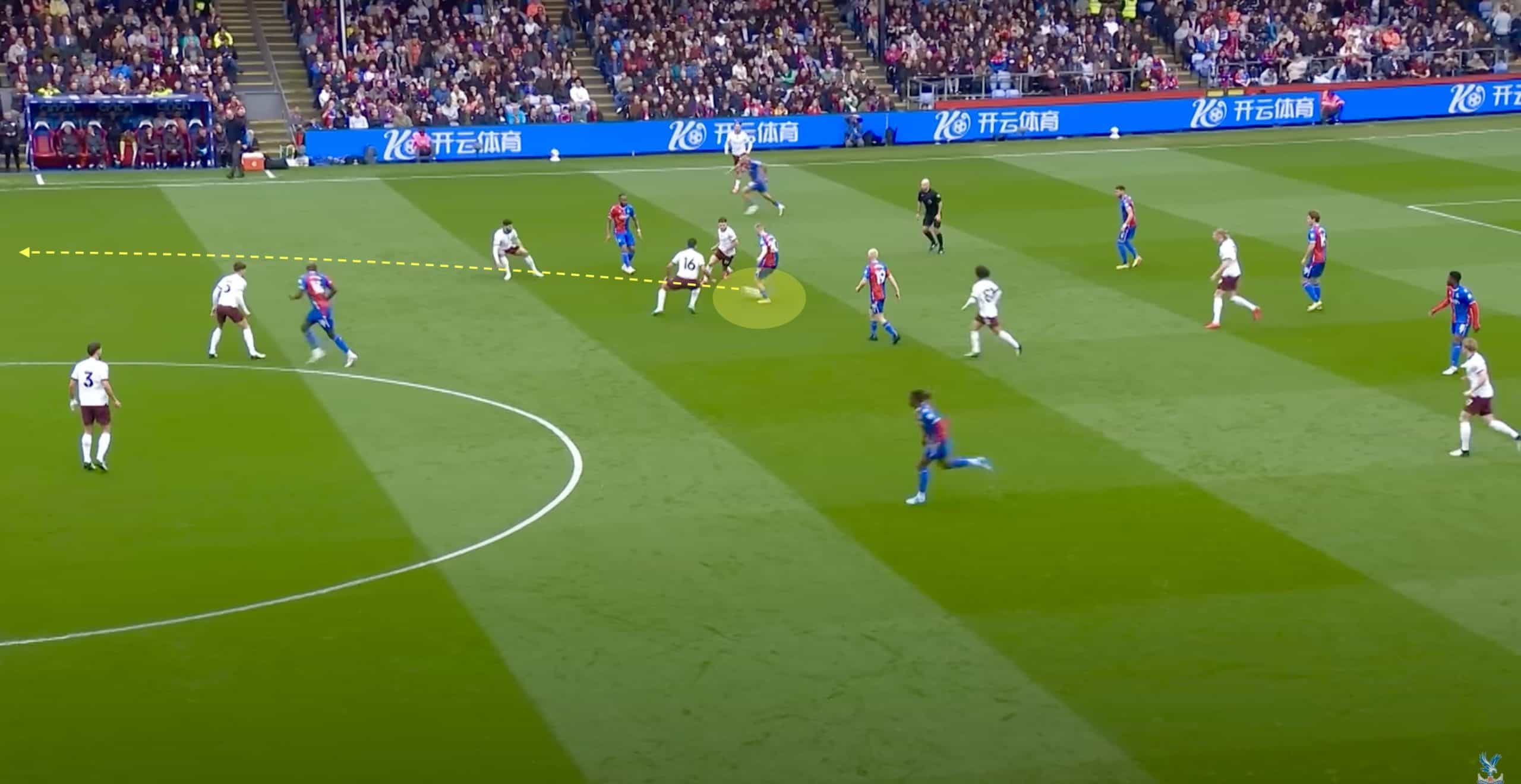
As seen in the images above, Wharton has very obvious passing options in his direct vision.
However, his use of scanning allows him to see options in his peripheral view.
This allows him to play much more positive passes and helps catch the opposition off guard, as they expect him to play the way his body is initially facing.
Gareth Southgate was impressed by this aspect of Wharton’s game, saying he ‘sees the picture early’.
Adam Wharton Technical Ability
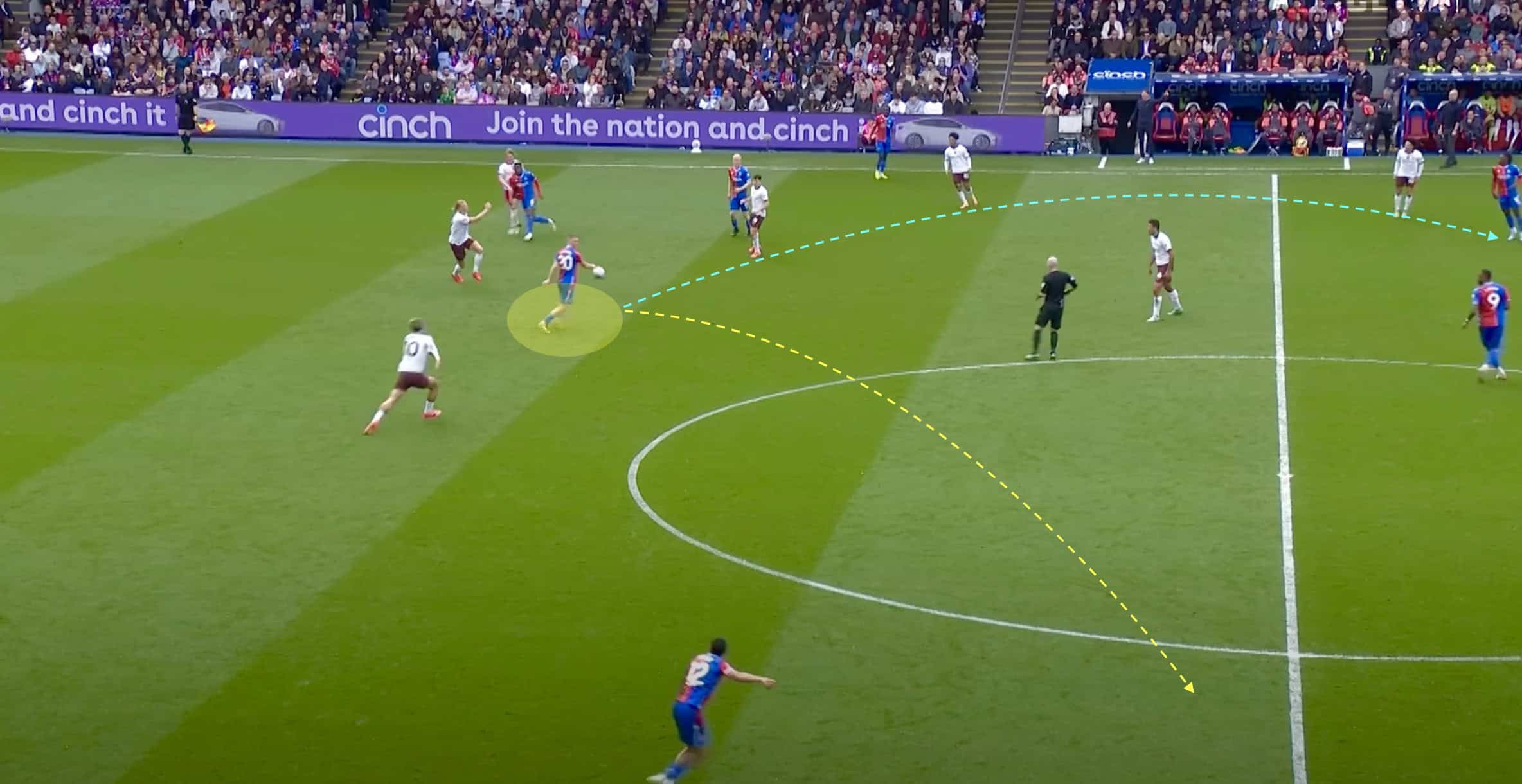
Wharton also possesses very high technical skills, specifically excelling in close ball control and range of passing.
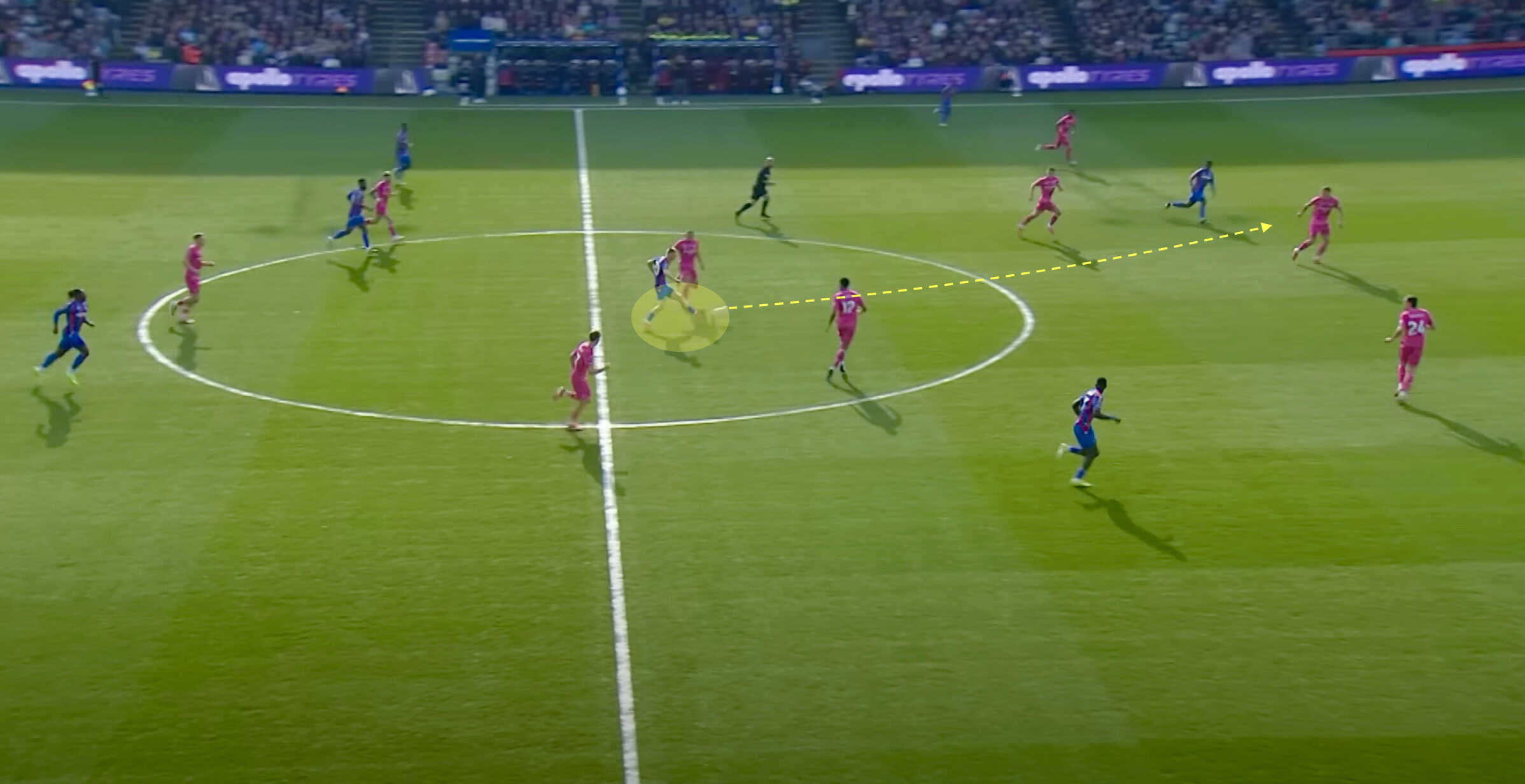
The left-footer is comfortable playing an array of forward balls, fluctuating from aerial cross-field diagonals to short, penetrating ground balls.
Having such a vast arsenal makes it difficult for the opposition to stop him, as it gives him license to be extremely flexible when deciding on his next pass.
These qualities also empower him to adapt quickly to changing game states.
If his ideal first-choice pass is cut off, he then has the quick thinking and technical skills to recognise where the space has opened elsewhere and execute without concern.
Combined with his vision, this passing ability makes him extremely useful at moving play forward and underlines why his progressive statistics are so impressive.
In addition to this, Wharton is very confident with his first touch and is assured when receiving in tight scenarios under a press.
He is not a dribbling midfielder in progression, but his confidence in close spaces helps Palace retain possession when needed and play out from the back.
This also emphasises Wharton’s credibility as an all-round midfielder.
Adam Wharton Decision-Making
Wharton also has the game knowledge to know when to dribble and when to pass, which many modern footballers find challenging to decipher.
He also has a good sense of which passing route offers the greatest potential for creating chances.
Palace manager Glasner was initially astounded by this decision-making, stating: “His decision-making, his pre-orientation, his solutions with one or two touches is amazing.”
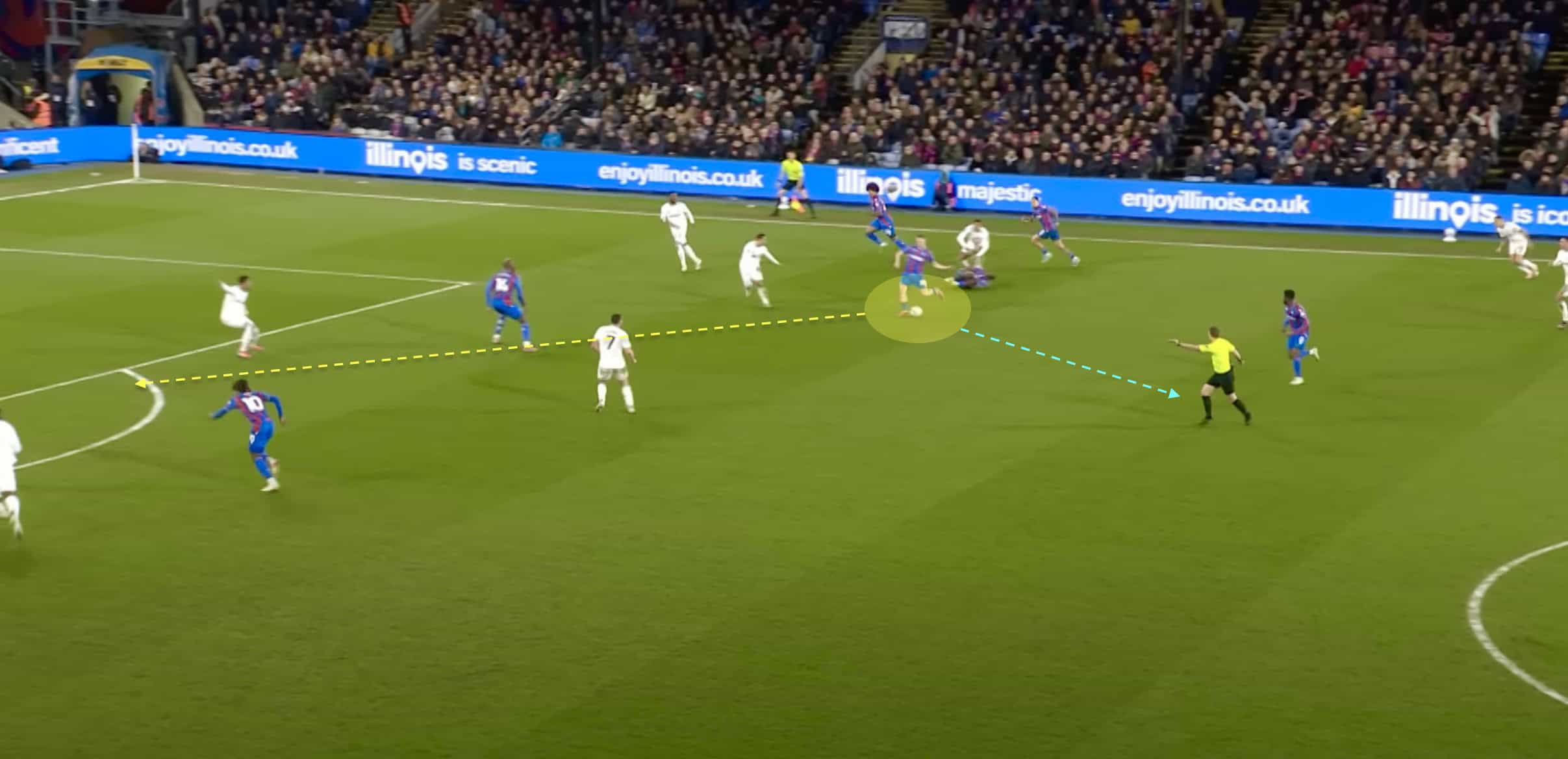
His previously mentioned positional awareness enables him to read the next pass quickly.
As a result, he is excellent at intercepting balls and/or quickly closing down his man.
This helps him prevent the opposition player from turning.
Wharton is also very eager to challenge in duel, and wins a lot of tackles.
He is brave in 50/his 50s and confident in tackling and being combative despite his relatively small and lean stature.
The midfielder averages an impressive 6.68 ball recoveries per 90, ranking in the 93rd percentile in the Premier League.

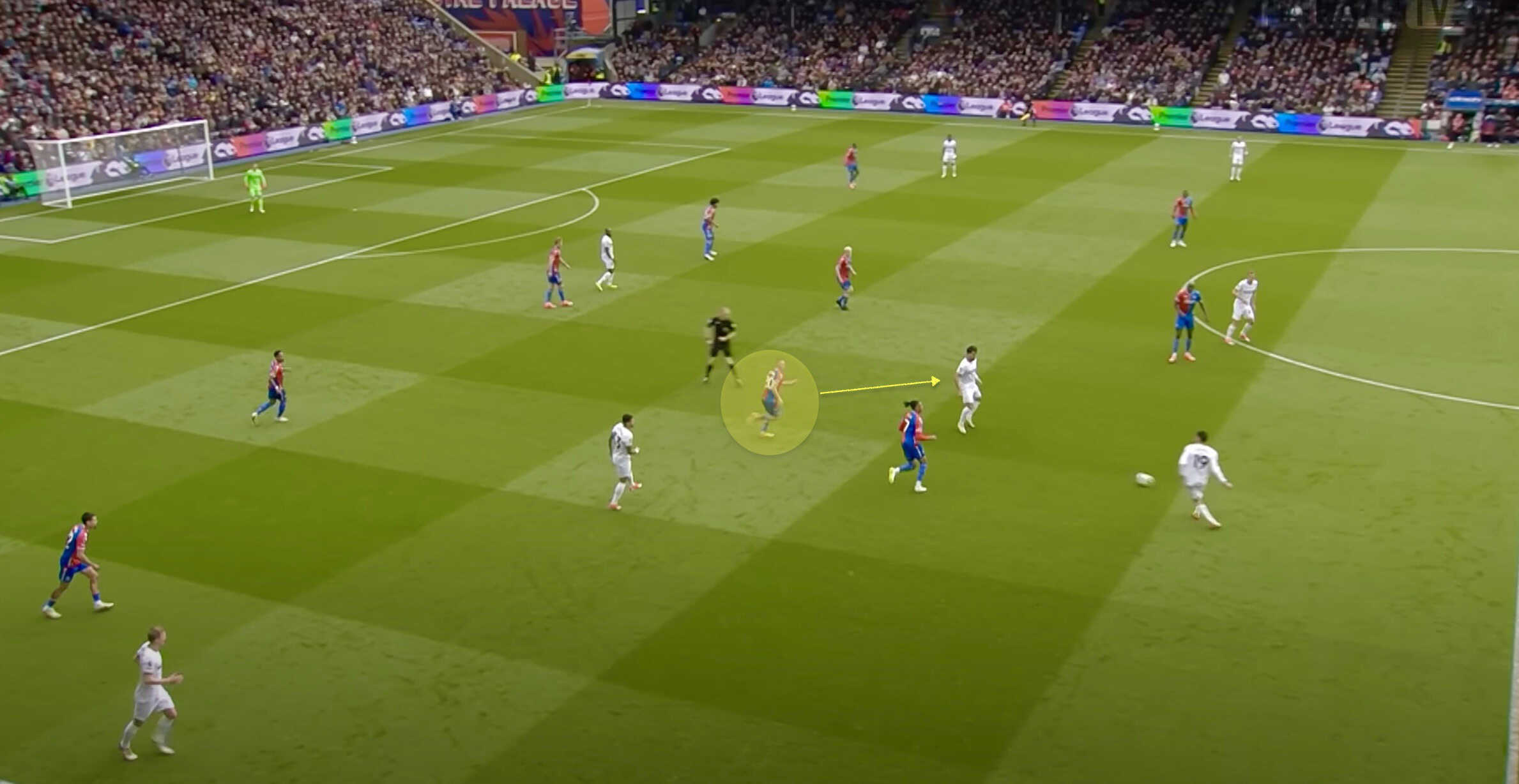
This mindset unsurprisingly makes him extremely popular with the Selhurst Park faithful and also did no harm in making him a fan favourite at his boyhood ground, Ewood Park.
Adam Wharton Offensive Weaknesses
Despite all his progressive abilities and his huge contribution to attack, one area for Wharton to improve is his goal and assist output.
It must be said that this is not his role on the side and is not necessary for him to become a world-class footballer.
However, after 85 games of professional football, his output stands at 4 goals and 8 assists, with none of those goals coming for Premier League Crystal Palace.
He also has no goals or assists in 18 games this year.
For example, looking ahead to his England aspirations, it’s important to consider his deeper midfield counterparts.
Declan Rice, Jude Bellingham, Kobbie Mainoo, Elliot Anderson, and Curtis Jones have all contributed more in this area since his debut.
In terms of his place in the future, this may become the only argument against him.
Adam Wharton Defensive Weaknesses
Defensively, Wharton still has areas to improve despite his good reading of the game and willingness to contribute.
At times, he can be rash in his pressing, leaving the shape in pursuit but overcommitting, which ultimately leaves space in behind.
This willingness to win possession not only leaves gaps but can also leave him vulnerable to committing fouls or making weak challenges when isolated in the press.
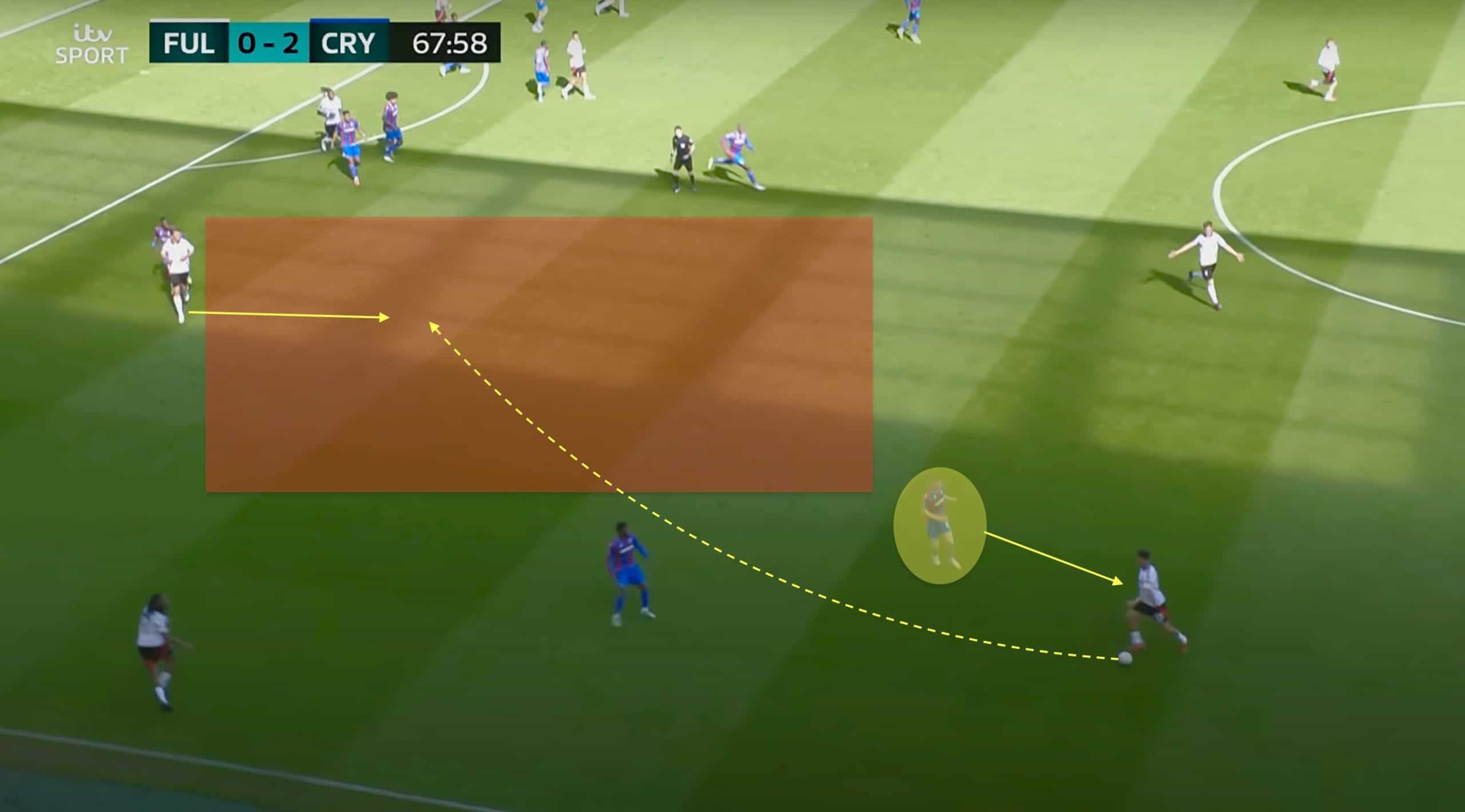
Another weakness comes in his aerial ability.
Wharton wins just 34% of his aerial duels, ranking him in the bottom 15% of players in the Premier League.
This is mainly due to his relatively small build and lack of height.
Training or improving massively is challenging; however, the right coach should recognise the weakness.
It can be helped hugely by playing him alongside a more physical counterpart.
Regarding weaknesses, there is no real major cause for concern.
Adam Wharton Career Progression
As this article highlights, Wharton is an extremely gifted footballer, and his profile is very challenging to find in the modern game.
He is a central midfielder who is comfortable in possession, reads the game well, and contributes successfully to both defence and attack.
It would be surprising to see him go for much less in a market where Jack Grealish and Declan Rice both demanded over £100m.
However, Wharton is also a player who could easily be misprofiled.
His defensive work could make him appear to be a sitting midfielder, and that misprofiling could extinguish a huge part of his game—the part that makes him such an exceptional talent.
Oliver Glasner and the Crystal Palace hierarchy have maximised his ability, allowed him to grow in a role that suits him well, and given him the freedom he desires.
There would be a strong case for him to continue to grow here for the forthcoming seasons, something that I’m sure would be well welcomed by the Eagles fanbase.
However, if Wharton is to leave Selhurst, his next club must consistently challenge for titles.
More importantly, he must be a regular starter with the freedom to play his own game.
He is far too talented to do anything less.
