
The Premier League sells itself as football at its most unforgiving.
Not just in speed, but in the way mistakes are multiplied by tempo, spacing, and the frequency of high-stress actions.
Players who arrive with reputations from elsewhere often discover that the same decision-making cycle is little help.
Todd Boehly quoted Kalidou Koulibaly describing the jump from Serie A to England like this: “In Serie A, you think before you run, but in the Premier League, you run while you think.”
This has become shorthand for why even top defenders can look out of place after crossing the Channel.
Koulibaly had been one of Serie A’s best centre-backs and one of Europe’s most admired at Napoli, yet the transition was not easy.
So when Malick Thiaw moved from AC Milan to Newcastle United this summer, there was a fair question underneath the excitement.
Would a 24-year-old centre back who had been developed in German academies and then tested by the tactical density of Serie A be able to defend within the supposedly most competitive league in the world?
This Malick Thiaw scout report highlights his strengths and explains why he has adapted to Premier League football so effortlessly.
It also considers Eddie Howe’s Newcastle, where defenders are asked to accept risk behind an aggressive press.
That balance is the difference between a high line that suffocates opponents and one that gets stretched.
Malick Thiaw Stats
So far, Thiaw has looked like a player who benefits from the league’s demands because his game is built around pre-contact detail.
As shown by the Pizza Chart, which compares Thiaw to his positional peers in the Premier League, he is a well-rounded centre-back.
Especially in today’s game, centre-backs are expected to possess on and off-the-ball qualities.
This is shown by his strong numbers in aerial duels, progressive passes, and a dangerous streak in the box.
Malick Thiaw Pizza Chart 2025/2026

Malick Thiaw Background
Malick Thiaw’s pathway matters because it’s evident in how he solves problems.
He spent formative years in top German environments, including Bayer Leverkusen and Schalke 04, and it was at Schalke that he made his professional debut.
Those academies tend to produce defenders who are comfortable defending higher up the pitch, who understand pressing triggers, and who can play forward under pressure because they have been coached to treat the ball as part of the defensive phase.
As shown in his earlier days, Schalke 04’s backline is high, which can be considered risky.
However, it also makes distances shorter to close down the opposition.
Thiaw is able to intercept the ball in these positions, which also helps when in possession, as more of his teammates are in the middle and final third to break down the opposition.
His move to AC Milan between 2022 and 2025 gave him exposure to a different tactical temperature.
Serie A tends to force centre-backs to defend the box with more structure and variety of schemes, with more emphasis on reading the second ball and managing different types of strikers.
At AC Milan, he also expanded his role profile.
He played as a centre-back in a back four with a partner, as part of a three-man centre-back unit, and he also played at right-back.
That matters for two reasons.
It develops the angles.
A defender who has played outside centre-back in a three and also filled in at right-back tends to understand how wide space can become central danger and how pressing traps work on the touchline.
Against Atalanta, Thiaw shepherds their right wing-back or winger towards the touchline and safely out of play, forcing a goal kick for AC Milan.
The sequence is a good example of his defensive mechanics.
Thiaw adopts a controlled, side-on body shape and a patient jockey, then decelerates at the right moment so he can reaccelerate if the attacker tries to get past him.
By holding that stance and protecting the inside lane, he removes the option to dribble infield.
He stays in control throughout because his base lets him shift and change direction without overcommitting.
Another reason is that it accelerates footedness.
Thiaw can play with either foot, which helps disguise intentions when selecting passes.
The Milan period also coincided with a national team debut.
Thiaw was called up to represent Germany for the first time in 2023 and has since been called up to various camps.
Malick Thiaw Dominance In Aerial Duels
At 6’4″, Malick Thiaw is imposing.
Compared to positional peers in the Men’s top-five leagues, Malick Thiaw is in the 98th percentile for aerial duels won per 90 with a 74% success rate.
This is useful when attacking set-pieces.
As shown in the Champions League versus Feyenoord last season, Thiaw is able to win the header and set up a goalscoring situation for Santiago Giménez.
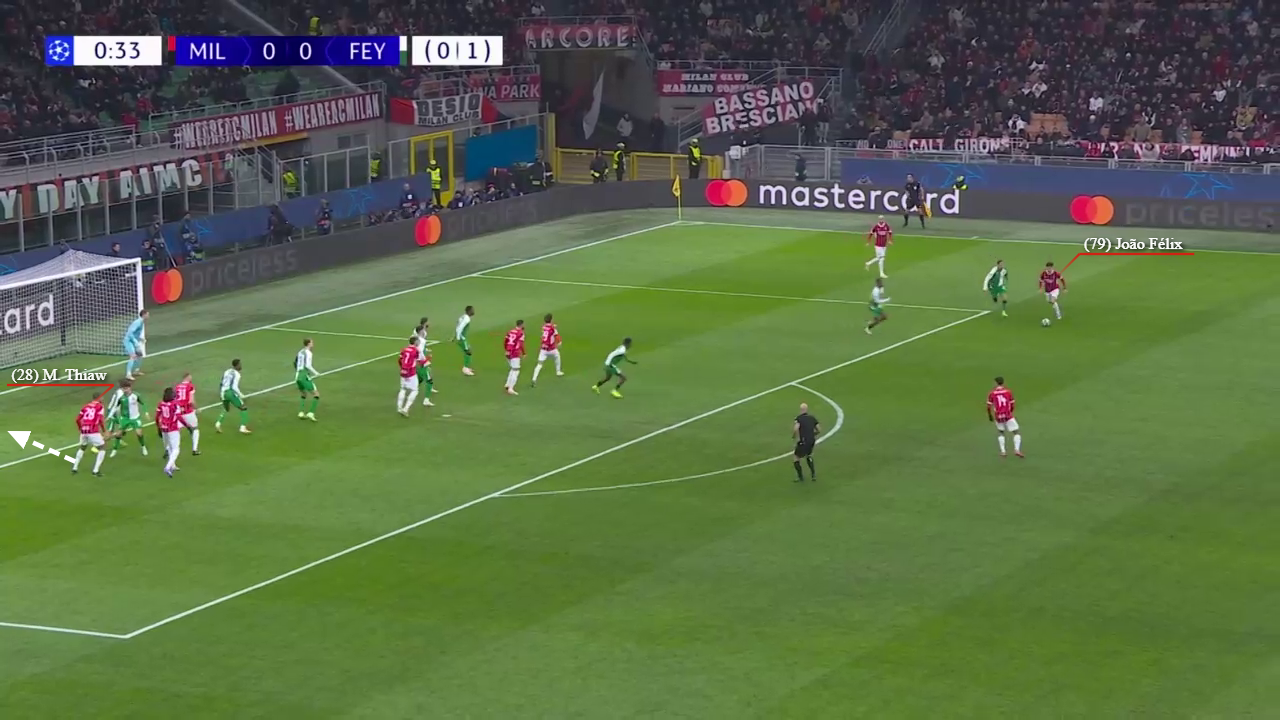
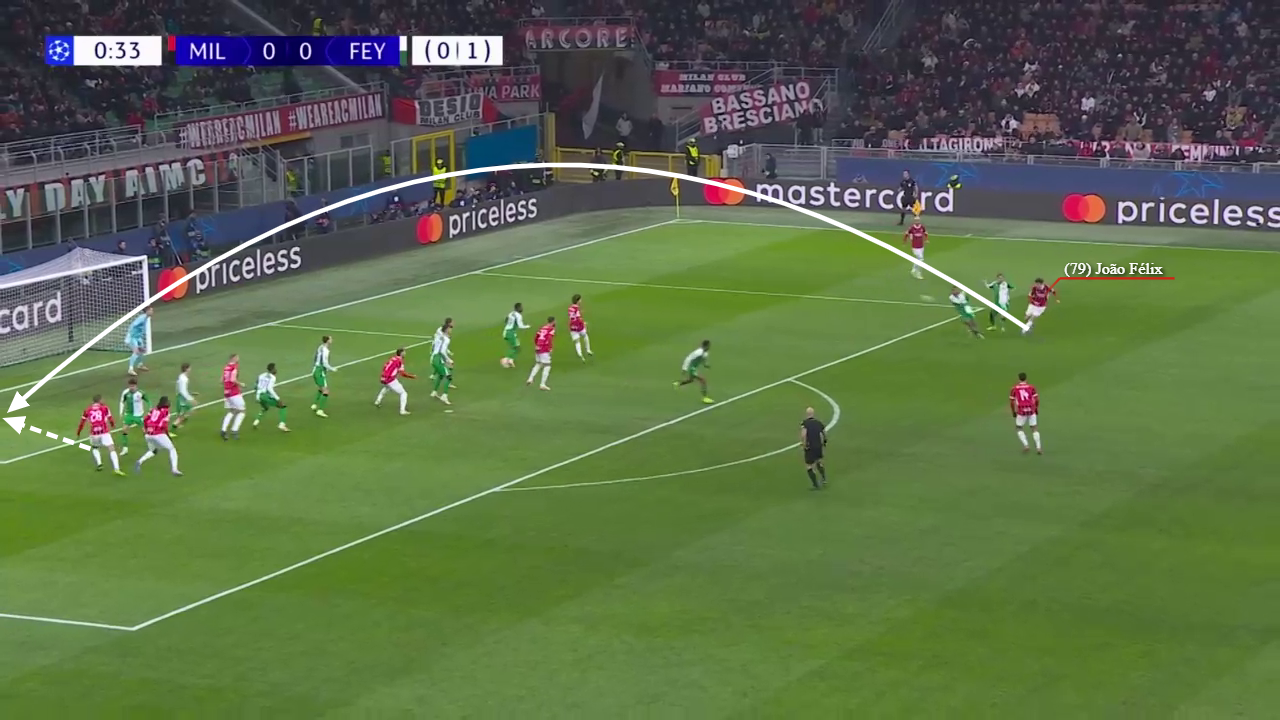
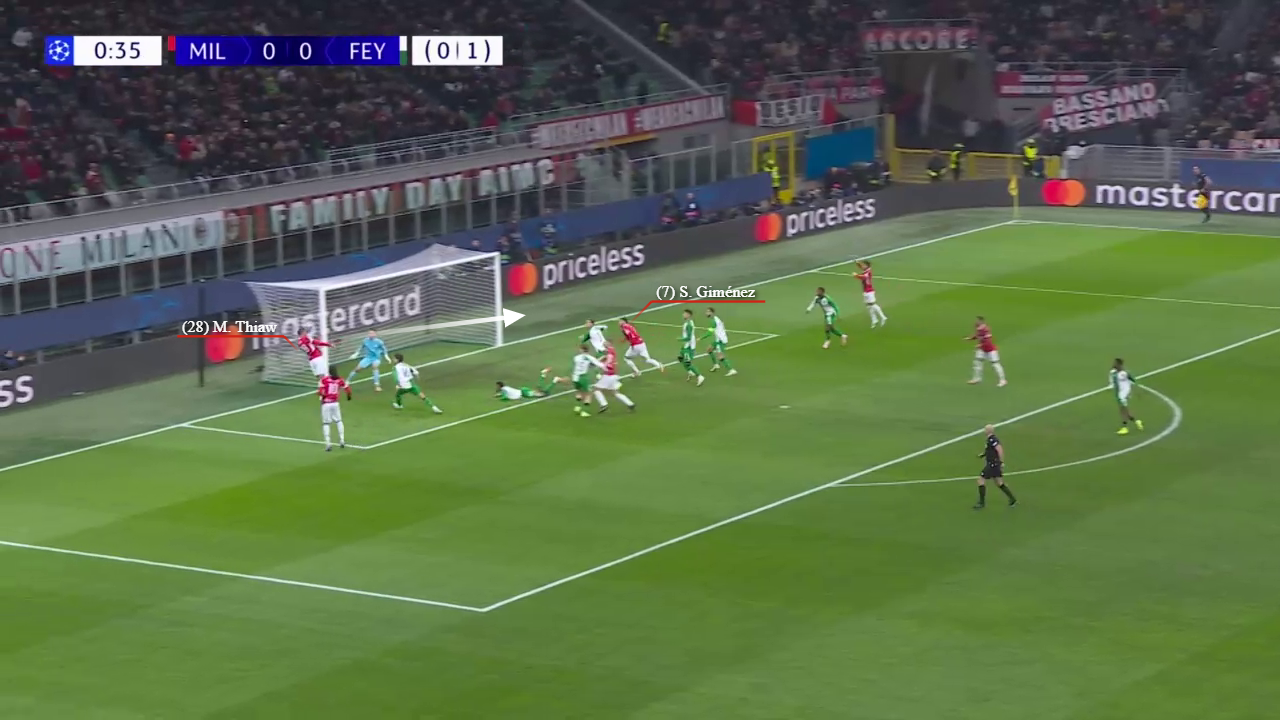
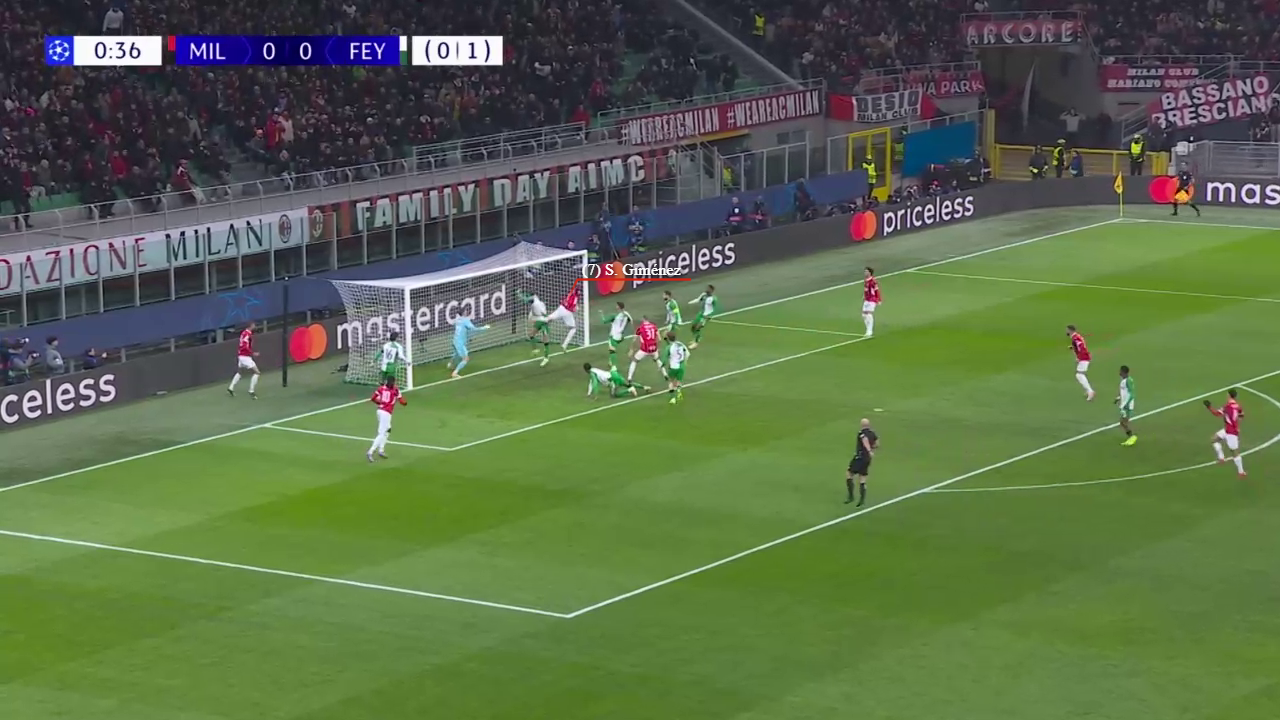
It also changes how opponents build because it reduces the value of early direct balls into the nine.
If the striker cannot get the first contact, the team has to commit extra bodies around the duel to win second balls, which in turn gives Newcastle more pressing triggers.
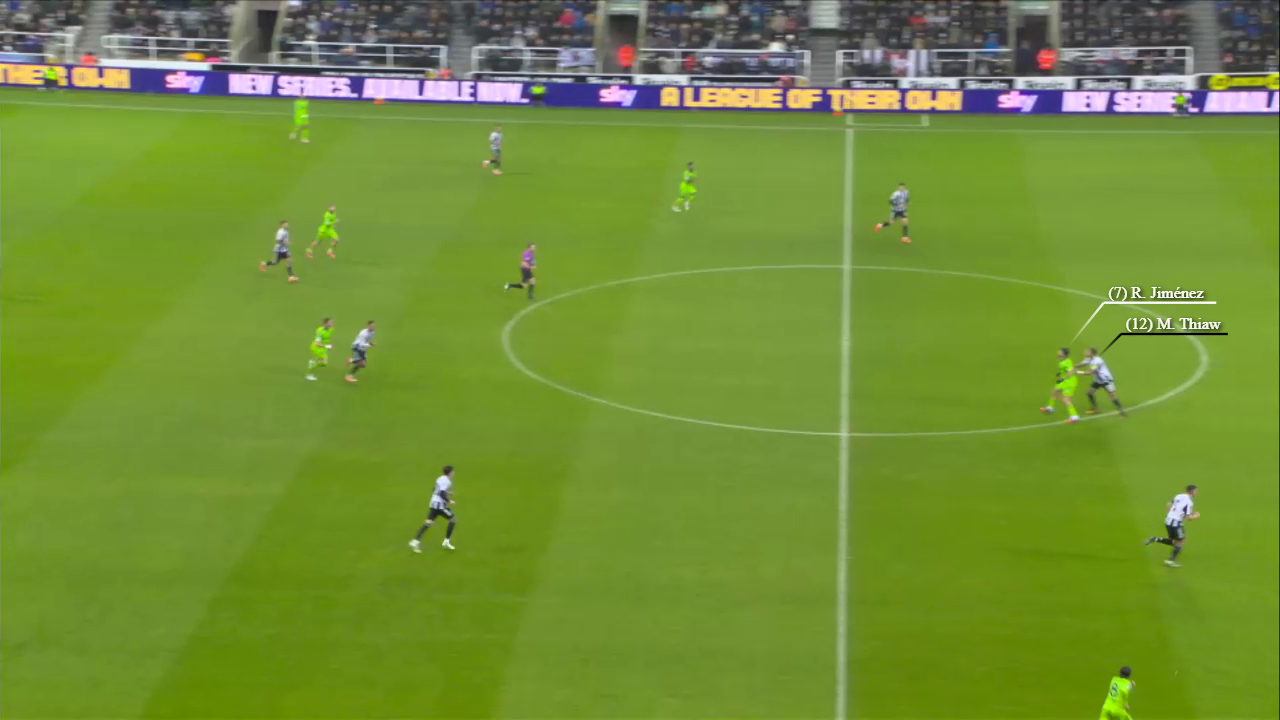
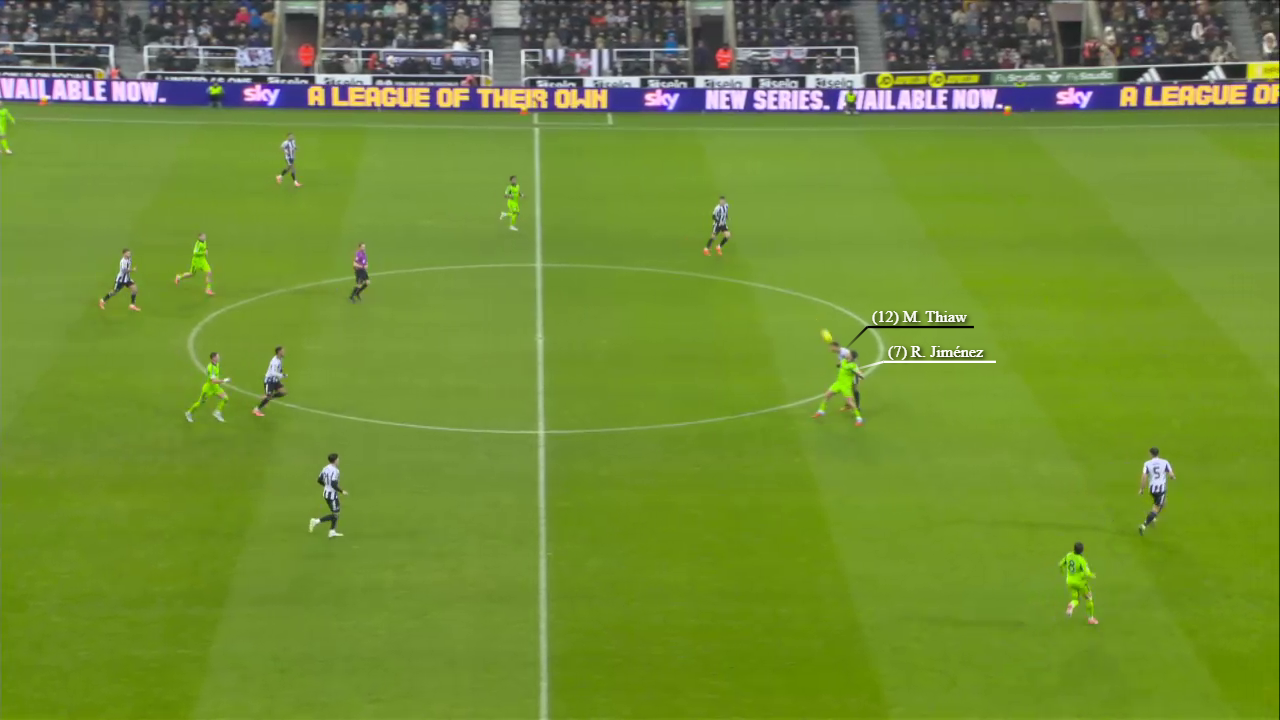
Against Fulham, Malick Thiaw and Raúl Jiménez go up to contest the ball, and Thiaw eventually wins it.
A key detail that increases his odds in that aerial duel is the close contact before the jump, with his hands extended to feel Jiménez’s back.
Technically, that contact does three things.
It acts as a reference point.
By “checking” the striker’s back, Thiaw can track micro movements without needing to look away from the ball.
If Jiménez tries to step across him, spin off his shoulder, or alter his run-up late, Thiaw feels it immediately and can adjust his own feet and take off at an angle.
Second, it helps him control space.
With his hands out, he can resist being backed into and stop Jiménez from establishing an inside position.
He is able to hold his line so the striker cannot claim the optimal jumping lane and attack the ball uncontested.
Lastly, it disrupts the striker’s timing and balance.
The striker knows the defender is tight, which can discourage a good leap or encourage an early jump.
If Jiménez cannot freely set his feet and load his jump, he is less likely to generate a strong vertical take-off or stable contact on the header.
Malick Thiaw’s hands-out give him information, protect his position, and make it harder for the striker to organise the duel on his terms.
He tends to win his duels because he arrives on the correct line.
He stays in line with the attacker so that any late movement is mirrored.
Many tall defenders lose the duel not because they are outjumped but because they are at the wrong angle and the forward pins them while attacking the ball.
Thiaw’s habit is to match the attacker’s angle and then use contact, often an arm check, to keep the forward’s run in check.
If he cannot make that contact, he closes the distance so the forward cannot generate separation.
It is preventative defending, which is the only sort that survives in a high line.
An Elite Detail Defender In The Box
There is a certain type of defender who is praised for calmness while actually playing passively.
Malick Thiaw’s calm is functional.
He defends the box with an open body and an open view, meaning he tries to face both the ball and the runner rather than turning into the runner and losing sight of the ball.
Against Wolverhampton Wanderers, Thiaw follows Matheus Mané’s run early, so he stays goal-side and keeps the spacing under control.
When the pass is played into Mané, Thiaw immediately closes the gap, not with a reckless lunge but with assertive front foot pressure that arrives as the ball arrives.
That timing is the point.
By engaging on the receiver’s first touch, he denies Mané the extra half second needed to open his body, face up, and turn it into an isolation duel.
Against a quick, agile attacker, that proactive close down prevents the 1v1 scenario where the defender is left retreating and vulnerable to a change of direction.
Thiaw stays tight enough to remove the dribble lane, while still balanced to react if Mané tries to spin or accelerate past him.
That allows him to track late movements and still be ready to intercept.
He is reading cues and the kind of detail that appears in the dying moments of an energy-depleting game.
Malick Thiaw Ball Progression
Newcastle under Howe want defenders who can help them play.
Malick Thiaw’s passing numbers point directly to that.
Again, measured against the same peer group over the last 365 days, he completes 4.89 progressive passes per 90, placing him in the 87th percentile.
For a centre back, nearly five per 90 suggests he is comfortable stepping in and playing forward.
It also suggests a certain quality of weight and timing.
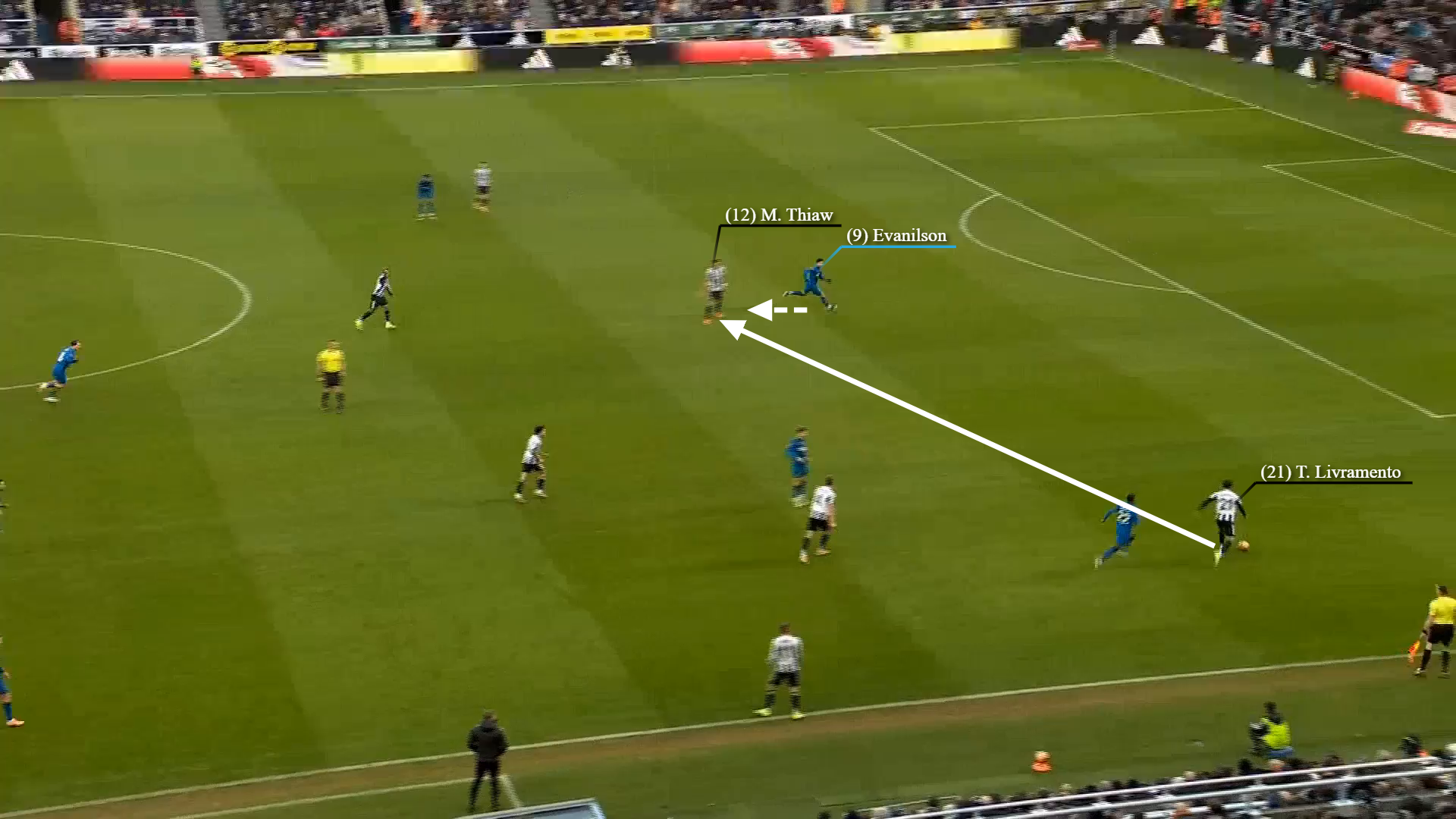
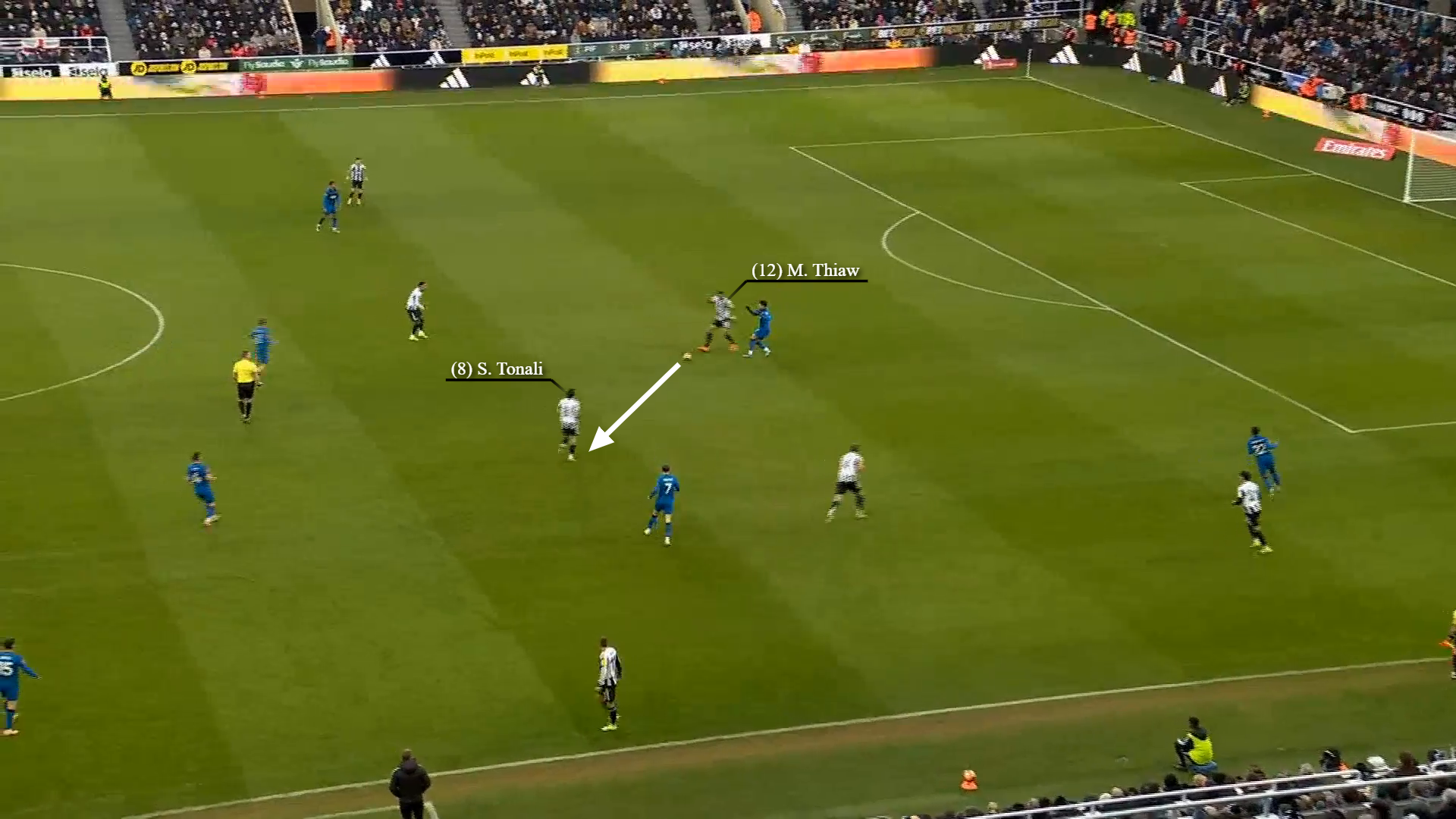
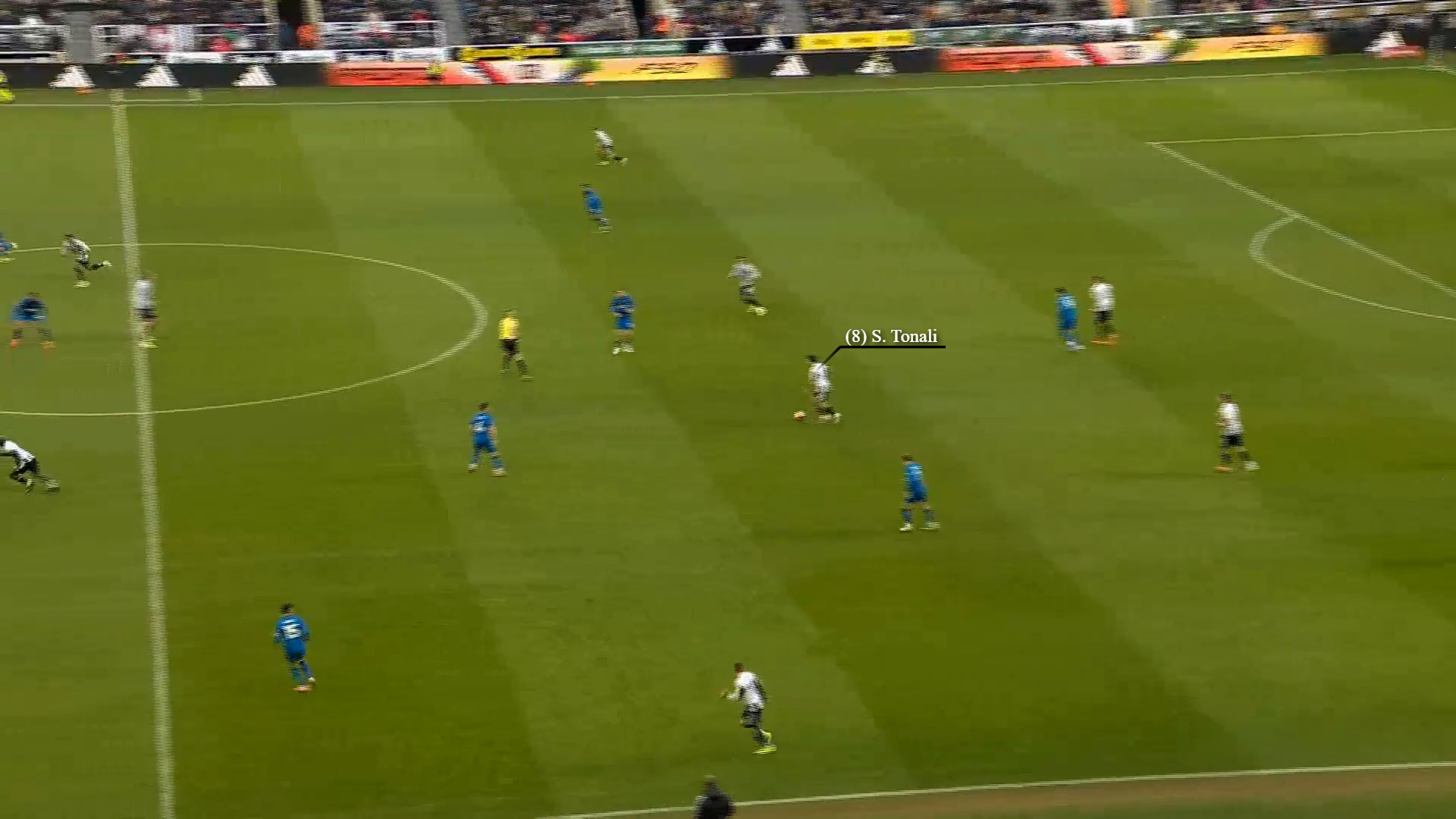
As shown versus Bournemouth, Thiaw receives a pass despite the pressure from Evanilson.
He opens his body and plays a first-time pass to Sandro Tonali, who then carries the ball forward.
Thiaw’s two-footedness helps this.
He can play with either foot, which improves his ability to play passes into either half-space without taking an extra touch that draws pressure.
In a pressing, heavy league, that extra touch is the difference between escape and turnover.
When Newcastle builds against teams that lock onto man-to-man reference points, the centre back who can switch the angle with either foot becomes important.
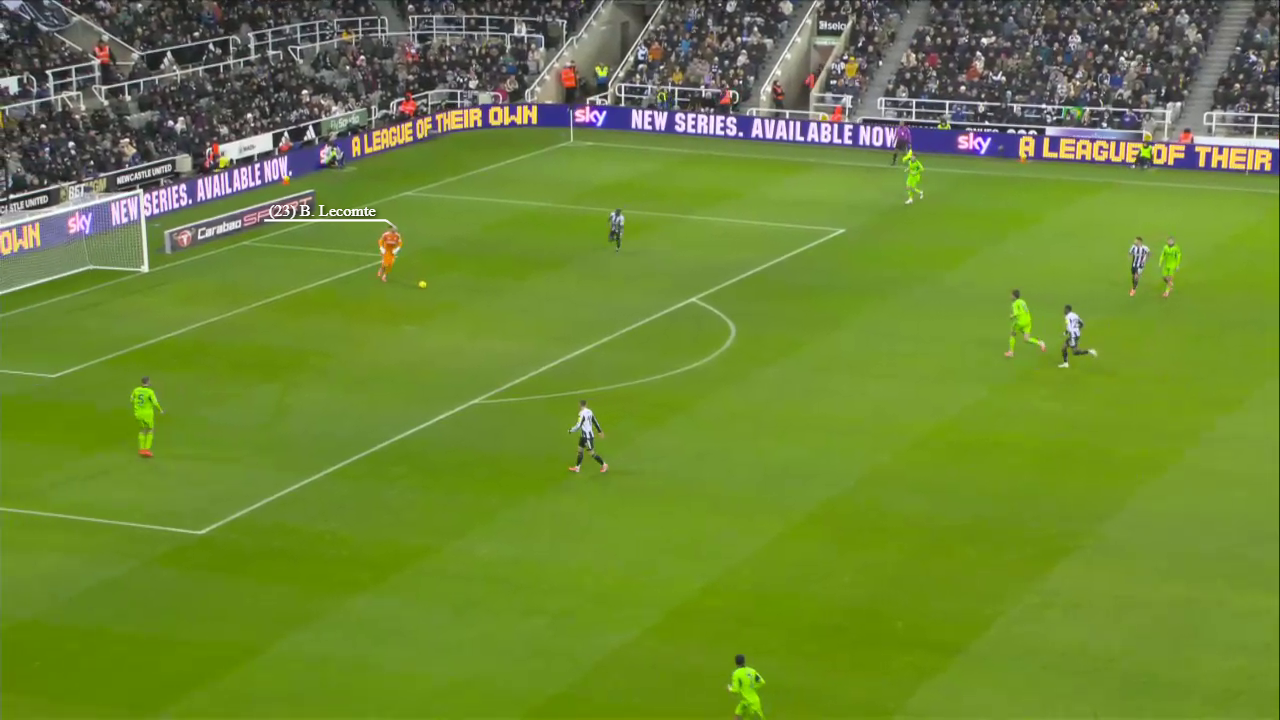
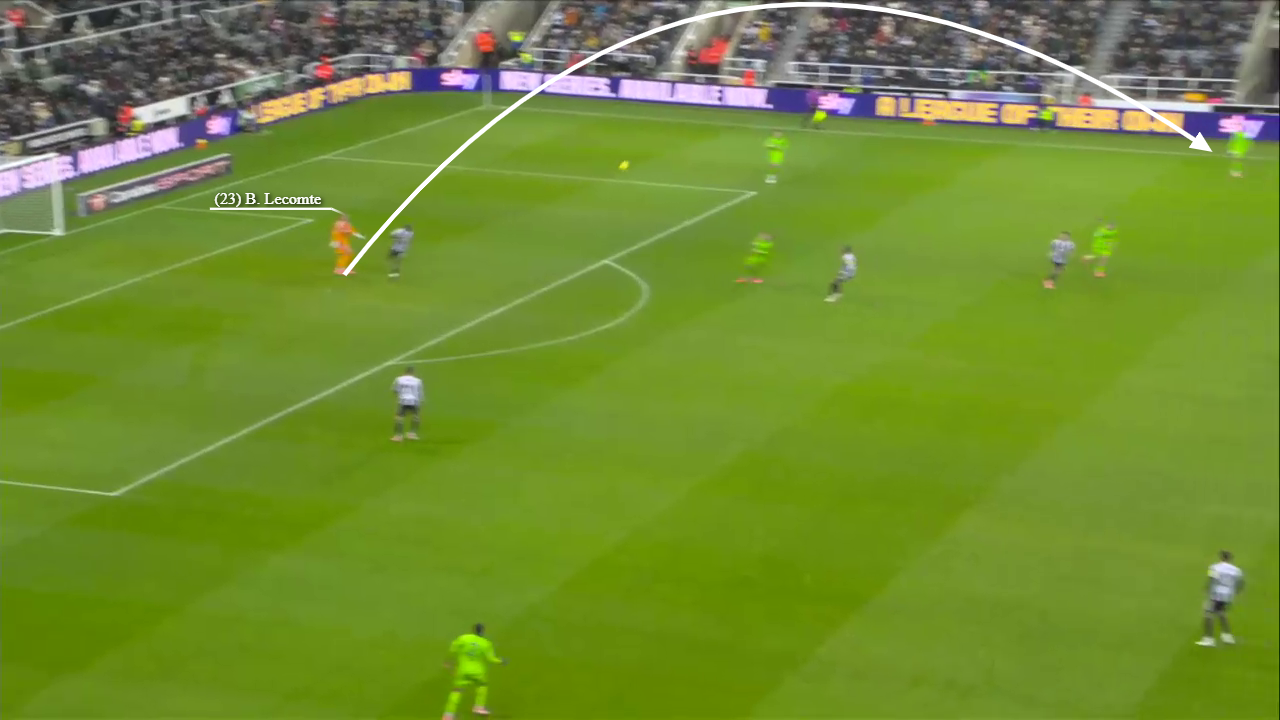
As shown against Leeds United this season, Thiaw plays a long switch pass to Lewis Hall.
This takes the ball from a highly congested area to the other side, where Hall can face his direct opposition 1v1 or a potential 2v1 opportunity to combine with the LCM or a striker running into the channel.
Conclusion
Malick Thiaw’s future is bright because the traits that are translating are the hardest to teach quickly.
At Newcastle, he has also become an excellent option given Sven Botman’s injury record.
If Malick Thiaw continues to perform, it may become difficult for Botman to walk straight back into the side.
Looking forward, the most logical long-term outcome is that Newcastle can form a high-level pairing, potentially Botman with Thiaw, or Botman with another partner, with Thiaw as a core piece.
Either way, Thiaw has moved beyond being a squad solution.
Even though it has not been an entire Premier League season, Thiaw has been one of the better centre-backs in the league.
And due to his strengths being built on technical repeatability, he can be amongst the best in Europe in the years to come.
