
Marco Silva began his senior coaching career at Estoril (2011/2014), managing 116 matches with 1.66 PPM, building his reputation in Portugal.
He stepped up to Sporting CP (2014/2015), coaching 53 matches at 2.08 PPM, showing immediate impact at a bigger club.
He moved to Olympiacos (2015;2016), where he delivered his best results yet: 48 matches and 2.44 PPM.
He then managed Hull City, Watford, and Everton before Fulham, which is the club he has been managing for the longest.
Since joining Fulham in 2021, he has managed 208+ matches with 1.56 PPM, winning promotion in 2021/2022 and establishing them as a stable Premier League side.
In this Marco Silva tactical analysis, we will look at how Marco Silva is setting up the Cottagers for the 2025/2026 season, where he can take the club, and where his future lies, given his contract expires at the end of this season.
Marco Silva History At Fulham
Since his first season in the Premier League with Fulham in 2022/2023, Marco Silva has managed to keep them in the top flight.
It is quite rare to see a team come up to the Premier League and not face relegation, with no signs of them falling back down anytime soon.
In 2022/2023, he finished in 10th place; in 2023/2024, he finished in 13th place; in the 2024/2025 season, he finished in 11th place; and his side is currently in 11th place with 28 points, meaning a win can put them tied for 5th place.
Marco Silva Build-Up Tactics
Marco Silva’s tactics are always changing based on his opponents.
Marco Silva’s teams typically build in a 4-3-3, but at times, you can see them in 3-4-3 shapes.
This is mostly done when opponents like to have a condensed midfield press, giving them two options in central midfield.
Silva sets his team up very well to make those quick one-two-touch combinations to unlock defences.

The full-backs are always stretching the field, and once the ball is in their hands, they look forward right away, not to swing it around the back.
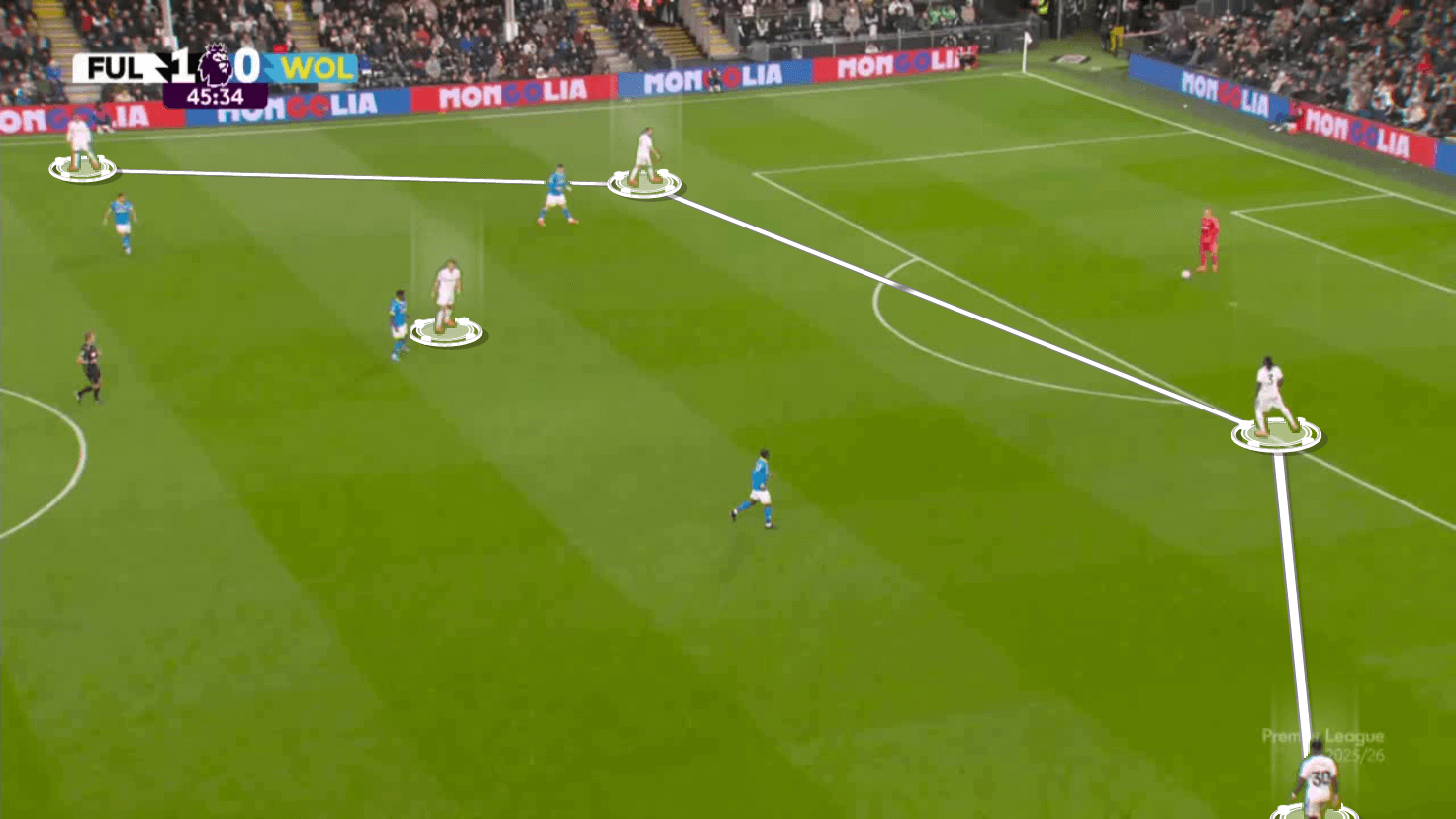
This is what a classic four-back in build-up looks for Fulham.
Here we see one central midfielder, but typically you will see two.
This is because Wolves also like to play wide.
Silva doesn’t want another player in the middle to drag more people central; he would rather central midfield be open, with his best dribblers coming in and out of those spaces to help build-up.
Marco Silva Middle Third Progression
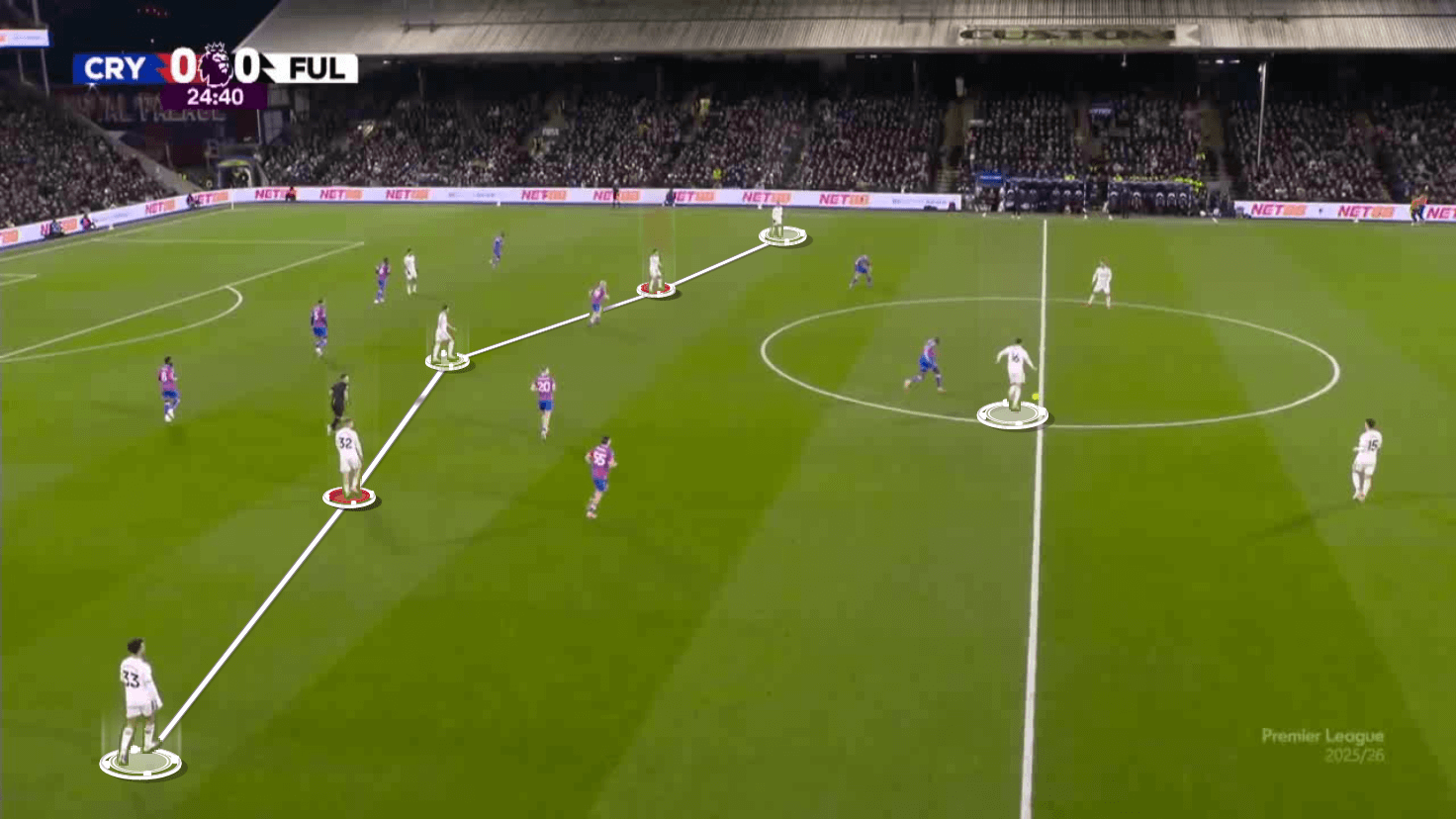
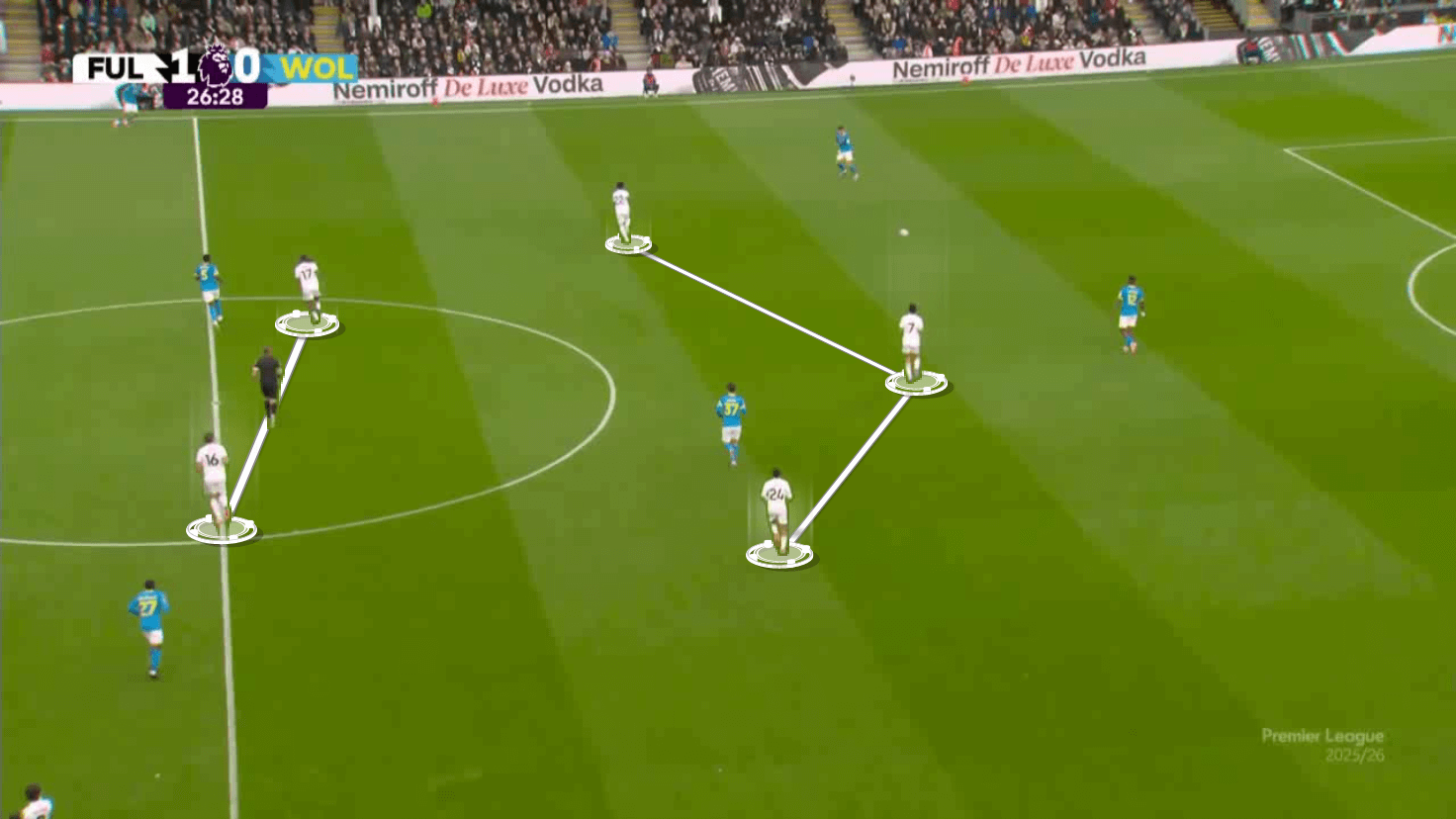
Marco Silva’s progression from midfield into the final third relies on his best dribblers and most technical players.
You can see the five-man line in midfield looking to stretch the pitch, but the two players tasked with receiving the ball and progressing into the final third are the two marked in red.
The deep-lying playmaker looks at everyone in the five-man line, but the two in red are the goal, getting it to them so they can turn into space and start the attack.
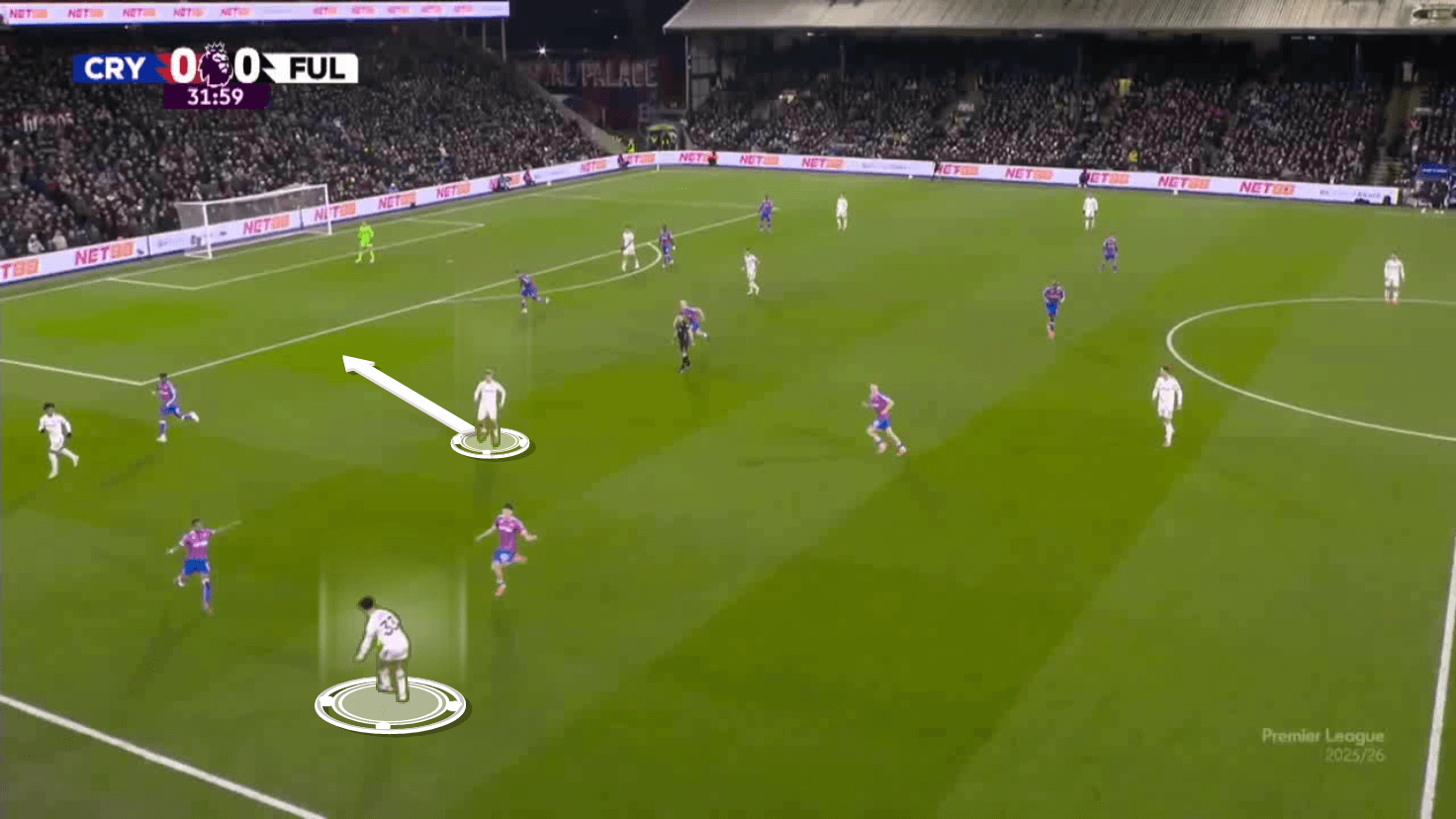
Now you can see the player who was originally marked in red near the same position in another part of the game.
Emile Smith Rowe, who was a signing many fans were excited for.
The full-back who is stretching the field looks into those pockets, gets it, and turns into space up ahead.
This is how Marco Silva’s team progresses through midfield, with a stretched midfield line.
The goal is for the full-back to the wide midfielder or the number six playing vertically into him, but preferably, Marco Silva loves his diagonal angles.
Marco Silva Attacking Tactics
Once the full-back has the ball, it is go time for the attackers.
They make those diagonal runs in behind, and the full-backs are constantly scanning for those runs.
For them to make those runs, the strikers are constantly dropping into midfield and taking opponents with them to open up space in behind.
Silva likes to have aggressive inside diagonal patterns and combinations with the full-backs and midfielders coming in and out.
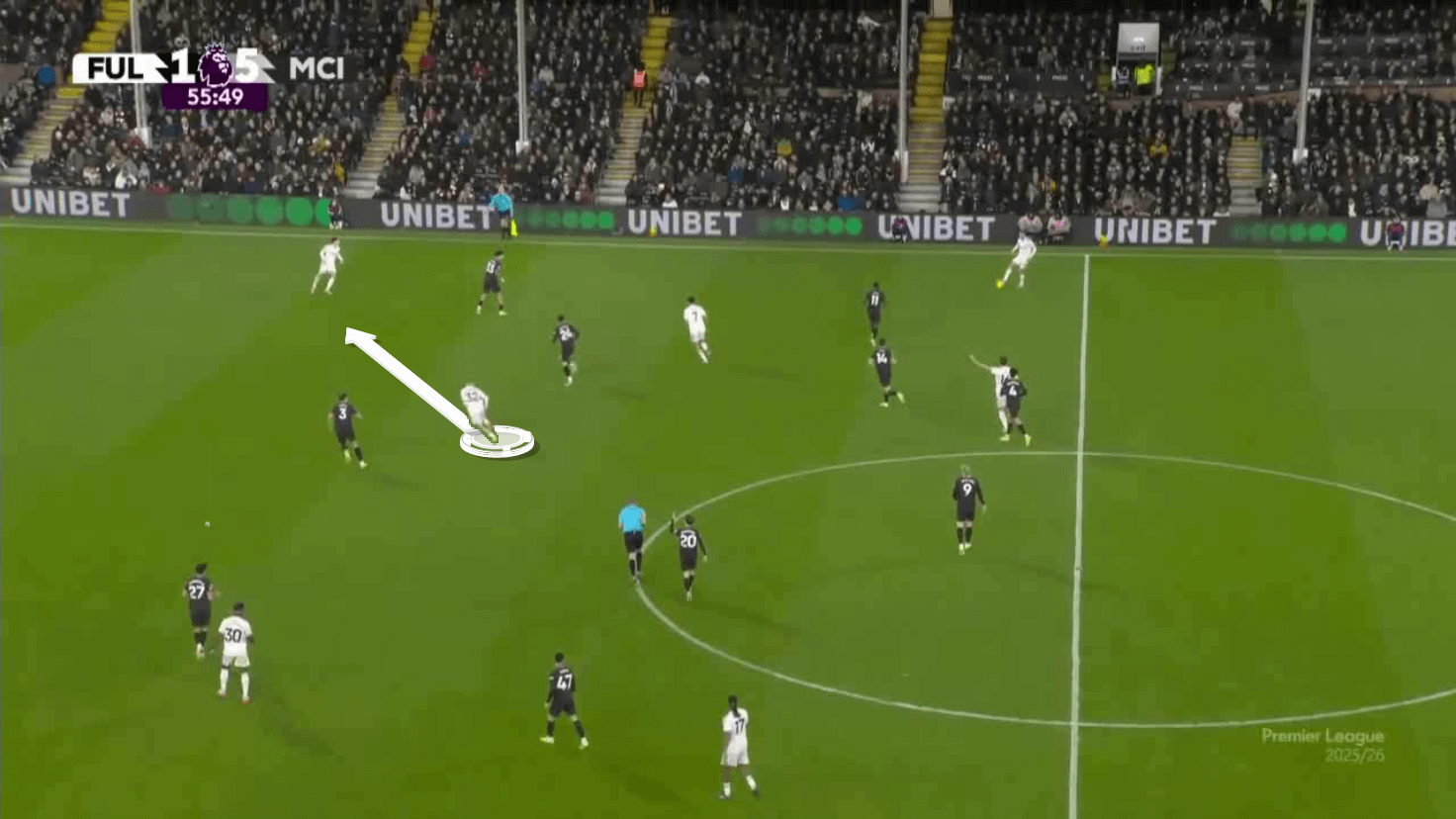
You can see it again.
The full-back is not interested in swinging it back and trying to switch the play to ease the build-up.
It is touch-and-go.
Three attackers make runs right away, catching the opponents off guard, who are not expecting them to speed up so quickly into the final third.
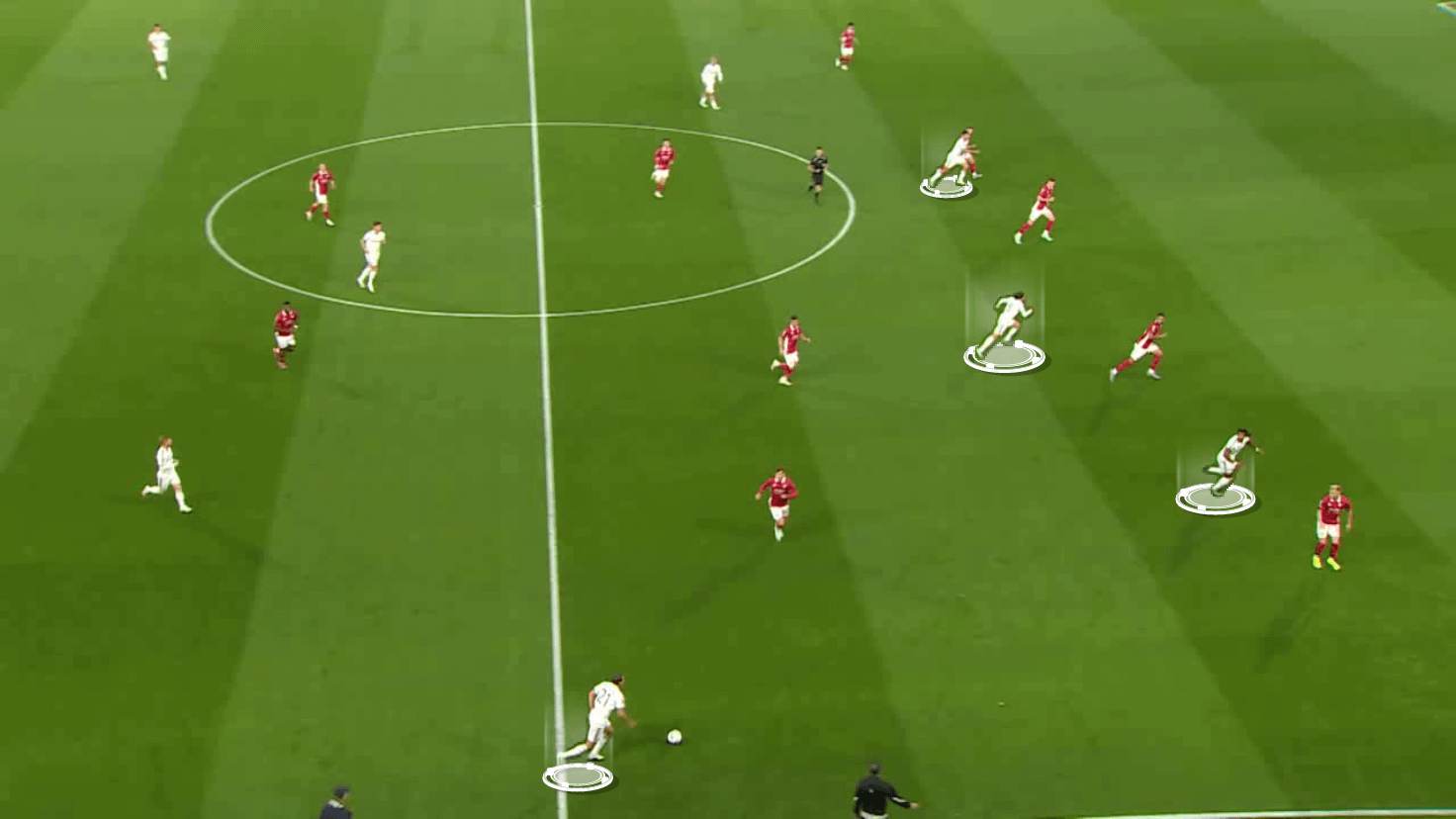
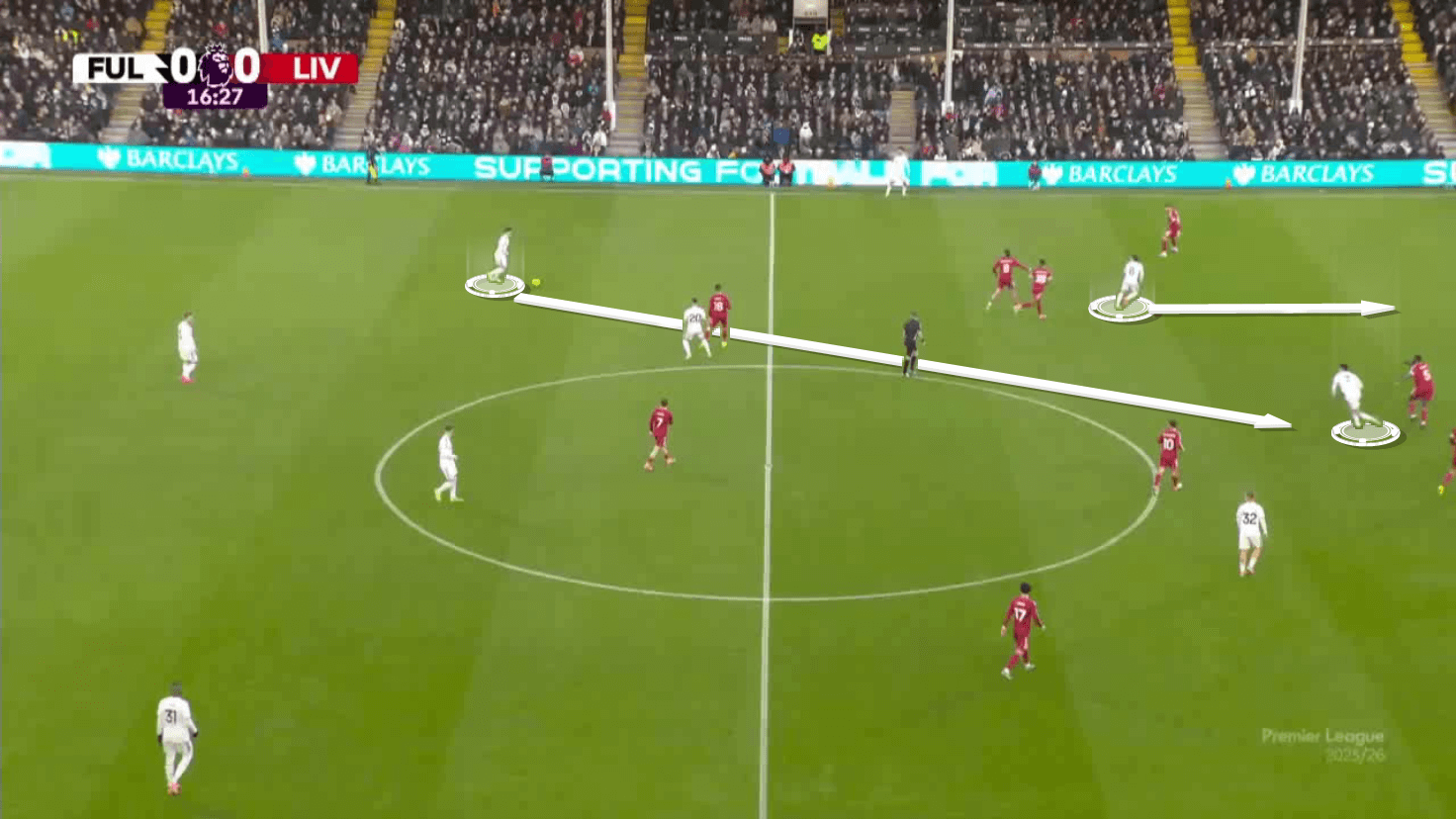
This is the most recent case of Fulham scoring from quick one-two combinations in attack, with the diagonal runs Marco Silva loves.
The defender plays a through pass to the striker.
The highlighted player on the left wing knows the ball is not coming to him, but he starts his run already.
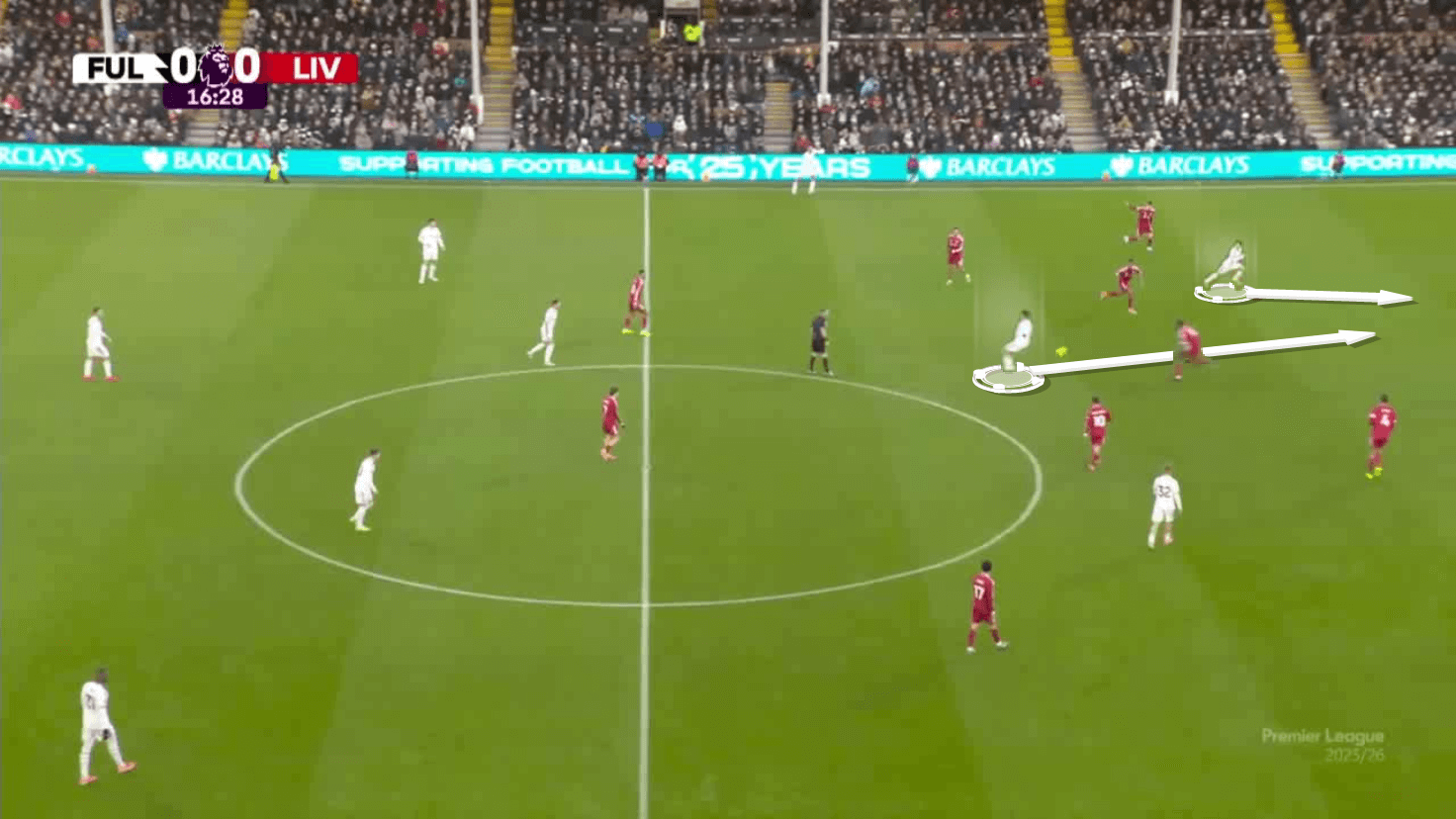
The player on the left wing takes one look back to make sure the striker is ready to play the one-touch pass in behind.
Because he starts his run early, no Liverpool player can catch up to him, and he then goes on to score from this run.
It is all about unlocking defences and getting in behind for Marco Silva.
Marco Silva Defensive Block Tactics
Typically, his squad plays in a basic 5-3-2 defensive formation, with the two outside midfielders looking to jump in if they see an opportunity to intercept.

When facing weaker teams in build-up, typically, he does not use a back five, but rather goes into a 4-4-2, trying to stop the attack sooner.
The back five is meant for teams that are stacked in attack.
When playing a weaker attacking side, there is no need to have five people in the backline.
In scenarios like these, when they face a team like Burnley, they can send another man into midfield and put pressure higher up.
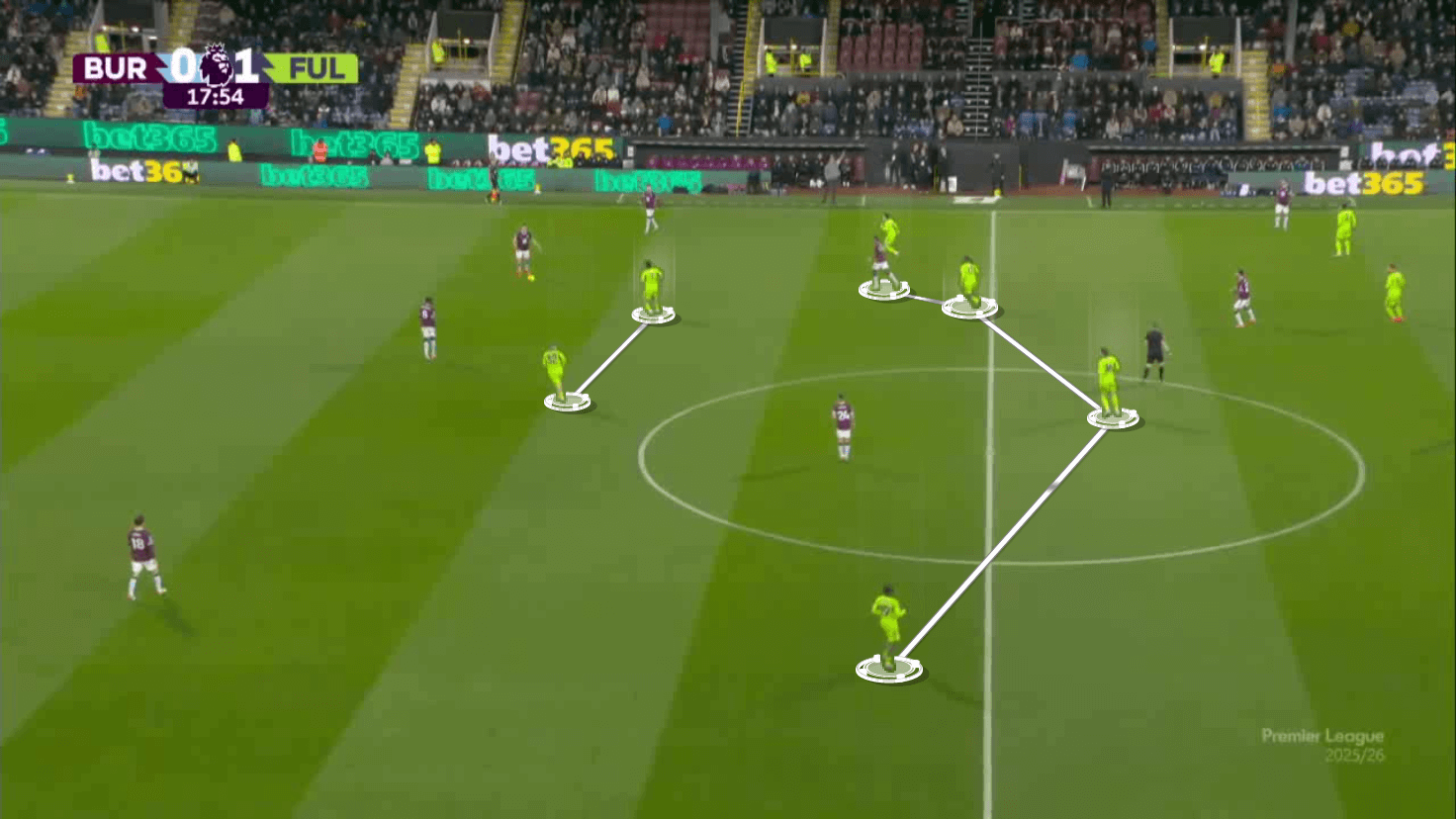
But like mentioned before, Marco Silva adapts his tactics to his opponent.
When playing bottom-of-the-league Wolves, he takes the risk with three men up top for the press, putting as much pressure as needed at the top against a team that is not the strongest in their build-up.
Conclusion
Marco Silva has done an extraordinary job at Fulham.
Although he finishes mid-table most seasons, his side is not easy to play against, and top teams do not go into matches expecting an easy three points.
The problem is simply not having the highest level of talent in the squad to match his vision.
He has proven to be a great coach, and many top clubs have high respect for the manager.
His contract is expiring at the end of this season, and it is possible he may look for another club to take his talents to a better-talented squad with more spending leeway for the top players he wants.
He has the tactics to suit a club competing in the Champions League and make them a threat.
It is a question of when he will be managing a Champions League-level team.
