
Jack Grealish has been revived at Everton this season.
The 30-year-old is on a season-long loan from Manchester City because he wanted more playing time, and he is absolutely thriving under David Moyes.
He was a shell of his former self the last few seasons at Man City.
Injuries, along with players like Jérémy Doku, Savinho, and Omar Marmoush, pushed Grealish out of the squad.
Over the past two seasons, he’s only played 19.2 90s in the Premier League, scoring only two goals and providing four assists.
In fact, in 2025, he only started one Premier League match for Manchester City, and that was against Leicester City.
It was clear that the £100m man needed a change of scenery because he was no longer wanted, and Everton has proven to be the perfect landing spot for him.
Jack Grealish already has four assists and one goal in only seven Premier League appearances.
In this Jack Grealish scout report, we will examine Jack Grealish’s original role under Pep Guardiola, why it has diminished over the past two years, and why it is thriving under David Moyes.
Jack Grealish At Manchester City
Before we get into why Jack Grealish is thriving at Everton, I believe it’s important to look back at his role under Pep Guardiola.
If you remember his years at Aston Villa, Jack Grealish thrived in the left wing/inverted winger role, which allowed him the freedom to roam around, find pockets of space to get on the ball, and blow by defenders.
If you examine his heat map from his final season at Aston Villa, you will see a significantly larger role, dropping deeper and into the left half-space, as he had that type of freedom.
Jack Grealish Heat Map At Aston Villa 2020/2021

At Manchester City, his role was completely different.
Jack Grealish wasn’t signed to be the main man creating everything for Manchester City’s attack.
Pep Guardiola already had amazing number 10s like Kevin De Bruyne, Phil Foden, and İlkay Gündoğan to occupy the central areas of the final third.
Because Guardiola’s eventual goal was to create a system at Manchester City that would overload and dominate the centre of the pitch, Jack Grealish became a key cog in that process by providing width on the left-hand side.
If you remember the first two seasons that Grealish was at Manchester City, they didn’t have a natural left-back who would overlap or provide that type of width.
Nathan Aké, who is a centre back by nature, mainly played in a back three when they were building up, so it was crucial that Pep Guardiola had a left winger who could hug the touchline to provide that width and stretch the opposition’s low block.
That is why you see from his heat map from his second season at Manchester City was more centered in one specific area of the pitch.
Jack Grealish Heat Map At Manchester City 2022/2023
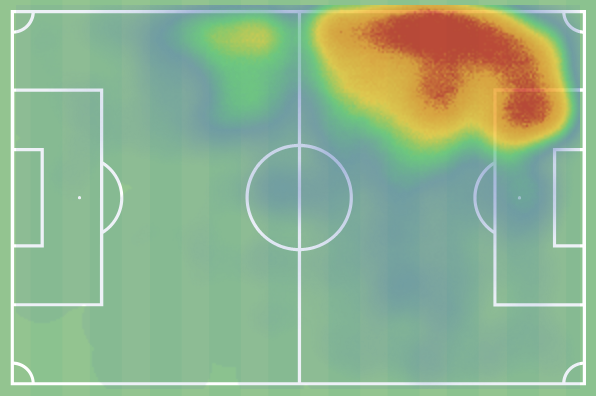
While I know the two heat maps look similar, there is a clear difference in how much deeper Grealish’s role was at Aston Villa and how much more time he spent in the left half-space.
He didn’t produce the same number of goals or assists because he was a tactical player who created space for others to thrive.
That role was as crucial as any in Manchester City’s system because it allowed the central players to thrive and greatly contributed to the club’s success in winning the treble during the 2022/2023 season.
Why Jack Grealish Wasn’t Needed At Manchester City
One of the main reasons Jack Grealish’s role diminished over the past two seasons was how teams defended against Manchester City.
Manchester City had been so successful for a number of years, dominating the middle of the pitch and playing through teams, that opponents started to sit deeper and more compact against them.
What was now required wasn’t a winger who could simply hug the touchline but one who could consistently beat defenders off the dribble and create chances for others, because it became more difficult for Manchester City to create chances through the middle of the pitch.
Jack Grealish’s number of successful takeovers slowly decreased each season, and Jérémy Doku provided that on a different level.
For example, this past season at Manchester City, Jérémy Doku averaged 6.37 successful take-ons per 90 minutes.
During both the 2021/2022 and 2022/2023 seasons, Jack Grealish didn’t even average two successful take-ons per 90 minutes.
Jack Grealish is one of the best control wingers in the world because it is incredibly difficult to get the ball off of him.
Because of that, he was a perfect cog in Pep Guardiola’s uber-controlled Manchester City.
However, when teams started to sit deeper and more compact, Pep Guardiola needed a different type of winger.
Jérémy Doku took over Jack Grealish’s spot at left wing because he was better at beating defenders off the dribble, and City already had so many elite number 10s.
That is why a move this summer was necessary for both parties.
Why Jack Grealish Is Thriving At Everton
The Jack Grealish we are seeing this season is reminiscent of his days at Aston Villa.
David Moyes has given Grealish the freedom to play more as an inverted winger, a role he excelled in at Aston Villa.
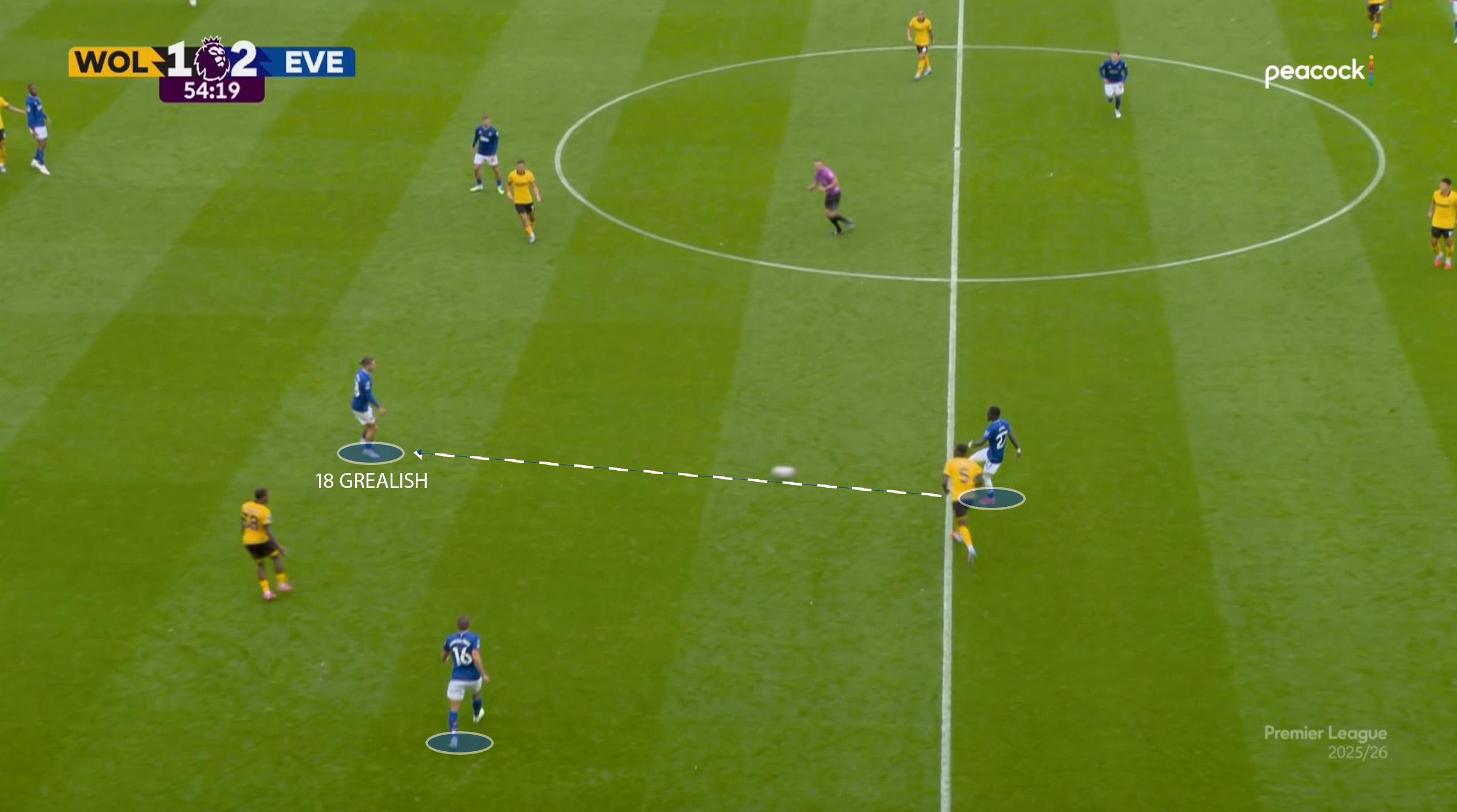
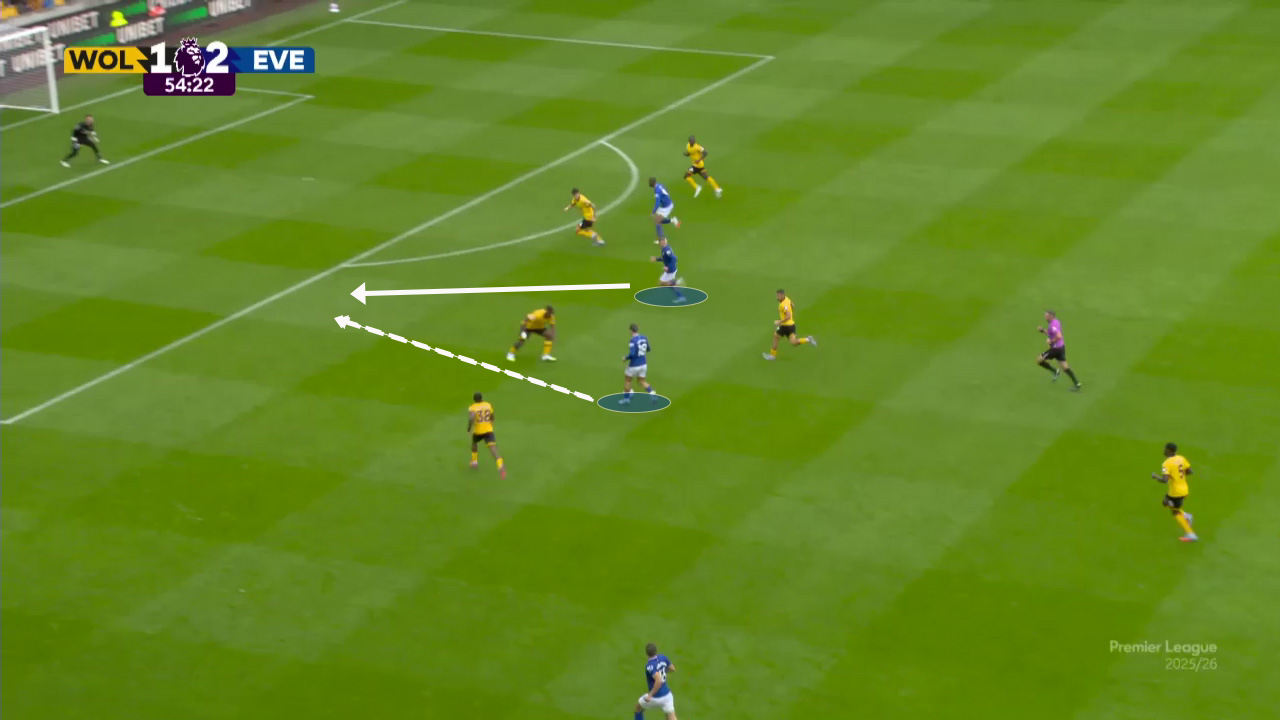
Take a look at one of his two assists versus Wolves earlier this season as an example.
He inverts into the left half space, receives the ball, drives right at the defence, and then plays it in behind to Kiernan Dewsbury-Hall for a goal.
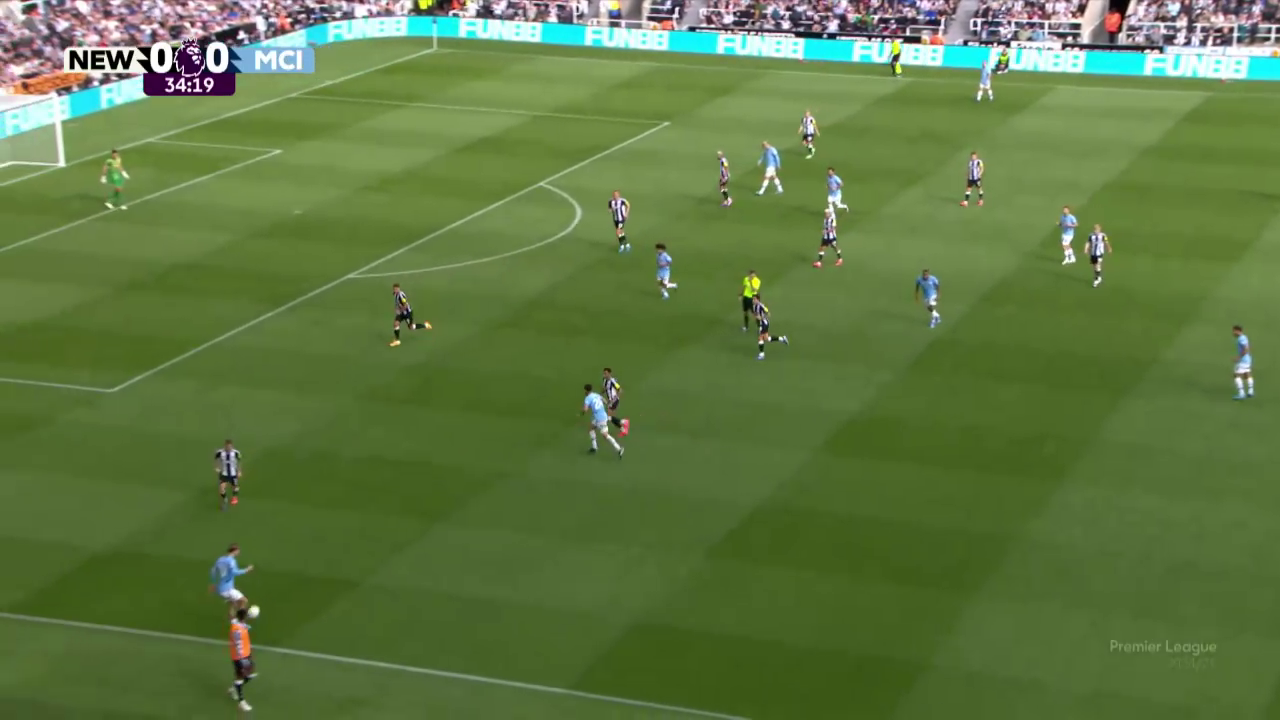
Compare that to his lone Premier League assist last year against Newcastle United.
He’s receiving the ball on the touchline, beats the defender, and makes a long pass from out wide for the goal.
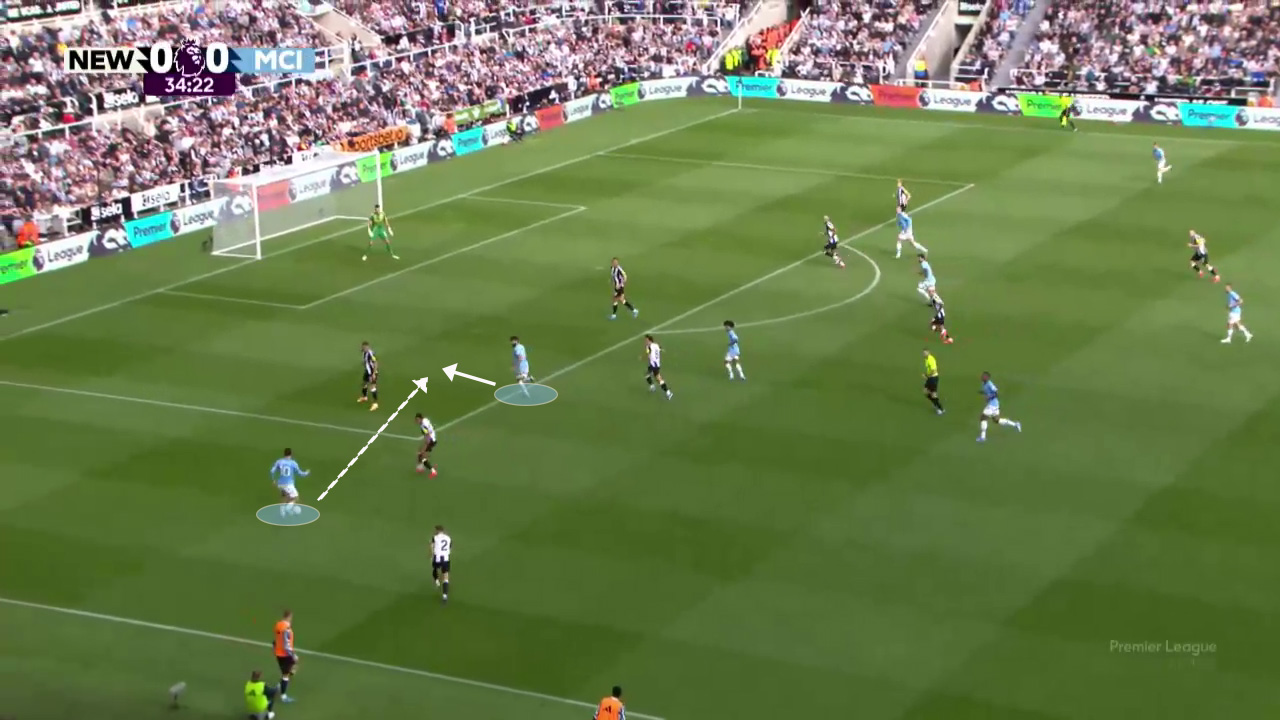
Because Grealish has taken on the role of a more inverted winger, he’s been able to get on the ball more and create for others.
The other main reason is that Everton needs him to be a creator rather than someone who simply hugs the touchline.
David Moyes’s 3-2-5 build-up is primarily reliant on the left-back, usually Vitaliy Mykolenko, getting forward to provide width and send in crosses.
Naturally, that pushes the left winger into a more inverted role like this.
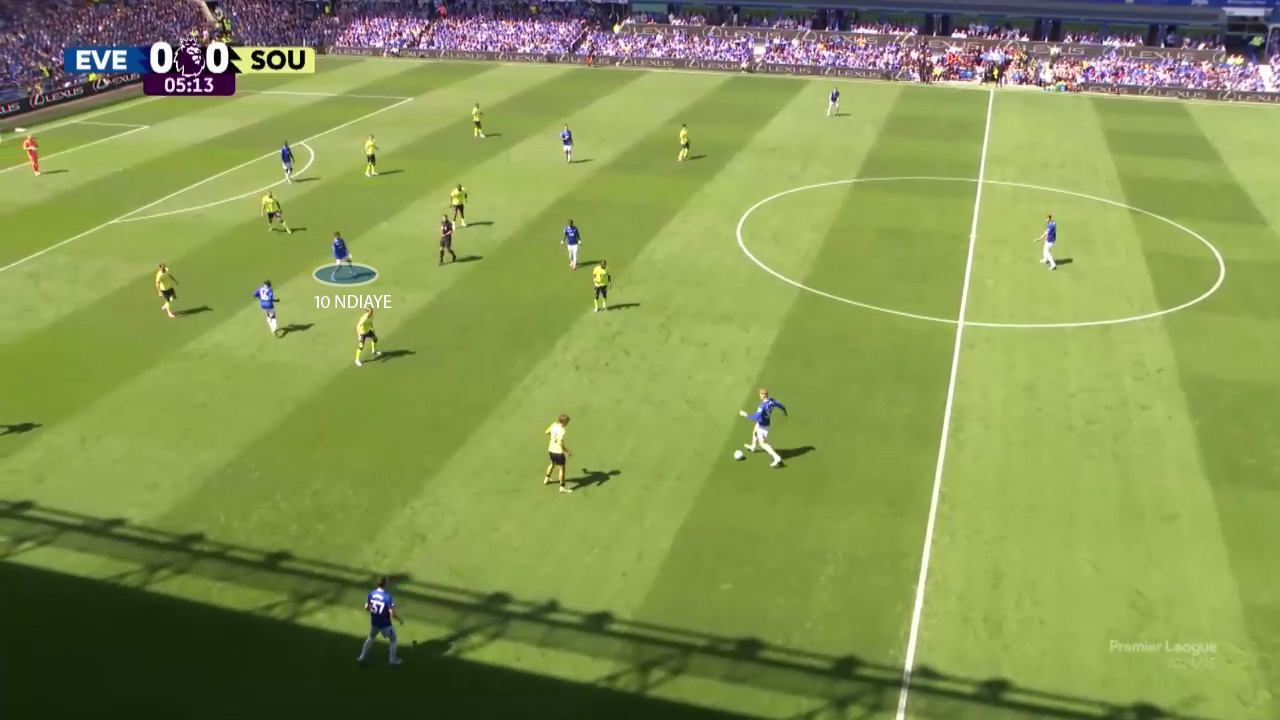
Last season, Iliman Ndiaye thrived in this role under David Moyes, scoring six goals; however, he now plays on the right.
Grealish is now thrust into the role of being more proactive in central areas to create opportunities for his teammates.
Jack Grealish has carried the ball 28 times into the penalty area this season, which is the most in the Premier League.
Grealish has received 63 progressive passes; only Bryan Mbuemo and Mo Salah have received more.
He’s completed 26 passes that have directly led to a shot; only Bruno Fernandes has more.
There are many more stats backing up his revival, but the point is that David Moyes has turned Jack Grealish back into the player he was at Aston Villa.
Conclusion
Jack Grealish is only at Everton on a season-long loan, but so far, it has been one of the best moves of the summer.
Not only does Grealish now have regular playing time, but he is also a key player and a vital part of this Everton side, serving as one of the main focal points of their attack.
Because Manchester City had multiple number 10s in their squad, there wasn’t a need to have a left winger invert towards the centre of the pitch.
Everton play a 4-2-3-1 with a singular number 10, which allows a winger to invert to a more central position in the 3-2-5 build-up because the left back pushes up to provide width.
That has put Jack Grealish in the best possible position to thrive in this Everton side, and the numbers back it up.
His decline at Manchester City wasn’t due to a lack of skill.
It was due to a change in how Manchester City began to attack low-block defending teams.
Because Everton don’t have a lot of possession, similar to his time at Aston Villa, there is more space in transition for Grealish to get on the ball and into the penalty area with his elite ball-carrying.
It’s been amazing to watch one of the better English wingers of our generation find a home where he is wanted and can flourish again.
In a World Cup year, Thomas Tuchel should seriously consider the 30-year-old for the England squad if he continues this level of play at Everton.
