
Manchester City suffered their fourth defeat of the season to Newcastle United in Gameweek 12 of the 2025/2026 Premier League season.
Manchester City entered the game aiming to extend their winning run after beating Bournemouth and Liverpool before the international break.
However, they were preparing for a game they already expected to be challenging against the Magpies.
“Newcastle has always been difficult at home since I came to this country, especially in the last few years when Saudi Arabia took over the club, and Eddie Howe has done an incredible job.”
This was Pep Guardiola’s view after the game on travelling to St. James’ Park.
Despite difficult moments, Man City managed to control certain phases of the game, particularly in the first half, but were unable to turn them into goals.
This tactical analysis examines where Manchester City failed and how Newcastle won the match.
Newcastle United Vs Manchester City Lineups & Formations

Eddie Howe lined up with a 4-3-3 formation.
Nick Pope was between the sticks.
Newcastle’s back four was Malick Thiaw and Fabian Schär as right and left centre-backs, with Tino Livramento and Lewis Hall playing as right and left full-backs.
Their midfielders were Bruno Guimarães, Sandro Tonali, and Joelinton.
Jacob Murphy was Newcastle’s right winger with Harvey Barnes on the left and Nick Woltemade up front.
Manchester City lined up with a 4-3-3 formation too.
Gianluigi Donnarumma started in goal.
Rúben Dias and Joško Gvardiol operated as the centre-backs, flanked by Matheus Nunes on the right and Nico O’Reilly on the left as full-backs.
Nico González started as the six, with Bernardo Silva and Phil Foden playing as eights.
Rayan Cherki and Jérémy Doku started as the right and left wingers, with Erling Haaland as the striker.
Manchester City Build-Up Vs Newcastle United High Press
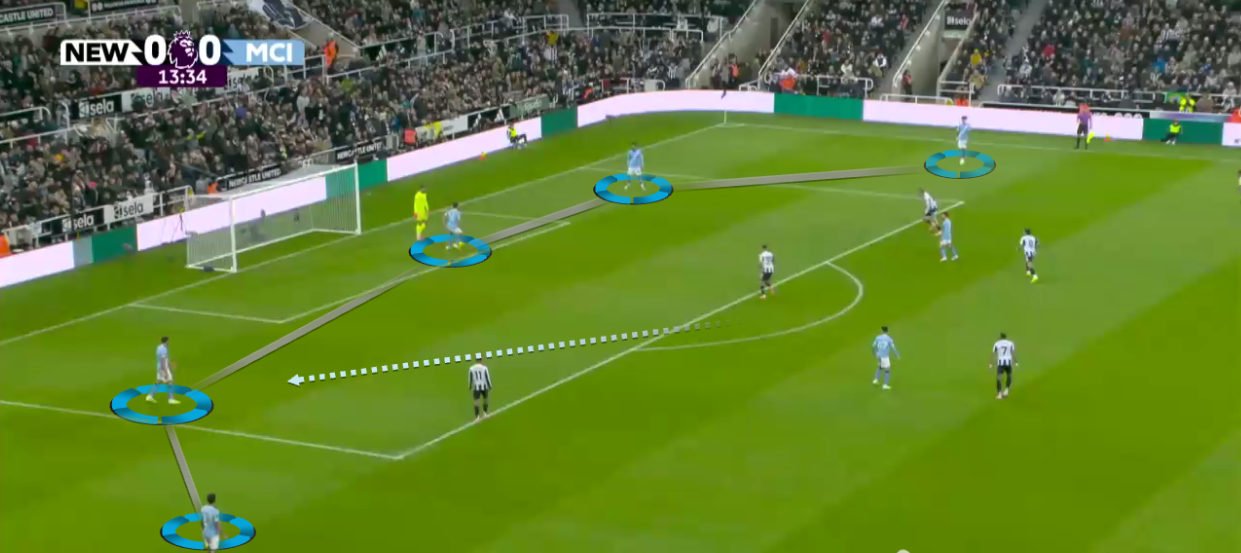 Manchester City organise their build-up in a 5-2 structure, with González dropping from the six role into the box as a right centre-back, while Dias moved closer to Donnarumma.
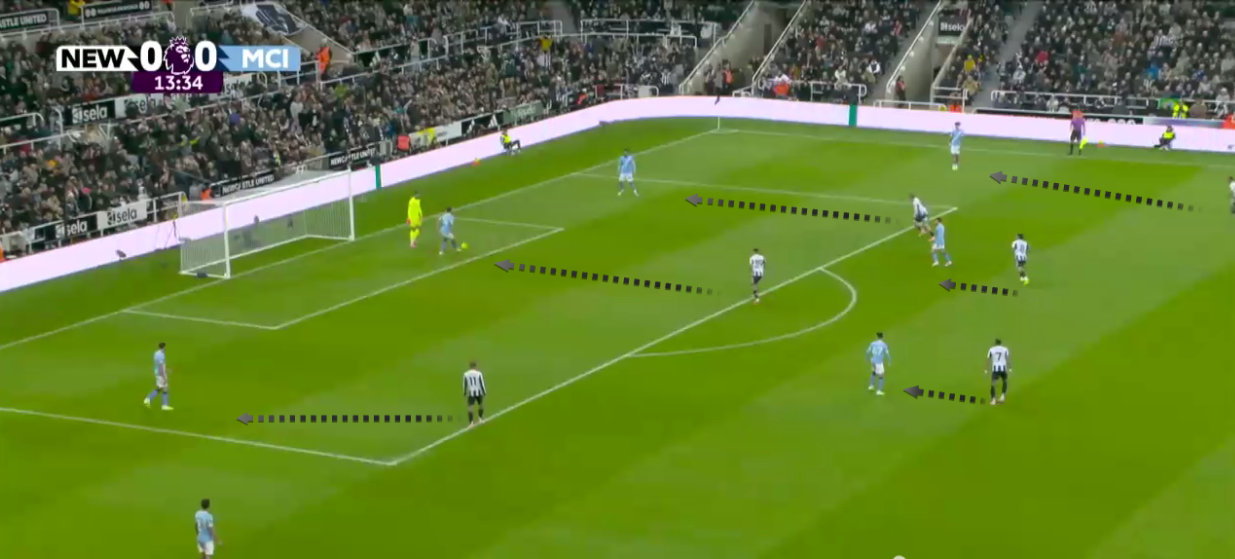 Newcastle approaches Manchester City with a man-marking scheme in their high-pressure phase.
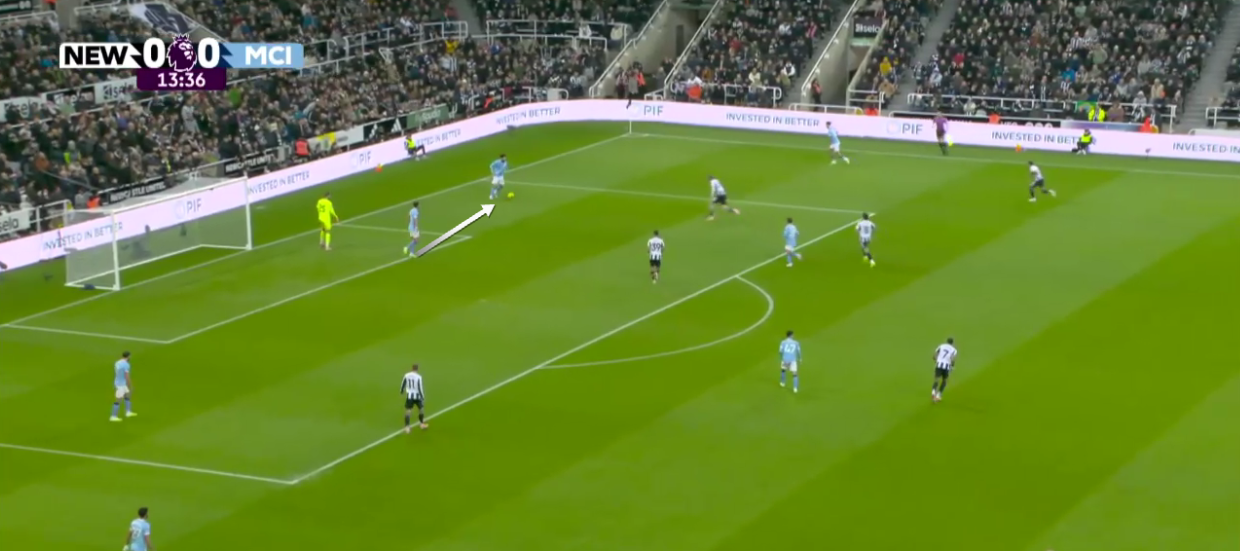 Dias plays into Gvardiol, and this triggers Newcastle’s pressing sequence.
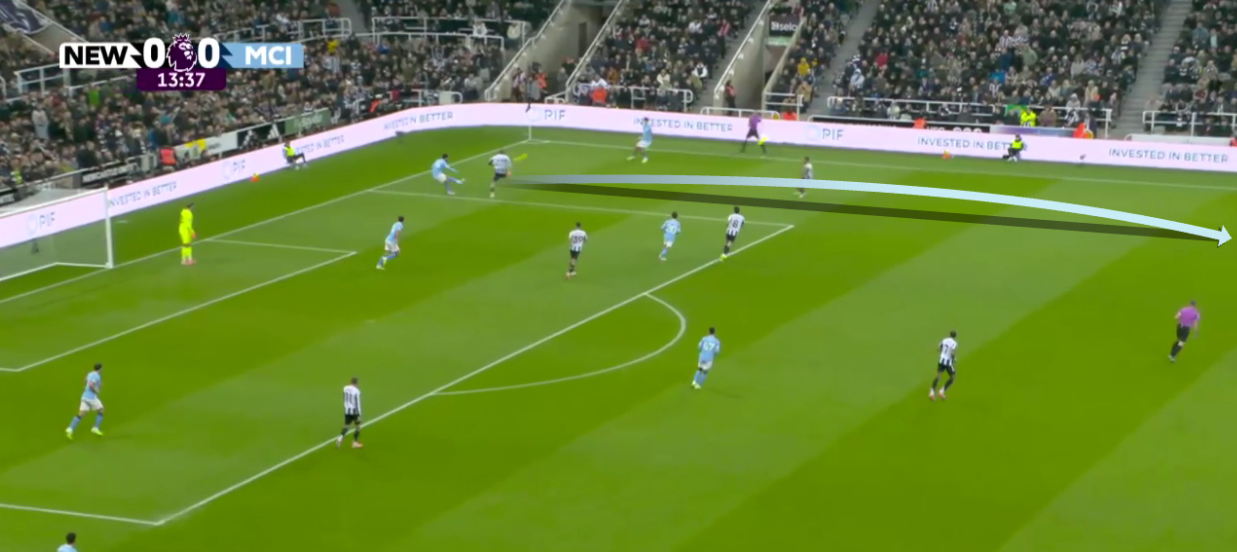 Gvardiol responds by playing a long ball down the left wing.
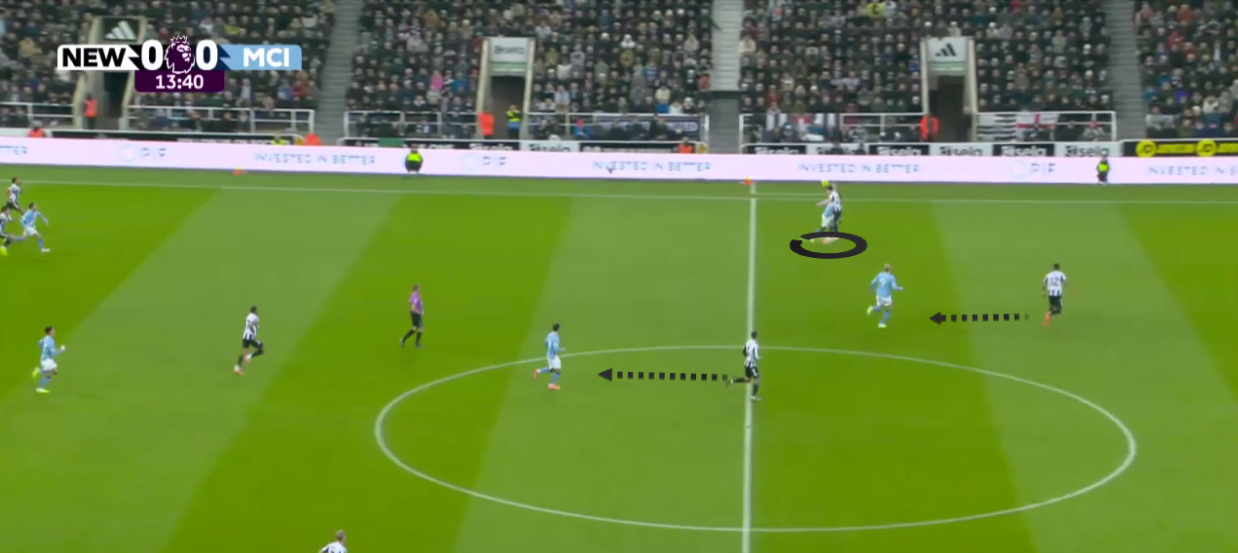 Now, both teams’ structures become clear.
In this scenario, Doku must challenge Livramento, who is considerably taller, to an aerial duel.
The outcome is that Doku loses the duel, leading to Manchester City losing possession and failing to progress through their build-up.
Manchester City Plays Into The Space On The Right
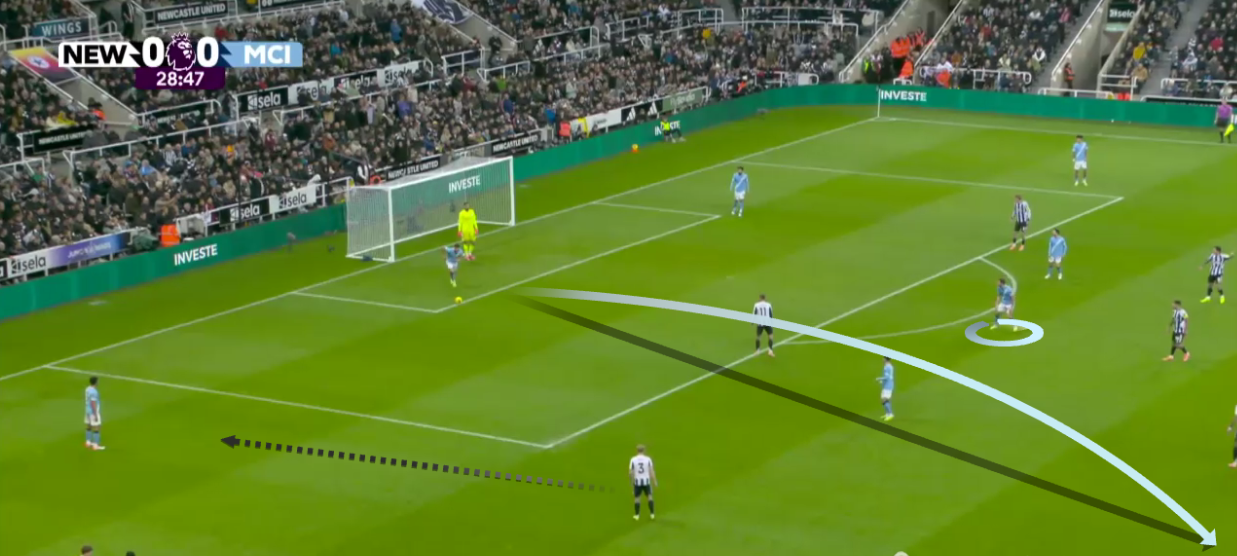 Manchester City attempted a different approach in their build-up to break Newcastle’s high press.
González returns to his six role, Dias remains on the ball but shifts to the right side of the six-yard box.
Newcastle adjust their pressing accordingly.
Guimarães now follows González, Barnes becomes the presser on Dias, and Hall continues pushing forward toward Nunes.
The idea for Manchester City is to attract Newcastle’s midfielders, free the centre, and play a long ball toward Haaland into the space Hall vacates while pressing Nunes.
Dias delivers the long ball immediately.
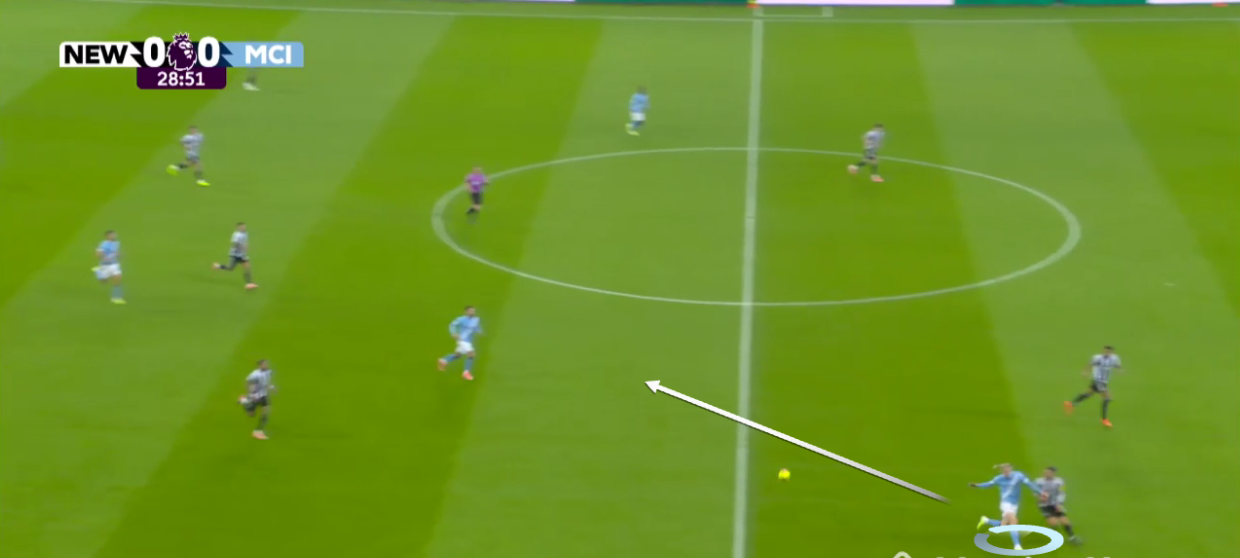 Haaland is now required to engage in the physical duel with Schär and lay the ball off to Cherki, who stands free and facing forward because Newcastle’s midfielders are positioned high.
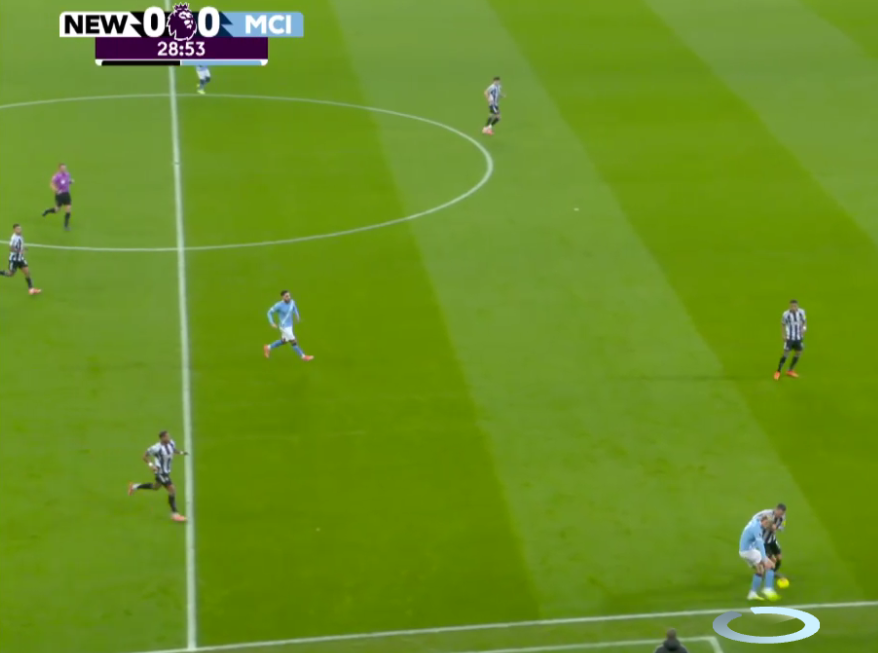 Haaland fails to win the duel against Schär, resulting in another instance in which Manchester City cannot break Newcastle’s high press.
Manchester City Play To The Centre
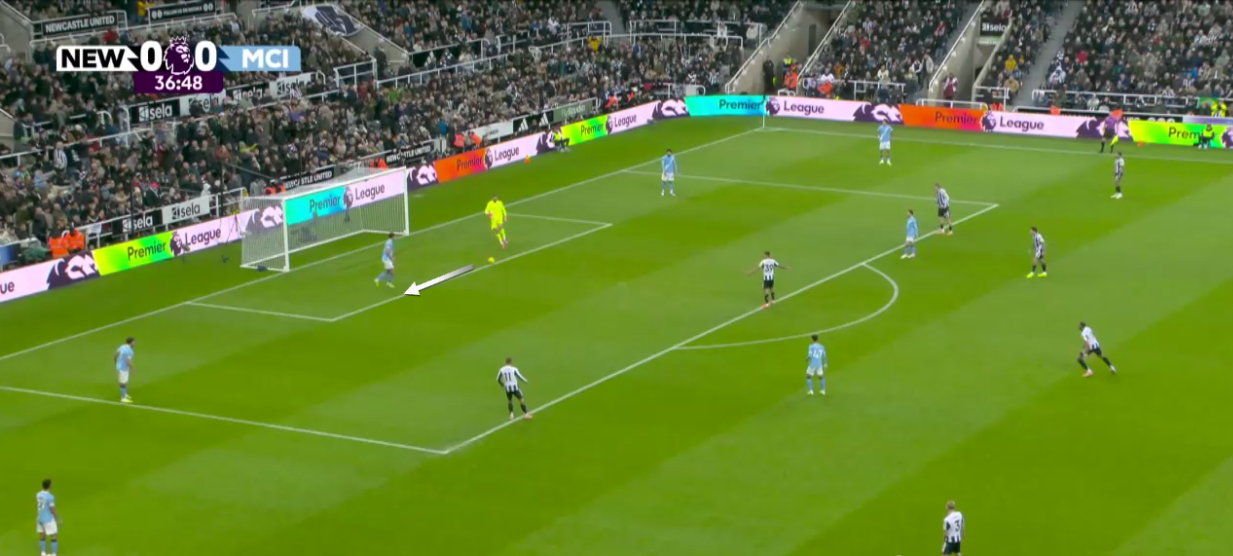 Manchester City attempts a similar idea, but this time the long ball is directed toward Haaland in the central area instead of into the space behind.
This explains González dropping into the right centre-back position once again, ensuring Guimarães presses Dias far from the intended target zone.
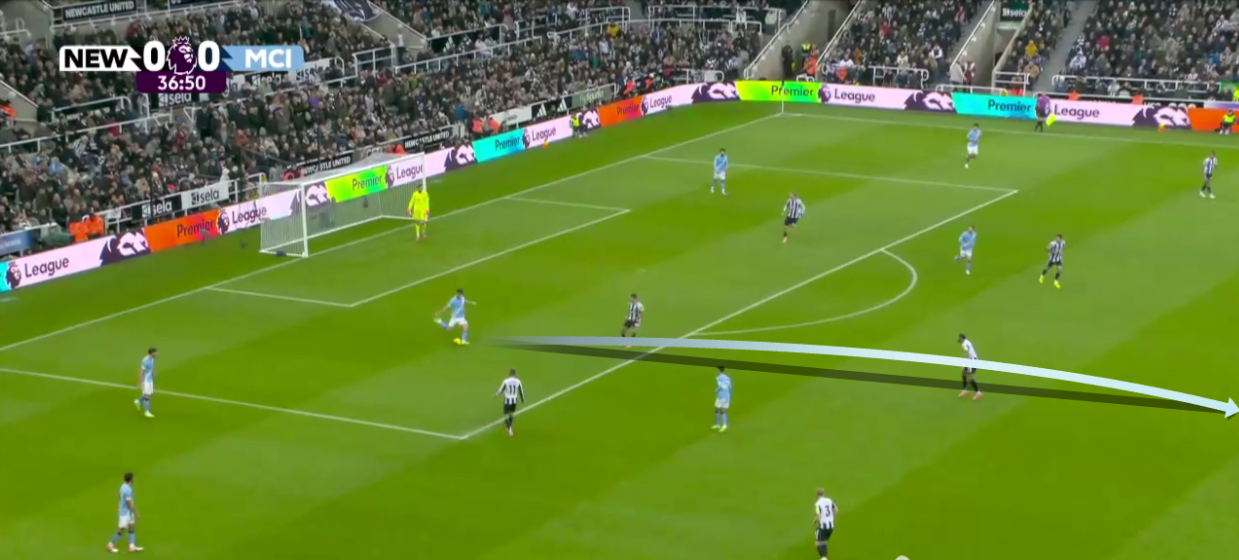 Dias plays the long ball toward Haaland while Guimarães presses him.
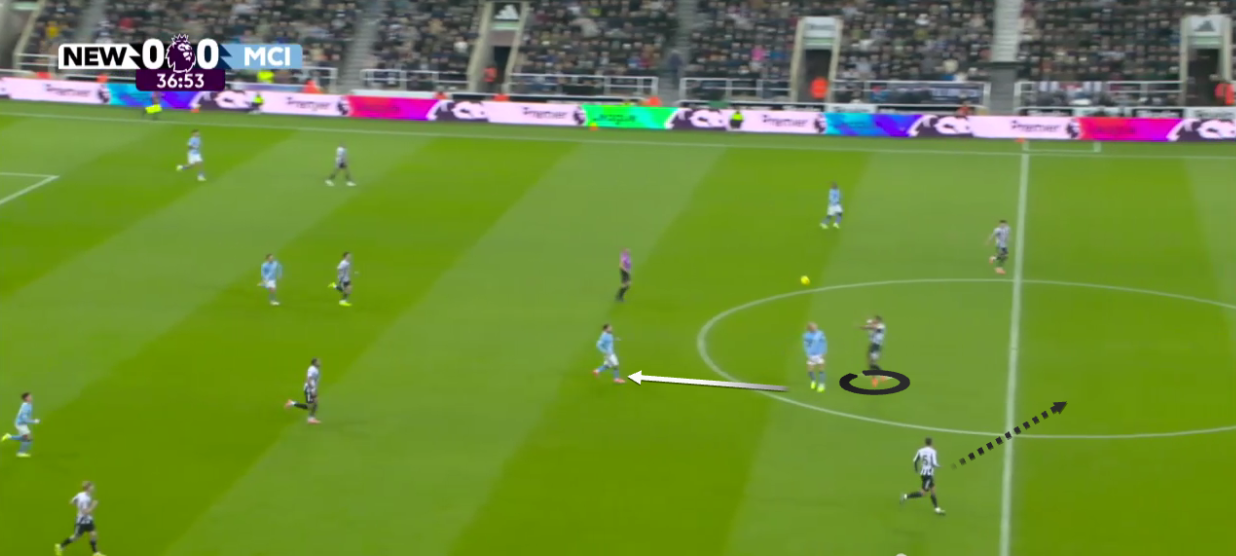 Haaland can lay the ball off to Cherki, who is free because Schär drops back to contest the long ball between Thiaw and Haaland.
However, Haaland then loses the duel with Thiaw, and Manchester City still cannot progress through their build-up.
Manchester City Attempted Solution
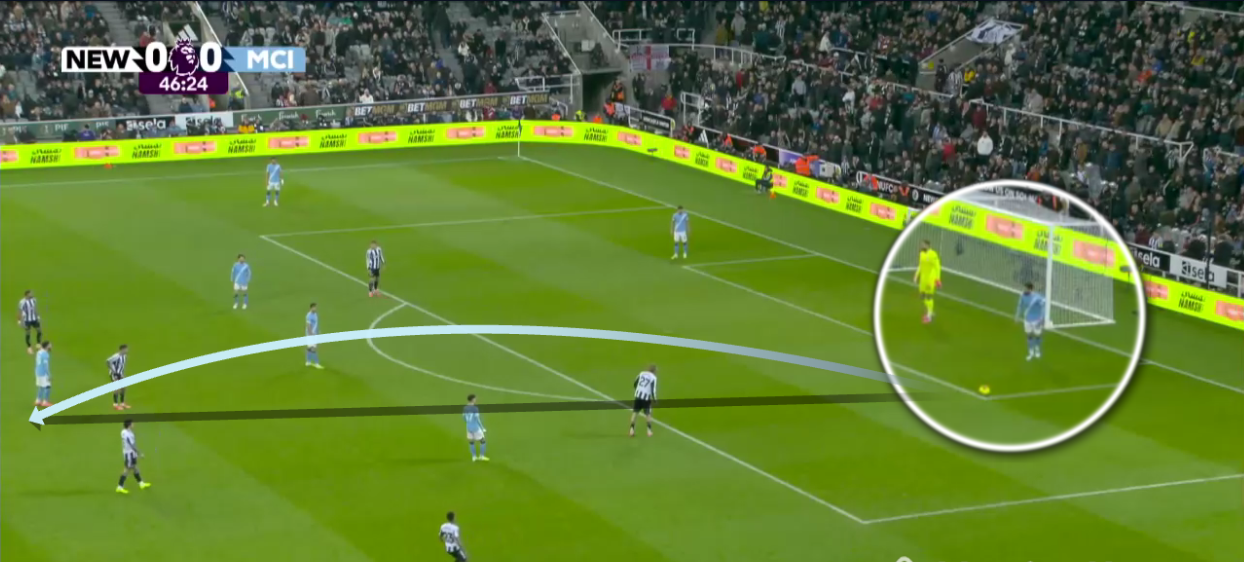 In the second half, Manchester City applies a simple but effective method to manipulate Newcastle’s man-marking press.
The intention is to create a deception that gives the preferred first-line receiver more time to play forward.
Manchester City begins by switching the play to the left side.
Gvardiol, now on the ball, shapes his body as if preparing to play long, mirroring Dias’ first-half tendencies.
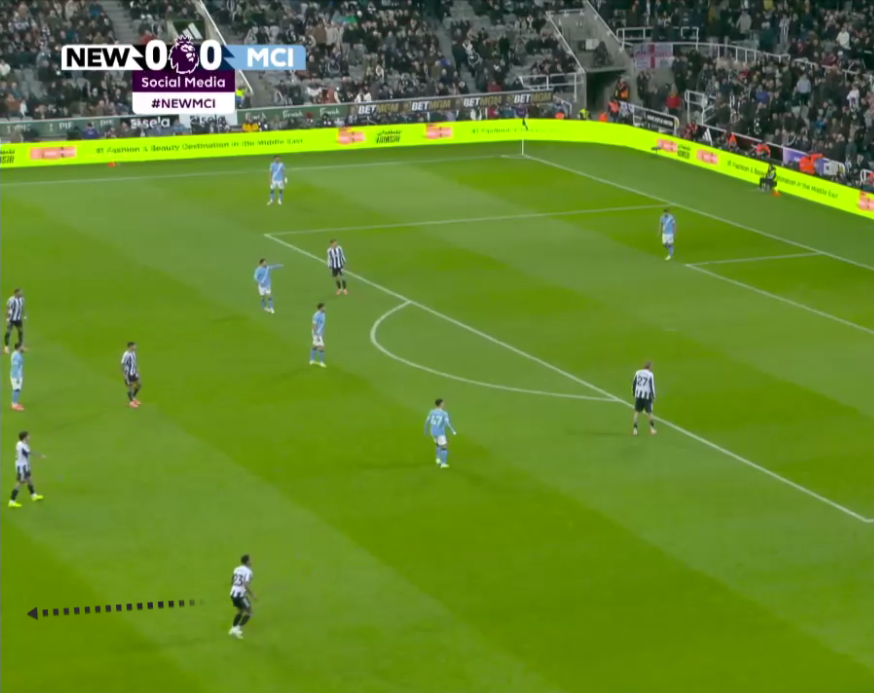 This movement causes Murphy, who is responsible for pressing O’Reilly, to drop in anticipation of contesting the second ball.
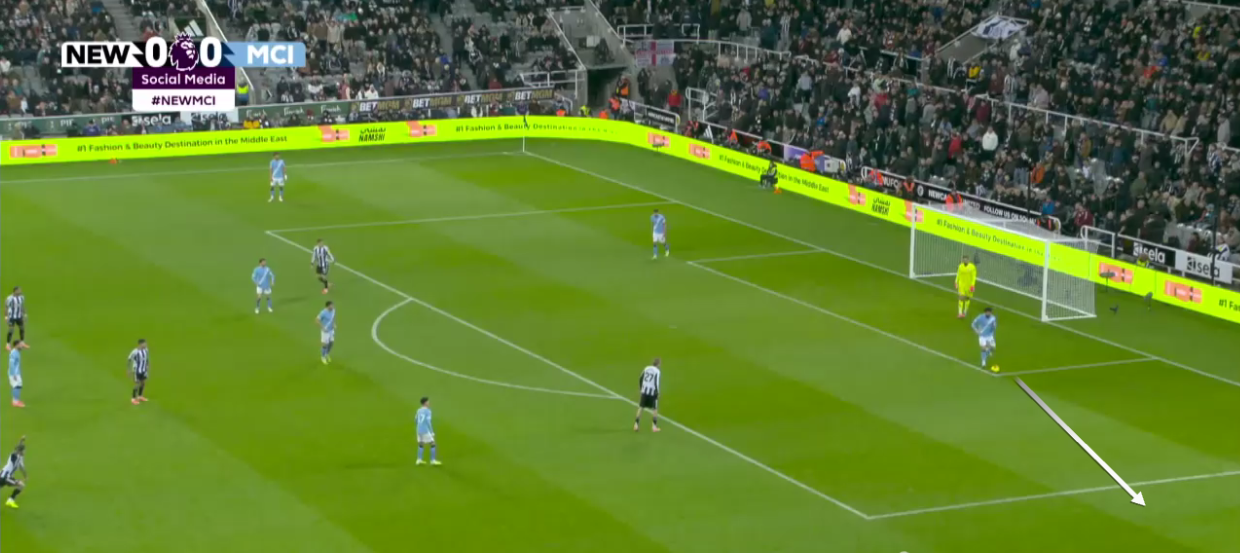 As Gvardiol approaches the ball, he changes direction at the last moment and plays into left full-back O’Reilly.
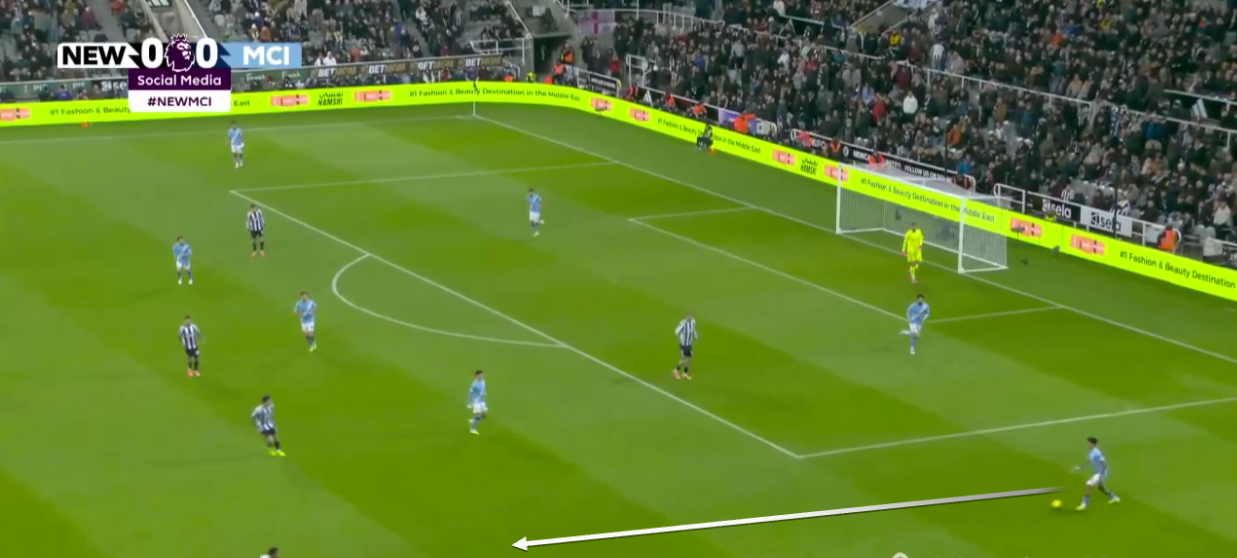 Unlike in the first half, when Murphy stayed tight to him, O’Reilly is now able to receive freely and look forward, giving Manchester City a clean opportunity to break Newcastle’s high press.
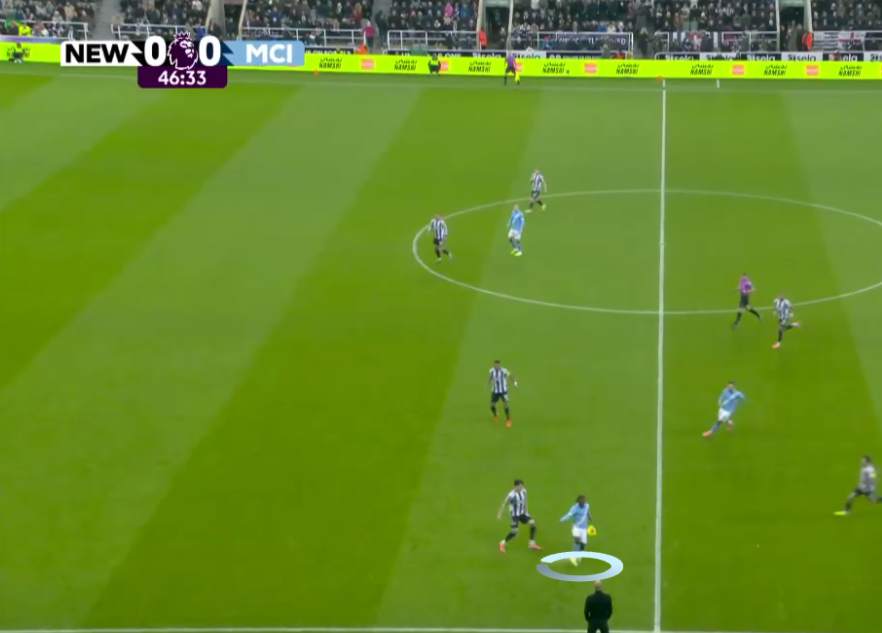 O’Reilly plays down the left side into Doku, in a scenario that is an improvement on the first half, when he was forced into an aerial duel against a much taller defender.
Now, he receives a ball he simply needs to protect and find an easy option from.
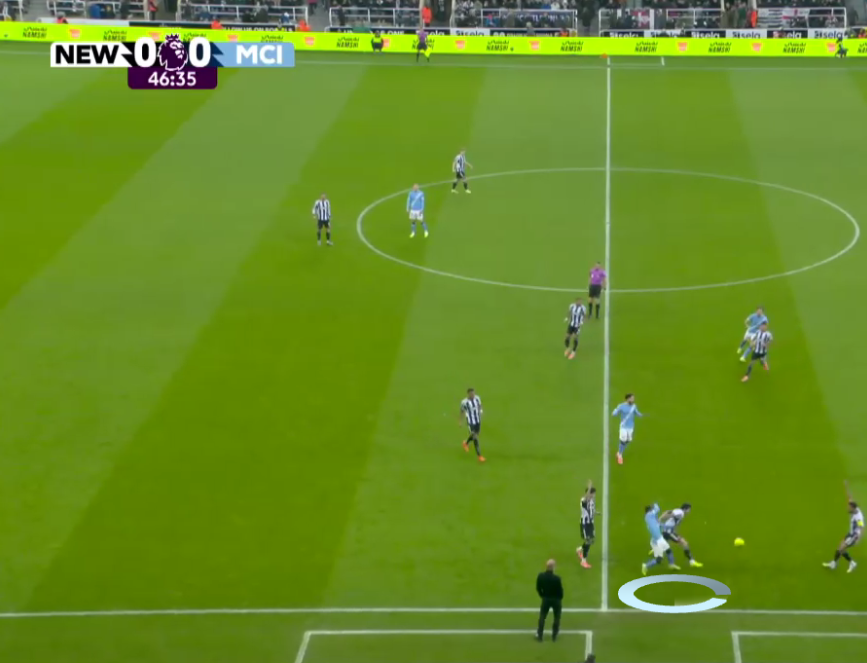 Doku is unable to retain possession in this situation as well, meaning Manchester City cannot complete their intended solution.
Manchester City In The Final Third & Progression
In the progression and final third phases, Manchester City were in a far better position than in their build-up.
They managed to break Newcastle’s mid and low blocks and reach Pope’s goal on multiple occasions.
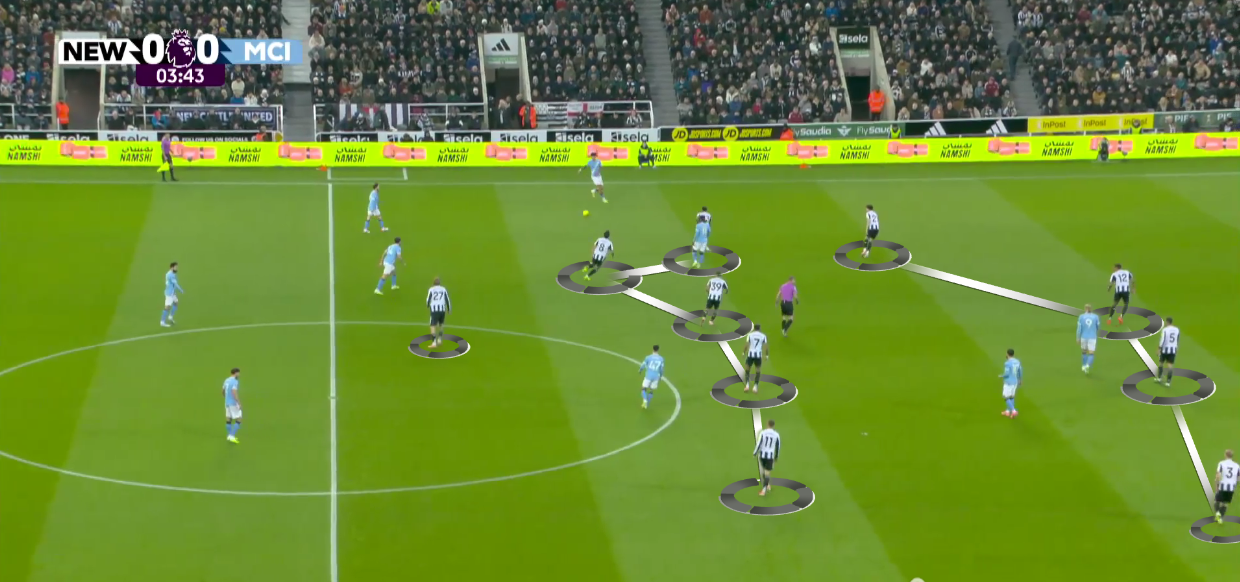 Newcastle defends in a 4-5-1 structure.
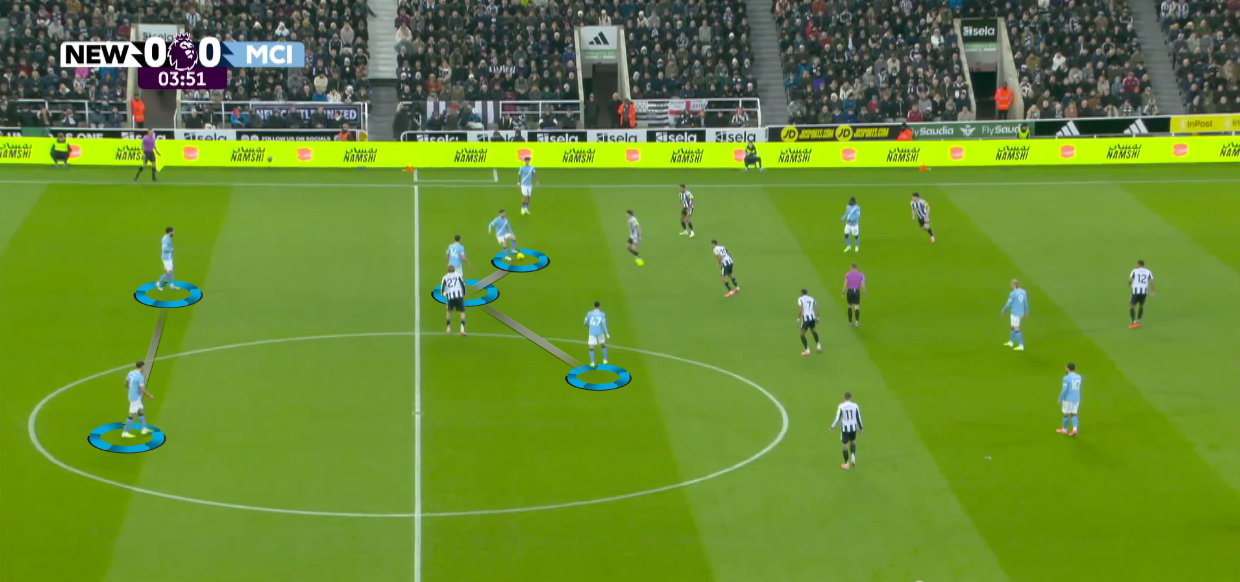 Manchester City adopts a 2-3 structure with the two centre-backs forming the first line.
In the second line, Silva and Foden drop alongside González to operate as a pair of sixes.
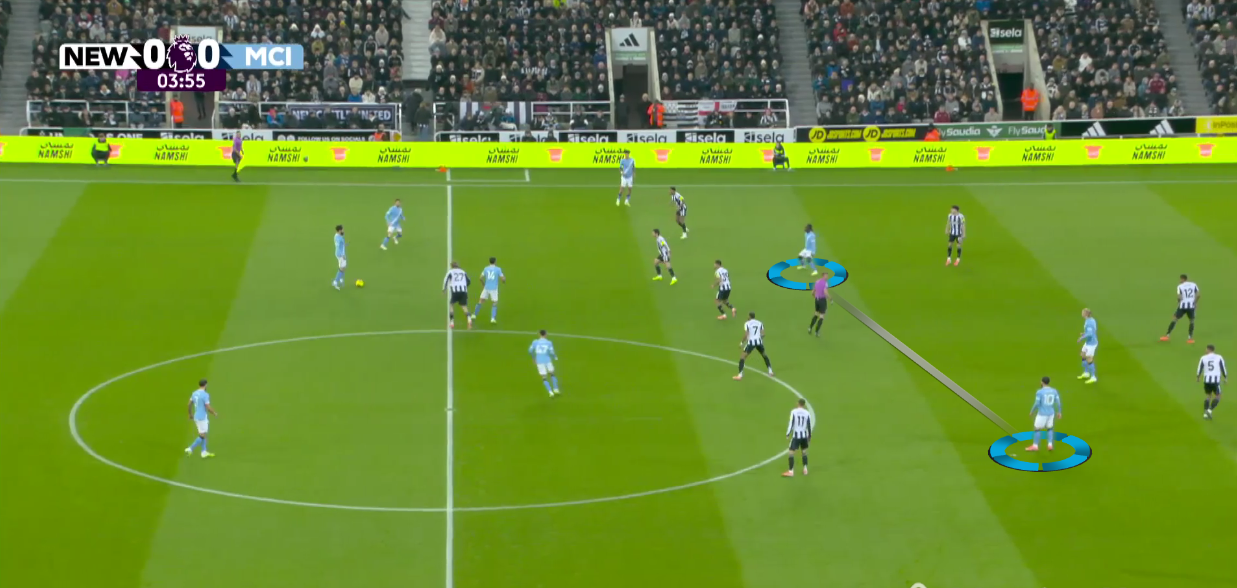 The two wingers move inside between the lines to operate as eighths.
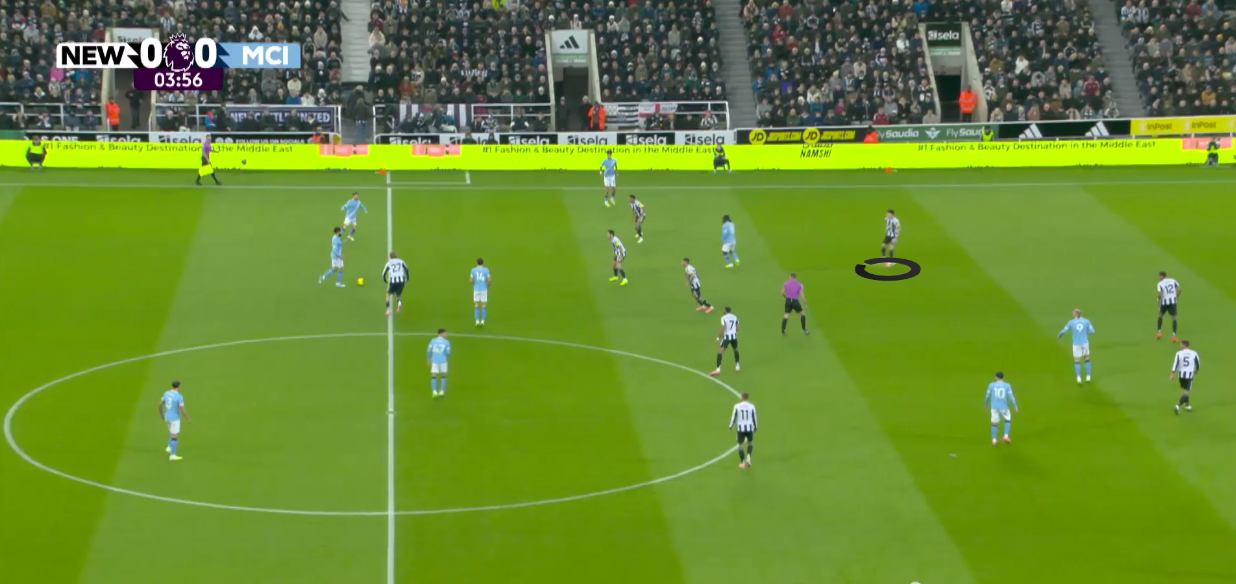 With this movement, Newcastle’s right-back Livramento shifts inside behind Doku.
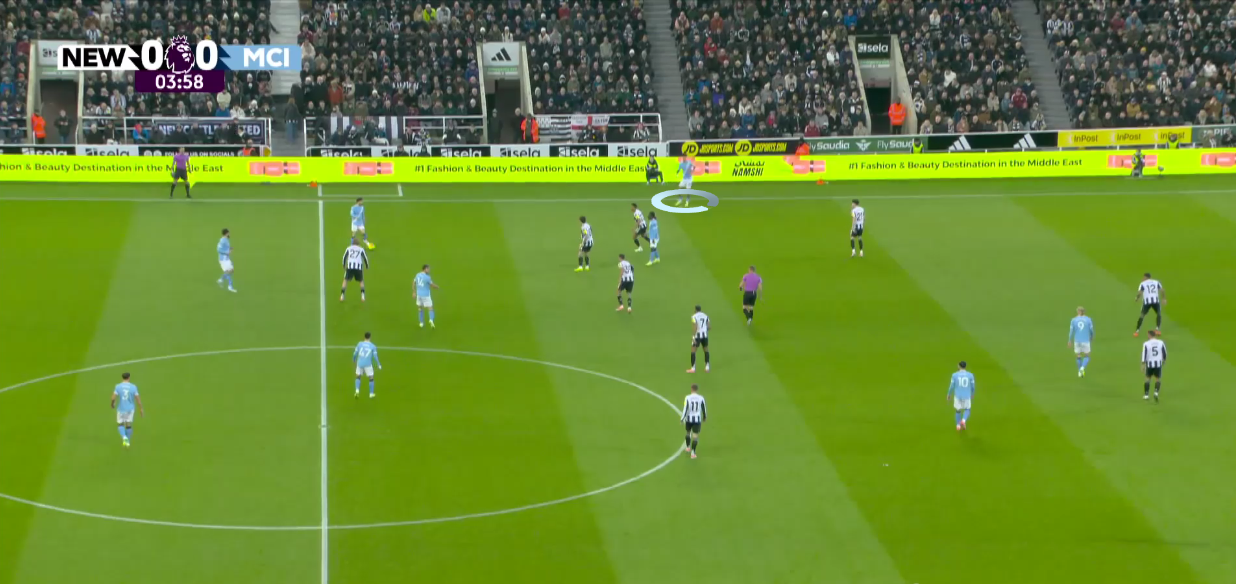 As Doku moves inside, O’Reilly advances higher along the flank.
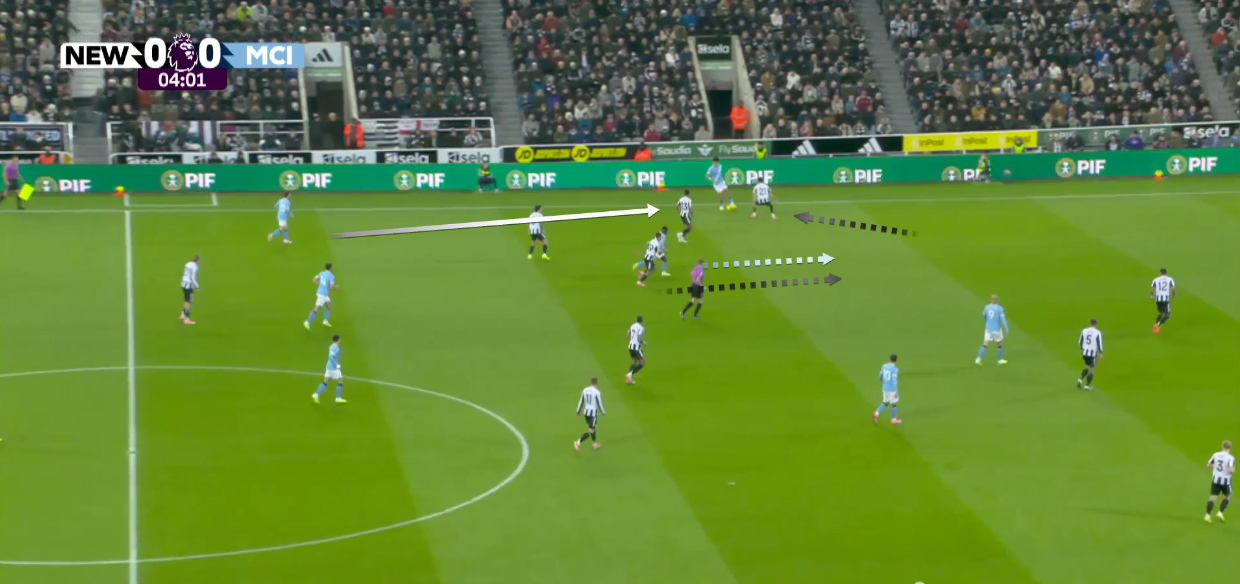 When Silva plays to O’Reilly, Livramento steps out to press, while Doku attempts to attack the space behind him.
Guimarães tracks Doku’s run.
Manchester City Fake Pass In Behind Creates Space
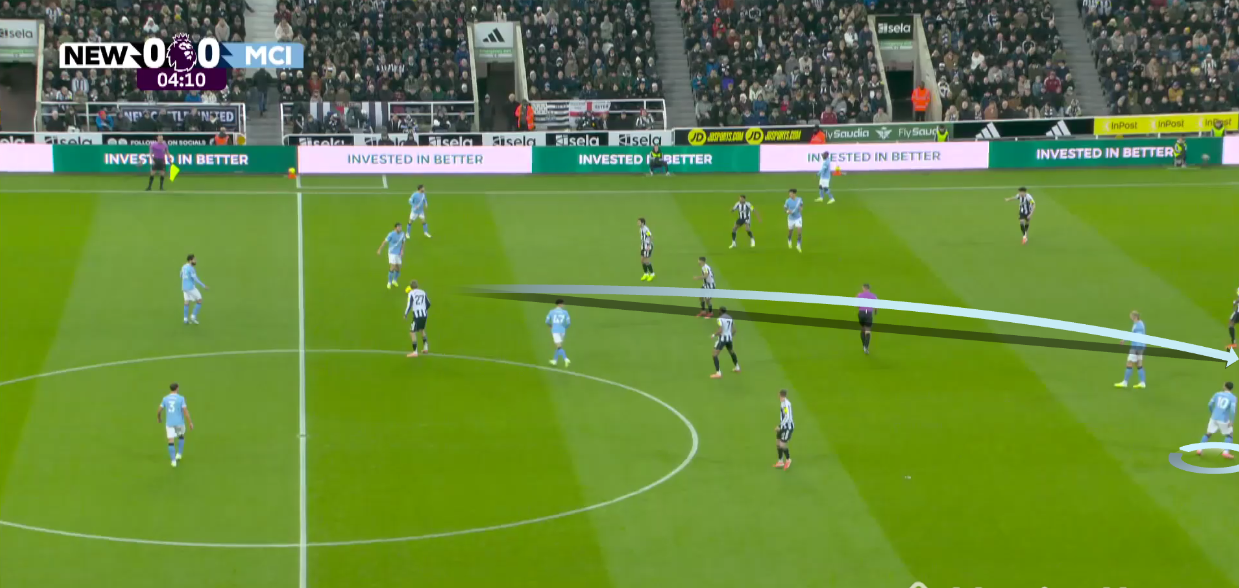 One of Manchester City’s ways to create space between the lines and force Newcastle’s defensive line to drop is the fake pass in behind.
Newcastle’s midfielders do not always press immediately; instead, they rely on certain triggers.
This often leaves a Manchester City midfielder on the ball without pressure, creating an uncovered situation.
When the player in possession shapes as if to play long, Newcastle’s defenders begin to drop.
Here, González has time on the ball, and Cherki makes a run in behind.
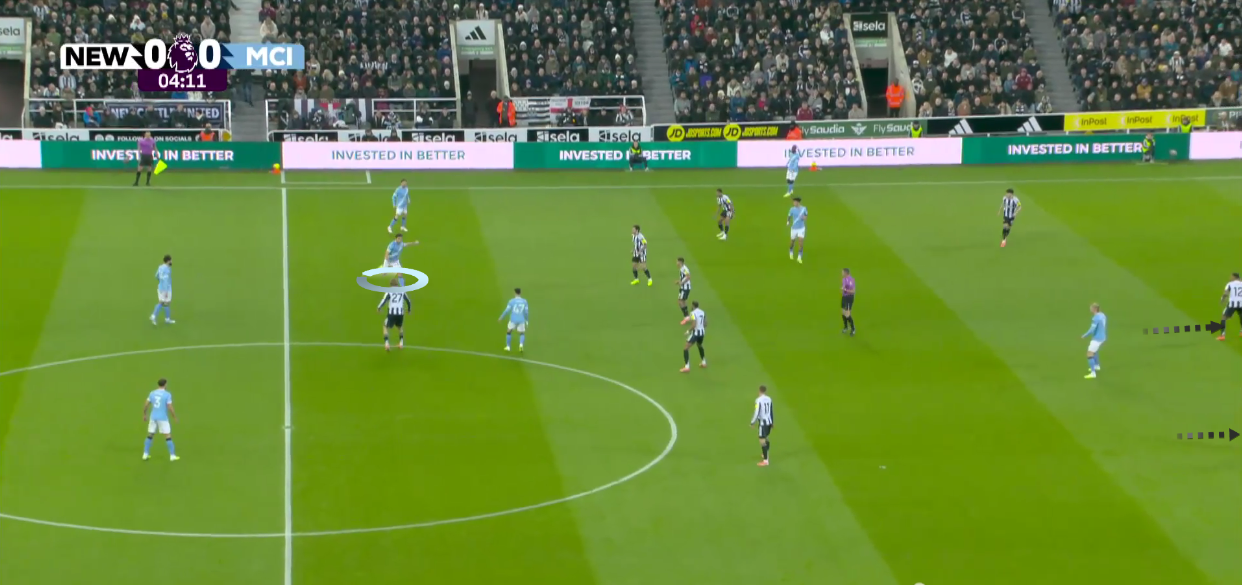 As González prepares to play long, Newcastle’s defenders begin to retreat.
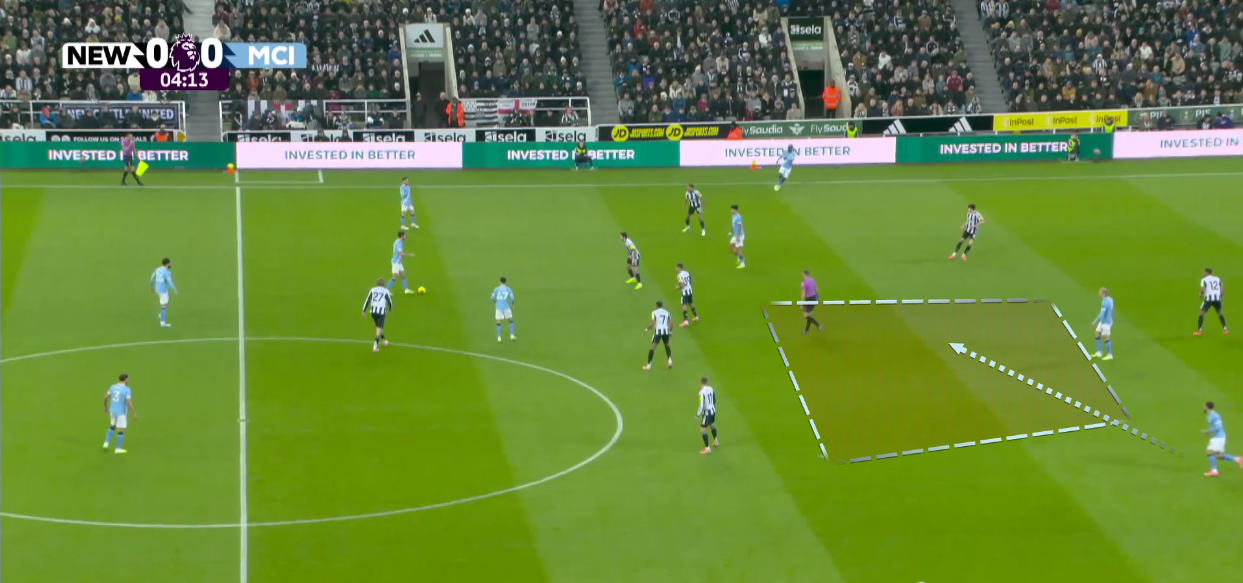 González does not play the pass in behind, but the movement creates a space between the lines that Cherki looks to receive into.
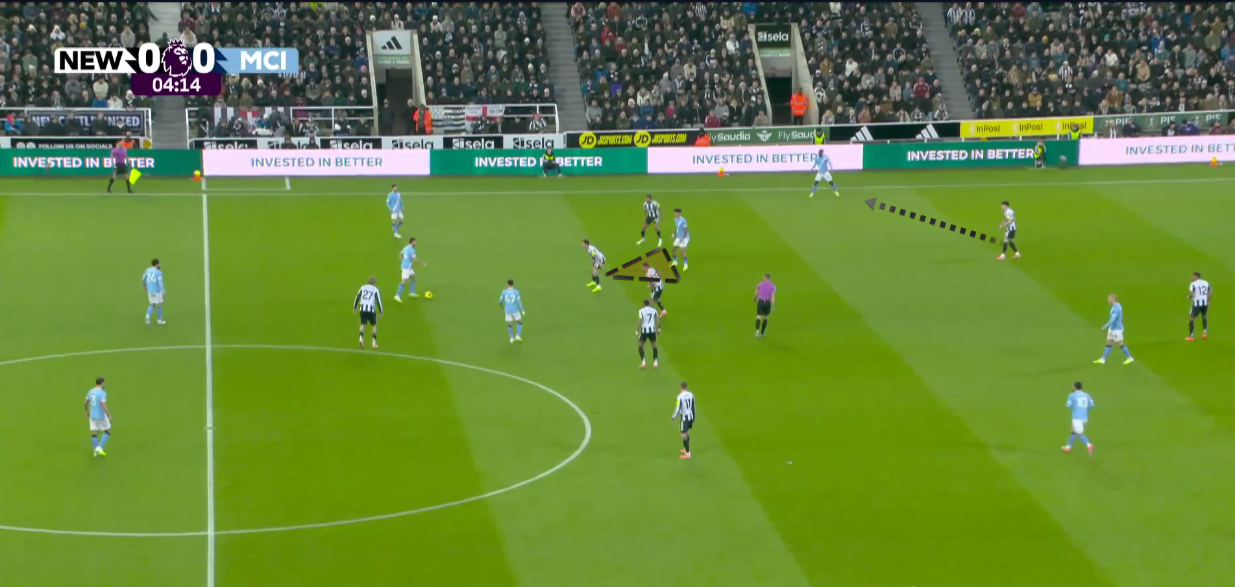 With Doku holding the width, he keeps Livramento occupied, so Tonali closes the passing lane into O’Reilly, who positions himself behind him.
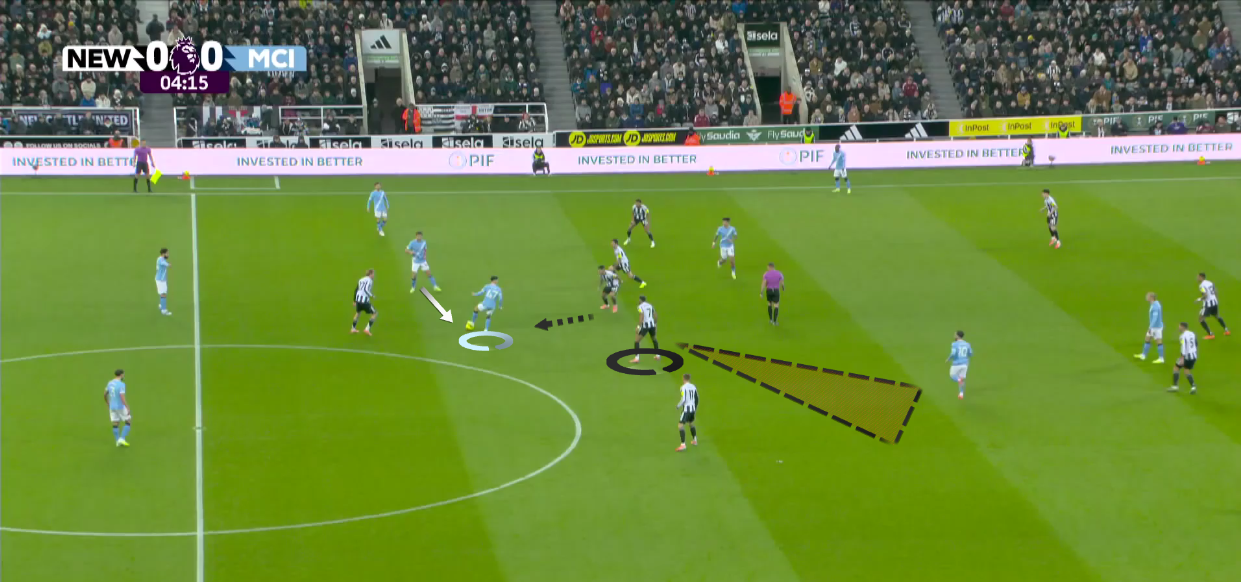 Foden receives González’s pass, attracting Guimarães toward him.
Joelinton focuses on shutting off the passing option into Cherki behind him, assuming Cherki has remained in the half-space as before.
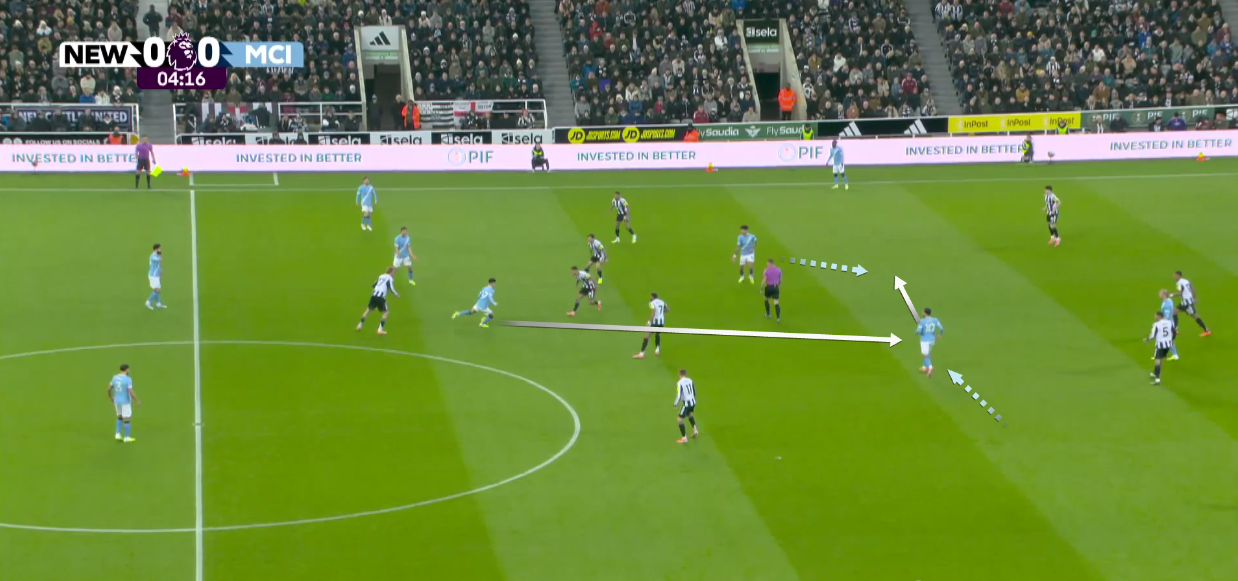 Cherki moves further inside to receive from Foden and attempts to play into O’Reilly, who escapes Tonali’s shadow.
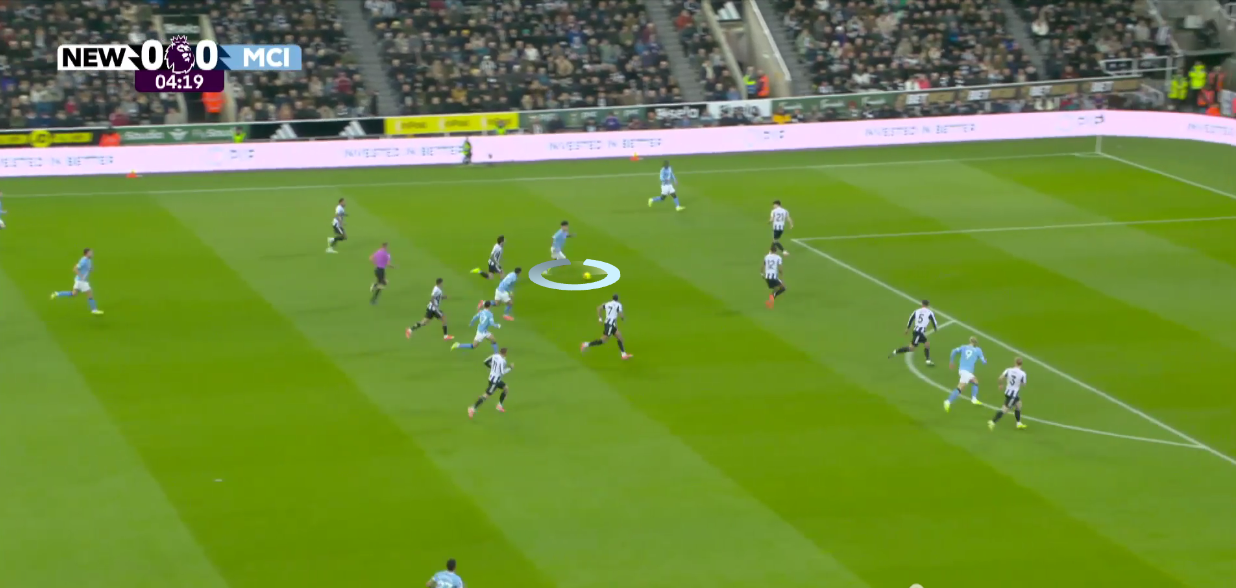 Manchester City successfully breaks Newcastle’s block in this sequence.
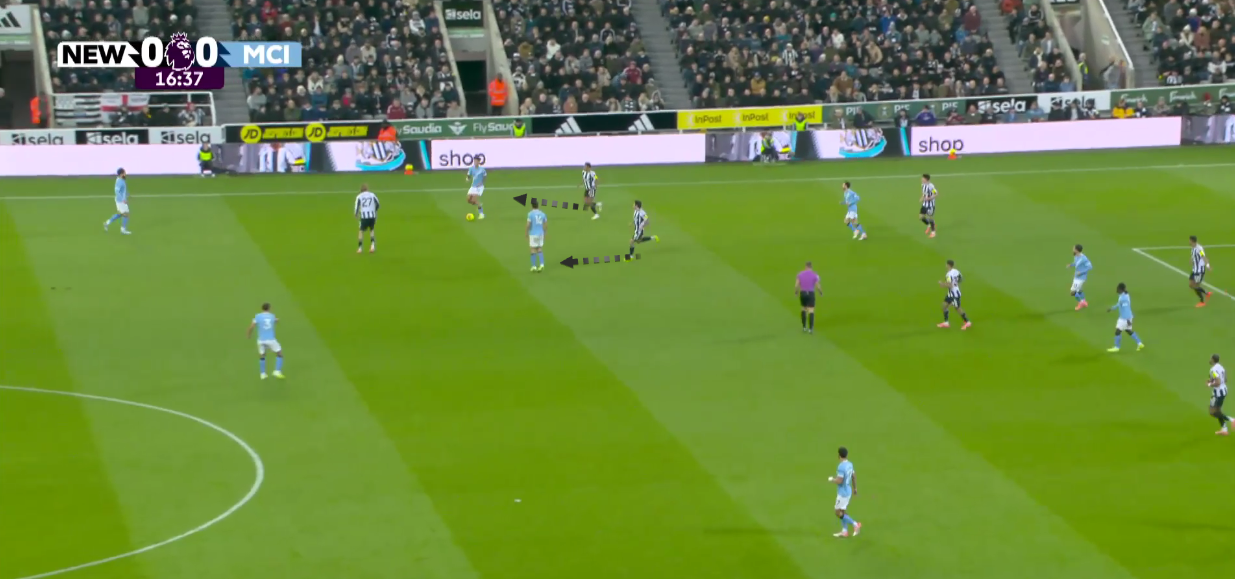 In another instance, González moves wide to draw Tonali toward him.
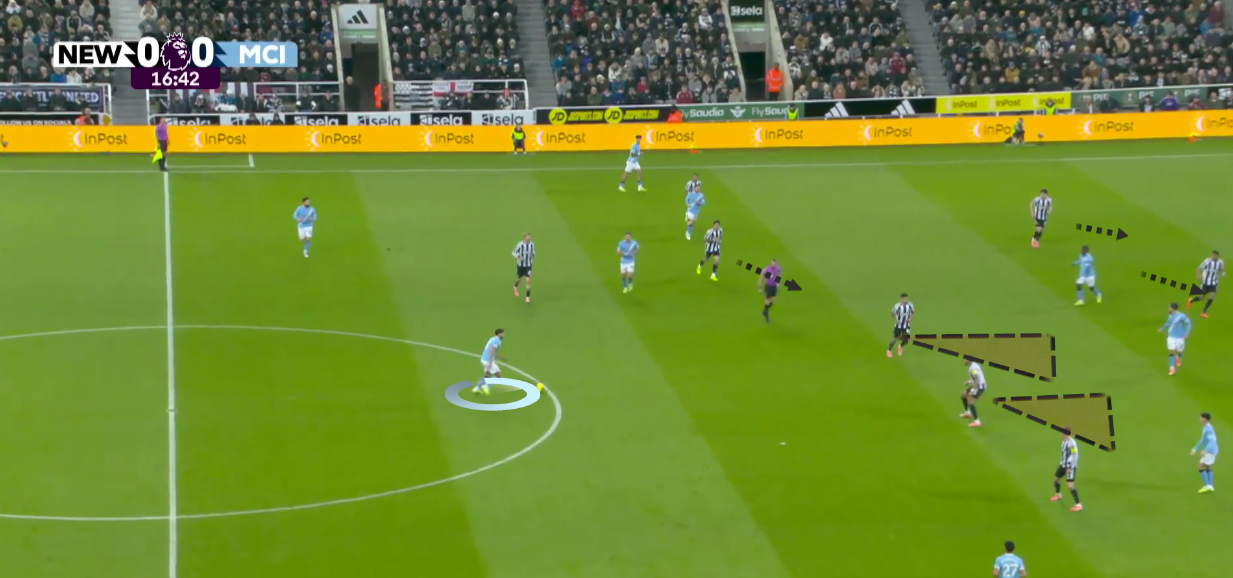 The ball travels to Dias.
With Joelinton and Guimarães focused on closing the lanes into Foden and Cherki, they move tighter together to stay compact.
As Tonali is positioned slightly wide, he cannot recover in time to maintain the compactness of the midfield line.
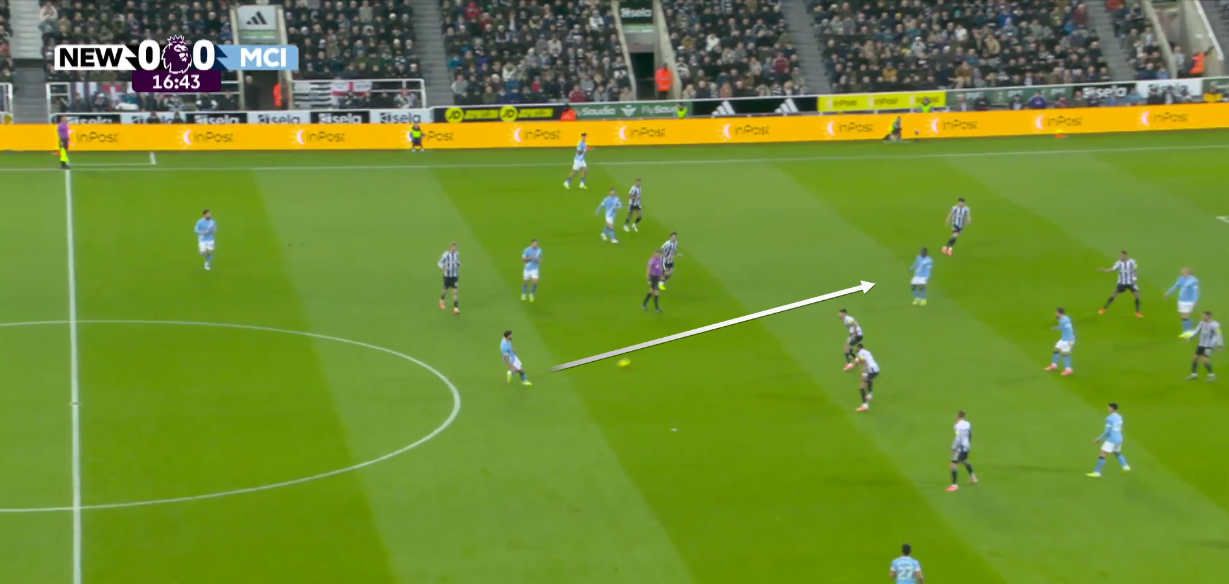 This brief disconnect creates a passing lane into Doku.
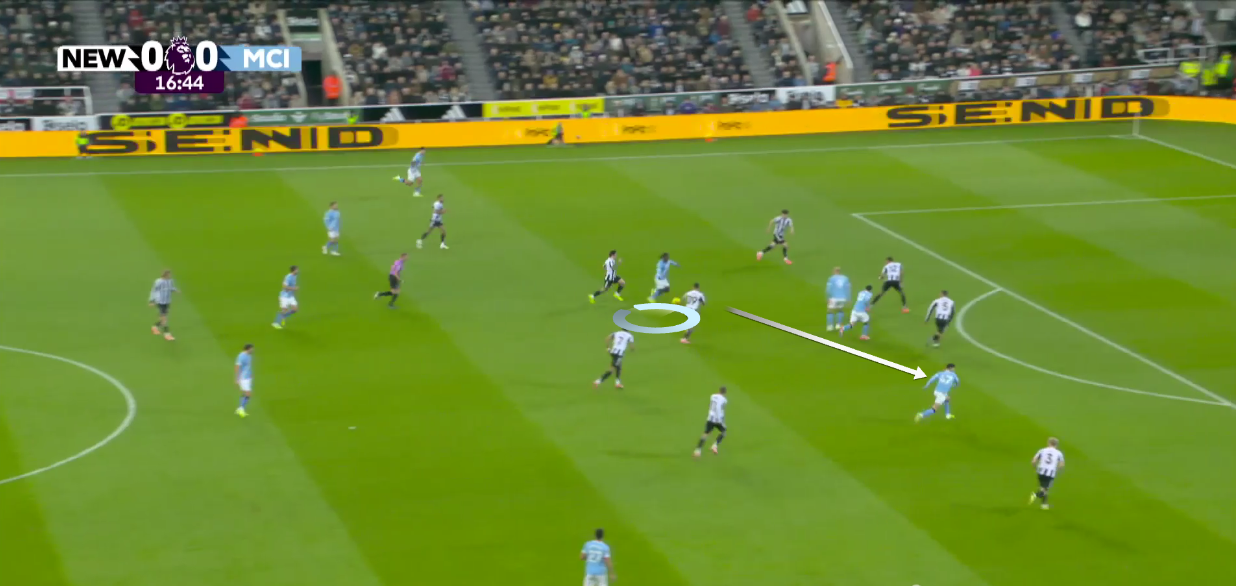 Doku turns and finds Foden with a forward pass.
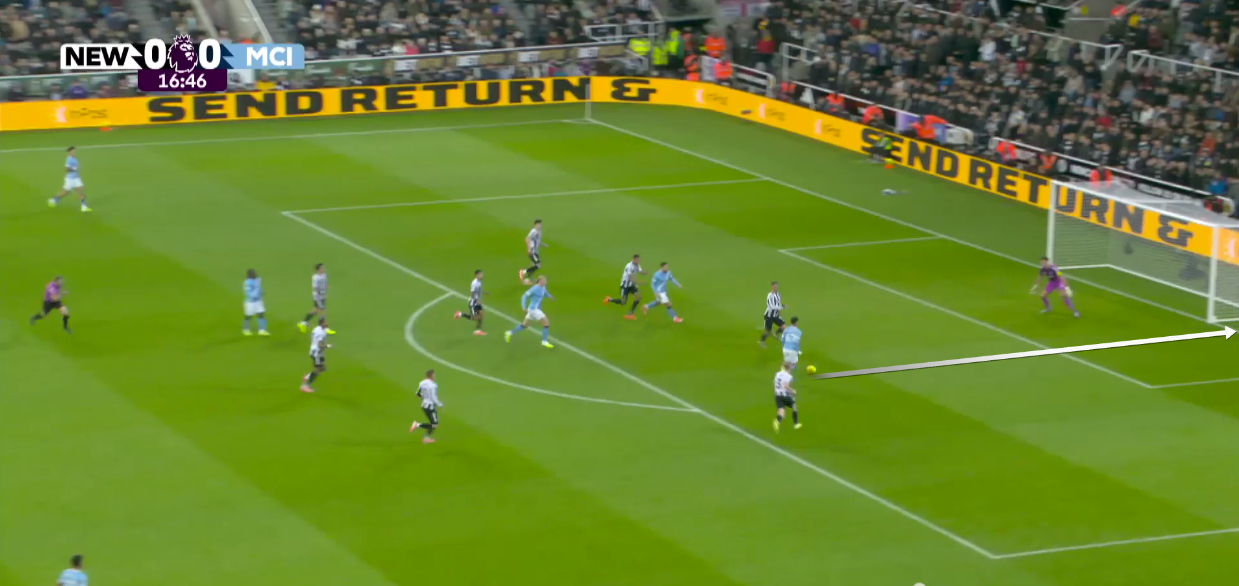 Foden misses this chance to score in a controversial moment, where Manchester City appealed for a penalty after Schär’s challenge.
Newcastle Threat From Long Goal Kicks
The long goal kicks were one of Newcastle’s attacking tools in this match.
Although Manchester City controlled most of them, Newcastle still managed to create moments where this approach became useful.
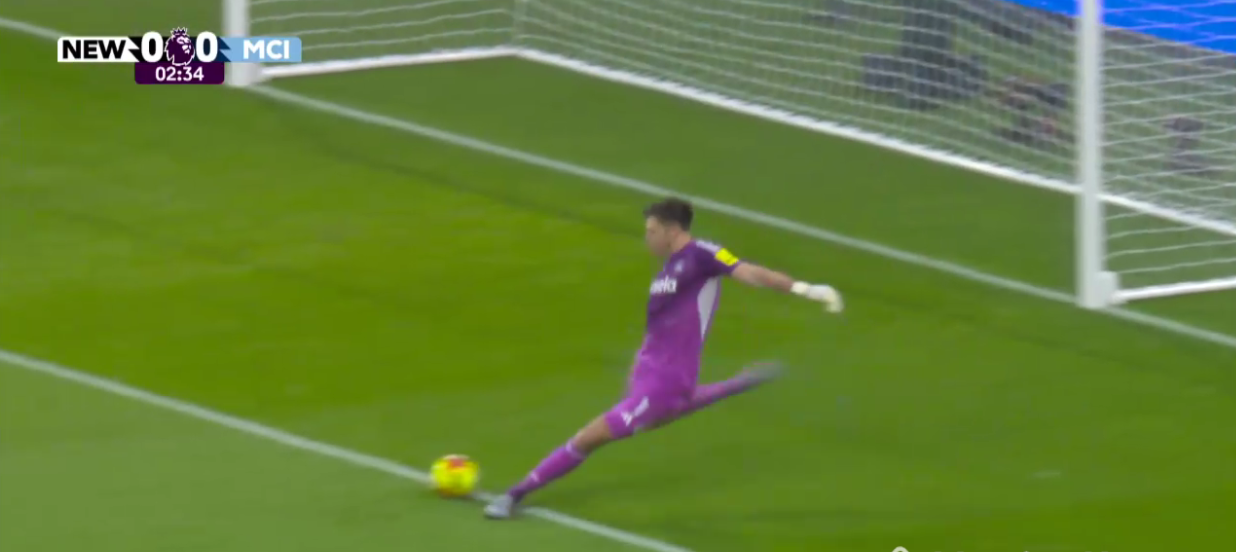 The sequence begins with Pope sending a long goal kick forward.
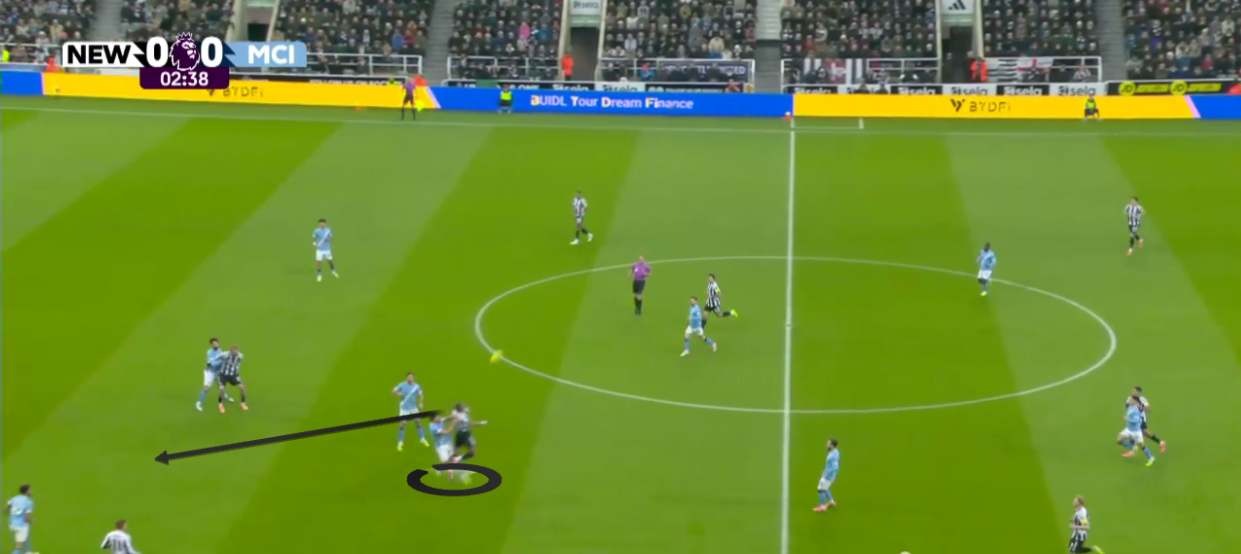 The long goal kick is aimed at Joelinton, who attempts to guide the ball into the space behind him for a teammate.
For Manchester City, Dias challenges Joelinton in the aerial duel, while González positions himself to collect the second ball.
Dias loses the aerial duel; however, Manchester City’s overall structure allows them to collect the second ball and remove the immediate threat.
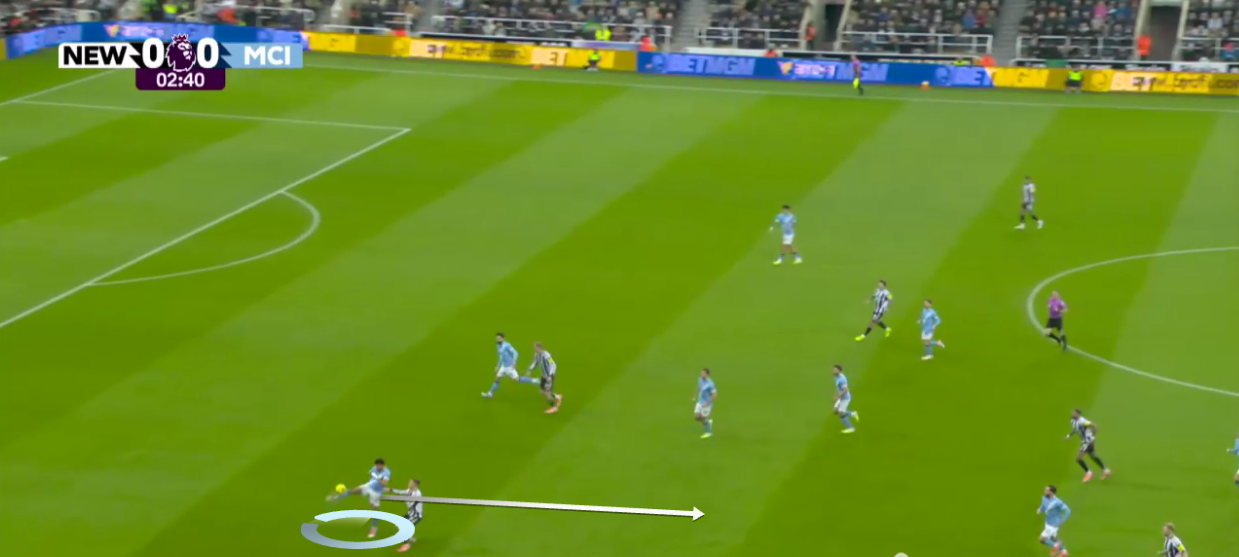 Dias loses the aerial duel; however, Manchester City’s overall structure allows them to collect the second ball and remove the immediate threat.
Even when winning the second ball, Manchester City preferred to prevent danger earlier by securing the aerial duel.
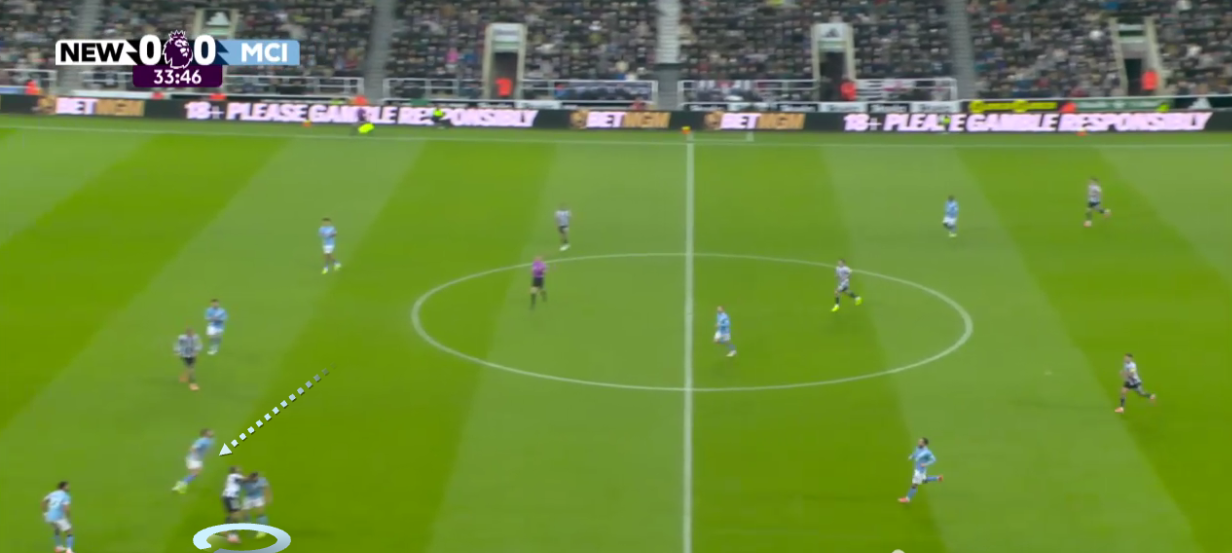 To achieve this, they used González, who blocks Joelinton and engages physically to restrict his jump, giving Dias a clearer opportunity to win the first ball.
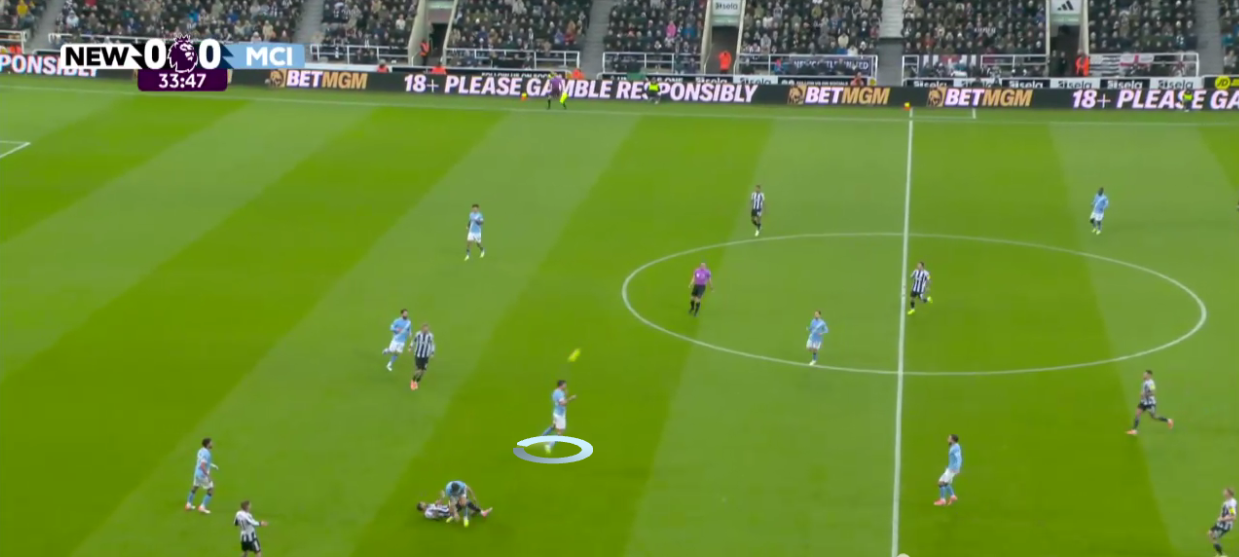 With this approach, Dias can win the long goal kick comfortably and move the danger away from Manchester City’s defensive line.
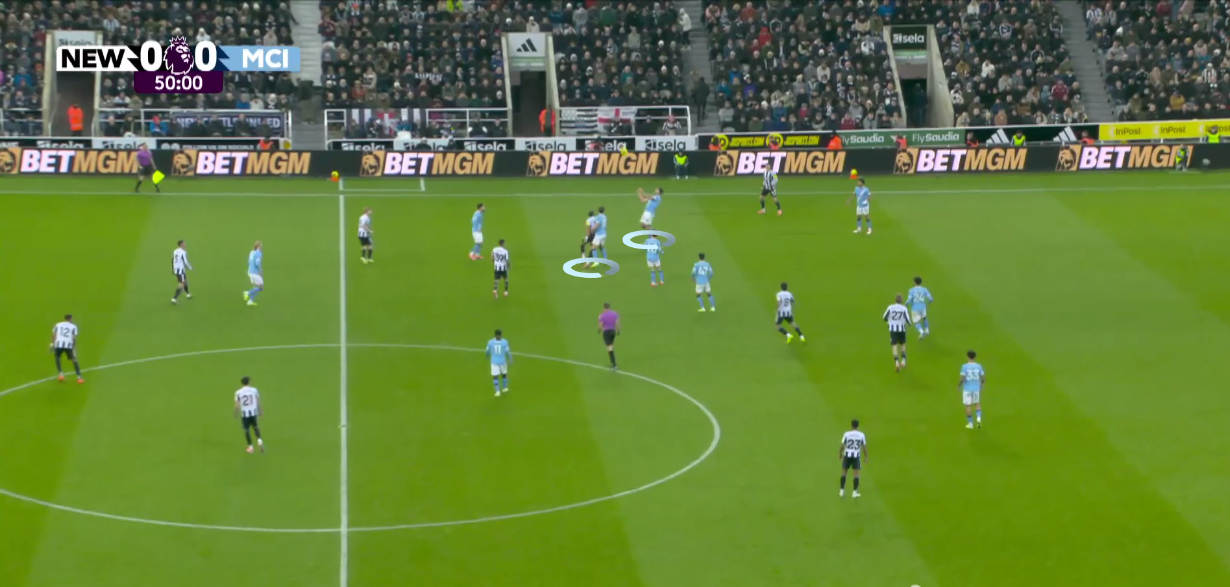 The same approach remained effective for Manchester City during the second half.
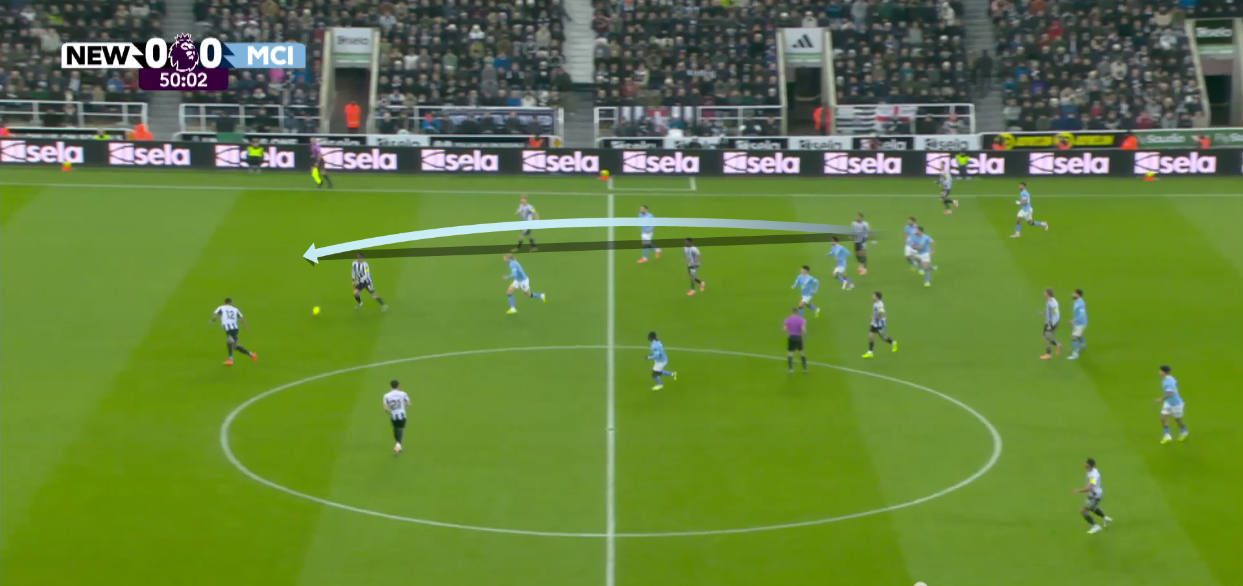 Manchester City manages to clear the ball away.
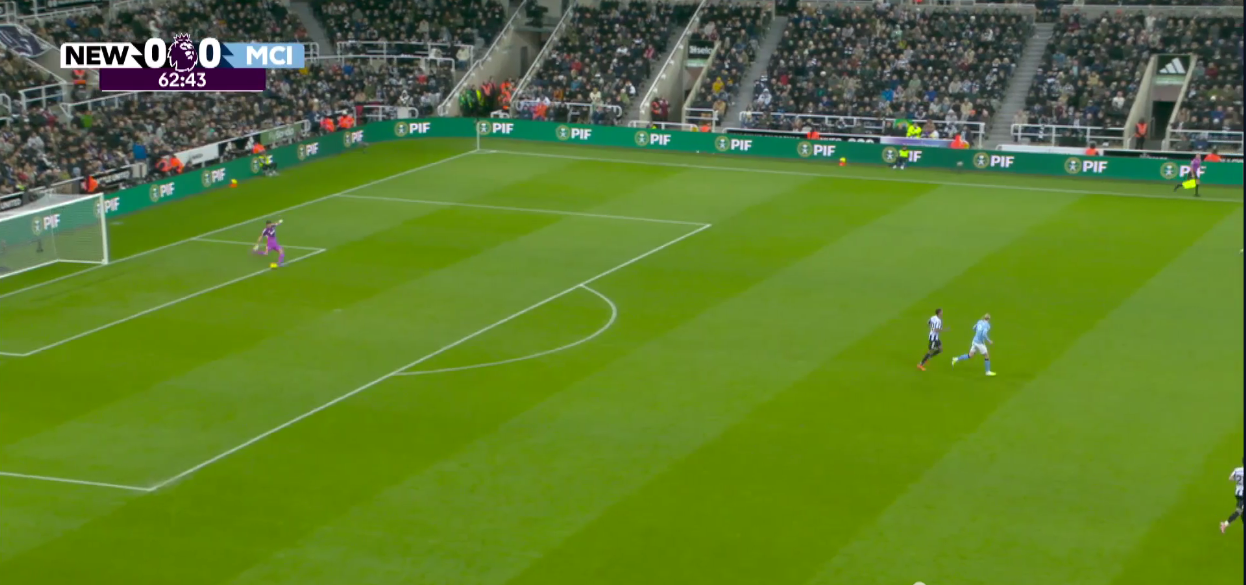 The pattern stayed the same until this moment, when Pope once again played a long goal kick.
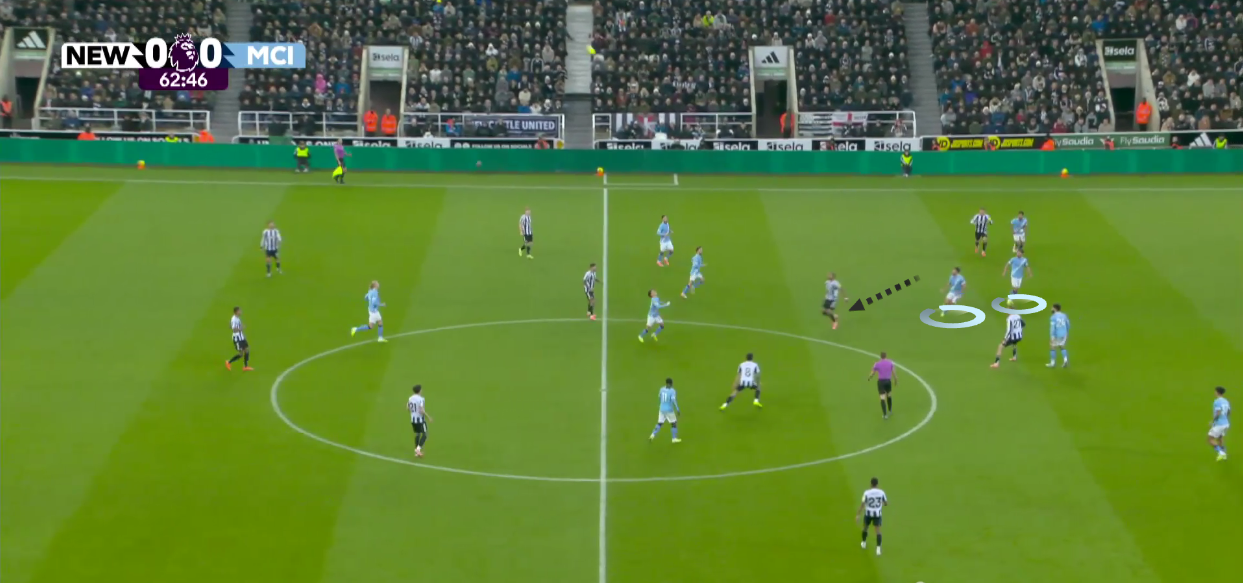 Here, González and Dias appear confused in their positioning, leaving Joelinton unmarked and free to attack the ball.
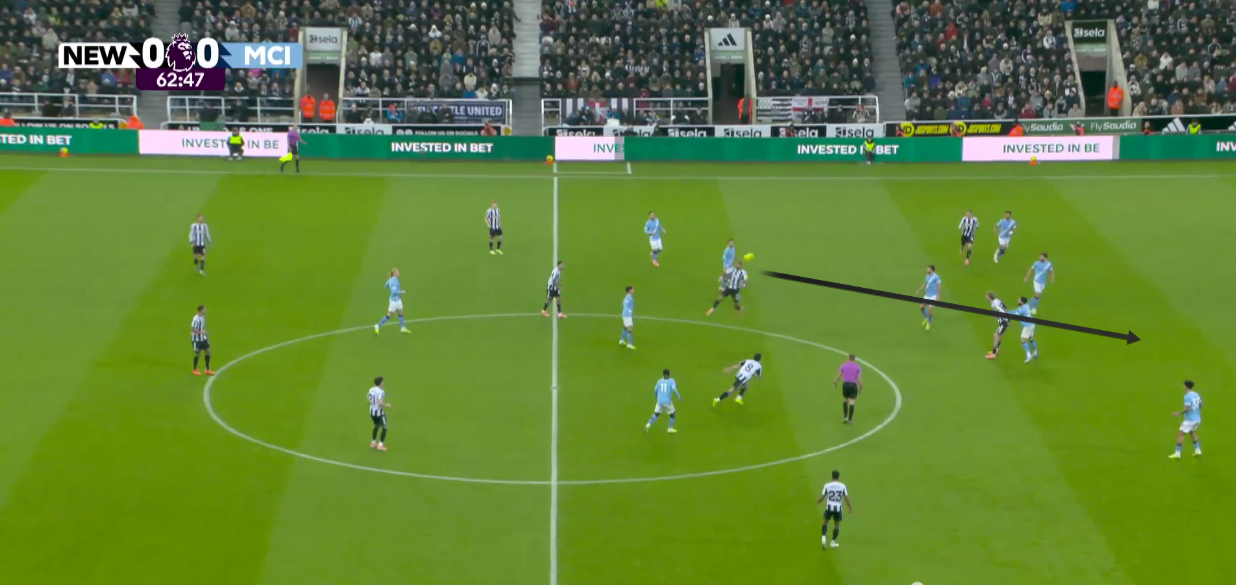 Joelinton wins the aerial challenge and directs the ball behind Manchester City’s defensive line.
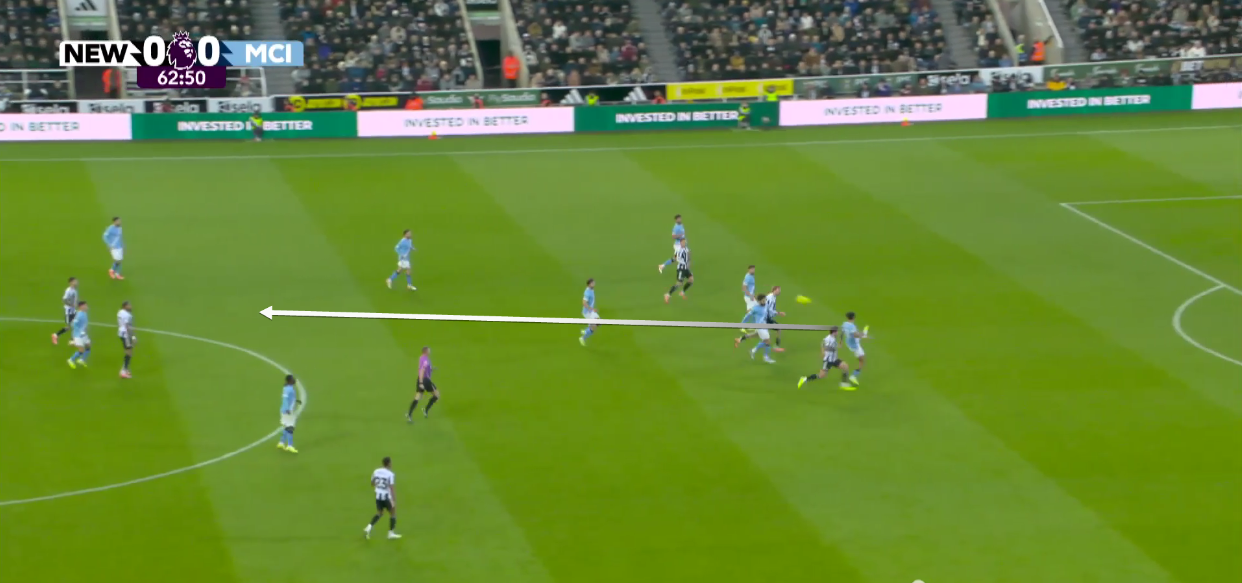 At this stage, Manchester City’s only safe option is winning the second ball, which O’Reilly successfully does.
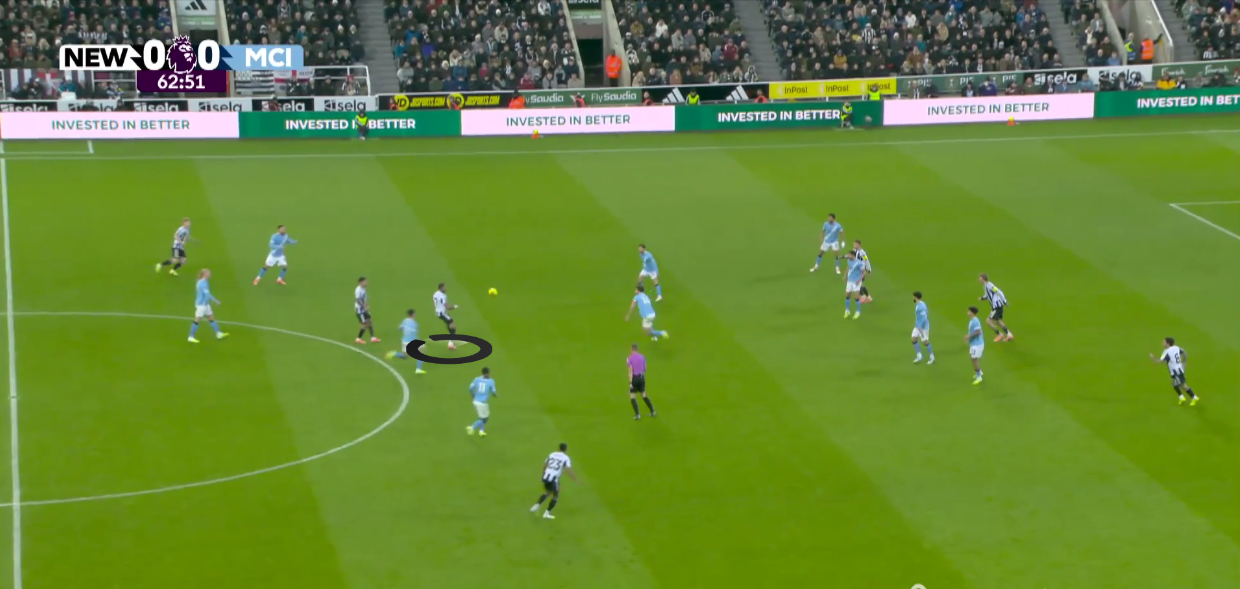 The issue is that O’Reilly does not clear the ball properly after winning it.
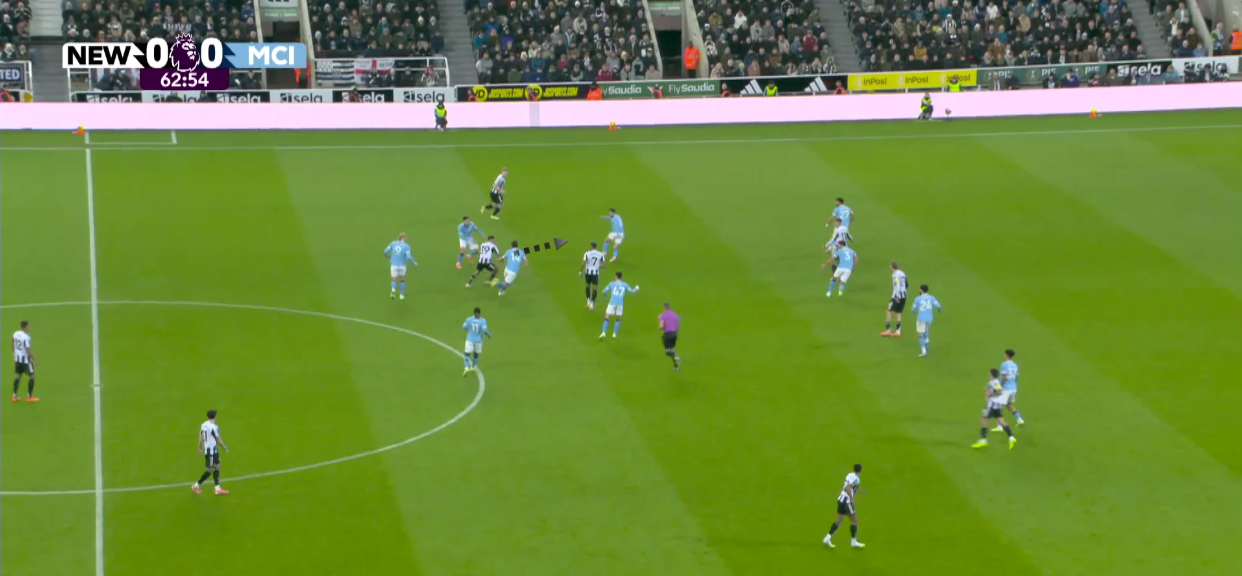 Adding to this, the rest of Manchester City’s players are positioned too far to contest the second ball.
As a result, the loose ball falls to Joelinton again, who then passes to Guimarães.
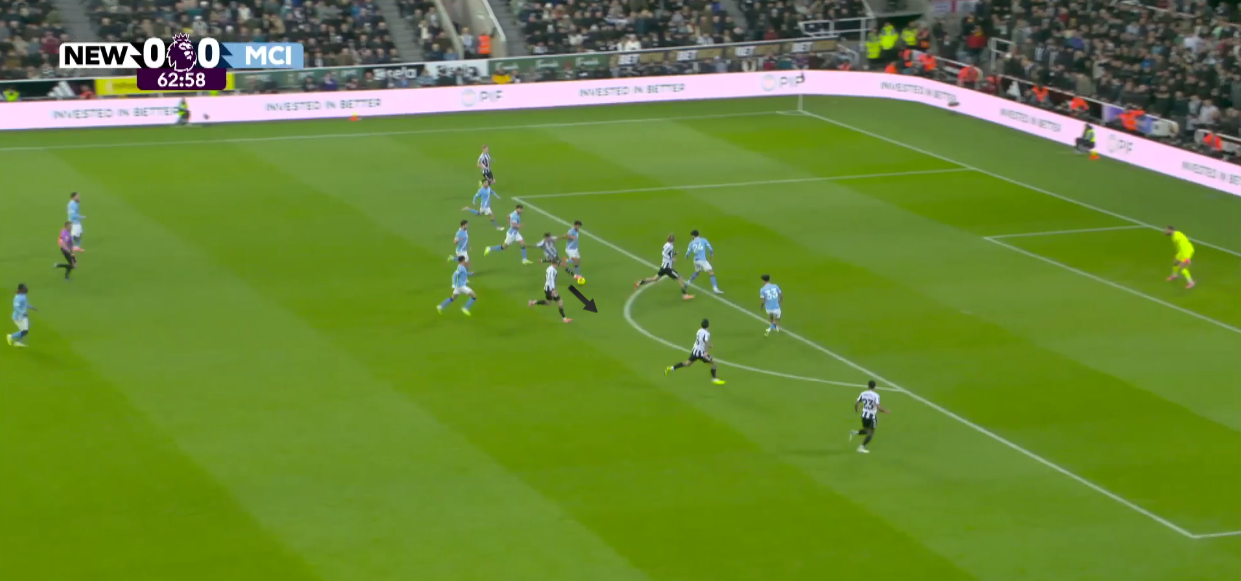 Guimarães carries the ball forward and combines with his teammates as the attack develops.
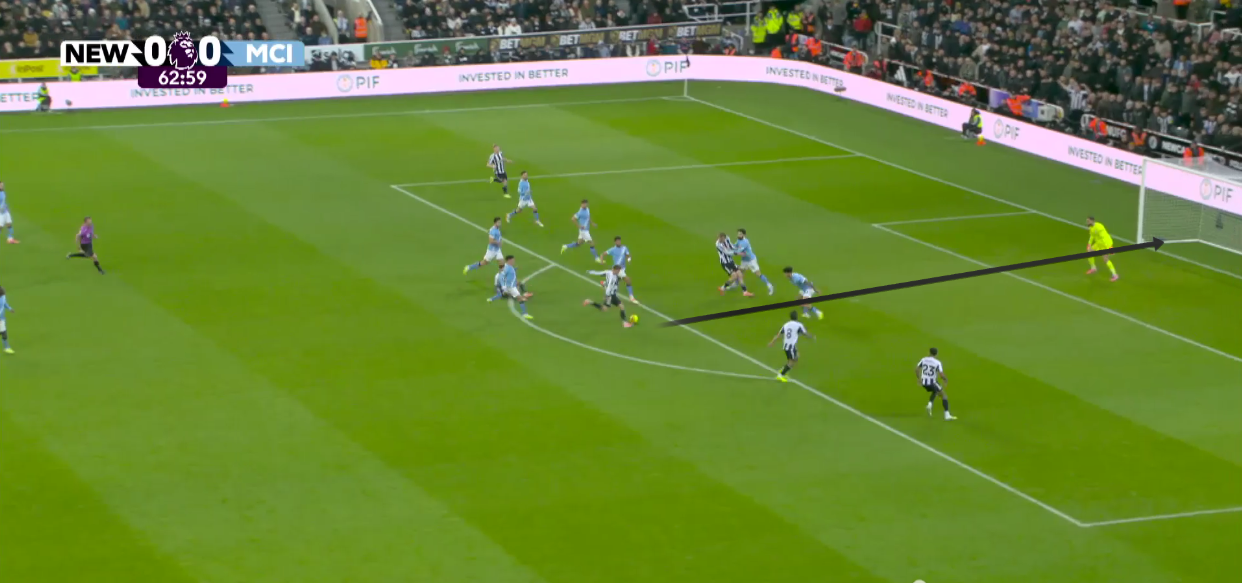 The move ends with Guimarães finding Barnes free at the edge of the box, allowing him to shoot and score Newcastle’s first goal.
Conclusion
Although Manchester City struggled in the build-up phase and found it difficult to escape Newcastle’s high press, they still managed to create an alternative route to goal through the midfield and final third.
They were able to find space between the lines, position free players in those areas, and connect with progressive passes that created several clear chances.
However, they were unable to convert these opportunities into a win.
Newcastle, after repeatedly using long goal kicks throughout the match, eventually found a way through and scored.
